

18 Corner Dining Nook Ideas That Make Small Spaces Feel Bigger
A corner dining nook is one of the smartest ways to maximize space in a small kitchen or dining area. While traditional dining tables often require significant floor space, a well-designed dining nook can comfortably seat more people while making the room feel larger and more organized.
This is why built-in banquette seating, breakfast nook benches, and corner dining room seating have become increasingly popular in modern homes. They allow homeowners to turn underused corners into functional gathering spaces without sacrificing valuable square footage.
The best part is that a beautiful dining nook doesn’t require a luxury renovation. Many of the most effective corner dining nook ideas use simple built-in benches, affordable furniture, and practical layouts that work in real family homes.
Whether you’re designing a small kitchen eating nook, a breakfast nook with storage, or a cozy dining snug, these ideas can help you create a space that’s comfortable, functional, and surprisingly spacious.
1. Build a Simple L-Shaped Banquette
Why This Works
If there’s one layout that consistently works in small kitchens, it’s an L-shaped banquette.
Instead of placing chairs around all four sides of a table, an L-shaped bench uses the corner itself as seating.
This approach:
- Saves floor space
- Seats more people
- Creates a cozy atmosphere
- Makes the room feel organized
Because the seating follows the walls, the center of the room remains open and uncluttered.
How To Create It
Build simple bench seating along two adjoining walls.
Materials can include:
- Painted MDF
- Plywood
- Shaker-style paneling
- Simple wood framing
Top the bench with:
- Seat cushions
- Throw pillows
- Washable upholstery
Pair it with a round or rectangular dining table depending on the room size.
Extra Storage Opportunity
The bench can also include lift-up storage beneath the seats.
Perfect for:
- Table linens
- Seasonal décor
- Kitchen appliances
- Children’s art supplies

2. Create a Breakfast Nook Under a Window
Why This Works
Windows naturally attract attention.
Placing a dining nook beneath a window transforms an ordinary corner into one of the most inviting spots in the house.
Natural light makes meals feel more enjoyable while helping the entire room feel larger.
Layout Ideas
Use:
- Built-in bench beneath window
- Small pedestal table
- Two dining chairs opposite bench
This layout works particularly well in:
- Small kitchens
- Apartments
- Breakfast rooms
- Open-plan homes
Design Tips
Choose light colors to maximize brightness.
Add:
- Linen cushions
- Simple curtains
- Small plants
These details make the space feel welcoming without overwhelming it.

3. Add Hidden Storage Beneath the Bench
Why This Works
Storage is one of the biggest challenges in small homes.
A built-in breakfast nook with storage solves two problems at once:
- Seating
- Storage
Instead of wasting the space beneath the bench, turn it into practical storage.
Storage Ideas
Store:
- Cookbooks
- Small appliances
- Serving dishes
- Seasonal decorations
- Children’s toys
This is particularly helpful in homes without a pantry.
Types of Storage
Popular options include:
Lift-Up Seats
Easy to build and highly practical.
Drawers
Provide better organization but require more construction.
Open Cubbies
Perfect for baskets and everyday items.
Why Homeowners Love It
The nook becomes one of the hardest-working spaces in the house.

4. Use a Round Table to Improve Traffic Flow
Why This Works
Square and rectangular tables often create awkward corners in small spaces.
A round table solves this problem.
Benefits include:
- Easier movement
- Better traffic flow
- More seating flexibility
- Softer appearance
Round tables work especially well with banquette seating because they make entering and exiting the bench easier.
Best Sizes
For most small dining nooks:
- 36-inch table
- 42-inch table
- 48-inch table
These sizes provide comfortable seating without overwhelming the room.
Design Tip
Pedestal tables work especially well because they eliminate table legs that can interfere with seating.

5. Create a Mid-Century Modern Kitchen Nook
Why This Works
Mid-century modern design remains one of the most popular styles for dining nooks.
The clean lines and simple forms help small spaces feel less cluttered.
Key Features
Use:
- Walnut wood tones
- Tapered furniture legs
- Minimal décor
- Neutral upholstery
This creates a timeless look that works in both modern and traditional homes.
Furniture Choices
Pair a simple built-in bench with:
- Mid-century dining table
- Upholstered dining chairs
- Brass lighting
The result feels warm and sophisticated without feeling trendy.

6. Turn an Unused Kitchen Corner Into a Dining Snug
Why This Works
Many kitchens contain corners that serve no real purpose.
Instead of leaving them empty, transform them into a dining snug.
A dining snug feels intimate and welcoming while requiring very little square footage.
How To Create It
Add:
- Corner bench seating
- Small dining table
- Comfortable cushions
- Pendant lighting
Even a compact area can become a favorite gathering spot.
Why Families Love It
The nook naturally encourages conversation and everyday family meals.
Many homeowners find they use these spaces more than formal dining rooms.

7. Create an Open Banquette Seating Layout
Why This Works
Many people assume a banquette has to be fully built into a corner, but open banquette seating offers a more flexible alternative.
Instead of enclosing the entire dining area, one side remains open while the built-in bench runs along a single wall or partial corner. This creates the cozy feeling of a dining nook without making the space feel boxed in.
Open banquette seating works especially well in:
- Open-concept homes
- Small dining areas
- Apartments
- Kitchen-dining combinations
Because one side remains visually open, the room feels larger and more connected.
How To Create It
Install a built-in bench along one wall.
Then pair it with:
- Dining chairs opposite
- Pedestal table
- Bench on one side and chairs on the other
This creates flexibility while maintaining the space-saving benefits of banquette seating.
Styling Ideas
Use:
- Neutral seat cushions
- Soft throw pillows
- Natural wood tables
- Warm pendant lighting
The result feels relaxed and family-friendly.
Why It Makes Small Spaces Feel Bigger
Traditional dining sets require walking space around all sides.
Open banquette seating eliminates unnecessary circulation space while maintaining comfort.

8. Build a Classic Booth Breakfast Nook
Why This Works
Restaurant booths became popular for a reason: they’re comfortable, space-efficient, and encourage conversation.
A booth breakfast nook brings those same advantages into a home setting.
Unlike traditional dining tables, booth seating uses walls as part of the layout, reducing wasted space.
Layout Options
Popular booth configurations include:
U-Shaped Booth
Maximum seating capacity.
L-Shaped Booth
Best for corners.
Straight Booth
Works well against walls.
Comfort Upgrades
Add:
- Thick seat cushions
- Lumbar pillows
- Upholstered backrests
These additions make long meals and conversations more comfortable.
Why Families Love It
Booths naturally feel cozy.
Children especially enjoy them because they create a sense of enclosure and comfort.

9. Use Corner Seating in an Open-Plan Kitchen
Why This Works
Open-plan homes often struggle with defining separate zones.
A corner dining nook helps establish a dedicated dining area without using walls.
This keeps the open feeling while improving organization.
How To Create It
Position the nook near:
- Kitchen island
- Exterior window
- Patio doors
Use a built-in bench to visually anchor the dining area.
This naturally separates:
- Cooking zone
- Dining zone
- Living zone
without interrupting sight lines.
Design Benefits
The dining nook becomes a destination rather than simply an extra table.
It also creates a more intimate atmosphere inside large open spaces.
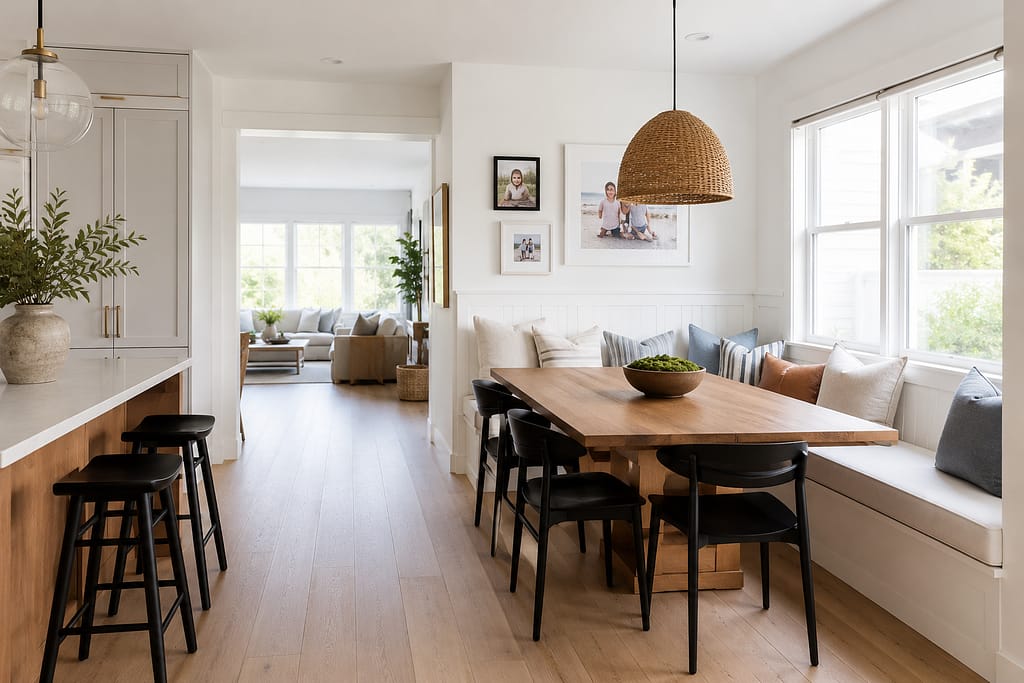
10. Replace Chairs With Bench Seating
Why This Works
Traditional dining chairs require clearance on all sides.
Bench seating allows people to slide in and out more efficiently.
This saves valuable square footage.
In smaller kitchens, replacing chairs with benches can immediately make the room feel more spacious.
Additional Benefits
Bench seating:
- Accommodates more people
- Costs less than multiple chairs
- Creates a casual atmosphere
- Works well with children
It’s one of the simplest upgrades you can make.
Design Ideas
Pair bench seating with:
- Farmhouse tables
- Modern pedestal tables
- Mid-century dining tables
The style adapts easily to different interiors.
Why It Makes Rooms Feel Bigger
Fewer furniture pieces create less visual clutter.
The room feels cleaner and more open.
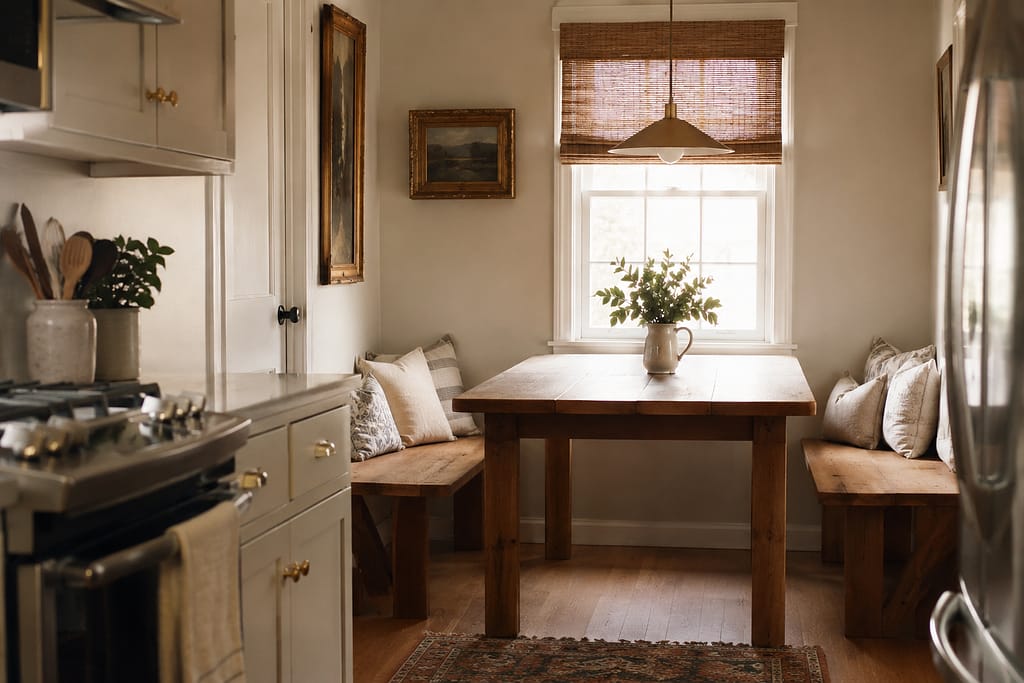
11. Install a Wall Booth for Maximum Space Efficiency
Why This Works
Wall booth seating is one of the most effective solutions for narrow kitchens.
Because the booth sits directly against the wall, no additional circulation space is required behind the seating.
This makes it ideal for:
- Galley kitchens
- Small dining rooms
- Apartments
- Compact homes
Design Approach
Build a straight bench along the wall.
Pair it with:
- Round table
- Pedestal table
- Opposite dining chairs
This arrangement maximizes seating while minimizing the footprint.
Storage Opportunity
Wall booths are also excellent candidates for hidden storage.
Use the bench base for:
- Pantry overflow
- Table linens
- Small appliances
Why It Works
Every inch of space serves multiple functions.
That’s exactly what small homes need.

12. Create a London-Inspired Dining Nook
Why This Works
Many modern London homes and apartments use compact dining solutions because space is limited.
Instead of oversized dining rooms, they focus on creating cozy, highly functional dining nooks.
The result feels sophisticated without being extravagant.
Design Characteristics
A London-inspired dining nook often includes:
- Built-in seating
- Neutral color palette
- Natural wood finishes
- Layered lighting
- Comfortable upholstery
The emphasis is on practicality combined with warmth.
Furniture Ideas
Choose:
- Oak dining table
- Linen cushions
- Simple wall sconces
- Built-in banquette
These materials create a timeless look.
Why Homeowners Love This Style
It feels elevated but still realistic.
The design works equally well in small homes, apartments, and family kitchens.

13. Build a Breakfast Nook Bench That Fits Your Family
Why This Works
One of the biggest advantages of a custom breakfast nook bench is that it can be built specifically for your space and your family’s needs.
Unlike store-bought dining furniture, a built-in bench makes use of every available inch. It can fit awkward corners, unusual wall lengths, and small kitchen layouts that traditional furniture simply can’t accommodate.
A well-designed breakfast nook bench creates a cozy gathering spot for:
- Family breakfasts
- Homework sessions
- Coffee breaks
- Casual dinners
- Board games and conversations
Many homeowners discover that their breakfast nook becomes one of the most frequently used spots in the house.
How To Design It
A comfortable bench typically includes:
- Seat depth of 16–20 inches
- Back support
- Durable upholstery
- Washable cushions
For families with children, performance fabrics are often the most practical choice.
Design Tip
Paint the bench the same color as nearby cabinetry for a built-in look.
This makes the nook feel like part of the kitchen rather than an afterthought.

14. Create a Built-In Corner Table Dining Nook
Why This Works
Sometimes the challenge isn’t finding space for seating—it’s finding the right table.
A built-in corner table dining nook solves this problem by integrating the table directly into the layout.
This creates a highly efficient dining area that feels custom designed for the room.
Layout Benefits
Built-in tables:
- Save space
- Improve traffic flow
- Create a seamless appearance
- Reduce visual clutter
This approach works especially well in compact kitchens where every inch matters.
Materials to Consider
Popular choices include:
- Solid oak
- Butcher block
- Painted wood
- Laminate surfaces
Choose materials that coordinate with the rest of the kitchen.
Why It Feels Bigger
Because the table becomes part of the architecture, the room feels more organized and less crowded.

15. Turn a Tiny Kitchen Corner Into a Dining Destination
Why This Works
Many kitchens contain corners that serve little purpose.
These spaces often become:
- Dead space
- Storage zones
- Decorative corners
Instead of leaving them underused, transform them into a functional dining nook.
How To Create It
Even the smallest corner can often accommodate:
- Compact table
- Corner bench
- Two chairs
- Wall-mounted lighting
The goal isn’t creating a large dining room.
The goal is creating a dedicated place to gather.
Decorating Tips
Use:
- Light colors
- Mirrors
- Wall art
- Plants
These details help the area feel intentional and inviting.
Why It Works
Small spaces often feel bigger when every area has a clear purpose.

16. Add a Sofa-Style Banquette for Maximum Comfort
Why This Works
Traditional dining chairs aren’t always the most comfortable option.
A sofa-style banquette combines dining functionality with living-room comfort.
This style has become increasingly popular because it encourages people to linger longer after meals.
Design Features
Look for:
- Upholstered seating
- Deep cushions
- Soft fabrics
- Comfortable backrests
The result feels more like a lounge than a formal dining area.
Best Uses
Ideal for:
- Family meals
- Entertaining guests
- Morning coffee
- Remote work sessions
Many homeowners use these spaces throughout the day.
Styling Tips
Add:
- Throw pillows
- Textured fabrics
- Warm lighting
These details reinforce the cozy atmosphere.

17. Design a Storage-Focused Breakfast Nook
Why This Works
Storage is often more valuable than square footage in small homes.
A breakfast nook with built-in storage can dramatically improve organization while providing comfortable seating.
What To Store
Consider storing:
- Seasonal dishes
- Small appliances
- Table linens
- Children’s supplies
- Cookbooks
This helps reduce clutter throughout the kitchen.
Best Storage Options
Lift-Up Benches
Simple and affordable.
Drawer Systems
Better organization and easier access.
Open Cubbies
Perfect for baskets and everyday items.
Why Families Love It
The nook becomes one of the most functional pieces of furniture in the entire home.
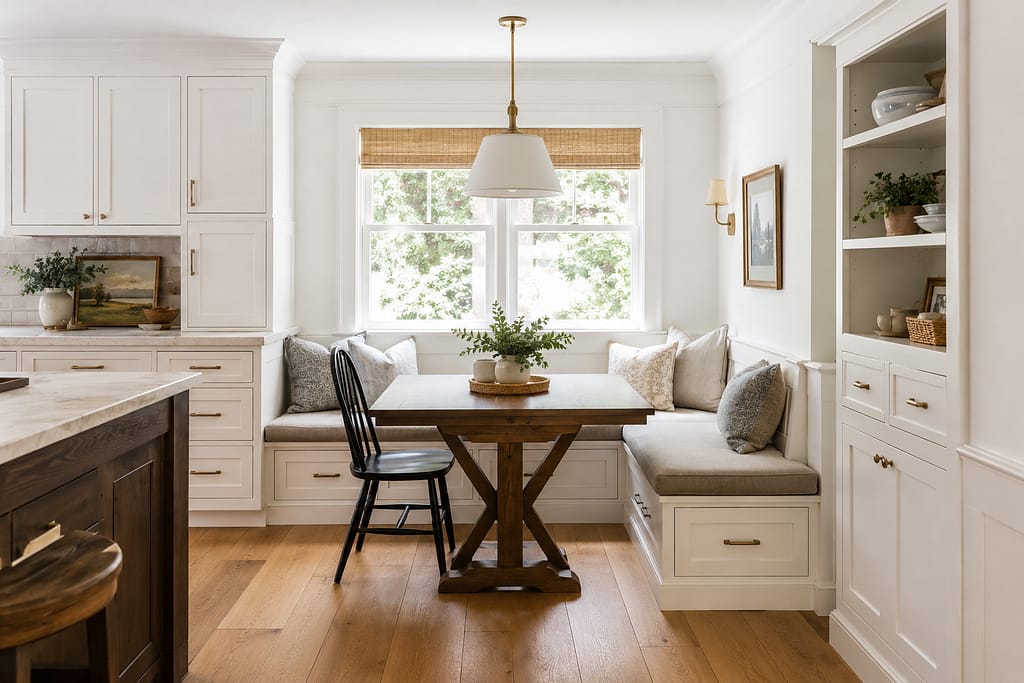
18. Create a Soho Home Inspired Dining Snug
Why This Works
Many people love the cozy atmosphere found in boutique restaurants and private clubs.
The good news is that you can capture that feeling without creating a luxury-only space.
A Soho-inspired dining snug focuses on comfort, warmth, and layered textures.
Key Design Elements
Use:
- Upholstered banquette seating
- Warm wood tones
- Layered lighting
- Neutral colors
- Textured fabrics
The emphasis is on creating a space that feels intimate and inviting.
Lighting Matters
Add:
- Wall sconces
- Pendant lights
- Warm bulbs
Lighting is one of the biggest contributors to the cozy atmosphere.
Why It Works
Even everyday family meals feel more special in a thoughtfully designed dining nook.

Frequently Asked Questions
What is a corner dining nook?
A corner dining nook is a compact dining area typically positioned in a kitchen corner or unused space. It often includes built-in seating, banquette seating, or a breakfast nook bench paired with a dining table.
Do dining nooks save space?
Yes. Dining nooks use corners and wall space more efficiently than traditional dining sets, making them ideal for small kitchens and compact homes.
What is the best table shape for a dining nook?
Round and pedestal tables are often the best choices because they improve traffic flow and make it easier to access banquette seating.
Are built-in benches worth it?
For many homeowners, absolutely. Built-in benches provide extra seating, hidden storage, and a custom look while maximizing available space.
What style works best for a breakfast nook?
The best style depends on your home, but popular options include:
- Modern farmhouse
- Scandinavian
- Mid-century modern
- Traditional cottage
- Contemporary banquette seating
Can I add storage to a dining nook?
Yes. Many built-in benches include lift-up lids, drawers, or cubbies that provide valuable storage for kitchen and dining essentials.
How much space do I need for a dining nook?
Even small corners can accommodate a dining nook. Many successful layouts fit within areas that would otherwise go unused.
Final Thoughts
A corner dining nook is one of the smartest investments you can make in a small kitchen or dining area. By combining seating, storage, and thoughtful design, a dining nook helps maximize every square foot while creating a comfortable gathering place for family and friends.
The best part is that these ideas aren’t reserved for luxury homes. Many of the most beautiful dining nooks rely on simple built-in benches, practical layouts, and cozy styling choices that work in everyday homes.
Conclusion
Whether you’re building a breakfast nook banquette, designing a dining snug, creating a storage-focused seating area, or transforming an unused kitchen corner, the right dining nook can completely change how your space functions. From L-shaped banquettes and wall booths to sofa-style seating and built-in storage benches, these ideas prove that even the smallest spaces can become comfortable, beautiful, and highly functional dining areas.