

20 Small Balcony Herb Garden Ideas for Apartments (Pots, Planters & Vertical Setups)
A balcony may not give you much soil, but it can still give you basil for pasta, mint for iced tea, rosemary for roasted vegetables, and a few leafy plants that make the whole space feel more alive.
The key is choosing a setup that matches the balcony you actually have. Some get full afternoon sun. Others are shaded by the building above, exposed to strong wind, or barely wide enough for a few containers along the railing.
These balcony herb garden ideas focus on practical growing rather than decoration—what to plant, where to put it, how to use pots and vertical space, and how to keep a small edible garden manageable in an apartment setting.
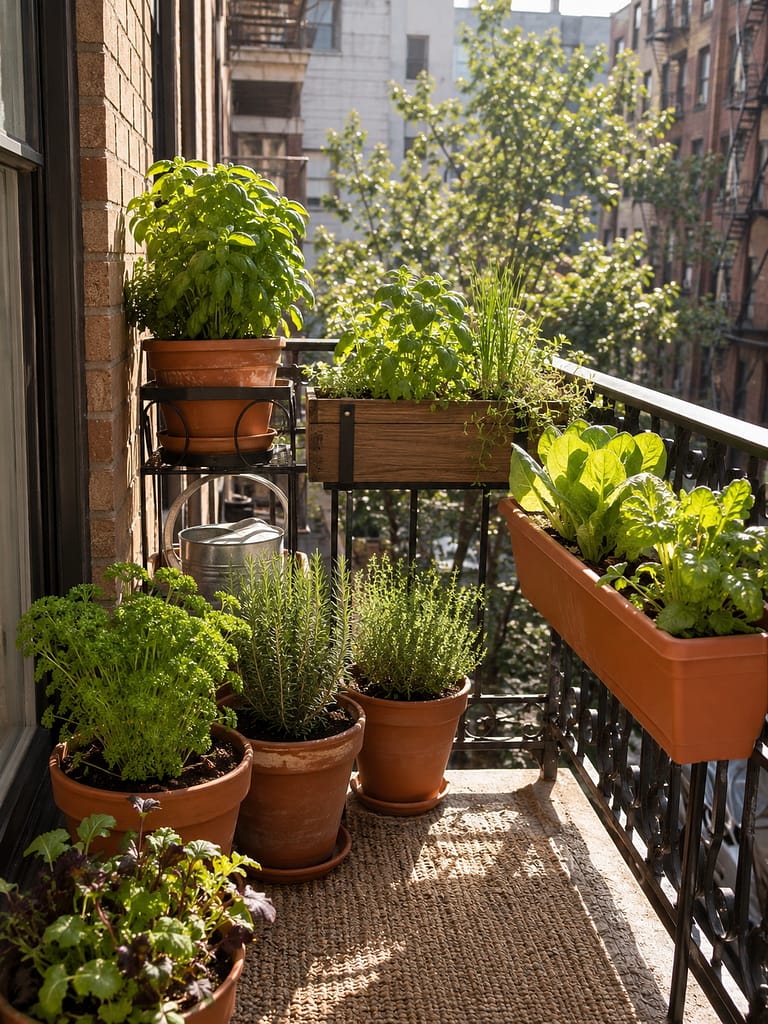
1. Start With a Few Herbs You Actually Use
It’s tempting to plant ten different herbs at once, but a small herb garden balcony usually works better when you begin with three or four you cook with regularly. Basil, parsley, chives, mint, thyme, and rosemary are familiar starting points, though their light and moisture preferences aren’t identical. Choose containers with drainage and watch how your balcony behaves for a few days before adding more plants. A smaller collection is easier to learn, water, and actually harvest.

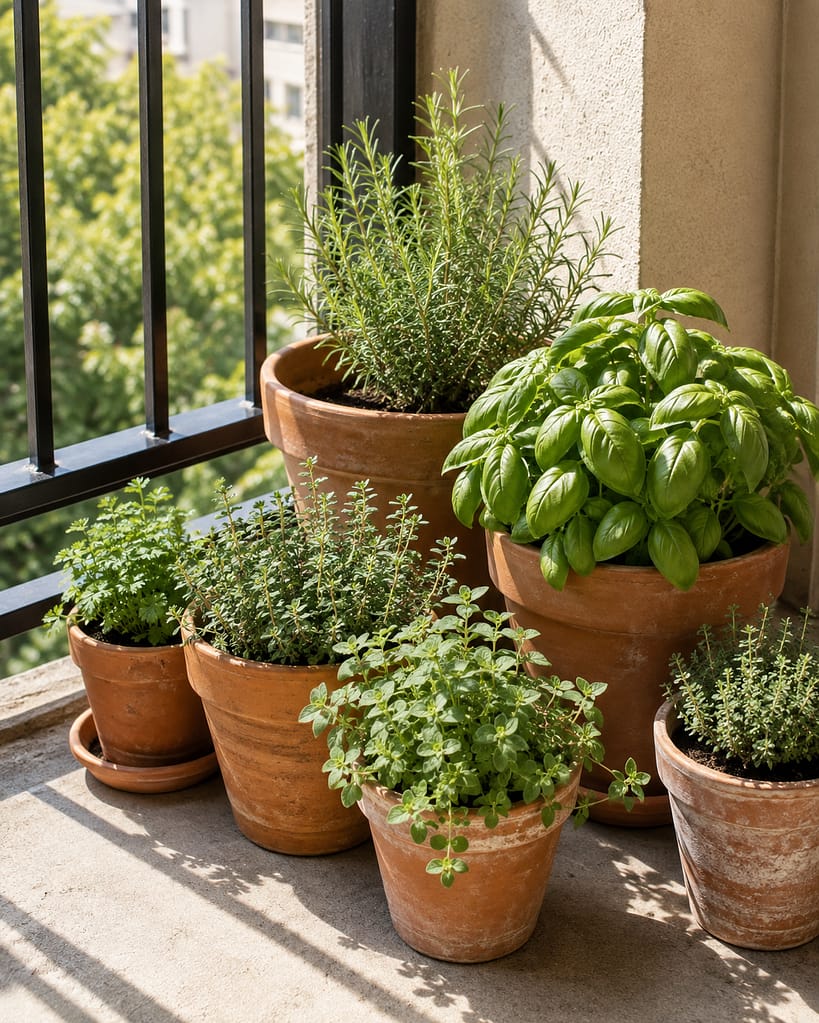
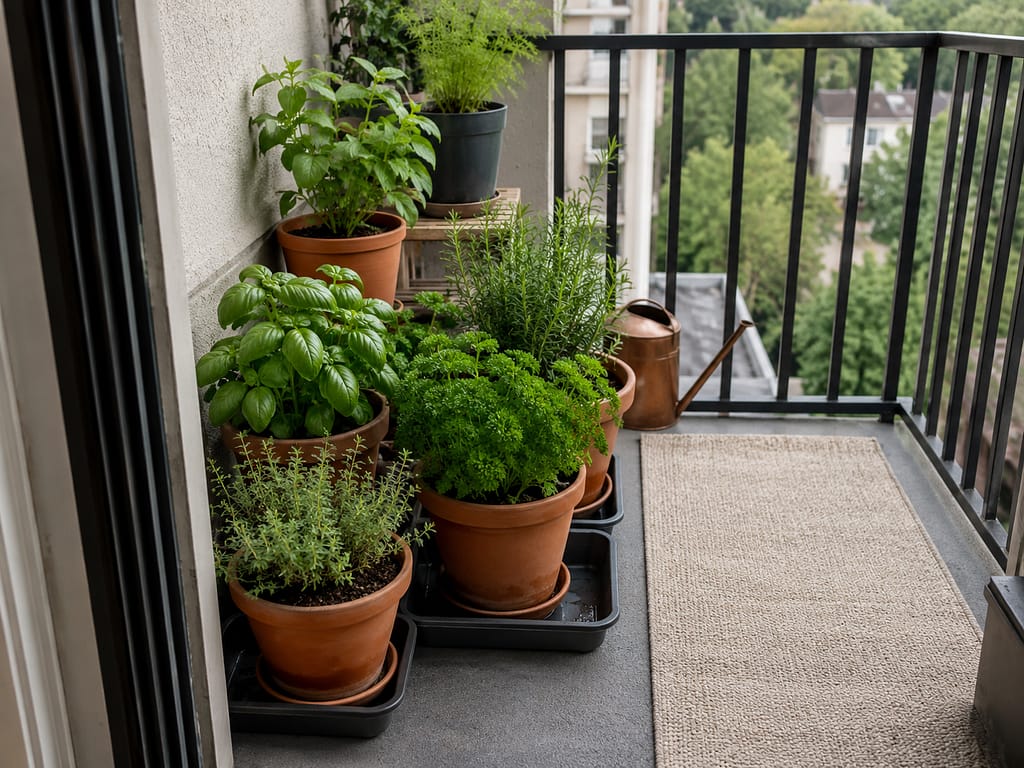
2. Group Herbs in Individual Terracotta Pots
Separate pots give you flexibility, which is especially useful on a balcony where sun and wind can vary from one end to the other. You can move sun-loving herbs toward the brightest spot and shift more delicate plants away from harsh afternoon exposure. Individual containers also make it easier to replace one struggling plant without disturbing everything else. Terracotta has a classic look, but any sturdy pot with appropriate drainage can work for an herb balcony garden.
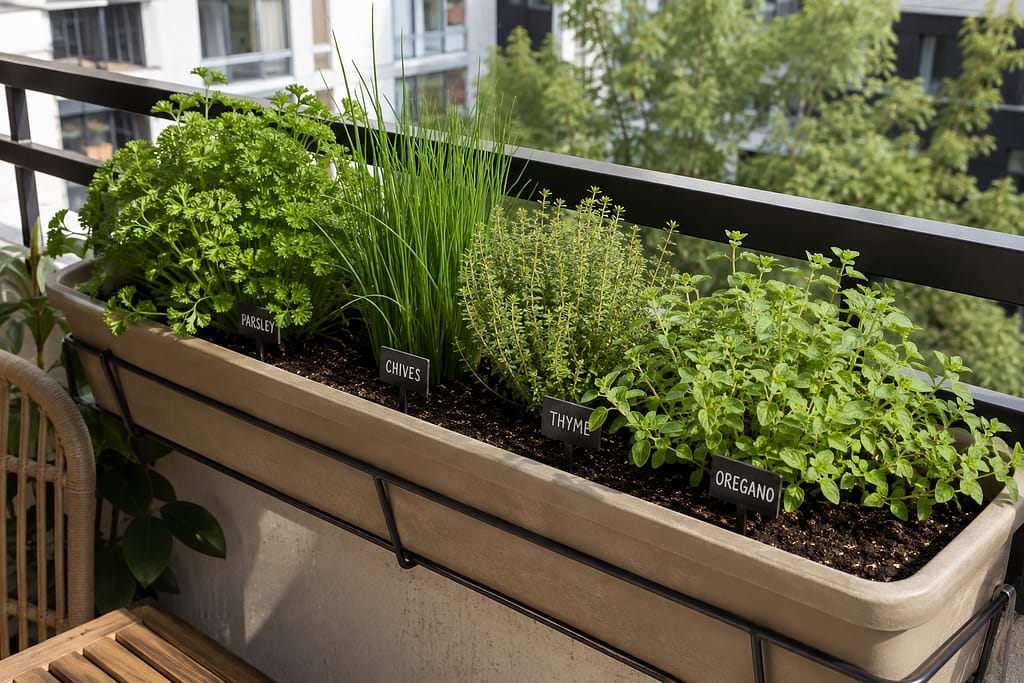
3. Use a Long Planter for a Compact Herb Row
A rectangular balcony herb garden planter is useful when floor space is limited but you have a sunny ledge, shelf, or protected railing area. Instead of scattering small pots everywhere, group a few compatible herbs into one long container with enough space for them to develop. Keep taller plants where they won’t shade shorter ones unnecessarily. Before filling the planter, make sure the surface beneath it can handle the weight of wet soil and that excess water has somewhere appropriate to drain.
Pro tip: Don’t assume every part of the balcony receives the same light. Check it in the morning, around midday, and later in the afternoon before deciding where your permanent growing area should go.
4. Hang Herb Planters From the Railing
Railing planters are one of the easiest ways to grow more without using valuable walking space. They work especially well for compact herbs and shallow-rooted edible plants, provided the planter is securely installed and permitted by your building rules. I’d always position containers so nothing can fall outside the balcony, particularly on an upper floor. Choose a setup that’s easy to reach from inside the railing—you’re much more likely to water and harvest herbs that don’t require awkward stretching.

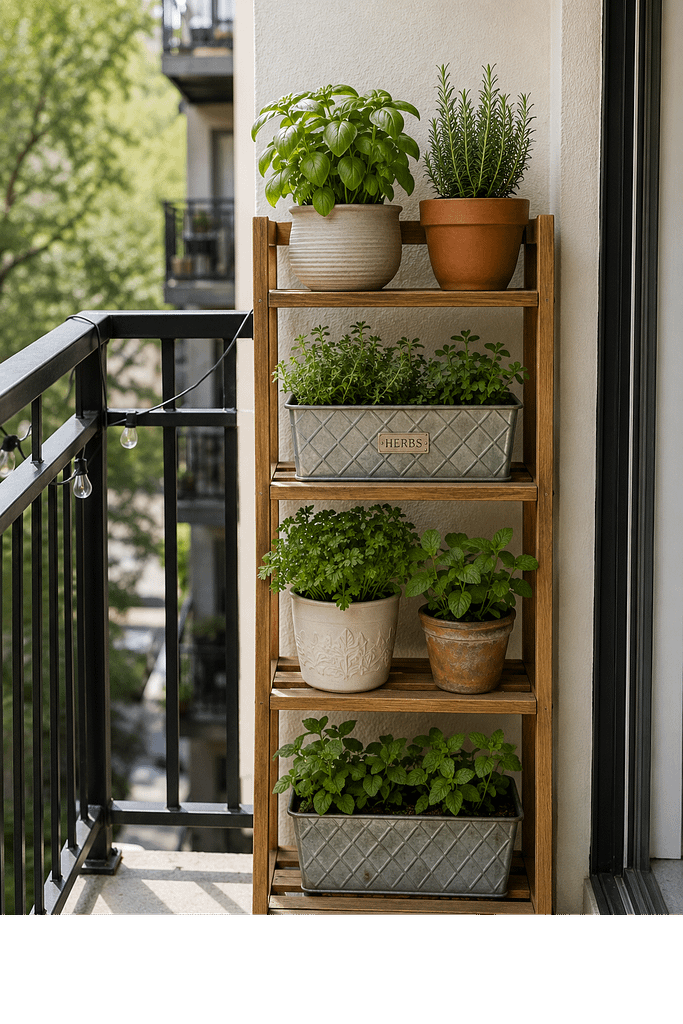
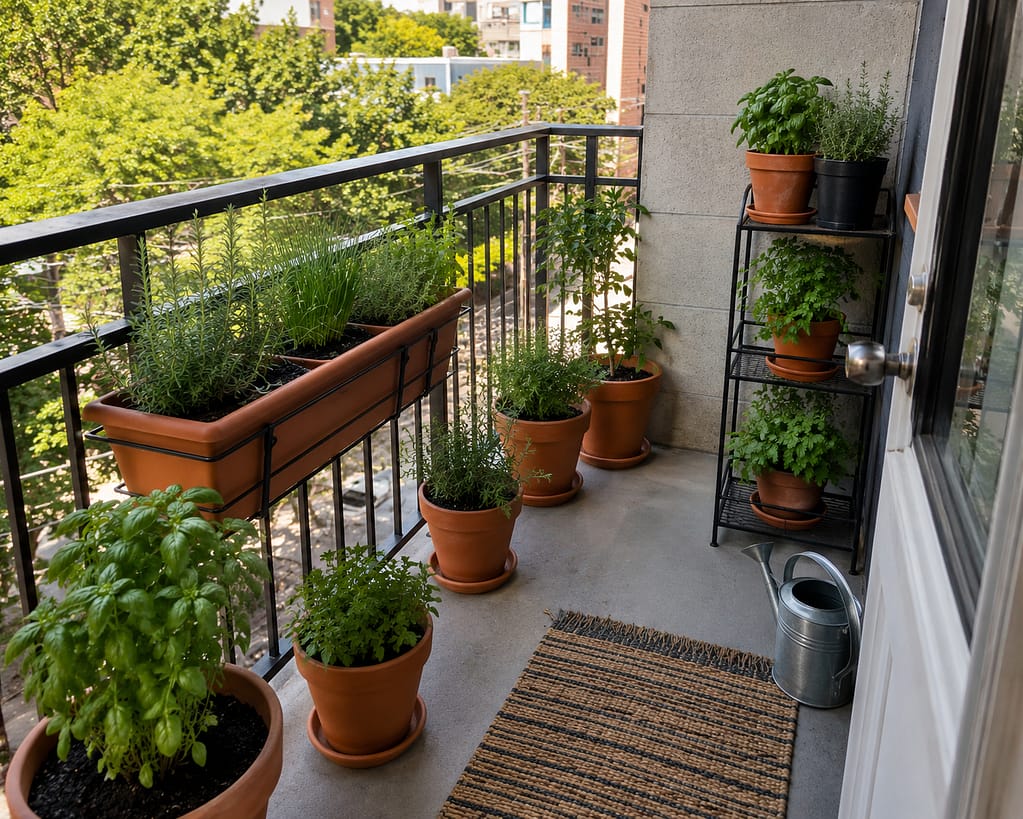
5. Build Upward With a Freestanding Plant Shelf
A narrow freestanding shelf can turn one small patch of balcony floor into several levels of growing space. Put herbs that enjoy stronger light toward the most exposed shelves and use lower levels for plants that can tolerate some shade. Open shelving is usually better than deep cabinets because air and light can still move around the pots. Just make sure the unit is stable and appropriate for outdoor use, especially if your balcony is exposed to wind.
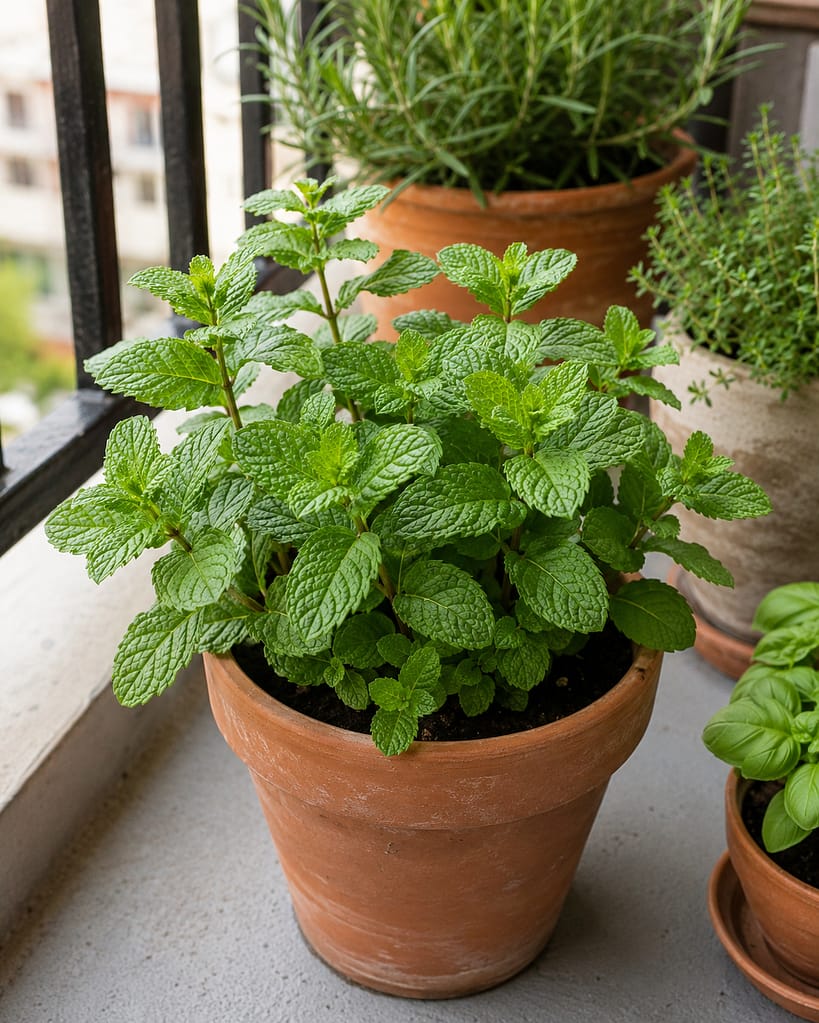
6. Keep Mint in Its Own Container
Mint is a satisfying herb to grow because a healthy plant can provide plenty of leaves for drinks, salads, and cooking. In a small container garden, I prefer giving it its own pot rather than mixing it closely with slower-growing herbs. That makes the plant easier to manage and lets you position it according to the conditions on your balcony. Keep an eye on the potting mix and plant itself rather than relying on a rigid watering calendar, especially during hot or windy weather.
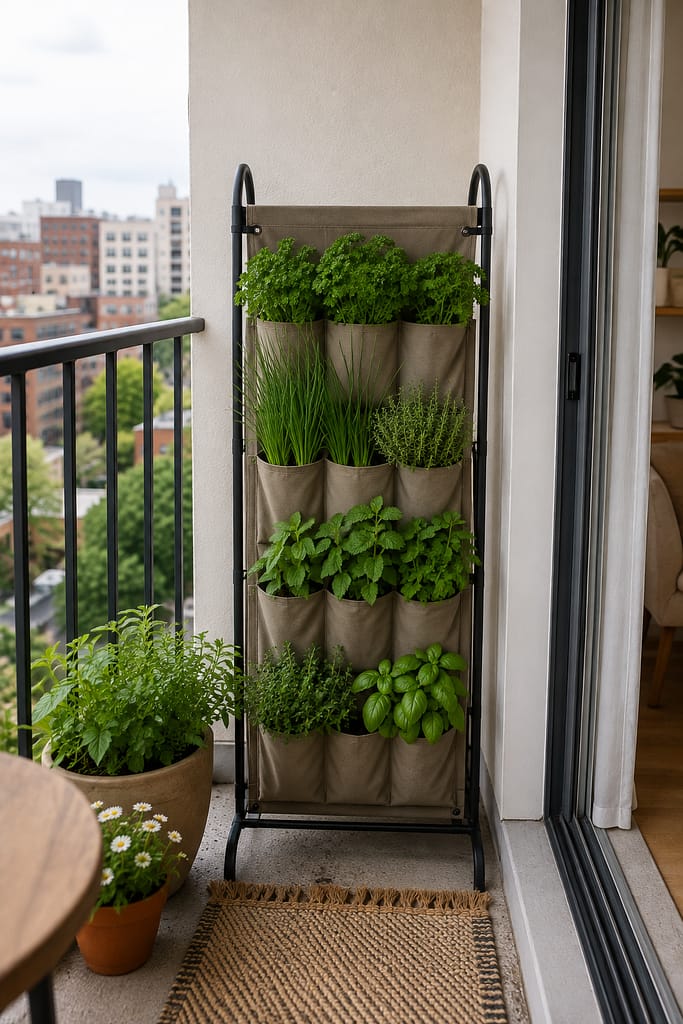
7. Create a Vertical Pocket Herb Garden
A wall-style pocket planter can hold several small herbs without taking up much floor space, making it useful for compact balcony herb garden apartments. Freestanding or securely supported systems are ideal where drilling isn’t allowed. Because smaller pockets can dry differently than large pots, check them individually instead of assuming the entire vertical planter needs the same treatment. Use plants you harvest frequently in the easiest-to-reach pockets, and leave enough room between them for light and airflow.
Budget tip: You don’t need matching pots. A group of inexpensive containers can look cohesive if they share one material, such as terracotta, or stay within a simple color palette.
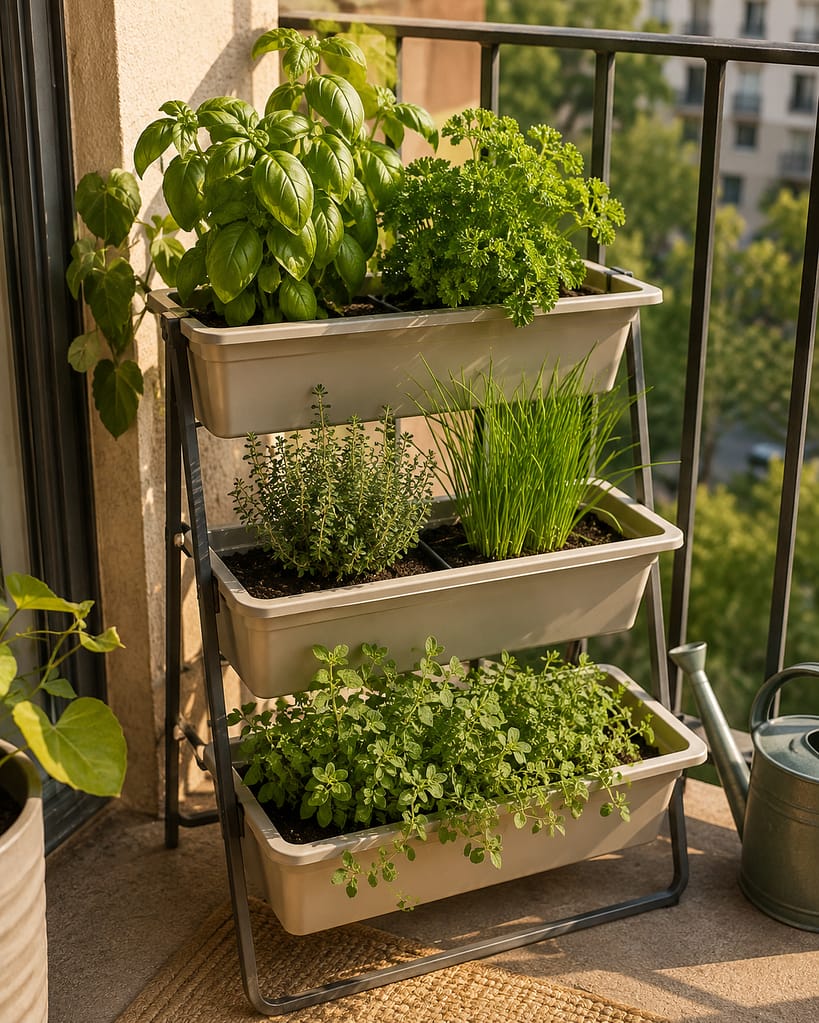
8. Use a Tiered Planter for Several Herbs
A tiered planter concentrates several plants into a small footprint while still giving each one its own growing area. This is especially helpful on a balcony that’s wider vertically than it is deep. Rotate or reposition the unit if one side consistently receives much more light than the other. I’d also avoid packing every level tightly at the beginning. Herbs become fuller as they grow, and a little breathing room makes harvesting and checking the soil much easier.
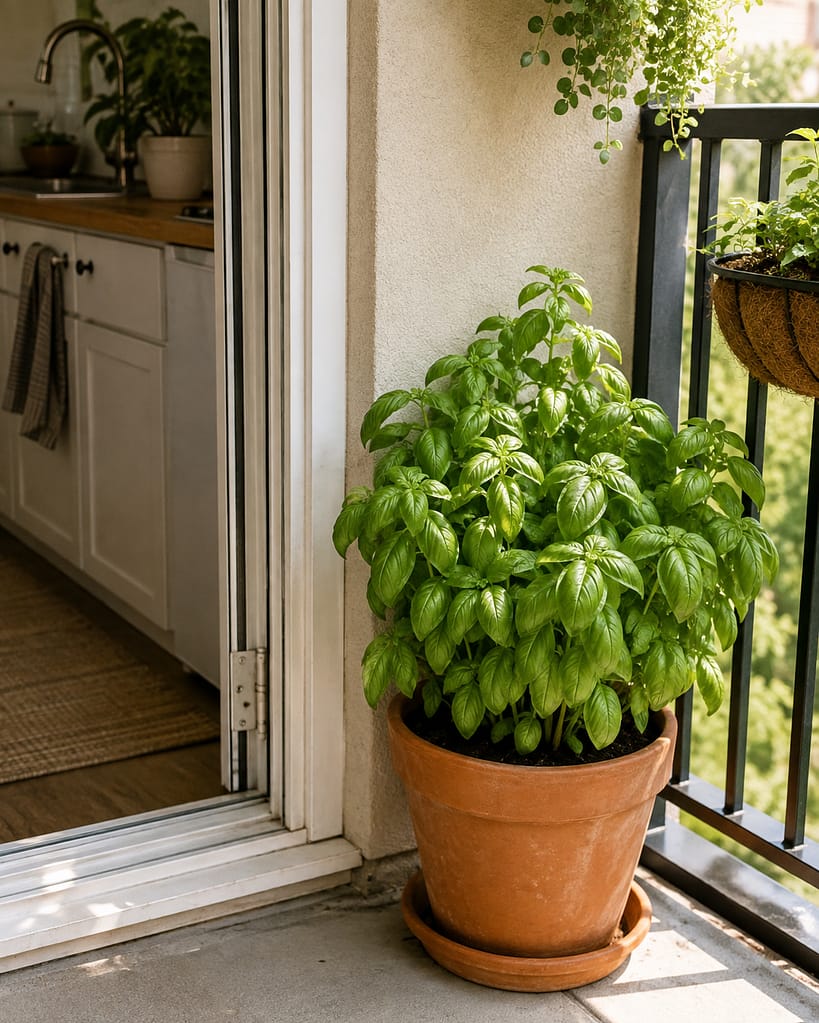
9. Grow Basil in Your Sunniest Useful Spot
If your balcony receives a generous amount of direct light during the growing season, basil is an obvious candidate. Keep it somewhere you can reach easily because regular harvesting is part of the pleasure of growing it. A pot near the balcony door often works better in daily life than one tucked behind larger planters. Watch the leaves and potting mix during very hot periods, since container plants can respond quickly to heat and drying conditions.
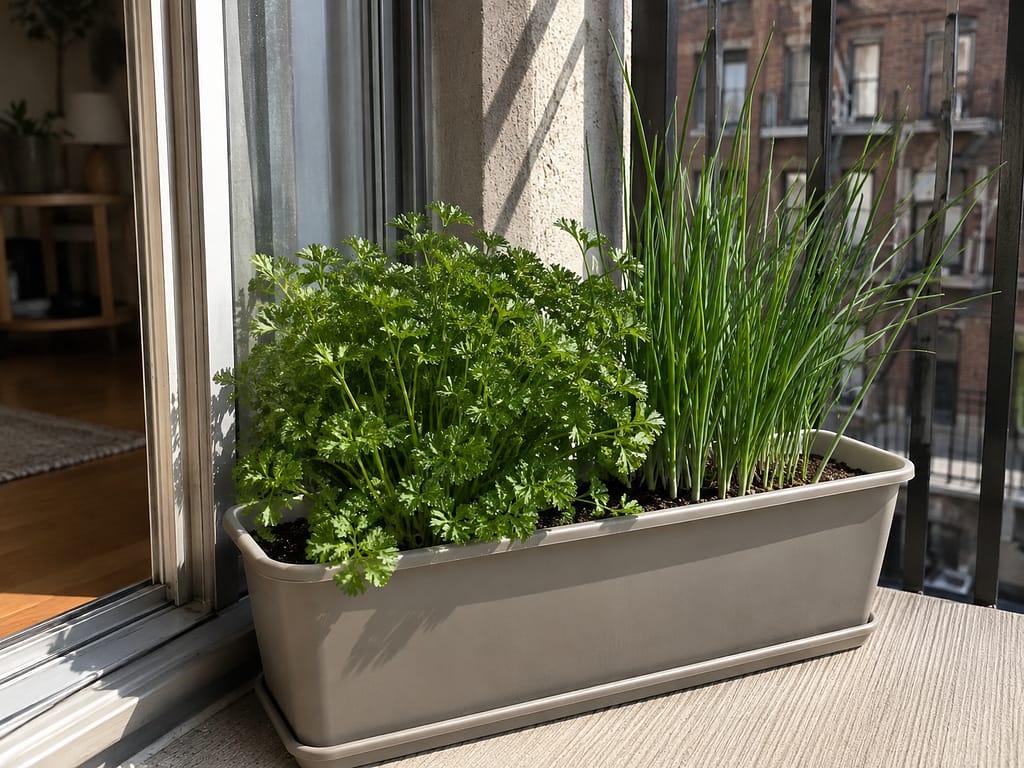
10. Try Parsley and Chives in a Shared Planter
Parsley and chives can make a useful culinary combination in a longer planter because both are easy to snip in small amounts as needed. Give each plant enough room rather than treating the planter like a tightly packed decorative arrangement. Place it somewhere with the best light available for the plants without assuming every balcony needs full all-day sun. A planter near the door is also convenient—you can cut what you need while cooking instead of turning herb harvesting into a project.
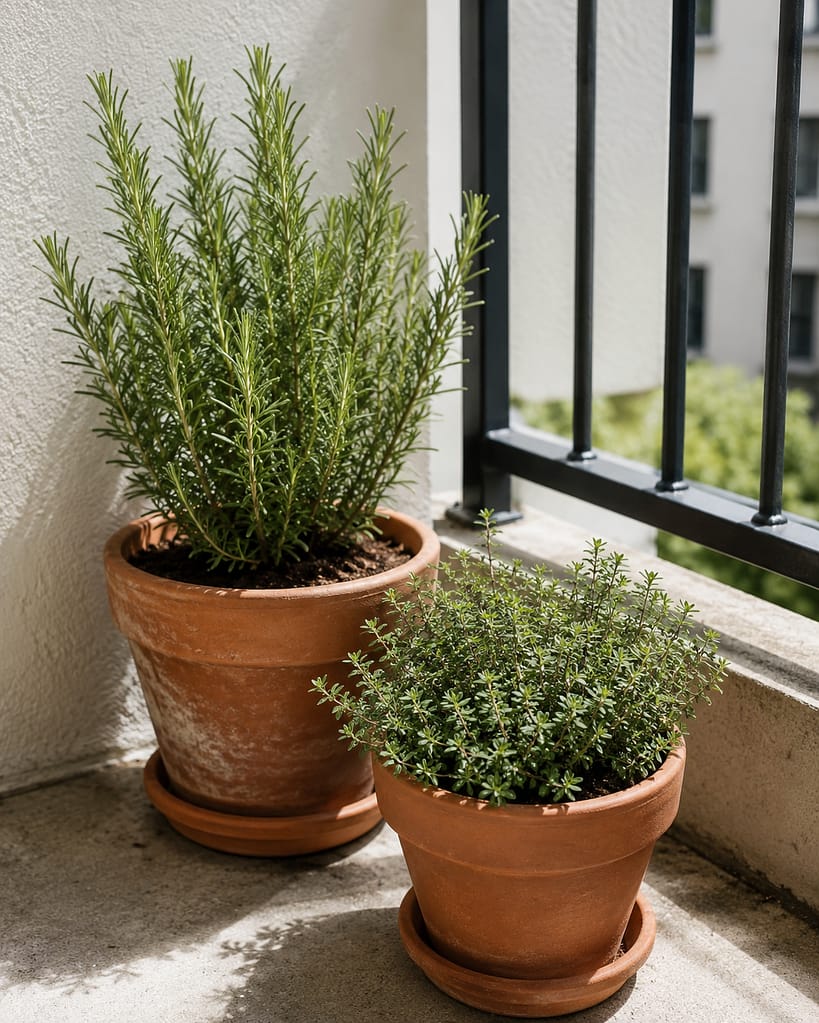
11. Dedicate a Pot to Woody Herbs
Rosemary and thyme bring a slightly different shape to a balcony garden than softer leafy herbs. Their textured stems and smaller leaves also look good alongside terracotta and simple planters without needing decorative extras. Give woody herbs their own containers or combine plants only when their growing needs are reasonably compatible. Since balcony microclimates vary so much, observe the plants rather than following generic advice too literally. Strong heat, reflected sunlight, and wind can all change how quickly a container dries.
Pro tip: Check soil moisture with your finger before watering instead of watering every pot automatically. Container size, wind, temperature, sun, and plant type can make two nearby pots dry at very different rates.
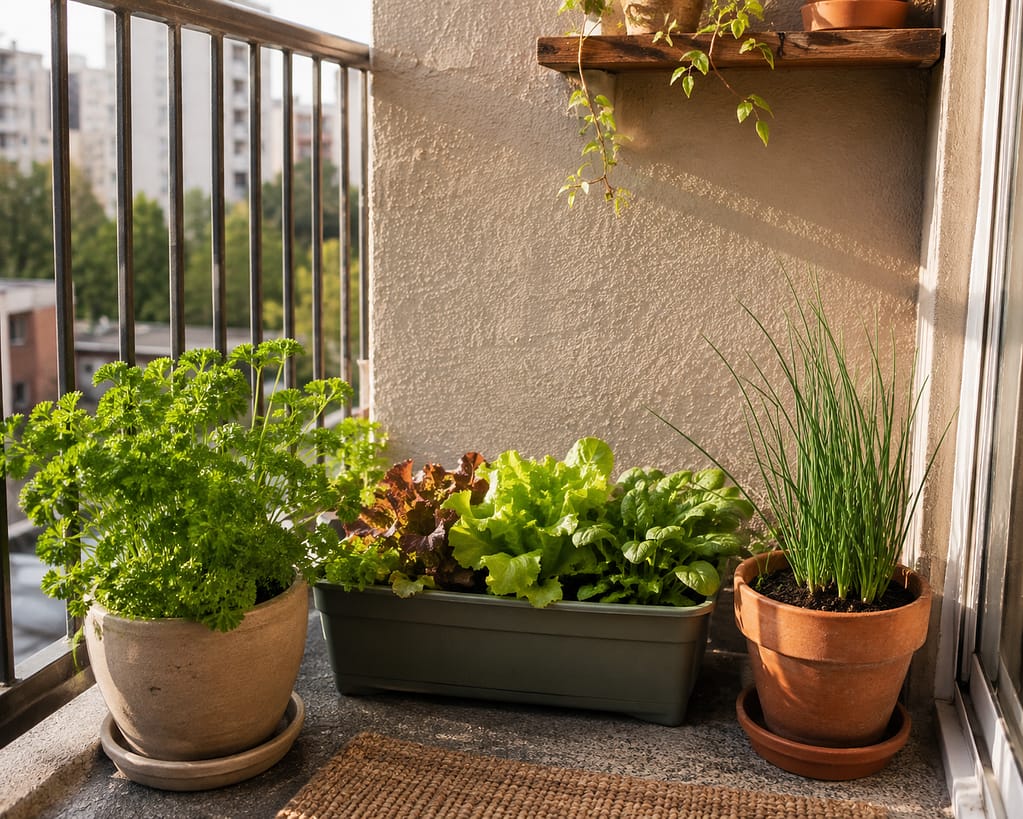
12. Add Leafy Greens Between Herb Containers
Your balcony doesn’t have to be herbs only. Compact leafy greens can add useful variety when your conditions suit them, especially during milder parts of the growing season. Use separate containers so you can adjust their position without disrupting the herbs. Leafy greens also make good use of low planters because you harvest from above rather than needing a tall structure. Start with a modest amount—you’re creating a usable kitchen garden, not trying to replace the produce aisle.
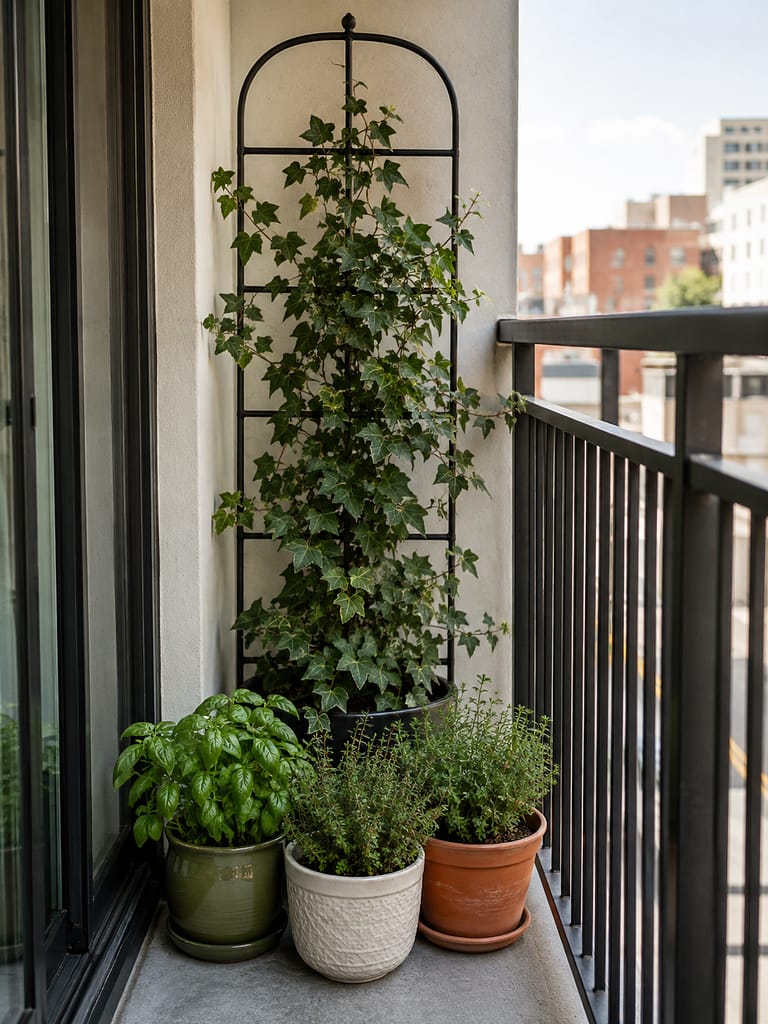
13. Train Ivy Up Instead of Letting It Spread
Balcony ivy can add greenery without consuming much floor area if you guide it vertically. Keep it in a container and provide an appropriate freestanding support or trellis rather than allowing it to attach itself to building surfaces. This matters in a rental where exterior walls, railings, and finishes may need to remain untouched. Ivy is primarily ornamental rather than edible, so I like using it as a green backdrop while keeping the accessible front row dedicated to herbs you actually harvest.
14. Protect Delicate Herbs From Strong Wind
Wind can be one of the biggest differences between gardening on a balcony and gardening at ground level. If your plants are constantly bending, pots are drying rapidly, or lightweight containers feel unstable, move delicate herbs closer to a protected wall or deeper into the balcony. Heavier pots can help with stability, but don’t overload the space without considering weight. Avoid creating solid makeshift barriers that could become unsafe in gusts; often, simple repositioning is the better first move.
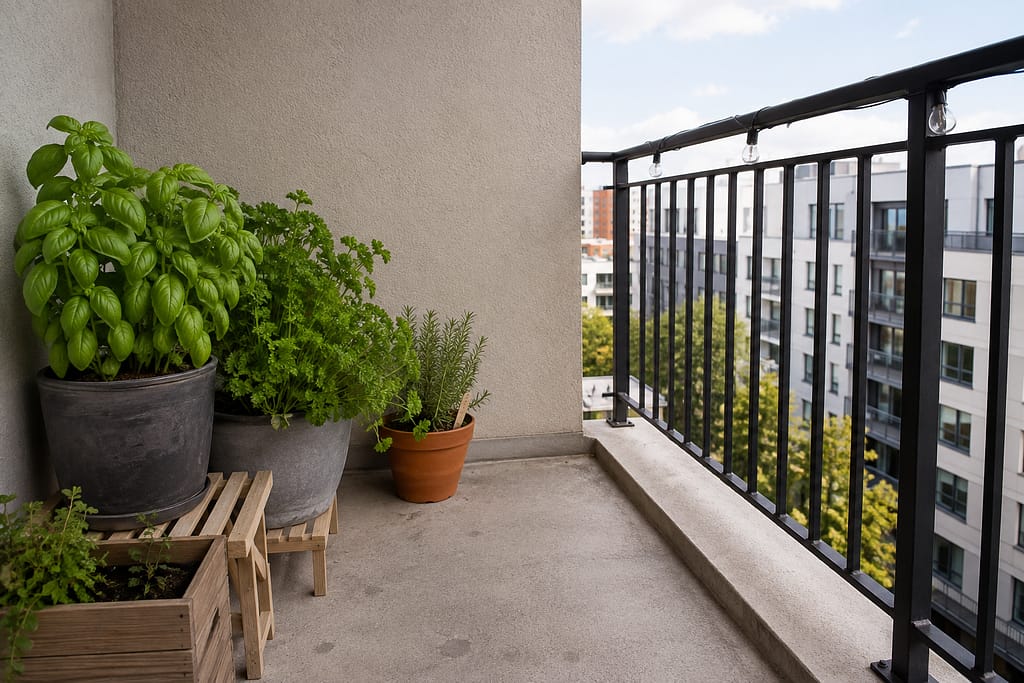
15. Use a Corner Plant Stand
Corners often go unused because they’re awkward for furniture, but they can be excellent for a compact herb balcony setup. A narrow corner stand lets you stack several small pots while keeping the central walking area open. Pay attention to shadow patterns, though—the lowest shelf may receive considerably less light than the top. Place plants accordingly and rotate pots if necessary. A corner setup is also easier to manage than having individual containers scattered around every edge of the balcony.
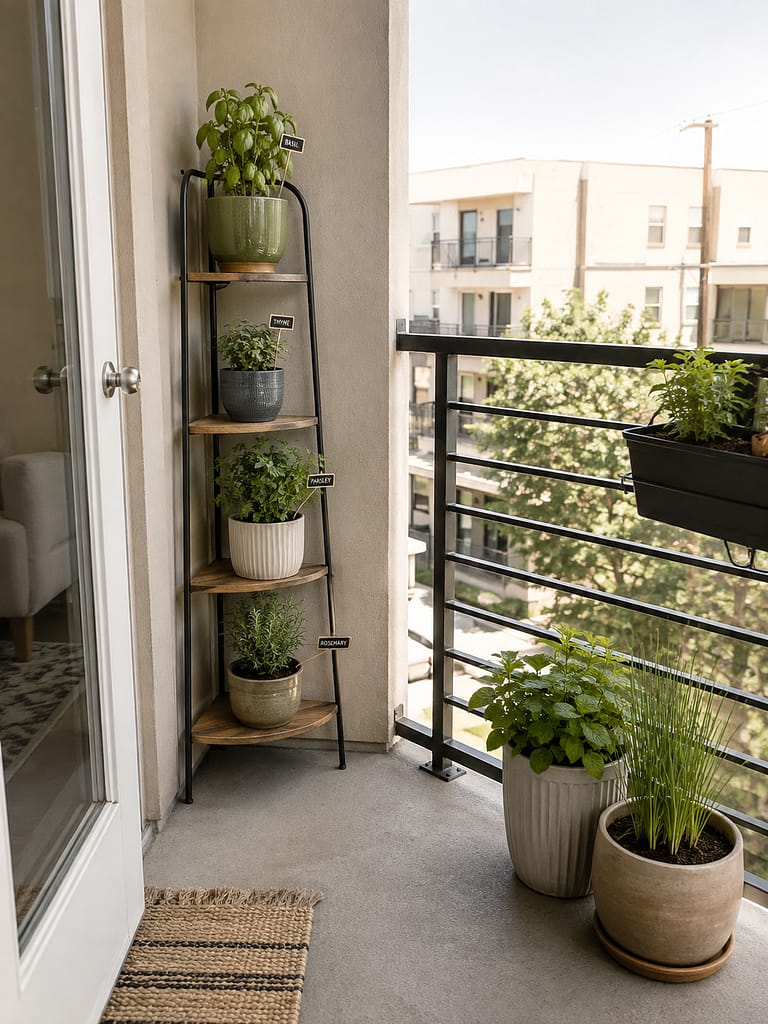
Budget tip: Before buying a vertical stand, see whether a small outdoor-safe shelf you already own can be repurposed. The best balcony setup is often made from pieces that can serve another purpose if you move.
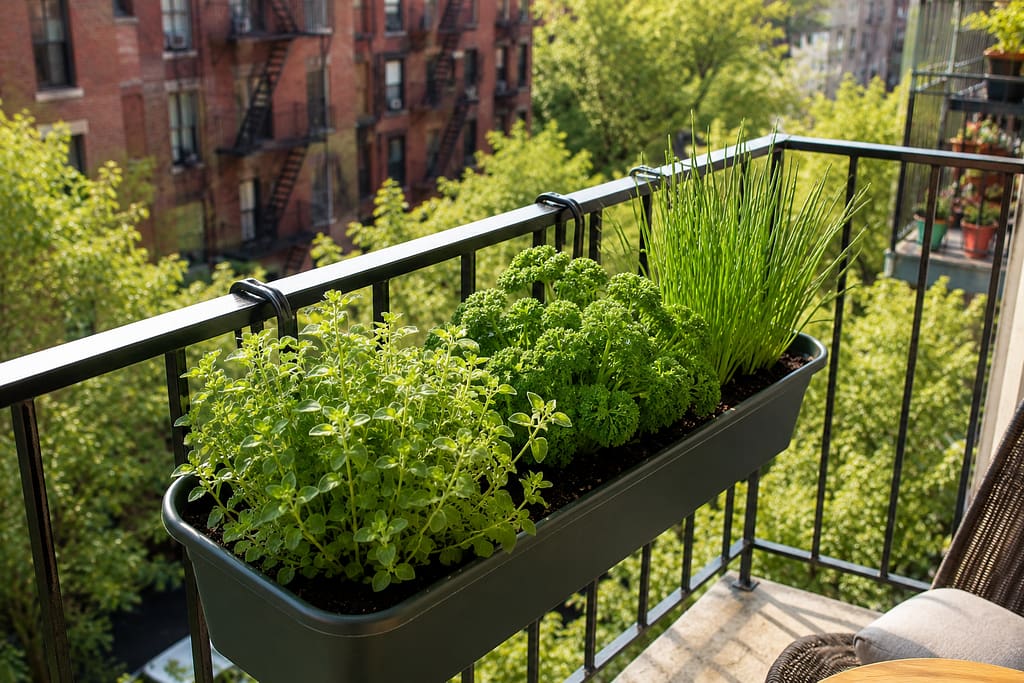
16. Grow Herbs in Window-Box-Style Planters
Window-box-shaped containers are useful even when you don’t technically have a window box. Their long, narrow footprint fits against railings, low walls, shelves, and balcony edges without taking up the depth of a large round pot. They’re particularly handy for creating a small run of cooking herbs. Avoid cramming too many plants into one box, since each one still needs space. If you’re placing the planter near a railing, keep it securely inside the balcony unless your building specifically allows another arrangement.
17. Put Frequently Used Herbs Closest to the Door
Convenience matters more than people think. If the basil is six pots deep behind a tall planter, you’ll probably use it less. Keep the herbs you reach for constantly near the balcony door, at a comfortable height, and move slower-growing or less frequently harvested plants farther away. This also makes quick plant checks easier. You’ll notice wilting leaves, dry soil, or pests sooner when the pots are part of your daily routine instead of hidden in the far corner.
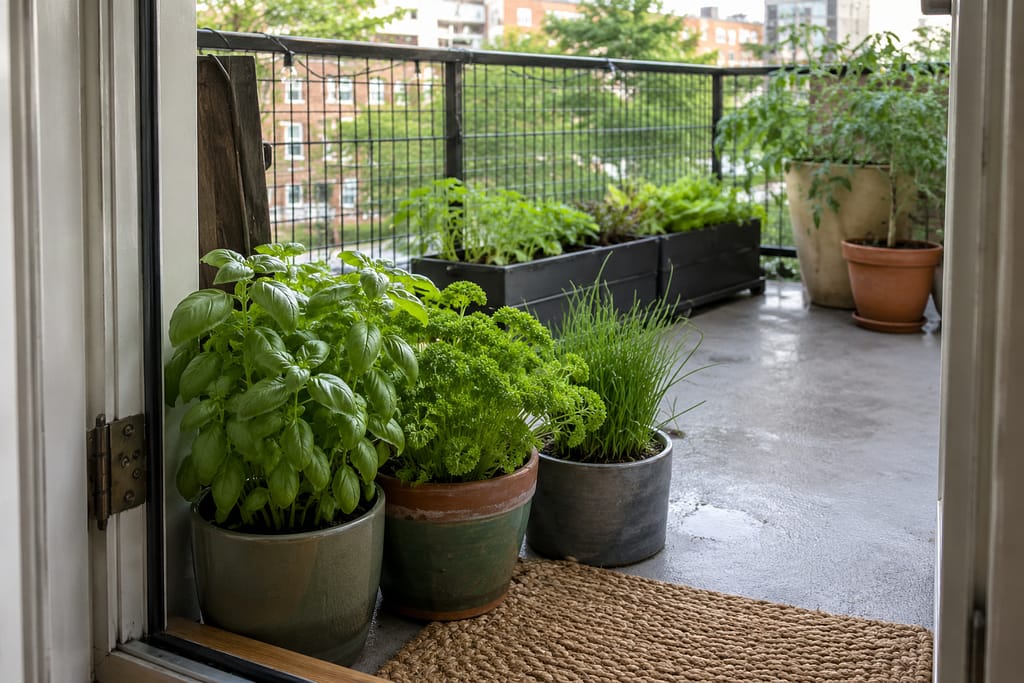
18. Collect Similar Pots Into a Watering Zone
Scattering planters randomly can make watering more tedious than it needs to be. Grouping containers with broadly similar conditions into one area makes it easier to check them without walking around the entire balcony. This doesn’t mean every plant gets the same amount of water; it simply makes your routine more efficient. Leave enough space to reach each pot individually. On an apartment balcony, also think about where drainage goes so runoff doesn’t create problems for neighbors below.
19. Add Self-Watering Containers for Thirstier Spots
Self-watering-style planters can be useful on sunny balconies where containers tend to dry quickly, especially if you sometimes miss a day of checking them. They’re not a substitute for paying attention to the plants, but they can make moisture management a little more forgiving. Choose a size that fits your space and follow the planter’s instructions rather than assuming every herb wants constantly wet soil. I’d use them selectively, not automatically for the entire balcony.
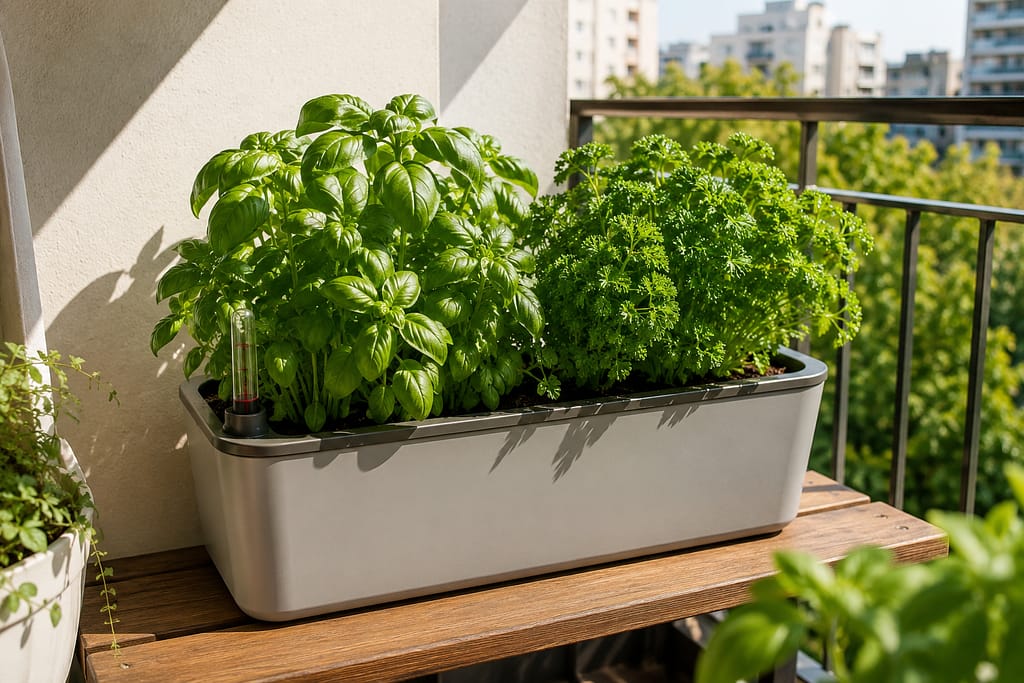
Pro tip: Put saucers or suitable drip trays where needed, but don’t let drainage water sit around indefinitely. Apartment balcony gardening works best when you think about the plants and the surfaces and neighbors around them.
20. Leave Room for Plants to Grow
The easiest mistake with balcony ideas involving pots and planters is making the space look “finished” on day one. Young herbs are small, but healthy plants can fill out quickly. Leave room around containers, avoid packing every shelf, and keep a clear path for watering and harvesting. A little open space also gives you somewhere to move a plant temporarily if the sun becomes harsher or the wind changes. Your balcony garden should be flexible enough to adapt as the season develops.
Frequently Asked Questions
What herbs grow well on an apartment balcony?
Basil, parsley, chives, thyme, rosemary, oregano, and mint are common container-garden choices, but the best options depend on the light, temperatures, and wind your balcony receives. Start with herbs you already use in the kitchen and learn how they respond to your particular space.
How much sun does a balcony herb garden need?
Different herbs have different light preferences, so there isn’t one perfect number for every balcony garden. Observe where direct sunlight falls throughout the day and choose plants that suit those conditions rather than forcing sun-loving plants into a heavily shaded spot.
How do you keep balcony herbs from drying out?
Use appropriately sized containers with drainage, check the potting mix regularly, and move plants away from extreme wind or reflected heat if they’re struggling. Larger containers may hold moisture differently than very small pots, so judge each plant individually instead of following one fixed watering schedule.
Can I hang planters on an apartment balcony railing?
Possibly, but check your lease, building rules, and the railing planter’s installation requirements first. For safety, keep containers securely attached and preferably positioned so pots, soil, or tools can’t fall from the balcony.
What is the best way to make a vertical herb garden on a balcony?
Freestanding tiered shelves, pocket planters, corner stands, and narrow plant racks can create vertical growing space without permanently attaching anything to the building. Place each herb according to the amount of light its level receives, since upper and lower shelves may have noticeably different conditions.

A Small Balcony Can Still Grow Plenty
You don’t need dozens of pots or a complicated planting system to make a balcony garden worthwhile. A few herbs you genuinely cook with, placed where they receive suitable light and where you’ll remember to check them, can be enough to turn an overlooked outdoor space into something useful.
Start small. Watch the sun. Notice the wind. Learn how quickly your containers dry, then add plants gradually instead of filling every inch on the first weekend.
Save or pin these small balcony herb garden ideas for later, and come back when you’re ready to plan the pots, planters, and vertical setup that fit your own apartment.