
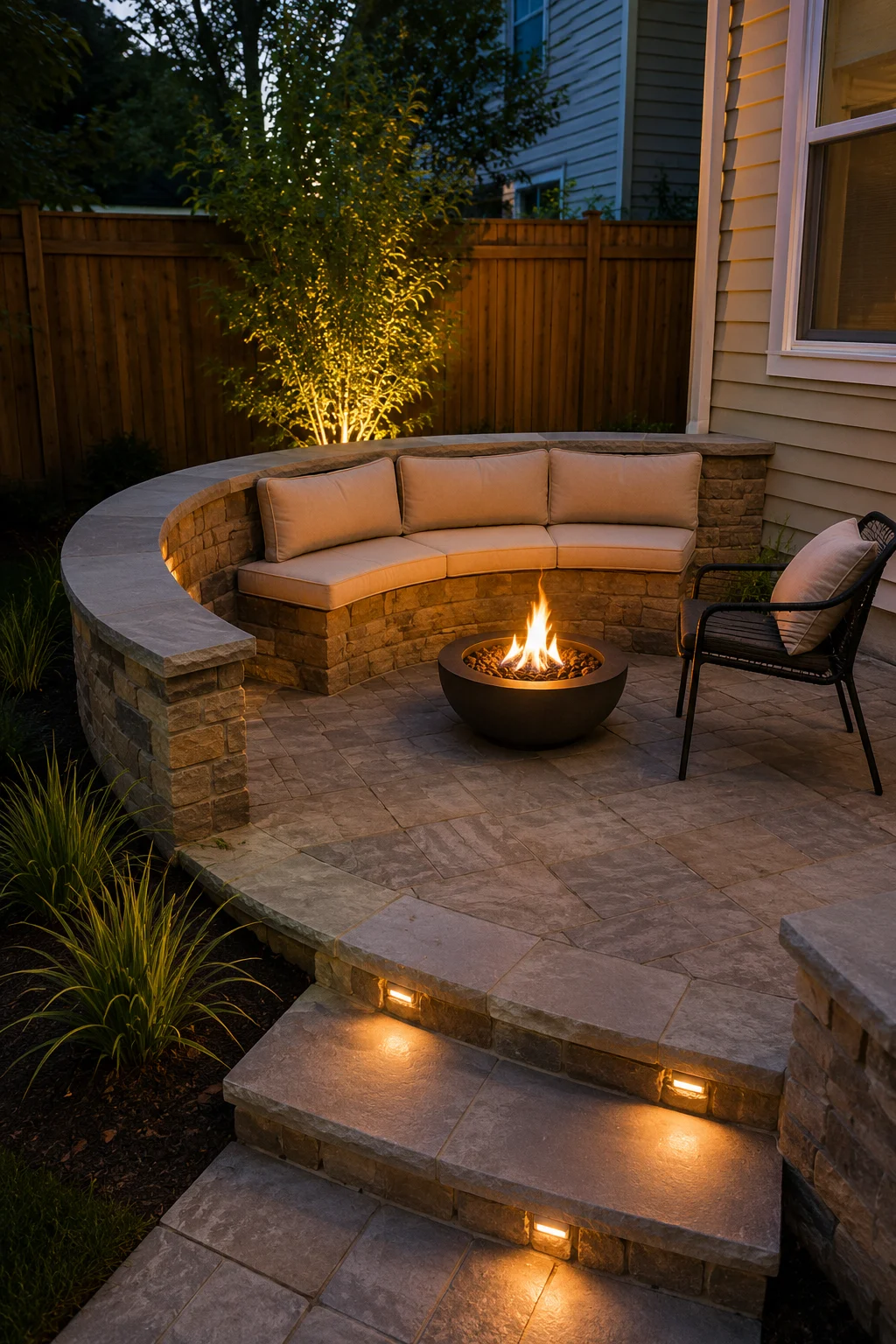
17 Cozy Small Backyard Ideas With Fire Features and Built-In Seating
The best small backyard ideas usually aren’t the ones that squeeze in the most furniture. A compact yard feels comfortable when the seating, fire feature, planting, and walking space are proportioned to one another. One well-placed built-in bench can often do more for a tiny backyard than four separate chairs fighting for floor space.
Fire features deserve the same restraint. A compact bowl or narrow fire table can anchor an outdoor gathering space, but a large pit dropped into the center of a small yard can interrupt circulation and push everyone uncomfortably close to the flames.
A useful place to start is simple: choose the seating zone first, then size the fire feature to the space that remains. The fire should support conversation, not dictate the entire layout.
Built-in seating makes that easier because it uses edges and awkward corners that freestanding furniture often ignores. Add restrained planting, practical lighting, and enough negative space to move around comfortably, and even a narrow townhouse yard can feel like a real outdoor room rather than leftover space behind the house.
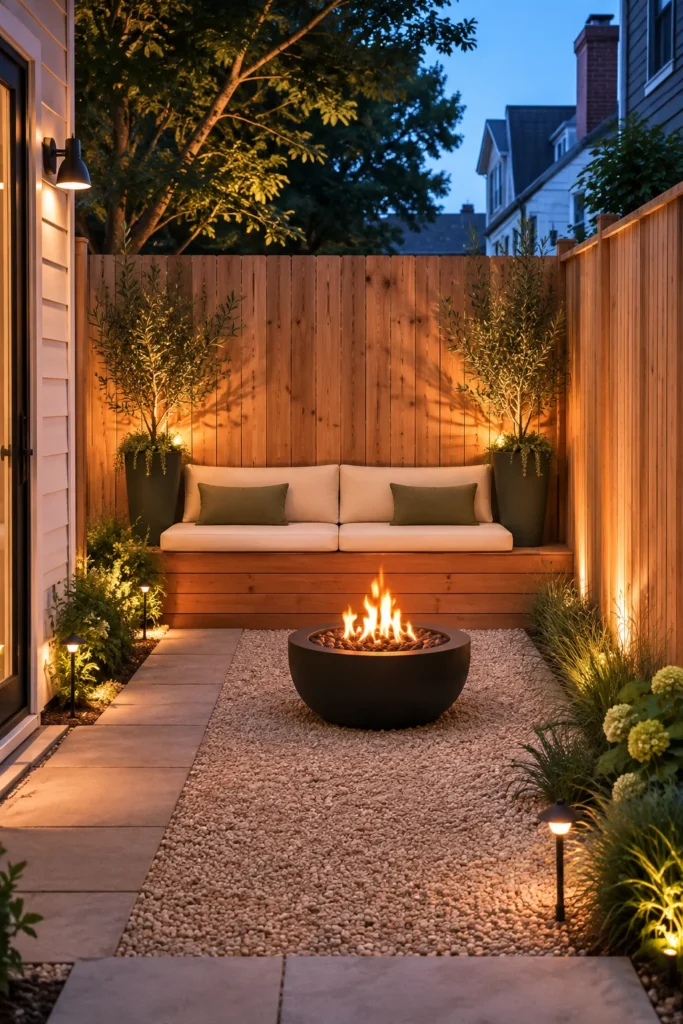
1. Build a Straight Cedar Bench With a Compact Round Fire Bowl
In an 8-by-12-foot fenced backyard, run a slim cedar bench along the rear boundary and keep the rest of the layout simple. Add weather-resistant cream cushions, two lumbar pillows, and a low black gas fire bowl several feet in front of the bench. Pale gravel underfoot keeps the surface visually light, while two tall planters behind the seating soften the fence without filling every inch with greenery.
This works because the built in seating stays on the perimeter. Instead of chair backs occupying the middle of the yard, most of the central area remains visually open.
A round fire bowl suits this arrangement because people naturally angle toward it, and the curved form contrasts nicely with the straight bench.
Leave one side of the fire zone completely open as the main walking path. Don’t surround the bowl with furniture simply because there’s technically room.
Check the manufacturer’s clearances, local rules, and the distance from fencing and cushions before choosing the exact fire-feature size. A smaller flame source with comfortable seating is more useful than an oversized centerpiece everyone has to avoid.
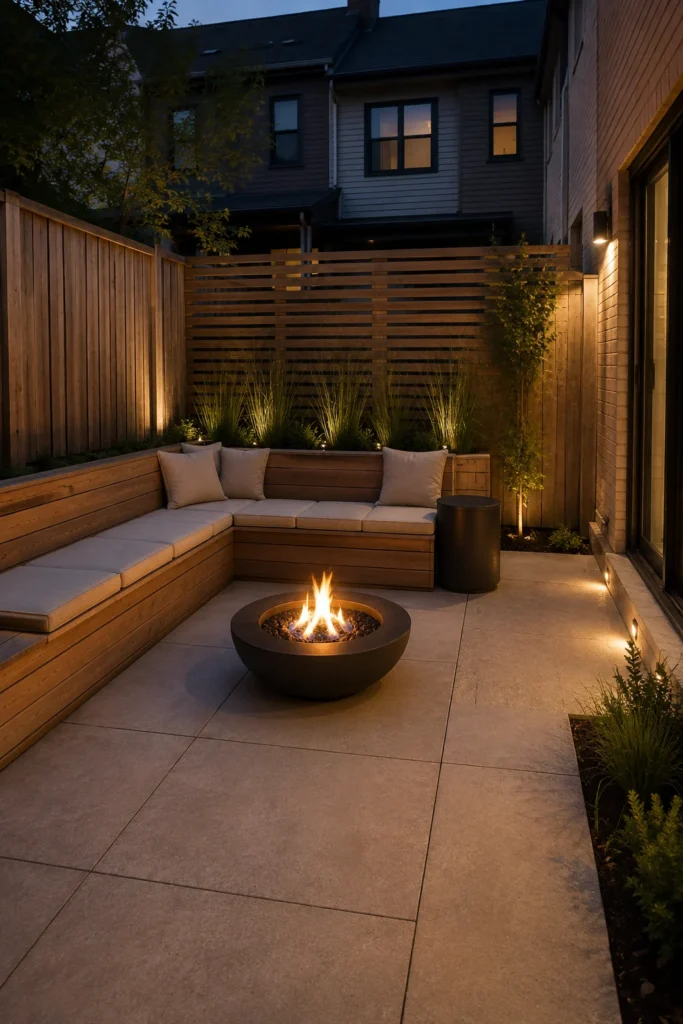
2. Wrap an L-Shaped Bench Around One Corner
An L-shaped bench makes excellent use of a backyard corner that would otherwise collect mismatched chairs or planters. Build the seating along the back fence and one side boundary, then place a low round fire bowl slightly off-center rather than directly in the middle of the yard.
In a 10-by-14-foot space, this can seat three or four adults comfortably while still leaving the opposite side open for circulation. Use warm wood seating, oatmeal cushions, dark metal accents, and a narrow planting strip behind the bench with upright grasses or compact shrubs.
The corner arrangement creates enclosure without physically boxing in the entire yard. It also makes conversation easier because people naturally face one another rather than sitting in a single straight line.
Don’t make the bench excessively deep. Deep lounge seating can consume more floor area than expected and leave too little space between knees and the fire feature.
If privacy is needed, use a slatted screen or a few tall planters behind the bench rather than surrounding the fire area with dense screening. Airflow still matters, especially in a compact yard.
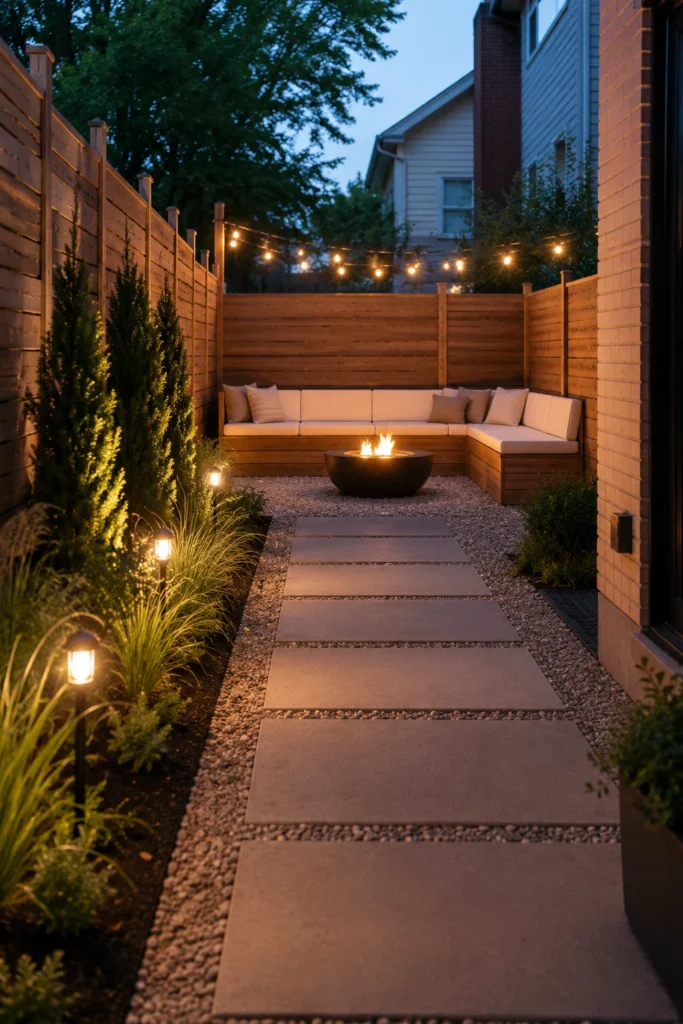
3. Put the Gathering Zone at the Far End of a Long Narrow Yard
A fire pit in the middle of a long narrow garden often turns the entire yard into an obstacle course. A better approach is to move the gathering area to the far end and preserve a clear path from the house.
For a yard roughly 8 feet wide and 20 feet long, install a built-in bench across the back fence and extend a short return along one side. Add a compact circular gas fire bowl in front of it, then use the first half of the yard as a simple transition zone with stepping stones, gravel, or one narrow planting strip.
This breaks the corridor into two visual zones instead of emphasizing its length.
The far-end seating also gives the yard a destination. From inside the house, the eye lands on cushions, planting, and warm light rather than staring down an empty fence tunnel.
Use a few larger plants rather than many tiny pots. A narrow yard becomes cluttered quickly.
For evening use, add path lighting along the approach because firelight at the far end won’t safely illuminate the entire route.
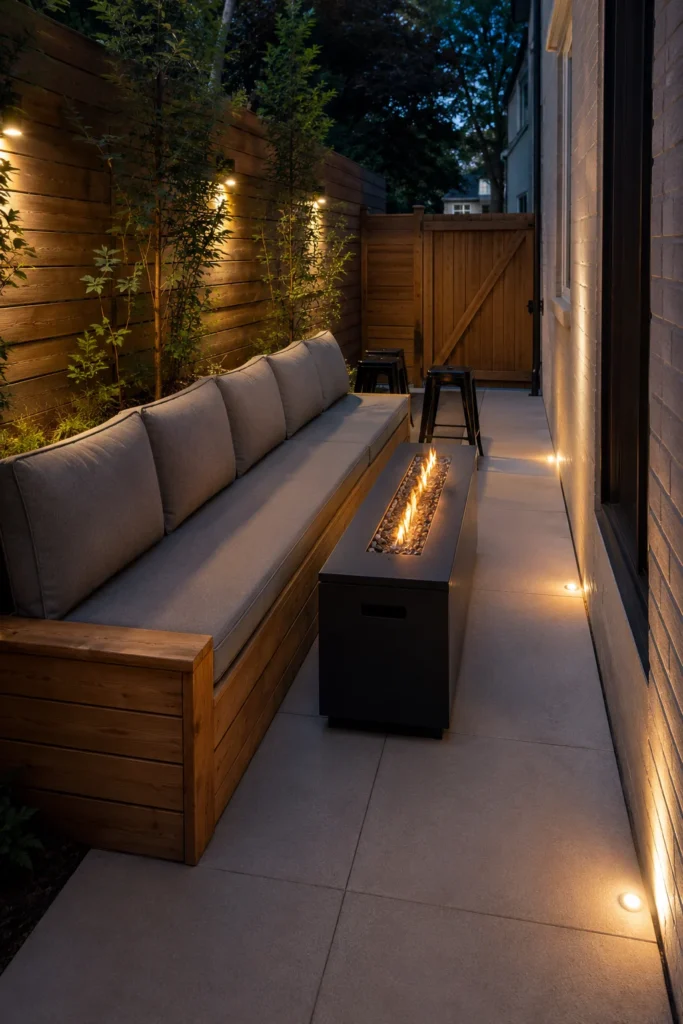
4. Pair a Slim Linear Fire Table With a One-Sided Bench
For an especially narrow yard, a rectangular fire table can work better than a round pit because its shape follows the geometry of the space. Run a built-in bench along one side fence and position a slim linear gas fire table parallel to it, leaving the opposite side as the main walkway.
Keep the bench relatively shallow and use upright back cushions rather than oversized lounge pillows. A 30-inch-deep sofa-style bench can feel luxurious on a large patio but may be too bulky in a yard only 7 or 8 feet wide.
The linear layout feels orderly because each element reinforces the direction of the space. It also creates a real outdoor gathering space without requiring furniture on all four sides.
A pair of lightweight stools can be brought in when extra seating is needed and stored elsewhere the rest of the time.
Choose noncombustible paving around the fire feature as appropriate for the specific unit, and follow all required clearances. In a very tight side yard or heavily enclosed space, warm lighting may be the better choice than open flame.
5. Create a Brick Courtyard With a Built-In Masonry Bench
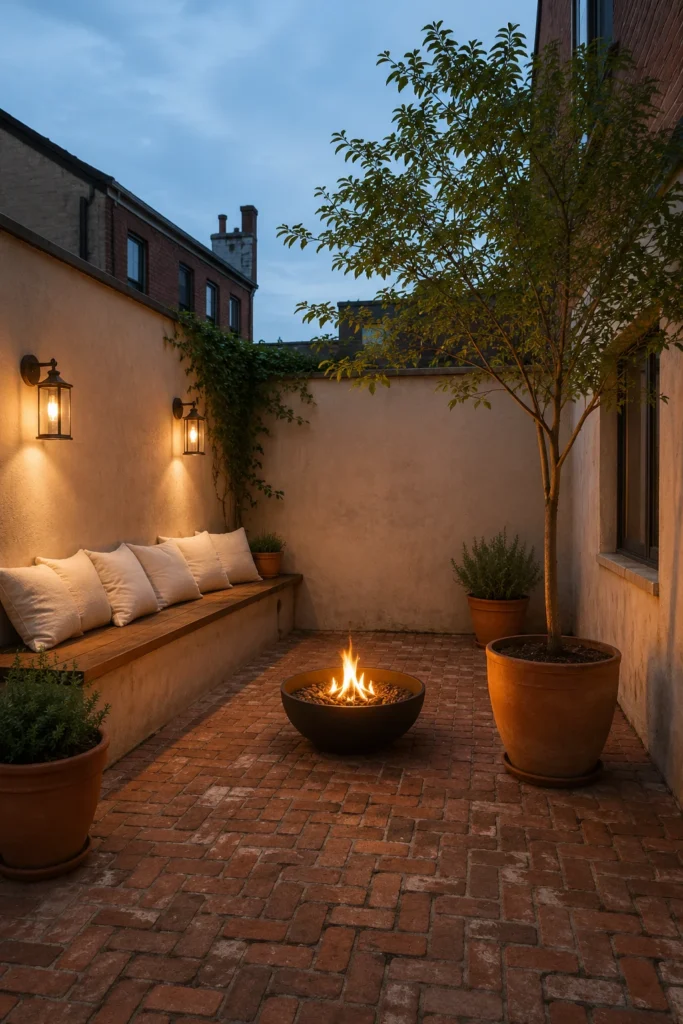
Brick paving can make a compact courtyard feel established and warm without requiring much decoration. Along one masonry wall, build a simple rendered or brick seat wall with a wood cap and loose cream cushions. Place a small round fire bowl in the open center of the courtyard and keep planting concentrated in two or three substantial containers.
This works particularly well in beautiful small courtyard gardens because the architecture already provides enclosure. You don’t need to add multiple screens, rugs, and furniture pieces to manufacture coziness.
One focal tree in a large container can provide height, while a pair of wall sconces makes the space usable after the fire is turned off.
Be conservative with the fire feature in a walled courtyard. Airflow, wall materials, overhead conditions, local restrictions, and manufacturer specifications all matter. In some enclosed courtyards, a fire feature may simply not be appropriate.
The masonry bench is permanent, so plan comfort before construction. A beautifully built seat that’s too upright or too shallow won’t become more comfortable because the courtyard looks good.
6. Add Storage Under a Built-In Bench
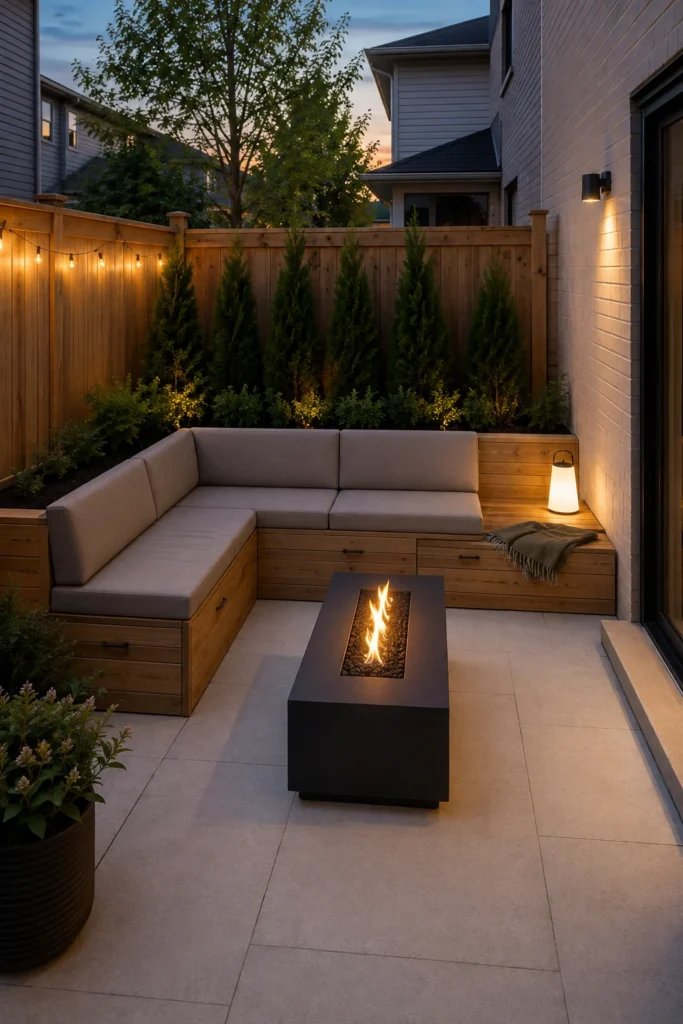
In a tiny backyard, a bench can work harder than simply providing seating. Build a straight or L-shaped bench with weather-conscious storage compartments below the seats, then use a compact fire table in front.
The storage is useful for outdoor cushions, lightweight throws, or small garden tools when they’re dry and clean. It eliminates the need for a separate deck box occupying precious floor area.
Choose a bench design with easy-access lids or doors and enough ventilation and drainage for exterior conditions. Not every type of cushion can simply be sealed into a damp compartment after rain.
Keep anything flammable, fuel-related, or unsafe away from the fire feature and out of bench storage near the heat source.
Visually, the bench can stay quite simple: natural wood, taupe cushions, charcoal fire table, and a narrow strip of evergreen planting behind it.
This is one of the more functional small outdoor backyard ideas because it solves two space problems at once. Just remember that built-in storage is fixed, so think about future access before fastening everything permanently against a fence.
7. Use a Low Concrete Bench for a Clean Modern Courtyard
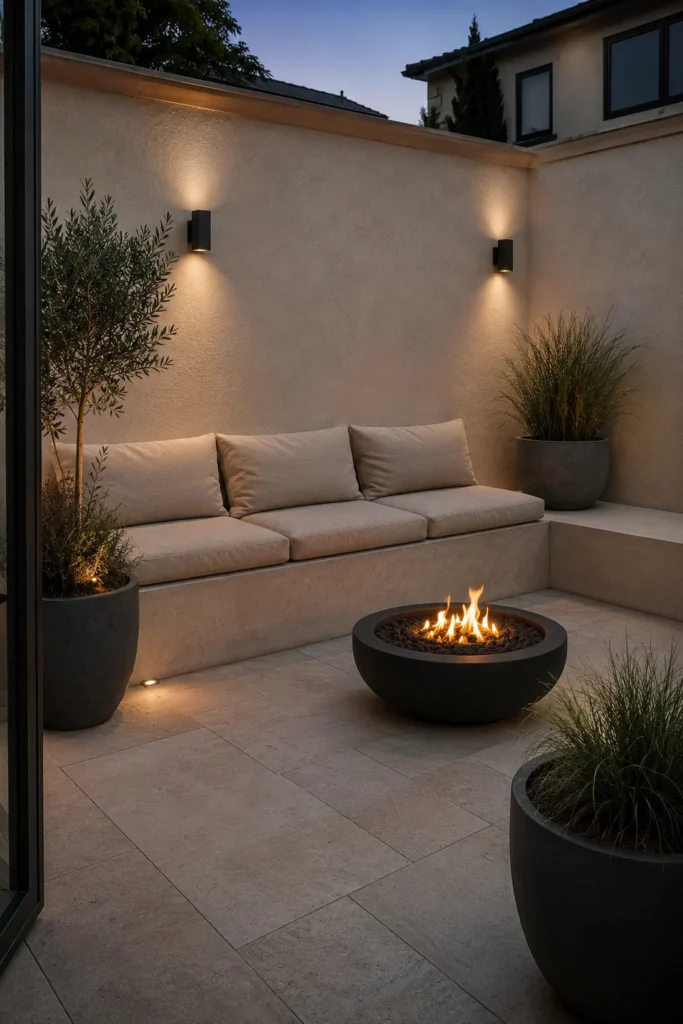
For readers drawn to clean garden ideas, reduce the number of materials rather than adding more decoration. A low pale-concrete bench, one black fire bowl, simple stone paving, and repeated olive-green planting can be enough.
In a 10-by-12-foot courtyard, run the bench along one wall and soften it with two or three thick seat cushions in muted sand. Add a compact matte-black gas bowl in front and use only three substantial planters instead of filling every corner with small pots.
The limited palette helps the courtyard feel larger because your eye isn’t constantly stopping at a new finish or color.
Concrete seating also has useful visual weight. It makes the boundary feel architectural, but it needs cushioning to be genuinely comfortable.
Avoid covering every wall in dark finishes. Black fences, black cushions, dark pavers, and a black fire feature together can make a small enclosed yard feel much heavier than intended.
For evening visibility, use discreet wall lights or low pathway lighting rather than relying entirely on the fire.
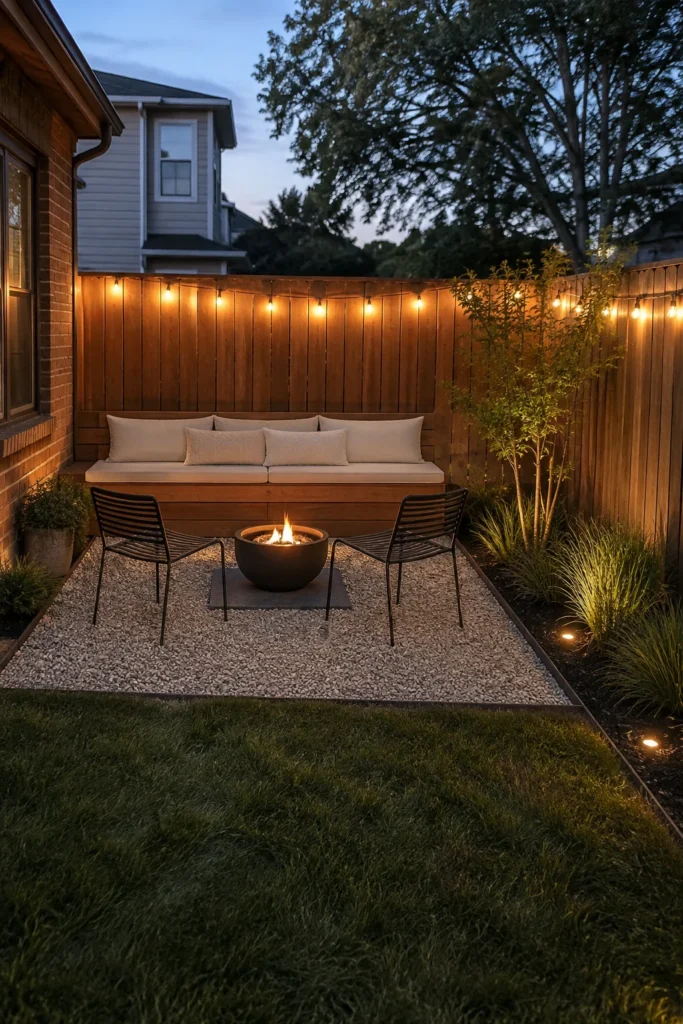
8. Build a Gravel Fire Zone Around a Wood Bench
Gravel is useful when you want a lower-maintenance backyard surface without making the entire yard feel hard. Create a defined gravel gathering zone at one end of the yard, install a built-in wood bench along the fence, and place a compact fire pit or gas bowl in front.
This works well in a modest suburban yard where a small patch of lawn or planting can remain elsewhere. The change in ground material tells the eye that the seating area is its own outdoor room.
Use one or two movable metal chairs opposite the bench if the space allows. That creates seating for four without permanently filling every side of the fire feature.
Gravel isn’t maintenance-free. It can migrate, collect leaves, and require occasional leveling. Still, it avoids the visual bulk of a large paved patio and can be a practical choice depending on drainage and accessibility needs.
Use edging to keep it contained, and place the fire feature on the stable, noncombustible base required by its manufacturer. Nearby planting should soften the scene without leaning over the flame zone.
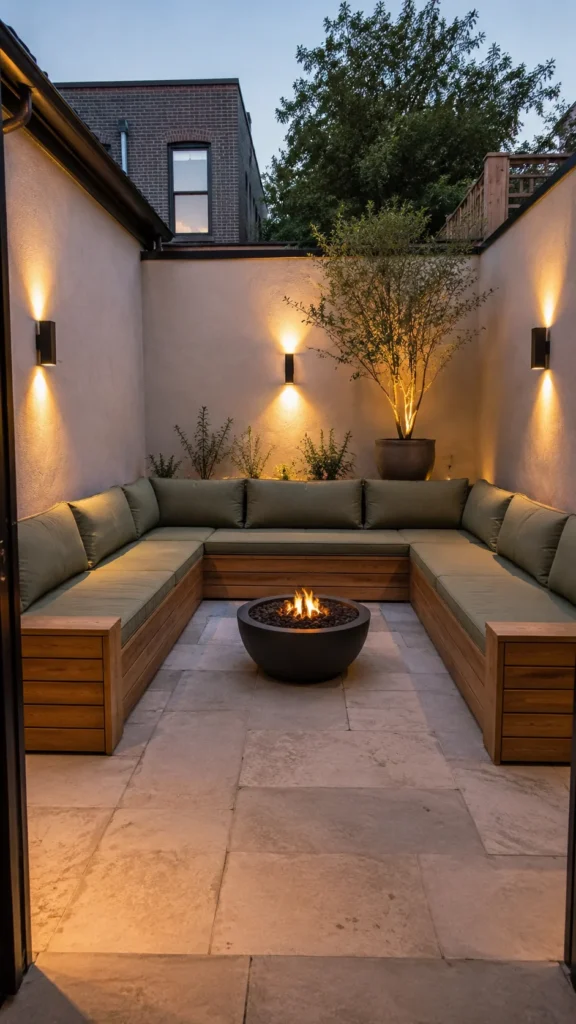
9. Design a U-Shaped Courtyard Bench for Three or Four People
A U-shaped bench sounds large, but in the right courtyard it can be remarkably efficient because all the seating stays attached to the perimeter.
Use this in a square or nearly square courtyard around 11 by 11 feet. Keep the side returns short, leave the entrance completely open, and use a small round gas fire bowl rather than a broad masonry pit.
The U shape creates a natural conversation zone for three or four adults. Everyone faces inward, and no freestanding chair backs interrupt the central sightline.
Use warm wood seating against pale walls, muted green cushions, and a single focal tree or tall planter in one back corner.
The danger is overbuilding. If the bench wraps too far around the courtyard, getting in and out becomes awkward and the center starts to feel trapped. Preserve a generous opening.
Because courtyard walls already create strong enclosure, avoid adding tall privacy screens immediately around the fire area. Good airflow matters more than making every side visually private.
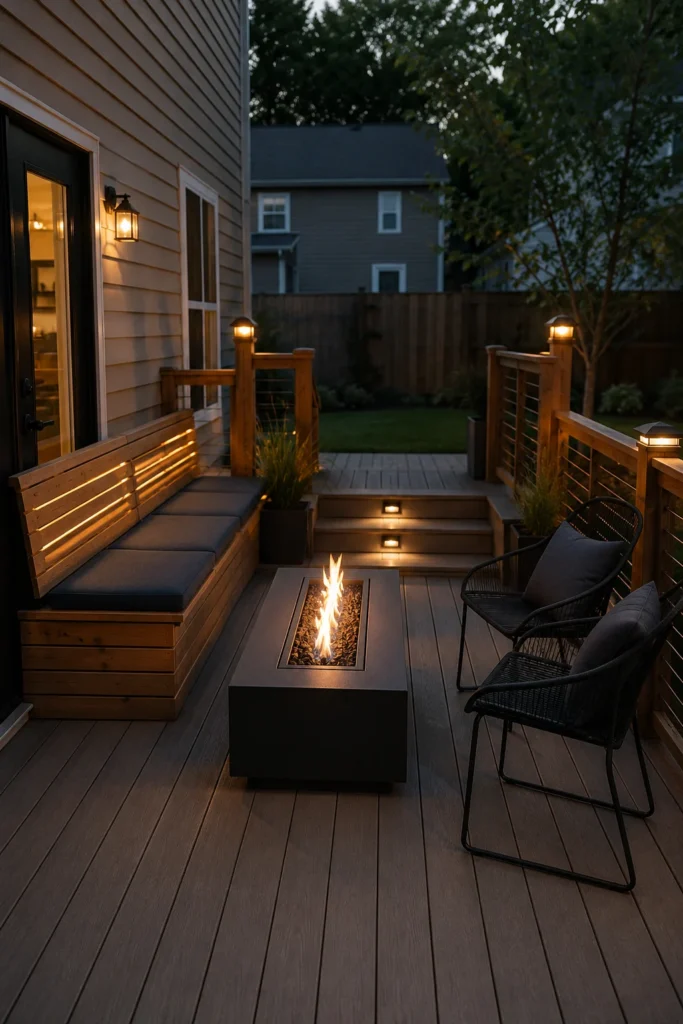
10. Add a Bench to the Edge of a Small Deck With a Fire Table
On a modest deck, built-in seating can replace a bulky outdoor sofa. Run a wood bench along the outer railing or one solid boundary, add charcoal or cream cushions, and position a compact rectangular fire table parallel to it.
The alignment matters. A long fire table echoes the bench and keeps the layout narrow, which can preserve a direct route from the back door to the yard or steps.
A pair of movable chairs opposite the bench can create seating for four when needed and be removed when the deck is being used more casually.
Composite decking can reduce some routine maintenance compared with untreated wood, but the fire feature still needs to be specifically suitable for the surface and installed according to its manufacturer requirements. Don’t assume every fire table is safe on every deck.
Firelight also doesn’t illuminate stair edges reliably. Add low stair or railing lights so people can move safely after dark.
The result feels cozy because the seating defines one side of the deck rather than because every square foot is filled.
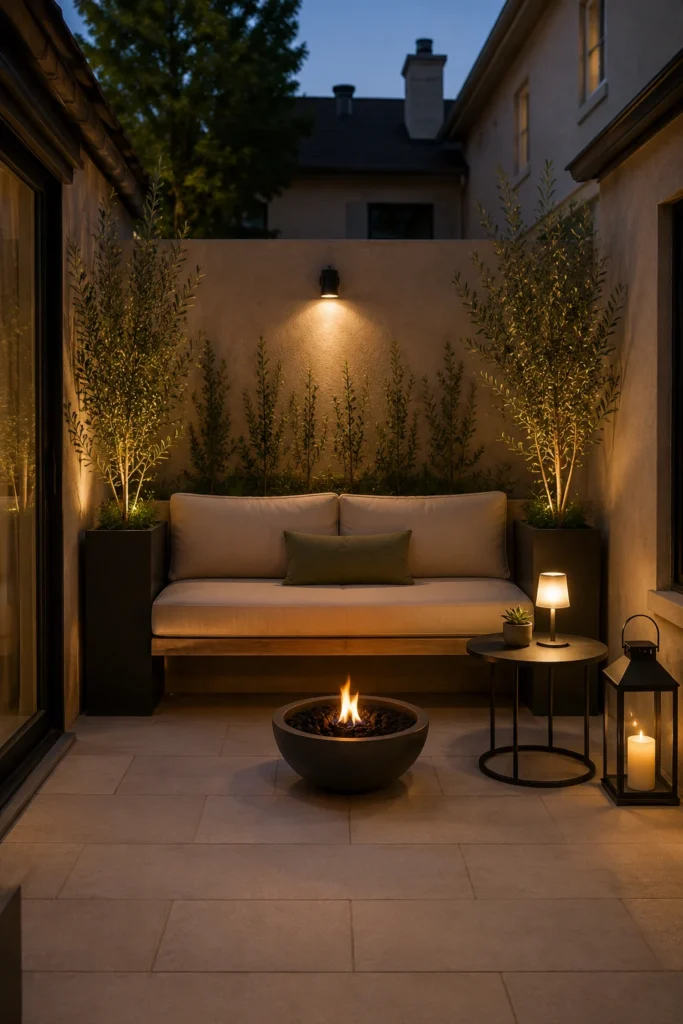
11. Turn a Tiny Courtyard Into a Two-Person Outdoor Retreat
Not every yard needs to seat a group. If the space is mostly used by one or two people, design it accordingly.
Use a deep built-in loveseat-style bench against the most private wall, but keep the overall width compact. Add a tiny side table and a small fire bowl only if clearances, airflow, and local rules make that realistic. Otherwise, substitute a rechargeable lantern arrangement that gives the same warm focal glow.
Plant two tall narrow planters behind or beside the seating for privacy, then add one softer pot near the entrance. A wall sconce or small outdoor lamp supplies enough light to read or carry drinks safely.
This kind of outdoor retreat benefits from restraint. You don’t need four chairs, a dining table, and a fire pit just because Pinterest shows them together.
Use thick neutral cushions and perhaps one throw pillow. The bench should be comfortable enough to sit on for an hour, not merely attractive in a photo.
In a tiny courtyard, leaving even a modest patch of open floor can make the whole space feel calmer.
12. Combine a Planter Bench With a Small Fire Feature
Built-in seating and planting don’t have to compete for the same edge of the yard. A planter-integrated bench can combine them neatly.
Build a straight wood bench with tall planter boxes at either end rather than behind the entire seat. Fill them with upright, noninvasive greenery suited to the local climate, keeping foliage well away from the fire zone.
Place a small round fire bowl in front, slightly offset toward the more open side of the patio. This leaves a clearer route around one end of the bench.
The planter boxes visually anchor the seating and provide some privacy without creating a solid wall. They also reduce the need for multiple loose pots scattered around a small yard.
Be realistic about mature plant size. A narrow shrub that’s perfect on installation day can crowd seating or reduce airflow a few years later.
Avoid using flammable planting directly beside flames, and maintain the clearances required for the specific fire feature. In compact layouts, plants should frame the gathering space rather than creep into it.
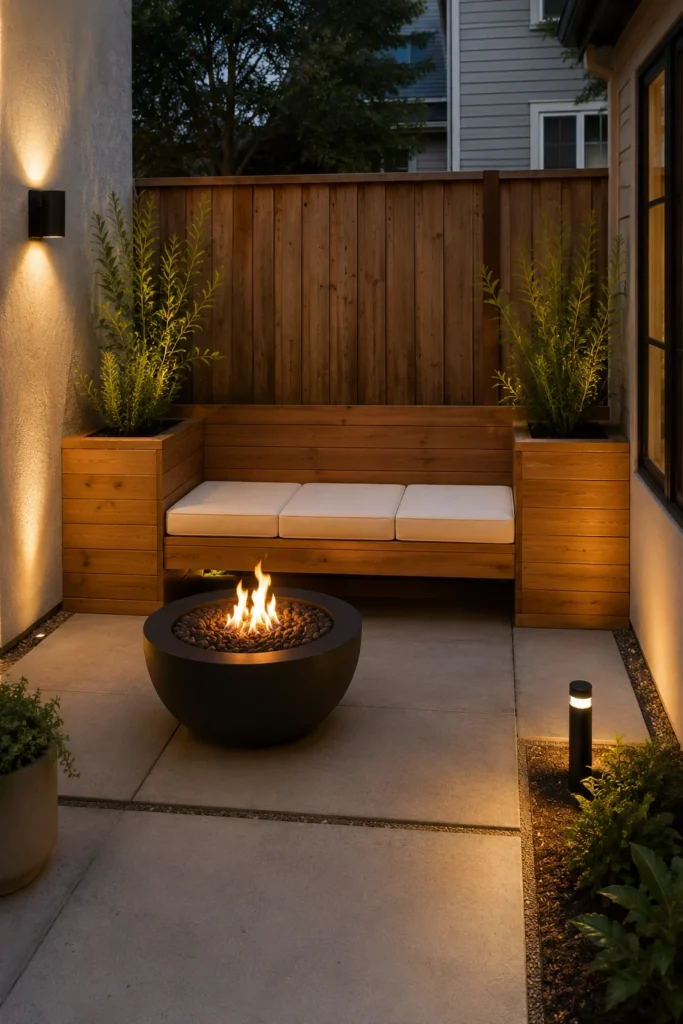
13. Use a Low Seat Wall Around a Compact Circular Nook
A curved gathering area can work in a small yard when the curve is partial rather than complete. Create a low seat wall that arcs around one side of a compact circular patio, then place a small round fire feature near the center.
This arrangement is especially useful where the yard has an awkward corner or a change in grade. The seat wall can define the nook without bringing in multiple chair legs and backs.
Add fitted seat cushions only along the portion where people actually sit. One lightweight chair can close the circle when needed.
Because the wall is fixed, test the conversation distance before building. If the fire bowl is too large, everyone will either sit too close or feel pushed against the perimeter.
Use stone or masonry that relates to existing house materials rather than introducing an unrelated finish. In a small yard, repeating one or two materials usually looks more intentional.
Low path lighting should mark any step or level change. Firelight is atmospheric, but it isn’t enough for safe circulation.
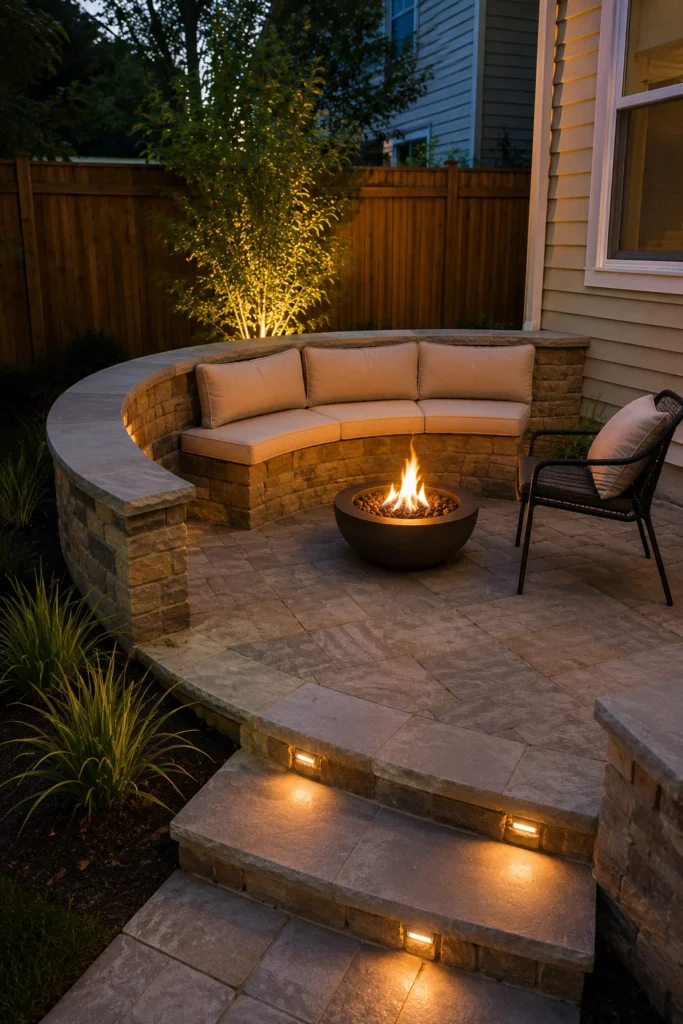
14. Make a Narrow Backyard Feel Wider With an Offset Bench Zone
One of the easiest ways to make a long narrow yard feel less like a corridor is to stop treating both sides symmetrically.
Place a built-in bench along only the back half of one fence. Opposite it, use planting rather than additional seating. Set a compact fire table closer to the bench side so the remaining edge becomes an uninterrupted walking route.
This asymmetry creates visual width because the yard isn’t divided into a rigid central aisle with matching objects on both sides.
A small tree or tall narrow shrub near the far corner can stop the eye at the end of the yard, while lower planting closer to the house keeps the foreground open.
For evening use, put warm wall lights or string lights over the gathering zone only. Keeping the rest of the garden slightly darker reinforces the sense of destination.
This is another case where a fire feature shouldn’t be centered automatically. The best location is the one that preserves comfortable movement and required safety clearances.
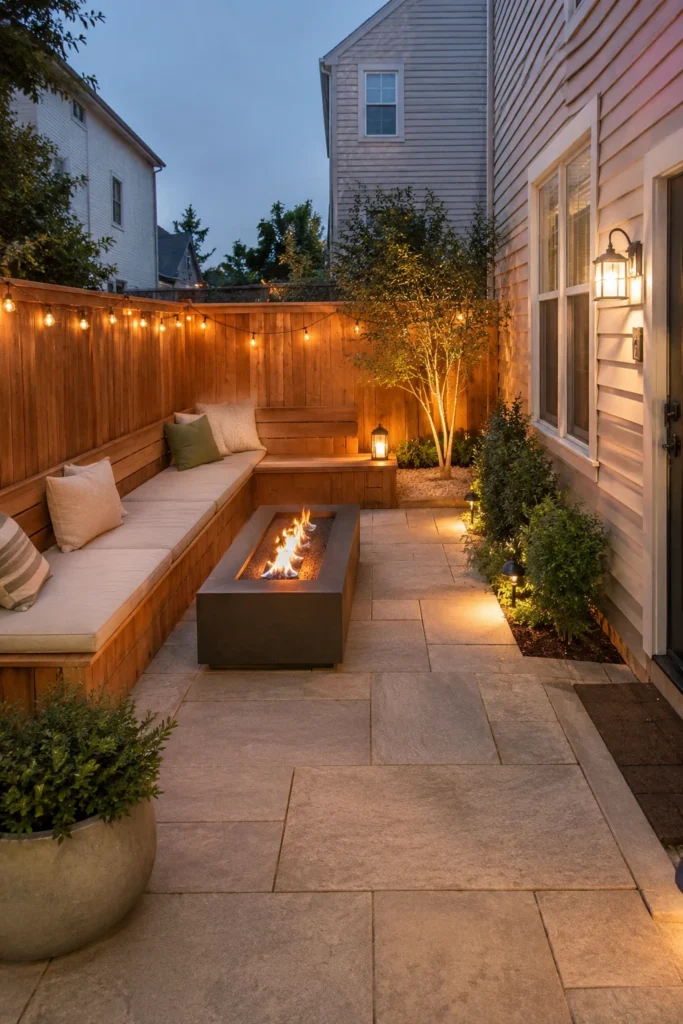
15. Create a Low-Maintenance Courtyard With Masonry Seating
For a lower-maintenance direction, use a built-in masonry bench, durable pavers, a few large pots, and a compact gas fire feature. The goal isn’t zero maintenance; it’s reducing the number of loose materials and small objects that need constant attention.
A rendered concrete-block bench with a wood or composite seat cap works well along a courtyard wall. Add removable seat cushions, a modest rectangular fire feature, and three large containers with hardy planting.
Because everything has a defined place, the yard feels polished even without elaborate styling.
This is particularly effective in a court yard garden where hardscape already dominates. The cushions and planting add enough softness to stop the space from feeling sterile.
Choose one main paving material and one bench finish rather than mixing gravel, brick, stone, tile, wood, and concrete in the same tiny area.
Wall sconces provide dependable light after the fire is off. If the courtyard is enclosed or ventilation is limited, choose a non-fire focal point instead.
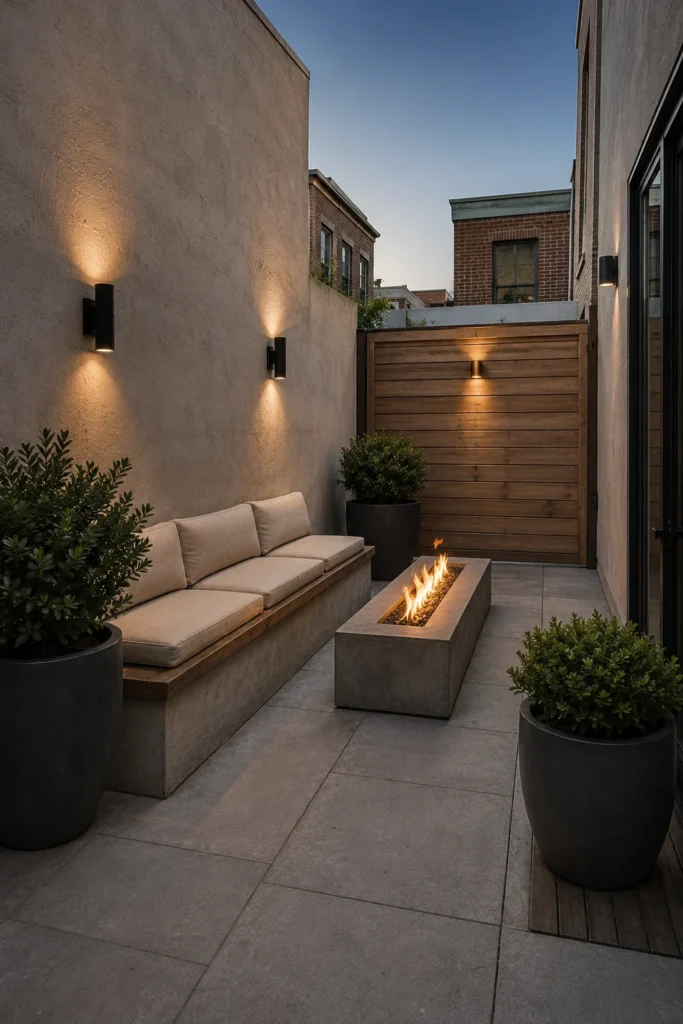
16. Mix a Built-In Bench With Two Movable Chairs
Built-ins are efficient, but they aren’t flexible. A useful compromise is to install one permanent bench and let two lightweight chairs handle changing needs.
Place the bench along the longest boundary of a 10-by-15-foot yard, then position a compact fire bowl in front with two movable chairs opposite. For everyday use, the yard can feel open with just one chair in place. When friends visit, bring out the second.
This layout can realistically accommodate four adults without claiming that a small backyard is an entertainment venue for eight.
Use warm wood, muted green cushions, and black powder-coated chairs. A narrow planting strip behind the bench softens the fence, while a pair of low pathway lights keeps the route from the house visible.
Because the chairs can move, they’re also useful for adjusting conversation distance around the fire feature.
Don’t rely on that flexibility to ignore required safety spacing. Movable chairs should still stay outside the manufacturer’s minimum clearance zone.
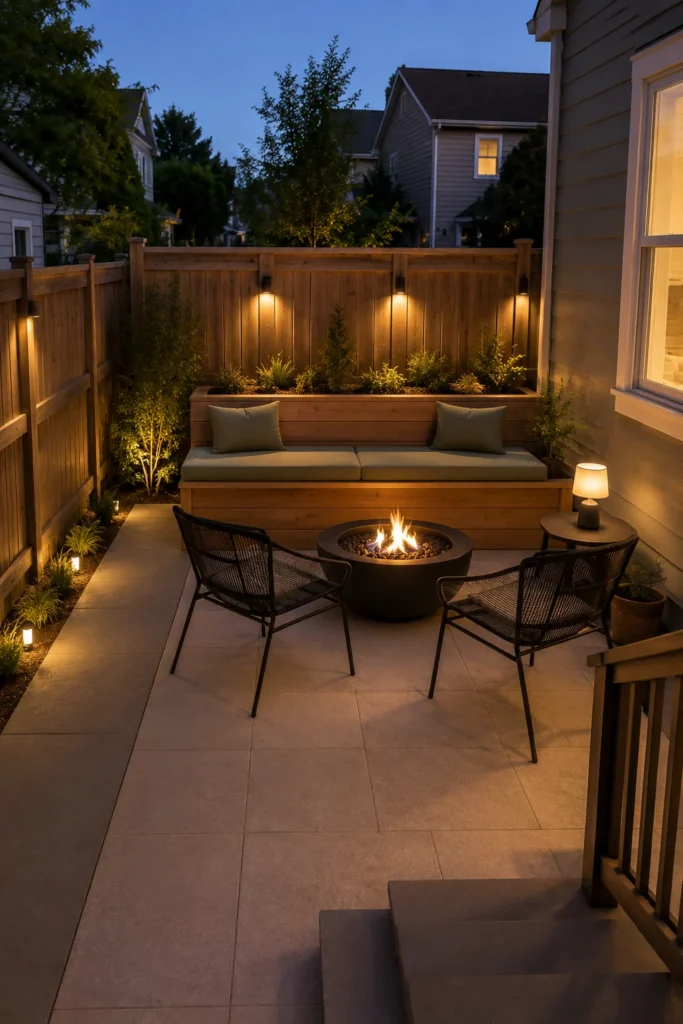
17. Use String Lights and a Built-In Bench Where Fire Isn’t Practical
Some compact yards simply aren’t suitable for a fire feature. The space may be too enclosed, local rules may prohibit open flame, a rental agreement may restrict it, or required clearances may consume most of the patio.
In that case, keep the parts of the layout that create coziness and replace the flame with layered warm light.
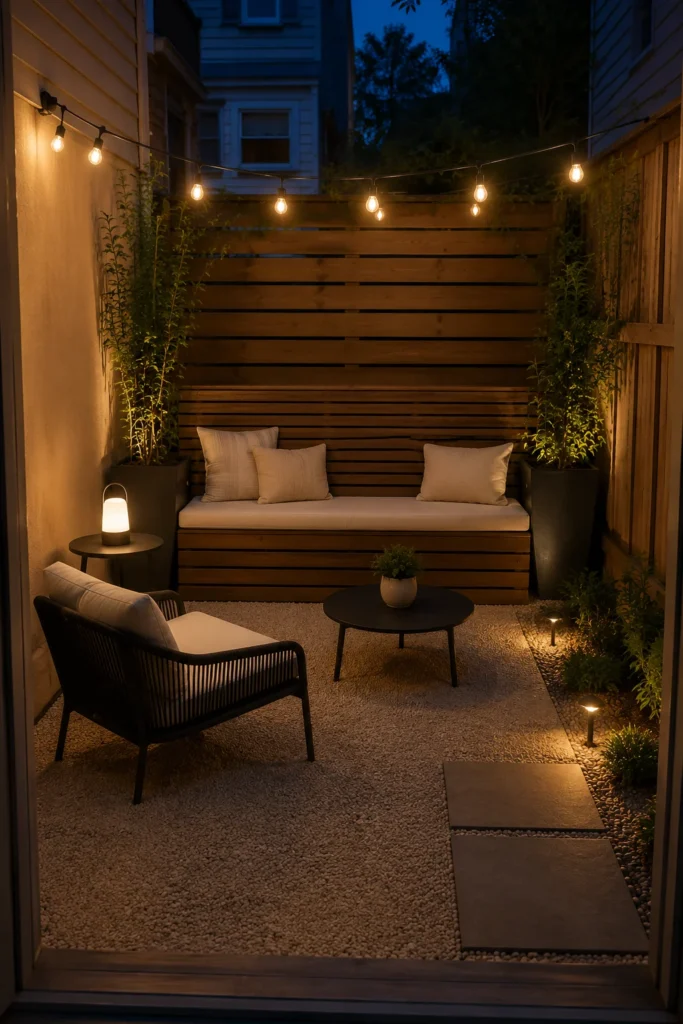
Build or install a fixed bench along the rear boundary, add cream cushions, a small coffee table, and one movable chair. String lights can span the seating zone if they can be securely and appropriately installed, while a rechargeable table lamp and low path lights provide useful illumination closer to the ground.
Use tall narrow planters or climbing greenery for privacy, but don’t overfill the fence.
This quieter outdoor retreat proves that warmth doesn’t have to come from fire. Scale, enclosure, comfortable textiles, and good evening lighting create much of the same atmosphere.
For a tiny rental patio, this may be more usable every night than forcing in a fire feature simply because the backyard is small.
How to Plan a Cozy Small Backyard That Still Feels Open
The strongest small backyard ideas usually follow the same basic framework: perimeter seating + right-size fire feature + clear circulation + restrained planting + layered evening light.
Start with the part that takes up the most permanent space. If you’re considering a built-in bench, measure it before choosing the fire feature. Make sure doors can still open, people can walk through comfortably, and movable chairs won’t end up blocking the only route across the yard.
Then size the fire feature to the remaining space rather than choosing one first and forcing the furniture around it. Check required clearances, fuel type, local fire rules, rental or HOA restrictions, overhead conditions, airflow, and the mature size of nearby planting.
A small yard rarely needs many decorative objects. One comfortable bench, a compact fire bowl or table where appropriate, one or two movable seats, a few larger plants, and useful evening lighting can be enough.
Most importantly, cozy shouldn’t mean crowded. A well-designed small backyard still needs empty space so people can walk, sit back comfortably, and actually enjoy being outside.
