
13 Farmhouse Kitchen Island Ideas for a Warm and Functional Centerpiece
A farmhouse kitchen island can do a lot more than provide extra countertop space. It’s where you chop vegetables, set down groceries, enjoy a quick breakfast, and somehow end up having the longest conversations of the day.
And when it’s designed well, it can become one of the most inviting features in the entire kitchen.
The farmhouse look is all about warmth, natural materials, comfortable furniture, and details that feel collected rather than overly polished. Think painted cabinets, beautiful wood grain, simple hardware, and traditional shapes that never really go out of style.
But here’s the good news: you don’t need a huge country kitchen or a custom-built island the size of a dining table.
Even a modest American kitchen with standard eight-foot ceilings can embrace farmhouse style with a compact island, a thoughtful color palette, and practical storage.
These 13 farmhouse kitchen island ideas explore everything from classic white cabinetry and butcher-block countertops to sage green paint, furniture-style details, and space-saving designs.
The goal is to create an island that looks beautiful, works hard, and doesn’t make the rest of your kitchen feel like an obstacle course.
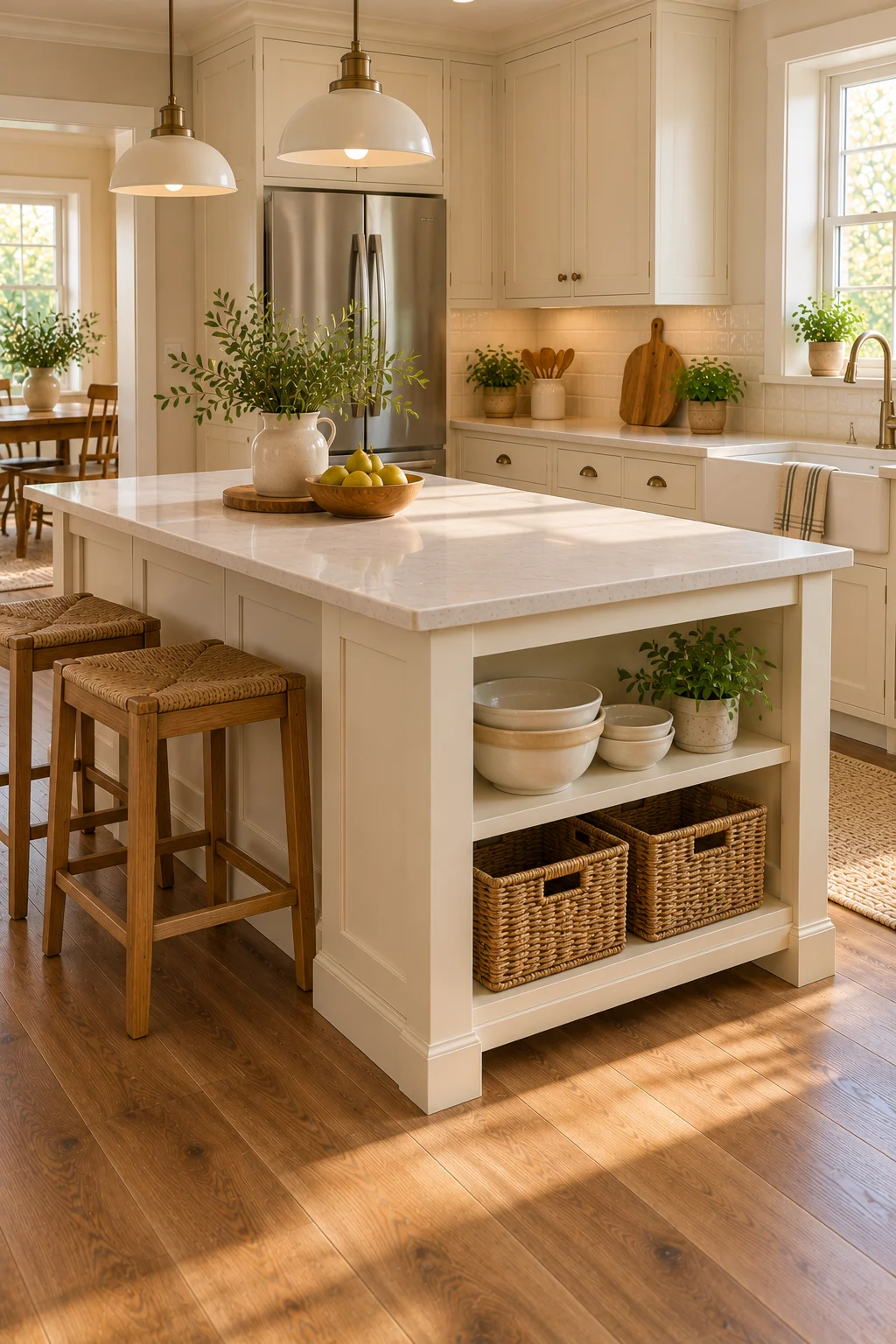
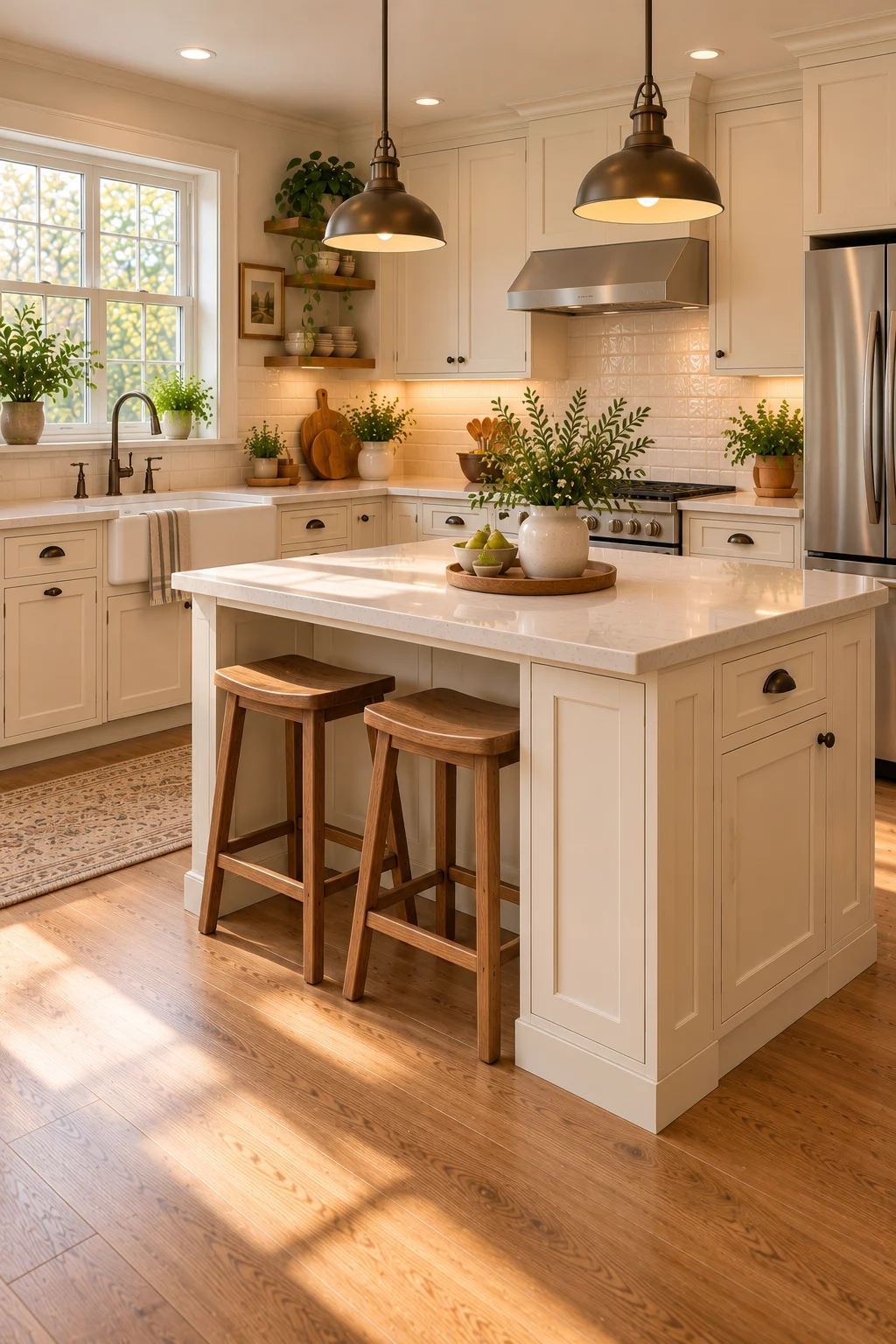
1. Choose a Classic White Farmhouse Island
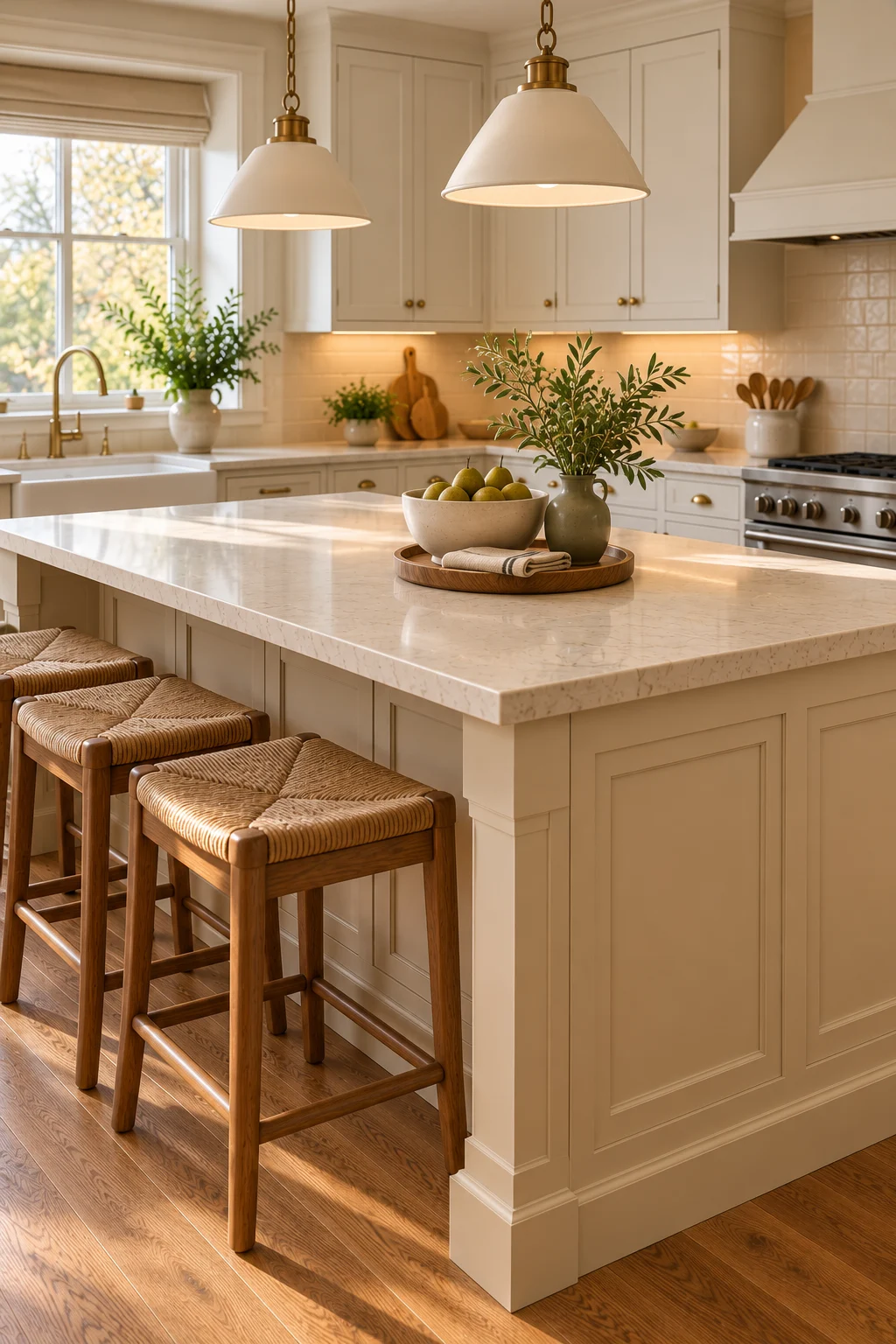
A classic white farmhouse island is one of those design choices that can work in almost any kitchen.
It feels fresh and welcoming without demanding too much attention, especially when paired with natural wood and warm neutral finishes.
Choose a soft ivory or warm white rather than a stark, cool-toned white.
Simple recessed-panel cabinetry can introduce traditional character without making the island look overly ornate.
For the countertop, consider a pale stone-look finish or a subtle warm beige surface.
Add understated hardware in dark bronze or matte black, then bring in natural wood through a pair of stools or a small serving tray.
If your perimeter cabinets are also white, the island can still stand out through its paneling, hardware, or countertop texture.
Keep the proportions appropriate for the room.
A modest rectangular island with clean lines often looks more balanced than a bulky design with oversized decorative legs.
The result is a timeless centerpiece that feels comfortable in both traditional and updated farmhouse kitchens.
2. Add a Natural Wood Farmhouse Island
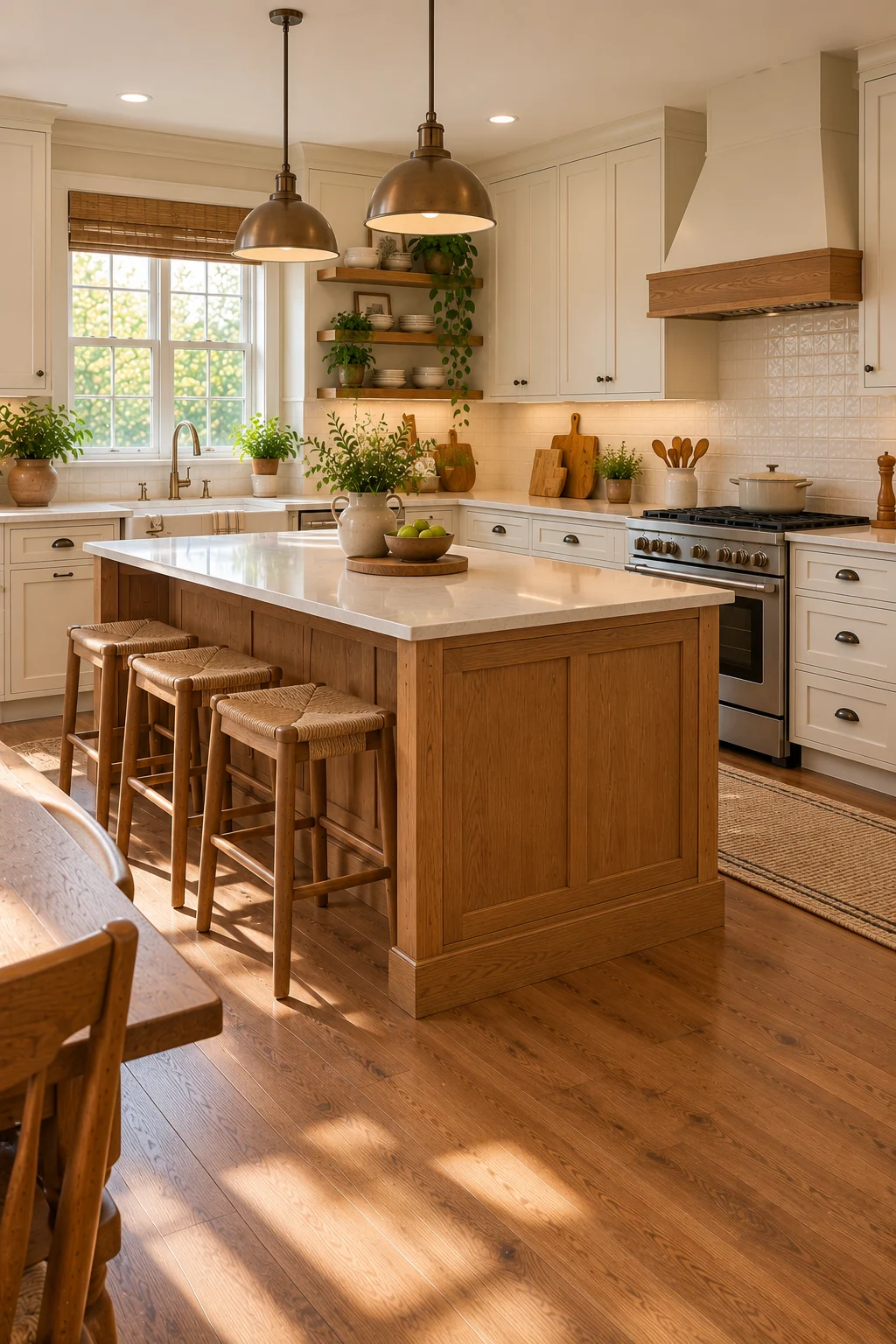
A natural wood island introduces warmth and character in a way painted cabinetry sometimes can’t.
Oak, walnut, and other medium-toned woods can make the island feel like a substantial piece of furniture rather than another fitted cabinet.
This works especially well when the surrounding kitchen has cream or warm white cabinetry.
The contrast allows the wood grain to become the focal point without requiring elaborate decoration.
Choose a finish that relates to the flooring, dining table, or other wooden elements in the room.
The wood tones don’t have to match perfectly, but they should share compatible undertones.
A pale countertop can keep the island feeling light, while simple dark hardware provides a subtle traditional detail.
If the island includes drawers or shelves, prioritize useful storage rather than decorative features.
Natural wood already provides plenty of visual interest.
You don’t need heavy distressing, carved panels, or an assortment of rustic accessories to make it feel farmhouse-inspired.
3. Paint the Island Muted Sage Green
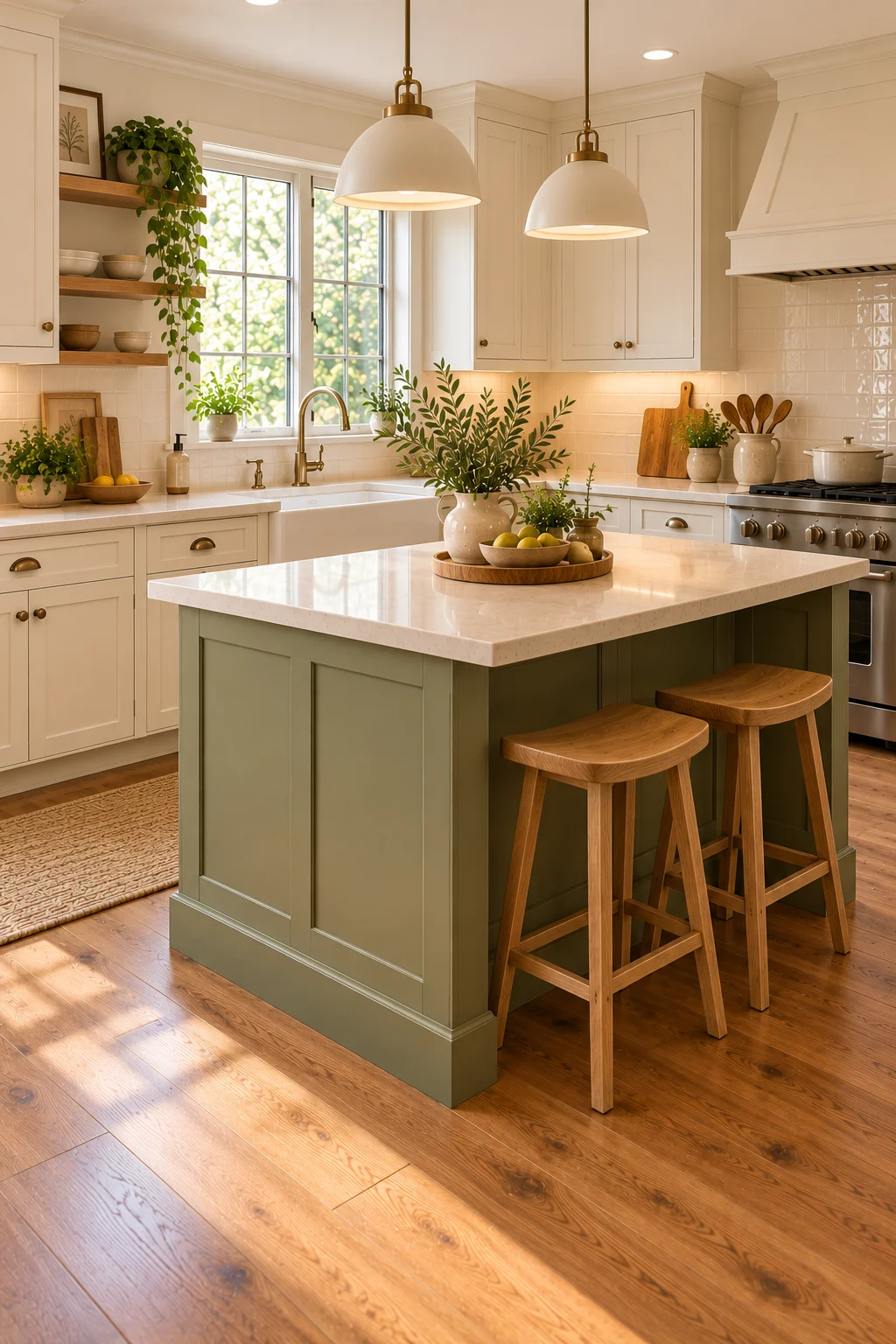
Muted sage green is a lovely choice when you want to introduce color without making the kitchen feel too bold.
The soft green pairs naturally with cream cabinets, light wood flooring, and pale countertops.
It also works beautifully with warm brass-look or dark bronze hardware.
Choose a sage shade with gray or earthy undertones rather than a bright, saturated green.
If the kitchen has limited natural light, test the color before committing. Some sage greens can appear much cooler or darker than expected under artificial lighting.
Keep the surrounding finishes relatively simple.
A warm white backsplash and natural wood stools can complement the island without competing with its color.
For a coordinated appearance, repeat the sage in one small detail, such as a ceramic bowl or nearby textile.
Avoid adding several other strong accent colors.
A sage green island looks particularly inviting when it becomes the kitchen’s main decorative feature.
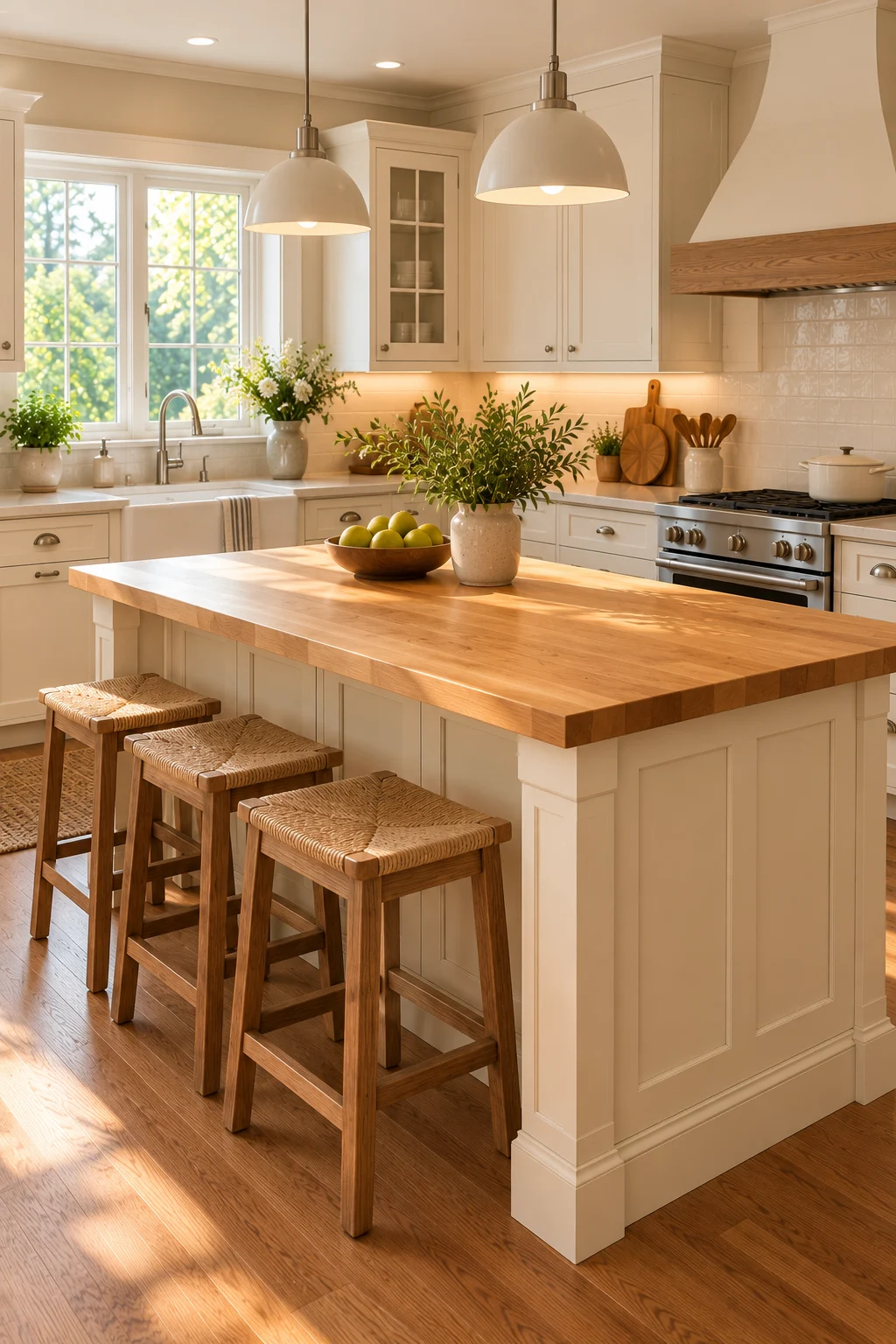
4. Choose a Butcher-Block Countertop
A butcher-block countertop can make a farmhouse island feel warm, traditional, and approachable.
The visible wood grain adds texture while creating the appearance of a practical worktable.
Maple and oak are popular choices for lighter wood tones, while deeper brown finishes can create contrast against painted island cabinetry.
A butcher-block top looks especially attractive over a warm white, sage green, or charcoal island base.
Before choosing one, consider how you plan to use the surface.
Wood countertops have different maintenance requirements depending on their construction and finish.
Some are intended primarily as finished worktops rather than direct cutting surfaces.
Follow the manufacturer’s instructions for cleaning, sealing, and protecting the wood.
Wipe up spills promptly and avoid leaving wet dishes or hot cookware on an unsuitable finish.
If you love the appearance but prefer a different maintenance routine, consider a durable wood-look surface designed for kitchen use.
The goal is to enjoy the warmth of wood without creating unnecessary work.
5. Include Open Shelving for Everyday Storage
Open shelving can make a farmhouse island feel more like a traditional kitchen worktable.
A sturdy lower shelf or open end compartment provides room for frequently used bowls, cookbooks, or a small collection of baskets.
It can also make the island appear less bulky than a completely enclosed cabinet base.
Choose a shelf design that suits the island’s construction and storage needs.
A natural wood shelf beneath a painted island can create a beautiful contrast.
Keep the contents simple.
A few cream ceramic bowls or one practical storage basket may be enough to add character without creating clutter.
Remember that open shelves are more exposed to dust, spills, and everyday kitchen activity.
Avoid placing fragile objects where passing feet, stools, or children could knock them over.
If the island is mainly used for food preparation, choose storage that’s easy to access and clean.
Open shelving should provide useful space, not just another surface to decorate.
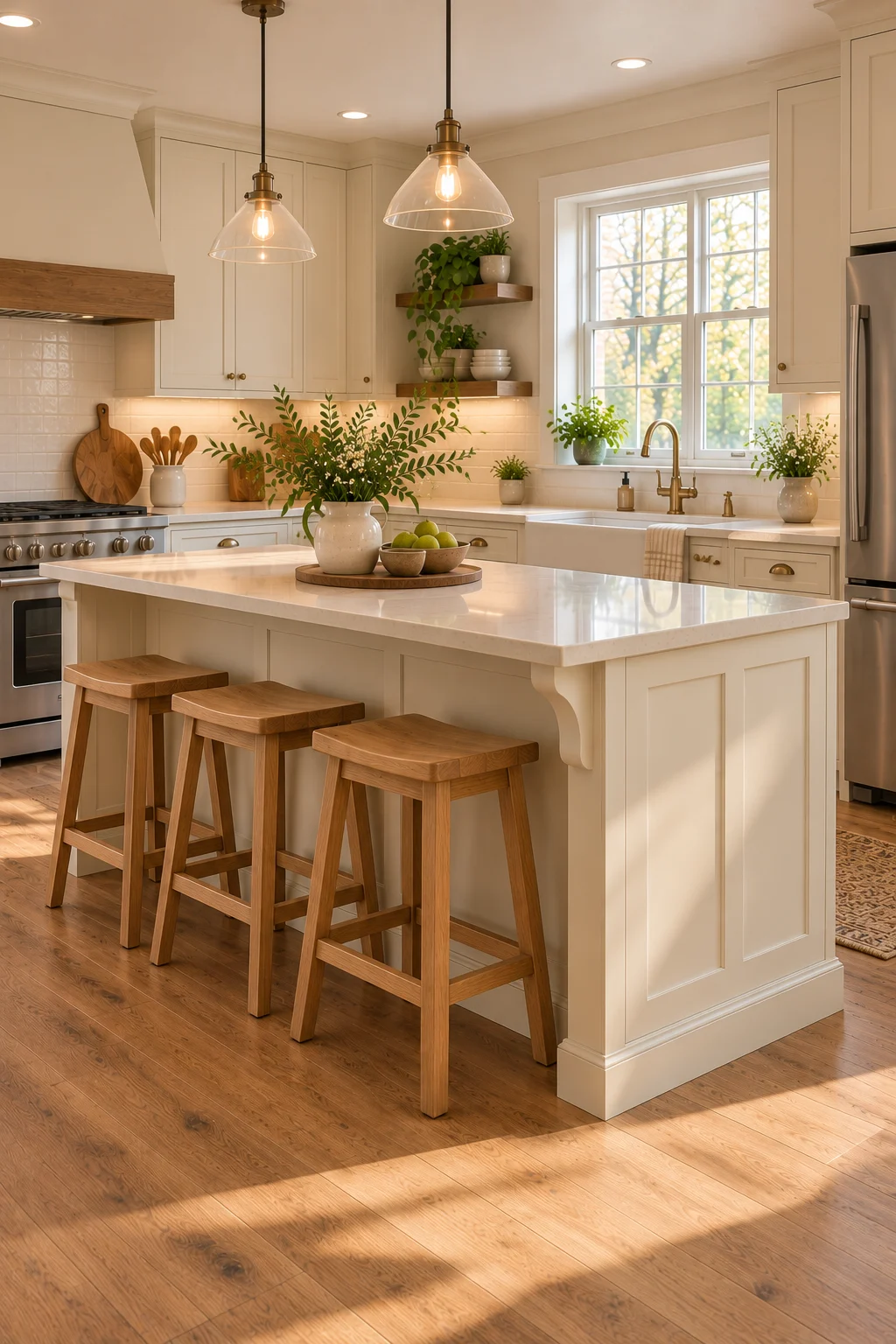
6. Add a Seating Overhang for Casual Meals
A farmhouse island with a seating overhang can become a comfortable spot for breakfast, snacks, or casual conversation.
It may also provide an alternative to a separate dining table in a kitchen where floor space is limited.
Choose stools that fit the countertop height and can tuck beneath the overhang when not in use.
Natural wood seats, simple painted frames, or restrained metal details can complement the farmhouse look.
Consider how many seats the island can realistically accommodate.
Trying to squeeze too many stools along a short counter often makes the space uncomfortable.
Leave enough room for people to sit, move their legs, and get up without interfering with nearby appliances.
The countertop overhang must also have appropriate support for its material and dimensions.
Don’t assume a longer overhang can be added without additional structural consideration.
A well-designed seating area should feel natural and convenient rather than crowded.
7. Use Dark Hardware for a Traditional Farmhouse Look
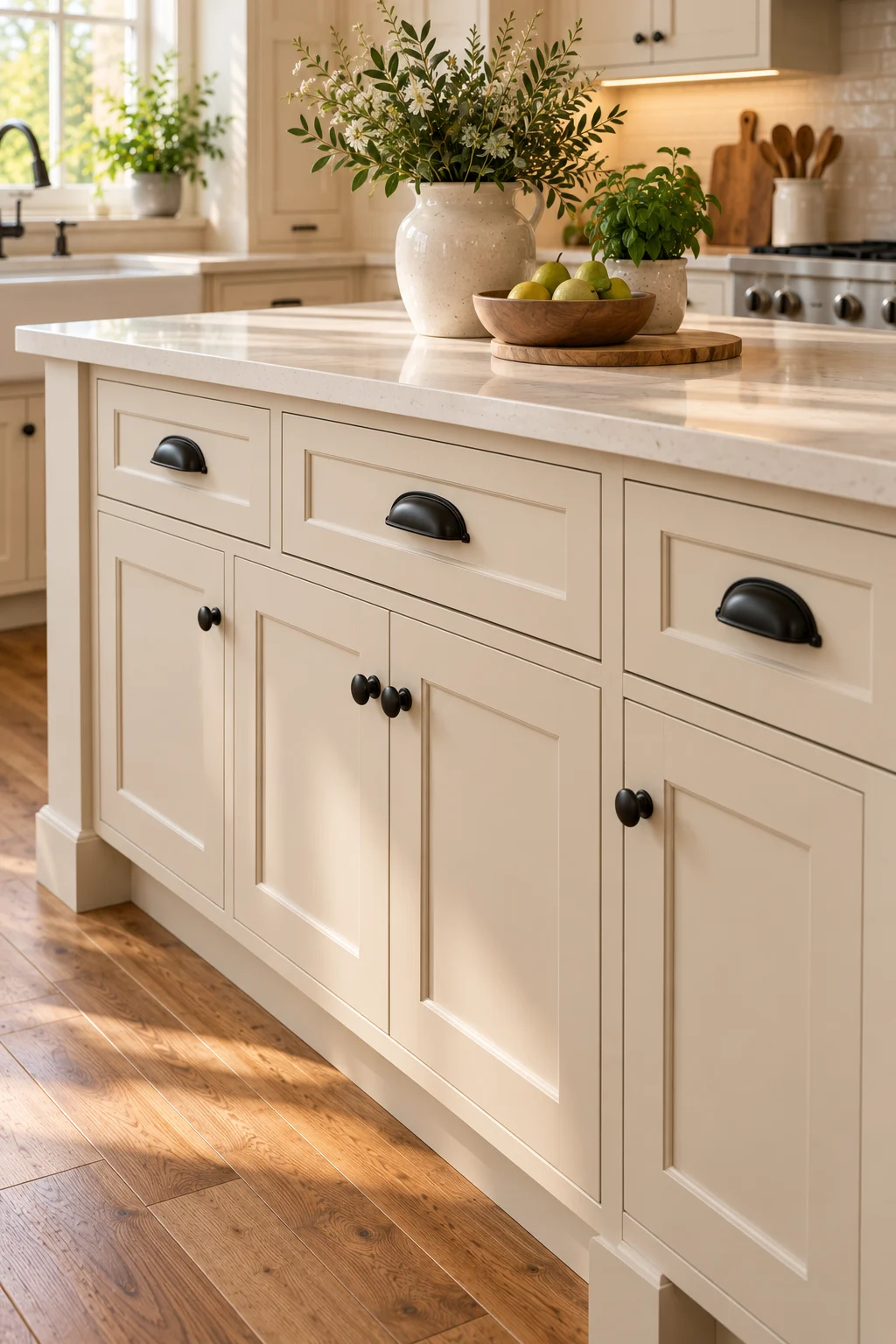
Dark cabinet hardware can give a farmhouse island a little more definition.
Matte-black pulls, dark bronze knobs, and traditional cup pulls all work beautifully against cream or white cabinetry.
The contrast emphasizes the cabinet lines without requiring decorative carving or elaborate trim.
Choose hardware that feels comfortable to use and suits the island’s overall style.
Cup pulls can look particularly attractive on drawers, while simple knobs may work well on cabinet doors.
If your kitchen already has dark hardware, repeating the same finish on the island can help everything feel connected.
You don’t need to match every metal surface perfectly.
However, limiting the number of competing finishes can create a more cohesive appearance.
Before replacing existing hardware, check the screw-hole spacing.
Compatible replacements can make the update easier and avoid unnecessary repairs.
It’s a small detail, but the right hardware can noticeably change the character of a plain island.
8. Choose a Contrasting Charcoal Island
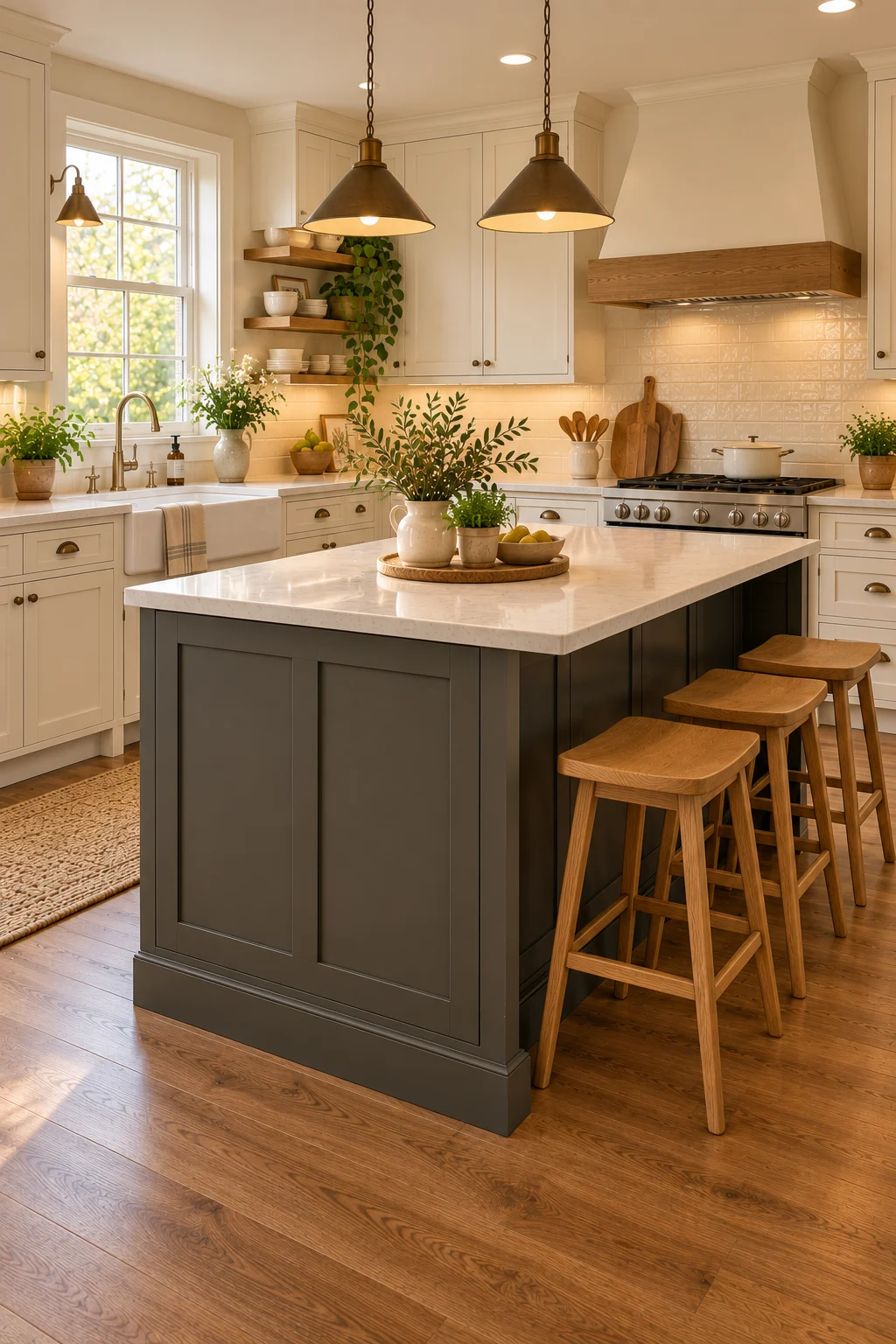
A charcoal island can introduce depth and contrast while keeping the kitchen’s farmhouse character.
Choose a softened charcoal with warm or neutral undertones rather than a glossy jet black.
Pair it with cream perimeter cabinets, a pale countertop, and natural wood stools.
This combination creates a grounded focal point without making the kitchen feel overly dramatic.
If the flooring is already dark, consider how much contrast the island will provide.
A dark island surrounded by dark cabinets and dark floors can feel visually heavy, especially in a smaller room.
Warm lighting and lighter surrounding surfaces can help balance the deeper finish.
Keep the cabinet details restrained.
Simple paneling and understated hardware are often enough.
A charcoal island works particularly well when you want a farmhouse kitchen that feels slightly more contemporary while still maintaining warmth and traditional character.
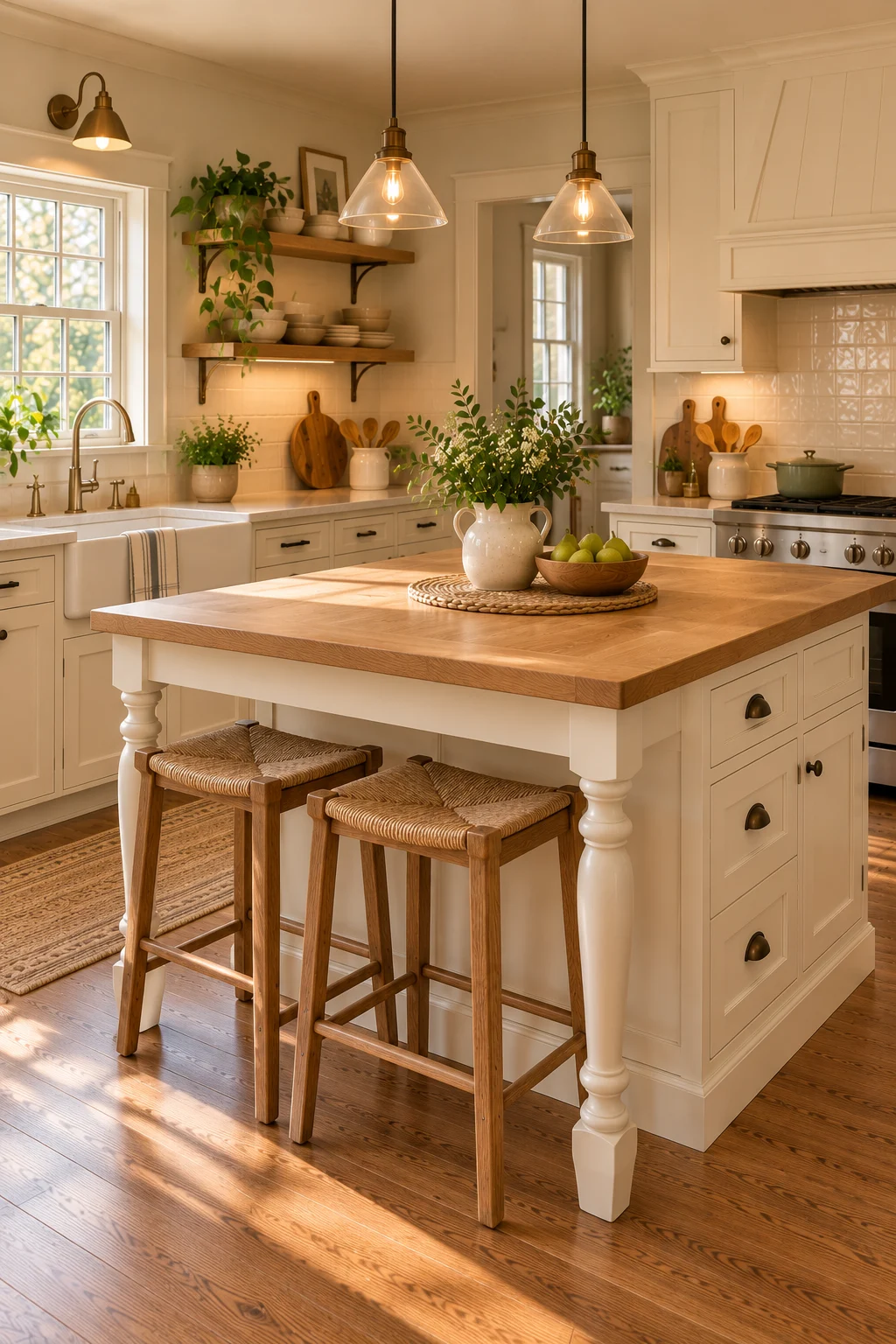
9. Create a Furniture-Style Island With Turned Legs
Turned legs can make a farmhouse island feel like a traditional freestanding table.
This furniture-inspired detail adds character, particularly in cottage kitchens with painted cabinetry and natural wood accents.
Choose modestly turned legs rather than oversized, heavily carved designs.
A simple painted base with a warm wood countertop can create an inviting combination.
If the island includes open space beneath the counter, the legs may also help the design feel visually lighter.
Pay attention to the island’s proportions.
Large decorative supports can take up valuable legroom or make the base difficult to clean around.
In a smaller kitchen, restrained details often look more appropriate than elaborate ornamentation.
If you’re adding decorative legs to an existing island, make sure they don’t interfere with cabinet doors, seating, or necessary countertop supports.
A little traditional detailing can create plenty of farmhouse charm without sacrificing function.
10. Add a Vintage-Inspired Island Color
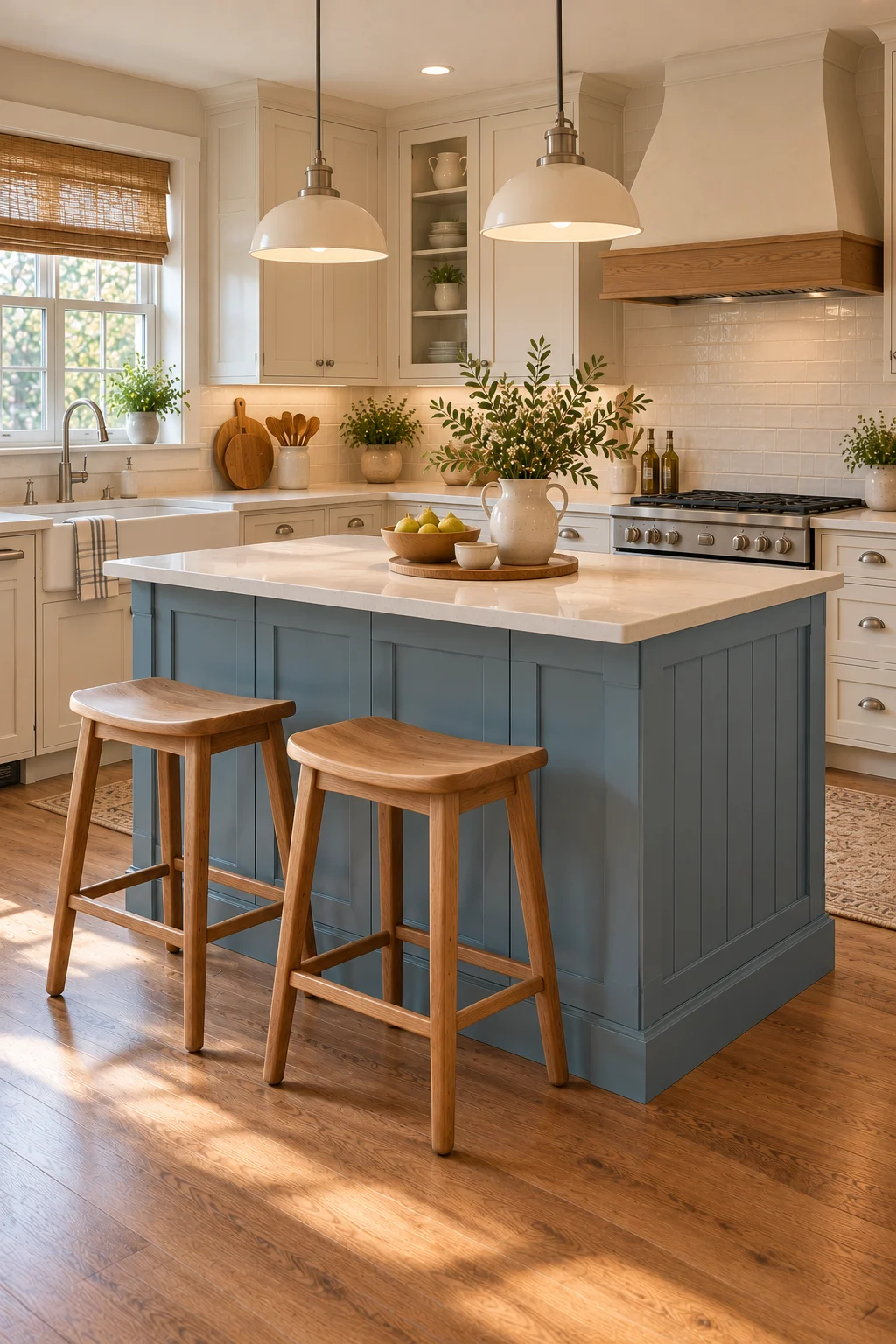
A vintage-inspired paint color can give a farmhouse island personality without making the entire kitchen feel themed.
Dusty blue, faded olive, muted gray-green, and soft sage are all attractive options.
These shades work particularly well with cream cabinetry, warm wood flooring, and simple ceramic backsplashes.
For a gentle cottage atmosphere, try a dusty blue island with a pale countertop and dark bronze hardware.
For a warmer, more earthy look, muted olive can pair beautifully with walnut stools and ivory walls.
Choose a paint finish suitable for cabinetry and everyday cleaning.
Before committing, compare samples against the flooring, countertops, and surrounding cabinets.
Avoid selecting a color based only on a photograph.
Lighting and neighboring finishes can change how a shade appears.
The most successful vintage-inspired islands feel softly colored and timeless rather than artificially distressed.
11. Use a Durable Stone-Look Island Countertop
A stone-look countertop can provide a practical surface while allowing the island base to carry the farmhouse character.
Choose a warm white, pale beige, or softly veined finish that complements the surrounding cabinetry.
A restrained stone pattern works beautifully with traditional paneling, dark hardware, and natural wood stools.
You don’t necessarily need natural stone.
Depending on your budget and maintenance preferences, suitable engineered or laminate surfaces may offer a similar appearance.
Compare materials based on their durability, cleaning requirements, heat limitations, and installation needs.
If the island already has a strong paint color or decorative legs, a quieter countertop can help maintain balance.
Avoid combining dramatic veining with several other bold finishes unless that’s the look you’re intentionally creating.
The countertop should be comfortable for everyday preparation and easy to maintain.
A beautiful surface is only a good choice if it suits the way you actually use your kitchen.
12. Add a Compact Island to a Small Farmhouse Kitchen
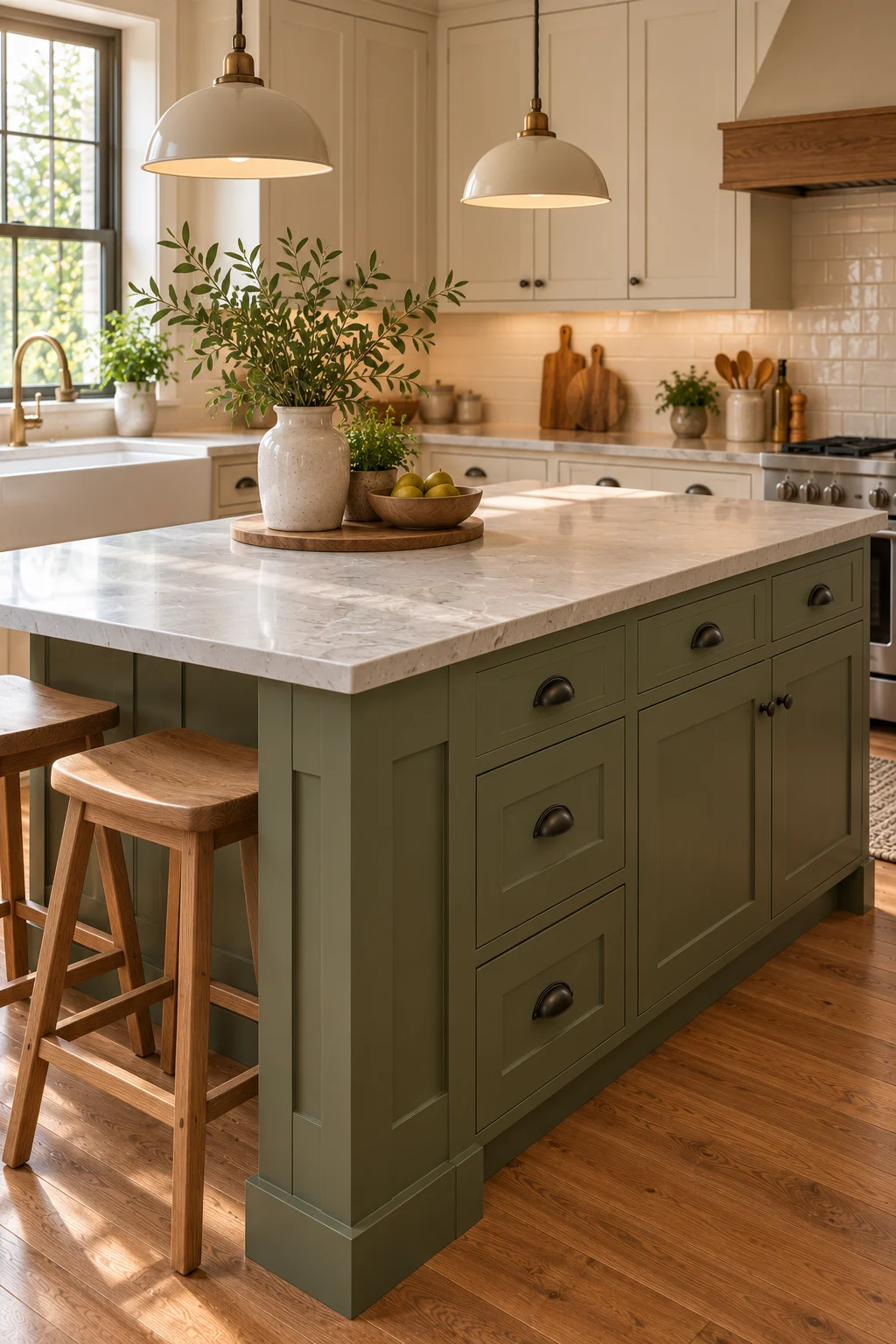
A small farmhouse kitchen can benefit from an island, but only when the layout genuinely has room for one.
A compact rectangular island or narrow freestanding worktable may provide extra preparation space without dominating the floor.
Choose a simple design with useful drawers, an open lower shelf, or a small cabinet.
Light paint colors and restrained detailing can help the piece feel less bulky.
If the island includes seating, make sure the stools can tuck away comfortably.
Measure the room carefully before purchasing.
Account for the refrigerator, dishwasher, cabinet doors, and the routes people use while cooking.
A movable worktable may be more practical than a permanent island in some layouts.
And if the kitchen is too narrow, there’s nothing wrong with skipping the island entirely.
A clear walkway is more valuable than squeezing in a feature that makes everyday cooking difficult.
For additional compact-layout inspiration, explore 13 Small Island Kitchen Ideas That Make the Most of Limited Space.
13. Style the Island With Simple Farmhouse Accessories
The final touch is often the simplest one.
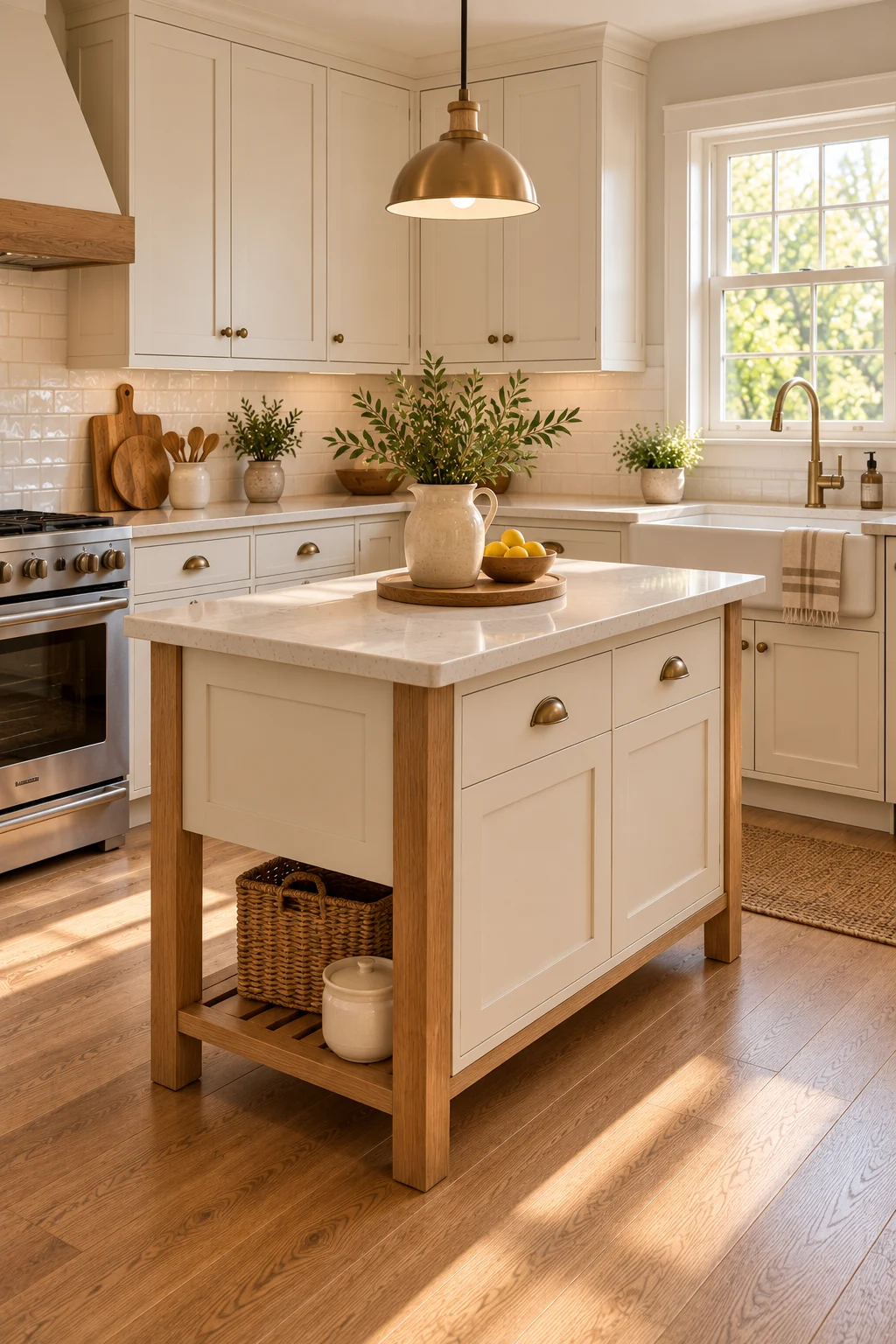
A small ceramic bowl, wooden tray, or understated vase can reinforce the farmhouse atmosphere without turning the island into a decorative display.
Choose accessories that relate to the island’s finish.
For a white island with a wood countertop, a cream ceramic bowl and a small natural wood accent may be enough.
For a sage green or charcoal island, warm neutral accessories can provide contrast.
Keep the arrangement grouped toward one side of the countertop so there’s still room for preparing food, setting down groceries, and serving meals.
Avoid oversized centerpieces that interfere with conversation or block useful workspace.
If the island is used heavily every day, choose items that can be moved easily.
The best farmhouse styling feels relaxed and practical, as though the objects naturally belong in the kitchen.
Choosing the Right Farmhouse Island
Before choosing a farmhouse island, decide what you actually need it to do.
Will it provide extra food preparation space? Storage for cookware? Seating for casual meals?
The answer should guide the design.
A preparation-focused island benefits from a durable worktop and convenient drawers.
An island intended for dining needs comfortable seating clearance and an appropriately supported countertop overhang.
A storage-focused design may work best with enclosed cabinets or deep drawers.
Next, consider the kitchen’s proportions.
Measure the available floor area and account for open appliance doors, cabinet drawers, and the routes people use most often.
Only after confirming the layout should you focus on paint colors, wood finishes, and decorative details.
An attractive island should make the kitchen easier to use, not harder.
Farmhouse Islands for Small Kitchens
Small kitchens often look best with islands that have simple shapes and restrained detailing.
A narrow worktable or compact cabinet island may provide enough extra surface without overwhelming the room.
Choose light colors, open legs, or a straightforward rectangular design.
Avoid oversized decorative posts, heavy paneling, and unnecessary extensions.
If seating is included, select stools that fit beneath the counter and don’t obstruct the main walkway.
Consider whether a peninsula or another storage solution might work better than an island.
The farmhouse look can still be achieved through painted cabinetry, natural wood, and traditional hardware even when the room doesn’t have space for a large centerpiece.
Budget-Friendly Farmhouse Island Updates
You don’t have to replace an existing island to give it farmhouse character.
Repainting sound cabinetry in warm white, muted sage, or dusty blue can create a noticeable change.
Updating cabinet hardware is another relatively simple way to introduce traditional detail.
A suitable wooden countertop or restrained stone-look surface may also refresh an older island when replacement is justified.
If the countertop is still in good condition, consider keeping it and coordinating the paint color around its existing finish.
A small set of comfortable stools or a few practical accessories can complete the look.
Prioritize the island’s stability, storage, and working surface before spending money on purely decorative features.
Thoughtful updates usually feel more cohesive than replacing several elements without a clear plan.
Common Farmhouse Island Mistakes
One of the most common mistakes is choosing an island that’s too large.
A substantial island may look beautiful in a spacious kitchen photograph but make a modest room difficult to navigate.
Another mistake is adding too many rustic details.
Heavy distressing, elaborate turned legs, decorative signs, ornate hardware, and multiple contrasting finishes can compete with one another.
Choose a few farmhouse elements and allow them to stand out.
Avoid selecting stools without checking the counter height, overhang, and available legroom.
Don’t overlook maintenance either.
A countertop material that requires more care than you’re willing to provide may become frustrating over time.
The best farmhouse island balances character with everyday comfort.
Caring for a Farmhouse Kitchen Island
Regular maintenance helps keep the island looking attractive and working properly.
Clean painted cabinetry with products suited to the finish, paying attention to handles and frequently touched edges.
Avoid abrasive products that may damage paint or hardware.
Follow the countertop manufacturer’s care instructions, especially for wood and porous materials.
Wipe spills promptly and use appropriate protection for hot or damp items.
Check drawer mechanisms, cabinet hinges, decorative legs, and countertop supports periodically.
If the island has open shelves, keep the contents organized and clean the surfaces regularly.
A practical care routine helps preserve both the island’s appearance and function.
Safety and Practical Considerations
Keep enough room around the island for comfortable movement and full access to appliance doors.
Ensure countertop overhangs and any added decorative supports are properly designed and installed.
Choose stools that fit the counter height and can be moved without blocking circulation.
Secure shelves and other island components appropriately.
Keep decorative accessories away from cooking heat and countertop edges.
Use countertop materials suitable for food preparation and everyday cleaning.
Maintain clear access to drawers, cabinets, and essential kitchen work areas.
For modifications involving electrical outlets, plumbing, or structural support, use appropriately qualified professionals where required.
Final Thoughts
A farmhouse kitchen island can bring warmth, character, and everyday usefulness into the heart of the home.
Whether you prefer classic white cabinetry, a natural wood finish, muted sage green, or a vintage-inspired design, the most important thing is choosing an island that suits your kitchen.
Start with the right proportions and practical storage, then introduce a few farmhouse details that complement the surrounding finishes.
The result can be a welcoming centerpiece that looks beautiful and makes everyday cooking a little easier.
