
17 Transitional Bedroom Ideas That Blend Classic and Modern Style
A bedroom can look unfinished even when the main furniture is in place. The challenge is often not a lack of decoration but a lack of clear direction: one feature needs to establish the mood while the bed, storage, lighting, and textiles continue to work together.
These 17 ideas show how transitional design can create character in an ordinary American bedroom. The examples favor attainable materials, standard eight-foot ceilings, comfortable furniture dimensions, and useful surfaces rather than oversized designer rooms.
Before buying anything, photograph the room in daylight and measure the wall or ceiling area you intend to change. Note windows, doors, outlets, vents, and furniture clearances. Choose one main feature, then use restrained colors and practical lighting to make it feel connected to the entire space.
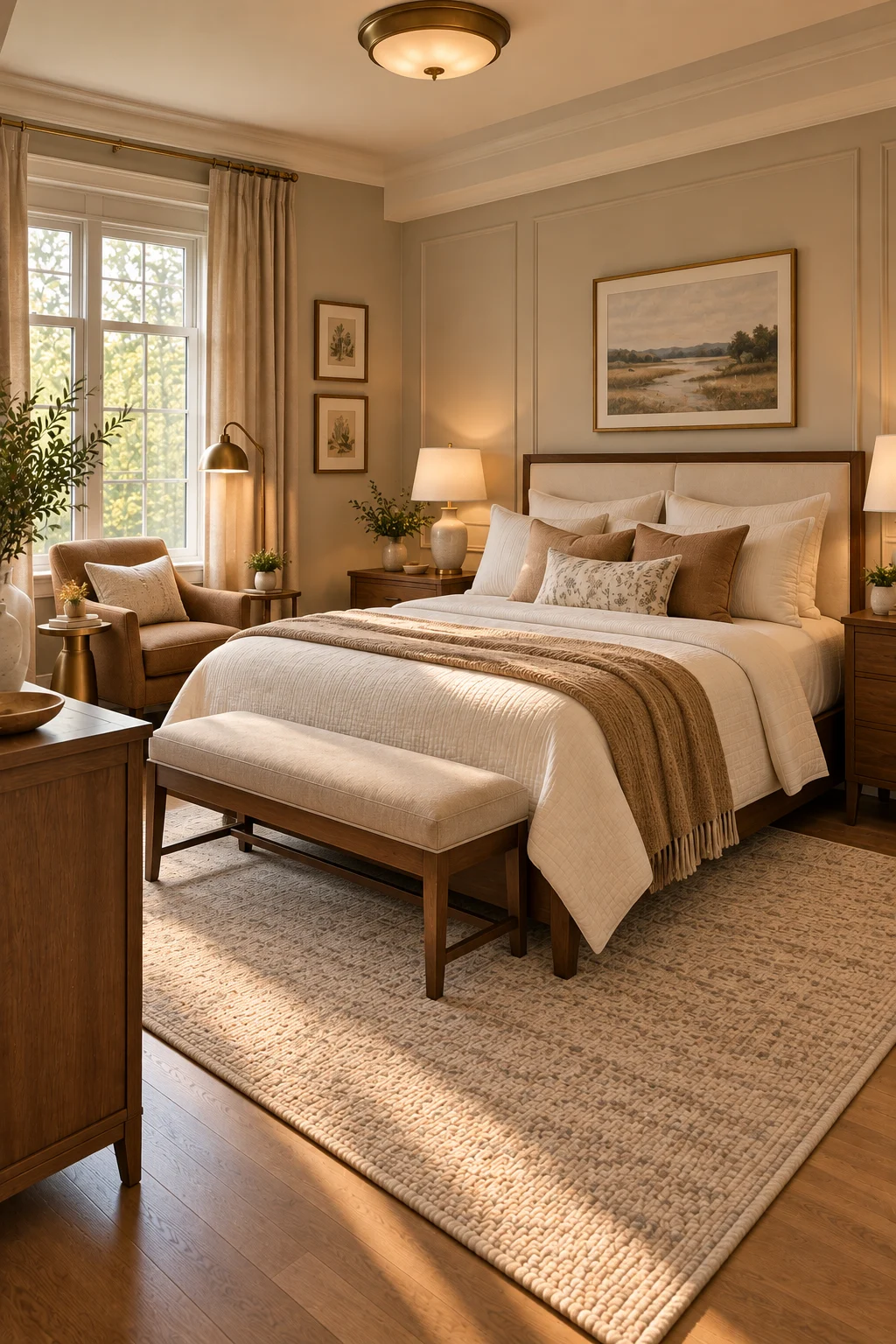
1. Walnut Bed With Simple Wall Molding
The walnut bed with simple wall molding demonstrates the central idea of transitional decorating: traditional warmth balanced with contemporary restraint. Neither the classic nor the modern element should overpower the other. The result can feel polished without changing the floor plan or replacing a perfectly serviceable bed.
Keep architectural details simple and furniture appropriately sized. Warm cream, greige, camel, walnut, and muted olive create an easy bridge between straight modern lines and softer classic profiles. View the proposed arrangement from the doorway and from the bed. Both viewpoints matter because the room is experienced while entering and while relaxing.
Use a contemporary lamp, uncomplicated bedding, and a restrained piece of traditional artwork to tie the room together. Matching every finish is unnecessary, but repeat the dominant wood tone and one metal finish for continuity. For a slightly warmer effect, add a camel throw and one textured cushion rather than another large decorative piece.
Avoid oversized ornate furniture and too many unrelated design eras. Maintain comfortable routes around the bed, check drawer and door swing, and secure tall storage pieces and wall-mounted decor. If the result feels busy, remove one accessory before adding anything else. Negative space is part of the design.
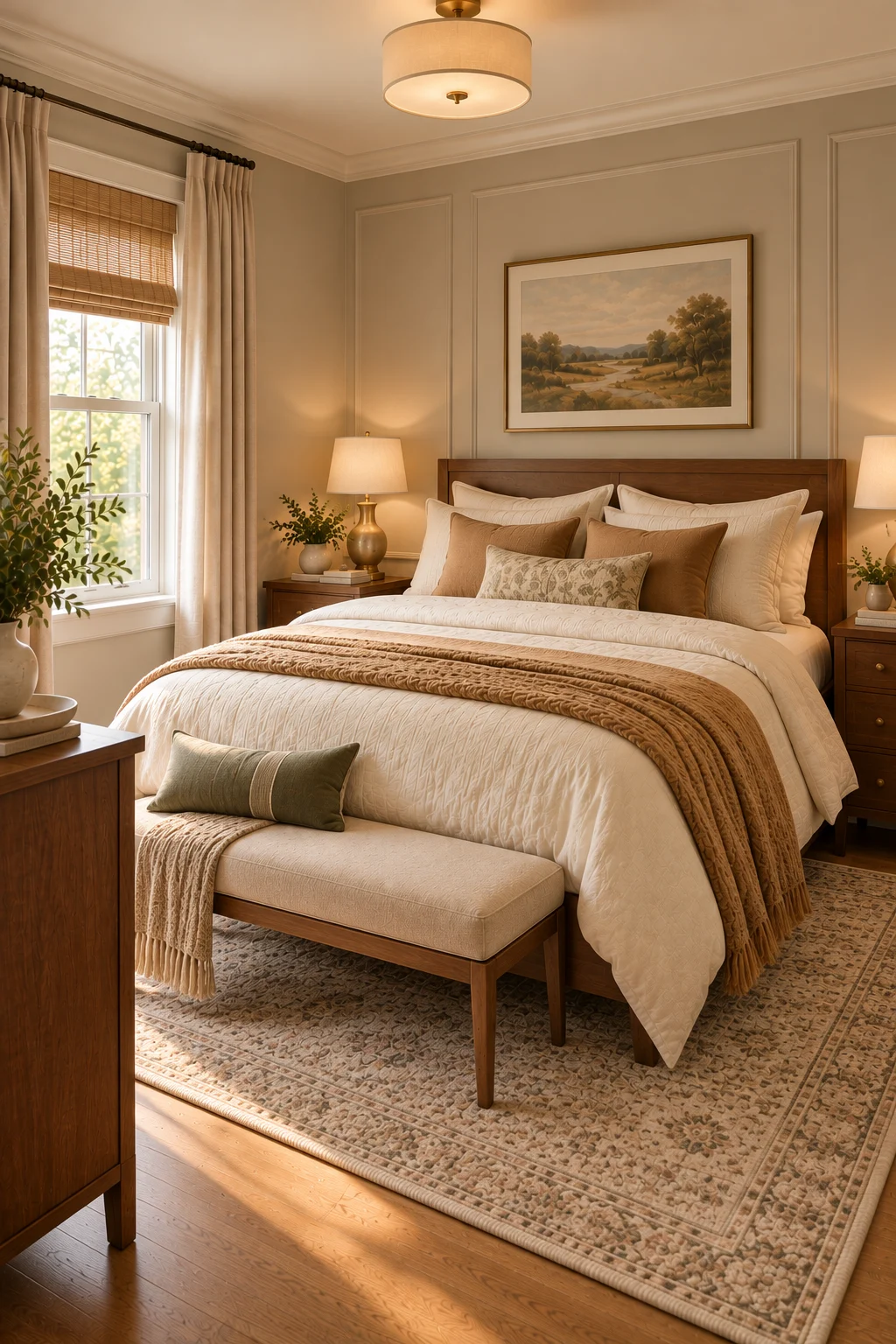
2. Neutral Upholstered Headboard
The neutral upholstered headboard demonstrates the central idea of transitional decorating: traditional warmth balanced with contemporary restraint. Neither the classic nor the modern element should overpower the other. In a compact bedroom, this gives the eye a specific place to settle instead of scattering attention across several decorative objects.
Keep architectural details simple and furniture appropriately sized. Warm cream, greige, camel, walnut, and muted olive create an easy bridge between straight modern lines and softer classic profiles. Try a temporary layout with painter’s tape or paper before committing to the final placement. This is particularly useful when a window or closet interrupts the symmetry.
Use a contemporary lamp, uncomplicated bedding, and a restrained piece of traditional artwork to tie the room together. Matching every finish is unnecessary, but repeat the dominant wood tone and one metal finish for continuity. A cream rug and mushroom curtains can soften the edges of the scheme while allowing the feature to remain recognizable.
Avoid oversized ornate furniture and too many unrelated design eras. Maintain comfortable routes around the bed, check drawer and door swing, and secure tall storage pieces and wall-mounted decor. Leave enough clear floor area for daily movement and cleaning; decoration should never make the bedroom harder to use.
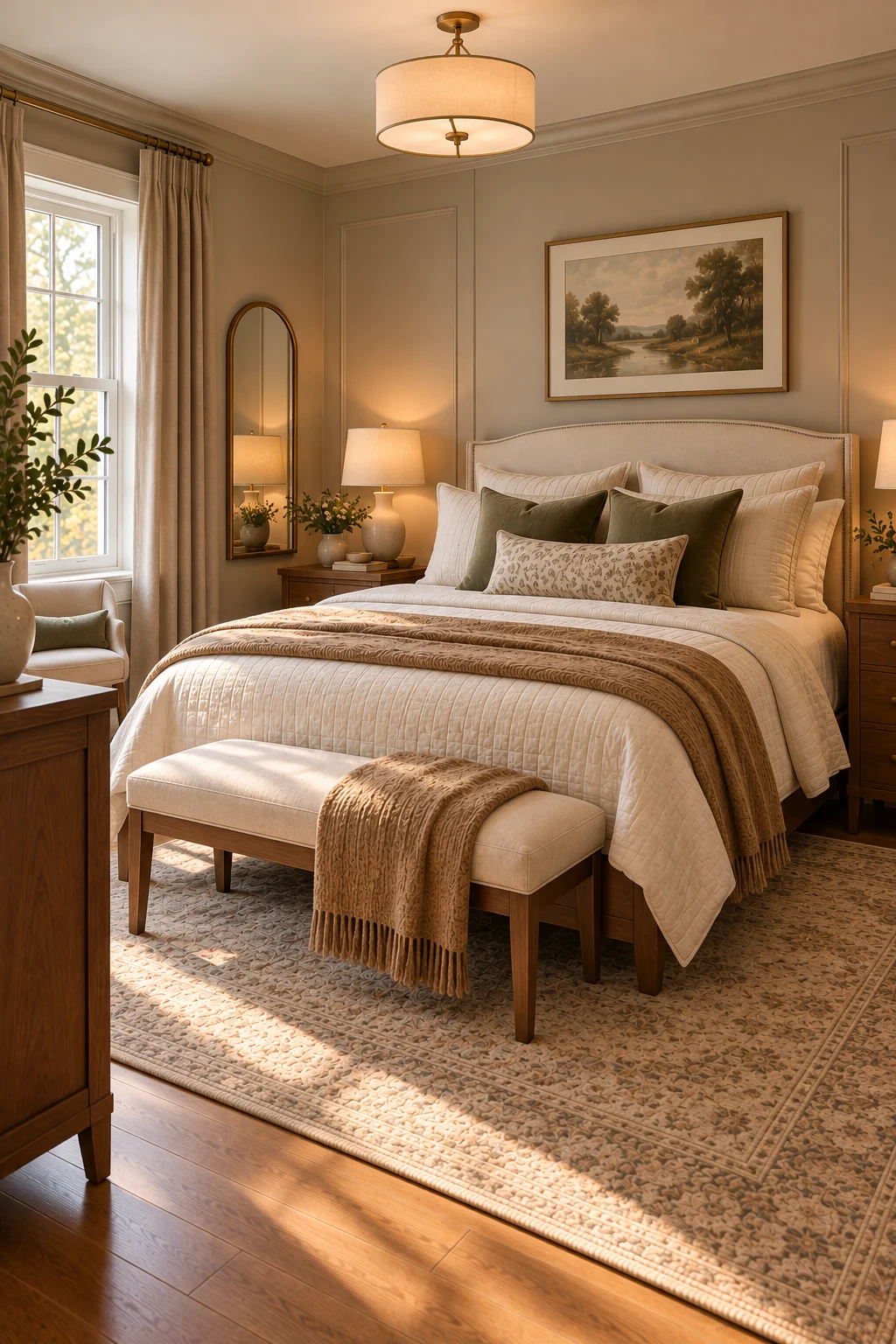
3. Warm Greige Palette
The warm greige palette demonstrates the central idea of transitional decorating: traditional warmth balanced with contemporary restraint. Neither the classic nor the modern element should overpower the other. The result can feel polished without changing the floor plan or replacing a perfectly serviceable bed.
Keep architectural details simple and furniture appropriately sized. Warm cream, greige, camel, walnut, and muted olive create an easy bridge between straight modern lines and softer classic profiles. View the proposed arrangement from the doorway and from the bed. Both viewpoints matter because the room is experienced while entering and while relaxing.
Use a contemporary lamp, uncomplicated bedding, and a restrained piece of traditional artwork to tie the room together. Matching every finish is unnecessary, but repeat the dominant wood tone and one metal finish for continuity. For a slightly warmer effect, add a camel throw and one textured cushion rather than another large decorative piece.
Avoid oversized ornate furniture and too many unrelated design eras. Maintain comfortable routes around the bed, check drawer and door swing, and secure tall storage pieces and wall-mounted decor. If the result feels busy, remove one accessory before adding anything else. Negative space is part of the design.
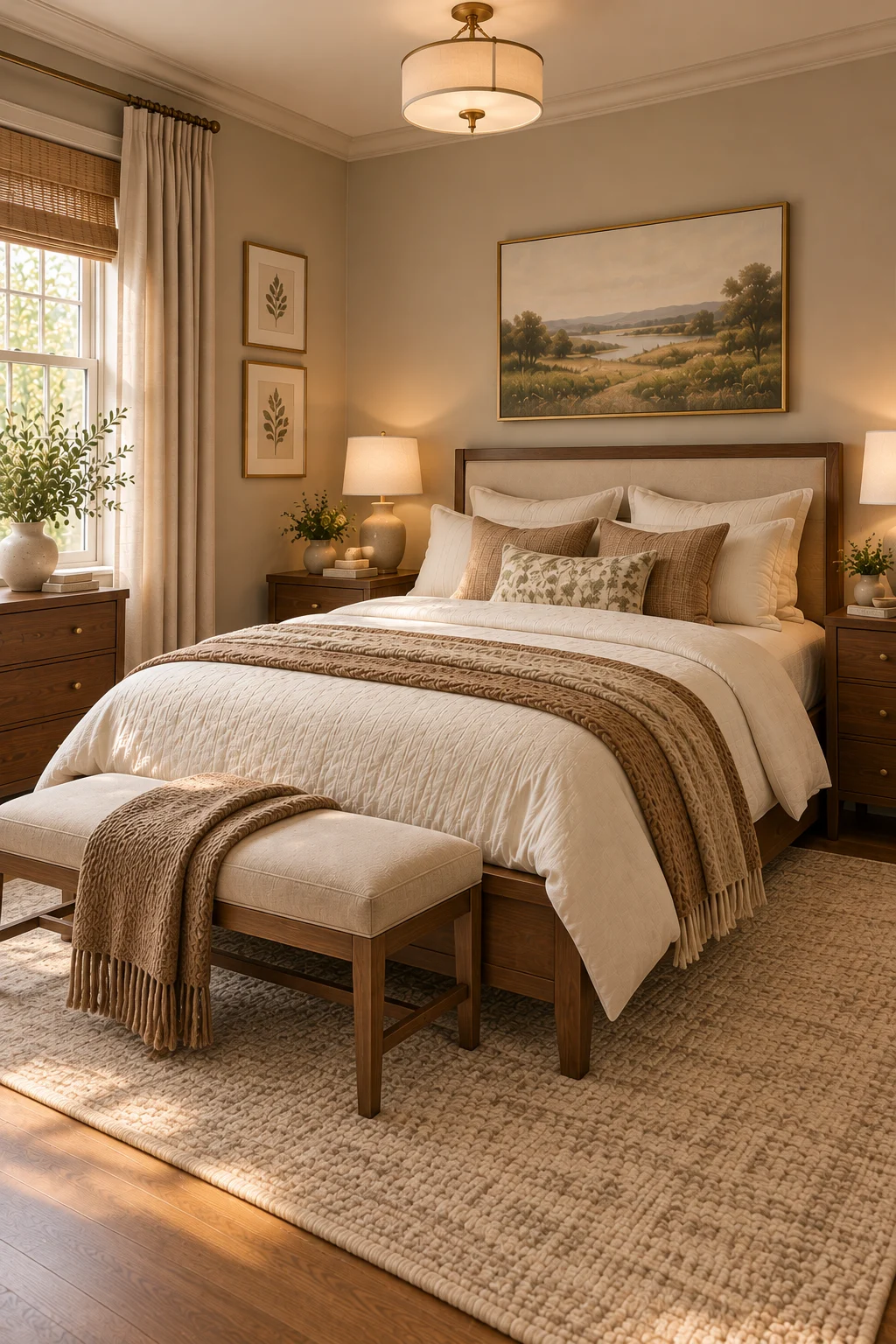
4. Modern Lamps on Classic Nightstands
The modern lamps on classic nightstands demonstrates the central idea of transitional decorating: traditional warmth balanced with contemporary restraint. Neither the classic nor the modern element should overpower the other. In a compact bedroom, this gives the eye a specific place to settle instead of scattering attention across several decorative objects.
Keep architectural details simple and furniture appropriately sized. Warm cream, greige, camel, walnut, and muted olive create an easy bridge between straight modern lines and softer classic profiles. Try a temporary layout with painter’s tape or paper before committing to the final placement. This is particularly useful when a window or closet interrupts the symmetry.
Use a contemporary lamp, uncomplicated bedding, and a restrained piece of traditional artwork to tie the room together. Matching every finish is unnecessary, but repeat the dominant wood tone and one metal finish for continuity. A cream rug and mushroom curtains can soften the edges of the scheme while allowing the feature to remain recognizable.
Avoid oversized ornate furniture and too many unrelated design eras. Maintain comfortable routes around the bed, check drawer and door swing, and secure tall storage pieces and wall-mounted decor. Leave enough clear floor area for daily movement and cleaning; decoration should never make the bedroom harder to use.
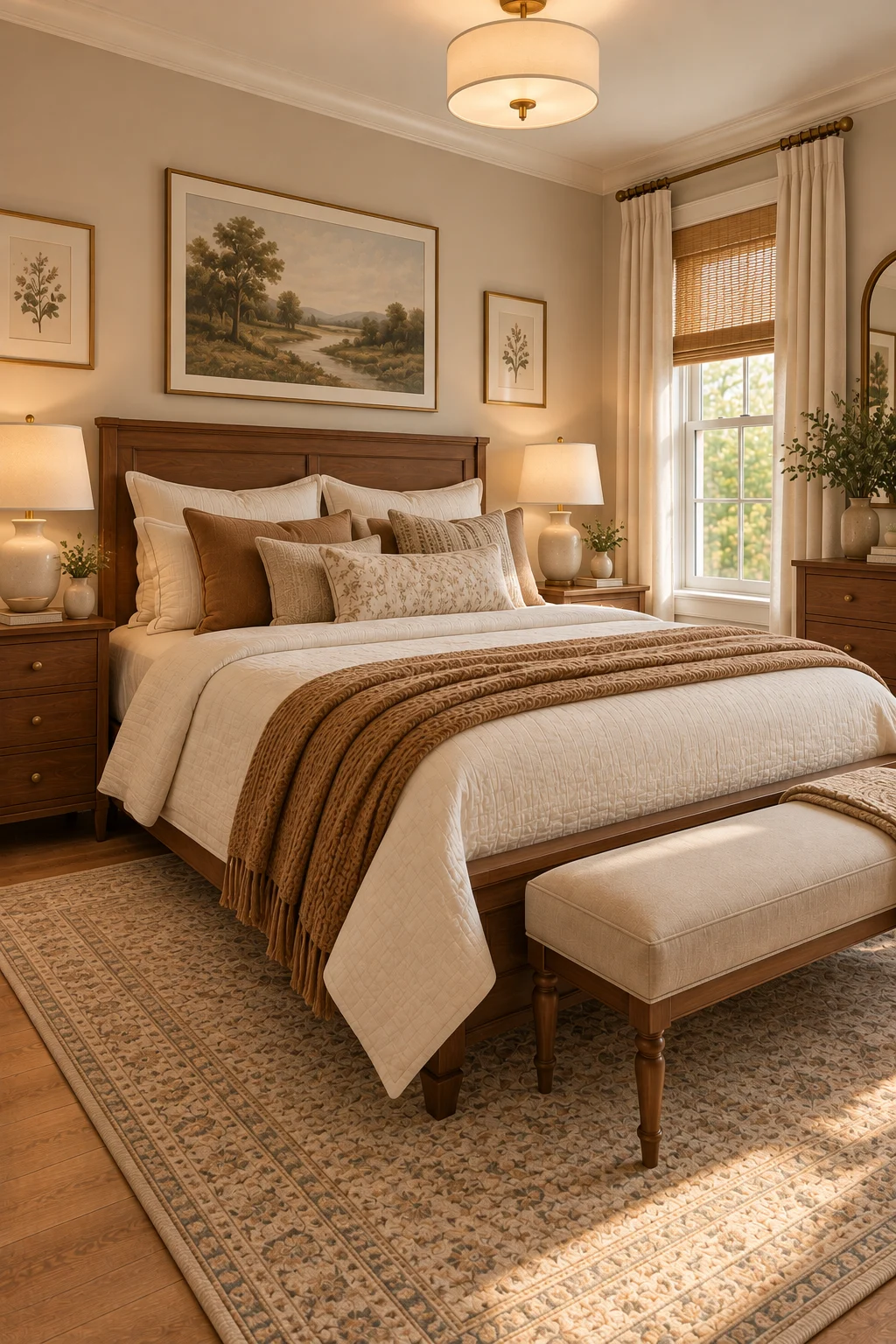
5. Muted Olive Accent Wall
The muted olive accent wall demonstrates the central idea of transitional decorating: traditional warmth balanced with contemporary restraint. Neither the classic nor the modern element should overpower the other. The result can feel polished without changing the floor plan or replacing a perfectly serviceable bed.
Keep architectural details simple and furniture appropriately sized. Warm cream, greige, camel, walnut, and muted olive create an easy bridge between straight modern lines and softer classic profiles. View the proposed arrangement from the doorway and from the bed. Both viewpoints matter because the room is experienced while entering and while relaxing.
Use a contemporary lamp, uncomplicated bedding, and a restrained piece of traditional artwork to tie the room together. Matching every finish is unnecessary, but repeat the dominant wood tone and one metal finish for continuity. For a slightly warmer effect, add a camel throw and one textured cushion rather than another large decorative piece.
Avoid oversized ornate furniture and too many unrelated design eras. Maintain comfortable routes around the bed, check drawer and door swing, and secure tall storage pieces and wall-mounted decor. If the result feels busy, remove one accessory before adding anything else. Negative space is part of the design.
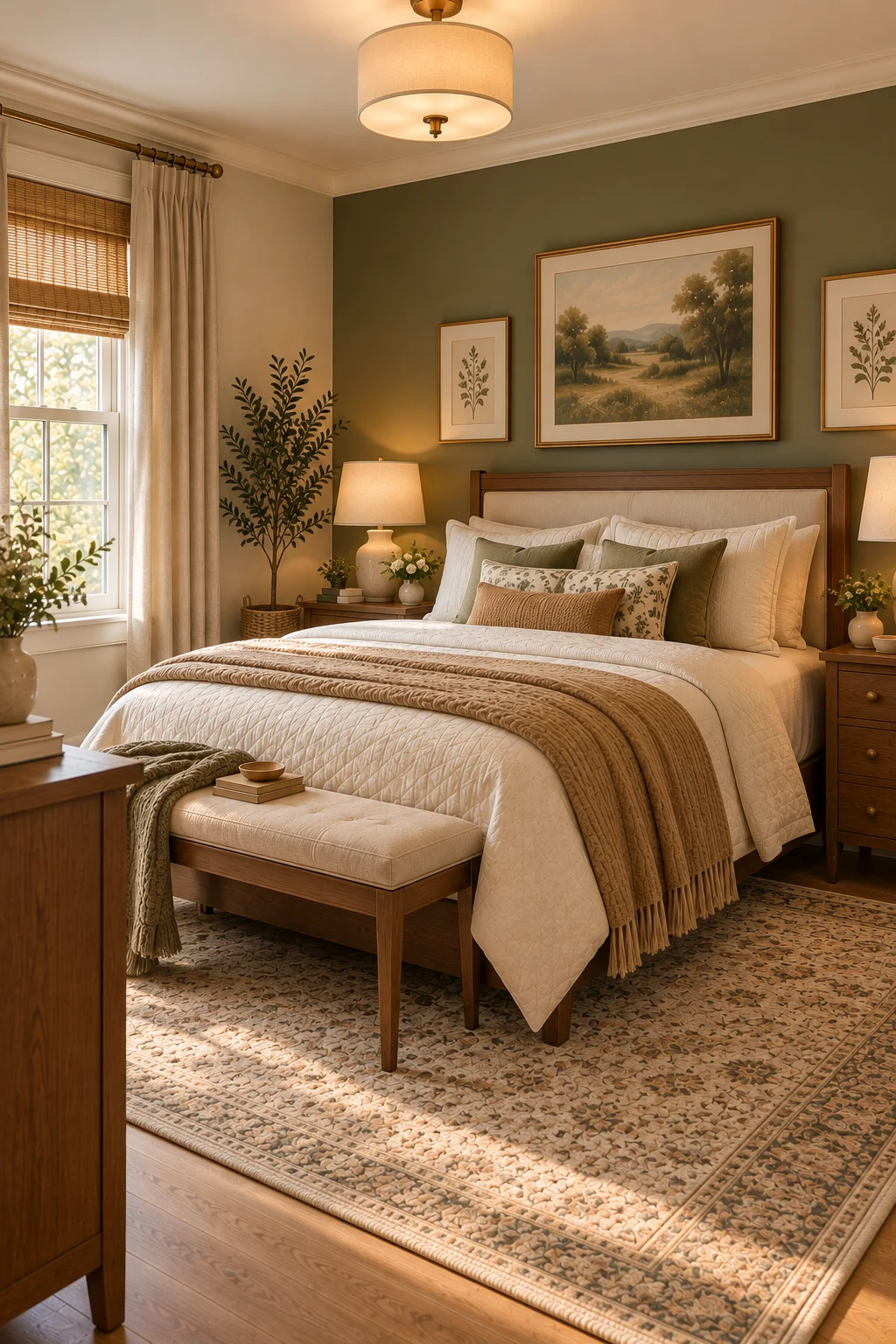
6. Traditional Rug With Contemporary Bed
The traditional rug with contemporary bed demonstrates the central idea of transitional decorating: traditional warmth balanced with contemporary restraint. Neither the classic nor the modern element should overpower the other. In a compact bedroom, this gives the eye a specific place to settle instead of scattering attention across several decorative objects.
Keep architectural details simple and furniture appropriately sized. Warm cream, greige, camel, walnut, and muted olive create an easy bridge between straight modern lines and softer classic profiles. Try a temporary layout with painter’s tape or paper before committing to the final placement. This is particularly useful when a window or closet interrupts the symmetry.
Use a contemporary lamp, uncomplicated bedding, and a restrained piece of traditional artwork to tie the room together. Matching every finish is unnecessary, but repeat the dominant wood tone and one metal finish for continuity. A cream rug and mushroom curtains can soften the edges of the scheme while allowing the feature to remain recognizable.
Avoid oversized ornate furniture and too many unrelated design eras. Maintain comfortable routes around the bed, check drawer and door swing, and secure tall storage pieces and wall-mounted decor. Leave enough clear floor area for daily movement and cleaning; decoration should never make the bedroom harder to use.
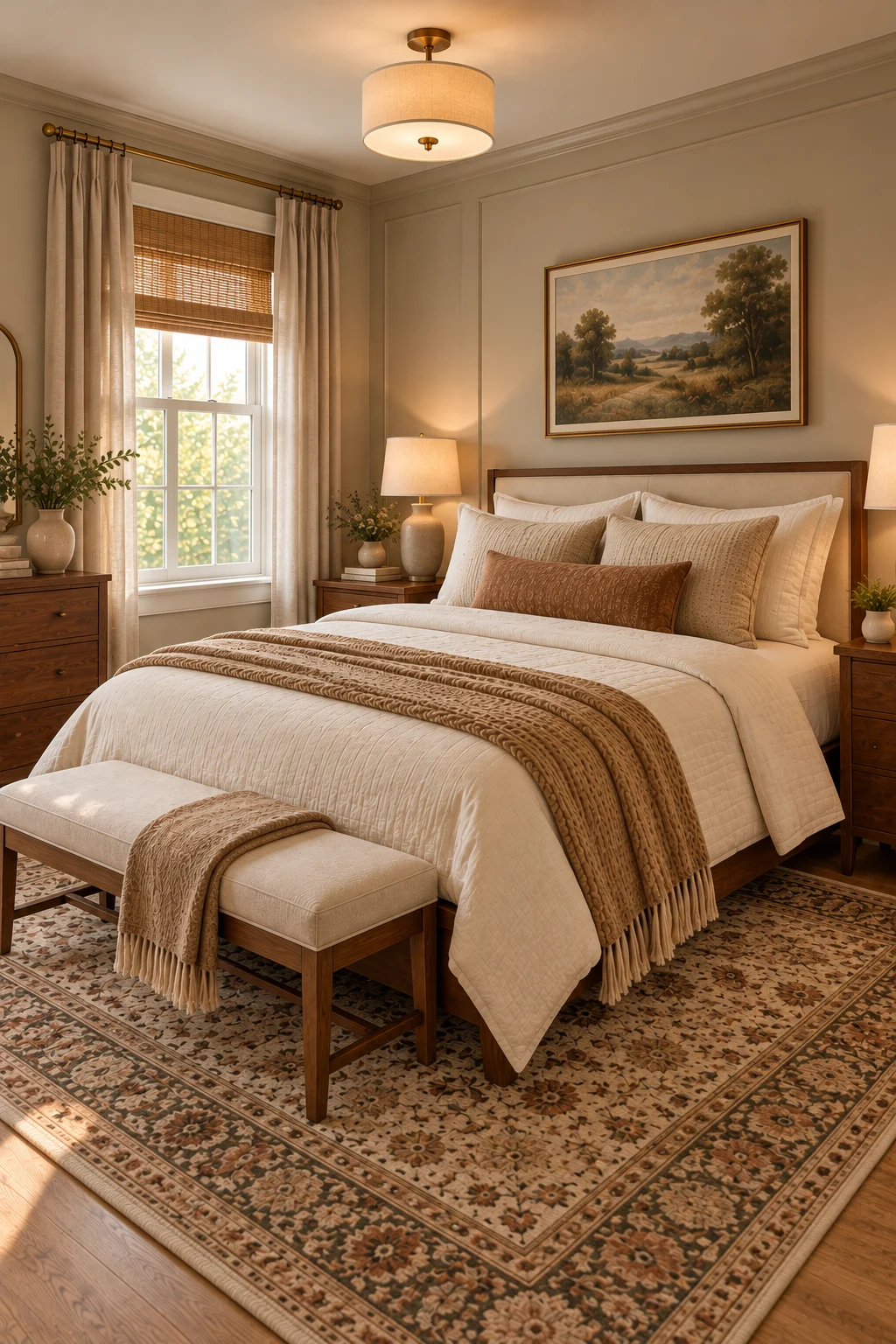
7. Cream Curtains and Dark Hardware
The cream curtains and dark hardware demonstrates the central idea of transitional decorating: traditional warmth balanced with contemporary restraint. Neither the classic nor the modern element should overpower the other. The result can feel polished without changing the floor plan or replacing a perfectly serviceable bed.
Keep architectural details simple and furniture appropriately sized. Warm cream, greige, camel, walnut, and muted olive create an easy bridge between straight modern lines and softer classic profiles. View the proposed arrangement from the doorway and from the bed. Both viewpoints matter because the room is experienced while entering and while relaxing.
Use a contemporary lamp, uncomplicated bedding, and a restrained piece of traditional artwork to tie the room together. Matching every finish is unnecessary, but repeat the dominant wood tone and one metal finish for continuity. For a slightly warmer effect, add a camel throw and one textured cushion rather than another large decorative piece.
Avoid oversized ornate furniture and too many unrelated design eras. Maintain comfortable routes around the bed, check drawer and door swing, and secure tall storage pieces and wall-mounted decor. If the result feels busy, remove one accessory before adding anything else. Negative space is part of the design.
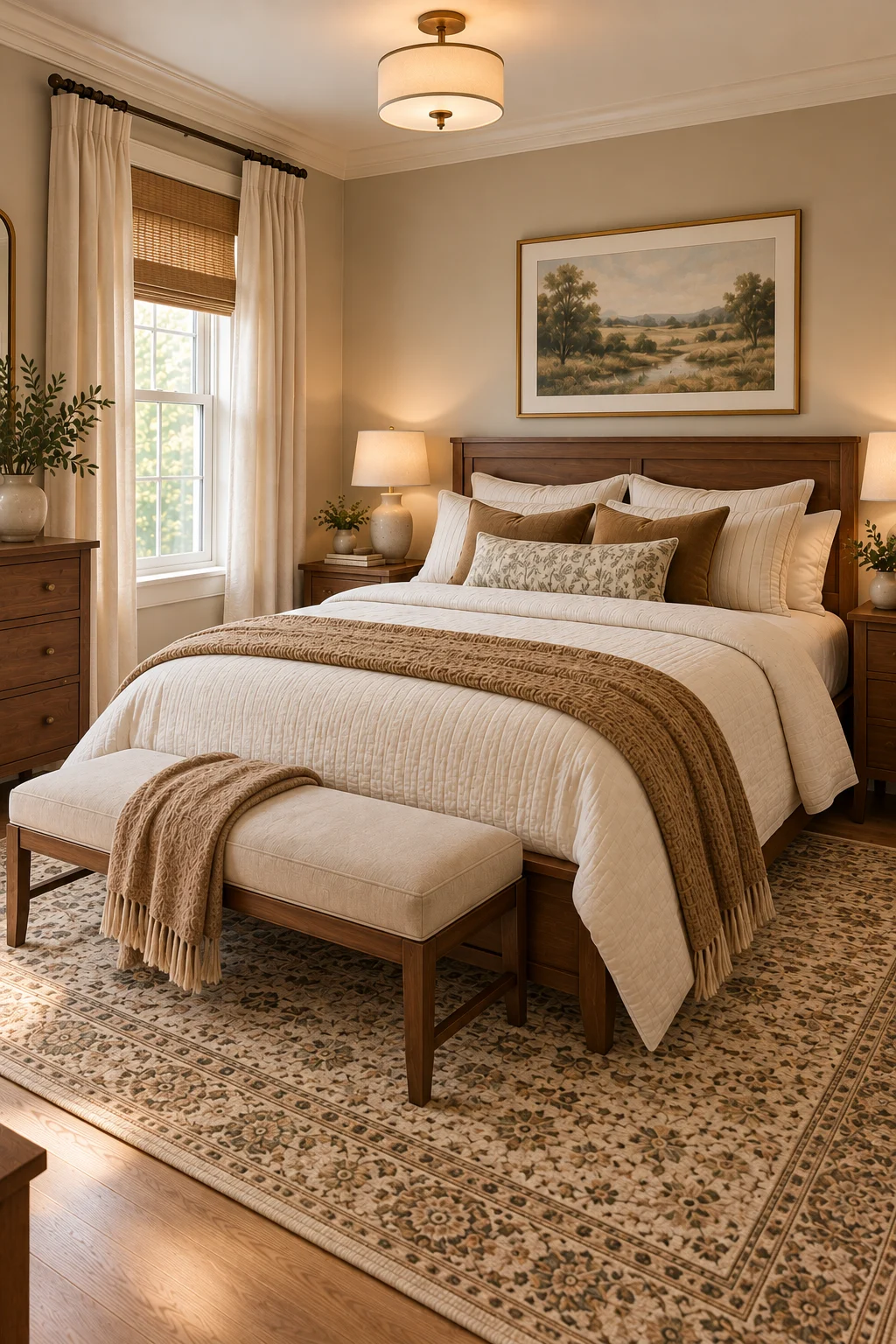
8. Low-Profile Modern Dresser
The low-profile modern dresser demonstrates the central idea of transitional decorating: traditional warmth balanced with contemporary restraint. Neither the classic nor the modern element should overpower the other. In a compact bedroom, this gives the eye a specific place to settle instead of scattering attention across several decorative objects.
Keep architectural details simple and furniture appropriately sized. Warm cream, greige, camel, walnut, and muted olive create an easy bridge between straight modern lines and softer classic profiles. Try a temporary layout with painter’s tape or paper before committing to the final placement. This is particularly useful when a window or closet interrupts the symmetry.
Use a contemporary lamp, uncomplicated bedding, and a restrained piece of traditional artwork to tie the room together. Matching every finish is unnecessary, but repeat the dominant wood tone and one metal finish for continuity. A cream rug and mushroom curtains can soften the edges of the scheme while allowing the feature to remain recognizable.
Avoid oversized ornate furniture and too many unrelated design eras. Maintain comfortable routes around the bed, check drawer and door swing, and secure tall storage pieces and wall-mounted decor. Leave enough clear floor area for daily movement and cleaning; decoration should never make the bedroom harder to use.
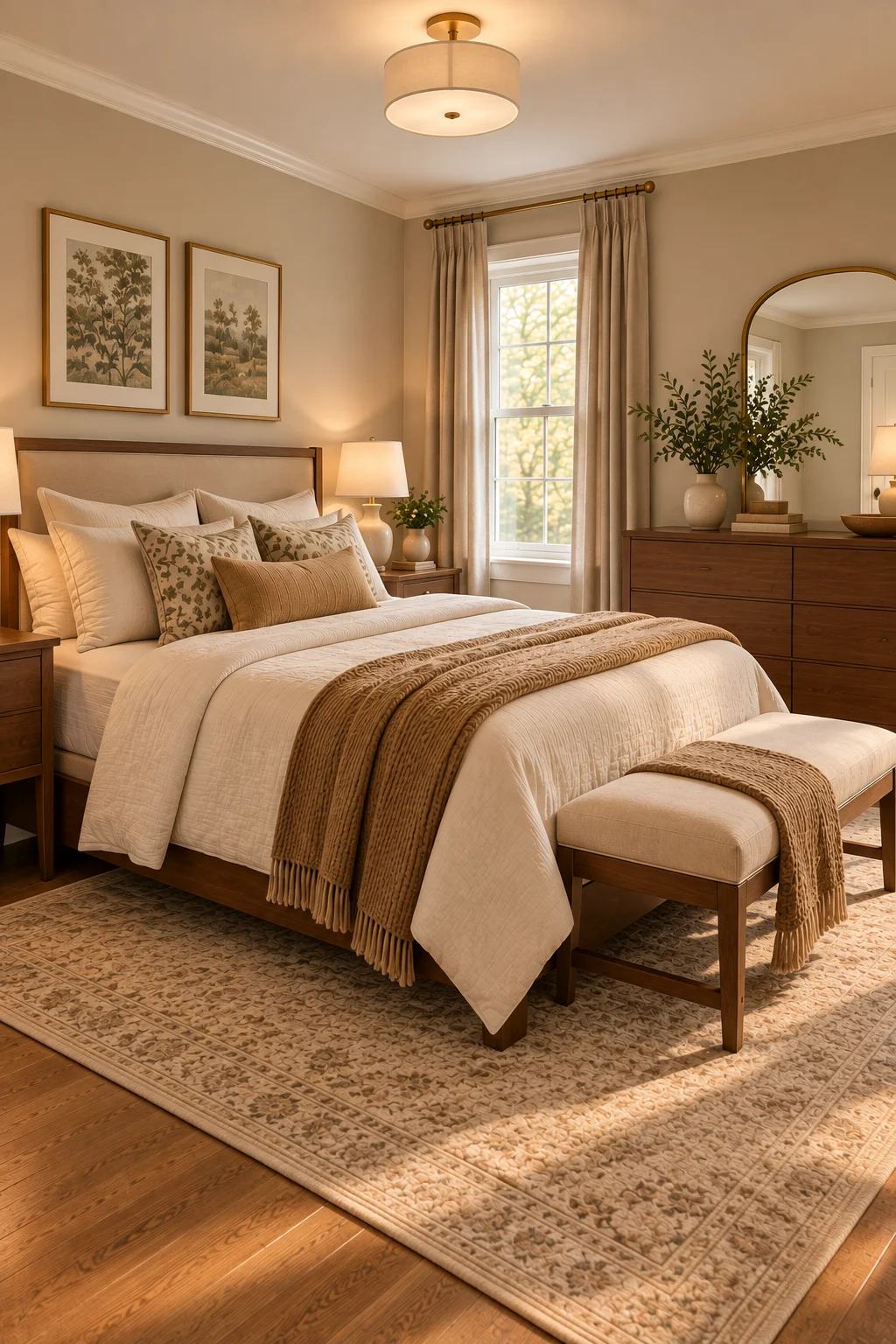
9. Classic Botanical Artwork
The classic botanical artwork demonstrates the central idea of transitional decorating: traditional warmth balanced with contemporary restraint. Neither the classic nor the modern element should overpower the other. The result can feel polished without changing the floor plan or replacing a perfectly serviceable bed.
Keep architectural details simple and furniture appropriately sized. Warm cream, greige, camel, walnut, and muted olive create an easy bridge between straight modern lines and softer classic profiles. View the proposed arrangement from the doorway and from the bed. Both viewpoints matter because the room is experienced while entering and while relaxing.
Use a contemporary lamp, uncomplicated bedding, and a restrained piece of traditional artwork to tie the room together. Matching every finish is unnecessary, but repeat the dominant wood tone and one metal finish for continuity. For a slightly warmer effect, add a camel throw and one textured cushion rather than another large decorative piece.
Avoid oversized ornate furniture and too many unrelated design eras. Maintain comfortable routes around the bed, check drawer and door swing, and secure tall storage pieces and wall-mounted decor. If the result feels busy, remove one accessory before adding anything else. Negative space is part of the design.
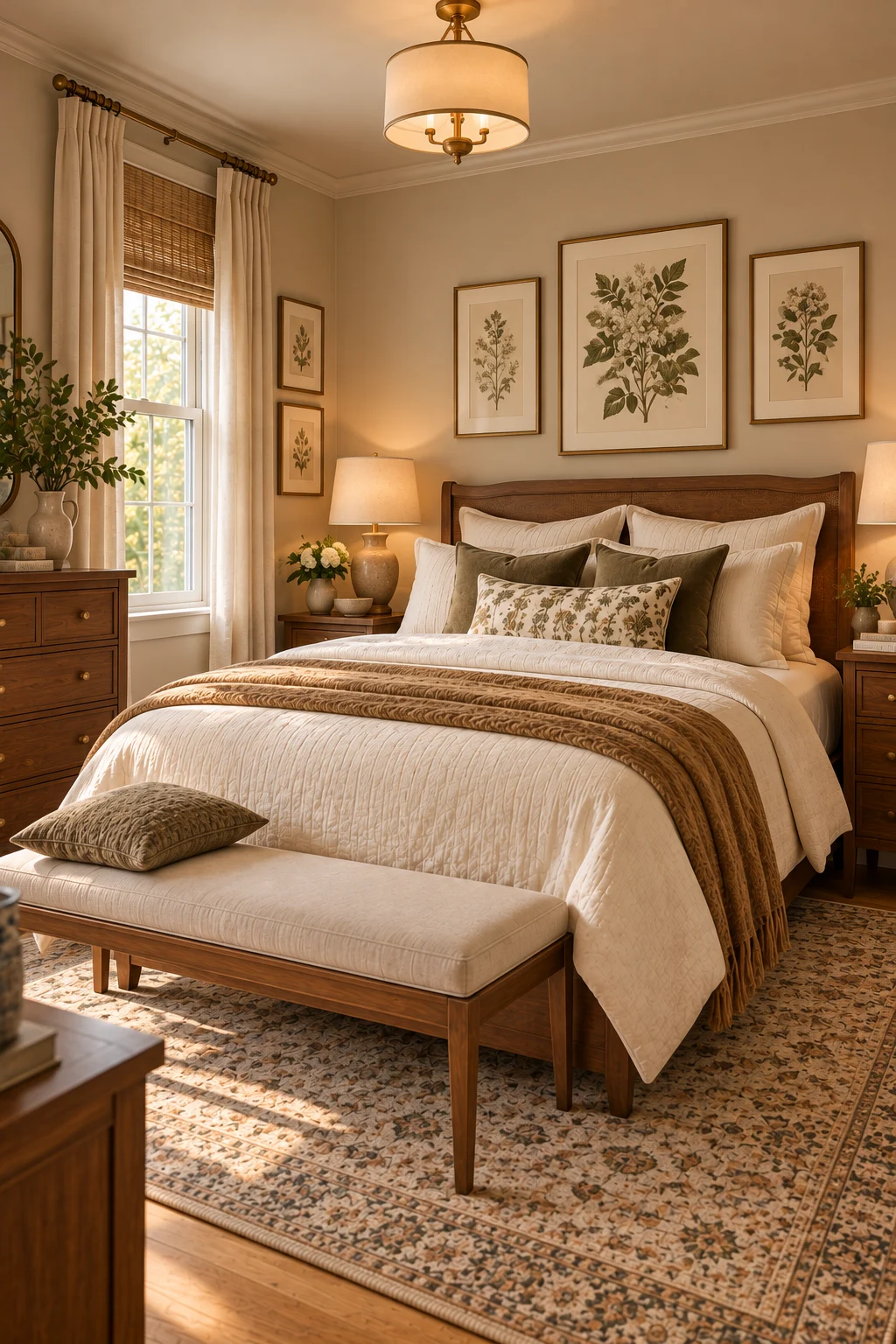
10. Symmetrical Bedside Arrangement
The symmetrical bedside arrangement demonstrates the central idea of transitional decorating: traditional warmth balanced with contemporary restraint. Neither the classic nor the modern element should overpower the other. In a compact bedroom, this gives the eye a specific place to settle instead of scattering attention across several decorative objects.
Keep architectural details simple and furniture appropriately sized. Warm cream, greige, camel, walnut, and muted olive create an easy bridge between straight modern lines and softer classic profiles. Try a temporary layout with painter’s tape or paper before committing to the final placement. This is particularly useful when a window or closet interrupts the symmetry.
Use a contemporary lamp, uncomplicated bedding, and a restrained piece of traditional artwork to tie the room together. Matching every finish is unnecessary, but repeat the dominant wood tone and one metal finish for continuity. A cream rug and mushroom curtains can soften the edges of the scheme while allowing the feature to remain recognizable.
Avoid oversized ornate furniture and too many unrelated design eras. Maintain comfortable routes around the bed, check drawer and door swing, and secure tall storage pieces and wall-mounted decor. Leave enough clear floor area for daily movement and cleaning; decoration should never make the bedroom harder to use.
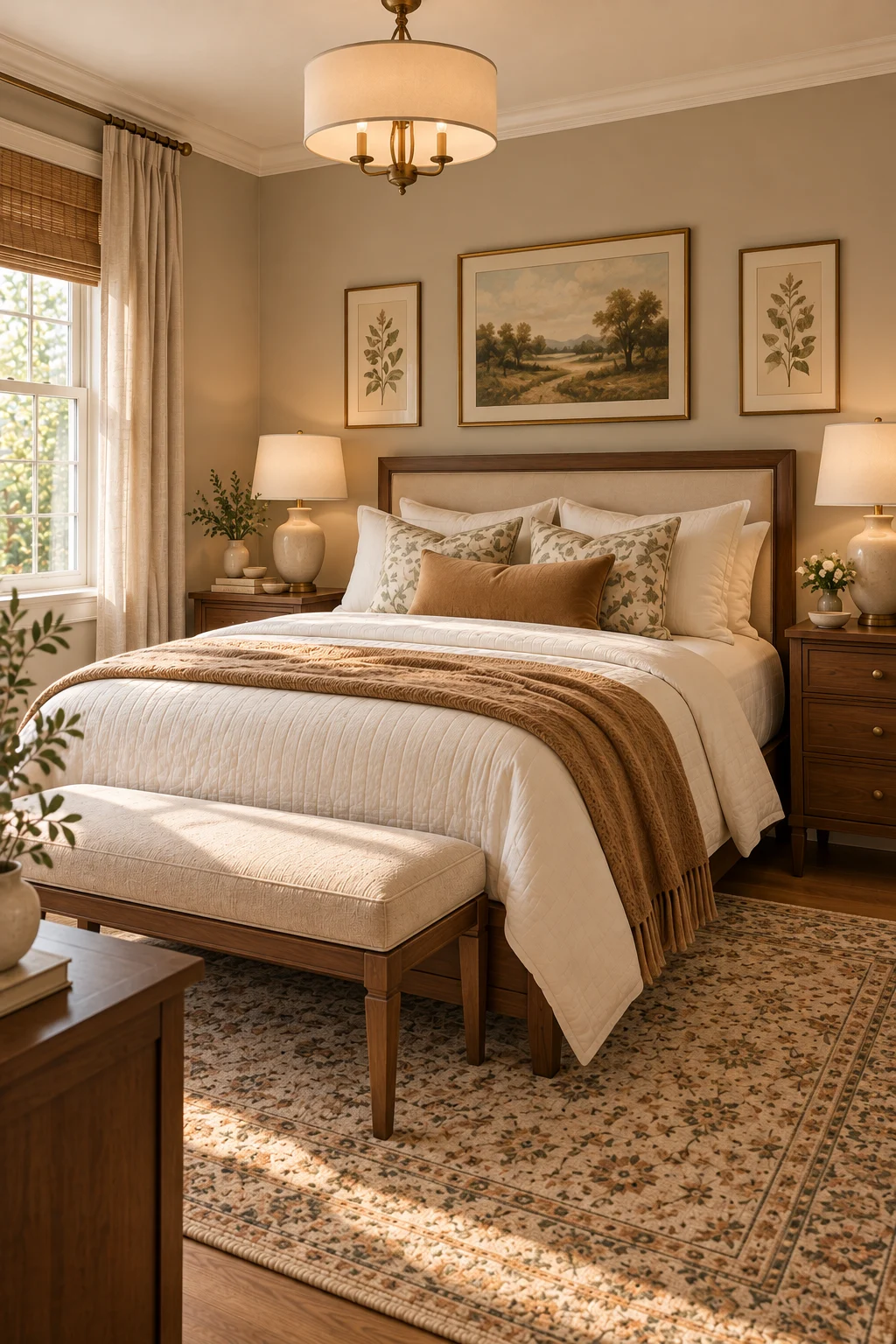
11. Dusty Blue Textiles
The dusty blue textiles demonstrates the central idea of transitional decorating: traditional warmth balanced with contemporary restraint. Neither the classic nor the modern element should overpower the other. The result can feel polished without changing the floor plan or replacing a perfectly serviceable bed.
Keep architectural details simple and furniture appropriately sized. Warm cream, greige, camel, walnut, and muted olive create an easy bridge between straight modern lines and softer classic profiles. View the proposed arrangement from the doorway and from the bed. Both viewpoints matter because the room is experienced while entering and while relaxing.
Use a contemporary lamp, uncomplicated bedding, and a restrained piece of traditional artwork to tie the room together. Matching every finish is unnecessary, but repeat the dominant wood tone and one metal finish for continuity. For a slightly warmer effect, add a camel throw and one textured cushion rather than another large decorative piece.
Avoid oversized ornate furniture and too many unrelated design eras. Maintain comfortable routes around the bed, check drawer and door swing, and secure tall storage pieces and wall-mounted decor. If the result feels busy, remove one accessory before adding anything else. Negative space is part of the design.
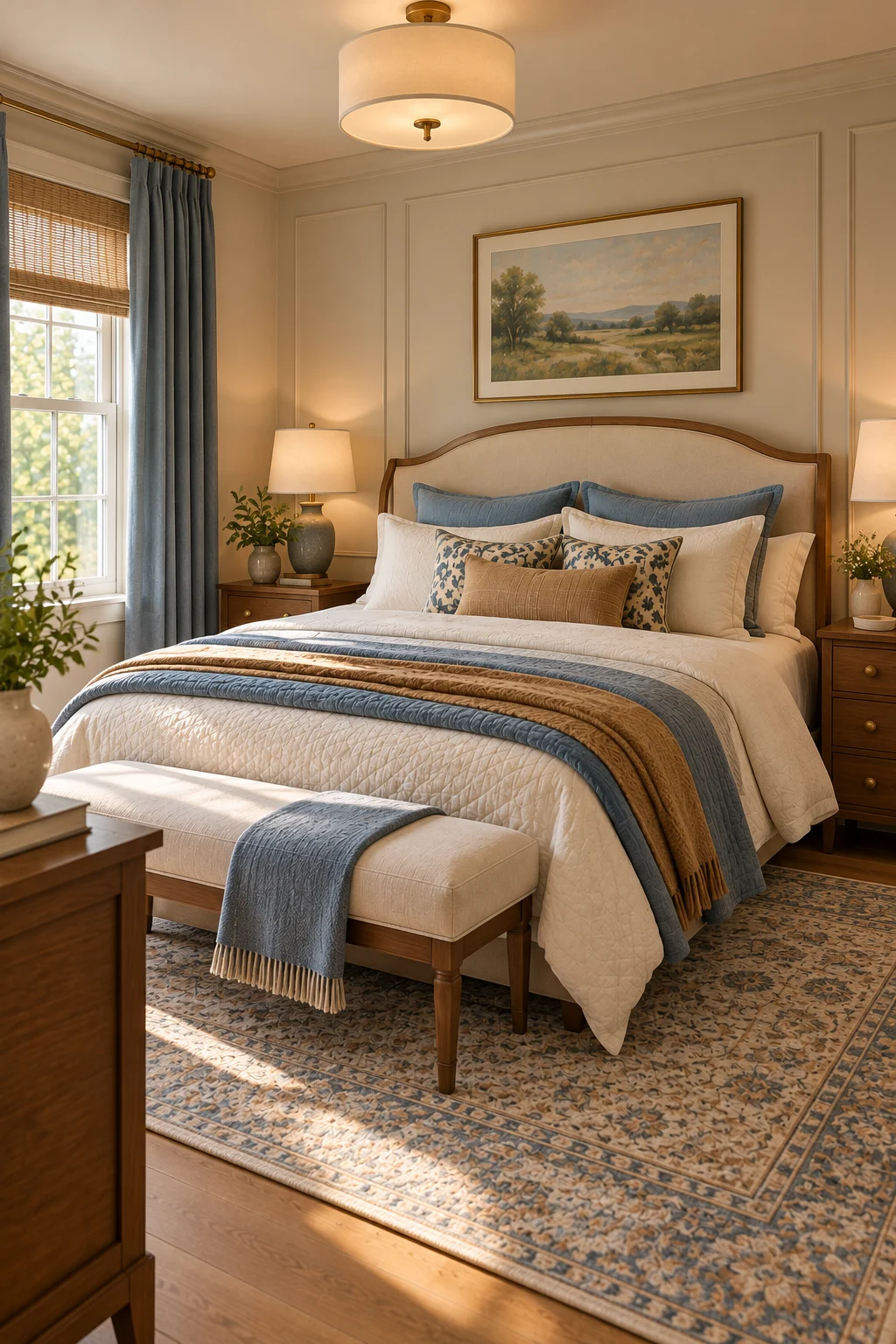
12. Aged-Brass-Look Accents
The aged-brass-look accents demonstrates the central idea of transitional decorating: traditional warmth balanced with contemporary restraint. Neither the classic nor the modern element should overpower the other. In a compact bedroom, this gives the eye a specific place to settle instead of scattering attention across several decorative objects.
Keep architectural details simple and furniture appropriately sized. Warm cream, greige, camel, walnut, and muted olive create an easy bridge between straight modern lines and softer classic profiles. Try a temporary layout with painter’s tape or paper before committing to the final placement. This is particularly useful when a window or closet interrupts the symmetry.
Use a contemporary lamp, uncomplicated bedding, and a restrained piece of traditional artwork to tie the room together. Matching every finish is unnecessary, but repeat the dominant wood tone and one metal finish for continuity. A cream rug and mushroom curtains can soften the edges of the scheme while allowing the feature to remain recognizable.
Avoid oversized ornate furniture and too many unrelated design eras. Maintain comfortable routes around the bed, check drawer and door swing, and secure tall storage pieces and wall-mounted decor. Leave enough clear floor area for daily movement and cleaning; decoration should never make the bedroom harder to use.
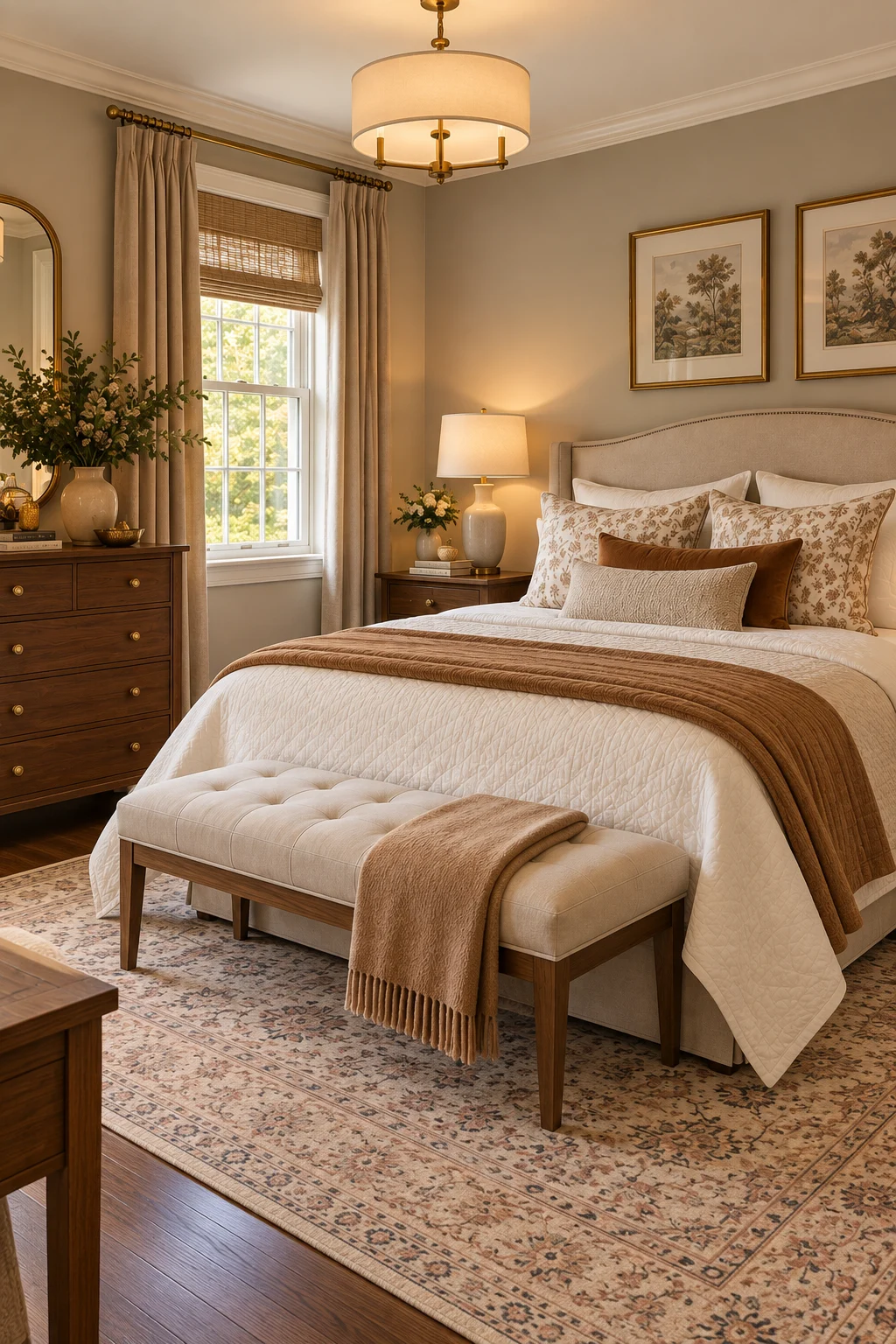
13. Simple Paneling Behind the Bed
The simple paneling behind the bed demonstrates the central idea of transitional decorating: traditional warmth balanced with contemporary restraint. Neither the classic nor the modern element should overpower the other. The result can feel polished without changing the floor plan or replacing a perfectly serviceable bed.
Keep architectural details simple and furniture appropriately sized. Warm cream, greige, camel, walnut, and muted olive create an easy bridge between straight modern lines and softer classic profiles. View the proposed arrangement from the doorway and from the bed. Both viewpoints matter because the room is experienced while entering and while relaxing.
Use a contemporary lamp, uncomplicated bedding, and a restrained piece of traditional artwork to tie the room together. Matching every finish is unnecessary, but repeat the dominant wood tone and one metal finish for continuity. For a slightly warmer effect, add a camel throw and one textured cushion rather than another large decorative piece.
Avoid oversized ornate furniture and too many unrelated design eras. Maintain comfortable routes around the bed, check drawer and door swing, and secure tall storage pieces and wall-mounted decor. If the result feels busy, remove one accessory before adding anything else. Negative space is part of the design.
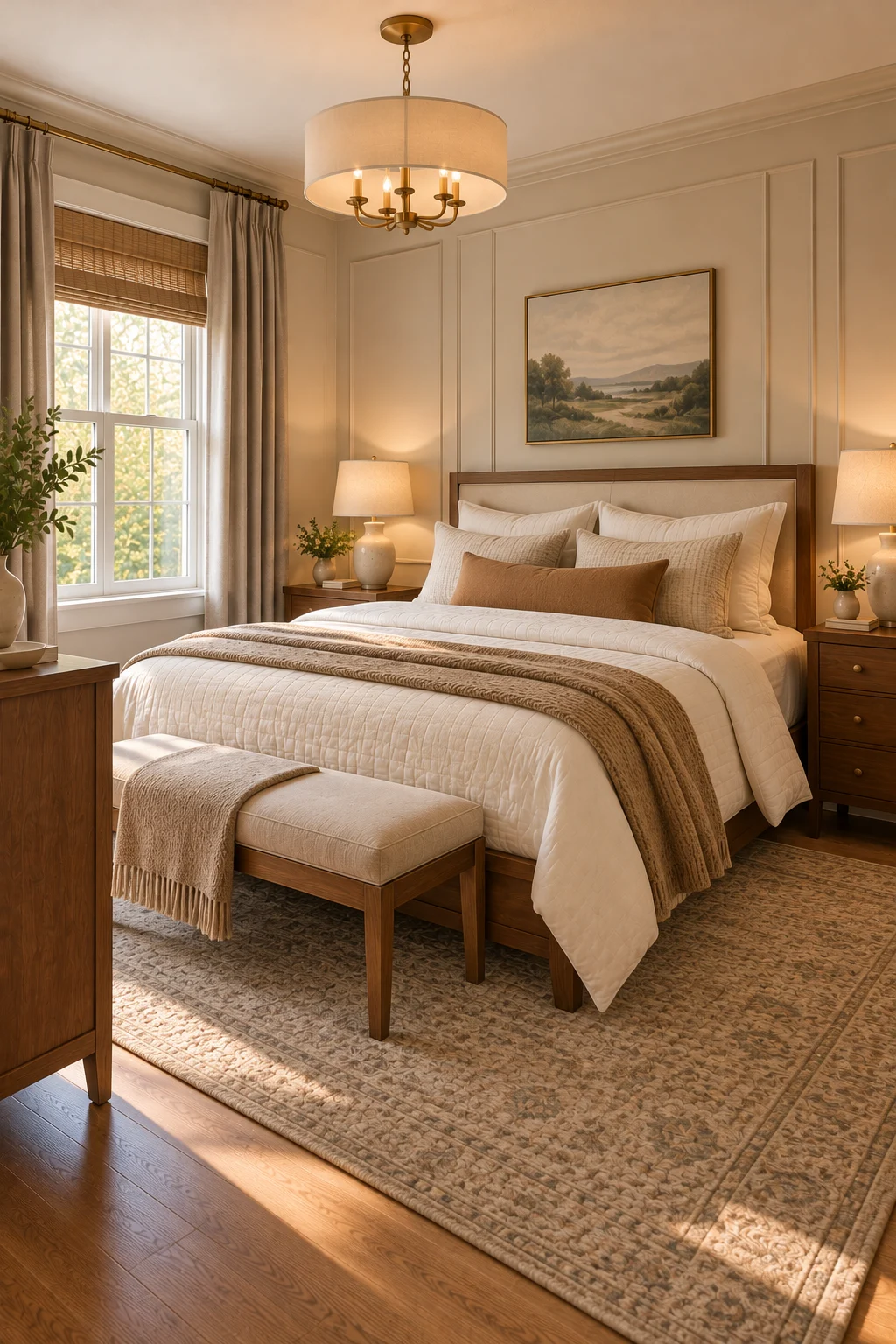
14. Camel Reading Chair
The camel reading chair demonstrates the central idea of transitional decorating: traditional warmth balanced with contemporary restraint. Neither the classic nor the modern element should overpower the other. In a compact bedroom, this gives the eye a specific place to settle instead of scattering attention across several decorative objects.
Keep architectural details simple and furniture appropriately sized. Warm cream, greige, camel, walnut, and muted olive create an easy bridge between straight modern lines and softer classic profiles. Try a temporary layout with painter’s tape or paper before committing to the final placement. This is particularly useful when a window or closet interrupts the symmetry.
Use a contemporary lamp, uncomplicated bedding, and a restrained piece of traditional artwork to tie the room together. Matching every finish is unnecessary, but repeat the dominant wood tone and one metal finish for continuity. A cream rug and mushroom curtains can soften the edges of the scheme while allowing the feature to remain recognizable.
Avoid oversized ornate furniture and too many unrelated design eras. Maintain comfortable routes around the bed, check drawer and door swing, and secure tall storage pieces and wall-mounted decor. Leave enough clear floor area for daily movement and cleaning; decoration should never make the bedroom harder to use.
15. Mixed Wood and Painted Furniture
The mixed wood and painted furniture demonstrates the central idea of transitional decorating: traditional warmth balanced with contemporary restraint. Neither the classic nor the modern element should overpower the other. The result can feel polished without changing the floor plan or replacing a perfectly serviceable bed.
Keep architectural details simple and furniture appropriately sized. Warm cream, greige, camel, walnut, and muted olive create an easy bridge between straight modern lines and softer classic profiles. View the proposed arrangement from the doorway and from the bed. Both viewpoints matter because the room is experienced while entering and while relaxing.
Use a contemporary lamp, uncomplicated bedding, and a restrained piece of traditional artwork to tie the room together. Matching every finish is unnecessary, but repeat the dominant wood tone and one metal finish for continuity. For a slightly warmer effect, add a camel throw and one textured cushion rather than another large decorative piece.
Avoid oversized ornate furniture and too many unrelated design eras. Maintain comfortable routes around the bed, check drawer and door swing, and secure tall storage pieces and wall-mounted decor. If the result feels busy, remove one accessory before adding anything else. Negative space is part of the design.
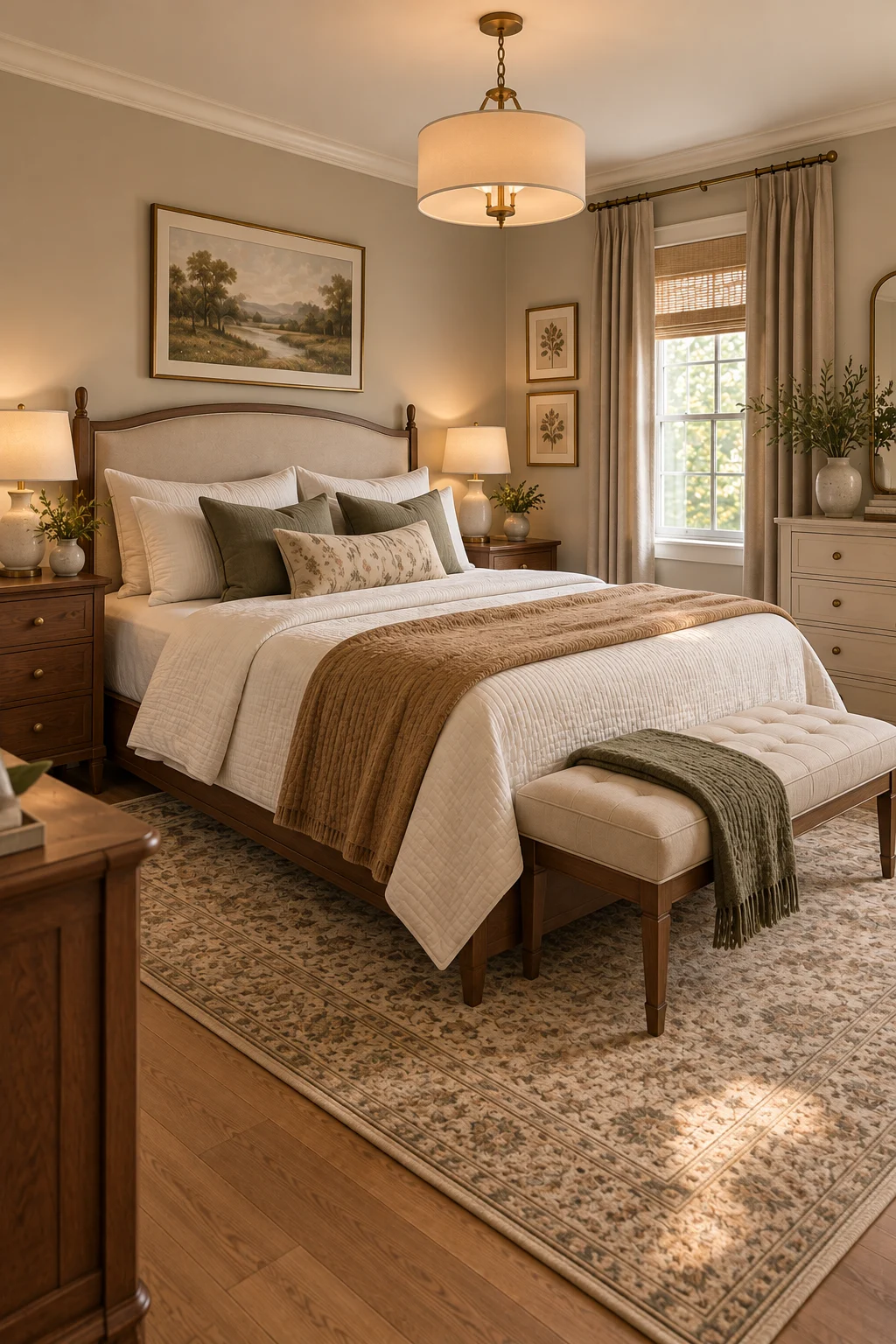
16. Layered Neutral Bedding
The layered neutral bedding demonstrates the central idea of transitional decorating: traditional warmth balanced with contemporary restraint. Neither the classic nor the modern element should overpower the other. In a compact bedroom, this gives the eye a specific place to settle instead of scattering attention across several decorative objects.
Keep architectural details simple and furniture appropriately sized. Warm cream, greige, camel, walnut, and muted olive create an easy bridge between straight modern lines and softer classic profiles. Try a temporary layout with painter’s tape or paper before committing to the final placement. This is particularly useful when a window or closet interrupts the symmetry.
Use a contemporary lamp, uncomplicated bedding, and a restrained piece of traditional artwork to tie the room together. Matching every finish is unnecessary, but repeat the dominant wood tone and one metal finish for continuity. A cream rug and mushroom curtains can soften the edges of the scheme while allowing the feature to remain recognizable.
Avoid oversized ornate furniture and too many unrelated design eras. Maintain comfortable routes around the bed, check drawer and door swing, and secure tall storage pieces and wall-mounted decor. Leave enough clear floor area for daily movement and cleaning; decoration should never make the bedroom harder to use.
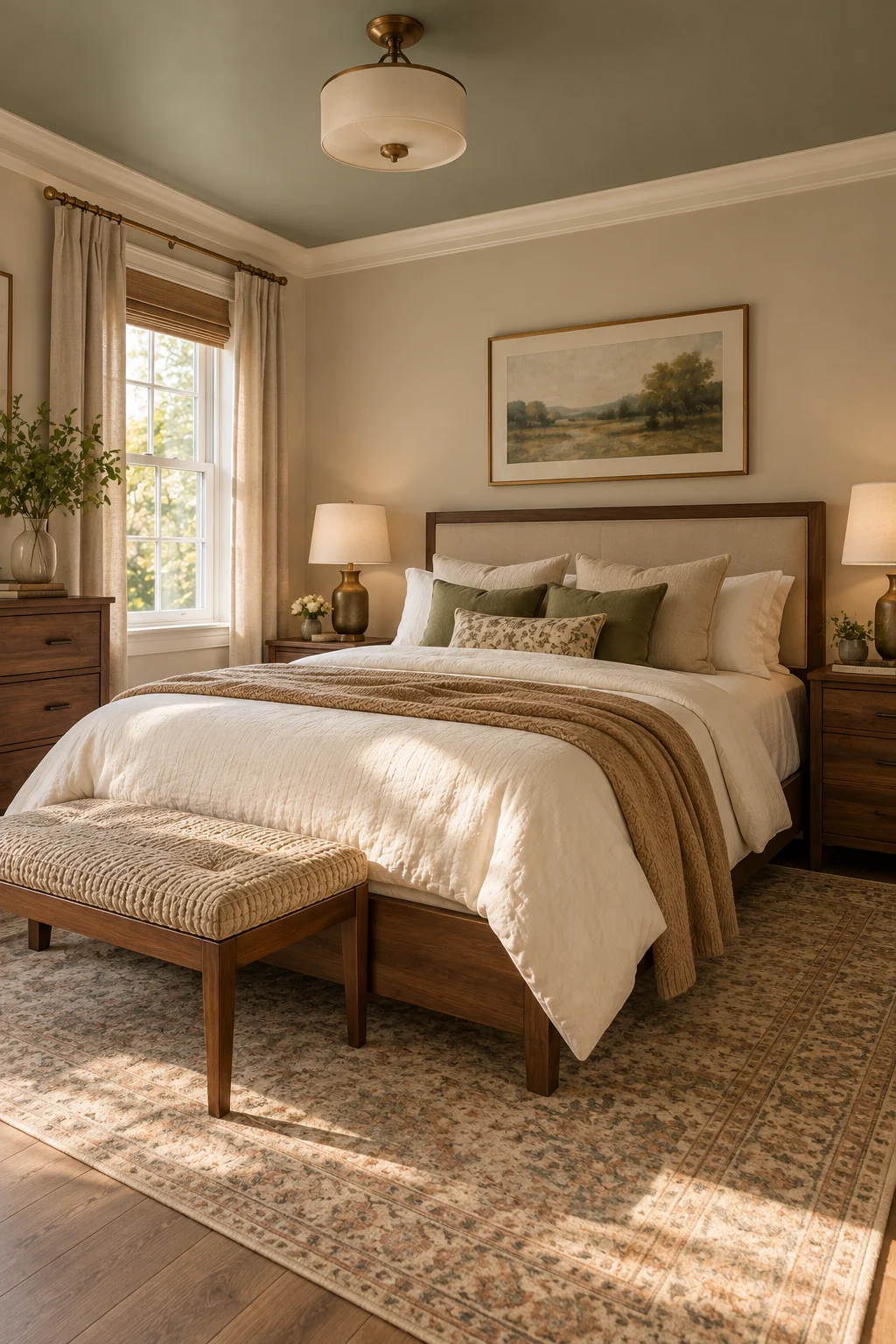
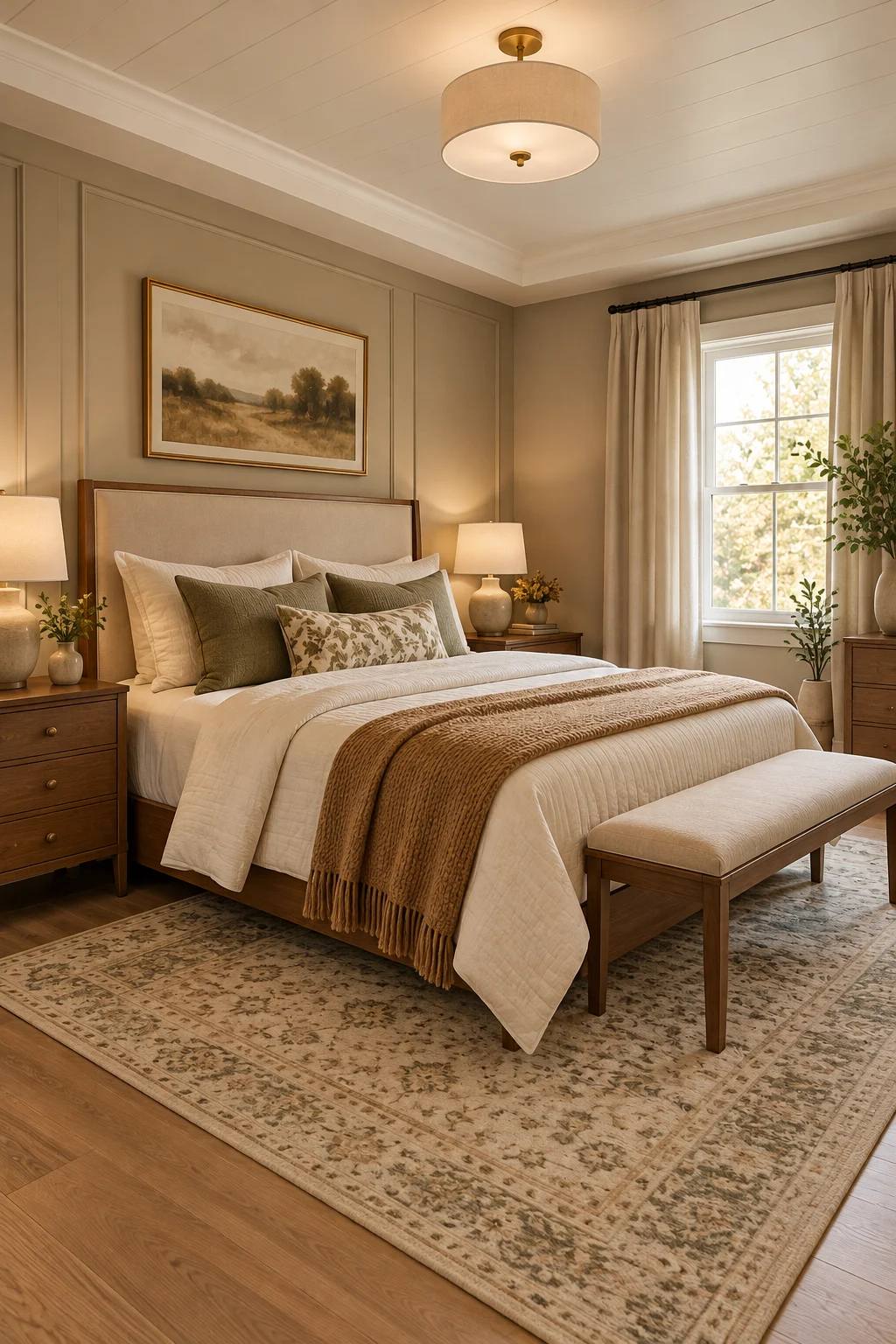
17. Complete Transitional Bedroom
The complete transitional bedroom demonstrates the central idea of transitional decorating: traditional warmth balanced with contemporary restraint. Neither the classic nor the modern element should overpower the other. The result can feel polished without changing the floor plan or replacing a perfectly serviceable bed.
Keep architectural details simple and furniture appropriately sized. Warm cream, greige, camel, walnut, and muted olive create an easy bridge between straight modern lines and softer classic profiles. View the proposed arrangement from the doorway and from the bed. Both viewpoints matter because the room is experienced while entering and while relaxing.
Use a contemporary lamp, uncomplicated bedding, and a restrained piece of traditional artwork to tie the room together. Matching every finish is unnecessary, but repeat the dominant wood tone and one metal finish for continuity. For a slightly warmer effect, add a camel throw and one textured cushion rather than another large decorative piece.
Avoid oversized ornate furniture and too many unrelated design eras. Maintain comfortable routes around the bed, check drawer and door swing, and secure tall storage pieces and wall-mounted decor. If the result feels busy, remove one accessory before adding anything else. Negative space is part of the design.
How to Plan the Room Before Decorating
Begin with the way the bedroom is actually used, not with a photograph of an idealized room. Write down what needs to remain: the bed size, dresser, closet access, reading light, and any desk or chair. A successful transitional design update should improve the room’s character without creating new daily inconveniences.
Measure wall lengths, ceiling height, the width of the bed, and the depth of furniture. Include door swings and the space required to open drawers. Sketch the layout on paper or use painter’s tape to test where a new feature will sit. This simple step can prevent purchases that are beautiful in isolation but impractical in the actual room.
Identify the view from the doorway. The first impression often comes from the bed wall, but the best feature is not always directly behind the headboard. A dresser wall, reading nook, or carefully finished ceiling may be more effective if windows and doors make the bed wall awkward.
Choosing a Cohesive Color Palette
Start with one main neutral and one supporting accent. Warm white, cream, mushroom, and greige work with most medium-walnut and natural-oak furniture. Muted olive, dusty blue, camel, and burgundy can then provide depth without introducing visual noise.
Test paint, fabric, and material samples in the bedroom itself. Daylight changes throughout the day, and warm bedside lamps can make a neutral appear more yellow or a blue appear grayer. Looking at samples beside the existing flooring is especially important because wood undertones affect the entire palette.
Repeat the accent sparingly. A color seen in a cushion can appear again in a small artwork or rug detail. This is usually more effective than matching every item perfectly or purchasing a complete set of themed accessories.
Furniture Scale and Layout
Ordinary bedrooms benefit from proportionate furniture. A low or medium-height headboard, compact nightstands, and a dresser with usable drawers usually provide more comfort than oversized statement pieces. Keep the bed accessible from the sides where the layout permits.
Before introducing an accent chair or bench, confirm that it will not narrow the walking route or block a closet. A piece that fits on a floor plan may still feel awkward when someone needs to carry laundry or open a drawer. Leave the room enough open space to function naturally.
If you already own good furniture, work with it. Changing bedding, lighting, paint, or one wall detail can create a coherent new direction at a lower cost than replacing everything. Consistency of color and proportion matters more than buying an expensive matching collection.
Layered Lighting for a Comfortable Bedroom
Combine ambient lighting with useful task lighting. A ceiling fixture can illuminate the room generally, while bedside lamps or properly installed reading lights help with books and nighttime routines. Decorative light alone is rarely enough for dressing or cleaning.
Warm 2700K–3000K lighting often complements cream textiles and natural wood. Choose shades and fixture positions that reduce glare from the bed. Where practical, provide controls that are easy to reach without crossing a dark room.
Plan cable routes before arranging furniture. Keep cords away from walking paths and moving drawers. Hardwired fixtures should be installed appropriately, and decorative changes must not obstruct vents, detectors, or other safety equipment.
Budget-Friendly Ways to Get the Look
Choose one high-impact update first. A carefully selected paint color, a new set of curtains, or a well-placed decorative feature can change the room’s identity while preserving the main furniture. Avoid purchasing many small accessories before establishing the larger palette.
Shop by dimensions and material quality rather than by trend labels. A simple frame, washable throw, or well-made lamp may be useful across several future decorating styles. Reusing existing pieces also reduces waste and keeps the project manageable.
Set aside a portion of the budget for installation materials, hardware, and repairs. Proper mounting, surface preparation, and safe electrical work are less visible than decorative objects, but they are essential to a finished room that works reliably.
Common Mistakes to Avoid
The first mistake is trying to create several focal points at once. Strong artwork, patterned bedding, elaborate wall treatment, and dramatic lighting can compete for attention. Decide which element should lead, then let the others support it.
Another mistake is ignoring maintenance. Delicate surfaces, dust-catching details, and difficult-to-clean fabrics may look attractive at first but become frustrating in everyday use. Select materials suited to the household and follow their care instructions.
Finally, do not mistake a tightly packed room for a fully decorated room. A clear walkway, an accessible nightstand, and a comfortably made bed contribute more to a welcoming bedroom than another decorative accessory.
Safety, Installation, and Maintenance
Secure mirrors, artwork, shelves, and other mounted objects with hardware appropriate for the wall and the item’s weight. Do not rely on adhesives for heavy objects unless the product is explicitly designed and rated for that purpose. Anchor tall dressers and storage units where appropriate.
Keep doors, windows, locks, vents, alarms, and outlets accessible. Avoid loose cords, unstable lamps, and floor coverings with curled edges. If a project involves structural work or hardwired electrical changes, consult a qualified professional and follow applicable requirements.
Make the room easy to maintain: dust surfaces regularly, launder textiles according to their labels, inspect mounting hardware, and touch up finishes when necessary. A design that remains practical after the initial reveal is more valuable than one that only photographs well.
Final Thoughts
Thoughtful transitional design can give a modest bedroom a distinctive personality without sacrificing comfort. Choose one clear design direction, repeat a few compatible colors and materials, and leave enough space for the room to work naturally every day.
