
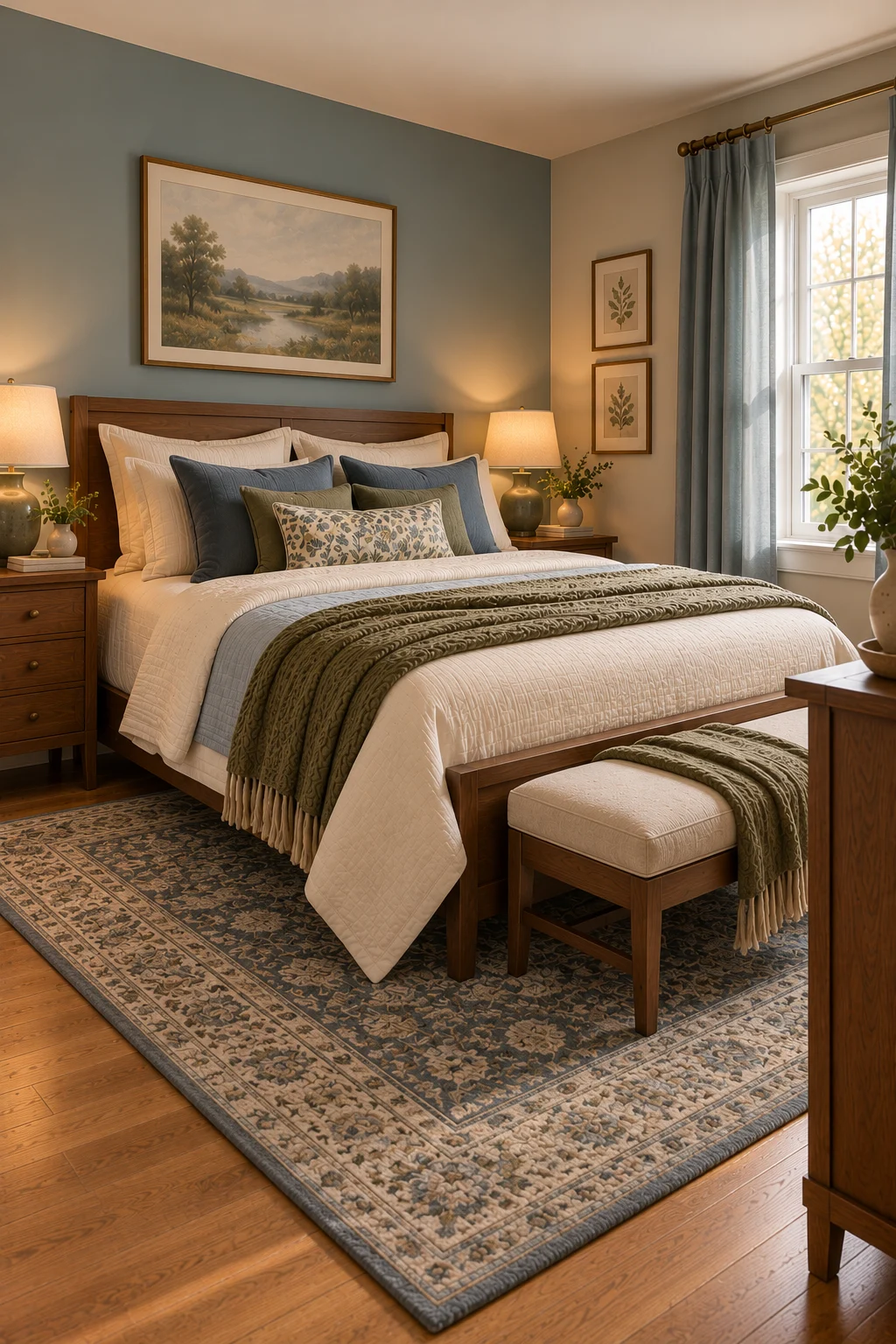
19 Bedroom Rug Placement Ideas for a Beautifully Balanced Layout
A bedroom should feel personal without becoming difficult to use. Choosing the right bedroom rug placement details can make an ordinary room more comfortable and expressive, but a successful design also depends on measurements, practical storage, light, and the way furniture fits together.
The following 19 ideas offer attainable approaches for modest American homes. They focus on coordinated finishes, useful furniture, and realistic eight-foot-ceiling proportions rather than elaborate luxury interiors. Each idea includes a detailed visual brief for planning or photography.
Before shopping, measure the room, identify the main sightline from the doorway, and decide which existing pieces should stay. Start with one meaningful change, then repeat a small number of colors and materials to make the result cohesive.
1. Large Rug Under the Entire Bed
The starting point for this idea is a generous rectangular rug beneath the full bed footprint. It works particularly well in a room with comfortable perimeter space, where it can become a deliberate part of the layout instead of an extra object added after the furniture is arranged. The aim is to create a clear focal point while keeping the bedroom welcoming and useful for everyday routines.
Build the palette around cream and mushroom. Bring those colors into two or three places rather than buying a complete matching collection. For example, a cream duvet can soften walnut furniture, while one muted accent pillow can connect the bedding to the wall treatment. Natural texture from cotton, linen-look fabric, and wood helps the design feel lived in rather than staged.
Consider the dimensions before committing. Measure the available wall or floor area, then check the space required to walk around the bed, open drawers, and reach the window. Check that furniture legs are stable. A smaller, well-positioned feature often feels more intentional than a larger piece that crowds the room.
For a polished result, use soft daylight and a warm bedside lamp to check the arrangement from several angles. Remove decorative objects that compete with the main feature. Keep the nightstand and any dressing or work surface usable; a room that is easy to maintain will continue to look inviting after the initial makeover.
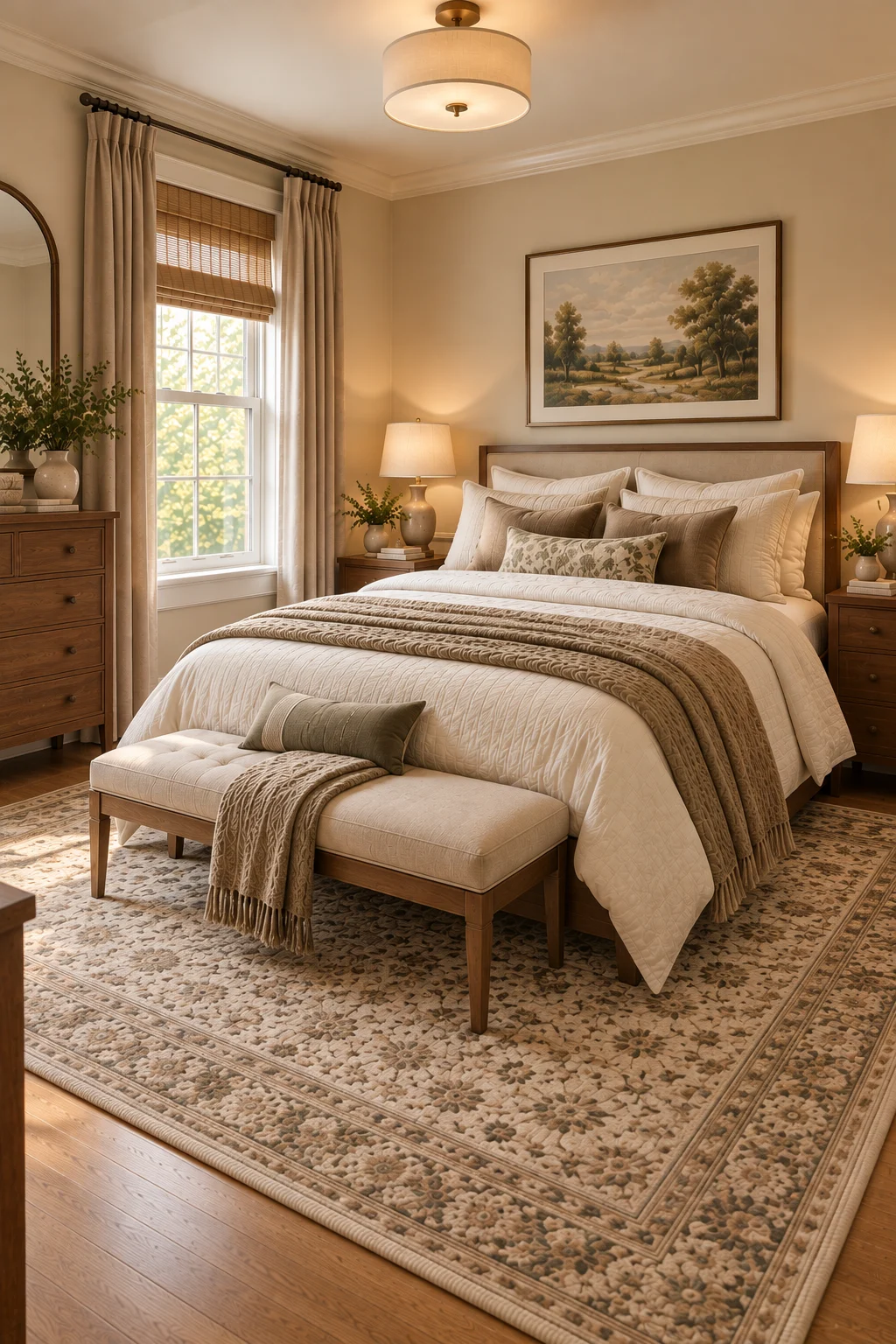
2. Two-Thirds Rug Placement
The starting point for this idea is a rug beginning partway beneath the bed. It works particularly well in a standard rectangular bedroom, where it can become a deliberate part of the layout instead of an extra object added after the furniture is arranged. The aim is to create a clear focal point while keeping the bedroom welcoming and useful for everyday routines.
Build the palette around ivory and oatmeal. Bring those colors into two or three places rather than buying a complete matching collection. For example, a cream duvet can soften walnut furniture, while one muted accent pillow can connect the bedding to the wall treatment. Natural texture from cotton, linen-look fabric, and wood helps the design feel lived in rather than staged.
Consider the dimensions before committing. Measure the available wall or floor area, then check the space required to walk around the bed, open drawers, and reach the window. Keep the exposed headboard-side floor intentional. A smaller, well-positioned feature often feels more intentional than a larger piece that crowds the room.
For a polished result, use soft daylight and a warm bedside lamp to check the arrangement from several angles. Remove decorative objects that compete with the main feature. Keep the nightstand and any dressing or work surface usable; a room that is easy to maintain will continue to look inviting after the initial makeover.
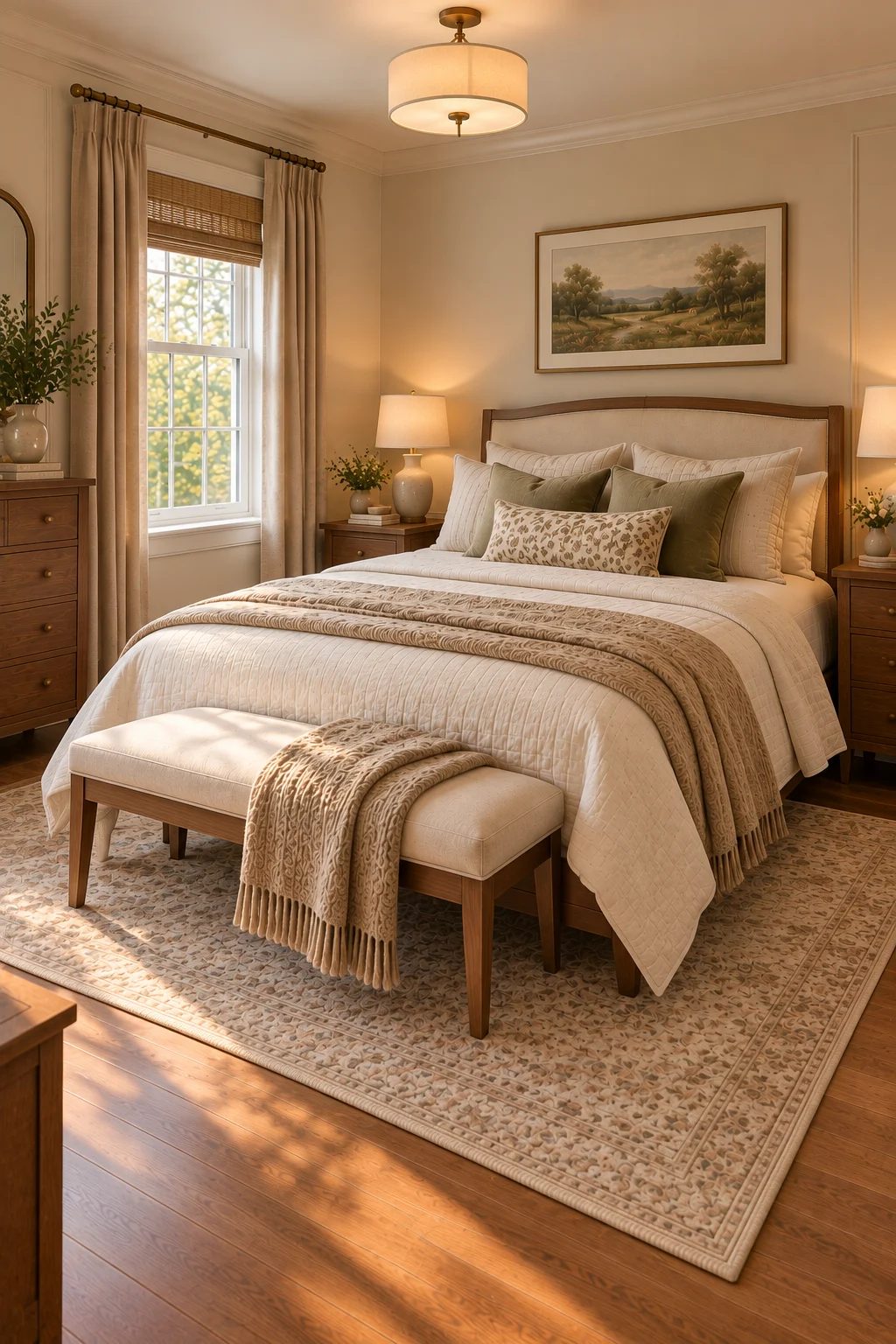
3. Rug Extending Beyond Both Bed Sides
The starting point for this idea is a broad low-profile rug projecting evenly on both sides. It works particularly well in a centered bed layout, where it can become a deliberate part of the layout instead of an extra object added after the furniture is arranged. The aim is to create a clear focal point while keeping the bedroom welcoming and useful for everyday routines.
Build the palette around cream and camel. Bring those colors into two or three places rather than buying a complete matching collection. For example, a cream duvet can soften walnut furniture, while one muted accent pillow can connect the bedding to the wall treatment. Natural texture from cotton, linen-look fabric, and wood helps the design feel lived in rather than staged.
Consider the dimensions before committing. Measure the available wall or floor area, then check the space required to walk around the bed, open drawers, and reach the window. Measure walking areas before ordering. A smaller, well-positioned feature often feels more intentional than a larger piece that crowds the room.
For a polished result, use soft daylight and a warm bedside lamp to check the arrangement from several angles. Remove decorative objects that compete with the main feature. Keep the nightstand and any dressing or work surface usable; a room that is easy to maintain will continue to look inviting after the initial makeover.
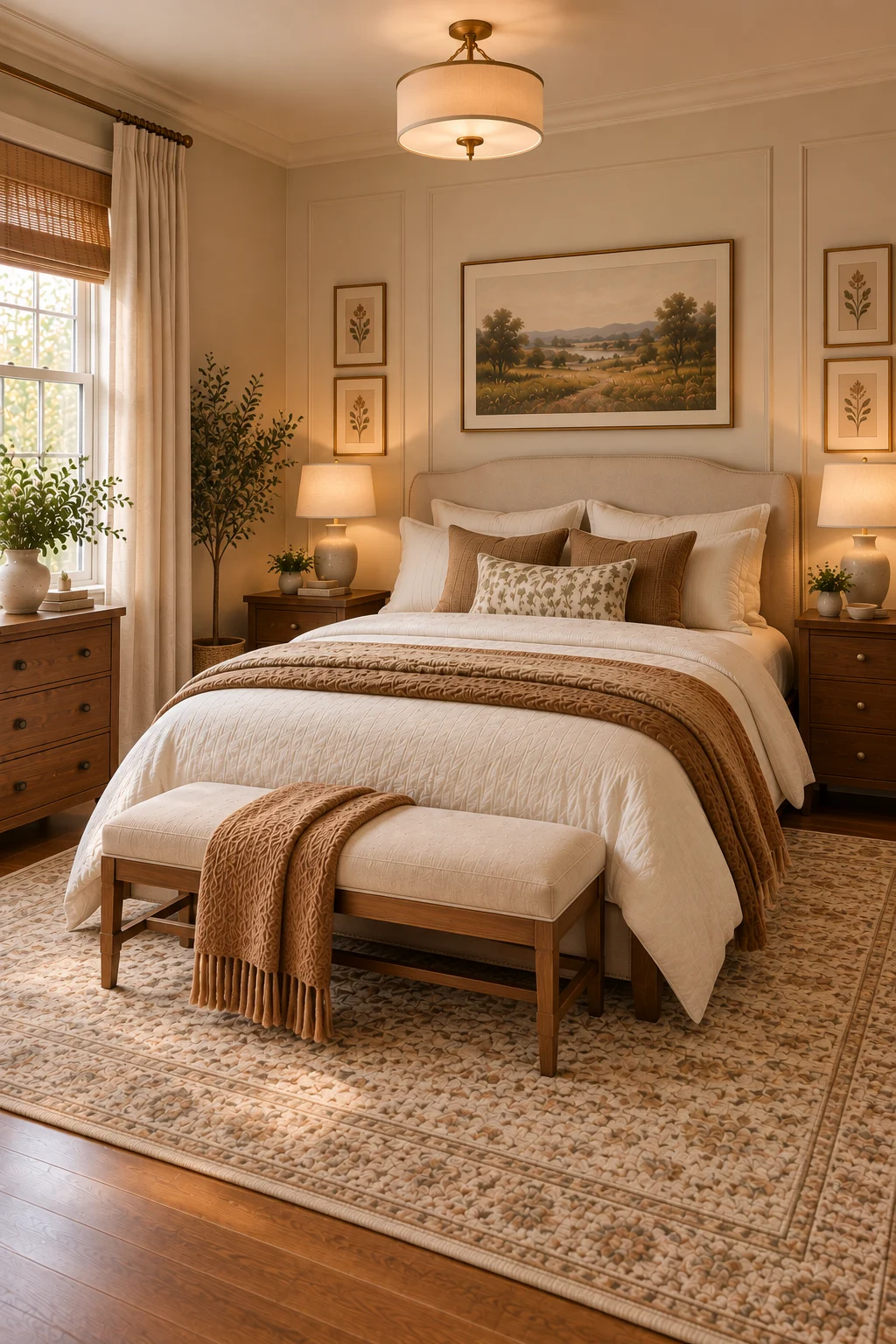
4. Small Rugs on Each Side of the Bed
The starting point for this idea is two matching bedside runners. It works particularly well in a compact room where a large rug is impractical, where it can become a deliberate part of the layout instead of an extra object added after the furniture is arranged. The aim is to create a clear focal point while keeping the bedroom welcoming and useful for everyday routines.
Build the palette around mushroom and cream. Bring those colors into two or three places rather than buying a complete matching collection. For example, a cream duvet can soften walnut furniture, while one muted accent pillow can connect the bedding to the wall treatment. Natural texture from cotton, linen-look fabric, and wood helps the design feel lived in rather than staged.
Consider the dimensions before committing. Measure the available wall or floor area, then check the space required to walk around the bed, open drawers, and reach the window. Use suitable nonslip pads. A smaller, well-positioned feature often feels more intentional than a larger piece that crowds the room.
For a polished result, use soft daylight and a warm bedside lamp to check the arrangement from several angles. Remove decorative objects that compete with the main feature. Keep the nightstand and any dressing or work surface usable; a room that is easy to maintain will continue to look inviting after the initial makeover.
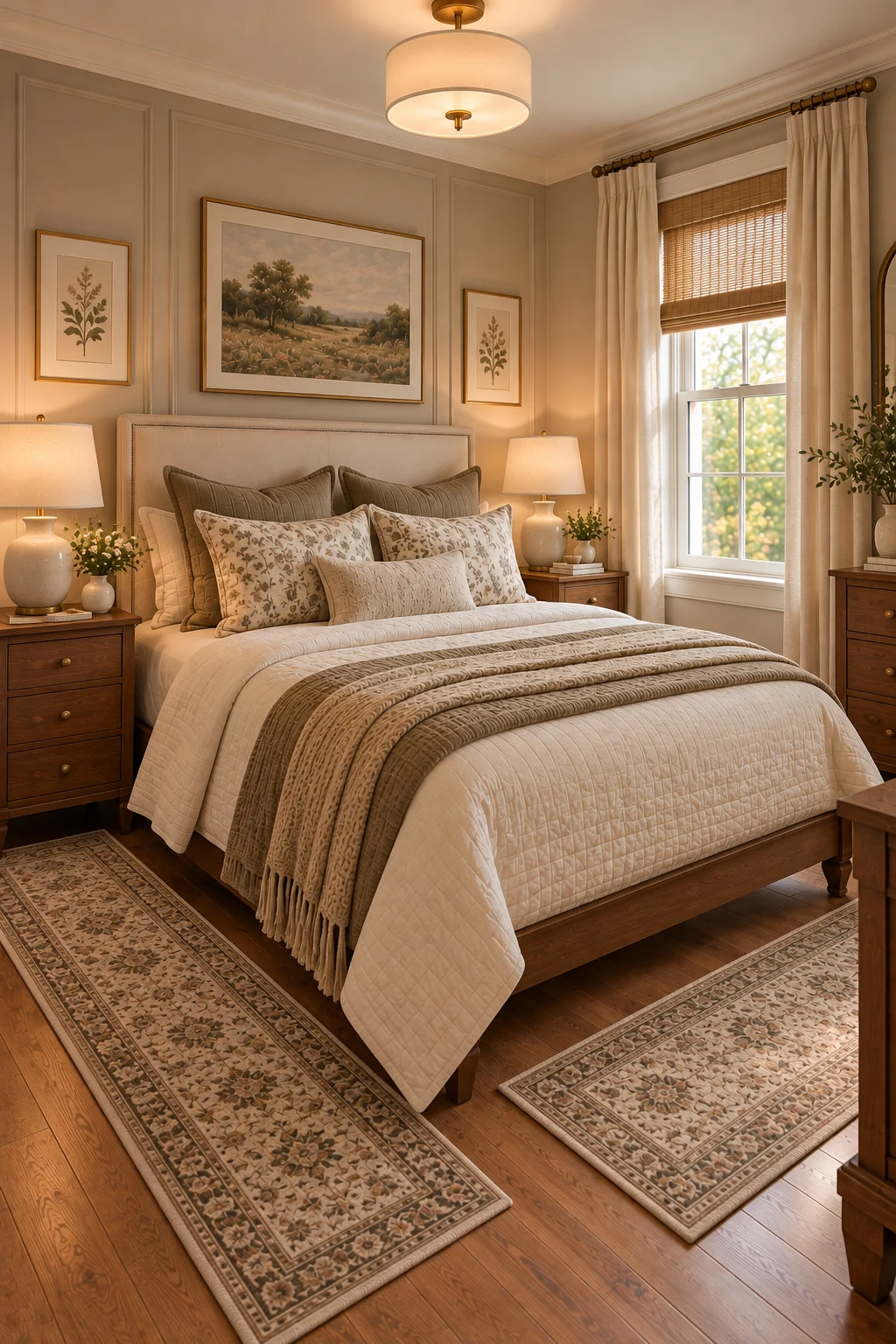
5. Runner Along One Bedside
The starting point for this idea is one narrow low-profile runner. It works particularly well in a bedroom with the bed near a wall, where it can become a deliberate part of the layout instead of an extra object added after the furniture is arranged. The aim is to create a clear focal point while keeping the bedroom welcoming and useful for everyday routines.
Build the palette around oatmeal and warm gray. Bring those colors into two or three places rather than buying a complete matching collection. For example, a cream duvet can soften walnut furniture, while one muted accent pillow can connect the bedding to the wall treatment. Natural texture from cotton, linen-look fabric, and wood helps the design feel lived in rather than staged.
Consider the dimensions before committing. Measure the available wall or floor area, then check the space required to walk around the bed, open drawers, and reach the window. Keep edges out of the doorway. A smaller, well-positioned feature often feels more intentional than a larger piece that crowds the room.
For a polished result, use soft daylight and a warm bedside lamp to check the arrangement from several angles. Remove decorative objects that compete with the main feature. Keep the nightstand and any dressing or work surface usable; a room that is easy to maintain will continue to look inviting after the initial makeover.
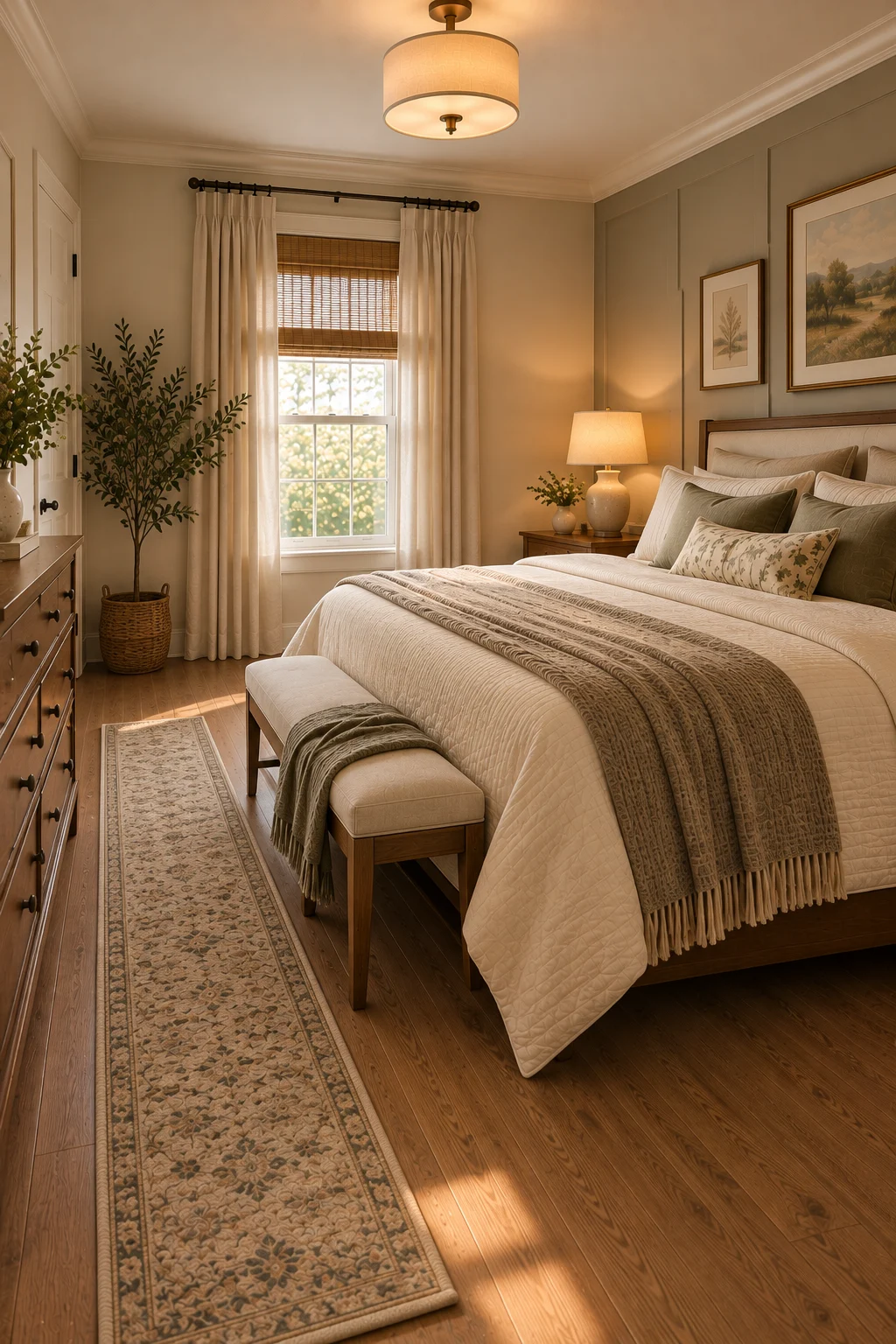
6. Rug at the Foot of the Bed
The starting point for this idea is a compact accent rug beyond the bed end. It works particularly well in a long narrow bedroom, where it can become a deliberate part of the layout instead of an extra object added after the furniture is arranged. The aim is to create a clear focal point while keeping the bedroom welcoming and useful for everyday routines.
Build the palette around camel and muted olive. Bring those colors into two or three places rather than buying a complete matching collection. For example, a cream duvet can soften walnut furniture, while one muted accent pillow can connect the bedding to the wall treatment. Natural texture from cotton, linen-look fabric, and wood helps the design feel lived in rather than staged.
Consider the dimensions before committing. Measure the available wall or floor area, then check the space required to walk around the bed, open drawers, and reach the window. Leave enough walking clearance. A smaller, well-positioned feature often feels more intentional than a larger piece that crowds the room.
For a polished result, use soft daylight and a warm bedside lamp to check the arrangement from several angles. Remove decorative objects that compete with the main feature. Keep the nightstand and any dressing or work surface usable; a room that is easy to maintain will continue to look inviting after the initial makeover.
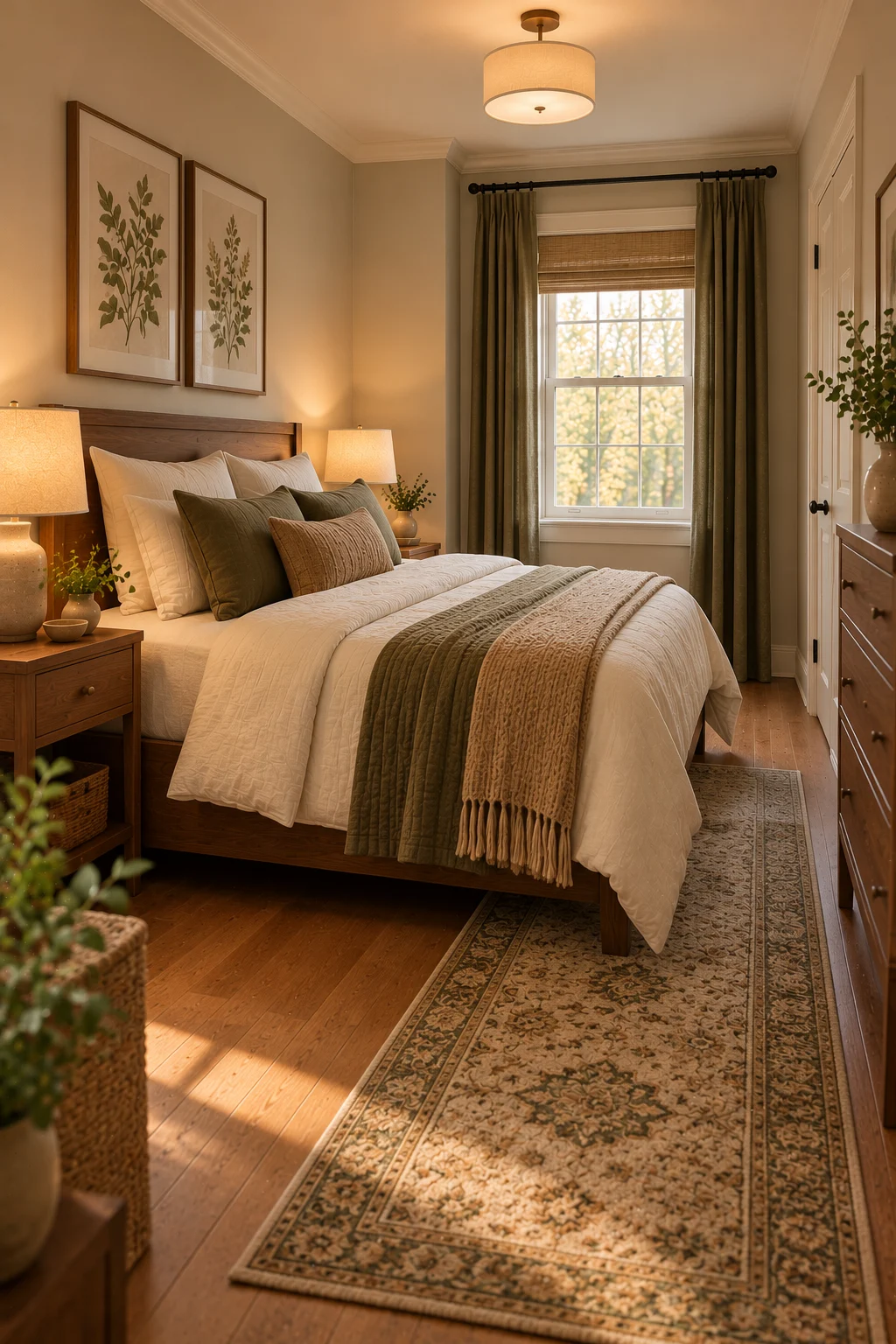
7. Layered Rugs With Flat Foundations
The starting point for this idea is a small patterned rug over a larger flat weave. It works particularly well in a spacious but modest bedroom, where it can become a deliberate part of the layout instead of an extra object added after the furniture is arranged. The aim is to create a clear focal point while keeping the bedroom welcoming and useful for everyday routines.
Build the palette around ivory, olive and walnut. Bring those colors into two or three places rather than buying a complete matching collection. For example, a cream duvet can soften walnut furniture, while one muted accent pillow can connect the bedding to the wall treatment. Natural texture from cotton, linen-look fabric, and wood helps the design feel lived in rather than staged.
Consider the dimensions before committing. Measure the available wall or floor area, then check the space required to walk around the bed, open drawers, and reach the window. Avoid bunching and unstable layering. A smaller, well-positioned feature often feels more intentional than a larger piece that crowds the room.
For a polished result, use soft daylight and a warm bedside lamp to check the arrangement from several angles. Remove decorative objects that compete with the main feature. Keep the nightstand and any dressing or work surface usable; a room that is easy to maintain will continue to look inviting after the initial makeover.
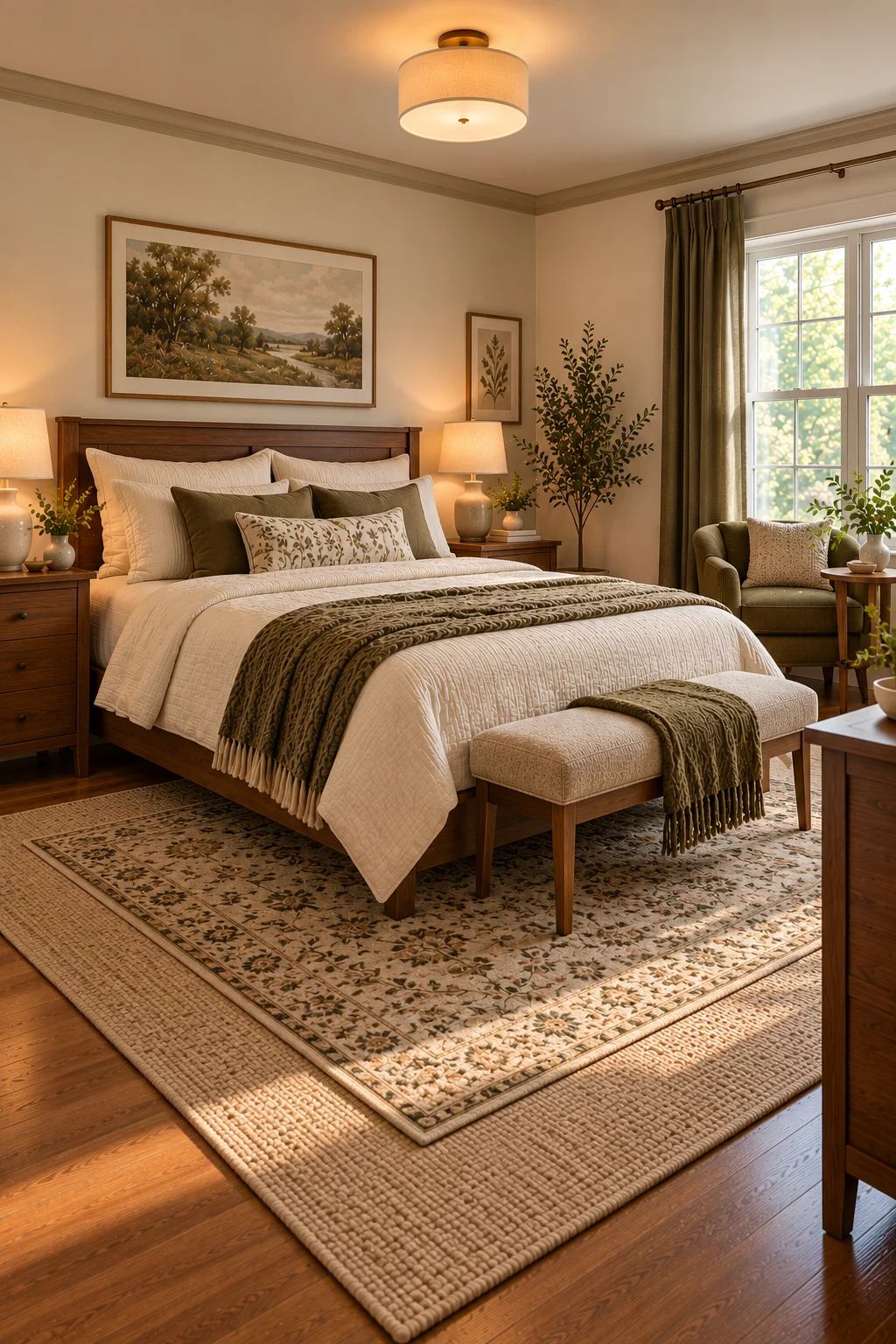
8. Round Rug Beside a Reading Chair
The starting point for this idea is a small round rug beneath a chair area. It works particularly well in a reading nook, where it can become a deliberate part of the layout instead of an extra object added after the furniture is arranged. The aim is to create a clear focal point while keeping the bedroom welcoming and useful for everyday routines.
Build the palette around cream and mushroom. Bring those colors into two or three places rather than buying a complete matching collection. For example, a cream duvet can soften walnut furniture, while one muted accent pillow can connect the bedding to the wall treatment. Natural texture from cotton, linen-look fabric, and wood helps the design feel lived in rather than staged.
Consider the dimensions before committing. Measure the available wall or floor area, then check the space required to walk around the bed, open drawers, and reach the window. Ensure chair legs do not catch the edge. A smaller, well-positioned feature often feels more intentional than a larger piece that crowds the room.
For a polished result, use soft daylight and a warm bedside lamp to check the arrangement from several angles. Remove decorative objects that compete with the main feature. Keep the nightstand and any dressing or work surface usable; a room that is easy to maintain will continue to look inviting after the initial makeover.
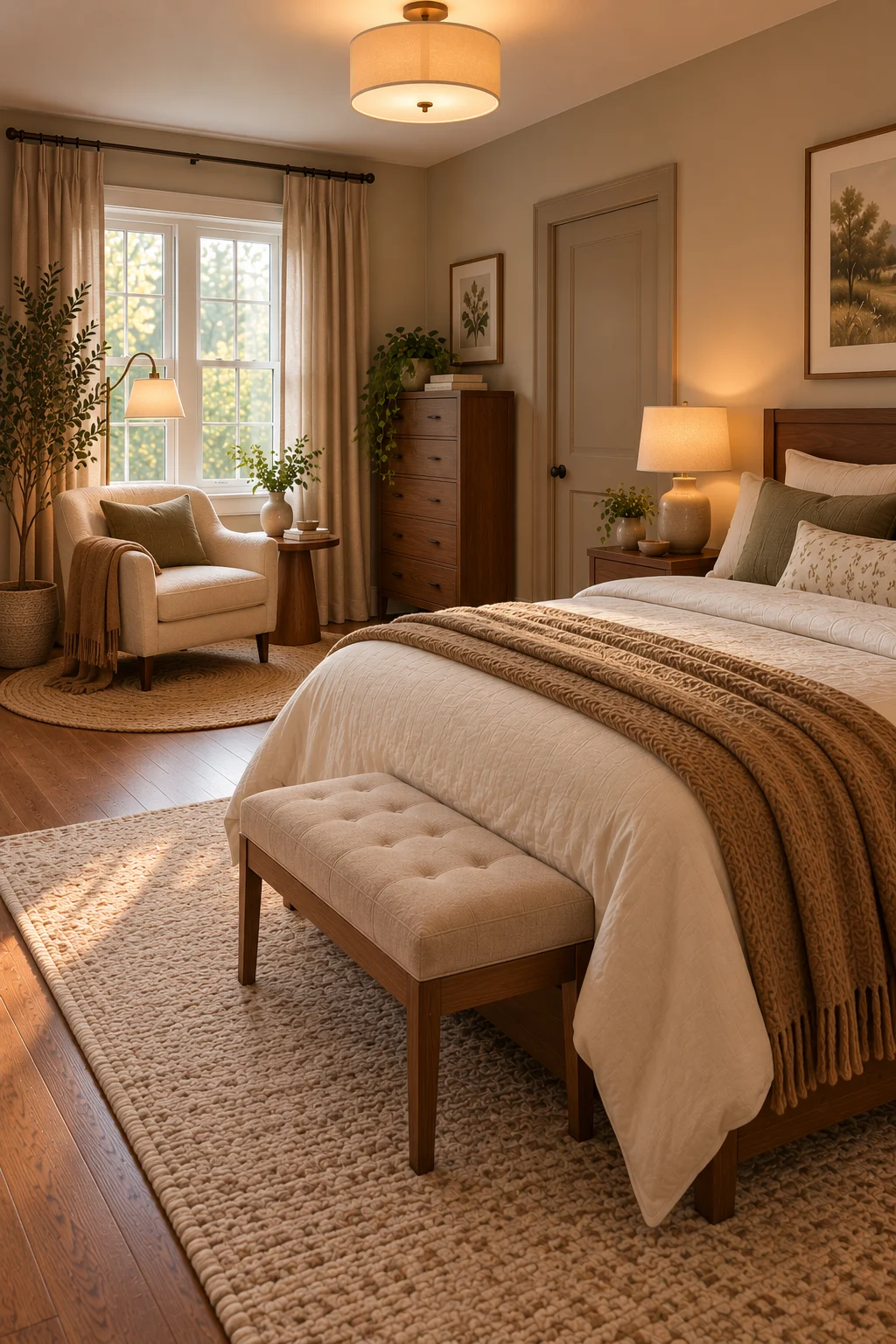
9. Rug Centered Under a Queen Bed
The starting point for this idea is a properly sized rug aligned with a queen bed. It works particularly well in a standard bedroom, where it can become a deliberate part of the layout instead of an extra object added after the furniture is arranged. The aim is to create a clear focal point while keeping the bedroom welcoming and useful for everyday routines.
Build the palette around warm cream and taupe. Bring those colors into two or three places rather than buying a complete matching collection. For example, a cream duvet can soften walnut furniture, while one muted accent pillow can connect the bedding to the wall treatment. Natural texture from cotton, linen-look fabric, and wood helps the design feel lived in rather than staged.
Consider the dimensions before committing. Measure the available wall or floor area, then check the space required to walk around the bed, open drawers, and reach the window. Check clearance for nightstands. A smaller, well-positioned feature often feels more intentional than a larger piece that crowds the room.
For a polished result, use soft daylight and a warm bedside lamp to check the arrangement from several angles. Remove decorative objects that compete with the main feature. Keep the nightstand and any dressing or work surface usable; a room that is easy to maintain will continue to look inviting after the initial makeover.
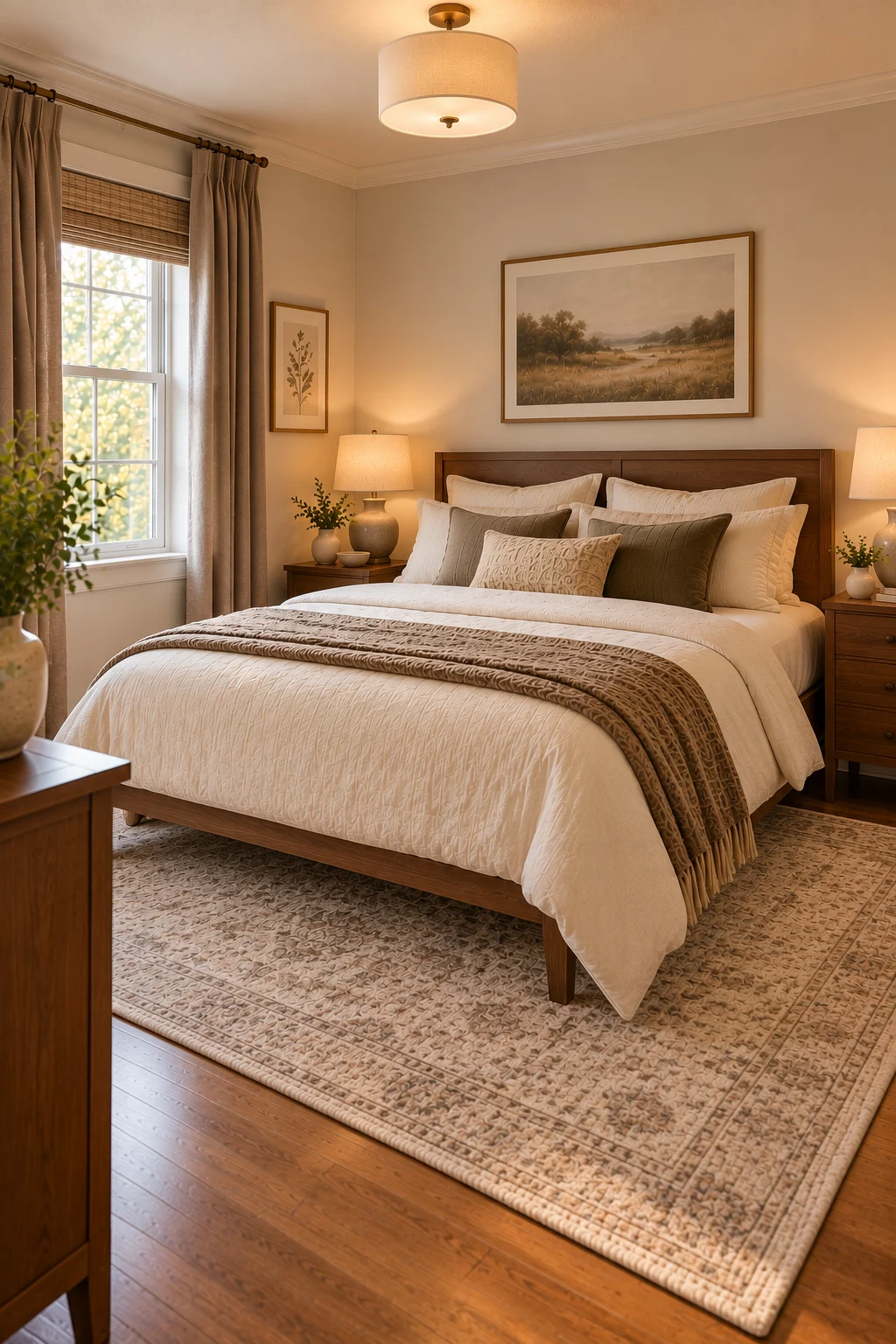
10. Rug Centered Under a King Bed
The starting point for this idea is a broad rug scaled to a king bed. It works particularly well in a larger ordinary bedroom, where it can become a deliberate part of the layout instead of an extra object added after the furniture is arranged. The aim is to create a clear focal point while keeping the bedroom welcoming and useful for everyday routines.
Build the palette around oatmeal and walnut. Bring those colors into two or three places rather than buying a complete matching collection. For example, a cream duvet can soften walnut furniture, while one muted accent pillow can connect the bedding to the wall treatment. Natural texture from cotton, linen-look fabric, and wood helps the design feel lived in rather than staged.
Consider the dimensions before committing. Measure the available wall or floor area, then check the space required to walk around the bed, open drawers, and reach the window. Measure the entire room, not just the bed. A smaller, well-positioned feature often feels more intentional than a larger piece that crowds the room.
For a polished result, use soft daylight and a warm bedside lamp to check the arrangement from several angles. Remove decorative objects that compete with the main feature. Keep the nightstand and any dressing or work surface usable; a room that is easy to maintain will continue to look inviting after the initial makeover.
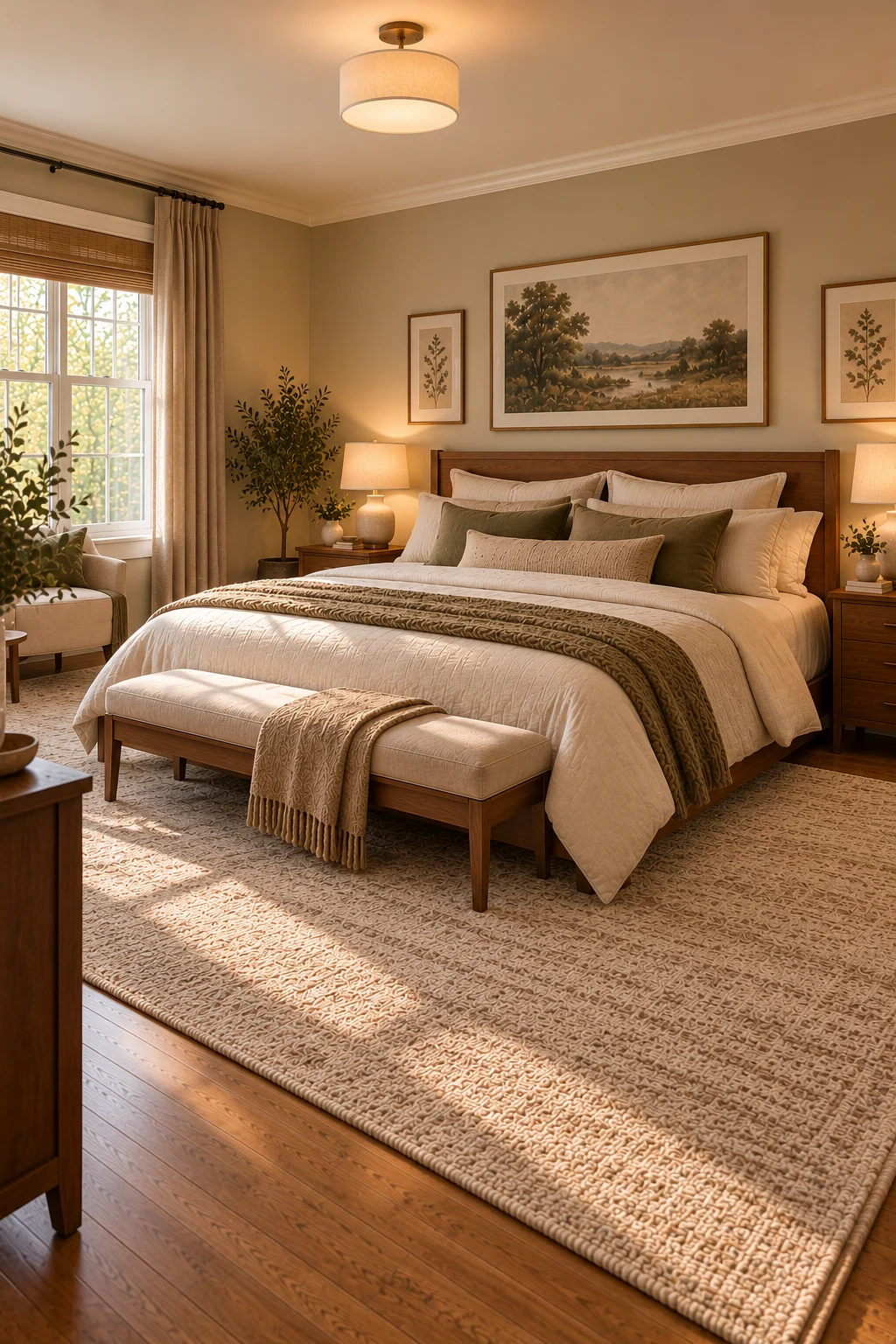
11. Vintage-Style Rug Beneath a Walnut Bed
The starting point for this idea is a muted traditional-pattern rug. It works particularly well in under the lower portion of a wood bed, where it can become a deliberate part of the layout instead of an extra object added after the furniture is arranged. The aim is to create a clear focal point while keeping the bedroom welcoming and useful for everyday routines.
Build the palette around dusty blue, olive and cream. Bring those colors into two or three places rather than buying a complete matching collection. For example, a cream duvet can soften walnut furniture, while one muted accent pillow can connect the bedding to the wall treatment. Natural texture from cotton, linen-look fabric, and wood helps the design feel lived in rather than staged.
Consider the dimensions before committing. Measure the available wall or floor area, then check the space required to walk around the bed, open drawers, and reach the window. Keep bedding from hiding the pattern entirely. A smaller, well-positioned feature often feels more intentional than a larger piece that crowds the room.
For a polished result, use soft daylight and a warm bedside lamp to check the arrangement from several angles. Remove decorative objects that compete with the main feature. Keep the nightstand and any dressing or work surface usable; a room that is easy to maintain will continue to look inviting after the initial makeover.
12. Neutral Textured Rug for a Small Bedroom
The starting point for this idea is a simple cream textured rug. It works particularly well in under a compact bed, where it can become a deliberate part of the layout instead of an extra object added after the furniture is arranged. The aim is to create a clear focal point while keeping the bedroom welcoming and useful for everyday routines.
Build the palette around ivory and warm greige. Bring those colors into two or three places rather than buying a complete matching collection. For example, a cream duvet can soften walnut furniture, while one muted accent pillow can connect the bedding to the wall treatment. Natural texture from cotton, linen-look fabric, and wood helps the design feel lived in rather than staged.
Consider the dimensions before committing. Measure the available wall or floor area, then check the space required to walk around the bed, open drawers, and reach the window. Choose an easy-clean low pile. A smaller, well-positioned feature often feels more intentional than a larger piece that crowds the room.
For a polished result, use soft daylight and a warm bedside lamp to check the arrangement from several angles. Remove decorative objects that compete with the main feature. Keep the nightstand and any dressing or work surface usable; a room that is easy to maintain will continue to look inviting after the initial makeover.
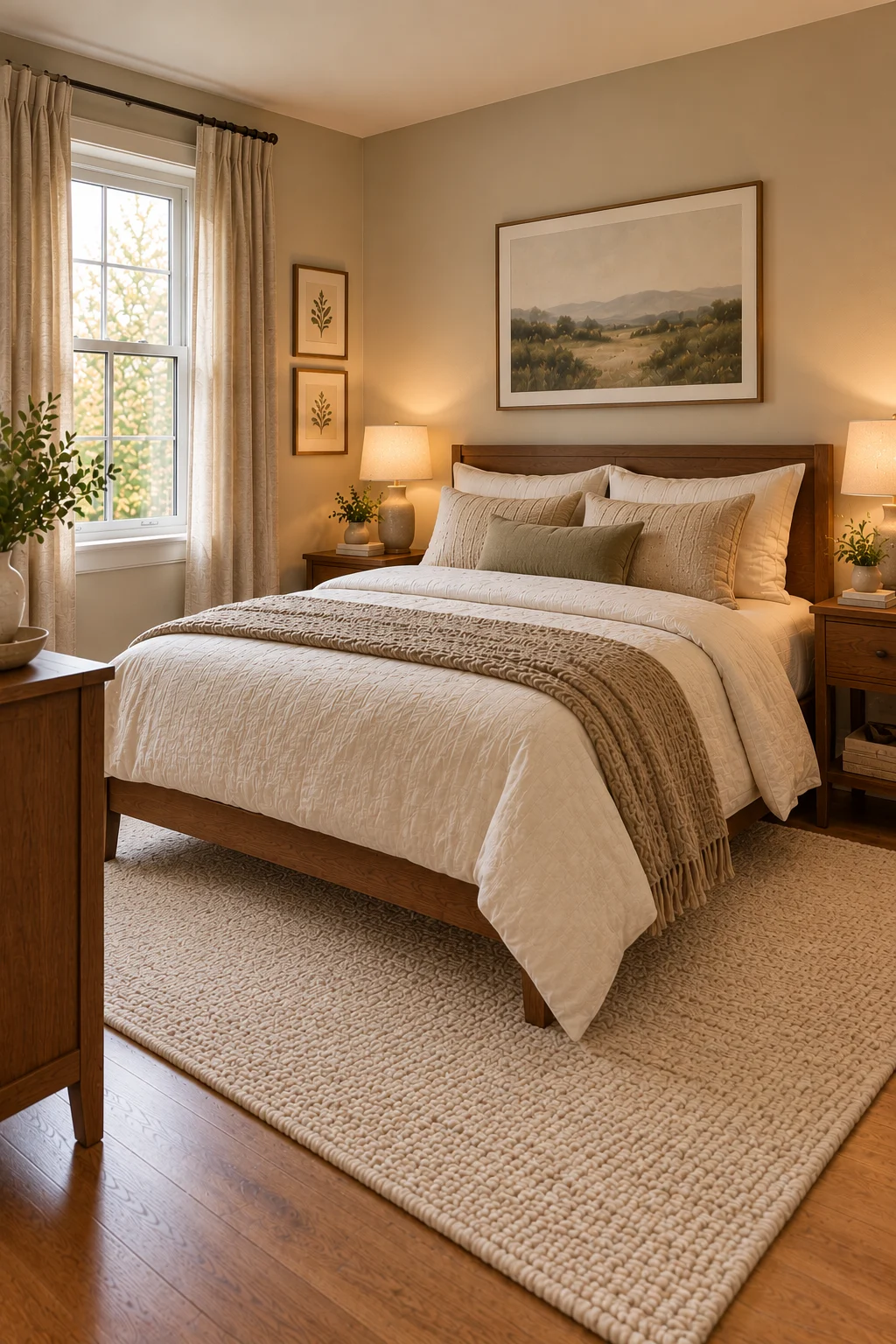
13. Rug Placement With a Bench
The starting point for this idea is a rug supporting the bed and compact end bench. It works particularly well in a room with sufficient depth, where it can become a deliberate part of the layout instead of an extra object added after the furniture is arranged. The aim is to create a clear focal point while keeping the bedroom welcoming and useful for everyday routines.
Build the palette around mushroom and camel. Bring those colors into two or three places rather than buying a complete matching collection. For example, a cream duvet can soften walnut furniture, while one muted accent pillow can connect the bedding to the wall treatment. Natural texture from cotton, linen-look fabric, and wood helps the design feel lived in rather than staged.
Consider the dimensions before committing. Measure the available wall or floor area, then check the space required to walk around the bed, open drawers, and reach the window. Prevent the bench from straddling rug edges. A smaller, well-positioned feature often feels more intentional than a larger piece that crowds the room.
For a polished result, use soft daylight and a warm bedside lamp to check the arrangement from several angles. Remove decorative objects that compete with the main feature. Keep the nightstand and any dressing or work surface usable; a room that is easy to maintain will continue to look inviting after the initial makeover.
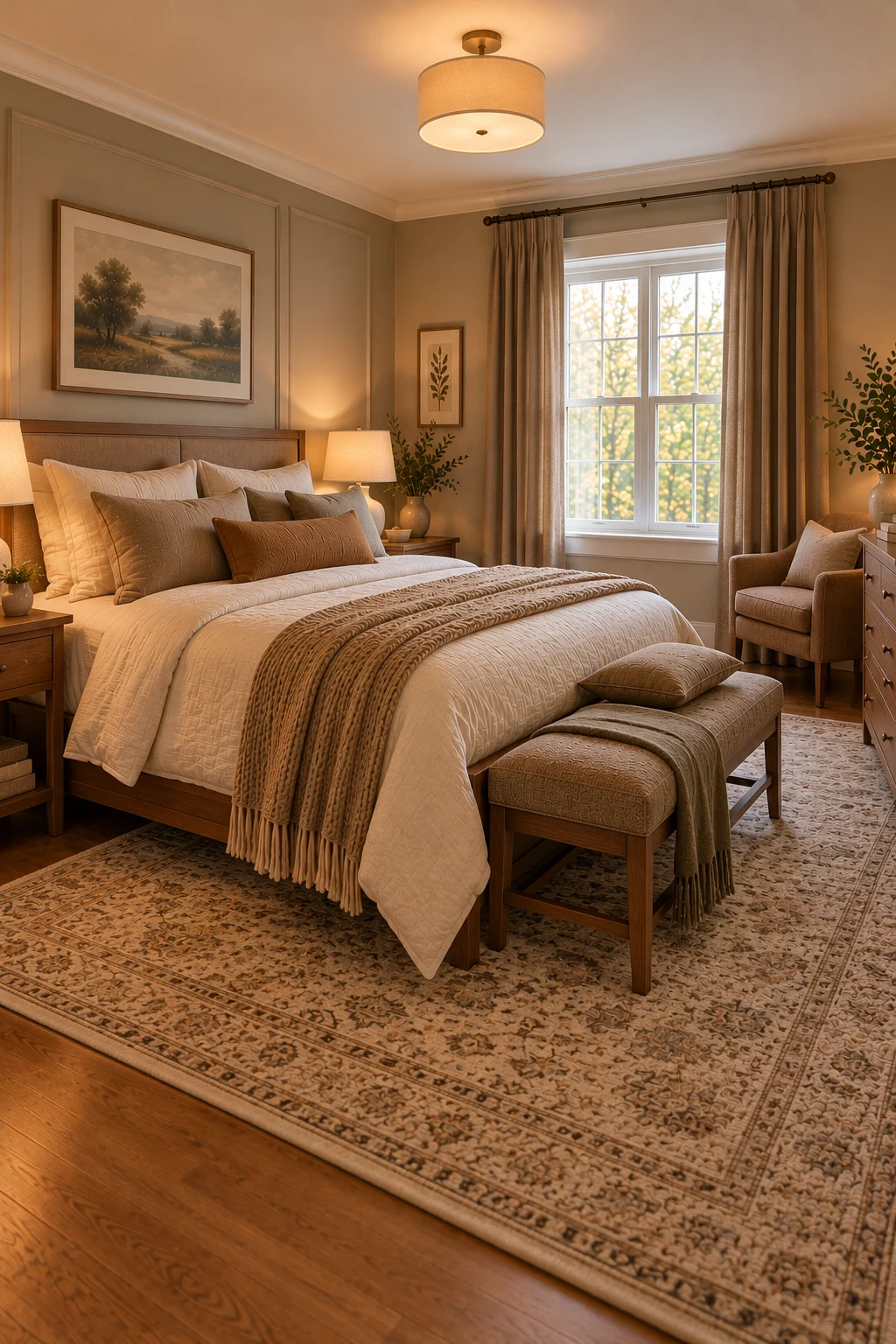
14. Rug Under a Platform Bed
The starting point for this idea is a broad rug under a low bed. It works particularly well in a minimalist bedroom, where it can become a deliberate part of the layout instead of an extra object added after the furniture is arranged. The aim is to create a clear focal point while keeping the bedroom welcoming and useful for everyday routines.
Build the palette around cream and natural oak. Bring those colors into two or three places rather than buying a complete matching collection. For example, a cream duvet can soften walnut furniture, while one muted accent pillow can connect the bedding to the wall treatment. Natural texture from cotton, linen-look fabric, and wood helps the design feel lived in rather than staged.
Consider the dimensions before committing. Measure the available wall or floor area, then check the space required to walk around the bed, open drawers, and reach the window. Use a pad suitable for the flooring. A smaller, well-positioned feature often feels more intentional than a larger piece that crowds the room.
For a polished result, use soft daylight and a warm bedside lamp to check the arrangement from several angles. Remove decorative objects that compete with the main feature. Keep the nightstand and any dressing or work surface usable; a room that is easy to maintain will continue to look inviting after the initial makeover.
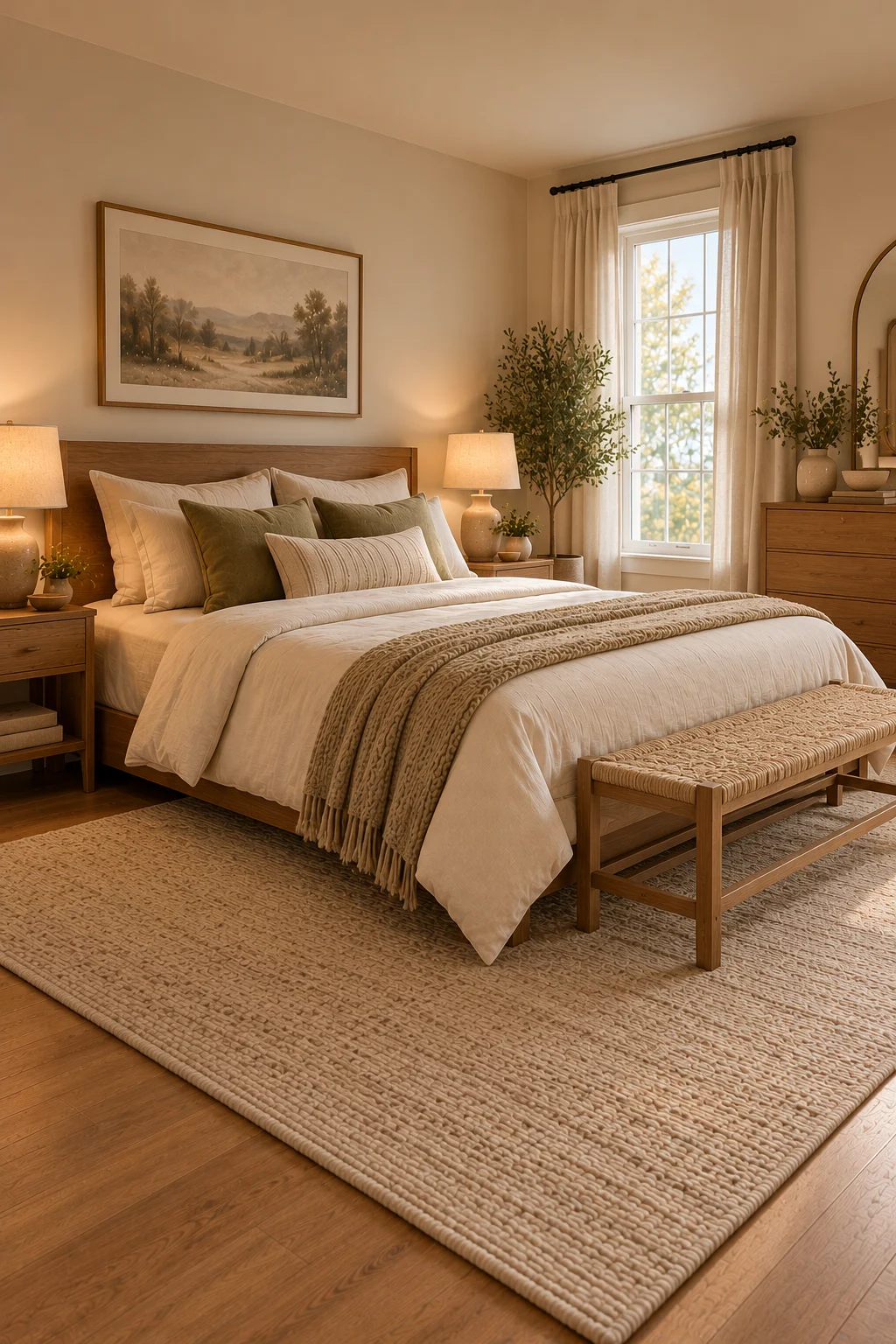
15. Rug Beside a Corner Bed
The starting point for this idea is a small rug in the accessible side area. It works particularly well in a tiny bedroom with offset bed, where it can become a deliberate part of the layout instead of an extra object added after the furniture is arranged. The aim is to create a clear focal point while keeping the bedroom welcoming and useful for everyday routines.
Build the palette around ivory and dusty blue. Bring those colors into two or three places rather than buying a complete matching collection. For example, a cream duvet can soften walnut furniture, while one muted accent pillow can connect the bedding to the wall treatment. Natural texture from cotton, linen-look fabric, and wood helps the design feel lived in rather than staged.
Consider the dimensions before committing. Measure the available wall or floor area, then check the space required to walk around the bed, open drawers, and reach the window. Avoid placing rug beneath moving doors. A smaller, well-positioned feature often feels more intentional than a larger piece that crowds the room.
For a polished result, use soft daylight and a warm bedside lamp to check the arrangement from several angles. Remove decorative objects that compete with the main feature. Keep the nightstand and any dressing or work surface usable; a room that is easy to maintain will continue to look inviting after the initial makeover.
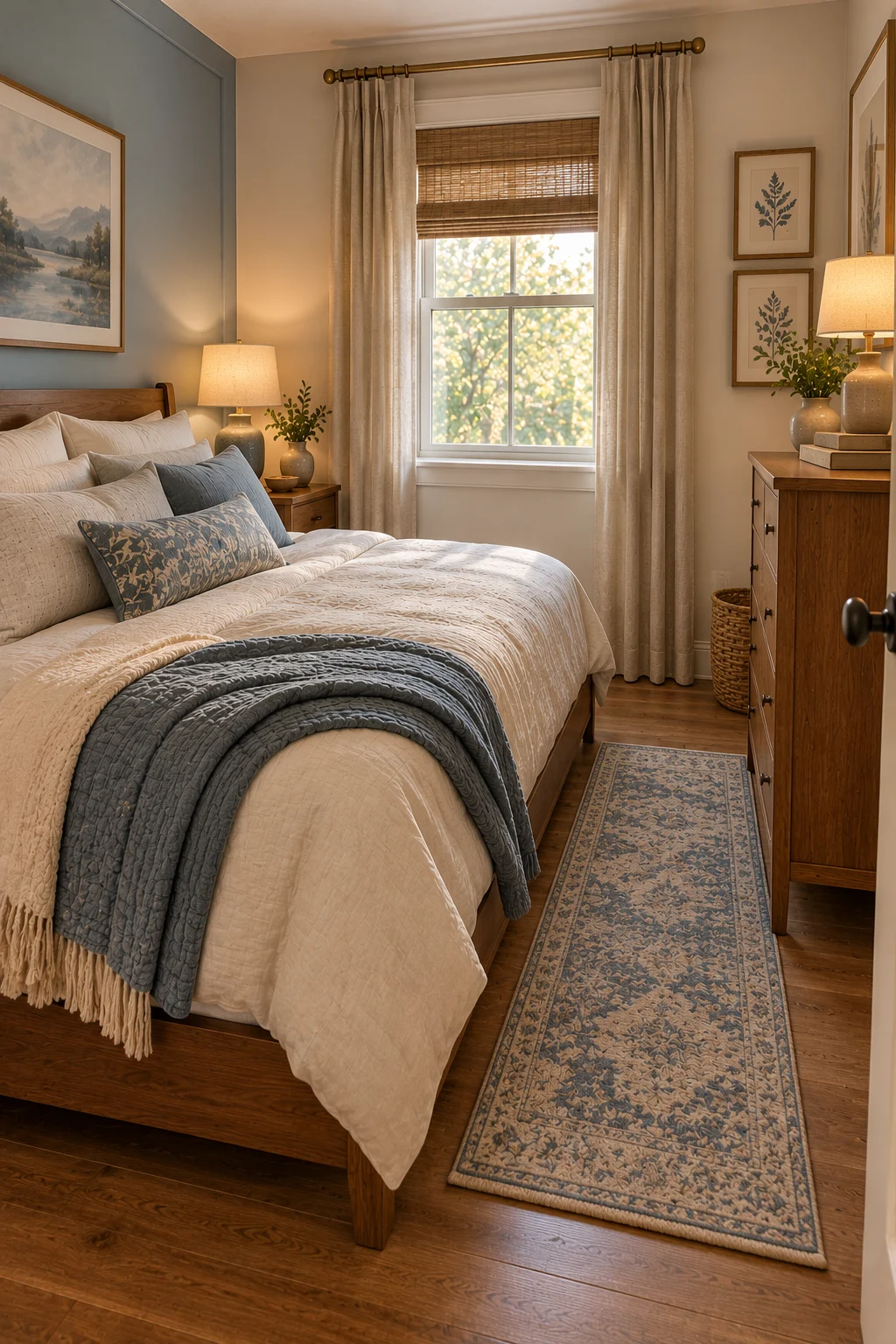
16. Rug With a Dresser Wall
The starting point for this idea is a rug positioned to balance the bed and storage wall. It works particularly well in a rectangular bedroom, where it can become a deliberate part of the layout instead of an extra object added after the furniture is arranged. The aim is to create a clear focal point while keeping the bedroom welcoming and useful for everyday routines.
Build the palette around warm beige and walnut. Bring those colors into two or three places rather than buying a complete matching collection. For example, a cream duvet can soften walnut furniture, while one muted accent pillow can connect the bedding to the wall treatment. Natural texture from cotton, linen-look fabric, and wood helps the design feel lived in rather than staged.
Consider the dimensions before committing. Measure the available wall or floor area, then check the space required to walk around the bed, open drawers, and reach the window. Keep dresser drawers easy to open. A smaller, well-positioned feature often feels more intentional than a larger piece that crowds the room.
For a polished result, use soft daylight and a warm bedside lamp to check the arrangement from several angles. Remove decorative objects that compete with the main feature. Keep the nightstand and any dressing or work surface usable; a room that is easy to maintain will continue to look inviting after the initial makeover.
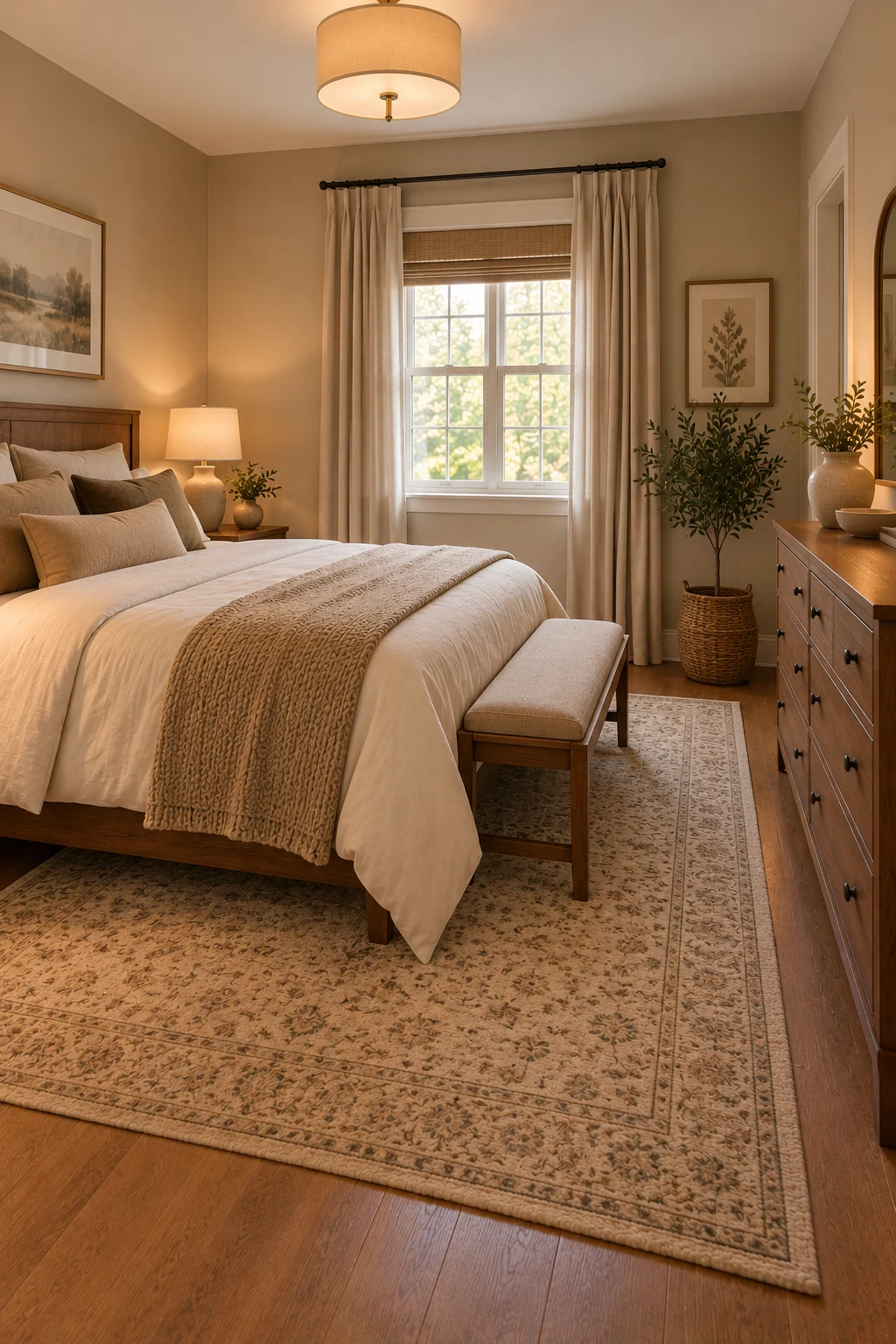
17. Patterned Rug With Plain Bedding
The starting point for this idea is a restrained geometric rug. It works particularly well in beneath a neutral bed, where it can become a deliberate part of the layout instead of an extra object added after the furniture is arranged. The aim is to create a clear focal point while keeping the bedroom welcoming and useful for everyday routines.
Build the palette around olive, cream and burgundy. Bring those colors into two or three places rather than buying a complete matching collection. For example, a cream duvet can soften walnut furniture, while one muted accent pillow can connect the bedding to the wall treatment. Natural texture from cotton, linen-look fabric, and wood helps the design feel lived in rather than staged.
Consider the dimensions before committing. Measure the available wall or floor area, then check the space required to walk around the bed, open drawers, and reach the window. Limit competing patterns. A smaller, well-positioned feature often feels more intentional than a larger piece that crowds the room.
For a polished result, use soft daylight and a warm bedside lamp to check the arrangement from several angles. Remove decorative objects that compete with the main feature. Keep the nightstand and any dressing or work surface usable; a room that is easy to maintain will continue to look inviting after the initial makeover.

18. Rug Placement on Wood Flooring
The starting point for this idea is a low-profile rug revealing a wood border. It works particularly well in a room with medium-walnut flooring, where it can become a deliberate part of the layout instead of an extra object added after the furniture is arranged. The aim is to create a clear focal point while keeping the bedroom welcoming and useful for everyday routines.
Build the palette around oatmeal and cream. Bring those colors into two or three places rather than buying a complete matching collection. For example, a cream duvet can soften walnut furniture, while one muted accent pillow can connect the bedding to the wall treatment. Natural texture from cotton, linen-look fabric, and wood helps the design feel lived in rather than staged.
Consider the dimensions before committing. Measure the available wall or floor area, then check the space required to walk around the bed, open drawers, and reach the window. Use a floor-compatible pad. A smaller, well-positioned feature often feels more intentional than a larger piece that crowds the room.
For a polished result, use soft daylight and a warm bedside lamp to check the arrangement from several angles. Remove decorative objects that compete with the main feature. Keep the nightstand and any dressing or work surface usable; a room that is easy to maintain will continue to look inviting after the initial makeover.
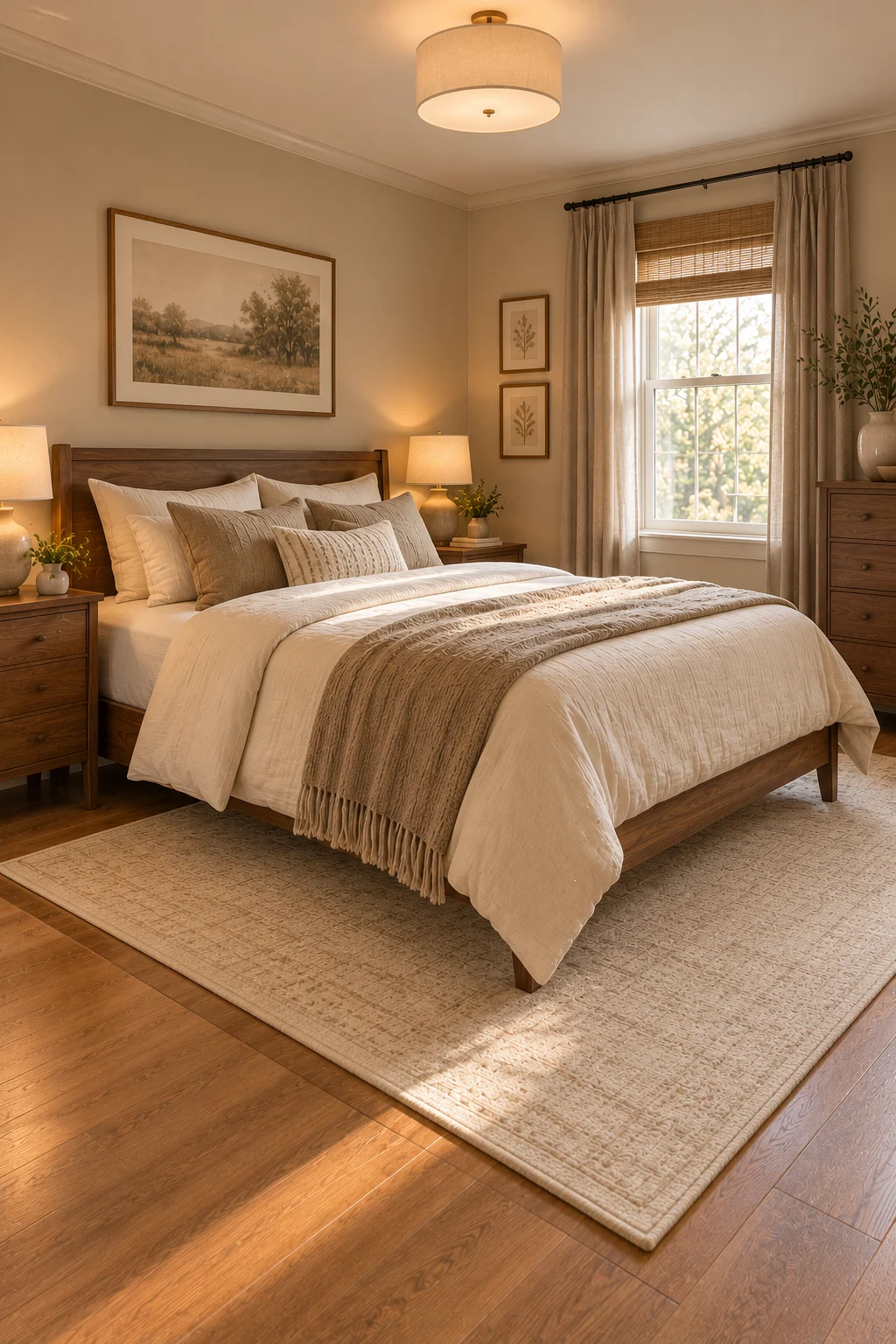
19. Final Balanced Rug Layout
The starting point for this idea is a generously sized low-profile rug centered on the bed. It works particularly well in a practical eight-foot-ceiling bedroom, where it can become a deliberate part of the layout instead of an extra object added after the furniture is arranged. The aim is to create a clear focal point while keeping the bedroom welcoming and useful for everyday routines.
Build the palette around cream, camel and walnut. Bring those colors into two or three places rather than buying a complete matching collection. For example, a cream duvet can soften walnut furniture, while one muted accent pillow can connect the bedding to the wall treatment. Natural texture from cotton, linen-look fabric, and wood helps the design feel lived in rather than staged.
Consider the dimensions before committing. Measure the available wall or floor area, then check the space required to walk around the bed, open drawers, and reach the window. Keep every rug edge flat and accessible. A smaller, well-positioned feature often feels more intentional than a larger piece that crowds the room.
For a polished result, use soft daylight and a warm bedside lamp to check the arrangement from several angles. Remove decorative objects that compete with the main feature. Keep the nightstand and any dressing or work surface usable; a room that is easy to maintain will continue to look inviting after the initial makeover.
Plan the Layout Before You Buy
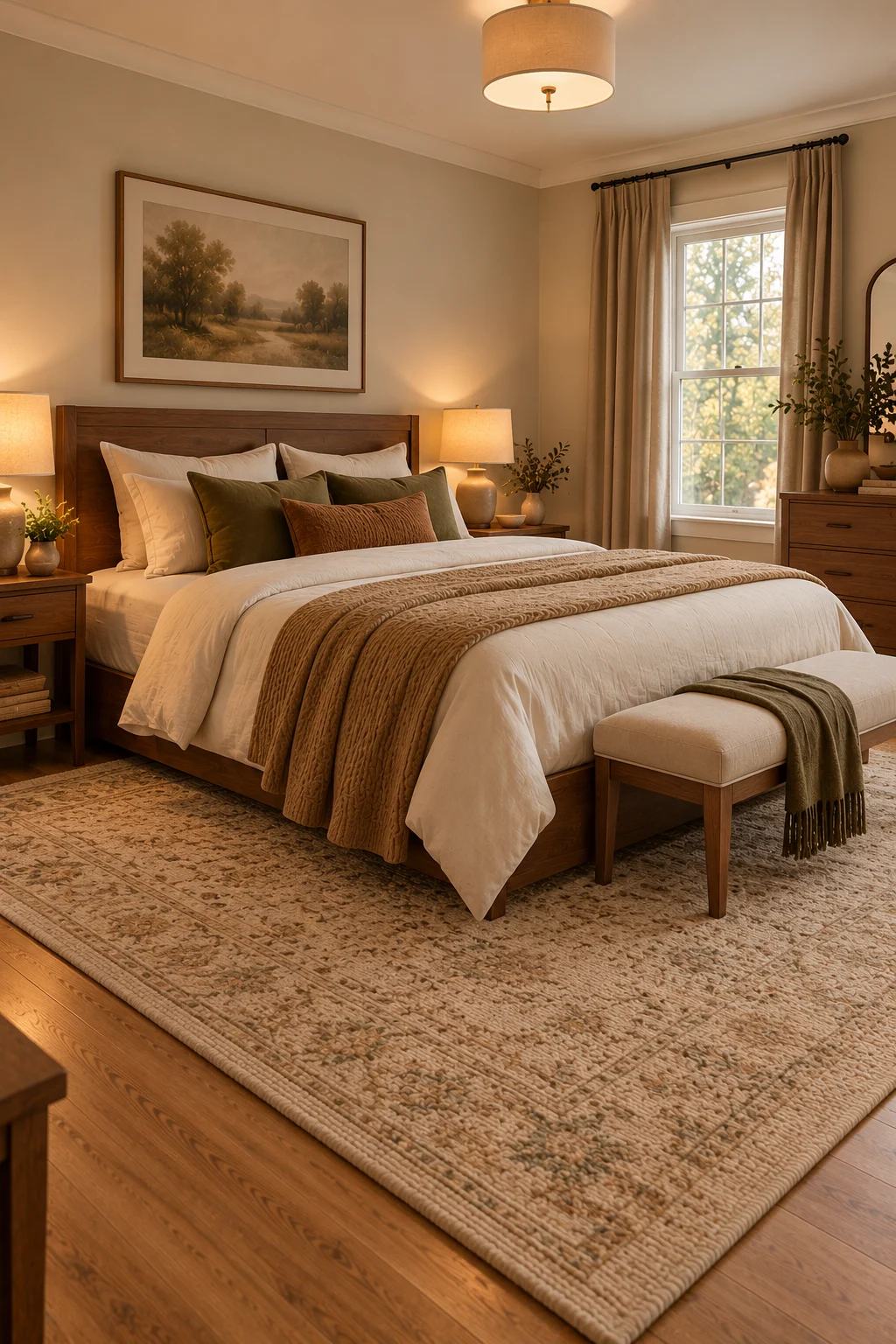
Begin with a measured floor plan rather than relying on inspiration photographs. Record the width of the bed, the available space beside it, the location of doors and windows, and the depth of drawers when open. In a modest room, a few inches can determine whether a decorative feature is comfortable or frustrating. For bedroom rug placement, the best placement is one that supports the room’s daily routines.
Walk through a typical morning and evening in the room. Can you reach the closet, make the bed, open storage, and turn on a light without moving accessories? If not, simplify the arrangement. Use painter’s tape or paper templates to test dimensions before making permanent changes.
Choose the main visual focus from the doorway. It may be the bed, a dressing table, a framed artwork, or a rug. Allow supporting pieces to remain quiet. When every corner competes for attention, even expensive furniture can look disorganized.
Choose Colors and Materials That Work Together
A limited palette makes decorative changes easier to coordinate. Warm white, cream, camel, mushroom greige, natural oak, and medium walnut form a flexible foundation. Muted olive, dusty blue, deep burgundy, or terracotta can then supply a distinctive accent without overwhelming the room.
View samples in the actual space before purchasing. Morning daylight may make colors look cooler, while warm lamps can emphasize yellow or red undertones. Compare samples directly with the floor and existing furniture rather than judging them in isolation.
Texture is as important as color. A soft woven throw, smooth painted wall, natural wood grain, and restrained metal hardware can provide contrast even when the palette is neutral. Keep high-maintenance or delicate materials away from heavy-use areas.
Make the Design Work in a Small Bedroom
A compact room benefits from a single strong feature and proportionate furniture. Choose a bed that allows comfortable movement and nightstands that provide genuine storage. A narrow dresser or wall-mounted accessory may be more useful than an extra accent chair.
Keep the floor as visually clear as possible. Low-profile rugs, furniture with practical leg clearance, and simple window treatments can make the room feel less crowded. Avoid filling the space between the bed and closet with decorative baskets or benches.
When storage is limited, prioritize enclosed drawers for everyday items and use open display space sparingly. Clear surfaces make the room easier to clean and allow the selected decorative feature to remain noticeable.
Lighting for a Cozy and Practical Result
Use layered light rather than relying on a single overhead fixture. A ceiling light supports cleaning and dressing, while bedside lamps or suitable reading lights make the room comfortable in the evening. Decorative lighting should complement, not replace, practical illumination.
Warm 2700K–3000K light generally works well with cream textiles and wood finishes. Choose lamp shades that diffuse glare, and position switches where they can be reached comfortably. Check how reflective surfaces, glossy finishes, or darker walls behave at night.
Keep cords away from walking routes and moving furniture. Hardwired fixtures require appropriate installation. Never block smoke alarms, vents, or window hardware with decorative features.
Budget-Friendly Ways to Refresh the Room
Set priorities before spending. If the bed and dresser are sturdy and proportionate, keep them and focus on one change with a clear visual effect: new bedding, a carefully chosen rug, paint, a small mirror, or an updated lamp. Replacing everything at once is rarely necessary.
Look for durable materials that can work with future color schemes. A simple walnut frame, cream curtains, or washable throw is more adaptable than a large novelty accessory. Compare actual measurements, care instructions, and return policies before ordering.
Include installation supplies in the budget. Appropriate anchors, surface preparation, nonslip rug pads, and electrical work may be less exciting than decorative purchases, but they help the finished room remain safe and useful.
Common Decorating Mistakes
One frequent mistake is choosing a feature that looks beautiful in a large showroom but overwhelms an ordinary bedroom. Compare dimensions with your room and leave adequate space for movement. Another is mixing too many accent colors, which can make the room feel restless rather than layered.
Do not overlook the maintenance needs of textiles, mirrors, wallpaper, and rugs. Dust-catching surfaces and hard-to-clean fabrics can become a burden. Favor materials suited to the household, and follow manufacturer care instructions.
Finally, avoid styling every surface. A dresser top, nightstand, and vanity need usable space. A small arrangement of meaningful objects is often more effective than a crowded collection.
Safety and Long-Term Care
Secure tall dressers and other tip-prone furniture as appropriate. Mount mirrors, frames, shelves, and wall fixtures using hardware rated for the surface and load. Keep heavy objects away from positions where they could fall onto a sleeping person.
Maintain clear access to doors, windows, vents, outlets, and safety devices. Use floor-compatible nonslip rug pads, keep edges flat, and route electrical cords away from foot traffic. Check that furniture and accessories do not interfere with drawers or moving doors.
Dust and inspect decorative pieces periodically. Wash bedding according to care labels, check fasteners, and repair damaged surfaces promptly. A successful bedroom design should remain comfortable and practical after months of daily use.
Final Thoughts
The best bedroom rug placement bedroom ideas combine a clear aesthetic with practical everyday decisions. Start with one feature you genuinely enjoy, coordinate it with the furniture you already own, and preserve comfortable lighting, storage, and circulation. A modest room can feel thoughtfully finished without becoming complicated or expensive.
