
13 Bedroom Curtain Ideas for a Cozy and Finished Look
The bedroom window looks unfinished even after you have made the bed, hung artwork, and found the right nightstand. Often, the missing layer is fabric: something that softens the hard edges of glass and helps the room feel settled at night. These bedroom curtain ideas cover airy layers, tailored pleats, patterned panels, and compact shades, with practical notes about placement and upkeep. The right treatment depends on the window as much as your decorating taste. A narrow sash beside a desk needs a different solution from a broad window behind a reading chair. Think about how the fabric moves, where it gathers when open, and what you want to see when you wake up. The following approaches give you thirteen distinct ways to dress that space.
1. Layer Linen Panels Over Sheer Voile
Layer Linen Panels Over Sheer Voile works particularly well in south-facing bedroom. Start with oatmeal linen outer panels, then coordinate it with ivory voile inner curtains. The pairing gives the window a clear design purpose instead of treating it as an afterthought. In this setting, the main goal is to soften midday glare while keeping the window usable. That goal should guide both the fabric choice and the way the panels open.
Position the treatment three inches above the frame, using a brushed bronze double rod to keep the finish consistent. Bring in a pale oak bed and woven bedside lamp so the textile feels connected to the rest of the bedroom. Leave enough room for the window to operate and for the material to hang without bunching against furniture.
One practical limitation is that linen can crease, so embrace its relaxed folds. If you are buying fabric by the yard, request a sample and examine it in daylight and under your bedside lamp; color and opacity can change noticeably between the two. A simple, well-fitted installation usually looks better than extra decorative accessories.

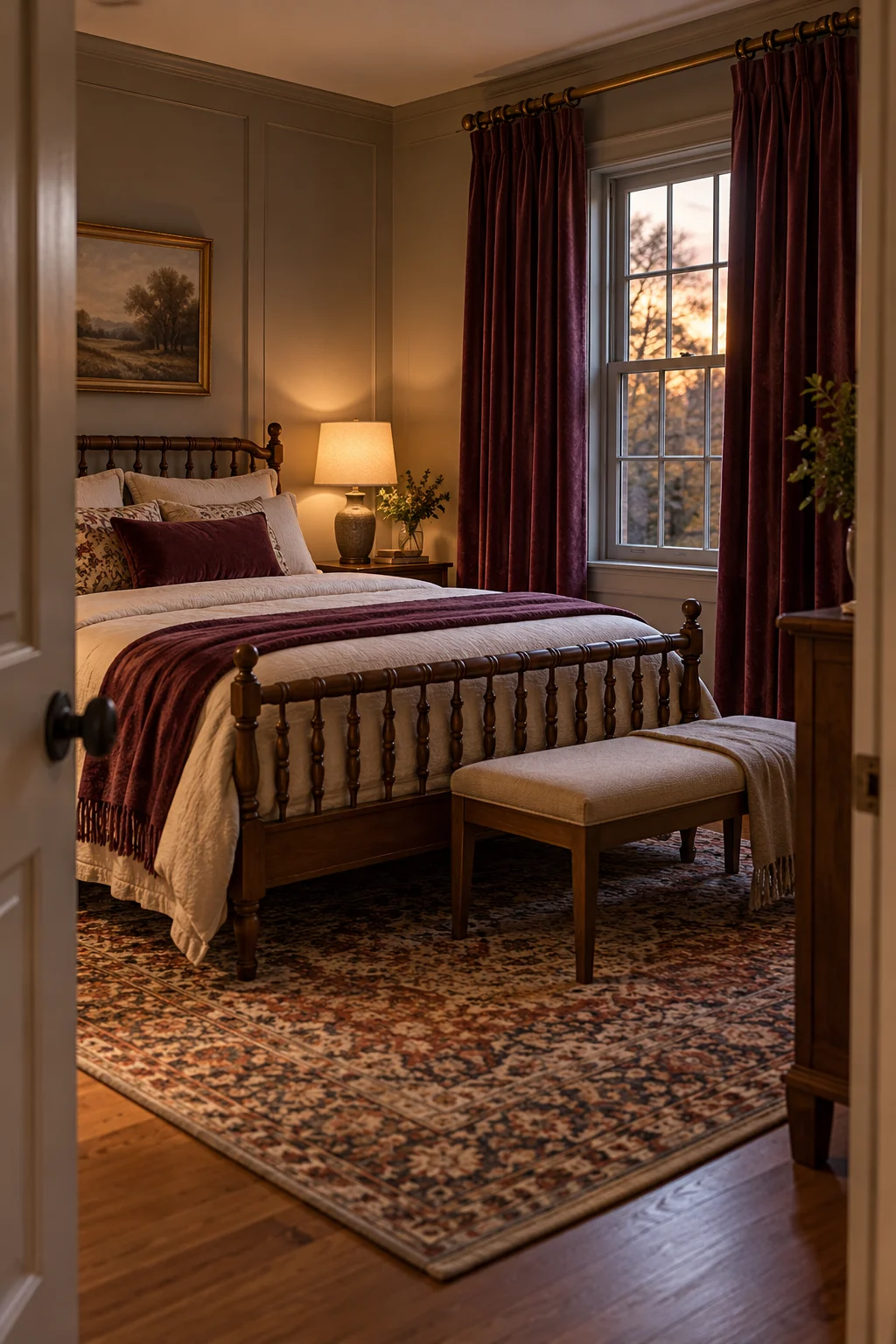
2. Frame Windows With Velvet Drapery
Frame Windows With Velvet Drapery works particularly well in a drafty-feeling traditional room. Start with plum-colored cotton velvet, then coordinate it with warm gray painted walls. The pairing gives the window a clear design purpose instead of treating it as an afterthought. In this setting, the main goal is to give the sleeping area a richer visual boundary. That goal should guide both the fabric choice and the way the panels open.
Position the treatment a generous stack-back beside the glass, using antique brass curtain rings to keep the finish consistent. Bring in a walnut spindle bed and patterned wool rug so the textile feels connected to the rest of the bedroom. Leave enough room for the window to operate and for the material to hang without bunching against furniture.
One practical limitation is that heavy fabric needs a suitably rated support. If you are buying fabric by the yard, request a sample and examine it in daylight and under your bedside lamp; color and opacity can change noticeably between the two. A simple, well-fitted installation usually looks better than extra decorative accessories.
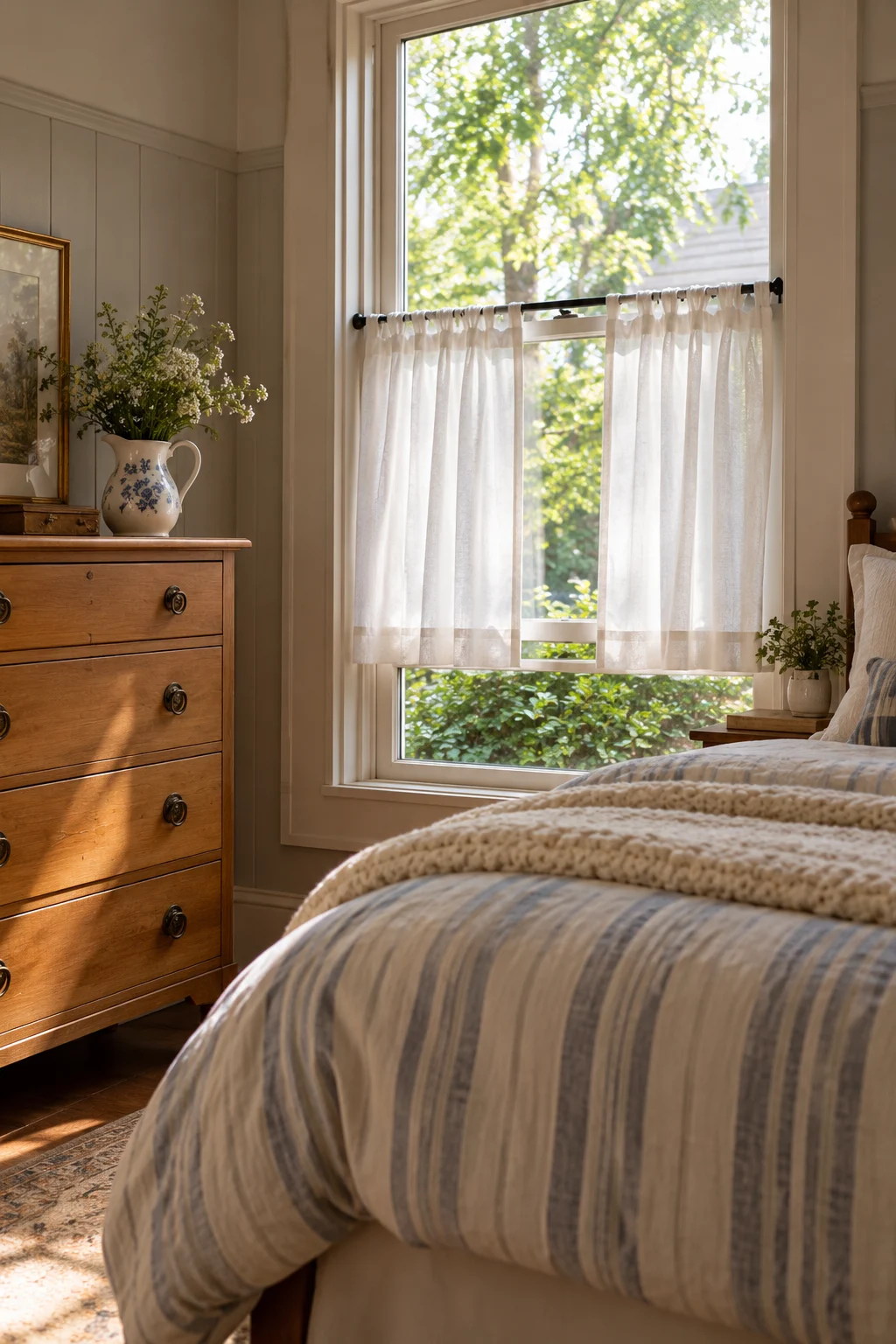
3. Hang Airy Cotton Café Curtains
Hang Airy Cotton Café Curtains works particularly well in a ground-floor bedroom with upper-window privacy. Start with white cotton café panels, then coordinate it with a slender black tension rod. The pairing gives the window a clear design purpose instead of treating it as an afterthought. In this setting, the main goal is to screen the lower pane without covering the daylight above. That goal should guide both the fabric choice and the way the panels open.
Position the treatment the midpoint of a tall sash, using a softly striped duvet to keep the finish consistent. Bring in a vintage maple dresser and ceramic pitcher so the textile feels connected to the rest of the bedroom. Leave enough room for the window to operate and for the material to hang without bunching against furniture.
One practical limitation is that tension rods only suit compatible frames and light fabrics. If you are buying fabric by the yard, request a sample and examine it in daylight and under your bedside lamp; color and opacity can change noticeably between the two. A simple, well-fitted installation usually looks better than extra decorative accessories.
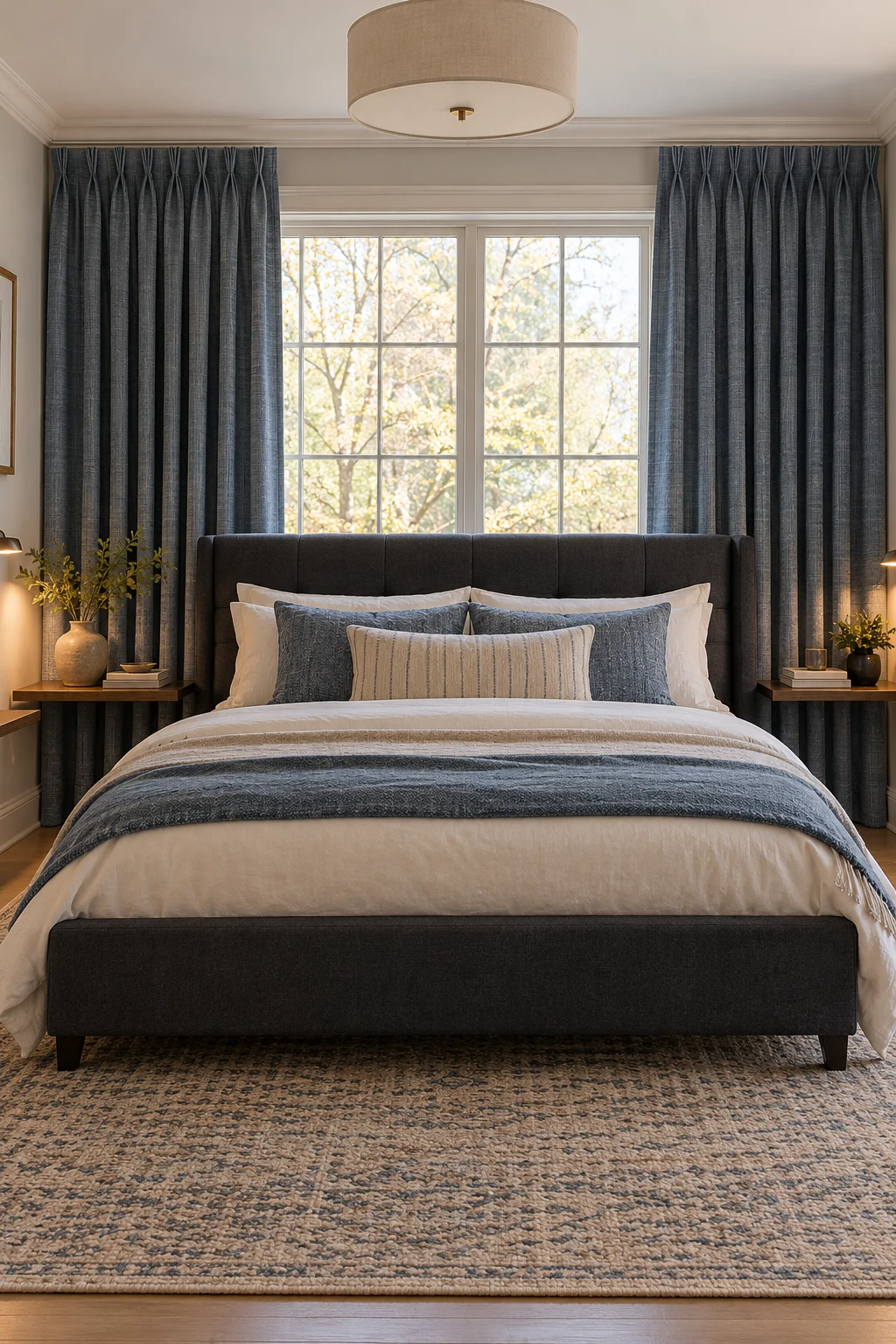
4. Try Tailored Pinch Pleat Panels
Tailored Pinch Pleat Panels works particularly well in a tidy contemporary bedroom. Start with stone-blue woven drapery, then coordinate it with precise triple pinch pleats. The pairing gives the window a clear design purpose instead of treating it as an afterthought. In this setting, the main goal is to make a plain rectangular window feel intentionally finished. That goal should guide both the fabric choice and the way the panels open.
Position the treatment just beneath a narrow ceiling cornice, using nickel-finish curtain hooks to keep the finish consistent. Bring in a charcoal upholstered bed and slim bedside shelf so the textile feels connected to the rest of the bedroom. Leave enough room for the window to operate and for the material to hang without bunching against furniture.
One practical limitation is that custom pleating can cost more than simple rod-pocket styles. If you are buying fabric by the yard, request a sample and examine it in daylight and under your bedside lamp; color and opacity can change noticeably between the two. A simple, well-fitted installation usually looks better than extra decorative accessories.
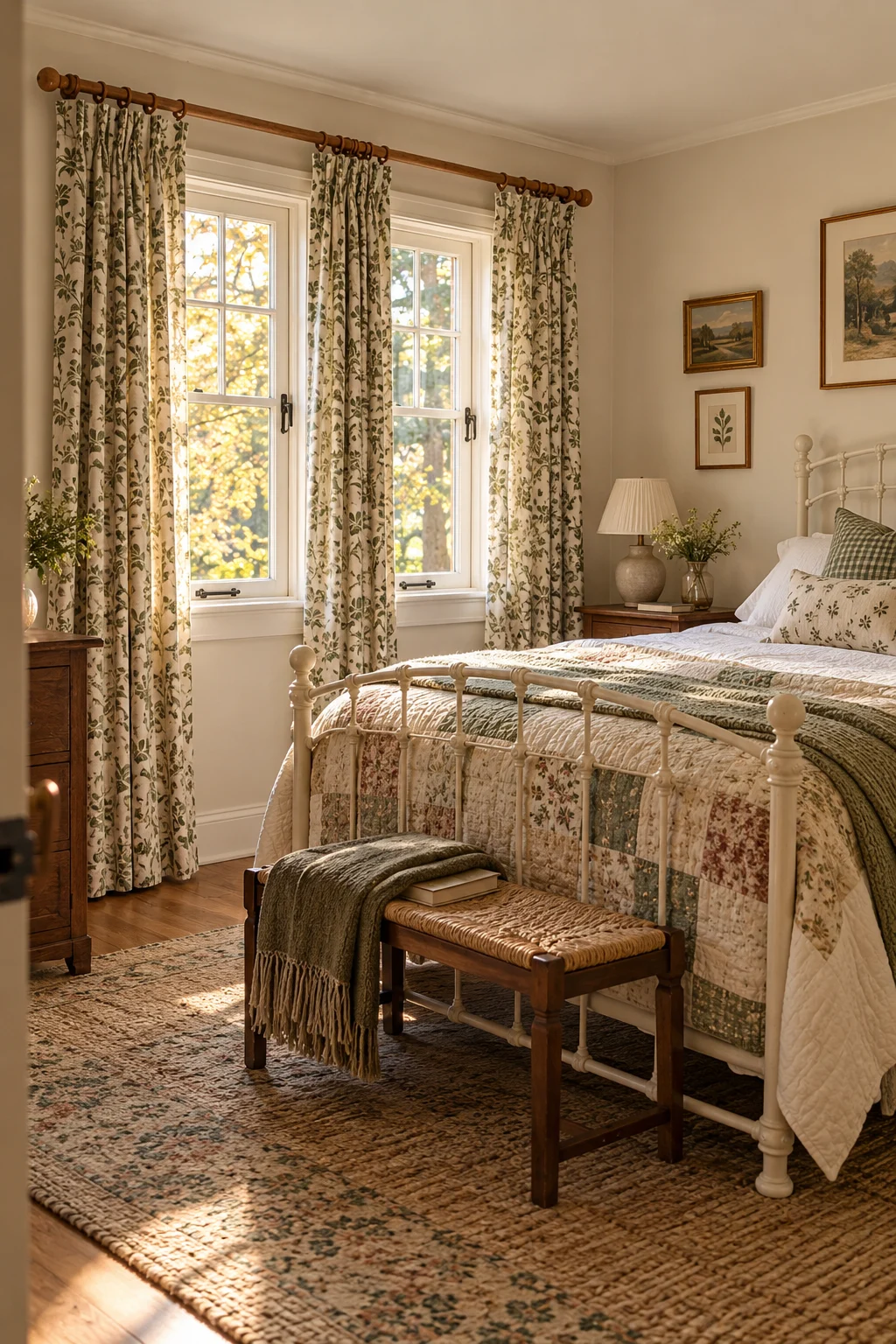
5. Use Subtle Botanical Print Curtains
Use Subtle Botanical Print Curtains works particularly well in a cottage-inspired guest room. Start with sage-and-cream leafy cotton, then coordinate it with matte cream walls. The pairing gives the window a clear design purpose instead of treating it as an afterthought. In this setting, the main goal is to bring gentle pattern to an otherwise quiet wall. That goal should guide both the fabric choice and the way the panels open.
Position the treatment above a pair of casement windows, using natural wood curtain rod to keep the finish consistent. Bring in a painted iron bed and patchwork quilt so the textile feels connected to the rest of the bedroom. Leave enough room for the window to operate and for the material to hang without bunching against furniture.
One practical limitation is that large repeats can overwhelm short narrow windows. If you are buying fabric by the yard, request a sample and examine it in daylight and under your bedside lamp; color and opacity can change noticeably between the two. A simple, well-fitted installation usually looks better than extra decorative accessories.
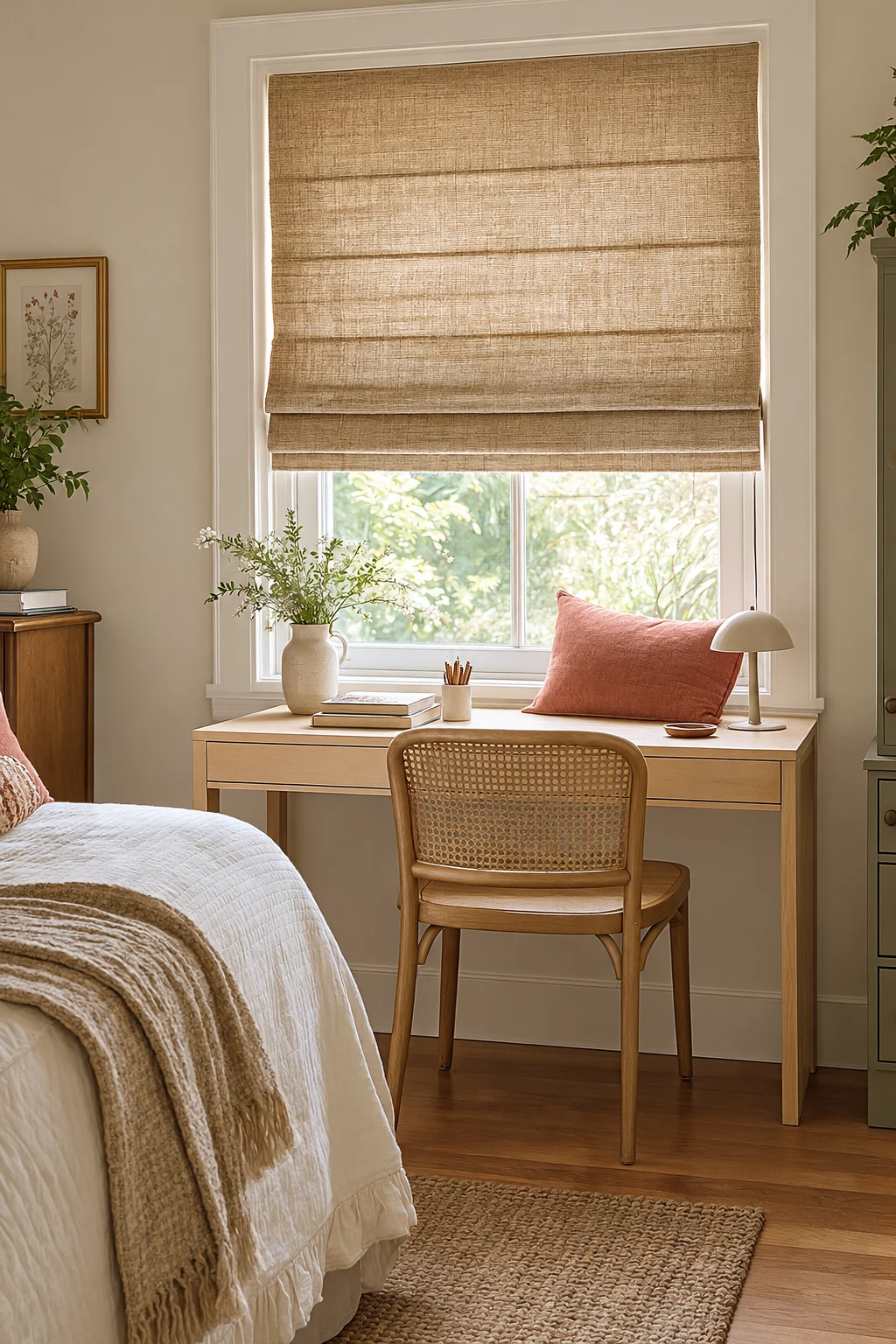
6. Install Inside-Mount Roman Shades
Install Inside-Mount Roman Shades works particularly well in a compact bedroom with a desk beneath the window. Start with sand-colored textured Roman shades, then coordinate it with white window trim. The pairing gives the window a clear design purpose instead of treating it as an afterthought. In this setting, the main goal is to control privacy without long fabric beside furniture. That goal should guide both the fabric choice and the way the panels open.
Position the treatment within the window recess, using a warm clay accent pillow to keep the finish consistent. Bring in a compact birch writing desk and cane chair so the textile feels connected to the rest of the bedroom. Leave enough room for the window to operate and for the material to hang without bunching against furniture.
One practical limitation is that inside mounting requires sufficient frame depth. If you are buying fabric by the yard, request a sample and examine it in daylight and under your bedside lamp; color and opacity can change noticeably between the two. A simple, well-fitted installation usually looks better than extra decorative accessories.
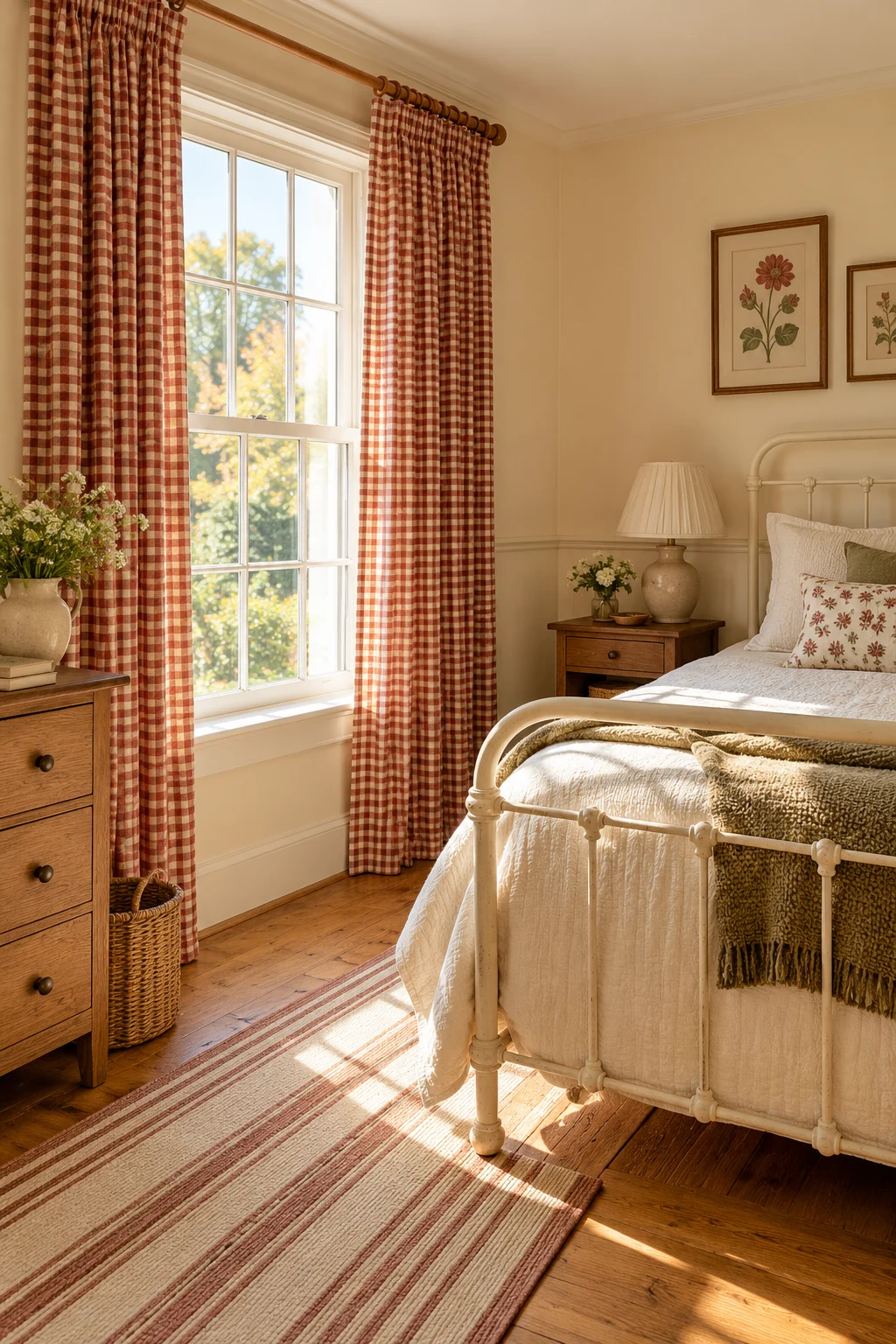
7. Choose Gingham for Playful Warmth
Gingham for Playful Warmth works particularly well in a cheerful country-style bedroom. Start with muted rust gingham curtains, then coordinate it with buttercream walls. The pairing gives the window a clear design purpose instead of treating it as an afterthought. In this setting, the main goal is to add a small-scale checked rhythm without busy artwork. That goal should guide both the fabric choice and the way the panels open.
Position the treatment just above the window casing, using simple oak finial rod to keep the finish consistent. Bring in a cream metal bed and striped floor runner so the textile feels connected to the rest of the bedroom. Leave enough room for the window to operate and for the material to hang without bunching against furniture.
One practical limitation is that check alignment carefully at the panel seams. If you are buying fabric by the yard, request a sample and examine it in daylight and under your bedside lamp; color and opacity can change noticeably between the two. A simple, well-fitted installation usually looks better than extra decorative accessories.
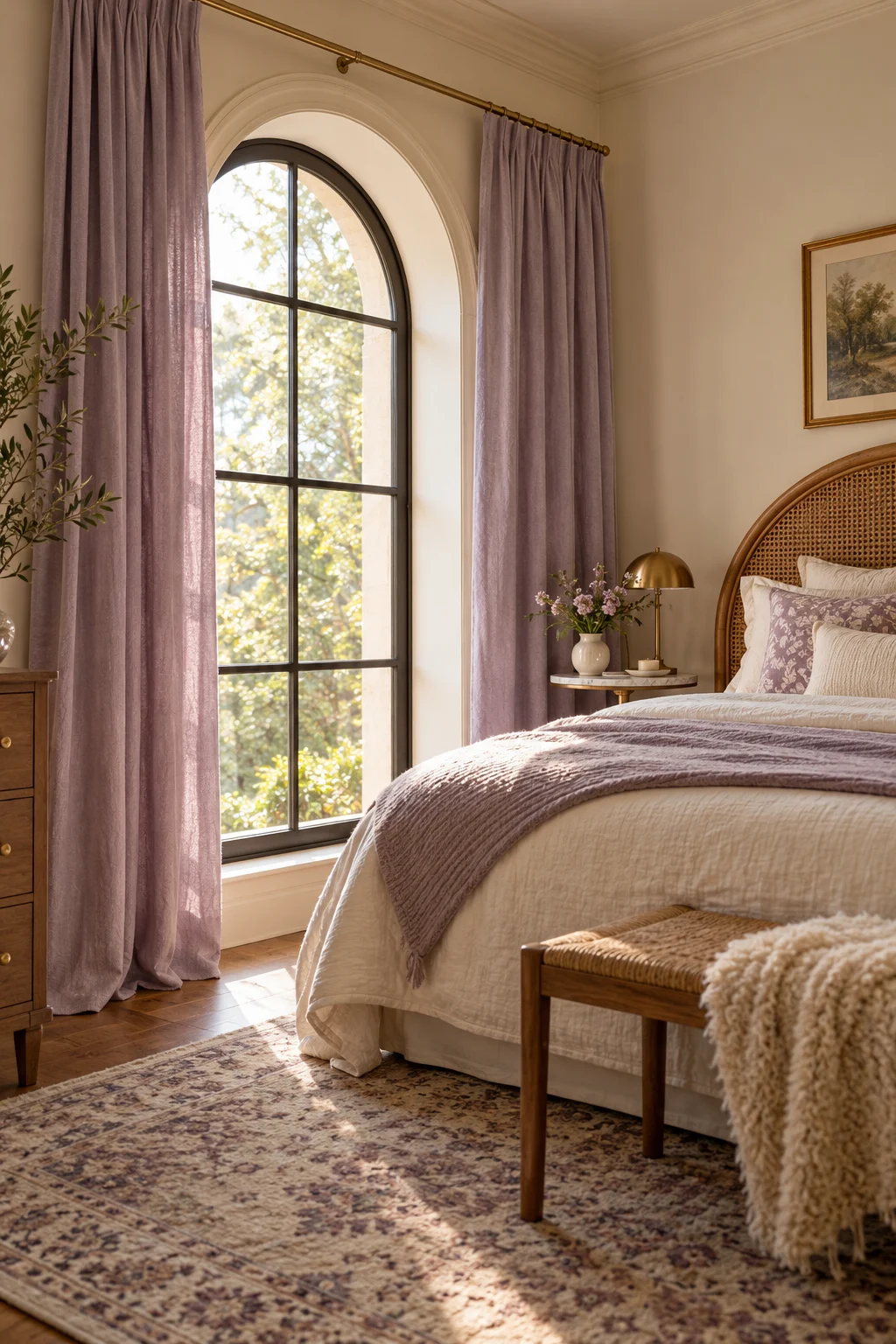
8. Soften Arched Windows With Drapes
Soften Arched Windows With Drapes works particularly well in a romantic room with an architectural arch. Start with dusty lavender plain-weave panels, then coordinate it with an arched plaster window surround. The pairing gives the window a clear design purpose instead of treating it as an afterthought. In this setting, the main goal is to emphasize the curve while retaining a functional straight track. That goal should guide both the fabric choice and the way the panels open.
Position the treatment above the arch spring line, using slim champagne-metal rod to keep the finish consistent. Bring in a curved rattan headboard and petite marble-topped table so the textile feels connected to the rest of the bedroom. Leave enough room for the window to operate and for the material to hang without bunching against furniture.
One practical limitation is that do not drill into fragile decorative plaster without assessing it. If you are buying fabric by the yard, request a sample and examine it in daylight and under your bedside lamp; color and opacity can change noticeably between the two. A simple, well-fitted installation usually looks better than extra decorative accessories.
9. Pair Blackout Linings With Prints
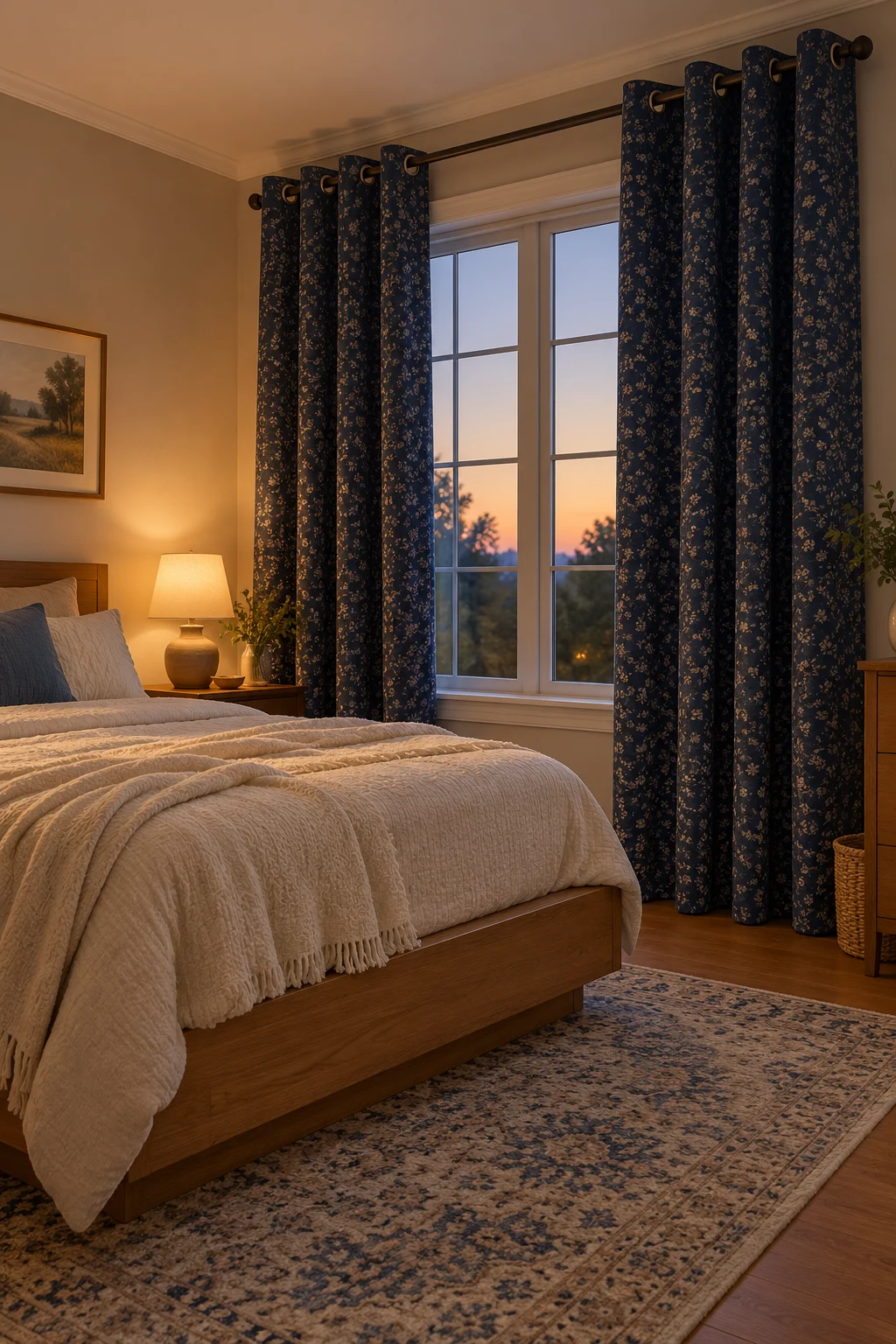
Pair Blackout Linings With Prints works particularly well in a bedroom needing strong nighttime light control. Start with navy micro-floral face fabric, then coordinate it with separate opaque blackout lining. The pairing gives the window a clear design purpose instead of treating it as an afterthought. In this setting, the main goal is to keep a decorative textile visible while improving room darkening. That goal should guide both the fabric choice and the way the panels open.
Position the treatment beyond both sides of the glazing, using dark bronze grommet hardware to keep the finish consistent. Bring in a honey-oak platform bed and cream blanket so the textile feels connected to the rest of the bedroom. Leave enough room for the window to operate and for the material to hang without bunching against furniture.
One practical limitation is that gaps at the edges can still admit light. If you are buying fabric by the yard, request a sample and examine it in daylight and under your bedside lamp; color and opacity can change noticeably between the two. A simple, well-fitted installation usually looks better than extra decorative accessories.
10. Bring Texture With Woven Slub Curtains
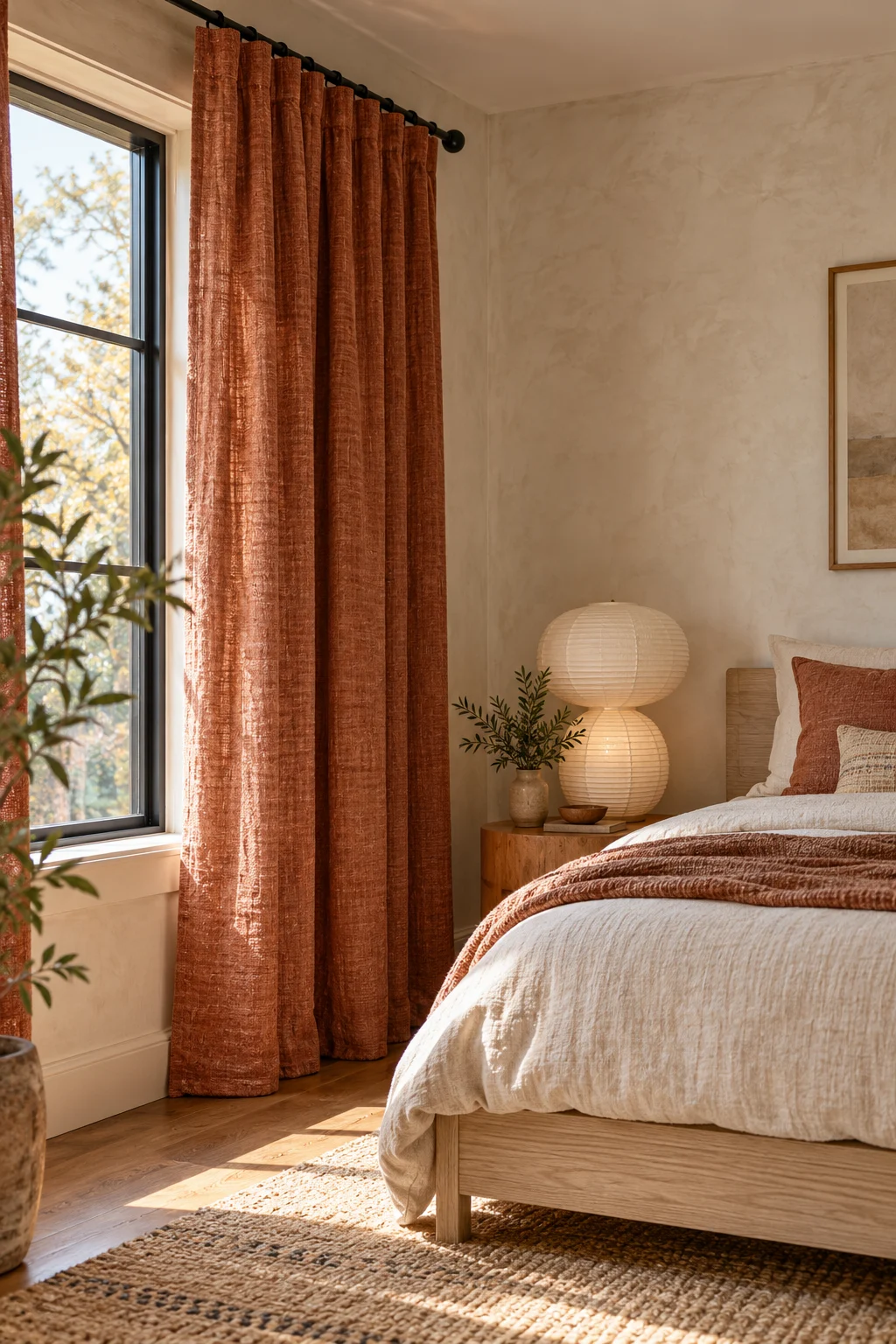
Bring Texture With Woven Slub Curtains works particularly well in a minimalist room needing tactile interest. Start with warm terracotta slub-weave fabric, then coordinate it with off-white limewash-style walls. The pairing gives the window a clear design purpose instead of treating it as an afterthought. In this setting, the main goal is to make simple architecture feel layered without a bold motif. That goal should guide both the fabric choice and the way the panels open.
Position the treatment a few inches outside the trim, using black iron curtain pole to keep the finish consistent. Bring in a low ash-wood bed and sculptural paper lamp so the textile feels connected to the rest of the bedroom. Leave enough room for the window to operate and for the material to hang without bunching against furniture.
One practical limitation is that coarse weaves may snag on rough rings. If you are buying fabric by the yard, request a sample and examine it in daylight and under your bedside lamp; color and opacity can change noticeably between the two. A simple, well-fitted installation usually looks better than extra decorative accessories.
11. Add Scalloped Trim to Plain Panels
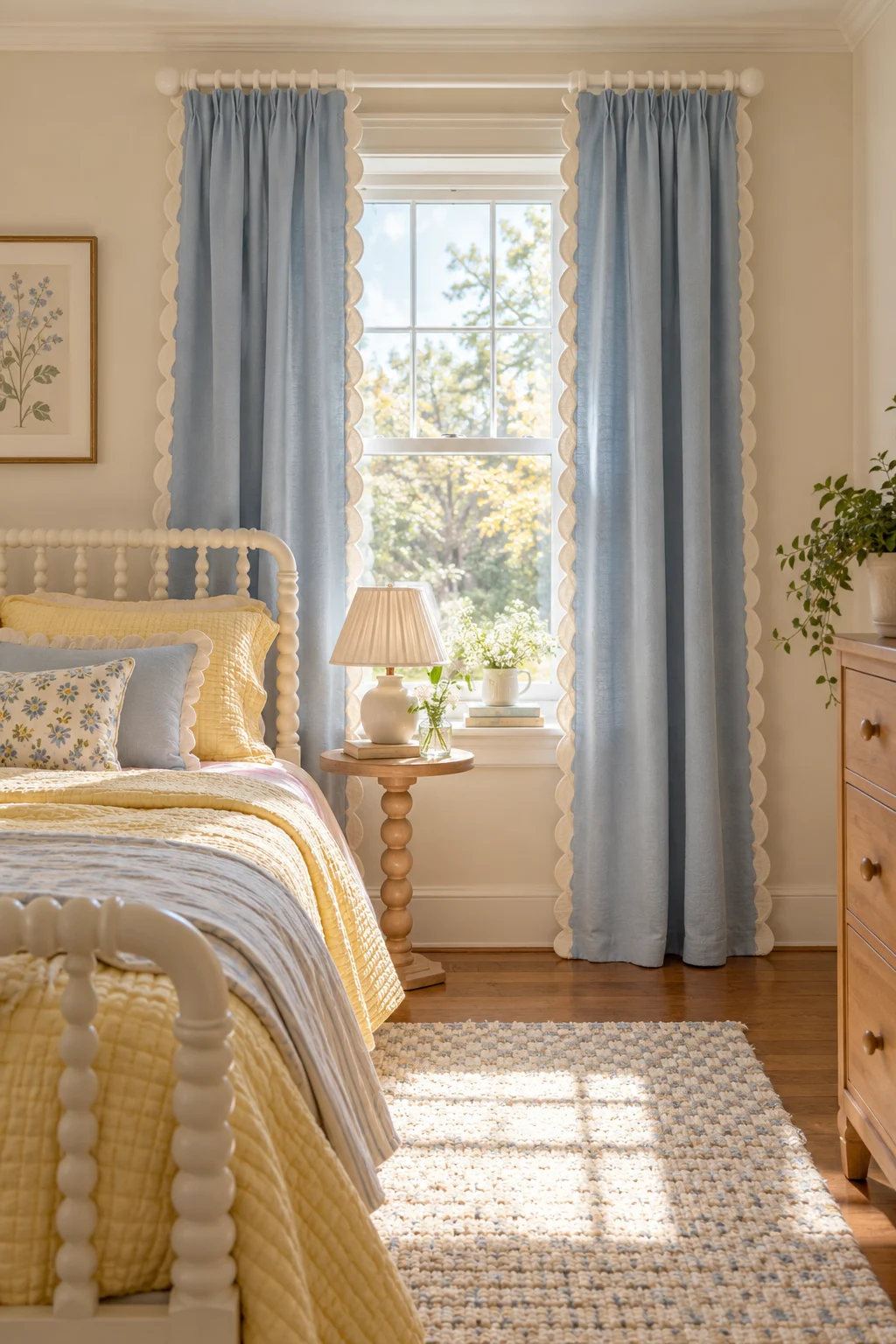
Add Scalloped Trim to Plain Panels works particularly well in a whimsical but grown-up bedroom. Start with powder-blue cotton curtains, then coordinate it with cream scalloped edge binding. The pairing gives the window a clear design purpose instead of treating it as an afterthought. In this setting, the main goal is to give affordable ready-made panels a custom-looking border. That goal should guide both the fabric choice and the way the panels open.
Position the treatment above a narrow double-hung window, using painted white curtain rod to keep the finish consistent. Bring in a pale yellow quilt and spindle side table so the textile feels connected to the rest of the bedroom. Leave enough room for the window to operate and for the material to hang without bunching against furniture.
One practical limitation is that curved trim needs patient stitching to lie flat. If you are buying fabric by the yard, request a sample and examine it in daylight and under your bedside lamp; color and opacity can change noticeably between the two. A simple, well-fitted installation usually looks better than extra decorative accessories.
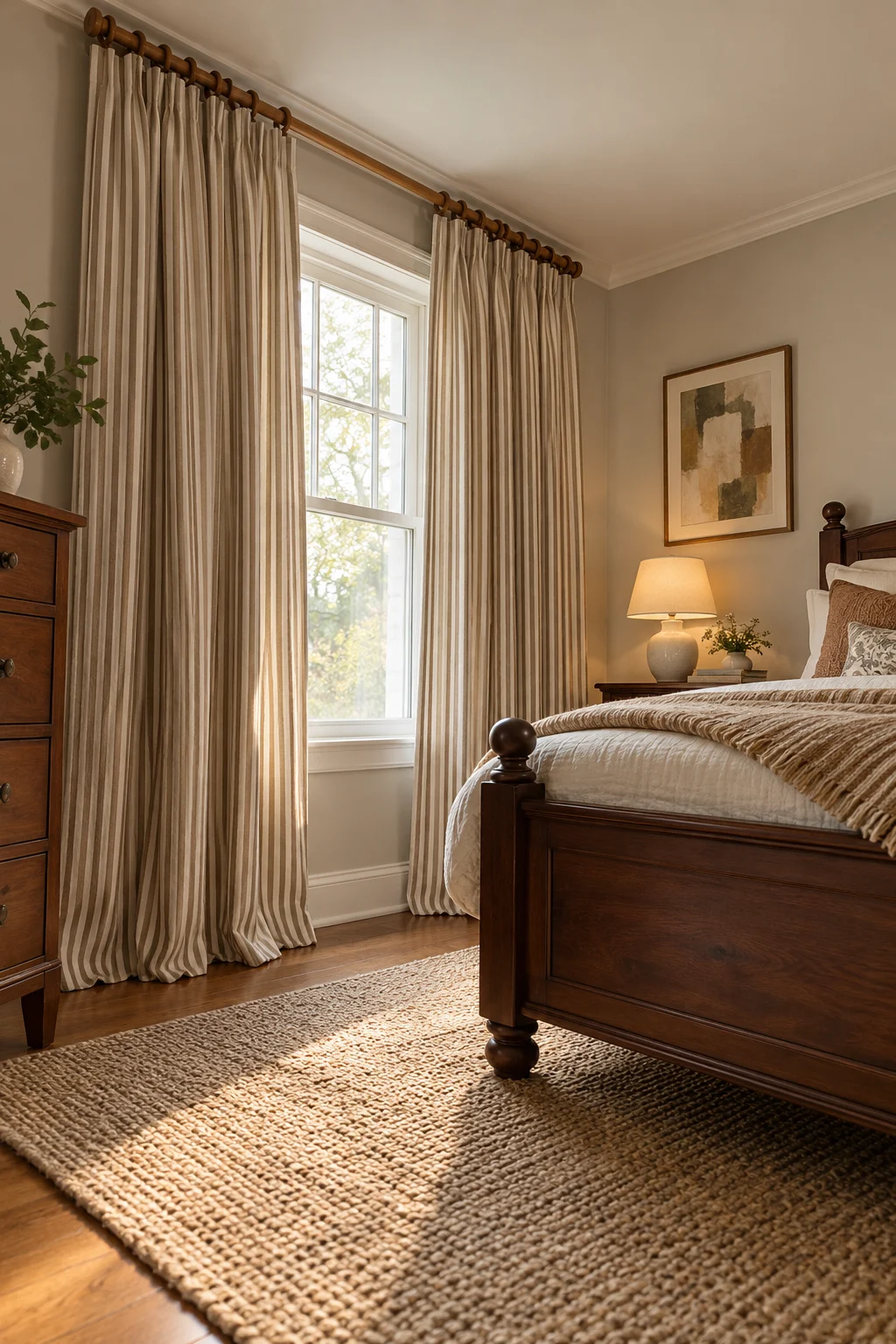
12. Let Striped Drapes Raise the Ceiling
Let Striped Drapes Raise the Ceiling works particularly well in a low-ceiling bedroom. Start with vertical taupe-and-ivory ticking stripes, then coordinate it with light greige walls. The pairing gives the window a clear design purpose instead of treating it as an afterthought. In this setting, the main goal is to lead the eye upward with long uninterrupted lines. That goal should guide both the fabric choice and the way the panels open.
Position the treatment near the ceiling with hems skimming the floor, using unfussy wooden rings to keep the finish consistent. Bring in a dark chestnut bed and small abstract artwork so the textile feels connected to the rest of the bedroom. Leave enough room for the window to operate and for the material to hang without bunching against furniture.
One practical limitation is that bold stripe widths can look disproportionate on tiny windows. If you are buying fabric by the yard, request a sample and examine it in daylight and under your bedside lamp; color and opacity can change noticeably between the two. A simple, well-fitted installation usually looks better than extra decorative accessories.
13. Make a Canopy Feel Like Curtains
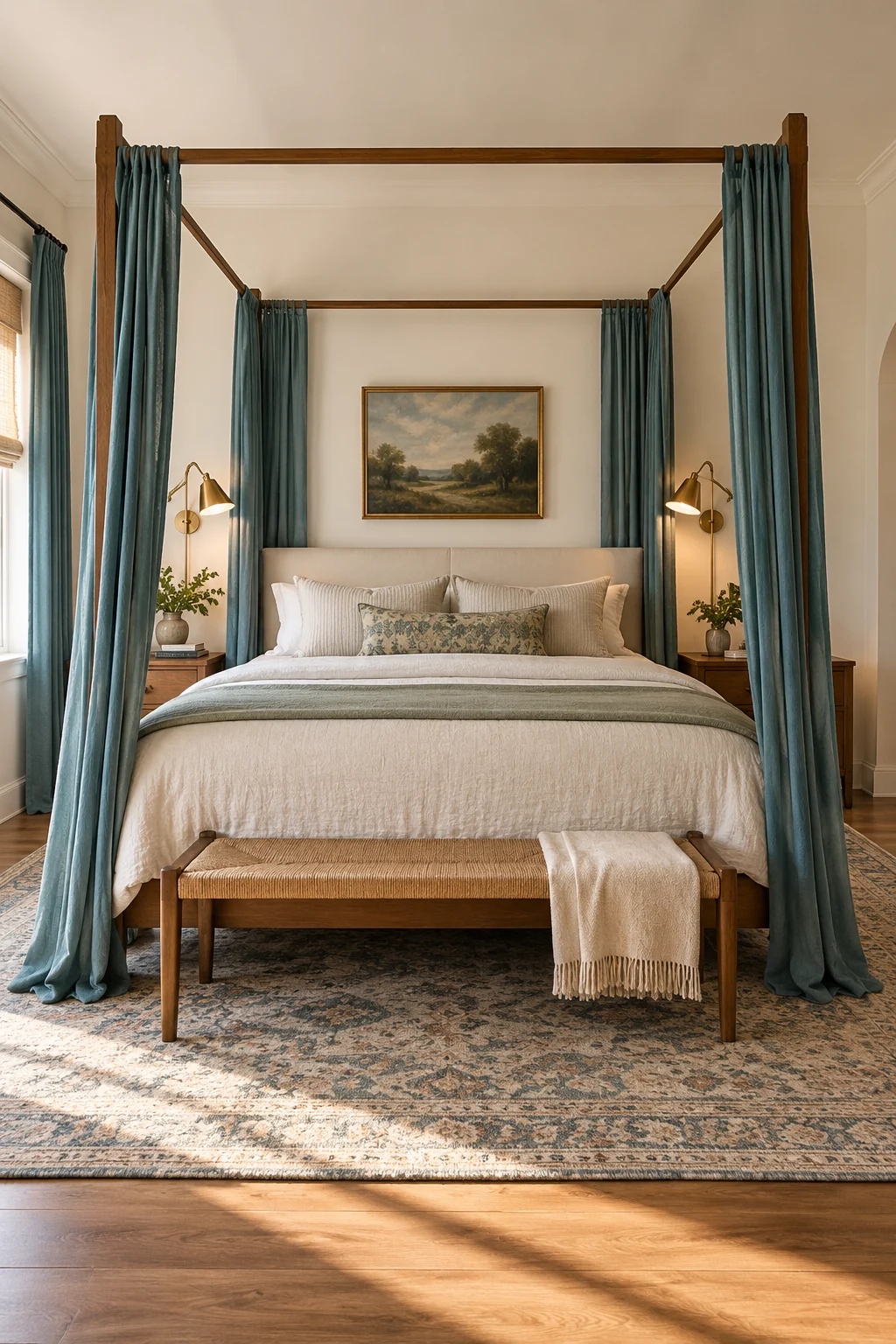
Make a Canopy Feel Like Curtains works particularly well in a larger bedroom with a simple bed wall. Start with smoky teal lightweight cotton panels, then coordinate it with a freestanding four-poster frame. The pairing gives the window a clear design purpose instead of treating it as an afterthought. In this setting, the main goal is to introduce soft fabric around the sleeping zone without changing the windows. That goal should guide both the fabric choice and the way the panels open.
Position the treatment from the upper rails of the bed frame, using warm white plaster walls to keep the finish consistent. Bring in a brass reading sconce mounted away from fabric and a linen coverlet so the textile feels connected to the rest of the bedroom. Leave enough room for the window to operate and for the material to hang without bunching against furniture.
One practical limitation is that keep fabric clear of heaters, lights, and outlets. If you are buying fabric by the yard, request a sample and examine it in daylight and under your bedside lamp; color and opacity can change noticeably between the two. A simple, well-fitted installation usually looks better than extra decorative accessories.
How to Select Bedroom Curtain Ideas for Your Routine
Start with the problem you want the window treatment to solve. If the room is bright before your alarm, fabric opacity matters more than decorative trim. If the window faces a sidewalk, privacy at different times of day may be the deciding factor. A window beside a desk or radiator presents different practical limits from one set into a clear wall. Write down your priorities in order: darkness, privacy, daylight, easy cleaning, or visual softness. Then compare samples against that list. Remember that a curtain which looks opaque against a store wall can become translucent when sunlight passes through it. Test samples at the actual window if possible. The best-looking solution is the one you can open, close, and maintain without rearranging the bedroom every day.
Get the Fullness and Hem Right
Fabric width makes an enormous difference to the finished appearance. A panel stretched almost flat across a window rarely produces the relaxed folds shown in decorating photographs. Many conventional drapery arrangements use combined panel width around one-and-a-half to two-and-a-half times the span being covered, depending on fabric and heading style. This is a planning range, not a universal requirement. Measure the usable rod length, including how far the curtains will extend beyond the frame, and check the manufacturer’s fullness recommendations. Decide whether hems should float slightly above the floor, touch it, or form a small break. Floor-pooling fabric is harder to clean and may not suit households with young children or pets. Mark the proposed hem with painter’s tape before committing to alterations.
Plan a Sensible Curtain Budget
The final bill is more than the price printed on a single curtain panel. Rods, brackets, rings, lining, hemming, and installation can all affect the total. Ready-made cotton panels often provide an economical starting point, while specialty pleats and custom sizing generally add labor and cost. When comparing options, calculate the full window rather than the cost of one package; many curtains are sold individually. Reserve a portion of the budget for reliable mounting hardware and any required alterations. If you have several windows, matching the hardware finish can provide consistency even when the fabrics differ slightly. Spend first on the treatment that affects sleep or privacy most, and use simpler styling on less demanding windows.
Balance Daylight, Privacy, and Darkness
A bedroom can need three different lighting conditions: bright daylight while you get dressed, screened daylight while you relax, and reduced light while you sleep. One fabric does not always perform all three jobs. Sheer materials diffuse views but generally provide limited nighttime privacy when interior lights are on. Opaque curtains help with privacy, while blackout-lined treatments reduce transmitted light but may still leave bright gaps at the sides or top. For sensitive sleepers, consider the full window assembly rather than relying on fabric labels alone. Test the view from outdoors when appropriate and safe, especially after dark. Keeping the treatment easy to operate is important: an elaborate arrangement that takes effort to adjust often stays in the wrong position.
Install Hardware With Care
A neat curtain installation starts with the wall and the load it can safely carry. Identify the wall material and use appropriate anchors or fastenings for the weight of the rod and fabric; heavy drapery may require secure structural fixing. Follow the hardware manufacturer’s guidance rather than assuming any included plastic plug works everywhere. Check for hidden wiring or plumbing before drilling. Curtains should not drape over heaters, portable lamps, or other hot surfaces, and cords or loops from shade systems need child-safe designs and placement. In a rental, ask permission before making permanent holes. After hanging the treatment, open and close it several times to check that brackets remain stable and the fabric clears the window handles.
Keep Fabrics Looking Fresh
Dust settles into folds even in a tidy bedroom. A soft brush attachment used gently during routine cleaning can help keep heavier drapes presentable, while some washable cotton panels can be laundered according to their care labels. Do not assume that lined, velvet, or pleated curtains are machine washable; fabric shrinkage can ruin a carefully set hem. Sunlight may also fade exposed areas over time, especially with saturated colors. Rotate or rearrange panels only when their construction permits it, and consider lining where strong sunlight is persistent. For a quick refresh, straighten the heading, remove stray threads, and allow freshly washed fabric to dry as directed. Small maintenance habits preserve the intentional look far longer than adding more accessories.
Frequently Asked Questions
Should bedroom curtains touch the floor?
Many bedroom curtains look polished when the hems just skim the floor or sit slightly above it. A deliberate puddle can suit formal rooms but collects dust and may create a tripping or snagging issue. Decide on the effect before ordering, and check the length at several points along uneven floors.
Are sheer curtains enough for bedroom privacy?
Sheers can obscure views during daylight, but they are often inadequate after dark when indoor lights are on. For a bedroom facing neighbors or a public path, combine sheers with an opaque layer or a separate privacy treatment. Check visibility under both daytime and nighttime conditions.
Can curtains make a small bedroom feel taller?
A rod installed above the window frame, paired with panels that run toward the floor, can create a longer vertical line. The effect works best when the heading is tidy and the fabric is not overly bulky. It is a visual technique, not a substitute for leaving enough space around furniture.
Do blackout curtains block every bit of light?
Not necessarily. Blackout fabric is designed to limit light transmission through the material, but light may enter around the edges, rod, or top of the window. Wider coverage and suitable mounting can improve room darkening. Check the product details and your window configuration before buying.
Conclusion
A well-dressed bedroom window should look considered without demanding attention every time you enter the room. Focus on the feeling you want—airy, tailored, patterned, or deeply restful—and match it to how you actually use the space. Fabric samples and careful placement are more valuable than rushing into a dramatic purchase. Pick one window today, note its privacy and light needs, and test two contrasting fabric swatches against the wall.
