
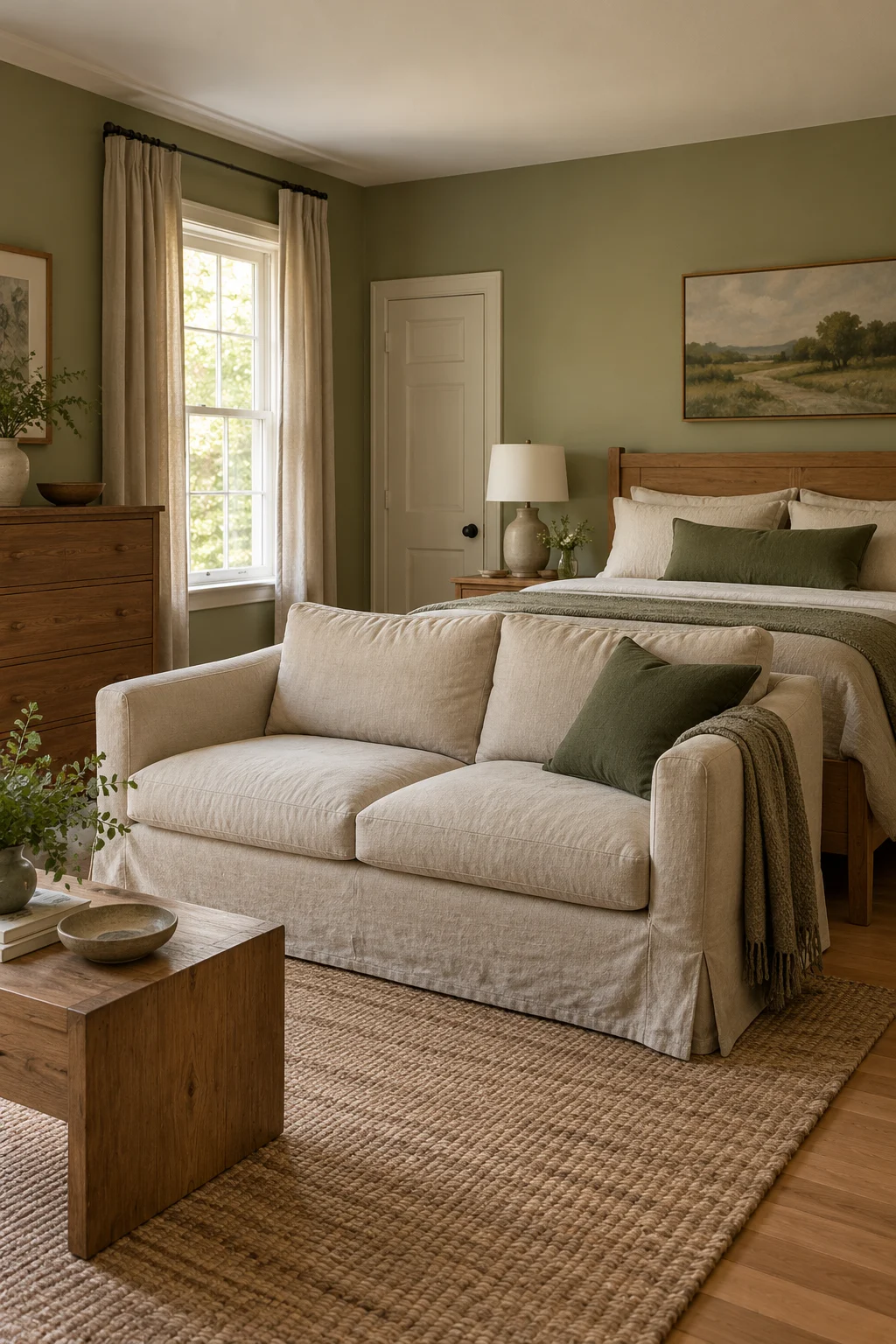
13 Bedroom With Couch Ideas for a Comfortable and Functional Retreat
The corner beside your bedroom window is empty, but adding another dresser would only make the room feel like storage. A couch could turn that unused floor area into somewhere to read, talk, or unwind before bed. The most successful bedroom with couch ideas treat seating as part of the room’s daily rhythm, not as a decorative afterthought. Placement matters as much as fabric: a sofa that looks lovely in a photograph can become frustrating if it blocks a closet or narrows the route to the door. You can work with a compact settee, a structured loveseat, or a sofa that accommodates occasional guests. The following arrangements show how to make a second seating spot feel purposeful, comfortable, and connected to your bedroom.
1. A Compact Loveseat at the Foot
A slim two-seat loveseat turns the foot of a queen bed into a place for conversation or reading without adding another furniture zone. Upholstery in oatmeal linen-look fabric keeps the shape soft, while tapered walnut legs expose more floor. Leave breathing room between the mattress and seat so changing bedding remains easy. This layout works best in a rectangular bedroom with generous length, not a square room where the couch would block the doorway. A back height lower than the footboard helps preserve the view across the room. Keep the loveseat free of decorative pillows during the day so it remains somewhere you can actually sit.

2. A Window-Side Sofa for Daylight
Positioning a modest sofa beside a broad bedroom window gives the room a second destination beyond the bed. A dusty-blue two-seater can face inward toward a small round coffee table, leaving the glazing and curtains accessible. This arrangement is particularly pleasant for someone who reads or works on a laptop in natural light. The sofa should sit far enough from the window for curtains to move freely and for cleaning. Upholstery that resists fading is sensible in a sunny exposure. Keep the coffee table lightweight so the sitting area can be rearranged when you need extra floor space.

3. A Camel Couch Opposite the Bed
If the wall facing your bed is unused, a camel-colored couch can make it feel like a private sitting room. Select a clean-lined design with two cushions and place a small woven rug underneath to define the seating area. A low dresser can share the wall only when drawer access remains comfortable. This plan suits wider bedrooms where the bed and couch can face each other without a cramped central aisle. Camel upholstery adds warmth to cream and mushroom walls but can show dark denim transfer on pale fabric. A washable throw is an easy protective layer without hiding the couch completely.

4. A Petite Settee in the Corner
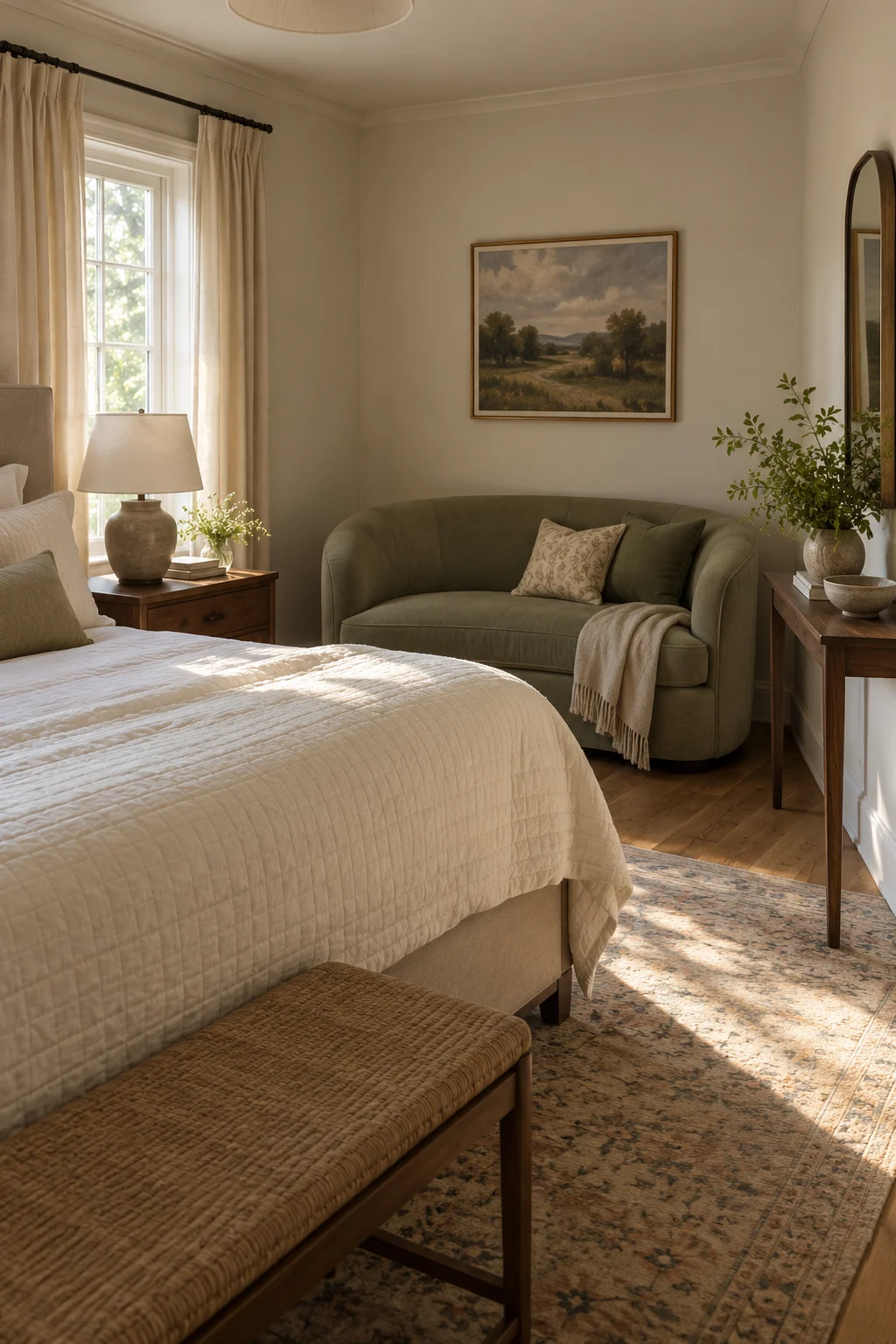
An unused corner can hold a petite settee with a curved back, turning awkward leftover space into a deliberate retreat. Try muted sage upholstery with a narrow walnut side table for a book and water glass. A settee usually feels more intimate than a full sofa and can be easier to fit between a window and a closet wall. Curved arms are attractive but may reduce the usable seat width, so judge comfort by the seat rather than the outside silhouette. This is a good choice for occasional lounging, not necessarily for stretching out. One simple cushion is enough to keep the small piece welcoming.
5. A Sleeper Sofa for Overnight Guests
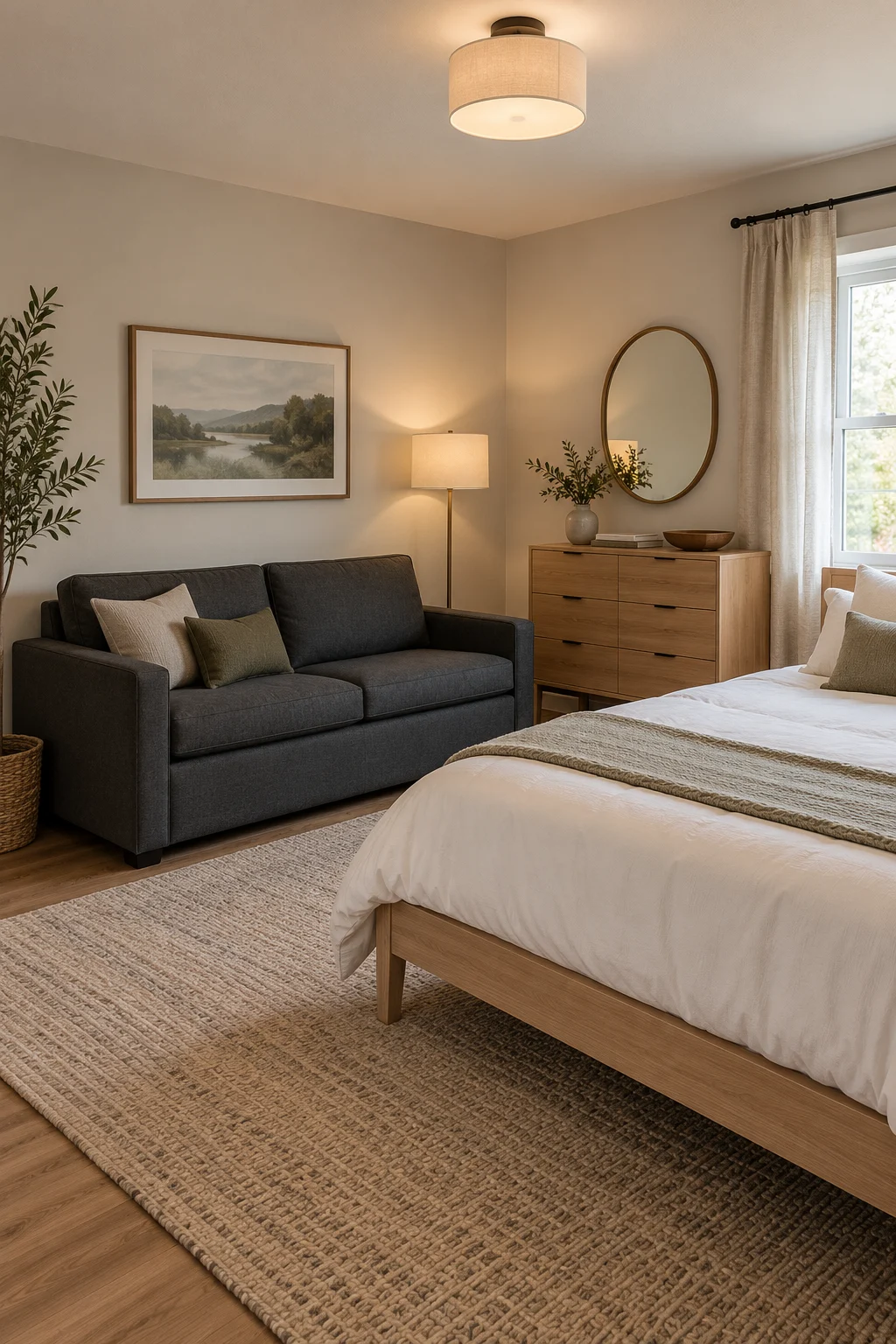
A bedroom that doubles as a guest room benefits from a small sleeper sofa when you occasionally host another person. A charcoal-gray model with a straightforward pullout mechanism looks restrained beside white bedding and light oak furniture. The important detail is the space needed when the mattress opens, which can be considerably larger than the sofa footprint. Try the opening motion in the intended layout before committing. A sleeper is heavier than a conventional couch, and some mattresses are better suited to short stays. Keep spare linens in a nearby dresser rather than stacking them on the seat.
6. A Bench-Scale Couch Under Artwork
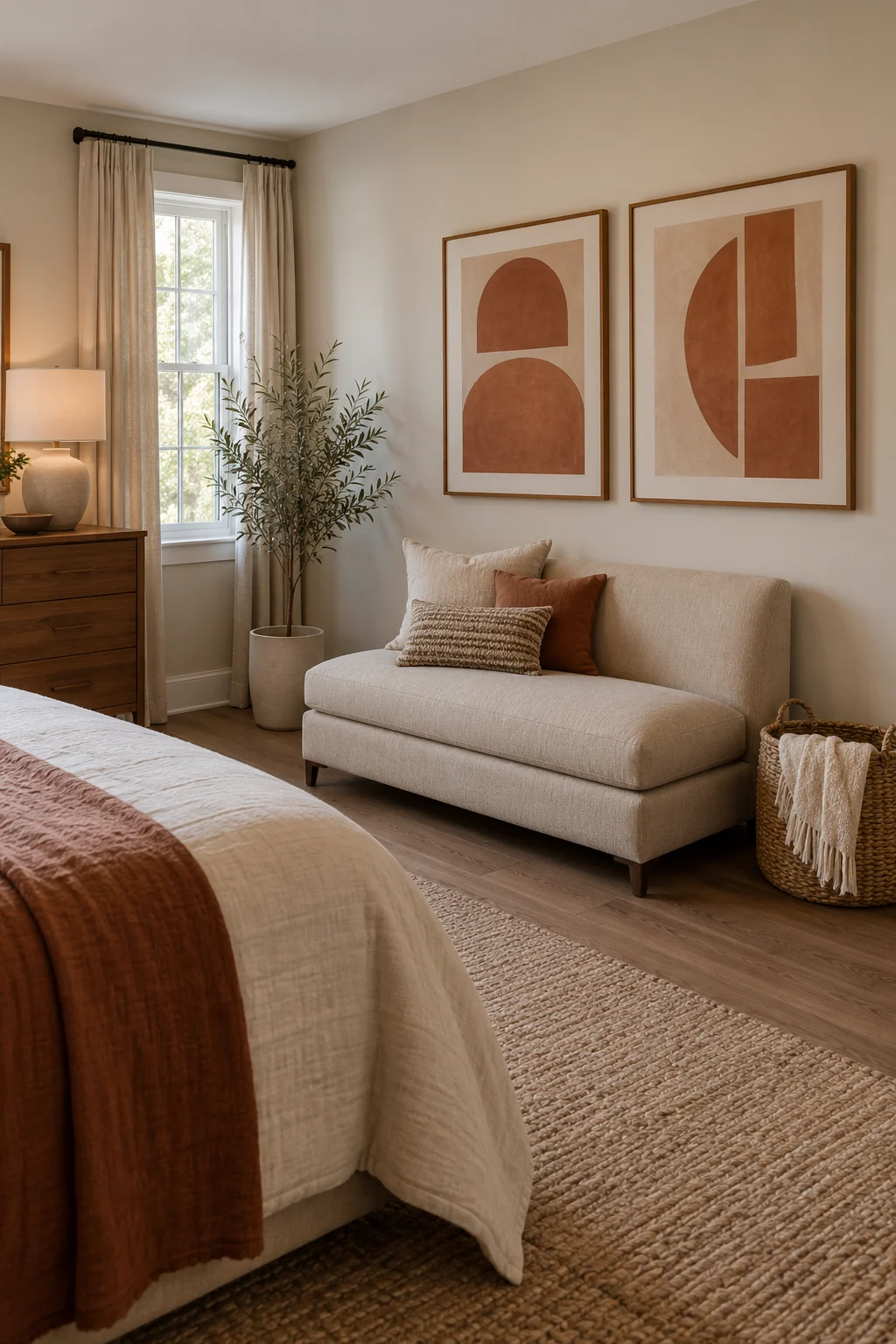
A short armless couch can occupy a wall that is too narrow for a traditional loveseat. In a bedroom with terracotta accents, a sand-colored upholstered piece under two framed abstract prints creates a neat lounge without visual bulk. Armless designs make it easier to approach from either side, although they offer less support for leaning back. Pair the seat with a textured lumbar pillow and a small floor basket for a throw. The artwork should relate to the couch width without extending into adjacent door trim. This treatment suits rooms where you want an inviting perch more than a second sleeping surface.
7. A Velvet Sofa for Evening Relaxing
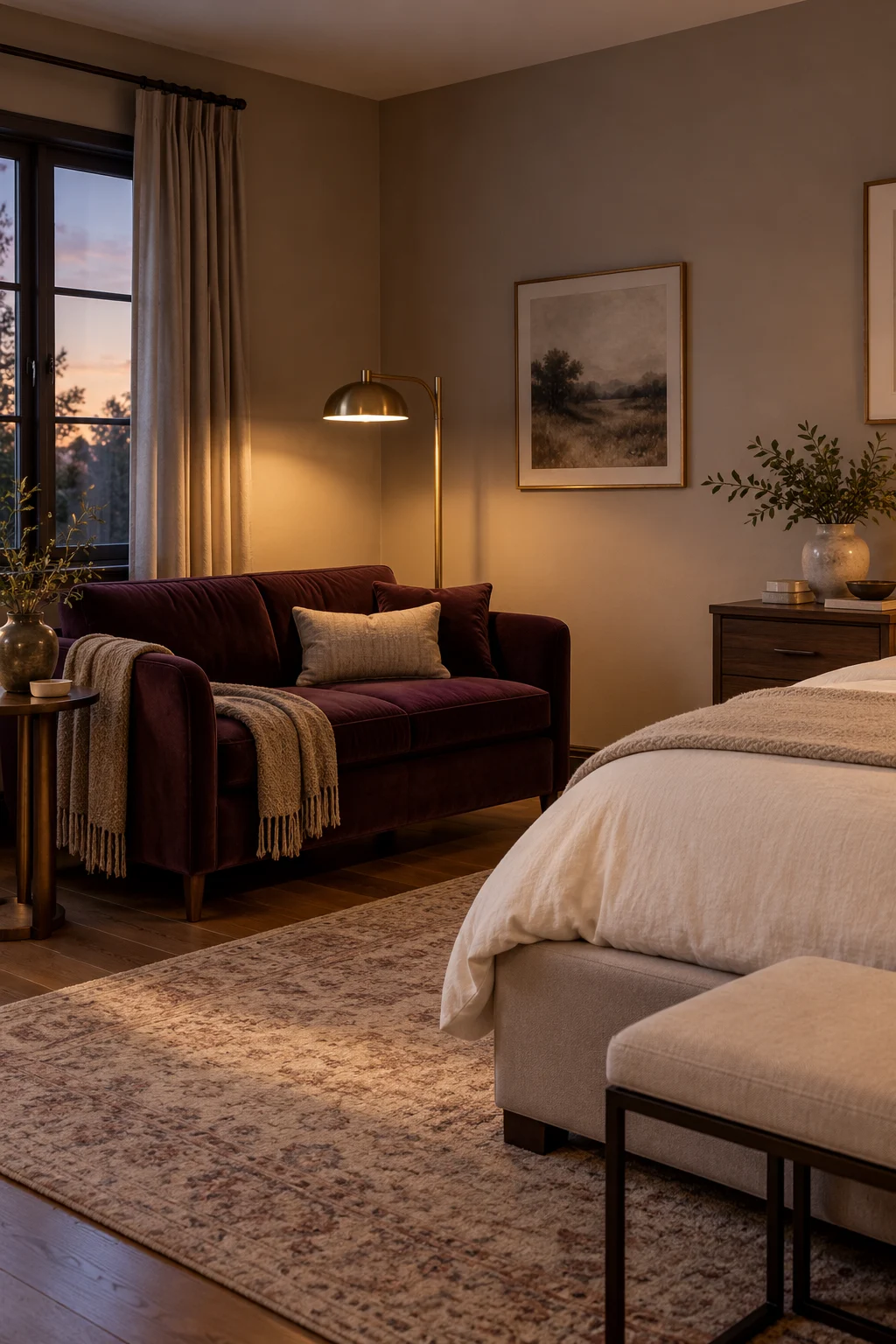
Deep aubergine velvet can make a simple bedroom feel enveloping after dark. A compact sofa placed along a warm taupe wall, with a brass-look floor lamp nearby, creates a reading nook that feels distinct from the sleeping area. Velvet changes appearance as the pile catches light, so it can look richer in evening illumination than in midday sun. It also needs regular gentle care to prevent flattened spots. Keep the surrounding textiles quieter: cream bedding and a plain wool-look rug balance the strong upholstery. This option suits a bedroom where atmosphere matters as much as everyday practicality.
8. A Slipcovered Sofa for Easy Care
A washable slipcovered couch is particularly appealing in a bedroom shared with pets or used for everyday lounging. Soft flax-colored cotton-look covers give a relaxed appearance against pale olive walls and a natural wood bed frame. A tailored skirt hides the base and creates a quieter outline than exposed metal legs. Check whether the particular cover is removable and follow its care label, since not every slipcover is machine washable. Loose fabric may wrinkle after someone naps on the sofa, which is part of the casual look. A single dark-olive cushion adds definition without creating a pile of accessories.
9. A Sofa Along the Sloped Wall
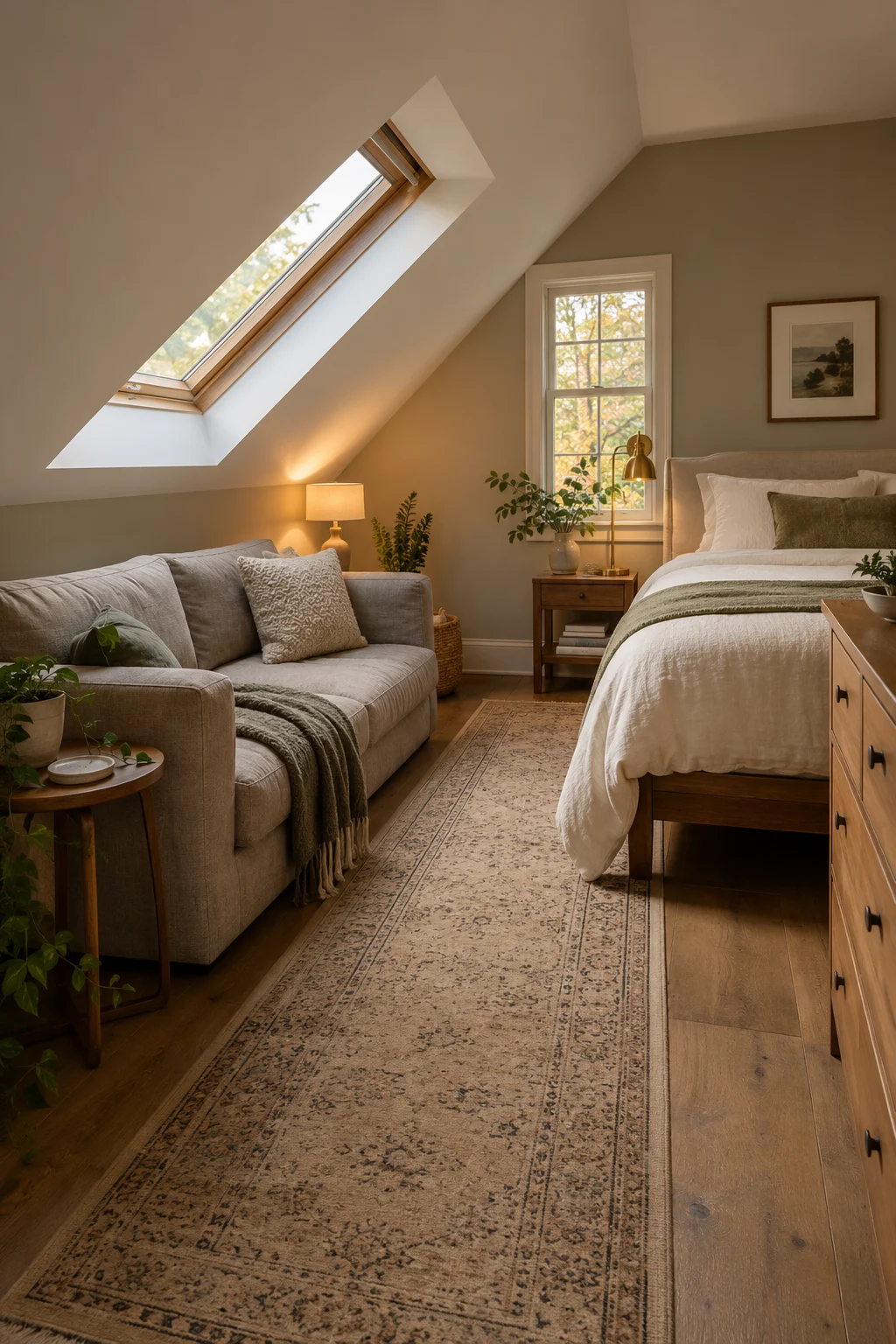
In an attic bedroom, the low portion beneath a sloping ceiling may accommodate seating better than tall storage. A low-back, warm-gray couch positioned along that wall uses the available height while leaving the taller center of the room open. The seat must be far enough forward that someone can stand up without striking the slope. This approach works especially well when the bed occupies the full-height wall opposite. A narrow runner links the two areas without filling the floor with furniture. Skip tall artwork above the couch; the angled ceiling already gives the seating corner plenty of character.
10. A Bouclé Couch With Rounded Edges
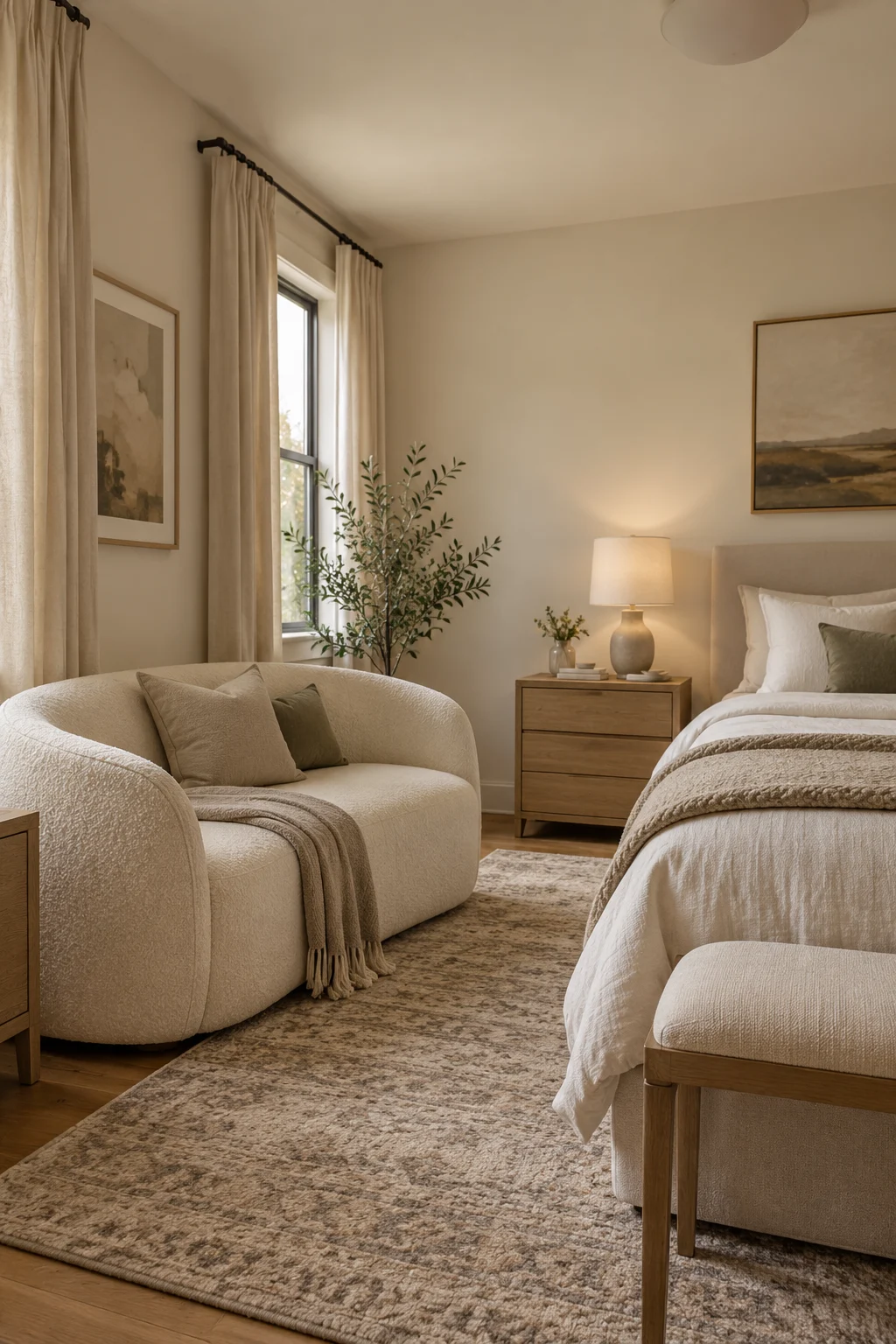
A small rounded bouclé couch softens a bedroom filled with straight cabinet lines and a rectangular bed. Warm ivory upholstery, a mushroom-colored rug, and pale oak nightstands create a tactile but restrained combination. Rounded arms are comfortable for curling up, though they can consume more floor area than the seat suggests. Place the couch where its curved outline is visible from the doorway instead of wedging it tightly between cabinets. Bouclé can trap lint and pet hair, so a fabric brush may become part of the routine. Keep the nearby table slim and stable to preserve the gentle silhouette.
11. A Built-In-Look Couch Between Shelves
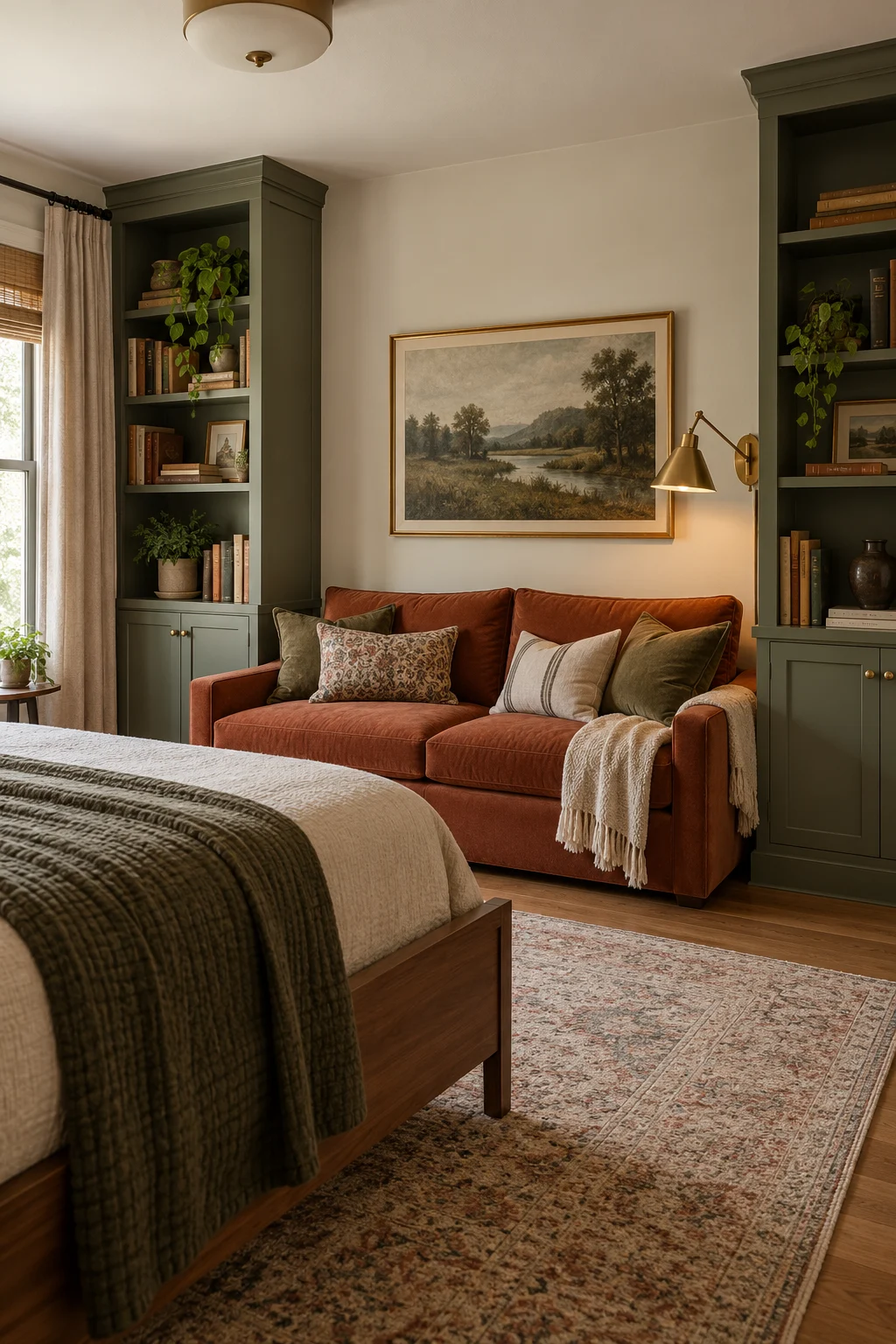
A sofa framed by two shallow bookcases can give a larger bedroom a library-like sitting area. Paint the shelves dusty green and use a rust-colored couch between them, with books and a few ceramics arranged at comfortable reach. The furniture can create a built-in appearance without custom cabinetry, provided the bookcases are properly anchored and do not press against the couch. Avoid placing heavy objects high over the seating position. This layout suits a room with one uninterrupted wall and enough depth for both storage and lounging. Repeating the shelf color in a bedside accent makes the two zones feel connected.
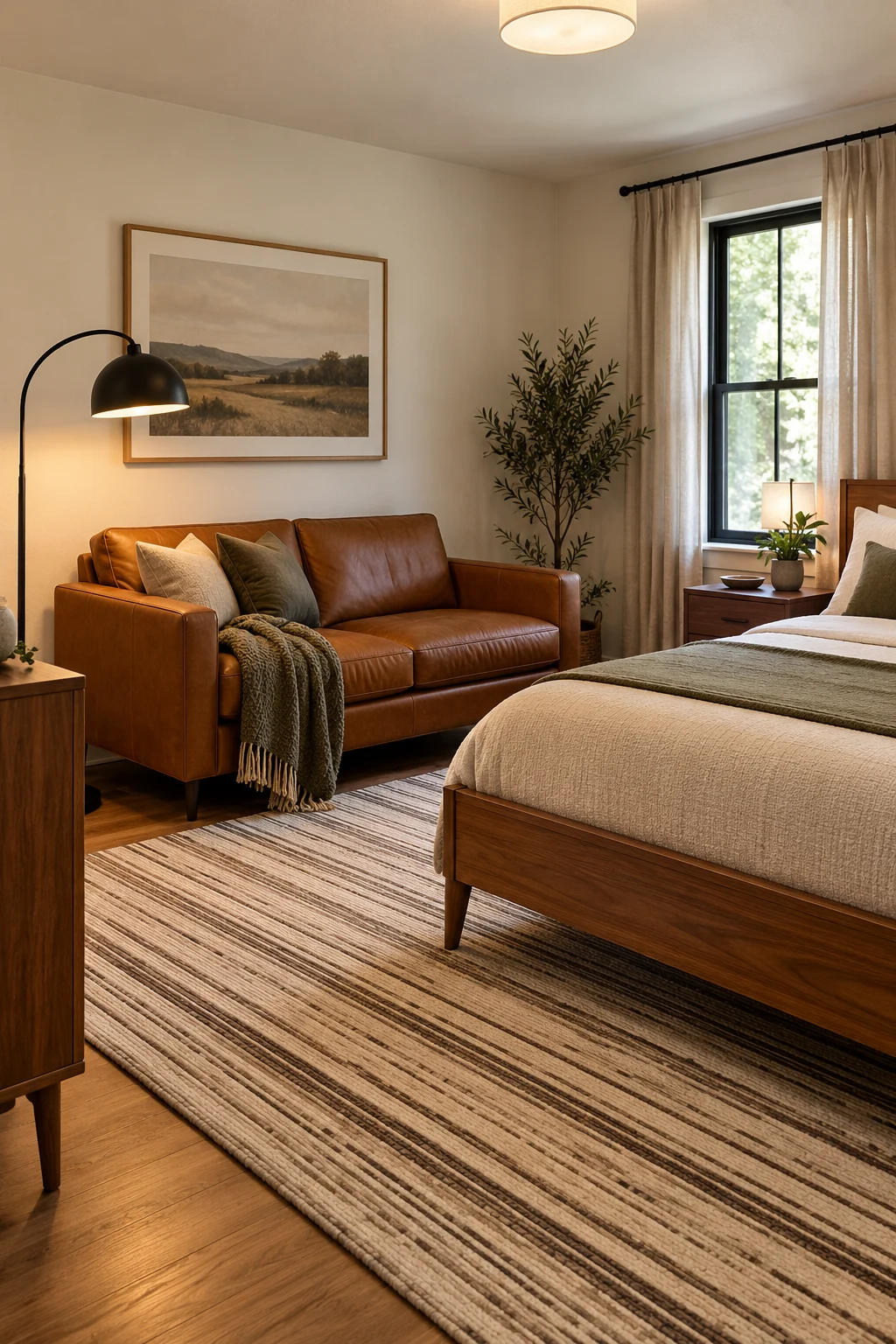
12. A Small Leather Sofa With Warm Wood
A cognac leather-look loveseat introduces a grounded, slightly vintage note to a bedroom with medium-walnut furniture. Put it against a cream wall with a black metal floor lamp and a modest striped rug. Leather and faux leather differ considerably in feel and upkeep, so choose based on the room temperature and the maintenance you prefer. The darker seat can anchor a light room without requiring a dark feature wall. This idea is best for someone who likes structured seating; it feels firmer than a deep upholstered lounge sofa. A folded cotton throw softens the arm without concealing the material.
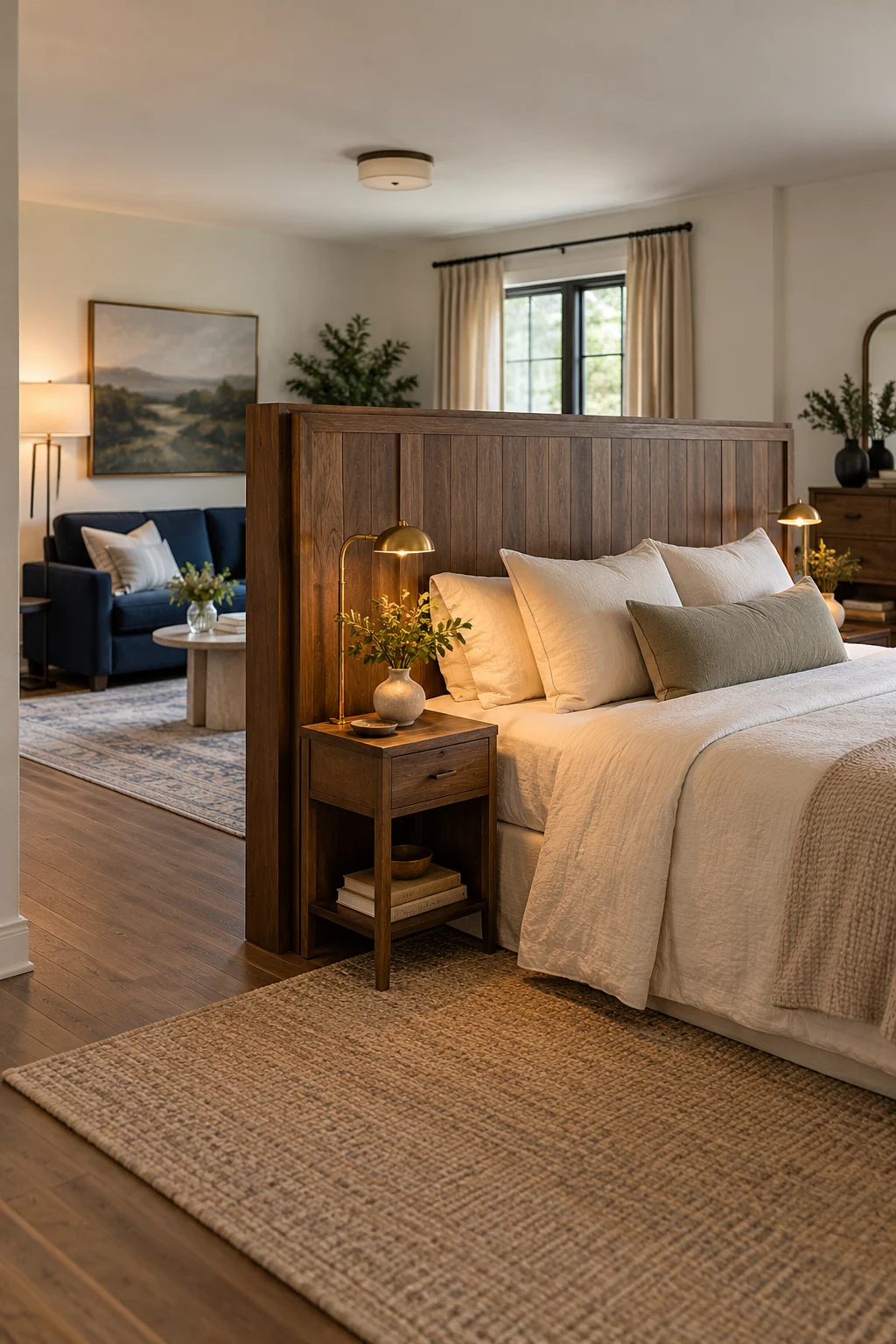
13. A Reading Couch Behind the Headboard
A spacious bedroom can support a couch behind a freestanding headboard when the bed sits away from the wall. A narrow navy sofa with its back to a paneled divider creates a reading zone without turning the room into a full open-plan studio. This layout needs generous circulation on both sides and is unsuitable for tight rooms. Keep the divider stable and avoid mounting heavy décor where it could fall toward the bed. A small table beside the couch holds reading materials while leaving the seating surface clear. The result is two separate functions that still belong to one coordinated bedroom.
Planning Bedroom With Couch Ideas Around Movement
A couch is useful only when it does not interrupt the paths you take every day. Sketch the bed, doors, closets, windows, and drawers before choosing upholstery. Include the couch’s full depth, not simply its width, and mark the space needed to open furniture and walk comfortably. Test the plan with painter’s tape on the floor or move a few chairs into the proposed footprint. In a compact bedroom, a sofa may be less helpful than one generous armchair. In a longer room, a loveseat can create a meaningful second zone without crowding the sleeping area. Pay particular attention to the route from the bedroom door to the bed at night. A beautiful seating arrangement loses its appeal quickly if you must sidestep furniture every morning.
Choosing Upholstery for the Way You Live
Think about what the couch will experience: a quick morning coffee, frequent reading, afternoon naps, or a pet’s favorite perch. Smooth woven fabrics often look crisp and modern, while textured upholstery can hide small variations in appearance. Removable covers can simplify upkeep, but only if the manufacturer’s washing instructions match your routine. Dark colors may disguise some marks yet reveal lint; very light fabrics brighten the room but may need more attention. Request fabric samples when possible and view them near the bed in daylight and artificial light. If you tend to sit with a laptop, a supportive seat and upright back may matter more than a dramatically deep cushion. Select materials for the habits you already have, not an imaginary perfectly tidy room.
Building a Budget Without Losing Comfort
Decide which part of the arrangement deserves the largest share of your budget. The couch itself should generally come first, especially if you plan to use it daily. A secondhand frame can be worthwhile when it is clean, sound, and comfortable, but examine upholstery and structural condition carefully. A rug, lamp, or side table can often be sourced gradually rather than purchased as a matching set. Skip decorative pieces that will need to be moved every time you sit down. Delivery fees, assembly requirements, and the possibility of moving a sofa through a narrow stairwell can change the real total. Keeping the palette connected to existing bedding and furniture is an inexpensive way to make the addition feel intentional.
Lighting a Separate Lounge Zone
The couch and bed do not need identical lighting. A reading corner usually benefits from a focused lamp positioned so it illuminates pages without shining directly into your eyes. The bed can retain softer bedside light, making it easier to use one part of the room while the other stays restful. In a bedroom with only one ceiling fixture, layered lighting also makes the space feel more flexible. Look for stable floor lamps and route cords away from walking paths; avoid running cords beneath rugs. Warm bulbs are often comfortable in the evening, but personal preference and the lamp shade will affect the result. Window light is valuable during the day, provided glare does not make the couch uncomfortable.
Keeping the Room Visually Balanced
Adding a couch introduces another large shape, so the rest of the bedroom may need less decoration, not more. Repeat one existing finish, such as walnut, matte black, or warm brass, near the new seating area. Let the couch color relate to a blanket, curtain, or framed print without matching everything exactly. A small rug can visually identify the lounge zone, but it should lie flat and not create a tripping edge. If the bed has a tall upholstered headboard, a low sofa often feels more balanced than a second high-backed piece. Photograph the room from the doorway to see whether one side feels crowded. Editing a few accessories can make two furniture zones read as a coherent whole.
Safety and Maintenance for Everyday Use
Check the couch’s legs, joints, and overall stability before putting it into regular use. Follow the manufacturer’s care instructions for cleaning and avoid saturating upholstery or using unfamiliar chemicals without testing an inconspicuous area. Keep portable heaters away from fabrics and do not drape textiles over lamps. Any tall shelving used beside seating should be secured according to its instructions, especially in households with children. Leave access to windows, exits, and heating vents unobstructed. Vacuuming beneath and behind the couch helps control dust in a room where you sleep. These practical details are not glamorous, but they determine whether the new seating remains comfortable and manageable over time.
Frequently Asked Questions
Can you put a couch in a small bedroom?
Yes, provided the couch leaves comfortable routes to the bed, door, and storage. A petite armless settee or narrow loveseat often fits better than a deep sofa. Map the footprint on the floor first and consider whether a single lounge chair would provide the same benefit with less crowding.
Should a bedroom couch match the bed?
It does not need to match exactly. Coordinating one element, such as wood tone, upholstery warmth, or accent color, is usually enough to make the pieces feel related. Contrasting textures can add interest, particularly when the room uses a restrained color palette and uncomplicated furniture silhouettes.
What is the best place for a couch in a bedroom?
The best location depends on the shape of the room and the way you plan to use the seat. Common options include the foot of the bed, a long empty wall, or a window-side corner. Prioritize easy access to doors, drawers, curtains, and the bed.
Is a bedroom sleeper sofa worth it?
A sleeper sofa can be practical when overnight visitors are occasional and there is enough room to open the mattress. It may not be worthwhile if the mechanism makes the sofa bulky or if guests would have little privacy. Test both its seated comfort and its sleeping setup before buying.
Conclusion
A couch can make a bedroom more versatile without changing its primary purpose as a place to rest. The right arrangement gives you somewhere to sit comfortably while keeping storage, windows, and walkways easy to use. Start with the space you already have and choose a seating shape that suits it, rather than forcing in a full-size sofa. Your first step is simple: mark the proposed couch footprint on the floor and walk around it for a day.
