
16 Bedroom Side Table Ideas for a Beautiful and Practical Bedside
The bedside corner is often the first place clutter gathers: a book on the floor, a charging cable behind the bed, and a glass balanced wherever it fits. The right table can solve those annoyances while giving the room a more finished appearance. These bedroom side table ideas range from narrow drawer units to sculptural accent pieces, with options for compact rooms, guest bedrooms, and spaces that need extra storage. Some emphasize a soft natural texture; others bring contrast through metal, paint, or reflective finishes. The most successful choice is one you can reach comfortably and use without thinking about it. Here are sixteen practical ways to make that small space beside the bed feel intentional.
1. Slim Walnut Drawer Table
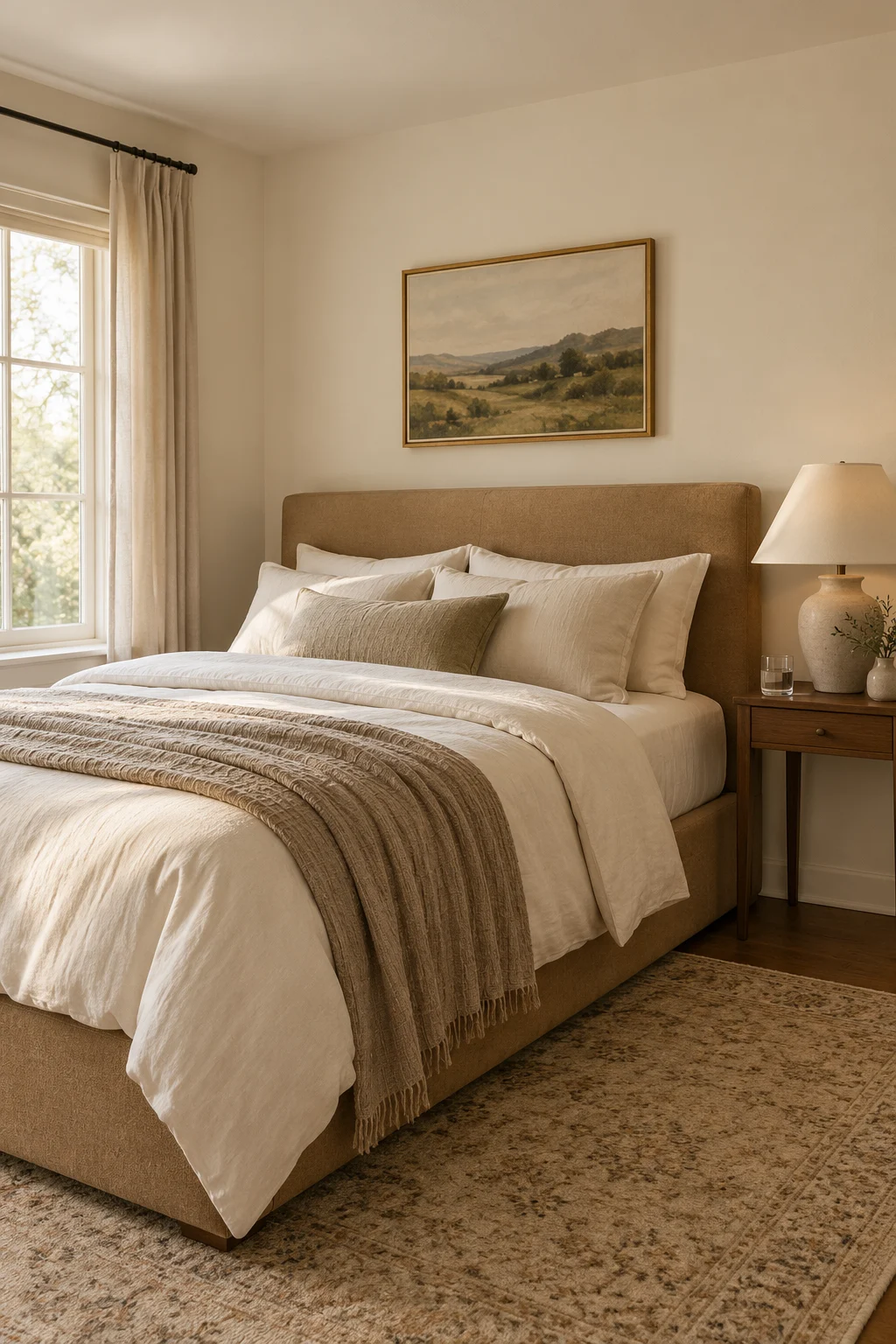
A narrow walnut side table with one drawer gives a compact bedroom a proper landing spot without crowding the bed. Look for a top wide enough for a lamp and a water glass, then keep the drawer for charging cables, reading glasses, and other little things that rarely look tidy in the open. A simple rectangular silhouette works especially well beside an upholstered headboard because it balances the soft fabric with clean wood grain. If the room has warm cream walls, a medium-walnut finish brings depth without making the corner feel dark. The main limitation is storage: one shallow drawer will not replace a dresser. Use a small divided tray inside so the few essentials you keep there stay easy to find.
2. Round Oak Pedestal Table
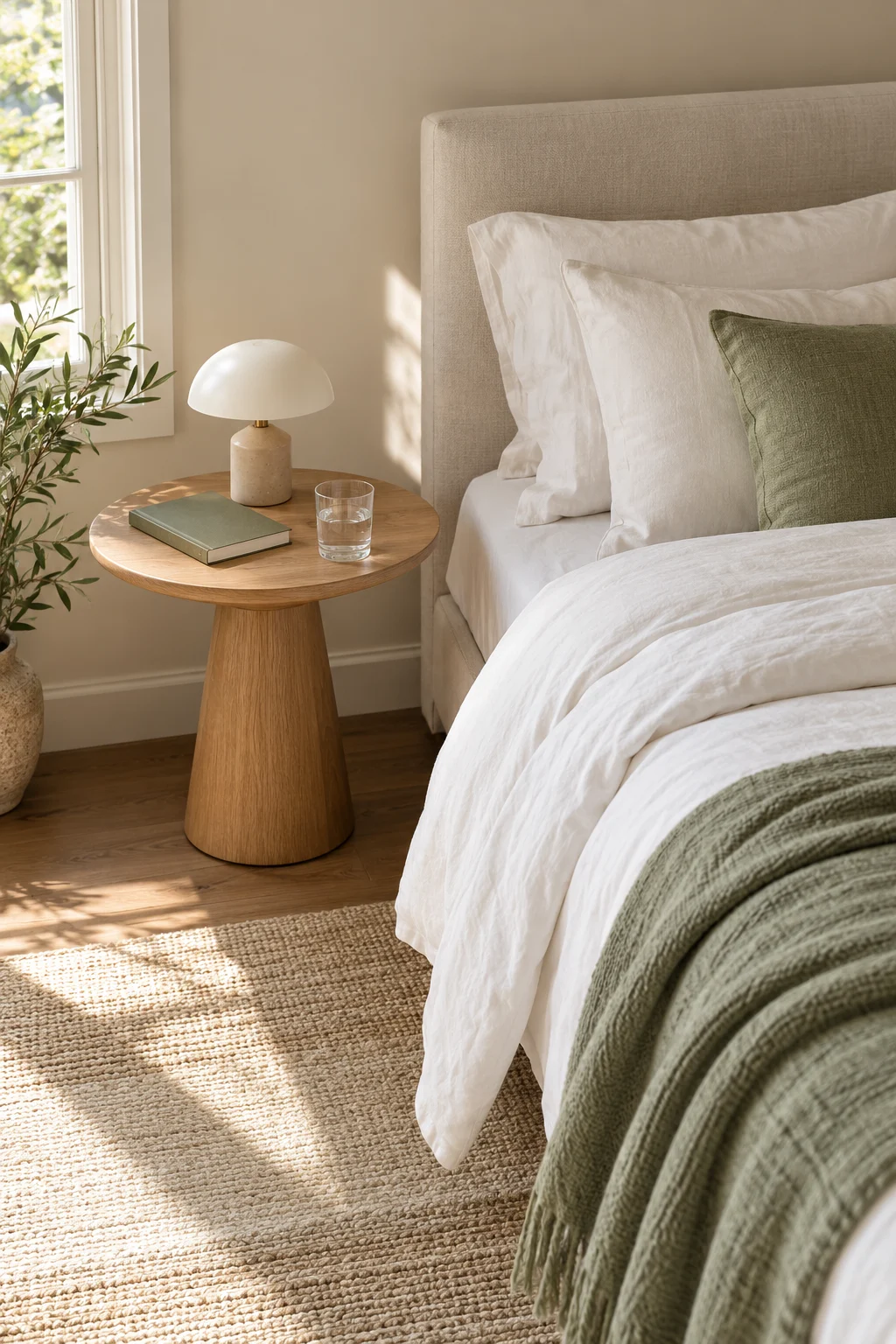
A round pedestal table is a gentle alternative to the boxy furniture often found beside a bed. Its curved edge is especially welcome when the walking route passes close to the mattress, and the single central support keeps the floor looking open. Pale oak gives this arrangement a relaxed character with white cotton bedding and a muted sage throw. Because the tabletop has no drawer or lower shelf, it works best for someone who needs only a book, a small lamp, and a glass at night. Keep the accessories deliberately sparse; a round surface fills up quickly when every object competes for the same center. A low-profile lamp helps preserve room for the things you actually reach for.
3. Painted Olive Vintage Nightstand
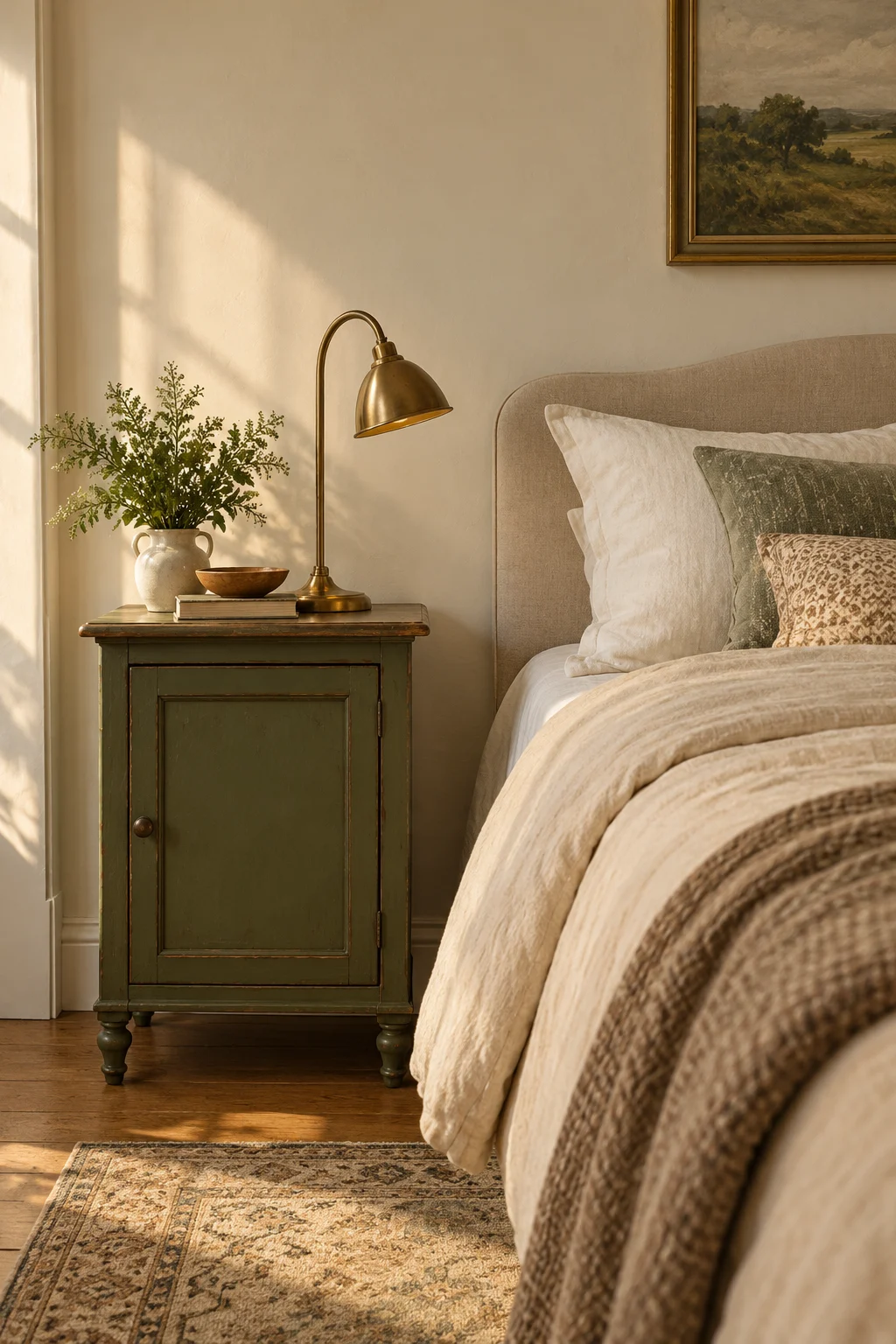
An older nightstand can become the most interesting piece in a quiet bedroom after a thoughtful coat of muted olive paint. A compact cabinet with a single door and slightly worn edges feels at home beside a brass-look reading lamp and oatmeal bedding. Clean the surface, prepare it according to the paint instructions, and let the finish cure before putting everyday objects back. The appeal is the contrast between a familiar furniture shape and a fresh, understated color. Keep the original knob if it is sound, or swap it for a small dark bronze pull. Painted pieces may show scuffs more readily at frequently touched corners, so a durable furniture finish matters more than a perfectly smooth showroom appearance.
4. Floating Shelf Beside the Bed
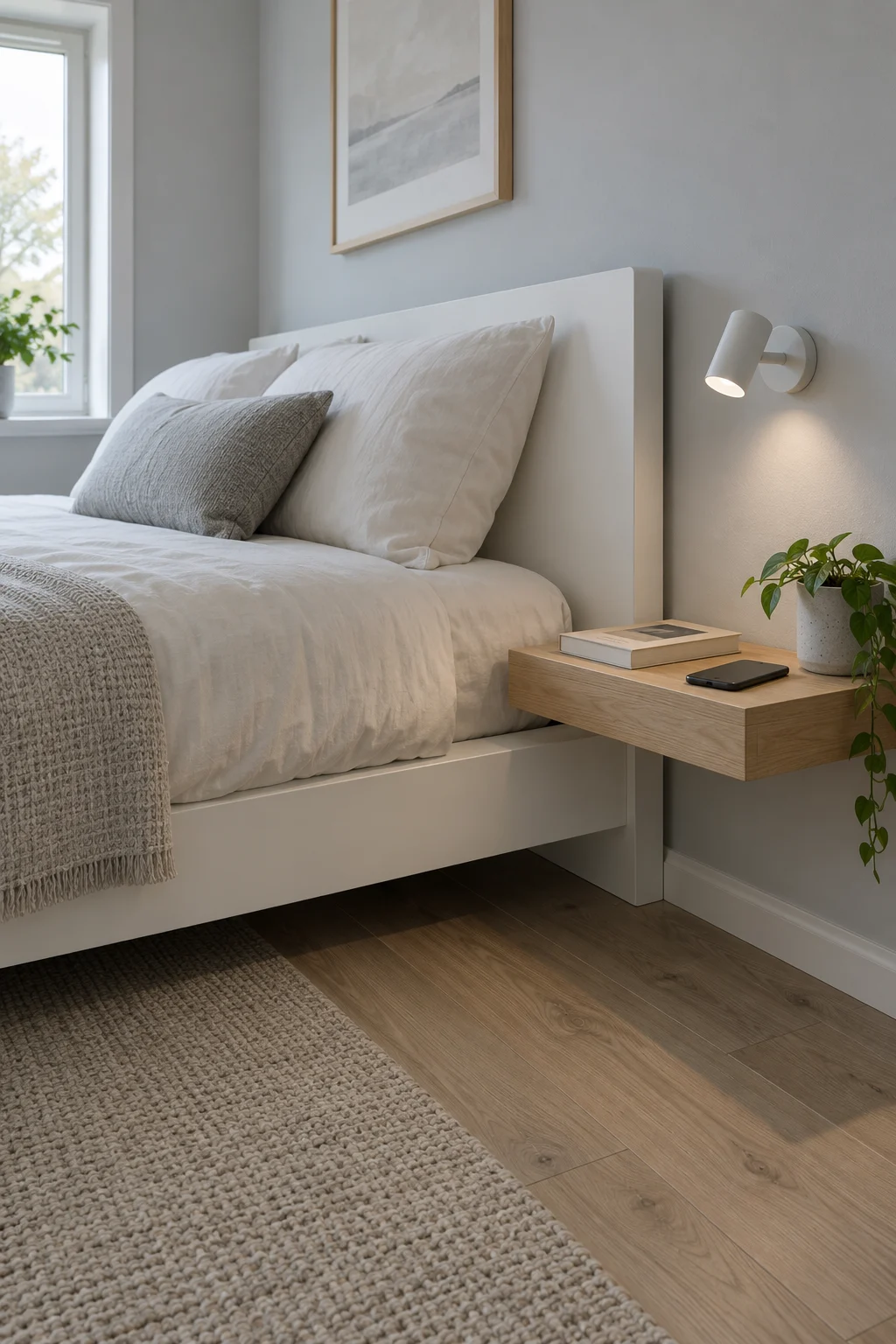
A floating bedside shelf makes sense when the bedroom is too narrow for even a petite table. A simple wood ledge can hold a phone, a paperback, and a compact light while leaving the floor clear for cleaning. It looks particularly crisp next to a white platform bed and a pale gray wall. This option requires more planning than a freestanding piece: use hardware rated for the shelf and its expected load, and fasten it into suitable wall structure according to the manufacturer’s directions. A shallow lip can help keep small objects from sliding off. Because there is no hidden storage, this arrangement rewards a minimal nighttime routine. It is not the place for a heavy stack of books or an oversized lamp.
5. Two-Tier Black Metal Stand
For a bedroom with a little industrial edge, a two-tier black metal stand adds structure without becoming visually bulky. The upper surface can carry a task lamp and a ceramic cup, while the lower level accommodates a short stack of books or a woven box. Choose a design with a stable base and a finish that feels smooth to the touch, particularly if the table sits close to a frequently used walkway. Against warm taupe walls and rust-colored bedding, the black frame acts like punctuation rather than a dominant feature. Open shelves reveal everything, which is both their charm and their drawback. Keeping one contained group on the bottom tier will make the piece feel intentional instead of like temporary overflow storage.

6. Cane-Front Storage Cabinet
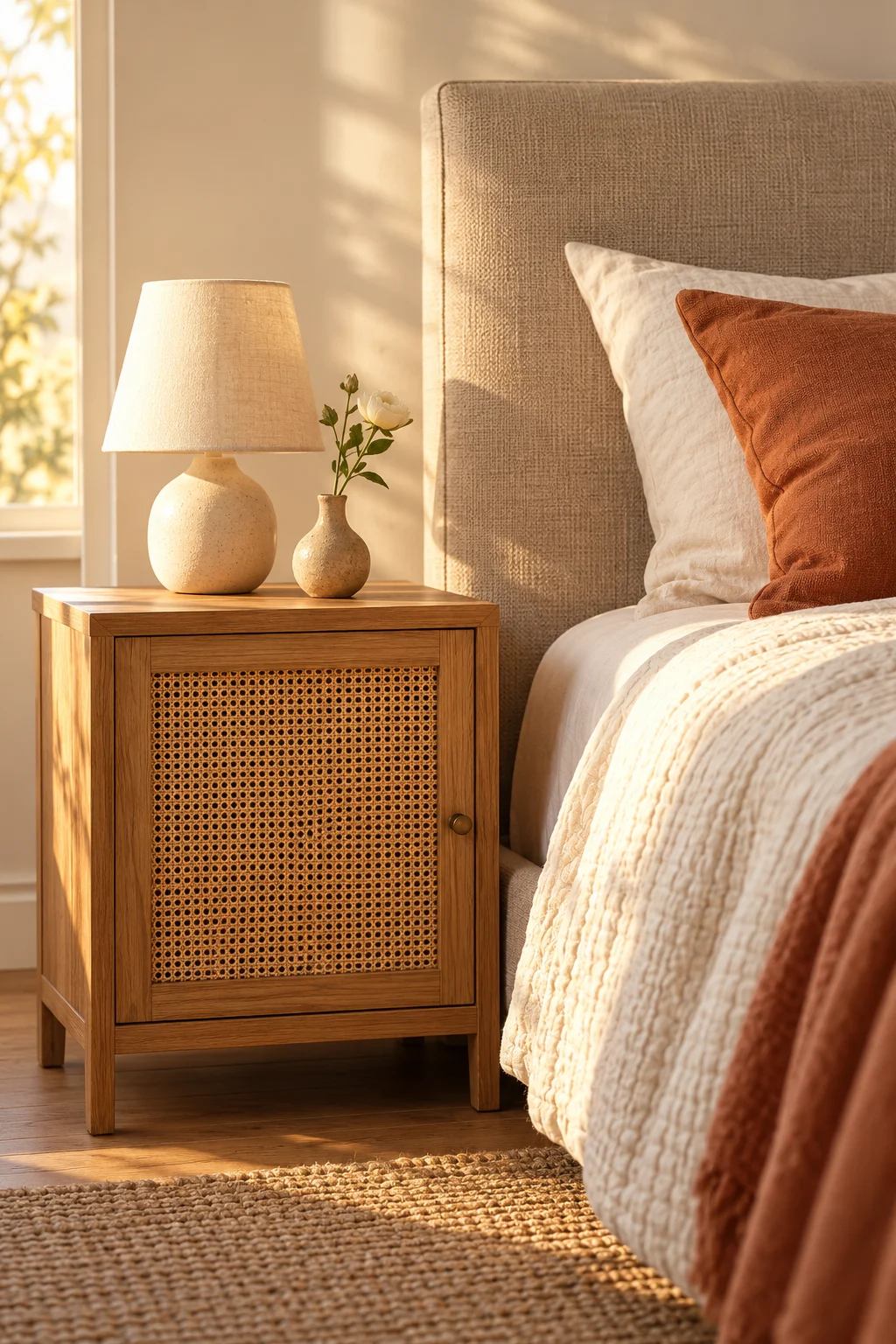
A small cabinet with a woven cane front brings tactile warmth to a bedroom where most surfaces are painted or upholstered. The woven panel breaks up a solid block of furniture, while the enclosed compartment keeps spare tissues, a notebook, and chargers out of sight. Natural cane pairs beautifully with a sandy headboard, creamy bedding, and a restrained terracotta cushion. A simple wood frame will feel more timeless than an ornate carved outline. Cane can catch dust in its weave, so plan on gently cleaning it with a soft brush rather than soaking the panel. This is a good choice when you want the bedside to look light but still need practical storage behind a door. Keep the top arrangement modest so the texture remains the star.
7. Compact Table With Built-In Outlet
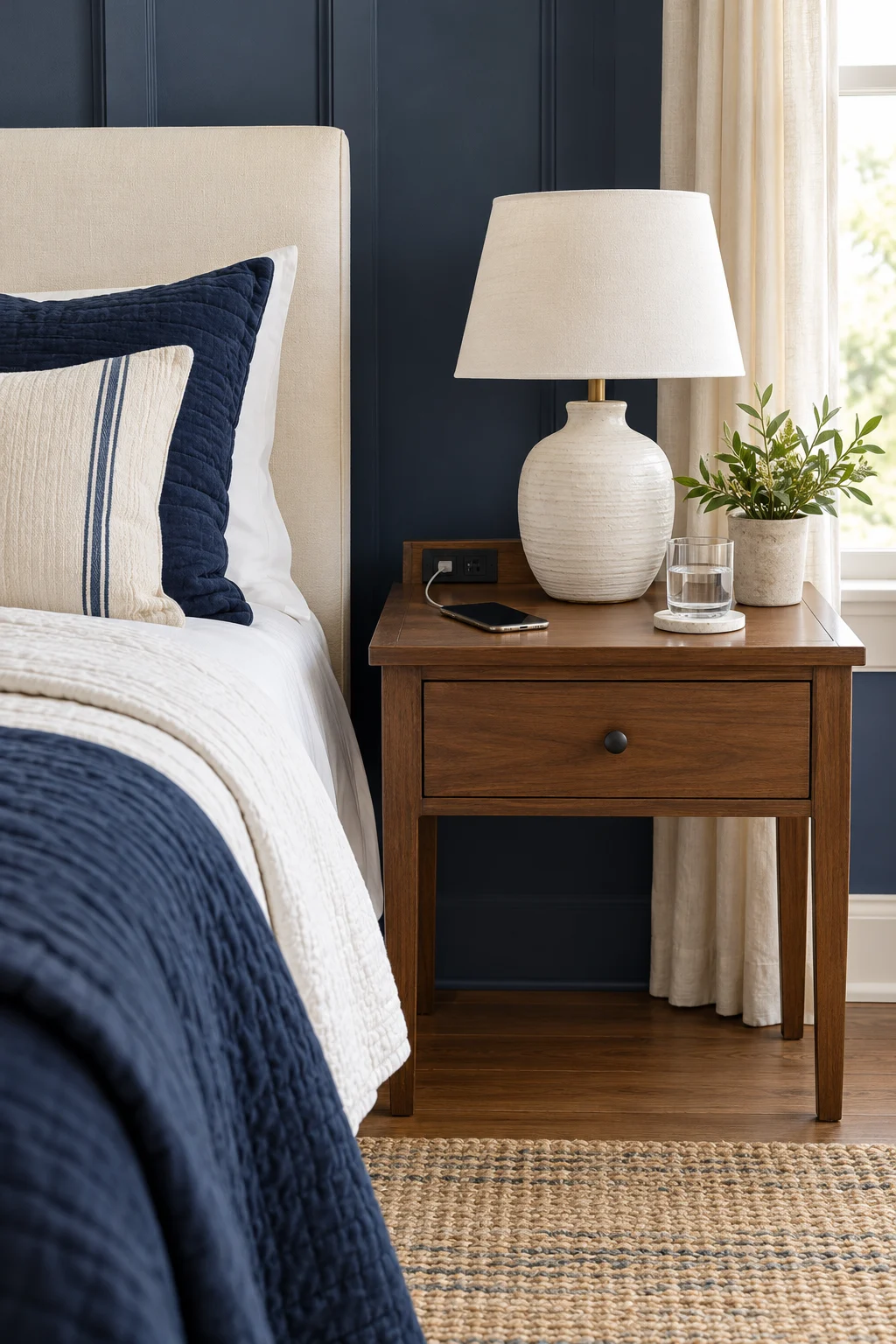
A bedside table with a built-in power outlet can simplify a room where the nearest wall receptacle is inconveniently placed. Look for a model with a discreet power module, enough clearance around its ports, and a cord that can run neatly to a suitable outlet without crossing a walkway. The table itself can remain traditional: a medium-brown wood top, one drawer, and simple square legs suit a navy-and-cream bedroom. Keep drinks away from the electrical section, and follow the product’s instructions rather than daisy-chaining adapters or power strips. The convenience is real, but it also makes cable management more visible. A small clip behind the table can keep the charging lead from slipping to the floor each morning.
8. Softly Upholstered Bedside Cube
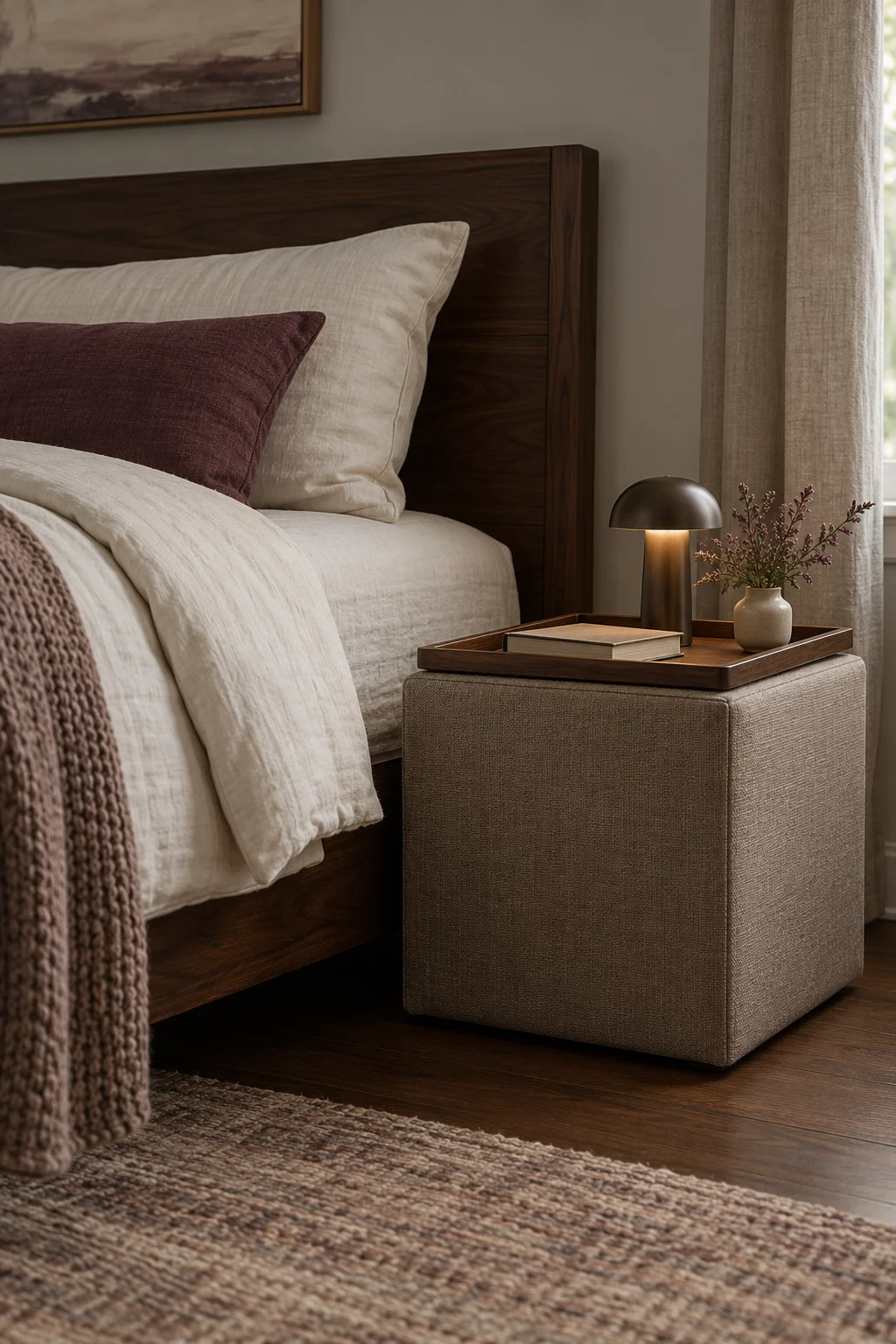
A fabric-covered bedside cube softens a room full of straight lines and hard materials. In a bedroom with a dark walnut bed, ivory bedding, and a muted plum accent pillow, a small mushroom-colored upholstered cube can create a cozy contrast. Choose a purpose-built table with a firm, level top rather than placing a lamp on a soft ottoman that might tip or compress. A removable tray provides a stable surface for lightweight everyday objects and makes it easier to wipe up small spills. This style is better for decorative simplicity than serious storage, and fabric can collect dust or stains faster than sealed wood. It is particularly appealing when you want the bedside piece to feel like part of the room’s textile palette.
9. Nesting Tables for Flexible Space
A pair of nesting side tables is useful when the bedside occasionally needs more room than usual. Keep the smaller table tucked under the larger one most nights, then slide it out for a cup of tea or a second book during a slow weekend morning. Thin walnut tops on slender aged-brass-look legs make the set feel airy beside a pale blush quilt. Check that the two pieces slide without catching and that each stands securely on the floor. The arrangement does not provide concealed storage, and pulling out the second table temporarily occupies more floor area. For someone who values flexibility over drawers, though, it creates an adaptable surface without committing to a permanently wide nightstand.
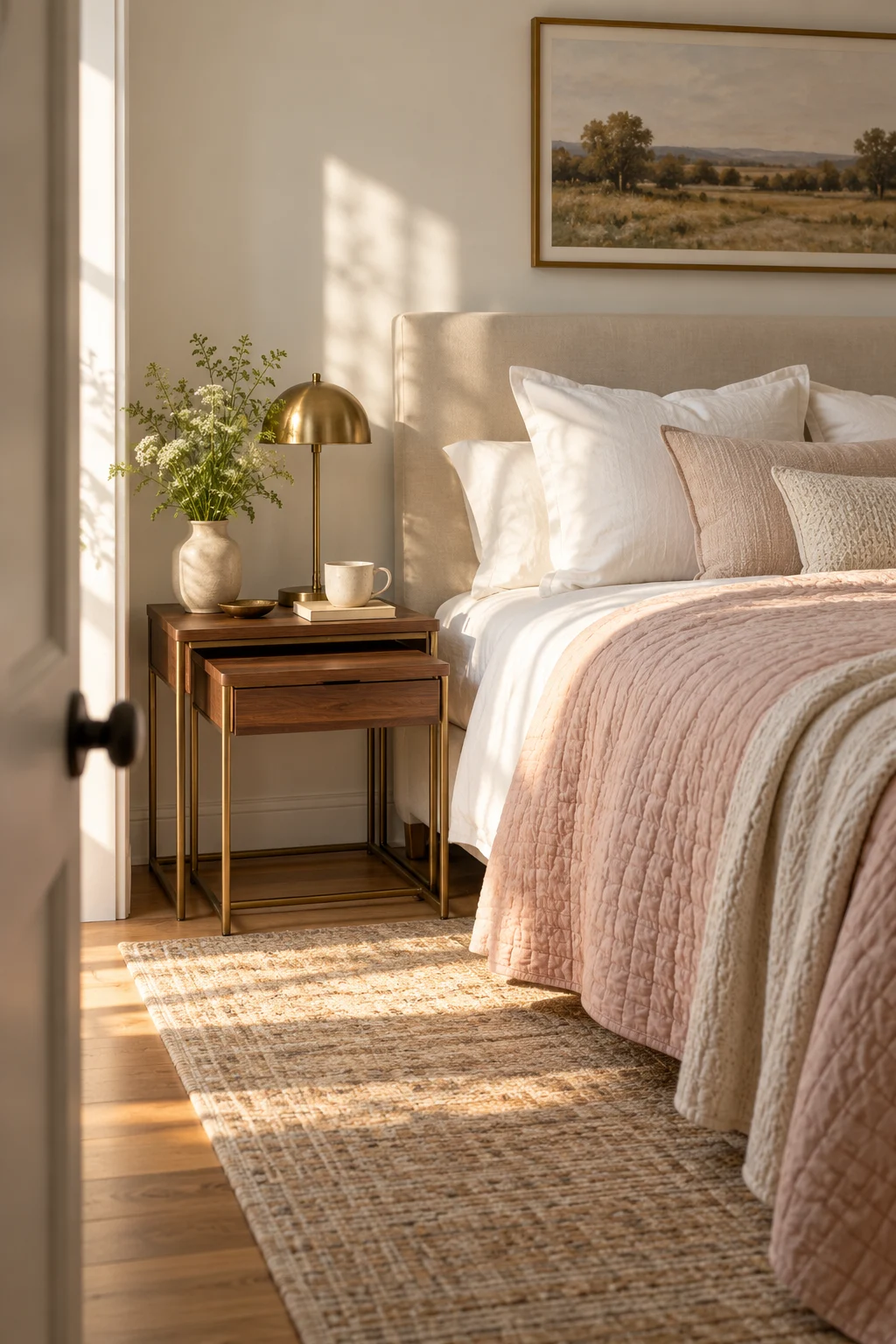
10. White Shaker Nightstand With Drawers
A white Shaker-style nightstand with two drawers is a dependable choice for a bedroom that needs more function than visual drama. Its recessed drawer fronts and simple knobs sit comfortably beside striped cotton bedding and a painted blue-gray bed frame. The upper drawer can hold nighttime necessities, while the lower one takes bulkier items such as a journal or spare sleep mask. White furniture makes dust and marks easier to notice, but the surface is usually straightforward to wipe clean when finished appropriately. To keep the room from feeling overly matched, introduce a warm wood picture frame or a ceramic lamp in a gentle earthy tone. The result feels familiar, organized, and easy to adapt when bedding colors change.
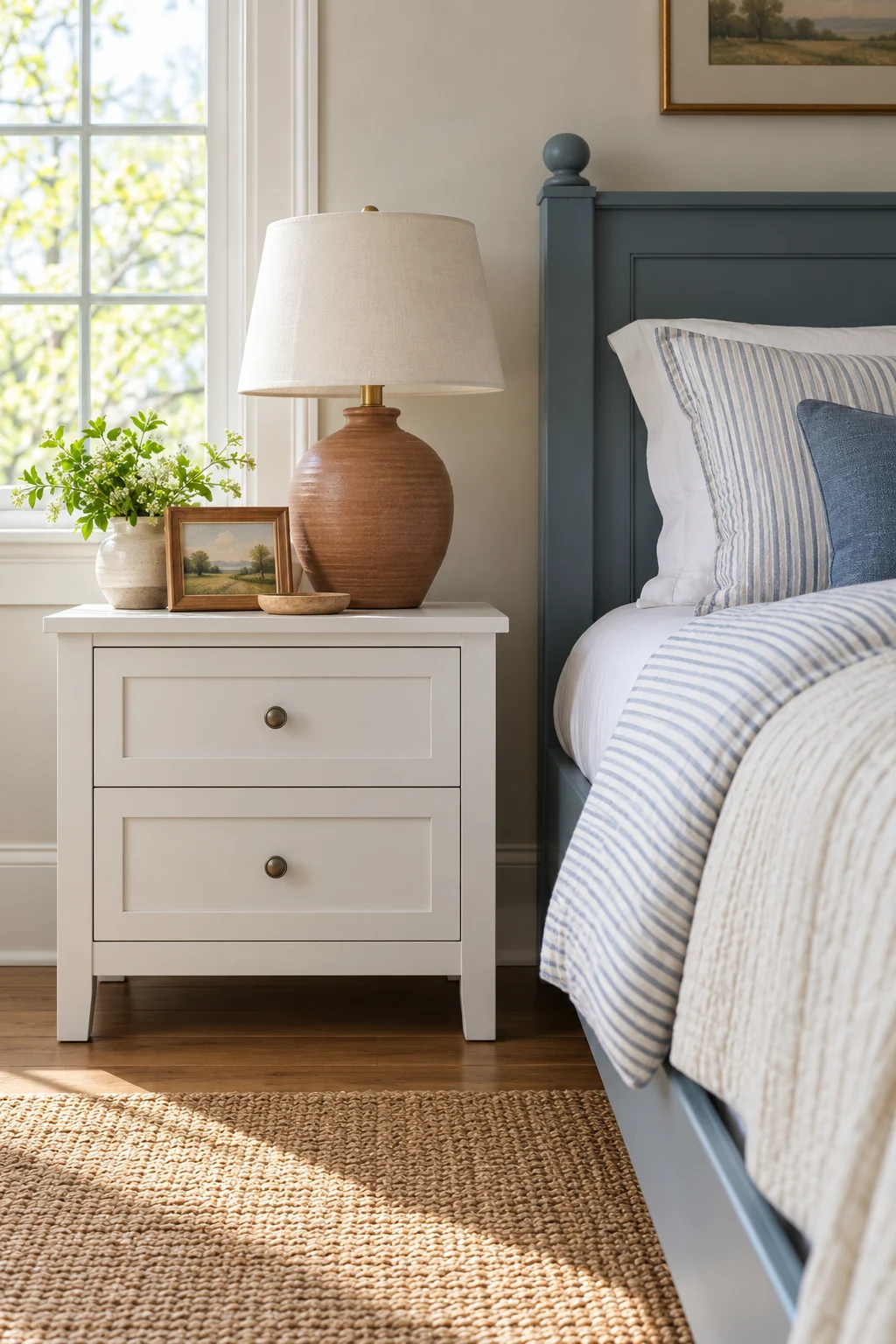
11. Stone-Look Drum Accent Table
A stone-look drum table adds a sculptural note to a bedroom without the weight or cost that a solid stone piece might bring. A lightweight composite or sealed plaster-look design in warm limestone beige works beside charcoal bedding and a pale oak headboard. The rounded shape makes the table feel almost architectural, especially when the rest of the room is restrained. Because many drum tables have no drawers, think of this as a surface for a book, a water glass, and a small lamp rather than a storage solution. Verify that the finish tolerates occasional moisture and use a coaster if needed. A heavy-looking silhouette can overwhelm a narrow bedside gap, so give it enough breathing room to be appreciated.
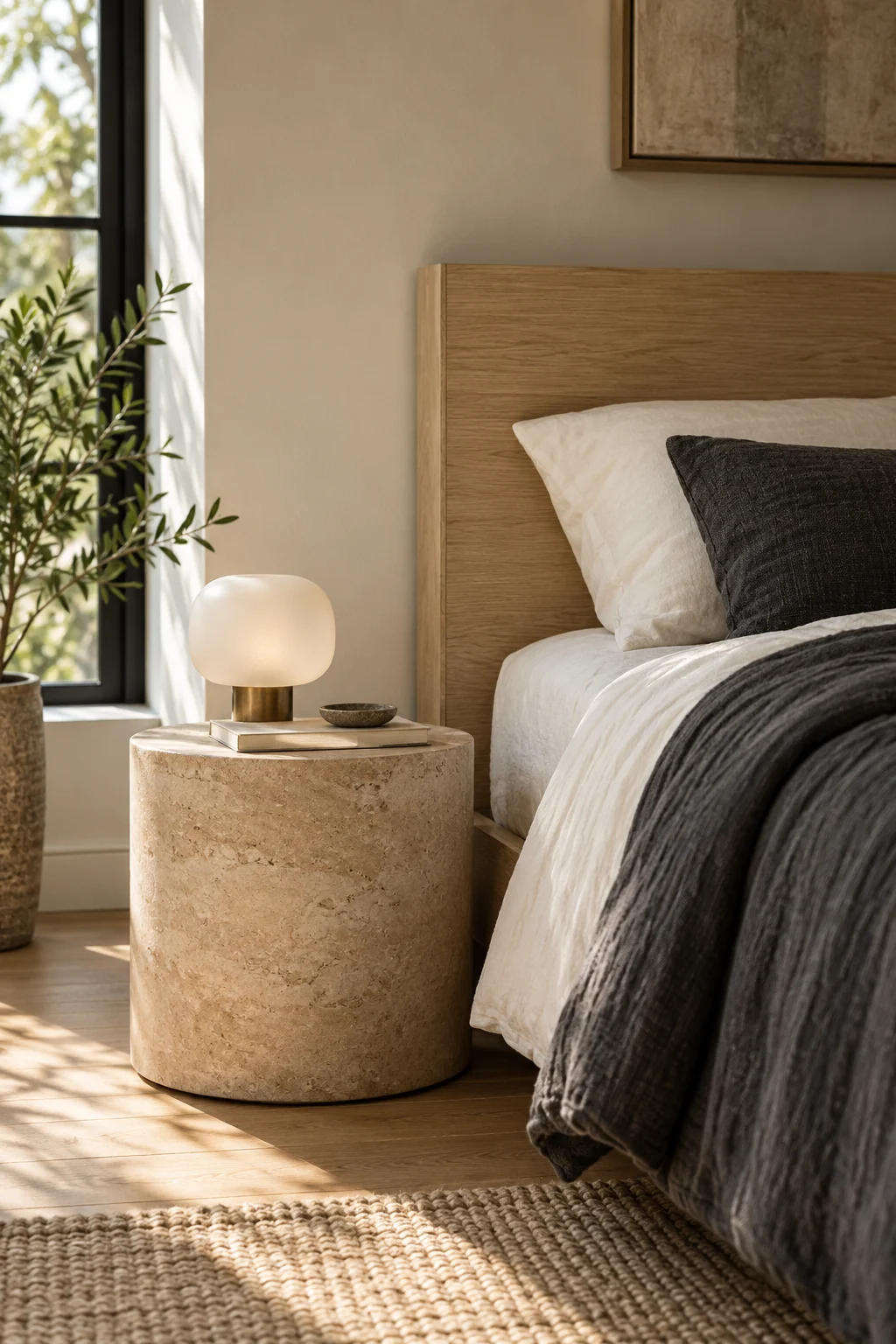
12. Bamboo Shelf Table for Casual Bedrooms
A bamboo bedside table with an open lower shelf brings a relaxed, practical quality to a simple bedroom. Its warm golden tone works well with a soft sky-blue duvet, off-white walls, and a woven floor rug. Use the top for a lamp and a small tray, and reserve the lower shelf for one basket of bedtime essentials. Bamboo pieces vary in construction, so inspect the joints and choose a stable design intended for furniture use. The open shelf makes it easy to retrieve things, but a crowded basket can quickly make the whole corner look busy. This is a good fit for a guest room or a casual everyday space where you want a natural material without the formality of dark stained wood.
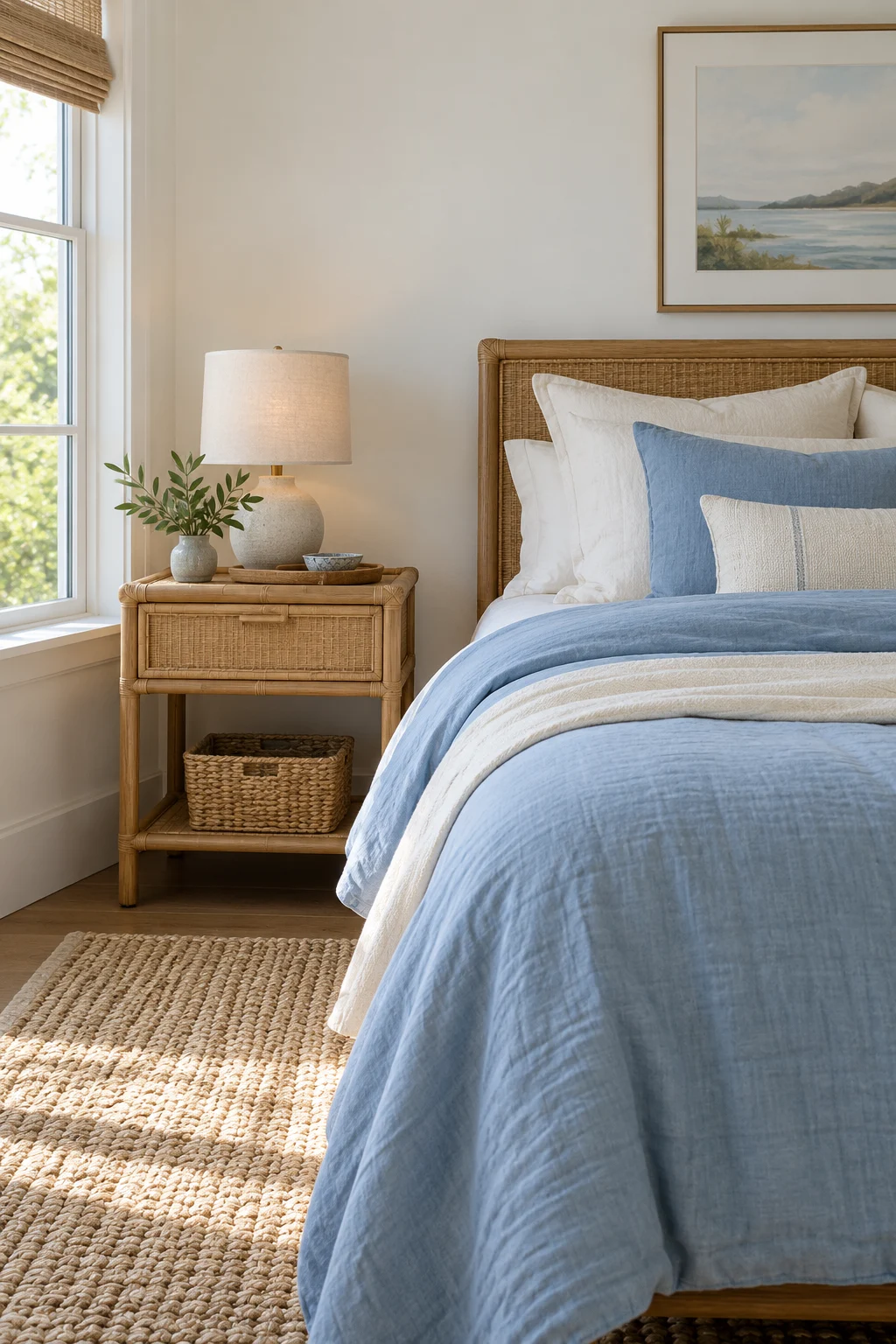
13. Tall Narrow Cabinet for High Beds
A higher bed can make an ordinary low nightstand awkward to reach. A tall, narrow bedside cabinet solves that problem while using a relatively small footprint. Try a slender smoked-oak piece with a shallow top drawer and a closed compartment beneath, paired with a deep teal quilt and crisp ivory pillowcases. The extra height gives you a comfortable place to set down glasses without leaning far over the mattress. Keep its proportions in mind: a very tall, skinny cabinet needs a sound, stable design and any manufacturer-recommended anchoring. This option can look a little formal next to a low modern bed, so it is most convincing beside a mattress and frame that sit visibly higher off the floor.

14. Mirrored Nightstand With Simple Hardware
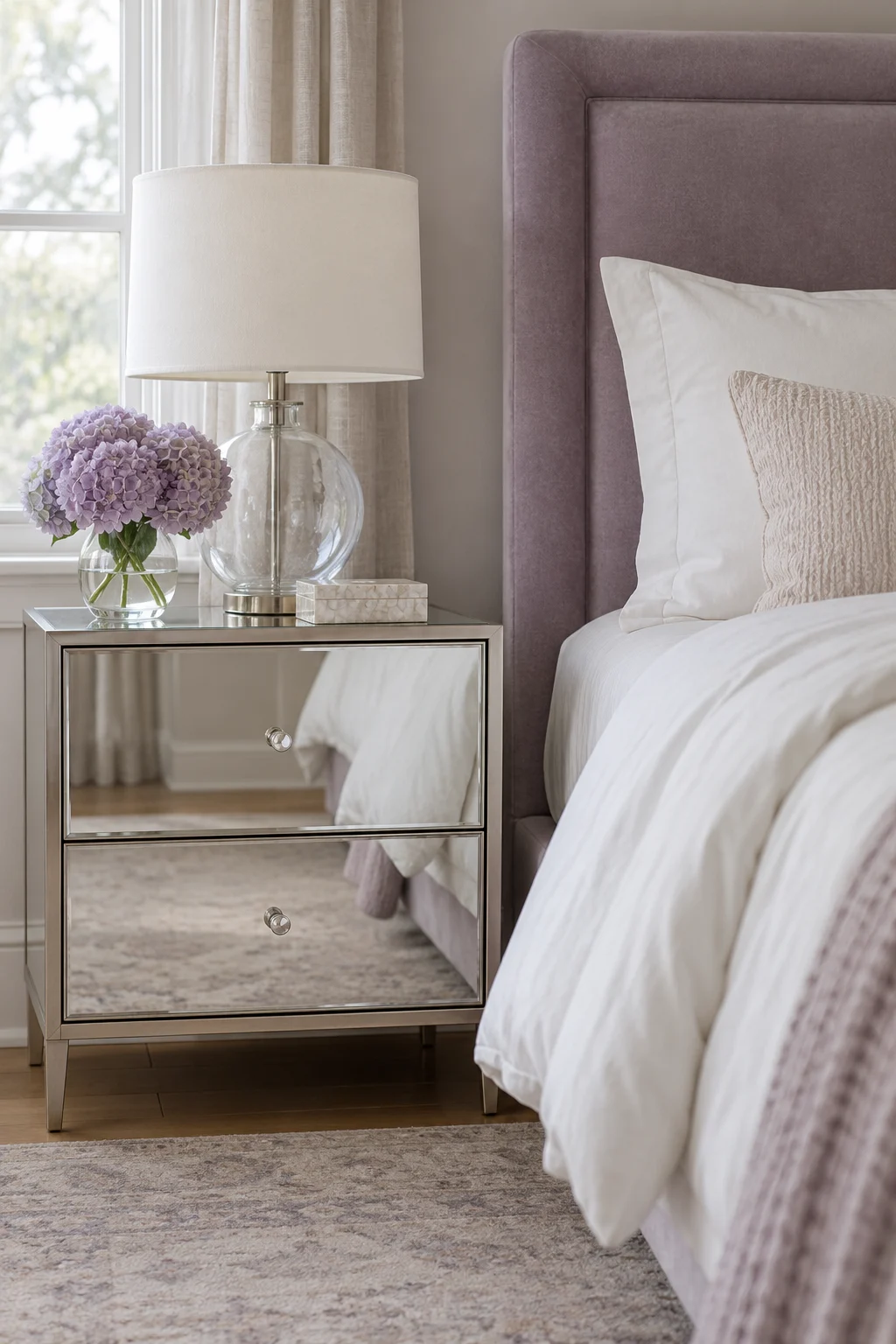
A mirrored nightstand can brighten a bedroom that receives limited daylight, but it works best when the design is restrained. Choose flat mirrored drawer fronts, a simple frame, and small understated pulls rather than elaborate faceted details. Beside a dusty lavender headboard and soft white duvet, the reflective surface adds a quiet glimmer without turning the room into a dressing area. Fingerprints will show, so keep a suitable glass-cleaning cloth handy and avoid placing wet objects directly on the surface. The reflection can also emphasize clutter elsewhere in the room, which is a reason to keep nearby accessories simple. One mirrored piece is often enough; matching every furniture surface can make a small bedroom feel visually restless.
15. Rustic Reclaimed-Wood Bedside Stool
A sturdy reclaimed-wood stool can serve as an informal bedside table in a room with rustic character. Look for a broad, level seat, sound legs, and a smooth finish that will not snag bedding or clothing. Its irregular grain and weathered brown color sit naturally beside a cream patchwork quilt and a muted forest-green wall. Because the stool has no drawers, it is best for a small reading lamp and a single book. Avoid using a damaged or wobbly vintage stool simply because its patina is attractive; the structure still needs to be dependable. This approach works particularly well in a guest bedroom where a full storage nightstand is unnecessary and the furniture can feel a little more collected.

16. Wall-Hung Drawer With Hidden Storage
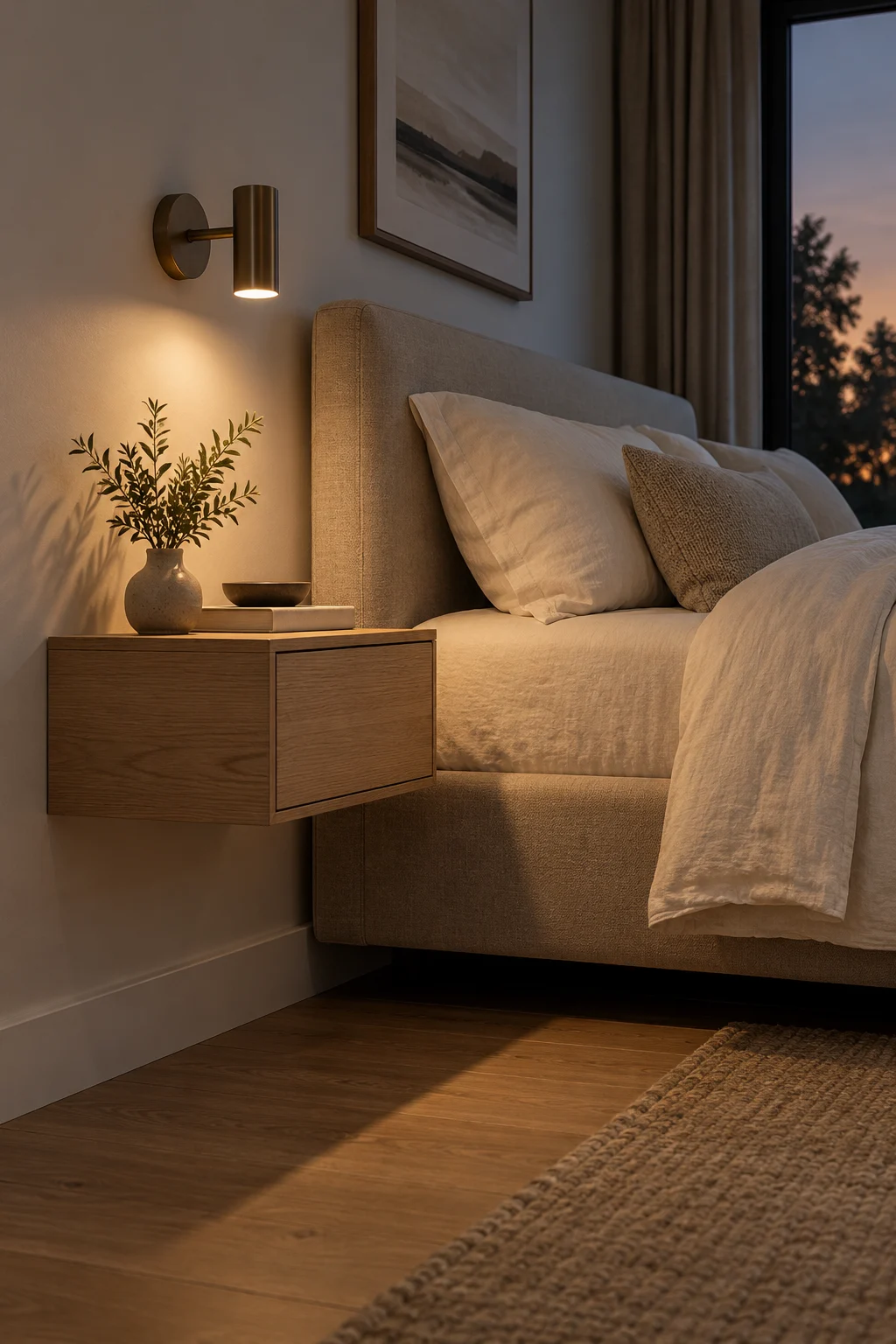
A wall-hung bedside drawer gives a bedroom a streamlined look while still hiding the things that tend to accumulate beside a pillow. A compact ash-wood box with one handleless drawer can sit beside a warm greige bed, with a small reading sconce above it. The space beneath stays visually open, making the furniture feel lighter than a traditional cabinet. Installation matters: follow the mounting system’s load limits and use appropriate structural fixing points, particularly because drawers are pulled outward repeatedly. Keep the drawer contents light and organized. The clean design is appealing, but it cannot be moved around the room as easily as a freestanding table. It suits a bedroom layout you expect to keep for a while.
How to Choose Bedroom Side Tables That Fit Your Routine
Start with the habits you repeat at night, not with a furniture style you saw in a beautiful room. If you read in bed, you need enough space for a light and your current book. If you wear glasses or use a sleep mask, a drawer may be more useful than an extra decorative shelf. Think about whether you reach for a drink, charge a device, or keep medication nearby, and plan a safe, consistent place for those essentials. Bedroom side table ideas work best when the surface supports these small routines without requiring a daily reshuffle. You can still choose a distinctive shape or material, but let function narrow the choices first. A bedside corner that works naturally every evening usually feels more restful than one arranged only for appearance.
Get the Height and Reach Right
Bedside furniture should feel easy to reach while you are sitting or lying in bed. A practical starting point is a tabletop near the height of the mattress surface, although the ideal position depends on your frame, mattress, and how you sit up. Check the height of the actual sleeping surface after the bed is made rather than relying only on a frame’s listed dimensions. You should not need to twist your shoulder or lean precariously to pick up a glass. Leave enough room for drawers and cabinet doors to operate without striking the bed frame. In a very tight room, test the path between the bed and nearby furniture with the doors fully open. A few minutes of planning can prevent a bedside piece from becoming an everyday annoyance.
Set a Sensible Budget Without Sacrificing Quality
Bedside furniture prices vary widely by material, construction, and finish. Before shopping, decide which qualities deserve the most of your budget. A frequently used drawer benefits from smooth runners and solid joinery; a simple accent table may not need complicated hardware at all. Secondhand furniture can be excellent value if the frame is sound and the surface can be cleaned or refinished safely. Factor in any extra expense for delivery, paint, replacement pulls, or wall-mounting hardware. Buying two identical pieces is not always necessary, especially if only one side of the bed needs substantial storage. Spend on stability and usability before decorative details. A modest piece that stays functional for years is more satisfying than an eye-catching table that constantly needs adjustment.
Coordinate Materials Without Matching Everything
A bedroom can feel cohesive even when the bedside tables do not match the bed frame. Look for one or two relationships that tie the pieces together: a repeated wood undertone, a metal finish echoed in a lamp, or a color drawn from the bedding. A walnut table beside an oak bed can work when both woods share a warm character. Conversely, deliberate contrast can help a dark bed feel less heavy. Consider the texture of nearby curtains, rugs, and headboard upholstery, too. If those surfaces are already busy, a quieter table often creates better balance. Avoid trying to repeat every finish throughout the room. The goal is a set of materials that looks considered while leaving space for the bedroom to evolve with your tastes.
Keep Cords, Lamps, and Essentials Under Control
A good bedside setup has to function safely after the decorative styling is done. Position lamps so they cannot be knocked off during sleep or when reaching across the table. Route electrical cords away from foot traffic and keep them free from pinching behind furniture. Follow the instructions for powered furniture and charging accessories, and avoid covering adapters with fabric. Battery lights can be helpful where an outlet is awkward, provided they are used and maintained according to their instructions. A small catchall tray can stop tiny items from wandering across the tabletop, while a drawer divider keeps frequently used objects in predictable places. Leave a clear patch of surface for putting something down unexpectedly. That little bit of empty space is often the most practical part of the design.
Clean and Maintain Different Table Finishes
Maintenance depends on what the table is made from, so follow the care instructions for its finish. Sealed wood generally benefits from a soft cloth and prompt cleanup of spills; abrasive cleaners can dull some coatings. Painted furniture may need gentler handling around corners and knobs. Mirrored surfaces show fingerprints quickly, while cane and woven details collect dust in small openings. Metal furniture can be wiped regularly and checked for loose fasteners. Upholstered pieces need attention to their fabric care label, especially if a drink is occasionally placed nearby. Coasters and small trays are inexpensive ways to protect a favorite surface without hiding its character. Periodically clear everything off the table, wipe it properly, and return only what you use. This simple habit helps the bedside stay both attractive and functional.
Frequently Asked Questions
Do both sides of the bed need matching tables?
No. Matching tables create symmetry, but different pieces can work well when their heights and visual weight feel balanced. One person might need drawers while the other prefers a simple open stand. Repeating a lamp finish or color can connect them without requiring identical furniture.
What is best for a very small bedroom?
A shallow floating shelf, narrow drawer table, or compact pedestal design can preserve precious floor space. Prioritize safe access to the bed and door before choosing a shape. If you need storage, one small drawer may be more helpful than several exposed shelves.
Can I use a stool as a nightstand?
Yes, if it is sturdy, level, and suitable for the items you intend to place on it. A stool usually works better for a book and compact lamp than for heavy objects or large stacks. Check that the legs are stable and the surface is smooth.
How do I style a bedside table without clutter?
Keep the objects you reach for daily, then add one small decorative accent if there is space. A lamp, book, and tray often provide enough visual interest. Leave part of the top empty so you have room for a phone or water glass at night.
Conclusion
A bedside table does not have to be elaborate to make a bedroom feel more complete. The right shape, useful storage, and a surface that suits your daily habits can do more than a complicated styling arrangement. Look at the space beside your bed as it is today, including the objects that regularly land there. Then identify the one function your current setup is missing and use it to guide your next furniture choice.
