
15 Anime Bedroom Ideas for a Creative and Personalized Space
You have a stack of favorite manga, a few prints you love, and a bedroom that still looks as though none of those interests belong there. The good news is that anime bedroom ideas do not require a wall-to-wall collection of posters or expensive custom furniture. A well-placed gallery, a thoughtfully styled shelf, or a distinctive color palette can make the room feel personal while preserving space to sleep, study, and unwind. The most successful rooms mix playful references with practical decisions about storage, lighting, and circulation. Whether your taste leans toward soft fantasy scenes, energetic cityscapes, or sleek science-fiction graphics, you can create a look that grows with your interests. These ideas offer different starting points, from simple weekend updates to more involved feature walls.
1. Build a Manga Gallery Above the Desk
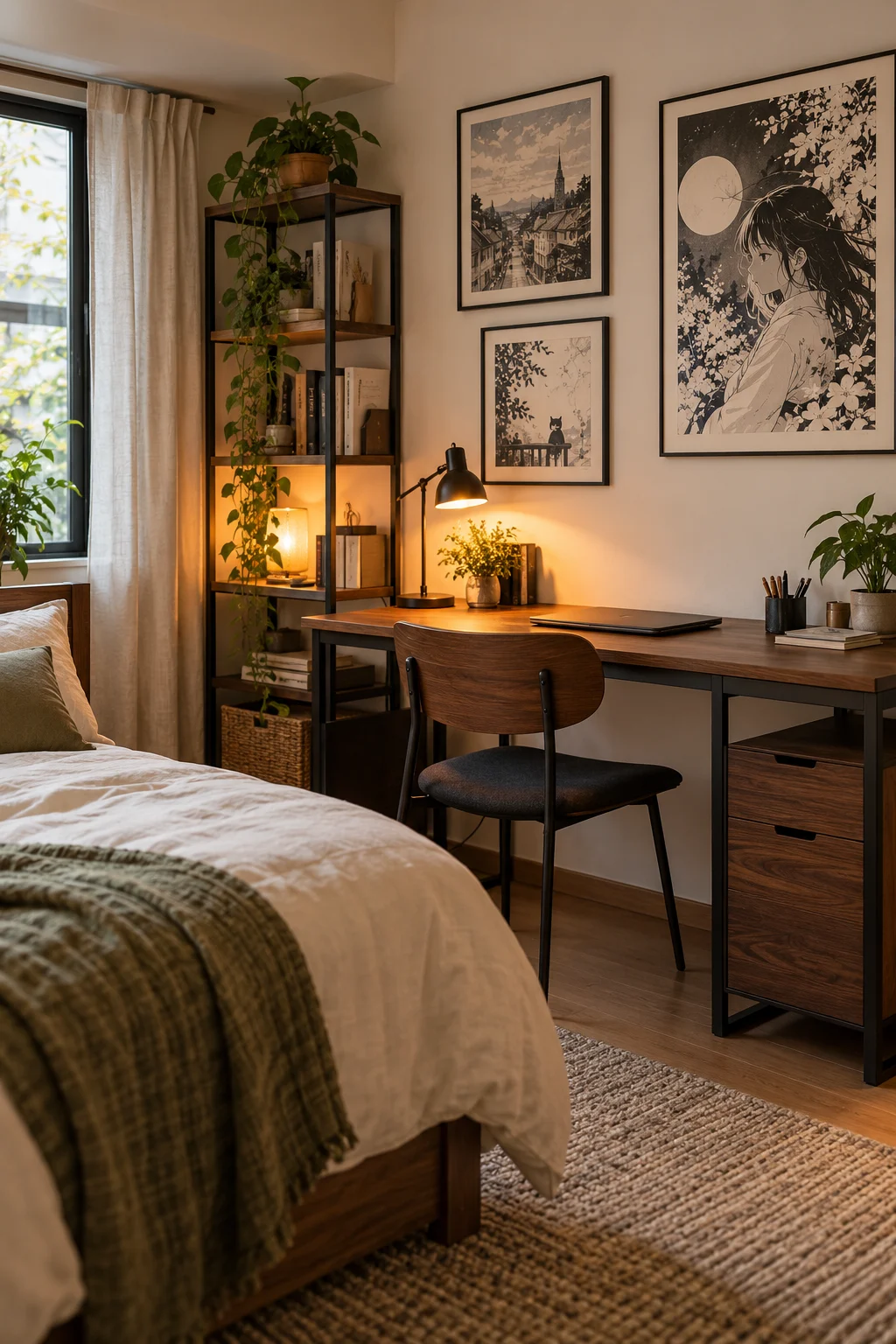
A manga-inspired gallery can make the study corner feel intentional without covering every wall. Arrange six to nine framed illustrations in a loose rectangle above a compact walnut desk. Use prints you own or artwork you have permission to display, and mix portrait panels with a few landscape compositions. Slim black frames keep the group connected even when the drawings vary in color. Leave a little breathing room around the monitor so the desk still works for homework, drawing, or gaming. A cream wall and muted charcoal desk accessories prevent the arrangement from becoming visually noisy. This approach suits renters who want personality through removable decor, although adhesive strips must be rated for the frame weight and wall finish. Rotate the artwork seasonally instead of adding more frames whenever a new favorite appears.
2. Style a Pastel Magical Girl Corner
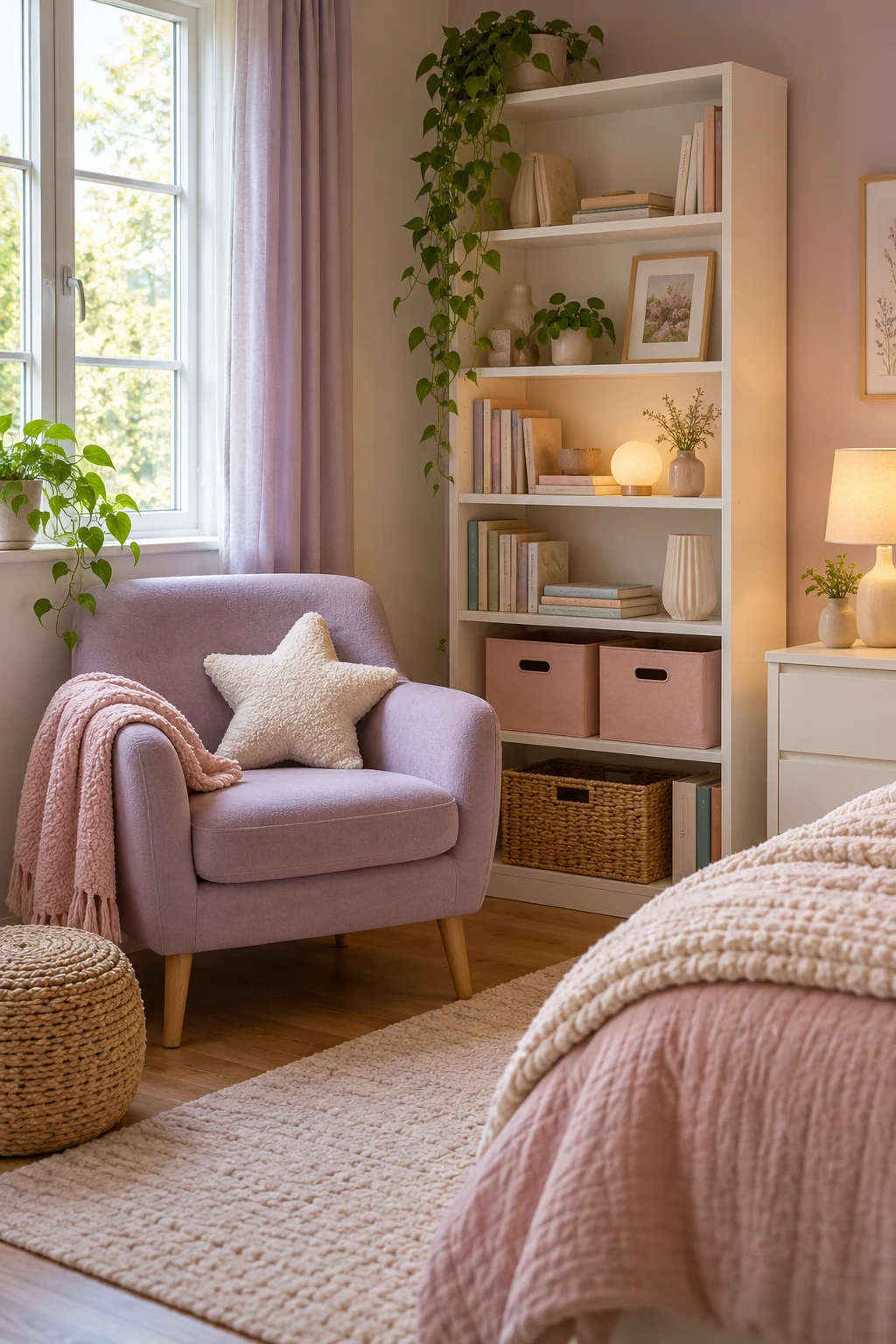
For a gentler anime-inspired look, give one bedroom corner a pastel treatment. Place a pale lilac accent chair beside a small white bookcase and style the shelves with pink storage boxes, a star-shaped cushion, and a few decorative figures. A lavender throw and warm table lamp create a reading spot that feels playful after dark. The key is keeping the pastel palette limited to this corner; the bed can remain dressed in simple ivory linens. This arrangement is especially appealing in a small bedroom shared with other interests because it creates a recognizable theme without demanding a complete makeover. Collectibles are easier to dust when displayed in small groups, not scattered across every shelf. Keep fragile pieces out of reach of younger children and pets.
3. Anchor the Bed With a Graphic Mural
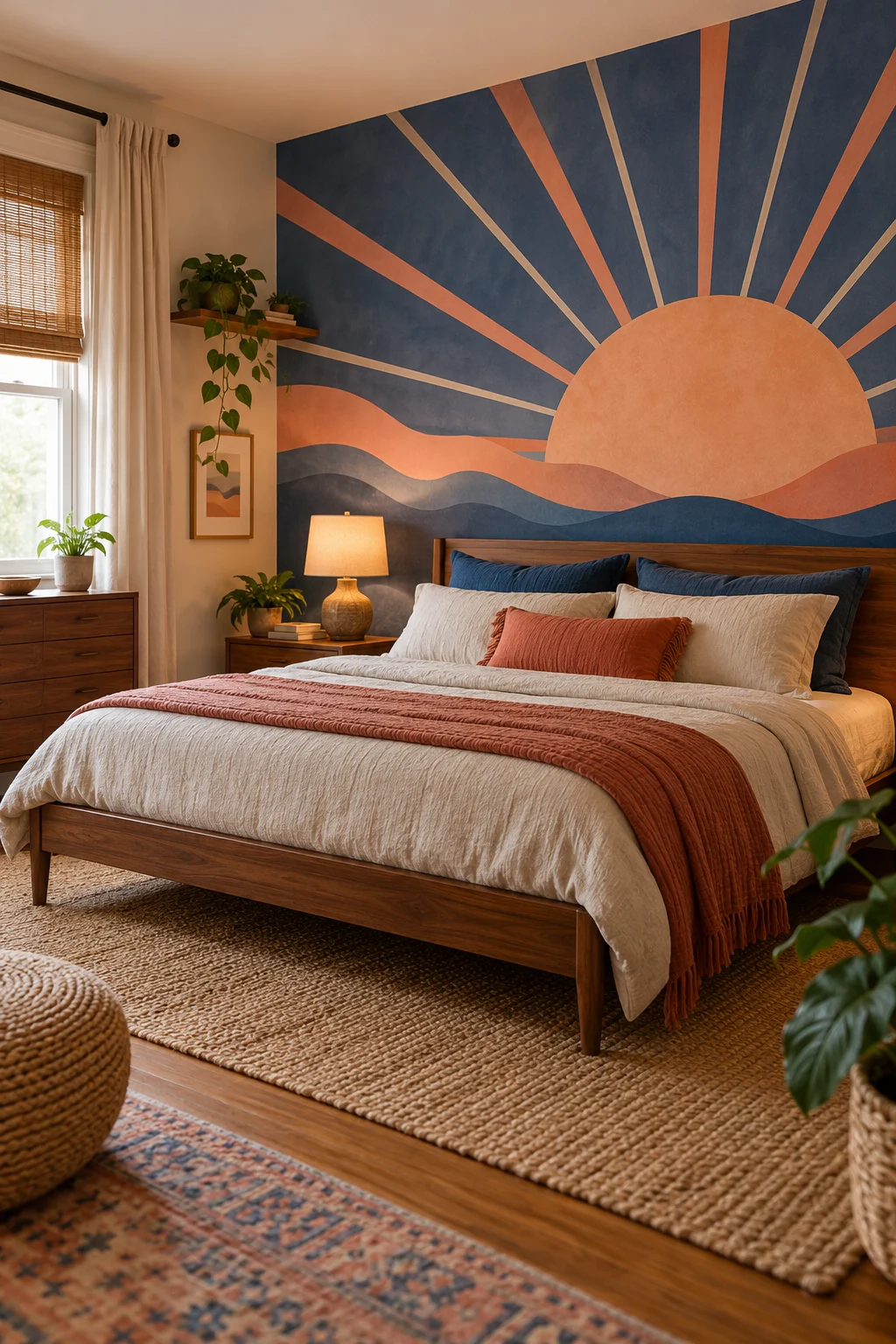
An original anime-inspired mural behind the headboard can be dramatic without relying on a recognizable character. Think sweeping speed lines, stylized clouds, or a bold sunrise rendered in deep indigo, warm apricot, and muted coral. Sketch the composition on paper first, then transfer a simplified outline with a level and painter’s tape. A low walnut bed and plain cream duvet let the artwork do the work. Painted walls are harder to reverse than posters, so test the colors on a small patch and consider removable wallpaper if you rent. Keep the busiest shapes above the headboard instead of around switches or outlets. The resulting feature wall looks deliberate from the doorway while leaving the rest of the room comfortable and quiet.
4. Display Figures in a Glass Cabinet
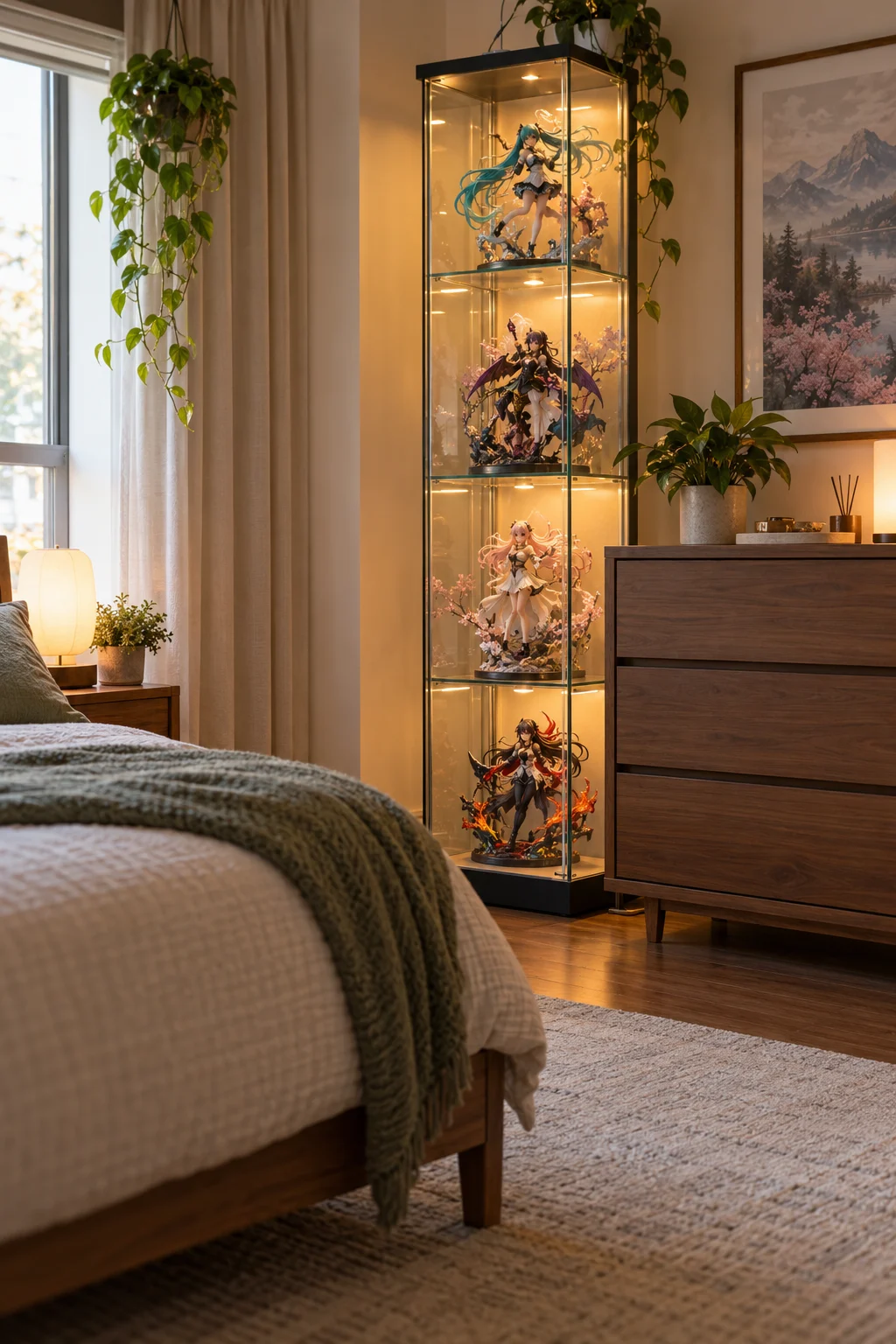
A narrow glass-front cabinet gives collectible figures their own place while protecting them from everyday dust. Choose a unit with adjustable shelves so tall and short pieces can stand without being crowded. Arrange figures by color or scene, with one larger piece at eye level and smaller accessories on lower shelves. Warm low-heat LED cabinet lighting makes the collection visible in the evening, but keep wiring tidy and follow the fixture instructions. This works well beside a dresser where a wide display would interrupt circulation. The cabinet should be anchored according to the manufacturer’s guidance, particularly in homes with children. Leave some empty shelf space for future additions; a display that is only two-thirds full often feels more curated than one packed edge to edge.
5. Try a Neon City Night Palette
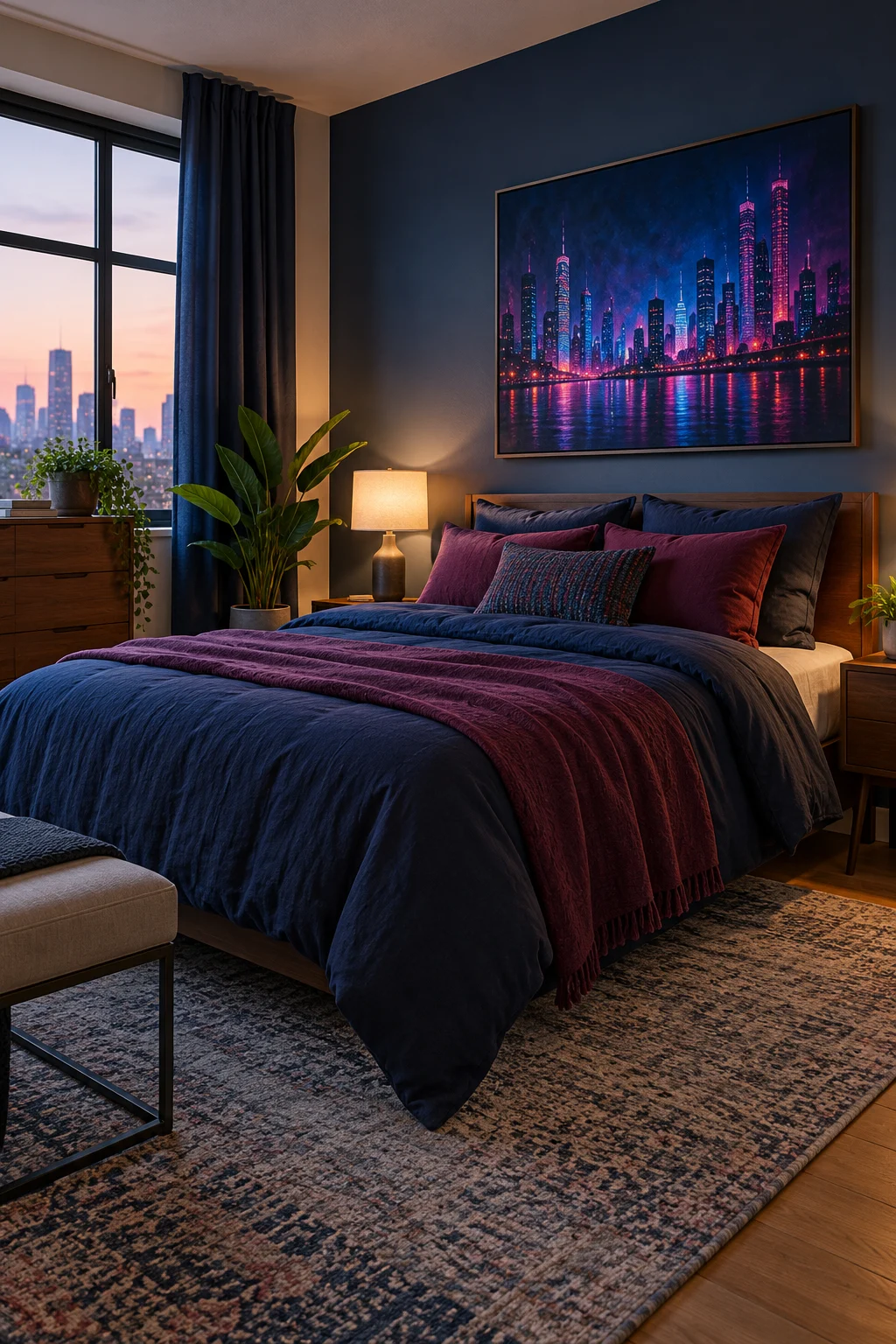
Borrow the atmosphere of an animated city at night through color rather than character merchandise. Paint a single wall smoky navy, add a plum duvet, and introduce small accents in electric blue and soft magenta. A framed original cityscape print above the bed creates a visual destination, while a dimmable bedside lamp keeps the room useful for reading. The brighter shades should appear in small doses, such as one cushion or a desk mat. Too much saturated color can make a compact bedroom feel busy, particularly when the room already holds a computer setup. Blackout curtains help the palette look rich in daylight as well as after sunset. Keep any decorative light strips away from bedding and route their cables neatly.
6. Create a Cozy Anime Reading Nook
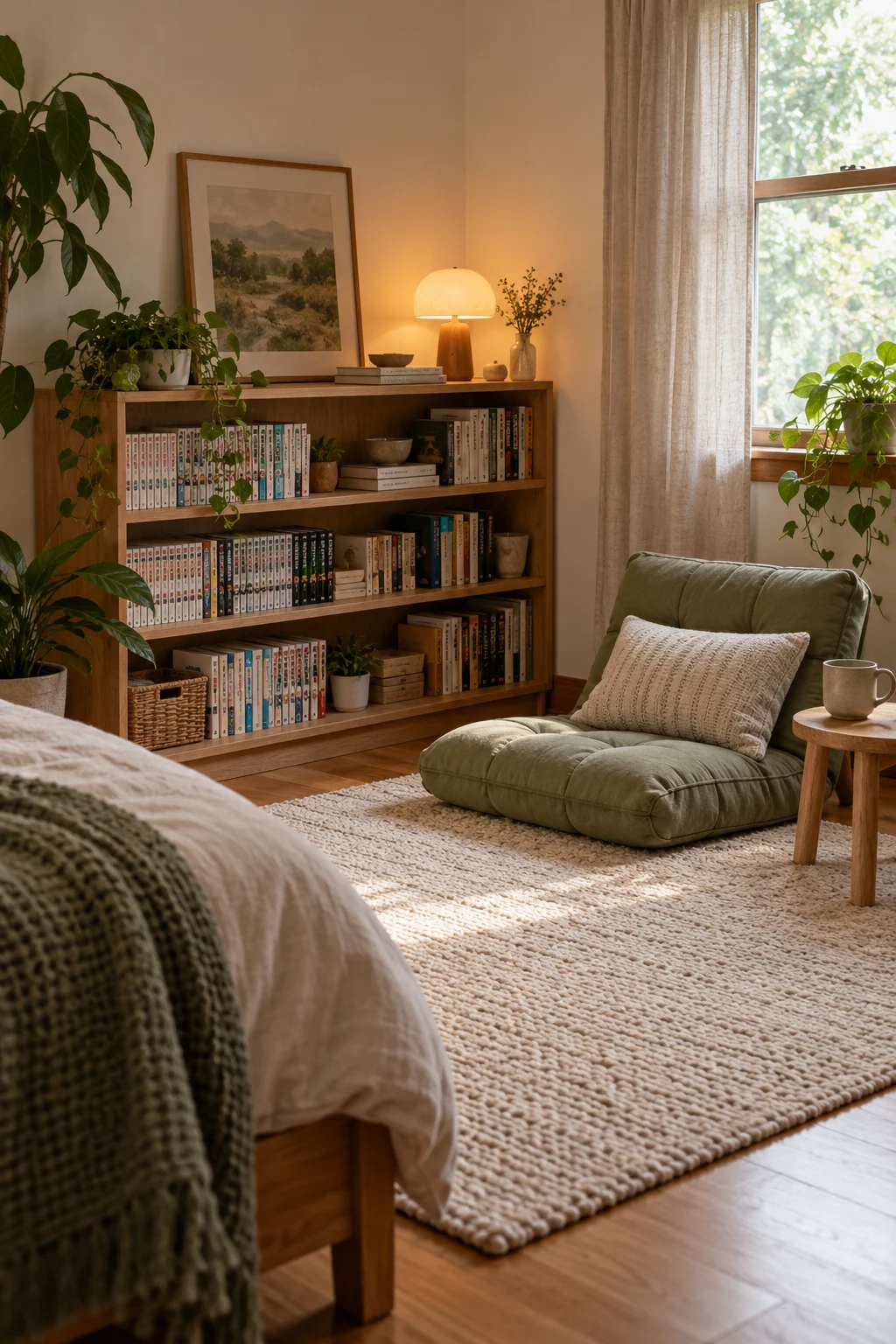
Turn an underused corner into a spot for manga volumes and quiet afternoons. A low oak bookcase, cushioned floor chair, and oatmeal rug are enough to define the area. Stack a few books horizontally to break up the rows, and add a small ceramic lamp on a stable side table. A sage green cushion softens the look and connects the nook to neutral bedding nearby. This is a practical choice for rooms without space for another full-size armchair. The floor chair should be comfortable enough to sit in for more than a few minutes, so check its back support before committing. Avoid placing tall piles of books where they could topple into a walkway. The corner feels themed through its collection, not through excess decoration.
7. Use Shoji Inspired Sliding Panels
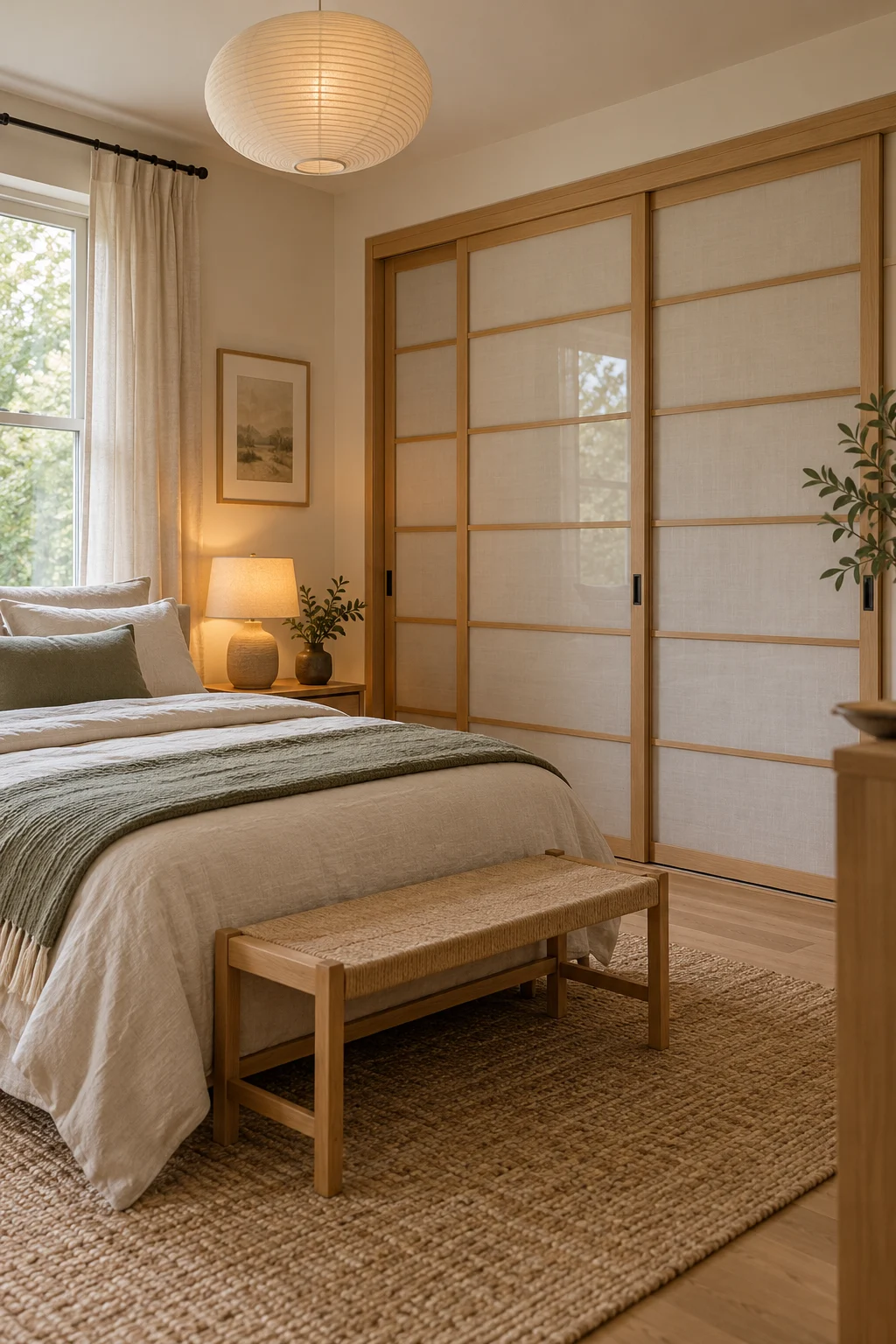
Shoji-inspired panels can introduce a calm architectural detail to an anime bedroom without copying a specific fictional setting. Use a lightweight wood-look screen to visually separate a dressing area from the sleeping zone, or select a properly fitted sliding closet door with translucent inserts. Pair the panels with natural linen curtains, pale oak furniture, and a simple woven rug. The effect works best when the rest of the room has restrained patterns. A freestanding screen is easier to move than built-in doors, but it needs a stable position where it cannot tip. Never use a screen to block an exit or window needed for emergency access. The finished room has a gentle Japanese-inspired influence while remaining functional for everyday storage and dressing.
8. Arrange a Color Coded Manga Shelf
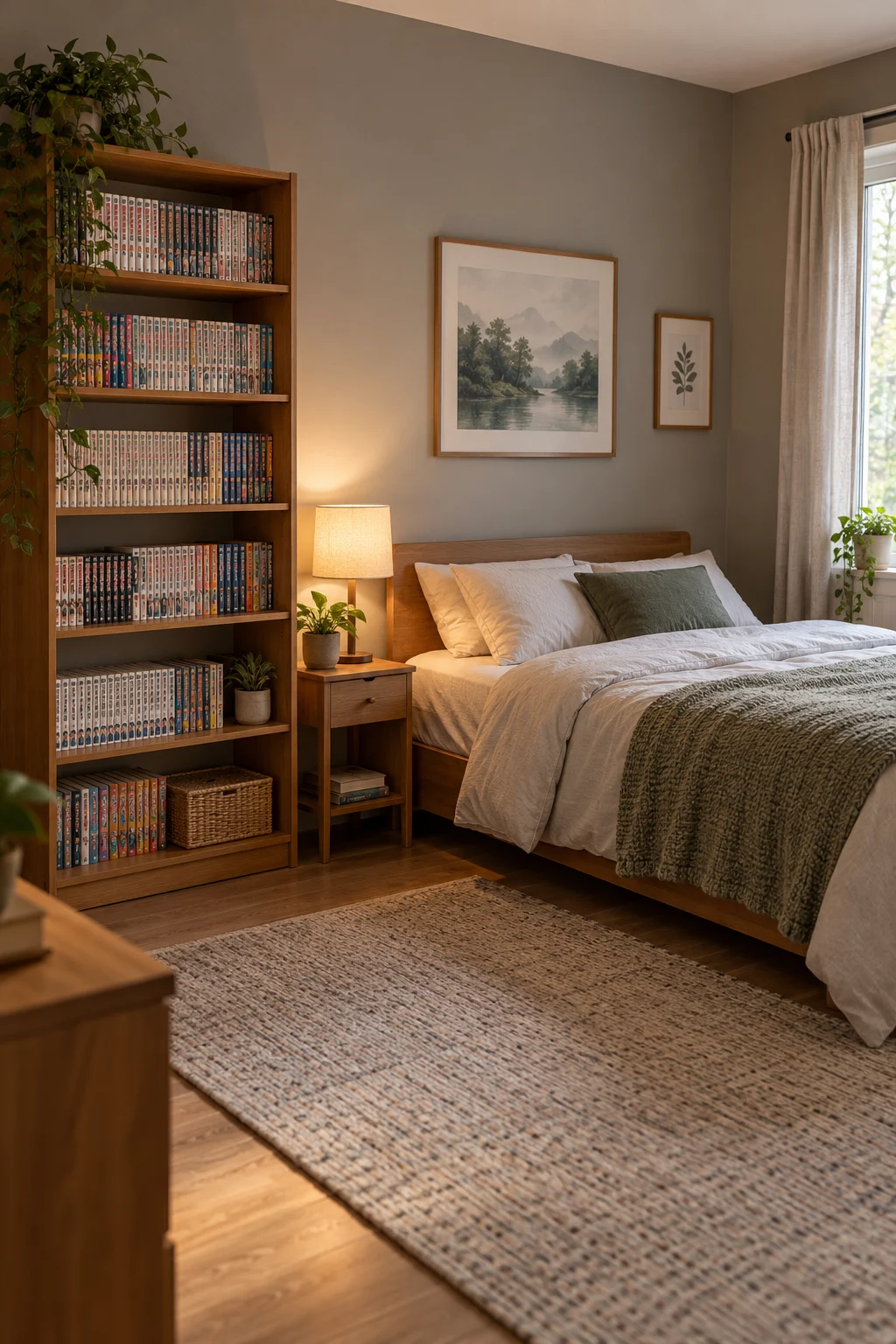
A dedicated manga shelf can become a strong decorative feature when the arrangement is considered. Sort the spines into broad color families, then interrupt long runs with a small plant, bookend, or framed illustration. A medium-height bookcase beside the bedroom door usually offers more practical storage than a collection of tiny wall ledges. Keep frequently reread volumes within easy reach and reserve the upper shelves for lighter objects. Color sorting is visually satisfying but can make individual titles harder to find, so keep series together when that matters more. A mushroom-gray wall behind the shelf allows bright covers to stand out without clashing. This idea is particularly good for readers whose collections are already growing and need a consistent home.
9. Add a Celestial Ceiling Accent
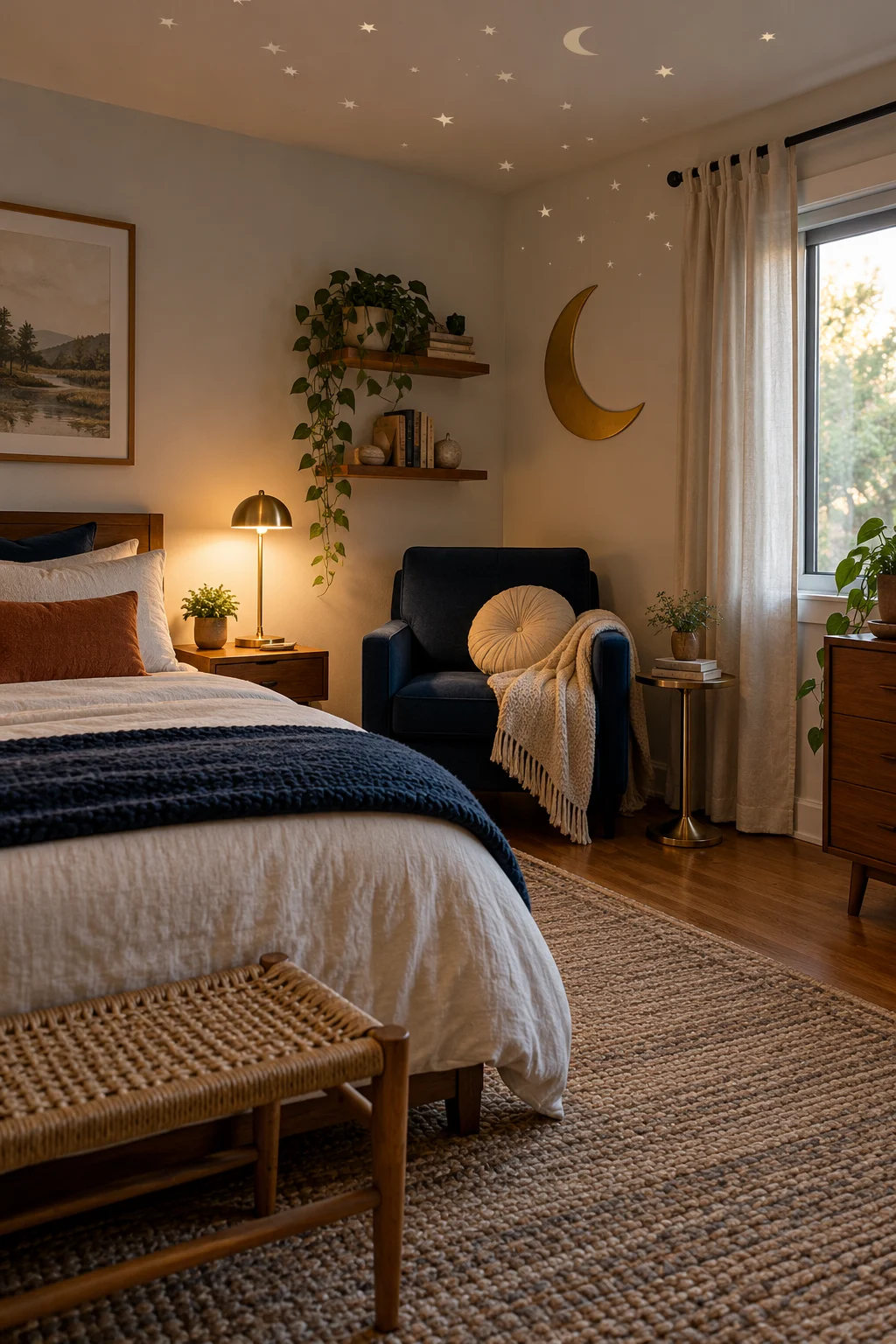
A celestial motif can evoke dreamy animation backgrounds with a lighter touch than a full mural. Apply removable moon and star decals to a small section of ceiling above the reading chair, not across the entire room. Repeat the motif in a navy cushion and a brass-look moon ornament on the dresser. Keep the ceiling mostly warm white so the room does not feel enclosed. This is an accessible project for someone who likes fantasy imagery but wants a grown-up bedroom overall. Check that the decals are compatible with the paint finish and remove them gently to protect the surface. Do not hang loose fabric or dangling decorations near ceiling fixtures, fans, or smoke alarms. The restrained pattern feels imaginative without interfering with the room’s practical lighting.
10. Layer a Sakura Inspired Bedding Scheme
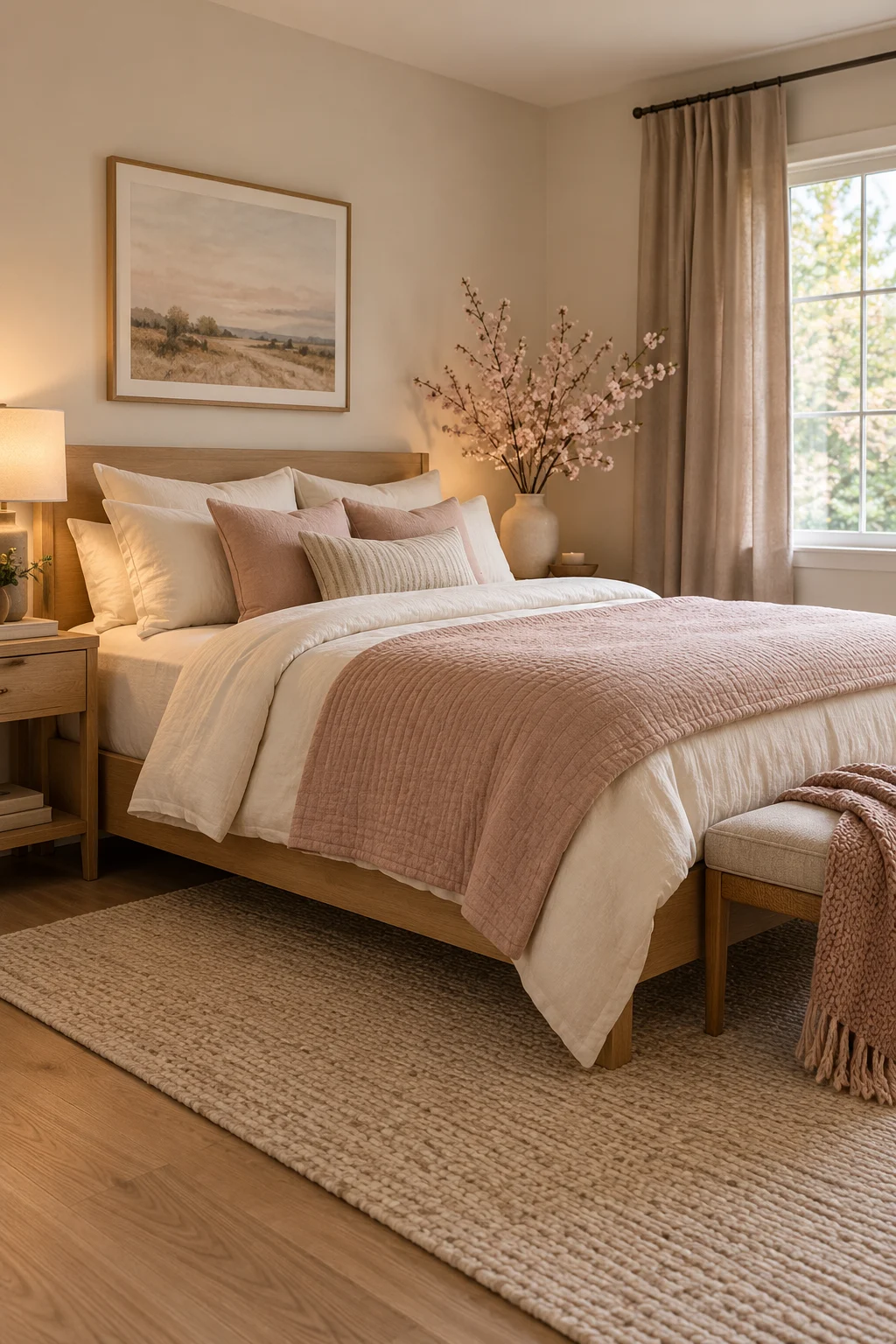
Soft cherry blossom colors can make the bed feel like the center of a romantic animated landscape. Start with a blush quilt, ivory sheets, and a muted rose pillow, then add one branch-patterned cushion rather than matching every piece. A simple light-oak headboard keeps the palette fresh, while warm taupe curtains balance the pink. This treatment is easy to change when your tastes shift because the walls and larger furniture stay neutral. Printed bedding can look overwhelming if the curtains and rug also have floral patterns, so choose mostly solid textiles. Machine-washable covers are particularly useful for a bed used for lounging and reading. A small vase with faux blossom stems on the dresser adds the theme without placing loose petals near the pillows.
11. Make a Minimal Mecha Display Wall
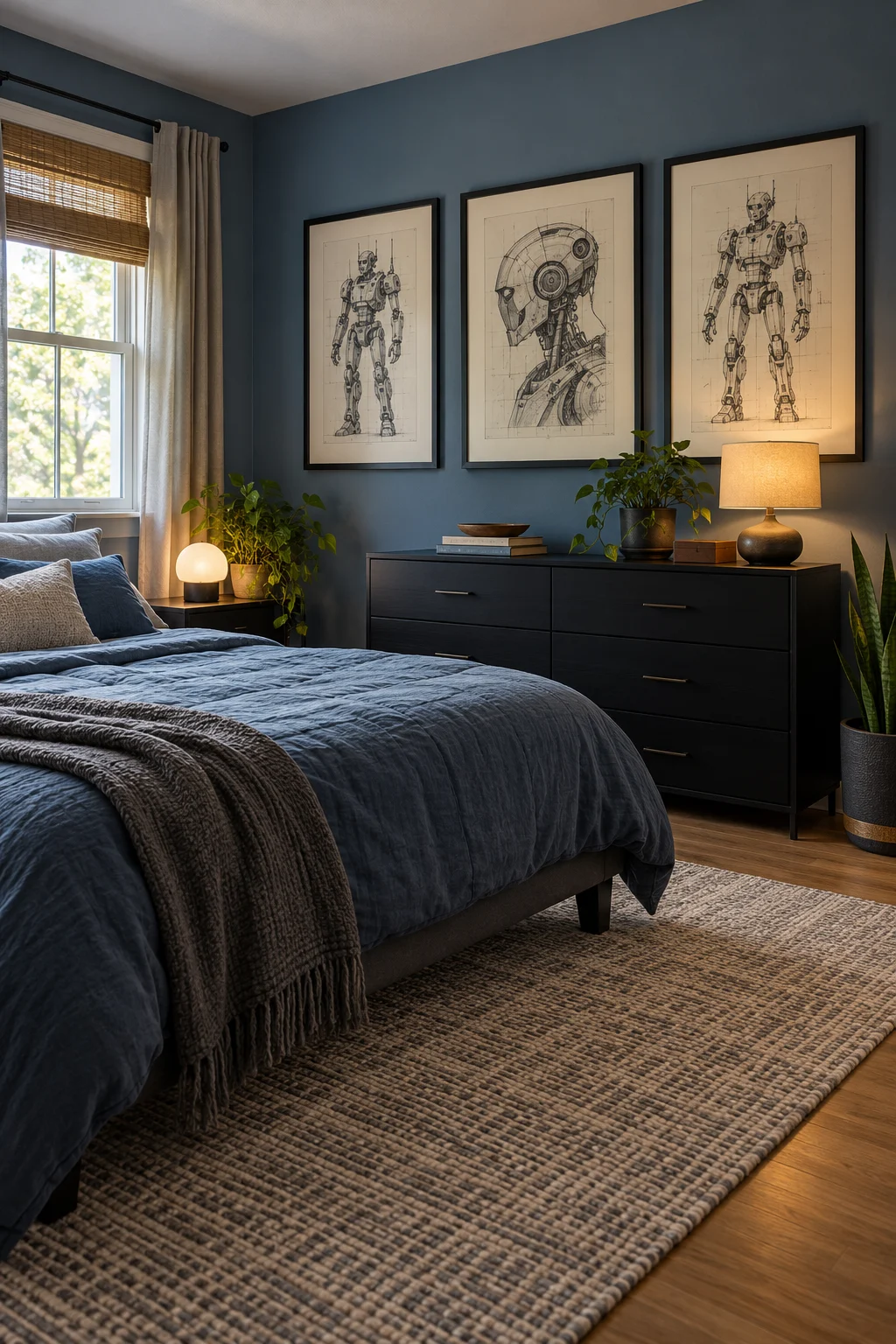
For fans of mechanical designs, a precise arrangement of original robot-inspired illustrations can feel modern and architectural. Hang three large technical-style prints in matching graphite frames above a low black dresser. Use a charcoal, steel blue, and off-white palette, then add a single model on the dresser as the focal object. A flat-front wardrobe and clean-lined bed help the room stay streamlined. The drawings should be decorative rather than filled with tiny text that becomes illegible from across the room. Models with small detachable parts belong on a stable surface away from pets or small children. This idea suits older teens and adults who enjoy the geometry of science-fiction design but prefer a bedroom that does not resemble a merchandise shop.
12. Set Up an Anime Art Station
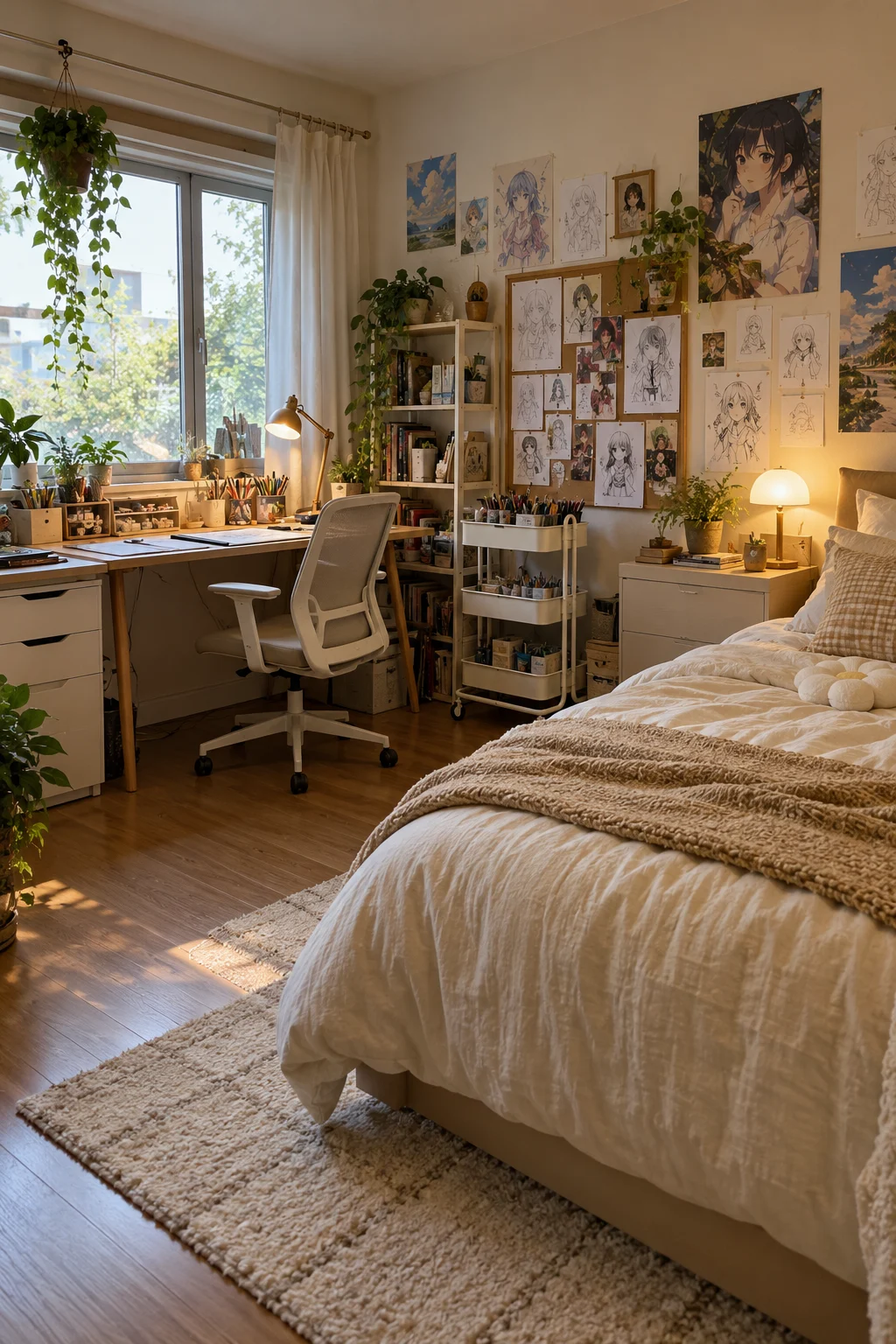
If you draw as well as watch animation, let the creative process shape the bedroom. Position a compact desk near the window and add a task lamp, pencil organizers, and a pinboard for your own sketches. Store markers in closed containers to protect them from dust and accidental spills. A narrow rolling cart can hold sketchbooks and paper without taking over the desk surface. The setup works especially well in a bedroom where a full studio is impossible. Keep the pinboard to one wall area so the sketches read as an evolving project rather than random clutter. Natural daylight is helpful for color work, but an adjustable lamp matters on darker afternoons. A supportive chair is worth prioritizing over decorative accessories if you spend long sessions drawing.
13. Introduce a Forest Spirit Mood
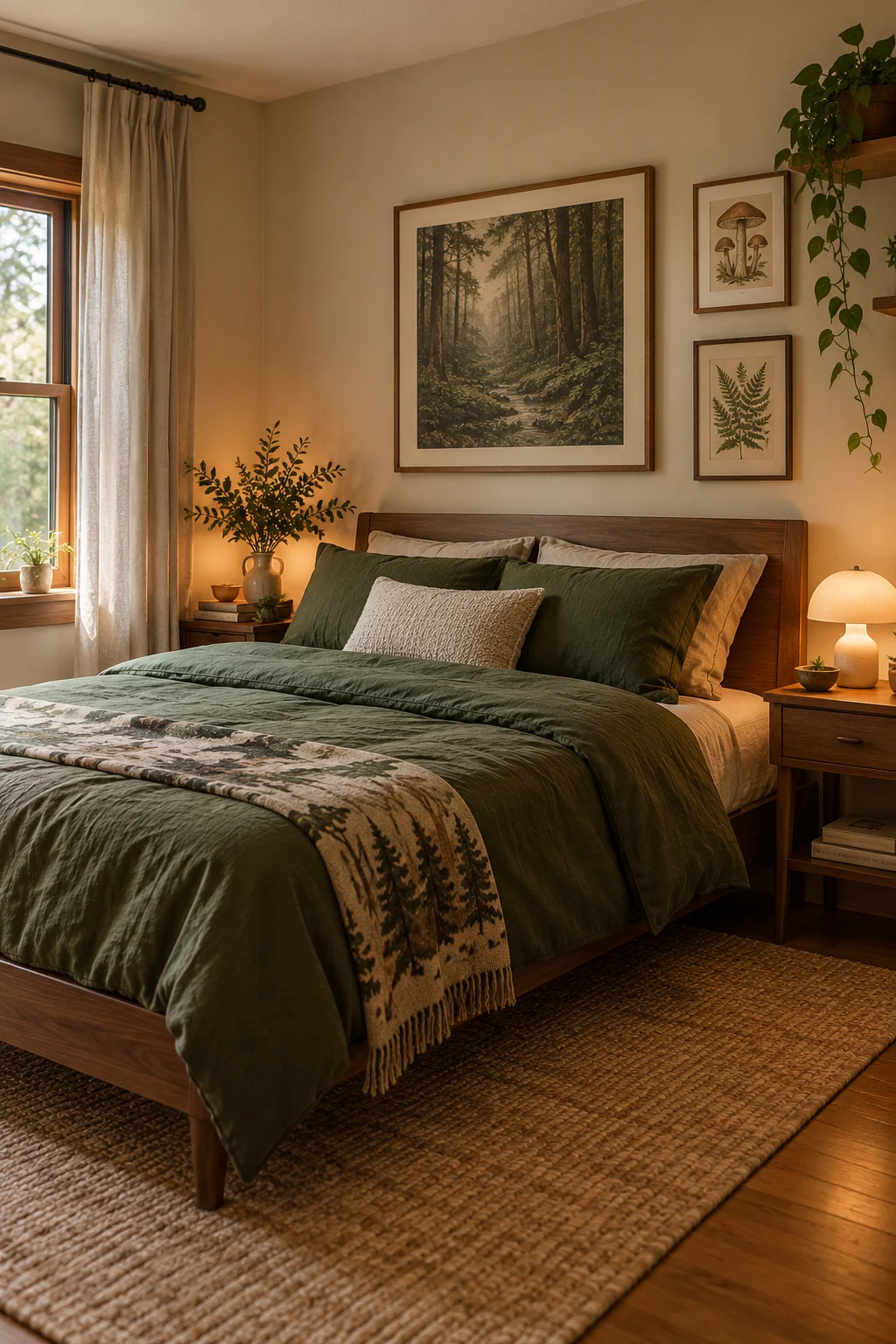
A woodland palette can hint at gentle fantasy stories without reproducing their characters. Combine moss green bedding with a walnut bed frame, warm beige walls, and framed illustrations of imaginary forests. A mushroom-shaped ceramic lamp and a small woven basket bring in playful details while remaining useful. The palette is restful enough for a bedroom that doubles as a work space. Limit the forest imagery to two or three pieces so it does not compete with the view outside the window. Real plants can strengthen the atmosphere, but choose varieties suitable for the room’s light and household pets. If plant care is not appealing, a single artificial fern provides texture with little upkeep. The result feels quietly enchanted rather than heavily themed.
14. Frame a Retro Animation Color Block
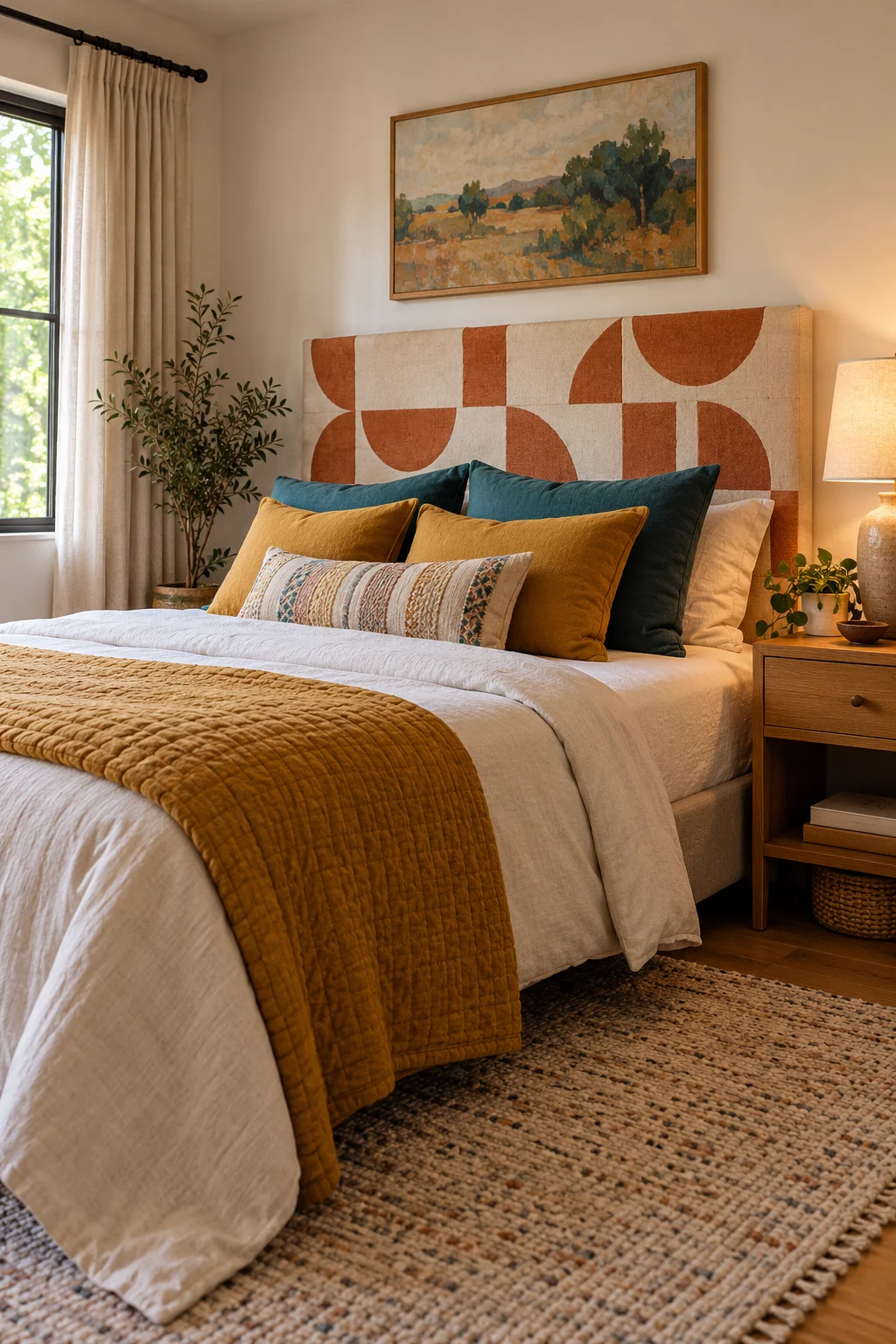
Retro animation palettes can be expressed through geometric color blocks instead of posters. Paint a wide terracotta rectangle behind a compact cream headboard, then bring in mustard, dusty teal, and cocoa accents through pillows and a throw. A rounded bedside lamp and simple oak nightstand add a softly nostalgic silhouette. Keep the shapes broad and the edges crisp to avoid a patchwork effect. This look works for people who want a subtle nod to animated design in a shared or adult bedroom. It is inexpensive when you already have paint supplies, but repainting will take more time than changing accessories. Leave enough unpainted wall around the block to keep the composition balanced, especially in a room with a low ceiling.
15. Design a Subtle Cosplay Storage Zone
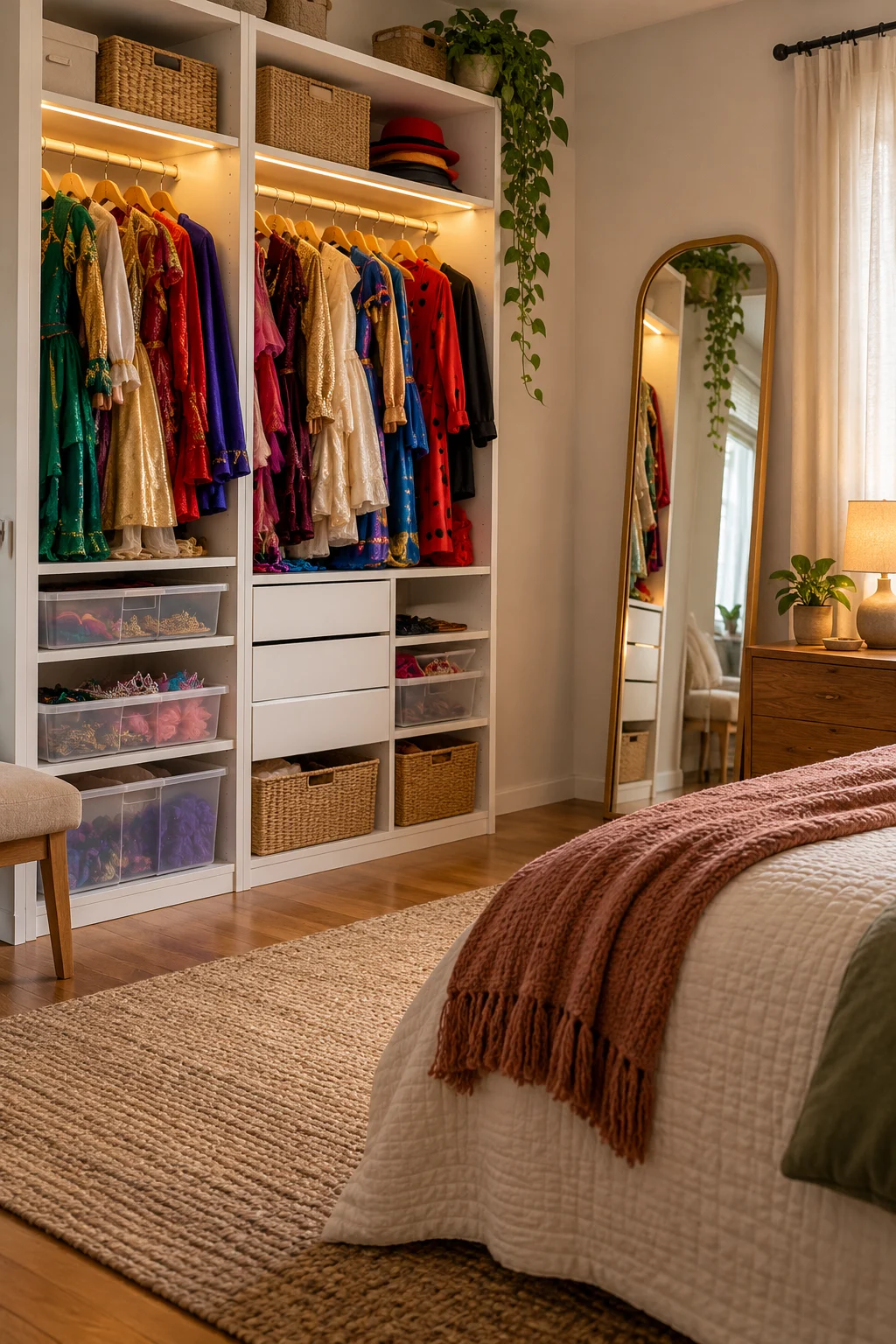
Costumes and accessories deserve organized storage rather than a heap on the chair. Use a wardrobe section with garment bags for outfits, labeled interior bins for props, and a drawer divider for smaller pieces. A full-length mirror beside the wardrobe makes checking a look convenient without taking over the bedroom. Choose a simple warm-white wardrobe so colorful fabrics remain the stars when the doors open. This idea is most helpful for anyone who creates or attends costume events regularly. Store delicate accessories in separate compartments to prevent tangling or damage, and keep heavy props low. Make sure long garments do not drag on the floor or catch in sliding doors. With the collection contained, the rest of the bedroom can remain relaxing and easy to clean.
How to Balance Fandom With Everyday Comfort
A themed bedroom still has to support sleep, dressing, and whatever else happens there. Decide which part of the room should carry the strongest visual identity: the bed wall, desk, or display area. Once that zone is established, keep nearby surfaces simpler. The contrast makes favorite artwork easier to appreciate and prevents the room from feeling like a crowded shop. Think about what you see first when entering and what you see while lying in bed. These views can benefit from different levels of visual activity. Strong graphics are often satisfying from the doorway, while softer bedding and plain curtains are welcome at night. You do not have to hide your interests to create a peaceful room. A thoughtful arrangement can make personal collections feel even more special.
Planning an Anime Bedroom on a Budget
Spend first on items you use daily, especially a comfortable mattress, dependable lighting, and practical storage. Decorative pieces can arrive gradually. Reframe prints you already own, rearrange books into a display, or update cushion covers before replacing furniture. Secondhand shelves and desks can work well when they are structurally sound and suited to the available space. Set a spending limit for each category rather than shopping whenever a new collectible appears. Small purchases accumulate surprisingly quickly, and they can leave less money for useful improvements. A mood board made from color swatches and furniture measurements helps keep purchases coordinated. Choose one project to complete this month, then live with it for a while before deciding whether the room needs another layer.
Making Small Rooms Feel Open
Small bedrooms benefit from one clear feature rather than several competing ones. Keep the floor visible around the bed and favor storage that serves multiple purposes. A dresser with a display surface can replace a separate collectible stand, while a desk with drawers can store art supplies. Vertical shelving may help, but it should not create a crowded feeling above the pillow. Select curtains that let daylight reach the room and use a mirror where it reflects a pleasant view. Dark colors are not automatically off limits in a small space; they simply need contrast and good lighting. The aim is to preserve easy movement from the door to the bed, closet, and window. If a new piece blocks one of those routes, reconsider its position.
Choosing Artwork Without Visual Clutter
Start by identifying the mood you enjoy most: bright action, soft romance, atmospheric fantasy, or clean science fiction. A room can reference more than one genre, but it helps to connect them through frame color or a limited palette. Original artwork, licensed prints, and personal sketches offer different ways to express fandom. For a gallery, arrange the frames on the floor before hanging anything. Look for a consistent outer shape, even if the individual pieces vary. Leave some blank wall around the group; negative space is part of the composition. If a collection grows, swap pieces rather than automatically extending the gallery. Store unused prints flat in protective sleeves so they remain in good condition for later rotations.
Lighting and Display Safety Essentials
A bedroom needs lighting for several different jobs. Use a comfortable ambient source, a focused lamp for reading or drawing, and optional accent lighting for displays. Decorative LEDs should be installed according to their instructions, with accessible switches and tidy cables. Avoid routing cords under rugs or pinching them behind furniture. Keep lamps and powered accessories clear of blankets, paper decorations, and other combustible materials. Tall furniture should be secured when the manufacturer calls for it, and fragile displays should be positioned with children and pets in mind. If you paint or use adhesives, follow the product directions for ventilation, drying time, and suitable surfaces. A beautiful setup is more enjoyable when it is straightforward to maintain and safe to use.
Keeping Your Anime Bedroom Easy to Update
Interests change, and a bedroom should be able to change with them. Build the foundation around furniture and finishes you genuinely like outside a particular series. Neutral bedding, a durable desk, and versatile storage can stay while posters, prints, and accessories rotate. Keep a small box for spare display stands, hooks, and protective sleeves so changing a shelf does not become a major project. Dust collectibles with tools appropriate to their finish, and wash textiles according to care labels. Every few months, look at which objects still make you happy and which are only occupying space. Giving favorite pieces more room often makes the entire collection look better. The goal is a bedroom that continues to reflect you, not a frozen snapshot of one phase.
Frequently Asked Questions
Can an anime bedroom look mature?
Yes. Concentrate the theme in artwork, one display cabinet, or a coordinated color palette. Choose furniture for its shape and usefulness first, then add references through easily changed pieces. Keeping bedding and curtains simple often makes even a bold gallery wall feel sophisticated.
What colors work best for anime bedroom ideas?
There is no single correct palette. Pastels suit dreamy themes, charcoal and navy support futuristic imagery, and warm woods with greens work well for fantasy-inspired rooms. Pick two main colors and one smaller accent so unrelated accessories still feel connected.
How can I decorate without damaging rental walls?
Use freestanding displays, framed art on existing hooks, and removable products specifically approved for your wall finish. Check weight limits and removal instructions. A themed duvet, desk arrangement, or bookshelf can provide plenty of character without changing the paint.
How do I keep collectibles from making the room messy?
Give each category a designated location and leave some display space empty. Closed cabinets reduce dust, while bins help with accessories that do not need to be visible. Rotate favorite pieces periodically instead of trying to show the entire collection at once.
Conclusion
The best anime-inspired bedroom feels like a personal space first and a themed room second. Pick the idea that connects most naturally with what you already own, whether that means organizing a collection, displaying your own drawings, or experimenting with color. You can add more detail later, once the room feels comfortable and useful. For now, choose one wall or corner and sketch a simple plan for how you want it to look.
