
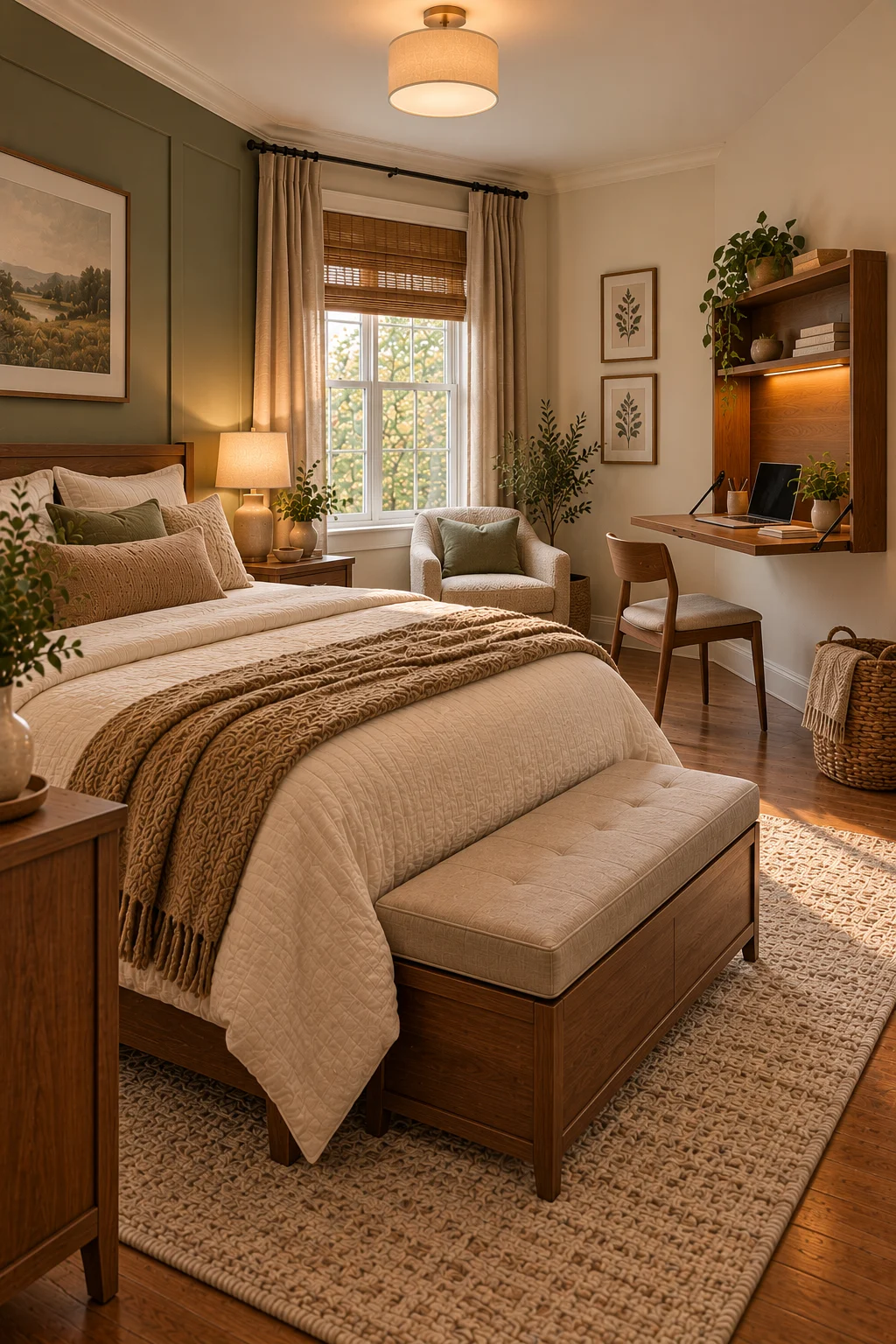
13 Guest Bedroom/Office Ideas That Make One Room Work Twice as Hard
A guest bedroom doesn’t have to sit unused between visits. With the right furniture and layout, it can become a comfortable home office during the week and a welcoming place for overnight guests when needed.
The challenge is making both functions work without compromise. A desk needs enough space for focused work, while guests need a comfortable bed, accessible lighting, and room for their belongings. Trying to squeeze too much furniture into one bedroom can make both activities frustrating.
Fortunately, creating a guest bedroom office combo doesn’t require a large house or an expensive renovation. A compact desk, a daybed with storage, or a carefully planned Murphy bed can help one room serve two purposes.
The most successful designs also feel like bedrooms rather than offices with an extra mattress. Warm-cream walls, natural wood furniture, comfortable bedding, and discreet storage can make the space feel restful even when a workstation is nearby.
These 13 guest bedroom office ideas offer practical ways to combine work and hospitality, whether you’re furnishing a small spare bedroom or updating a room that already serves both purposes.
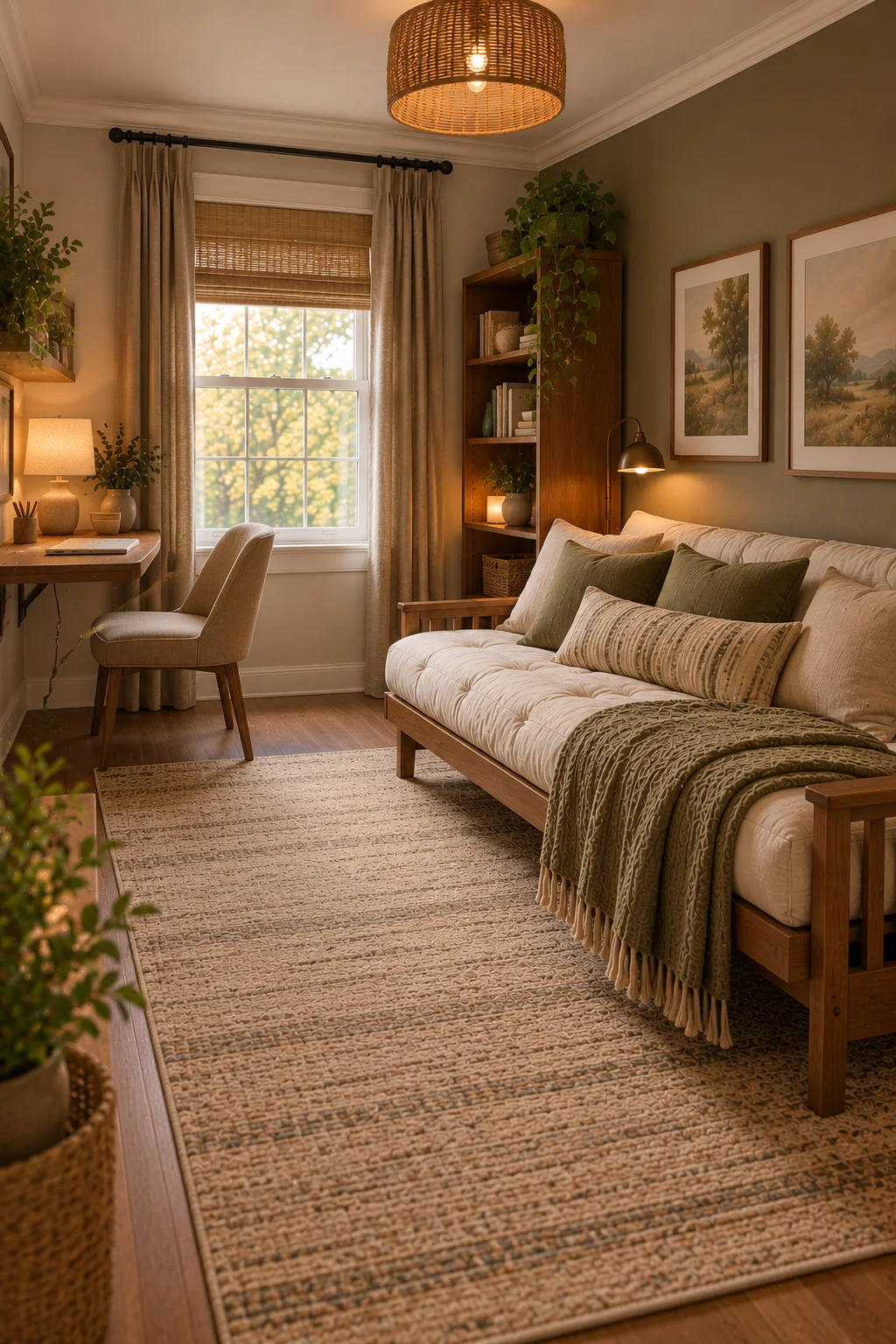
1. A Compact Futon Sofa and Wall Desk
A compact futon and wall desk can turn a small spare bedroom into a flexible workspace without filling it with bulky furniture.
During the day, the futon functions as a sofa where you can read, take a break, or sit away from the computer. When guests arrive, it converts into a sleeping surface.
Pair it with a narrow wall-mounted desk in natural oak or walnut. Keep the desk simple, with enough room for a laptop, notebook, and task lamp.
Warm-cream walls, an oatmeal futon cover, and a muted-olive cushion help the room feel inviting rather than overly office-like. A small storage cabinet can hold spare bedding when the futon is in sofa mode.
Practical tip: Measure the futon in its fully extended position before purchasing. Confirm that it provides adequate sleeping comfort for your expected guests and leaves clear access to the door, closet, and bathroom route. Keep desk cords and equipment away from the conversion area.
2. A Murphy Bed With a Properly Installed Mechanism
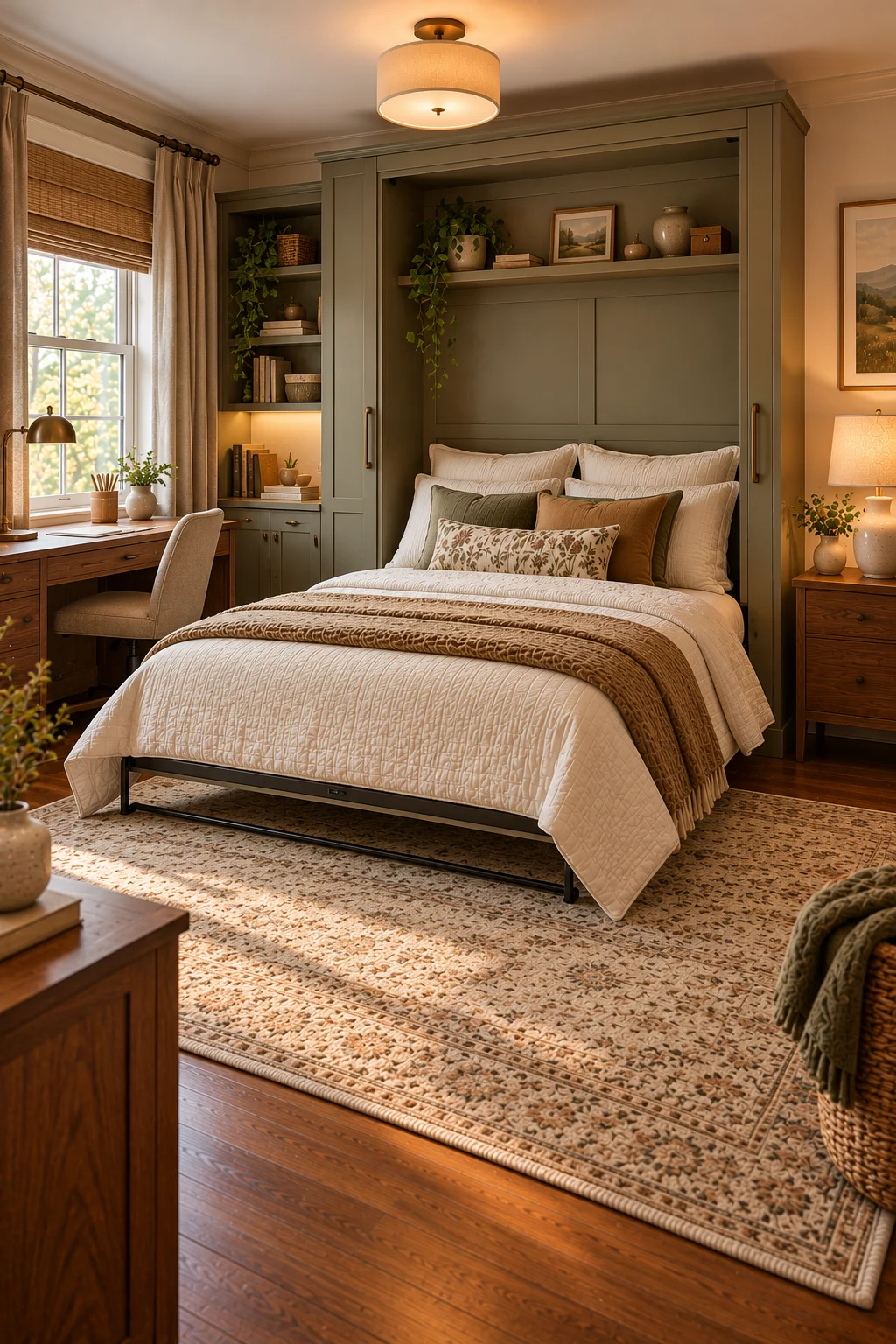
A Murphy bed can provide a full sleeping surface while allowing the room to function as a more spacious office when guests aren’t staying.
Choose a design that folds securely into a cabinet system, leaving floor space available for a desk and task chair during the day.
Cream cabinetry helps the bed blend into the surrounding walls, while walnut accents introduce warmth. A simple desk on an adjacent wall creates a dedicated work area without competing with the bed enclosure.
When the bed is lowered, the room should still have accessible lighting and enough space for guests to move comfortably.
Safety consideration: Murphy beds require properly engineered hardware and installation according to the manufacturer’s instructions. Use the specified wall or structural anchoring system, verify the available floor and ceiling clearances, and never improvise the lifting mechanism. Professional installation may be appropriate, particularly when wall construction is uncertain.
3. A Daybed With Drawers for Linens
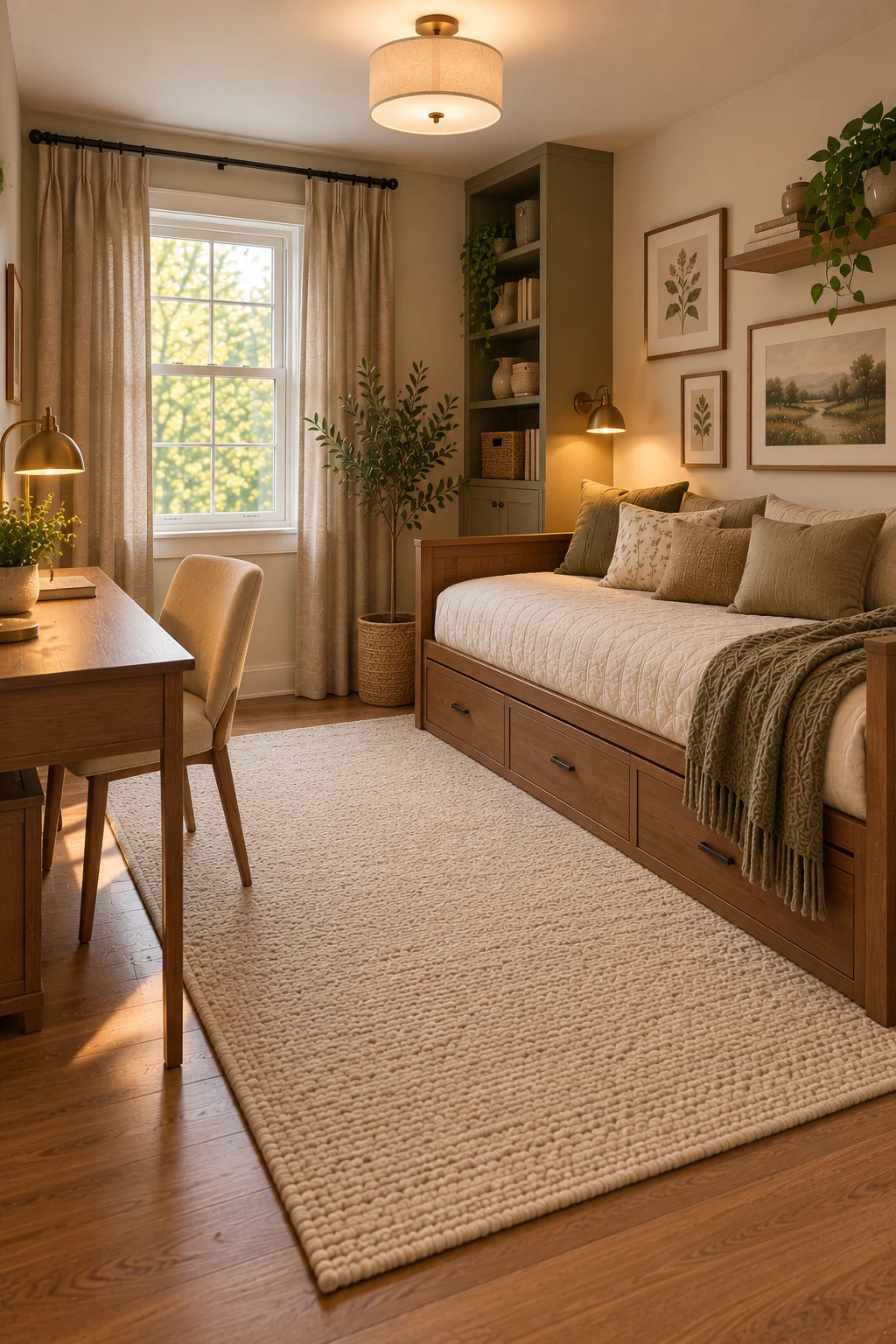
A daybed with built-in drawers offers seating, sleeping space, and storage in one practical piece of furniture.
Position the daybed along a suitable wall, leaving the center of the room available for a desk chair and comfortable movement.
During working hours, the daybed can function as a sofa-like seating area with a few supportive cushions. For overnight guests, remove the extra cushions and prepare it with comfortable bedding.
Use the drawers underneath to store clean sheets, pillowcases, and a spare blanket. This keeps guest essentials close at hand without requiring an additional storage cabinet.
Mushroom-colored curtains, an ivory rug, and natural-wood furniture create a soft, welcoming palette.
Layout tip: Check how far the storage drawers extend when opened. Leave enough space to access them without moving the desk or other furniture, and choose a mattress that is suitable for regular sleeping if guests visit frequently.
4. A Small Desk Beside a Standard Guest Bed
If you want guests to enjoy a traditional bed, a compact desk beside it may be the simplest solution.
Choose a desk with a shallow profile and position it along a wall where it won’t interfere with the bed or closet.
A standard guest bed with cream bedding and a camel throw keeps the room comfortable and familiar. Walnut or oak furniture can connect the desk and bedside pieces without requiring a matching furniture collection.
Use a chair that fits comfortably beneath the desk when not in use. This helps preserve floor space for guests.
A small bedside lamp and clear surface for personal belongings are important details, especially when the desk occupies space that might otherwise hold a second nightstand.
Planning tip: Measure the desk with the chair pulled back, not just tucked underneath. Make sure someone can work comfortably while leaving enough clearance around the bed and nearby furniture.
5. A Fold-Down Desk on a Clear Wall
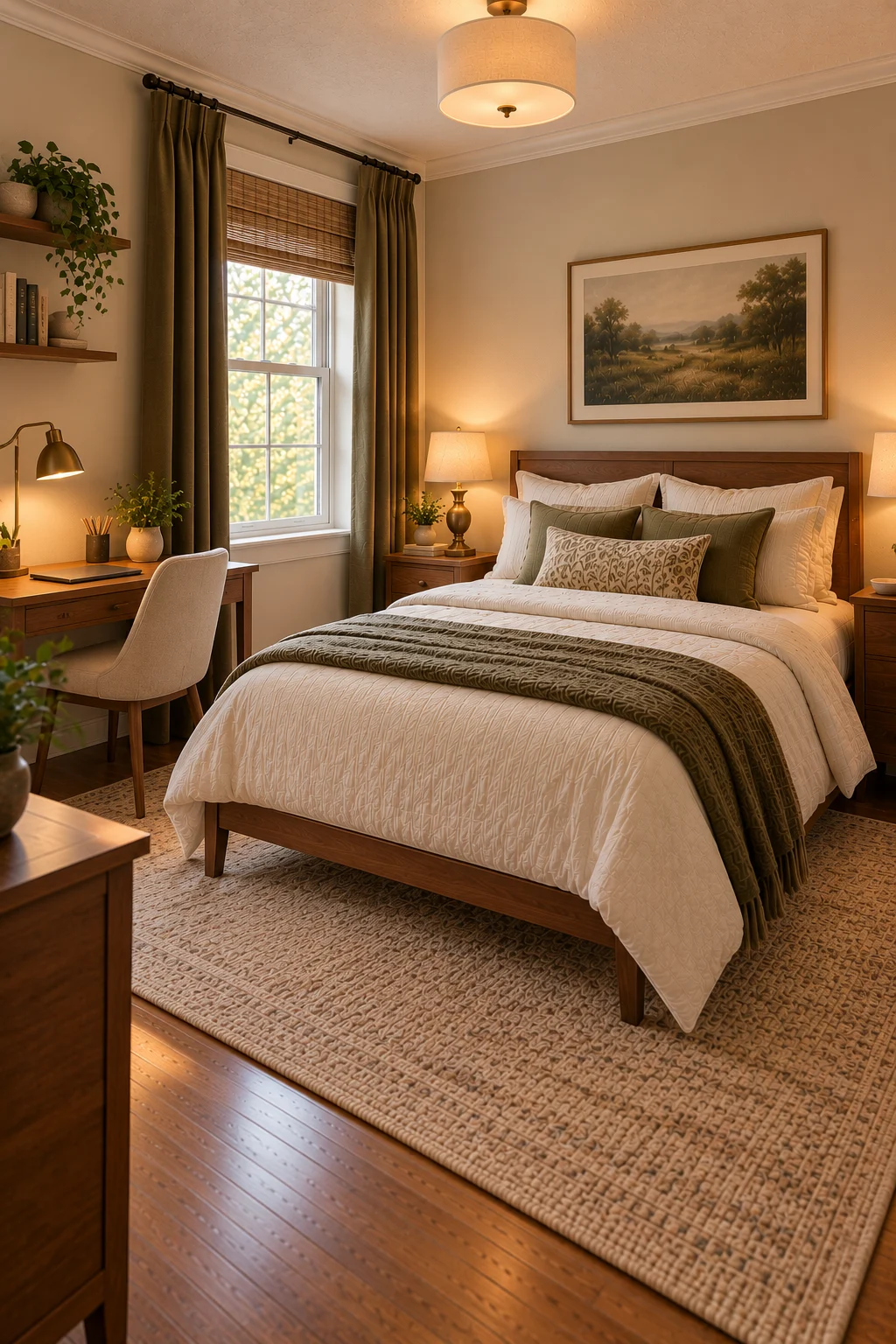
A fold-down desk is useful when you need a functional workstation but don’t want it occupying floor space all day.
Install the desk on a clear wall away from the bed’s sleeping area. When opened, it provides a surface for a laptop and essential work materials. When closed, it leaves the room feeling less like an office.
Choose a cream or light-wood finish to coordinate with the bedroom walls and furniture. A compact chair that can be stored nearby makes the arrangement even more flexible.
Keep frequently used office supplies in a small cabinet or drawer so the desk can close without requiring a lengthy cleanup.
Soft bedding, a camel throw, and simple artwork help maintain a comfortable guest-room atmosphere.
Installation tip: Fold-down desks require secure mounting and hardware rated for their intended use. Follow the manufacturer’s instructions, including load limits, and verify that the open desk doesn’t obstruct a doorway, window, or walking route.
6. A Narrow Walnut Desk Under the Window
Positioning a narrow desk beneath a window can create a pleasant workspace with natural daylight and a view outdoors.
Choose a walnut desk that fits comfortably between the surrounding walls or furniture. Its warm wood finish complements cream bedding and mushroom-colored curtains.
A simple task chair and small desk lamp provide the essentials for everyday work without making the room feel crowded.
Keep the desktop relatively clear, using a drawer or nearby cabinet for paperwork and supplies.
Natural daylight can make the work area feel more inviting, but window placement also requires attention to glare and temperature.
Practical tip: Position the monitor or laptop to minimize screen reflections. Make sure the desk doesn’t block window operation, ventilation, or emergency escape access. Choose window coverings that allow you to control glare while working.
7. Closed Storage for Office Supplies
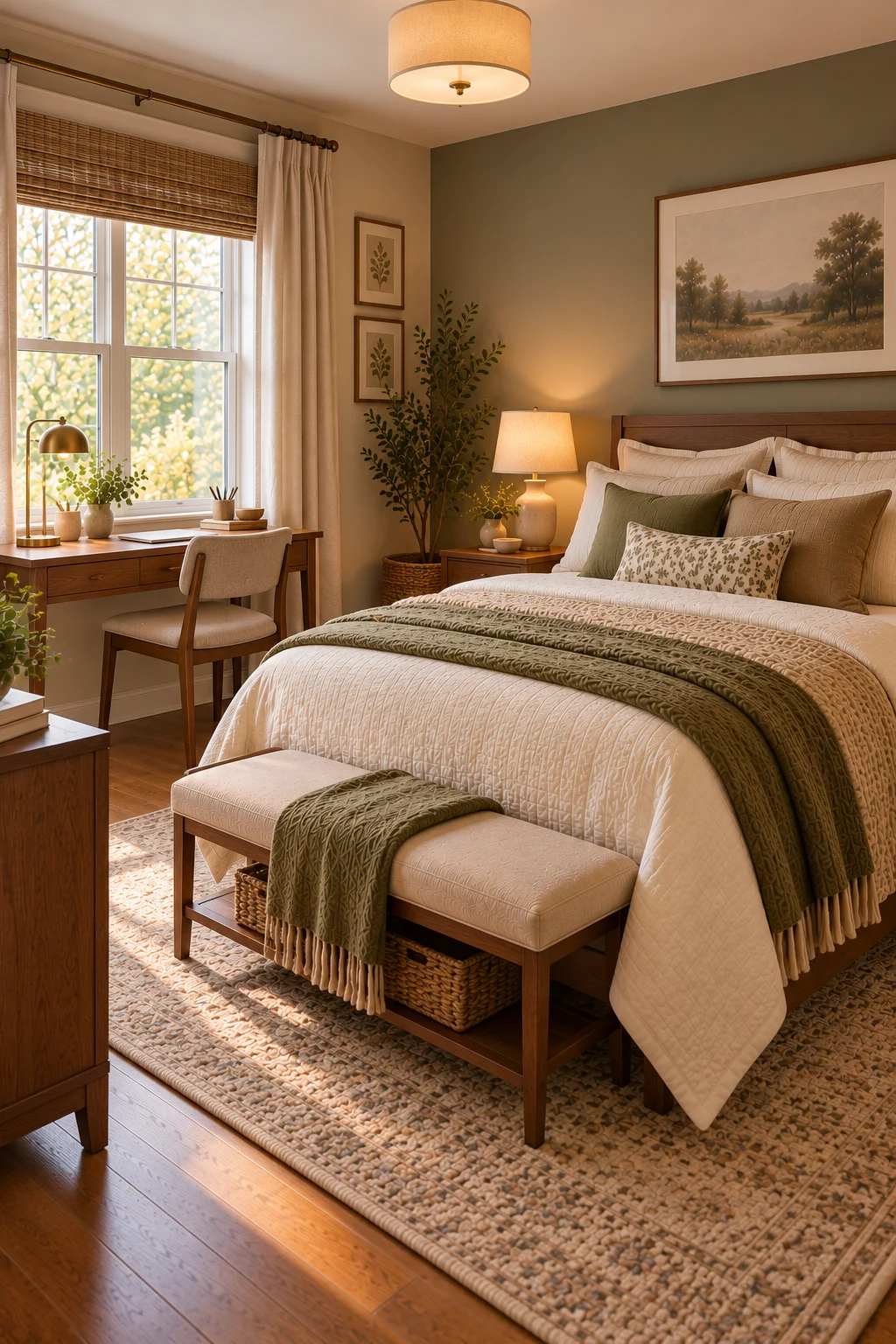
Closed storage is one of the easiest ways to keep a guest bedroom office looking restful.
Instead of leaving folders, chargers, stationery, and computer accessories on open shelves, store them inside a cabinet with doors or drawers.
A cream storage cabinet can blend into light walls, while walnut furniture adds warmth and visual contrast.
Organize the interior with small containers or dividers so supplies remain easy to find during the workday.
When guests arrive, closing the cabinet doors instantly reduces the room’s office appearance. It also helps keep private documents and work equipment out of sight.
Organization tip: Separate office storage from guest storage. Leave at least one drawer, shelf, or small luggage area available for visitors, and secure tall cabinets according to the manufacturer’s instructions.
8. A Comfortable Task Chair That Tucks Away
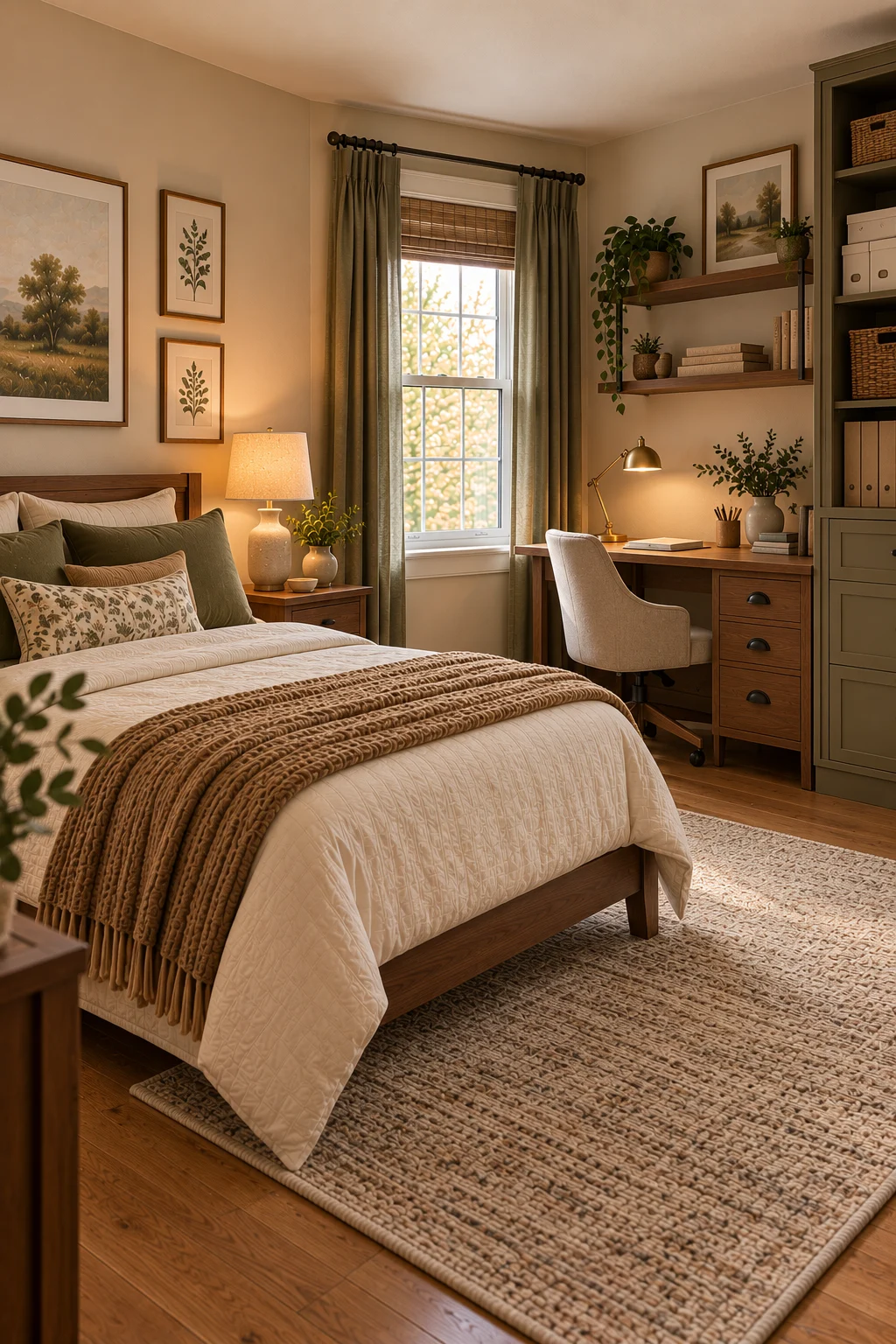
A good desk chair matters when the guest bedroom doubles as a workspace for several hours each day.
Choose a supportive task chair that suits your desk height and working habits. A compact design with adjustable features can provide comfort without overwhelming the room.
Look for upholstery or finishes that coordinate with the bedroom palette. Mushroom, warm gray, or muted taupe can blend naturally with cream bedding and walnut furniture.
When work is finished, the chair should tuck beneath the desk or move into a designated position without blocking the bed.
Soft curtains and a low-pile ivory rug can make the room feel more residential, although the chair still needs to roll or move safely on the chosen flooring.
Buying tip: Check the chair’s full width, including armrests, and confirm that it fits under the desk. Prioritize comfortable support and appropriate working posture over appearance alone.
9. Matching Cream Bedding and Desk Accessories
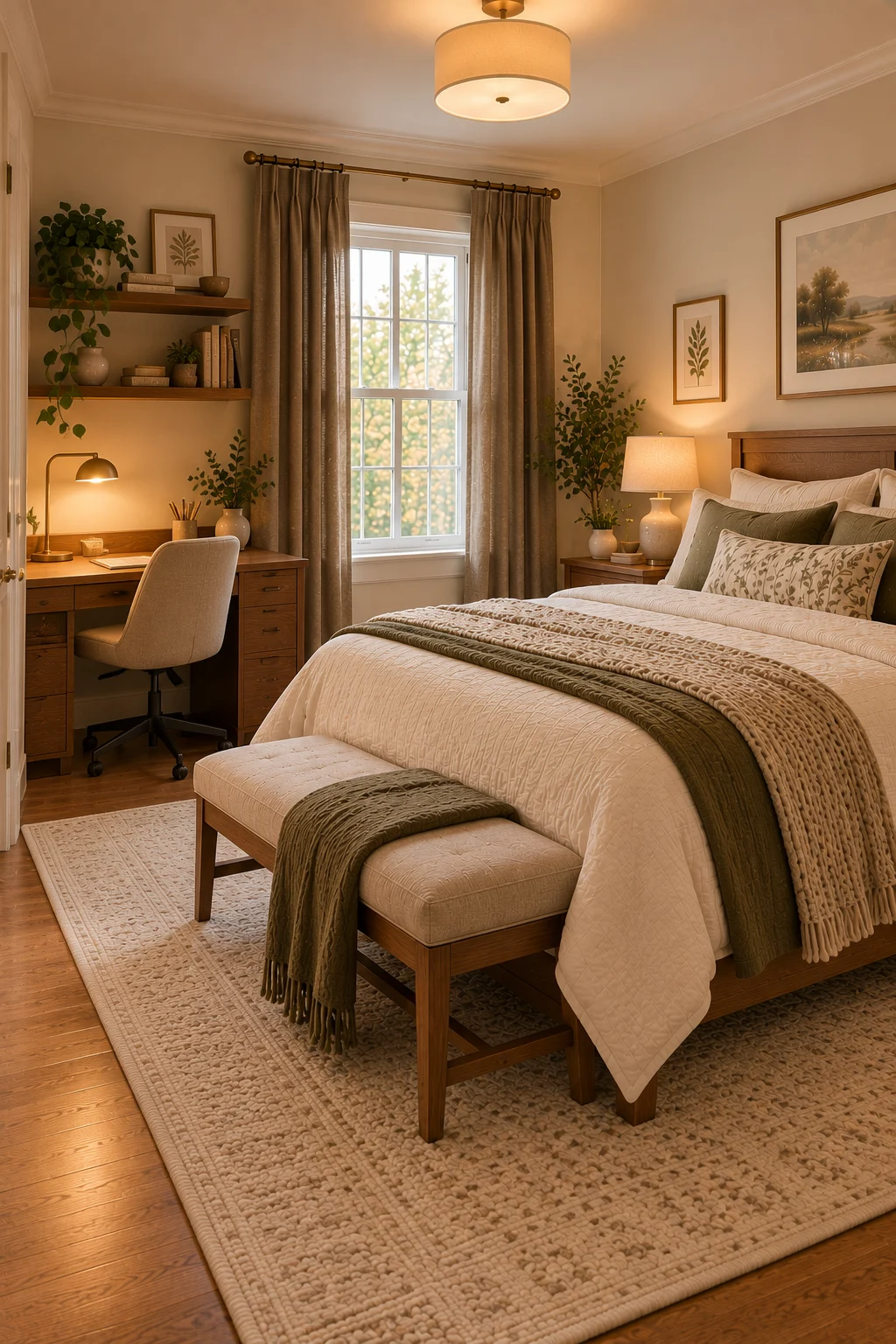
A coordinated color palette can make a guest bedroom and office feel like one thoughtfully designed room rather than two unrelated spaces.
Start with warm-cream bedding and repeat the same soft tone in desk organizers, a storage cabinet, or a simple lamp.
Introduce walnut through the desk or nightstand, then add a small amount of camel or muted olive for contrast.
Keep patterns restrained so the room remains calm. Textured bedding, a woven cushion, and natural wood grain can provide enough visual interest without bold prints.
This approach works particularly well when the desk is visible from the bed because the matching colors reduce the contrast between the work and sleeping areas.
Styling tip: Choose a few coordinated accessories rather than purchasing an entire matching collection. A cream desk organizer, neutral lamp, and simple framed print may be enough to connect the workspace with the bedding.
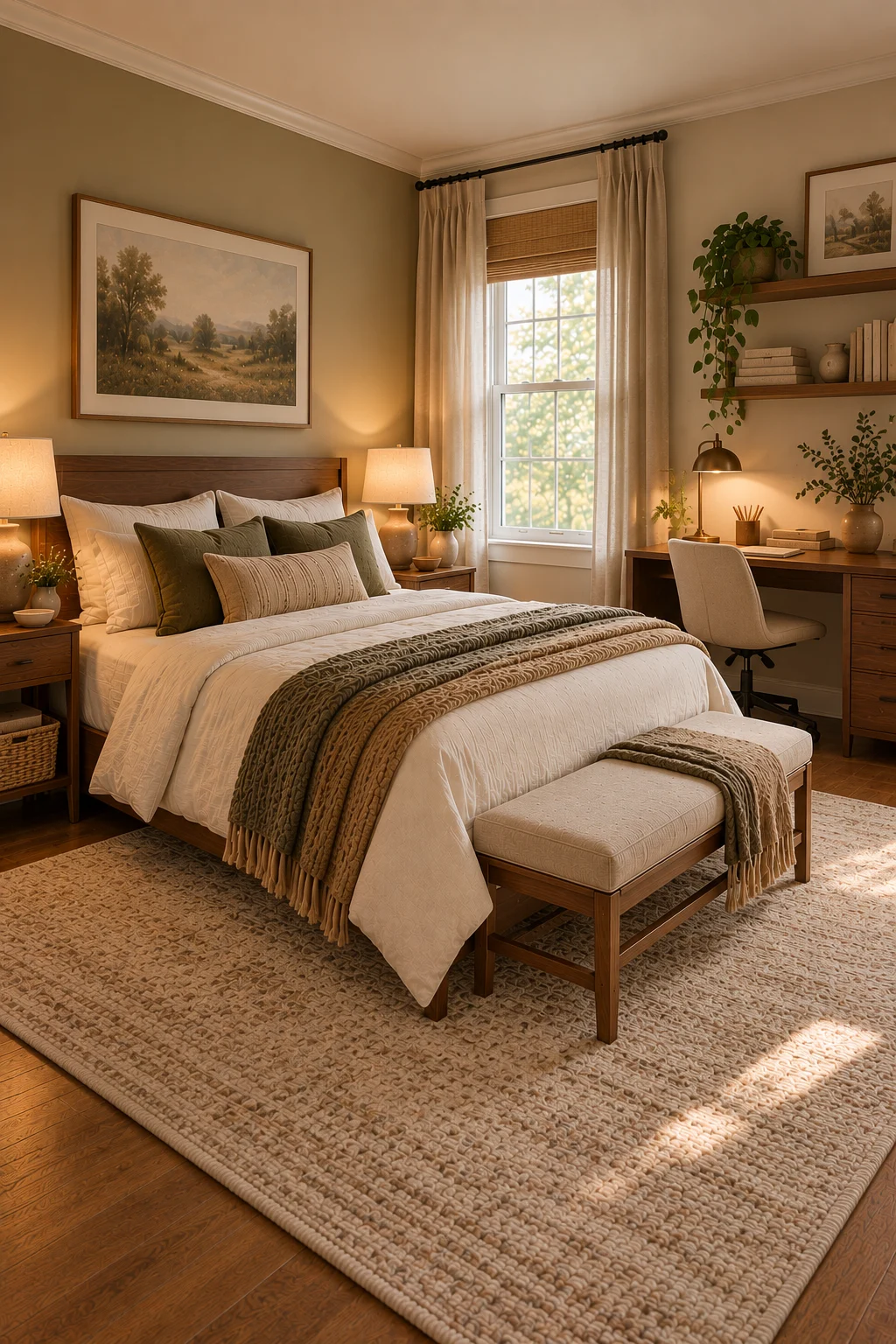
10. A Dual-Purpose Dresser and Printer Cabinet
A dresser that also accommodates office equipment can reduce the amount of furniture needed in a combined guest bedroom and workspace.
Choose a sturdy cabinet with drawers for clothing or guest essentials and a separate compartment for office supplies.
If you need to store a printer, select a cabinet designed to accommodate its dimensions, weight, ventilation, and access requirements.
A walnut finish can make the unit look like bedroom furniture rather than a conventional office cabinet.
Keep the top surface simple with a small lamp or decorative accessory, leaving enough space for everyday use.
Practical tip: Follow the printer manufacturer’s clearance and ventilation requirements. Do not operate a printer inside a closed compartment unless the equipment and cabinet are specifically designed for that use. Keep cords organized and allow guests access to their designated drawers.
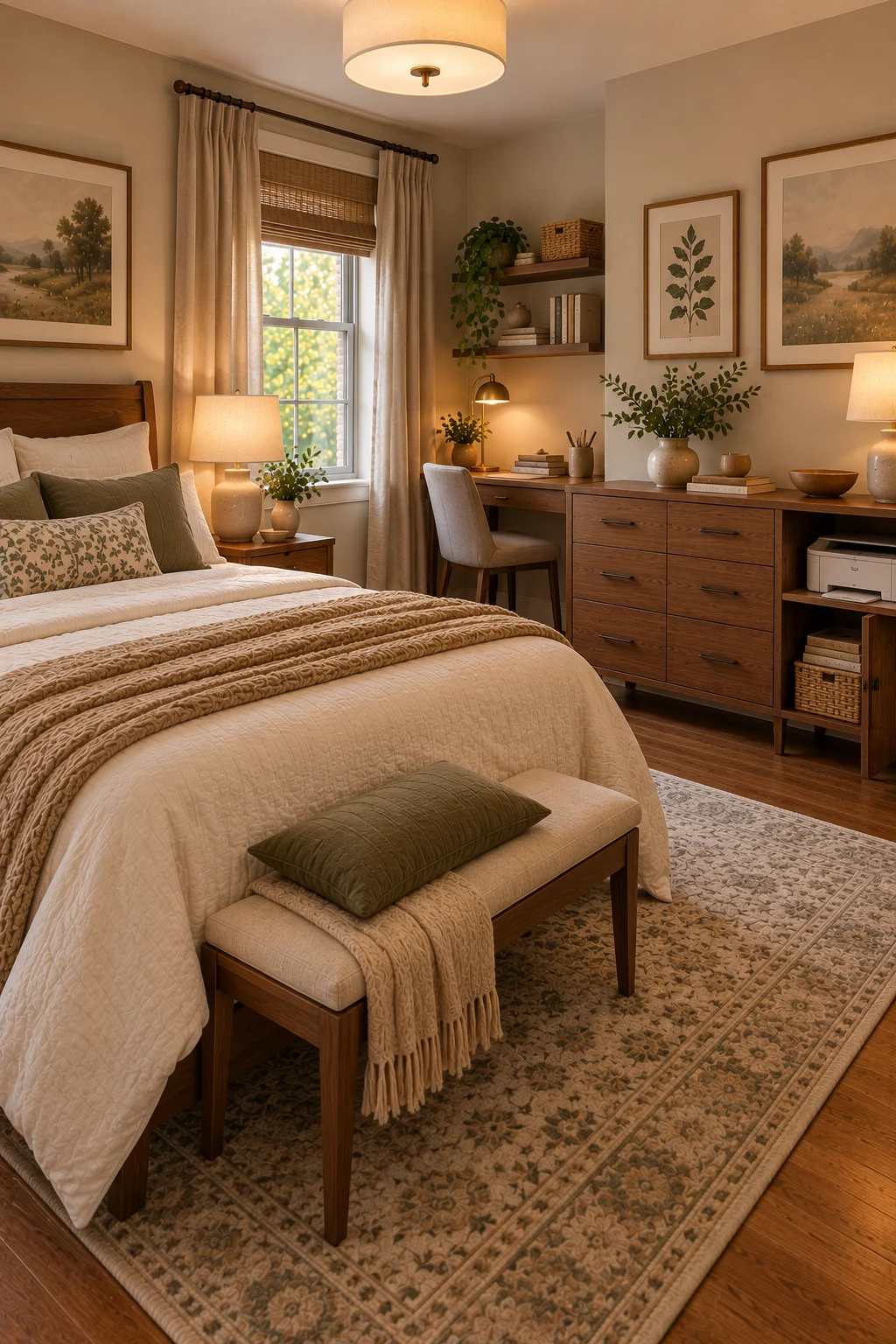
11. Separate Task and Bedside Lighting
A guest bedroom office needs different lighting for working and relaxing.
At the desk, choose an adjustable task lamp that illuminates the work surface without creating uncomfortable glare on a computer screen.
Beside the bed, use a softer lamp or wall-mounted reading light that guests can reach easily.
General ceiling lighting helps illuminate the entire room, while separate task and bedside fixtures allow each area to function independently.
Warm-white bulbs around 2700K–3000K can complement cream bedding and walnut furniture. The desk may benefit from a brighter, well-directed light depending on the work being performed.
Lighting tip: Make sure guests can switch on a bedside light without crossing the room in the dark. Keep cords out of walking routes and avoid placing electrical equipment where bedding or moving furniture could damage it.
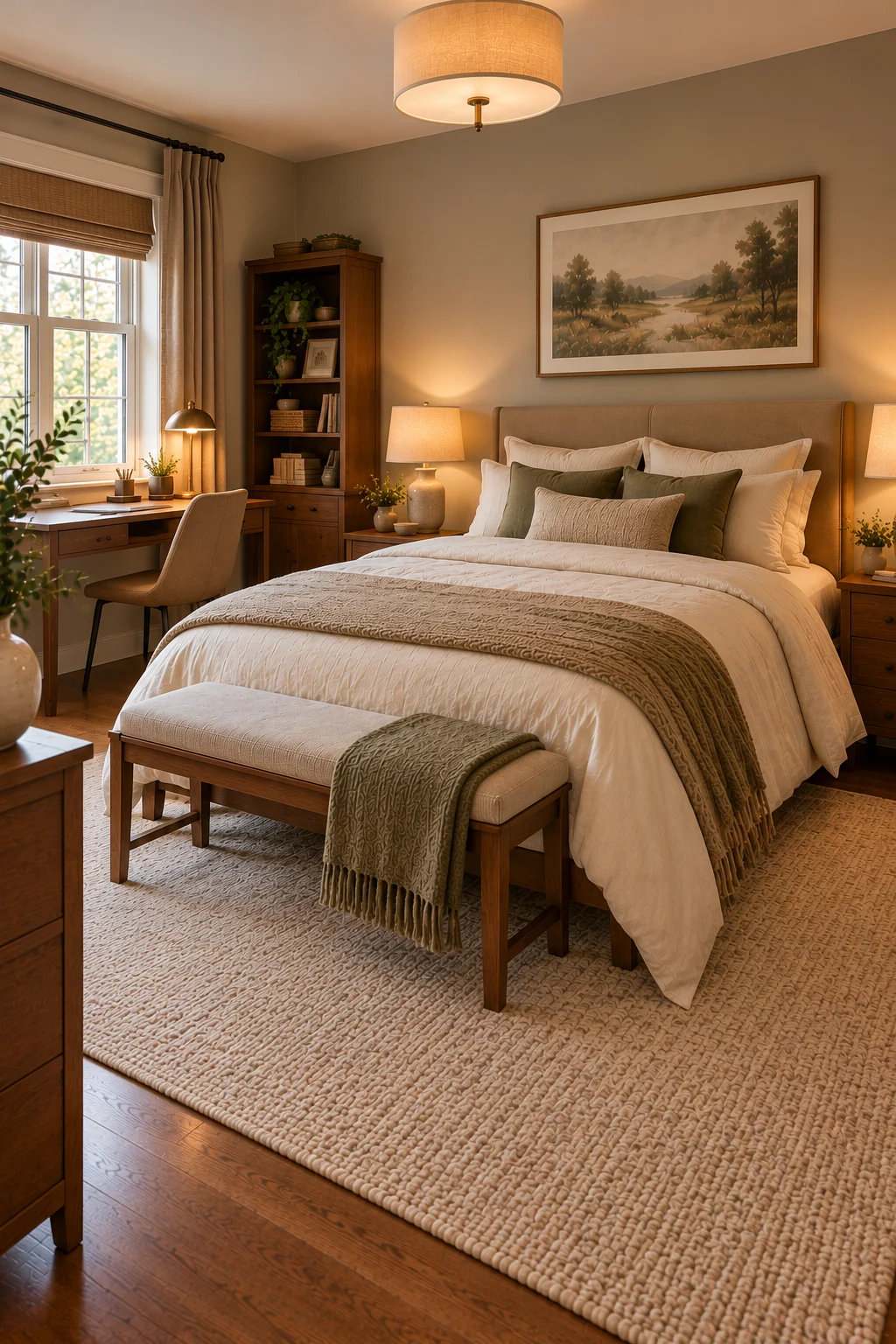
12. A Rug That Defines the Sleeping Area
A rug can visually separate the sleeping area from the workspace without adding a physical divider.
Choose a low-pile rug in ivory, mushroom, or warm beige and position it beneath the bed so it extends into the area where guests step down.
This creates a softer, more inviting zone around the sleeping furniture while allowing the desk area to remain visually distinct.
Natural walnut furniture and cream bedding complement the neutral rug, while a muted-olive cushion can add a small amount of color.
If the desk chair has wheels, consider whether it will move more comfortably on the exposed floor or on a suitable chair mat rather than across a thick rug.
Safety tip: Choose a rug size that fits the room and use an appropriate nonslip pad where needed. Keep rug edges away from door swings and frequently used walking routes to reduce tripping hazards.
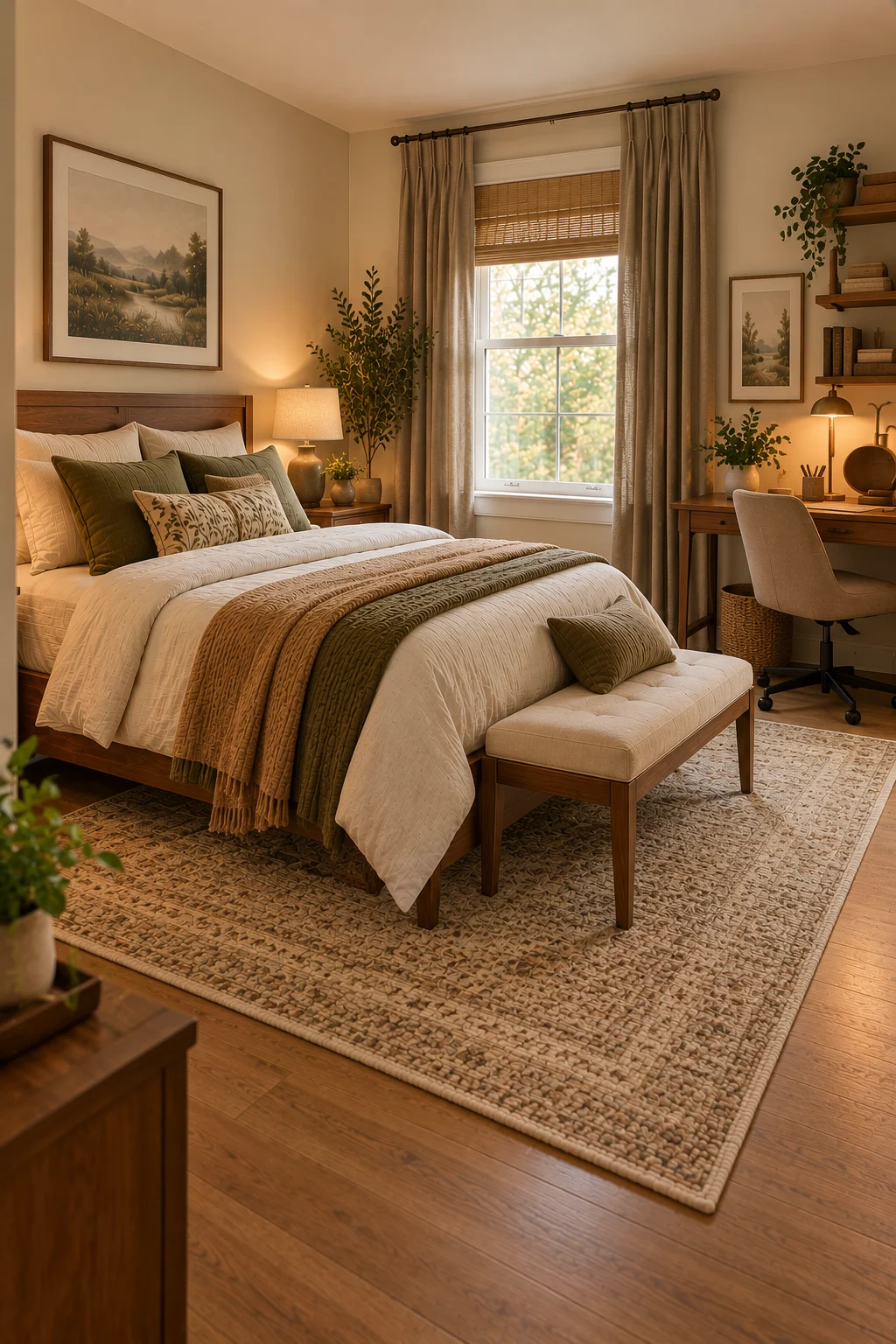
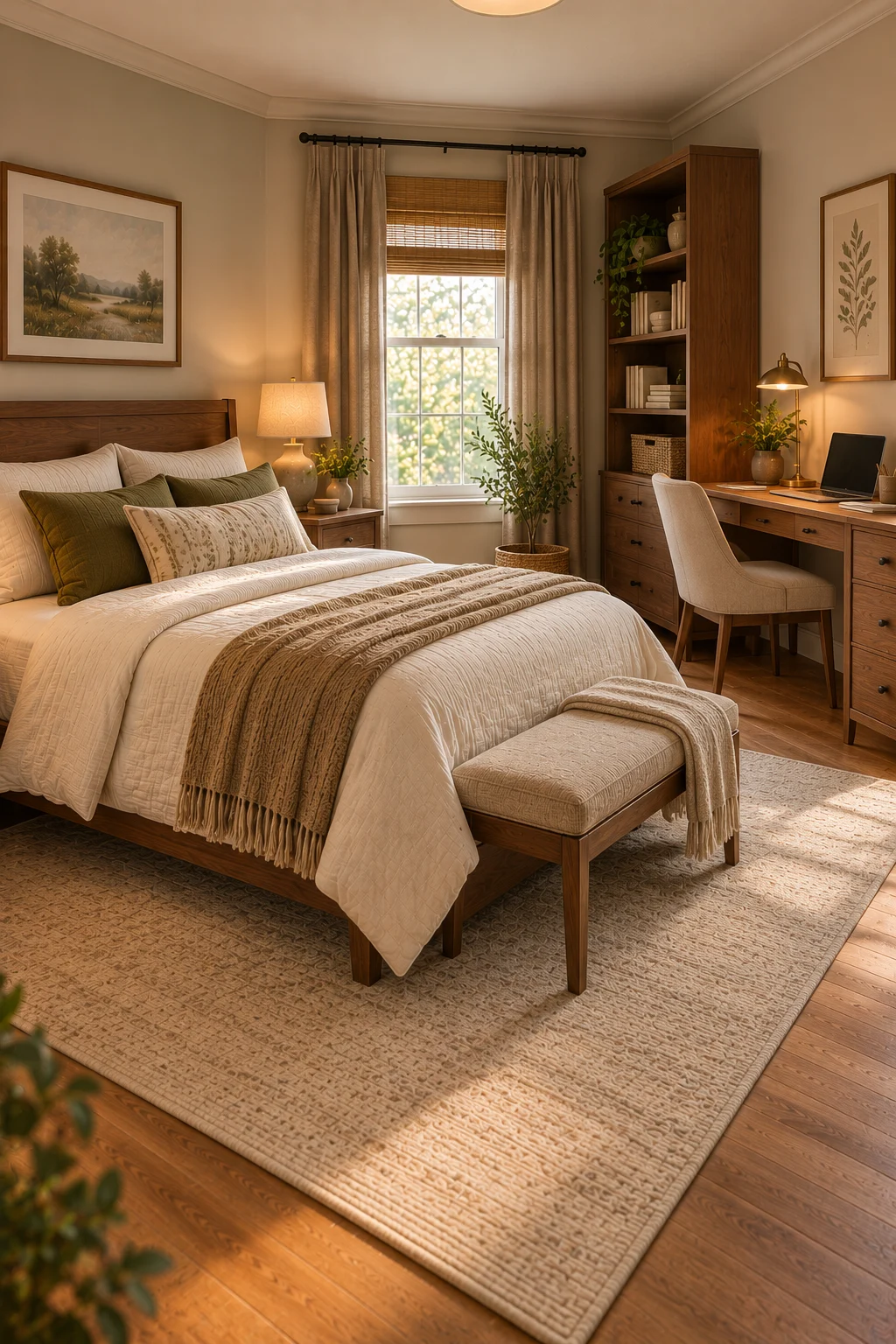
13. A Complete Guest Bedroom and Office Layout
A successful guest bedroom office layout brings together comfortable sleeping furniture, a functional desk, practical storage, and clear circulation.
Begin with the bed because it usually occupies the largest area. Position it where guests can access it comfortably without walking around the desk chair or office equipment.
Place the desk near natural light when possible, taking care to control glare and preserve window access.
Use closed storage for paperwork and office supplies, and reserve a separate area for guest belongings.
Keep the palette cohesive with cream bedding, walnut or oak furniture, mushroom curtains, and a restrained olive accent.
Finish with a comfortable bedside lamp, a clear surface for a phone or glasses, and enough room for a small overnight bag.
Final layout check: Walk through the room as though you’re arriving as a guest. Can you reach the bed, open the closet, access the window, and find the light switches without moving office furniture? Then sit at the desk and check whether you can work comfortably. A good dual-purpose layout should pass both tests.
Plan the Room Before Decorating
Before buying furniture, measure the room and identify how much space each function requires.
Start with the dimensions of the bed, desk, chair, dresser, and any existing storage. Mark the positions of doors, windows, outlets, heating equipment, and closet openings.
Then consider the room in two different situations: a normal workday and an overnight guest visit.
During the workday, the chair should move comfortably, the desk should have adequate lighting, and frequently used supplies should remain accessible.
When guests arrive, they should be able to reach the bed, use the closet or designated storage, and move through the room without navigating office equipment.
Convertible furniture requires additional planning. Measure Murphy beds, futons, and fold-down desks in their fully opened positions rather than relying on their closed dimensions.
Use a simple floor-plan sketch or painter’s tape to test furniture footprints before making major purchases.
Choose a Cohesive Color Palette
A restrained color palette helps a guest bedroom office feel calm even when several different furniture pieces share the space.
Warm cream is a versatile starting point for walls and bedding. It creates a soft background for walnut or oak furniture and works well with both traditional and contemporary designs.
Introduce mushroom greige through curtains or upholstery, then add camel or muted olive in smaller accents.
A practical palette might include:
- Warm cream: Walls, bedding, and larger storage pieces.
- Walnut or oak: Desk, nightstand, dresser, or shelving.
- Mushroom greige: Curtains, task-chair upholstery, or rugs.
- Camel: Throws, cushions, or upholstered seating.
- Muted olive: One or two decorative accents.
Test colors beside the existing flooring and furniture. Natural daylight and warm evening lighting can change how cream and greige appear.
Repeating a few finishes throughout the room creates a more cohesive result than introducing a different color with every accessory.
Furniture Scale and Everyday Comfort
Furniture should fit the actual bedroom rather than an idealized showroom layout.
A compact desk may provide everything needed for laptop work, while a larger workstation might be necessary for multiple monitors or extensive paperwork.
Choose the desk based on your working requirements and the available floor space.
For sleeping, prioritize a comfortable mattress or convertible sleeping surface suitable for the people who will use it.
Daybeds, futons, and Murphy beds each have different advantages. A daybed provides permanent seating and sleeping space, a futon converts between sofa and bed, and a Murphy bed can free up floor space when properly installed and stored.
Remember that furniture needs operating space. Desk chairs must pull back, drawers must open, and convertible beds need clear areas for unfolding.
If the room feels crowded, reducing the number of furniture pieces is often more effective than choosing smaller versions of everything.
Lighting That Works Morning and Night
Because a guest bedroom office supports different activities, it benefits from layered lighting.
General overhead lighting provides overall visibility, while a task lamp illuminates the desk for reading, writing, or computer work.
A separate bedside lamp creates a comfortable atmosphere for guests and allows them to read without relying on the main ceiling light.
Warm-white lighting often complements natural wood and cream textiles, but adequate brightness and glare control are important for work.
If the desk is near a window, consider adjustable curtains or shades to manage direct sunlight on the screen.
Keep cords organized and away from moving furniture, bedding, and walkways. Electrical installations should follow applicable requirements, and decorative lighting should never replace the practical illumination needed for work and safe movement.
Budget-Friendly Updates
Creating a guest bedroom office doesn’t always require replacing the bed or installing custom cabinetry.
Start by identifying the biggest limitation in the current room. If the desk is too large, a compact replacement may improve circulation. If office supplies are constantly visible, closed storage may make the space feel more welcoming.
Consider these affordable improvements:
- Reuse existing furniture: Keep a suitable bed, dresser, or desk if its dimensions work.
- Update bedding: Fresh cream bedding and a textured throw can make the guest area feel more intentional.
- Add closed storage: A small cabinet or drawer unit can conceal office supplies.
- Improve lighting: A dedicated task lamp and accessible bedside light can make both functions more comfortable.
- Coordinate accessories: Matching a few colors across the desk and bed creates visual consistency.
- Rearrange the layout: Moving existing furniture may solve circulation problems without additional purchases.
Set aside part of the budget for practical essentials such as appropriate mounting hardware, cable management, rug pads, and durable textiles.
For more expensive additions, such as a Murphy bed, consider installation requirements and long-term use before deciding whether the investment makes sense.
Common Mistakes to Avoid
One of the biggest mistakes in a guest bedroom office is prioritizing the workspace so heavily that guests have nowhere comfortable to sleep or store their belongings.
A room with an excellent desk but an uncomfortable futon or blocked bedside access won’t function well as a guest bedroom.
The opposite problem can also occur. A large bed may look inviting but leave too little room for a functional chair and desk.
Other common mistakes include:
- Ignoring furniture conversion space: Measure futons, Murphy beds, and fold-down desks in their working positions.
- Leaving office clutter visible: Use closed storage for paperwork, chargers, and equipment.
- Providing inadequate lighting: Give the desk and bedside area their own appropriate light sources.
- Choosing an uncomfortable desk chair: Select a chair suited to the amount of time you spend working.
- Blocking access: Keep doors, windows, drawers, outlets, and ventilation openings usable.
- Forgetting guest essentials: Leave a clear surface, accessible lighting, and storage for personal belongings.
Review the room from both perspectives before making major changes. The design should support everyday work and occasional overnight stays without requiring a complete furniture rearrangement each time.
Maintenance and Safety
A dual-purpose bedroom should be easy to clean, reset, and maintain.
Choose washable bedding and durable furniture finishes that can handle regular use. Keep office supplies organized so the room can transition from workspace to guest room without a lengthy cleanup.
Inspect convertible furniture according to the manufacturer’s instructions. Murphy beds, futons, and fold-down desks should operate smoothly and remain securely installed.
Use appropriate anchoring for tall cabinets and shelving, and avoid placing heavy decorative objects directly above sleeping areas.
Keep electrical cords away from walkways and moving furniture. Do not overload outlets or place equipment where bedding could obstruct ventilation.
Maintain clear access to doors, operable windows, smoke alarms, heating and cooling vents, and other essential features.
Before guests arrive, put away confidential work materials, check that the sleeping area is clear, and make sure bedside lighting and storage are ready to use.
Final Thoughts
A well-designed guest bedroom office can make an underused room much more valuable without sacrificing comfort or style.
For small spaces, consider a compact futon, a daybed with storage, or a fold-down desk. If you prefer a traditional guest bed, pair it with a narrow workstation and furniture that doesn’t interfere with circulation.
Closed storage, coordinated neutral colors, and separate lighting for work and relaxation help the room feel organized and welcoming.
Most importantly, plan for both functions from the beginning. Measure furniture in its working position, preserve comfortable access around the bed, and make room for guest essentials.
With thoughtful furniture choices and a practical layout, your guest bedroom and home office can support productive workdays while still offering visitors a comfortable place to stay.
