
14 Japandi Style Bedroom Ideas for a Calm and Minimal Retreat
The bed fits, the dresser works, and yet the bedroom still feels crowded by all the little decisions around them. A Japandi approach can help you simplify without turning the space cold or impersonal. These Japandi style bedroom ideas combine clean-lined furniture, quiet colors, natural textures, and practical storage to create a calm retreat that remains useful on an ordinary weekday. You do not need an architectural renovation or a completely new furniture set. Often, a softer textile, a better bedside arrangement, or one thoughtfully finished wall makes the biggest difference. The goal is a room with enough character to feel like yours and enough breathing room to let you rest. Here are fourteen ways to put that balance into practice.
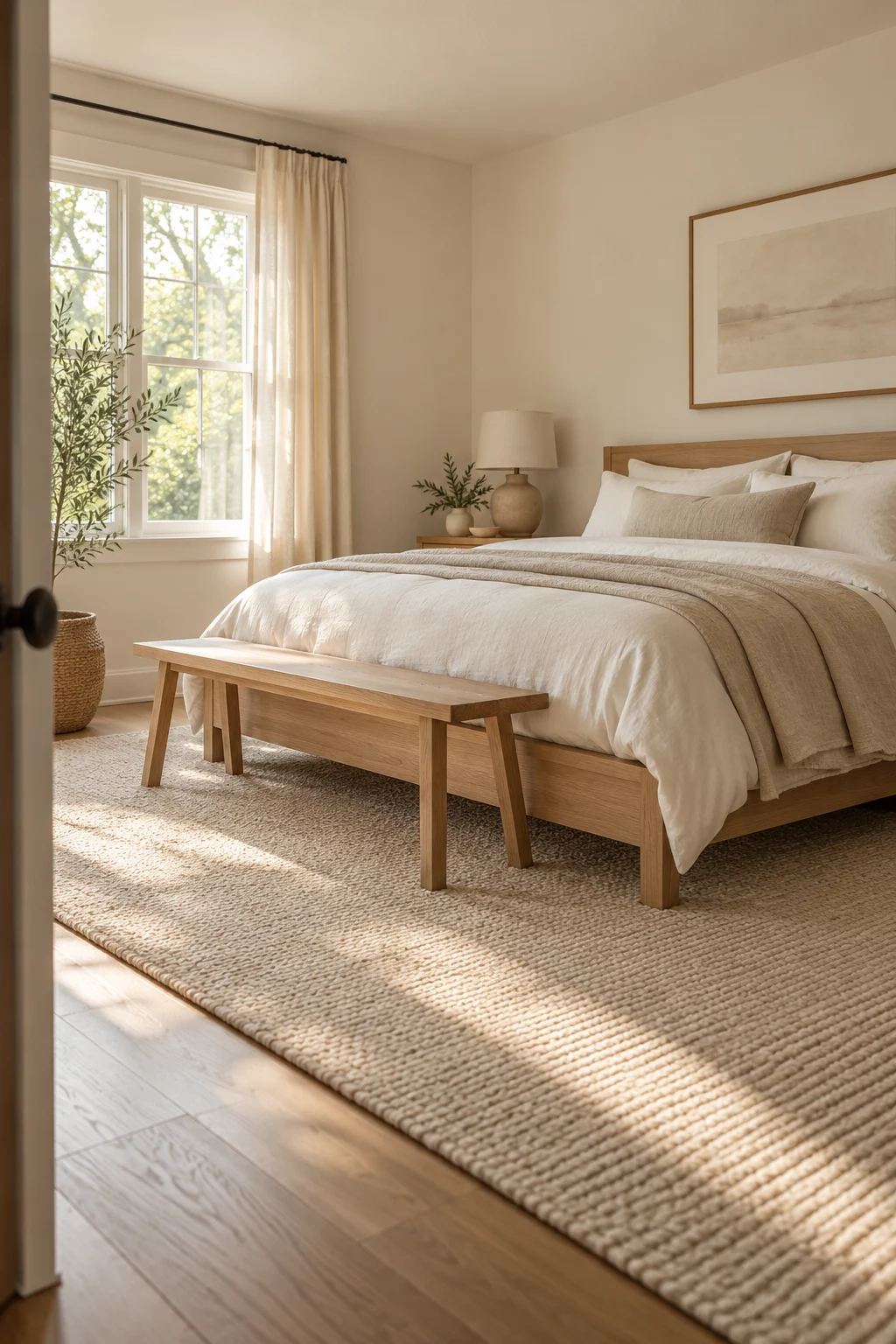
1. Low Oak Bed With Linen Layers
A low natural-oak platform bed anchors the room without demanding attention. Keep the frame simple, with a visible wood grain and no ornate headboard. Layer an ivory duvet over crisp cotton sheets, then fold a sand-colored linen coverlet across the foot. The combination gives the bed depth while preserving the pared-back character that makes Japandi interiors inviting. A slim bench in a matching wood tone can hold a folded blanket, but leave its surface mostly clear. This arrangement works especially well in a modest room where tall furniture would crowd the view. The practical compromise is that low beds can be less comfortable for anyone who finds standing from a low seat difficult. Try the height before committing to the frame.
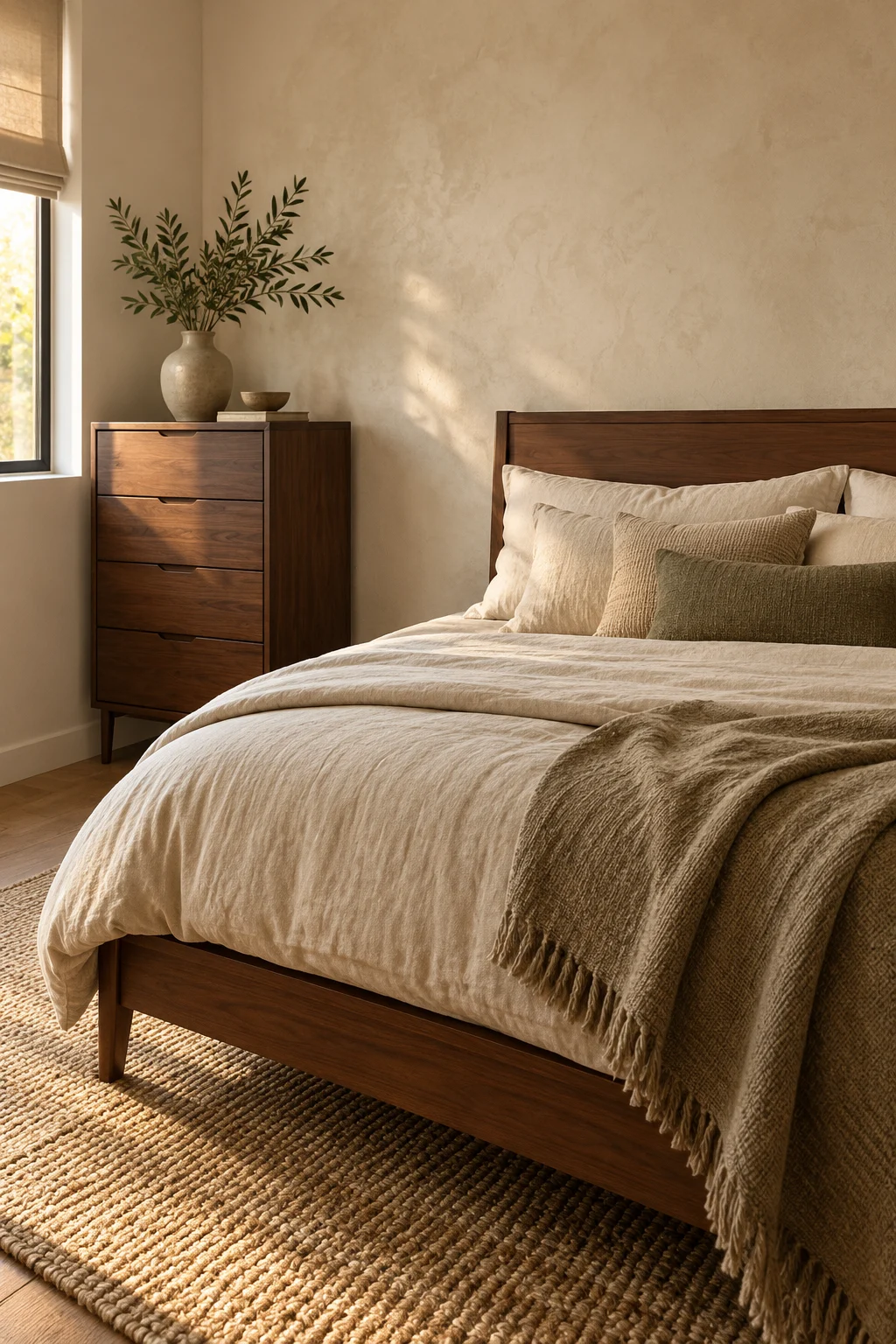
2. Warm Plaster Walls And Walnut Accents
A softly textured wall can make a restrained bedroom feel richer without adding visual clutter. Use a warm off-white plaster-look finish behind the bed and introduce medium-walnut furniture for a deeper counterpoint. A walnut nightstand and narrow dresser are enough to establish the contrast; there is no need to match every piece. Keep the finish subtle rather than heavily mottled, especially if the bedroom receives limited daylight. Sample the wall color in morning and evening light because warm neutrals can shift noticeably. For renters, a removable textured-look wallpaper may be more practical than a permanent decorative coating. The result feels tactile and grounded, with the furniture providing definition against the quiet background. A simple ceramic vessel makes a better accent than several small ornaments.
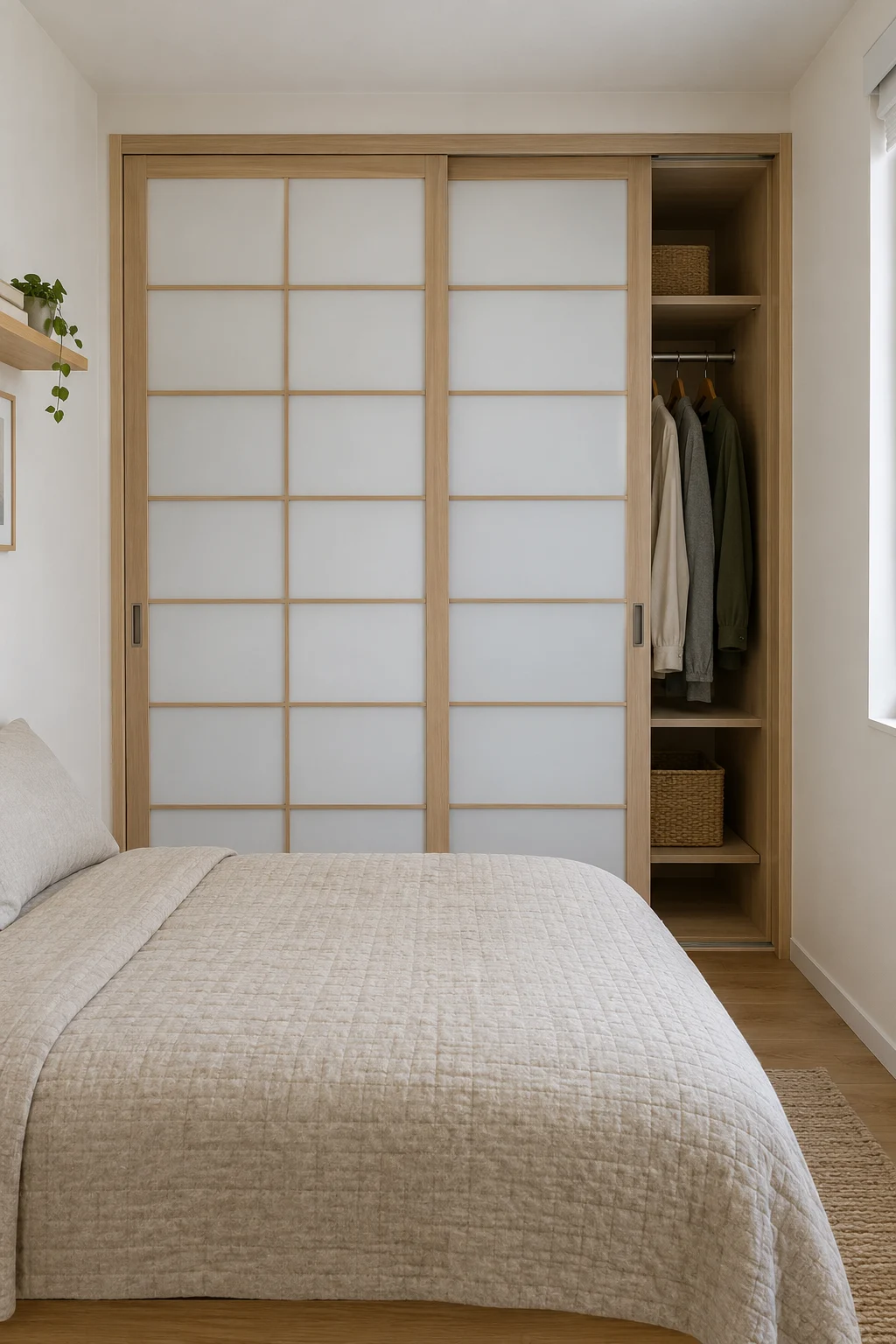
3. Shoji Inspired Sliding Closet Panels
Closet doors are often a large visual surface, so treating them as part of the room design can have a striking effect. Shoji-inspired panels with pale wood grids and opaque inserts create a soft architectural rhythm. Choose sturdy, commercially made sliding doors suitable for the existing closet track rather than improvising a fragile screen. The panels should slide freely without blocking a doorway or ventilation opening. This idea is particularly appealing in bedrooms where a standard mirrored closet feels too bright or busy. It also works with plain bedding and a small timber bedside shelf. Because opaque inserts conceal the contents, the closet interior does not need to become part of the decor. Keep the grid simple; elaborate latticework changes the atmosphere considerably.
4. Charcoal Headboard Against Cream Walls
Japandi style does not require an entirely pale palette. A charcoal upholstered headboard introduces a quiet dark note that can make cream walls and light wood look more intentional. Select a low-profile headboard in a matte woven fabric, paired with a simple ash bed frame. Bedding in stone and ecru keeps the contrast balanced. A single black metal reading light echoes the headboard without turning the room into an industrial scheme. The fabric surface may need regular vacuuming, particularly in a home with pets, so consider a tightly woven upholstery. This option suits people who enjoy a little drama but do not want a dark room. Leave the adjacent wall mostly bare to preserve the headboard as the strongest visual element.
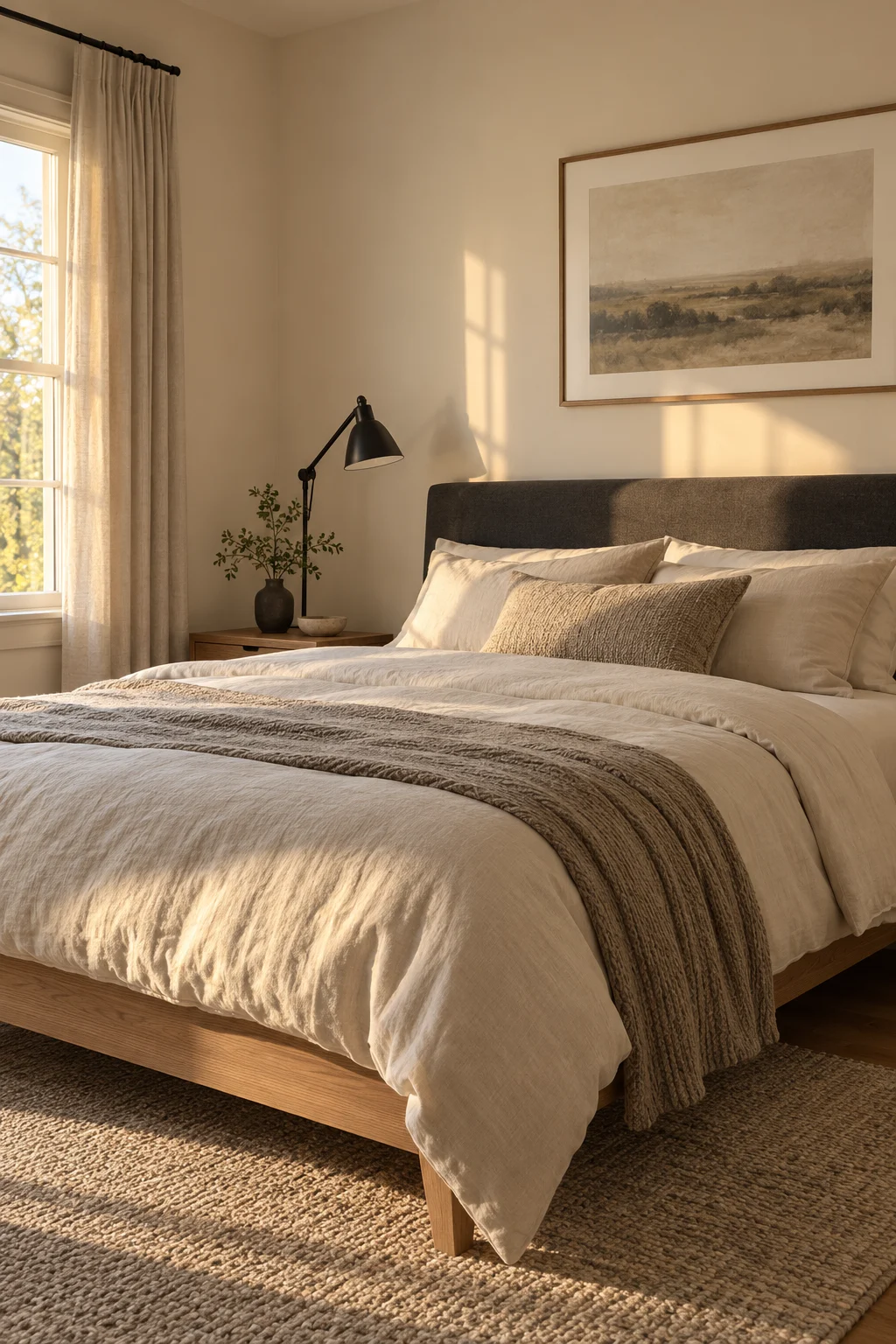
5. Paper Lantern Pendant Over The Bedside
A paper lantern can soften the edges of a bedroom with an airy, sculptural shape. Hang a modest lantern-style pendant beside the bed, where it replaces a bulky table lamp and frees up nightstand space. Pair it with a pale beech shelf and a cotton shade in warm white. Use an appropriately rated electrical fixture installed according to its instructions, with the shade safely separated from the bulb and bedding. A warm, low-glare LED lamp gives the paper a gentle glow at night. This arrangement is ideal for a narrow bedside area, although it is less flexible than a portable lamp once installed. Keep the rest of the ceiling treatment plain so the lantern remains a single thoughtful feature.
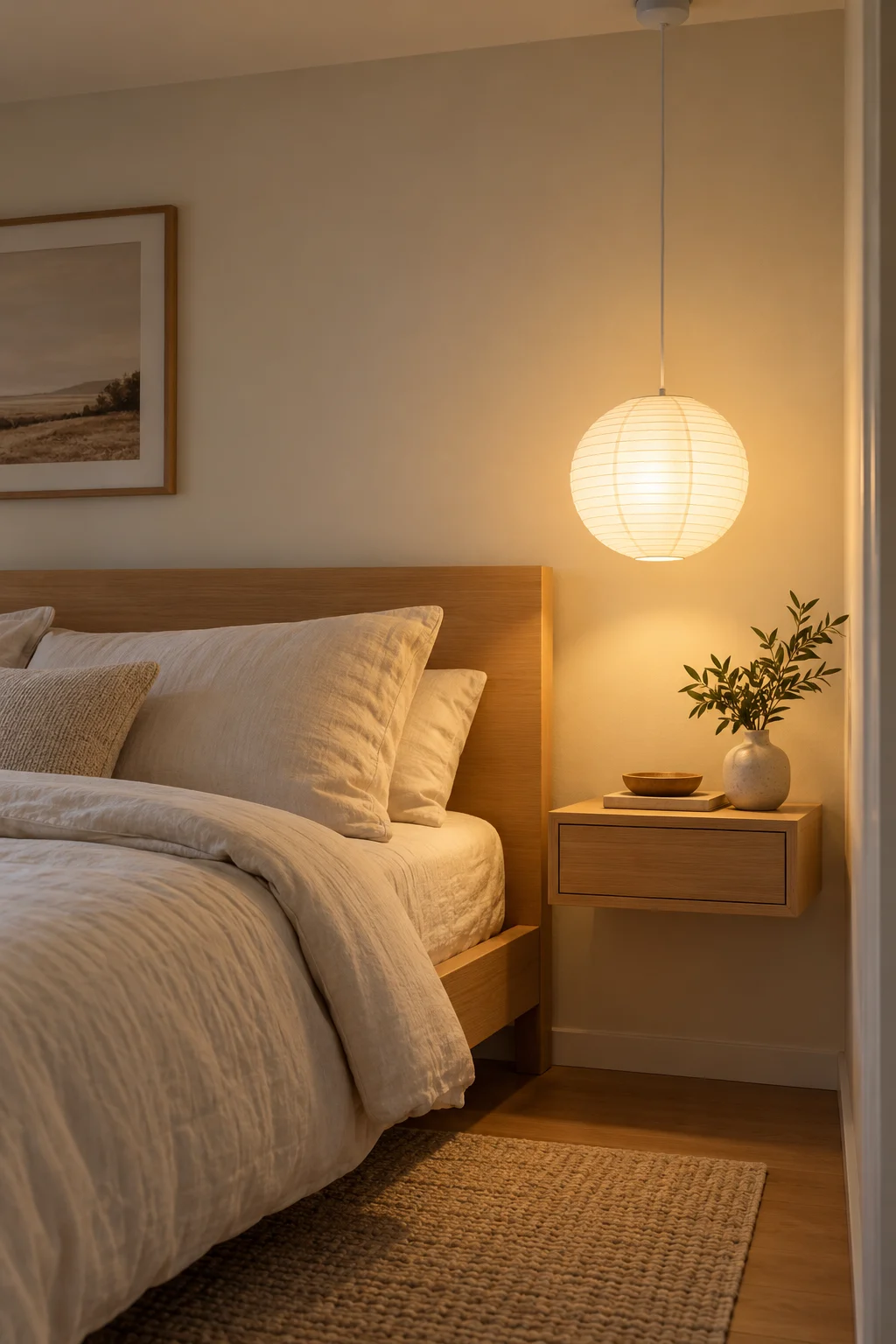
6. Olive Green Bedding With Pale Timber
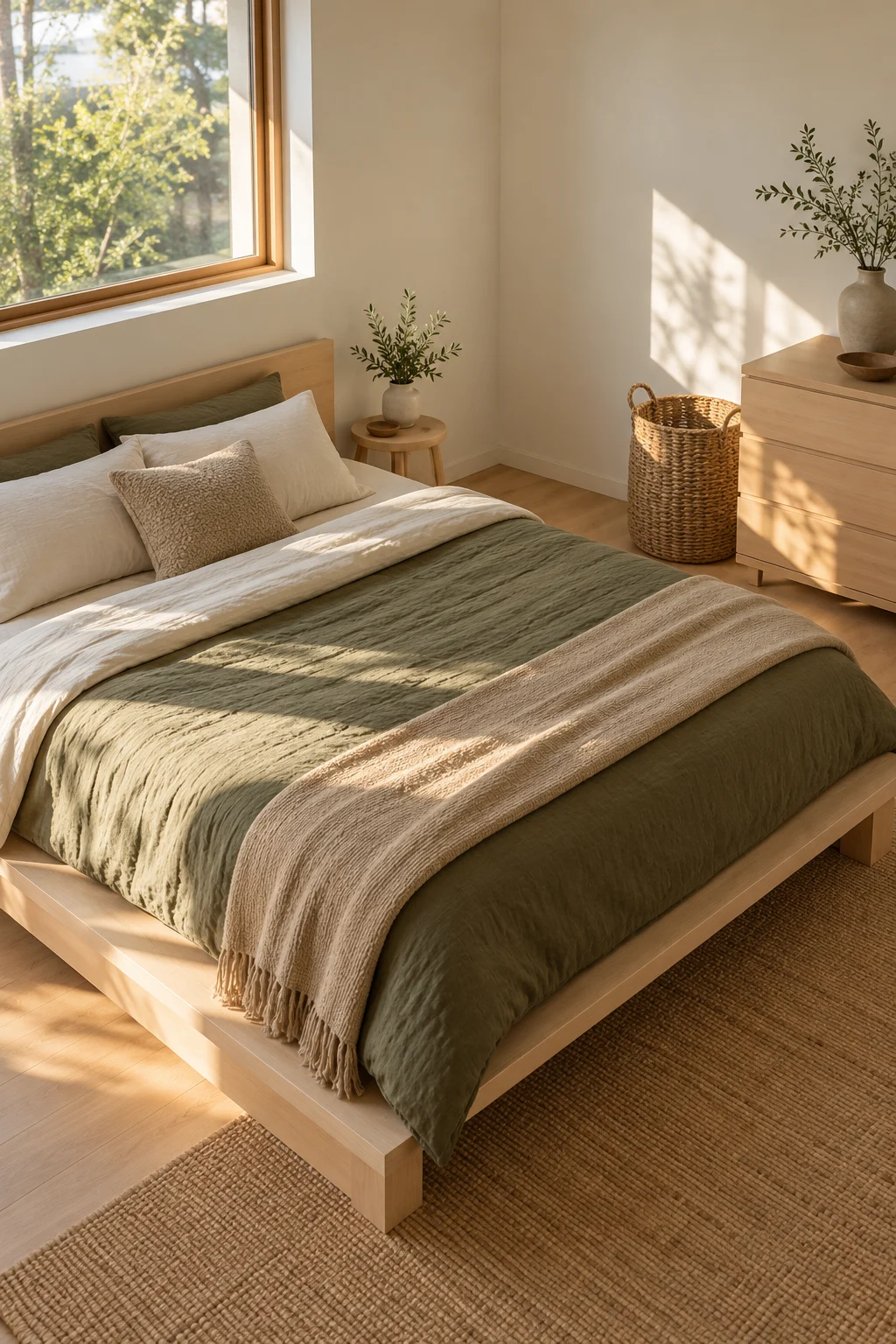
Muted olive gives a neutral Japandi bedroom a connection to nature without relying on a room full of plants. Start with a pale timber bed and cream fitted sheets, then add an olive linen duvet or quilt. One natural wool cushion and a tan throw provide just enough variation. Keep wall color in a warm white so the green reads as soft rather than heavy. Linen wrinkles are part of its relaxed appearance, but anyone who prefers a crisp hotel-style bed may favor a cotton blend instead. The palette is especially effective in rooms with eastern daylight, where the olive looks fresh in the morning. A compact woven basket beside the dresser adds storage without introducing another furniture finish.
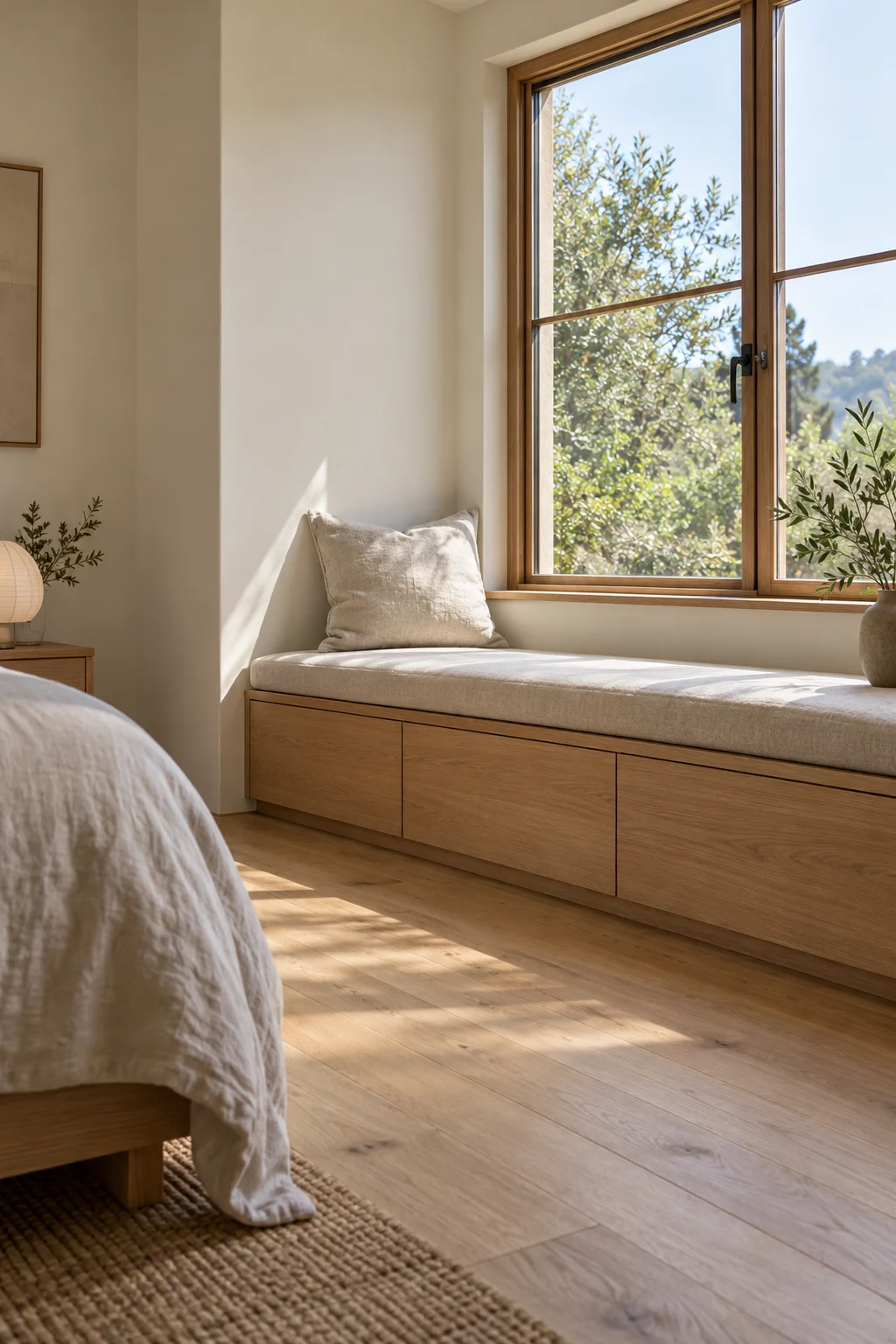
7. Built In Window Seat With Storage
A window seat can turn an awkward recess into a useful place to read while preserving floor space. Choose a low, simple timber bench with closed storage drawers below and a firm oatmeal cushion above. The seat should not obstruct an operable window, heating register, or required escape route. In a small bedroom, built-in work needs careful planning, so a freestanding storage bench may be the easier alternative. Add a single linen pillow rather than a pile of decorative cushions. The clean horizontal shape fits the Japandi preference for functional furniture that feels calm. This idea is best for a window wall with enough depth to sit comfortably, not a narrow ledge that would encourage precarious perching.
8. Black Framed Art Above A Dresser
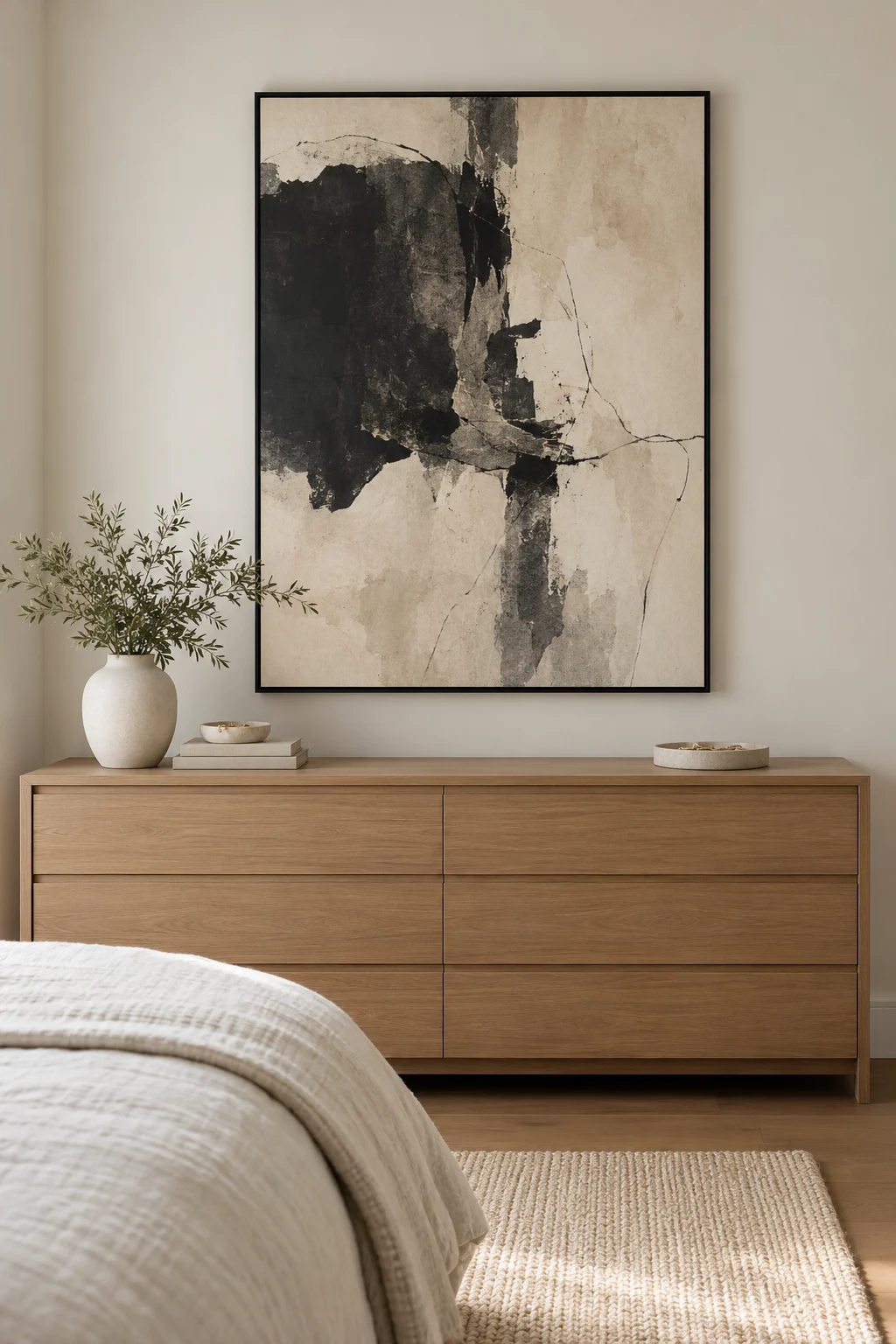
A single piece of abstract art can bring a sense of intention to a bedroom without creating a gallery wall. Choose a print with soft ink-like shapes in charcoal and beige, placed in a slim black frame above a low oak dresser. Let the artwork sit comfortably within the dresser width, leaving open wall around it. A shallow ceramic bowl can hold everyday jewelry, but avoid filling the surface with decorative objects. This approach is useful in bedrooms where the bed wall is already occupied by a window or headboard. The black frame introduces a defined edge, while the artwork keeps the mood quiet. If the print has strong contrast, repeat black only once elsewhere, perhaps in a small drawer pull.
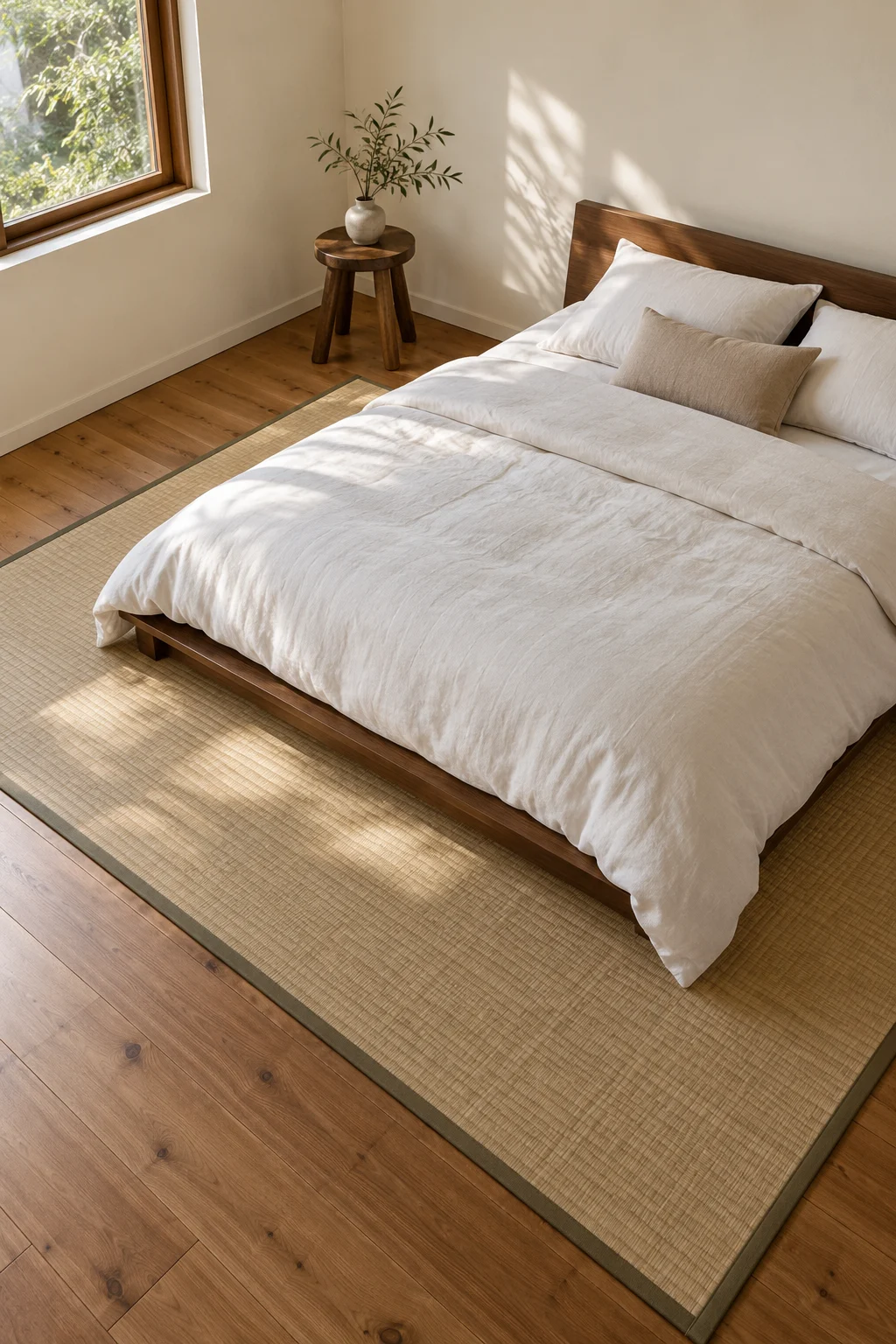
9. Tatami Inspired Woven Floor Texture
A flat woven floor covering adds an earthy layer underfoot and brings subtle Japanese influence to a contemporary bedroom. Look for a durable natural-fiber-look rug or mat with a fine, orderly weave, placed partly beneath a low bed. Choose a texture comfortable for bare feet; some coarse plant fibers can feel scratchy and may be difficult to clean. A thin nonslip rug pad helps keep a freestanding mat steady on a smooth floor. Pair the woven surface with smooth walnut furniture and plain white bedding to emphasize the difference in textures. This design is strongest when the floor is visible around the bed rather than hidden beneath many small rugs. A rectangular silhouette maintains the room’s clean lines.
10. Clay Ceramic Lamps And Stone Neutrals
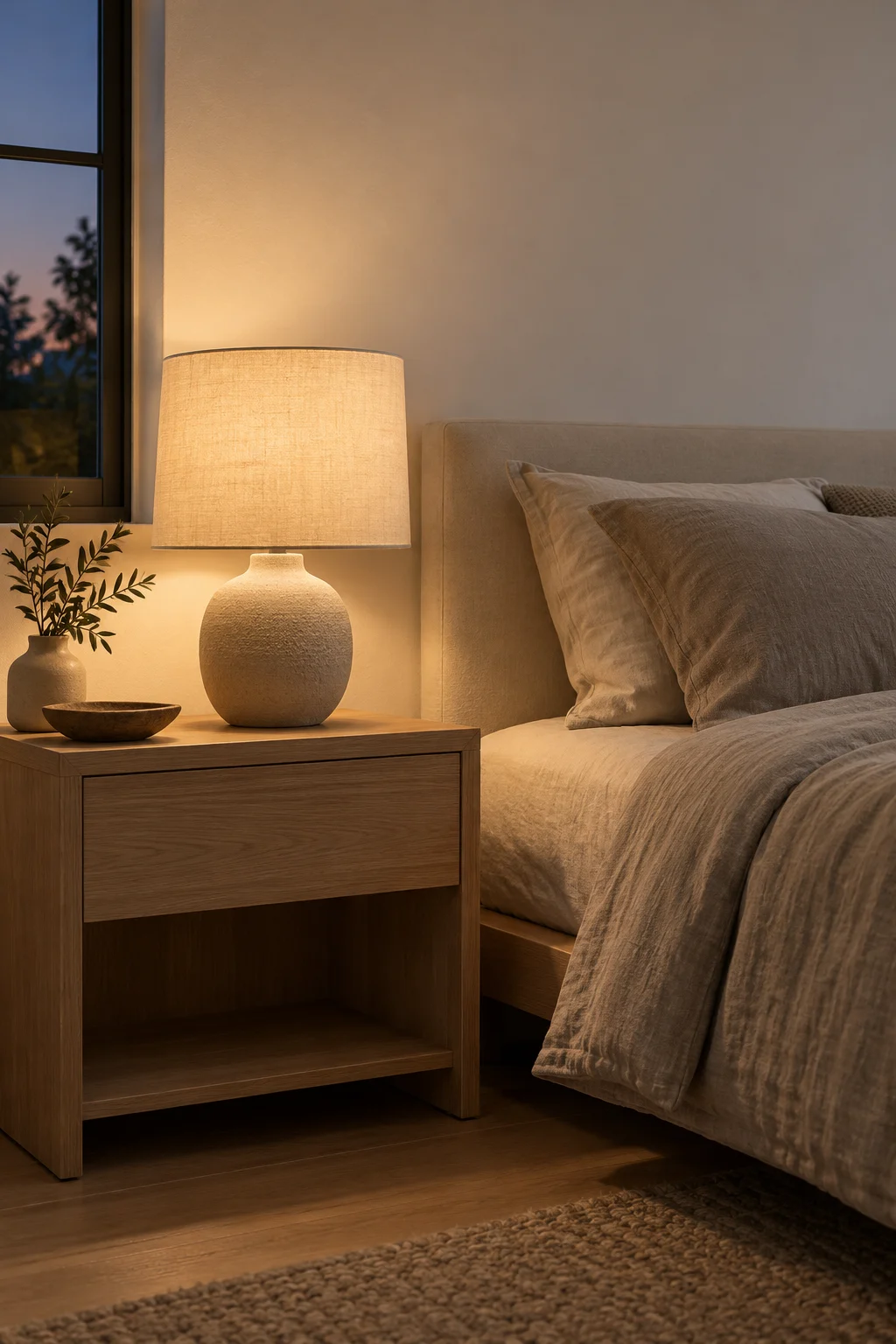
Handmade-looking ceramics provide an understated focal point for a room with very little decoration. Place a matte clay-colored table lamp on a compact pale-oak nightstand, and pair it with bedding in chalk, pebble, and warm taupe. The lamp’s imperfect rounded silhouette offers a welcome contrast to the bed’s straight lines. Choose a stable base that fits the table without hanging over the edge, especially in a tight passage. An opaque fabric shade can diffuse light for evening reading. The muted clay hue works well for anyone who wants warmth without pink or orange accents dominating the space. Resist adding multiple competing ceramic pieces; one substantial lamp and a small cup for essentials are sufficient.
11. Vertical Slat Accent Behind The Headboard
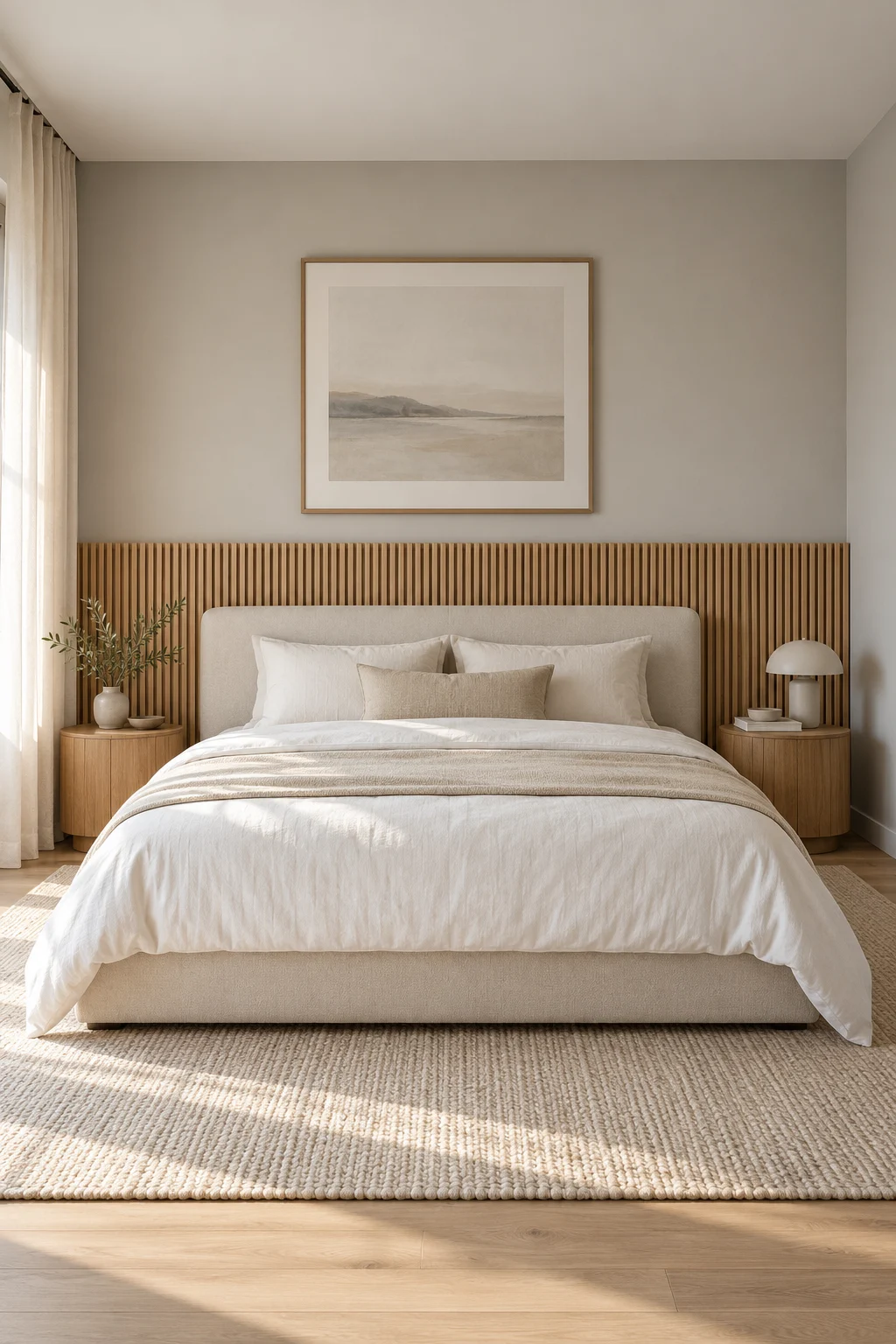
Thin timber slats can add architectural detail while staying true to a restrained bedroom palette. Use a limited panel of closely spaced light-oak slats behind the headboard rather than covering every wall. A plain cream upholstered bed softens the repetition, while white bedding keeps the arrangement visually light. The slats should be securely installed with a method appropriate for the wall and should not conceal needed access panels. Dust can gather in grooves, so the detail suits someone comfortable with occasional careful cleaning. In a small bedroom, a partial-height panel may look more balanced than a full wall treatment. Skip additional patterned wallpaper or elaborate artwork on the same surface; the rhythm of the wood already supplies interest.
12. Soft Sage Curtains With Natural Linen
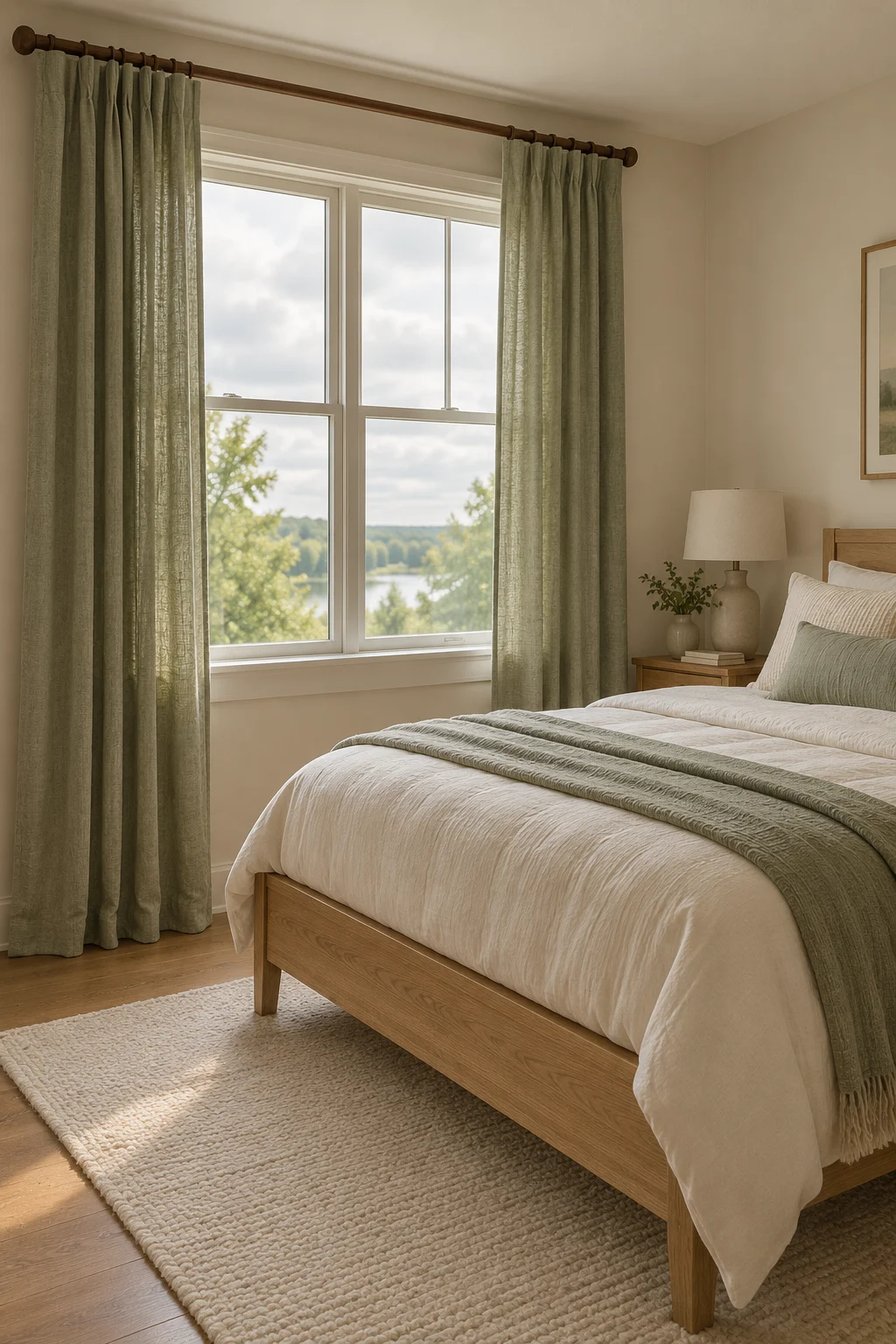
Window treatments can quietly connect the room’s neutral elements. Try soft sage curtains in a linen-look fabric, hung in simple panels that frame the window without covering too much glass. Pair them with a light oak bed, ivory bedding, and a small cream rug. A matte bronze or dark wood curtain rod adds definition without looking decorative. For bedrooms that need darkness, consider a discreet blackout lining rather than stacking several bulky layers. Curtains should clear any baseboard heater and leave window handles usable. This scheme is especially appealing when the view outside contains greenery, since the sage relates naturally to the landscape. Keep the remaining textiles plain to let the drape of the curtains provide movement.
13. Compact Reading Corner With Bentwood Chair
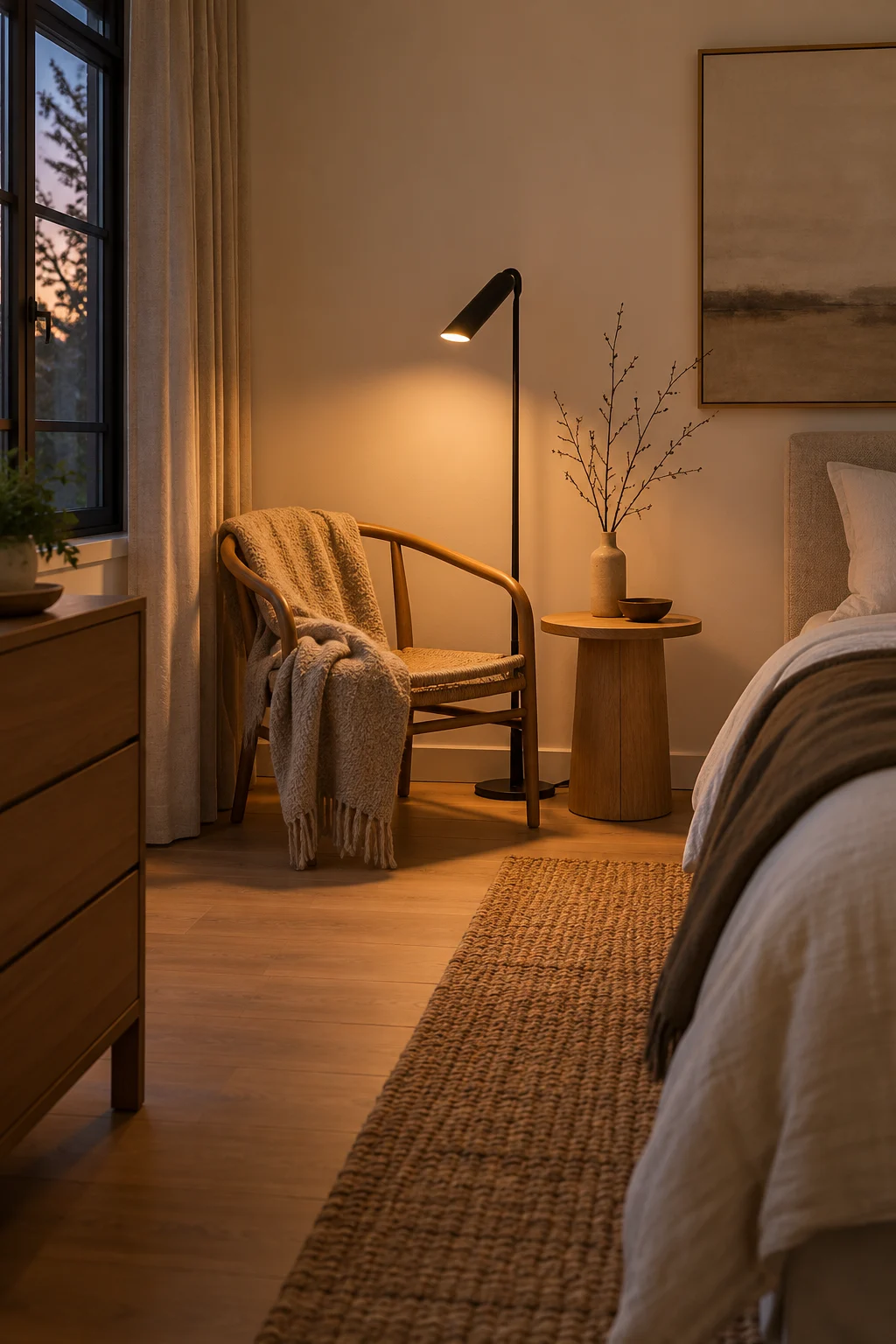
A bedroom reading corner does not need a full lounge chair and oversized ottoman. A modest bentwood chair with a woven seat, a small round side table, and a directional floor lamp can create a useful retreat in an unused corner. Add one folded wool blanket in muted mushroom brown. The chair should be comfortable for the way you actually read; a beautiful rigid seat may not suit long sessions. Keep the lamp base and table out of the main walking route. This vignette introduces curved shapes to a room dominated by rectangular furniture, making the space feel more relaxed. A single branch in a narrow vase adds a natural note without turning the corner into a display shelf.
14. Balanced Twin Nightstands In Mixed Woods
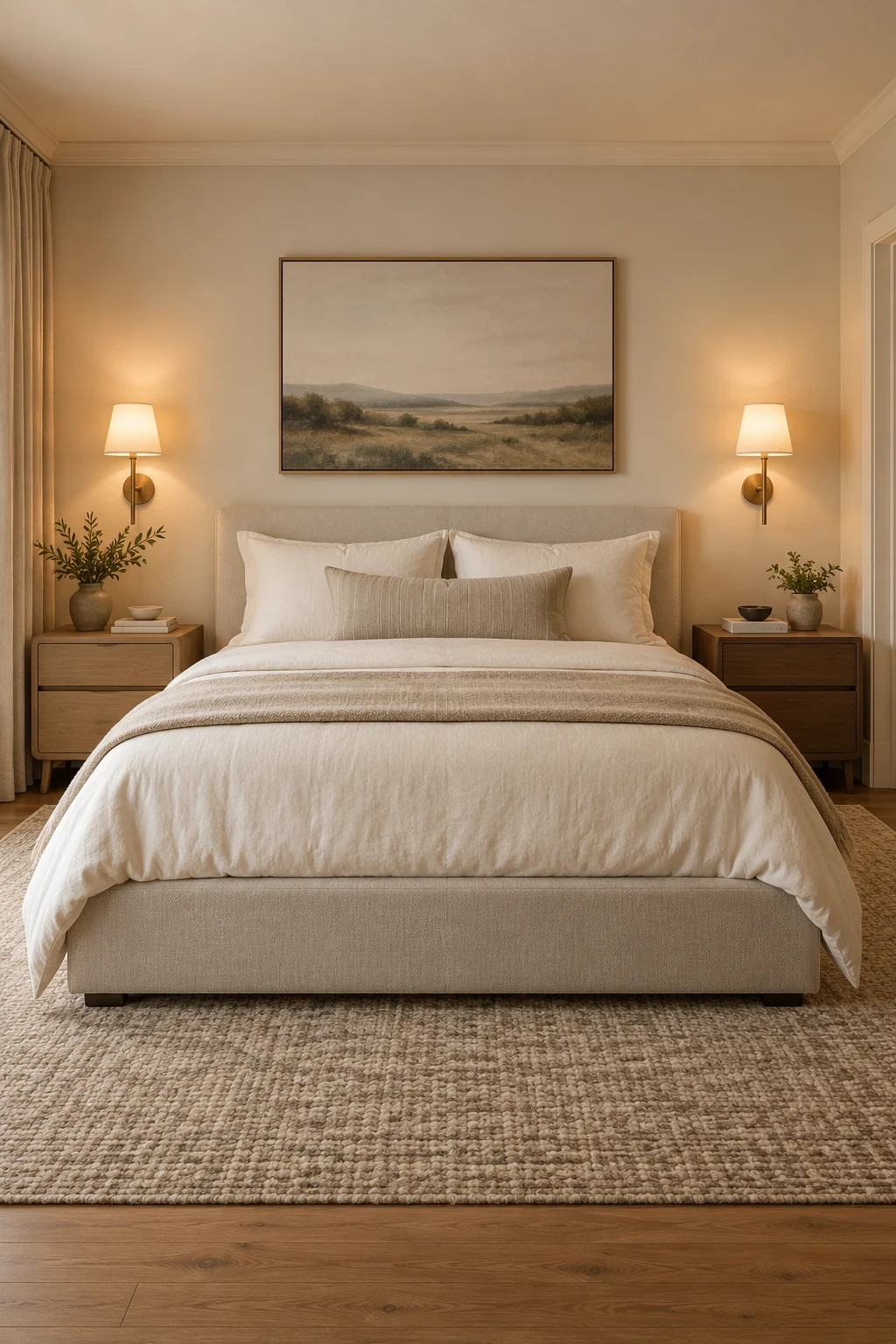
Symmetry can feel soothing, but perfectly matched furniture is not essential. Place two nightstands of the same approximate height beside a simple upholstered bed, using one in light ash and the other in medium walnut. Their similar shapes create balance while the different wood tones keep the arrangement relaxed. Use matching understated wall sconces to give both sides practical light, and keep the bedside surfaces open for books and water. This is a helpful option when combining existing furniture instead of buying a new set. The main challenge is avoiding a patchwork effect; repeat each wood tone elsewhere in a small way, such as a picture frame or bench. Soft cream bedding helps unite the pieces.
How to Choose a Japandi Bedroom Palette
Start with the light that already enters your room. North-facing spaces can make cool whites look stark, while bright south-facing rooms may support slightly deeper taupe and charcoal. Pick one main wall neutral, one wood tone that appears in larger furniture, and one restrained accent color. Bring fabric samples home rather than deciding from a screen, since a shade that looks beige online may turn pink or gray beside your floor. Texture matters as much as hue: linen, matte ceramics, wool, and smooth timber can keep a narrow palette interesting. If you already own furniture in two wood finishes, look for a common undertone instead of replacing pieces unnecessarily. Consistency comes from relationships between materials, not from making everything identical. Leave room for personal belongings; a home is not a showroom.
Planning Furniture Around Everyday Movement
Draw a rough floor plan that includes the door swing, closet opening, and the space needed to make the bed. A low platform frame can appear smaller in photographs while still occupying the same floor footprint as a taller bed. Check whether drawers can open fully and whether the route to the window stays clear. If you share the room, think about how both people reach their side of the bed and their storage. A narrow bench may seem appealing but could be the first thing to remove if circulation feels tight. Test the arrangement with painter’s tape on the floor before moving heavy furniture. Keep frequently used items within easy reach. A practical layout makes a restrained design easier to live with because the room does not need extra baskets or improvised storage to compensate.
Building a Japandi Bedroom on a Budget
You can develop this look gradually without replacing a whole bedroom suite. Start by simplifying what is visible: clear the tops of dressers, edit unused accessories, and fold extra blankets into storage. Then make one high-impact change, such as fresh neutral bedding or a carefully chosen bedside lamp. Secondhand wood furniture can work beautifully after cleaning and minor repairs, provided the pieces are structurally sound. If painting is allowed, a warm off-white wall can unify mixed furniture more economically than a major renovation. Budget for practical necessities first, including a supportive mattress and window coverage that suits your sleep habits. Decorative upgrades can follow over several months. Resist buying inexpensive accessories simply to fill empty surfaces; negative space is part of the design and costs nothing.
Keeping Minimal Rooms Comfortable Year-Round
A pared-back bedroom should still respond to changing temperatures and daily habits. In warmer months, breathable cotton sheets and a lightweight coverlet may be enough. During colder weather, add a wool throw or a thicker duvet without multiplying decorative pillows. Choose washable fabrics where possible and follow care labels, especially for linen blends and delicate woven textiles. Dust the surfaces of low furniture regularly, since horizontal edges show buildup quickly. Open windows when conditions permit and maintain appropriate indoor ventilation rather than relying on scented products to make the room feel fresh. A small basket for a current book or spare blanket can keep daily essentials contained. Comfort comes from being able to use the space easily, not from preserving a perfectly untouched arrangement.
Lighting Layers Without Visual Clutter
Think about the activities that happen in the bedroom after sunset. A central ceiling fixture may provide general illumination but can cast shadows on a book or wardrobe interior. Add focused reading light where needed, then use a softer source for winding down. Warm-toned LEDs often feel more restful than very cool white bulbs, although personal preference and task visibility still matter. Look for lamps with shades that conceal the bulb from the usual viewing angle. Keep electrical cords tidy and avoid routing them beneath rugs or pinching them behind furniture. Where wall fixtures require wiring, use a qualified professional as appropriate. A few well-placed sources create more useful flexibility than a row of decorative lights that all perform the same job.
Common Styling Pitfalls in Serene Bedrooms
The biggest risk with a minimal aesthetic is removing so much that the room stops working for you. A nightstand still needs space for water, a book, and the items you use every evening. Another issue is choosing materials solely for appearance: a scratchy rug or an uncomfortable chair will not improve your routine. Watch for too many almost-matching whites, which can look accidental unless their textures and undertones relate. Equally, several strong dark accents may overwhelm a small room. Let one element take the lead and allow the rest to support it. Finally, avoid treating every wall as a place for decoration. Blank areas give the eye somewhere to rest and make a favorite object more meaningful. Adjust gradually, using the room for a week between changes.
Frequently Asked Questions
Can Japandi bedrooms include color?
Yes. Muted olive, sage, clay, charcoal, and dusty blue can sit comfortably alongside cream and natural wood. The key is keeping the overall palette restrained and repeating the chosen accent with intention. A colored quilt or curtain is often enough to give the room personality.
Is Japandi style suitable for small bedrooms?
It can be particularly effective in compact spaces because furniture tends to have simple silhouettes and surfaces are kept clear. Prioritize circulation, storage, and comfortable bed access. Minimal styling will not compensate for furniture that is too large, so scale still matters.
Do I need Japanese furniture for this look?
No. Japandi combines influences associated with Japanese and Scandinavian design, but you can achieve a respectful, contemporary interpretation with simple locally available furniture. Focus on natural-looking materials, useful shapes, thoughtful craftsmanship, and a modest amount of decoration instead of themed accessories.
How do I keep the room from feeling empty?
Add layers you can feel rather than more objects you must display. A textured coverlet, warm lamp light, a woven rug, and one piece of meaningful art can give the space depth. Keep practical essentials visible where they belong so the room feels lived in.
Conclusion
A calm bedroom grows from a series of thoughtful choices, not from following a rigid decorating formula. Let the room’s proportions, your belongings, and the light through the window guide the details. You can keep favorite pieces and still simplify the overall composition. The most effective change is usually one that improves how the room functions as well as how it looks. Start tonight by clearing one bedside surface and deciding which single item deserves to stay.
