
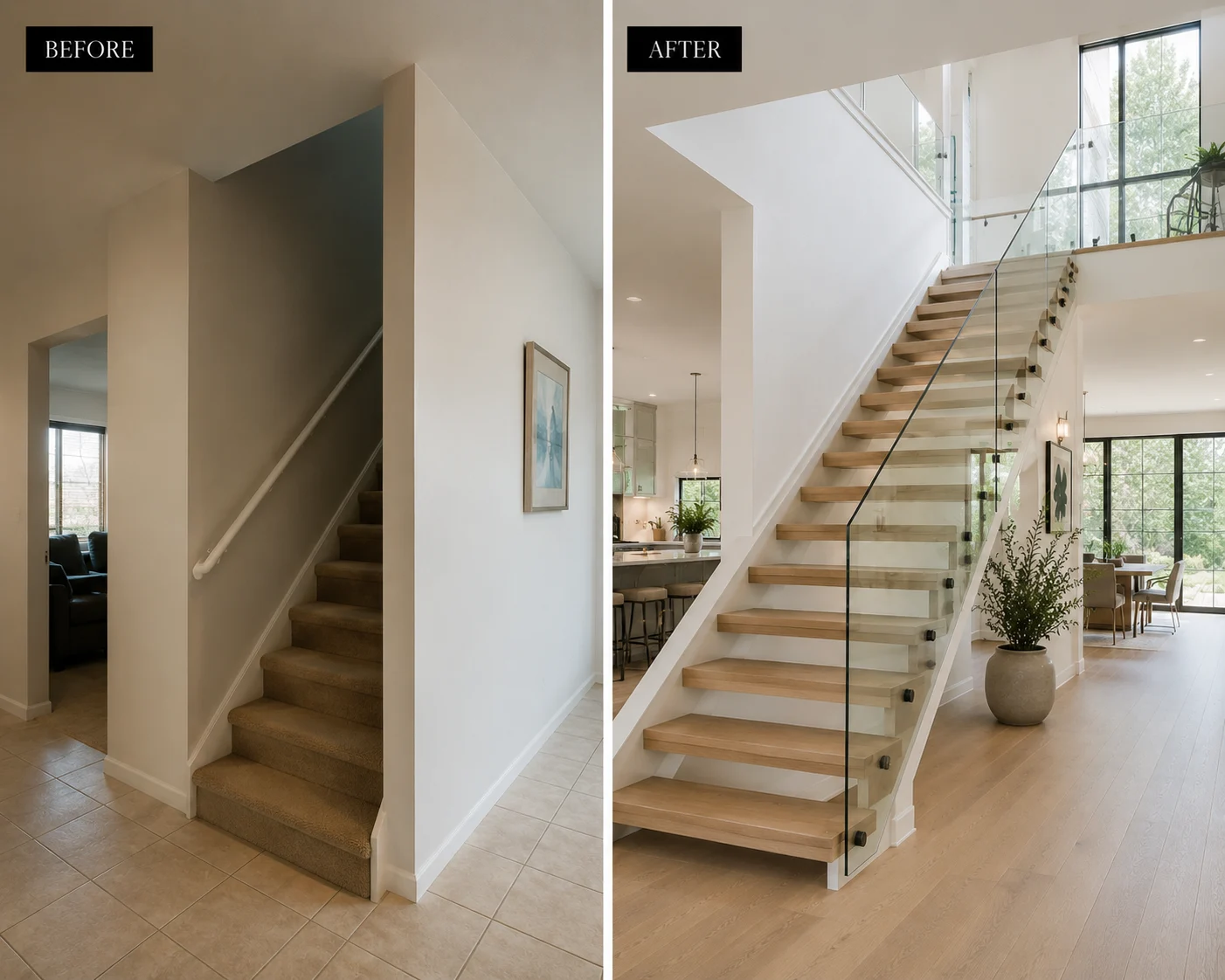
15 Staircase Makeover Transformations to Inspire Your Redo
A staircase can have a surprisingly big influence on how your home feels. In many houses, it’s one of the first things you see when you enter, yet it’s easy to overlook when planning decorating projects.
Maybe the carpet has seen better days, the honey oak finish feels out of place with your current furniture, or the stairwell walls are simply a little boring. The good news is that not every staircase makeover requires replacing the entire structure.
Sometimes a new color scheme, refreshed woodwork, better lighting, or thoughtfully chosen wall details can change the appearance of the whole space.
These 15 staircase makeover ideas explore different before-and-after design directions, from classic oak and white stairs to bold industrial finishes and elegant hotel-inspired details.
The transformations are inspiration concepts rather than documented renovation projects with actual before-and-after photographs. Use them to explore possibilities for your home, keeping in mind that cosmetic updates and structural staircase changes require very different levels of planning.
1. Outdated Carpet to Modern Oak Stairs
Picture a staircase covered in worn beige carpet, with flattened fibers along the center of each step. Now imagine replacing that tired appearance with warm oak treads, crisp white risers, and a simple handrail that highlights the natural wood.
The combination feels fresh without being overly contemporary. Oak brings warmth and texture, while the white risers provide contrast and help brighten the staircase visually.
A black metal baluster design can add a modern touch, although keeping existing traditional balusters may be more appropriate in an older home.
Before planning this transformation, find out what’s underneath the carpet. Some carpeted staircases have finished hardwood beneath, while others have construction-grade treads that aren’t intended to remain exposed.
If the existing treads aren’t suitable for refinishing, purpose-made stair cladding or replacement treads may be options, depending on the staircase’s construction.
Choose a finish specifically appropriate for stair treads, considering durability and slip resistance rather than appearance alone.
This look works particularly well when the surrounding entryway already includes warm wood furniture, light walls, and simple architectural details.

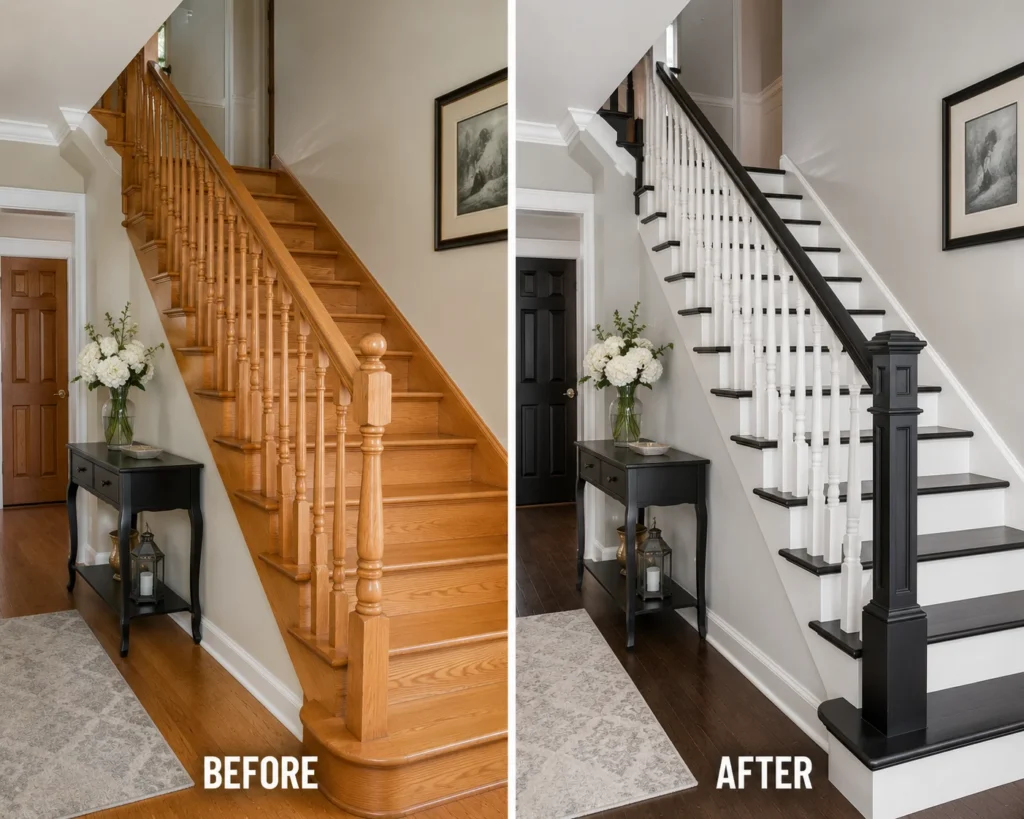
2. Honey Oak to Modern Black and White
Honey oak staircases can feel visually disconnected from a home that has gradually moved toward softer neutrals and darker accents.
Instead of replacing the entire staircase, consider changing the surrounding color scheme.
A matte or satin black handrail, white balusters, and warm greige walls can create a cleaner, more contemporary appearance while retaining some of the original wood.
The contrast helps define the staircase’s architectural lines without requiring an elaborate redesign.
For a balanced look, repeat black elsewhere in the entryway through a light fixture, picture frames, or door hardware.
The key is deciding which existing surfaces should remain natural wood and which can be painted. You don’t necessarily need to cover every oak detail.
Preparation matters when painting previously finished wood. Existing coatings may need cleaning, abrasion, and a compatible primer before applying an appropriate trim finish.
Keep in mind that handrails receive frequent contact, so the selected coating needs to suit that level of use.
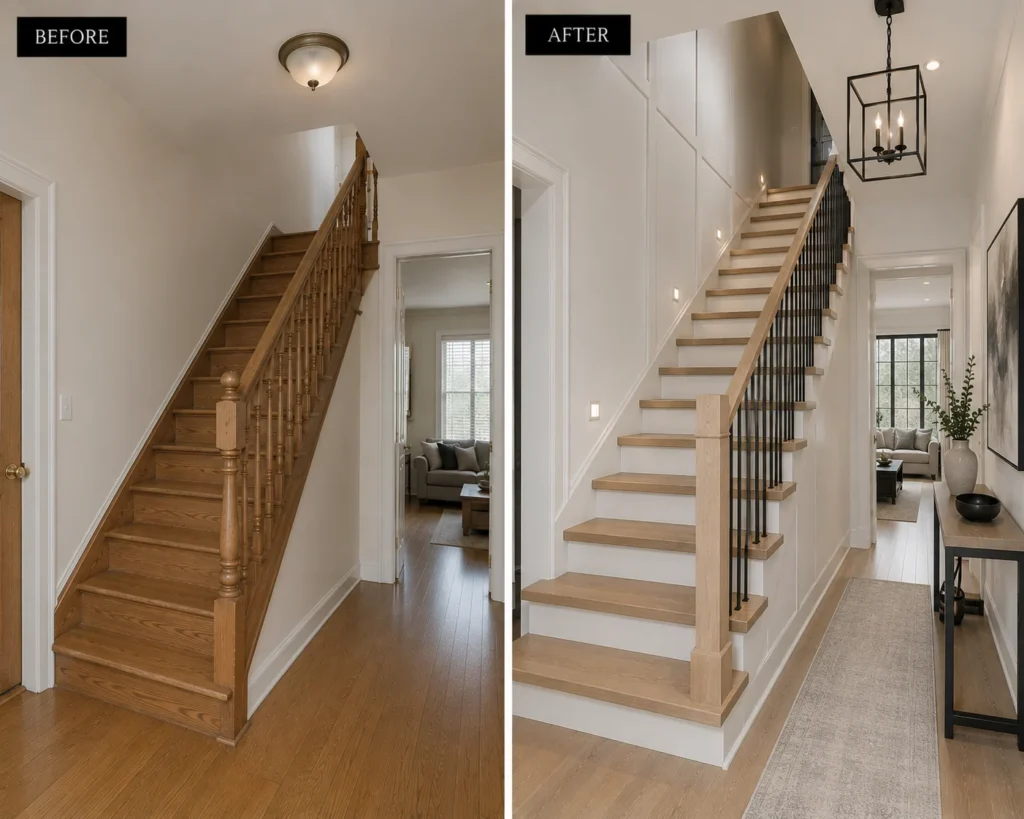
3. Plain Stairwell to Wood Batten Feature Wall
A staircase doesn’t always need new treads or railings to feel transformed. Sometimes the surrounding wall offers the best opportunity.
Imagine a plain painted stairwell updated with evenly spaced vertical wood battens. The repeated lines introduce texture and make the wall feel more architectural.
Natural oak creates a warm, contemporary effect, while battens painted to match the wall offer a subtler appearance.
For a modest American home, a restrained batten design can be more convincing than an oversized installation covering every surface.
Consider the relationship between the battens, baseboards, handrail, and existing wall trim. The feature should look integrated rather than added as an afterthought.
If the stairwell receives limited daylight, a light paint color can keep the installation from feeling too heavy.
Wall sconces may emphasize the texture, but lighting should be positioned so it illuminates the stairs comfortably without producing glare.
This idea is particularly appealing when the staircase itself is in good condition and you want a noticeable decorative change without altering its structure.

4. Builder-Grade Stairs to Modern Farmhouse Style
A basic builder-grade staircase can become a warm modern farmhouse feature through a coordinated mix of wood, painted finishes, and simple metal details.
Imagine stained wood treads, white risers, a dark handrail, and slender black balusters. A neutral runner can introduce additional texture while making the overall appearance softer.
The combination works because it balances contrasting materials without relying on excessive decoration.
Choose a wood stain that relates to nearby flooring or furniture. The tones don’t need to match perfectly, but they should feel compatible.
If you’re adding a runner, select a product intended for stair use and have it installed securely. A loose decorative rug is not a suitable substitute.
Keep nearby accessories restrained. A framed botanical print, simple wall molding, or understated light fixture may be enough to reinforce the farmhouse character.
This transformation suits homeowners who want a welcoming, updated appearance while preserving the familiar proportions of a traditional staircase.

5. Dated Spindles to Contemporary Metal Balusters
Decorative turned wood spindles can give a staircase a traditional appearance, particularly when combined with heavy stained railings.
Replacing them with simpler metal balusters can create a more contemporary look without changing the overall staircase layout.
Slim black vertical balusters work well with natural wood treads, white trim, and a straightforward handrail.
Their clean lines can make the staircase appear visually lighter, especially when the original balusters were thick or highly decorative.
However, balusters are part of the staircase’s protective guard system, not merely decorative accessories.
Any replacement must meet applicable building requirements, including spacing, strength, height, and secure connections.
Consider whether the existing handrail and newel posts can accommodate the new design. Mixing components that weren’t intended to work together can create installation problems.
For the most cohesive appearance, coordinate the metal finish with other architectural hardware nearby.
This is a useful example of how changing one prominent detail can significantly alter the staircase’s character.
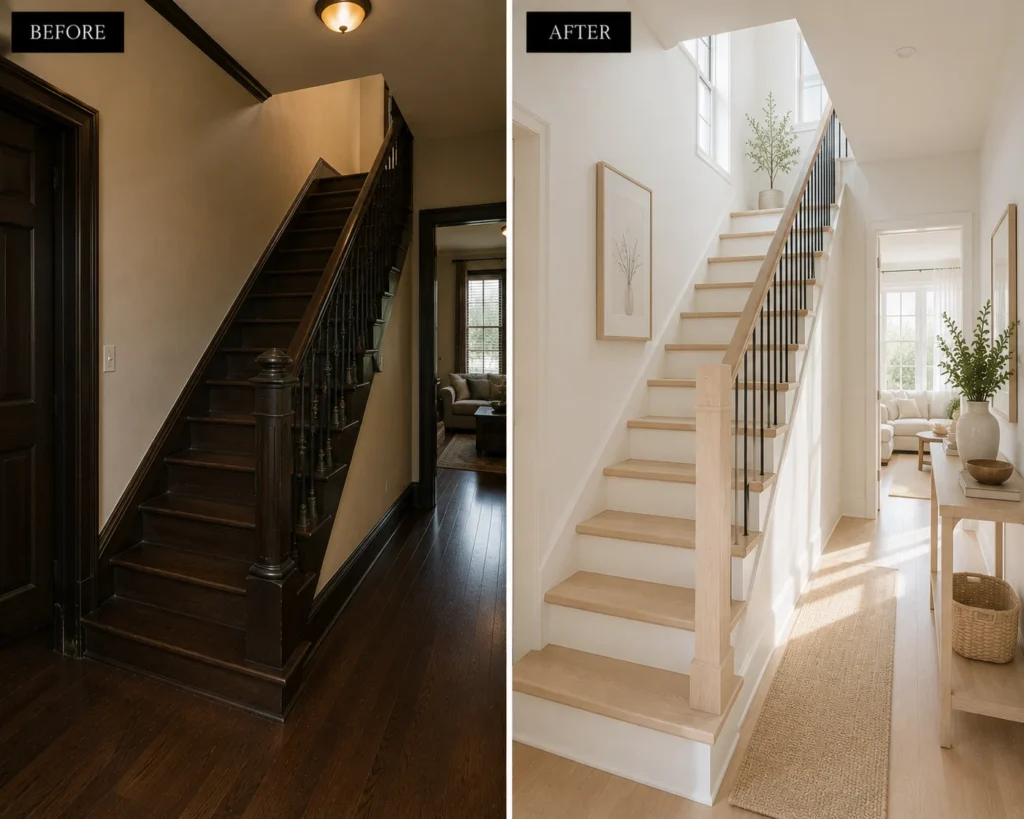
6. Dark Staircase to Bright Scandinavian Design
A dark staircase can feel heavy, particularly in a narrow hallway with limited natural light.
A Scandinavian-inspired makeover replaces that visual weight with pale wood, warm whites, and simple details.
Imagine light oak treads, softly painted walls, white risers, and an understated handrail. The overall effect is calm and uncluttered.
Rather than adding numerous decorative accessories, allow the wood grain and architectural lines to provide interest.
Warm white walls often work better than stark white when the surrounding home contains beige, cream, or natural wood finishes.
A simple pendant or appropriately positioned wall light can complement the look without becoming the dominant feature.
Keep practical maintenance in mind. Pale risers may show scuffs, so a suitable washable finish can make everyday cleaning easier.
Scandinavian-inspired design works particularly well when the staircase connects rooms with neutral furniture, natural textiles, and restrained decoration.
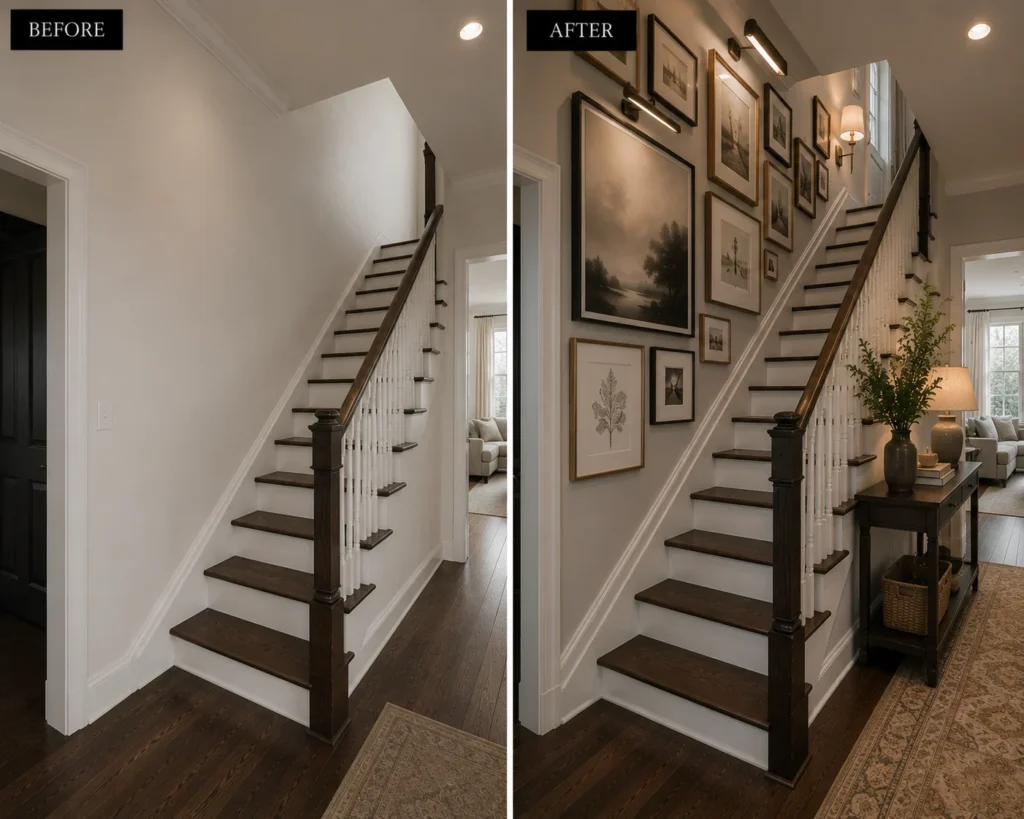
7. Basic Staircase to Gallery Wall Feature
If your staircase is structurally sound and already has an attractive finish, the wall beside it may be the easiest place to make a change.
A gallery wall can turn an otherwise empty stairwell into a personal feature using family photographs, artwork, vintage prints, or simple illustrations.
Start by choosing a consistent element, such as matching frame colors or a limited palette.
You can mix frame sizes for a collected appearance or use a more regular arrangement for a cleaner, contemporary look.
Follow the slope of the staircase when planning the composition. The frames should feel connected to the stairs rather than arranged as though the wall were perfectly horizontal.
Before making holes, use paper templates to test the spacing and overall layout.
Choose lightweight, securely mounted frames and avoid placing anything where it could be knocked loose during normal stair use.
A gallery wall is also easy to update over time. You can replace photographs or artwork without changing the underlying staircase.
8. Worn Wood to Rich Walnut Elegance
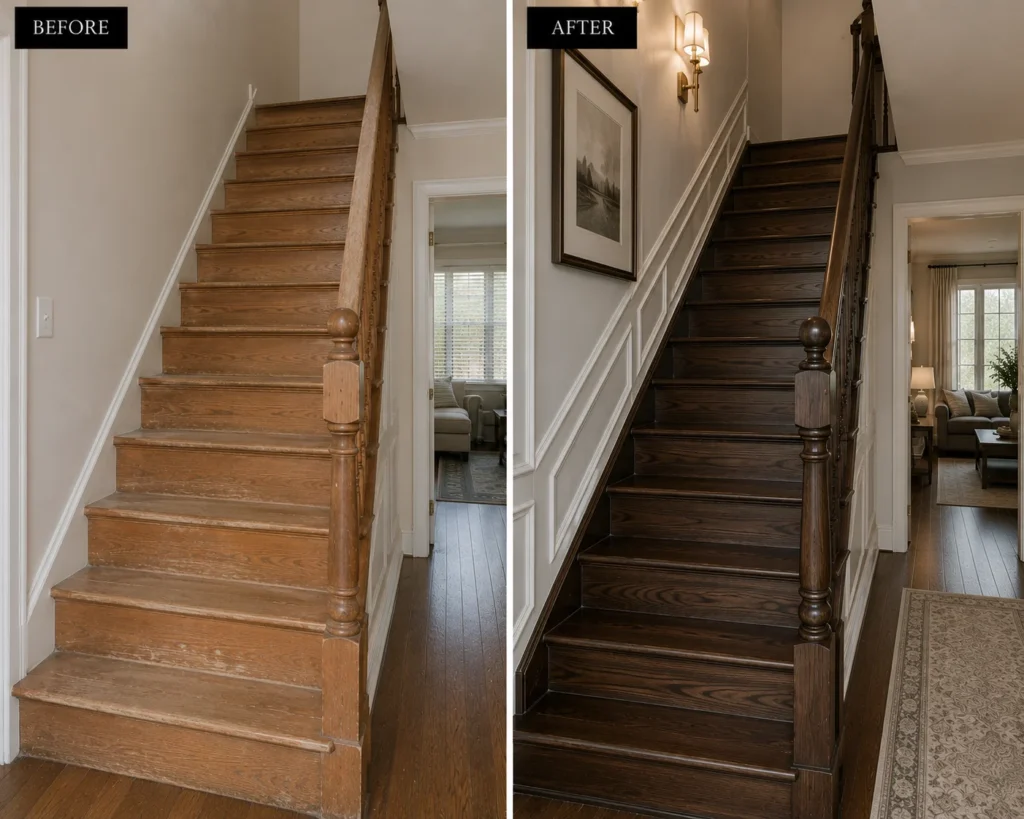
Worn timber stairs can sometimes be refreshed rather than replaced, especially when the existing wood is sound and suitable for refinishing.
Imagine scratched, faded treads transformed with a rich walnut-toned stain, paired with creamy white trim and warm neutral walls.
The darker wood creates depth and contrast while allowing the grain to remain visible.
This style works beautifully with brass-colored lighting, black ironwork, and traditional architectural details.
Before selecting a stain, identify the existing wood species and finish. Different woods absorb stain differently, and some stair materials aren’t suitable for conventional sanding and refinishing.
Test the chosen color on an inconspicuous area or suitable sample before committing to the entire staircase.
Choose a protective finish specifically appropriate for stair use, following the product’s preparation, application, and curing instructions.
Darker treads can show dust and scratches, so consider your household’s maintenance preferences.
The result should feel refined without requiring every surrounding surface to be equally dark.
9. Plain White Walls to Bold Color Statement
A staircase with simple white walls can become a dramatic focal point through paint alone.
Deep emerald green, navy blue, charcoal, or muted burgundy can give the stairwell a more distinctive appearance.
The staircase itself can remain relatively understated, allowing the wall color to become the main decorative feature.
Pair deep walls with warm wood treads, black metal details, or brass-colored lighting for contrast.
If the stairwell is narrow, consider painting one main wall rather than every surrounding surface.
Test paint samples in daylight and under evening lighting. Dark colors can appear very different depending on the direction and intensity of the light.
Choose a washable finish suited to a high-contact hallway, where walls may be brushed by hands, bags, or furniture.
Avoid overcrowding the wall with decorations. One or two carefully chosen pieces of artwork may be enough.
This is one of the more approachable makeover directions because it changes the visual character of the staircase without altering its construction.

10. Boxed-In Staircase to Open Concept Design
Some staircases feel enclosed because solid walls interrupt the view between the staircase and surrounding rooms.
Opening part of that enclosure can create a brighter, more connected appearance.
Imagine replacing a solid side wall with a properly designed guard featuring slim balusters or suitable glass panels.
The result can improve sightlines and allow more natural light to move through adjoining areas.
However, this is not a simple cosmetic project.
Stairwell walls may provide structural support, fire separation, or other important functions. Removing or modifying them can affect the building’s safety and compliance.
A qualified professional should assess the existing construction before any demolition or alteration is planned.
Replacement guards, handrails, and glazing must also satisfy applicable building requirements.
Where an open design is feasible, choose materials that coordinate with the rest of the home. Pale wood and black metal create a contemporary look, while simple painted balusters may suit a traditional interior.
This idea can produce a striking architectural change, but it requires considerably more planning than painting or adding wall decoration.

11. Basic Stairs to Coastal Retreat Style
A coastal-inspired staircase doesn’t need seashells, anchors, or obvious nautical decorations.
The look can be created through light wood, soft whites, muted blue accents, and natural textures.
Imagine pale oak treads, white painted risers, a simple handrail, and a subtle blue-and-cream runner.
A nearby woven basket, framed coastal landscape, or understated wall light can reinforce the relaxed atmosphere.
Choose blue accents carefully. Dusty blue, gray-blue, and muted slate often feel more understated than highly saturated turquoise.
Natural wood helps keep the palette warm rather than overly cool.
If adding a runner, choose a stair-appropriate material and installation method rather than relying on a loose textile.
Keep the landing and surrounding hallway uncluttered so the space retains its open, breezy appearance.
This direction works well in homes that already feature light-colored furniture, natural fabrics, and simple decorative details.

12. Uneven Staircase to Custom Built-In Look
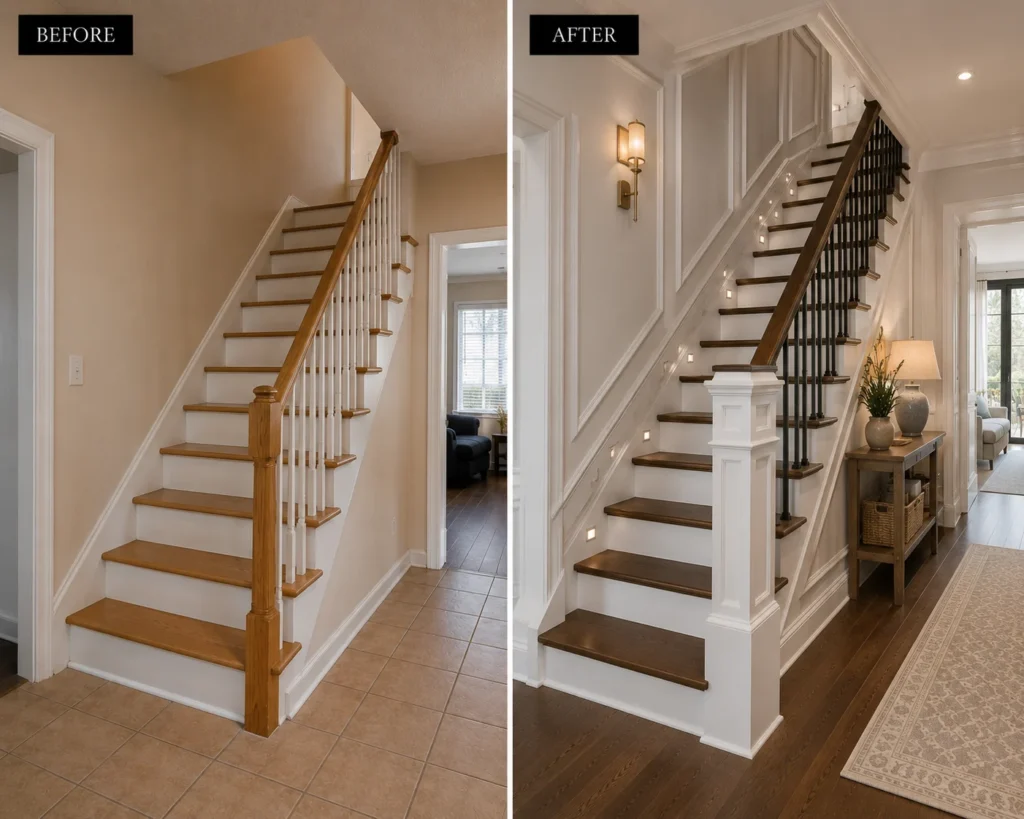
Older staircases can look visually inconsistent when trim, paint, and decorative details have been changed at different times.
A coordinated trim treatment can make the staircase appear more intentional.
Imagine clean baseboards, neatly finished stringers, simple wall molding, and consistent paint colors across the surrounding woodwork.
Picture-frame molding or understated panel detailing can add architectural character without overwhelming the space.
Choose trim profiles that suit the home’s age and style. Very elaborate molding may feel out of place in a modest contemporary house.
Pay attention to transitions where stair trim meets hallway baseboards and door casings. These details influence whether the result looks cohesive.
This makeover is intended to correct visual inconsistency, not physical problems with the staircase.
If steps are genuinely uneven, loose, damaged, or structurally irregular, decorative trim cannot resolve those issues. The underlying condition needs appropriate professional assessment.
For sound staircases, carefully coordinated trim and paint can create a more polished appearance without replacing the stairs.
13. Plain Landing to Designer Hallway
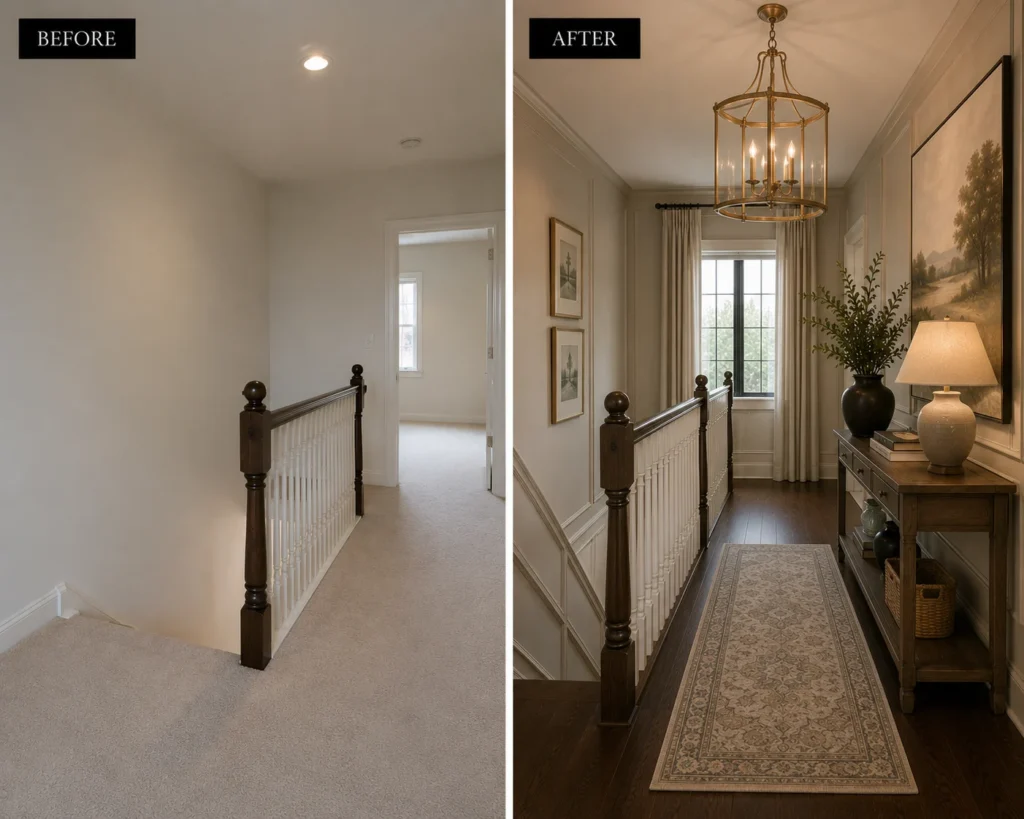
A staircase makeover doesn’t have to end at the final step.
The landing can become a thoughtful extension of the design through artwork, lighting, wall color, and carefully chosen accessories.
Imagine a plain upper hallway updated with a large framed mirror, a coordinated gallery wall, or a simple statement light fixture.
Where space allows, a slim console may provide a place for decorative objects. In a narrow landing, wall-mounted artwork is often the better choice.
Choose furniture according to the actual dimensions of the landing, not simply because a styled photograph includes it.
Keep doors, stairs, and circulation routes clear. Avoid furniture, baskets, or plants that interfere with safe movement or required egress.
A securely installed runner may help connect the landing visually with the staircase, provided it’s suitable for the location.
Repeat a color, wood tone, or metal finish from the stairs to create continuity.
The goal is to make the landing feel finished without turning an essential passageway into a crowded decorating display.
14. Basic Staircase to Industrial Loft Design
An industrial-inspired staircase combines dark metal, warm wood, and textured surfaces for a bold but practical appearance.
Imagine natural or medium-stained oak treads paired with black steel balusters and charcoal-colored architectural accents.
Brick-look wall finishes, concrete-inspired textures, or simple metal lighting can reinforce the style.
The key is balancing the darker materials with warmth.
Natural wood prevents the staircase from feeling overly severe, while warm neutral walls can keep the surrounding hallway inviting.
Avoid combining every industrial element at once. A black railing, warm timber, and one textured wall may be enough.
Choose suitable lighting so dark finishes don’t make the stairwell difficult to navigate after sunset.
If changing balusters or railings, remember that these components serve a safety function and must meet applicable requirements.
This look works particularly well in contemporary homes that already feature black hardware, exposed textures, and simple furniture.

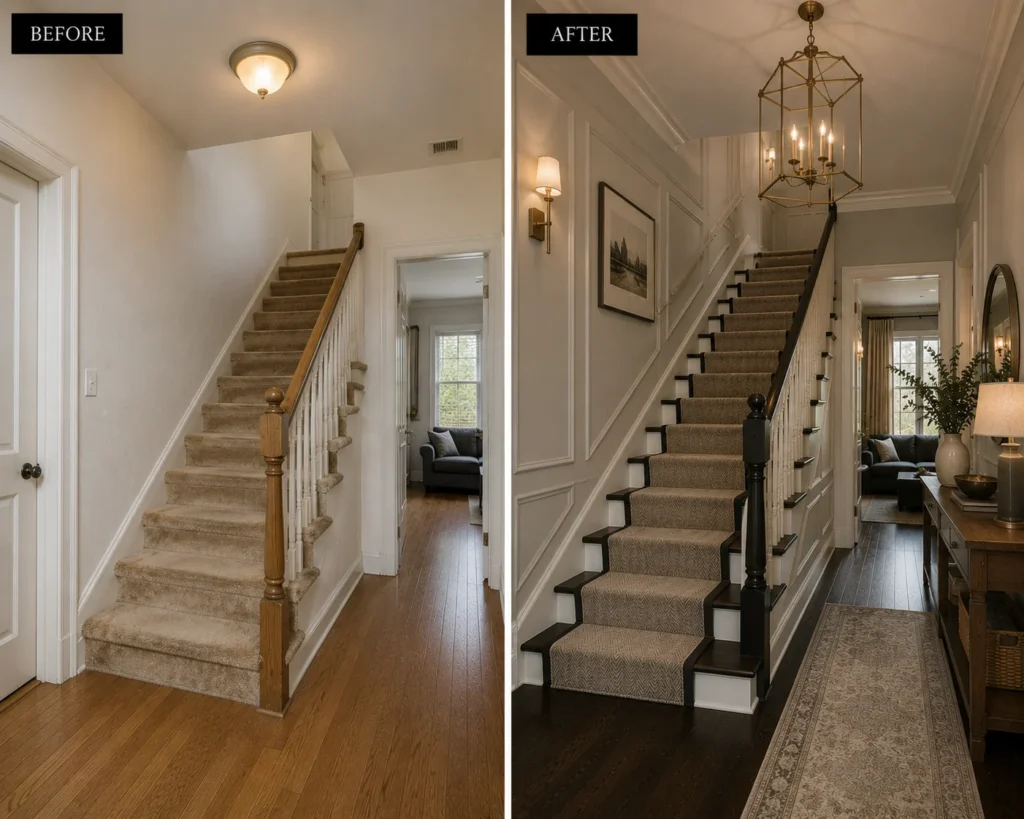
15. Tired Staircase to Luxury Hotel Style
A hotel-inspired staircase combines several coordinated finishes to create an elegant, polished appearance.
Imagine rich wood treads, warm cream trim, a tailored stair runner, understated brass-colored details, and carefully planned lighting.
The effect comes from consistency rather than excessive decoration.
Choose a restrained palette and repeat it throughout the staircase and surrounding hallway. Warm wood, soft neutrals, and one metal finish can create a cohesive look.
Wall molding may add architectural interest, while a simple pendant or wall sconce can provide a finishing touch.
If using a stair runner, select a product intended for stairs and ensure it’s properly installed. Decorative stair rods alone should not be relied upon to secure a runner.
Keep the details proportional to the home. A modest staircase may look more elegant with simple trim and a beautifully chosen runner than with oversized chandeliers and elaborate paneling.
This approach can be completed gradually, allowing you to coordinate each improvement rather than replacing everything at once.
How to Choose the Right Staircase Makeover
Start by deciding whether your staircase needs a decorative refresh or more substantial work.
If the stairs are sound and functional, painting, refinishing appropriate surfaces, updating wall details, or adding artwork may be enough.
If the project involves removing walls, changing guards, replacing handrails, or modifying stair geometry, professional assessment and applicable building requirements become essential.
Consider the surrounding rooms when choosing a style.
Natural oak and white finishes suit many traditional and contemporary homes. Dark wood and rich colors create a more dramatic appearance, while coastal and Scandinavian palettes emphasize lightness.
Think about maintenance as well. Painted risers may show marks, dark treads may reveal dust, and stair runners need appropriate cleaning.
The best design is one that complements your home and remains practical for the people using the stairs every day.
Staircase Makeover Ideas for a Small or Narrow Entryway
In a compact entryway, the most effective updates often involve the walls and finishes rather than adding furniture.
Light-colored paint can create a brighter appearance, while a simple gallery wall introduces personality without occupying floor space.
Vertical battens or understated molding may provide texture, but their depth and placement should not interfere with stair clearance or handrail use.
Choose lighting that illuminates the steps and landing without producing glare.
Avoid bulky decorative accessories near the bottom of the staircase, particularly where people enter carrying bags or groceries.
A narrow staircase doesn’t need elaborate architecture to look attractive. Coordinated paint, appropriate lighting, and a few well-chosen details can create a polished result.
Common Staircase Makeover Mistakes
One common mistake is choosing finishes before checking the condition of the existing staircase.
Carpet removal may reveal unsuitable treads, while an older railing may require more than a cosmetic update.
Another mistake is assuming every wood surface can be sanded and stained. Engineered materials, veneers, and previously coated surfaces may need different treatments.
Poorly chosen paint and finishes can also create problems. Products suitable for ordinary walls aren’t necessarily appropriate for stair treads or frequently touched handrails.
Decorative runners need proper installation, and lighting should improve visibility rather than simply create atmosphere.
Finally, avoid copying a dramatic staircase design without considering your home’s proportions. A treatment that looks beautiful in a spacious entryway may overwhelm a narrow hallway.
Staircase Safety and Installation Considerations
Staircases are essential circulation and emergency-exit routes, so safety should guide every makeover.
Keep treads, landings, and handrails unobstructed. Do not place decorative objects where they create tripping hazards or interfere with normal movement.
Choose tread coatings and surface treatments suitable for stair use, including appropriate slip-resistance characteristics. Glossy appearance alone is not a reliable guide to safety.
Stair runners must be properly fitted and secured. Loose rugs, unsecured edges, and poorly attached carpet can create hazards.
Changes to balusters, guards, handrails, stair dimensions, or surrounding walls may require professional design, permits, inspections, or code-compliant installation, depending on the location and project.
Before removing a wall or modifying structural elements, consult an appropriately qualified professional.
Use suitable safety glazing where glass is part of a staircase guard or enclosure.
Install lighting so the full stair route is visible, including the first and last steps. Electrical alterations should be completed in accordance with applicable requirements.
For older homes, investigate potential lead-based paint and other hazardous materials before disturbing existing finishes.
If steps are loose, uneven, damaged, or unstable, address those conditions before proceeding with cosmetic work.
What Makes a Staircase Makeover Feel Cohesive?
A successful staircase makeover usually connects three elements: the stairs themselves, the surrounding walls, and the finishes used elsewhere in the home.
For example, oak treads may relate to nearby flooring, black balusters may echo door hardware, and warm cream walls may connect the staircase to the living room.
You don’t need every finish to match exactly. Repeating a few related materials is often enough.
Think about the view from both the bottom and top of the staircase. The design should feel connected to the entryway and the upper landing.
If you’re working gradually, decide on the overall palette first. That way, a painted handrail, updated lighting, and a future runner can become parts of one coordinated plan.
Frequently Asked Questions
What is the cheapest staircase makeover?
Painting suitable existing surfaces or refreshing the surrounding stairwell walls can be a relatively affordable way to change the appearance. The actual cost depends on preparation, materials, accessibility, and the condition of the staircase.
Can I redo stairs without replacing them?
Yes, many cosmetic updates can be completed while retaining a sound existing staircase. Possibilities include refinishing suitable wood, painting trim, updating wall decoration, and installing an appropriate stair runner. Structural or safety-related changes require separate assessment.
What staircase style should I choose?
Choose a style that complements the home’s architecture and surrounding finishes. Scandinavian-inspired oak and white, modern farmhouse, contemporary black-and-white, coastal, and traditional wood schemes can all work when adapted to the space.
Are staircase makeovers worth it?
A thoughtful refresh can improve the appearance and usability of a highly visible part of the home. Whether a project is worthwhile depends on its condition, scope, cost, and how well the changes address your needs. An increase in property value shouldn’t be assumed.
Final Thoughts
A staircase makeover doesn’t have to involve replacing every tread, railing, and wall finish. Sometimes the most effective transformation comes from improving what already exists.
Whether you prefer warm oak, bold paint, classic trim, or a carefully coordinated runner, choose changes that suit your home’s character and the way your household uses the space.
A beautiful staircase should be more than a focal point. It should feel comfortable, well connected to the surrounding rooms, and safe to use every day.
