
15 Sisters Bedroom Ideas for a Beautiful Shared Space
Two sisters can agree on a bedtime snack and still disagree completely about what belongs on their bedroom walls. Planning a shared room becomes easier when you treat it as both a common space and two small personal spaces. These sisters bedroom ideas focus on practical furniture arrangements, flexible storage, and details that give each child a voice. Some work in compact bedrooms, while others suit rooms with space for desks or a reading corner. You do not need matching everything or an expensive renovation to make the result feel considered. Start by identifying the routines that overlap—sleep, dressing, homework, and play—then make room for the ones that do not. The following designs show different ways to balance togetherness with independence.
1. Matching Twin Beds With Individual Bedding
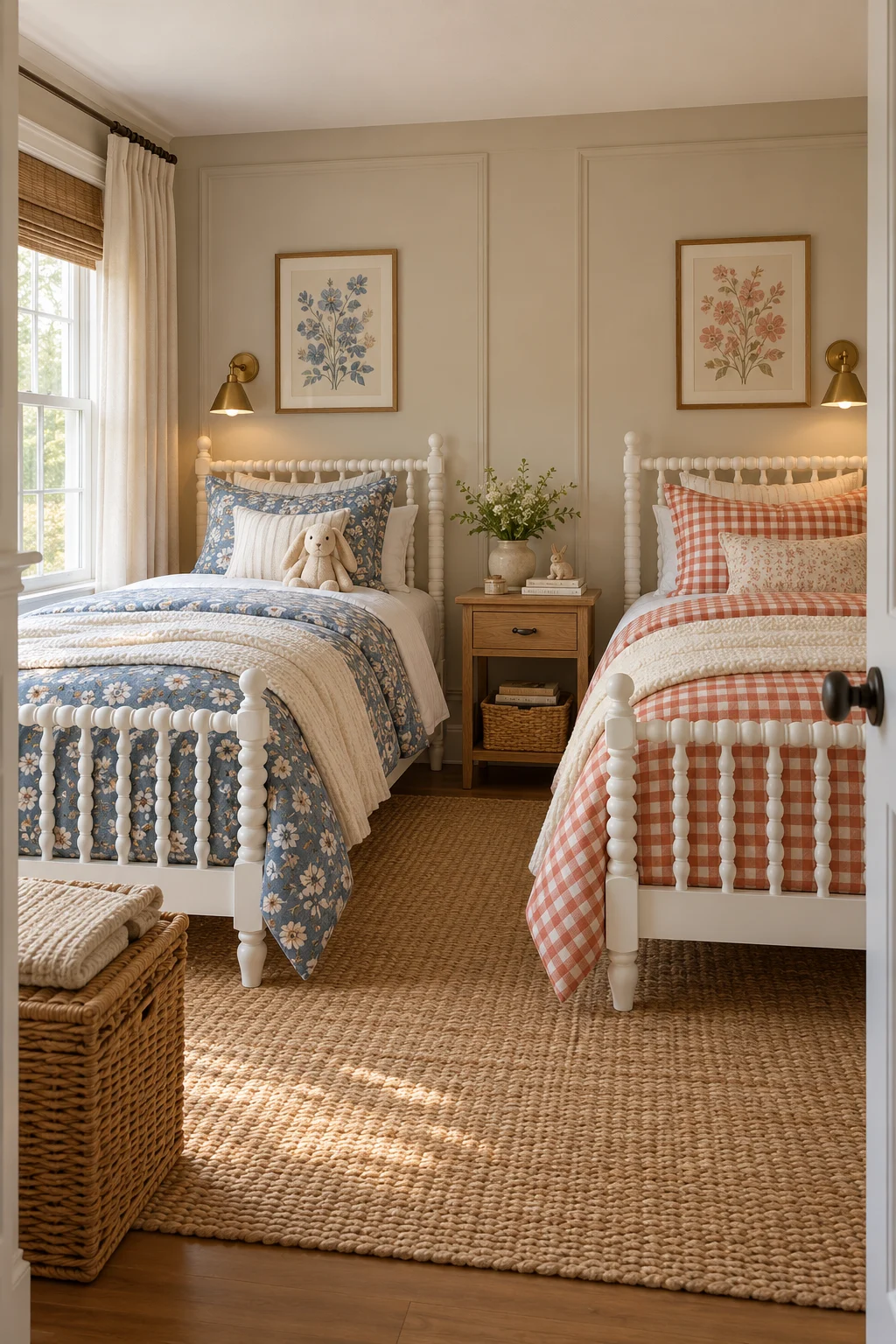
Two matching white spindle twin beds create a reassuring rhythm without demanding identical personalities. Place a slim oak nightstand between them and give each sister her own duvet pattern: tiny blue flowers on one side, muted coral checks on the other. A shared lamp keeps the arrangement balanced, while two separate reading lights allow different bedtimes. This layout suits a rectangular room where both beds fit along one wall. Standard twin mattresses are generally 38 by 75 inches, so account for bed-frame width as well as floor space. Let each child choose one cushion and one framed print. The furniture stays coordinated even as tastes change, and neither sister has to surrender her favorite color.
2. A Shared Headboard With Separate Zones
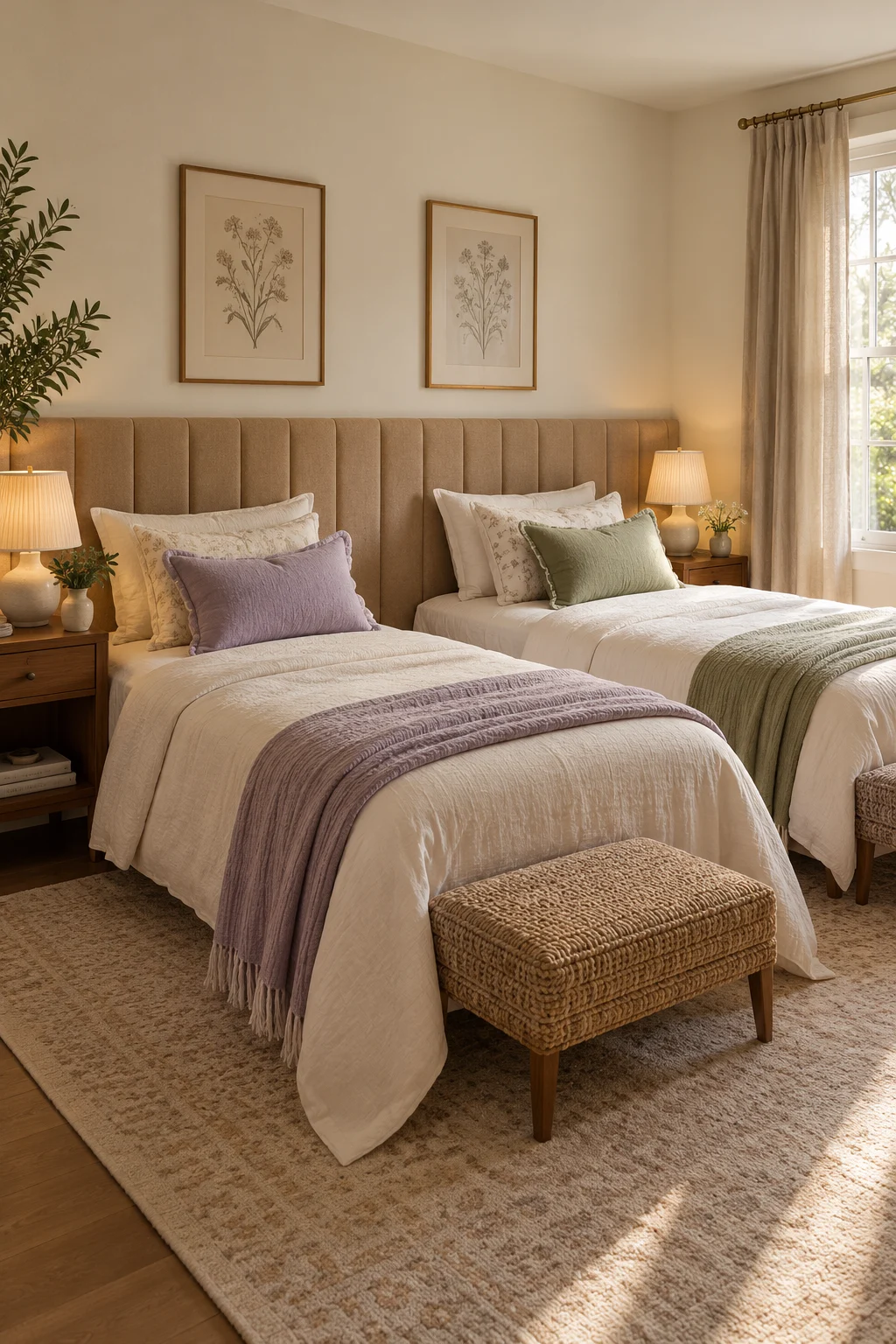
An extra-long upholstered headboard can visually connect two twin beds while leaving a little breathing room between mattresses. Select a durable camel-colored fabric and use independent bedside tables at the outer edges. Each sister can arrange a small tray, book, and personal keepsake without spilling into the other side. The continuous headboard makes a narrow room look deliberate, but custom upholstery can be expensive; a wall-mounted padded panel system may be more flexible. Keep mounting hardware appropriate for the wall construction and follow the manufacturer’s instructions. For older sisters who prefer a polished room over playful themes, this approach feels grown-up without turning their shared bedroom into a hotel suite.
3. Corner Beds That Open the Center
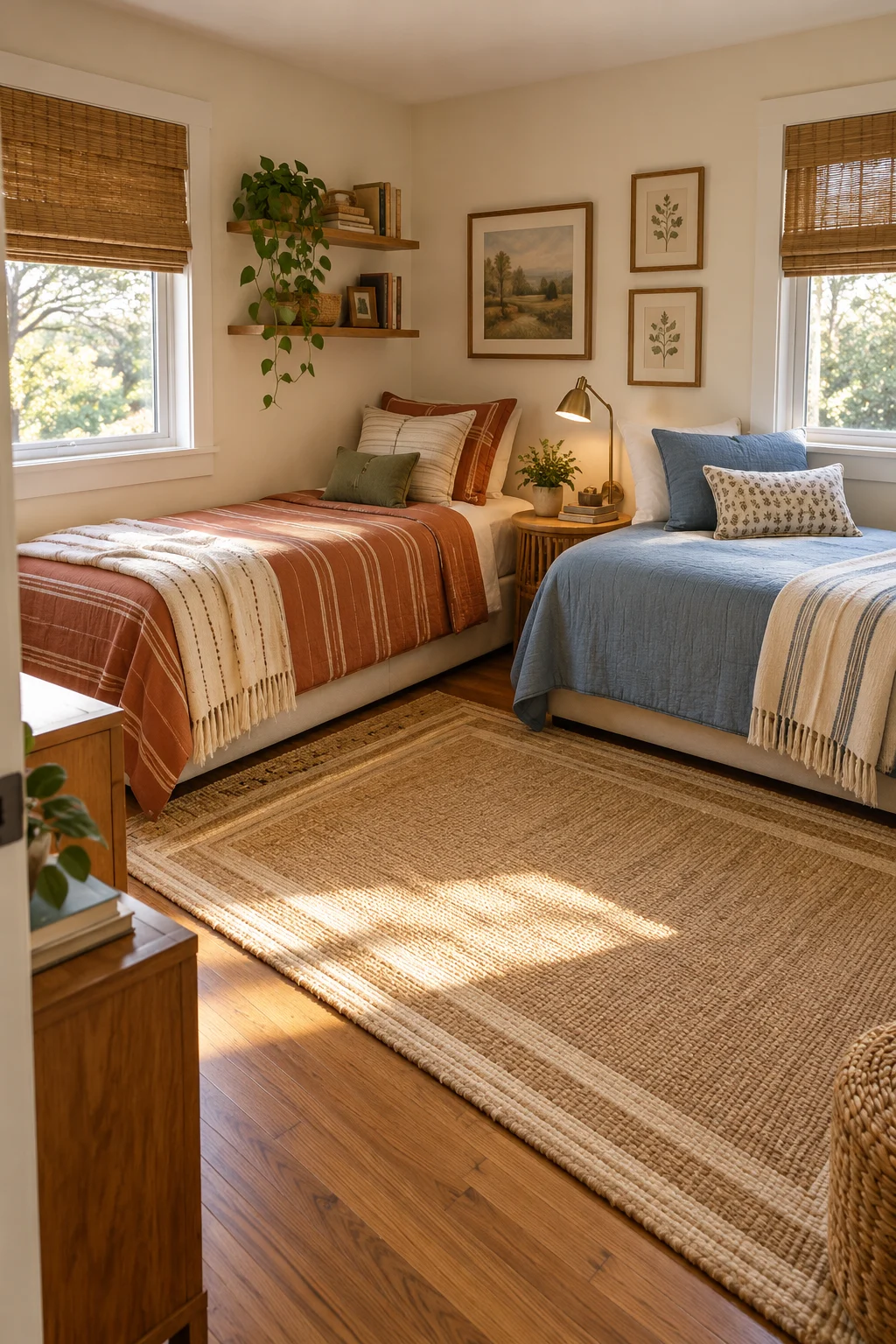
An L-shaped arrangement places one twin bed along each of two adjoining walls. It works particularly well when the bedroom door or closet interrupts a long wall and a parallel arrangement would crowd the walkway. Use a compact corner table for a shared alarm clock, then place a separate basket at the foot of each bed for personal items. The open middle becomes room for games, stretching, or a soft rug. This configuration does not suit every window and radiator location, so check those obstacles before moving heavy furniture. Keep blankets and pillows visually related but not identical; a rust stripe and a dusty blue solid can make each sleeping corner easy to recognize.
4. Low Bunk Beds With Cozy Alcoves
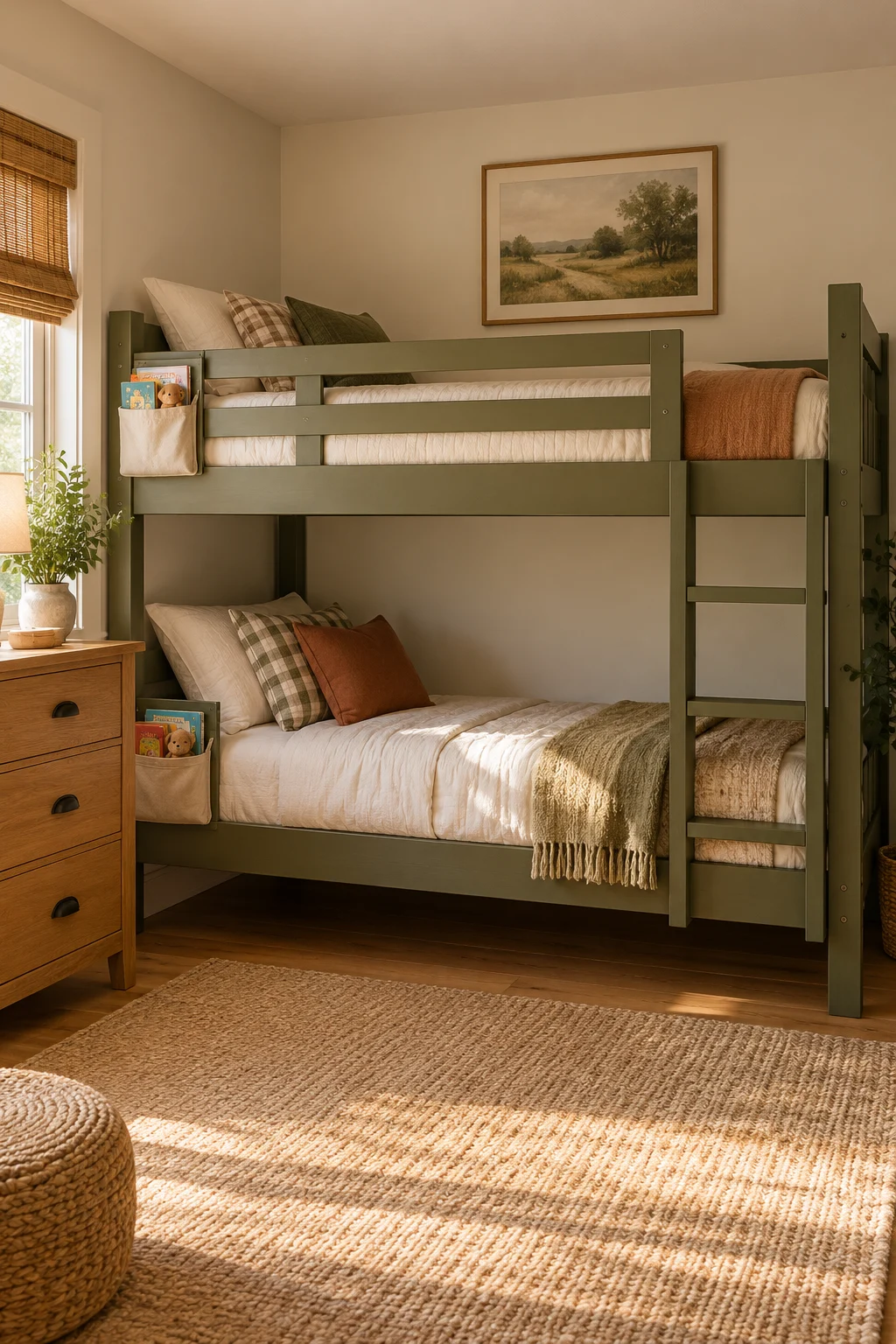
A low-profile bunk can reclaim floor area in a small bedroom without making the upper sleeper feel far from the rest of the room. Give each bunk a clip-free, manufacturer-approved reading light and a dedicated fabric pocket for a paperback. A muted olive frame with cream bedding makes the structure feel like furniture rather than playground equipment. The upper bunk should be reserved for children old enough to use it safely; follow the bunk manufacturer’s age guidance and guardrail requirements. Never attach improvised curtains or cords around sleeping areas. The drawback is that making the upper bed takes more effort, so washable, easy-to-tuck bedding will save time on busy mornings.
5. Two Desks Along One Window
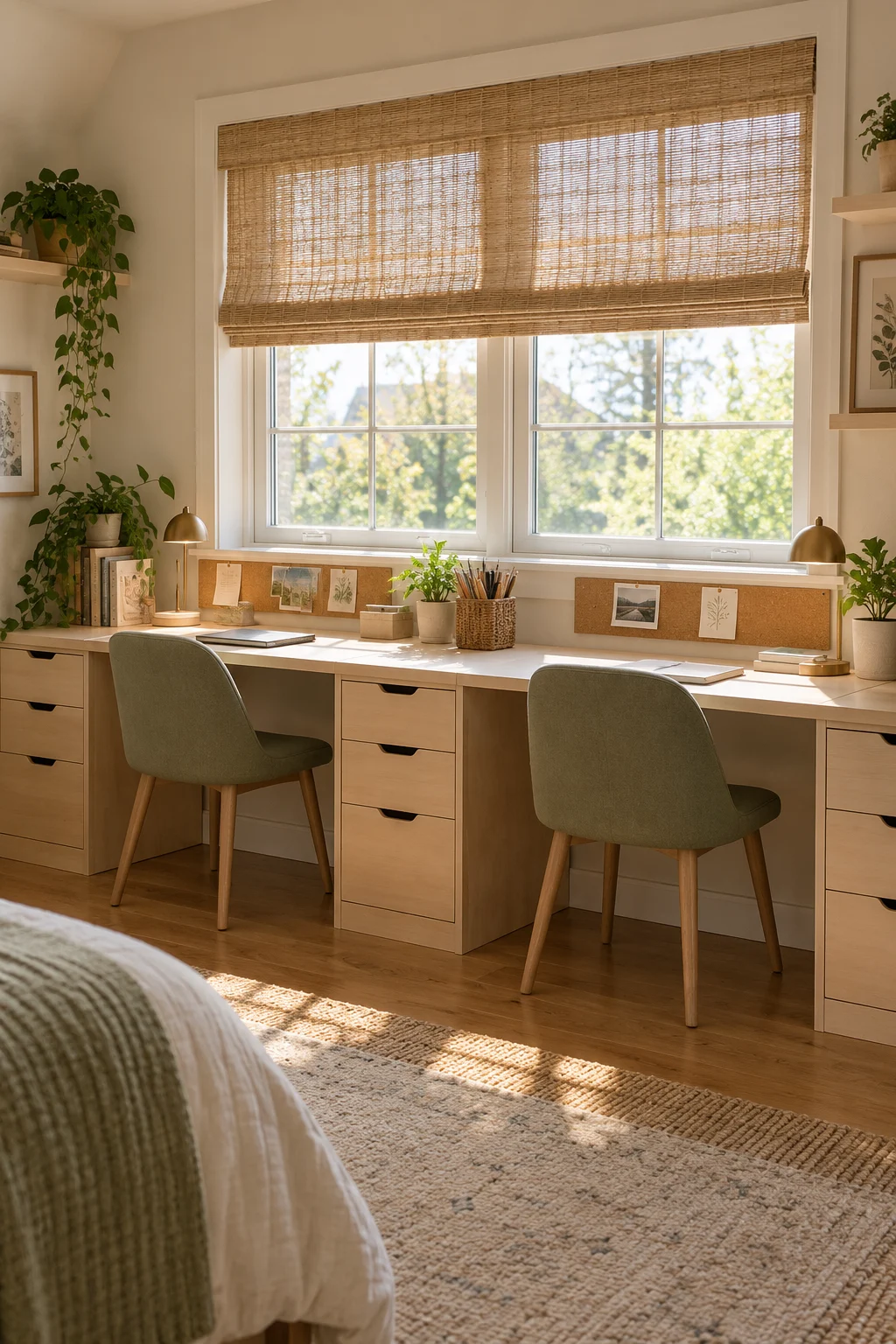
For sisters who study at the same time, a pair of modest desks beneath a wide window can make homework feel more manageable. Use two chairs and two drawer units rather than one oversized shared surface. A central pencil cup can hold communal supplies, while separate cork strips display schedules and sketches. This plan needs enough room for chairs to pull out without blocking the bed path. Direct sunlight can cause screen glare, so add adjustable window shading. A pale maple worktop and dusty green chairs keep the station airy. When interests diverge, the separate workspaces make it easier to respect concentration and avoid debates over whose papers belong where.
6. A Curtain Divider for Quiet Time
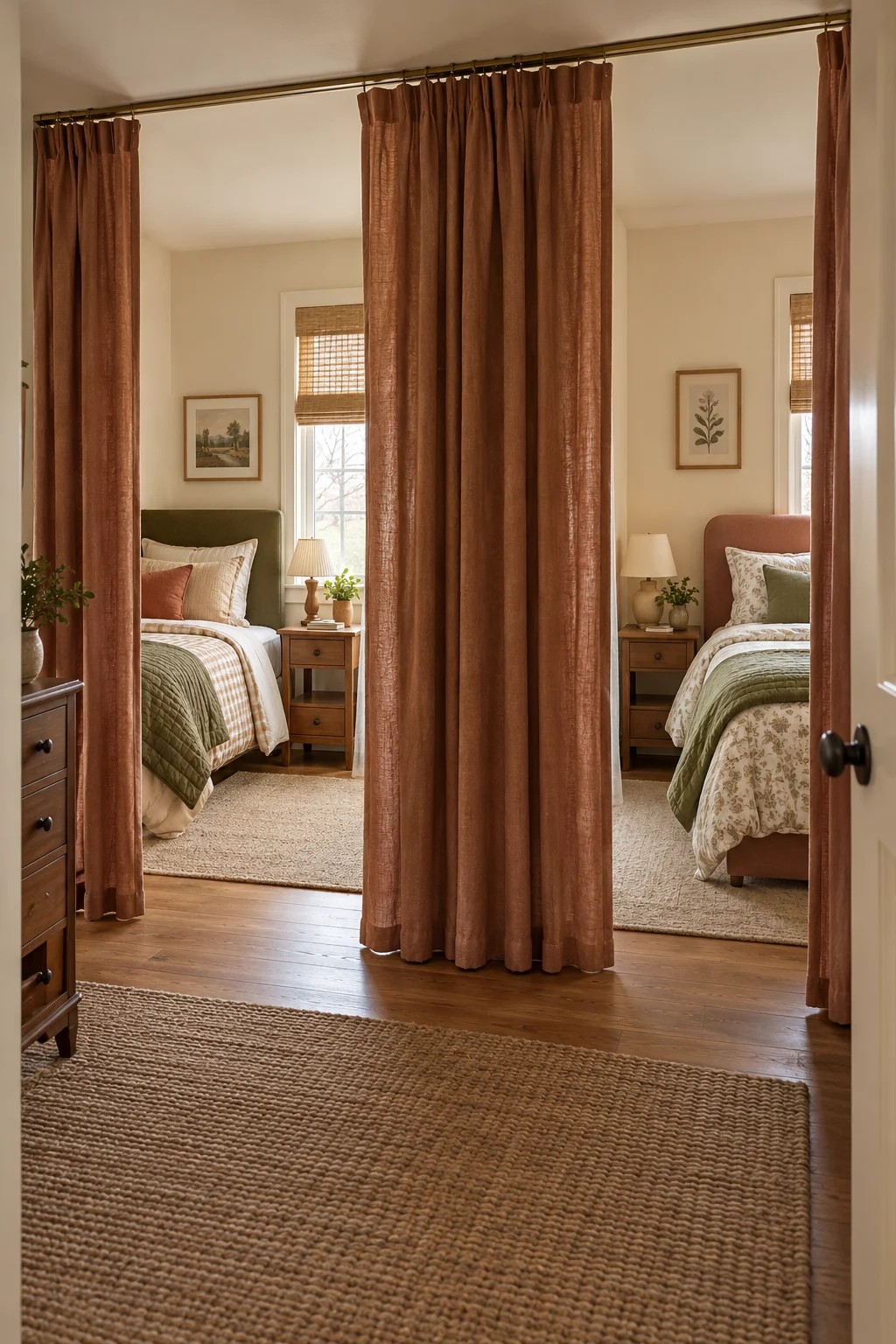
A ceiling-mounted curtain track can create a temporary boundary when sisters have different schedules or want a little privacy. Choose a breathable, lightweight linen-look fabric that stacks neatly to one side when the room is shared again. This works best as a visual divider, not as soundproofing, and it should never obstruct a doorway or escape route. The track must be secured to suitable structural backing using the specified fixings. A soft clay-colored curtain against cream walls adds warmth without feeling permanent. For younger children, avoid accessible dangling cords and any arrangement that invites climbing. The curtain is especially helpful when one sister reads while the other rests.
7. A Double Dresser With Labeled Drawers
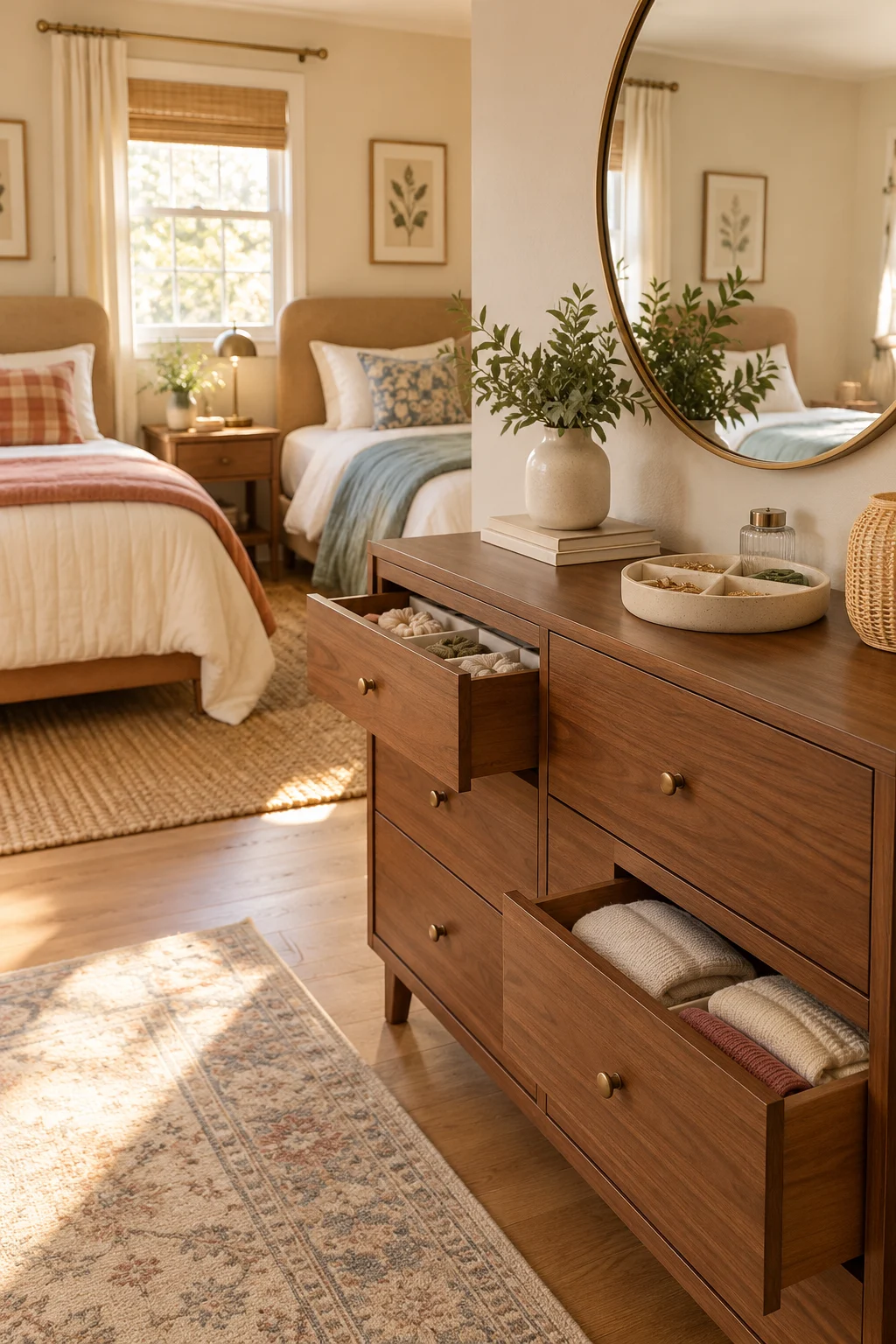
A broad six-drawer dresser can serve both sisters without requiring two bulky storage pieces. Allocate three drawers per child and use small removable labels inside the drawers instead of covering the fronts with permanent lettering. On top, place a divided tray for everyday accessories and keep the center free for a mirror. Choose a dresser with drawers that open smoothly and anchor it to the wall following the maker’s instructions, especially in a child’s room. This arrangement is more practical than open shelving for socks and sleepwear, although it requires an agreed system for laundry day. A walnut finish pairs nicely with painted furniture and adds a little depth to a light bedroom.
8. Separate Gallery Walls Above Each Bed
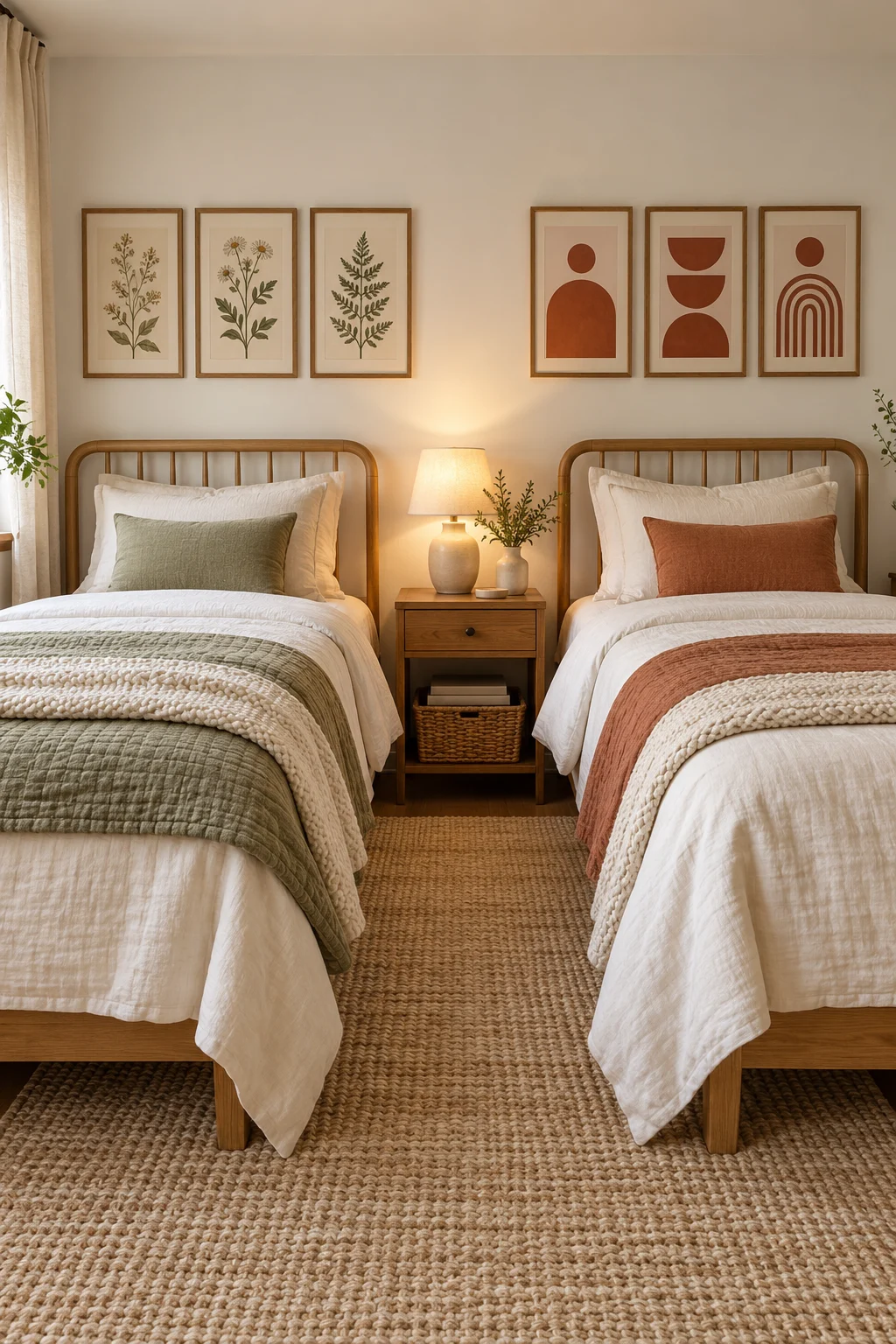
Give each sister a small picture wall over her own sleeping space. One might prefer pressed botanical prints in narrow oak frames; the other may select abstract shapes in pale terracotta and cream. Matching frame sizes help the room look connected even when the artwork differs. Position the displays away from spots where they could be bumped during sleep, and use secure hanging methods suited to the frame weight. This is an inexpensive update when you reuse frames and swap paper prints rather than buying new furniture. The galleries also offer a respectful way for older sisters to show individuality without dividing the room into competing color schemes.
9. A Window Seat for Shared Reading
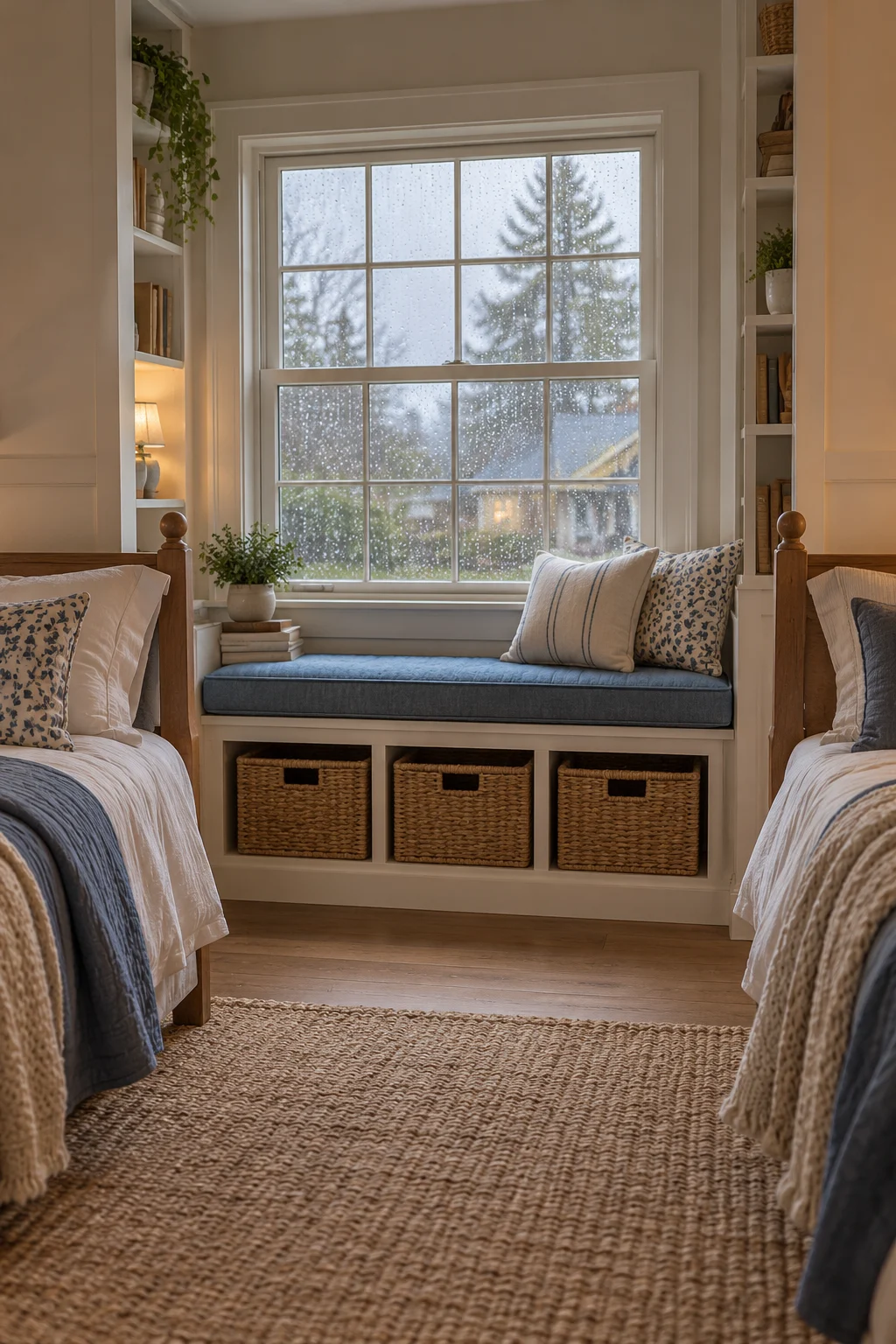
A built-in-style window bench gives sisters a place to sit together that is not either child’s bed. A ready-made storage bench can work if its size and construction suit the window area. Add a fitted washable cushion in faded denim blue and two pillows in different patterns. Baskets below can hold board games or seasonal blankets. Keep the window operable and do not block heating equipment or access needed for safety. A bench is especially useful in rooms where floor space is limited but there is an unused recess. It becomes a neutral zone for conversation, reading, or simply watching the rain, which helps the bedroom feel like shared territory.
10. Two Color Blocks Without a Wall
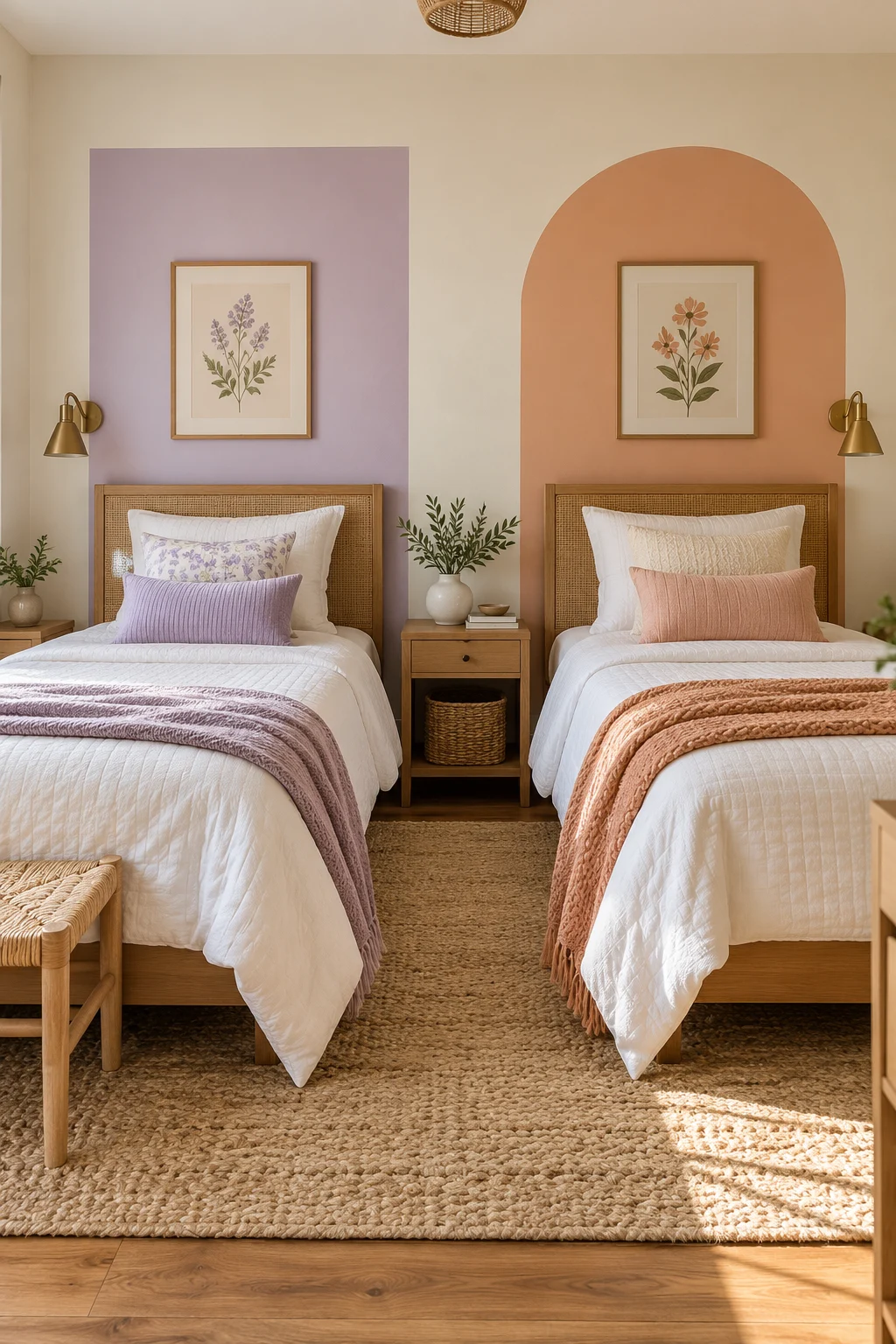
Paint two large, soft-edged color blocks behind the beds to suggest personal zones without building a partition. A pale lilac rectangle can mark one side and a warm apricot arch the other, with the remaining walls kept creamy white. Use painter’s tape for straight sections and a pencil-and-string guide for curved shapes. Low-odor interior paint and proper ventilation make the project more comfortable; follow drying instructions before using the room. Because the colors occupy only limited wall areas, repainting later is manageable. The effect works best when bedding remains restrained, so the wall treatment feels intentional rather than like two unrelated rooms pressed together.
11. Personal Peg Rails at Child Height
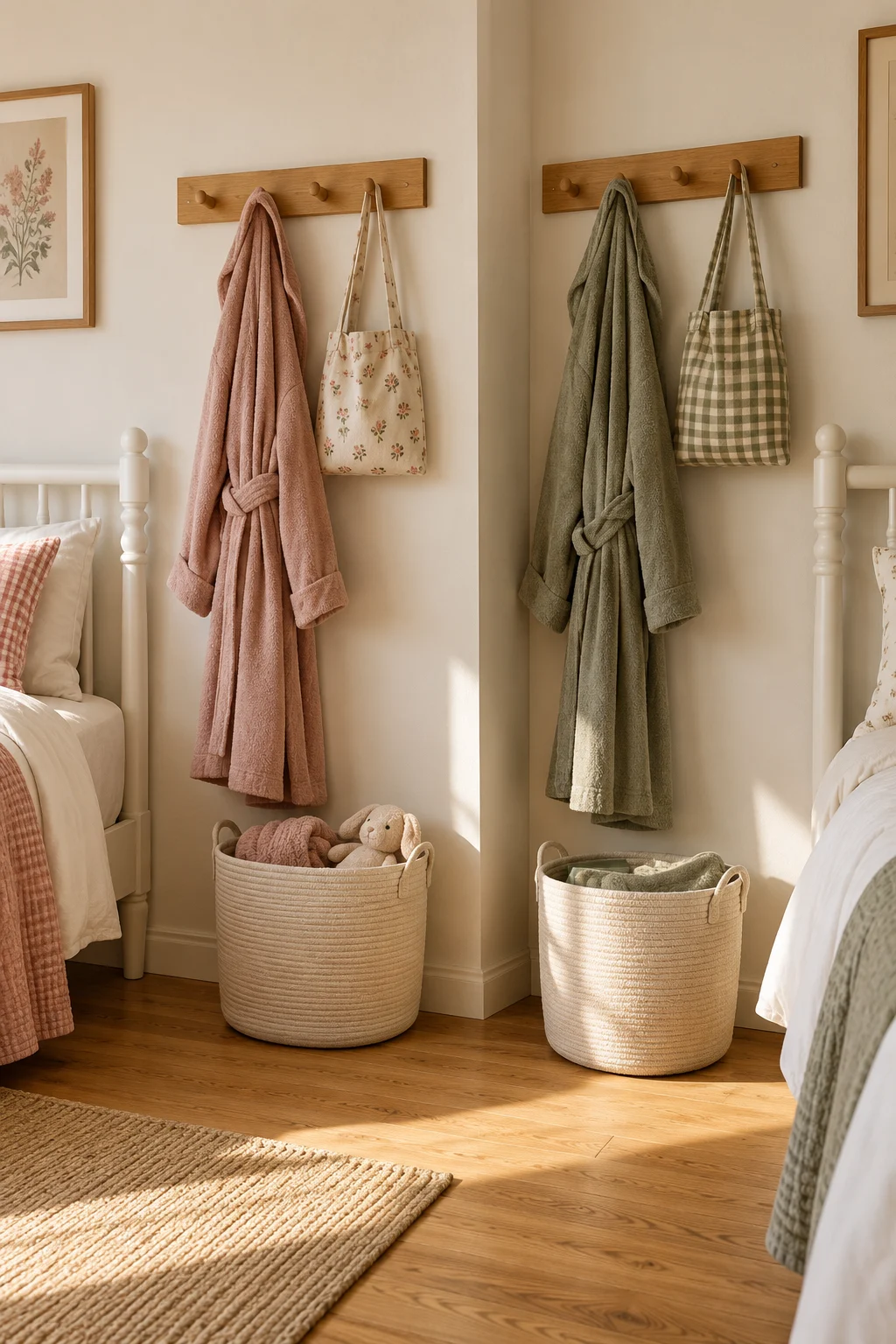
A pair of wooden peg rails offers easy access to robes, tote bags, and lightweight hats. Install one near each sister’s bed or closet section, adjusting height to suit the person who will use it. Stagger the hooks or choose rails with generous spacing so items do not pile up. Wall fasteners should be matched to the substrate and expected load; rails are not for climbing. A honey-oak finish looks cheerful beside off-white walls, and small fabric baskets underneath catch loose accessories. This is a practical option for children learning to put away their own things, because the system is visible and simple instead of hidden behind a crowded closet door.
12. A Shared Craft Table on Wheels
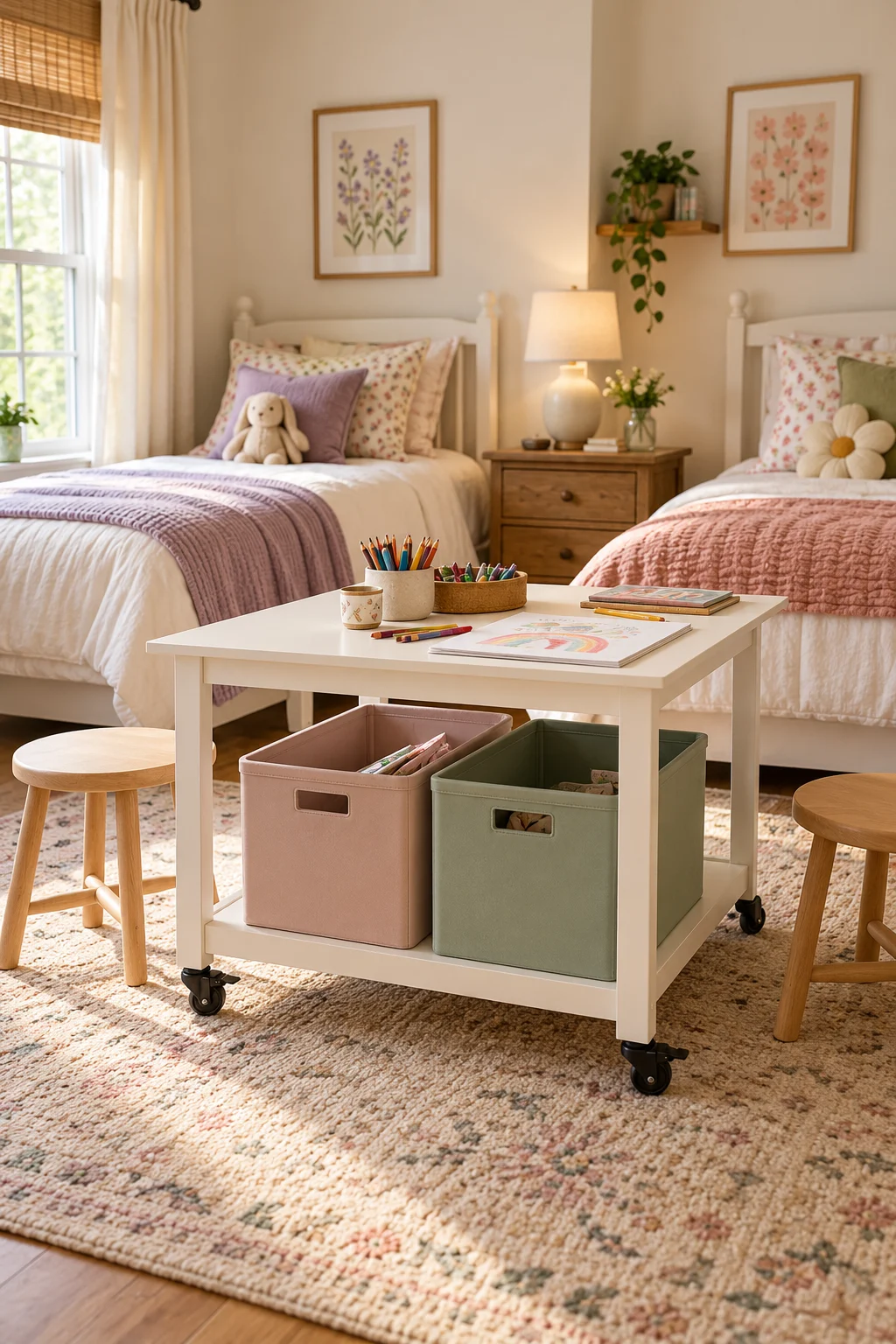
A compact rolling craft table lets sisters draw or build together, then clear the floor for other activities. Look for a sturdy table with lockable casters and a wipeable top; keep art materials in two color-coded bins beneath. This arrangement suits school-age children who enjoy projects but lack space for a permanent studio. Store scissors and other tools according to the children’s ages, and lock the wheels before use. The table can move beside the window during daylight hours and park against a wall afterward. It may not be large enough for elaborate projects, but that limit encourages each sister to keep a manageable amount of supplies on the surface.
13. Bookcase Divider With Open Shelves
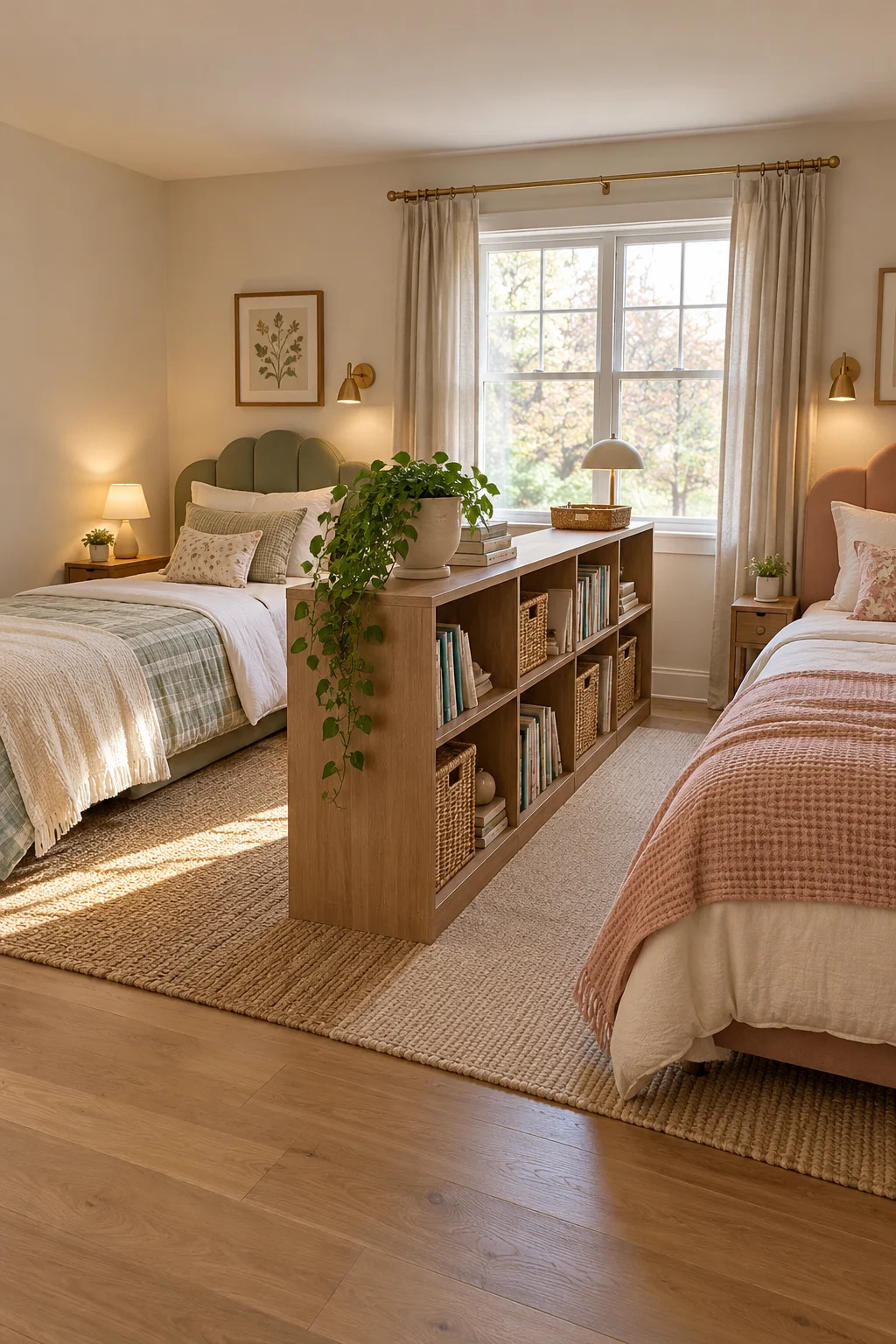
A low, open-backed bookcase between two sleeping zones can provide a gentle boundary while letting daylight travel through the room. Reserve alternating shelves for each sister and leave a few cubbies open for visual breathing space. This is better for a room with generous circulation than a cramped square bedroom, where furniture in the center can become an obstacle. Select a stable unit and secure it as the manufacturer directs; tall freestanding shelves are a poor choice for an improvised divider. Warm ash wood and simple woven boxes keep the piece quiet. Because both sides remain accessible, the sisters can share books while still having identifiable places for their own collections.
14. Coordinated Canopies Over Separate Beds
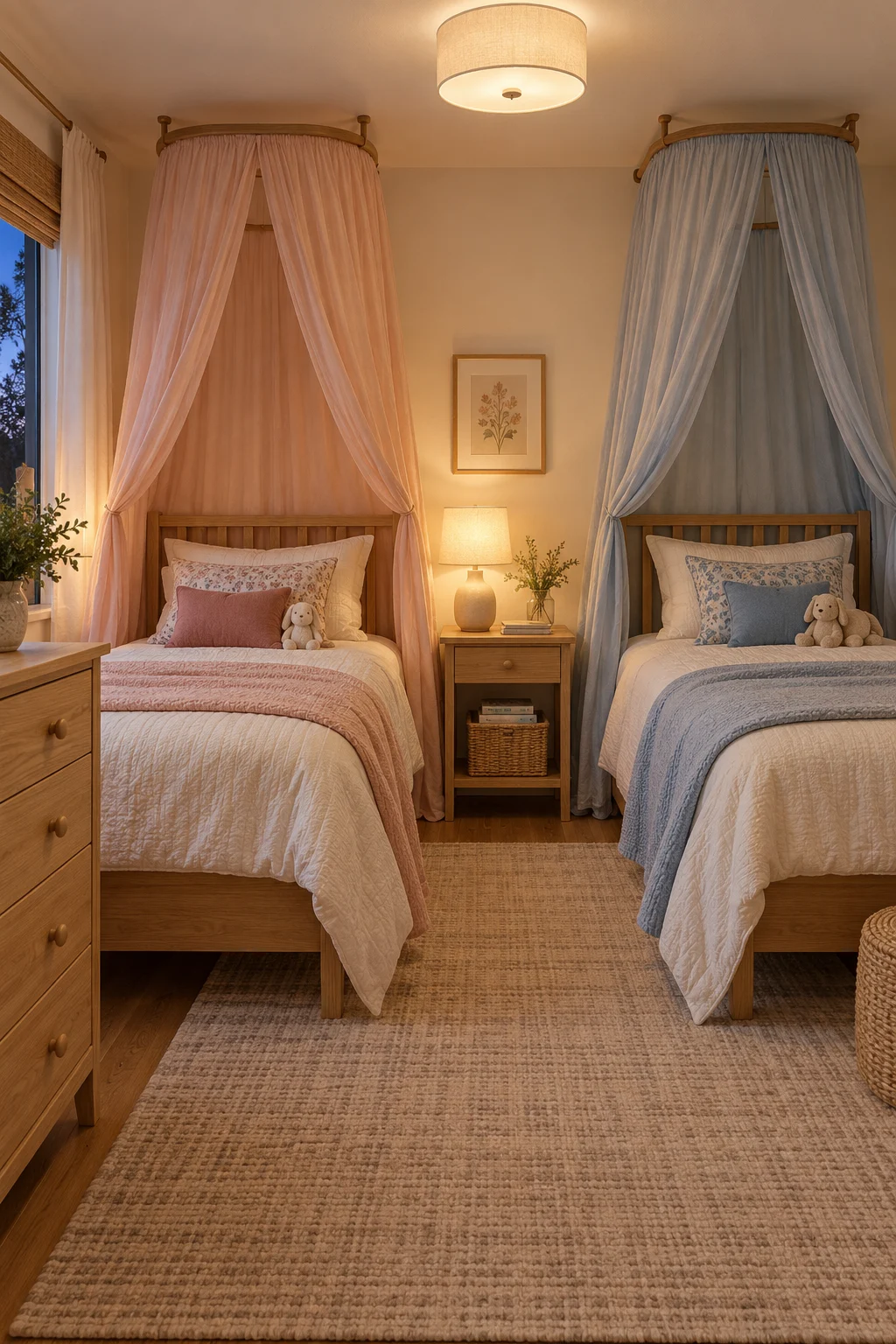
Two simple canopy frames can give each bed a sense of occasion without using a single dramatic centerpiece. Select matching frame shapes, then differentiate the spaces with a blush canopy fabric for one sister and a pale blue version for the other. Keep fabric well away from lamps, fans, heaters, and any fixtures that could catch it. Canopies should be securely installed and are better suited to children old enough not to pull or climb on them. In a room with a modest ceiling, minimal fabric panels usually feel lighter than heavily draped versions. The result is playful but not overly themed, and the fabric can be removed as tastes mature.
15. One Rug That Unites Both Sides
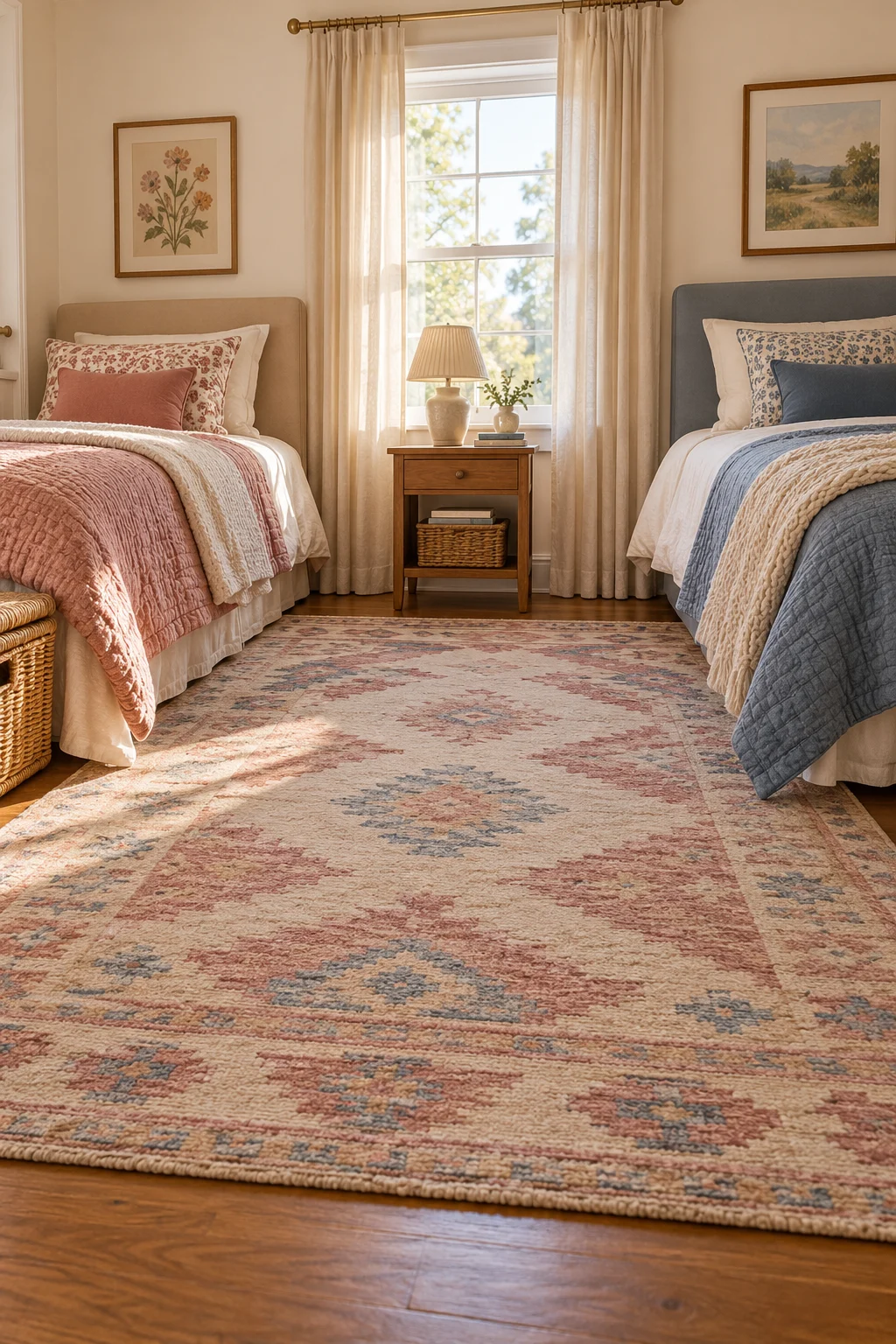
A generous flatweave rug can bring separate bed styles into a single visual composition. Try a muted geometric pattern combining sand, dusty rose, and soft blue, then repeat one of those shades in each sister’s bedding. The rug should extend into the shared central space, not sit awkwardly beneath just one bed. A suitable non-slip pad helps prevent movement on hard flooring, and a low pile is easier to clean around bed legs. This option is particularly helpful when the sisters have chosen different furniture finishes. The floor treatment provides continuity without asking either person to change her preferred bedside accessories, artwork, or blanket.
How to Plan Sisters Bedroom Ideas Around Daily Routines
Start with the busiest hour of the day. If both sisters dress for school at once, give them independent access to drawers, hooks, and a mirror. If one wakes earlier, place her essentials where she can reach them without crossing the other sleeping area. Talk through homework, hobbies, and bedtime before settling on a furniture plan. The best-looking arrangement on paper may fail when a closet door swings into a desk chair. Sketch the room and move paper rectangles representing furniture to test alternatives. Ask each sister to name one nonnegotiable feature and one thing she is happy to share. This conversation helps establish a practical plan and prevents the quieter child from agreeing to a layout she does not actually enjoy. Review the setup after a few weeks, when daily use reveals what needs changing.
Set a Budget That Leaves Room for Change
Spend first on the pieces that need to last: supportive mattresses, stable beds, reliable storage, and window coverings that function well. Accessories can be inexpensive and easy to replace. A room refresh might begin with rearranging existing furniture, laundering curtains, and exchanging pillow covers instead of purchasing a coordinated suite. Decide how much of the budget belongs to shared purchases and how much each sister may direct toward her own side. This makes decisions fairer when one child wants artwork and the other prefers a reading lamp. Check secondhand furniture carefully for damage, missing hardware, and applicable safety concerns. Save receipts and installation instructions for major items. Reserving a little money for organizers after the room is in use is often smarter than buying every basket before you know what needs storing.
Give Each Sister Privacy Without Isolation
Sharing a bedroom does not mean sharing every object, conversation, or moment of quiet. Agree on personal shelves, a place for private notebooks, and a simple rule for borrowing belongings. Even when there is no room for a physical divider, a separate bedside light and a designated drawer can communicate ownership. Headphones may help older children study, provided their use follows household rules and does not prevent them from hearing important alerts. Build in time when one sister can use the bedroom alone while the other spends time elsewhere in the home. If their ages are far apart, routines may need to be negotiated more deliberately. A shared room works better when privacy is treated as an ordinary need, not a reward for good behavior.
Choose Finishes That Survive Everyday Use
Bedroom finishes should accommodate dropped backpacks, shifting furniture, and frequent cleaning. Washable bedding, durable painted surfaces, and smooth drawer pulls are often more valuable than delicate decorative details. Keep spare pillowcases and an easy-access laundry hamper near the areas where clothes are changed. For rugs, consider how often snacks, craft supplies, or muddy shoes find their way inside. A low-pile surface can be simpler to vacuum than a deep shag. Test cleaning products on a hidden area and follow the care instructions for textiles and furniture. If the sisters have different standards of tidiness, assign small zones instead of expecting one person to maintain the entire room. A durable design is one that remains pleasant when real life gets busy.
Keep the Layout Safe as Children Grow
Furniture placement matters as much as its appearance. Keep exits and walking paths open, secure dressers and shelving as directed by manufacturers, and use window coverings without accessible hazardous cords. Beds should not create easy climbing routes to windows, and portable heaters need appropriate clearance from bedding and fabric. Check that lamps, chargers, and cords are not trapped under rugs or mattresses. For younger children, reconsider small accessories that could become choking hazards. Revisit the layout as the sisters grow: a safe arrangement for older teens may not suit a toddler sharing with a sibling. If a wall or ceiling installation is beyond your experience, hire a qualified professional. A room should support independence without asking children to manage hazards on their own.
Make a Shared Room Feel Fair Over Time
Fairness is not always identical square footage or matching furniture. One sister might value the window-side bed, while the other would happily exchange it for the larger desk drawer. Discuss these preferences openly, and record simple agreements if needed. Rotate shared privileges when there is no clear permanent solution. Invite both children to help choose common elements such as the rug or curtain color, but allow independent decisions within their personal zones. When one child changes interests, avoid automatically redesigning the entire room around that preference. Small seasonal swaps can happen without upsetting the other side. A short family check-in every few months helps resolve storage friction and keeps the room responsive to changing schedules, friendships, and schoolwork.
Frequently Asked Questions
Can sisters of different ages share a bedroom?
Often, yes, provided the sleeping arrangements and furniture are appropriate for each child’s age and safety needs. The larger challenge is usually coordinating schedules and privacy. Give each sister dedicated storage and plan quiet activities for the one who stays awake later.
How can I decorate a small room for two sisters?
Prioritize the beds and clear circulation first, then use wall space for storage and decoration. A compact shared nightstand or low bunk may free up useful floor area. Limit large decorative pieces and make sure drawers and doors can open fully.
Do sisters need matching bedding?
No. Matching bed frames or a repeated accent color can connect two different duvet patterns. Let each sister select a personal detail while keeping one or two shared materials consistent. This creates visual balance without making the children feel they must have identical tastes.
What if the sisters disagree about the room style?
Start with neutral shared furniture and offer each sister control over a small defined area. Use removable prints, pillow covers, or bedding for stronger personal preferences. If a shared purchase causes disagreement, shortlist options both children can accept rather than forcing a single favorite.
Conclusion
A successful shared bedroom gives each sister somewhere to belong and enough flexibility for changing tastes. Aim for a layout that supports the routines they actually follow, then layer in personal touches that are easy to refresh. You can start without buying anything: ask both sisters what they want to keep, what frustrates them, and which part of the room feels most useful. Move one piece of furniture or reorganize one shared drawer this weekend, and see how the change works before tackling the rest.
