
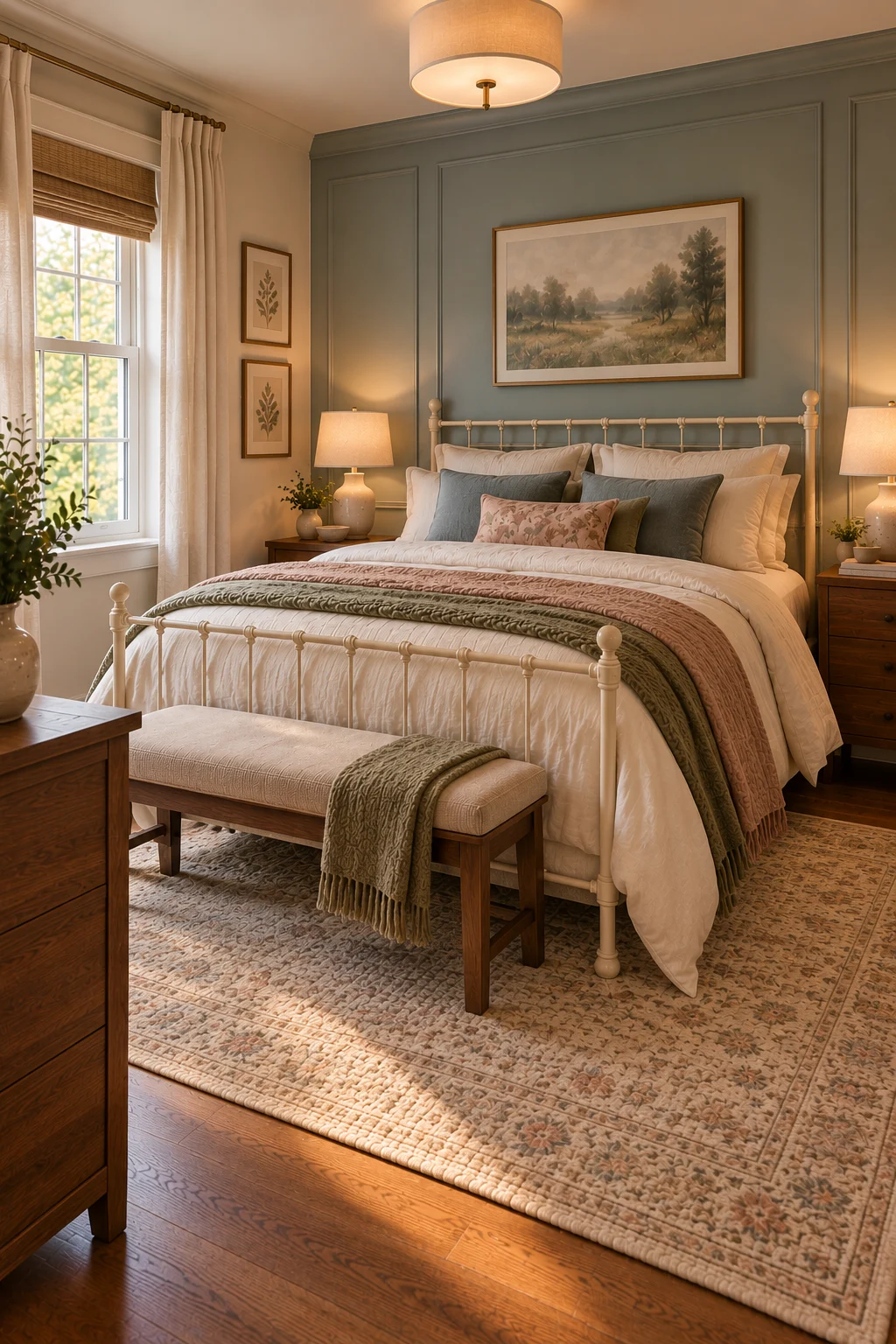
16 Vintage Cottagecore Bedroom Ideas for a Cozy Collected Look
There’s something comforting about a bedroom that feels as though its furnishings have been collected over time. A faded floral quilt, a gently worn wooden nightstand, and a favorite botanical print can give a room the warmth and personality of an old country cottage.
Vintage cottagecore decor celebrates those small, nostalgic details. It combines traditional furniture, delicate patterns, natural materials, and soft colors to create a bedroom that feels relaxed rather than perfectly coordinated.
The best part is that you don’t need a historic farmhouse or expensive antiques to achieve the look. A standard bedroom can feel charming with cream bedding, secondhand furniture, floral curtains, and a few carefully chosen accessories.
What matters most is balancing decorative character with everyday comfort. Your bedroom still needs practical storage, adequate lighting, and enough open space to move around comfortably.
These 16 vintage cottagecore bedroom ideas show how to combine faded blue, dusty rose, muted olive, warm cream, and natural wood for a cozy, collected space that feels personal and timeless.
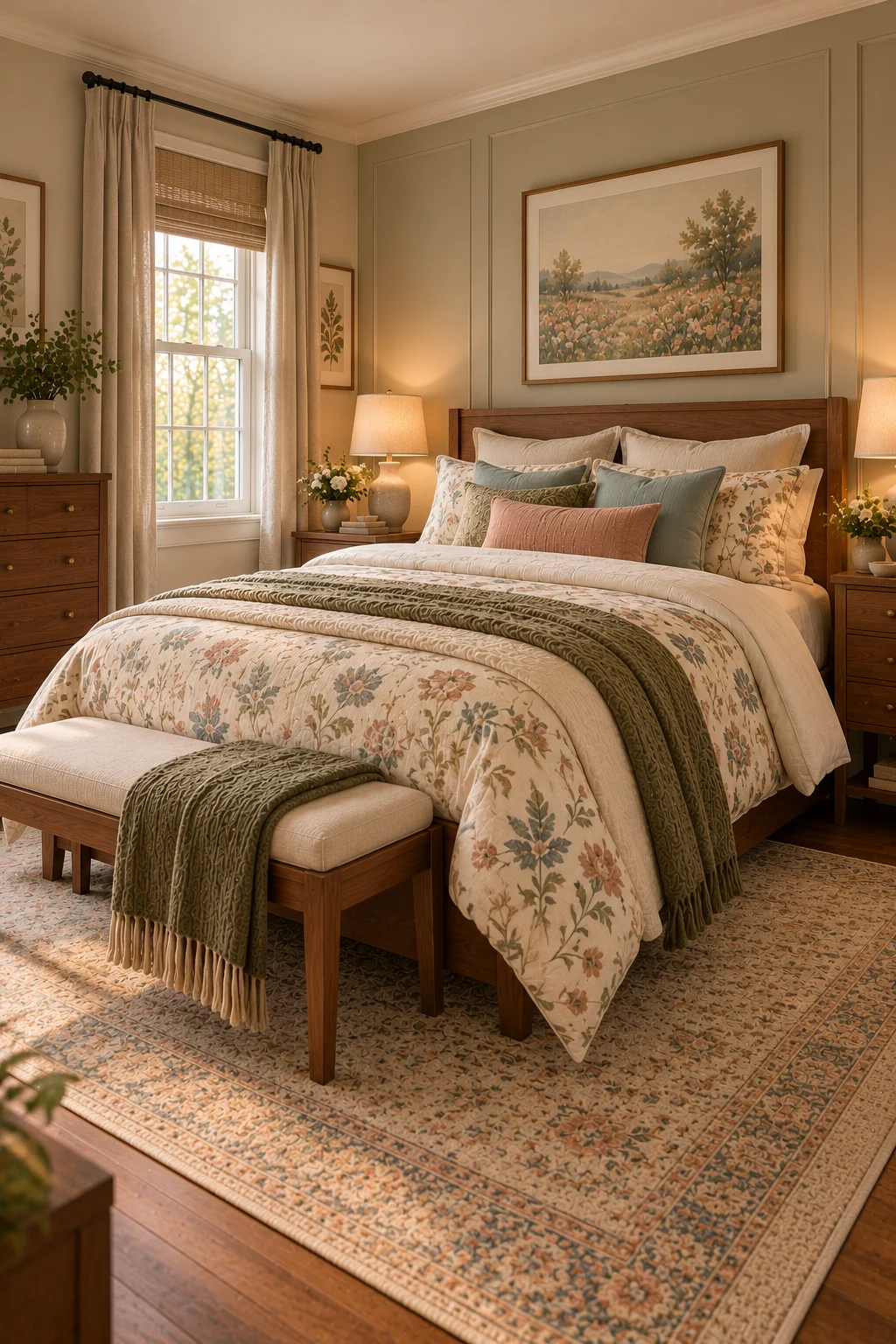
1. Warm Cream Floral Bedding
Floral bedding is a natural starting point for a vintage cottagecore bedroom because it introduces softness, color, and a nostalgic pattern without requiring permanent changes.
Choose a cream duvet cover or quilt featuring small flowers in faded blue, dusty rose, or muted olive. Delicate botanical patterns tend to feel more traditional than oversized, high-contrast prints.
Pair the floral bedding with plain ivory pillowcases and a soft oatmeal throw. The solid fabrics provide breathing room and prevent the bed from looking overly busy.
A natural-wood or cream-painted bed frame complements the gentle pattern beautifully.
If the room already has patterned wallpaper or curtains, choose bedding with a smaller, quieter floral design so the different elements don’t compete.
Styling tip: Pull one color from the floral print and repeat it in a cushion or small accessory. This simple connection makes the room feel coordinated without requiring matching furniture or fabrics.
2. Weathered Wood Bedside Tables
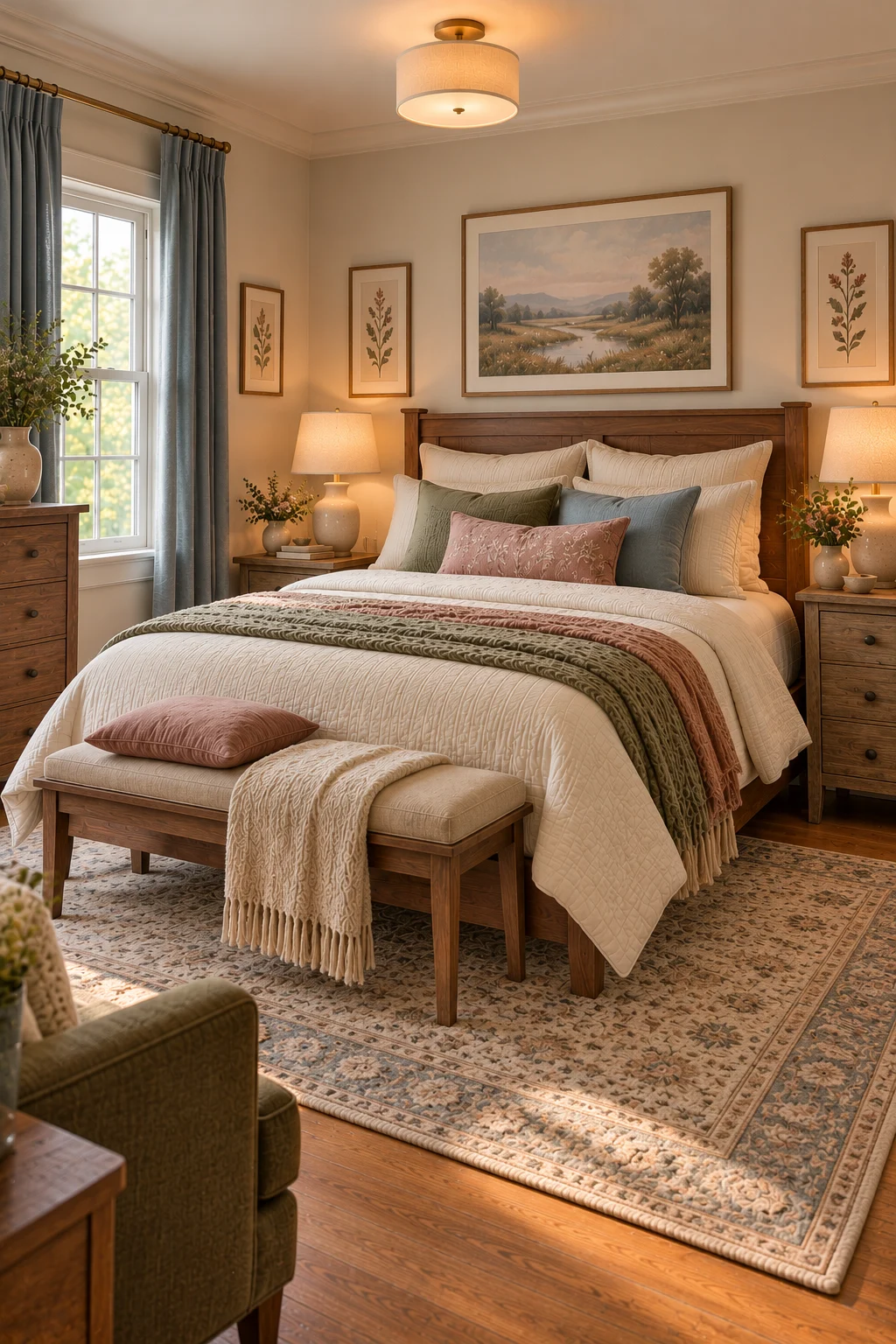
Weathered wood bedside tables bring the relaxed character of old cottage furniture into the bedroom.
Look for pieces with visible wood grain, simple turned legs, or gently aged finishes. A slightly imperfect appearance can feel more authentic than furniture designed to look perfectly new.
Choose tables that provide enough room for a bedside lamp, a book, and other essentials. A drawer or lower shelf is especially useful for keeping small items organized.
Pair weathered oak or walnut finishes with cream bedding and muted floral textiles.
The two bedside tables don’t need to be identical. Different pieces can work together when their heights, proportions, and wood tones are reasonably compatible.
Secondhand shopping tip: Check drawers, joints, and legs for stability before purchasing vintage furniture. Avoid pieces with peeling or unknown old paint finishes unless they can be evaluated and handled safely.
3. Delicate Botanical Wallpaper
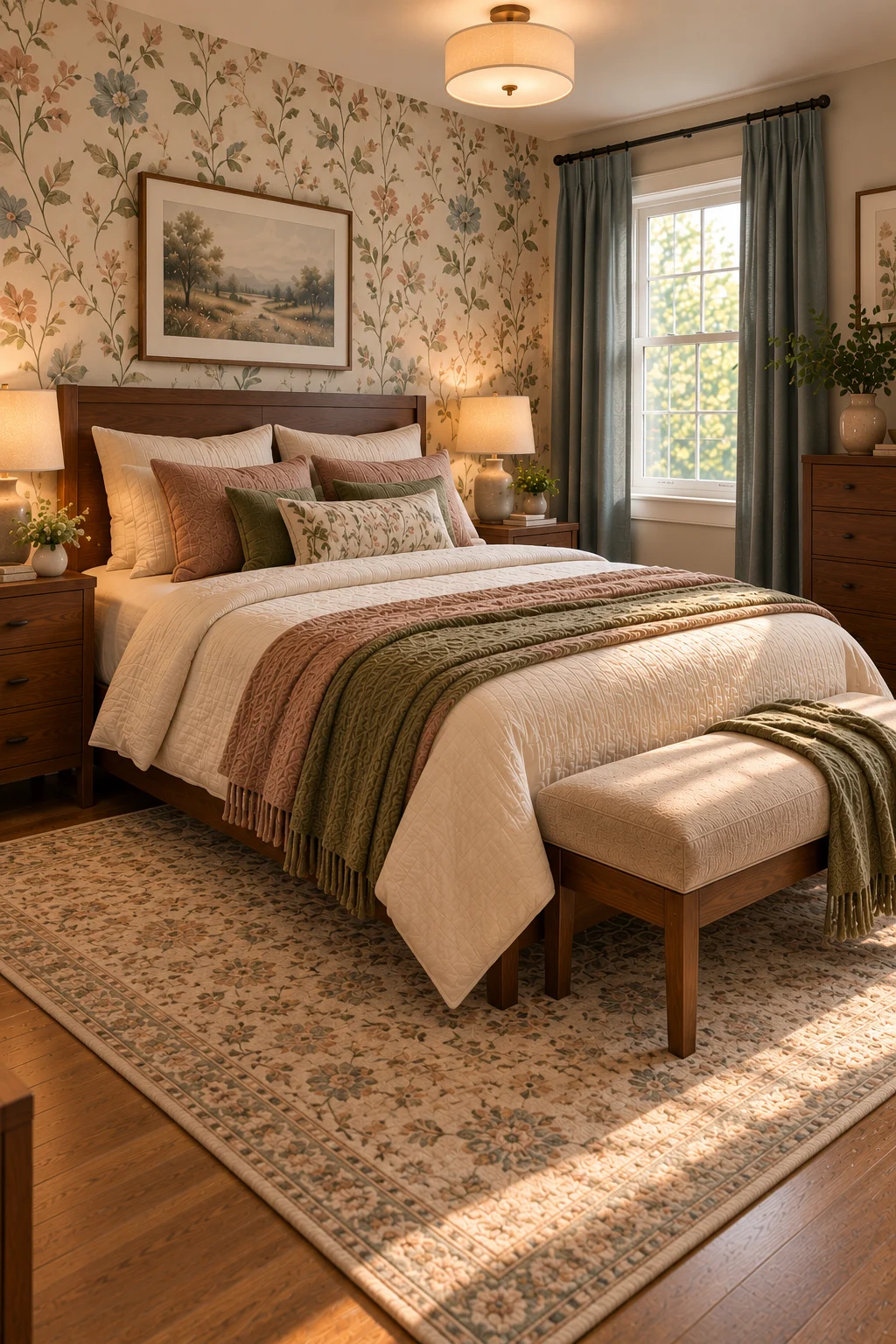
Botanical wallpaper can transform an ordinary bedroom wall into a charming cottage-inspired feature.
Choose a small-scale pattern featuring trailing vines, wildflowers, delicate leaves, or soft garden illustrations.
Warm cream backgrounds with faded blue, muted olive, or dusty rose details work particularly well because they introduce pattern without making the room feel dark.
Apply the wallpaper behind the bed or on another clear wall where the design can be appreciated.
Keep the remaining walls simple and choose understated bedding if the wallpaper has a noticeable pattern.
Natural wood furniture and vintage-look brass lamps complement botanical designs without competing with them.
Practical tip: Order a sample and view it in the room at different times of day. Check the wallpaper’s installation and removal requirements, especially if you’re decorating a rental or working with textured walls.
4. Vintage-Look Brass Bedside Lamps
Vintage-look brass lamps add a warm, traditional detail that suits the collected appearance of cottagecore decor.
Choose a lamp with a gently curved base, aged-brass-look finish, or simple traditional silhouette.
An ivory linen shade creates soft, diffused light and pairs naturally with cream walls and floral bedding.
Place the lamp on a wooden nightstand alongside a favorite book or a small ceramic dish.
If you have matching nightstands, two coordinated lamps can create a balanced arrangement. In a more eclectic bedroom, different lamps with similar finishes can also work beautifully.
Keep the scale appropriate for the furniture so the lamp doesn’t dominate a narrow bedside surface.
Lighting tip: Use a warm-white LED bulb around 2700K–3000K for a cozy evening atmosphere. Choose sufficient brightness for reading and keep electrical cords organized and away from walking areas.
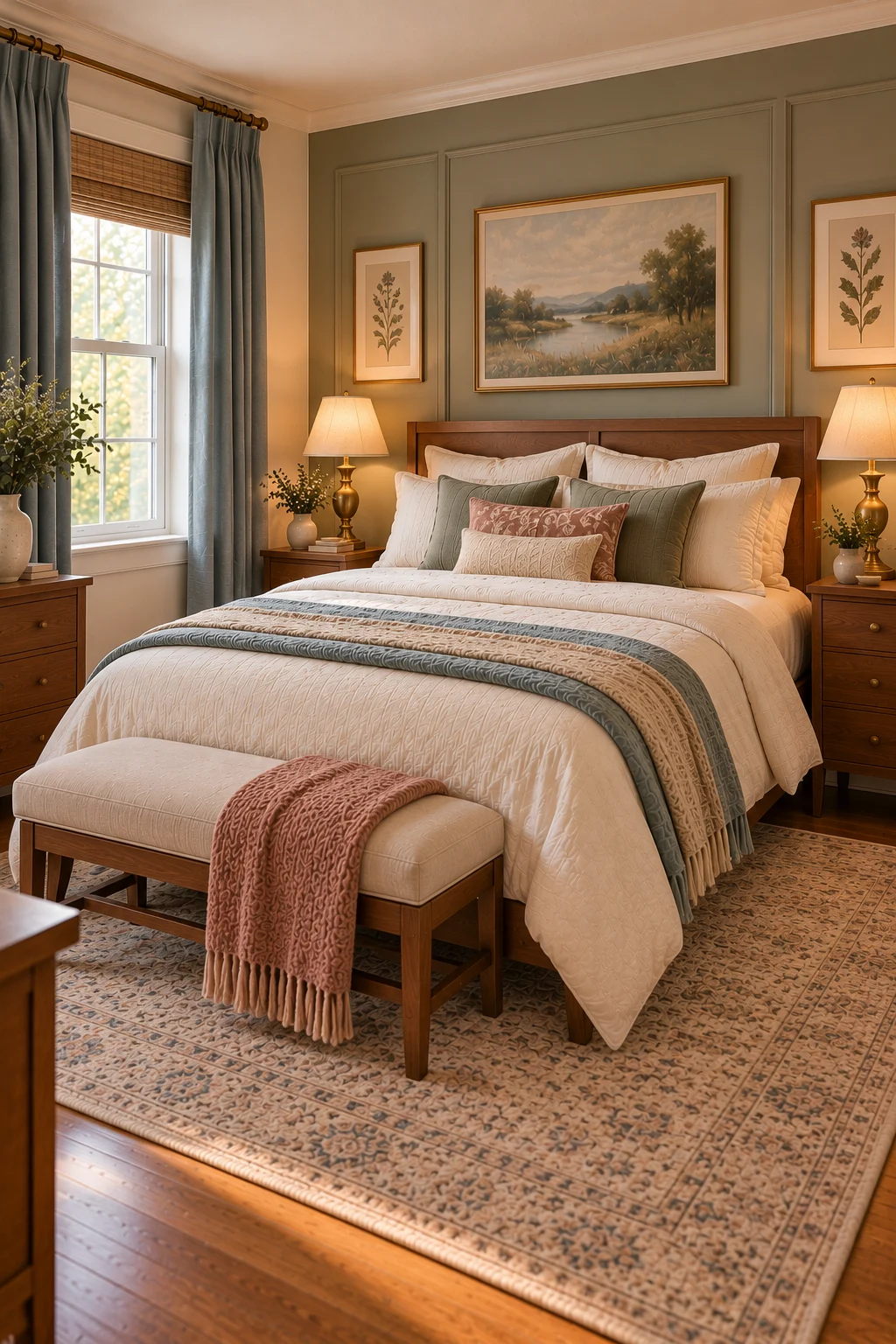
5. Soft Blue-Gray Painted Dresser
A painted dresser in soft blue-gray adds a gentle hint of color while preserving the nostalgic charm of vintage furniture.
Choose a muted shade that leans toward faded blue rather than a bright or saturated color.
A traditional dresser with simple drawer fronts, rounded edges, or classic hardware works particularly well.
Pair the painted finish with warm cream walls and natural wood accessories.
Brass-look drawer pulls can introduce a subtle vintage detail, while a small framed botanical print or ceramic vase provides a simple finishing touch.
If you already own a sturdy dresser, repainting it may be more affordable than buying a replacement.
DIY tip: Prepare the surface according to the paint manufacturer’s instructions. Older painted furniture may contain lead-based paint, so avoid sanding or disturbing unknown finishes without appropriate testing and precautions. Secure dressers against tipping where required.
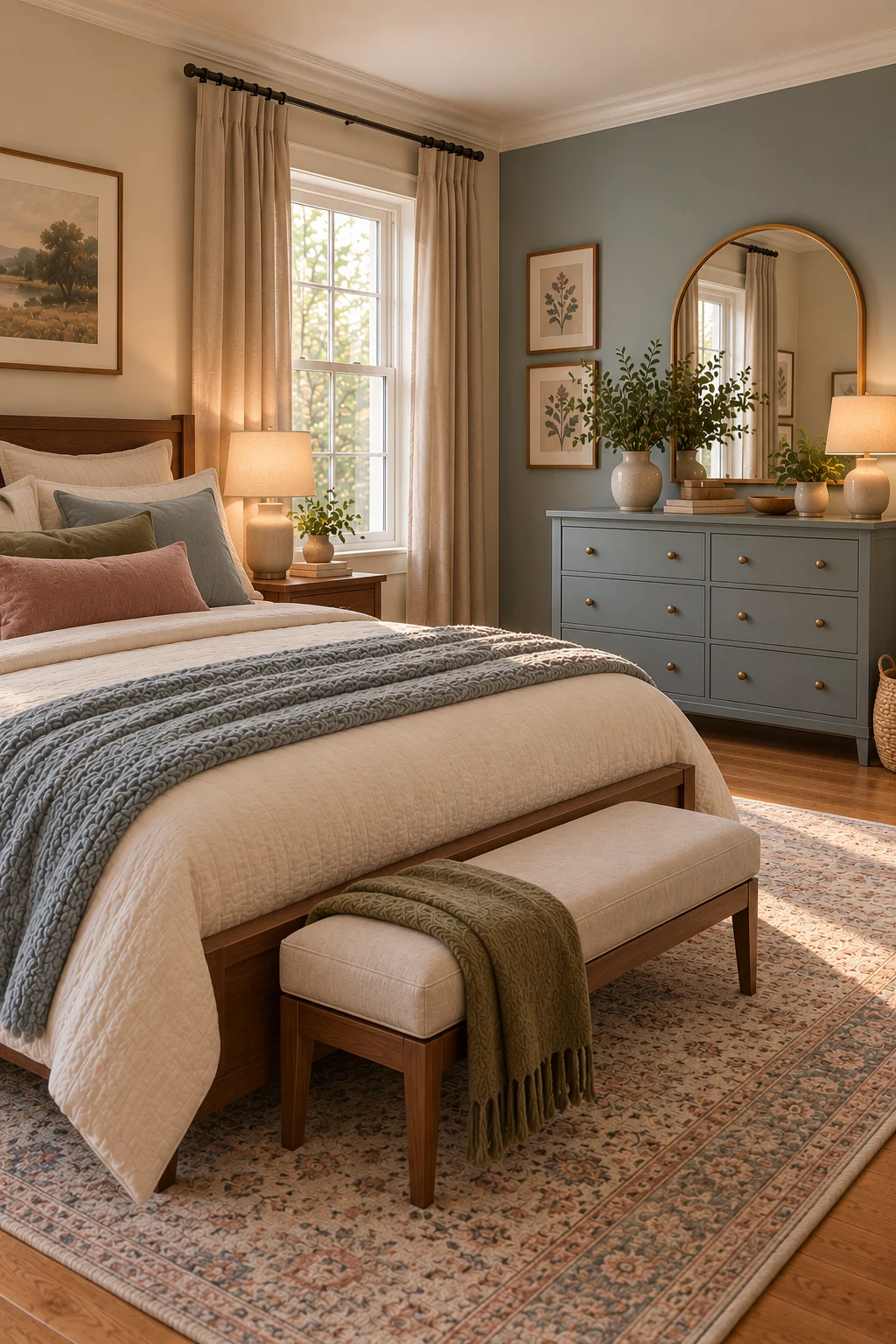
6. Layered Quilts and Oatmeal Throws
Layered bedding gives a cottagecore bedroom its inviting, lived-in appearance.
Start with comfortable cream sheets and a lightweight quilt featuring a subtle floral or patchwork design.
Fold an oatmeal-colored throw across the foot of the bed to add texture without introducing another strong pattern.
For cooler weather, layer a second quilt or coverlet that complements the colors already present.
Soft cotton, linen, and washable woven fabrics help the arrangement feel relaxed and practical.
Keep the number of decorative pillows manageable so the bed remains easy to make each morning.
A cream-painted bed frame or natural wooden headboard provides a timeless backdrop for the layered textiles.
Comfort tip: Adjust the bedding to suit your climate and sleeping preferences. Lightweight layers are often more versatile than one very heavy comforter, especially when bedroom temperatures change throughout the year.
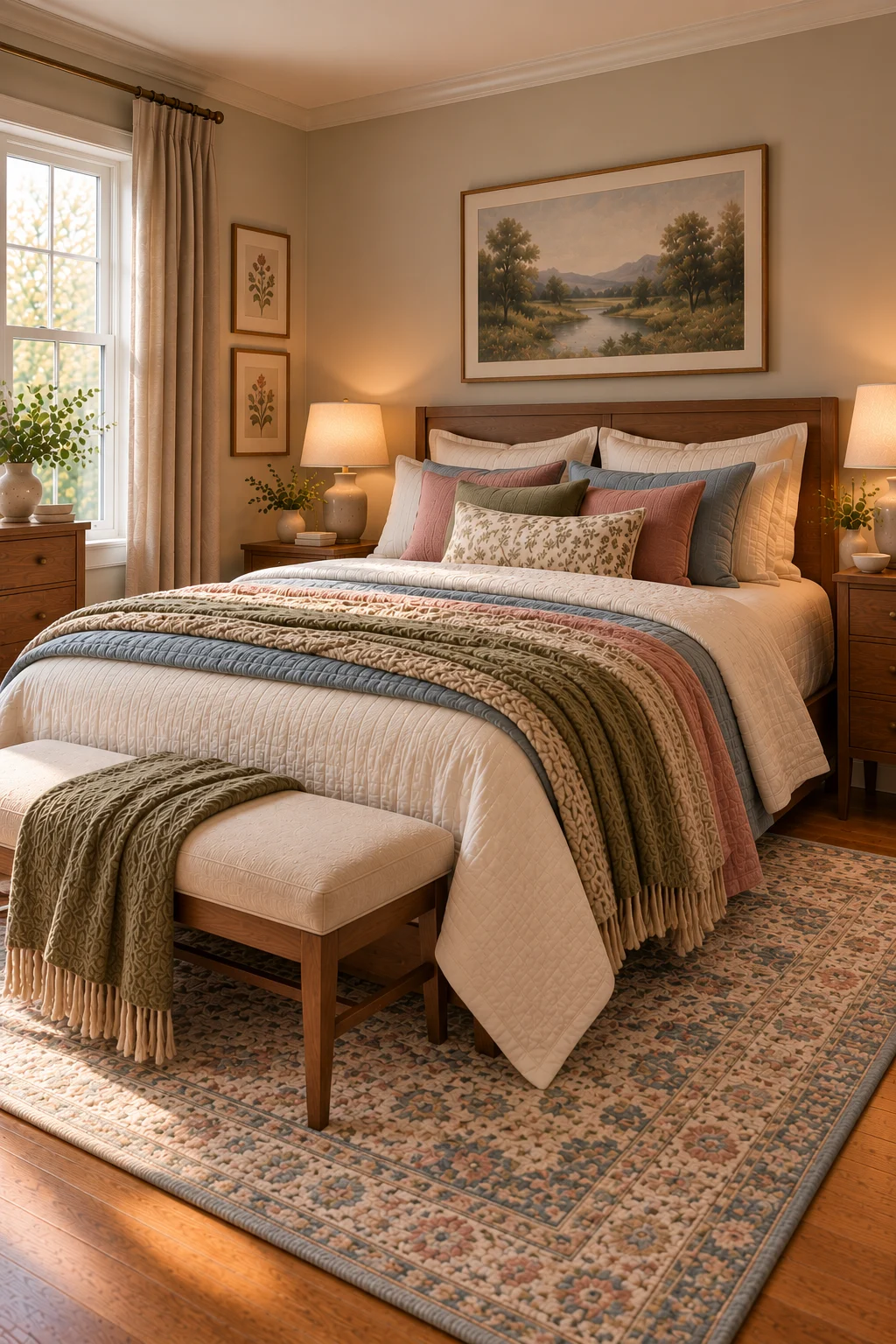
7. Small Floral Curtain Panels
Floral curtain panels soften the windows and introduce another traditional cottage detail.
Choose a small-scale print featuring faded blue flowers, dusty rose blossoms, or muted green leaves on a cream background.
Lightweight cotton or linen-look fabric creates a relaxed appearance while allowing the window area to feel bright.
Use a simple wooden or aged-brass-look curtain rod for a traditional finish.
If the bedding already has a strong floral pattern, select curtains with a quieter print or use a coordinating solid color instead.
Floor-length panels can look elegant, but shorter curtains may be more practical around furniture or in compact rooms.
Window tip: Measure the window and desired curtain length before buying. Make sure the fabric doesn’t interfere with window operation, heating equipment, or furniture placed nearby.
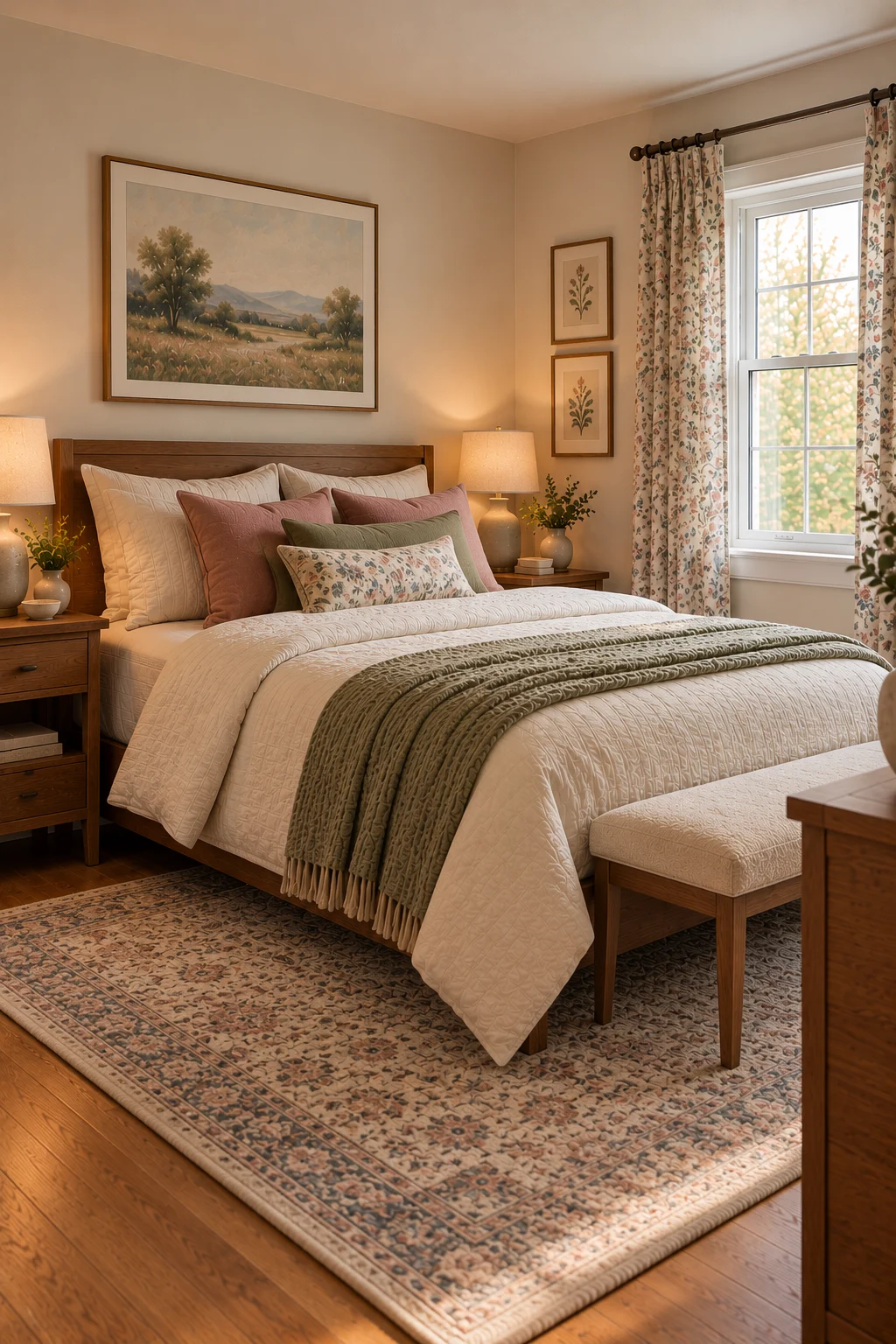
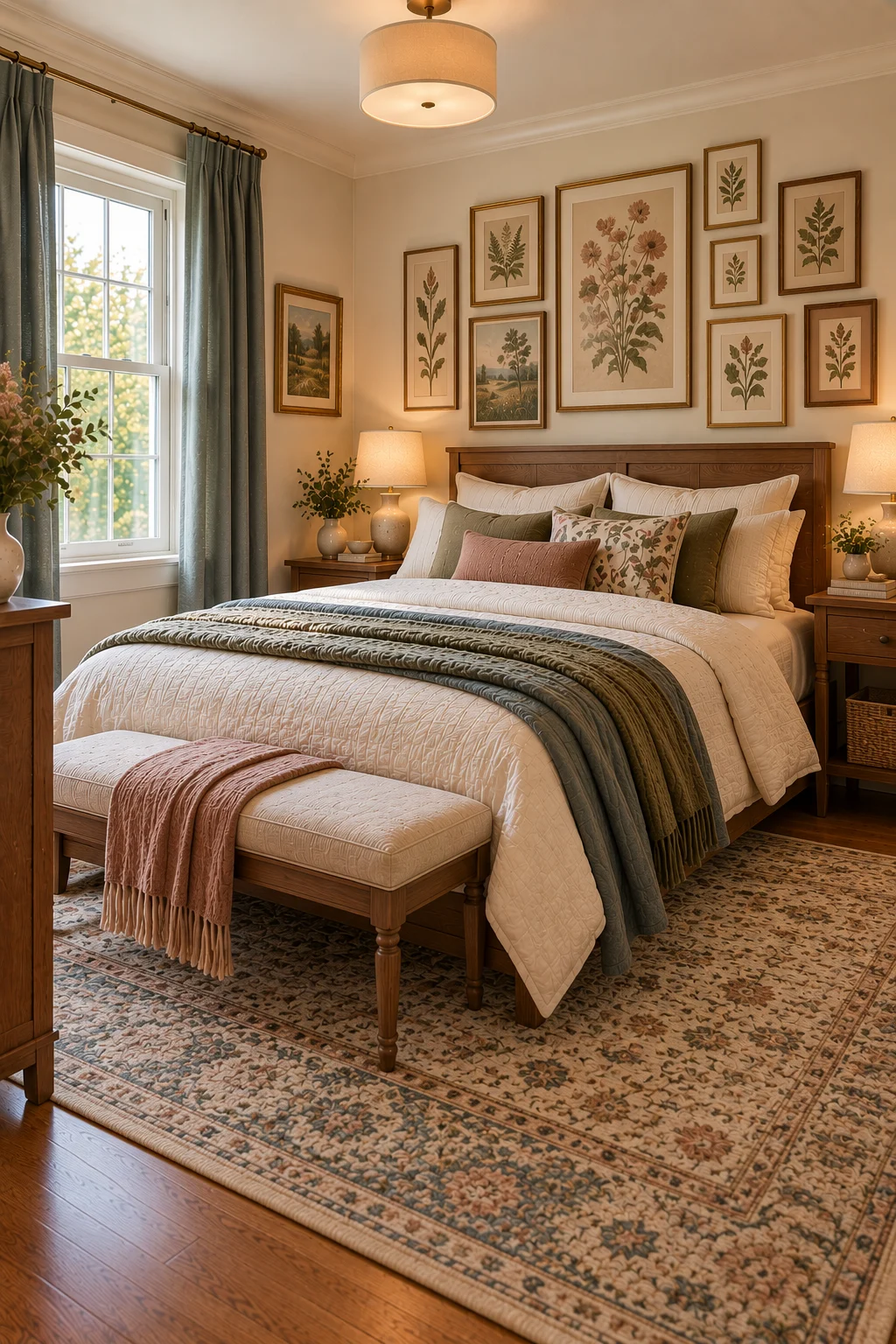
8. Antique-Inspired Botanical Gallery
A botanical gallery wall gives a vintage cottagecore bedroom the charm of an old country home filled with collected artwork.
Choose illustrations of wildflowers, ferns, herbs, or garden plants with softly aged backgrounds.
Mix a few small frames in natural wood, antique-brass-look, or warm brown finishes.
Arrange the prints above a dresser or along a clear wall where they won’t compete with other large decorations.
For a collected appearance, combine different frame sizes while keeping the artwork within a similar color palette.
Leave consistent spacing between pieces so the arrangement feels thoughtful rather than crowded.
Budget tip: Botanical artwork can be an inexpensive way to create vintage character. Look for affordable reproductions or printable illustrations, and use lightweight frames with appropriate mounting hardware.
9. Woven Baskets for Practical Storage
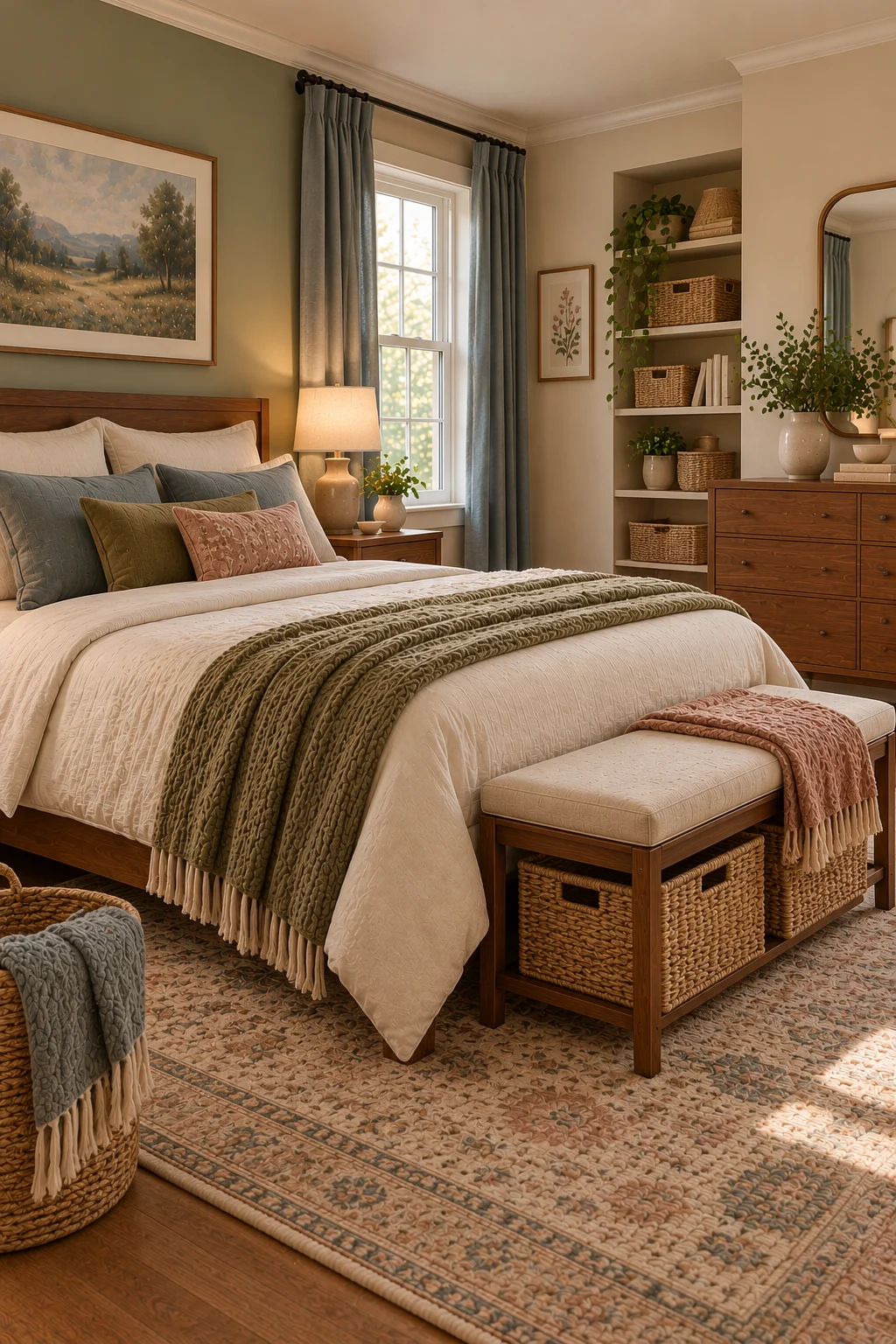
Woven baskets are a useful way to add natural texture while keeping a cottagecore bedroom organized.
Choose baskets in warm straw, honey, or natural beige tones.
Place a medium basket beside a dresser for spare throws, or use smaller baskets on open shelves for accessories and everyday items.
Baskets with sturdy handles are especially convenient when they need to be moved for cleaning.
Pair woven storage with painted furniture, cream bedding, and natural wood finishes for a relaxed cottage atmosphere.
Avoid placing too many baskets around the floor, where they can make a small bedroom feel crowded.
Organization tip: Assign each basket a specific purpose. Soft textiles, scarves, and lightweight accessories are good candidates, while heavy or fragile objects are generally better stored in stable drawers or cabinets.
10. Muted Olive Cottage Bedroom
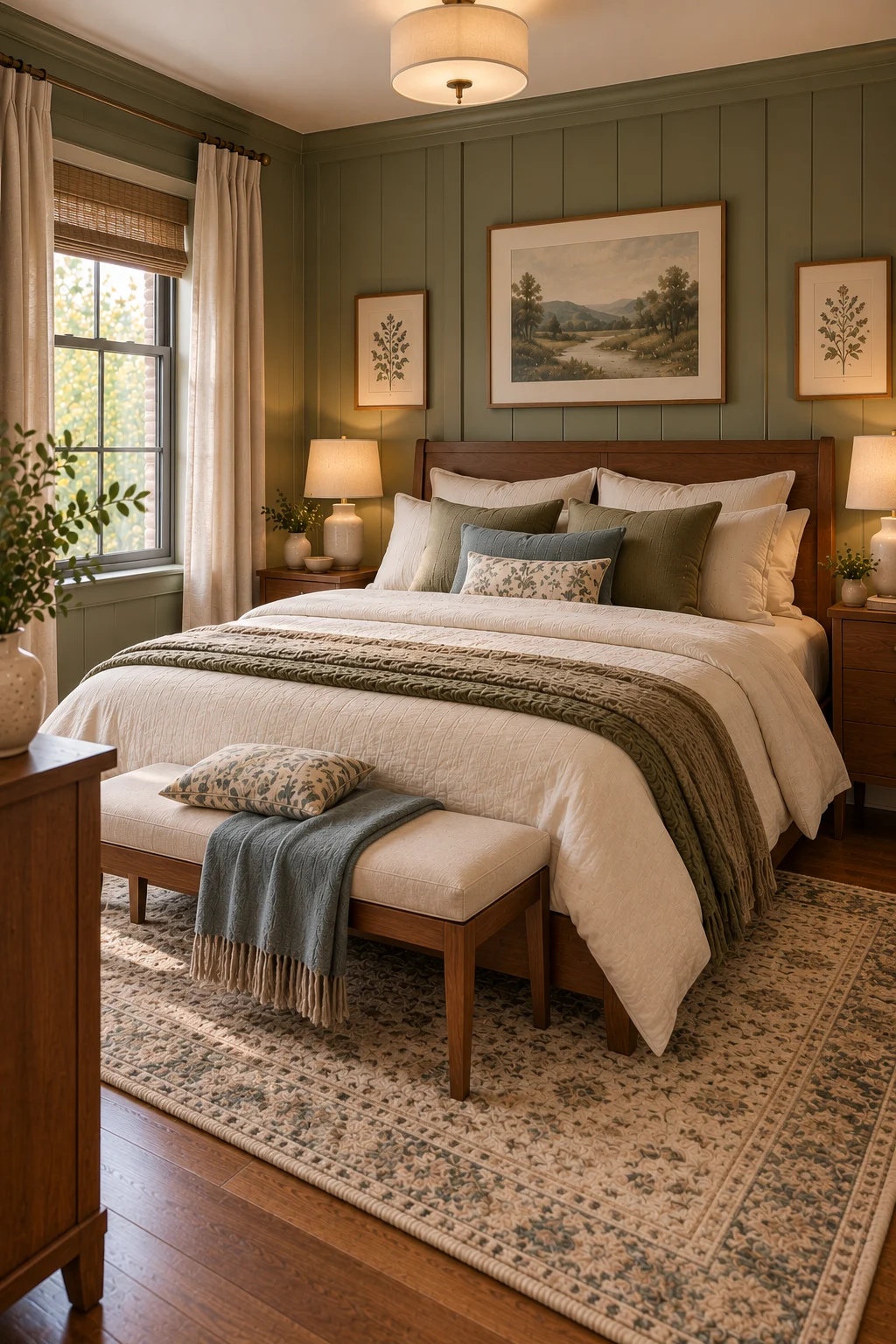
Muted olive creates a peaceful, nature-inspired foundation for a vintage cottagecore bedroom.
Choose an olive shade with soft gray undertones rather than a bright green.
Use it on a feature wall, through bedding accents, or on a small painted furniture piece.
Warm cream bedding and natural wood furniture keep the palette balanced.
Add faded floral prints or botanical illustrations to reinforce the garden-inspired atmosphere.
Aged-brass-look lighting can provide a subtle warm contrast against the green.
For smaller bedrooms, consider keeping most walls cream and introducing olive through cushions, curtains, or a throw.
Color tip: Test olive paint samples beside your flooring and furniture. Green shades can shift noticeably between daylight and warm artificial light, so checking the color in the actual room helps prevent surprises.
11. Cream Iron-Look Bed Frame
A cream iron-look bed frame introduces the delicate, traditional character often associated with vintage cottage bedrooms.
Choose a frame with slender rails, a gently curved headboard, or understated decorative details.
The cream finish feels softer than black metal and blends naturally with floral bedding and warm neutral walls.
Layer the bed with a quilt in faded blue or dusty rose, then add plain ivory pillows for balance.
Weathered wooden nightstands can create an appealing contrast with the painted metal finish.
Keep surrounding furniture simple so the bed remains the focal point.
Shopping tip: Check the bed frame’s dimensions, mattress compatibility, and assembly requirements before purchasing. Decorative vintage-style frames should still provide stable support and meet the manufacturer’s specifications.
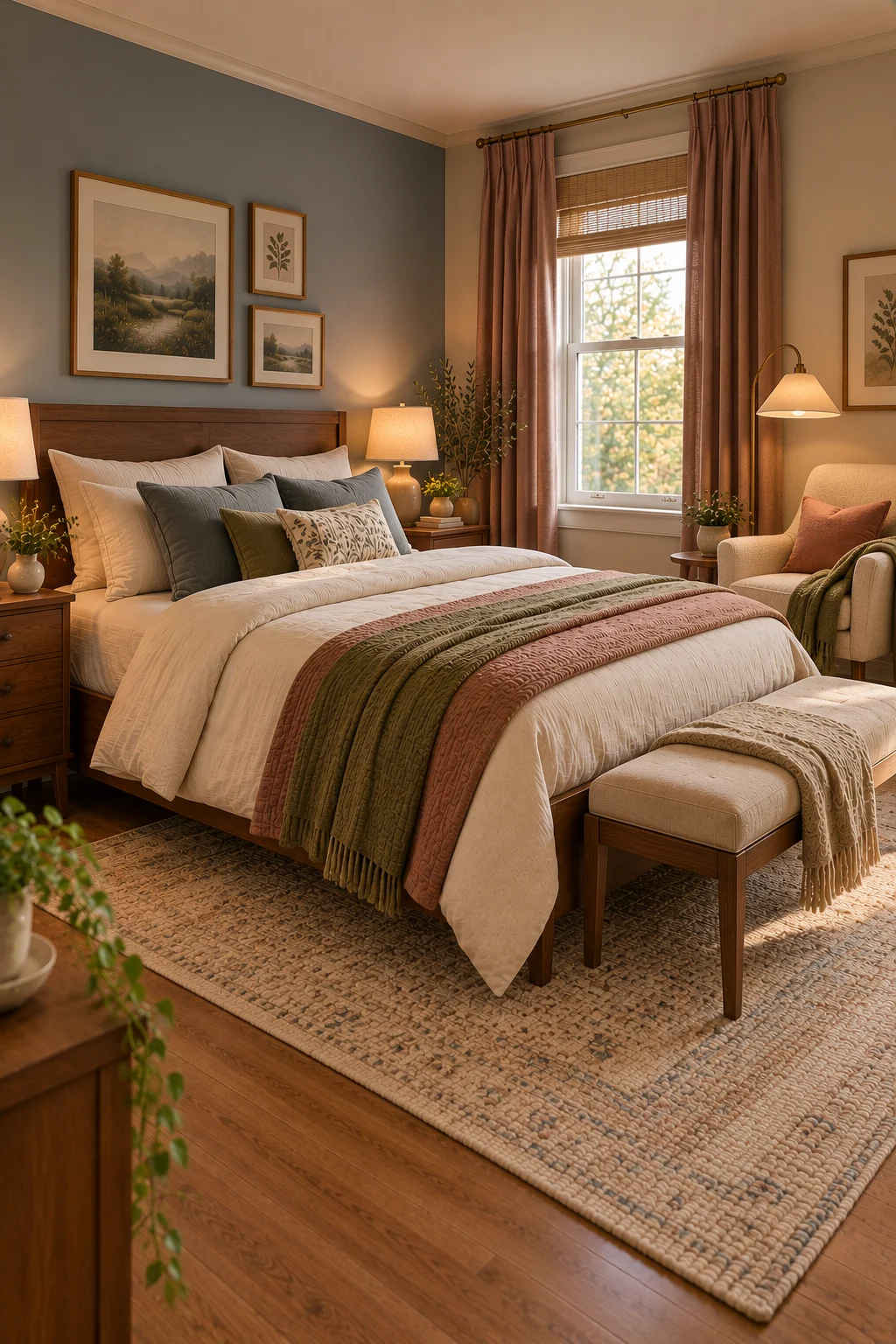
12. Cozy Reading Chair and Floor Lamp
A comfortable reading chair creates a peaceful corner that suits the slow, relaxed atmosphere of cottagecore decor.
Choose a compact upholstered chair in cream, oatmeal, faded blue, or a subtle floral fabric.
Place it near a window or in an unused corner where it won’t interrupt movement around the bed.
Add a simple floor lamp with a warm finish and adjustable light for evening reading.
A small wooden side table provides space for a book or cup of tea.
Complete the arrangement with a soft throw draped over the chair and perhaps one botanical print nearby.
Layout tip: Measure the chair and lamp together before purchasing. Leave enough room to sit comfortably and access the surrounding furniture, and keep the lamp cord out of the walking route.
13. Subtle Gingham and Stripe Accents
Gingham and stripes introduce traditional country patterns that complement floral cottagecore decor.
Choose small checks or fine stripes in faded blue, dusty rose, or warm cream.
Use the patterns through a cushion, lightweight throw, or upholstered accent rather than covering every surface.
A small gingham pillow looks particularly charming against plain cream bedding.
Fine striped fabric can also work on a reading chair or bench cushion.
When combining patterns, vary their scale. A delicate floral duvet, for example, can pair with a slightly larger gingham cushion if the colors relate.
Styling tip: Limit the room to two or three complementary patterns. Keeping the walls and larger furniture relatively simple helps the bedroom feel collected rather than visually overwhelming.
14. Simple Wood Bench at the Bed
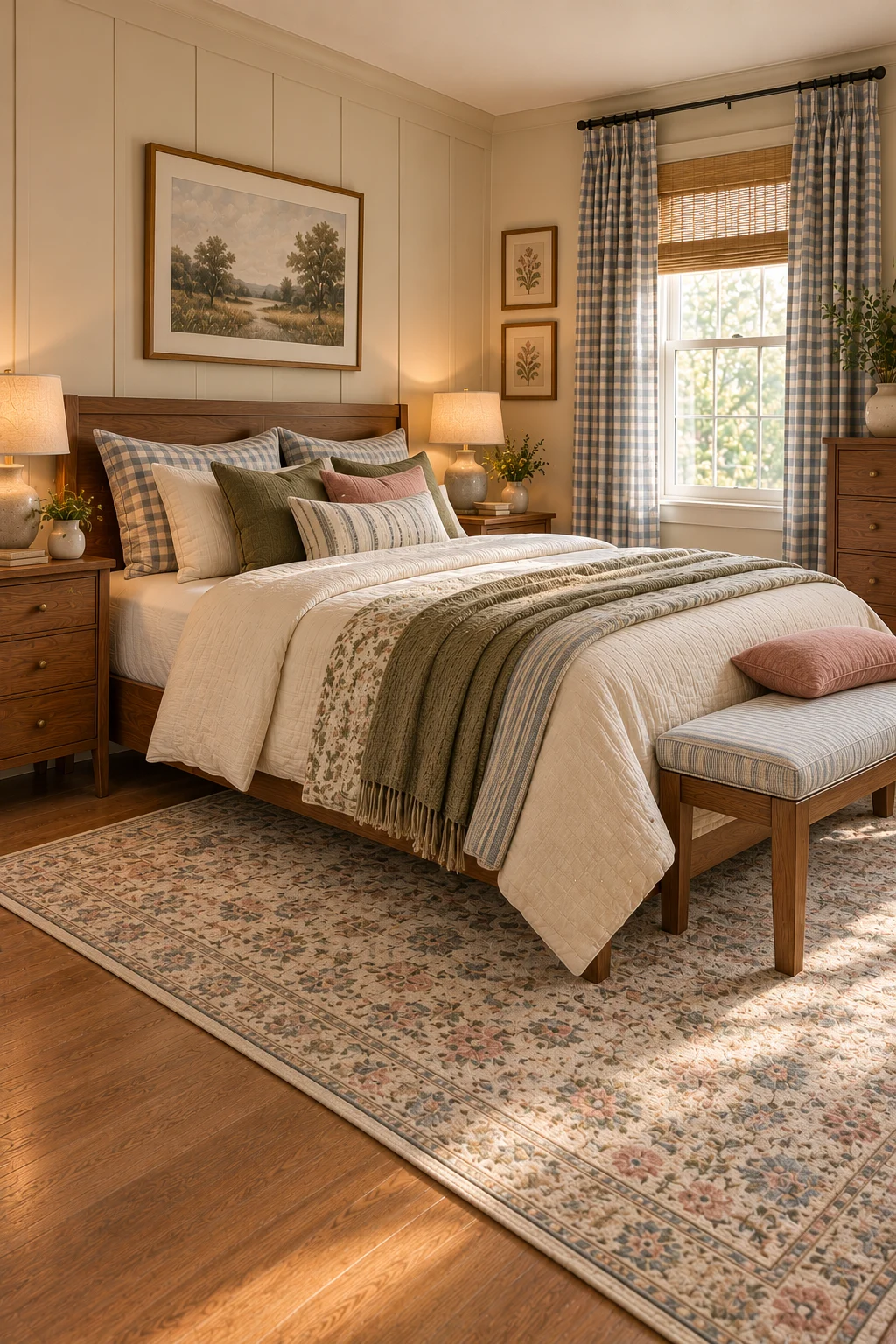
A simple wooden bench at the foot of the bed adds traditional character and provides a practical place to sit while getting dressed.
Choose a compact bench in natural oak, walnut, or a softly weathered finish.
A design with simple legs and a smooth wooden seat feels appropriate for vintage cottagecore without adding unnecessary ornament.
Place a folded quilt or small cushion on the bench to introduce softness.
If the room has limited storage, a bench with an integrated lower shelf may be useful for neatly folded blankets.
Keep the surrounding floor area clear so the bench doesn’t obstruct movement.
Space tip: Measure the distance between the foot of the bed and the opposite furniture before buying. If a bench would make the walkway too narrow, use a small stool beside the dresser instead.
15. Dusty Rose and Mushroom Palette
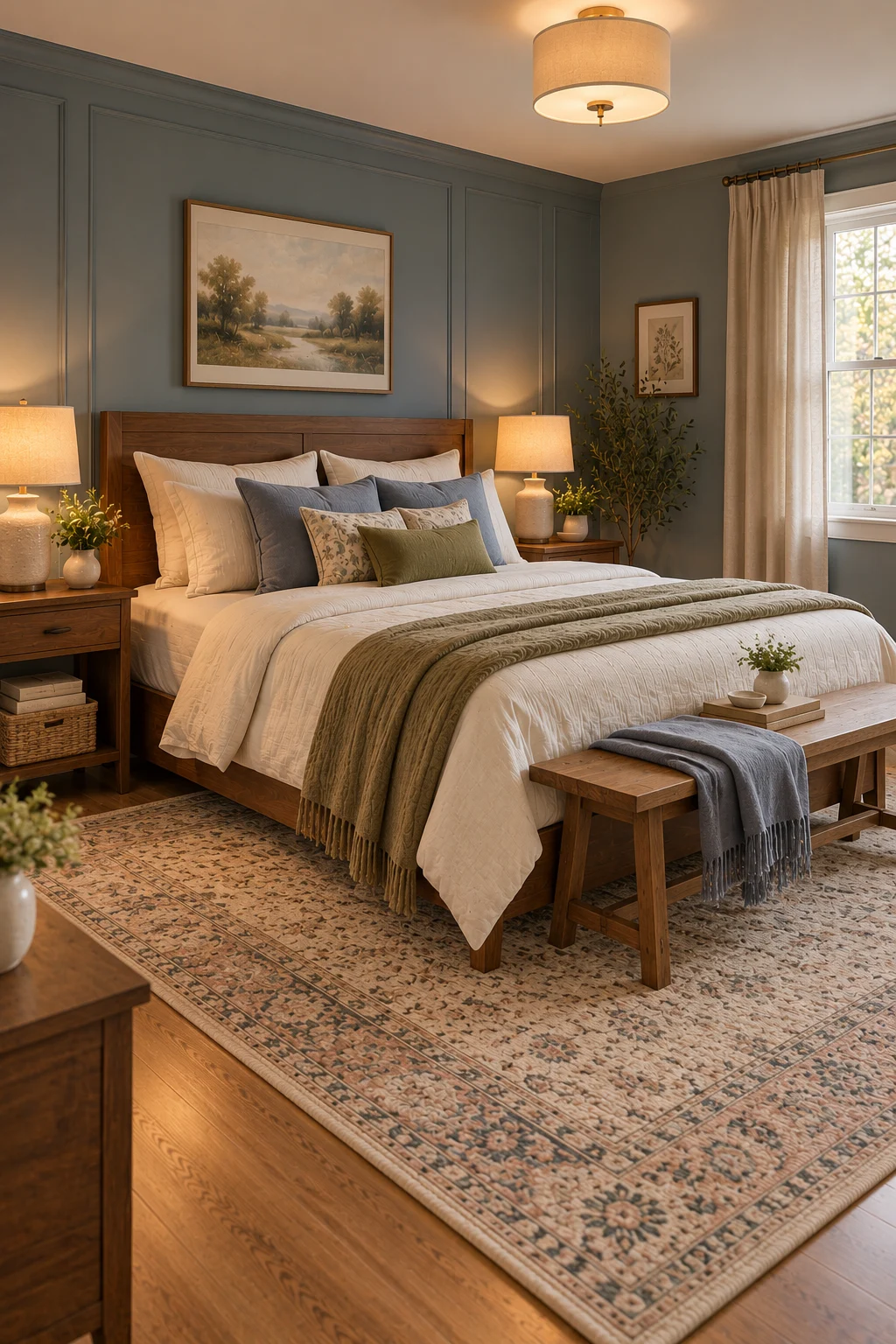
Dusty rose and mushroom create a gentle, romantic color combination that feels mature and timeless.
Use mushroom greige on the walls or through larger textiles, then introduce dusty rose with cushions, floral bedding, or a lightweight throw.
The warm gray-brown undertones of mushroom help prevent the pink from feeling overly sweet.
Cream furniture and natural wood finishes complement both colors.
For a more vintage appearance, add a brass-look lamp or a framed floral illustration with faded rose tones.
Keep patterns restrained so the color combination remains the main feature.
Palette tip: Compare dusty rose fabrics against the mushroom paint sample before committing. A muted, slightly brownish rose usually coordinates more naturally than a bright pink with cool undertones.
16. Balanced Vintage Cottagecore Bedroom
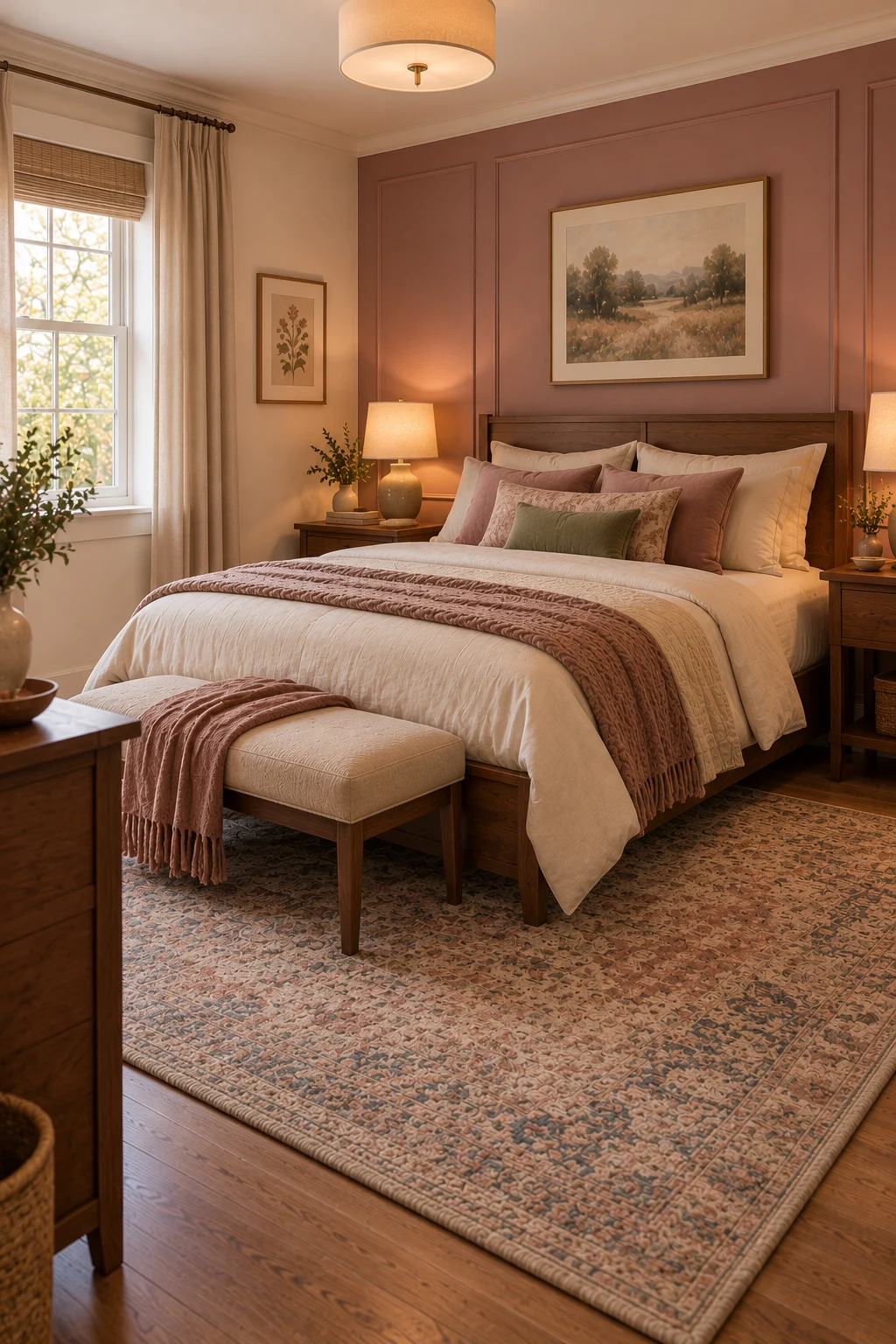
A balanced vintage cottagecore bedroom brings together nostalgic details without making the space feel crowded or overly decorated.
Start with a foundation of warm cream walls and comfortable bedding.
Introduce one main vintage-inspired furniture piece, such as a cream iron-look bed or a weathered wooden dresser.
Add a soft floral pattern through the bedding, curtains, or artwork.
Choose one or two accent colors, such as faded blue and muted olive, to keep the palette cohesive.
Woven baskets can provide practical storage, while a vintage-look lamp introduces warmth in the evening.
Leave some surfaces clear and allow the different textures and finishes to create character naturally.
Final styling tip: Avoid buying decorative objects simply to fill empty spaces. A few meaningful books, framed prints, and useful accessories often create a more authentic collected appearance than a large number of purely decorative items.
Plan the Layout Before Buying
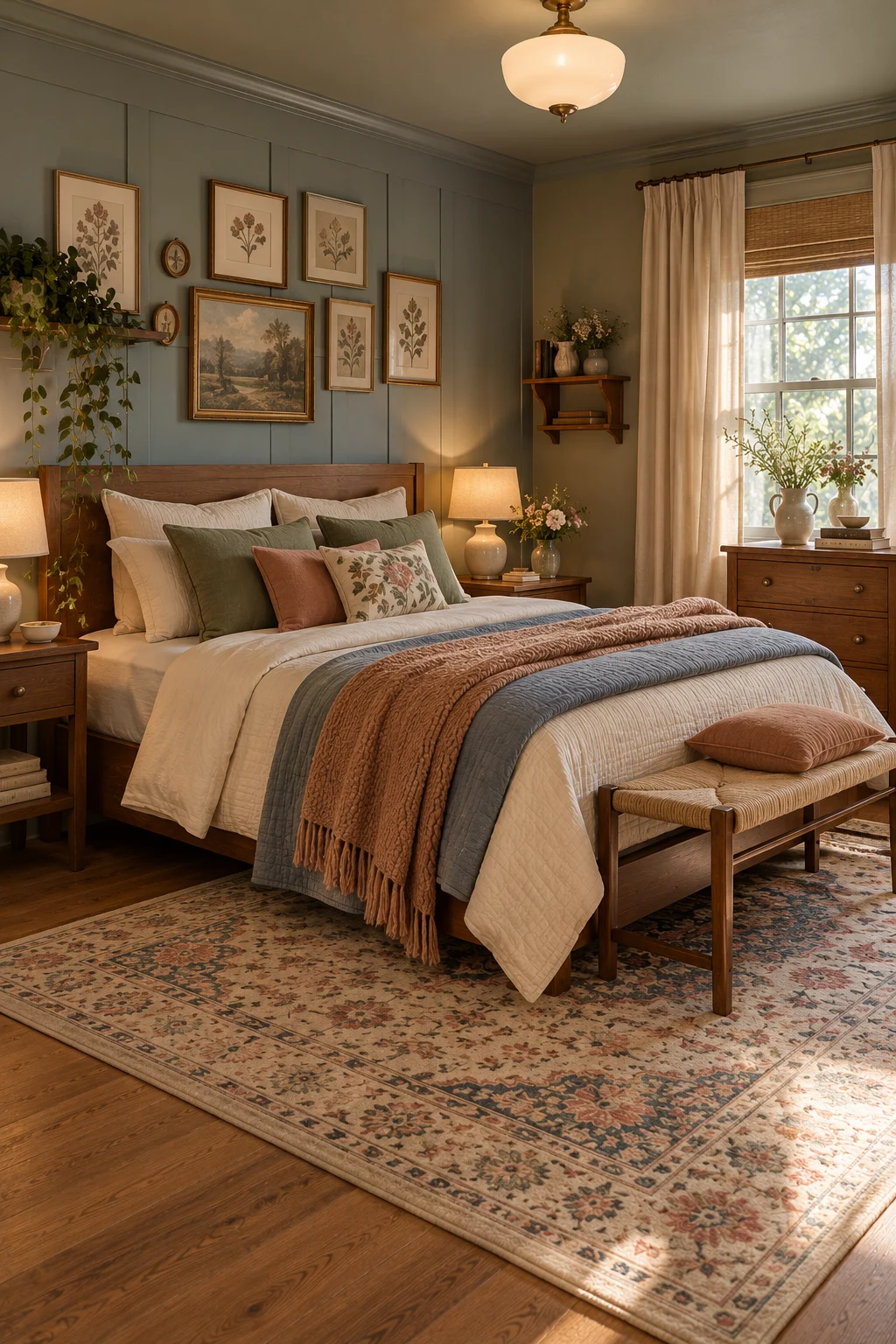
Vintage cottagecore bedrooms often include a mix of furniture, textiles, and decorative accessories, so planning the layout helps prevent the room from becoming crowded.
Begin by measuring the bed, dresser, nightstands, and available floor space.
Check the locations of windows, doors, closets, outlets, and ventilation openings.
If you want to add a reading chair or bench, make sure there is enough room to use it comfortably.
In a smaller bedroom, prioritize the bed, storage, and bedside lighting before introducing extra furniture.
A single floral accent wall or a painted dresser may create enough cottage character without requiring additional pieces.
Use painter’s tape or a simple floor-plan sketch to test furniture dimensions before purchasing.
Remember that a room feels more inviting when drawers open freely, doors aren’t obstructed, and walking routes remain clear.
Choose Colors and Materials
Vintage cottagecore works best with soft, nature-inspired colors and materials that feel warm and familiar.
A restrained palette can help different furniture styles and decorative pieces look as though they belong together.
Consider these combinations:
- Warm cream: Walls, bedding, curtains, and painted furniture.
- Faded blue: Floral prints, dresser finishes, and soft textiles.
- Dusty rose: Quilts, cushions, and delicate decorative details.
- Muted olive: Botanical artwork, painted accents, and bedding.
- Mushroom greige: Rugs, upholstery, and neutral wall colors.
- Natural wood: Nightstands, dressers, benches, and picture frames.
- Aged-brass-look finishes: Lamps, drawer pulls, and subtle accessories.
Natural cotton, linen, woven textiles, and solid wood or quality wood-look furniture help the room feel comfortable and practical.
Repeat a few colors and materials throughout the space rather than matching every piece exactly.
For example, faded blue in the bedding can relate to a painted dresser, while a wooden nightstand can coordinate with a simple picture frame.
Lighting That Supports the Look
Soft lighting is essential for creating the warm, peaceful atmosphere associated with vintage cottagecore bedrooms.
During the day, allow natural light into the room wherever possible.
Use lightweight curtains or sheers to soften the window without making the space unnecessarily dark.
In the evening, combine general overhead lighting with bedside lamps and a dedicated reading light if needed.
Warm-white LED bulbs around 2700K–3000K often complement cream walls, wooden furniture, and brass-look finishes.
Choose lamps that provide enough light for reading and everyday tasks rather than relying on decorative glow alone.
Make sure lamps are stable and appropriately sized for their surfaces.
Keep cords organized and avoid placing loose fabrics near heat-producing fixtures.
Budget and Shopping Priorities
One of the most appealing aspects of vintage cottagecore decor is that it can be developed gradually.
Instead of replacing everything at once, start with pieces you already own and introduce a few affordable updates.
Consider these budget-friendly ideas:
- Refresh the bedding: A floral duvet or quilt can establish the cottagecore aesthetic immediately.
- Shop secondhand furniture: Look for sturdy wooden nightstands, dressers, or chairs with classic shapes.
- Paint an existing dresser: Soft blue-gray or muted olive can transform a serviceable furniture piece.
- Add botanical prints: A small gallery can introduce vintage character without expensive artwork.
- Use woven baskets: Natural storage accessories provide both texture and function.
- Change curtain panels: Small floral prints can soften the room without altering the walls.
- Introduce a vintage-look lamp: A traditional bedside lamp adds character while improving lighting.
Prioritize a comfortable bed, functional storage, and adequate lighting before buying purely decorative pieces.
When purchasing secondhand furniture, inspect its condition and allow for any necessary cleaning, repairs, or refinishing costs.
Common Mistakes and Easy Fixes
A common mistake when decorating a vintage cottagecore bedroom is using too many floral patterns at once.
Floral wallpaper, patterned bedding, printed curtains, and decorative cushions can compete with each other when every element is equally prominent.
Choose one main pattern and support it with smaller or quieter designs.
Another mistake is buying vintage furniture without considering its size or condition.
A charming antique dresser may look beautiful in a photograph but prove impractical if the drawers stick or the piece overwhelms the room.
Other mistakes to avoid include:
- Overcrowding surfaces: Keep nightstands and dressers useful rather than covering them with accessories.
- Using too many pastel colors: Limit the palette to a few coordinated shades.
- Ignoring storage: Combine decorative baskets with functional drawers and cabinets.
- Choosing fragile furniture: Inspect secondhand pieces for stability and safe finishes.
- Forgetting practical lighting: Reading areas and bedside spaces need adequate illumination.
- Adding oversized furniture: Measure benches, chairs, and dressers before purchasing.
The goal is a bedroom that feels naturally collected over time, not one filled with every vintage-inspired accessory available.
Cleaning, Safety, and Long-Term Use
Vintage cottagecore bedrooms often feature layered textiles, painted furniture, and decorative accessories, so choosing easy-to-maintain materials makes everyday life simpler.
Wash bedding and curtains according to their care labels and dust framed artwork, lamps, and furniture regularly.
Use gentle cleaning products appropriate for painted wood and older finishes.
Inspect secondhand furniture before bringing it into the bedroom, checking for unstable joints, pests, damaged hardware, and deteriorating coatings.
Older painted furniture may contain lead-based paint, so avoid disturbing unknown finishes without proper assessment.
Secure tall dressers and shelving against tipping where appropriate, following manufacturer guidance.
Use suitable wall anchors for framed artwork and shelves, and avoid hanging heavy decorative objects directly above sleeping areas.
Keep doors, windows, ventilation openings, outlets, and smoke alarms accessible.
Choose stable lamps, manage electrical cords carefully, and keep textiles away from heat sources.
These small precautions help ensure that a charming bedroom remains safe, comfortable, and easy to enjoy.
Final Thoughts
A vintage cottagecore bedroom is about creating warmth and personality through thoughtful details rather than filling the room with expensive antiques.
Floral bedding, weathered wood furniture, botanical artwork, and soft curtains can establish the look, while layered quilts and warm lighting make the space feel welcoming.
Muted colors such as faded blue, dusty rose, mushroom, and olive help different pieces work together without requiring everything to match.
Start with one idea that suits your existing bedroom, whether it’s a floral quilt, a painted dresser, or a vintage-inspired bedside lamp.
Gradually introduce complementary pieces while keeping storage, comfort, and everyday practicality in mind.
With a thoughtful combination of nostalgic patterns, natural textures, and useful furnishings, you can create a vintage cottagecore bedroom that feels cozy, collected, and genuinely personal.
