

19 Toddler Boy Bedroom Theme Ideas They’ll Love
A Pinterest search for toddler bedroom boy ideas can make themed rooms look far more complicated than they need to be. There are dinosaur beds, wall-to-wall decals, matching rugs, printed curtains, themed dressers, and toy storage shaped like everything from trucks to rockets. The room may look exciting in one photo, but it can also become expensive, visually busy, and difficult to update when a toddler’s favorite thing changes.
A more practical approach is to keep the bed, dresser, and main storage simple, then let the theme live in the walls, textiles, books, and a few easy-to-switch accessories. That way, a space room can become an ocean room later without replacing the furniture.
A successful toddler theme should be easy for a child to recognize but calm enough to sleep and play in every day. One strong wall treatment, two art pieces, a rug or bedding detail, and a few favorite toys are often enough.
Here are 19 toddler bedroom themes that feel playful without turning the whole room into a matching set.
1. Earthy Dinosaur Bedroom With Moss Green and Rust
A dinosaur room doesn’t need giant cartoon creatures covering every wall. Start with moss-green paint on one accent wall, warm-white on the others, and a simple natural-oak toddler bed. Add cream bedding with a rust-colored stripe and a muted clay or rust rug.
Use two or three framed dinosaur illustrations above a low dresser or book ledge, then let one or two favorite dinosaur toys sit on display. That’s enough repetition for the theme to feel obvious.
The moss, rust, and wood palette gives the bedroom an earthy quality that can survive even if dinosaurs stop being the main interest. Swap the artwork and toys later, and the room could easily lean woodland, adventure, or nature-inspired.
In a small room, place the bed along the longest wall and use one lidded basket for most toys. A row of dinosaur-shaped storage bins usually adds more visual noise than value.
Keep heavier framed pieces away from directly above the sleeping area and secure furniture appropriately.

2. Construction Theme With Charcoal, Mustard, and Muted Blue
A construction room becomes overwhelming quickly when every surface is yellow, black, and covered in trucks. Instead, use warm light-gray walls, a medium-wood toddler bed, and a charcoal-and-cream rug with a subtle road-style pattern.
Bring in the theme through two framed truck illustrations, one muted mustard pillow, and a yellow toy-storage bin. A small wooden dump truck or excavator on the rug makes the theme even clearer without adding permanent decor.
The restrained palette separates this from a cartoon construction bedroom. Charcoal grounds the room, warm mustard supplies energy, and muted blue can appear in bedding or curtains.
For storage, a low secured cubby with three large bins works better than a collection of tiny truck-shaped containers. Keep categories simple enough for everyday cleanup.
In an 8-by-10-foot bedroom, put the bed against one long wall and keep the opposite center area clear for pushing toy vehicles around.
A themed rug may already tell enough of the story; construction-print curtains on top of it would probably be too much.

3. Vintage Transportation Room With Cars, Trains, and Maps
A transportation bedroom can include cars and trains without looking like a racetrack. Use warm-white walls, a muted denim-blue rug, natural-wood furniture, and a rust-colored accent in the bedding.
Create the theme on one wall with vintage-style car, train, and road-map prints in simple wood frames. A wooden train set on the floor and one basket of toy cars reinforce the idea while remaining useful for actual play.
This room works particularly well for children whose interests move between vehicles. Instead of committing to one specific car or train motif, the broader transportation theme leaves room for change.
Keep the bed simple and place it away from the main closet path. A low dresser on the opposite wall can hold clothing while a shallow under-bed drawer stores rotated toys.
Avoid buying a vehicle-shaped bed. It’s visually dominant, takes up more room than necessary, and is much harder to reuse when the theme changes.
For a small bedroom, use art rather than bulky display shelving to carry most of the theme.

4. Outer-Space Room With One Deep Blue Statement Wall
A deep blue wall, two framed planet prints, and a warm oak bed are enough to make a space theme obvious without turning the entire room into a dark galaxy.
Paint the bed or dresser wall navy or deep slate, leaving the other walls warm white. Use cream bedding with a narrow blue stripe, a soft gray rug, and one mustard or rust accent pillow to warm up the palette.
Add removable planet or star decals to only part of the statement wall and display two space books on a low ledge. A small plush rocket or planet toy can be the final themed detail.
The light walls are particularly helpful in small bedrooms where four navy walls might absorb too much natural light. Keeping the floor and furniture pale also stops the room from feeling enclosed.
Avoid glow-in-the-dark stars scattered over every ceiling surface or dangling novelty lights near the bed. A standard warm ceiling light and child-safe window treatment are far easier to live with.
The decals and art can later be removed while the navy-and-oak palette remains useful.

5. Calm Woodland Bedroom With Moss, Cream, and Warm Wood
Woodland themes work beautifully when the room feels more like nature than a collection of novelty animals. Use a soft moss-green wall, warm-white trim, an oak toddler bed, and cream bedding with a small leaf or tree pattern.
Add two framed forest-animal illustrations—perhaps a fox and bear—plus a textured oatmeal rug and one woven basket for stuffed animals. A few woodland books on a low ledge can add more of the theme without additional wall decor.
The palette does most of the work. Green, oak, cream, and a small amount of clay or rust create a recognizable toddler boy room aesthetic that feels calm enough for bedtime.
In a 9-by-10-foot room, tuck the bed against one wall and keep the opposite corner free for floor play or reading.
Don’t feel obligated to add tree decals, animal curtains, leaf bedding, forest shelves, and woodland bins together. Once the wall color, art, and one textile establish the idea, more motif repetition usually makes the room busier rather than more convincing.

6. Dusty Blue Ocean Room With Sea-Green Details
An ocean room can feel coastal and playful without relying on anchors, ships, or cartoon fish. Paint the walls dusty blue, use a natural-oak bed, and bring in cream, sea green, and sandy beige through textiles.
Choose mostly solid bedding with one subtle wave-print sheet. Add two marine-life prints over a low dresser and a small basket of ocean-themed toys. A sea-green pillow or storage basket repeats the color without covering the room in underwater graphics.
This approach works particularly well in small rooms because the palette itself carries the theme. The furnishings can remain neutral and reusable.
Simple cream or blue blackout curtains support sleep while fitting naturally with the color scheme. Keep the hardware secure and cords inaccessible.
If the bed is tucked along one long wall, leave the opposite corner for a book basket instead of adding a large reading chair.
The fastest way to make an ocean theme feel overly literal is to mix boats, anchors, ropes, whales, stripes, seashells, and lighthouse decor at once. Pick one marine direction and keep it light.

7. Camping Adventure Room Without a Giant Indoor Tent
A camping theme often gets turned into an indoor campsite, complete with a large tent that consumes most of the usable floor. In a small toddler bedroom, let the theme come from color and art instead.
Use warm-white walls with a forest-green lower color block, a simple oak bed, cream bedding, and a rust-and-tan striped rug. Hang two mountain or campsite prints above a low dresser and add one canvas storage basket for toys.
A small framed map or a few adventure books on a low shelf can reinforce the theme. If the child has a toy lantern, backpack, or binoculars, one can sit on display.
The room feels outdoorsy because the palette repeats forest green, rust, tan, and canvas texture—not because it contains literal camping equipment.
Put the bed along the longest wall and leave the middle of the rug completely open. That makes the room useful for play rather than turning the floor into a permanent themed installation.
An actual indoor tent only makes sense if the room has enough spare floor space after the bed, storage, and walking paths are accounted for.

8. Airplane Bedroom With Sky Blue and Warm Gray
An airplane theme can feel light and modern if the room avoids turning every object into aviation decor. Use pale sky-blue walls, a light-wood toddler bed, warm-gray rug, and mostly white or cream bedding.
Hang three simple airplane illustrations or vintage aviation prints on one wall. A small wooden toy plane on the dresser and a dusty red or mustard accent pillow provide just enough repetition.
If the room is narrow, place the bed lengthwise along the longest wall and use a narrow dresser opposite it. This keeps the central pathway open while still leaving a small patch of rug for play.
A white cordless Roman shade keeps the window visually quiet and lets the blue walls remain the main color feature.
Avoid hanging model airplanes from the ceiling or over the bed. They can make a small room visually cluttered and complicate an otherwise simple setup.
Because the furniture is neutral, switching the theme later only requires replacing the prints and a couple of accessories.

9. Train Room Built Around a Track Rug and Books
A train theme doesn’t need train wallpaper or locomotive-shaped furniture. One well-chosen floor element can establish most of the idea.
Use soft cream walls, a natural-wood toddler bed, muted blue bedding, and a charcoal rug with a subtle looping track design. Add two framed train illustrations above the dresser and keep several train books on a low front-facing ledge.
A wooden train set can live in one large basket or shallow drawer so it can actually be used and cleaned up easily.
This works well in a small room because the theme sits primarily on the floor and one wall rather than occupying furniture space.
Keep the bed tucked into a corner if that preserves a larger area of rug for track play. Make sure under-bed storage still opens easily if you use it.
A heavily patterned train rug may already provide enough visual information, so plain curtains and bedding are usually the better partner.
Avoid making every storage bin shaped like a train car. Practical baskets are far easier to reuse.

10. Safari Bedroom With Olive, Ochre, and Warm Sand
Safari doesn’t have to mean a nursery full of cartoon giraffes. For a toddler room, use olive green, warm sand, brown, and muted ochre with simple animal artwork.
Paint the walls a pale sandy beige, use a medium-oak toddler bed, and add olive bedding with one ochre stripe or pillow. A cream-and-brown textured rug grounds the room.
Hang two or three framed illustrations of animals such as elephants, lions, or zebras on one wall and place one favorite animal toy on a low dresser. Keep the bedding mostly solid so the theme doesn’t become repetitive.
The room stays toddler-friendly because the animals are recognizable, but the color palette feels mature enough to last.
Use one low toy basket and one book ledge rather than open shelving packed with stuffed animals. The room should look lived in, but a wall of plush toys can make even a decent-sized bedroom feel crowded.
If the room is small, keep the darkest olive color in textiles rather than covering all four walls with it.

11. Farm Theme With Muted Red, Sage, and Cream
A farm room can feel playful without covering the bedding in tractors and barn animals. Start with warm cream walls and introduce muted red, sage green, and natural wood through a few strong pieces.
Use a simple wood toddler bed with cream bedding, a sage-green quilt, and one muted red striped pillow. Add two framed farm illustrations—perhaps a barn and tractor—plus a low toy basket containing the child’s farm animals or vehicles.
A soft blue-gray or tan rug prevents the red and green palette from becoming overly literal.
This theme works because the child can immediately recognize the farm cues while most of the room remains flexible. When interests change, the bed, dresser, rug, and wall color can stay.
Keep the bed against the quietest wall and use the opposite wall for the dresser and art.
Avoid buying tractor curtains, animal sheets, barn-shaped storage, and themed rugs at the same time. Once the art and toys establish the subject, the rest of the room can simply support the palette.

12. Bug and Nature Explorer Room
For a child fascinated by insects, rocks, leaves, and outdoor discoveries, a nature-explorer theme can feel much more personal than a standard character room.
Use pale sage walls, an oak toddler bed, cream bedding, and a clay-colored rug. Add framed butterfly, beetle, leaf, or nature illustrations above the dresser and keep two or three nature books on a low ledge.
A simple wooden tray on an adult-managed dresser can display a smooth rock, pinecone, or safe nature-inspired object where appropriate, while everyday toys stay in one woven basket.
The palette is flexible enough to become a woodland or adventure room later without repainting.
In a small room, let the art carry the theme rather than adding an exploration table, tent, and multiple display shelves. Toddlers need floor space more than they need a mini natural-history museum.
Avoid placing small collectible objects where they aren’t age-appropriate or easily supervised. The theme should feel inspired by nature without introducing unnecessary hazards.

13. Mountain Theme With a Painted Color-Block Wall
A mountain room can look adventurous without requiring a detailed mural. Paint a simple geometric mountain silhouette across the lower half of one wall using muted forest green, warm gray, and cream.
Place a natural-wood toddler bed against an adjacent wall so the painted feature remains visible rather than being mostly hidden behind furniture. Use cream bedding, a rust-colored rug, and one framed outdoor landscape print.
The wall treatment gives the room a strong identity while remaining inexpensive to repaint later. That’s useful for families wanting fun toddler bedroom ideas without committing to wallpaper.
A low storage basket and narrow dresser keep the layout compact. In an 8-by-10-foot room, avoid placing decorative climbing equipment or a play tent in front of the mountain wall; the painting already supplies plenty of visual interest.
Keep the mountain shapes broad and simple. Tiny peaks and multiple colors can make a small wall look unexpectedly busy.
The theme can later shift toward camping, woodland, or travel simply by changing the art and bedding.

14. Sports Theme With Vintage Prints and One Ball Basket
Sports can be part of a toddler bedroom without turning it into team merchandise. Use a flexible palette such as navy, forest green, cream, and warm wood.
Keep the bed natural oak with cream-and-navy striped bedding. Add two or three vintage-style sports illustrations above a low dresser—baseball, soccer, basketball, or a mix—rather than logos or professional team graphics.
One large floor basket can hold soft balls or sports toys. That practical item reinforces the theme without needing themed furniture.
This room can grow easily because the base colors and furniture aren’t tied to a specific sport. If one activity becomes the favorite later, swap one print or pillow.
In a small bedroom, keep the darkest navy mostly in the rug or bedding. Four dark walls can make the room feel noticeably smaller.
Don’t display hard sporting equipment above the bed or leave bulky gear scattered across the floor. A toddler room still needs a clear walking and play area.

15. Vintage Car Bedroom With Rust, Denim, and Walnut
A vintage car theme feels distinct from a bright transportation room because the palette does more of the storytelling. Use cream walls, a walnut-toned toddler bed, faded denim-blue curtains, and a rust-and-navy patterned rug.
Hang two or three framed vintage-style car illustrations above a dresser and keep one wooden car on display. Bedding can remain mostly cream with a narrow navy stripe.
This works well for readers who want a toddler boy room aesthetic that feels playful but still works with older-home details or secondhand furniture.
A thrifted dresser repainted deep olive or warm gray can fit beautifully, provided it’s stable and secured appropriately.
The theme is also inexpensive to change because the distinctive elements are art and textiles rather than novelty furniture.
In a narrow room, position the bed along the long wall and keep the dresser shallow enough that the central walkway stays comfortable.
Avoid decorating with real vintage automotive parts or heavy metal signs where they could create unnecessary hazards. Printed artwork gives the same visual reference much more simply.

16. Colorful Geometric Room With No Fixed Character Theme
Not every toddler bedroom needs a recognizable animal or vehicle theme. A geometric room can feel just as playful and may be easier to update later.
Keep the walls warm white and paint one large muted teal arch behind the dresser, then add a mustard stripe or rust half-circle nearby. Use a light-wood toddler bed, cream bedding, and a rug with simple muted red, blue, and yellow shapes.
Two abstract prints can repeat the same palette. Storage should stay practical—one low white cubby with three plain bins is enough.
This room works because color and shape create the visual identity instead of a subject. It suits families looking for simple toddler room ideas that still feel fun.
In a small room, limit the graphic paint treatment to one wall. If every wall has arches, stripes, and blocks, the playful effect quickly becomes visual noise.
The neutral bed and dresser can adapt to almost any later interest.

17. Storybook Bedroom With Books as the Main Theme
A storybook room can grow naturally with a toddler because the “theme” is reading rather than one specific character.
Use warm-white walls, a natural-wood bed, dusty blue bedding, and a soft rust rug. Install two or three secure front-facing book ledges on a wall beside a floor cushion, displaying a small rotation of favorite picture books.
Add framed illustrations with a hand-drawn storybook feel above a low dresser. One stuffed toy related to a favorite book is enough to make the room feel personal.
This works particularly well in a small bedroom because shallow book ledges take very little floor space. Skip a bulky reading chair if the room is only eight or nine feet wide.
The book covers themselves supply plenty of color, so keep the curtains and large furniture plain.
Rotate books rather than crowding every ledge. A few covers displayed face-forward are easier for a toddler to see and choose.
Secure ledges appropriately and keep hard edges positioned away from the bed.

18. Blue-and-Green Adventure Room for a Very Small Bedroom
If the room is tiny, a simple color-based theme can make more sense than a highly detailed motif. Use pale sage walls, dusty blue bedding, a dark green accent in one rug or basket, and natural wood furniture.
Add two adventure prints—mountains, a simple map, or trees—above a narrow dresser. A single woven toy basket and shallow under-bed storage keep clutter contained.
Tuck the low toddler bed into a corner so the center of the room remains available for play. This is particularly useful in an 8-by-9-foot apartment bedroom where every extra piece of furniture affects circulation.
The green-and-blue palette makes the room feel cohesive even when toys introduce other colors.
Use one cordless Roman shade rather than bulky curtain panels if the window wall is tight.
This theme is intentionally flexible. It can become space, woodland, camping, ocean, or no theme at all simply by changing the art.
Avoid overfilling the small room in an attempt to make the theme more obvious. The palette already does most of the work.
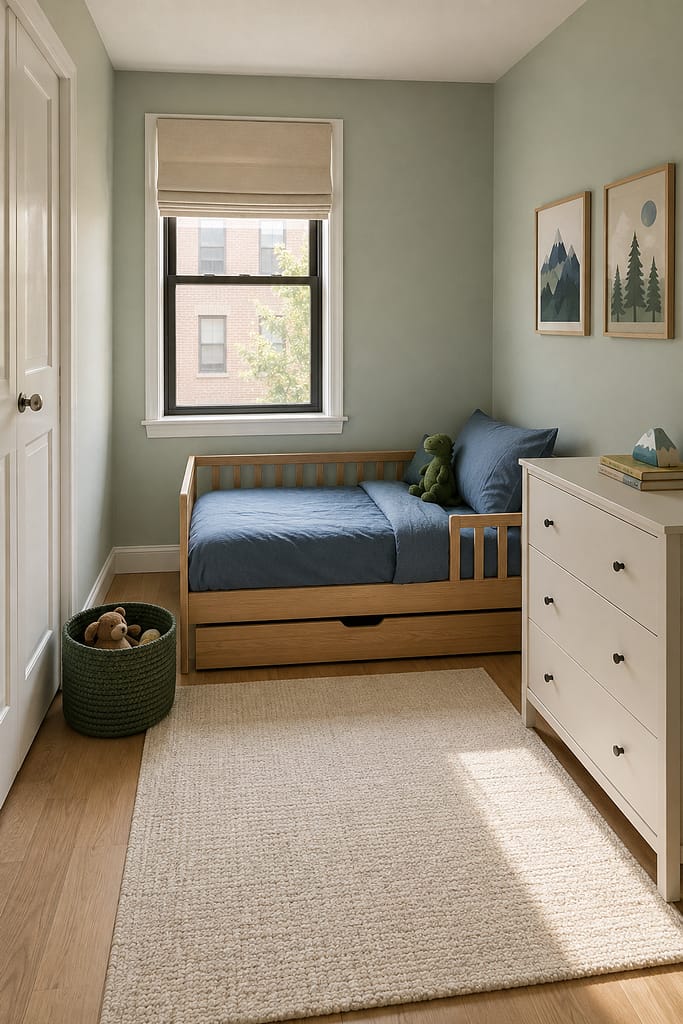
19. Soft Coastal Adventure Room With Blue, Clay, and Natural Texture
For a theme that sits somewhere between ocean, travel, and nature, use dusty blue, warm clay, cream, and light wood. This creates a relaxed coastal-adventure room without leaning heavily on nautical symbols.
Paint the walls warm white, use a dusty-blue upholstered or simple wood toddler bed, cream bedding, and a clay-colored rug. Hang a pair of simple coastal landscape prints or abstract wave illustrations over a low dresser.
A woven basket, light wood book ledge, and a few nature or ocean books reinforce the relaxed direction. Blue-gray blackout curtains can repeat the bed color.
The theme feels recognizable because the palette and artwork agree, but there isn’t a literal motif on every item. That makes it particularly easy to update.
Place the bed on one quiet wall and preserve the opposite side of the rug for play. A small bedroom benefits from furniture with simple silhouettes and fewer accessories.
Avoid adding anchors, oars, rope shelves, boats, and beach signs just to make the idea more obvious. Two coastal references are usually enough.

How to Build a Toddler Theme Without Overdoing It
The most flexible approach to toddler bedroom themes is straightforward: simple furniture + flexible base color + one clear theme + two or three repeated details + practical storage.
The bed, dresser, and main storage don’t need to look like dinosaurs, trucks, rockets, or animals. Those are usually the most expensive pieces to replace when interests change. Let framed art, bedding, removable decals, books, toys, or one rug do the themed work instead.
A room can clearly read as dinosaurs, woodland, space, construction, ocean, or adventure with one strong wall treatment, two art pieces, and a few favorite objects. Repeating the subject on the curtains, furniture, rug, lamps, storage, and bedding usually makes the room harder to update rather than more fun.
When browsing toddler bedroom boy inspiration, keep the real room in mind. Preserve floor space for play, maintain easy access to the closet and doorway, provide storage a toddler can understand, and keep the sleeping area visually calmer.
The best theme is recognizable enough for the child to enjoy and flexible enough that changing interests don’t require starting the entire bedroom over.