

20 Bedroom Corner Bookshelf Ideas for Small Spaces
Bedroom corners are easy to underestimate. One gets blocked by the door, another disappears behind a nightstand, and before long the only available corner is holding a laundry basket that was never supposed to live there.
A corner bookshelf can put that awkward square footage to much better use. But in a small bedroom, placement matters more than styling. The shelf has to coexist with the bed, leave enough room to walk, stay clear of doors and drawers, and ideally put your nighttime books within easy reach.
These bedroom corner bookshelf ideas focus on exactly that—realistic layouts, useful furniture pairings, reading light, shelf proportions, and ways to add storage without making your sleeping space feel crowded.

1. Put a Slim Bookcase Beside the Nightstand
If you have an unused corner beside the bed, a narrow bookcase can add storage without replacing your nightstand. Keep the nightstand closest to the mattress for water, a phone, and other nightly essentials, then position the bookshelf beyond it. This creates a useful progression from bed to table to storage. Measure the combined widths before buying anything, and make sure the bookcase doesn’t extend so far forward that it narrows your walking route around the bed.

2. Let the Bookshelf Replace a Nightstand
When there isn’t room for both pieces, a compact bookshelf can do double duty. Choose one with a shelf near mattress height so you have somewhere convenient for a book, glasses, or small lamp. Keep that particular shelf mostly empty rather than packing books all the way across it. Lower shelves can handle heavier books while upper shelves hold lighter reading material. This works especially well when every inch beside the bed needs to earn its place.

3. Choose Shallow Shelves for a Tight Walkway
Shelf depth matters enormously in a small bedroom. If the bookshelf sits beside a path you use every morning and night, a few extra inches can be the difference between comfortable and constantly bumping your shoulder. Measure your largest books before assuming you need deep shelving; many everyday paperbacks and novels fit on relatively shallow shelves. Tape the proposed footprint onto the floor and walk around the bed normally. If you keep stepping on the tape, choose something narrower.

Pro tip: Mark the bookcase footprint with painter’s tape, then open nearby drawers, closet doors, and the bedroom door. Furniture can fit on paper and still interfere with how the room actually works.
4. Use the Corner Opposite the Bed
Not every bookshelf corner bedroom layout needs to put the books beside the mattress. If the bedside area is already tight, the opposite corner may give you more breathing room and allow a slightly wider bookcase. This placement also keeps the visual weight away from the headboard, which can help a small room feel calmer. Pair the shelf with a compact chair if space permits, or simply use it as dedicated book storage that’s still only a few steps from bed.
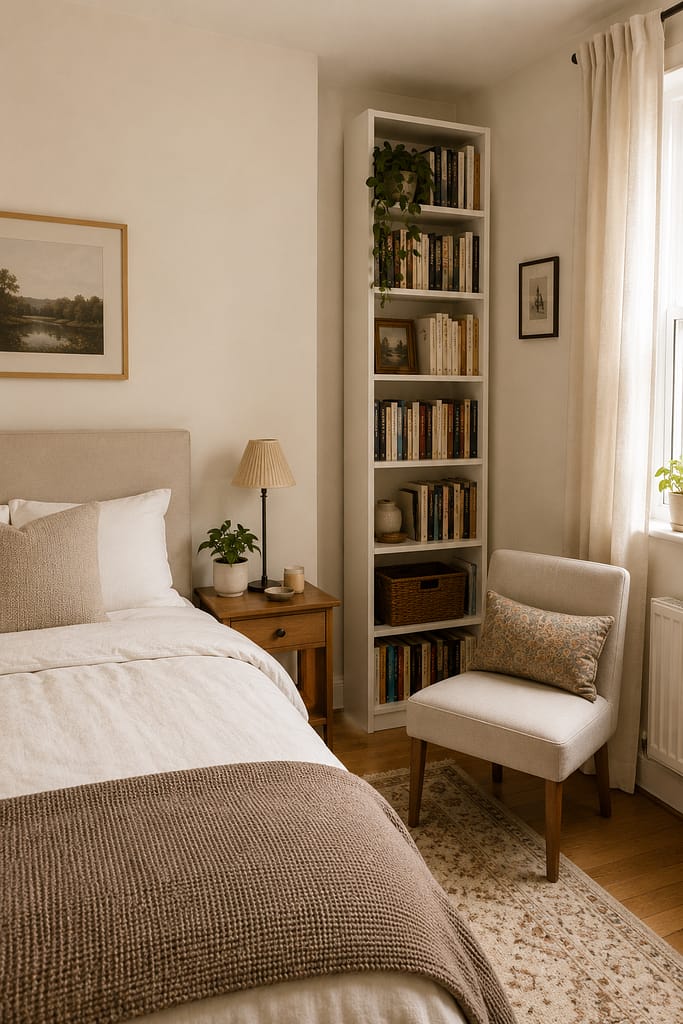
5. Create a Reading Nook at the Foot of the Bed
A corner near the foot of the bed can become a surprisingly useful reading spot if it isn’t needed for a dresser or doorway. Pair a narrow bookshelf with one compact chair and a small floor lamp. Skip the side table if it makes the area cramped—the bookshelf itself can hold your current read. Angle the chair slightly toward the center of the room so it’s easy to sit down without squeezing between furniture. The result feels purposeful without requiring a separate reading room.
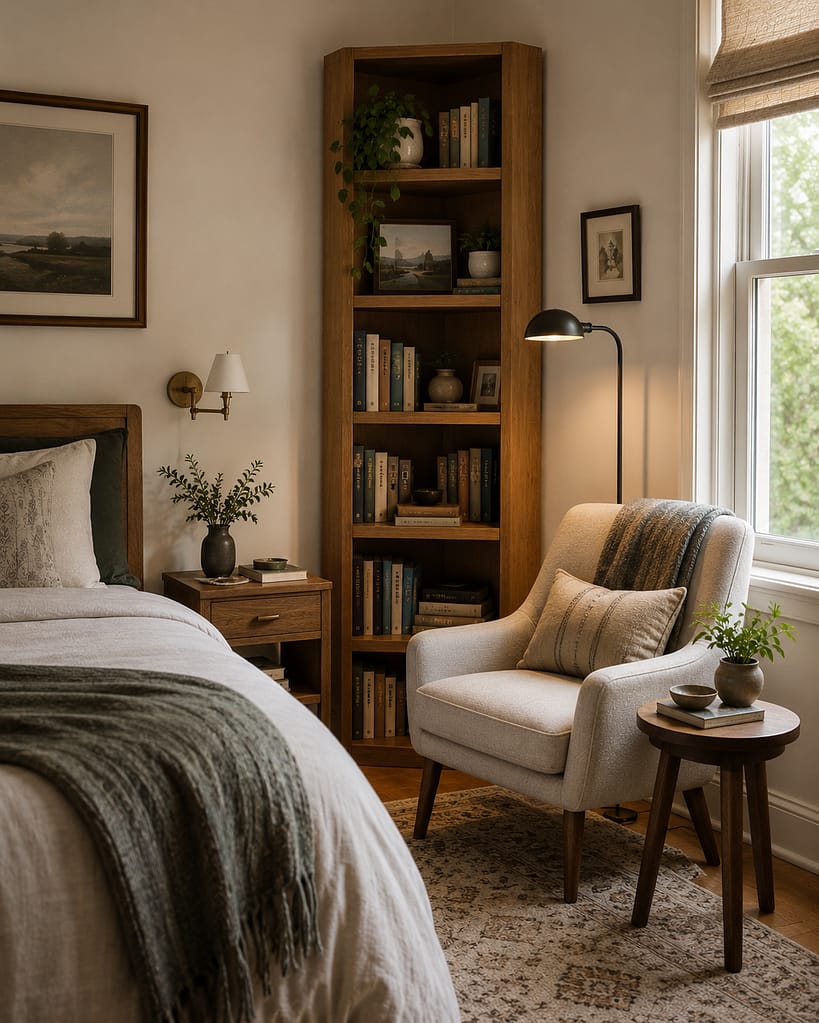
6. Use a Wall-Mounted Reading Light to Save Surface Space
If the corner shelf and bed are close together, a table lamp can consume valuable shelf or nightstand space. A wall-mounted reading light keeps the surface free while directing light where you need it. For renters or anyone avoiding electrical work, a plug-in or appropriate removable solution may be more practical than hardwiring. Choose warm, focused light for nighttime reading and position the fixture so the bulb isn’t directly in your line of sight while you’re lying down.

7. Try a Floor Lamp Behind the Reading Chair
For a bedroom reading corner away from the bed, a slim floor lamp is often easier than adding another table. Tuck its base beside or slightly behind the chair so it doesn’t interrupt the walkway. The shade should direct light toward your lap rather than lighting the entire bedroom at full brightness. That matters in a sleeping space, where harsh overhead light can ruin the cozy atmosphere. Keep enough clearance between the lamp, bookshelf, and chair to reach books without moving furniture.

Budget tip: Before buying a reading lamp, test the location with a lamp you already own. You’ll quickly learn whether you need light from above, beside, or behind your shoulder—and avoid buying a fixture that casts shadows across the page.
8. Keep Headboard-Adjacent Shelving Visually Quiet
A bookshelf near your headboard sits directly in your sightline, so busy styling can make the sleeping area feel restless. Keep this shelf more restrained than one you’d style in a living room. Books, one small framed piece, and perhaps a simple closed box are plenty. Stick with a quiet palette that relates to the bedding—warm wood, cream, muted green, soft gray, or another repeated room color. Save highly contrasting accessories for a shelf farther from the bed.
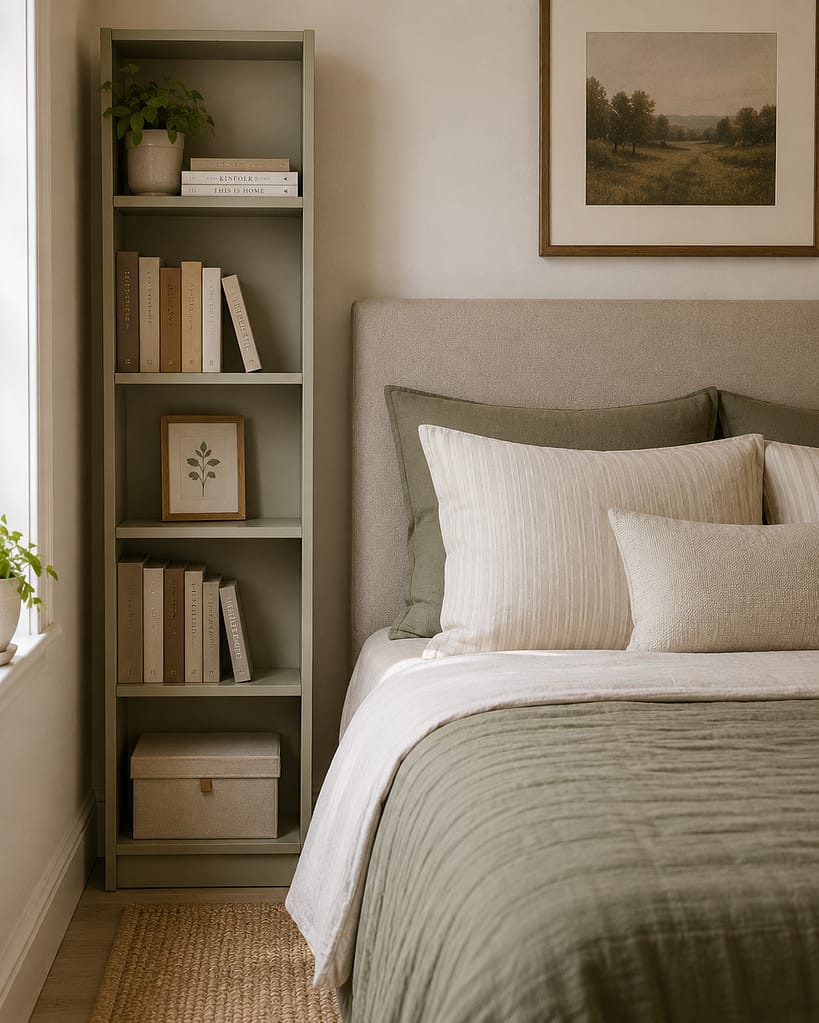
9. Use Lower Shelves for Heavy Books
Large hardcovers and oversized books belong near the bottom of a bedroom bookcase whenever possible. Beyond being practical, that arrangement visually grounds a tall shelf and keeps the upper half from feeling heavy over the sleeping area. Put frequently read paperbacks around waist or chest height where they’re easy to reach, then reserve the highest shelves for lighter books or a restrained decorative piece. This bottom-heavy distribution works particularly well with narrow bookcases that might otherwise look tall and top-loaded.

10. Turn an Awkward Bed-and-Wall Gap Into Book Storage
Some bedroom layouts leave an odd gap between the side of the bed and a corner that’s too narrow for a dresser but too large to ignore. A very slim book tower can make that strip useful. Check that you can still change the bedding without fighting the shelf and that the bed doesn’t need to move into the unit to access storage underneath. A tall, narrow design works best here because it uses vertical space instead of consuming more floor area.

11. Use a Corner Shelf Beside a Window
The space between a bedroom window and an adjacent wall can be an excellent bookcase location, provided the shelf doesn’t block curtains, blinds, or useful daylight. Choose a unit that sits below the curtain hardware or stays clearly to one side of it. Books can be sensitive to strong direct sunlight over time, so avoid positioning treasured editions where they’ll receive intense exposure for long periods. A nearby window does, however, make the corner particularly pleasant for daytime reading.

Pro tip: Open curtains and blinds fully before measuring for shelving. A bookcase that clears the glass may still block curtain panels, blind controls, or a window you need to open.
12. Use Floating Corner Shelves When Floor Space Is Precious
Floating shelves can work where a freestanding bookcase would interfere with the bed or walkway. Keep them reasonably shallow and use them for a modest collection rather than loading every wall with books. In a bedroom, I prefer placing floating shelves away from the area directly over your pillow. A free corner beside a dresser or reading chair is usually a more comfortable location. Installation needs to suit the wall construction and expected load, so books aren’t a place to guess about hardware.
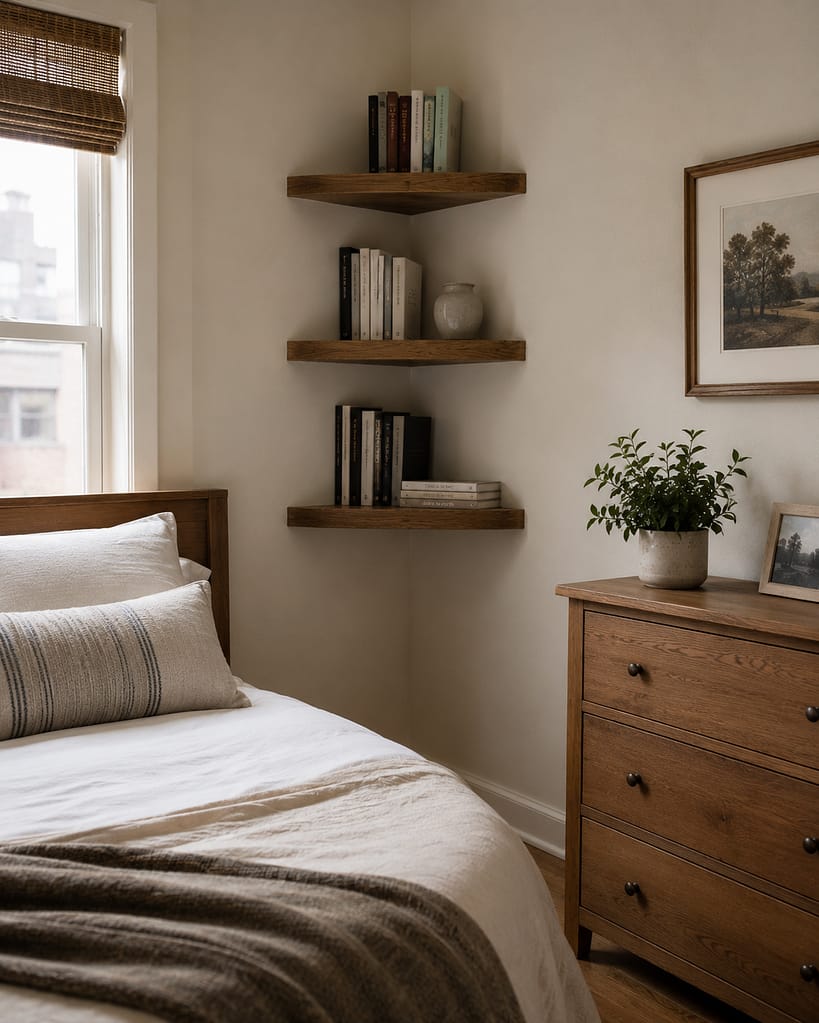
13. Match the Bookshelf to the Headboard
Repeating the headboard’s material or color is an easy way to make a corner shelf feel intentional. A warm oak-effect bookshelf works naturally beside a wood headboard, while a soft white unit can disappear into pale walls behind an upholstered bed. The pieces don’t need to come from the same collection. In fact, a slightly varied finish often looks more natural. The goal is simply to avoid introducing another unrelated wood tone into a small bedroom that already has several furniture finishes.
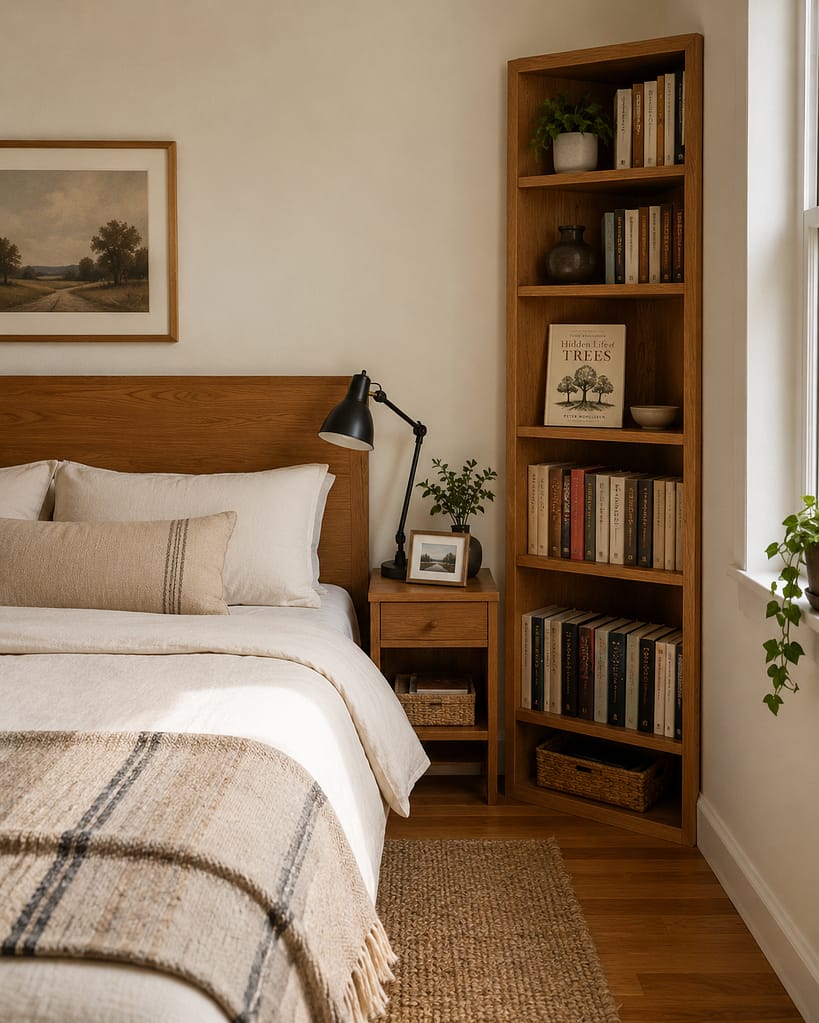
14. Pair a White Corner Bookcase With the Wall Color
If you want substantial book storage without making a small bedroom feel visually crowded, matching the bookcase roughly to the wall is a useful trick. A white or warm-white shelf against similar walls lets the books provide most of the contrast. This is especially effective beside the bed, where a dark furniture block might otherwise dominate the room. Add warmth through book spines, bedding, and one or two natural materials instead of filling the shelf with lots of colorful accessories.

15. Use a Small Stool Instead of a Full Reading Chair
A dedicated armchair can be too ambitious in a truly small bedroom. If you mainly want a place to sit briefly while browsing books, a compact stool or backless upholstered seat may be enough. It can tuck partly beneath a shelf edge or move elsewhere when you need floor space. This setup works particularly well if you usually read in bed but still want the bookshelf corner to feel purposeful. Keep the stool light enough to move without scraping or rearranging the whole room.
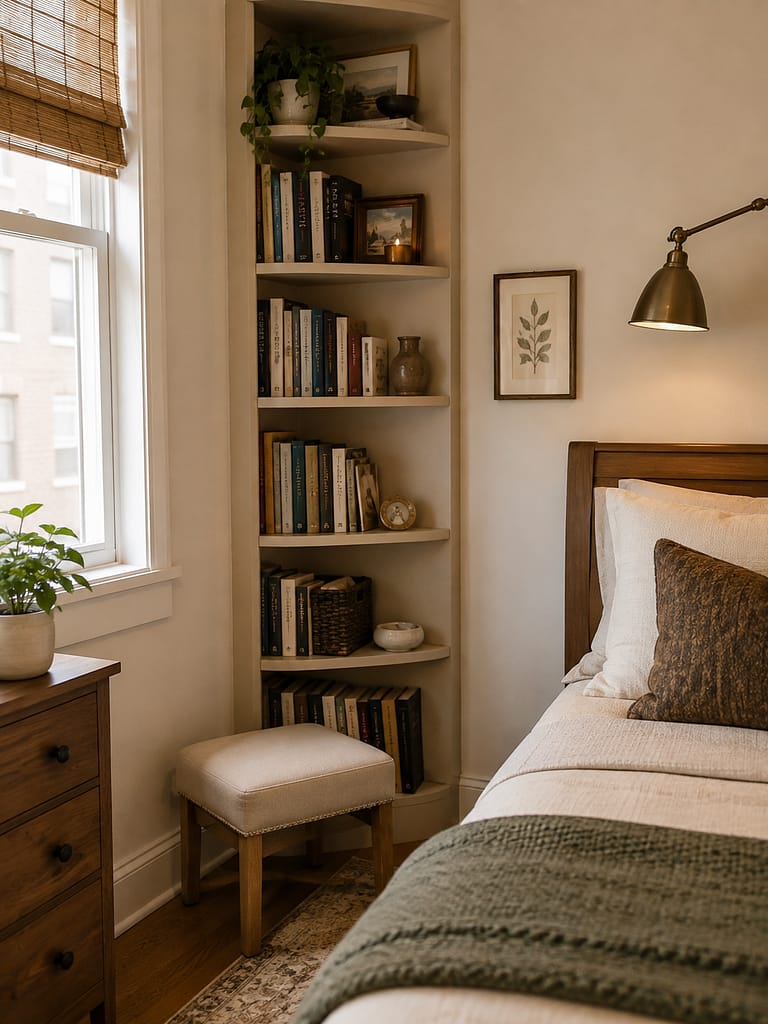
Budget tip: If a reading chair makes your floor plan too tight, don’t buy a miniature chair just to complete the “nook.” Use the bed as your reading seat and spend the available space on better book storage and lighting.
16. Keep Your Current Reads at Bed Height
A bedroom bookshelf works better when you organize it around your actual habits. Reserve a shelf around mattress or seated-bed height for the books you’re currently reading, along with reading glasses or a bookmark. That keeps you from stacking books on the floor or piling them on the nightstand. Less frequently used titles can go higher or lower. Leave some empty room on the current-reading shelf so returning a book doesn’t require reorganizing an entire row at bedtime.

17. Use Closed Storage on the Bottom Shelf
Bedroom bookshelves tend to attract items that aren’t books—charging cables, notebooks, sleep masks, spare tissues, and miscellaneous bedside clutter. One fitted basket or closed box on the lowest shelf gives those things a home without turning the whole bookcase into storage bins. Measure carefully so the container slides out easily rather than scraping against the shelf above. A woven basket can warm up a painted bookcase, while a simple fabric box keeps the look quieter in a minimal bedroom.

18. Keep Shelves Clear of the Bedroom Door Swing
The empty corner behind an open bedroom door can look like wasted space, but it’s only useful if furniture doesn’t interfere with the door. Open it fully and measure the remaining depth before considering a bookshelf. A shallow unit may fit safely beyond the swing, while a deeper one can make the entrance awkward. Don’t plan around keeping the door permanently half-open. In a small bedroom, a clear entrance is worth more than squeezing in one extra row of books.

19. Use a Low Corner Bookcase Under Sloped Ceilings
Attic bedrooms and rooms with sloped ceilings often have corners where tall furniture simply won’t fit. A low bookcase can turn that difficult area into useful storage while preserving the shape of the room. Keep taller books toward the highest section and shorter stacks under the slope. If the shelf sits near the bed, its top can sometimes function as an additional surface, but resist covering it with clutter. Leaving part of the top open keeps the low furniture from feeling heavy.

Pro tip: In a room with a sloped ceiling, measure height at the front and back of the proposed bookcase location. The ceiling angle can make a unit that seems short enough impossible to push fully against the wall.
20. Edit the Corner for Better Sleep
The bedroom isn’t the place where I’d pack every shelf with colorful objects just because there’s space. Once the books are arranged, remove anything that adds visual noise without serving a purpose. Hide loose cords, keep the top uncluttered, and choose warm, controllable lighting for evening use. If the bookshelf is close to your pillow, secure the unit appropriately and avoid precarious heavy objects overhead. The finished corner should support reading while still feeling like part of a restful sleeping space.

Frequently Asked Questions
Where should I put a bookshelf in a small bedroom?
Look first at unused corners beside the nightstand, opposite the bed, near the foot of the bed, or beside a window where the shelf won’t block light or curtains. Always check door swings, drawer access, closet access, and your normal walking path before choosing the final position.
How deep should a bookshelf be in a small bedroom?
It should be deep enough for the books you actually own without taking unnecessary inches from the walkway. Measure several of your largest everyday books, then look for shelving that accommodates them rather than automatically choosing the deepest standard bookcase available.
Can I use a bookshelf instead of a nightstand?
Yes, especially if the unit has an accessible shelf near mattress height. Keep part of that shelf open for nighttime essentials so you don’t have to move books every time you set down a glass or your reading glasses.
Is it safe to put a bookshelf next to a bed?
A properly positioned and appropriately secured bookcase can work beside a bed, but stability matters. Follow the furniture manufacturer’s anchoring guidance, avoid unstable heavy objects on high shelves, and don’t place items where they could easily fall toward the sleeping area.
How do I make a bedroom bookshelf reading nook feel cozy without cluttering it?
Focus on the three things you’ll actually use: accessible books, comfortable seating—or the bed itself—and warm reading light. Keep decorative objects limited, repeat colors from your bedding, and preserve enough empty floor and shelf space that the corner still feels restful.

Make That Bedroom Corner Earn Its Space
A bedroom bookshelf doesn’t have to be large to make a difference. The right narrow shelf can replace a nightstand, rescue an awkward corner, organize the books piled beside your bed, or create a reading spot without taking over the room.
Measure first, protect your walking space, and think about where you actually read at night. Then keep the styling quieter than you might elsewhere in the house so the bookshelf feels connected to a room designed for rest.
Save or pin these bedroom corner bookshelf ideas for later, especially if you’re still figuring out what to do with that one stubborn empty corner.