
20 Small Apartment Entryway Ideas for Tiny, Narrow & No-Foyer Spaces
Some apartments give you a foyer. Others give you six inches of wall, a front door that nearly hits the sofa, and nowhere obvious to put your shoes.
That doesn’t mean you have to live with keys on the kitchen counter and coats permanently draped over a dining chair. A useful apartment entry can be created with surprisingly little: one strip of wall, the back of a door, a corner beside the living room, or even a well-placed rug.
These small apartment entryway ideas are specifically for those awkward no-foyer layouts, tight rental hallways, and front doors that open directly into the main room—with plenty of solutions that don’t require drilling holes or making permanent changes.
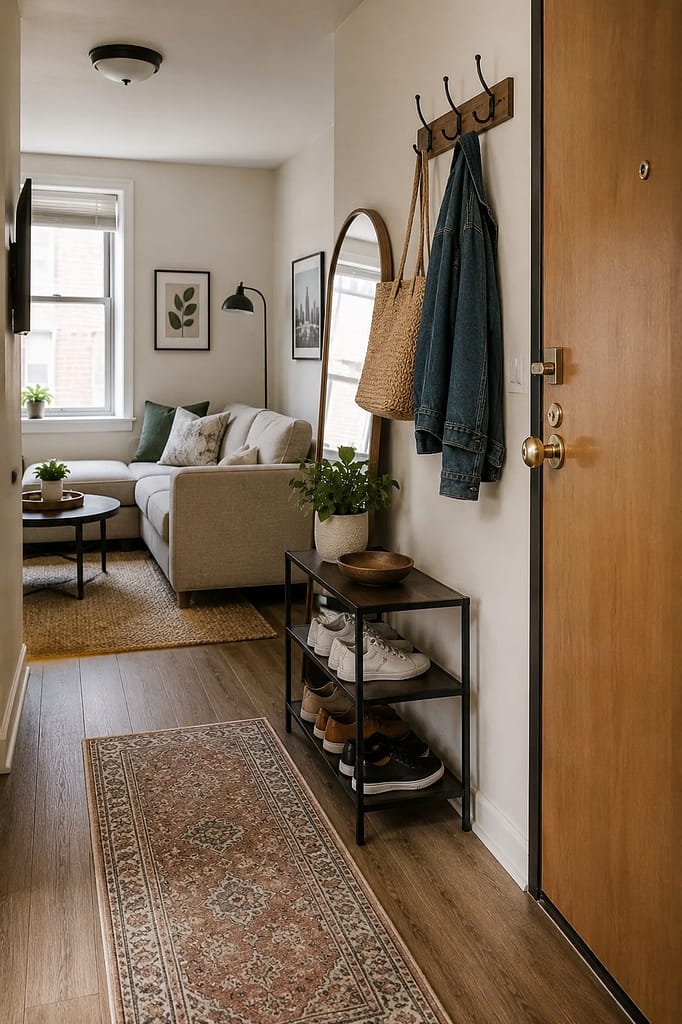
1. Define a No-Foyer Entry With a Small Rug
If your front door opens straight into the living room, creating a visual boundary is the first thing I’d try. A small washable rug immediately says, “this is the entry,” even though there’s no actual foyer. Choose a size that sits comfortably inside the door without interfering with its swing. A subtle pattern is useful for disguising everyday dirt, too. Keep the living room rug separate so the two areas feel intentional rather than accidentally overlapping.
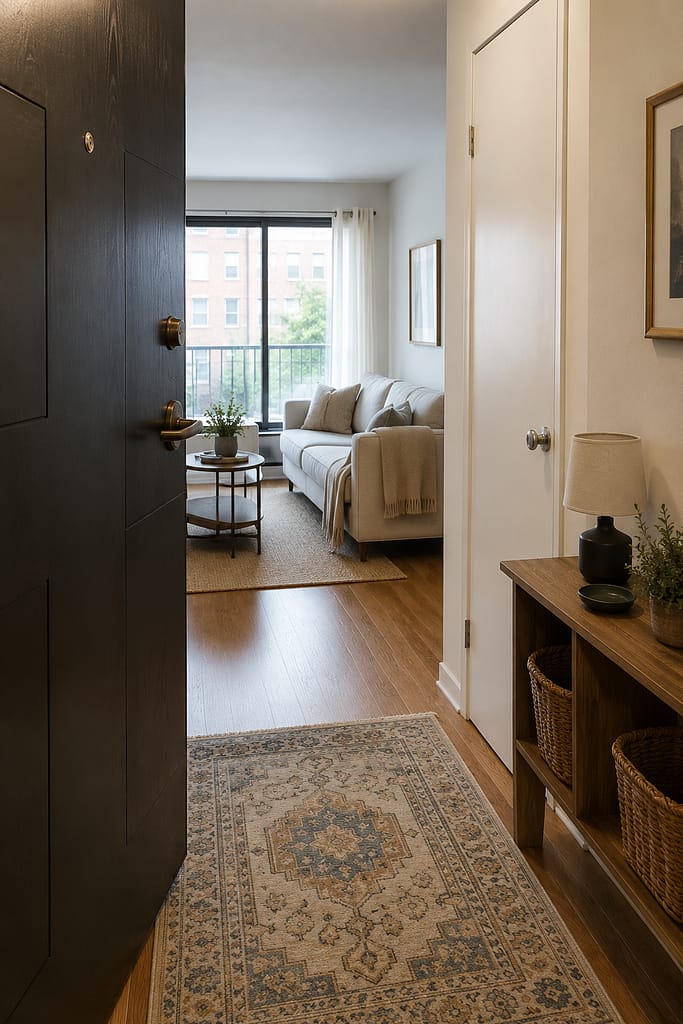
2. Use the Smallest Wall Beside the Door
That awkward sliver of wall beside an apartment door can be more useful than it looks. Instead of trying to squeeze in full-size entry furniture, give the wall one specific job. A narrow freestanding coat tree, tiny leaning shelf, or removable hook system can hold your most-used belongings. This works particularly well in flat entry layouts where the door sits close to another wall. Measure carefully, including the door handle and swing, before adding anything.
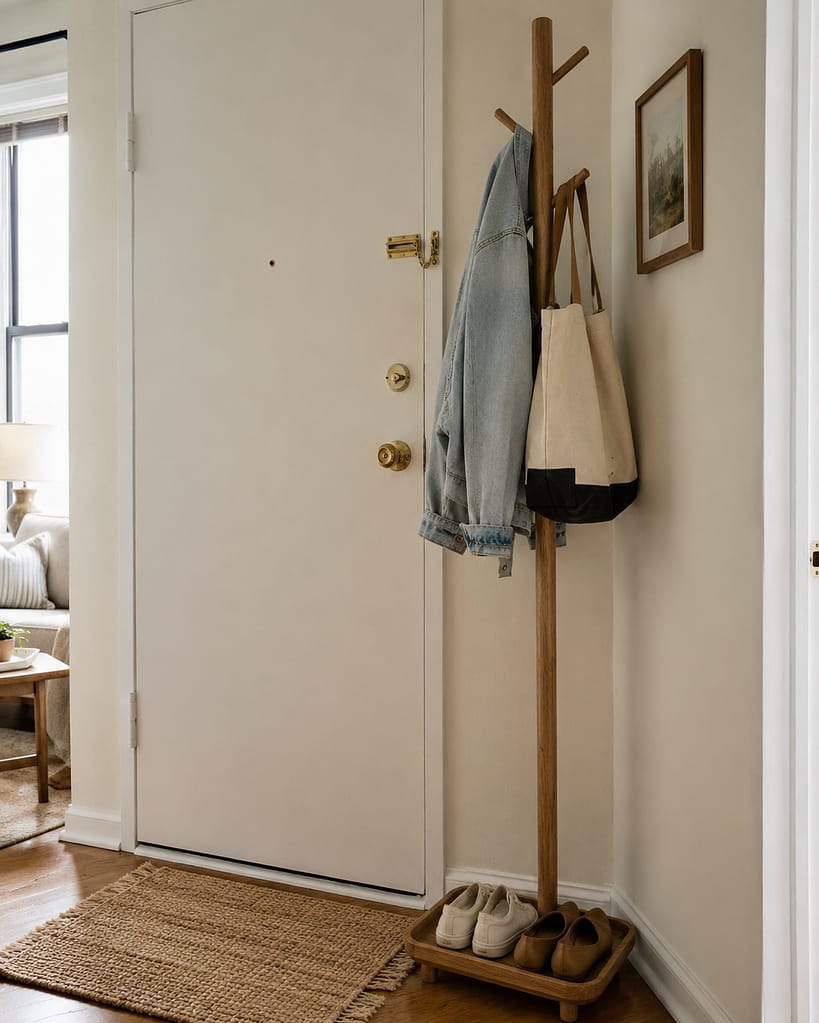
3. Choose a Console That’s Almost Shelf-Deep
Standard console tables can feel enormous in narrow apartment entrances. Instead, look for something unusually shallow—just deep enough for keys, mail, and sunglasses. Open legs also help because you can still see the floor underneath, making the area feel less boxed in. If you’re worried about a table protruding into the walkway, tape its dimensions onto the floor before buying. Live with the outline for a day and see whether you keep stepping over it.
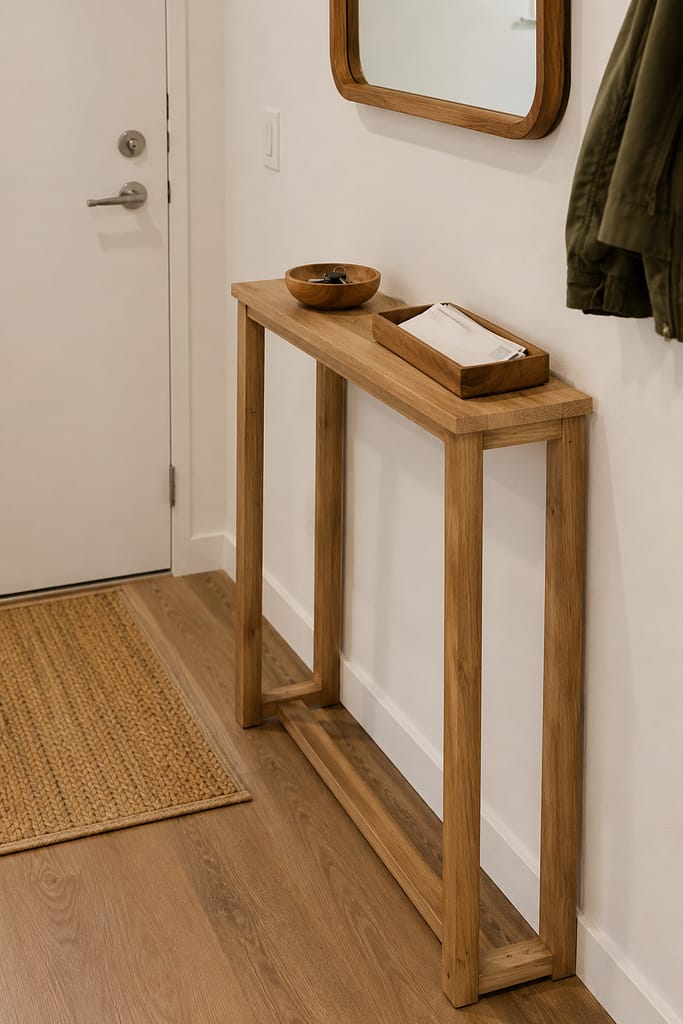
Pro tip: Painter’s tape is brilliant for testing small-space furniture. Mark the width and depth on your floor before ordering anything, then open the door, carry groceries through, and walk your normal route past it.
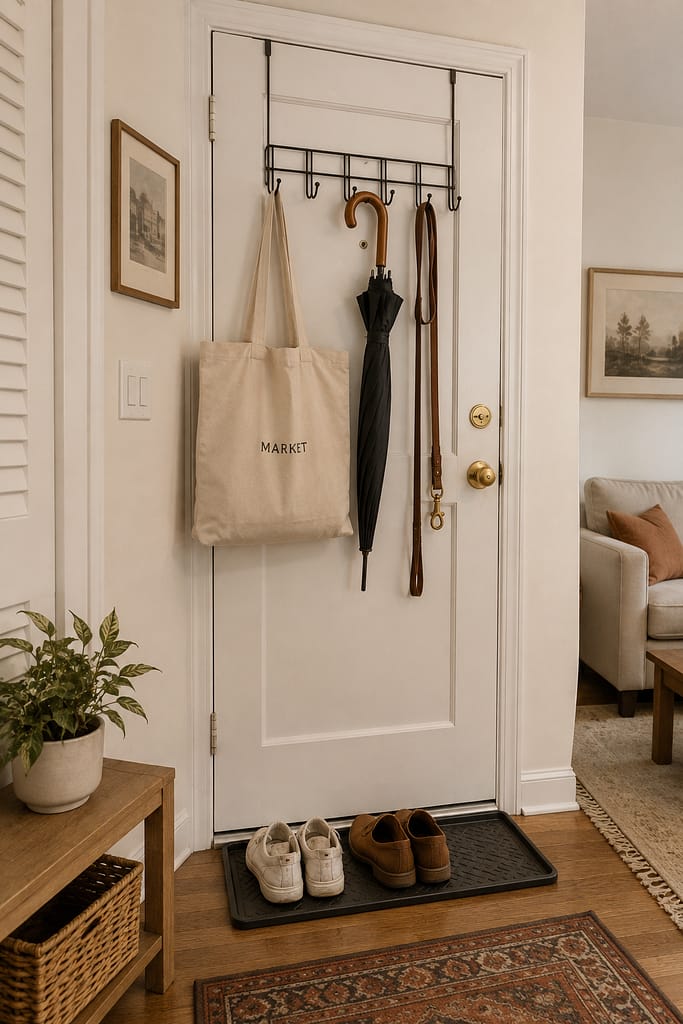
4. Turn the Back of the Front Door Into Storage
In a tiny apartment entryway, the door itself is valuable real estate. An over-the-door organizer or hook rack can hold hats, scarves, dog leashes, umbrellas, or reusable shopping bags without using floor space. Keep heavier coats elsewhere if the organizer makes the door cumbersome. I also prefer systems that sit fairly flat against the door; bulky baskets can make a tight entrance feel even tighter. Check that the hardware doesn’t prevent the door from closing properly.
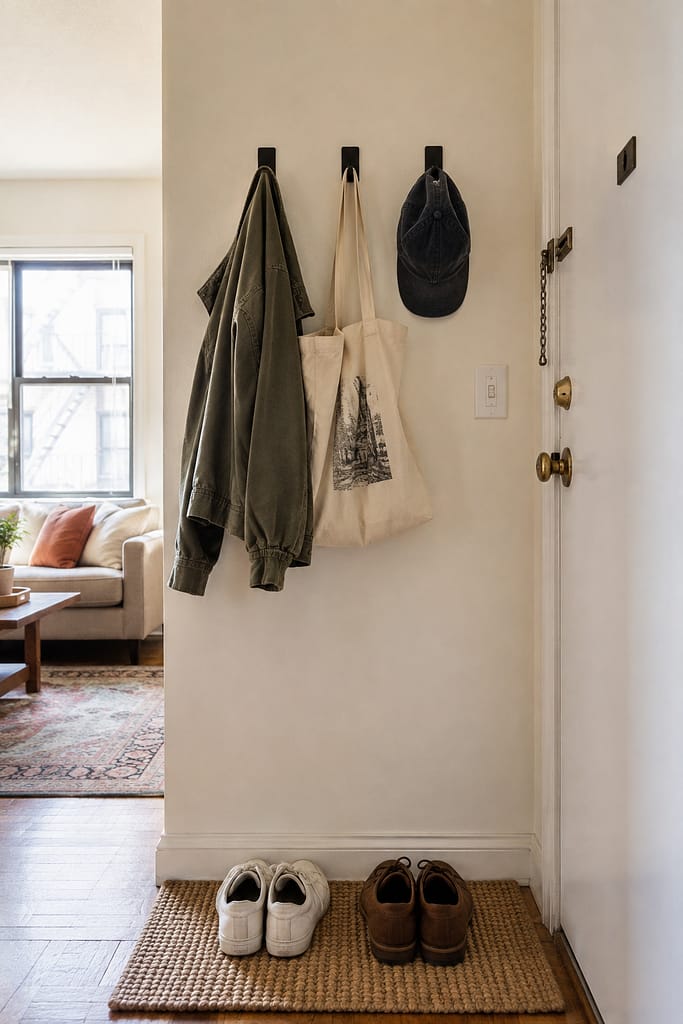
5. Make Removable Hooks Your Mini Coat Closet
No coat closet? A few removable hooks can cover the everyday essentials without turning a wall into permanent storage. Place them where you naturally reach when entering, rather than creating a giant decorative grid. One for your daily jacket, one for a bag, and perhaps another for a hat may be plenty. Follow the adhesive manufacturer’s weight limits and removal instructions, especially on rental walls. The goal is convenient temporary storage, not hanging your entire winter wardrobe from adhesive strips.
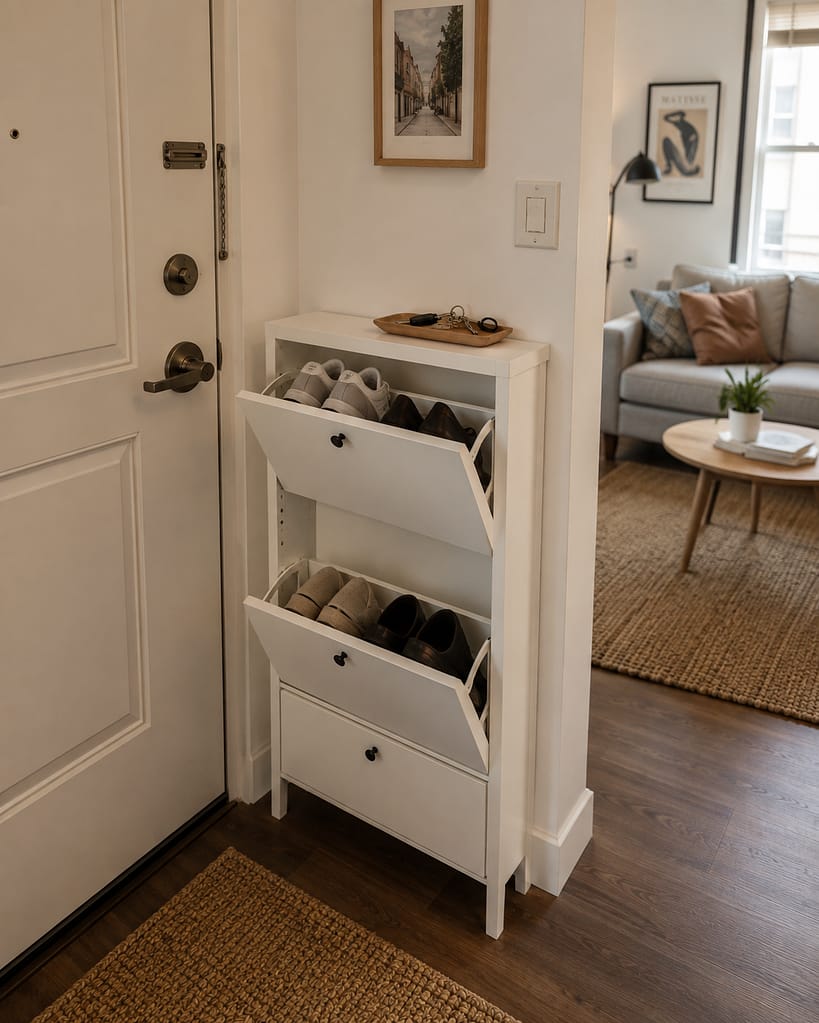
6. Use a Narrow Shoe Cabinet Instead of Open Shelves
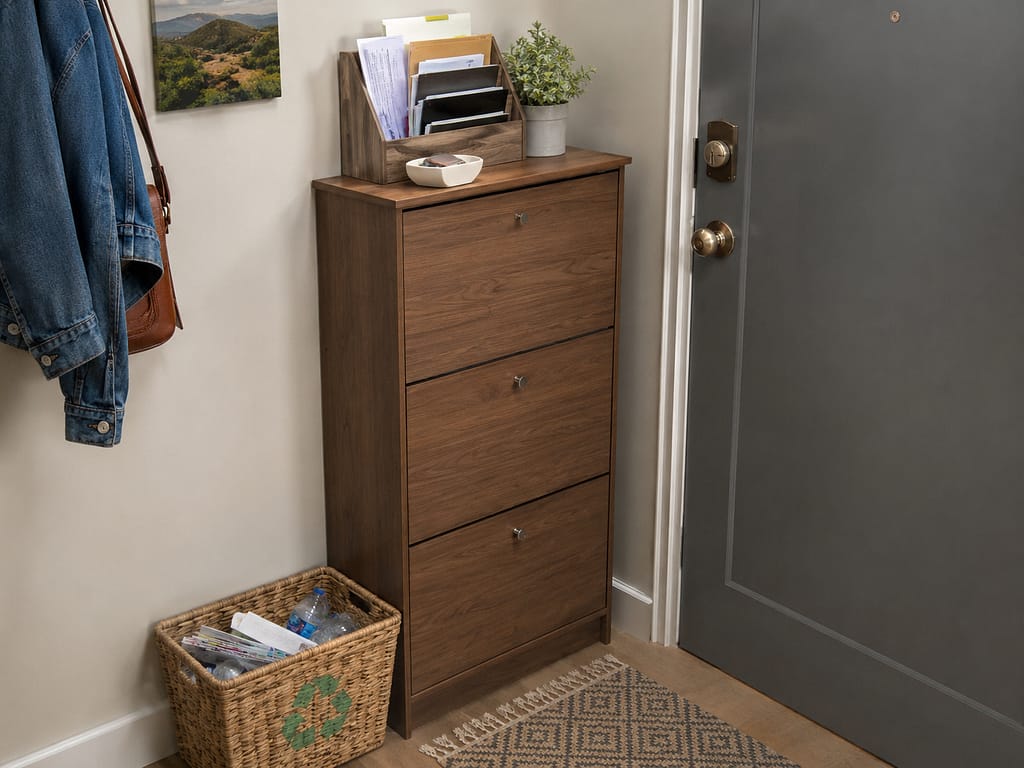
Shoes create visual clutter remarkably quickly, especially when your entrance is visible from the sofa. A slim freestanding shoe cabinet can hide several pairs while taking up less depth than traditional shelving. Look for a stable design with tilt-out compartments if the walkway is especially tight. Keep only your regularly worn shoes near the door and store off-season pairs elsewhere. That one habit can make even a very small apartment living entryway feel noticeably calmer.
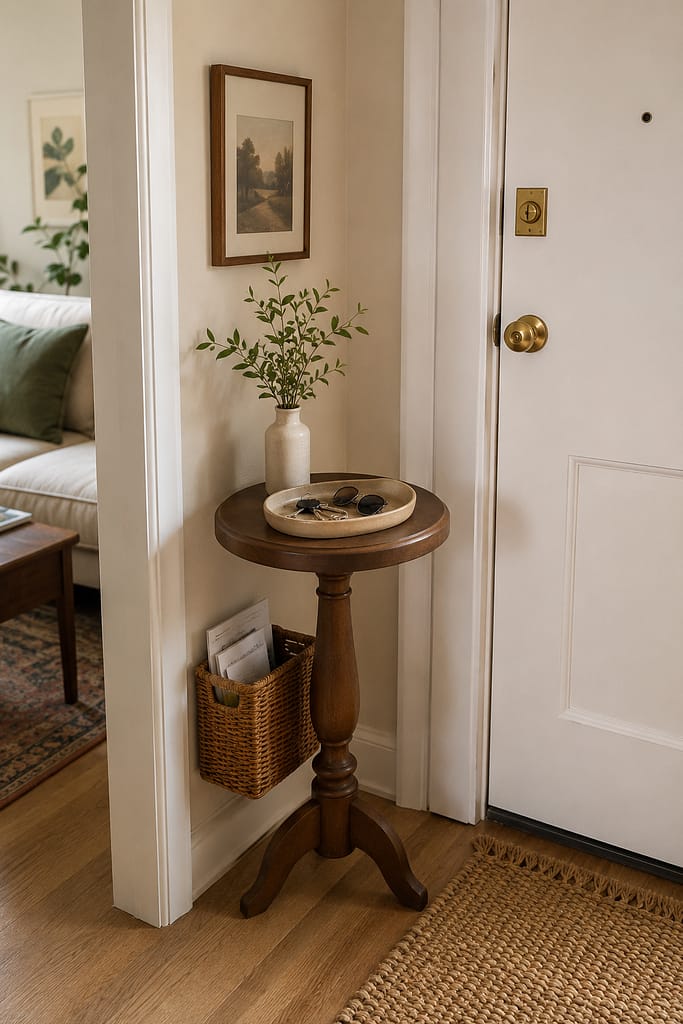
7. Give Yourself One Drop Zone
Keys, earbuds, mail, sunglasses, and receipts have a talent for migrating through an apartment. A designated drop zone stops that cycle. It doesn’t need to be a console—a small tray on a shoe cabinet, a compact freestanding pedestal table, or even a little basket on nearby shelving works. The important part is consistency. Pick one location near the door and actually use it. Small apt entryway ideas work best when they reduce daily friction rather than simply adding decoration.
Budget tip: Shop your apartment before buying an “entryway” piece. A small bedroom stool, side table, basket, or unused kitchen cart may work perfectly near the front door.
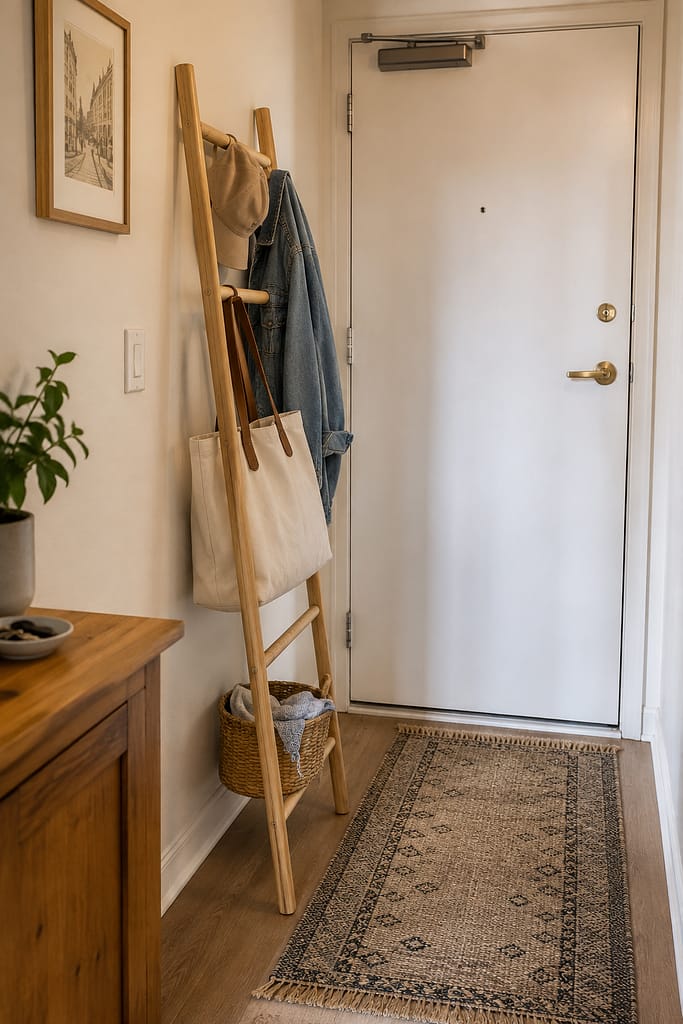
8. Try a Freestanding Peg Rail or Entry Ladder
If drilling isn’t allowed, you can still get vertical storage by bringing in something freestanding. A slim ladder-style rack or compact standing rail can hold light jackets, hats, and bags while keeping the wall untouched. This works nicely for renters who move frequently because the storage comes with you. Avoid overloading it, though. In a narrow entryway, a rail covered with ten coats quickly becomes a bulky wall of fabric. Keep just the current essentials there.
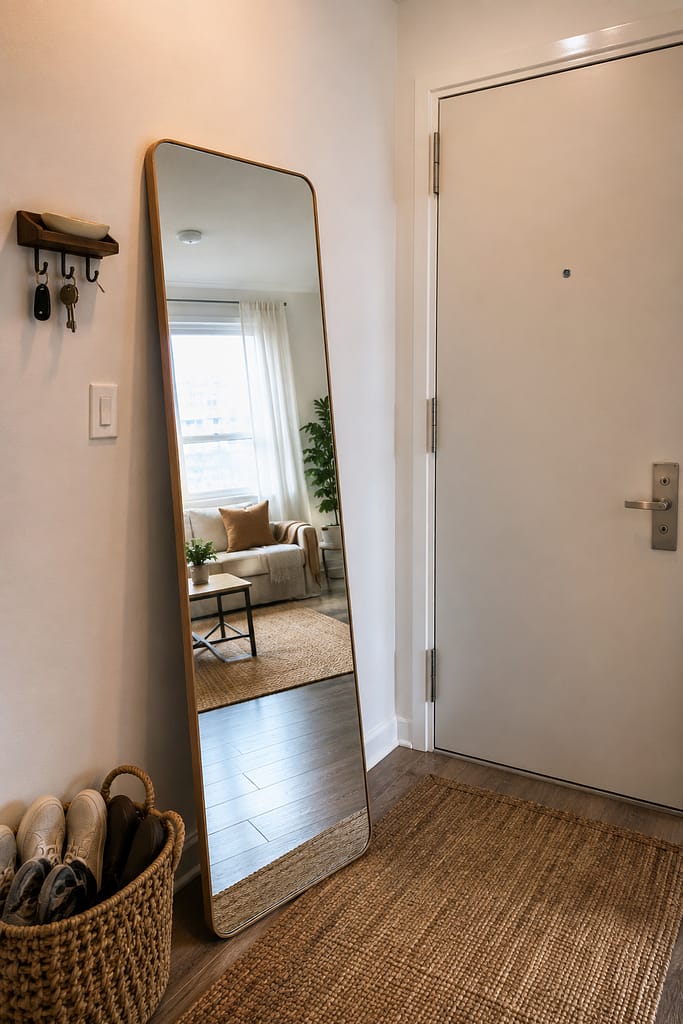
9. Let a Mirror Do Double Duty
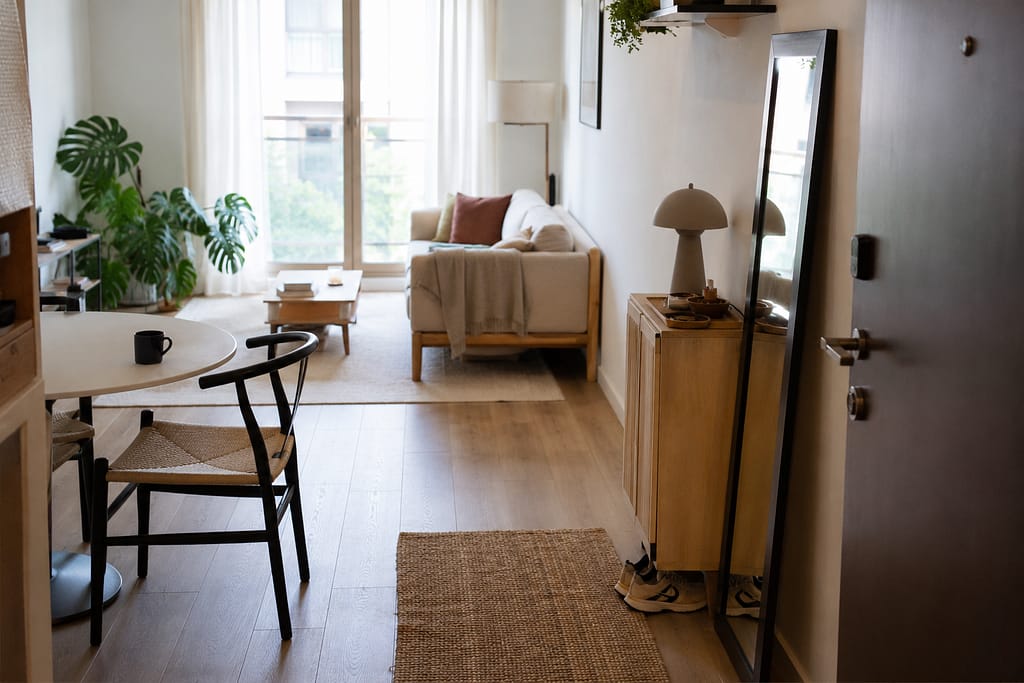
A mirror makes sense near the door for last-minute checks, but it can also make a cramped entrance feel less closed in. Renters don’t necessarily need to hang one. A tall, relatively narrow floor mirror can lean securely in an appropriate corner, while a lightweight mirror may work with renter-safe mounting methods when suitable for the wall. Position it where it reflects daylight or an open part of the room rather than a pile of coats.
10. Create an Entryway Behind the Sofa
One of the trickiest layouts is a front door that opens directly behind or beside the living room sofa. Rather than fighting it, use the furniture arrangement to create a boundary. If there’s enough clearance, a very slim console behind the sofa can become the entry drop zone. A small rug near the door completes the distinction. Always prioritize a comfortable walking route; you want the setup to create separation without making groceries or luggage difficult to carry inside.

11. Use a Small Bookcase as a Soft Divider
If the entrance opens completely into the living room, a short open bookcase can create just enough separation to make the doorway feel intentional. The trick is keeping the divider low or visually open so you don’t block light and make the apartment feel smaller. Use the entry-facing side for a basket or everyday items and keep the living-room side decorative. This solution is best where there’s genuinely enough floor space to maintain a clear path around the furniture.

Pro tip: In a no-foyer apartment, don’t try to build a visual wall around the entrance. A rug, furniture edge, or change in orientation is usually enough to suggest separation while preserving openness.
12. Make a Narrow Hall Work With One-Sided Storage
A narrow entry hall can still be functional if you resist filling both sides. Choose one wall for storage and keep the opposite side mostly clear. A shallow shoe cabinet, a few hooks, or a narrow freestanding shelf can handle the basics without creating an obstacle course. Using furniture close to the wall color can also reduce its visual weight. This is one of those narrow entryway ideas where what you leave out matters just as much as what you add.
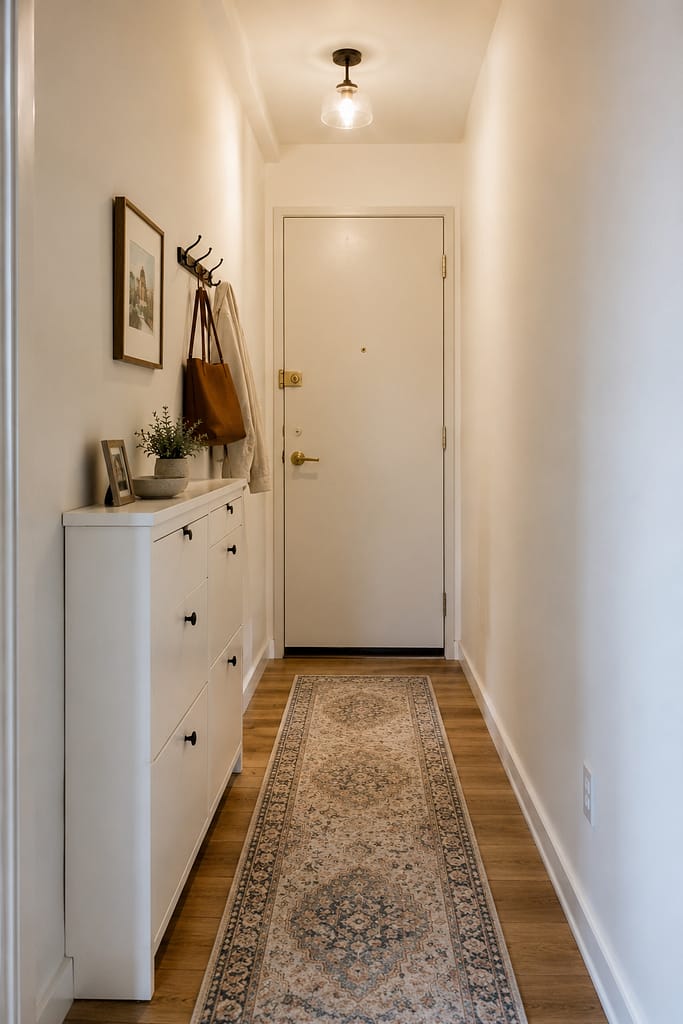
13. Use a Runner to Guide the Eye Inward
For a longer flat entry or narrow hall, a runner helps the space feel purposeful rather than leftover. Choose one that leaves visible flooring along both edges; wall-to-wall-looking rugs can emphasize how narrow the hall is. Low-pile and washable materials are practical near an exterior door. Pattern is your friend here, especially if wet shoes are common. Let the runner lead toward the living space and keep surrounding decor simple so the hallway doesn’t become visually busy.
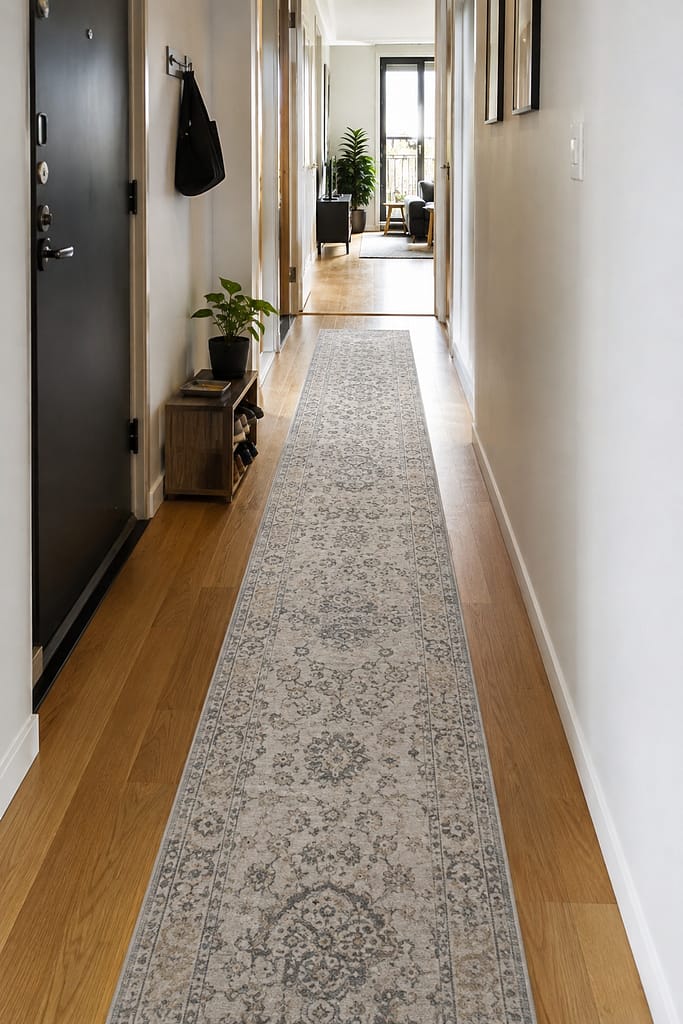
14. Add Storage Under a Small Seat
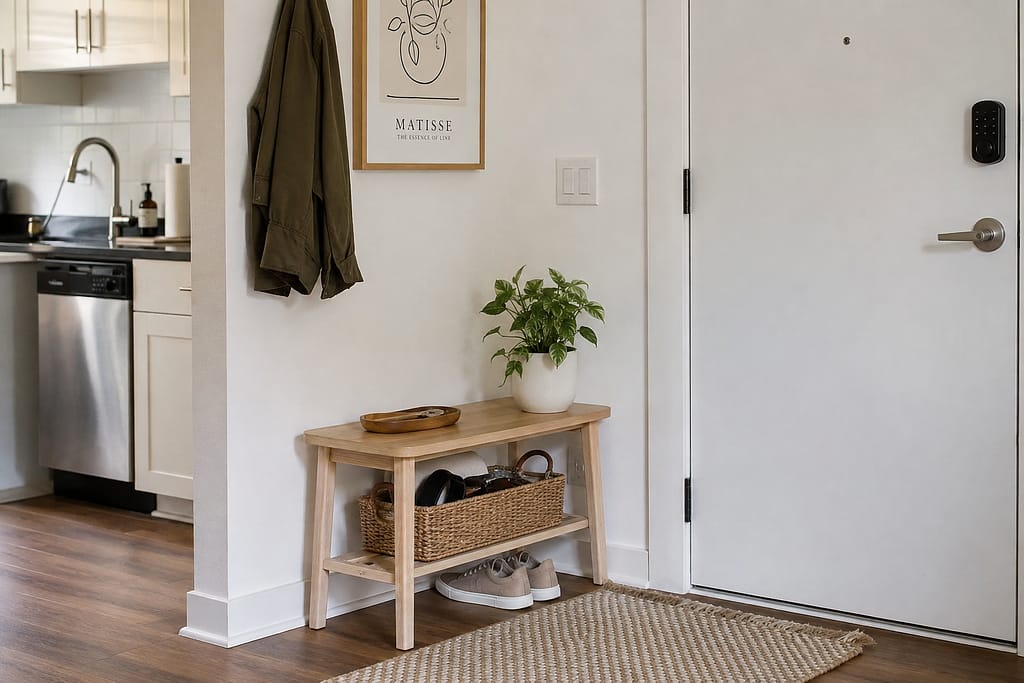
If you have enough room for a seat, make the footprint work twice. A compact storage bench or sturdy stool with space underneath gives you somewhere to sit while putting on shoes and somewhere to keep them afterward. Avoid deep upholstered benches designed for large foyers—they can swallow a small apartment entrance. A simple open-base seat often feels lighter. One basket underneath is enough for slippers, dog supplies, or other things you reach for before leaving.
15. Use a Rolling Cart as Flexible Entry Storage
A narrow rolling cart is useful if your apartment layout needs to change throughout the day. Park it near the entrance for mail, dog-walking supplies, reusable bags, or winter accessories, then roll it elsewhere when you need more floor space. It’s not right for every decor style, but the flexibility is hard to beat in a rental. Choose a simple cart rather than filling every tier, and give each level a specific purpose so it doesn’t become another clutter station.
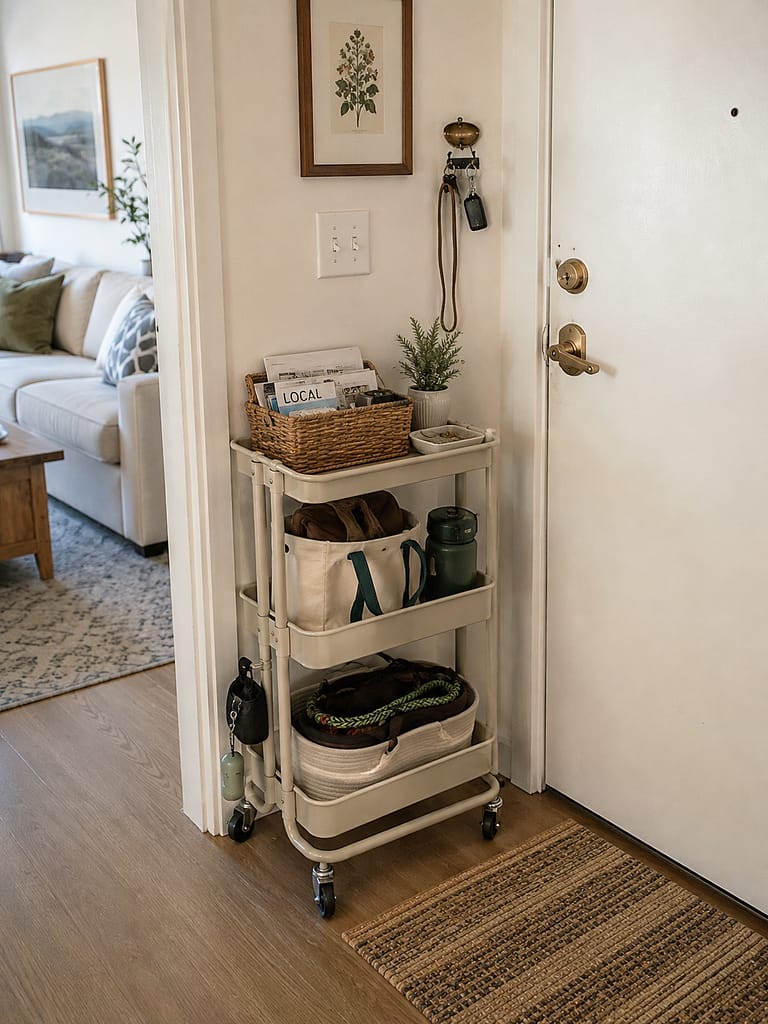
Budget tip: Flexible pieces usually offer better value in rentals. A rolling cart, stool, open shelf, or basket can move to a bedroom, bathroom, kitchen, or future apartment instead of being useful in only one exact spot.
16. Borrow Storage From the Living Room
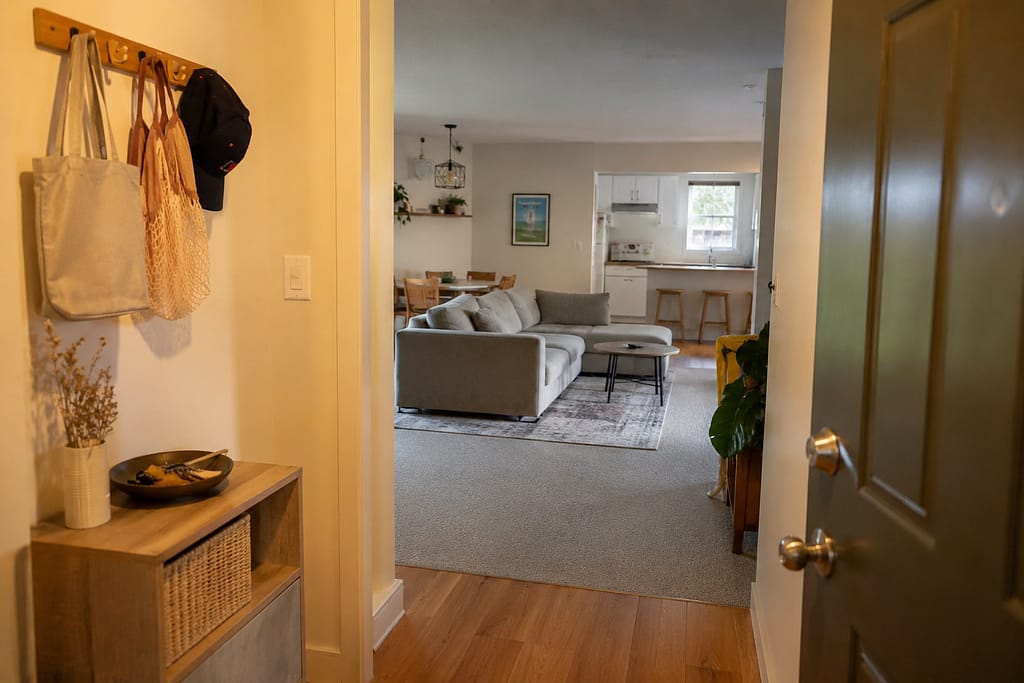
Sometimes the smartest entryway for a small apartment isn’t technically in the entry at all. If a bookcase, media unit, or cabinet sits a few steps from the door, dedicate one drawer, basket, or shelf to arrival essentials. You’ll keep the doorway clear without sacrificing function. This is particularly helpful in studios and open-plan rentals where adding another piece of furniture would create clutter. A nearby closed cabinet can easily become your hidden entry station.
17. Keep Seasonal Gear Out of the Entry
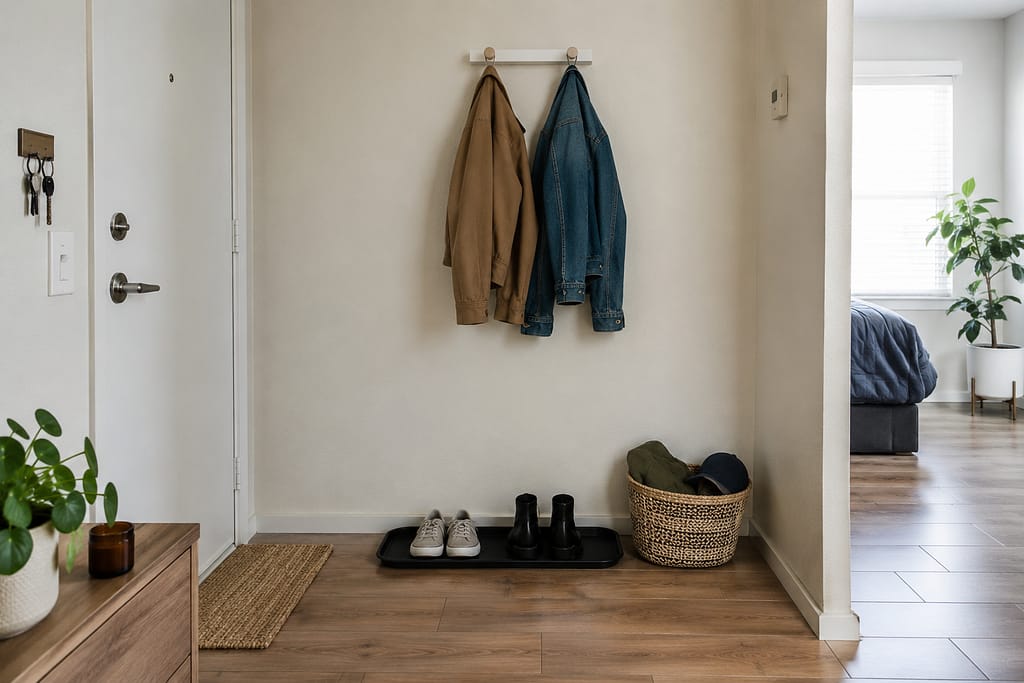
A tiny entrance can’t realistically store everything you own for every season. Keep only current essentials near the door and rotate the rest. Winter boots can replace sandals when the weather changes; heavy coats don’t need to occupy hooks all summer. Store off-season items under a bed, on a closet shelf, or in labeled bins elsewhere. This simple editing habit is one of the most effective ways to keep entryway decor in apartment small spaces from becoming overwhelmed.
18. Create a Tiny Command Station for Mail
Paper clutter can make a small entrance look messy faster than almost anything else. Create a very simple system: one spot for incoming mail and another destination for recycling. If drilling isn’t an option, use a tabletop sorter on an existing cabinet or a slim freestanding file holder. Process the pile regularly rather than letting the entry become long-term document storage. Keeping the system close to the door makes it easier to deal with mail before it reaches the kitchen table.
19. Keep the Door-Swing Zone Completely Clear
It’s tempting to use every inch, but the area directly behind a front door is often more valuable empty. A clear door swing makes carrying groceries, luggage, packages, or a laundry basket much easier. Before adding storage, open the door fully and identify the space it actually needs. Then place your entry setup beyond that boundary. This matters especially in older apartments where the front door opens toward a wall or directly into the main living area.
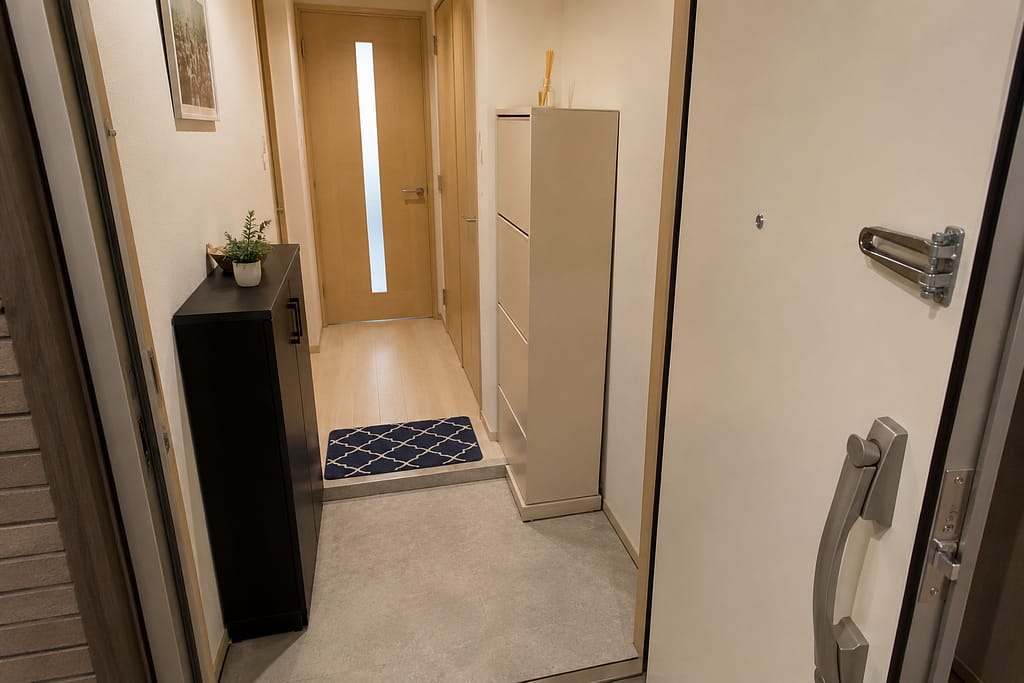
Pro tip: Function-test your entry with your hands full. Walk through carrying two grocery bags or a laundry basket. If you have to turn sideways or dodge furniture, the layout needs more clearance.
20. Choose Less Decor Than You Think You Need
A tiny entry rarely needs a gallery wall, decorative ladder, plant collection, console display, baskets, mirror, and stool all at once. Pick the pieces that solve actual problems first, then add one or two decorative details. A small mirror and attractive catchall might be enough. Leaving blank wall and visible floor space gives a cramped entrance room to breathe. For renters, this restrained approach also means fewer purchases and fewer things to patch, pack, or relocate later.

Frequently Asked Questions
How do I create an entryway if my apartment doesn’t have one?
Use visual boundaries instead of trying to build a separate room. A small rug, compact storage piece, mirror, or designated drop zone beside the front door can make an entry feel intentional even when the door opens directly into your living space.
What can I use in a rental entryway without drilling holes?
Freestanding shoe cabinets, coat trees, leaning mirrors, rolling carts, over-door storage, baskets, rugs, and removable hooks are useful starting points. Always check your lease and follow the manufacturer’s instructions for adhesive products because wall finishes can react differently.
How do you organize shoes in a very small apartment entrance?
Keep only frequently worn, in-season pairs near the front door. A shallow closed shoe cabinet, small rack, tray, or basket can contain those pairs while the rest live in a bedroom closet or another storage area.
How do I decorate a narrow apartment entryway without making it feel smaller?
Keep most of your storage on one side and preserve a clear walking path. Shallow furniture, a narrow runner, a mirror, and a limited color palette can add personality without filling the hallway with objects.
What should I do if my front door opens directly into my living room?
Start by defining a small arrival zone rather than trying to hide the door. A washable rug and nearby drop zone may be enough, or you can use the back of a sofa or low open shelving to suggest separation if your floor plan has adequate clearance.
Your Entryway Doesn’t Need to Be a Room
A good small apartment entryway isn’t really about creating a miniature version of a big-house foyer. It’s about making the first few feet inside your door work harder.
Start with the annoyance you notice every day. If shoes are everywhere, solve the shoes. If you’re always searching for your keys, create one landing spot. If the front door feels like it’s sitting awkwardly in the living room, use a rug or furniture placement to give it a visual boundary.
You may only have one wall, one corner, or the back of a door—and that can still be enough. Save or pin these apartment entryway ideas so you can come back to the solutions that fit your own rental layout.