
20 Small Entryway Ideas That Make a Big First Impression (Foyer, Mudroom & Cozy Farmhouse Looks)
A small entryway doesn’t need much square footage to feel welcoming. In fact, some of my favorite entrances are simple: a useful bench, a beautiful mirror, somewhere to drop the keys, and just enough texture to make the front door feel connected to the rest of the house.
The trick is resisting the urge to fill every open wall. Whether you have a defined foyer, a casual mudroom entrance, or a front door that opens directly into a living space, a few thoughtful choices can create an entryway that feels finished without becoming crowded.
Here are 20 small entryway ideas I’d happily borrow for a cozy, practical first impression.
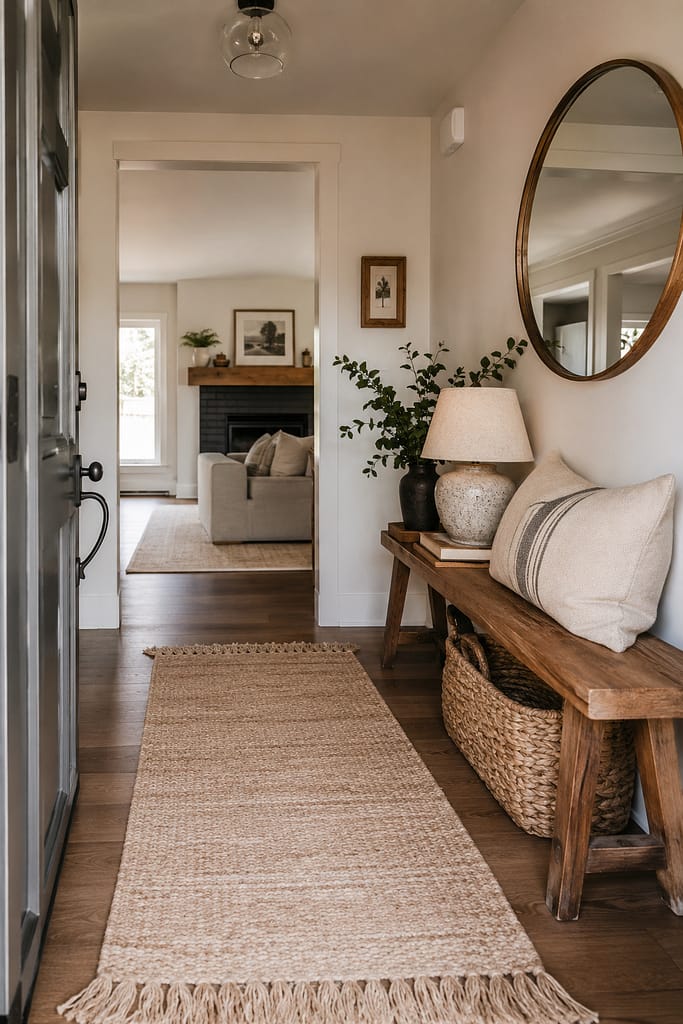
1. Start With a Simple Entryway Bench
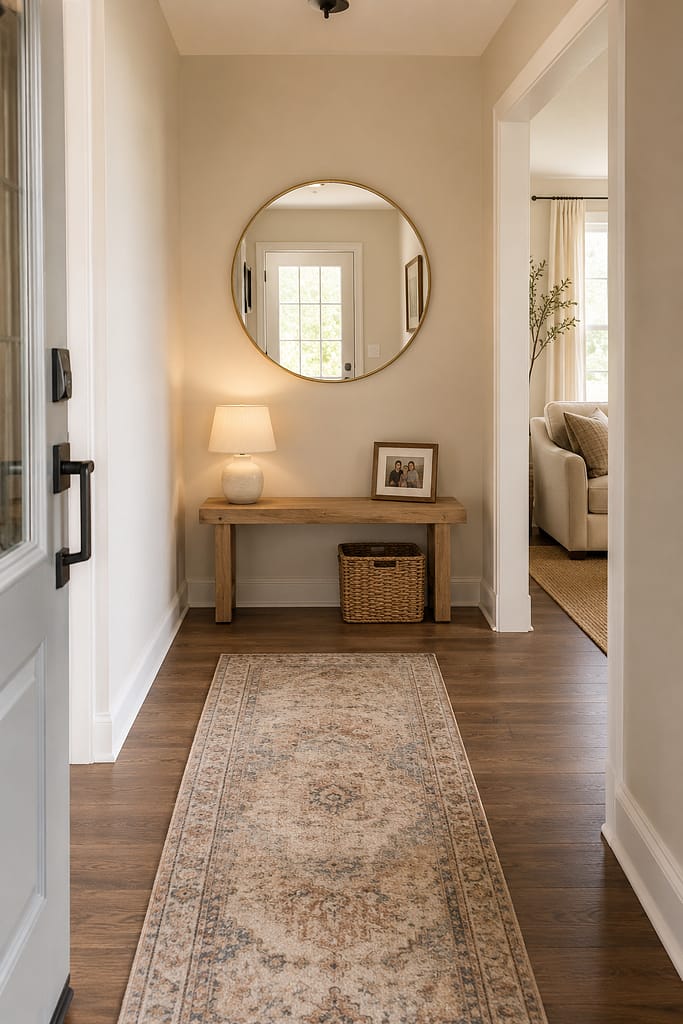
A bench is one of those pieces that earns its space almost immediately. It gives you somewhere to sit while pulling on shoes, but it can also anchor an otherwise empty foyer wall. For a smaller entrance, I’d choose a slim wood bench without bulky arms or a high back. Leave some breathing room around it, then add one or two baskets underneath for shoes, scarves, or dog-walking gear.
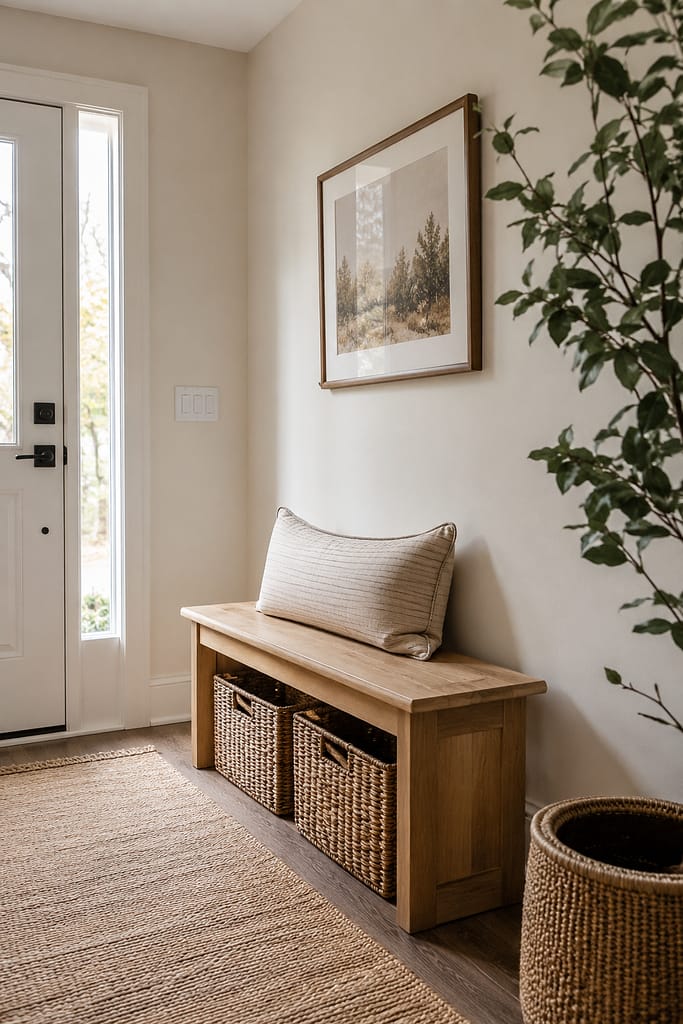
2. Add a Mirror Opposite the Light
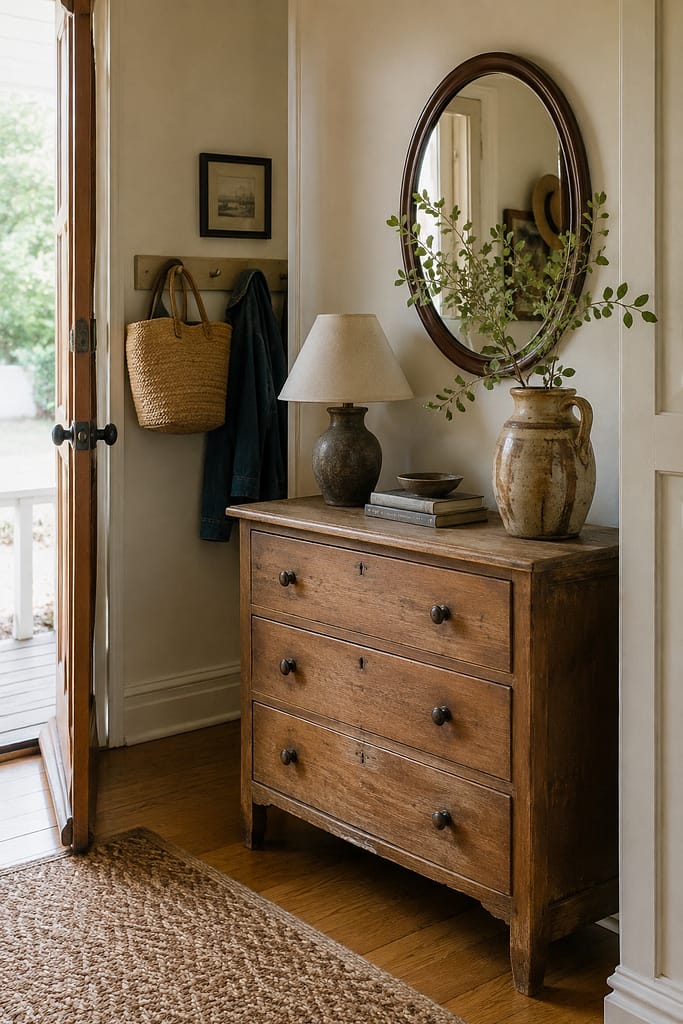
If your front door entrance inside the house feels a little dim, a mirror can make an impressive difference. Positioning one where it catches daylight from a door or nearby window helps bounce that light farther into the room. An oversized round mirror feels relaxed and contemporary, while an aged wood or antique-style frame works beautifully with farmhouse and vintage rustic decor. Just keep the surrounding accessories restrained so the mirror has room to shine.
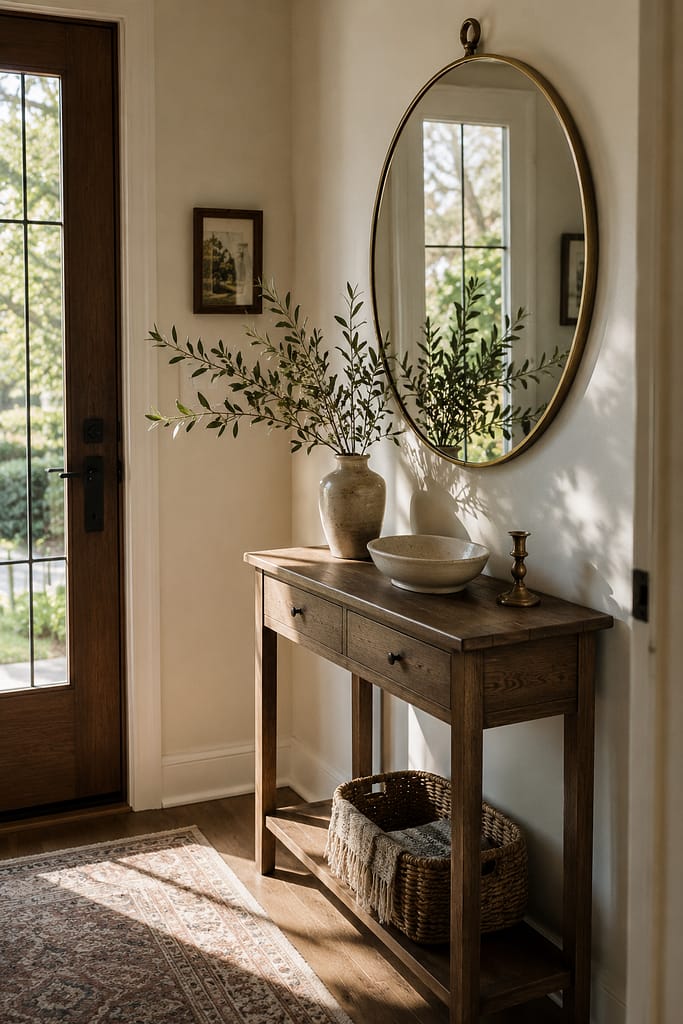
3. Use a Console That Isn’t Too Deep
A console gives an entrance a natural landing spot without requiring much floor space. The key is depth: look for a narrow design that doesn’t interrupt the walking path. I like styling one with a small lamp, a bowl for keys, and perhaps a framed photograph or vase. You don’t need a dozen accessories. Leaving part of the surface empty makes everyday clutter easier to manage and keeps the foyer decoration looking intentional.
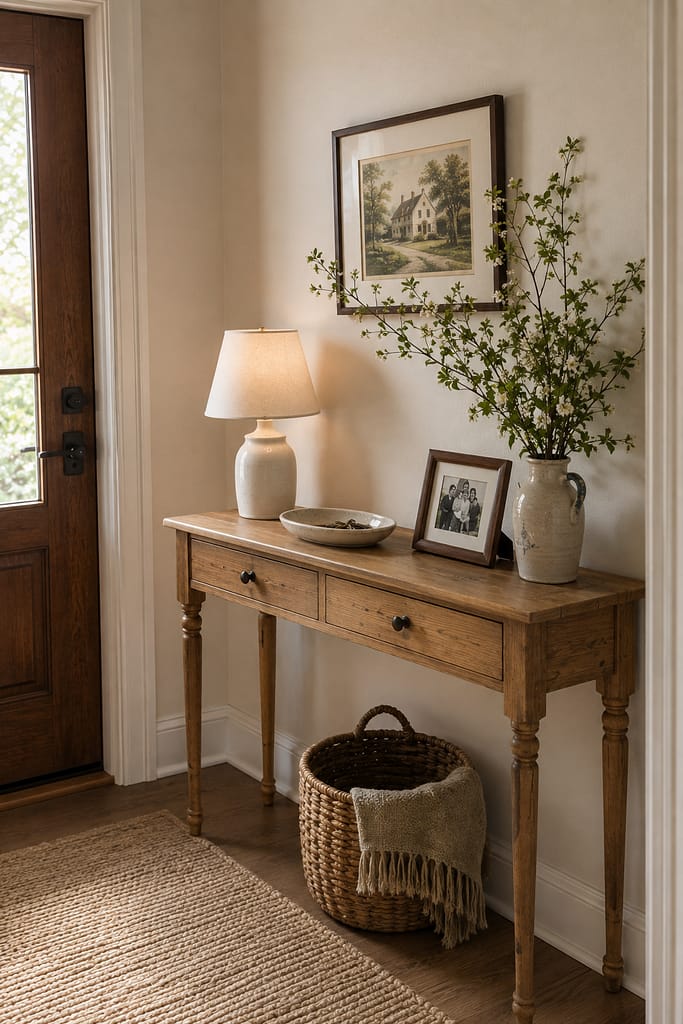
Budget tip: Before buying entryway furniture, check other rooms for a small bench, side table, stool, or dresser you can repurpose. A fresh coat of paint and new hardware can completely change a piece you already own.
4. Create an Entryway With Wall Hooks
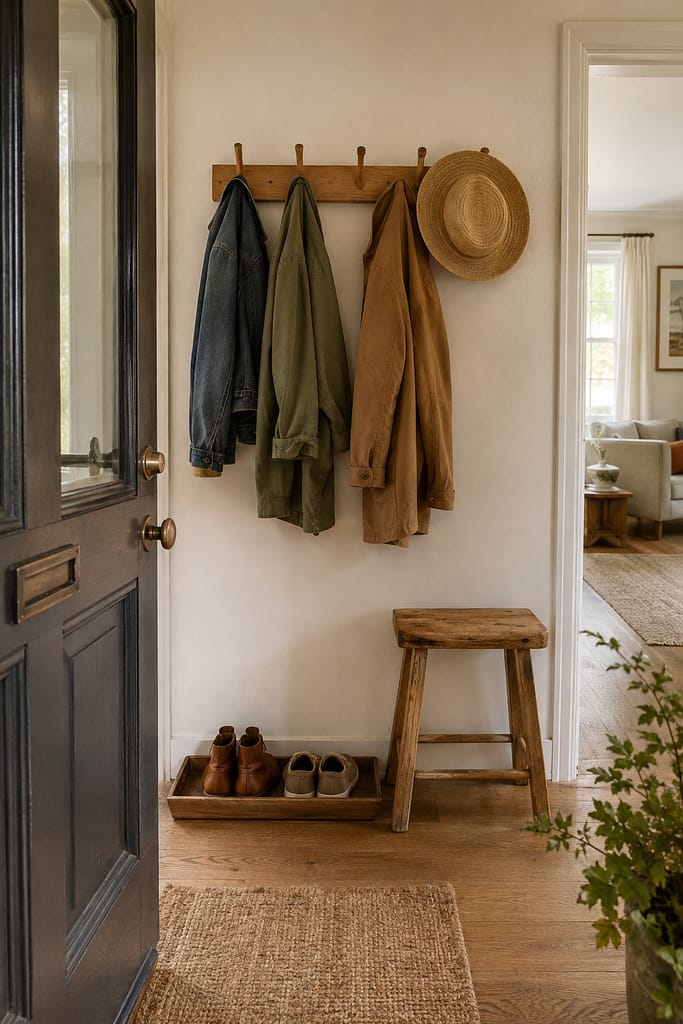
You can create an entryway even when the front door opens into a room without a clearly defined foyer. A row of attractive hooks immediately establishes a practical drop zone. Mount them above a bench, shoe tray, or shallow basket so coats and bags have somewhere to go. Wooden peg rails suit farmhouse home ideas particularly well, while simple black hooks can make the same arrangement feel cleaner and more modern.
5. Try a Vintage Dresser Instead of a Console
An old dresser can be surprisingly useful in a foyer. Unlike an open console, the drawers hide gloves, reusable bags, pet supplies, paperwork, and all those little things that tend to collect near the door. This is especially charming if you like vintage rustic house styling. Look for a relatively shallow piece and let a few scratches or worn edges remain—the slightly imperfect finish is part of what makes it feel collected rather than showroom-perfect.
6. Build a Mini Mudroom Along One Wall
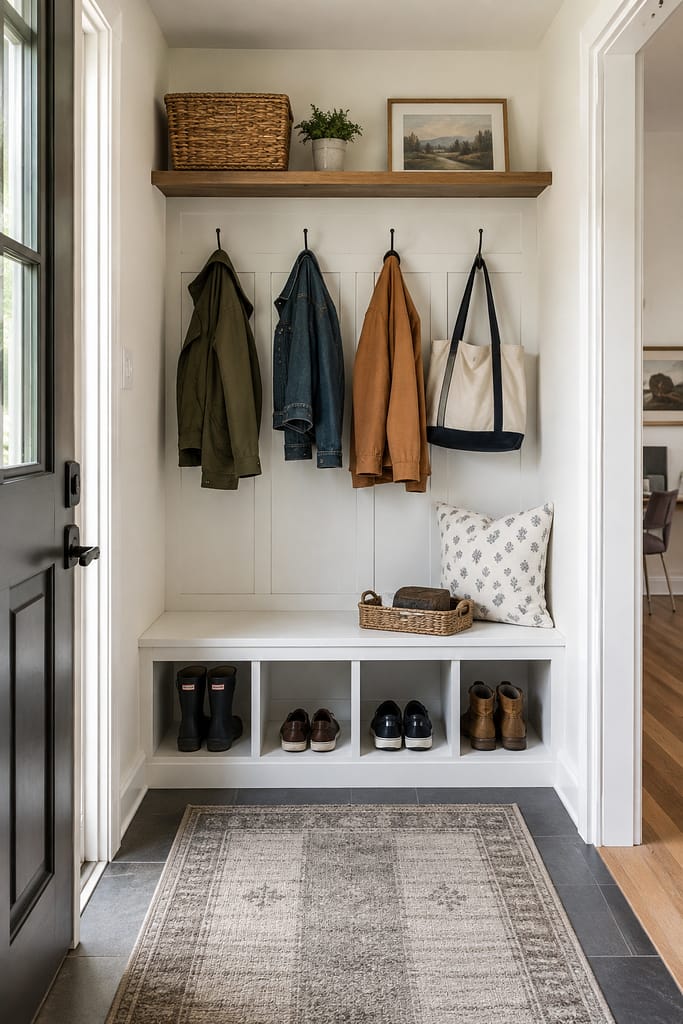
A full mudroom isn’t necessary to borrow its best ideas. One free wall near an everyday entrance can hold a bench, hooks, baskets, and a narrow upper shelf. Give each element a purpose rather than building cabinetry from floor to ceiling. Open storage is often easier to use for frequently grabbed items, and matching baskets help calm the visual clutter. It’s a practical solution for busy households where shoes and backpacks inevitably gather by the door.
7. Bring in a Washable Runner
A runner does more than introduce color. It visually draws you from the front door into the house and helps define an entry that might otherwise blend into an adjoining room. Choose something forgiving enough for outdoor shoes—subtle patterns, faded colors, and medium tones hide everyday marks better than solid pale rugs. For boho rustic decor, I especially like slightly faded geometric or traditional patterns paired with simple wood furniture.
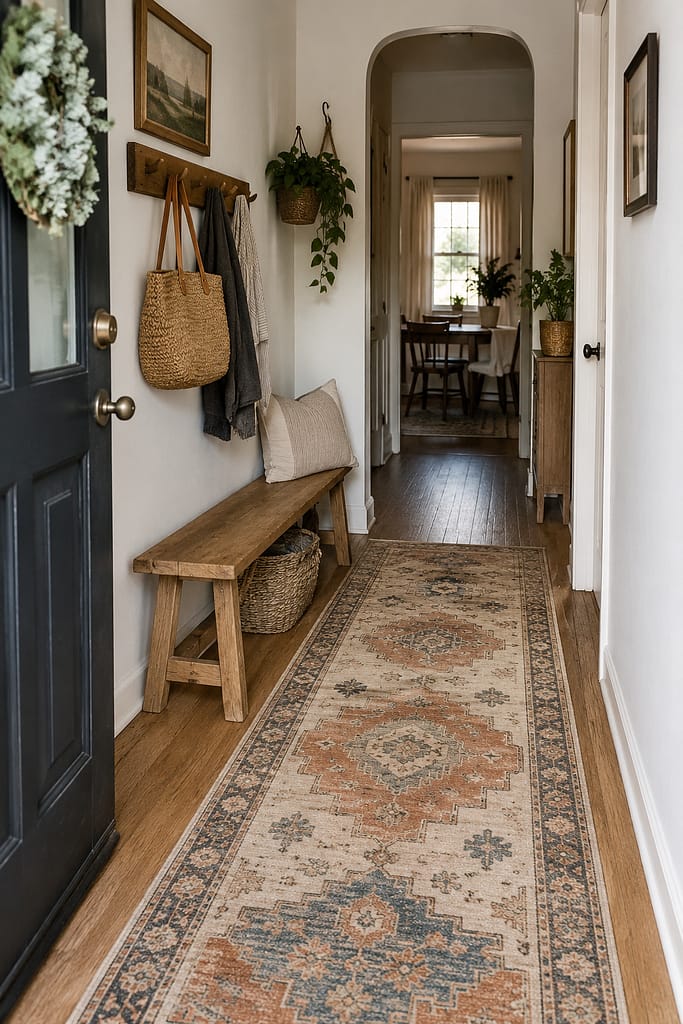
Pro tip: Measure the door swing before ordering a rug. A thick rug that catches underneath the front door quickly becomes more frustrating than decorative.
8. Give the Front Door Its Own Color Moment
Painting the interior side of the front door is an easy way to make a modest entrance feel more considered. Muted olive, dusty blue, charcoal, warm taupe, and soft black can all work without overwhelming the space. Pull the color from something already nearby—a runner, artwork, or textile—to make it feel connected. This works especially well in small front door entryway ideas where there isn’t enough wall space for much additional decor.
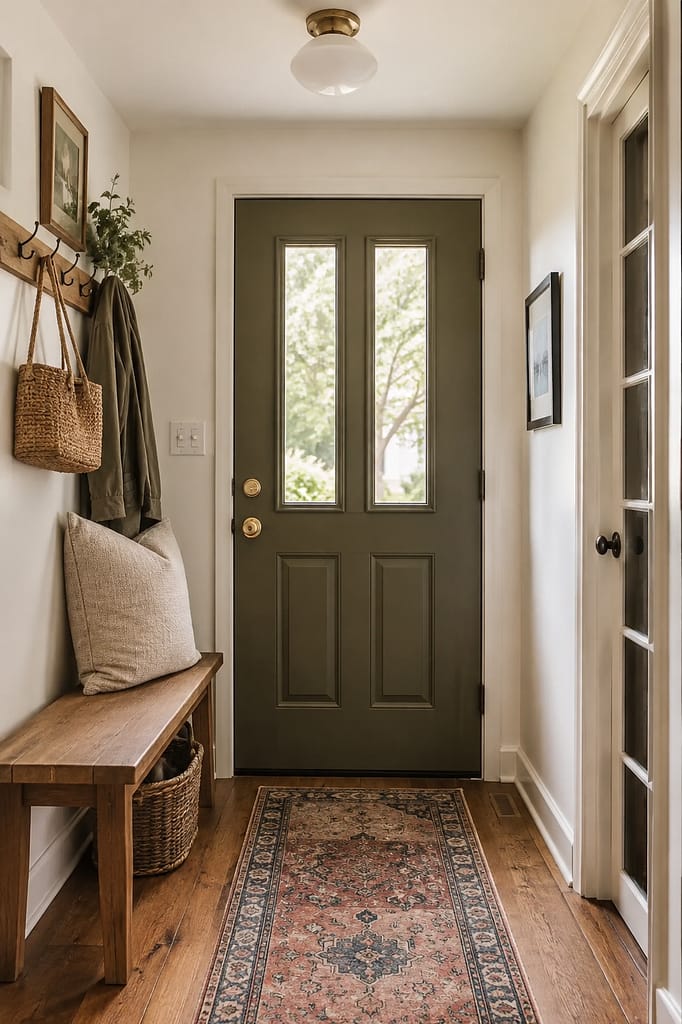
9. Use Vertical Paneling for Farmhouse Character
Wall paneling can give a basic entrance architectural personality without requiring a major remodel. Vertical tongue-and-groove boards or simple DIY battens work particularly well behind a bench or coat hooks. I’d stop the treatment partway up the wall rather than covering every surface, especially in a compact foyer. Soft white, mushroom, sage, or warm greige paint keeps the result cozy and makes an easy backdrop for natural wood and woven storage.
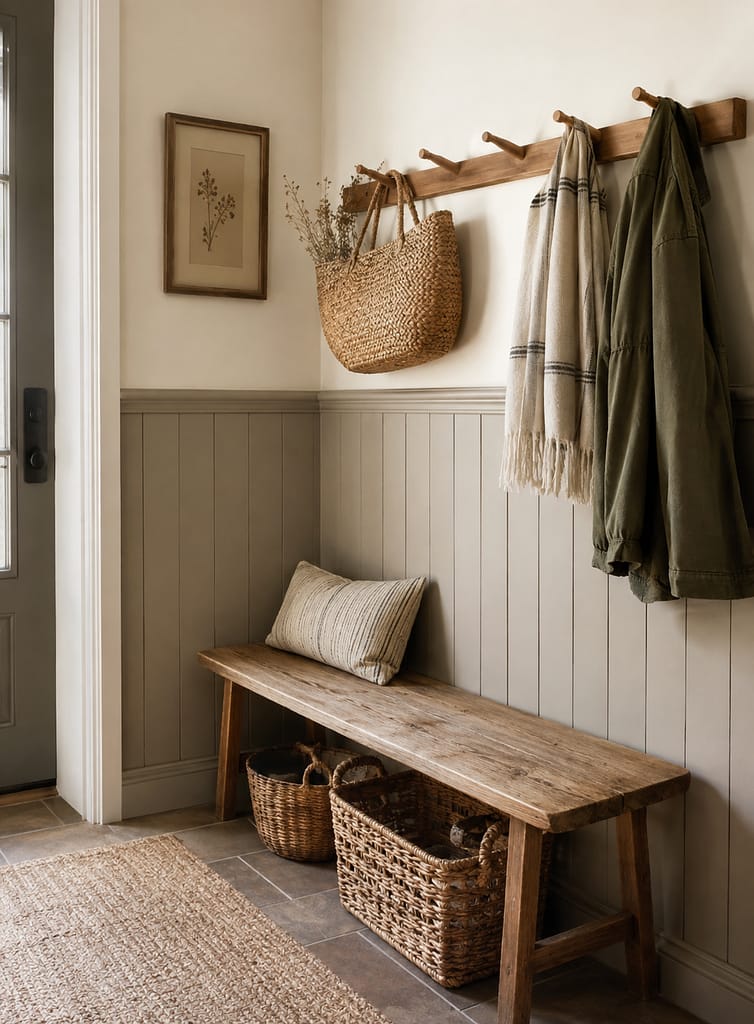
10. Add a Small Shelf for a Foyer Landing Spot
Not every entrance can comfortably fit a console. A narrow floating shelf can handle the essentials while barely using any floor space. Install one around comfortable hand height and use it for keys, mail, or sunglasses. A tiny dish and one framed piece above it may be all you need. If your goal is to create an entryway where there wasn’t one before, this is one of the simplest ways to establish that little arrival zone.
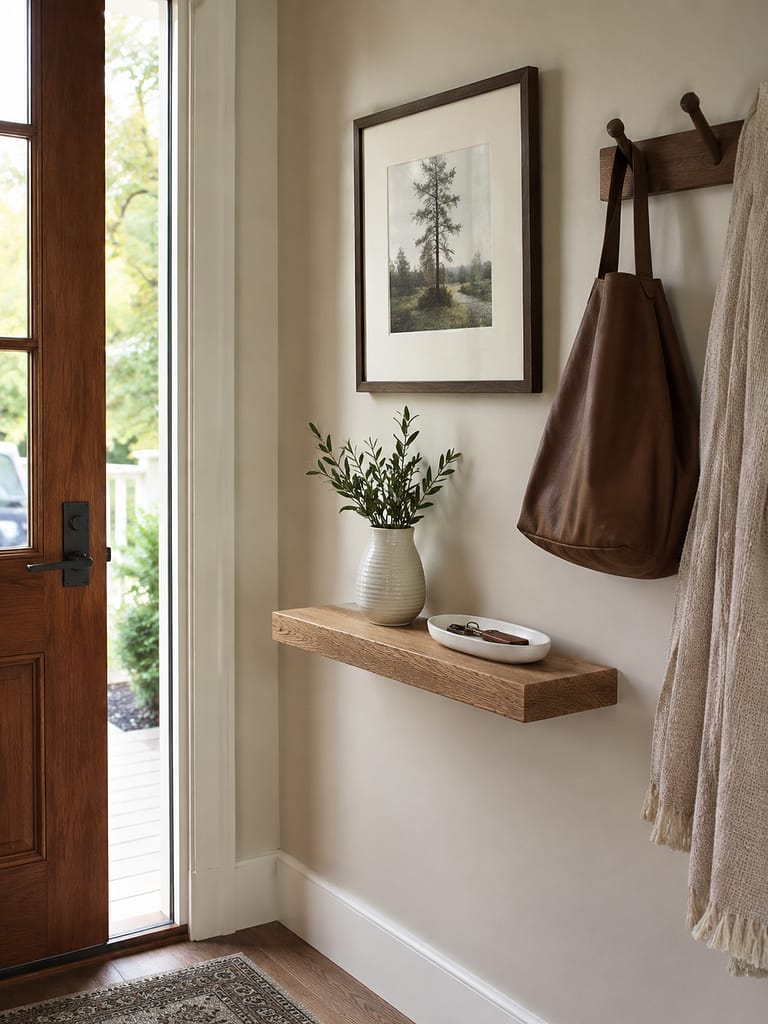
11. Make a Basket Station for Everyday Clutter
Baskets are especially helpful near an entrance because they hide things that aren’t particularly pretty but need to stay accessible. Try one for shoes, another for hats and gloves, or a taller basket for umbrellas. The important part is giving each basket a job. Random baskets filled with random belongings eventually become clutter themselves. Natural woven textures also soften painted cabinetry and hard flooring, which is why they show up so often in cozy farmhouse entryways.
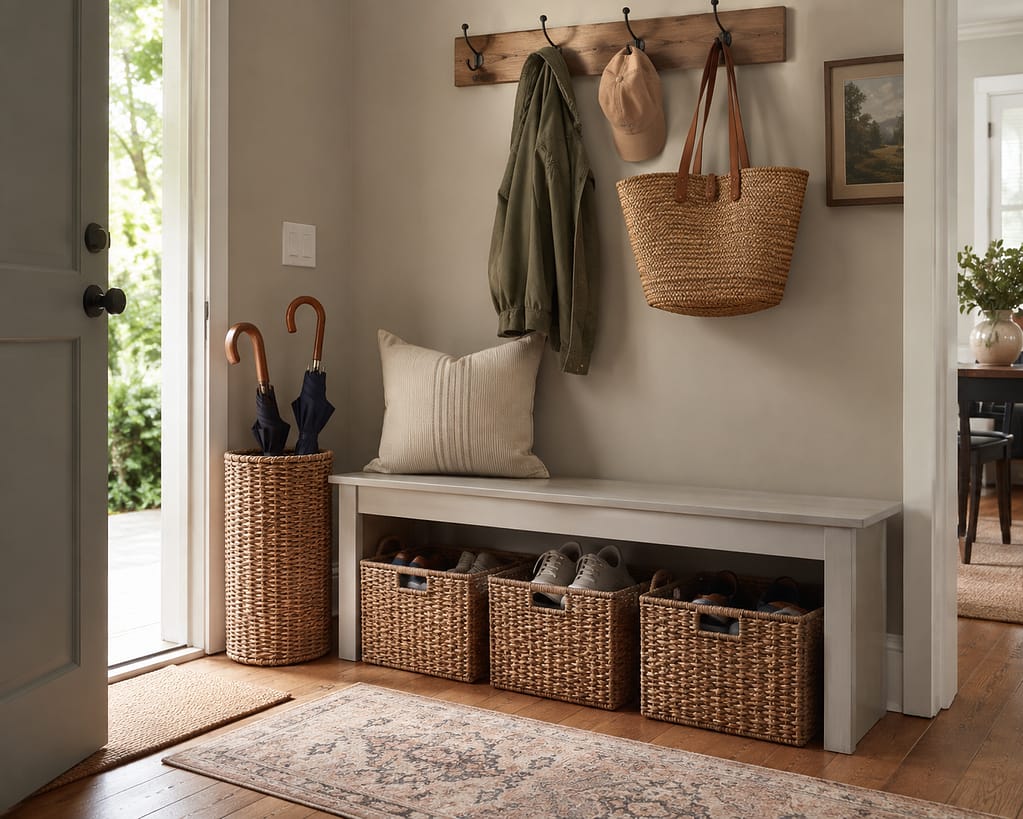
Budget tip: Basic unfinished baskets can look much more cohesive when you repeat the same material or color. You don’t need an expensive matching storage collection to get an organized look.
12. Layer Boho Rustic Textures
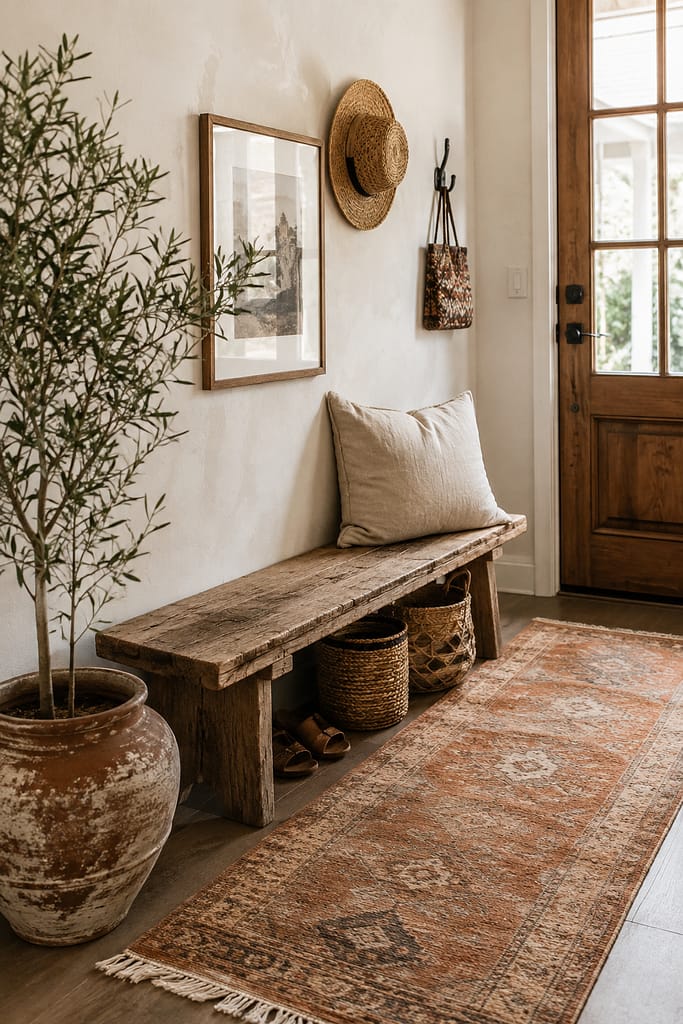
For a warmer entry, mix materials instead of relying on lots of decorative objects. A worn wood bench, woven rug, linen cushion, pottery, and a single leafy plant can create plenty of visual interest. This approach works particularly well for boho rustic decor because the room feels relaxed without becoming theme-heavy. Stick to a restrained palette—cream, tan, rust, olive, and natural wood are easy companions—and let the different textures do most of the decorating.
13. Turn the Stair Landing Into Part of the Foyer
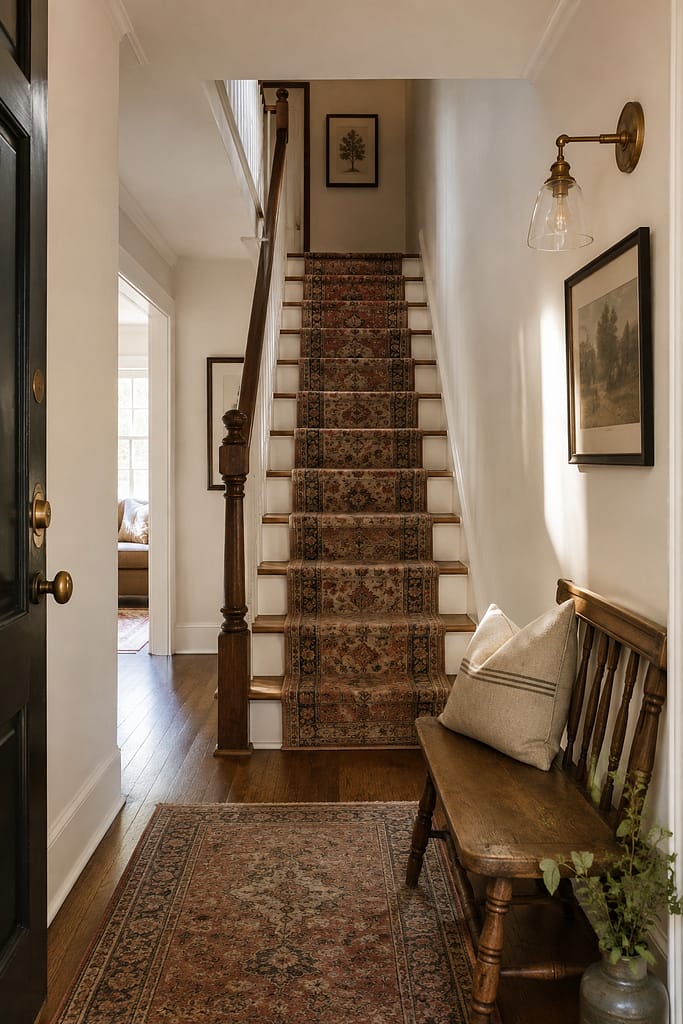
If your staircase begins near the entrance, treat the bottom landing and foyer as one connected space. Repeating a wall color, wood tone, or runner color helps the areas flow together rather than competing. A small bench or table tucked near the first stair can also bridge the transition. These foyer landing ideas are particularly useful in older homes where the staircase naturally dominates the view as soon as you walk through the front door.
14. Create a Gallery Wall With Breathing Room
Entryways are natural places for personal artwork because guests see them immediately, but you don’t have to cover the entire wall. Start with three to five pieces and leave generous spacing around the arrangement. Family photographs, landscapes, vintage prints, and simple sketches can work together if their frames share a color or material. A smaller, deliberately spaced collection often looks better than squeezing in enough pieces to fill every available inch.
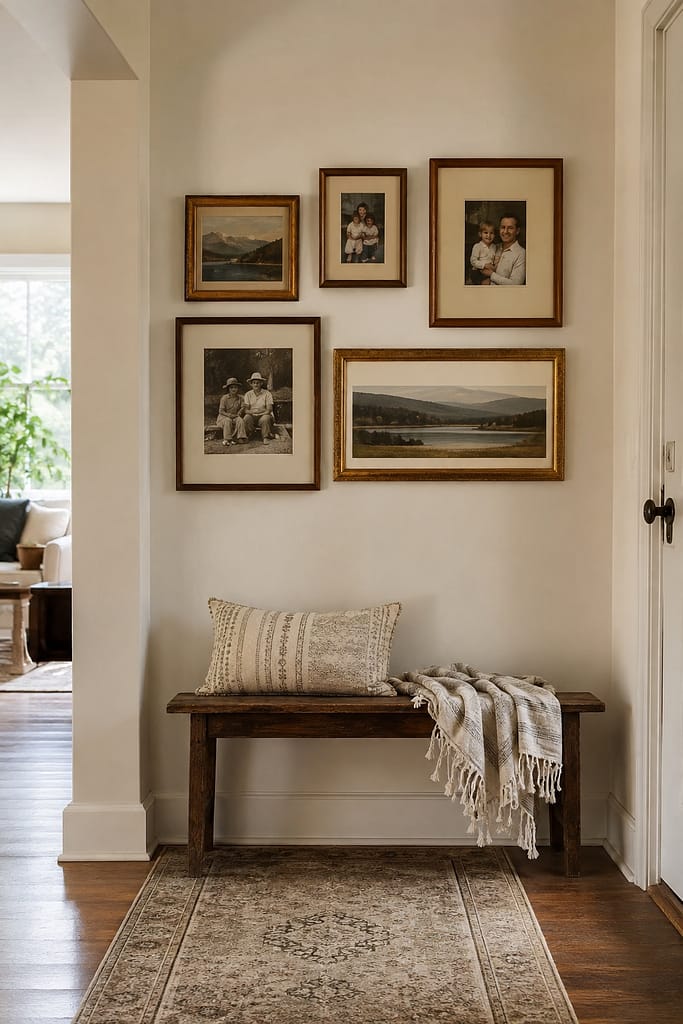
Pro tip: Trace your frames onto kraft paper and tape the shapes to the wall first. You can adjust the spacing without making a collection of unnecessary nail holes.
15. Use a Stool When a Bench Feels Too Large
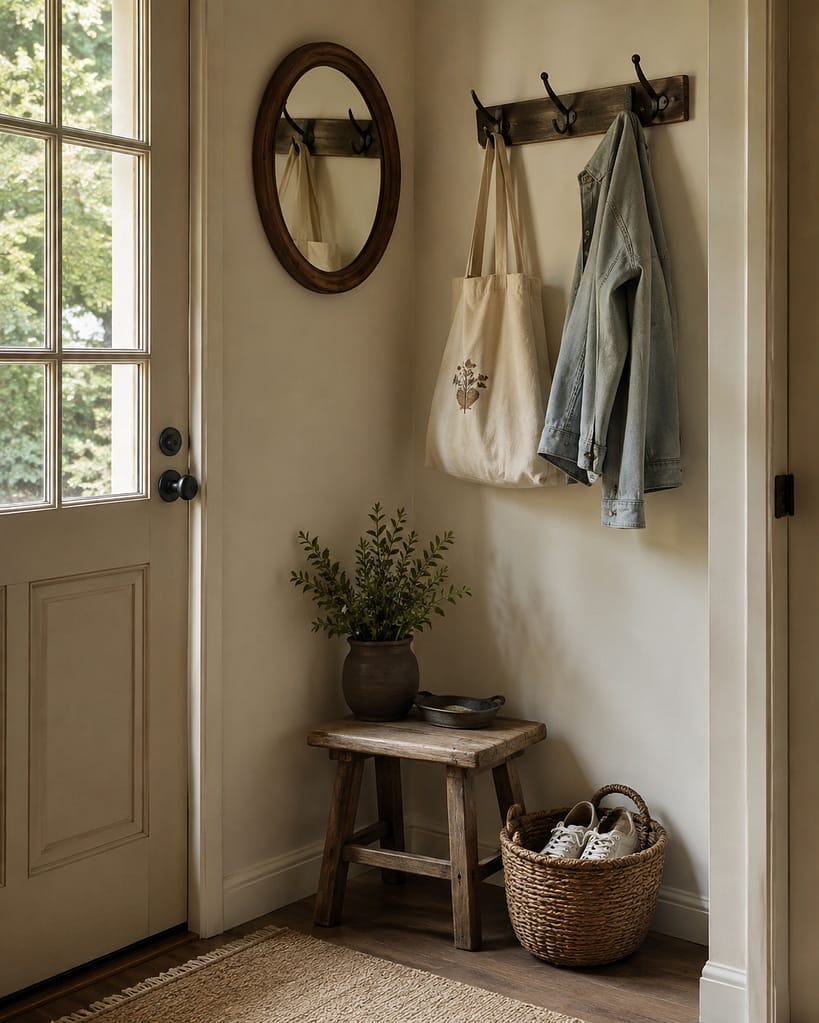
Sometimes even a slim bench is more furniture than an entrance needs. A small wooden stool gives you a temporary seat, somewhere to place a bag, and a decorative surface without dominating the floor plan. It can also move elsewhere whenever you need more clearance. Pair it with wall hooks and a mirror for a surprisingly complete little entry setup. This is especially nice for informal side entrances that need function more than formal foyer furniture.
16. Add Warm Lighting for a Cozy Entrance
Good entryway lighting matters after sunset, when daylight can no longer do the work. A small table lamp on a console creates a softer welcome than relying exclusively on a bright ceiling fixture. If there’s no surface available, a compact wall sconce can achieve the same effect. Choose a warm bulb and a shade that diffuses the light rather than exposing a harsh bulb. The goal is simply to make arriving home in the evening feel inviting.
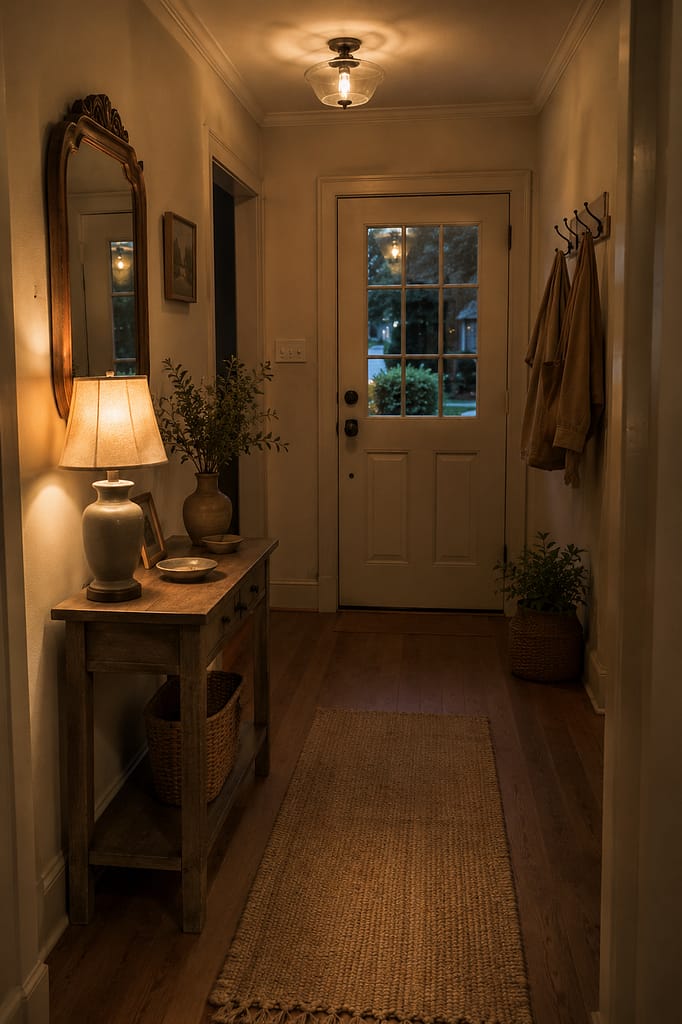
17. Hide Shoes Behind Simple Cabinet Doors
Open shoe storage is convenient, but it can also become visually messy fast. A shallow closed cabinet keeps everyday pairs nearby while giving the entrance a calmer appearance. Choose a simple painted finish rather than something overly decorative, then use the top as a small landing surface. This is particularly useful in a family entry where several pairs of shoes tend to accumulate. Even basic cabinetry can look intentional with understated knobs and a piece of art above.
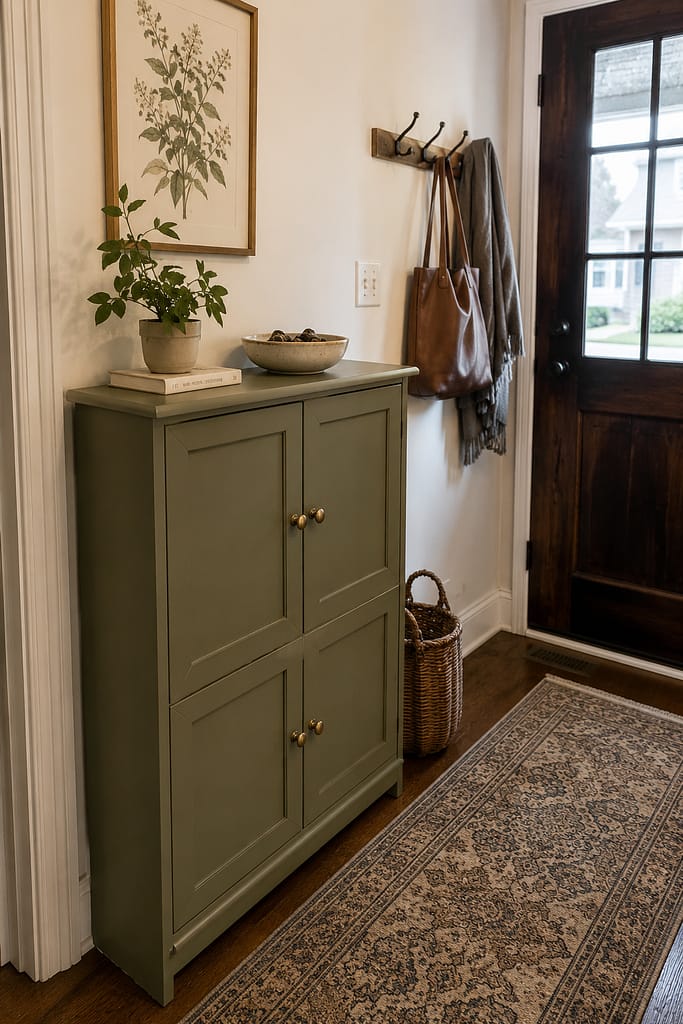
18. Bring Vintage Rustic Details Into a Plain Foyer
You don’t need antique architecture to create a foyer with vintage character. A weathered mirror, old wooden stool, framed botanical print, stoneware crock, or slightly worn runner can introduce age and warmth to a newer home. I’d limit it to a few convincing pieces rather than making every object look distressed. Vintage rustic style feels most natural when old-looking items are balanced with plain walls and practical modern storage.
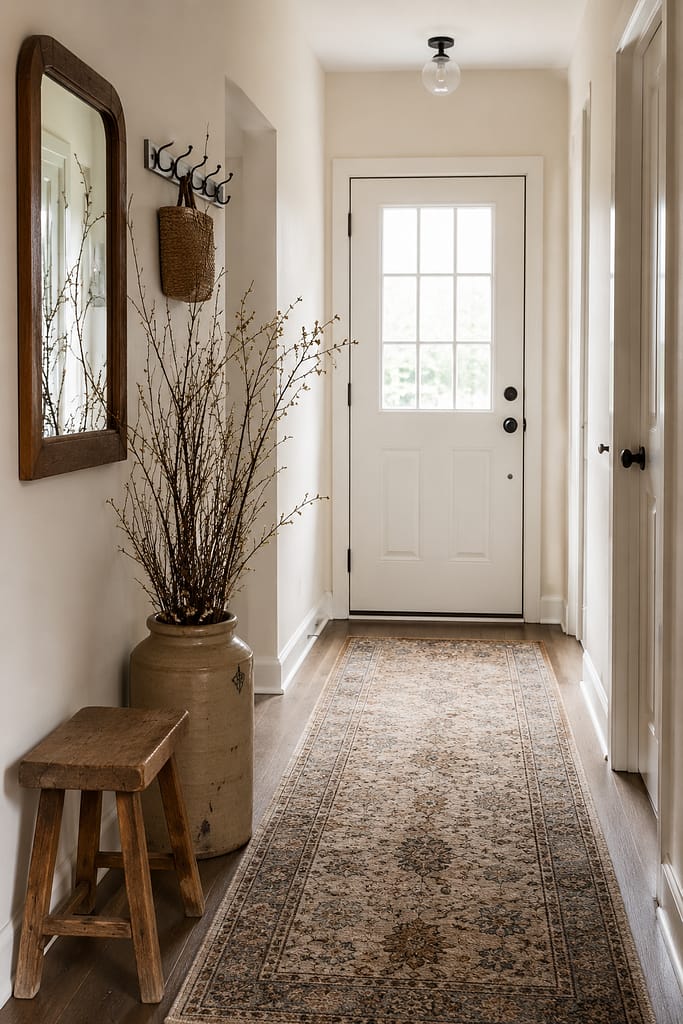
Budget tip: Flea markets, estate sales, thrift stores, and even your own garage are great sources for entryway decor. Small scratches and faded finishes often make these pieces more interesting, not less useful.
19. Use Greenery Without Turning the Foyer Into a Jungle
A little greenery can soften an entrance full of hard surfaces, but one well-placed plant is usually enough. Try a medium plant beside a bench if you have good natural light, or use clipped branches in a sturdy vase on a console. Keeping the arrangement simple also leaves room for keys, bags, and all the things an entrance actually needs to handle. If the area is dark, dried branches or seasonal stems can provide the same organic shape.
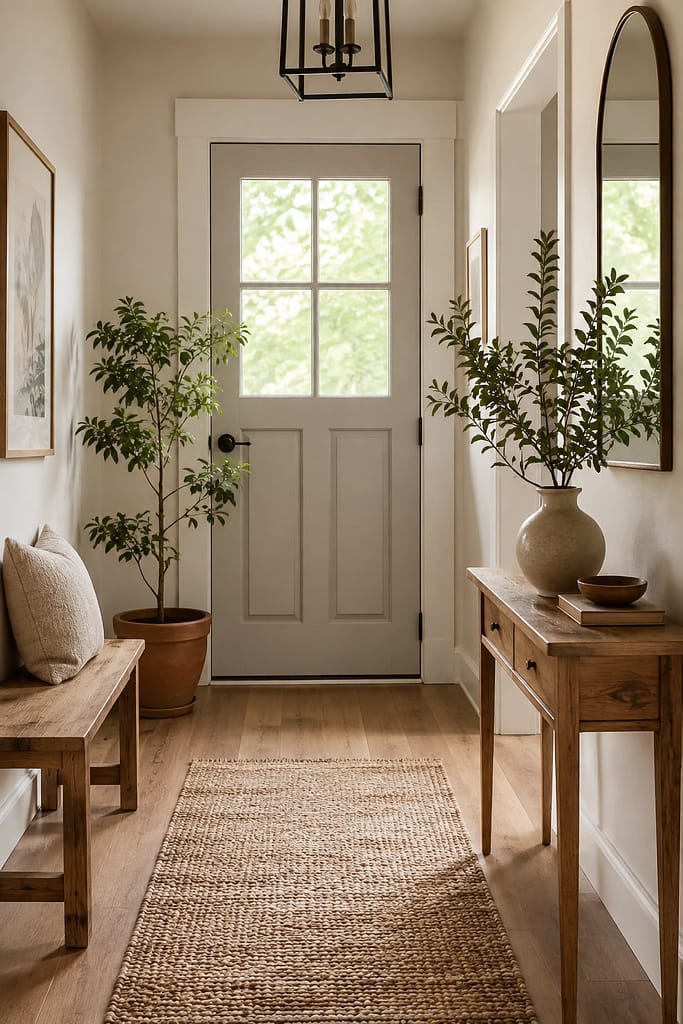
20. Keep the Final Styling Simple
The most successful small entryway designs usually aren’t the ones with the most decor. Once you have somewhere for shoes, coats, keys, and perhaps a place to sit, add only enough decoration to make the entrance feel like your home. A mirror, runner, lamp, and one personal object may be plenty. Leaving a little empty wall and floor space makes the whole foyer feel calmer—and gives everyday life some room to happen without ruining the look.
Frequently Asked Questions
How do you make a small entryway look welcoming?
Start with warmth and function rather than lots of decorations. Soft lighting, a runner, natural wood, a mirror, and one practical piece such as a bench or console can make even a modest entrance feel thoughtfully styled.
What furniture works best in a small foyer?
Slim benches, shallow consoles, small dressers, stools, and narrow shoe cabinets tend to work well. Before buying anything, measure the walking path and front-door swing so the furniture doesn’t make entering the house awkward.
How can I create an entryway if my house doesn’t have a foyer?
Define a small zone beside the front door using a rug, mirror, hooks, floating shelf, or compact bench. Repeating two or three materials or colors within that area helps it read as an intentional entrance even without architectural separation.
What colors make a small entrance feel cozy?
Warm whites, soft greige, mushroom, muted sage, dusty blue, and earthy neutrals are easy starting points. For more personality, use a deeper color on the interior of the front door or lower wall paneling rather than painting every surface dark.
What should every functional entryway have?
At minimum, give yourself a designated place for the things you actually carry through the door. That might mean hooks for coats, a bowl for keys, a basket or cabinet for shoes, and a washable rug for wet or dirty footwear. Everything beyond that can be chosen for style.

A Small Space Can Still Make a Memorable Welcome
A beautiful entrance doesn’t require a huge foyer or a complicated renovation. Start with the everyday problem you actually need the space to solve—shoes on the floor, nowhere for coats, a dark corner, or an empty wall—and build from there.
Then add the part that makes it feel like home: a worn wood piece, a favorite print, a warm lamp, a patterned runner, or a little farmhouse or boho character.
Save or pin these small entryway ideas for later, and borrow the details that fit your own front door, foyer, or mudroom best.