

20 Corner Bookshelf Decor Ideas for a Cozy, Styled Reading Nook
Corner bookshelves have a funny way of becoming either the best part of a room or the place where random books, chargers, and half-forgotten decor go to collect dust.
The difference usually isn’t the shelf itself. It’s how you use the awkward angles, how much breathing room you leave, and whether the books and objects actually relate to the rest of the room. A well-styled bookshelf corner can make a living room feel warmer, turn unused square footage into a reading nook, and give your favorite books a place that feels intentional.
These ideas go beyond simply adding a plant and a candle. Each one offers a practical way to arrange books, balance visual weight, choose colors, handle lighting, or make a corner shelf feel connected to the room around it.
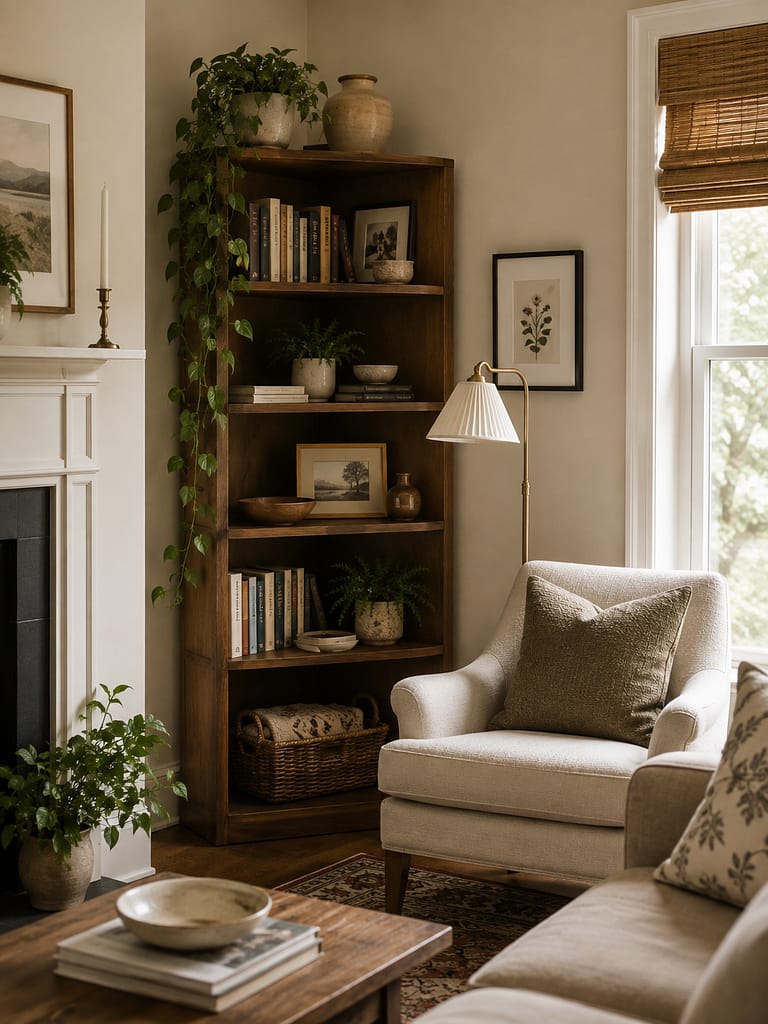
1. Start With Books Before Decorative Objects
Books should do most of the visual work on a bookshelf, especially if the goal is a reading nook rather than a display cabinet. I like filling roughly two-thirds of the usable shelf space with books first, then using the remaining room for objects and open space. Mix upright rows with one or two short horizontal stacks to break up repetition. Put heavier books on lower shelves where they visually and physically make more sense, then keep lighter paperbacks and decor higher up.
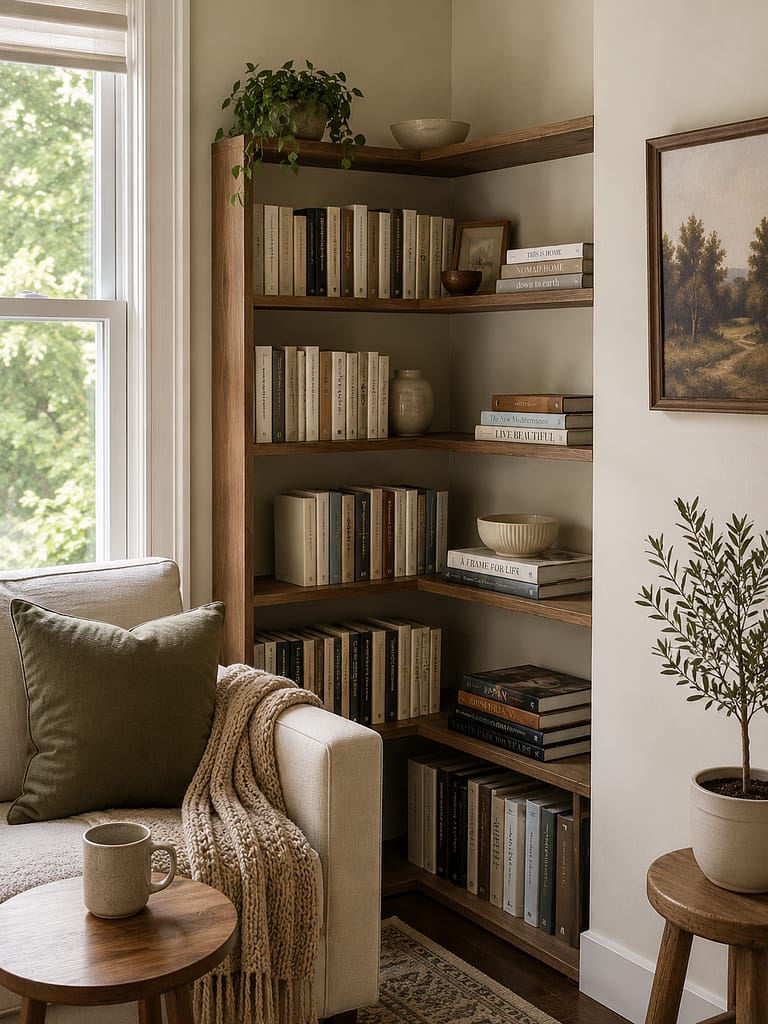
2. Use Horizontal Book Stacks to Fix Awkward Gaps
Corner shelves often have uneven widths or triangular sections that don’t suit long rows of upright books. Horizontal stacks are useful because you can adjust the height until they fit those awkward spaces. Try three to five books with the largest at the bottom, then place a small object on top if there’s enough clearance. Don’t stack books all the way to the shelf above; leaving a few inches of visible background keeps the arrangement from looking cramped.
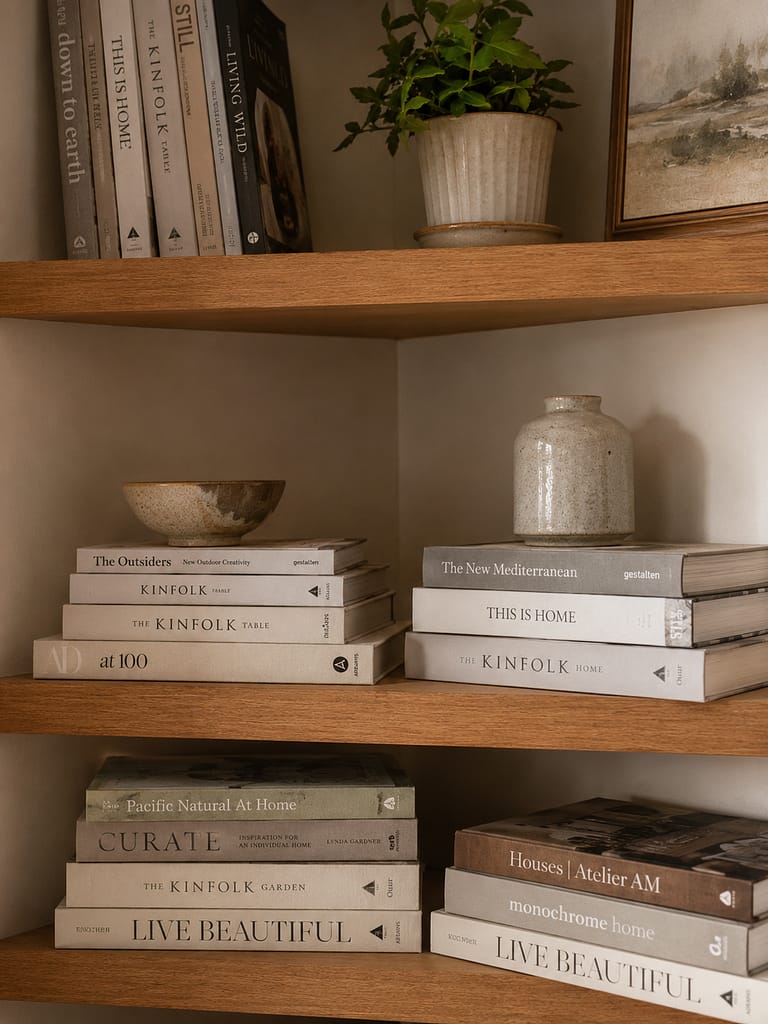
3. Create a White Bookshelf Corner With Warm Contrast
A white bookshelf corner can look fresh, but it needs contrast or it may disappear into pale walls. Use darker book spines, warm wood frames, aged brass, tan ceramics, or a woven basket to give the shelving some depth. I’d avoid filling every shelf with white accessories just because the unit is white. The shelf itself is already the light element. Warm neutrals and medium-to-dark accents help the books stand out while keeping the overall look soft and easy to live with.

Pro tip: If a bookshelf arrangement feels flat, take a phone photo and view it in black and white. If everything blends into the same gray tone, add one darker object or book group to create contrast.
4. Leave One Shelf Mostly Empty
One of the easiest ways to make a crowded bookcase look more intentional is to resist filling every shelf. Choose one shelf—usually near eye level—and keep it sparse with a short book stack, one object, and generous empty space. That visual pause gives your eye somewhere to rest and makes the shelves around it look more organized. This works particularly well on tall corner bookshelves, which can otherwise feel like a solid wall of small objects.
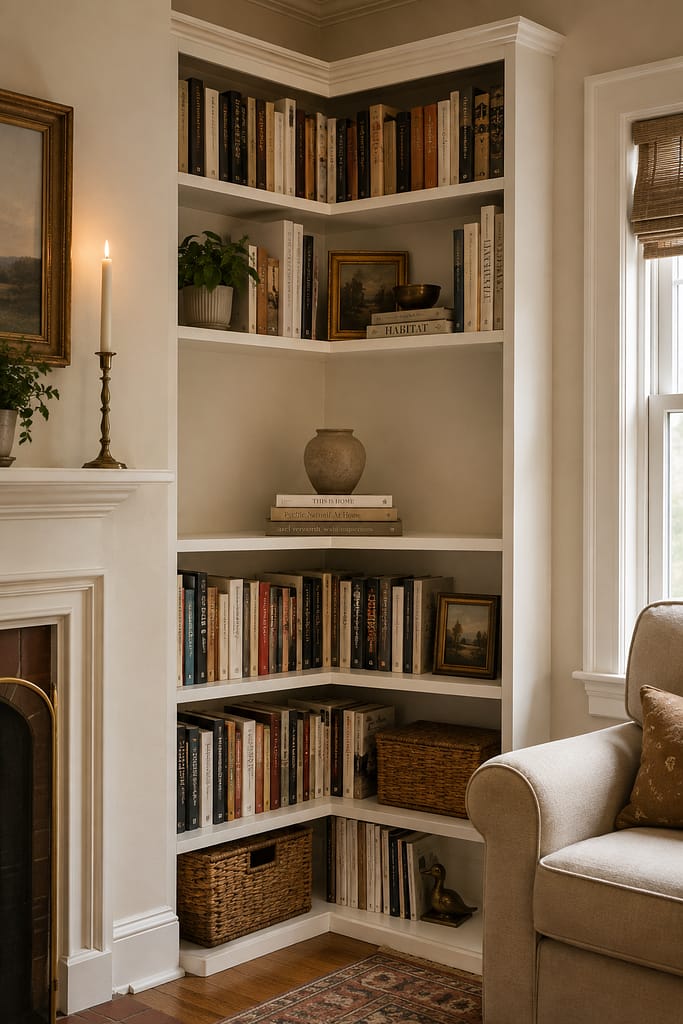
5. Place the Reading Chair Slightly Off the Shelf
It’s tempting to push a reading chair directly against the bookcase, but a little space between the two usually looks better and makes the nook easier to use. Leave enough room to reach the lower shelves without moving the chair every time. Angling the chair slightly toward the room can also make the corner feel welcoming rather than boxed in. If space allows, add a small side table on the opposite side so the shelf, chair, and table form a loose triangle.

6. Match the Shelf Finish to One Existing Material
A corner bookshelf feels more connected to the room when its material repeats something already present. If your space has oak flooring, choose a bookshelf with a similar warm wood tone. If the room has black window frames or hardware, a slim black shelf can make sense. The finishes don’t need to match perfectly, but they should feel related. This is especially helpful if the bookcase is a new addition and you want it to look like part of the room rather than a separate furniture purchase.

7. Style in Uneven Groupings
Groups of three tend to feel more relaxed than perfectly symmetrical pairs. On a wide shelf, try an upright row of books, a small framed piece, and a low ceramic object, leaving space between each grouping. On another shelf, switch the arrangement so the visual weight doesn’t repeat in exactly the same place. You’re looking for balance across the whole bookcase, not matching shelves. This approach gives a corner bookshelf aesthetic that feels collected over time instead of arranged according to a strict formula.

Budget tip: Before buying bookshelf decor, gather small objects from around the house—bowls, framed photos, candleholders, boxes, pottery, and baskets. Style the shelves first, then buy only what’s genuinely missing.
8. Keep the Heaviest Visual Weight at the Bottom
Large baskets, thick art books, storage boxes, and darker objects usually look more natural on lower shelves. Putting everything heavy at eye level can make a tall corner bookcase feel top-heavy and crowded. Use the lower third for substantial pieces, the middle for your most interesting books and objects, and the upper shelves for lighter arrangements. This isn’t a rigid rule, but it’s a reliable starting point if you’re staring at an empty bookcase and don’t know where to begin.

9. Add a Plant Where It Won’t Drip on Books
A cozy indoor bookshelf with plants can look beautiful, but books and wet potting mix aren’t ideal neighbors. Put plants in watertight cachepots or on proper saucers, and avoid placing them directly above valuable books. I prefer one trailing plant on an upper outside corner where the stems can fall beside the shelving rather than across book spines. Check the actual light in that corner before choosing a plant; a dark reading nook may be better suited to a decorative branch arrangement instead.

10. Use Art Behind Short Book Stacks
Small framed artwork can help fill vertical space when a shelf is too tall for the books sitting on it. Lean one modest frame against the back panel, then place a short horizontal book stack in front without completely covering the image. This creates depth while still leaving the shelf functional. Keep frames relatively small so they don’t compete with the bookcase itself. Botanical sketches, simple landscapes, family photos, or abstract prints all work depending on the room’s style.

11. Put a Basket on the Lowest Shelf
The bottom shelf tends to collect less attractive items, so it’s a smart place for concealed storage. A woven basket or simple fabric bin can hold charging cables, reading glasses, magazines, remotes, or children’s books while contributing texture. Measure the shelf opening before buying; a basket that barely fits often looks jammed in. Leave at least a little visible space around it. For a corner reading nook, one or two baskets are usually enough—you don’t need to turn the entire bookcase into cubby storage.

Pro tip: Keep electrical cords off the shelves where possible. If you charge devices near the reading nook, route one cord along the back or baseboard rather than weaving wires between books and decor.
12. Add a Floor Lamp Instead of Shelf Lighting
Integrated bookshelf lights are lovely, but they aren’t necessary for a cozy corner. A floor lamp beside the reading chair often gives you better task lighting and is much easier to adjust. Look for a shade or arm that directs light toward the page without glaring into your eyes. Position the lamp so you can reach the switch while seated, and avoid blocking access to the shelves. A warm light source also adds depth to the bookcase in the evening.

13. Arrange Books by Color in Small Sections
Color-organized books can look striking, but arranging an entire bookcase in a perfect rainbow can make a reading collection harder to use. A more practical approach is grouping just a few shelves by loose color families—warm reds and browns together, blues and greens nearby, neutrals elsewhere—while still keeping subjects or authors reasonably organized. This gives you a more cohesive corner bookshelf decor scheme without sacrificing function. It also helps when the room already has a strong color palette.

14. Turn One Shelf Into a Display Shelf
If you own a few objects you genuinely love, dedicate one shelf to them rather than sprinkling them randomly across the entire bookcase. A small framed photo, one sculptural object, and a short stack of books can create a clear focal point. Position this shelf near eye level where you’ll actually notice it. The rest of the bookcase can stay more book-heavy. This prevents decorative items from competing with one another and makes meaningful objects feel intentional rather than lost.

15. Use Deep Shelves for Two Layers—Carefully
If your corner bookshelf has unusually deep shelves, you can use that depth without hiding an entire second row of books. Lean a small frame or tall book at the back, then place a lower object or short stack toward the front. Keep the front layer short enough that the background remains visible. Avoid pushing frequently read books behind decorative objects. Layering works best for a few styled sections, not every shelf, otherwise the bookcase starts to feel more like a crowded display cabinet.

Budget tip: Old hardcover books with damaged dust jackets can look completely different once the jacket is removed. The cloth or paper cover underneath may fit your shelf palette better without spending anything.
16. Use Shelf Height to Organize by Function
Adjustable shelves are worth using thoughtfully. Give tall art books, binders, or oversized novels one taller section rather than wasting vertical space across every shelf. Keep shelves for standard paperbacks and hardcovers closer together. This creates room for more books while reducing awkward empty gaps. If you have a fixed corner unit, group books by height instead. Even a visually styled bookshelf works better when the spacing responds to what you actually own instead of forcing every shelf into identical dimensions.
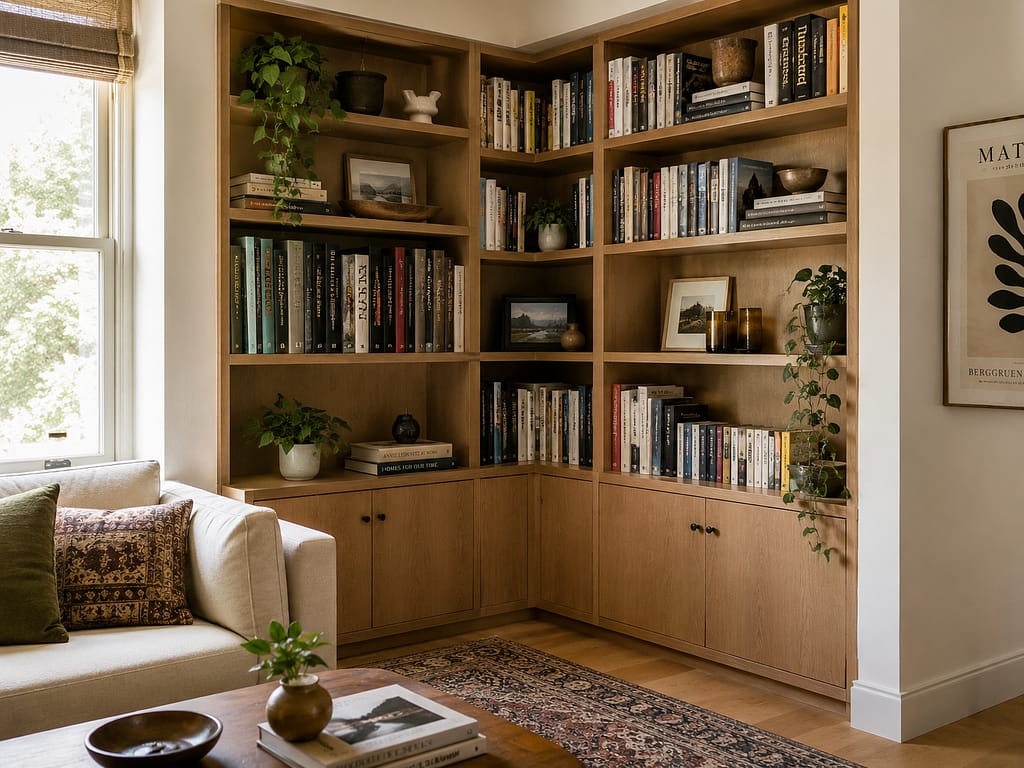
17. Let Some Books Face Forward
One or two face-out books can break up rows of spines and make a shelf feel more like a personal library. Choose covers you enjoy looking at—art, travel, photography, cookbooks, or beautifully illustrated editions work especially well. Lean the book securely against the back of the shelf or use an appropriate stand. Keep this technique limited to a few spots. If every shelf has a face-out book, you lose storage space and the arrangement starts to look more like a shop display than a home.

18. Connect the Bookcase to the Reading Nook With a Rug
A rug can visually tie a freestanding bookcase and reading chair together, especially if the furniture otherwise feels like separate pieces pushed into a corner. The rug doesn’t need to fill the room. A small area rug that catches at least the front legs of the chair and reaches toward the shelving can define the nook. Keep the pattern fairly quiet if the book spines already provide lots of color. For neutral book collections, a subtle patterned rug can add the interest instead.

19. Avoid Filling the Top With Random Decor
The top of a tall corner bookshelf often becomes an accidental storage surface. Instead of lining it with small objects, either leave it empty or use one substantial piece that can be appreciated from below. A large basket, simple vase, or single piece of pottery usually looks calmer than six little items collecting dust. If the bookcase nearly reaches the ceiling, leaving the top completely clear may be the best option. That empty space keeps the whole corner from feeling visually compressed.

Pro tip: Stand at the room’s main doorway before finishing the shelves. A bookcase that looks balanced from two feet away may feel lopsided from across the room, which is how you’ll usually see it.
20. Edit the Shelf After Living With It
I rarely consider a bookshelf finished on the first try. Style it, use the room for a few days, then remove anything that feels fussy or gets in the way of grabbing books. If one shelf looks crowded, take away one object before rearranging everything. If the corner feels empty, add texture rather than more tiny accessories—a basket, framed piece, or plant may solve it. The best bookshelves corner setups feel useful first and decorative second, which is why they tend to age well.

Frequently Asked Questions
How do you decorate a corner bookshelf without making it look cluttered?
Start with the books, then add only a few objects with different heights and shapes. Leaving part of several shelves empty is just as important as styling them; visible background gives the arrangement breathing room and makes individual pieces easier to notice.
What should go on the bottom shelves of a bookshelf?
Lower shelves are good places for heavier books, baskets, large storage boxes, and sturdy objects because they visually ground the bookcase. They’re also practical for items that don’t need to be displayed at eye level, such as extra magazines, charging accessories, or children’s books.
How do you make a bookshelf corner feel cozy?
Add one comfortable chair, useful reading light, and a small surface for a drink or book. Warm wood, textiles, a rug, and one plant can soften the shelves, but the nook still needs enough open floor space to feel comfortable rather than crowded.
Should books be arranged vertically or horizontally?
Use both. Upright books maximize usable storage, while short horizontal stacks help fill awkward gaps and break up long rows of spines. Keep stacks modest so individual books remain easy to remove.
How many decorative objects should go on a bookshelf?
There’s no fixed number, but books should usually remain the dominant element if the shelf is genuinely used for reading. A good starting point is one decorative grouping on some shelves and none on others, then adjust based on how full the book collection already is.

Make the Corner Work for the Way You Read
A good corner bookshelf doesn’t need to look perfectly styled from every angle. It needs to make the room feel better and make your books easier to enjoy.
Start with the practical choices—shelf spacing, book placement, lighting, and a comfortable chair—then layer in the pieces that make the corner feel personal. Leave some space, repeat materials from the rest of the room, and don’t be afraid to remove something if the shelves start feeling busy.
Save or pin these corner bookshelf decor ideas for later, then come back when you’re ready to turn an unused corner into a reading nook you’ll actually use.