
19 Small Backyard Ideas for Narrow & Courtyard Gardens
The strongest small backyard ideas don’t treat a compact yard like a miniature version of a large suburban garden. That usually leads to too much furniture, too many planters, and pathways that become awkward after everything is in place.
A better starting point is to decide what the yard needs to do most often. Start with the one thing you most want the yard to do—dining, lounging, gardening, entertaining, or relaxing—then build the layout around that priority. A narrow townhouse garden used mostly for coffee needs a very different plan from a courtyard where four people regularly eat outside.
Small yards also benefit from visual restraint. One clear path, one seating zone, repeated greenery, and a limited material palette usually feel calmer than several tiny “areas” competing for attention.
The goal isn’t to fit everything outside. It’s to give every square foot a clear reason to be there while leaving enough open space for the yard to feel comfortable rather than squeezed.
19 Small Backyard Ideas for Narrow & Courtyard Gardens
1. Run a Built-In Bench Along One Courtyard Wall
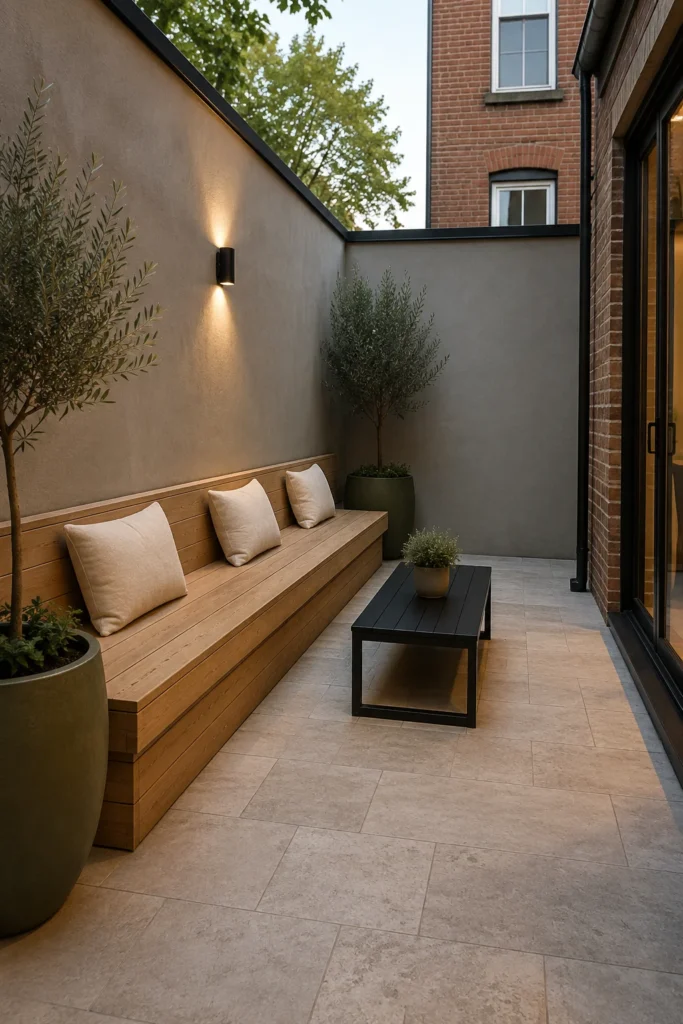
A slim built-in bench can make a six- or seven-foot-wide courtyard feel calmer than trying to squeeze a freestanding loveseat into the center.
Run a straight timber bench along one long wall and keep the opposite side open as the main walking route. On an 8-by-15-foot courtyard, a bench around 20 to 22 inches deep usually gives you useful seating without consuming half the floor. Add two or three weather-resistant cushions and one narrow rectangular coffee table.
Place one large planter at each end of the bench instead of lining the entire wall with small pots. That repetition makes the planting feel deliberate and gives the greenery enough visual weight.
Built-in seating works because it uses a boundary that would otherwise be dead space. It also eliminates extra chair legs and arms from the circulation zone.
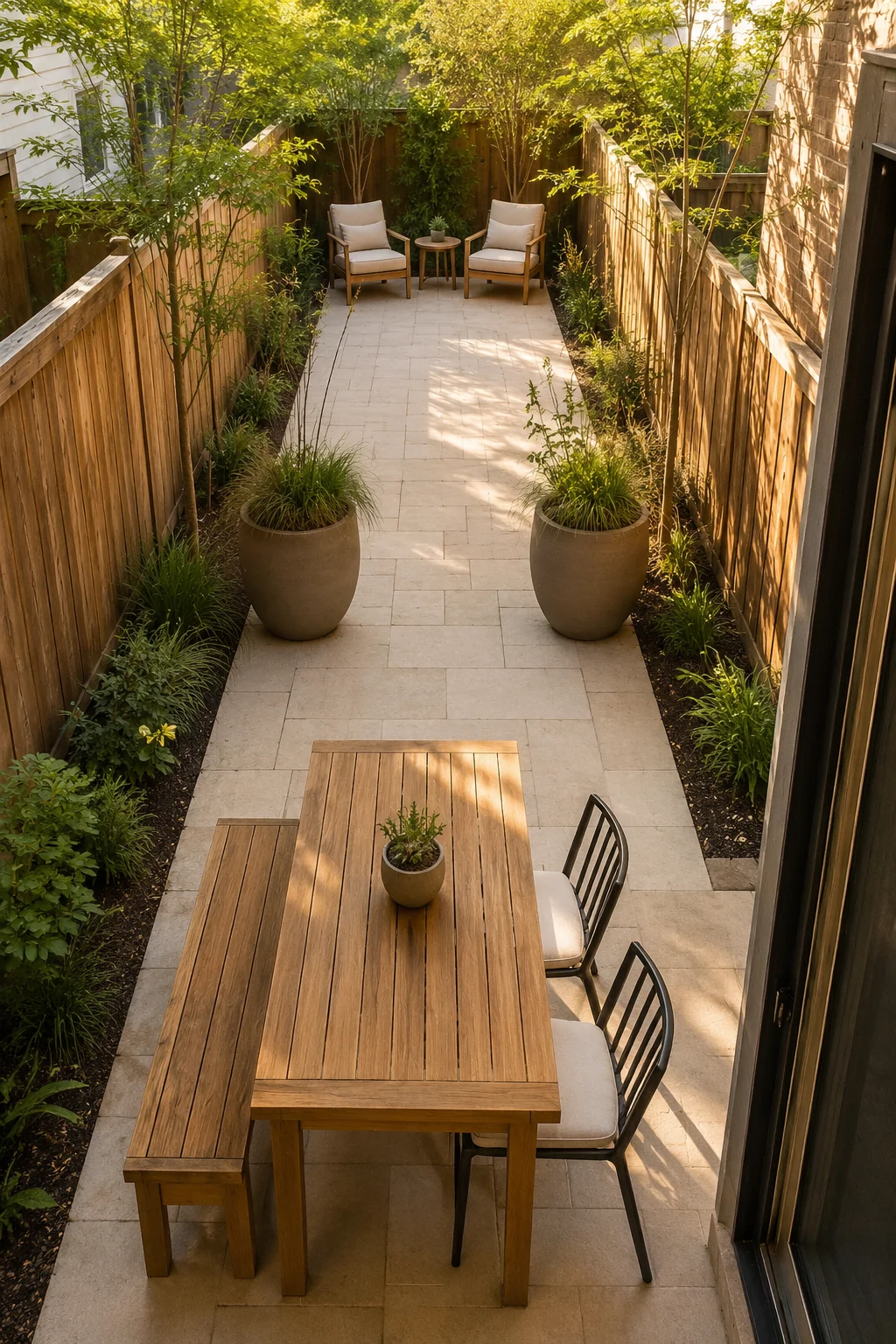
The tradeoff is permanence. Once the bench is fixed in place, you can’t move it for a dinner party or rearrange the yard seasonally, so make sure the main walking path is right before building anything.
2. Use One Long Path to Organize a Narrow Garden
A long narrow yard often starts to feel like a corridor when every plant and piece of furniture simply hugs the fence.
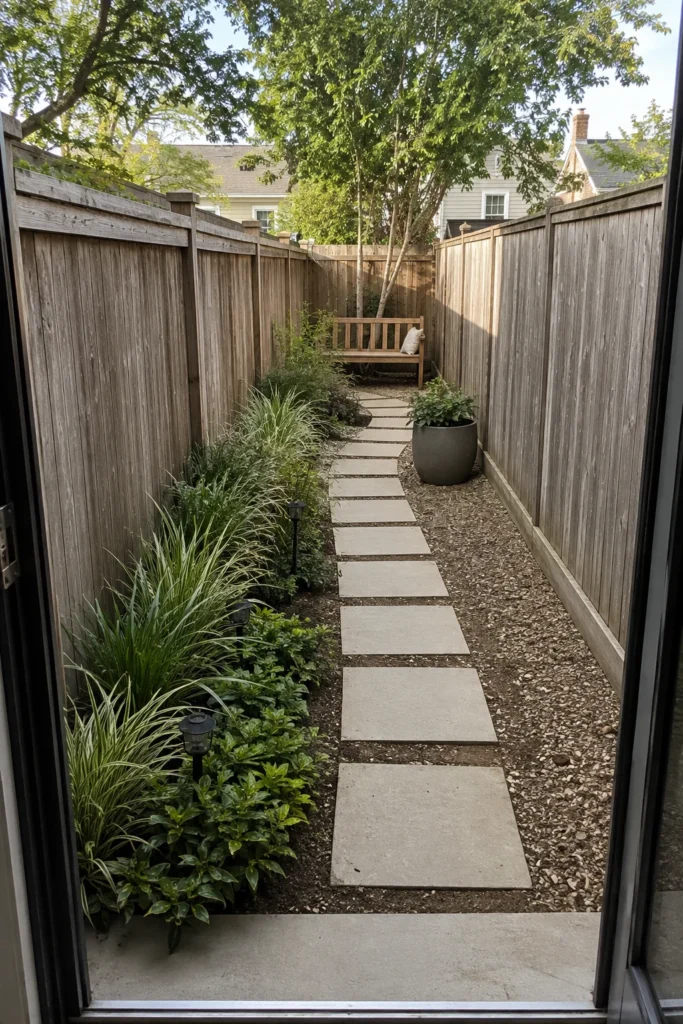
Give the space one clear path instead. Run stepping stones, brick, or narrow pavers slightly off-center from the house toward the far end. Keep one side more planted and use the other for occasional seating or a slim border.
The path gives the eye something intentional to follow, which helps the yard feel designed rather than leftover.
To avoid the “bowling alley” effect, don’t make the path perfectly centered with matching borders on both sides. A slight offset creates more interesting widths and gives you room for a bench, larger planter, or small tree at one point.
Finish the sightline with one strong destination—a bench, sculptural planter, compact tree, or small seating nook.
In a very narrow yard, keep the path visually clean. Too many paving changes can make the strip feel shorter.
And remember that plants expand. A three-foot route can quickly become a two-foot squeeze if borders are planted too densely on both sides.
3. Create a Compact Courtyard Dining Nook
A courtyard dining area works best when the table is scaled for the way the space is actually used.
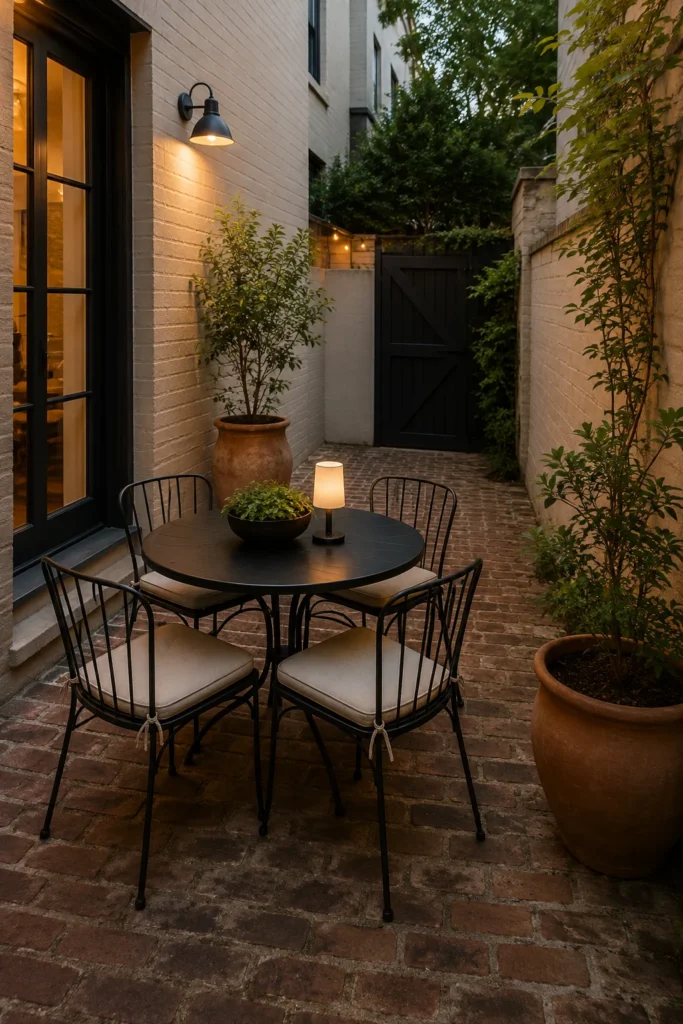
For a small 8-by-12-foot courtyard, use a round table around 36 to 42 inches wide with three or four slim chairs. Position it toward one side rather than dead center so there’s still a clear route between the house and garden or gate.
Round tables are especially helpful in tight spaces because there are no sharp corners sticking into the walkway.
Keep the surrounding material palette simple: brick or stone paving, black metal chairs, cream cushions, and one or two large planters. A soft wall sconce or rechargeable table lamp can provide evening light without filling the courtyard with fixtures.
This layout works because the dining zone has a clear boundary but doesn’t consume every inch.
Don’t buy a larger table simply because it technically fits. Chairs still need space to pull out, and that extra 10 inches of table can make the whole courtyard feel frustrating.
If you only seat two people most nights, let the setup reflect that.
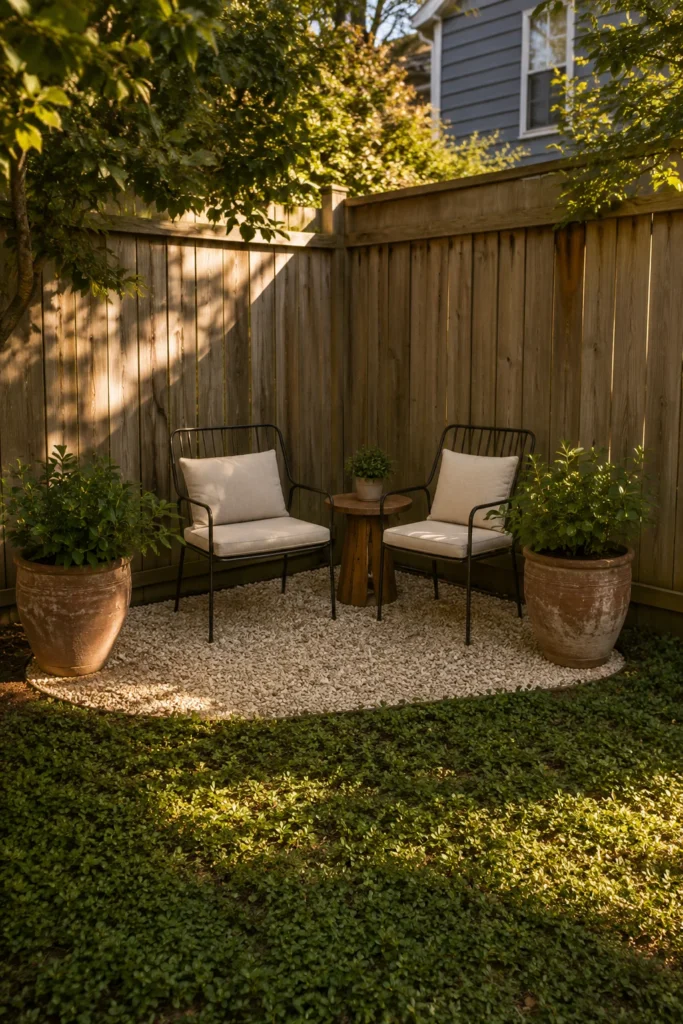
4. Make a Gravel Seating Area in a Tiny Backyard
A full patio installation isn’t always necessary to create a useful seating zone.
In a little backyard garden, define a 7-by-7-foot area with compact gravel and place two slim lounge chairs around one small round side table. Keep the seating zone toward a corner so the rest of the yard remains visually open.
Warm wood or black metal furniture looks especially good against pale gravel because the contrast makes a limited number of pieces feel intentional.
Use one or two larger planters rather than scattering small pots around the perimeter. If you want greenery to soften the area, repeat the same plant shape instead of using five unrelated varieties.
This is one of the more budget-friendly small backyard ideas because the visual improvement comes mostly from zoning and material consistency.
Gravel does need containment, and loose pieces can migrate onto nearby paving or grass. A stable base matters too; chairs that sink or wobble every time someone sits down make the area feel temporary in the wrong way.
5. Keep a Tiny Lawn and Frame It With Narrow Borders
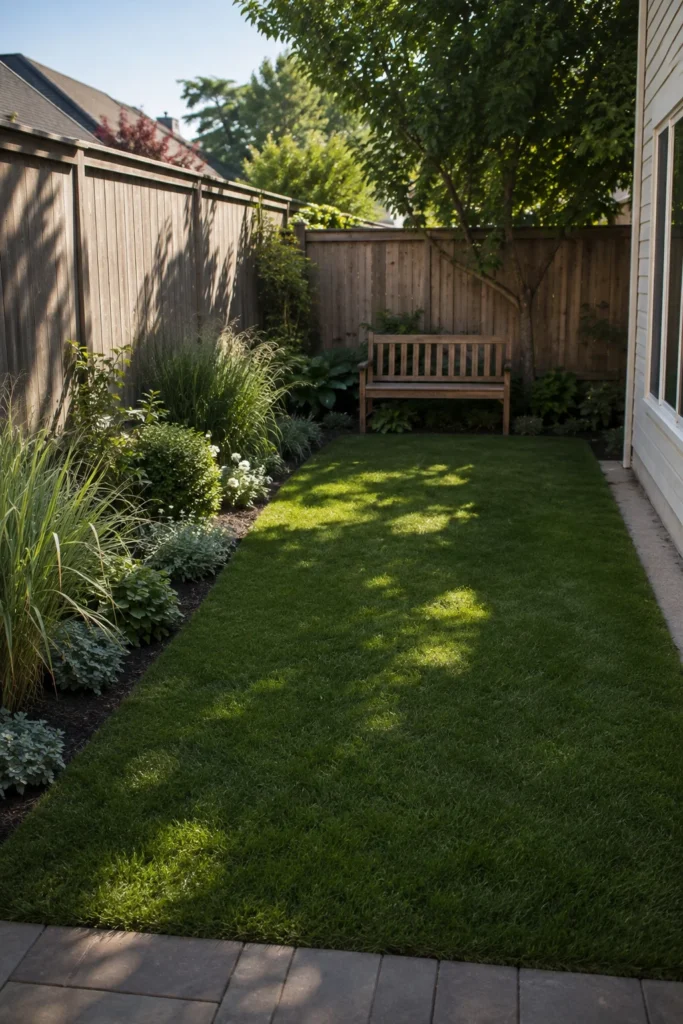
A small lawn can still work if it has a clear shape and the borders don’t slowly swallow it.
Use a simple rectangle or soft-edged strip of grass in the center, then run relatively narrow planted borders along two sides rather than every boundary. The lawn becomes the negative space that keeps the garden from feeling packed.
This is particularly useful for families or pet owners who still want a little open ground but don’t have space for a large lawn.
Keep the planting repetitive. A few ornamental grasses, compact shrubs, and lower groundcover can feel much more lush than ten different species fighting for attention.
At the far end, place one bench or a large planter to stop the eye.
The design works because the open green center provides breathing room while the edges do the decorative work.
Be realistic about maintenance. A tiny lawn still needs care, and narrow strips can be awkward to mow. If the grass area becomes too small to maintain comfortably, groundcover or gravel may be the better choice.
6. Turn One Wall Into a Vertical Garden
When floor space is limited, the boundaries become part of the garden.
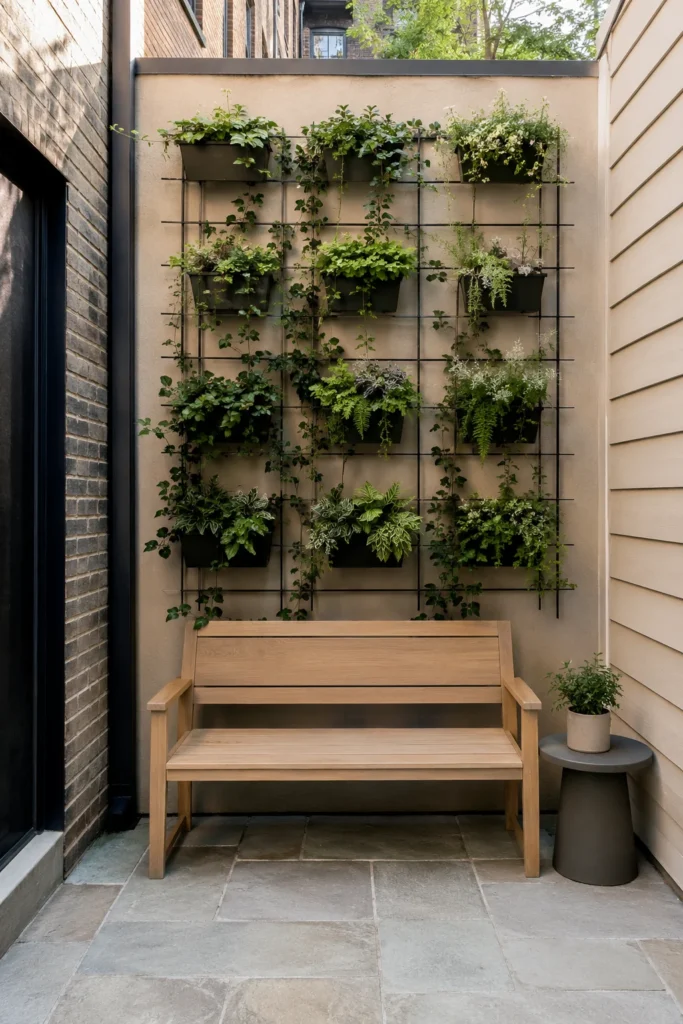
Use one sunny or appropriately lit wall for a vertical planting system, narrow trellis, or a few well-spaced wall planters. Keep the planting concentrated on that single surface instead of trying to cover every fence and wall with greenery.
The vertical garden becomes a focal point while leaving the paving free for seating.
This works particularly well in a small courtyard garden, where blank walls can feel hard and visually close. Greenery adds depth and texture without consuming another two feet of ground.
Pair the wall planting with one bench or a compact café set and keep the opposite wall mostly quiet.
The mistake is treating vertical planting as zero-footprint landscaping. The plants still need water, pruning, and enough room to grow without projecting too far into the walkway.
If the wall system requires regular maintenance, make sure you can reach it comfortably.
And don’t install multiple unrelated planter styles on the same wall. Repetition is what makes a small vertical garden feel intentional rather than cluttered.
7. Tuck a Compact Loveseat Into One Corner
If you mostly use the backyard for coffee, reading, or evening drinks, don’t sacrifice half the space to a dining set you rarely need.
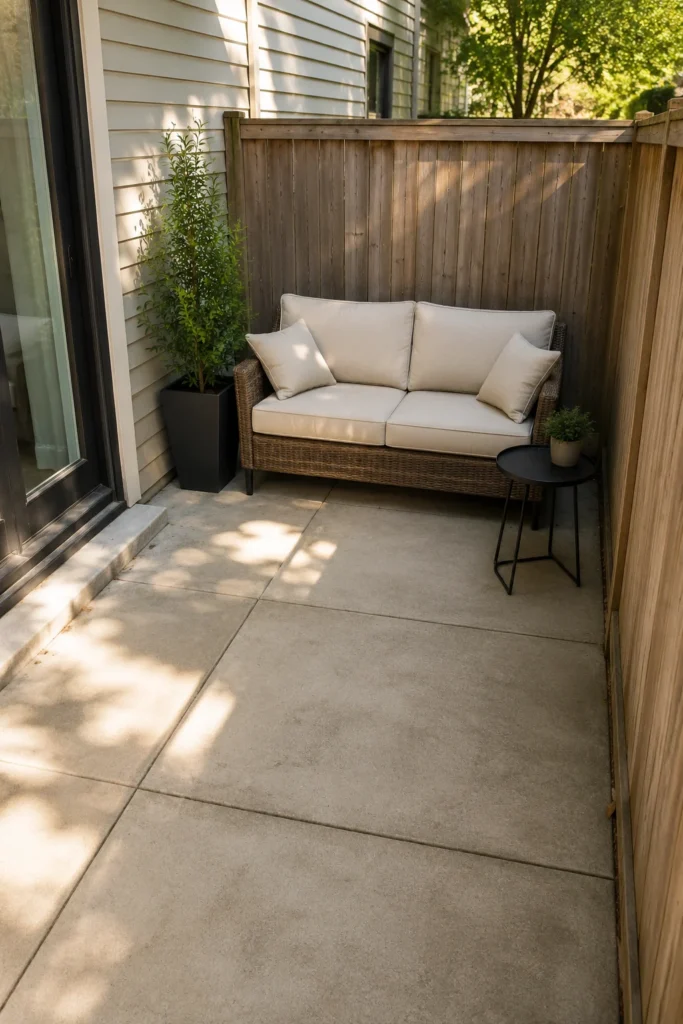
Put a compact loveseat into one corner, ideally against two boundaries or a wall and fence. Choose a piece around 48 to 56 inches wide with slim arms and raised legs.
Add one small side table instead of a full coffee table.
This arrangement keeps the seating footprint concentrated and leaves the center open, which makes the yard feel easier to move through.
A corner loveseat also helps a courtyard feel sheltered without requiring a pergola or full enclosure. One tall planter behind the open end can add privacy without closing in the entire space.
Use lighter cushions if the surrounding fence or paving is dark.
The main reality check is depth. Outdoor loveseats can be deceptively deep. A 34-inch-deep piece may technically fit but leave almost no room to walk past. Measure the projection from the wall, not just the width.
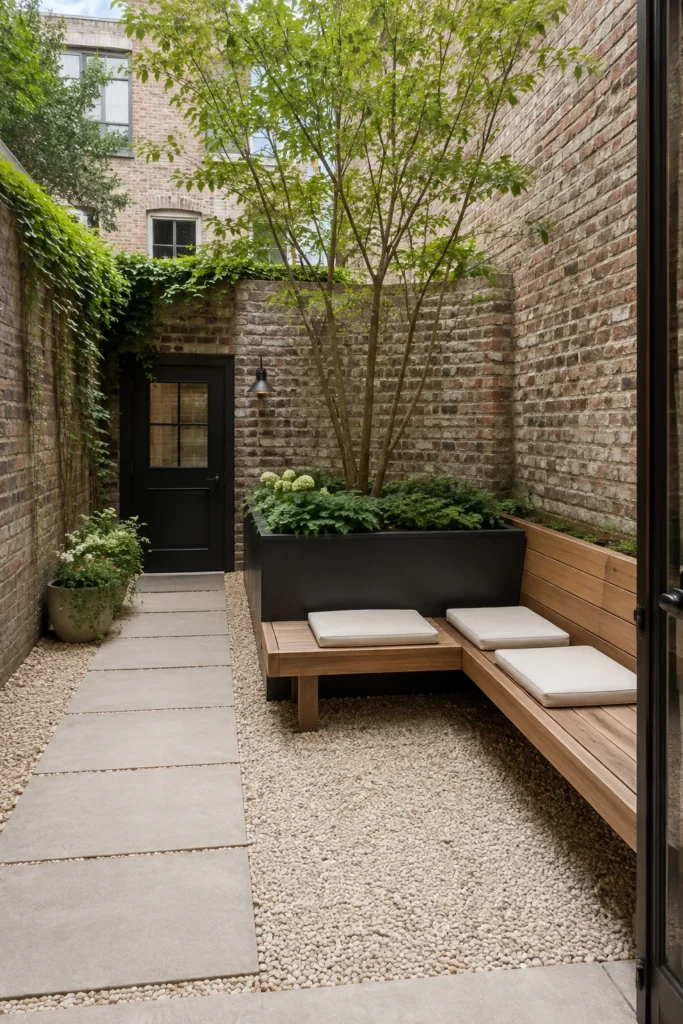
8. Build a Bench Around One Statement Planter
A bench integrated with a planter combines greenery and seating in one zone instead of letting them compete for floor space.
Use one large square or rectangular planter as the visual anchor and build a simple bench along one or two sides. In a courtyard, this can create seating for two or three people without introducing separate chairs.
Choose one substantial plant or small tree rather than cramming several species into the container. The planter already has enough presence.
This is especially effective in beautiful small courtyard gardens because the combined structure feels architectural without needing a full built-in system across the whole yard.
Keep the bench depth comfortable and leave the opposite side open for circulation.
The planter needs to be proportionate. In a tiny courtyard, an enormous container can consume the footprint of an armchair and leave too little room for the bench itself.
Also consider mature plant size. A small tree that looks ideal at installation may eventually overwhelm the seating or block too much light if it isn’t selected with the final scale in mind.
9. Create a “Destination” at the End of a Narrow Yard
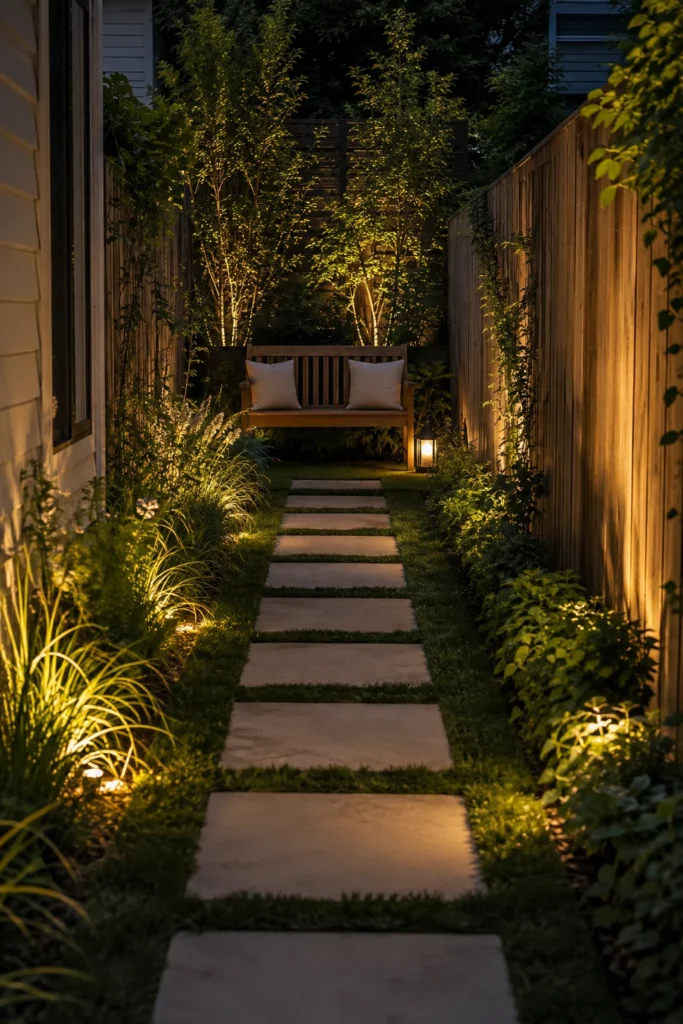
One of the best ways to stop a long narrow garden from feeling endless is to give the far end a clear purpose.
Build a small destination there: a bench, two lounge chairs, or a compact reading nook backed by layered planting.
Keep the route toward it simple. A stepping-stone or gravel path can lead the eye forward while leaving enough planting to soften the fences.
At the far end, use slightly taller greenery behind the seating and shorter plants toward the front. That layering creates depth and visually widens the destination area.
This works because your eye travels toward something intentional rather than simply reaching another fence panel.
Avoid putting a major focal point halfway down and another equally strong one at the end. In a narrow yard, too many competing destinations break the space into little fragments.
Use the longest sightline to your advantage.
A small warm wall light, lantern, or rechargeable lamp at the far end can make the garden feel deeper after dark without lighting the whole path like a runway.
10. Use a Compact Fire Bowl With Limited Seating
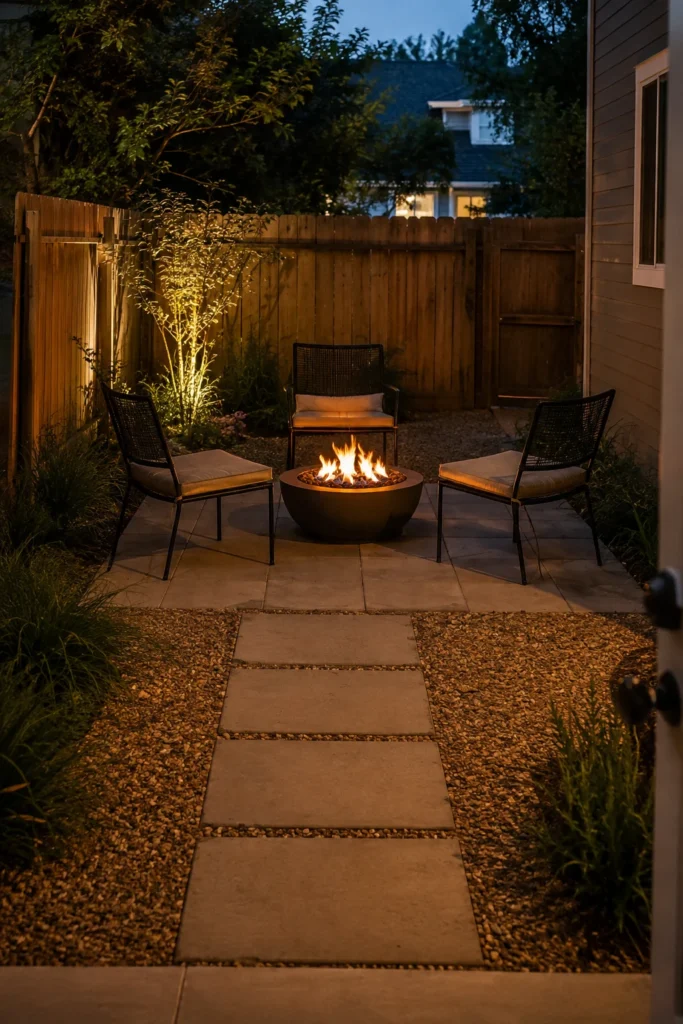
A fire feature can work in a small yard, but only if the required clearances still leave enough room for people to sit and move comfortably.
In a slightly larger narrow backyard, use a compact approved gas fire bowl on a stable noncombustible surface with two or three movable chairs. Keep the arrangement toward one end rather than putting the fire feature in the center of the entire yard.
The limited seat count matters. Four or six chairs around even a small fire bowl can consume an enormous footprint once people are seated.
Use gravel or pavers to define the zone and keep planting farther back.
This can create an intimate outdoor gathering space without turning the whole backyard into a fire-pit area.
Check local regulations, manufacturer clearance requirements, ventilation, and surrounding materials before planning around a flame. Some courtyards, rentals, and apartment yards won’t be suitable at all.
Where fire isn’t appropriate, use a large lantern cluster or warm rechargeable lamp in the same seating layout. You still get the enclosed evening feel without forcing a fire feature into a yard that can’t safely support it.
11. Push a Narrow Dining Table Against the Wall
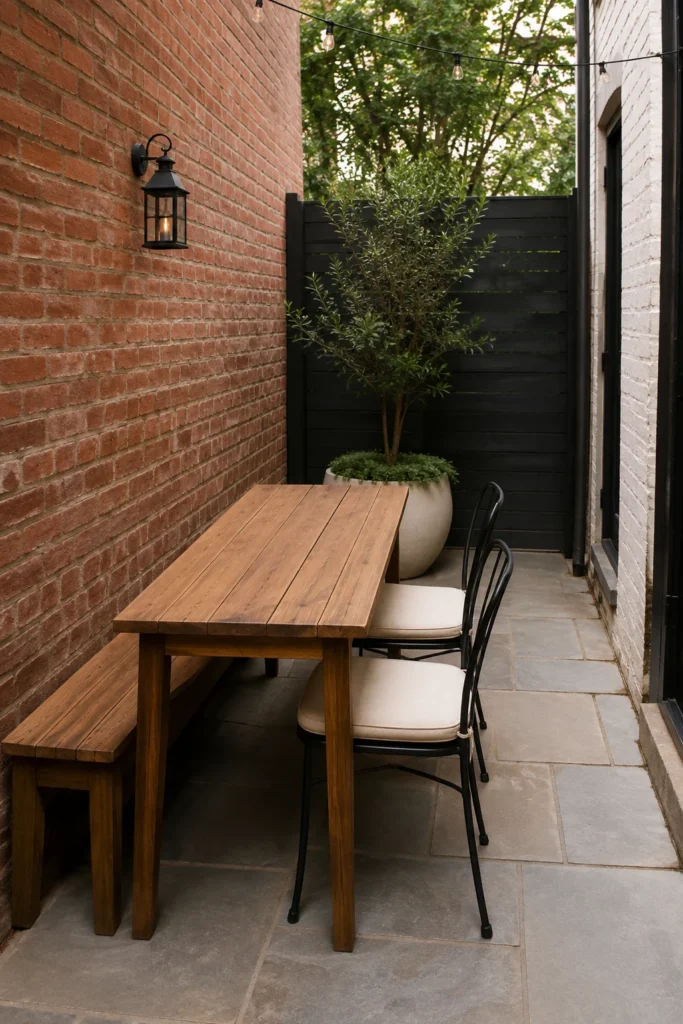
A small dining table doesn’t have to float in the center of a courtyard.
For everyday use, place a narrow rectangular table parallel to one wall and use a bench on the wall side with two movable chairs opposite. This can reduce the amount of clearance required behind one side of the table.
A table around 28 to 32 inches deep can work well in a compact courtyard when full-depth outdoor dining furniture would feel bulky.
The bench also allows two people to sit without multiple chair backs projecting into the walkway.
This layout is especially useful in townhouse yards where the outdoor area needs to handle both dining and circulation.
Use one material palette—perhaps warm wood table and bench, black metal chairs, and cream cushions—to keep the setup visually quiet.
Remember that “narrow table” doesn’t mean no chair clearance. The two movable chairs still need room to pull out. Tape the footprint on the paving before buying furniture.
If six people only eat outside twice a year, don’t design the entire yard around permanent seating for six.
12. Layer Planting at the Far End to Make the Yard Feel Deeper
A narrow yard can look longer and more garden-like when the strongest planting is concentrated at the far end.
Create a layered bed there with one or two compact shrubs or taller grasses at the back, a middle layer of medium-height plants, and lower groundcover near the path.
Repeat a limited number of plants rather than using one of everything.
The layered greenery creates visual depth and gives the eye somewhere to settle. It also helps soften the end fence without covering every boundary in tall plants.
This is one of the easiest small plant garden ideas to adapt because the planting is concentrated rather than scattered.
Keep the middle of the yard more open so the end bed actually feels like a destination.
Too many tall privacy plants around all three sides can make a narrow yard feel like a tunnel. Put the height where it helps most and leave some fence visible elsewhere.
Maintenance access matters too. Dense planting that looks lush on day one can become difficult to prune if you leave no reachable edge.
13. Add a Simple Shade Frame Without Filling It In
A compact courtyard sometimes needs shade more than it needs another piece of furniture.
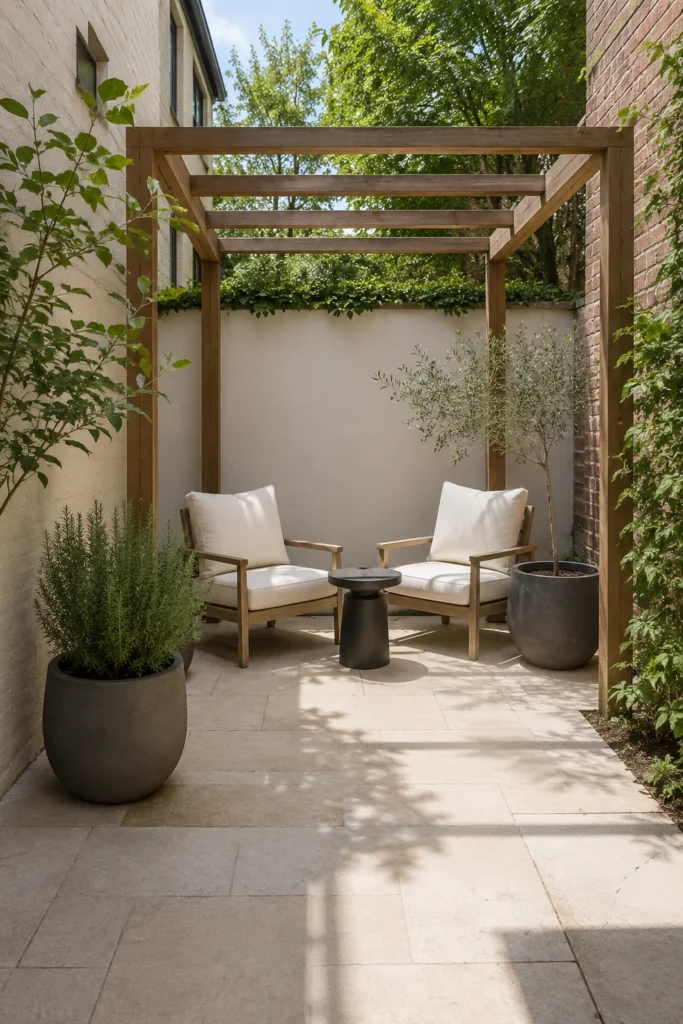
Use a simple open-frame shade structure over one seating or dining zone, keeping the posts slim and the overall footprint limited. An open timber or dark metal frame can give the space architectural definition without creating a visually heavy roof.
If shade is added with fabric or another covering, keep it limited to the area where people actually sit.
The structure works because it defines a zone vertically instead of dividing the floor with additional paving or furniture.
In a small yard, though, any overhead structure can make the space feel enclosed if it is too low or oversized. Keep the frame proportionate to the seating area rather than spanning the entire yard automatically.
Also consider whether a permanent structure requires approval or professional help.
For renters, a large patio umbrella may achieve the same functional result without construction.
The main idea is to create one shaded destination, not to turn a tiny backyard into a fully roofed room.
14. Replace Many Small Pots With Two or Three Large Planters
Five tiny pots lined along a fence can make a small yard look much busier than the amount of greenery justifies.
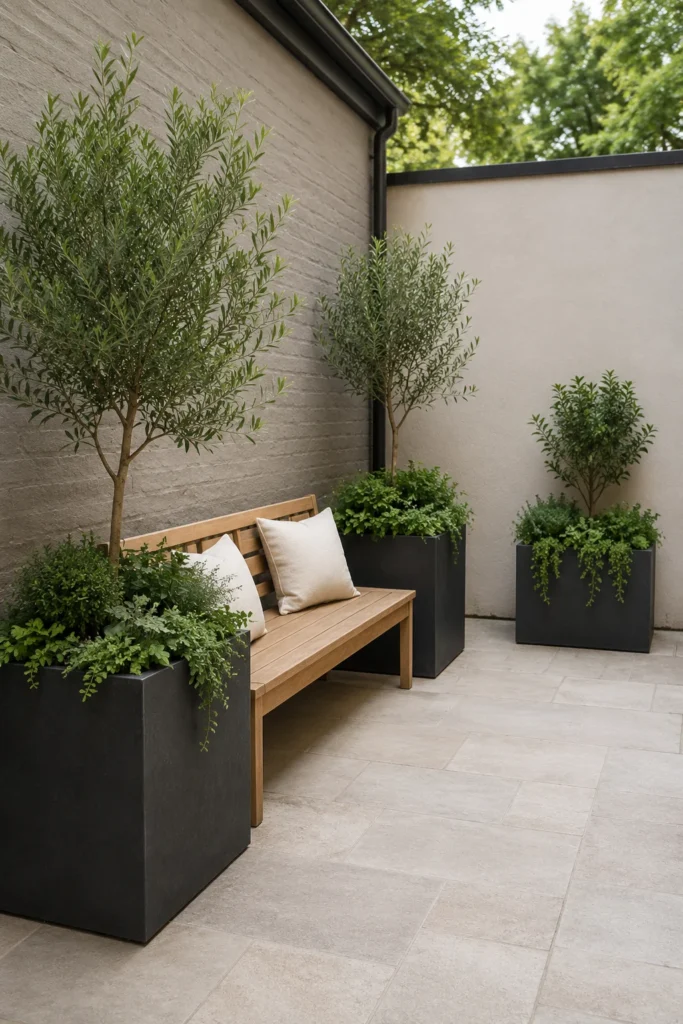
Instead, use two or three larger planters with enough visual presence to read as part of the layout. Place them where they define corners, soften a wall, or frame a seating area.
Repeat the planter shape or finish. For example, three charcoal containers with varied but related greenery will usually feel calmer than six unrelated terracotta, ceramic, plastic, and woven pots.
This is especially helpful in a courtyard where every floor object is noticeable.
Larger planters also allow plants to achieve enough scale to visually soften tall boundaries.
The downside is weight. Once filled, substantial containers become difficult to move, so decide on placement first.
They also need appropriate drainage and regular care. Large planters simplify the visual design, but they don’t eliminate maintenance.
If privacy is the goal, avoid placing tall planters on every side. One or two strategic screens usually feel better than completely boxing in the space.
15. Anchor a Courtyard With One Small Statement Tree
A single well-scaled tree can do more for a courtyard than a collection of small decorative plants.
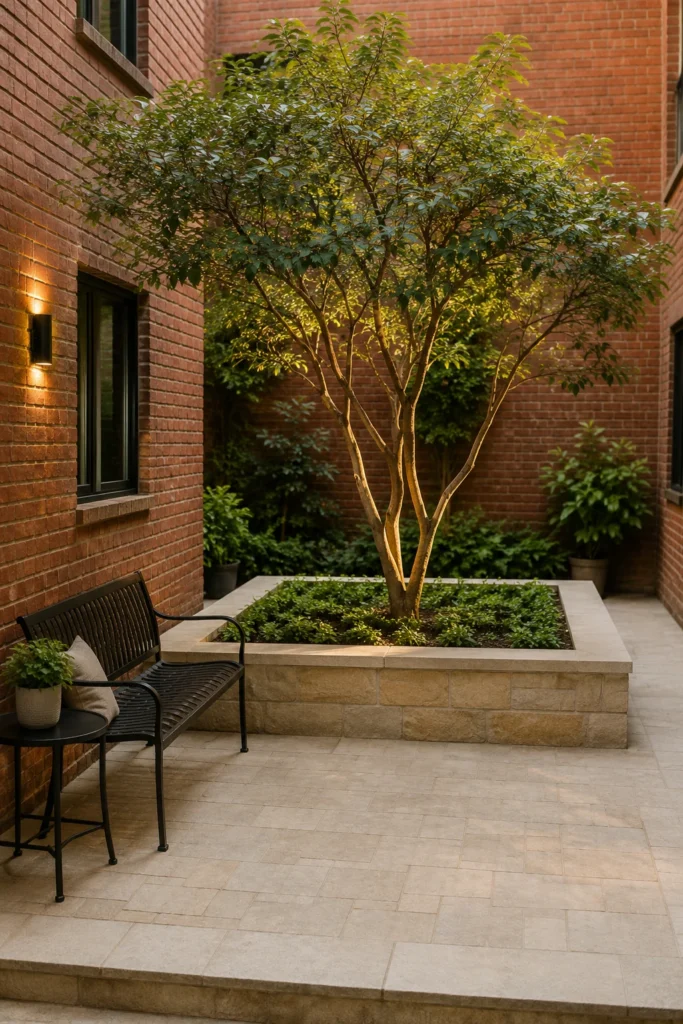
Place one compact ornamental or small-canopy tree in a substantial planter or appropriate planted bed, then arrange the seating so the tree feels connected to the space rather than stuck in a corner.
Use simple paving around it and keep the surrounding planting limited.
The tree adds vertical scale, seasonal interest, and a focal point that helps the courtyard feel more like a garden than a paved room.
This works especially well in beautiful small courtyard gardens because the walls make the tree silhouette noticeable.
The important part is mature size. A tree that looks small in a nursery pot can become completely inappropriate for a tiny enclosed yard later.
Consider root space, sun exposure, pruning needs, and the final canopy before choosing anything.
You also don’t need three more tall plants beside it. Let the tree be the main vertical element, then use lower greenery to support it.
16. Create a Clean, Low-Maintenance Yard With One Material Palette
A small yard can feel much larger when the number of materials is reduced.
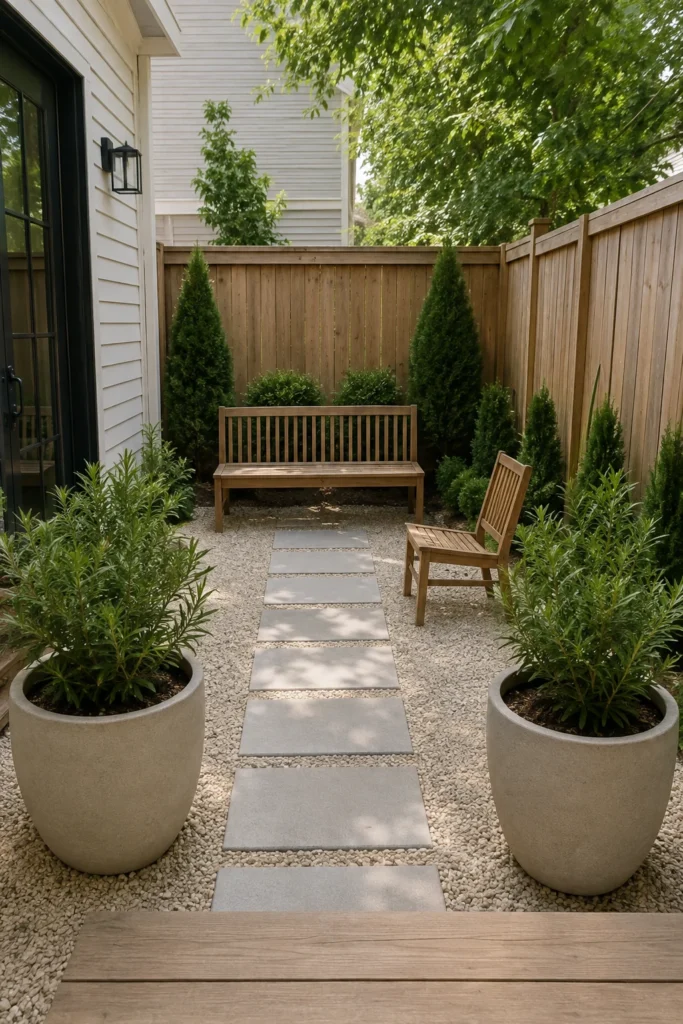
Use one main paving surface, one furniture finish, and a restrained plant palette. For example: pale gravel, warm wood, and repeated evergreen-looking greenery. Or brick paving, black metal furniture, and cream cushions.
This is the logic behind good clean garden ideas. Clean doesn’t mean sterile; it means the eye isn’t constantly jumping between unrelated finishes.
In a 10-by-15-foot yard, one bench, one chair, and two large planters may be enough.
Keep edges simple and avoid introducing a separate rug, deck section, stone strip, artificial turf patch, and five planter finishes all at once.
Low-maintenance design also depends on plant choice, irrigation, and local conditions. Gravel still needs occasional tidying. Planters still need water. Paving still gets dirty.
The advantage is that fewer materials and repeated plants are easier to manage visually and practically.
This approach works especially well in narrow yards where clutter is noticeable from one end to the other.
17. Use String Lights to Define One Cozy Seating Zone
Lighting can make a narrow yard feel deeper at night, but only if it supports the layout rather than covering the whole space.
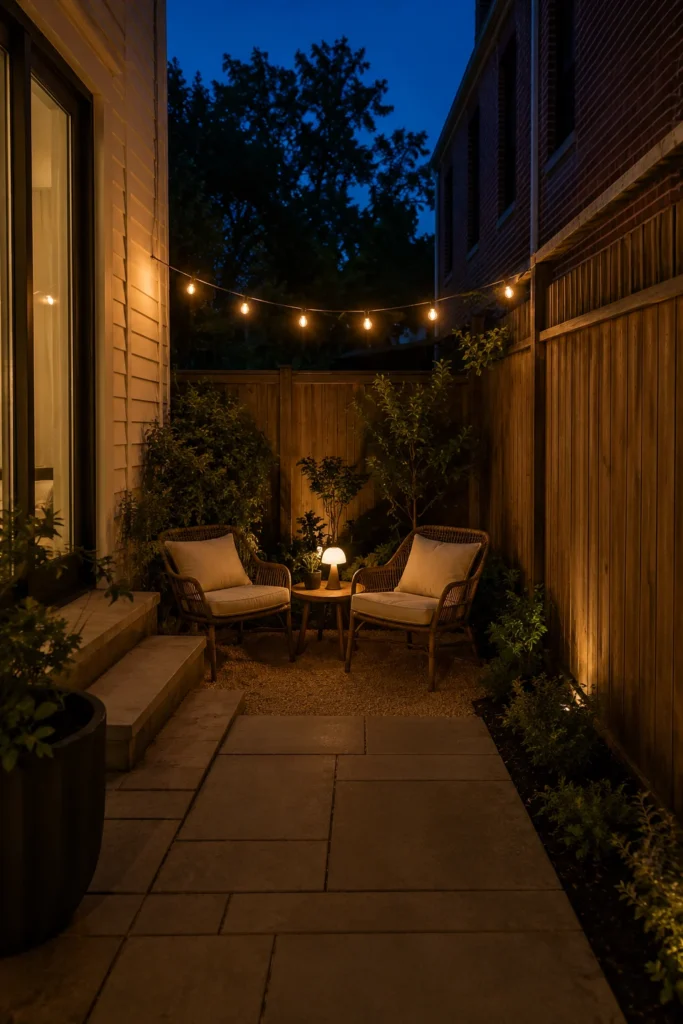
Place one small seating zone near the back or middle of the yard and run a single warm-white string-light strand above or beside it. Two slim lounge chairs and one side table are enough.
Keep the rest of the yard more dimly lit so the seating area reads as a destination.
A rechargeable table lamp or one lantern can add a lower layer of light without requiring multiple overhead strands.
This is a useful way to create a cozy backyard atmosphere because the light gives the seating zone a clear visual boundary.
Don’t hang string lights so low that the yard feels compressed. And avoid crisscrossing four strands over an eight-foot-wide space.
Secure mounting matters, and outdoor-rated lighting should be used appropriately.
The best small-space lighting often comes from fewer sources placed where people actually sit, rather than illuminating every fence panel.
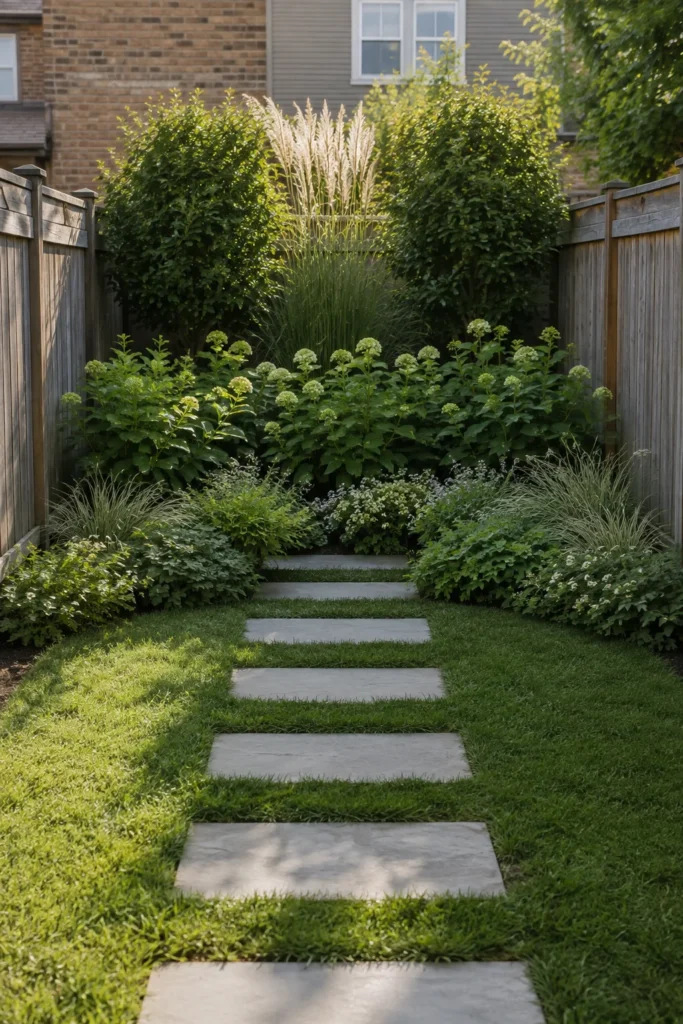
18. Weave a Stepping-Stone Path Through Groundcover
A hard path isn’t the only way to create circulation.
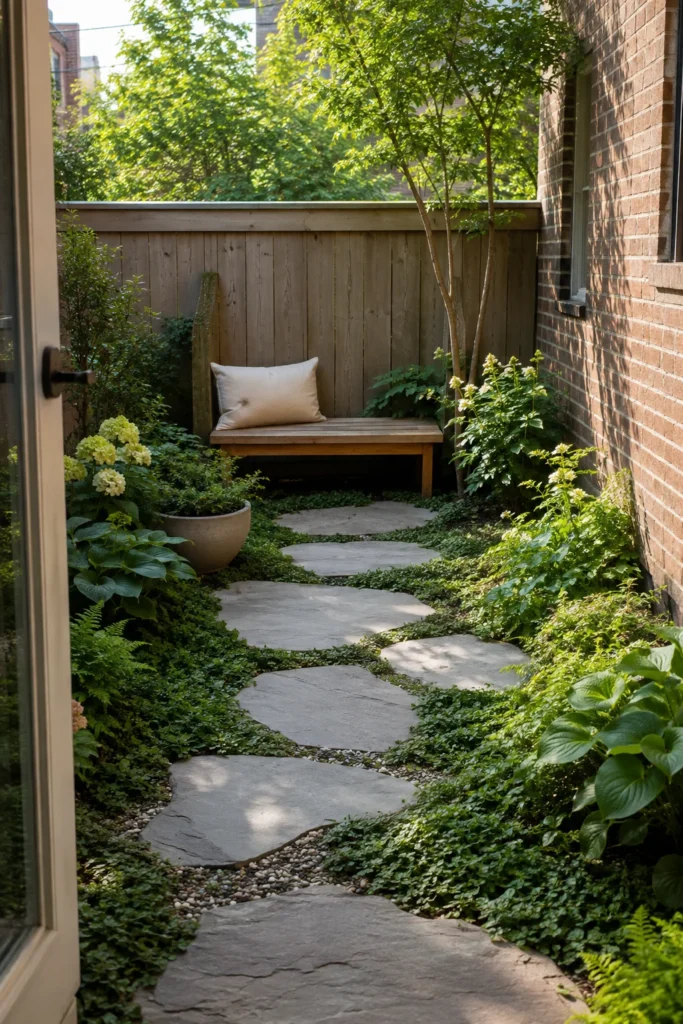
In a compact garden where greenery is the priority, run large flat stepping stones through low groundcover or gravel. Keep the route simple and continuous from the house to the seating area.
The broken paving pattern softens the yard while still giving people an obvious place to walk.
This works particularly well in courtyard-style or urban backyards where you want more green without turning every square foot into a planted bed.
Use fewer, larger stepping stones rather than many tiny pieces. The larger scale looks calmer and is easier to read visually.
Keep taller plants to the edges so they don’t flop across the route.
A narrow path through planting can become frustrating if it disappears under growth after one season, so mature plant spread matters.
And while the look is informal, the stones still need to feel stable and comfortable underfoot. A pretty path that rocks or forces awkward strides doesn’t improve the yard.
19. Divide a Long Narrow Yard Into Two Larger Zones
A narrow yard can support more than one function, but dividing it into four or five tiny areas usually makes the whole garden feel chopped up.
Instead, create two meaningful zones.
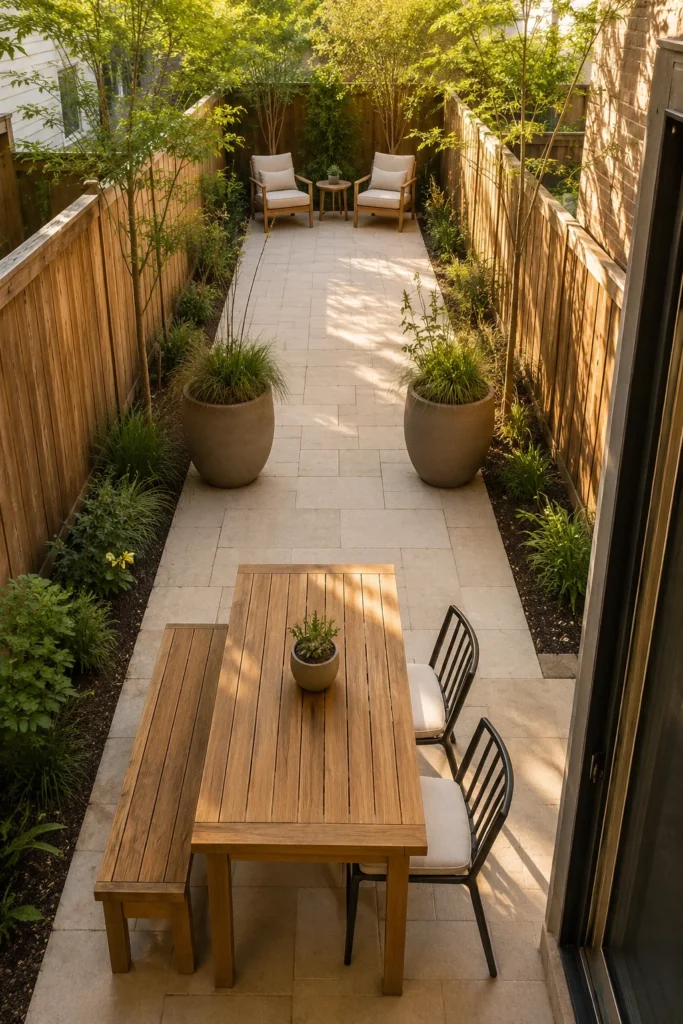
Near the house, use a small dining area with a narrow table and bench. At the far end, create a softer lounge zone with two chairs or one built-in bench. Connect them with one clear path and repeat the same paving or material palette through both areas.
This gives you functional variety without making the garden feel like a sequence of tiny rooms.
Use planting to soften the transition rather than building a divider wall between the zones. One pair of larger planters or a slight paving change is enough.
The repeated materials help the eye understand that both areas belong to the same yard.
This is one of the most practical long narrow garden ideas because it addresses everyday use without sacrificing circulation.
Keep the middle relatively open. If you fill the connecting section with another bench, planter cluster, storage box, and grill, the path stops working.
A Simple Framework for Planning a Small Backyard
The strongest small backyard ideas don’t depend on fitting dining, lounging, a fire pit, gardening, storage, and entertaining into the same tiny footprint.
A better framework is one clear purpose + one walking route + right-size seating + repeated greenery + a limited material palette.
Start with the activity you use most. If you mostly read outside, build around one comfortable chair or loveseat. If meals matter more, let the dining table be the main feature. If gardening is the priority, keep the planting generous and the furniture minimal.
Measure before buying anything. Check door swings, path width, furniture depth, mature plant size, sun exposure, privacy, and the number of people who actually use the yard regularly.
Then edit.
One strong seating area often feels better than three cramped zones. A few repeated plants look calmer than a collection of tiny pots. One path is usually enough. And a single focal point at the end of a narrow yard can create far more depth than adding decorations everywhere.
A small garden doesn’t need to imitate a large one. It just needs to feel comfortable, green, intentional, and genuinely useful for everyday life.
