

25 Toddler Boy Bedroom Ideas for a Fun, Simple Aesthetic
Pinterest searches for toddler bedroom boy ideas can quickly lead to rooms covered in one theme from the bedding to the wallpaper to the toy storage. That can look fun in a single photo, but a toddler’s bedroom has to handle much more than a theme. It needs to work for sleep, floor play, getting dressed, reading, toy cleanup, and interests that may change surprisingly fast.
A more flexible approach is to keep the big pieces simple, then bring personality through color, art, bedding, and a few easy-to-change themed details. A basic wood bed can work with dinosaurs now and an ocean room later. A sage wall can feel playful with colorful artwork without requiring custom furniture. Low book storage and a couple of clear toy zones often make a bigger difference than filling every wall.
The best toddler rooms also leave something intentionally empty. Open floor space isn’t unfinished decorating; it’s where the room gets used.
Here are 25 practical ideas that balance fun with everyday family life.
1. Pair Sage Green With Natural Wood
A muted sage wall behind a simple natural-oak toddler bed creates color without making the room feel visually loud. Keep the remaining walls warm white, then add cream bedding with a thin rust stripe, an oatmeal rug, and two framed animal prints above a low dresser rather than directly over the bed.
This palette works well because the green provides personality while the warm wood keeps the room from looking too cool. It’s especially useful for simple toddler room ideas where you want the room to feel finished with relatively few pieces.
Place the bed along the longest uninterrupted wall and keep one larger woven toy basket near the foot rather than lining the room with bins. A low book ledge on the opposite wall gives a toddler a small amount of accessible storage while leaving the center floor open.
If the room is small, resist adding a play tent simply to fill the corner. A clear patch of rug is usually more useful for blocks, cars, and puzzles.

2. Use Dusty Blue Without Making the Whole Room Blue
Dusty blue can feel calm and playful when it’s treated as one layer rather than the room’s entire identity. Paint the walls a soft blue-gray, use an oak toddler bed with warm-white bedding, and bring in navy only through a small rug border and one or two art prints.
Striped cotton curtains can add another gentle pattern without turning the room into a coordinated blue set. Keep the dresser warm white or natural wood instead of matching the walls.
This type of toddler boy room aesthetic works because the room has enough contrast to feel interesting but not so much that every toy becomes another visual interruption.
In a small bedroom, tuck the bed into a corner so two sides are visually contained and leave the opposite half of the rug free for play. Use under-bed drawers or shallow storage boxes for extra bedding and rotating toys.
Very cool blue rooms can feel dim in weak natural light, so balance the color with warm wood, cream textiles, and a warm bedside or ceiling light.

3. Keep a Dinosaur Theme to Three Places
A dinosaur room doesn’t need green walls, dinosaur sheets, dinosaur curtains, dinosaur storage bins, and a giant mural. A simpler toddler boy theme room can use the theme in just three places: framed dinosaur art, one patterned duvet or quilt, and a small dinosaur toy displayed on a low shelf.
Keep the rest of the room flexible. Warm-white walls, a natural-wood toddler bed, a muted clay rug, and a green dresser give the room color without locking every surface into the theme.
This works especially well when a child’s favorite subject changes often. The art and bedding can be swapped later without repainting the room or replacing furniture.
Use one low shelf for a few current favorites and keep bulk toy storage in lidded baskets or the closet. Open shelves filled with every dinosaur figure may look organized for five minutes and busy the rest of the day.
Avoid heavy decorative objects mounted directly above the bed. Theme details are more useful on adjacent walls where they’re still visible but don’t complicate the sleeping zone.

4. Try a Subtle Construction Theme
A construction-themed room can feel fun without turning into a bright yellow-and-black job site. Start with warm beige or soft gray walls, add a medium-wood toddler bed, and use muted mustard only through truck artwork, a pillow, and one storage basket.
A charcoal-and-cream striped rug gives the room structure without repeating vehicle graphics. Hang two or three framed construction prints on one wall and leave the other walls relatively quiet.
For storage, use a low cubby with three larger bins instead of six or eight small ones. Toddlers are more likely to understand simple categories such as cars, blocks, and stuffed animals than a complex labeling system.
This is one of those little boy bedroom themes that works best when the theme supports play rather than covering every decorative surface.
If the child already owns large trucks, let those toys provide some of the visual theme. Buying multiple additional decorations can make a small room feel crowded without adding much personality.

5. Build a Transportation Room Around Art, Not Furniture
Cars, trains, buses, and airplanes can share one room without needing a race-car bed. Keep the bed simple and let the transportation theme live mostly in artwork and toys.
Use a muted blue-green wall, a white or oak toddler bed, cream bedding, and a rust-colored rug. Above a low dresser, hang a small gallery of different vehicle illustrations. A wooden train set on the floor and a basket of toy cars make the room feel unmistakably transportation-inspired without permanent themed furniture.
This approach is useful for toddler boy bedroom inspiration because it leaves room for a child’s interests to expand. Maybe cars are the favorite now and airplanes take over later; the furniture still works.
Place the bed away from the main closet path and leave enough rug space for pushing vehicles around. A room designed around toy play needs more clear floor than decorative furniture.
Avoid displaying every vehicle on open shelves. Keep a handful visible and rotate the rest through one larger bin.

6. Create a Woodland Room With Earthy Colors
For a softer themed room, combine forest green, warm white, clay, and natural wood. Paint one wall a muted forest green and keep the rest light. Use an oak bed, cream bedding, and a rust or clay-colored blanket folded at the foot.
Woodland details can be limited to two framed animal prints, one small fox or bear stuffed toy, and perhaps a leafy pattern on the sheets. A woven rug and lidded basket reinforce the natural texture without making the room look like a literal forest.
This works because the color palette can outlast the theme. If the animal obsession fades, the green wall and wood furniture still make sense.
Use a low dresser for clothing and one basket for stuffed animals. The more categories you create, the harder it becomes for a toddler to participate in cleanup.
A dark green wall can absorb light, so use it on only one wall in a small or north-facing room unless the space has strong natural or artificial lighting.

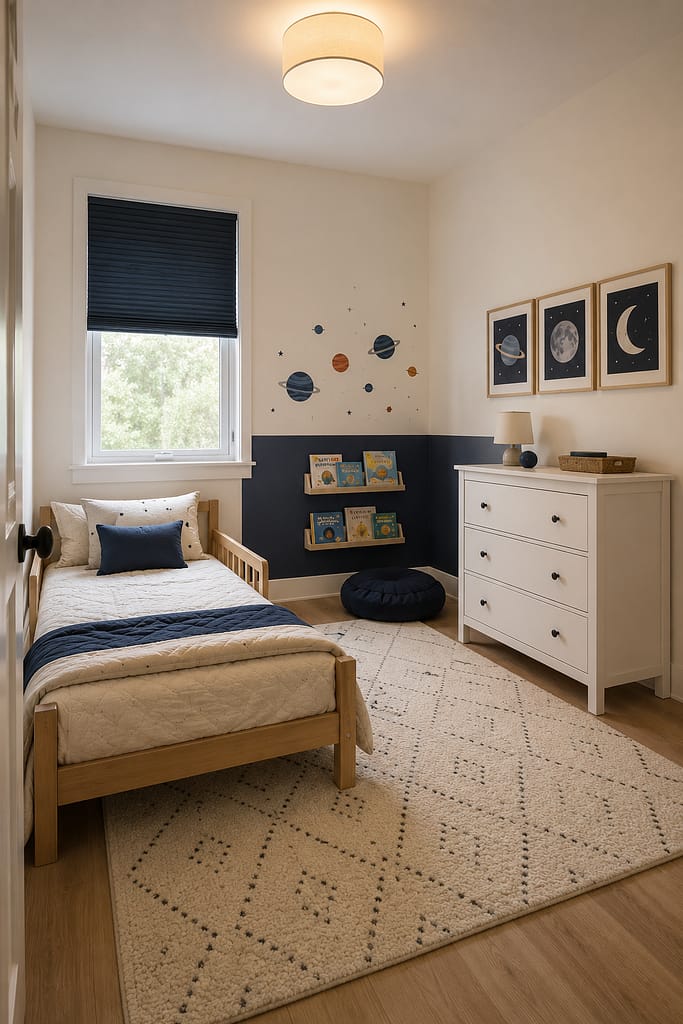
7. Make a Space Room With Navy Details, Not Navy Everything
Space themes can become visually heavy quickly, especially in a small bedroom. Instead of painting every wall navy, use warm-white walls and create one dark blue color-block section behind a low dresser or reading corner.
Add simple star and planet prints, midnight-blue bedding accents, and one small moon-shaped cushion. Keep the bed natural wood and the rug cream with a subtle geometric pattern.
The contrast gives the room a clear theme while leaving enough light surface area to keep it from feeling enclosed.
For a toddler, the theme can also stay lower on the walls where it’s easy to see. A couple of removable planet decals near the book area are easier to change than a full galaxy ceiling.
Avoid hanging glowing objects or cords above the bed. Battery-powered novelty lighting can also create clutter, so a normal warm ceiling fixture and a safe table or wall light may be more practical.
8. Use an Ocean Theme With Soft Blue and Sandy Neutrals
An ocean-inspired toddler room doesn’t need anchors, boats, and stripes on every surface. Use pale blue walls, a natural-wood bed, sandy beige rug, and white bedding with one subtle wave-print sheet.
The theme can come through two framed sea-animal prints and a small basket of ocean toys. Add soft blue blackout curtains to reinforce the color while making nap and bedtime easier.
This palette feels calm because the major surfaces stay quiet. It also works for a small room because the blue and sand tones don’t create many hard visual breaks.
Place the bed along one side wall and use the opposite corner for a low book basket rather than a large reading chair. A toddler can sit comfortably on the rug and flip through books without sacrificing several square feet to furniture.
Keep window treatments child-safe, with cords inaccessible or eliminated through cordless products. Long curtain panels should also be hung securely and kept clear of the sleeping setup.

9. Paint One Wide Stripe Around the Room
A wide painted stripe can add playful color without introducing a theme at all. Keep the walls warm white and paint a single broad band of muted teal, sage, or dusty blue around the middle portion of the walls.
The stripe visually connects the room and gives simple furniture something to sit against. Use a white toddler bed, natural-wood dresser, muted red rug, and mostly plain bedding so the paint remains the main feature.
This is one of the easier toddler room decoration ideas to update later. Repainting one band is simpler than removing patterned wallpaper or replacing themed furniture.
Keep the stripe broad enough to feel intentional rather than like decorative trim. One or two art pieces can overlap its edge for a casual look.
If the room already has many colorful toys on display, choose a subdued stripe rather than a bright primary color. The toy collection will add plenty of visual movement on its own.

10. Try a Simple Color-Block Wall
Color blocking is another inexpensive way to give a basic room personality. Paint the lower third of one wall muted rust and the upper section warm white, or use olive and cream for a quieter effect.
Place a simple wood toddler bed against that wall, with cream bedding and one striped pillow. Keep the rest of the room neutral with a white dresser and woven rug.
This works well because one strong wall can carry most of the visual interest. You don’t need matching curtains, patterned furniture, or a gallery wall on top of it.
For small bedrooms, use the color block on the bed wall or dresser wall so it anchors one main piece of furniture. Leave at least one other wall mostly empty to keep the room from becoming visually dense.
Paint is budget-friendly, but clean lines matter. A messy edge can make a simple graphic treatment look accidental, so careful preparation is worth the effort.

11. Use Muted Primary Colors for a Cheerful Room
A colorful toddler bedroom can still feel orderly. Start with warm-white walls and choose muted versions of red, blue, and yellow rather than bright saturated tones.
Use a dusty blue rug, rust-red storage bin, mustard pillow, and a small set of framed abstract shapes. Keep the furniture white or light wood so the colors have a calm background.
This gives the room a colorful Scandinavian feel without turning every object into a statement. It also works with changing interests because there is no specific theme to outgrow.
For toy storage, use only two or three larger bins in different colors. If every cubby contains a different rainbow bin, the storage system can become a visual theme of its own.
A toddler room will naturally gain more color from books, toys, and clothes, so decorating with slightly muted shades leaves room for everyday life to show up without making the bedroom feel chaotic.

12. Warm Up a Neutral Room With Colorful Accessories
A neutral toddler room doesn’t have to look like a nursery showroom. Use warm beige walls, an oak bed, cream curtains, and a natural rug, then introduce color through bedding, books, and a few practical storage pieces.
A teal quilt, rust-colored floor cushion, and olive toy basket can make the room feel playful while keeping the major furniture easy to reuse.
This approach works well for parents who want a calmer background but don’t want an all-beige room. The color is concentrated in items that are easy to wash or replace.
Keep the center floor open and let a few favorite toys stay visible. A simple room doesn’t need to look empty.
For a budget-friendly setup, repaint an existing dresser in warm white rather than replacing it and use thrifted frames for two or three art prints.
The biggest risk is adding so many small colorful objects that the room stops feeling neutral at all. Use larger blocks of color rather than dozens of tiny accents.

13. Combine Navy and Rust for a Richer Palette
Navy and rust can create a more grounded toddler room without looking too mature. Use warm-white walls, a navy rug, rust-colored curtains, and an oak or walnut-toned toddler bed.
Keep the bedding mostly cream, perhaps with a thin blue stripe. Add one framed landscape or adventure print and a low basket of wooden toys.
This color combination works because the dark navy is balanced by warm rust and wood. It gives a cozy kids room depth without requiring dark walls.
In a smaller room, use navy on the floor or in small textiles rather than painting all four walls. That keeps the upper half of the room lighter.
Rust-colored curtains can contribute a lot of visual weight, so keep the rug simple and the art restrained.
As with any toddler window treatment, cords should be kept inaccessible or eliminated with child-safe designs, and the panels should be securely mounted.

14. Mix Green and Blue for a Fresh Modern Room
Green and blue can sit comfortably together when one is muted and the other is used in smaller amounts. Paint the walls pale sage, add a dusty blue rug, and use natural wood furniture.
Choose cream bedding with a green or blue stripe and hang one blue blackout curtain panel on each side of the window. A simple white dresser keeps the room from becoming too color-heavy.
This room works because the colors are related in temperature but still distinct. It feels cheerful without depending on a theme.
For a toddler, use one low basket for toys and a separate low book ledge so books don’t disappear into the same bin as blocks and cars.
In a small room, keep the bed against the longest wall and avoid placing the dresser between the bed and closet if it narrows the walking route.
The palette is flexible enough to work later with woodland art, vehicles, ocean imagery, or no theme at all.

15. Use a Low Floor-Bed Setup in a Very Small Room
In an 8-by-9-foot room, a low bed can reduce visual bulk and keep the room from feeling dominated by furniture. Use a simple low-profile toddler-appropriate floor-bed setup along one wall, a narrow dresser opposite it, and one rug in the center.
Keep the palette light: warm-white walls, pale oak, sage bedding, and one rust-colored pillow. Add a low book basket rather than a freestanding bookcase.
The room works because most furniture stays close to the floor. That leaves more visible wall space and makes the room feel less crowded.
A low bed doesn’t automatically create more physical floor area, so don’t use the visual lightness as an excuse to add extra pieces. The room still benefits from one clear play zone.
Floor-bed setups should be age-appropriate, stable, and arranged safely. Keep cords, outlets, and heavy decor away from the sleeping area, and make sure the surrounding room is child-safe.

16. Add Under-Bed Storage to a Small Blue Bedroom
Under-bed storage is particularly useful when the closet is small. Choose a low white or wood toddler bed with two shallow drawers underneath and use them for extra bedding, pajamas, or rotating toys.
Paint the room blue-gray, use cream bedding, and add a simple navy rug. Keep one low white book ledge on the wall and skip a large toy chest.
This setup works because storage is absorbed into furniture you already need. It avoids adding another cabinet to an 8-by-10-foot room.
Place the bed along the longest wall so the drawers can open fully without colliding with a dresser. That detail matters more than simply fitting the bed on paper.
Don’t overfill under-bed drawers with tiny toy categories. They’re more useful for bulkier items or rotation storage than for toys a toddler is expected to clean up several times a day.
Use an accessible basket for current toys and keep less-used items below the bed.

17. Build a Low Book-Ledge Wall Beside the Toddler Bed
If books are a daily part of the routine, give them a dedicated zone rather than mixing them with toys. Install two or three short front-facing book ledges at toddler height on a wall beside the bed or near a floor cushion.
Use warm-white walls, a natural wood toddler bed, olive bedding, and a muted blue rug. The colorful book covers become some of the room’s decoration.
This is useful in a small bedroom because shallow ledges take much less floor space than a deep bookcase. A child can also see the covers instead of pulling out stacks to find one book.
Keep the number of books displayed manageable and rotate extras from a dresser drawer or closet.
Mounting matters. The ledges should be secure and positioned where they don’t become a climbing feature or create a hard obstacle near the sleeping area.
A small floor cushion or corner of the rug is enough for reading; an oversized upholstered chair isn’t necessary in an eight-foot-wide room.

18. Make One Wall the Toy-Storage Wall
A toddler bedroom gets visually busy fast when toys are spread across every wall. Instead, concentrate storage in one zone.
Use a low cubby unit or low closed cabinet along one wall, with three or four larger bins. Keep the bed and dresser walls quieter. Above the storage unit, hang one or two simple prints rather than adding shelves full of display toys.
This strategy works because the room has a clear “play and cleanup” wall. It also preserves more open floor elsewhere.
Choose bins that a toddler can actually move and understand. One for vehicles, one for blocks, one for stuffed animals, and one miscellaneous bin is often more manageable than ten tiny categories.
Anchor or secure storage furniture appropriately, especially if it could tip when pulled on.
For a calmer room, keep some toys behind doors or in a closet rotation. The goal isn’t to hide childhood; it’s to prevent every object from competing visually at the same time.

19. Create a Reading Corner With a Rug and Floor Cushion
A reading nook doesn’t need a tent, canopy, or full-size chair. In a small bedroom, use one quiet corner with a round or rectangular floor cushion, two low book ledges, and a small lamp placed safely out of reach or integrated through appropriate fixed lighting.
Paint the walls warm white and use muted teal on the reading-corner wall. Pair it with an oak bed and cream rug.
This creates a clear activity zone without consuming much floor space. The toddler can carry books to the cushion and the corner still functions as general floor area when the cushion is moved.
Keep the ledges low enough for covers to be visible and accessible but securely mounted.
Avoid string lights, hanging cords, or decorative canopies near the reading area simply because they look cozy in photos. A room can feel warm through color, rug texture, and normal lighting.
For an easy kids room idea, this is one of the simplest additions because it uses a corner that might otherwise be wasted.

20. Use a Small Upholstered Chair Only When It Truly Fits
A child-size upholstered chair can be useful in a slightly larger toddler room, especially for books, but it shouldn’t block the closet or take over the only play area.
In a 10-by-11-foot room, place a small rust or olive chair in the corner opposite the bed. Add one book basket beside it and keep the rest of the corner empty.
Use soft blue walls, an oak toddler bed, cream bedding, and a simple striped rug. The chair becomes one intentional color accent rather than another large piece of neutral furniture.
This works because the reading zone has enough surrounding floor space to remain practical.
Before adding a chair, map the door swing, closet access, and path to the bed. If you have to squeeze sideways past the chair, the room is too small for it.
A floor cushion can achieve most of the same function in a compact bedroom and is easier to move when extra floor space is needed.

21. Add Removable Decals to One Quiet Wall
Removable decals are useful when you want a theme without committing to wallpaper or a mural. Choose one wall—usually the dresser wall or reading corner—and add a sparse arrangement of mountains, trees, stars, cars, or animals.
For example, warm-white walls with muted green mountain decals can work with an oak bed, rust bedding accents, and a blue rug. The room reads as adventure-inspired without becoming a full wilderness theme.
This is budget-friendly and easy to change when interests shift.
The restraint matters. Covering every wall with decals can create the same visual overload as patterned wallpaper, especially once toys and books are added.
Use the decals where they can be seen from the bed rather than directly above the sleeping area if the product could peel or become a nuisance.
Before applying them, consider wall finish and manufacturer guidance so removal doesn’t create an avoidable repair project later.

22. Use a Peg Rail for Lightweight Everyday Items
A simple peg rail can help keep lightweight toddler items off the floor without requiring a large freestanding storage piece. Mount it securely at an appropriate height near the dresser or door and use it for a small backpack, lightweight hat, or dress-up item.
Pair the rail with a low dresser whose lower drawers hold everyday clothes. This lets a toddler participate in simple routines without giving access to everything in the room.
Use warm white walls, olive-green bedding, and natural wood furniture. A clay-colored rug can add warmth.
This layout works because vertical wall space helps with organization while the floor stays clear.
Don’t overload the rail with heavy bags or hard objects, and don’t position hanging items where they could create a climbing temptation or interfere with the door.
Keep the arrangement simple—three or four pegs can be more useful than a long wall of hooks.

23. Set Up a Shared Toddler Bedroom With Matching Color, Not Matching Everything
A shared bedroom looks more orderly when the beds relate to each other but aren’t surrounded by duplicate decor.
Use two low simple wood beds on opposite walls if the room width allows, or place them along the same long wall with enough circulation between them. Choose coordinating cream bedding with different accent colors—one sage, one dusty blue—rather than identical themed sets.
Use one shared low dresser and give each child one personal basket for small belongings. A single large rug unifies the room better than two tiny bedside rugs.
This approach preserves visual order without making the children feel as though every object has to match.
Keep toy storage shared and relatively simple. Two beds already create more visual information, so extra wall decor should stay restrained.
In a smaller shared room, prioritize walking paths and closet access over a reading chair or play tent.

24. Try a Simple Montessori-Inspired Layout
A Montessori-inspired room doesn’t need specialized furniture everywhere. The useful part for many families is simply keeping a few everyday items low, understandable, and easy to put away.
Use a low bed, a child-height book ledge, one open basket for current toys, and a low dresser with a couple of accessible drawers. Keep everything else—extra clothes, rotated toys, supplies—out of sight in the closet or higher adult-managed storage.
Paint the room warm white with a muted olive accent wall and use natural wood furniture.
This works because the toddler can interact with a manageable portion of the room rather than facing dozens of choices.
Low furniture still needs to be stable and safely secured where appropriate. Accessibility isn’t useful if furniture can tip or drawers become climbing steps.
Avoid turning the room into a display of every possible “independence” product. A few clear, reachable zones are usually more functional.

25. Give the Room a Vintage-Inspired Look With Modern Storage
A vintage-inspired toddler room can feel warm and personal without becoming overly decorative. Use a walnut-toned toddler bed, soft cream walls, muted blue-gray curtains, a rust-and-navy patterned rug, and a small set of vintage-style animal or transportation prints.
A repainted dresser in deep olive or warm gray can add character, while modern lidded baskets handle the less photogenic parts of toy storage.
This room works because the furniture and color palette carry the mood rather than a literal theme. It can adapt easily as the child gets older.
Choose a few details with vintage character—perhaps wood frames, a striped quilt, or a simple metal drawer pull—and keep the rest straightforward.
Avoid filling the room with fragile antiques or objects that are better suited to display than everyday toddler use. The bedroom should still tolerate dropped toys, laundry piles, and frequent cleanup.
One quiet wall and a clear central rug area help keep the room from feeling visually heavy.

How to Keep a Toddler Bedroom Fun Without Making It Busy
The most useful toddler bedroom inspiration follows a fairly simple formula: simple furniture + one flexible color palette + accessible storage + one playful theme element + open floor space.
Before buying decor, think about what the room has to do every day. The bed needs a clear path. Clothes need somewhere practical to go. Favorite books should be easy to reach. Toys need a cleanup system simple enough to understand, and the center of the room should ideally leave enough floor for play.
A toddler bedroom boy search may bring up highly themed spaces, but themed furniture isn’t necessary for a room to feel personal. One dinosaur print, a vehicle quilt, a green wall, or removable space decals can communicate an interest without committing the entire bedroom to it.
Storage also doesn’t need to display everything. Keep a few favorite toys visible and rotate the rest through drawers, baskets, or closet storage.
The goal isn’t a room that remains perfectly styled. A successful toddler bedroom feels cheerful when it’s tidy, still works when toys are out, and can change without a complete redesign when the child’s interests inevitably move on.