

17 Small Guest Bedroom Ideas With Full and Queen Bed Layouts
The most useful small guest bedroom ideas start with the bed, not the decor. In a compact room, bed size controls almost everything else: how easily the closet opens, whether a dresser fits, how much floor space remains at the foot of the mattress, and whether guests can move around without bumping into furniture.
A good rule is to choose the bed wall first, then decide what furniture the remaining clearance can realistically support.
A guest room doesn’t automatically need two full-size nightstands, a dresser, a bench, an armchair, and a desk simply because larger bedrooms often include them. In an 8-by-10-foot or 9-by-10-foot room, one useful nightstand and a luggage rack may serve guests better than squeezing in several undersized pieces.
Full beds often provide more comfortable circulation, while queen beds can work when the room has the right proportions and furniture stays minimal. Wall-mounted lighting, shallow storage, under-bed drawers, and simple wall treatments can add function and character without using precious floor space.
Here are 17 layouts that show how to make a compact guest bedroom feel intentional rather than crowded.
17 Small Guest Bedroom Ideas With Full and Queen Bed Layouts
1. Center a Full Bed on the Longest Wall
A full-size bed often makes the most sense in a small guest room because it leaves more usable clearance than a queen while still sleeping two people when needed. In a 9-by-10-foot room, center the bed on the longest uninterrupted wall and use two very small bedside surfaces only if the room genuinely supports them.
Keep the bed frame simple—light oak, white-painted wood, or a low upholstered headboard—and use warm white bedding with one muted accent color. A single cream rug placed partly beneath the bed can visually connect the furniture without fragmenting the room.
If you need storage, use a narrow chest opposite the foot only when the walkway remains comfortable. Otherwise, let the closet handle clothing.
This full bed small room layout works because the room maintains symmetry without overfurnishing.
A full bed may technically leave enough room for two nightstands, but don’t force them in if drawers or closet doors become awkward. One proper nightstand can be better than two tiny tables that barely hold a phone.

2. Use a Queen Bed With One Real Nightstand
A queen bed can work in a compact guest room when you stop trying to make the room perfectly symmetrical. In a 9-by-11-foot bedroom, place the queen on the best wall and use one proper nightstand on the side with more clearance.
On the tighter side, use a slim floating ledge or nothing at all. A wall-mounted reading light can provide function without requiring another table.
This layout makes the queen feel intentional because the asymmetry solves a real spatial problem instead of looking accidental. Guests still get a place for a phone, water glass, and lamp.
Keep the dresser shallow or skip it entirely. If the closet is usable, a few empty hangers and one shelf can replace several feet of floor furniture.
This is one of the most practical small room ideas with a queen bed because the room is designed around circulation rather than symmetry.
A queen bed that blocks half the closet opening isn’t a good layout simply because the mattress technically fits. Measure the door swing and usable walking path first.

3. Push a Queen Bed Slightly Off-Center in a Narrow Room
In a narrow bedroom, centering the queen can waste useful space on both sides. Shifting the bed slightly toward one wall may create enough room for a practical nightstand and better walking clearance on the open side.
Use a low-profile bed so the room doesn’t feel dominated by the mattress. Add one wall sconce above the usable nightstand and keep the opposite side simple.
A narrow dresser can sit on the wall opposite the open side of the bed if it doesn’t squeeze the circulation route. Otherwise, use the closet and an under-bed storage system.
The off-center layout works because it acknowledges the shape of the room. Styling small bedrooms often improves when symmetry is treated as optional rather than mandatory.
Keep bedding visually calm—cream, oatmeal, muted blue, or sage—so the queen bed doesn’t become an oversized color block.
The reality check is simple: one person sleeping closest to the wall may have less direct access. If the room regularly hosts couples for long stays, a centered full-size bed may ultimately be more comfortable.

4. Fit a Full Bed Along One Wall in an Extra-Narrow Guest Room
In a very narrow room, placing a full bed against one long wall can preserve a much more usable walkway than centering it.
Use this setup in an 8-by-10-foot spare room where two-sided access isn’t the priority. Position the full bed against the wall, then place one proper nightstand at the open side near the head.
A plug-in or fixed wall sconce can replace a table lamp if the nightstand is especially small. On the opposite wall, use only a few hooks or a narrow luggage rack rather than a dresser.
This is particularly useful for one person bedroom ideas or guest rooms usually used by one person at a time. The room feels more open because all the circulation stays concentrated along one side.
Use a soft striped quilt or subtle floral accent to keep the room from feeling too utilitarian.
The tradeoff is bed-making and two-person access. If guests frequently share the room, being against the wall may be inconvenient enough that a centered full bed is worth the tighter circulation.

5. Free Nightstand Space With Wall-Mounted Sconces
Lighting can take up more bedside space than expected. In a small queen-bed guest room, replacing table lamps with wall-mounted sconces allows the nightstands to be narrower and more useful.
Center the queen on the best wall, use two slim bedside tables if the room supports them, and mount compact sconces above or beside each. The tables only need enough surface for a phone, water glass, or book.
This works particularly well in a short bedroom because less furniture projects into the floor area. Keep the bed frame low and skip the bench at the foot.
Floor-length curtains mounted near ceiling height can draw the eye upward and make the proportions feel less compressed.
If hardwired lighting isn’t realistic, an appropriately installed plug-in sconce can be an option, but visible cords need a neat and safe route.
Don’t add large shades or oversized swing arms in a tight space. The light fixture should solve the space problem rather than become another bulky object.

6. Put a Full Bed and Shallow Dresser on Opposite Walls
A dresser can fit in a small guest room, but depth matters more than width. In a 9-by-11-foot room, center a full bed on one wall and place a shallow dresser directly opposite only if there is a comfortable walking path between them.
Choose a dresser with a simple front and limited depth. A mirror above it can double as guest function without adding another furniture piece.
Use one or two small bedside surfaces depending on the room width. Keep the bed frame relatively light, perhaps pale oak or white, so the dresser doesn’t make the room feel furniture-heavy.
This full-size bed guest room idea works because the smaller mattress gives the dresser enough breathing room that a queen might not.
The dresser should be guest-friendly rather than packed with household overflow. Leave at least one or two drawers empty.
A deep vintage dresser may look beautiful but can ruin the layout. If guests have to squeeze between the foot of the bed and dresser, use a narrow chest or skip it.

7. Choose a Low Platform Bed for a Short Bedroom
A short room can feel even shorter when the bed has a thick frame, tall upholstered headboard, and bench at the foot. A low platform bed reduces that visual bulk.
Use a full or queen mattress depending on width, but keep the frame simple and close to the floor. A low oak headboard or no headboard at all can help the wall feel taller.
Use wall-mounted lighting and a shallow nightstand so the sides stay visually light. Skip a dresser if it would intrude into the foot-end walkway.
Mount curtains near ceiling height and let them fall close to the floor. That vertical line can counteract the short room proportions.
This layout fits simple guestroom ideas because the room only includes what visitors genuinely need.
Under-bed storage may not work with every low platform, so don’t assume the design automatically adds storage. If storage matters, choose a frame that includes accessible drawers without reducing clearance.

8. Use an Antique Brass Bed for Character Without Visual Bulk
A low antique-brass or aged-brass bed can give a tiny guest room character without adding the visual weight of a thick upholstered frame. Because the metal rails remain open, you can still see the wall and floor around the bed.
Use cream or white bedding, a muted blue or soft sage wall color, and one compact walnut nightstand. A small vintage-style lamp or brass sconce can repeat the metal finish without turning the room into a period set.
This is one of the more charming cute spare bedroom ideas, but the look stays adult-friendly because the palette is restrained.
In a 9-by-10-foot room, a full-size brass bed usually leaves better circulation than a queen. Add one narrow luggage rack rather than a dresser if storage is limited.
A vintage-inspired metal frame should still be stable and appropriately sized for a modern mattress. Avoid extremely ornate rails or oversized finials in a room where every inch counts.

9. Create a Scandinavian Guest Room With Pale Oak Furniture
A small guest room can feel calm without becoming bland when light wood, warm white, and soft beige are repeated consistently.
Use a full-size pale-oak bed centered on the main wall, one or two slim oak nightstands, and a simple cream rug. Keep the bedding mostly white or oatmeal with one sage or dusty-blue accent.
A small pale-oak shelf or narrow dresser can provide guest storage if circulation allows. Otherwise, use the closet and under-bed boxes.
This Scandinavian small bedroom idea works because pale oak carries visual warmth without feeling heavy. Simple silhouettes also reduce the amount of furniture detail competing in a compact room.
One piece of abstract or landscape art is enough. A small room doesn’t need a gallery wall to feel complete.
Keep the lighting warm. Cool bulbs against pale wood and beige fabrics can make the room feel more sterile than intended.

10. Add Half-Height Paneling Behind a Full Bed
Wall treatment is useful in small rooms because it adds character without consuming floor space. A half-height paneled wall behind a full bed can make an otherwise plain guest room feel more intentional.
Use simple box molding or narrow vertical panels painted warm white, muted beige, or pale sage. Keep the upper wall lighter and use a low wood or upholstered headboard so the paneling remains visible.
A full bed centered on the wall gives the treatment enough symmetry to read clearly. Add one small nightstand on each side only if the room supports it.
This paneled wall approach works because the visual interest stays flat against the wall. You don’t need a bench, oversized art, or extra furniture to create personality.
In an 8-by-10-foot room, keep the panel pattern relatively broad. Too many narrow boxes or heavy trim pieces can visually chop up the wall.
Paint is also usually easier to change later than patterned wallpaper.

11. Use Vertical Wood Paneling as a Warm Bed Wall
A warm wood accent wall can add depth to a compact guest bedroom without introducing extra furniture. Use narrow vertical tongue-and-groove or simple wood slats behind a full or queen bed, then keep the rest of the room quiet.
Pale oak or medium oak works particularly well with cream bedding and warm-white side walls. A low upholstered bed prevents the wood from feeling too rustic.
The vertical orientation can also make a short room feel a little taller visually.
Use wall-mounted sconces or small pendant lights to keep the bedside tables clear. One slim nightstand is often enough if the queen occupies most of the room.
This is one of the stronger bedroom ideas with wood paneling because the paneling becomes the focal point rather than one decorative layer among many.
Avoid extremely dark wood across a very small room unless natural light is strong. The goal is warmth, not turning the bed wall into a heavy visual block.

12. Build a Simple Budget Guest Room With Paint and Thrifted Furniture
A guest room doesn’t need expensive furniture to feel considered. Start with warm-white walls, a basic full bed, simple white bedding, and one secondhand wood nightstand.
Add a thrifted or inexpensive framed artwork, a small table lamp, and a neutral rug. If the existing dresser is solid but dated, repaint it rather than replacing it.
This is one of the most realistic affordable guest bedroom ideas because layout and editing matter more than matching furniture sets.
Keep the palette limited—perhaps white, warm wood, soft blue, and black. That helps unrelated secondhand pieces feel connected.
Guest storage can be minimal. Leave a few hangers in the closet, provide one clear drawer if there is a dresser, and add a luggage rack if floor space permits.
Don’t spend the budget filling the room with decorative pillows, baskets, and accessories. A comfortable mattress, decent lighting, and clear walking space will matter more.

13. Use Under-Bed Drawers Instead of a Dresser
Under-bed storage can solve the biggest furniture problem in a small guest room: finding space for a dresser.
Choose a full-size bed with real drawers underneath or a frame designed for shallow storage. Use the drawers for spare sheets, blankets, towels, or a small amount of guest clothing.
Keep the rest of the room light with one proper nightstand and perhaps a wall shelf. A narrow bench isn’t necessary when the bed itself handles storage.
This works particularly well in a full bed small room because the mattress width leaves more room to open the drawers.
Check the direction the drawers pull before choosing the bed location. Under-bed storage is useless if one side opens directly into a wall, radiator, dresser, or closet door.
Also avoid overfilling the drawers with household storage. Guests may appreciate one empty section for clothing or personal items.
The room can feel especially calm when the lack of a dresser leaves one entire wall visually open.

14. Skip the Dresser in a Queen-Bed Guest Room
A queen bed often works better in a small guest room when the dresser is removed from the plan entirely.
Use the closet for clothing, provide a few empty hangers and one shelf, then add a narrow luggage rack or hook rail for short stays. The queen can then sit more comfortably on the longest wall without competing with another large furniture piece.
One nightstand is enough if both sides can’t support full tables. The second side can use a floating shelf or simply wall-mounted lighting.
This guest room setup acknowledges how most visitors actually use a spare bedroom. They usually need a comfortable sleeping surface, bedside light, phone space, some clothing storage, and room for luggage.
Keep the wall opposite the bed simple with one framed artwork or nothing at all. The open wall helps the room feel less crowded.
If guests regularly stay for several weeks, no dresser may be less practical. But for occasional overnight stays, a closet shelf and luggage rack can be more useful than squeezing in a chest of drawers.

15. Use a Twin Bed When the Room Is Truly Too Small
Not every spare room benefits from forcing in a full or queen. In an extremely small 7-by-9-foot room, a twin bed or daybed can create a far more useful guest space.
Place the twin along the longest wall and use the remaining floor area for one proper nightstand, a luggage rack, and perhaps a small wall-mounted shelf.
This option works especially well when the room mostly hosts one person at a time. It can also allow the space to serve as a home office or quiet reading room between visits.
Use adult-friendly bedding—cream, navy, sage, or subtle stripes—so the room doesn’t feel like a child’s bedroom.
This room decor single bed alternative isn’t the main solution for every guest room, but it’s worth considering when a full bed would block the door, closet, or circulation.
A room that technically holds a larger mattress isn’t necessarily functioning well. If the twin gives guests space to stand, unpack, and move comfortably, it may be the better choice.
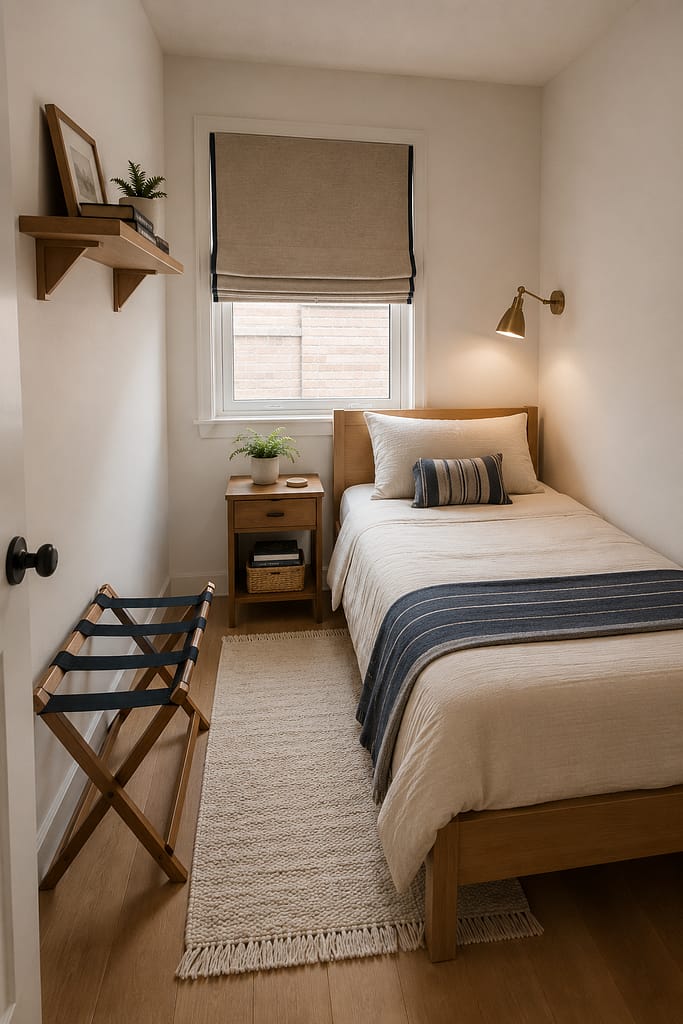
16. Use a Queen Bed With Soft Paneling and Minimal Furniture
A queen bed can feel balanced in a small room when the wall treatment provides character and the furniture stays minimal.
Use simple vertical or half-height paneling behind the bed in pale beige or warm white. Center the queen if the width allows, then use one nightstand on each side only if they can be at least reasonably functional.
Wall-mounted sconces help keep the tables small. Skip the dresser and use closet storage instead.
The paneling gives the room a finished look without requiring large art, a bench, or decorative furniture.
This is one of the better small guest bedroom ideas for homeowners who want a polished look but need the layout to stay simple.
Choose broad panel proportions rather than tiny detailed molding. In a small room, oversized decorative trim can visually compress the wall.
Keep bedding plain enough that the paneling remains the focal point: cream, linen, soft gray, or dusty blue usually works well.

17. Keep a Plain Neutral Guest Room Intentional
A plain bedroom can still feel finished when the proportions are right. Use warm-white walls, a simple full bed, one good nightstand, a textured cream quilt, and one medium-size artwork.
Add a soft rug that visually connects to the bed and one warm bedside lamp. If the room has a small window, simple floor-length curtains can provide height and softness without adding pattern.
This works because the room’s interest comes from materials rather than decorative quantity. Linen, wood grain, woven texture, and warm light are enough.
For simple guestroom ideas, this is often the most practical direction. Guests need somewhere comfortable to sleep, a light, a place for a phone, and room for luggage. The room doesn’t have to imitate a furnished primary bedroom.
If the room still feels unfinished, check scale before buying more decor. A rug that’s too small, a tiny lamp, or undersized art may be the real issue.
Simplicity works when the few pieces present are proportioned properly.

How to Make a Small Guest Room Comfortable Without Overfurnishing It
The strongest small guest bedroom ideas usually follow a simple framework: right-size bed + clear walking route + one useful bedside surface + compact storage + simple lighting.
Measure the room before buying furniture. Check the closet door swing, room door clearance, space at the foot of the bed, nightstand width, dresser depth, and where luggage can realistically sit.
Then choose the mattress size based on how the room functions, not on what technically fits. A full bed may be the better option if it gives guests easier circulation. A queen can work beautifully when the room has the right proportions and you reduce the surrounding furniture.
Two nightstands aren’t mandatory. Neither is a dresser. Wall-mounted lighting, under-bed drawers, a luggage rack, closet shelf, or narrow floating ledge can often handle guest needs with much less floor space.
Wall treatments are useful because they add character without making the room harder to walk through. Keep them proportionate and let bedding stay simple.
Guests generally need comfort more than furniture quantity. A small room feels far more welcoming when it’s easy to move through, easy to unpack in, and calm enough to sleep in.