
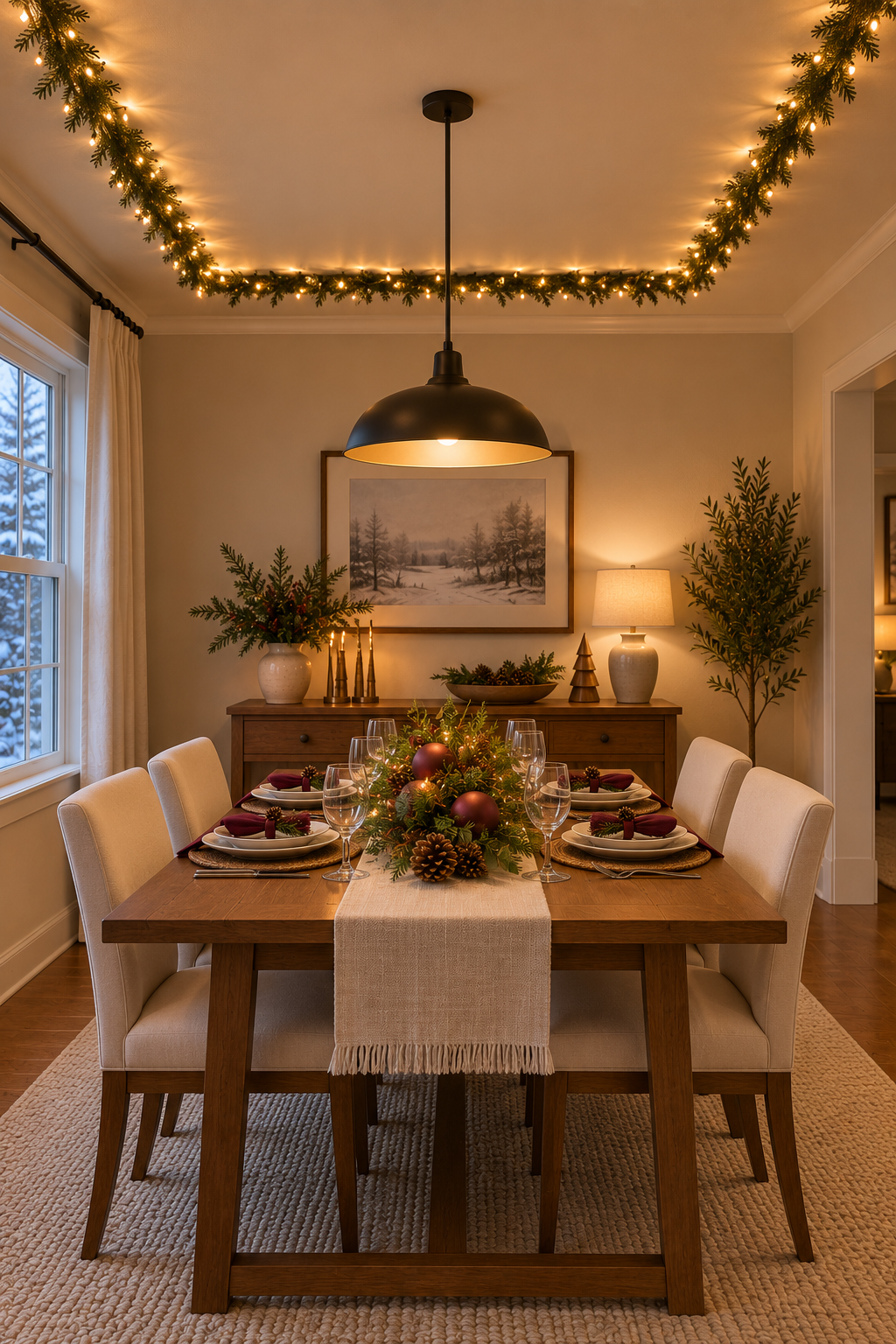
14 Christmas Lights on Ceiling Ideas for a Magical Holiday Room
Christmas lights usually end up on the tree, around the windows, or across the mantel.
Meanwhile, the ceiling gets absolutely nothing.
A little unfair, honestly.
Used carefully, Christmas lights on ceiling ideas can make an ordinary bedroom, living room, dining area, or playroom feel completely different after sunset. Instead of adding another decoration to a crowded table, you’re using a surface that’s normally empty.
Think soft perimeter lighting.
A restrained starry effect.
A glowing canopy over a reading corner.
Lights following exposed beams.
Or a simple illuminated rectangle that emphasizes the room’s shape.
The important word here is carefully.
Ceiling installations need secure attachment methods appropriate for the ceiling surface and the specific light product. Never attach lights to fire sprinklers, smoke or carbon-monoxide alarms, vents, ceiling fans, recessed fixtures, hot light fixtures, or other safety equipment. Don’t use nails, staples, or fasteners that can damage electrical wiring unless the light manufacturer specifically provides an approved mounting system.
Keep electrical cords out of walking paths, don’t overload outlets, and use the lights exactly as their manufacturer instructs.
And if a safe route to an outlet doesn’t exist?
Choose a different lighting location.
Christmas magic is nice.
Basic electrical safety remains annoyingly important.
Here are 14 Christmas lights on ceiling ideas for a magical holiday room.
1. Outline the Ceiling With Warm Christmas Lights
Start with the simplest approach.
Run warm-white LED Christmas lights around the perimeter of the ceiling, using a mounting method suitable for the ceiling or upper wall and approved for the light strand.
Keep the line neat.
Follow the room’s shape.
This creates a subtle glowing frame after dark.
It works especially well in bedrooms and small living rooms because the lighting adds atmosphere without taking up physical space.
Choose warm white rather than extremely cool blue-white if you want a cozy Christmas look.
The goal is Christmas evening.
Not supermarket freezer aisle.
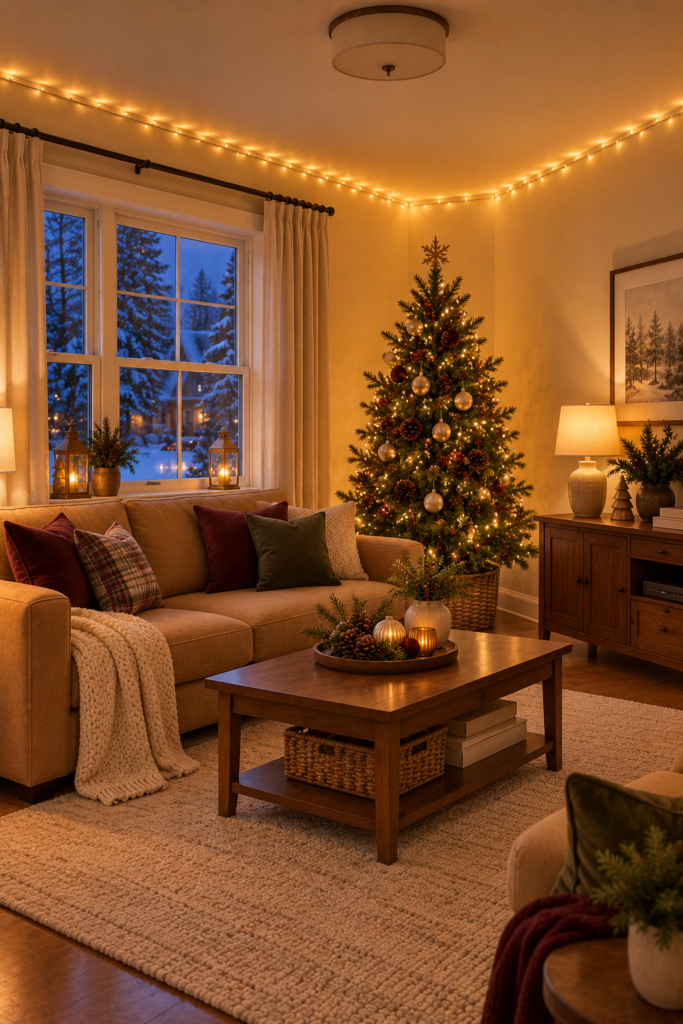
2. Create a Starry Christmas Ceiling
Instead of outlining the room, create a scattered star effect.
Use lightweight warm-white micro LED strands designed for decorative use.
Arrange them in several loose sections across an appropriate ceiling area.
Keep the pattern irregular.
Some lights can sit closer together.
Others can be farther apart.
This gives the ceiling a soft starry appearance.
Keep the installation relatively flat rather than allowing wires to hang low.
And maintain required clearance around ceiling fixtures, alarms, vents, and other equipment.
You want “winter night sky.”
Not “electrical fishing net.”
Important aesthetic difference.
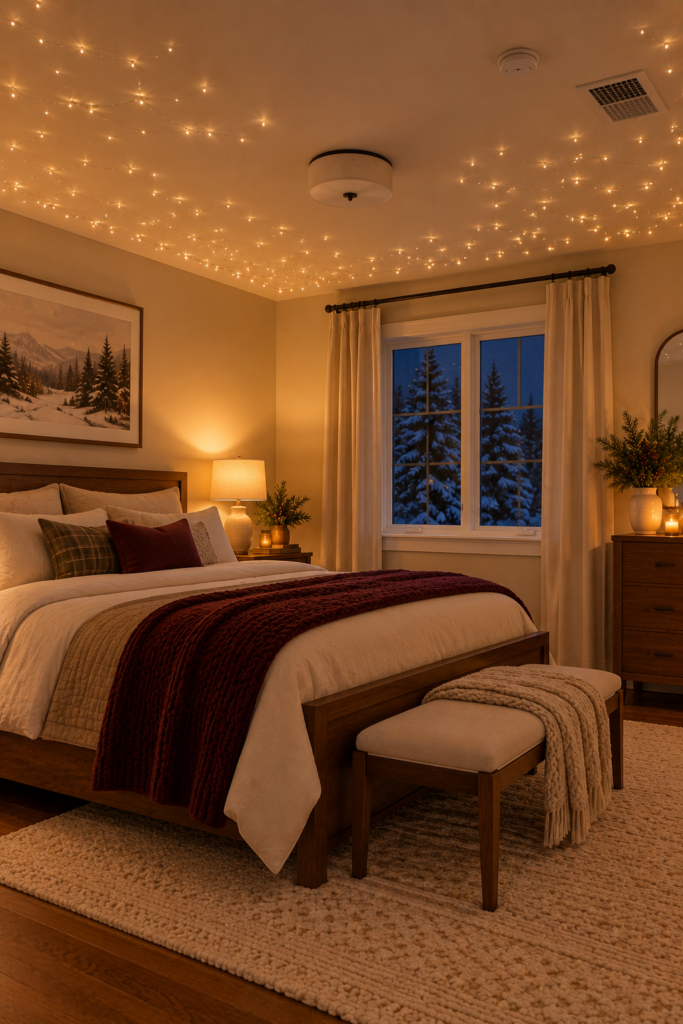
3. Create a Christmas Light Canopy Over the Bed
A light canopy can make a bedroom feel magical.
But don’t drape random electrical strings directly over the sleeping area.
Instead, create a controlled decorative lighting zone around or adjacent to the bed, using the light manufacturer’s approved mounting and placement guidance.
Keep strands taut enough that they don’t sag into reach.
Keep wiring away from pillows and bedding.
Don’t attach lights to improvised fabric canopies unless the products are specifically designed and approved for that arrangement.
Warm-white LEDs create the softest effect.
Add cream bedding and a burgundy throw.
Done.
Your bedroom now looks approximately 73% more interested in Christmas.
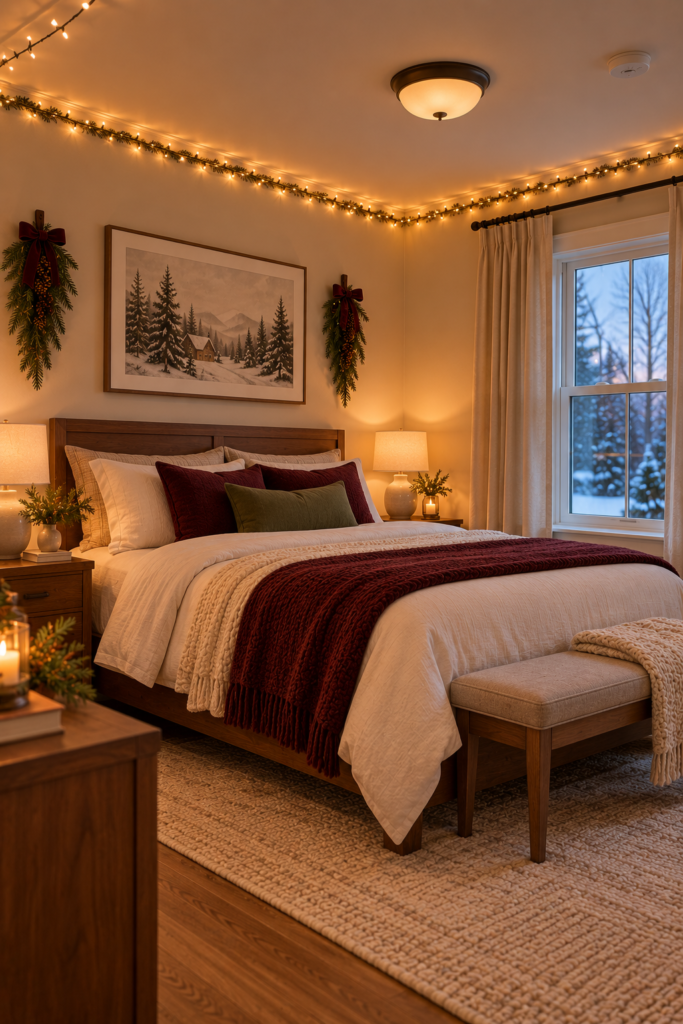
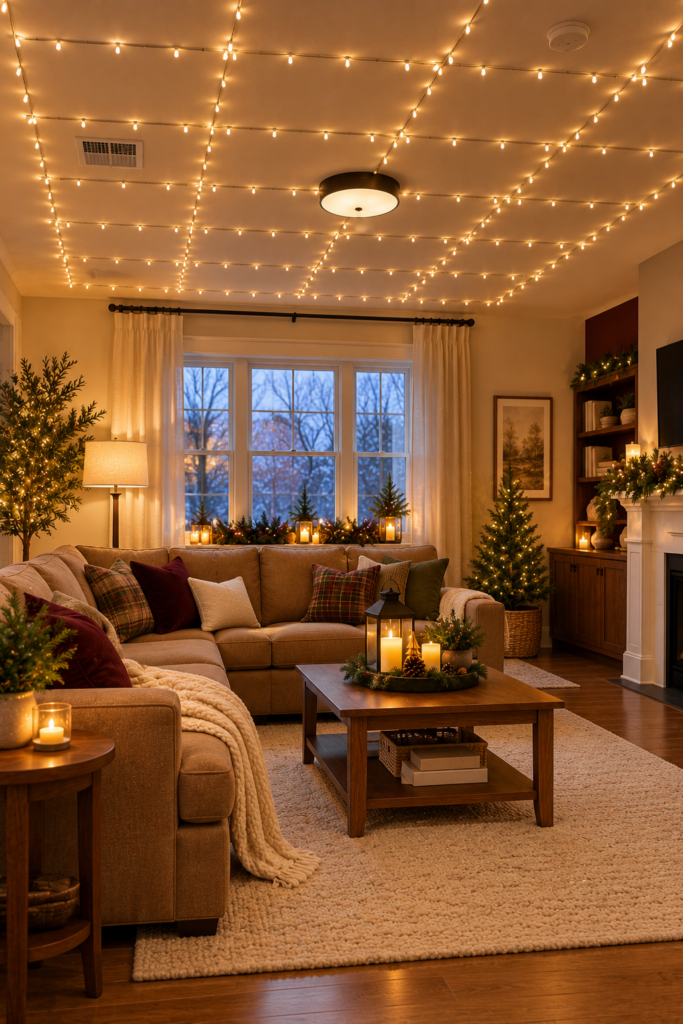
4. Create a Christmas Light Ceiling Grid
For a more structured look, arrange lights in a simple grid.
Use several straight runs of warm-white lights.
Space them evenly.
Keep the pattern restrained.
A loose grid can work beautifully in a playroom, finished basement, or casual family room.
The geometry creates visual impact without requiring ornaments or greenery.
Just make sure each run is properly supported.
Long unsupported strands can sag.
And sagging Christmas lights eventually stop looking “magical grid” and start looking “temporary utility wiring.”
Not quite the same Pinterest category.
5. Run Christmas Lights Along Ceiling Beams
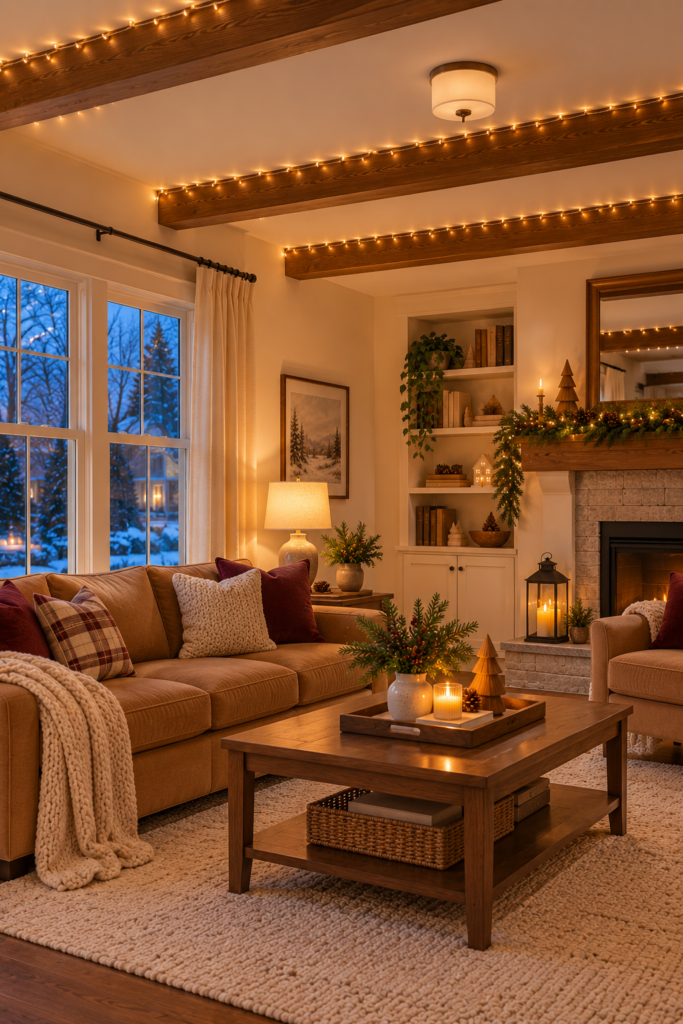
If your room already has exposed decorative beams, use the architecture.
Run warm-white lights along the beam edges if the light product, beam material, and attachment method make that installation appropriate.
Keep the strand controlled.
Don’t wrap enormous bundles around every beam.
One clean line is usually enough.
This works particularly well with warm wood beams.
The wood catches the light and creates a cozy cabin-like effect.
Add evergreen elsewhere in the room.
Maybe burgundy pillows.
And stop there.
The beams have already volunteered to provide the drama.
Let them.
6. Create a Christmas Light Border Above a Dining Area
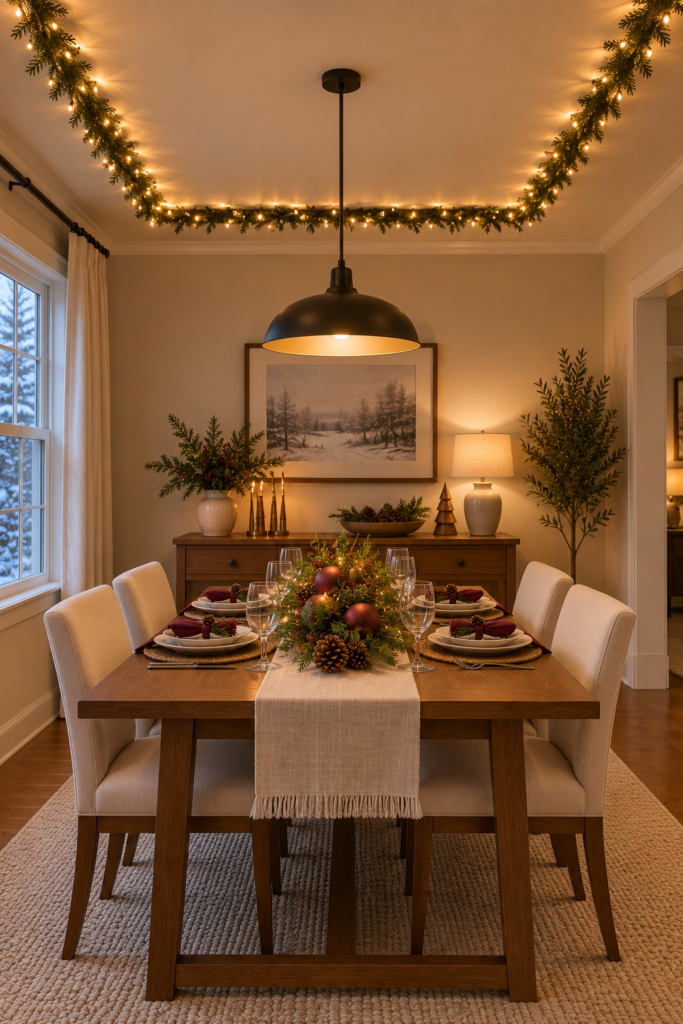
Use ceiling lights to define the dining area.
Create a simple rectangular light border above the table.
Keep it relatively close to the ceiling.
Align the shape roughly with the dining table below.
This can make a small open-plan dining area feel more intentional.
Don’t attach the lights to the dining pendant unless the fixture and lighting products are specifically designed for that purpose.
Instead, keep the decorative strand independently supported with safe clearance.
Christmas dinner already contains enough logistical challenges.
The ceiling light doesn’t need to join them.
7. Create a Christmas Tree Shape on the Ceiling
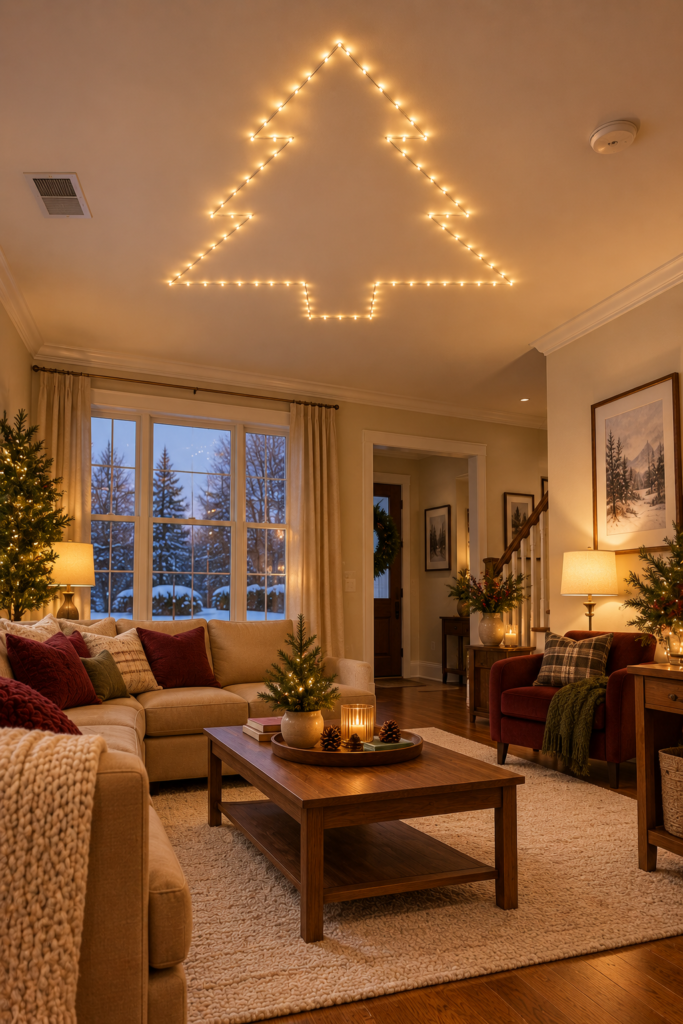
For something playful, create a simple geometric Christmas tree outline on one section of the ceiling.
Use warm-white micro LEDs.
Form a large triangular tree silhouette.
Add a short line for the trunk.
Keep the design flat against the ceiling.
This works especially well in a family room or playroom.
You can also create the tree on the upper portion of a wall extending slightly onto the ceiling if that allows safer and easier mounting.
Don’t overcomplicate it.
Triangle.
Lights.
Christmas tree.
Human civilization has successfully recognized the shape.
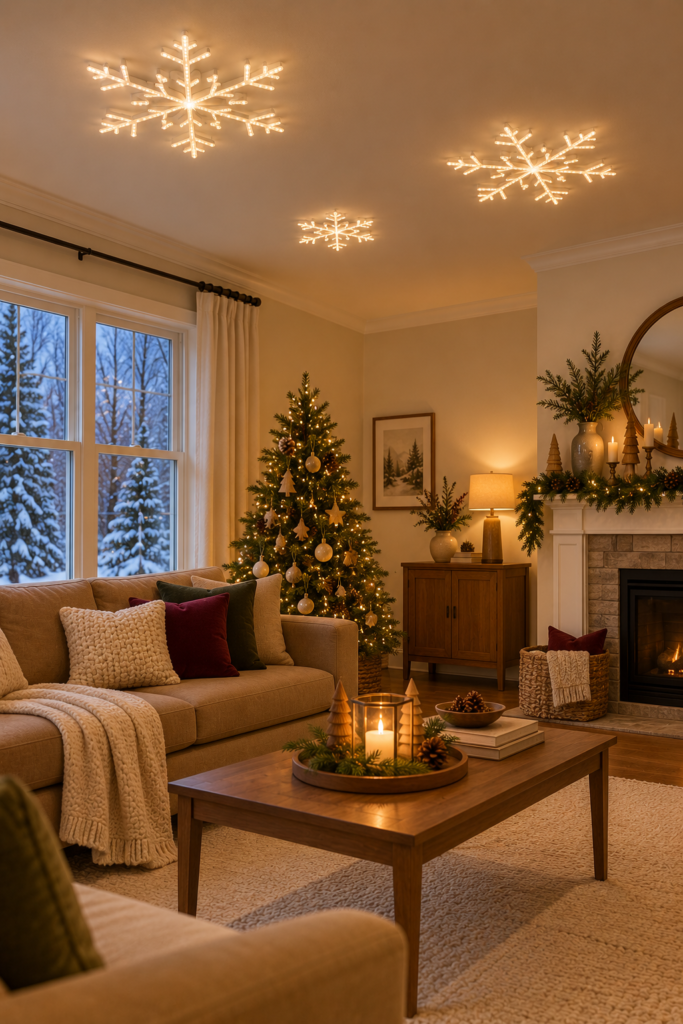
8. Create a Snowflake Light Ceiling
Instead of one continuous pattern, create several illuminated snowflake shapes.
Use lightweight decorative LED snowflakes specifically designed for hanging or mounting according to their instructions.
Choose three snowflakes in varied sizes.
Arrange them asymmetrically across one ceiling zone.
Keep them close to the ceiling.
Warm white creates a softer look than bright cool white.
This is especially pretty in a neutral Christmas room.
And unlike actual snowflakes, these won’t melt into the rug.
Strong indoor performance.
9. Create a Burgundy Christmas Room With Ceiling Lights
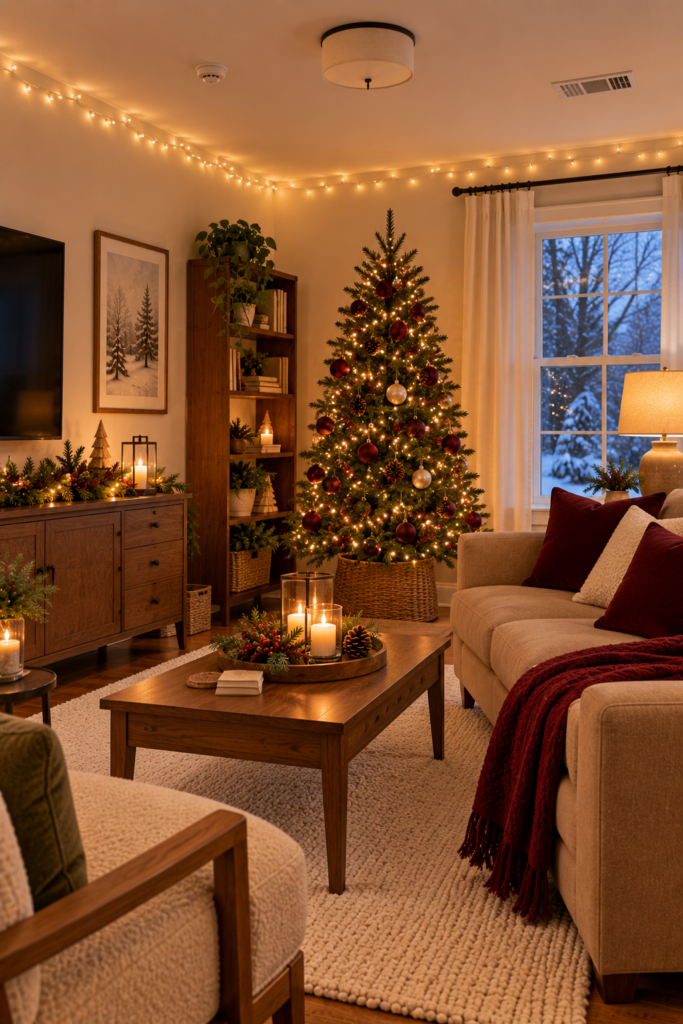
Let the ceiling lights support a richer room palette.
Use simple warm-white perimeter lights.
Then bring deep burgundy into the room below.
Use burgundy pillows.
Add burgundy ornaments to the Christmas tree.
Use a burgundy throw.
Keep the ceiling itself simple.
The warm lights make the darker red feel richer after sunset.
This is a good example of letting the lighting create atmosphere instead of making the ceiling installation itself overly complicated.
Because sometimes the best ceiling decor strategy is knowing when to stop touching the ceiling.
10. Create a Neutral Christmas Ceiling Glow
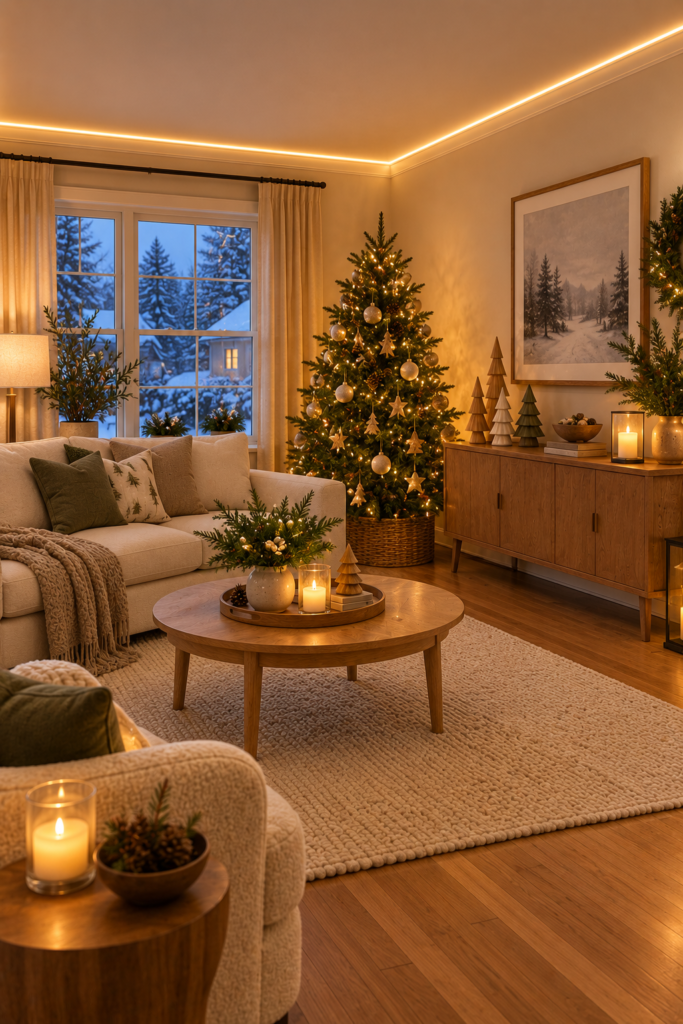
For a minimalist room, use very restrained ceiling lighting.
Install one clean perimeter line of warm LEDs.
Keep the rest of the Christmas palette neutral.
Use:
Cream.
Evergreen.
Natural wood.
Mushroom.
Muted gold.
The ceiling lights provide the magical element.
Everything below can remain simple.
This works beautifully in Scandinavian-inspired spaces.
It’s Christmas without visually yelling “CHRISTMAS” from every available surface.
A rare seasonal achievement.
11. Create a Christmas Light Reading Nook Ceiling
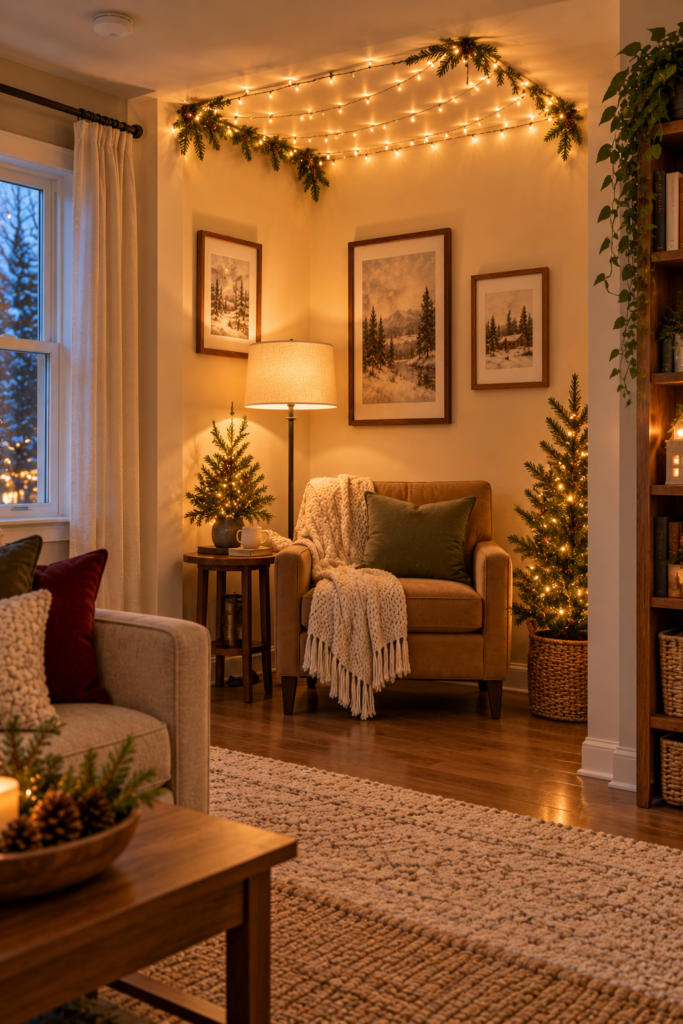
You don’t need to decorate the whole room.
Concentrate the lights above a small reading corner.
Create a compact rectangle or gentle perimeter shape on the ceiling above the nook.
Place a camel armchair below.
Add a cream throw.
Use a small evergreen tree beside the chair.
This creates one magical little zone without turning the entire ceiling into a project.
It’s especially good for apartments.
Small space.
Small installation.
Big cozy energy.
Suspiciously efficient.
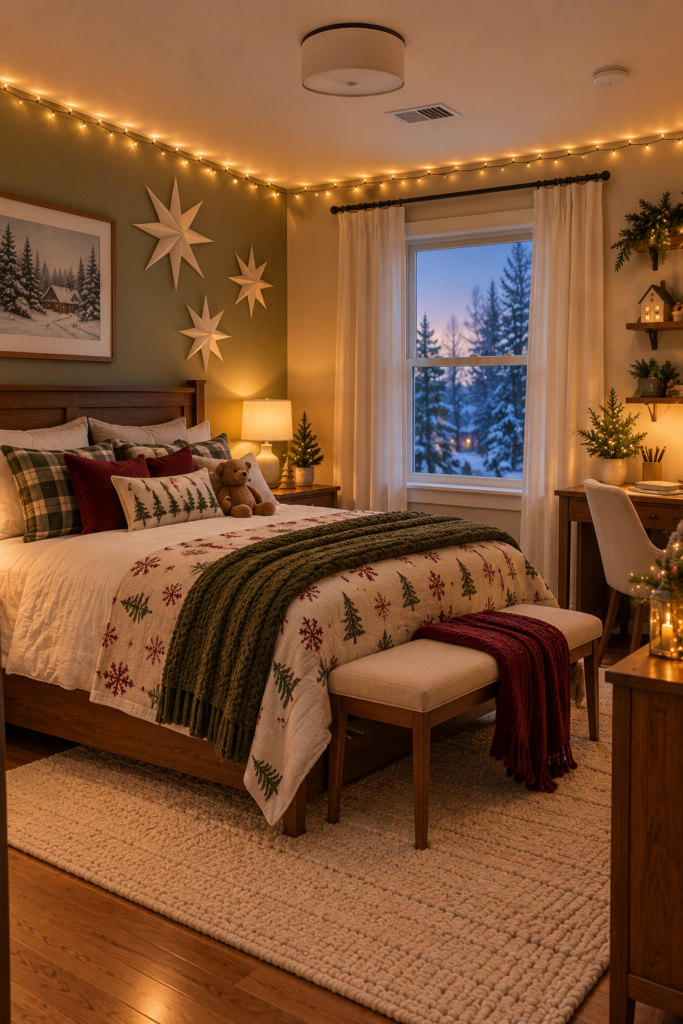
12. Create a Magical Kids’ Christmas Ceiling
Keep a child’s room simple and age-appropriate.
Use a few securely mounted warm-white decorative lights along an inaccessible upper perimeter.
Add lightweight star shapes to the wall rather than suspending loose decorations above the bed.
Use Christmas bedding below.
Avoid accessible cords, dangling loops, small detachable components, and improvised overhead fabric.
Keep lights away from bedding and curtains.
The room can still feel magical without constructing a Christmas amusement park over the mattress.
Children are generally capable of supplying the chaos themselves.
13. Create a Ceiling-to-Window Christmas Light Effect
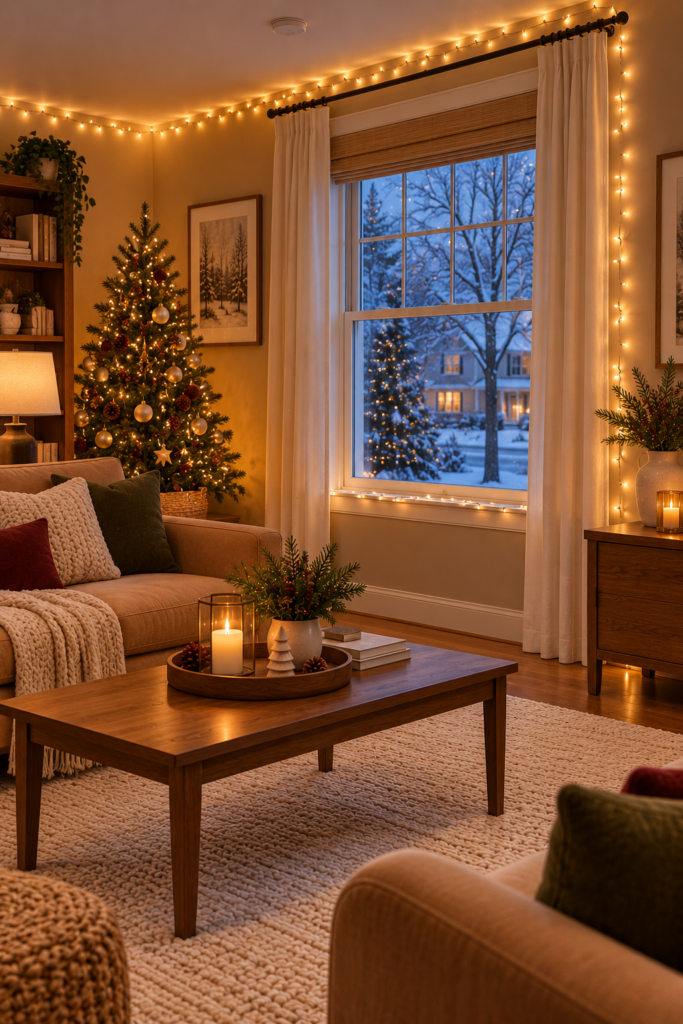
Connect the ceiling visually to a window.
Run an approved light strand along the ceiling perimeter, then continue it down the fixed wall area beside the window.
Don’t place wiring in moving window parts.
Keep locks, handles, blinds, and curtains fully functional.
The result frames both the ceiling and window with warm light.
This looks especially beautiful at dusk when the window reflects the lights.
Double sparkle.
Same electricity.
We’re getting value now.
14. Build a Full Magical Christmas Ceiling Display
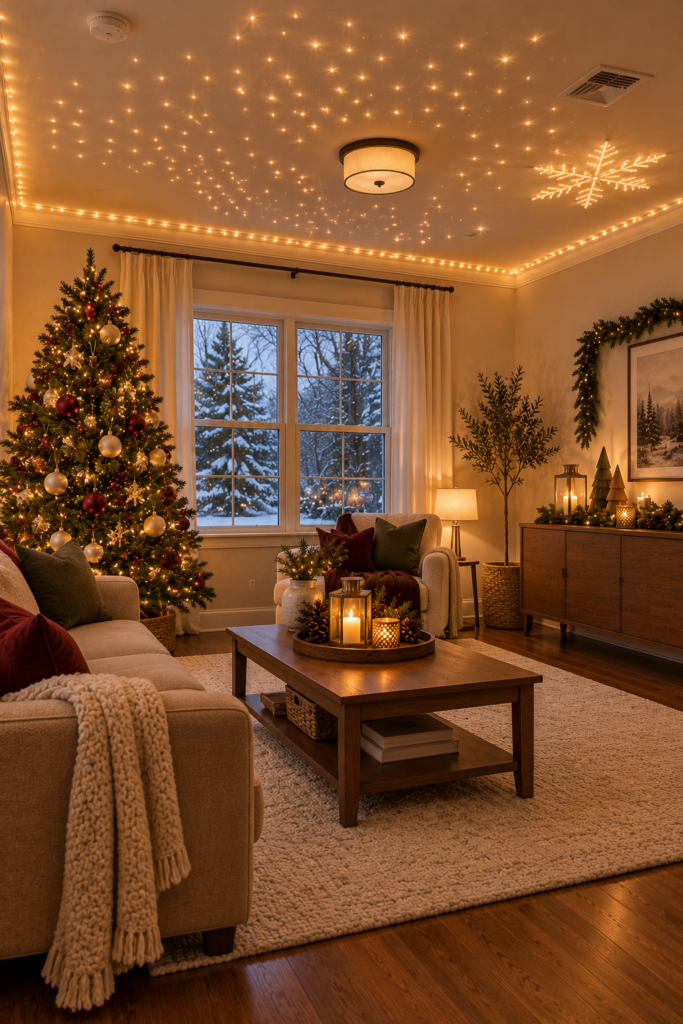
For the fullest look, combine several lighting ideas carefully.
Outline part of the ceiling perimeter.
Add a restrained starry section across the center.
Create one illuminated snowflake feature near a corner.
Use warm-white LEDs throughout.
Then keep the room decor below controlled.
Evergreen tree.
Burgundy ornaments.
Cream textiles.
Medium-walnut wood.
That’s enough.
Leave clear space around all fixtures, alarms, vents, fans, and other ceiling equipment.
Keep wires secured.
And don’t feel obligated to cover every inch.
The ceiling should look magical.
Not like the holiday-light aisle achieved consciousness and moved into your house.
How Do You Put Christmas Lights on a Ceiling?
First, check the instructions for the specific light product.
Not every strand is designed for every installation.
Then identify what the ceiling contains.
Look for:
Light fixtures.
Smoke alarms.
Carbon-monoxide alarms.
Sprinklers.
HVAC vents.
Ceiling fans.
Access panels.
Other equipment.
Keep decorative lights and mounting materials clear of anything that needs ventilation, detection range, movement, maintenance access, or heat clearance.
Choose an attachment method appropriate for both the ceiling surface and the lights.
Avoid damaging electrical cords with nails, staples, screws, or other fasteners.
And don’t attach decorations to safety equipment.
How to Hang Christmas Lights From a Ceiling Without Nails
Depending on the ceiling surface, light weight, and product instructions, suitable removable mounting products may be an option.
Follow the mounting-product instructions carefully.
Check:
Surface compatibility.
Weight rating.
Application method.
Removal method.
Don’t assume every removable hook or adhesive works on every painted ceiling.
Textured ceilings can be particularly tricky.
If the attachment isn’t reliable, choose an upper-wall installation instead.
A slightly lower light strand is preferable to lights falling onto someone’s dinner.
Christmas Lights on Ceiling Ideas for a Bedroom
Try:
Perimeter lights.
Starry ceiling section.
Reading nook lighting.
Simple controlled canopy effect.
Keep electrical decorations away from bedding.
Avoid loose strands directly above sleeping areas.
Control cords near the bed.
Don’t place plugs where furniture can crush them.
Keep window access and ventilation clear.
And consider brightness.
A magical Christmas ceiling becomes considerably less magical when you’re trying to sleep beneath approximately 4,000 lumens.
Soft lighting wins.
Christmas Lights on Ceiling Ideas for the Living Room
Living rooms can handle slightly larger displays.
Try:
Full perimeter outline.
Beam lighting.
Starry section.
Ceiling-to-window lighting.
Illuminated snowflakes.
Coordinate the light color with the rest of the room.
Warm-white lights work especially well with:
Evergreen.
Burgundy.
Cream.
Walnut.
Aged brass.
The lights should support the Christmas decor below rather than competing with it.
Christmas Lights on Ceiling Ideas for a Dining Room
Keep the installation structured.
A rectangular border above the table works beautifully.
Or use simple perimeter lights.
Keep decorative strands safely separated from the pendant or chandelier unless the fixture and light product are specifically designed to work together.
Don’t allow strands to hang low over food.
And avoid creating electrical cords near serving areas.
The Christmas ham already has enough responsibilities.
Christmas Lights on Ceiling Ideas for Small Rooms
Keep it simple.
One perimeter line may be enough.
Or decorate only one corner.
A reading nook can have its own small illuminated ceiling zone.
Small rooms don’t benefit from dozens of crossing strands.
They can quickly make an eight-foot ceiling feel visually lower.
Keep the pattern close to the ceiling.
Use warm-white lights.
Leave plenty of plain ceiling visible.
Christmas Lights on Ceiling Ideas for Apartments
Before installing anything, check lease or building rules if applicable.
Use lightweight decorations.
Choose suitable removable mounting methods where permitted.
Avoid damaging ceiling finishes.
Don’t interfere with sprinklers, alarms, vents, or building safety equipment.
A perimeter installation along the upper wall may be easier than attaching directly to the ceiling.
It’s also easier to remove.
Future security deposit says thank you.
Christmas Lights on Ceiling Ideas Without a Christmas Tree
Ceiling lights can create Christmas atmosphere even without a tree.
Try perimeter lighting.
Add illuminated snowflakes.
Create a simple ceiling tree shape.
Use paper stars on the walls.
Add evergreen to a console.
The warm light itself establishes much of the seasonal mood.
This is especially useful in apartments where a full-size tree would occupy half the living room.
Warm White Christmas Lights on the Ceiling
Warm white is the easiest option for cozy interiors.
It works with:
Burgundy.
Evergreen.
Cream.
Brown.
Natural wood.
Muted gold.
Camel.
Warm light also tends to blend naturally with common residential 2700K–3000K lamps.
That helps the decorative lights feel integrated rather than disconnected from the room.
Multicolor Christmas Lights on the Ceiling
Multicolor lights can work beautifully in playful rooms.
Keep the rest of the decor relatively simple.
Use one clean ceiling pattern.
A perimeter line is enough.
Avoid combining multicolor lights with several other complicated ceiling decorations.
The lights already provide plenty of visual activity.
They don’t need backup dancers.
Christmas Ceiling Lights With Paper Stars
Paper stars can complement ceiling lighting beautifully, but don’t attach combustible paper directly to electrical light strands unless the product is specifically designed for that use.
Instead, mount paper stars separately with appropriate clearance.
Keep them away from hot fixtures.
Use warm cream or white.
Let the LED lights provide the glow around them.
Separate installation.
Same visual effect.
Much more sensible.
Christmas Ceiling Lights With Snowflakes
Use purpose-made lightweight illuminated snowflakes if appropriate.
Or mount non-illuminated lightweight snowflakes separately from the light strands.
Use three different sizes.
Keep them grouped in one section.
Don’t cover smoke alarms, sprinklers, vents, or light fixtures.
A little negative space makes the snowflakes more visible anyway.
Christmas Ceiling Lights With Garland
Be careful when combining electrical lights with greenery.
Follow the light and garland product instructions.
Keep both away from hot fixtures.
Don’t cover ventilation.
Fresh greenery dries indoors and can become increasingly combustible.
Artificial greenery is not automatically noncombustible.
For many rooms, keeping greenery on the walls, mantel, or furniture while using only lights on the ceiling is simpler.
The ceiling doesn’t need to carry the entire Christmas inventory.
How to Make Ceiling Christmas Lights Look Expensive
Use one light color.
Warm white is easiest.
Keep lines straight or intentionally curved.
Control wiring.
Use repetition.
Leave negative space.
Coordinate the room below.
For example:
Warm ceiling lights.
Evergreen tree.
Burgundy ornaments.
Cream textiles.
Walnut furniture.
That’s enough.
Messy wires will make even expensive lights look temporary.
A simple, carefully installed $20 strand can look far better than a complicated pile of lighting equipment.
How to Keep Ceiling Christmas Lights From Looking Messy
Plan before mounting.
Decide exactly where the strand will begin and end.
Identify the outlet.
Plan the cord route.
Mark major attachment points if needed.
Keep curves intentional.
Avoid random sagging.
Don’t cross wires unnecessarily.
And don’t keep adding strands just because you own them.
The fact that another 30 feet of lights exists in the storage bin is not a design requirement.
Stay strong.
How to Hide Christmas Light Cords
Plan the power source first.
Run cords along appropriate fixed edges rather than across open floors.
Use cord-management products suitable for the surface and application.
Keep plugs accessible.
Don’t run cords underneath rugs.
Don’t pinch them behind furniture.
Don’t route them through doors or windows where they can be damaged.
And don’t paint electrical cords to hide them unless the manufacturer specifically permits it.
If a safe cord route can’t be achieved, change the design.
The outlet ultimately gets veto power.
Can Christmas Lights Touch the Ceiling?
Follow the manufacturer’s installation instructions for the specific product.
Different light products have different mounting and clearance requirements.
Use mounting methods that don’t damage the wiring.
Don’t trap cords against heat sources.
Keep lights away from fixtures or equipment requiring clearance.
And never assume a decorative strand can be installed somewhere simply because it physically fits.
Product instructions beat Pinterest every time.
Painful, but true.
Keep Christmas Lights Away From Sprinklers
Never attach Christmas lights, garland, ornaments, hooks, or other decorations to fire sprinklers or sprinkler piping.
Don’t block sprinkler coverage.
Maintain the clearance required by applicable building and fire-safety rules.
If you’re unsure about the required clearance in a particular building, keep the entire decorative installation well away from the sprinkler system and follow building guidance.
Sprinklers are not decorative hooks.
Not even in December.
Keep Smoke and Carbon-Monoxide Alarms Clear
Don’t cover alarms with lights or decorations.
Don’t attach strands to them.
Don’t block their openings.
Don’t create dense decorative material immediately around them.
They need to remain visible, accessible, and able to function as designed.
The same principle applies to other safety equipment.
Christmas decorations are temporary.
Safety devices remain on duty.
Keep Christmas Lights Away From Ceiling Fans
Don’t attach lights to ceiling-fan blades.
Don’t wrap wires around moving components.
Don’t hang strands where the fan can catch them.
Maintain appropriate clearance.
If the fan needs to operate during the season, plan the decorative lighting completely outside its movement zone.
Christmas lights and rapidly rotating blades are not a collaboration worth exploring.
Keep Ceiling Vents Clear
Don’t cover HVAC supply or return vents.
Don’t attach lights across vent openings.
Maintain airflow.
Also keep mounting materials out of access panels that may need servicing.
A Christmas display shouldn’t interfere with heating the room.
Especially considering we’re decorating for winter.
That would be impressively counterproductive.
Christmas Lights on Ceiling Safety
Use products appropriate for indoor use.
Inspect light strands before installation.
Don’t use damaged wires, plugs, or sockets.
Follow manufacturer connection limits.
Don’t overload outlets.
Keep cords out of walking paths.
Don’t run cords under rugs.
Don’t pinch wires in doors, windows, or furniture.
Keep decorations away from hot fixtures.
Don’t attach anything to sprinklers, alarms, vents, fans, or other safety equipment.
Use secure mounting methods that don’t puncture or crush electrical wiring.
Keep lights and wires away from young children’s reach where appropriate.
And switch off or operate decorative lighting according to manufacturer guidance.
The ceiling should feel magical.
It shouldn’t require an electrician to explain what happened afterward.
How to Transition Christmas Ceiling Lights Into Winter
This is extremely easy.
Remove Christmas-specific decorations.
Take down:
Illuminated Christmas tree shapes.
Red accents.
Holiday snowflake clusters if they feel too seasonal.
Keep:
Simple warm-white perimeter lights.
A restrained starry ceiling.
Reading-nook lighting.
Beam lighting.
Pair the lights with:
Cream.
Mushroom.
Muted olive.
Brown.
Bare branches.
Evergreen without ornaments.
Suddenly the room feels cozy and wintery rather than specifically Christmas.
And because January is not famous for inspiring ambitious decorating projects, that’s a win.
How to Store Christmas Ceiling Lights
Remove the strands carefully.
Don’t yank them from the mounting points.
Inspect the wiring.
Dispose of damaged products appropriately.
Coil each strand loosely.
Avoid sharp bends.
Store lights separately so they don’t become tangled.
Keep mounting accessories together.
Label the container.
If possible, write which room the lights belonged to.
Because next December, “warm white string lights” will describe approximately 14 different objects in the storage closet.
Future-you deserves better.
Final Thoughts
The best Christmas lights on ceiling ideas for a magical holiday room use light strategically rather than covering every inch overhead.
Outline the ceiling.
Create a starry effect.
Build a controlled bedroom canopy.
Try a structured grid.
Highlight ceiling beams.
Create a border above the dining table.
Make a geometric Christmas tree.
Add illuminated snowflakes.
Pair warm lights with burgundy decor.
Create a neutral ceiling glow.
Light a reading nook.
Add safe festive lighting to an older child’s room.
Connect the ceiling visually to a window.
Or combine several restrained lighting effects for one magical Christmas room.
Keep the installation neat.
Plan the power source before hanging anything.
Secure every strand appropriately.
Control cords.
Follow product instructions.
Keep lights away from heat.
Never use sprinklers, alarms, vents, fans, or ceiling fixtures as convenient attachment points.
And don’t sacrifice normal room function for the display.
A few carefully positioned warm-white lights can completely change how a room feels after sunset without adding a single decoration to the floor.
Which means the ceiling finally gets its Christmas moment.
About time.
