
18 Kitchen Shelves Decor Ideas for Beautiful Open Storage
Kitchen shelves have two jobs: keeping everyday essentials accessible and making the kitchen feel thoughtfully decorated. When both goals are handled well, open shelving can add warmth and character without turning the countertop into another storage pile.
The secret is to start with useful objects. Plates, mugs, glasses, pantry jars, and a few well-chosen decorative pieces can create an attractive display while serving a real purpose. Natural wood, ceramics, and subtle color accents add personality without requiring every inch of the shelf to be filled.
Before styling, consider the shelf’s location, construction, and intended load. Items stored near a sink or cooktop face different conditions from those on a dry wall beside a dining nook.
Here are 18 kitchen shelves decor ideas that balance practical storage with an inviting, coordinated look.
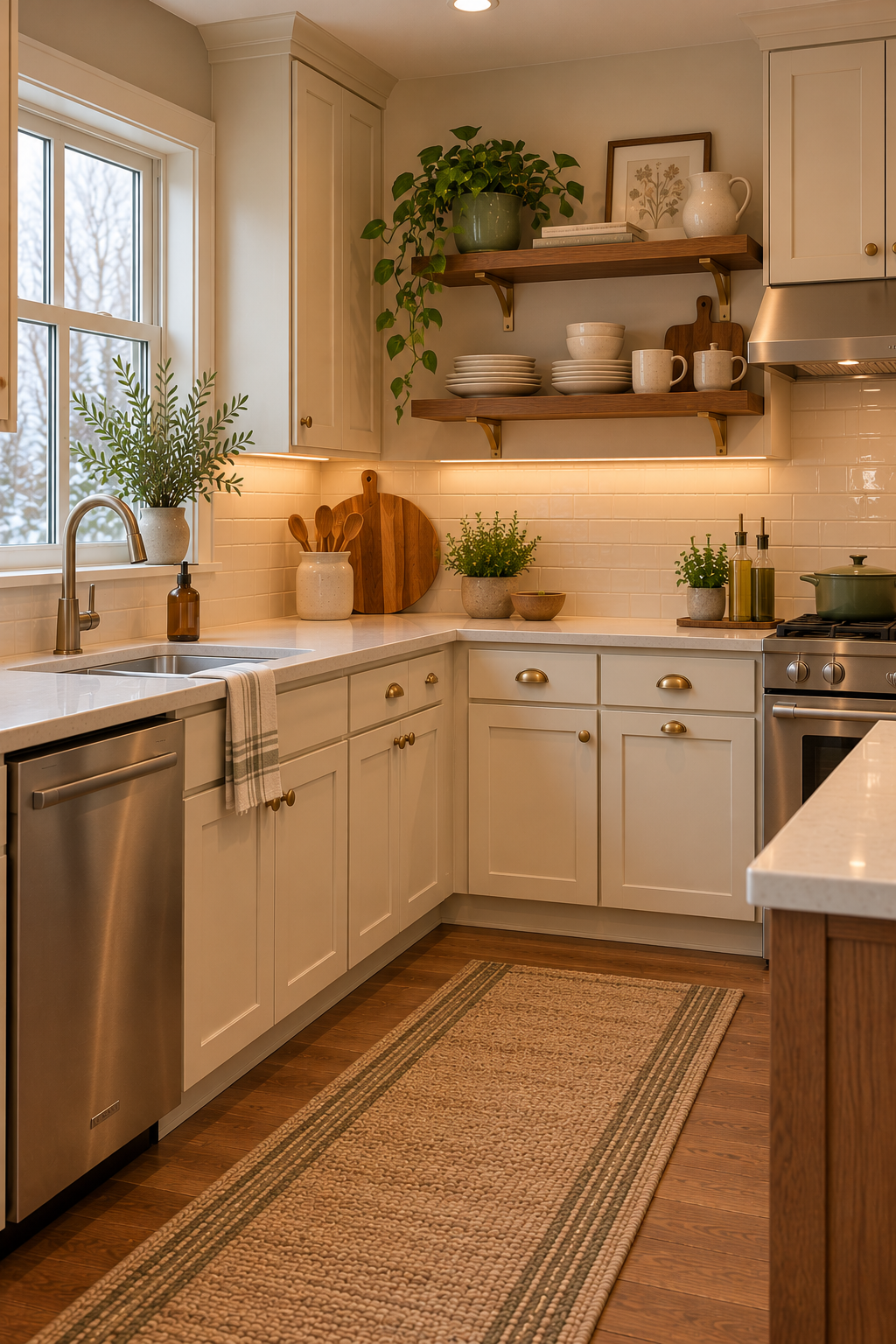
1. Style Shelves With Everyday Cream Dishes
Everyday dishes are a natural starting point for open shelving because they provide useful storage and a consistent visual element. Stack dinner plates and bowls together, then arrange mugs nearby so the items you use most often remain easy to reach.
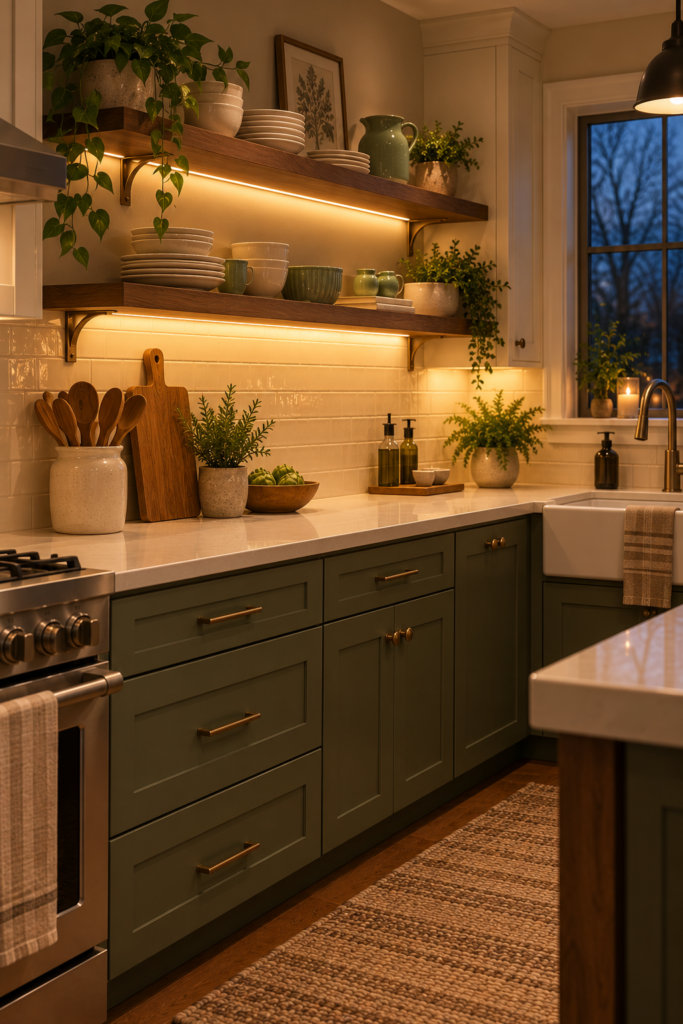
Cream ceramics work particularly well against walnut shelves, natural oak, and muted green cabinetry. Their light finish creates contrast without introducing another strong color.
Choose stacks that remain stable and comfortable to lift. Avoid placing heavy piles on high shelves, and leave enough room to remove a plate without disturbing everything beside it.
2. Mix Dishes With Glassware
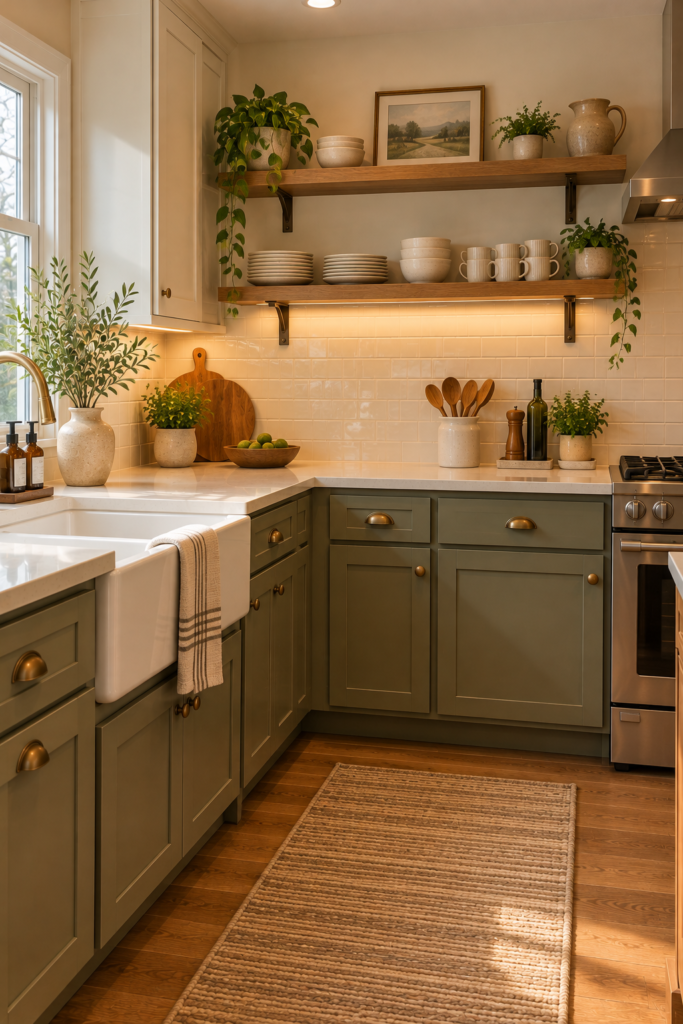
Combining opaque ceramics with clear glassware creates variety without making a shelf look crowded. Plates and bowls provide solid shapes, while glasses allow more of the background to remain visible.
Group similar glasses together and keep dishes in separate stacks. A little empty space between the groups makes the arrangement easier to use and maintain.
Consider how frequently you reach for each item. Everyday glasses belong within convenient reach, while occasional serving pieces can be stored elsewhere.
This combination works especially well with natural wood shelves and simple cabinetry because the glass adds visual lightness without introducing another color.
3. Add Handmade-Look Pottery
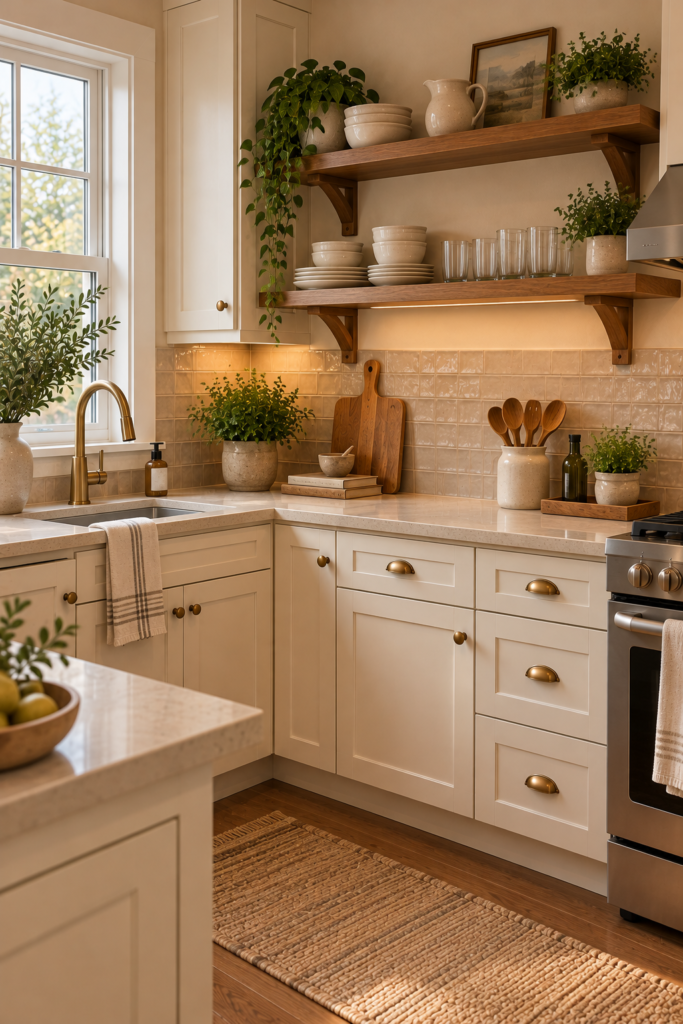
Handmade-look pottery introduces texture and individuality to a kitchen filled with straight cabinet lines and smooth countertops.
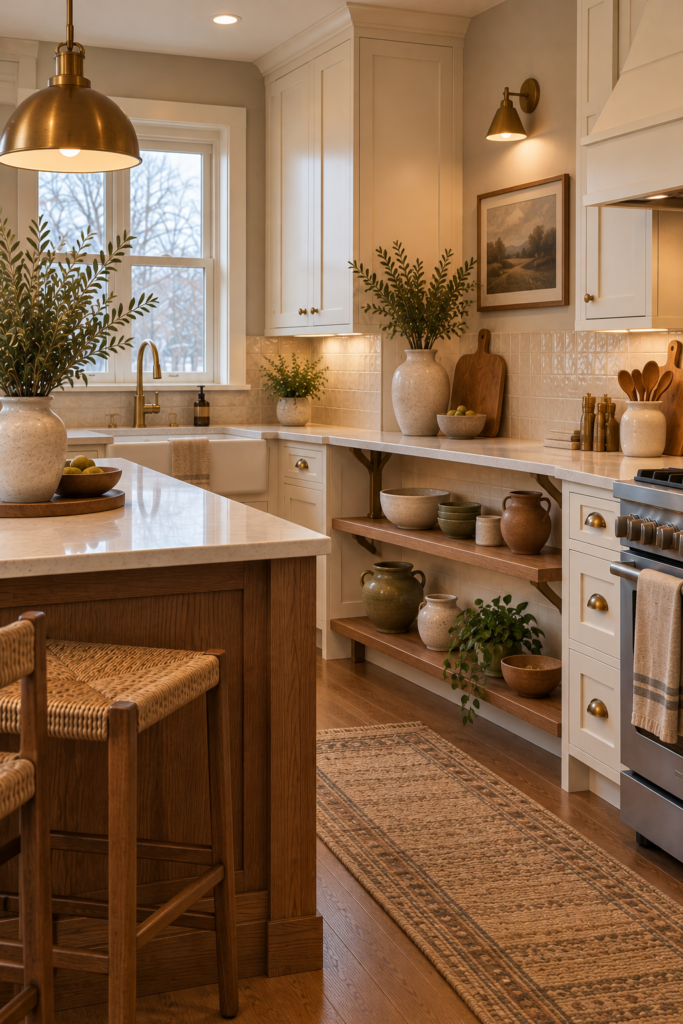
Choose a small selection of bowls, pitchers, or vases in warm brown, cream, muted olive, or dusty blue. Slight variations in shape and glaze help the display feel collected rather than overly coordinated.
Balance the arrangement with everyday dishes instead of filling the shelves entirely with decorative objects. Keep heavier pottery on lower shelves that are properly supported for its weight.
If the pottery will be used for food, check that its finish is suitable for that purpose. Decorative ceramics aren’t automatically food-safe.
4. Create a Cookbook Shelf
Cookbooks add color, texture, and a personal touch to kitchen shelving. Arrange a few upright, then place one or two horizontally to create a different height.
A small bowl or simple vase can complete the arrangement without making the shelf feel busy. Choose books you actually consult, especially those you want close to the preparation area.
Keep cookbooks in a dry location away from sink splashes, steam, and cooking grease. A shelf near a dining nook may be more suitable than one directly above a cooktop.
Leave enough room to remove books without knocking over neighboring objects.
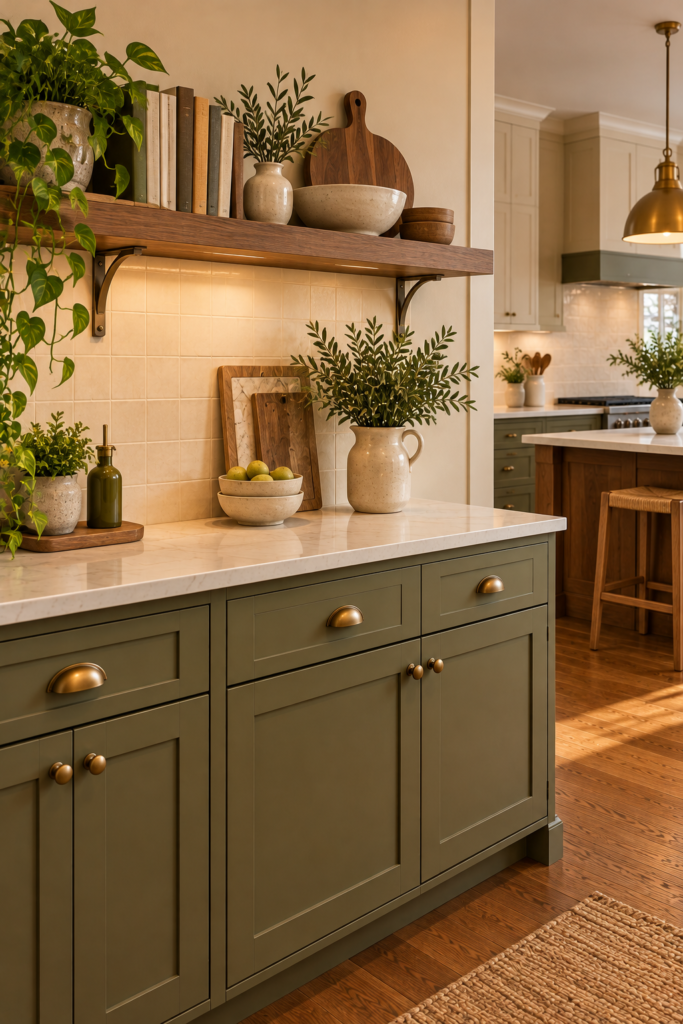
5. Add Small Woven Baskets
Woven baskets provide a useful way to conceal small items that would otherwise make open shelving look untidy. Use them for lightweight supplies such as napkins, tea packets, or individually wrapped accessories.
Natural fibers complement wood shelves, cream dishes, and earthy color palettes. Matching baskets create a more uniform appearance, while a few related shapes can feel more relaxed.
Choose baskets that fit the shelf comfortably and are easy to lift down. Avoid overfilling them or using them to store heavy items that could make the shelf unstable.
Keep woven materials away from significant cooking heat and areas exposed to repeated moisture.
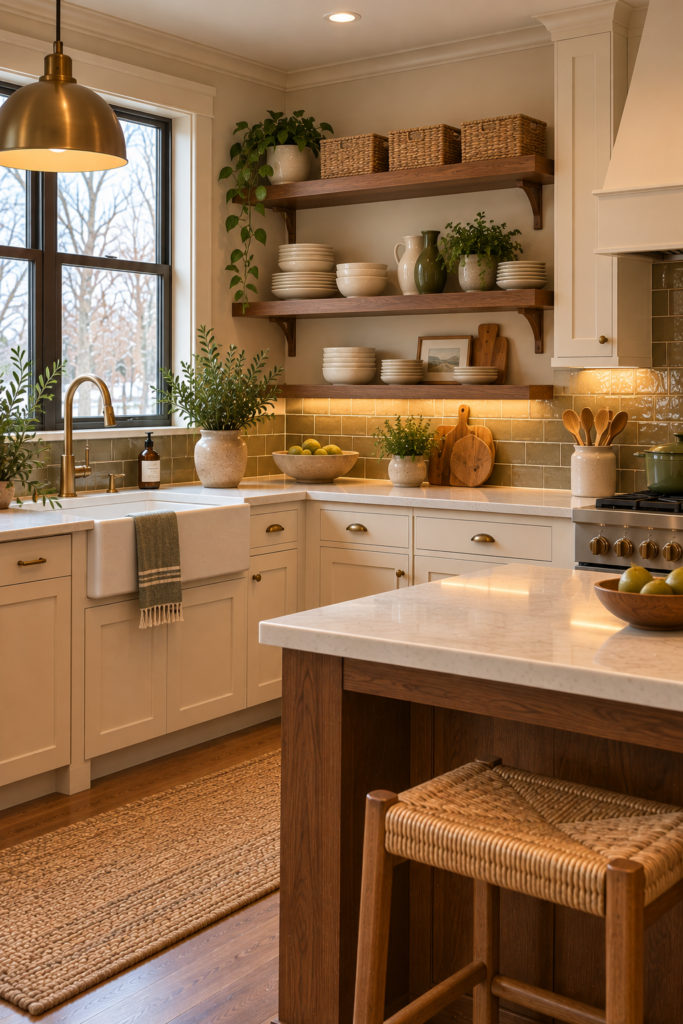
6. Display Cutting Boards Below the Shelves
Wooden cutting boards can add warmth and layered texture to the space beneath open shelving. Rather than placing heavy boards overhead, position a few securely on the counter against the backsplash.
Combine a darker walnut board with a lighter wood board for contrast, keeping the arrangement simple enough that the boards remain easy to retrieve.
Use the shelf above for lighter dishes or small ceramics. This creates visual continuity without adding unnecessary weight over the work surface.
If the boards are used for food preparation, keep them clean and dry according to their care instructions. Avoid leaning them where they could slide into the sink or obstruct the main preparation area.
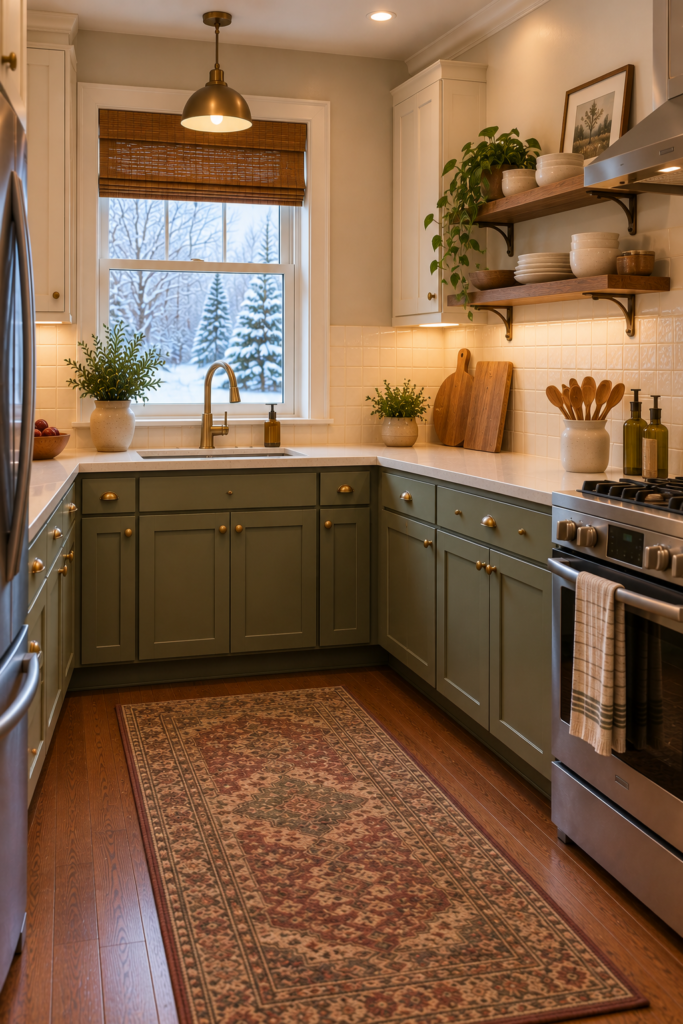
7. Add a Small Plant
A compact plant can soften the straight lines of cabinets and shelves while introducing a natural green accent.
Choose a plant suited to the light available in your kitchen. A bright window may support different plants from a dim corner, so consider the actual conditions rather than choosing solely for appearance.
Place the pot where watering won’t damage wood, counters, or nearby electrical equipment. Keep foliage away from cooking heat and leave enough room to handle dishes safely.
One small plant may provide all the greenery the display needs. If the shelf receives little natural light, consider a different decorative object rather than keeping an unsuitable plant there.
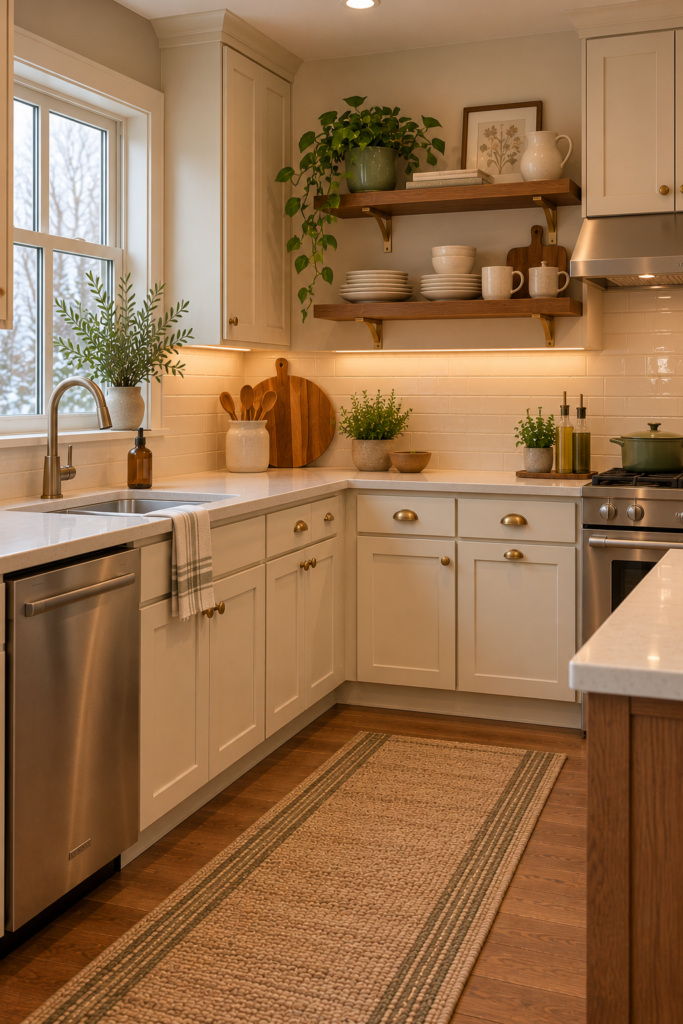
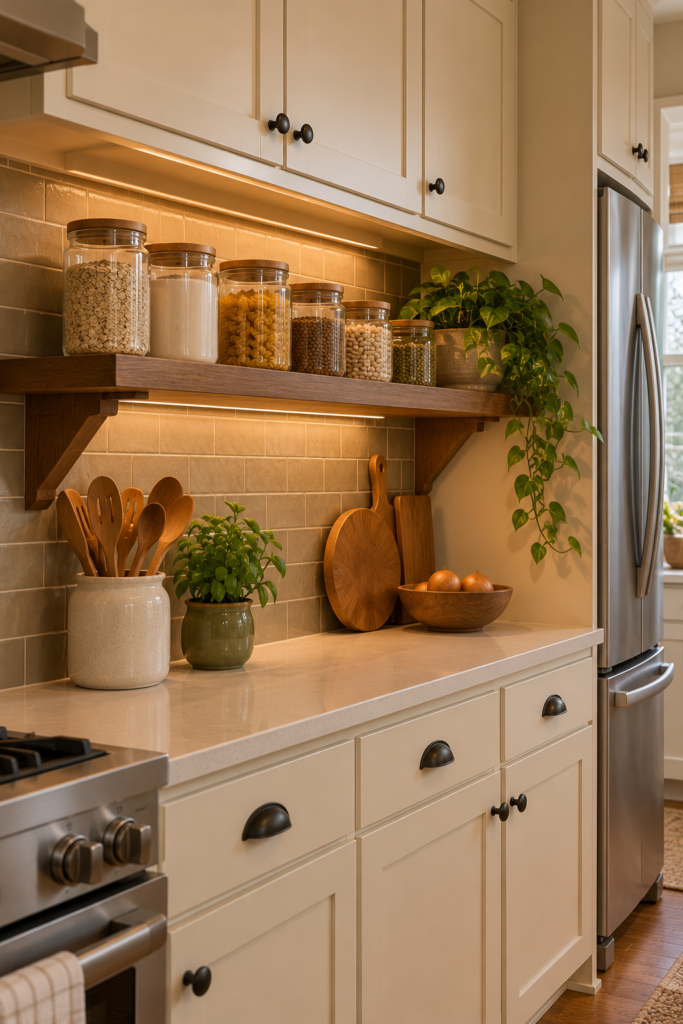
8. Use Matching Glass Jars
Clear jars can make pantry staples part of the kitchen’s decoration while keeping ingredients visible and accessible.
Use suitable airtight containers for dry goods such as pasta, rice, oats, or other ingredients that benefit from sealed storage. Group similar jars together and leave enough space to remove them safely.
Place heavier jars on lower shelves and avoid positioning glass containers close to an edge. Choose containers that are easy to clean and refill.
Labels can be helpful when ingredients look similar, but elaborate lettering isn’t necessary. Simple, readable labels are more useful than decorative details that make the contents harder to identify.
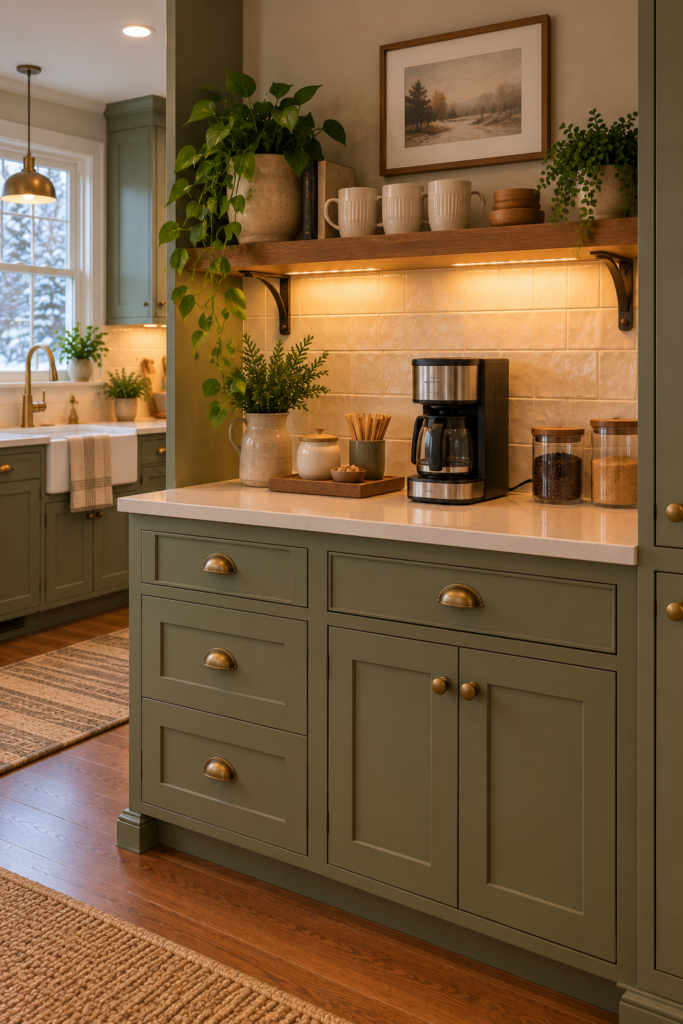
9. Create a Coffee Shelf
A dedicated shelf for mugs and coffee accessories can make a compact coffee station feel organized without consuming additional counter space.
Arrange mugs together and add a small container for filters or other lightweight accessories. Keep the coffee maker on a stable countertop below or beside the shelf.
Check the appliance’s instructions for steam and clearance requirements. Shelves and stored items should not interfere with ventilation, and electrical cords should be routed safely without crossing a walking path.
Choose a shelf with suitable structural support for the intended load. Ceramic mugs add up in weight, particularly when several are stored together.
Keep the immediate preparation area clear so the station remains convenient during busy mornings.
10. Add Framed Art in a Dry Zone
A small framed print can make open shelving feel more personal. Botanical artwork, abstract shapes, or a simple landscape can introduce a decorative element without requiring additional furniture.
Choose artwork that complements the kitchen’s existing colors. A small print in a neutral frame works well beside cream dishes and natural wood, while a muted green or burgundy accent can add contrast.
Position the frame in a dry area away from sink splashes, grease, and cooking heat. Make sure it sits securely and won’t be knocked over when nearby items are removed.
One carefully chosen print is usually enough. Leave room for functional items so the shelf remains useful rather than becoming a miniature gallery.
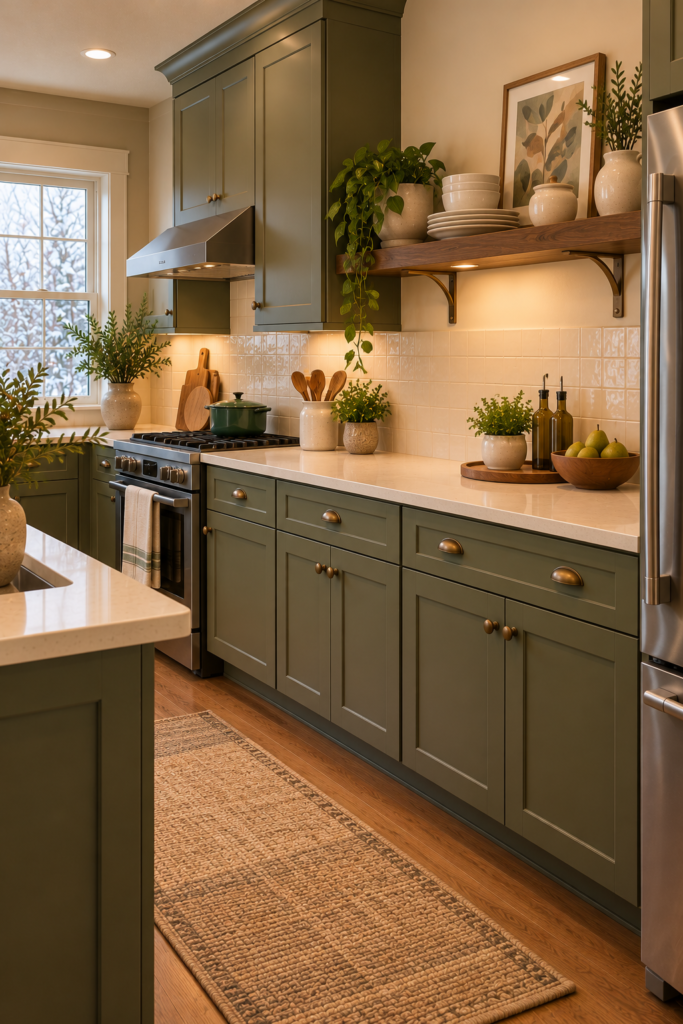
11. Style With Muted Olive Accents
Muted olive provides a natural color accent that pairs well with cream ceramics and walnut shelves.
Repeat the color across a few small objects, such as a bowl, vase, or planter. Using the same shade in several places helps connect the display without making everything look like a matching set.
Vary the shapes and heights of the objects, and leave some visible shelf space between them.
If the cabinetry is already green, choose accessories that complement its undertone rather than trying to match it exactly. Related shades can create a more layered appearance.
Keep heavier ceramics on appropriately supported shelves and reserve higher positions for lighter objects.
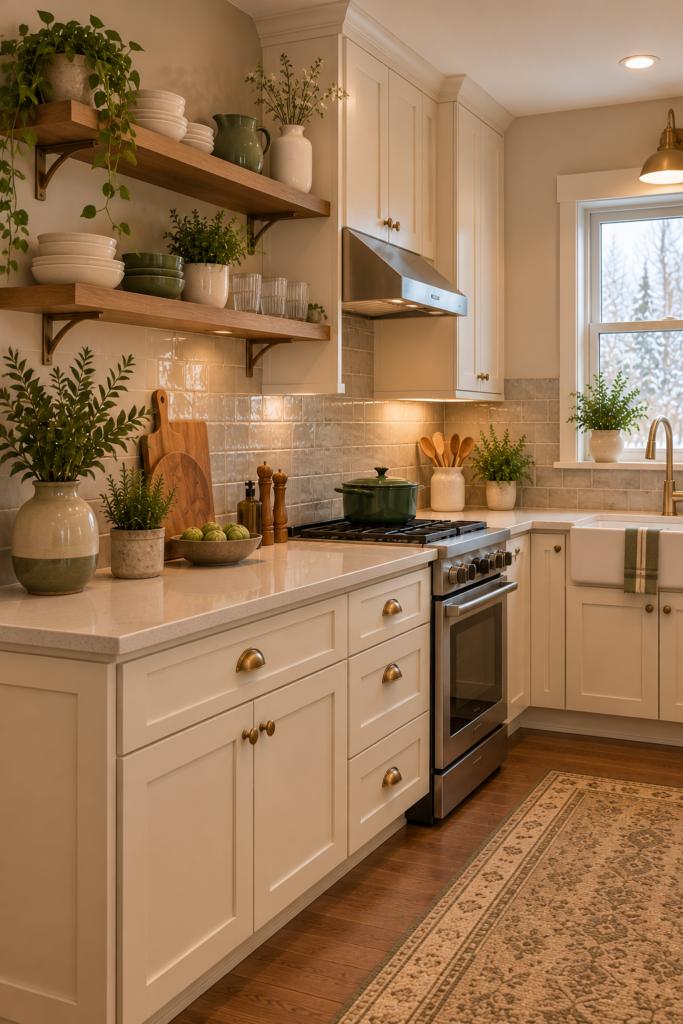
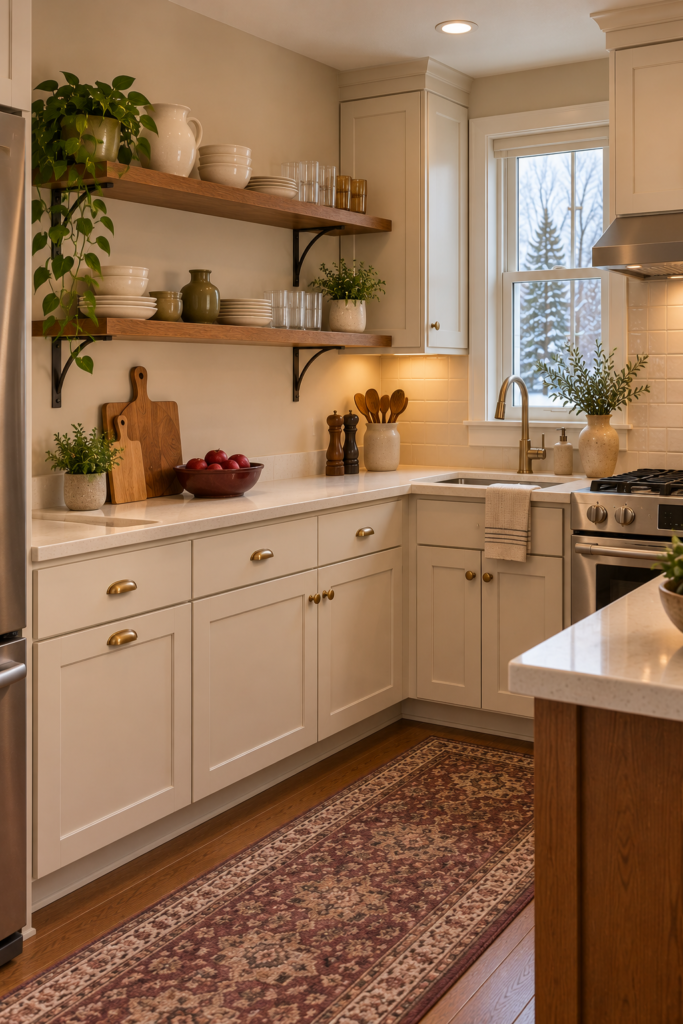
12. Add a Touch of Burgundy
A small burgundy accent can add depth to a kitchen shelf dominated by lighter ceramics and natural wood.
Try a single pitcher, bowl, or decorative object paired with cream dishes and muted olive accessories. The deeper color creates a focal point without requiring a full palette change.
Consider the amount of burgundy already present in the kitchen. If the room has a bold backsplash or dark cabinetry, a smaller accent may be sufficient.
Choose an object that suits the shelf’s purpose and proportions. A useful pitcher or serving bowl can provide the same visual effect as a purely decorative piece.
Keep the surrounding arrangement simple so the accent remains distinctive.
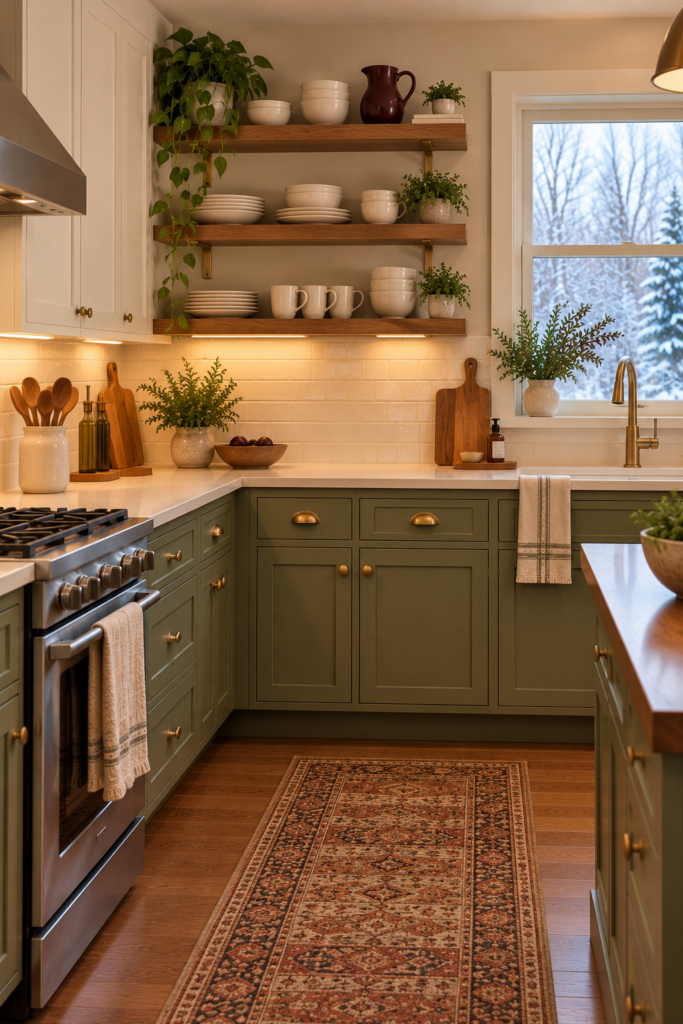
13. Create Symmetrical Shelves
Symmetrical shelving can create a calm, orderly appearance, especially when shelves are positioned on either side of a window or another central feature.
Repeat similar dish stacks, glassware arrangements, or small planters on both sides. The objects don’t have to be identical, but comparable shapes and visual weight help the arrangement feel balanced.
Keep the window unobstructed and preserve access to its handles and hardware.
Before installing shelves on either side of a window, check the available wall space and confirm that the proposed supports can be securely mounted. Avoid placing objects where they could interfere with window operation.
This arrangement works particularly well in kitchens with traditional cabinetry and a clearly defined central window.
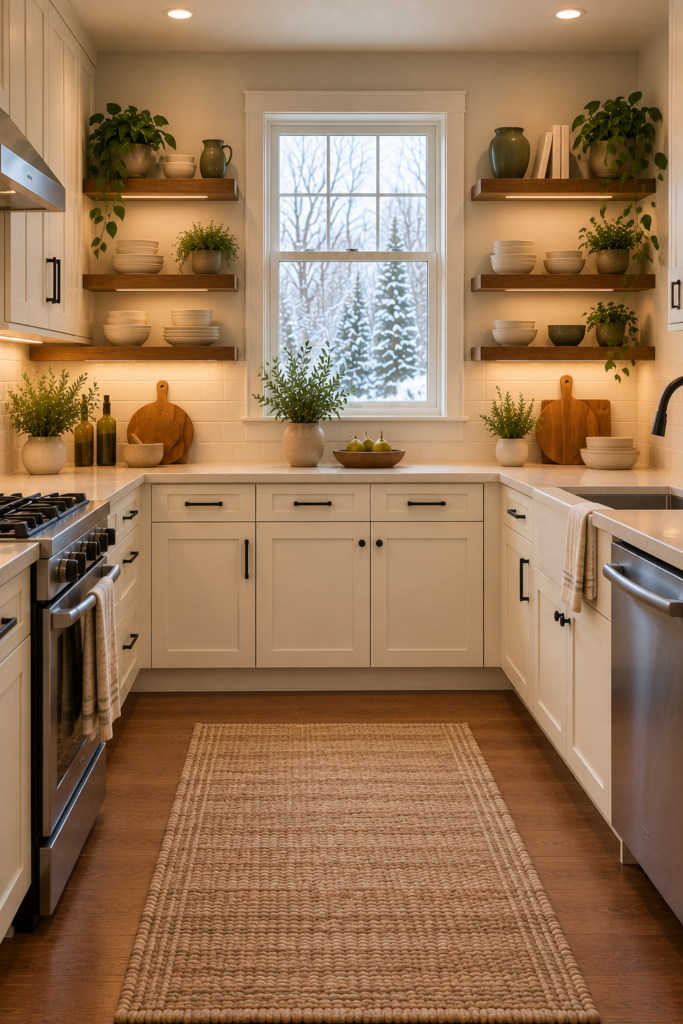
14. Style Corner Shelves Simply
Corner shelves can make use of awkward wall space that might otherwise remain empty. They are useful for mugs, small bowls, and lightweight decorative pieces.
Choose a purpose-built corner system or shelves installed with suitable structural support. Follow the manufacturer’s instructions and make sure the mounting method matches the wall construction and intended load.
Keep the arrangement simple because objects placed deep in a corner can be harder to reach. Frequently used items should remain accessible without requiring you to move everything else.
Avoid placing heavy cookware or fragile objects where they could fall onto the countertop or work area below.
A few well-spaced pieces usually work better than filling every corner with storage.
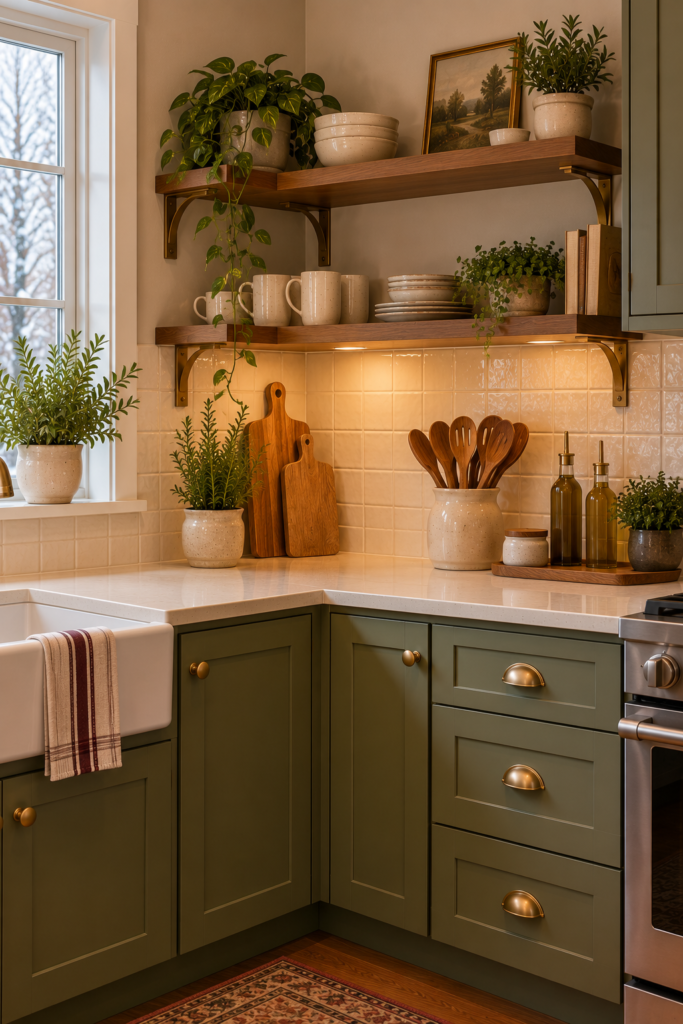
15. Mix Open Shelves With Closed Cabinets
Open shelving and closed cabinetry can work together to provide both attractive display space and practical concealed storage.
Use open shelves for everyday dishes, a few glasses, and selected ceramics. Keep less attractive supplies, bulky equipment, and miscellaneous items inside closed cabinets.
This combination can be particularly useful in a small kitchen where completely open storage would make the room feel busy.
Plan the shelf arrangement around the items you actually use. A small section of open shelving may provide the desired decorative effect without requiring you to display every container and accessory.
Choose finishes that connect the two storage types, such as wood shelves with painted cabinets or a shared hardware finish.
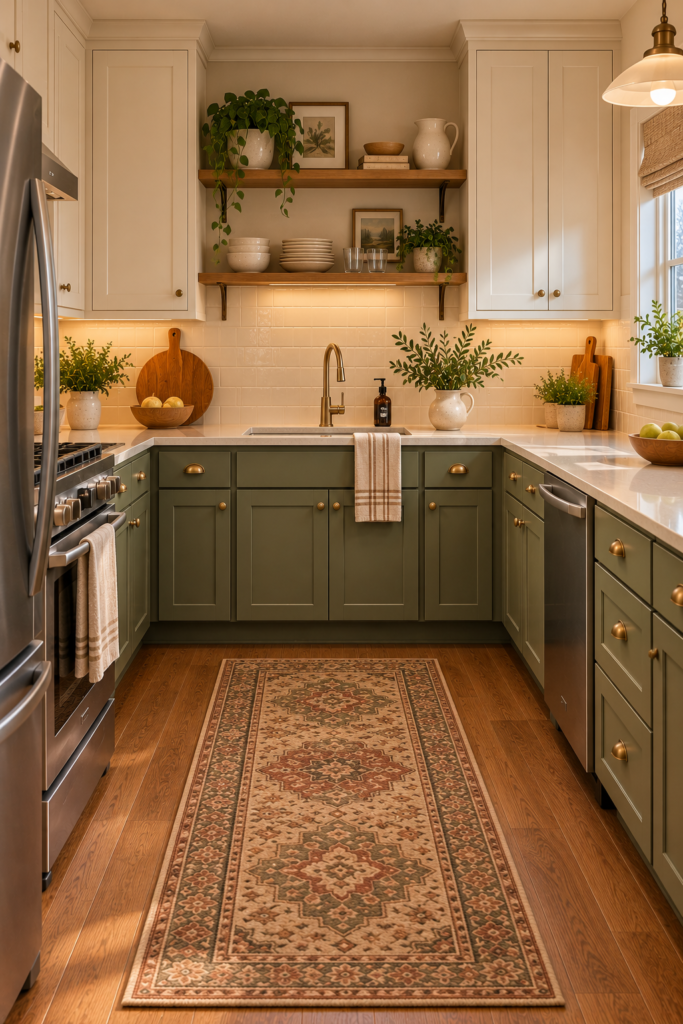
16. Add Warm Under-Shelf Lighting
Under-shelf lighting can illuminate both the display and the countertop below. It is particularly useful when upper cabinets or shelves cast shadows over a preparation area.
Choose a suitable low-profile lighting system and a color temperature that complements the kitchen’s existing illumination. Warm light can emphasize wood grain and create a comfortable evening atmosphere.
Before installation, check the product’s requirements for mounting, ventilation, electrical connections, and use near kitchen surfaces. Route wiring neatly and keep it away from water, heat, and moving appliance parts.
Do not rely on decorative lighting as a substitute for adequate task lighting. The work surface should remain clearly visible during food preparation.
17. Create Seasonal Shelf Decor Without Clutter
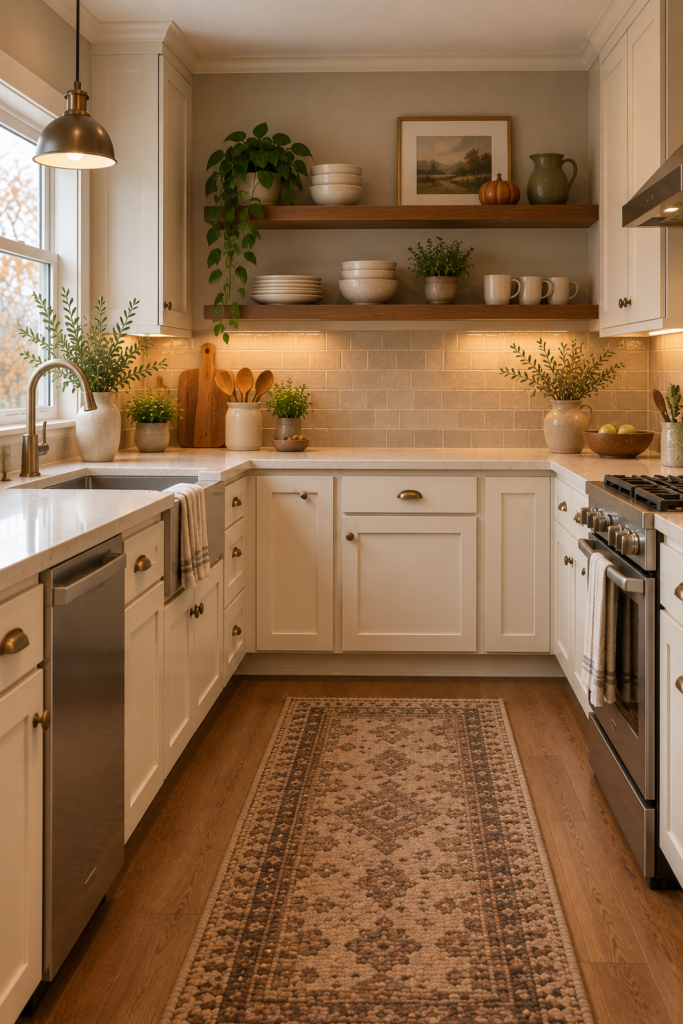
Seasonal shelf styling can refresh the kitchen without requiring a complete rearrangement.
In autumn, introduce a small warm-brown ceramic object. During winter holidays, a restrained evergreen accent can add seasonal character. In spring, a suitable small plant or muted botanical accessory may provide a lighter look.
Keep everyday dishes and frequently used items in their usual locations. Change one or two decorative pieces rather than replacing the entire display.
Choose seasonal objects that fit the shelf safely and remain clear of cooking heat, moisture, and electrical equipment.
A simple rotation also makes storage easier: keep off-season decorations together in a labeled container instead of allowing them to accumulate permanently on the shelves.
18. Keep Open Shelves Minimal
Minimal styling can be especially effective when the kitchen already contains visible wood grain, patterned tile, or colorful cabinetry.
Start with the essentials: dishes, a few glasses, and perhaps one ceramic piece or small plant. Arrange the items in groups with visible space between them.
The empty areas are part of the composition. They make it easier to retrieve objects and prevent the shelves from becoming visually crowded.
Choose items that earn their place through regular use or genuine decorative value. If a shelf becomes difficult to clean or maintain, remove a few objects rather than adding more storage containers.
A restrained display can make the kitchen feel calmer while keeping open shelving practical.
How to Decorate Kitchen Shelves Without Clutter
Begin with functional items such as plates, mugs, and glasses. Arrange them by type and frequency of use, then introduce a few decorative objects to add texture or color.
Repeat a small selection of colors and vary the heights of objects to create visual interest. Leave enough space to lift items down comfortably and clean the shelves.
Review the arrangement occasionally. If something rarely gets used and makes the shelf harder to maintain, consider storing it elsewhere.
What Should You Put on Open Kitchen Shelves?
Good options include everyday dishes, mugs, glassware, suitable pantry jars, lightweight pottery, small baskets, and a limited selection of decorative pieces.
Cookbooks and framed artwork can work well in dry locations away from sink splashes, steam, and cooking grease. Plants should suit the available light and be placed where watering won’t damage nearby surfaces.
Keep frequently used objects within comfortable reach. Higher shelves are generally better suited to lightweight items that aren’t needed every day.
Kitchen Shelf Safety
Choose shelving and hardware appropriate for the wall construction and intended load. Follow the manufacturer’s installation instructions, and seek qualified help when the mounting conditions or expected weight are uncertain.
Keep heavy or fragile items away from shelf edges and avoid placing them above areas where people regularly stand or work. Store heavier dishes on lower shelves whenever practical.
Keep combustible materials away from cooking heat, and avoid placing shelves where they interfere with ventilation, outlets, switches, windows, or appliance clearances. Protect moisture-sensitive items from sink splashes and steam.
Inspect brackets and fixings periodically for signs of loosening or damage.
Final Thoughts
The best kitchen shelves decor ideas combine useful storage with a few thoughtful details. Everyday dishes, glassware, pottery, baskets, cookbooks, plants, and subtle color accents can create a display that feels personal without making the kitchen harder to use.
Start with the items you need most, choose shelving that is properly supported, and leave enough space to reach everything comfortably. A little texture and color can add character, but the most successful arrangement is one that works just as well during everyday cooking as it does when the kitchen is tidy.
