
14 Winter Kitchen Decor Ideas for a Warm Seasonal Refresh
The kitchen can feel weirdly empty once Christmas decor comes down.
One week you’ve got garland, holiday mugs, tiny trees, and enough red ribbon to gift-wrap the refrigerator.
Then January arrives.
Suddenly?
Countertop.
Just countertop.
The good news is that winter kitchen decor doesn’t need to look like Christmas Part Two.
You can keep the warmth while removing the obviously holiday-specific pieces.
Think warm cream, mushroom taupe, medium walnut, muted olive, deep burgundy, evergreen, natural pinecones, warm lighting, and practical textiles.
And practical matters here.
A kitchen isn’t a decorative showroom.
You need to chop vegetables.
Open cabinets.
Use the toaster.
Reach outlets.
Wash dishes.
Occasionally place an absurdly large grocery bag somewhere while wondering why you bought so much.
So these Winter Kitchen Decor Ideas focus on small seasonal changes that leave the kitchen usable.
Here are 14 Winter Kitchen Decor Ideas for a Warm Seasonal Refresh.
1. Create a Simple Winter Countertop Tray
Start with one contained decorating zone.
Use a small wood or ceramic tray.
Add a matte warm-cream vase.
Place two or three restrained evergreen branches inside.
Add a small cream ceramic bowl.
Finish with two natural pinecones.
That’s enough.
Keep the tray away from the cooktop, sink, appliance vents, and primary food-prep space.
The beauty of a tray is that you can move the entire arrangement when you need more counter room.
Seasonal decor with an evacuation plan.
Excellent.

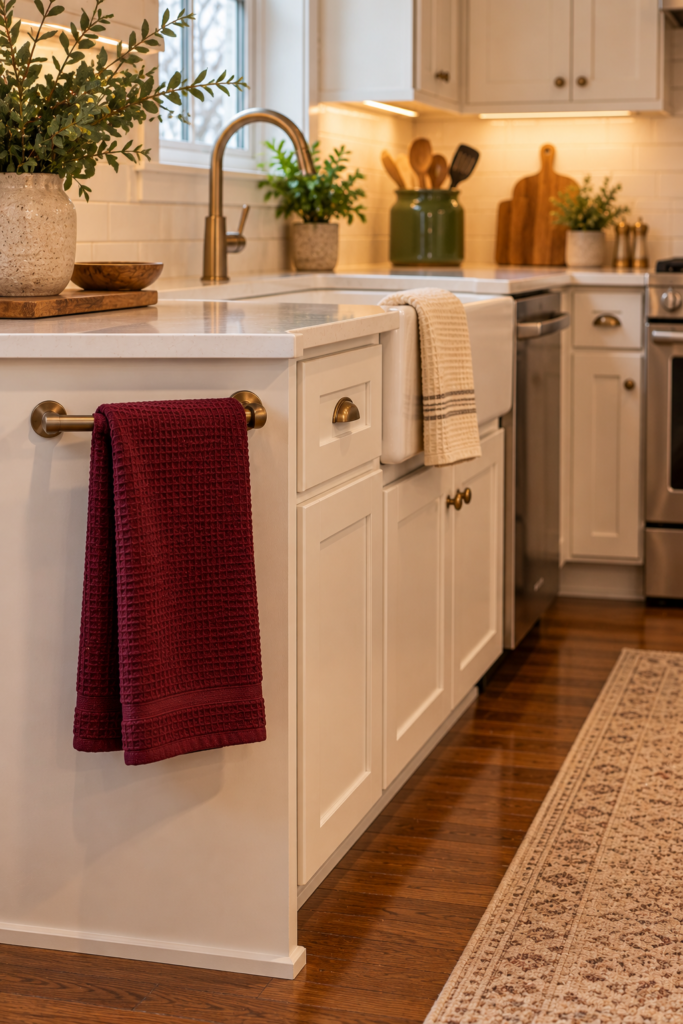
2. Add Deep Burgundy Kitchen Towels
One of the easiest winter updates?
Change the towels.
Use deep muted burgundy.
Pair them with warm cream.
Hang one neatly from an appropriate towel bar or oven handle only if the appliance manufacturer permits it and it remains safely away from heat.
Keep another folded near the sink where it won’t become soaked constantly.
Burgundy adds warmth without looking overtly Christmas once the holiday motifs disappear.
No snowmen.
No reindeer.
No towel informing everyone that cookies are currently baking.
Just color.
Sometimes that’s enough.
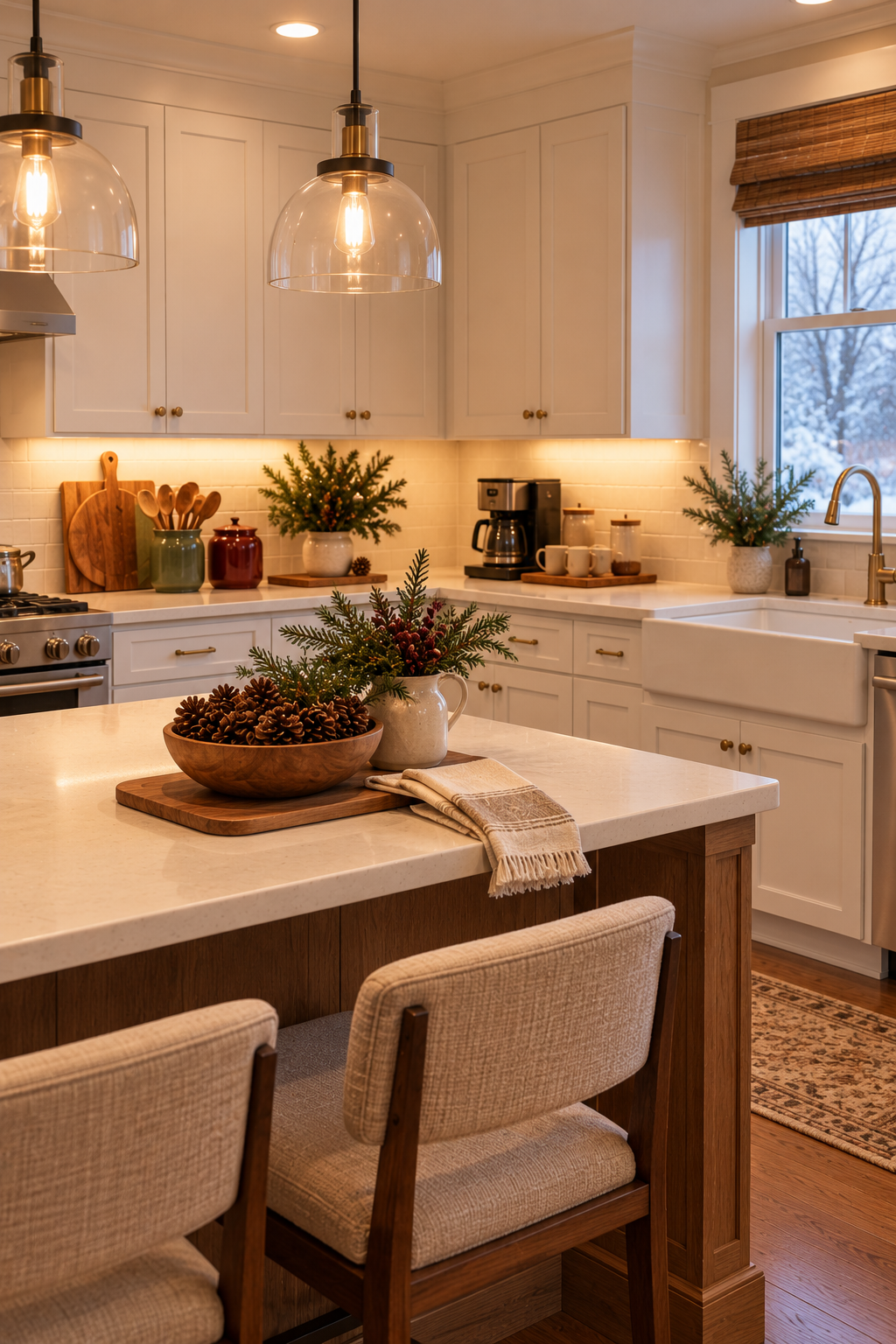
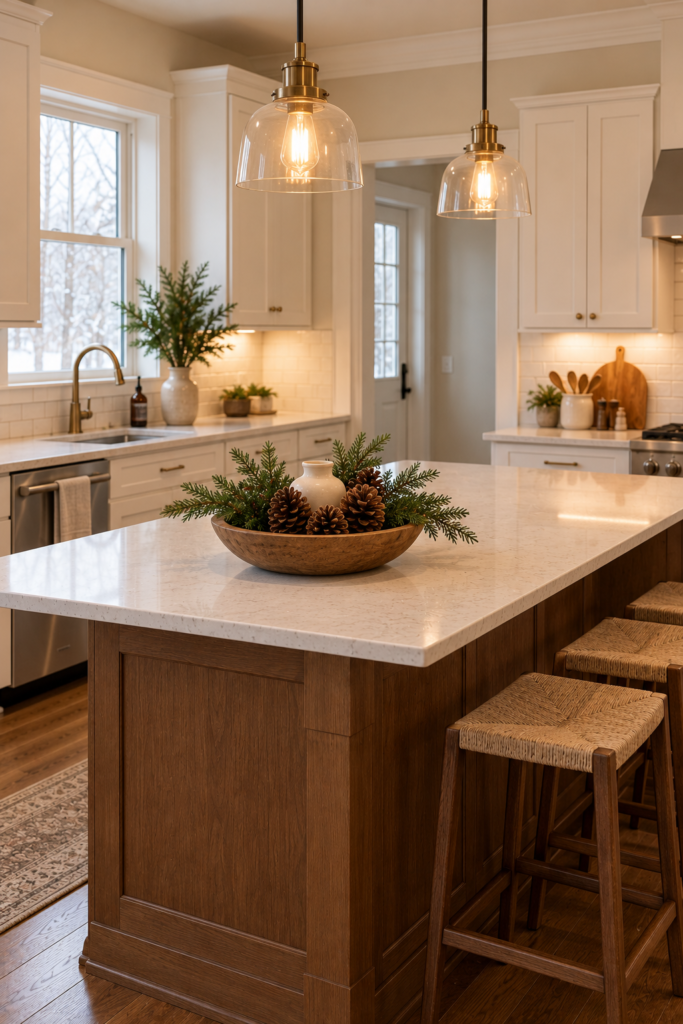
3. Style a Winter Kitchen Island Centerpiece
Keep the centerpiece compact.
Use a shallow wooden bowl.
Add several clean pinecones.
Include a few restrained evergreen sprigs.
Place one warm-cream ceramic object in the center.
Done.
Keep the arrangement low enough that it doesn’t dominate the island.
And leave plenty of space for cooking, serving, homework, coffee, groceries, and the mysterious pile of mail that every kitchen island eventually attracts.
If you need the entire island, move the bowl.
Easy.
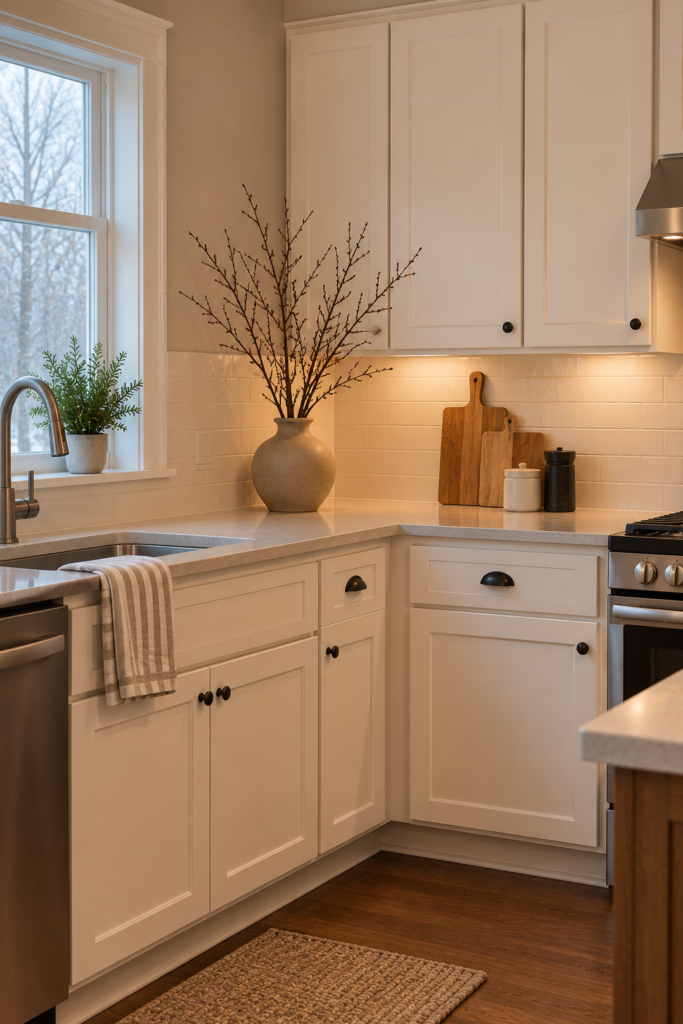
4. Bring in Bare Winter Branches
Branches aren’t just for living rooms.
Use a sturdy ceramic vase.
Choose mushroom, cream, or muted olive.
Add several clean, dry bare branches.
Keep the arrangement relatively short.
Kitchen counters don’t need a six-foot branch installation attempting to interact with the upper cabinets.
Place the vase on an unused counter corner or sideboard.
Keep branches away from cooking surfaces, overhead cabinets that need to open, and active work zones.
Simple.
Sculptural.
Very January.
5. Add a Small Evergreen Arrangement
Evergreen can easily transition from Christmas to winter.
The trick?
Remove the Christmas.
No ornaments.
No bows.
No bells.
No red berries.
Use a small cream ceramic vase.
Add three or four evergreen branches.
Let them fall naturally.
Place the arrangement away from heat and food-prep areas.
If using fresh greenery, determine whether your specific material should be kept in water and protect the counter from moisture.
Monitor it as it dries.
The evergreen stays.
Santa has left the building.
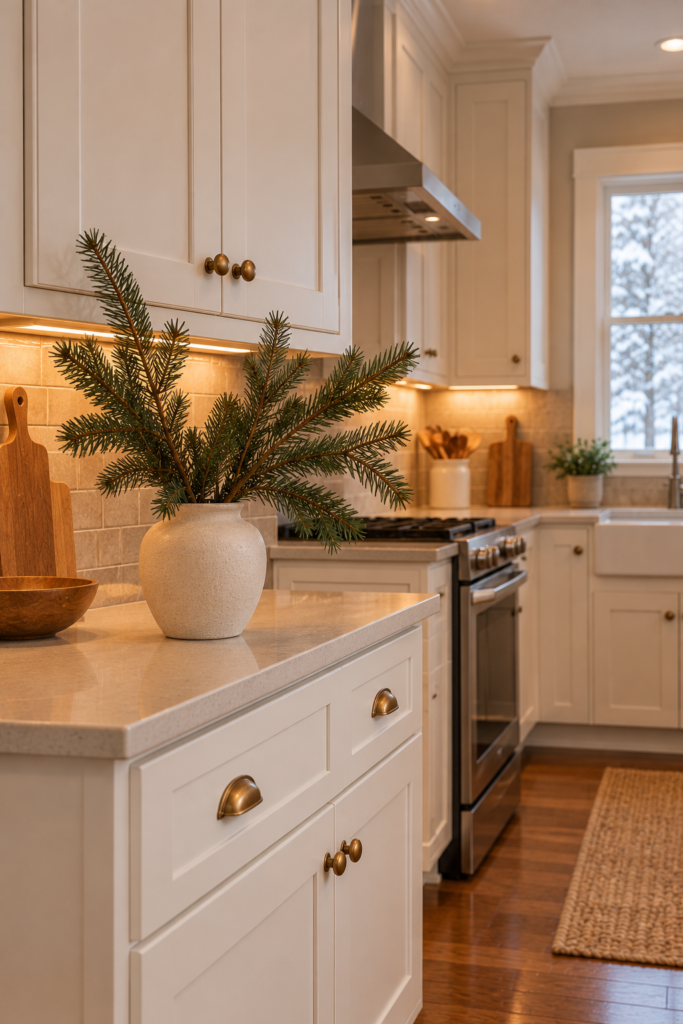
6. Warm Up the Kitchen With Wood Accents
Winter kitchens benefit from warm natural-looking wood.
You don’t need to remodel.
Add smaller elements.
Try:
A medium-walnut tray.
A wooden bowl.
A practical cutting board.
A wood utensil holder.
One small wood-framed artwork piece away from splash and cooking zones.
Keep functional cutting boards separate from purely decorative pieces when needed, especially if decorative coatings or finishes aren’t intended for food contact.
The wood brings warmth against white or cream cabinetry.
And unlike seasonal novelty decor, it doesn’t need to disappear in March.
We appreciate an employee who works year-round.
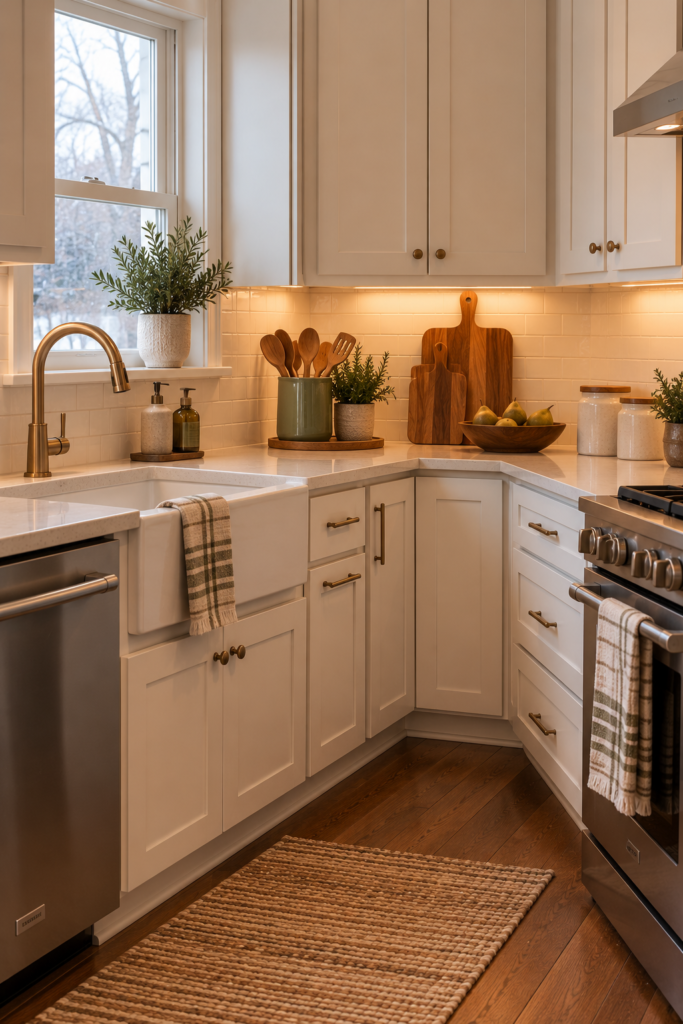
7. Create a Cozy Winter Coffee Station
Give the coffee corner a winter refresh.
Use a small tray.
Place the coffee machine on its normal stable surface with all required ventilation and operating clearance.
Beside it, add two warm-cream mugs.
Use a small sealed container for coffee or tea if appropriate.
Add one tiny muted-olive ceramic object or a very small decorative evergreen accent positioned safely away from heat and electrical equipment.
Keep the setup simple.
Coffee stations have a dangerous tendency to become tiny decorative villages.
You need coffee.
You do not need to move seven pinecones to obtain it.
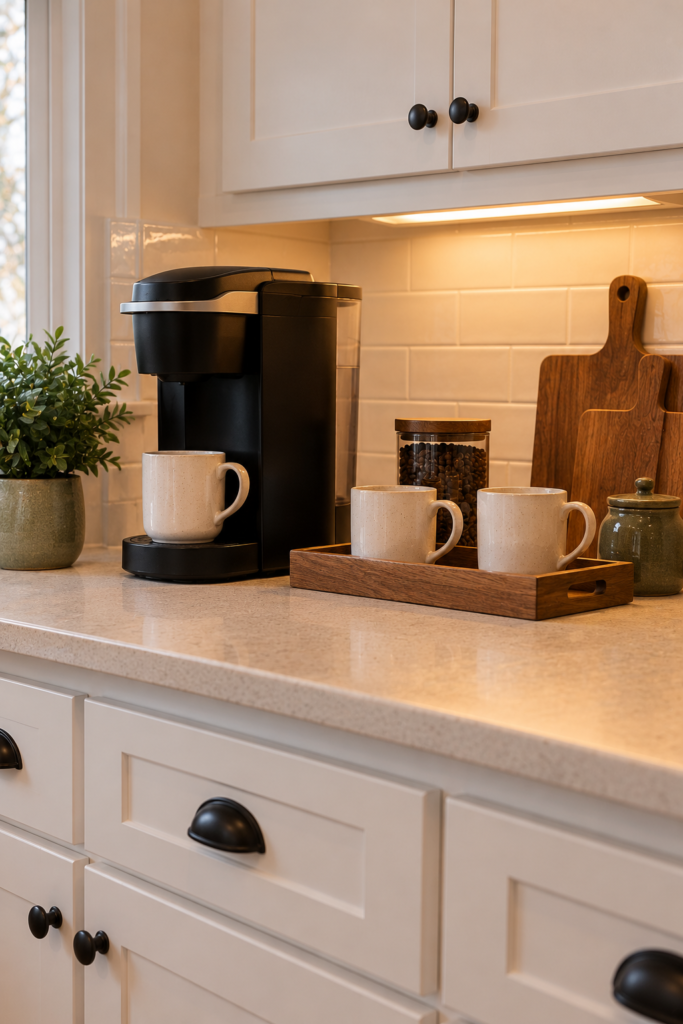
8. Add Mushroom and Cream Kitchen Textiles
Winter doesn’t require dark colors.
Use mushroom taupe and warm cream instead.
Try:
Cream dish towels.
Mushroom seat cushions.
A washable cream-and-taupe runner where appropriate.
Warm-neutral window fabric if it doesn’t interfere with heat, cooking, or window operation.
The tonal palette softens a white kitchen without adding visual clutter.
Texture does most of the work.
Woven.
Quilted.
Linen-look.
Simple.
Your kitchen can feel cozy without placing a decorative pine tree beside every appliance.
Promise.
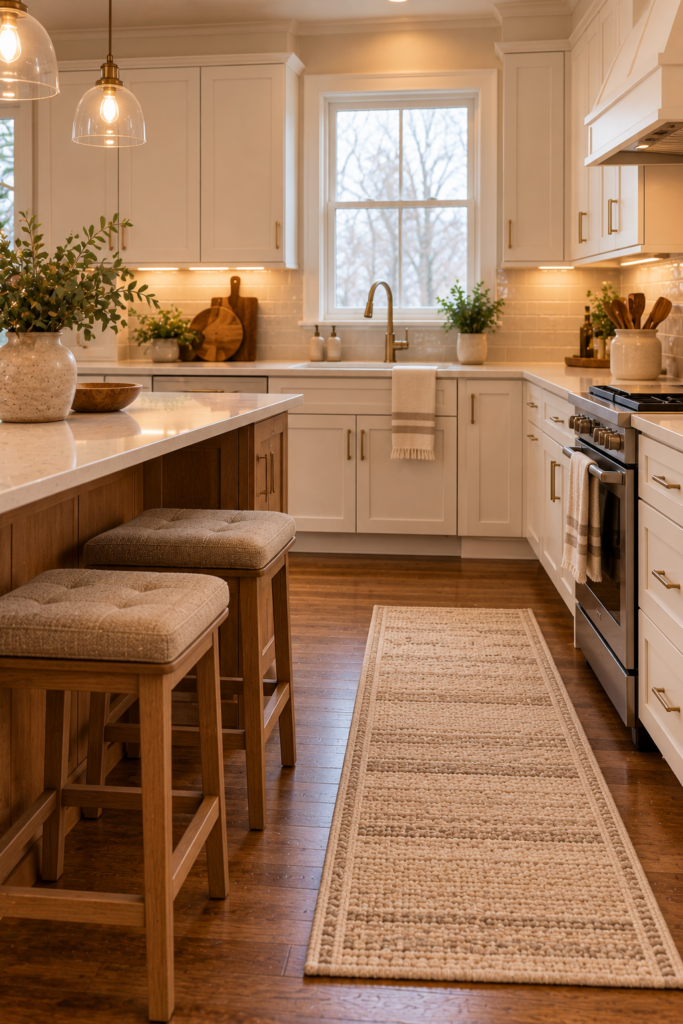
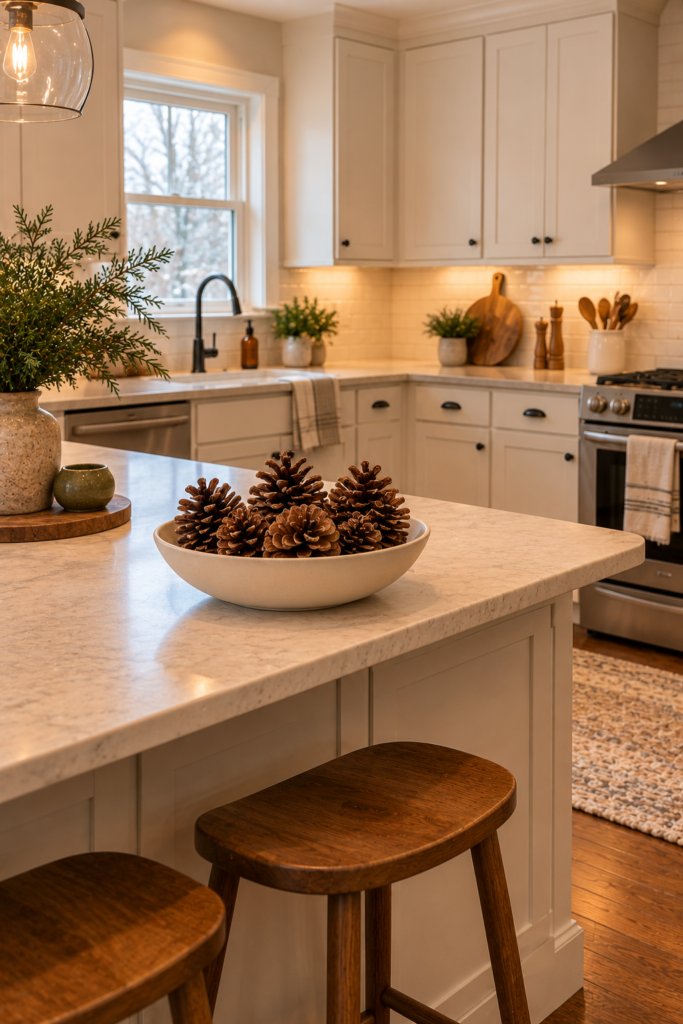
9. Use Pinecones as Natural Winter Decor
Put several clean, dry pinecones in a shallow ceramic or wooden bowl.
That’s the idea.
Really.
You don’t need to add seventeen other things.
Place the bowl on a kitchen island, open shelf designed for decor, or sideboard away from food preparation.
The warm brown adds texture.
The shape feels seasonal.
And pinecones transition beautifully through January and February.
Keep them away from open flames, cooktops, toaster ovens, and other significant heat sources.
Pinecones are excellent at being pinecones.
Don’t give them additional responsibilities.
10. Add Muted Olive Kitchen Accents
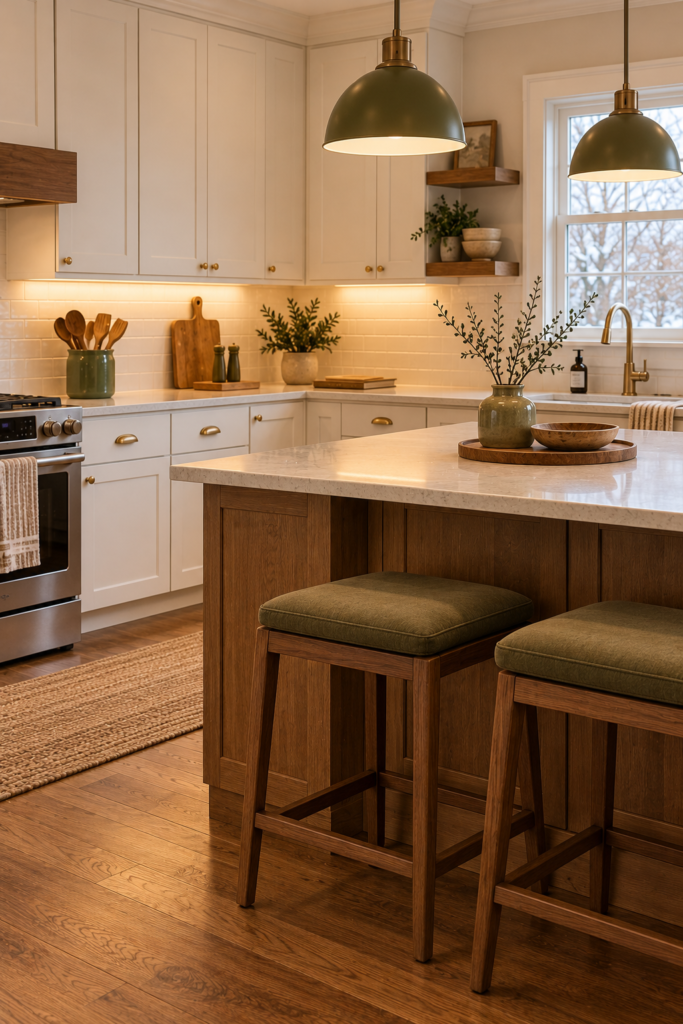
Muted olive is one of my favorite winter colors.
It gives you the connection to evergreen without making the room look Christmas-specific.
Use it through small items.
A ceramic utensil crock.
A vase.
Seat cushions.
One framed botanical print.
A small planter with a suitable houseplant.
Pair olive with warm cream and walnut.
Add a little burgundy if you want more depth.
Muted olive is basically green after it stopped yelling.
Very useful indoors.
11. Add a Burgundy Winter Accent
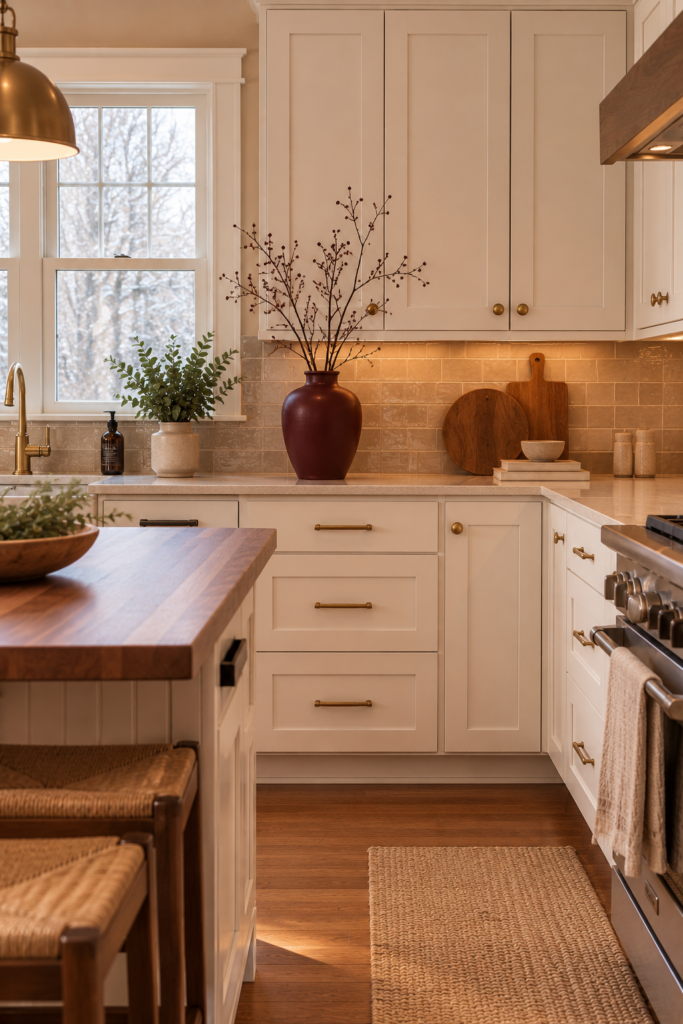
Burgundy can make a neutral kitchen feel dramatically warmer.
But use it strategically.
Try one burgundy ceramic vase.
Or burgundy towels.
Or two burgundy seat cushions.
Not all three plus burgundy cabinets, burgundy walls, and a burgundy toaster.
Unless you’re extremely committed.
Pair burgundy with cream, walnut, mushroom, and muted olive.
Without Christmas motifs, the color feels rich and wintery rather than overtly festive.
12. Style a Winter Kitchen Window
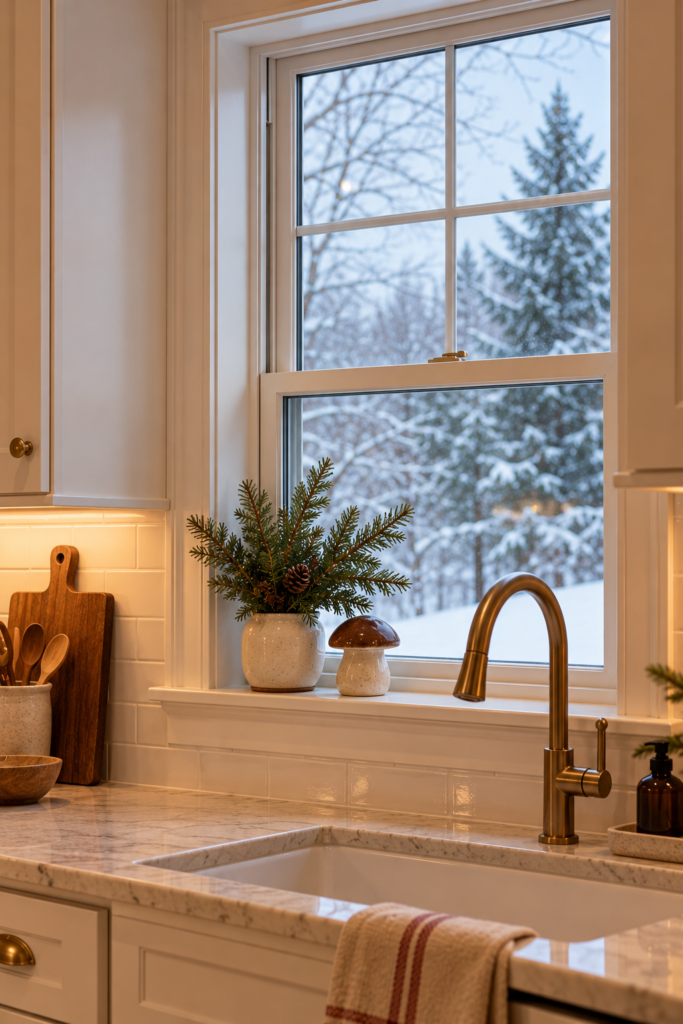
Keep the window simple.
Place two small stable ceramic pieces on a sufficiently deep sill if they don’t interfere with operation.
Add one small suitable plant or compact evergreen arrangement.
Keep everything below the main glass area.
Preserve natural light.
Maintain access to locks and handles.
Don’t obstruct window tracks, ventilation, blinds, curtains, or emergency egress where applicable.
And monitor condensation around anything sitting on the sill.
Windows are useful architectural components.
Not just seasonal shelving with glass behind them.
13. Make a Small Kitchen Feel Cozy for Winter
Small kitchens don’t need more objects.
They need smarter swaps.
Change the towels.
Add one small vase.
Use a compact wood tray.
Add warm under-cabinet lighting if suitable fixtures are already present or properly installed.
Bring in one muted-olive or burgundy accent.
Stop there.
Keep countertops open.
Don’t block cabinet doors.
Don’t cover outlets.
Don’t decorate appliance ventilation areas.
Don’t squeeze a giant centerpiece onto a 24-inch counter and then act surprised when there’s nowhere to make lunch.
Small-space decorating requires negotiation.
The kitchen gets veto power.
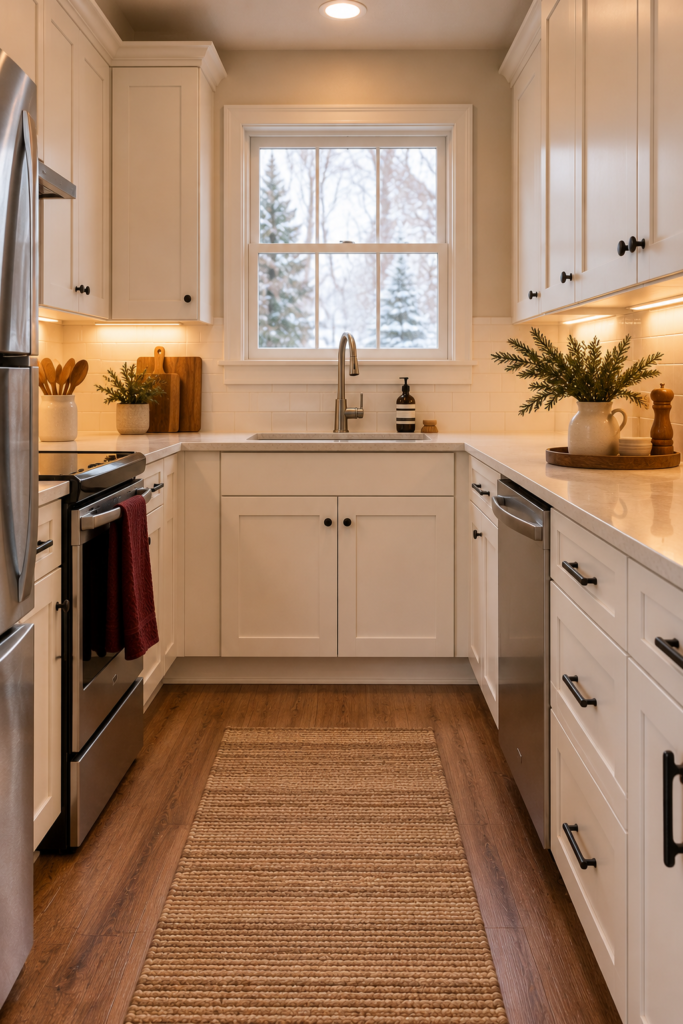
14. Build a Full Layered Winter Kitchen
Now combine the ideas that work for your room.
Use warm-white or cream cabinetry as the base.
Bring in medium-walnut wood.
Add mushroom textiles.
Use muted olive.
Include one burgundy accent.
Place a restrained evergreen arrangement in a safe counter zone.
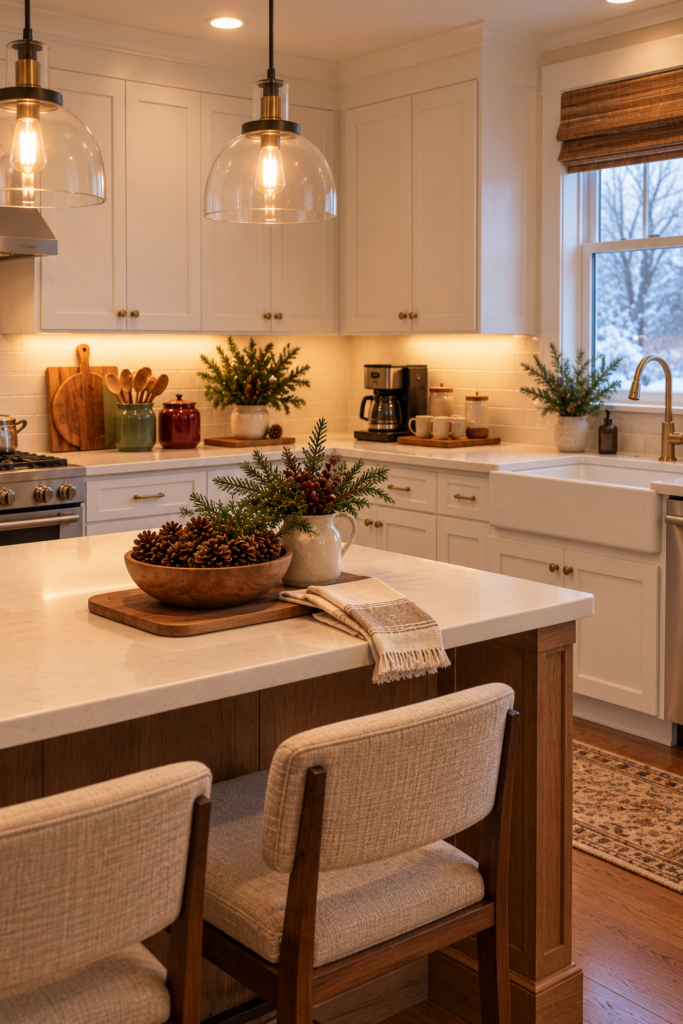
Add a low pinecone bowl to the island.
Create a simple coffee station.
Use warm practical lighting.
And then stop.
That’s the important part.
A layered winter kitchen should still look like a kitchen.
Not like a seasonal home decor store accidentally opened between the refrigerator and dishwasher.
Keep work surfaces available.
Keep circulation clear.
Let the materials and colors create the cozy feeling.
How Do You Decorate a Kitchen for Winter After Christmas?
Remove the obvious Christmas elements first.
Put away:
Ornaments.
Christmas signs.
Holiday ribbon.
Santa decor.
Candy canes.
Christmas-specific dishes you don’t use regularly.
Keep:
Evergreen.
Pinecones.
Natural wood.
Warm textiles.
Neutral ceramics.
Bare branches.
Then simplify the color palette.
Winter decor usually feels calmer than Christmas decor.
Your kitchen doesn’t need to become empty.
It just needs to stop announcing December 25.
Cozy Winter Kitchen Decor Ideas
Focus on warmth.
Add wood.
Use textured towels.
Bring in warm cream.
Add mushroom taupe.
Use muted olive.
Introduce one burgundy accent.
Improve practical lighting.
A cozy kitchen isn’t necessarily heavily decorated.
In fact, the coziest kitchens often have very little decorative clutter.
Warm materials and good lighting do most of the work.
Winter Kitchen Decor Ideas Without Christmas Decor
Decorate around winter, not the holiday.
Use:
Bare branches.
Evergreen.
Pinecones.
Wood.
Warm cream.
Mushroom.
Burgundy.
Muted olive.
Winter botanical artwork.
Skip:
Ornaments.
Stockings.
Santa.
Christmas trees.
Holiday sayings.
Bright novelty patterns.
The result feels appropriate through January and February.
Which is useful because nobody wants to completely redecorate the kitchen every three weeks.
Neutral Winter Kitchen Decor Ideas
Build around:
Warm cream.
Mushroom.
Taupe.
Natural wood.
Muted olive.
Use black sparingly through hardware or small accessories.
Choose textured materials.
Woven towels.
Wood grain.
Matte ceramics.
A neutral kitchen can still feel warm if you vary texture and tone.
If everything is identical beige?
Then yes.
We may have a beige situation.
Burgundy Winter Kitchen Decor Ideas
Use burgundy as an accent.
Try:
Kitchen towels.
A ceramic vase.
Seat cushions.
A small piece of artwork.
Pair burgundy with warm cream and walnut.
Add muted olive if you want another color.
The combination feels rich and seasonal without becoming obviously Christmas-specific.
Rustic Winter Kitchen Decor Ideas
Use natural materials.
Wood.
Pinecones.
Evergreen.
Warm-brown branches.
Cream ceramics.
Keep the styling simple.
A wooden bowl filled with pinecones can be enough.
Use functional wood pieces where appropriate.
Don’t add rustic props simply to occupy every surface.
If an object serves neither a practical nor visual purpose, the kitchen does not owe it counter space.
Farmhouse Winter Kitchen Decor Ideas
Use warm white.
Natural wood.
Muted olive.
Matte black.
Cream textiles.
Add one simple evergreen arrangement.
Try a wooden bowl.
Use practical cutting boards.
Keep everything restrained.
You don’t need ten decorative signs.
Your kitchen already knows it’s a kitchen.
Modern Winter Kitchen Decor Ideas
Use fewer objects.
Choose larger simple pieces.
Try one sculptural ceramic vase with bare branches.
Add one wooden bowl.
Use mushroom or charcoal textiles.
Keep counters open.
Use warm lighting.
Modern winter decorating works especially well when you focus on shape, texture, and contrast instead of seasonal novelty items.
Scandinavian Winter Kitchen Decor Ideas
Use warm cream.
Pale or medium wood.
Muted olive.
Mushroom.
Choose simple ceramics.
Add a small branch arrangement.
Use functional storage.
Keep windows open visually.
Avoid excessive counter decor.
The kitchen should feel bright during the limited winter daylight and warm after sunset.
Simple?
Yes.
Cold?
No.
That’s the goal.
Winter Kitchen Counter Decor Ideas
Choose one contained area.
Use a tray.
Add two or three objects.
For example:
Small vase.
Ceramic bowl.
Pinecones.
Or:
Wood board.
Muted-olive vessel.
Evergreen.
Keep the arrangement away from active preparation zones.
A counter display should be easy to move.
If dismantling your winter vignette is step one of making a sandwich, simplify it.
Winter Kitchen Island Decor Ideas
Use one low centerpiece.
A wooden bowl.
A ceramic vase.
A compact tray.
Keep it proportional to the island.
Leave enough working space.
Don’t obstruct seating.
Don’t create something so tall that people can’t see across the island.
If the island doubles as a dining or homework area, movable decor is especially useful.
Winter Kitchen Table Decor Ideas
Keep the centerpiece low.
Use a shallow bowl with pinecones.
Or a short vase with restrained greenery.
Add warm-cream placemats or a washable runner if appropriate.
Avoid excessive decor that interferes with serving food.
And if you’re using natural materials, keep them separate from direct food contact unless they’re intended for it.
Winter Kitchen Shelf Decor Ideas
If you already have sturdy installed shelving, swap a few decorative pieces.
Use:
Cream ceramics.
Wood bowls.
Muted-olive pottery.
One small framed winter botanical.
Avoid overcrowding.
Don’t add unsupported floating shelves solely for seasonal styling.
And keep decorative shelving outside active wet zones or cooking areas unless the materials and installation are appropriate for those conditions.
Winter Kitchen Window Decor Ideas
Keep window styling minimal.
Use one small plant.
A tiny evergreen arrangement.
Or one ceramic piece.
Don’t block the glass unnecessarily.
Keep window locks and handles accessible.
Preserve ventilation.
Keep curtains and decor safely away from cooking heat.
And avoid arrangements that interfere with emergency egress where the window serves that function.
Winter daylight is valuable.
Let it into the room.
Winter Kitchen Lighting Ideas
Layer practical light.
Use existing ceiling fixtures.
Task lighting.
Under-cabinet lighting.
Pendant lighting where already properly installed.
Warm-toned light around 2700–3000K can make a kitchen feel cozy, but food-prep areas still need enough brightness and accurate visibility for safe work.
Don’t sacrifice function for atmosphere.
A romantic dim kitchen is considerably less romantic while trying to determine whether chicken is cooked.
How to Make a Kitchen Feel Warmer in Winter
Start with color.
Add warm cream.
Wood.
Mushroom.
Burgundy.
Muted olive.
Then add texture.
Woven towels.
Wood grain.
Matte ceramics.
A washable runner.
Finally, improve lighting.
You may discover that you don’t need much seasonal decor at all.
Sometimes the kitchen feels cold because the materials and lighting feel cold.
Fix those first.
How to Make Winter Kitchen Decor Look Expensive
Use fewer objects.
Coordinate colors.
Choose matte ceramics.
Repeat wood tones.
Keep counters clean.
Use one substantial arrangement instead of five tiny ones.
Try this palette:
Warm cream + medium walnut + mushroom + muted olive + deep burgundy.
Leave negative space.
Expensive-looking kitchens generally do not have every available inch occupied by a decorative object.
The empty countertop is participating in the design.
Let it work.
How to Keep Winter Kitchen Decor From Looking Cluttered
Create decorating zones.
Choose:
One counter corner.
The island centerpiece.
The coffee station.
Maybe the window.
Not every available surface.
Keep functional zones undecorated.
If you use an appliance daily, give it space.
If you prepare food there, keep it clear.
If water regularly splashes there, choose materials accordingly or don’t decorate it.
Pretty straightforward.
The kitchen usually tells you where decor doesn’t belong.
Listen.
Winter Kitchen Decor Safety
Keep food-preparation areas clean and usable.
Keep decorative items away from cooktops, burners, ovens, toaster ovens, hot appliances, steam vents, and other heat sources.
Don’t block appliance ventilation or controls.
Keep paper, fabric, dried botanicals, pinecones, wood, greenery, and other combustible materials away from open flames and significant heat.
Use LED candles instead of open flames for decorative lighting.
Keep electrical decor and connections away from sinks and wet areas.
Don’t run cords across walking paths.
Don’t pinch cords behind appliances or beneath objects.
Keep outlets, switches, vents, electrical panels, cabinet doors, appliance doors, and controls accessible.
If using fresh greenery, monitor drying and moisture.
Keep decorative botanicals and non-food craft materials separate from food-contact surfaces.
Don’t assume decorative ceramics, painted boards, bowls, or containers are food-safe.
Use only items specifically intended for food contact where that matters.
Keep small loose decorative pieces away from young children and pets.
Secure rugs and runners to reduce slipping or tripping.
And maintain clear circulation through the kitchen.
The kitchen is already full of hot things, sharp things, wet things, and heavy things.
Your pinecones do not need to join the hazard department.
How to Transition Winter Kitchen Decor Into Spring
Remove the heavier winter pieces gradually.
Take away:
Pinecones.
Dense evergreen.
Deep burgundy accents.
Heavy mushroom textiles.
Keep:
Warm cream.
Natural wood.
Neutral ceramics.
Then introduce lighter greenery.
Swap burgundy for muted sage, dusty blue, or another softer accent.
Use lighter textiles.
Replace bare branches with simple leafy stems when seasonally appropriate.
The transition can happen slowly.
No need to wake up on March 1 and conduct a full kitchen identity change.
Final Thoughts
The best Winter Kitchen Decor Ideas for a Warm Seasonal Refresh make the room feel warmer without making it harder to use.
Create a simple countertop tray.
Add burgundy towels.
Style a winter island centerpiece.
Bring in bare branches.
Keep a little evergreen.
Add warm wood.
Refresh the coffee station.
Use cream and mushroom textiles.
Decorate with pinecones.
Bring in muted olive.
Add one burgundy accent.
Style the kitchen window.
Keep small kitchens simple.
Or combine your favorite pieces into one layered winter kitchen.
The formula is straightforward:
Warm colors + natural materials + good lighting + very restrained seasonal decor.
Keep counters usable.
Keep decorations away from heat and food-prep areas.
Leave plenty of breathing room.
And remember:
If you have to move a miniature winter forest, three ceramic houses, seven pinecones, and a decorative lantern every time you make toast?
We’ve gone too far.
The toaster wins.
