
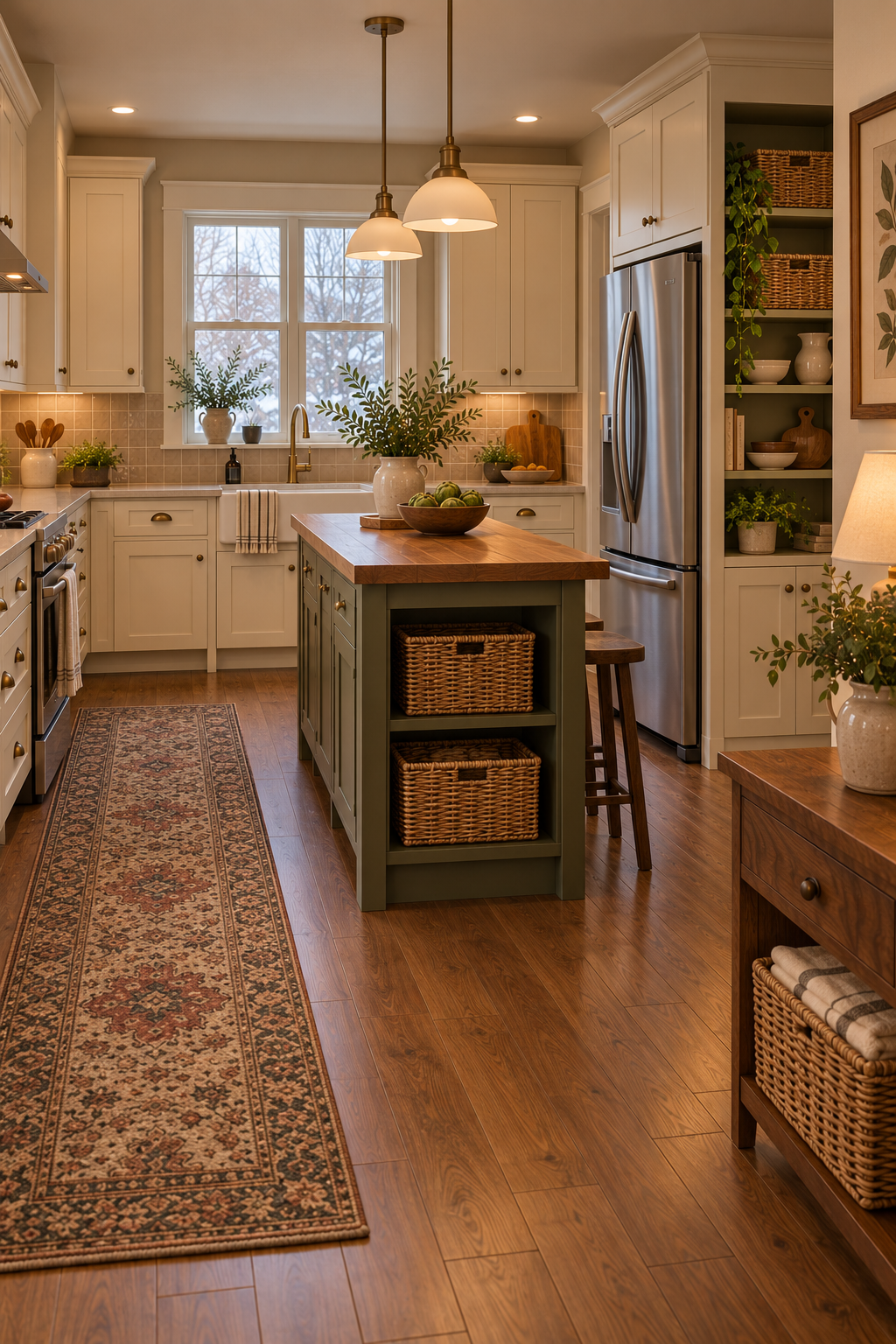
12 Wicker Basket Kitchen Ideas for Beautiful Everyday Storage
Kitchen storage has a way of becoming practical but unattractive. Reusable shopping bags collect under the sink, towels end up in crowded drawers, and pantry items rarely stay grouped for long. Wicker baskets offer a simple way to organize these everyday essentials while adding natural texture to the kitchen.
Their woven surfaces work well with warm cream cabinetry, walnut, muted olive, mushroom taupe, and other earthy finishes. They suit farmhouse and cottage kitchens, but they can also soften the clean lines of a modern interior.
The important part is choosing the right basket for the right job. Wicker works best for suitable dry items and lightweight supplies, not as a replacement for sealed food containers or storage designed for damp environments.
These 12 wicker basket kitchen ideas combine attractive storage with practical ways to keep counters, shelves, and cupboards organized.
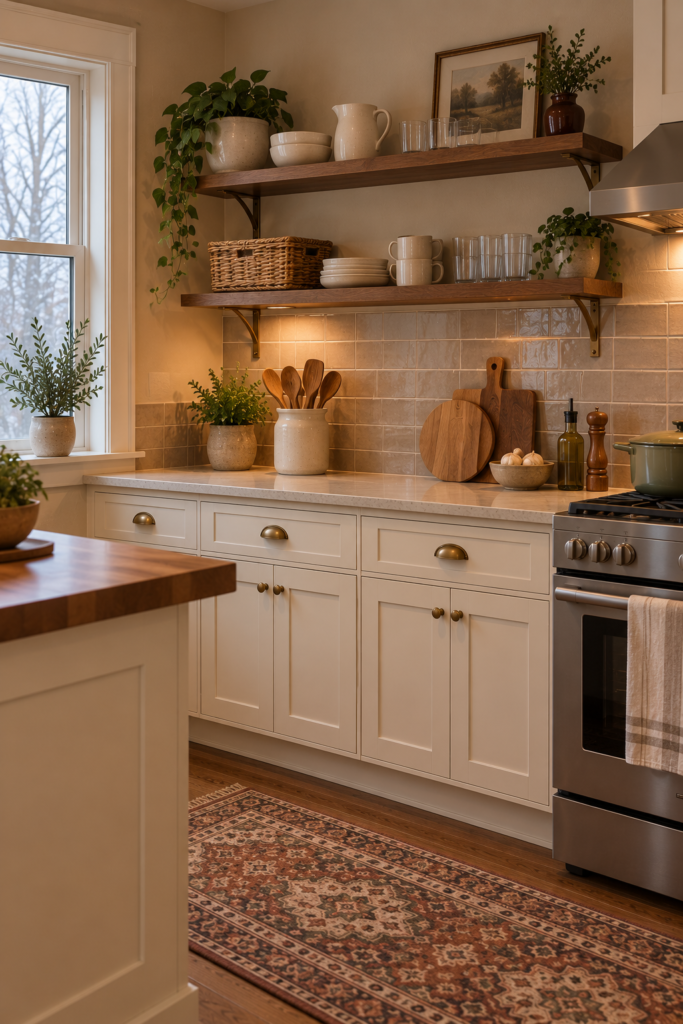
1. Add Wicker Baskets to Open Shelves
Open shelves can look inviting, but small everyday items quickly make them appear cluttered. Wicker baskets provide a simple way to group loose accessories while preserving the warmth of natural materials.
Use a basket for napkins, tea towels, or lightweight kitchen supplies. Pair it with cream ceramics and clear glassware, leaving some visible space between groups so the shelves don’t feel crowded.
Before adding baskets, check that the shelves are properly supported for their intended load. Keep heavier items on lower shelves, and choose baskets that fit comfortably without protruding into the room.
Consider the location, too. Shelves near a sink may be exposed to steam and splashes, while those near the cooktop can accumulate grease. A dry area away from cooking heat is a better place for woven storage.
For more ideas on balancing useful storage with decorative displays, explore these kitchen shelves decor ideas for beautiful open storage.
2. Store Kitchen Towels in a Wicker Basket
Clean kitchen towels are easy to misplace when they compete with utensils, cleaning cloths, and other household items in a crowded drawer. A wicker basket gives them a dedicated home.
Place a medium-sized basket on a dry pantry shelf, inside a cupboard, or on a lower open shelf. Fold the towels or roll them loosely so you can see what’s available without emptying the basket.
Choose a size that holds your usual supply without forcing the towels into a tightly packed bundle. A basket that’s too small becomes frustrating to use, while an oversized one can waste valuable storage space.
Keep the towels clean and completely dry before storing them. Wicker isn’t a good place for damp textiles because trapped moisture can contribute to unpleasant odors and material deterioration.
Warm cream, mushroom, or muted olive towels can complement the natural brown weave without requiring an exact color match.
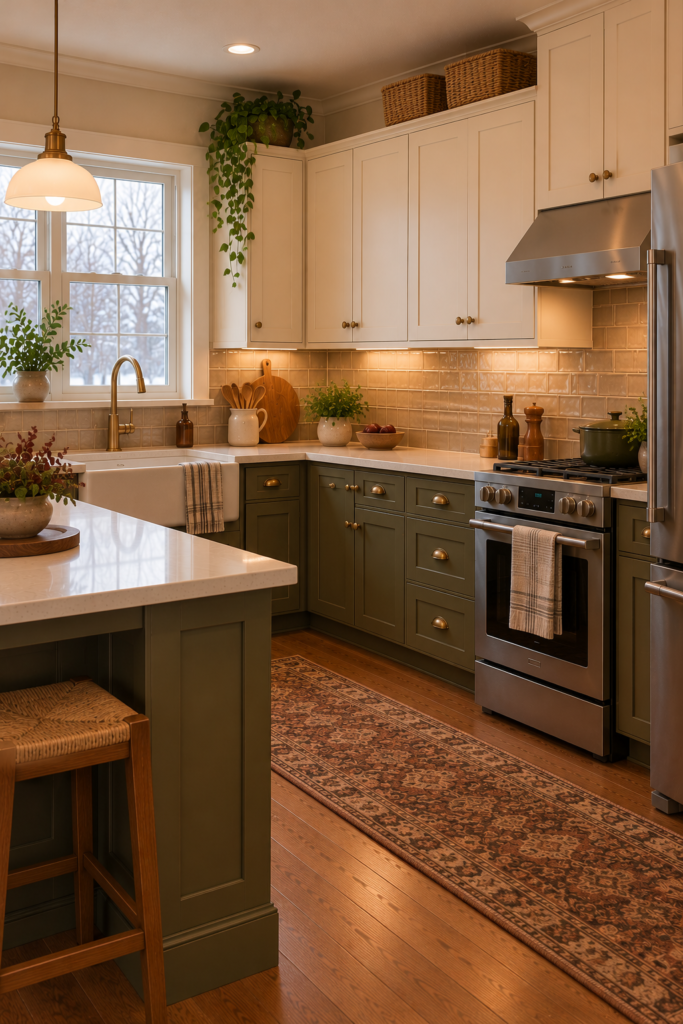
3. Use Wicker Baskets Above Kitchen Cabinets
The space above upper cabinets can provide occasional storage and visually connect the cabinetry to the ceiling. Wicker baskets can help create a more finished look while holding lightweight items that aren’t needed every day.
Choose baskets with stable bases and proportions that suit the cabinet tops. Similar natural tones can create a cohesive appearance, even when the baskets have slightly different shapes.
Don’t treat this high space as convenient everyday storage. Reaching overhead can be awkward, and baskets may collect dust or become difficult to remove safely. Avoid placing heavy items there or climbing onto countertops to reach them.
Keep baskets away from cooking heat, ventilation openings, and any location where they could fall. If the space is difficult to access safely, leave it empty or use a more accessible storage area.
The purpose is to use the available space thoughtfully, not to fill every gap above the cabinets.
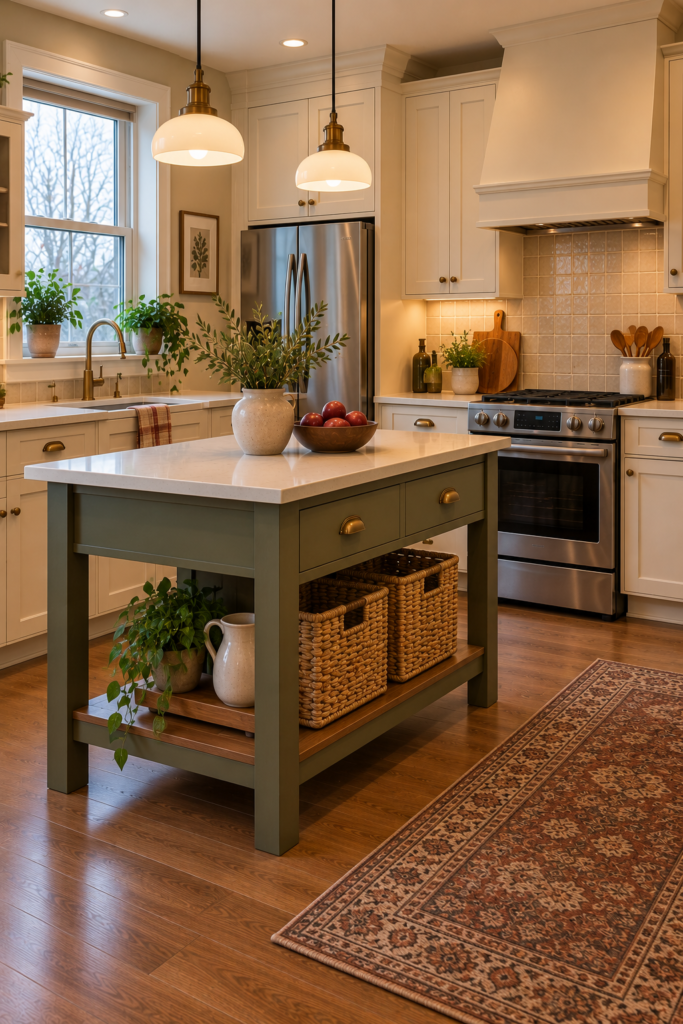
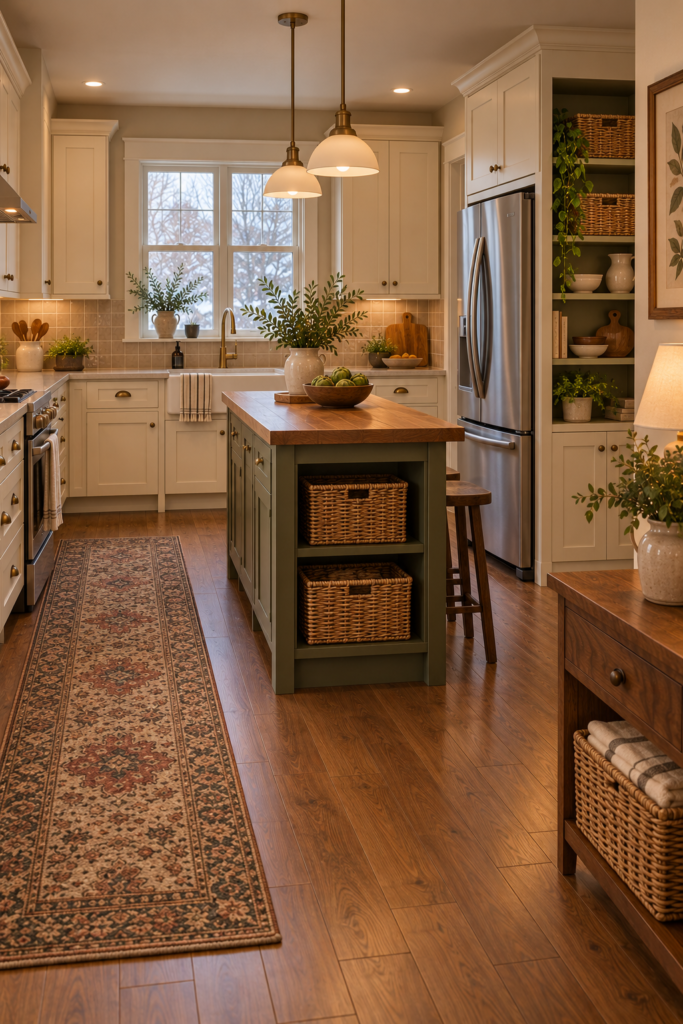
4. Add Wicker Baskets to a Kitchen Island
An island with open shelving can provide useful storage for baskets, particularly when the surrounding cabinets have limited drawer space.
Use coordinating baskets beneath the worktop to hold lightweight dry items, cloth napkins, or other suitable supplies. Natural wicker works especially well with cream or muted olive cabinetry and a wood-look countertop.
Measure the shelf opening before buying baskets. Allow enough room to pull each one out comfortably, and make sure its handles won’t catch on nearby cabinet frames.
Baskets should sit fully within the shelf rather than protruding into the main walkway. Avoid storing heavy items in baskets that are difficult to lift safely.
If your island has closed cabinetry, a single basket on a separate shelf or sideboard may provide the same decorative effect without taking up essential storage space.
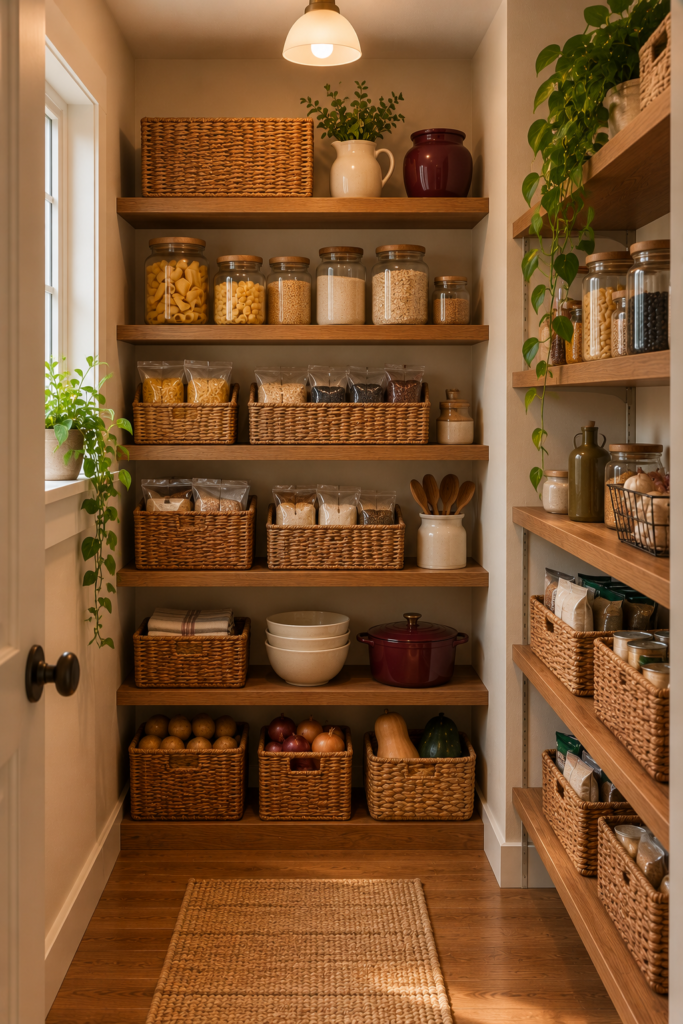
5. Create Wicker Basket Pantry Storage
Pantry baskets are useful for grouping similar items so you can find what you need without moving several packages around.
Use separate baskets for suitable packaged snacks, baking supplies, or lightweight miscellaneous items. Keep the original packaging where needed, and use sealed food-safe containers for ingredients that require protection from moisture or pests.
Choose baskets that fit the shelves and allow you to see or easily reach their contents. A deep basket can hold more, but it may hide items at the back and become inconvenient when it’s full.
Keep heavier supplies on lower shelves and avoid overloading the shelving. Wicker baskets are most useful when they’re easy to remove and return to their place.
For a practical system, give each basket a clear purpose. The goal is to reduce the time spent searching for ingredients, not simply transfer a collection of loose items into a collection of containers.
6. Use a Wicker Basket for Produce
A wicker basket can provide attractive storage for produce that is suitable for room-temperature storage, such as some onions or other items whose storage guidance permits it.
Choose an open-weave design that allows airflow and place it in a suitable dry location. Avoid storing produce that requires refrigeration or moisture-controlled conditions simply because it looks good in a basket.
Different fruits and vegetables have different storage needs. Some produce releases ethylene, which can affect the ripening of nearby items, so it’s worth checking storage guidance for the specific foods you buy.
Select a basket that’s easy to clean and inspect. Remove spoiled produce promptly, and don’t allow moisture or food residue to accumulate in the weave.
If you want to display several types of produce together, confirm that their storage requirements are compatible. Aesthetics should come second to keeping food in suitable conditions.
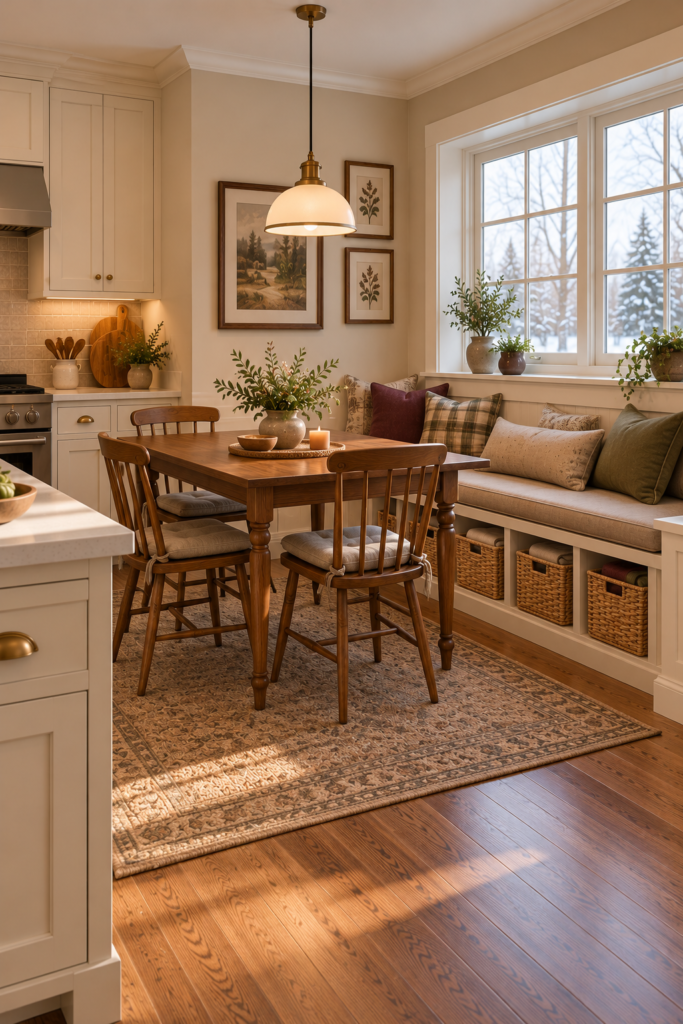
7. Add Wicker Baskets Under a Kitchen Bench
A breakfast nook with a built-in or freestanding bench may have useful storage space underneath the seat. Low wicker baskets can turn that otherwise empty area into an organized home for table linens and other lightweight items.
Choose baskets that slide beneath the bench without scraping the frame or sticking out into the footpath. Handles can make them easier to pull out, provided they don’t catch on nearby furniture.
Store dry placemats, napkins, or tablecloths in the baskets. Avoid keeping damp cloths or items that could leak or stain the weave.
Before arranging the storage, check the space around the table and bench. People should be able to sit down, move their feet, and pass through the area without hitting the baskets.
This approach is particularly helpful in a compact kitchen, where using existing furniture for storage can be more practical than adding another cabinet.
8. Use Wicker Baskets in a Coffee Station
A coffee station often accumulates small accessories, including individually packaged coffee supplies, clean napkins, and spare filters. A shallow wicker basket can keep suitable items grouped together.
Place it beside the coffee maker, leaving enough room to fill water reservoirs, handle mugs, and clean the counter. A walnut tray and cream ceramics can connect the woven texture to the rest of the kitchen.
Choose a basket that’s easy to lift out and wipe around. Keep it away from spills, steam, and appliance heat, and don’t store damp filters or wet cloths in the weave.
Check the coffee maker’s operating instructions and maintain appropriate clearance around the appliance. Electrical cords should remain dry and safely routed rather than crossing the sink or a walking path.
For another way to bring natural wood and warm materials into the kitchen, see these Craftsman kitchen ideas full of warm wood and character.
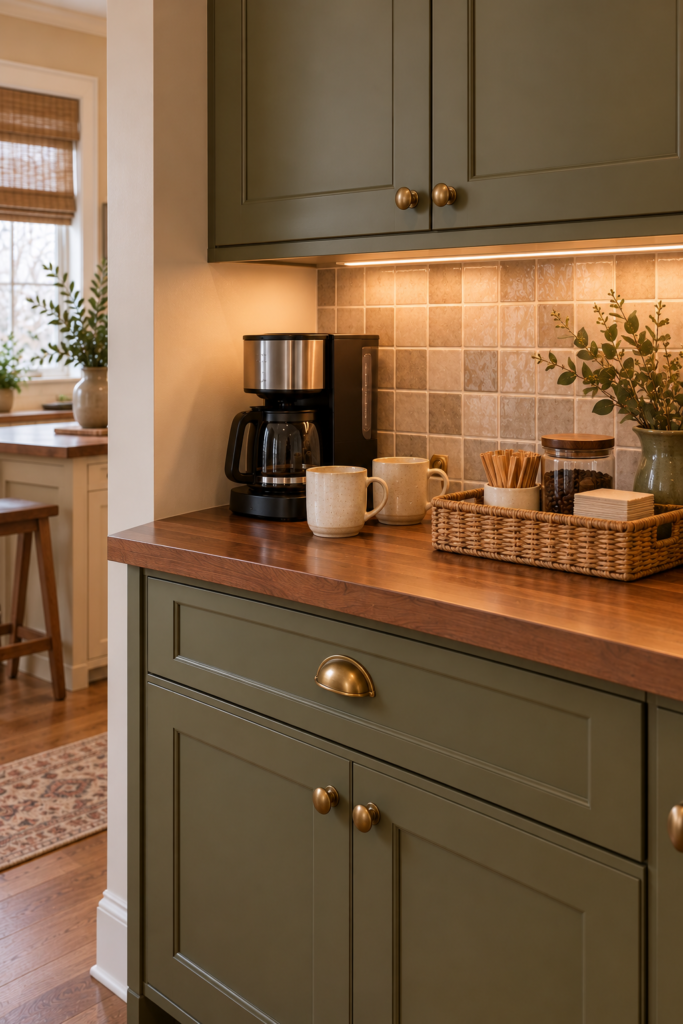
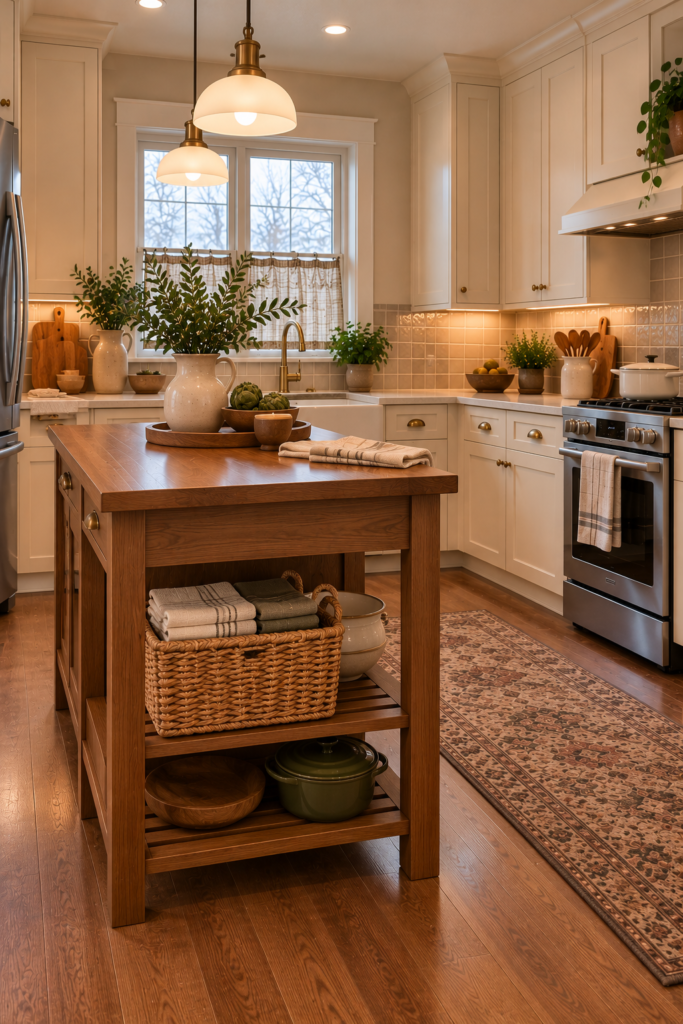
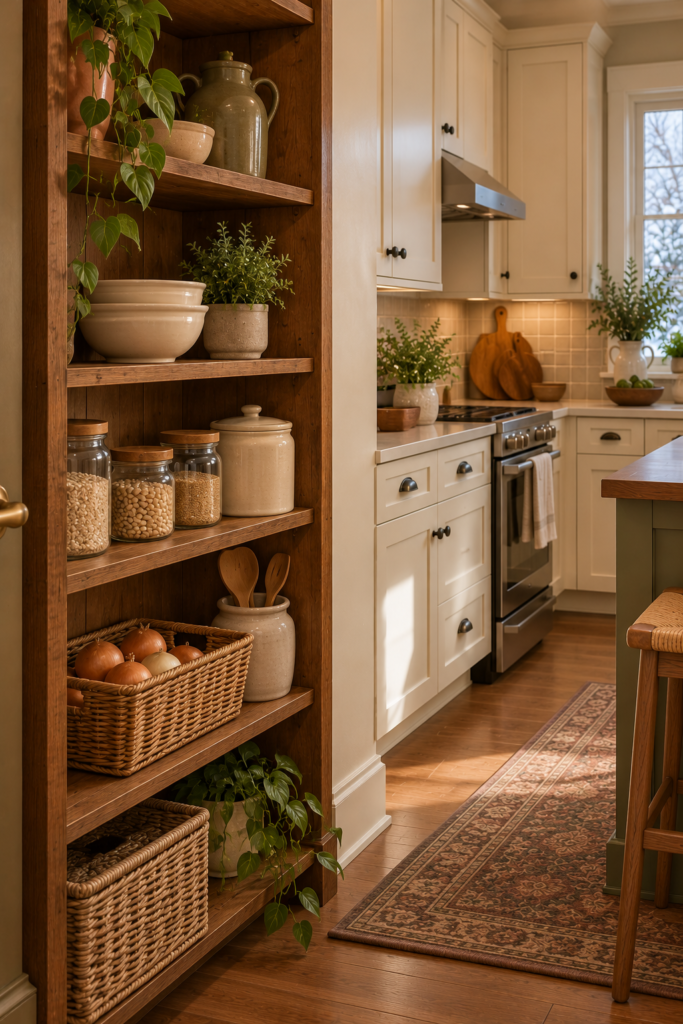
9. Add Wicker Baskets to a Freestanding Cupboard
A freestanding kitchen cupboard can combine display space with concealed-looking organization when its lower shelves accommodate baskets.
Use baskets on the bottom shelves for suitable dry supplies, reusable bags, or lightweight kitchen accessories. Display everyday ceramics above, keeping the overall arrangement practical rather than filling every shelf with decorations.
Choose baskets that fit the cupboard’s depth and width. Similar natural tones help the arrangement look coordinated, but the baskets don’t have to be identical.
Check the cupboard’s stability and the condition of its shelves before loading them. Heavier items belong lower down, and baskets should not be so tightly packed that they become difficult to remove.
This arrangement works particularly well in cottage kitchens, where wood furniture and woven textures can provide warmth without requiring a complete cabinetry renovation.
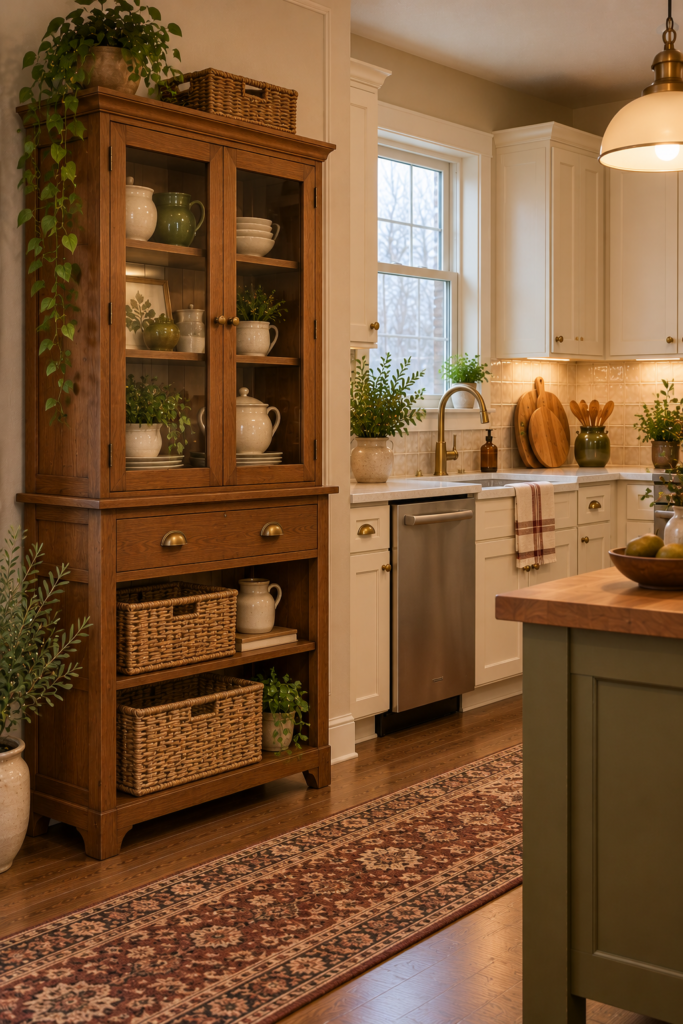
10. Use Wicker Baskets for Table Linens
Napkins, placemats, and other table linens are well suited to a basket on a dry pantry shelf, sideboard, or lower open cabinet.
Fold the linens into manageable stacks so you can see the available colors and select what you need without disturbing everything else. Warm cream, mushroom, muted olive, and dusty burgundy can complement the natural basket weave.
Choose a basket that’s large enough for your regular collection but not so deep that the linens become difficult to retrieve. If you store several types together, use separate smaller baskets or dividers to keep them organized.
Make sure the fabric is clean and dry before putting it away. Store the basket somewhere protected from cooking grease, steam, and direct splashes.
In an eat-in kitchen, the basket can also sit on a nearby sideboard, keeping table linens close to the dining area without using valuable food-preparation space.
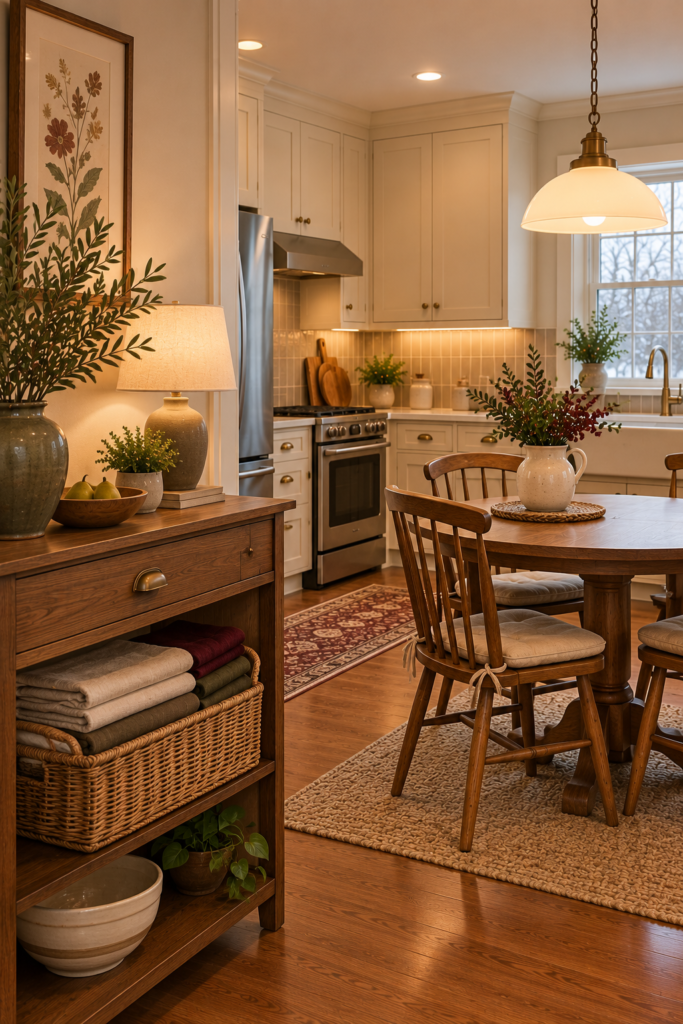
11. Use Wicker Baskets in a Small Kitchen
Small kitchens benefit from storage that uses existing shelves and cupboards rather than taking over the countertop.
Choose one or two baskets for specific purposes. One might organize packaged pantry items, while another holds clean towels or reusable shopping bags. Keeping the number limited helps the room feel orderly instead of adding more visual clutter.
Match the basket size to the available space. A large basket may work well on a pantry shelf but become awkward on a narrow island or inside a shallow cabinet.
Prioritize accessible locations and clear walkways. Avoid placing baskets where they block drawers, appliance doors, outlets, ventilation, or the usual route through the kitchen.
Natural wicker pairs easily with wood and neutral cabinetry, but exact color matching isn’t necessary. A consistent material and a few related tones can make the storage feel connected to the room.
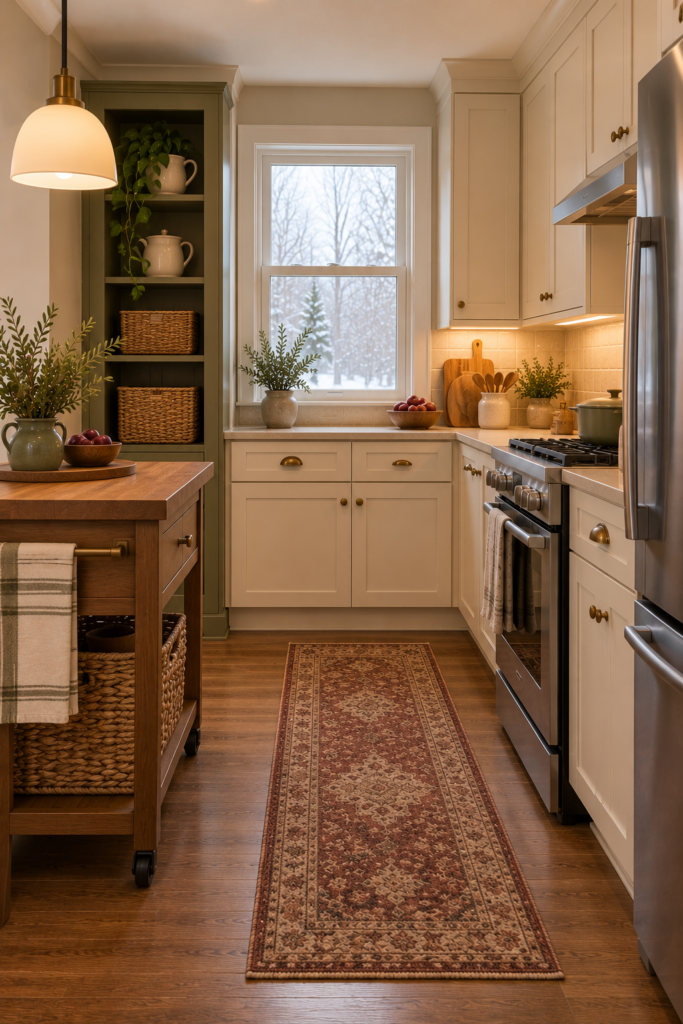
12. Build a Coordinated Wicker Basket Storage System
A coordinated system can make wicker baskets feel like a deliberate part of the kitchen rather than scattered storage containers.
Choose a few locations with clear purposes: a basket for towels, another for pantry supplies, and one for table linens or suitable accessories. Similar natural tones can tie the different areas together.
You don’t need the same basket shape everywhere. Select each one according to the shelf, cupboard, or furniture it will occupy. A shallow basket works well for linens, while a deeper design may suit lightweight pantry supplies.
Combine the wicker with warm cream cabinetry, medium walnut, muted olive, or mushroom taupe. These finishes complement the natural weave without forcing the kitchen into a single decorating style.
Once the system is in place, leave some storage and shelf space unfilled. The aim is to make items easier to find and return, not to cover every available surface with baskets.
How to Choose Wicker Baskets for a Kitchen
Start with the intended use and the location. A basket for clean towels needs different characteristics from one holding pantry packaging or suitable produce.
Check the dimensions, stability, weave, handles, and ease of cleaning. Avoid baskets with broken or sharp pieces, and make sure handles can support the intended contents without becoming difficult to grip.
Natural wicker is best kept dry and away from significant heat. If a basket will be exposed to frequent splashes or heavy cleaning, consider a more suitable storage material instead.
Wicker Basket Kitchen Ideas for Small Spaces
Use existing pantry shelves, island shelving, a cupboard, or the space beneath a bench before adding more furniture.
Choose baskets that fit the available openings and can be removed without blocking the walkway. One or two well-placed baskets often provide more useful organization than many small containers scattered around the kitchen.
Keep countertops available for food preparation and place heavier items on lower shelves. High storage should be reserved for lightweight items that can be reached safely.
Wicker Basket Safety and Care
Keep woven baskets away from open flames, cooktops, hot appliances, significant heat, persistent steam, standing water, and grease-heavy areas. Don’t position them where they obstruct appliance ventilation, doors, outlets, switches, vents, or walking routes.
Inspect baskets for broken or sharp pieces, and avoid overloading shelves. Wall shelves need appropriate structural support for their intended load, while heavier baskets should be stored lower down.
Store only clean, dry textiles in wicker and allow baskets to dry thoroughly if they become damp. Clean them according to the manufacturer’s care recommendations.
For food storage, follow the appropriate guidance for each ingredient. Use sealed, food-safe containers when required rather than treating a decorative basket as a substitute.
Final Thoughts
Wicker baskets can make kitchen storage feel warmer and more organized when every basket has a useful purpose. Use them for suitable pantry items, clean towels, table linens, and other dry supplies, choosing sizes that fit the available shelves and cupboards.
Keep woven materials away from heat and moisture, and avoid filling every surface simply because a basket looks attractive. A small, coordinated selection can add natural texture while leaving the kitchen comfortable to use.
The best storage is easy to reach, easy to maintain, and genuinely useful in everyday life.
