
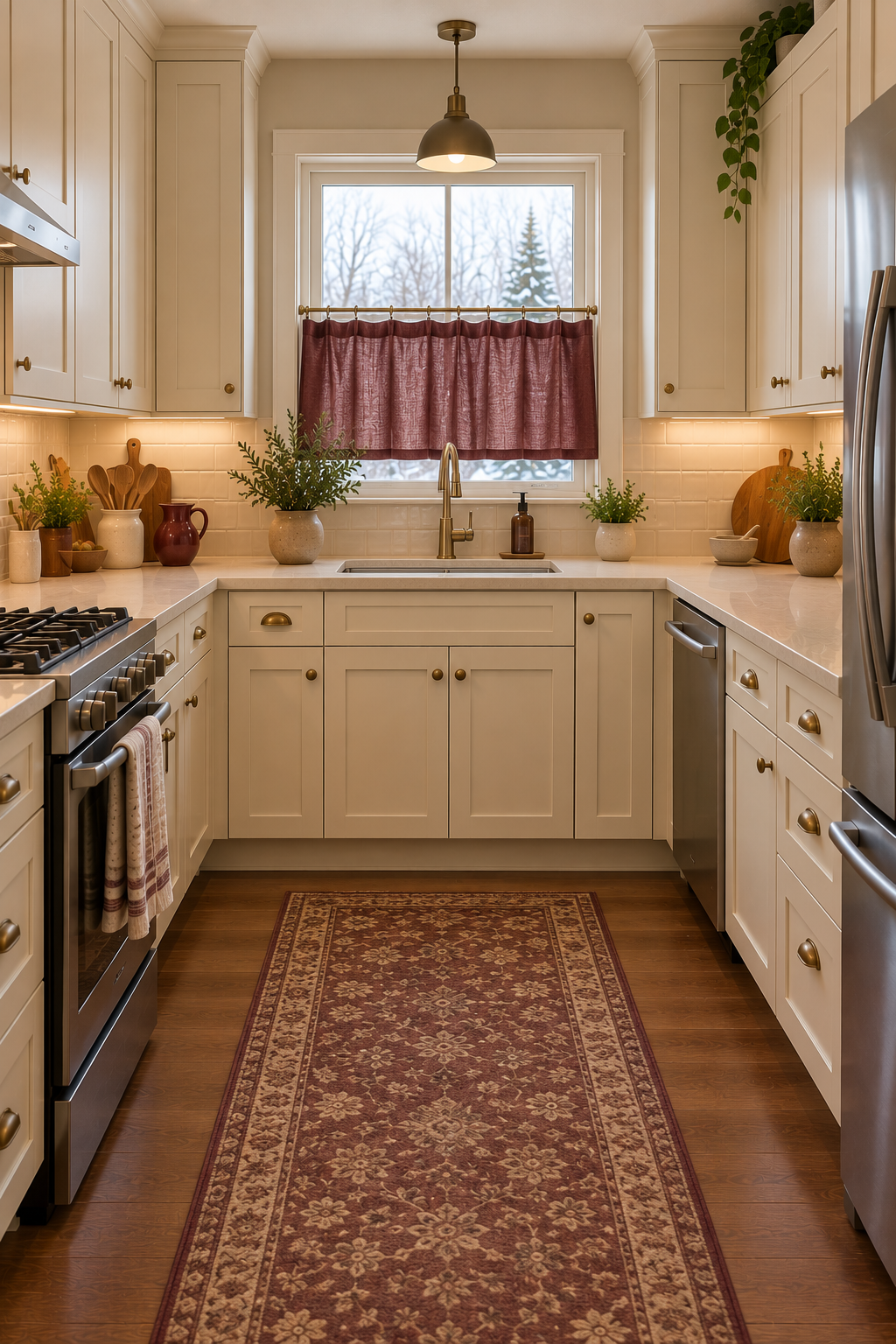
14 Kitchen Curtain Ideas Above Sink for a Charming Window
A kitchen window above the sink deserves a little attention. It’s part of the view while you’re washing dishes, preparing breakfast, or tidying up after dinner, and the right curtain can make an ordinary window feel like a considered part of the room.
Kitchen curtains also have a practical job. They need to work around the faucet, preserve useful daylight, tolerate occasional splashes, and remain easy to clean. A beautiful fabric isn’t much help if it gets soaked every time you wash a large pan.
The best solution depends on the window’s position, the amount of privacy you need, and the kitchen’s existing colors and finishes. A café curtain may be perfect for a street-facing window, while a simple valance can soften a garden-facing view without covering much glass.
These 14 kitchen curtain ideas above the sink explore classic shapes, subtle patterns, earthy colors, and practical window treatments that bring charm without getting in the way of everyday kitchen tasks.
1. Hang a Classic Café Curtain
A café curtain covers the lower portion of a window while leaving the upper glass exposed. It’s a useful option when you want privacy from neighboring houses but still want daylight to reach the sink.
Choose a washable cream or natural linen-look fabric for a relaxed, timeless appearance. A simple rod fitted securely within or just outside the window frame keeps the treatment neat without requiring elaborate hardware.
Before buying, measure the window and decide where the curtain should finish. It needs to provide the privacy you want without brushing against the faucet, sink basin, or countertop.
Choose enough fabric for soft folds, but avoid excessive fullness that makes a narrow window feel crowded. A simple café curtain works especially well with shaker cabinets, traditional wood trim, and understated hardware.
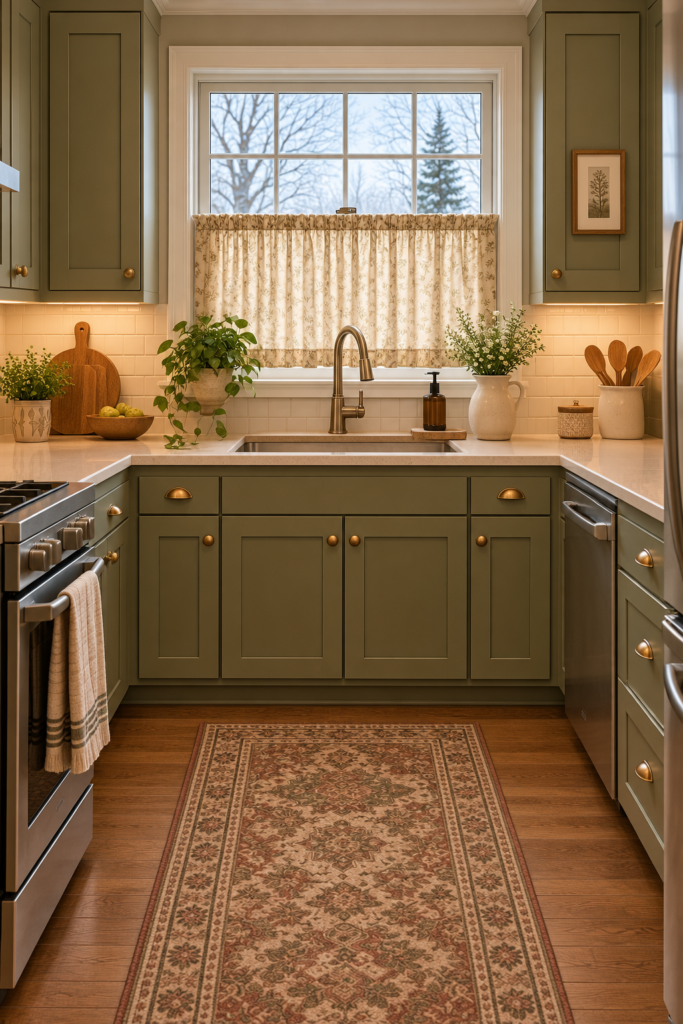
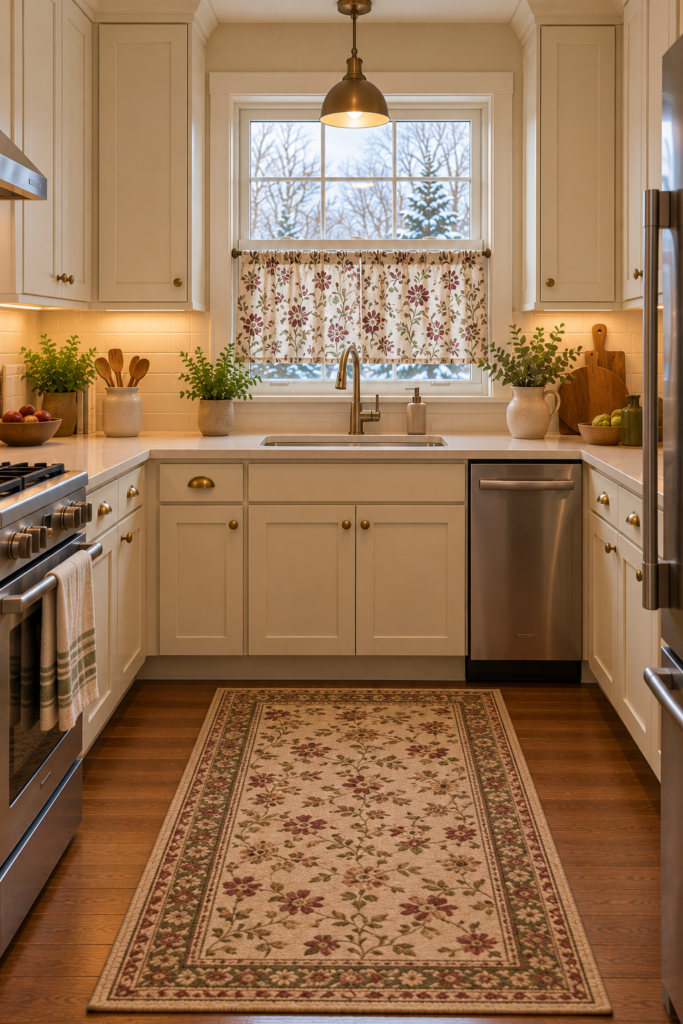
2. Try a Small Floral Café Curtain
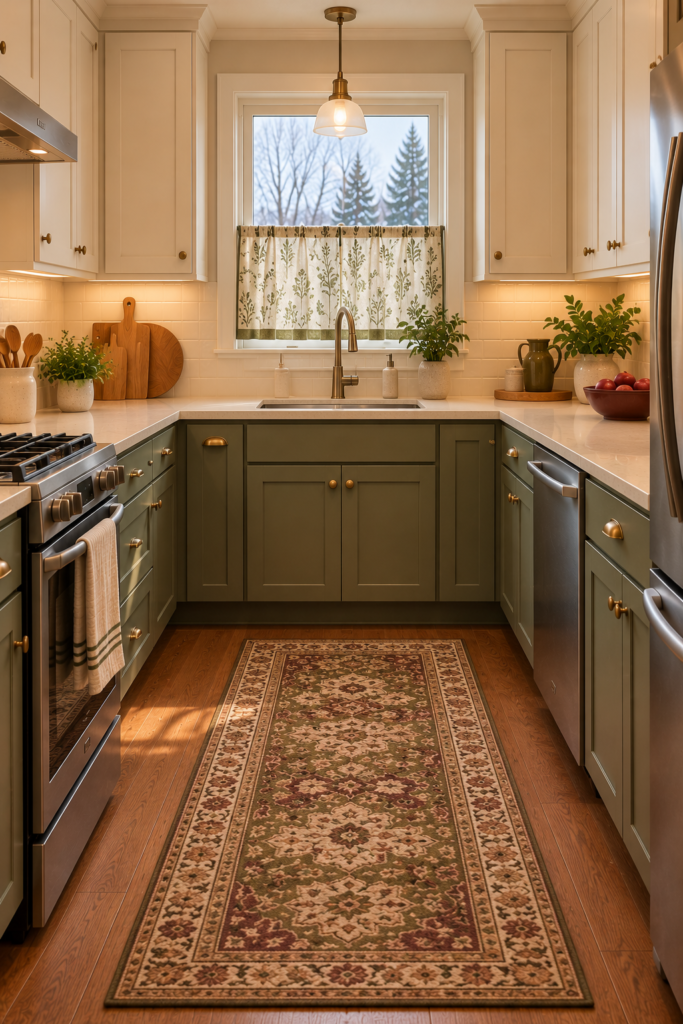
A small floral print adds cottage character without overwhelming the kitchen. Delicate flowers, fine leafy stems, or scattered botanical motifs can soften plain cabinetry and tile.
Look for muted colors such as olive green, dusty burgundy, faded blue, and warm cream. A light background helps the print remain airy, particularly in a compact kitchen.
Pair the curtain with relatively simple cabinetry and countertops. If the backsplash already has a strong pattern, choose a quieter floral design rather than introducing another busy surface.
Check the fabric’s care instructions before purchasing. A washable material is especially useful above a sink, where splashes and food residue are part of everyday life.
Keep the rod and surrounding accessories understated. The floral curtain should add personality without making the window area feel cluttered.
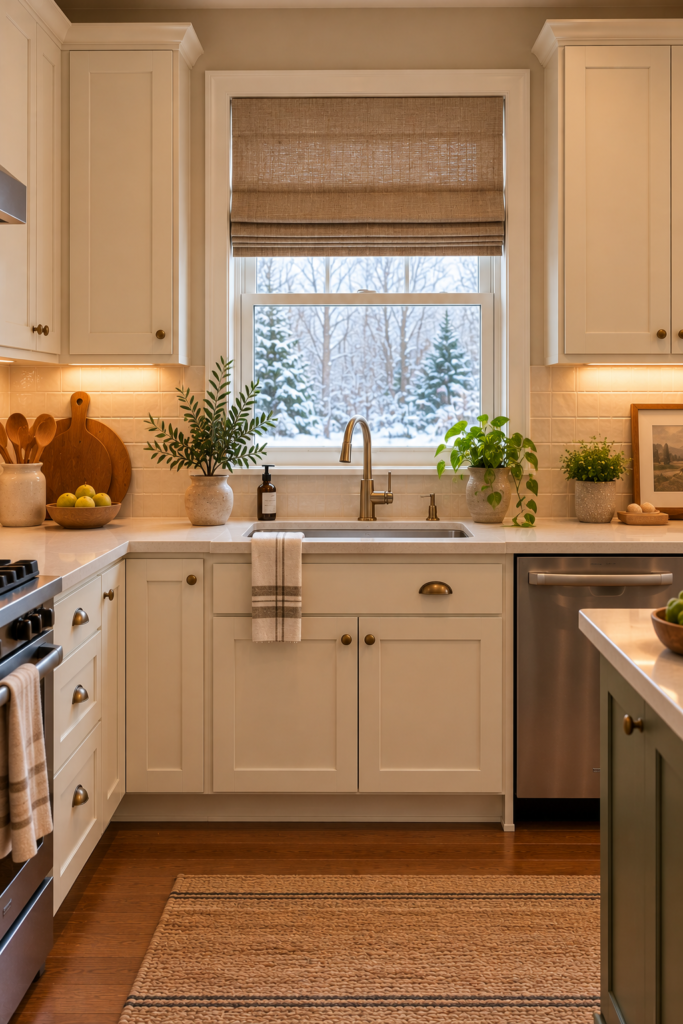
3. Use a Simple Roman Shade
A Roman shade creates a tailored appearance with clean horizontal folds when raised. It can be a good alternative to a gathered curtain when you prefer a neater, more structured window treatment.
Choose a washable or otherwise maintainable fabric in warm cream, mushroom, muted olive, or a subtle stripe. A solid color works particularly well when the kitchen already contains visible wood grain or patterned tile.
Measure the window carefully and check how the shade operates. It should raise fully enough to preserve the desired daylight and remain clear of the faucet and other fixtures.
Pay attention to the operating mechanism, especially in homes with children. Choose a cordless design or a suitable cord-safety system, and keep cords out of reach.
A Roman shade works well in both traditional and contemporary kitchens because it combines fabric softness with a relatively streamlined shape.
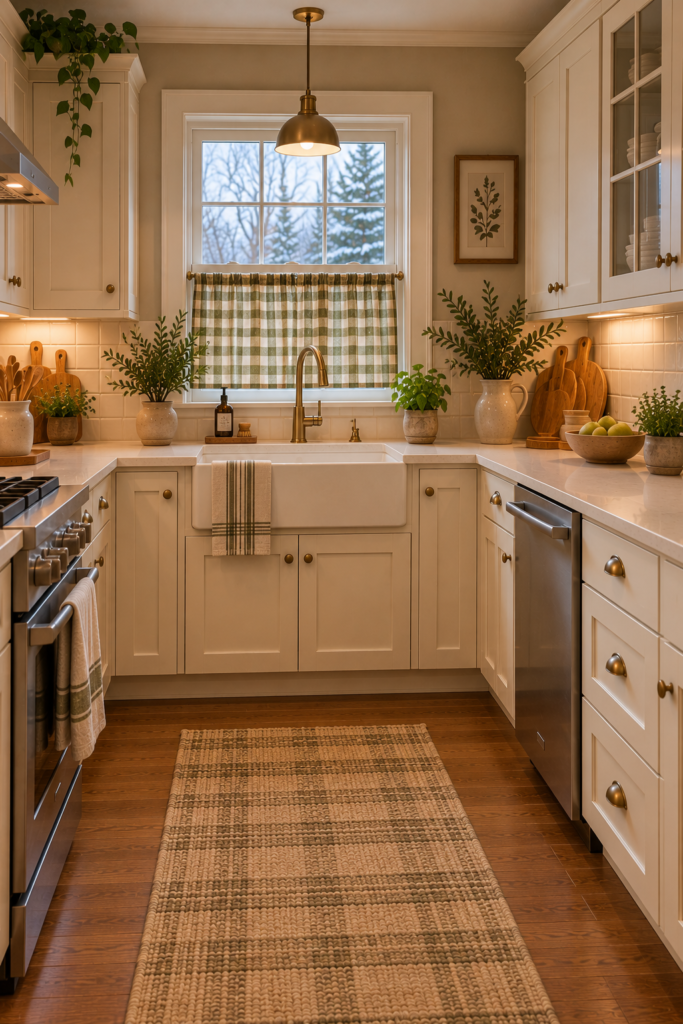
4. Add a Muted Gingham Curtain
Gingham brings a familiar cottage or farmhouse character to a kitchen window. Its small checks add pattern while remaining easy to coordinate with simple cabinetry and everyday accessories.
Try mushroom and cream, muted olive and cream, or dusty blue and cream instead of a highly saturated pattern.
The scale of the checks matters. Smaller checks can look delicate in a compact window, while larger ones create a stronger decorative statement.
Choose a fabric that hangs naturally without becoming bulky. A simple café-style panel often provides enough pattern without covering too much glass.
Gingham pairs particularly well with painted shaker cabinets, wood accents, and plain tile. If the floor already has a busy pattern, keep the curtain more subdued.
The goal is to introduce a little texture and color while allowing the rest of the kitchen to remain visually calm.
5. Use a Soft Linen-Look Valance
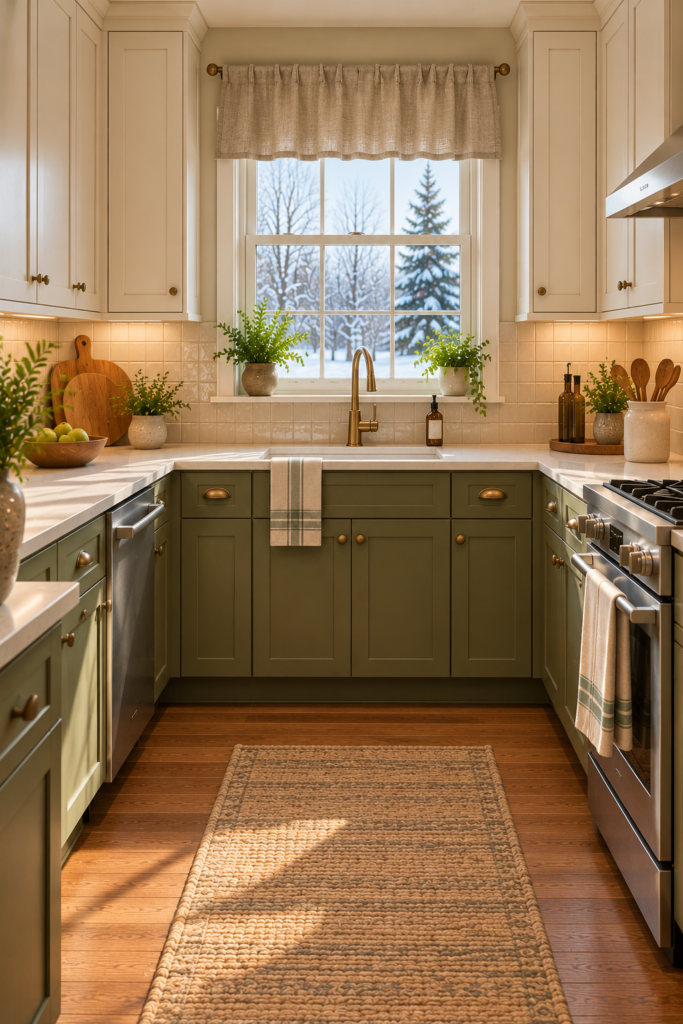
A valance covers the upper portion of a window while leaving most of the glass open. It’s useful when privacy isn’t necessary but the window needs a softer finish.
Choose a simple linen-look fabric in warm cream, natural flax, or pale taupe. A lightly textured material can add interest without making the window treatment feel heavy.
Measure the window’s upper section before choosing the valance length. It should frame the window rather than cover so much glass that it reduces useful daylight.
Avoid overly elaborate ruffles if the kitchen has limited space. A restrained shape works particularly well with traditional cabinets, natural wood trim, and understated hardware.
A valance is also worth considering when a garden or backyard view is one of the kitchen’s best features. It adds a decorative finish while keeping most of that view visible.
6. Add a Subtle Striped Curtain
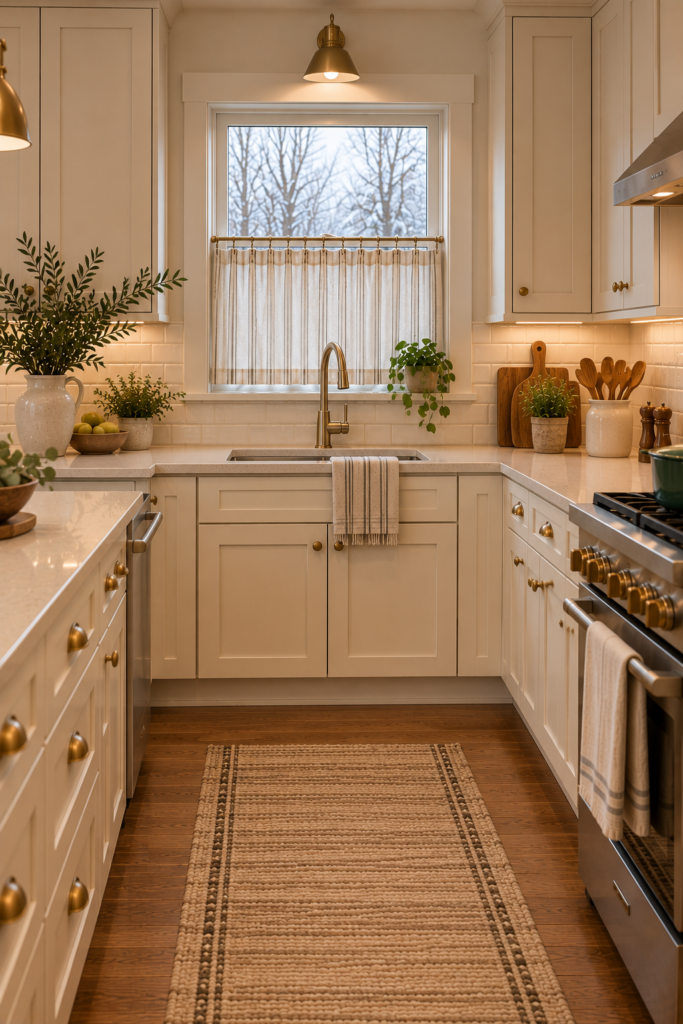
Stripes introduce pattern without the complexity of a floral or all-over print. They’re especially effective when you want the kitchen window to feel decorated but not overly formal.
Fine mushroom stripes on cream, dusty blue on ivory, or muted olive on a light background can complement a range of cabinet finishes.
Vertical stripes can draw the eye upward, while horizontal stripes create a more relaxed visual rhythm. Neither changes the actual dimensions of the window, so choose the direction according to the look you prefer.
Consider how the stripes will appear when the curtain is gathered. Very narrow patterns may become less distinct in deep folds, while bold stripes can look busy in a small opening.
Keep other textiles relatively simple. A plain kitchen runner and solid-colored towels help the striped curtain remain the main patterned element.
7. Choose Muted Olive Green
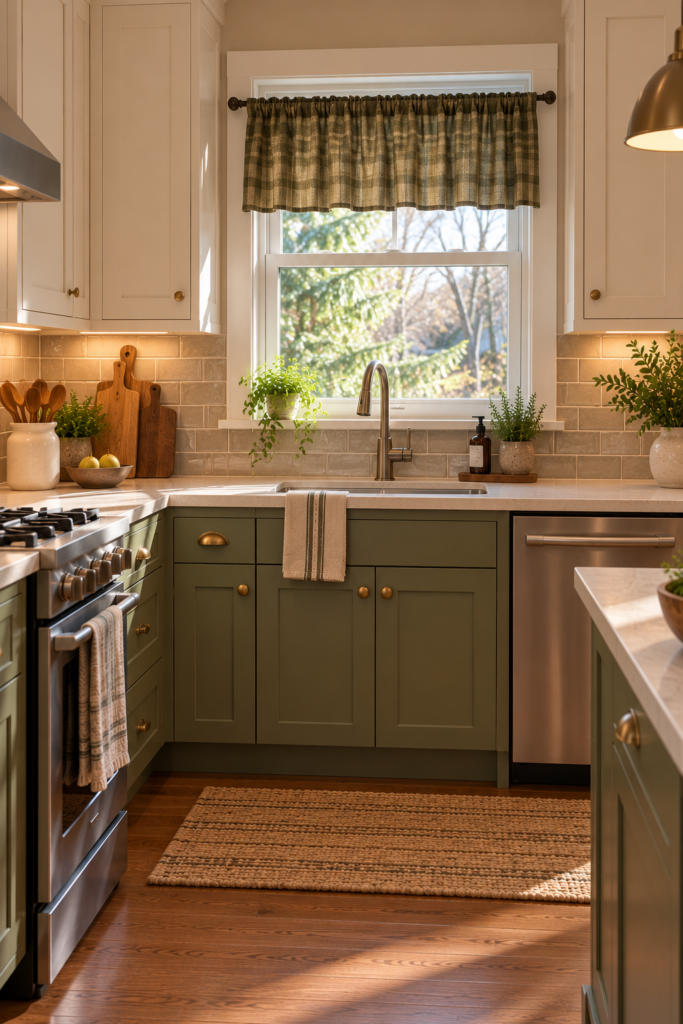
An olive-green curtain introduces color while retaining an earthy, understated character. It pairs naturally with cream cabinetry, medium-toned wood, and warm neutral backsplash tile.
Choose a muted shade rather than an extremely dark or saturated green if the kitchen receives limited daylight. A softer color can provide contrast without dominating the sink wall.
A café curtain is a practical shape for this palette because it leaves the upper window open and keeps the fabric away from much of the countertop.
Repeat the green in a small accessory, such as a ceramic planter or tea towel, if you want the room to feel coordinated. There is no need to match every accessory exactly.
Check how the color looks under both daylight and the kitchen’s artificial lighting. Greens can shift noticeably depending on their undertones and the surrounding finishes.
8. Add a Dusty Burgundy Curtain
Dusty burgundy brings a richer, more dramatic note to a kitchen window. Used in a small area, it can provide a focal point without requiring changes to the cabinetry or backsplash.
A short café curtain or a simple Roman shade is often enough. Pair it with warm cream walls, natural wood, and restrained hardware to keep the deeper color balanced.
Consider how much burgundy is already present in the room. If the kitchen includes a patterned backsplash or colorful flooring, choose a more subdued curtain fabric.
A matte finish can feel softer and more traditional than a shiny textile. Look for a washable material suitable for the window’s location.
Although burgundy works particularly well with autumnal colors, it doesn’t need to be reserved for one season. Its success depends more on the surrounding palette than on the time of year.
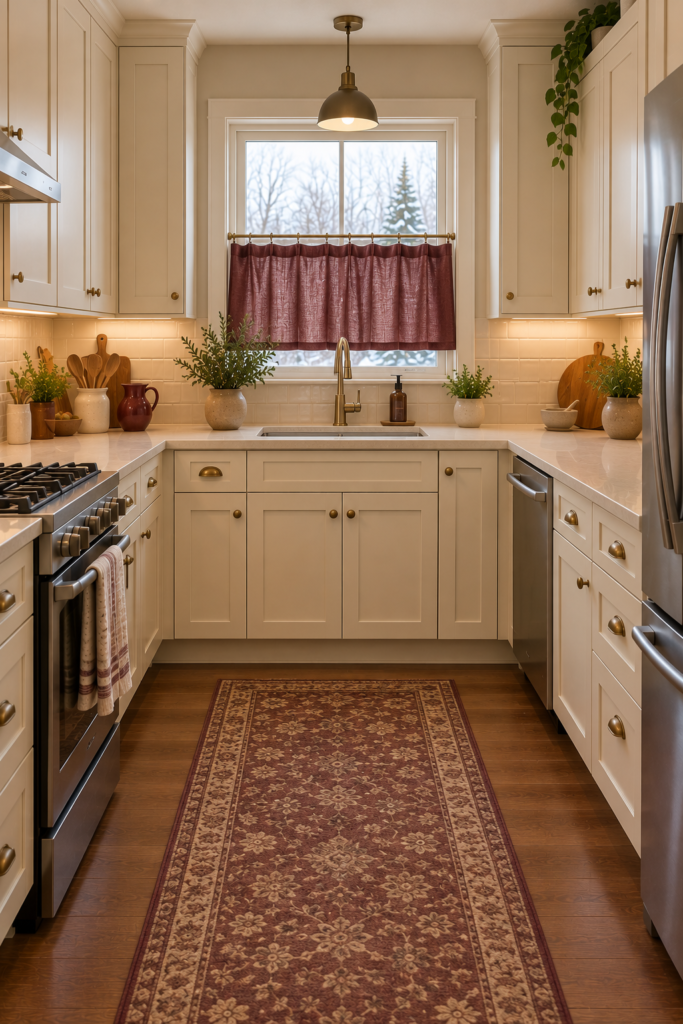
9. Use a Vintage-Inspired Floral
A vintage-inspired floral curtain can add character to a kitchen with traditional cabinets, classic tile, or stained wood accents.
Look for faded-looking flowers, small repeating motifs, or botanical designs in muted burgundy, olive, dusty plum, and warm brown.
Choose a print that relates to the existing finishes rather than introducing a completely unrelated color scheme. An ivory background can help the design feel lighter.
Keep the rest of the sink wall relatively simple. Plain tile, uncomplicated hardware, and a clear countertop allow the curtain to provide the decorative detail.
Check the fabric’s washability and consider how easily it will dry after occasional splashes.
This idea works particularly well when you want a collected, traditional feeling without adding more objects to the countertop or shelves.
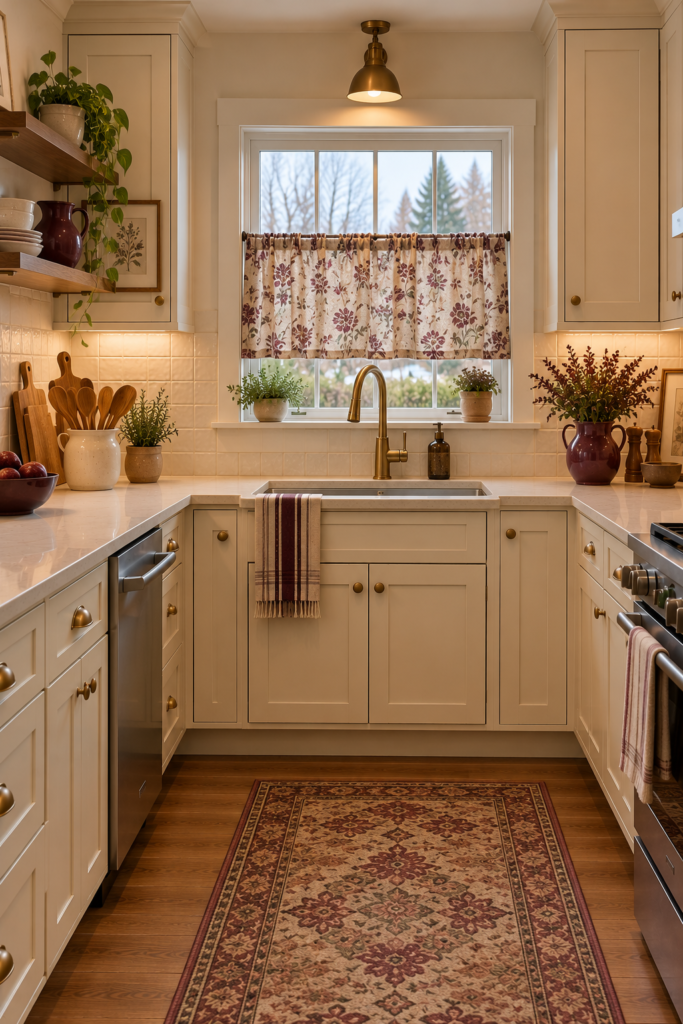
10. Try a Scalloped Café Curtain
A scalloped lower edge gives a café curtain a softer, more decorative silhouette. It adds a small architectural detail without requiring a bold color or elaborate pattern.
Choose a plain fabric in warm cream, ivory, or natural flax so the curved edge remains the main feature.
Measure the curtain carefully to ensure the scallops hang evenly. A well-proportioned edge looks intentional, while excessive decoration can make a small window feel crowded.
Pair the curtain with simple cabinetry and restrained hardware. If the kitchen already has ornate trim or patterned tile, keep the fabric particularly understated.
As with any café curtain, check that the lower edge remains clear of the faucet and sink basin.
A scalloped curtain is an easy way to introduce a little cottage character while preserving most of the window’s daylight.
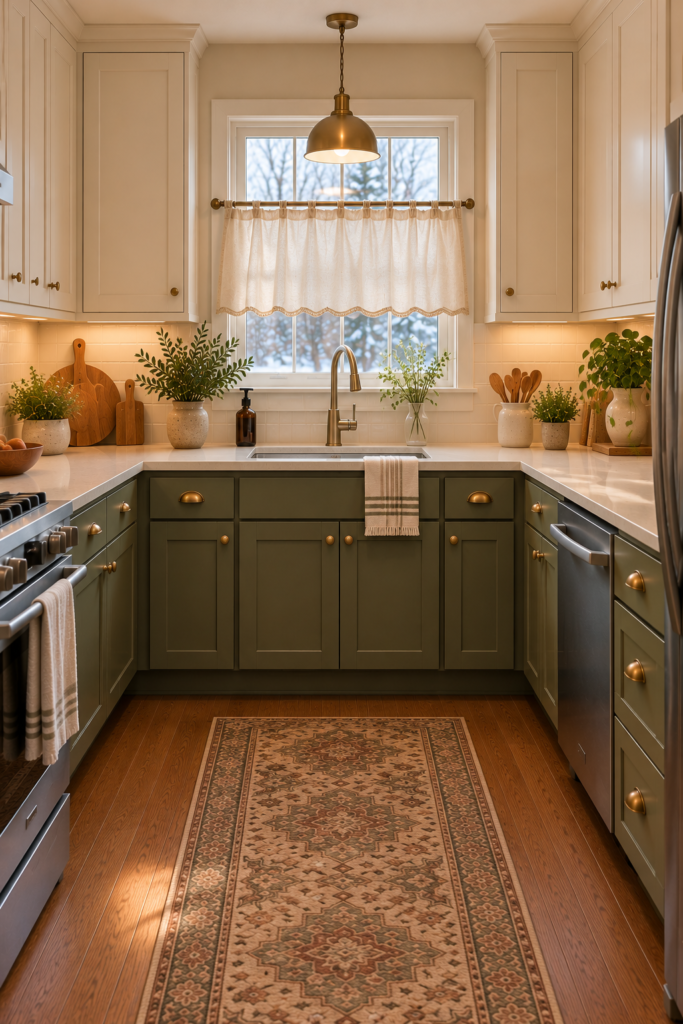
11. Add a Tiny Botanical Print
A small botanical print introduces a natural motif without requiring plants or decorative objects on the windowsill.
Choose delicate leaves, simple vines, or understated branches in olive green on a warm cream background. The combination works well with natural wood, beige tile, and traditional cabinetry.
The scale of the print is important. Small motifs can feel light and orderly, while oversized leaves may dominate a narrow window.
If the kitchen already contains a prominent wood grain or patterned backsplash, choose a particularly subtle botanical design.
Use a café curtain when privacy is needed below the window, or a short valance when the view should remain mostly unobstructed.
A washable fabric is useful near the sink, where splashes and grease can accumulate over time.
The result should feel fresh and natural without competing with the kitchen’s practical work surfaces.
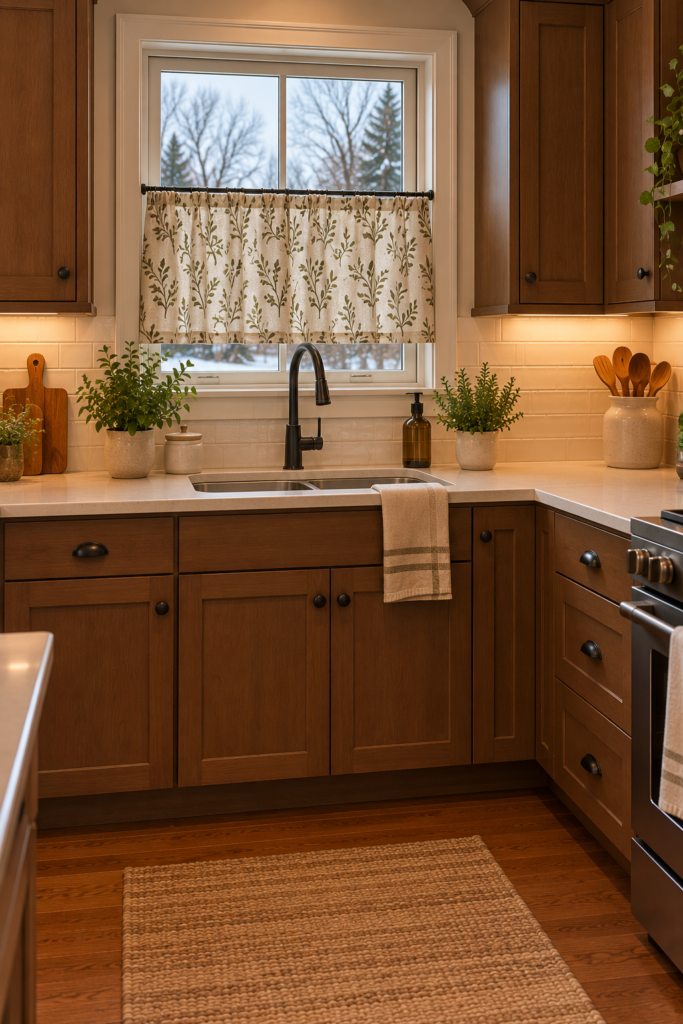
12. Use a Relaxed Tie-Up Shade
A tie-up shade provides a casual, fabric-focused alternative to a Roman shade. It can be raised and secured to create soft folds, making it particularly suitable for cottage-style kitchens.
Choose a lightweight, washable material in warm cream, pale taupe, or a subtle stripe. A simple fabric allows the folds to become the main decorative feature.
Measure the window and check how much glass remains covered when the shade is raised. You should be able to adjust it without allowing fabric to fall toward the sink or faucet.
Keep ties neat and securely fastened. Avoid long, loose cords or dangling fabric, particularly in households with children.
This style may need occasional straightening to maintain an even appearance. If you prefer a consistently tailored look with minimal adjustment, a Roman shade may be more convenient.
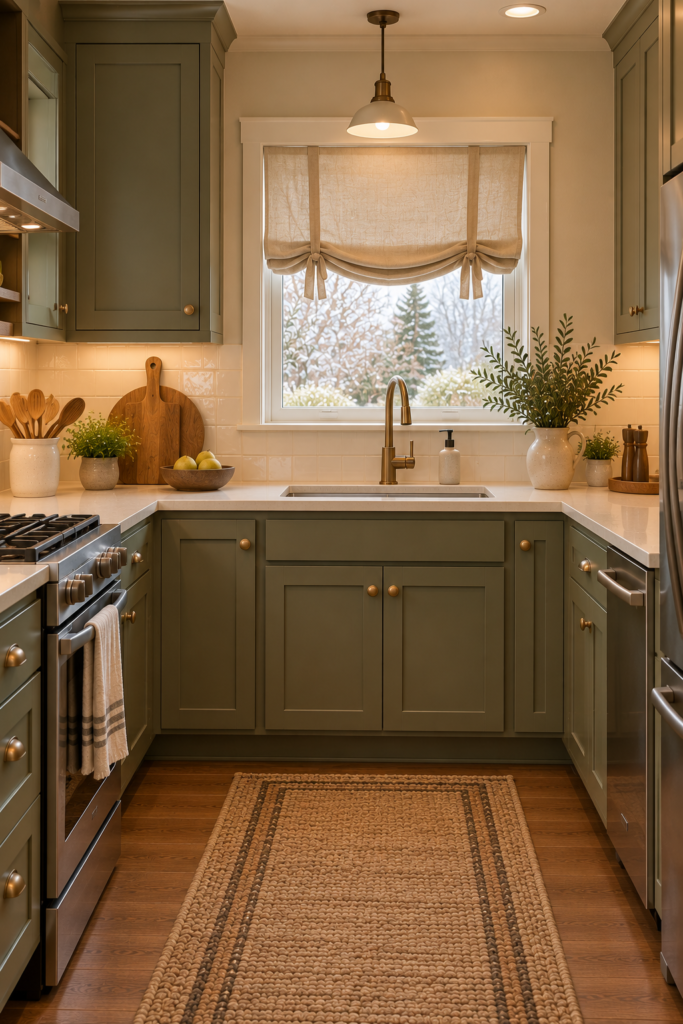
13. Coordinate the Curtain With a Kitchen Runner
A kitchen curtain and floor runner can work together to create a cohesive color scheme without matching exactly.
For example, a cream-and-olive curtain can relate to a runner that includes olive, burgundy, and mushroom tones. Repeating one or two colors helps the room feel connected.
Choose the curtain first if the window treatment has a distinctive print. Then select a runner that complements its colors without repeating the same pattern too literally.
Consider the practical requirements of both textiles. Kitchen runners should lie flat, be suitable for the floor surface, and stay clear of cabinet doors and appliances. Curtains should remain away from water and cooking heat.
If the kitchen is small, avoid using large patterns on both the curtain and runner. One patterned element paired with a simpler one usually feels more balanced.
This approach allows you to introduce a coordinated look without buying a matching set of accessories.
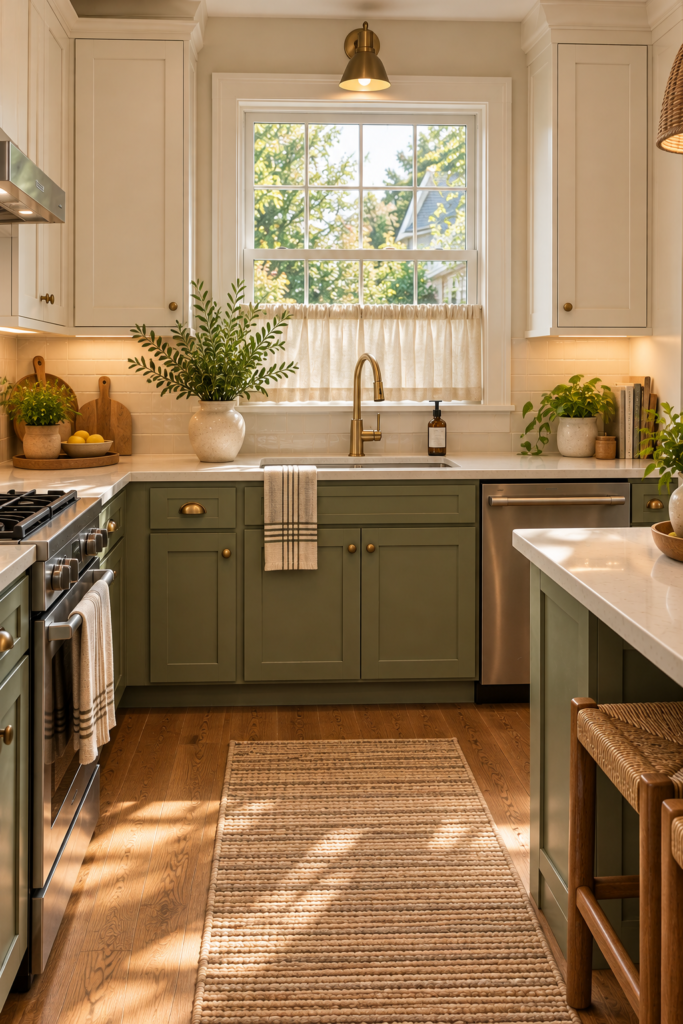
14. Keep the Curtain Minimal and Let the View Lead
Sometimes the best window treatment is the least noticeable one.
A short warm-cream café panel or a simple valance can soften the window frame while leaving most of the glass exposed.
This approach is particularly appealing when the window overlooks trees, a garden, or a pleasant backyard. The outdoor view can become part of the kitchen’s visual character.
Choose a lightweight fabric that doesn’t block much daylight. A subtle texture may provide enough interest without adding a noticeable pattern.
If privacy isn’t needed, consider whether a valance alone would achieve the look you want. Less fabric can also mean simpler cleaning and less material near the sink.
Keep the windowsill and surrounding countertop uncluttered so the view remains easy to appreciate.
The aim is to frame the window rather than compete with it.
What Curtain Works Best Above a Kitchen Sink?
The best option depends on privacy, window placement, and how much fabric the area can accommodate.
Café curtains work well when you want privacy across the lower part of the window while retaining daylight above. Roman shades provide a more tailored appearance, while valances are useful when privacy isn’t necessary.
For an awkward window layout, consider how the treatment opens and closes before choosing a style.
Whatever you select, make sure it doesn’t interfere with the faucet, window operation, outlets, switches, or nearby appliances.
How Long Should a Kitchen Curtain Above the Sink Be?
There is no single length that works for every kitchen window. The treatment should suit the actual window and remain clear of the sink, countertop, and faucet.
A café curtain generally covers only part of the glass, while a valance sits across the top. A Roman or tie-up shade needs enough clearance to operate without catching on nearby fixtures.
Measure the window before purchasing, including the proposed rod position and the available space around the sink.
Avoid fabric pooling on the counter or hanging where repeated splashes will keep it wet. Shorter, neatly fitted treatments are often practical above kitchen sinks.
Best Fabrics for Kitchen Curtains
Kitchen textiles may encounter humidity, grease, food residue, and water splashes. Choose a material that can be cleaned according to its care instructions and that dries appropriately for the room.
Washable cotton blends and suitable synthetic fabrics can be convenient for everyday kitchens. Linen-look fabrics offer a relaxed appearance, while heavier textiles may require more care and take longer to dry.
Consider how close the window is to the cooking area. Fabric near a cooktop can present a fire hazard, so a non-fabric window treatment may be more appropriate in that location.
Before buying, check the care label and consider whether the curtain can be removed easily for cleaning.
Kitchen Curtain Safety
Keep fabric well away from cooktops and other significant heat sources. Avoid treatments that obstruct outlets, switches, vents, window locks, or required exits.
Keep curtains clear of standing water and repeated sink splashes. Secure rods and other hardware according to the manufacturer’s installation instructions and the construction of the mounting surface.
Manage cords safely, particularly in homes with children. Choose cordless shades or appropriate cord-safety systems where possible.
For windows close to cooking appliances, consider a non-fabric treatment. Always prioritize safe access, window operation, and everyday kitchen use over decorative appearance.
Final Thoughts
The best kitchen curtain ideas above the sink add softness without making the work area less practical.
A classic café curtain provides privacy while preserving daylight. Florals, gingham, and stripes introduce pattern, while olive and dusty burgundy add color. A Roman shade offers a tailored alternative, and a simple valance lets an attractive outdoor view remain the focus.
Choose a treatment that works with your existing cabinetry and finishes, fits the window properly, and can be cleaned without difficulty.
A charming kitchen window doesn’t need elaborate decoration. A well-chosen curtain, practical hardware, and a little attention to proportion can make the sink area feel more welcoming while keeping it easy to use.
