
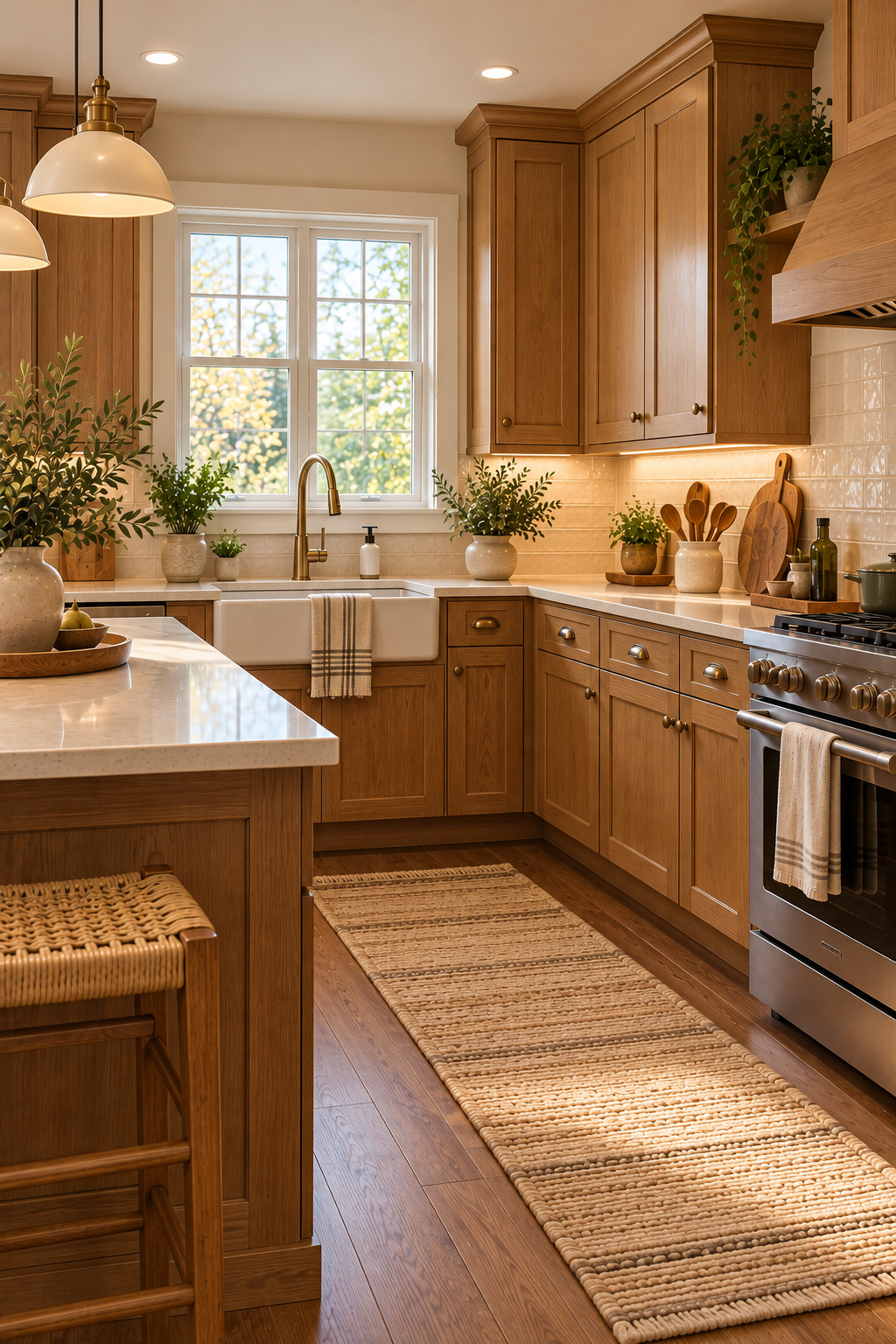
17 Craftsman Kitchen Ideas Full of Warm Wood and Character
Craftsman kitchens have something many modern kitchens try to recreate: character. Natural wood, straightforward cabinetry, visible craftsmanship, and substantial architectural details give this style a warmth that doesn’t depend on elaborate decoration.
The challenge is balancing those rich materials with enough light and breathing room. Too much dark wood can make a compact kitchen feel enclosed, while overly decorative finishes can distract from the simple construction that defines Craftsman design.
The solution is thoughtful layering. Warm oak, handmade-look tile, restrained hardware, and carefully chosen lighting can create a kitchen that feels established and welcoming without looking heavy.
These 17 Craftsman kitchen ideas explore ways to bring that character into everyday American homes, including smaller kitchens with standard cabinetry and practical layouts.
1. Use Warm Oak Cabinetry
Oak cabinetry is a natural starting point for a Craftsman kitchen. Its visible grain and substantial appearance complement the style’s emphasis on honest materials and straightforward construction.
Look for medium-toned oak or a quarter-sawn-oak-inspired finish with a relatively consistent grain pattern. Simple cabinet fronts allow the wood itself to provide the decorative detail.
Before choosing a stain, compare samples with your existing flooring and natural light. Golden oak can feel quite different from a more muted brown finish, especially under warm artificial lighting.
Avoid matching every wooden surface too closely. A related wood tone on the window trim or island can create continuity without making the entire room look like one continuous cabinet.
For a traditional result, keep the cabinet profiles restrained and choose hardware that complements the wood rather than competing with it.
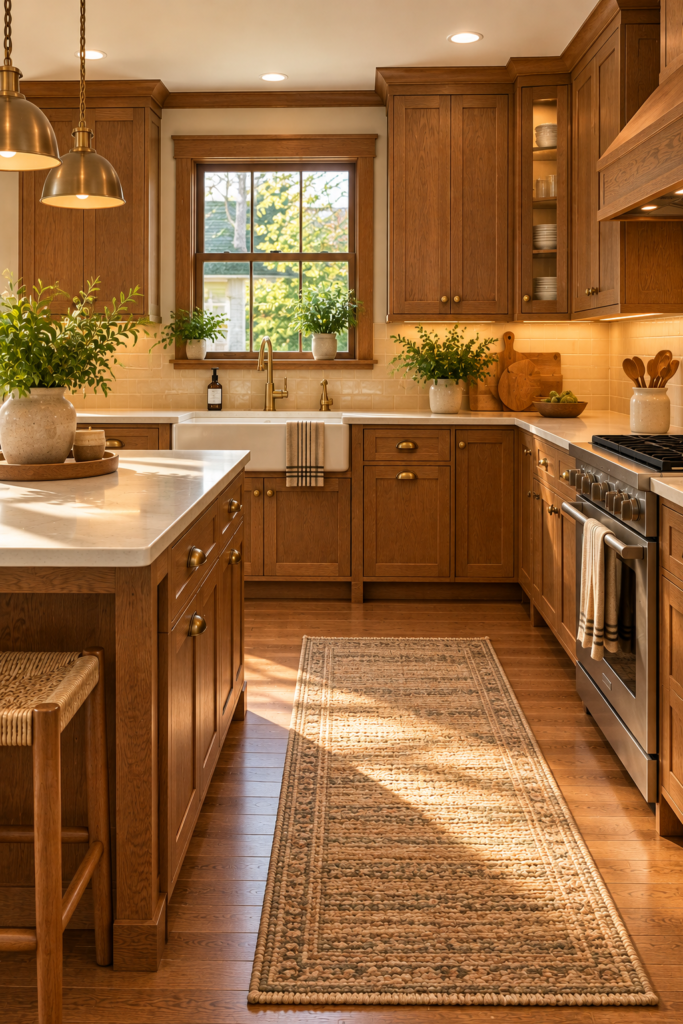
2. Pair Wood Cabinets With Warm Cream Walls
Warm cream walls can balance the visual weight of oak cabinetry while keeping a Craftsman kitchen inviting.
A soft neutral background creates contrast without the sharpness of bright white. It also works well with traditional wood trim, natural flooring, and earthy accessories.
Consider extending the lighter finish to the ceiling and selecting a compatible backsplash. This helps the room feel connected rather than divided into competing blocks of color.
The undertone matters. A yellowish cream may look noticeably different beside red-toned oak than a softer neutral cream, so compare samples together before painting.
This combination is especially useful in a smaller kitchen where dark cabinetry already occupies much of the visible space.
Keep the rest of the palette relatively simple. Wood, cream, and a few carefully selected accents can provide plenty of character.
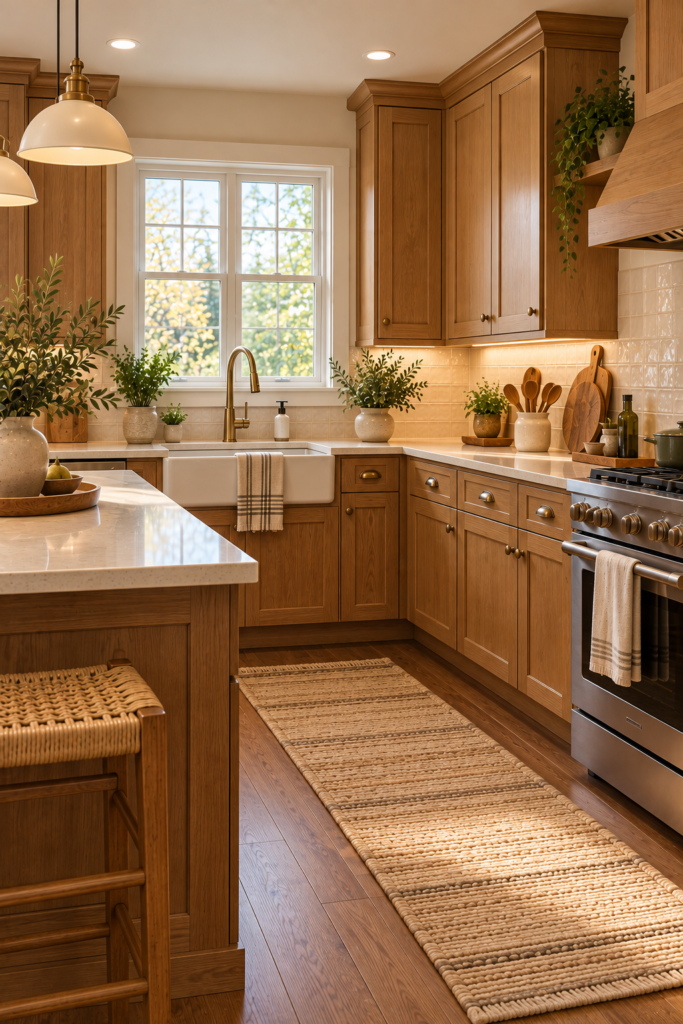
3. Add a Handmade-Look Tile Backsplash
A backsplash with subtle surface variation brings texture to a Craftsman kitchen without requiring an elaborate pattern.
Consider ceramic tile in warm cream, muted olive, dusty blue-green, or mushroom. These colors complement natural wood while introducing a little visual depth.
Simple rectangular tiles or small squares can both work. Choose the format according to the scale of the kitchen and the look of the cabinetry.
Grout color also affects the finished appearance. A close match creates a quieter surface, while contrasting grout makes the tile pattern more prominent.
Before buying, check that the tile is suitable for the intended backsplash location and can be installed over the appropriate substrate. Consider cleaning requirements, especially near the cooking area.
For more options, explore these kitchen tile ideas for floors, walls, and backsplashes.
The aim is to introduce craftsmanship-inspired texture while allowing the cabinetry to remain a major feature.
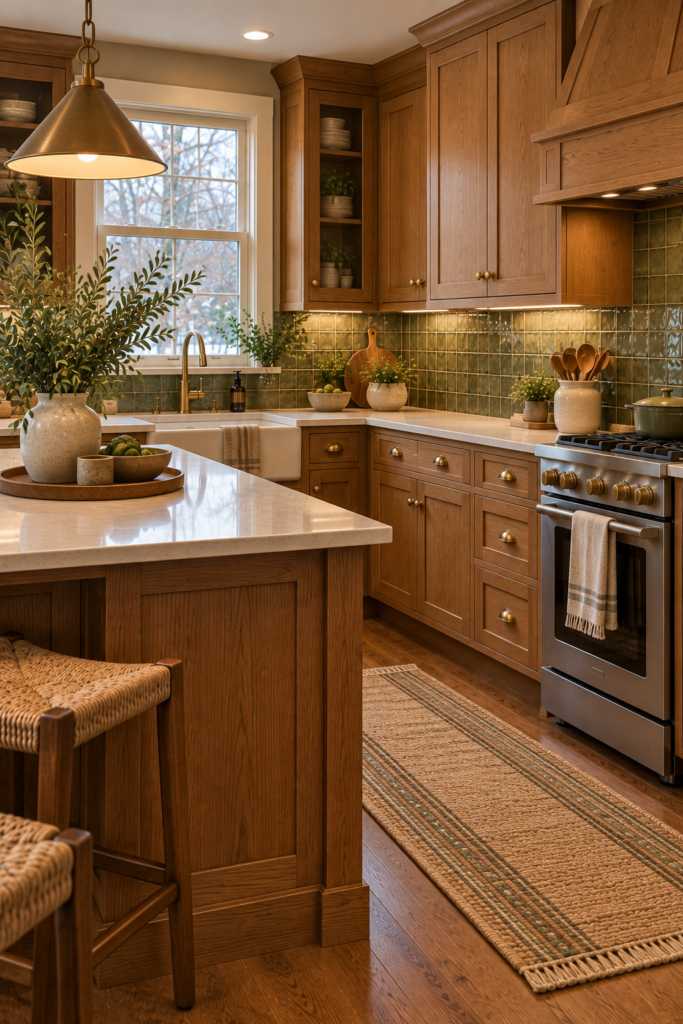
4. Use Craftsman-Style Shaker Cabinets
Shaker cabinetry with substantial rails and stiles fits naturally into a Craftsman kitchen. Its simple recessed panels provide definition without ornate carving or excessive decoration.
Natural oak is a traditional-looking choice, but painted cabinetry can also work well. Muted olive, warm cream, and subdued brown-green finishes introduce color while preserving the style’s restrained character.
Pay attention to the proportions of the doors and drawers. Very delicate profiles may look disconnected from the sturdy appearance associated with Craftsman interiors.
If replacing cabinets isn’t practical, consider whether new hardware or a carefully planned finish update could improve the existing cabinetry.
Choose durable cabinet finishes suited to everyday kitchen use, particularly around handles, drawers, and areas exposed to frequent cleaning.
Keep decorative molding selective. The goal is cabinetry that feels substantial and well considered, not unnecessarily elaborate.
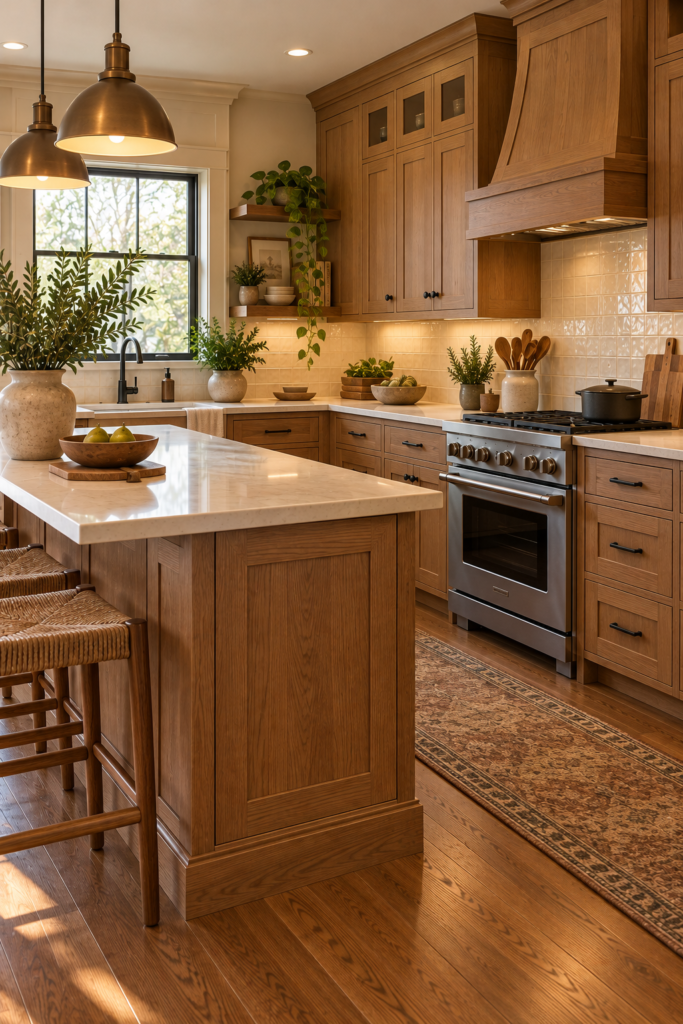
5. Add Muted Green Cabinetry
Muted olive or moss green offers an earthy alternative to an all-wood Craftsman kitchen.
One approach is to use painted lower cabinets with natural oak upper cabinetry. Another is to introduce green on a smaller island while keeping the perimeter cabinets wooden.
Pair the green with warm cream walls or countertops to maintain balance. Wood grain and simple metal hardware help connect the colors.
When selecting paint, compare samples with the oak finish and the room’s lighting. Some greens lean yellow, while others have stronger gray or blue undertones.
Avoid using too many different greens across the cabinetry, backsplash, and accessories. A single dominant green with a few related accents usually feels more cohesive.
This idea is particularly effective when you want Craftsman warmth but prefer a kitchen with a little more color and contrast.
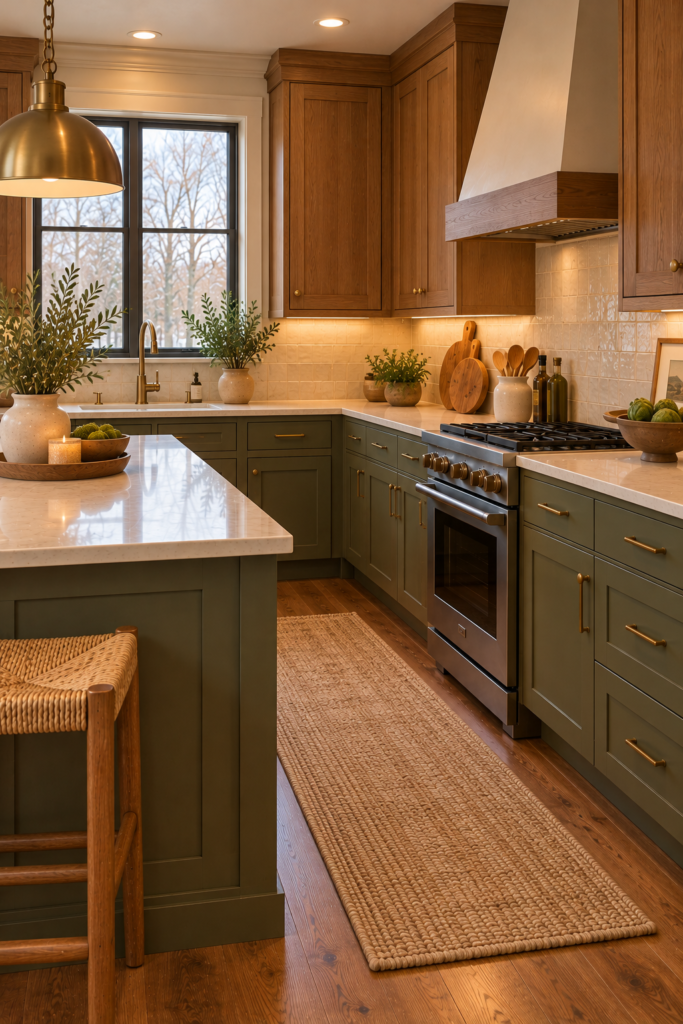
6. Add a Furniture-Style Wood Island
A furniture-style island can give a Craftsman kitchen the appearance of a carefully assembled room rather than a row of cabinets with a worktop.
Look for framed end panels, visible legs, or a straightforward wood base that resembles a substantial piece of furniture. Oak and medium walnut both suit this direction.
Keep the countertop relatively quiet so the island’s construction remains visible. A warm neutral surface can complement the wood without competing with it.
Before choosing an island, consider the actual kitchen layout. It needs to leave comfortable routes between cabinets, appliances, and nearby seating.
If the design includes an overhang for stools, ensure the structure provides suitable support. An attractive furniture-style base shouldn’t compromise stability.
In a smaller kitchen, a compact freestanding worktable may offer a similar visual effect without occupying as much floor space.
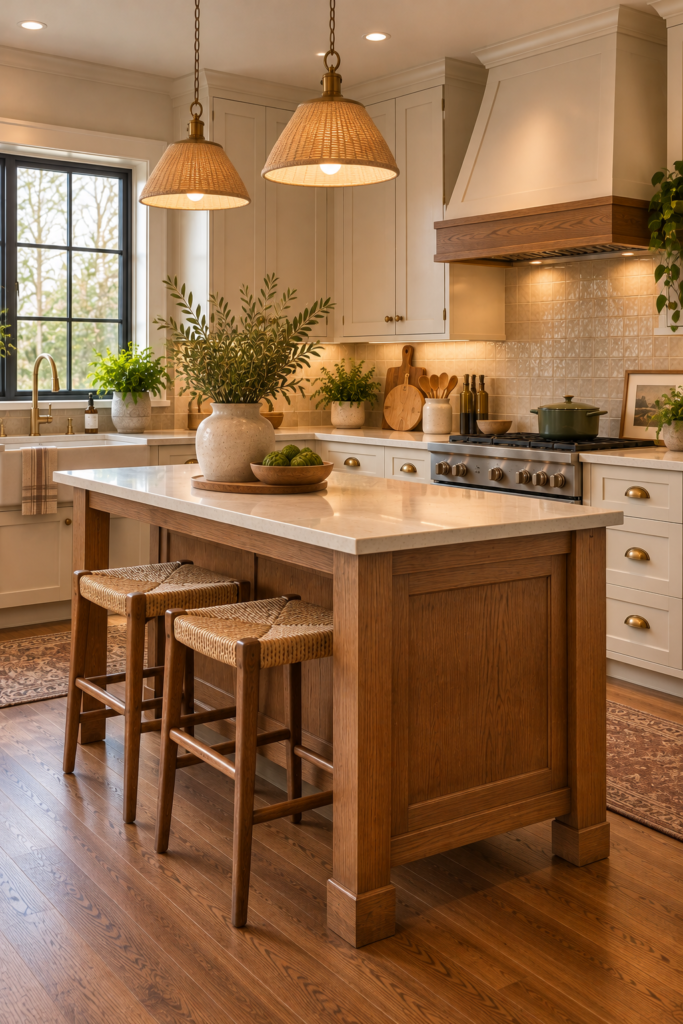
7. Use Aged Brass Hardware
Aged-brass-style hardware adds warmth to oak cabinetry and works particularly well with cream, olive, and other earthy finishes.
Simple knobs, traditional pulls, or understated bridge-style faucet designs can complement the Craftsman aesthetic without making the kitchen look overly ornate.
Choose the hardware according to the cabinet profile and the way the drawers and doors are used. The shape should be comfortable to grip as well as visually appropriate.
Brass finishes vary considerably. Some look golden and polished, while others have a softer, darker appearance. Compare samples with the wood before committing to a full set.
You don’t need brass on every fixture. A coordinated selection of cabinet hardware and one or two related details can provide enough warmth.
If the kitchen already has dark lighting or black appliances, aged brass can introduce contrast without requiring another major change to the cabinetry.
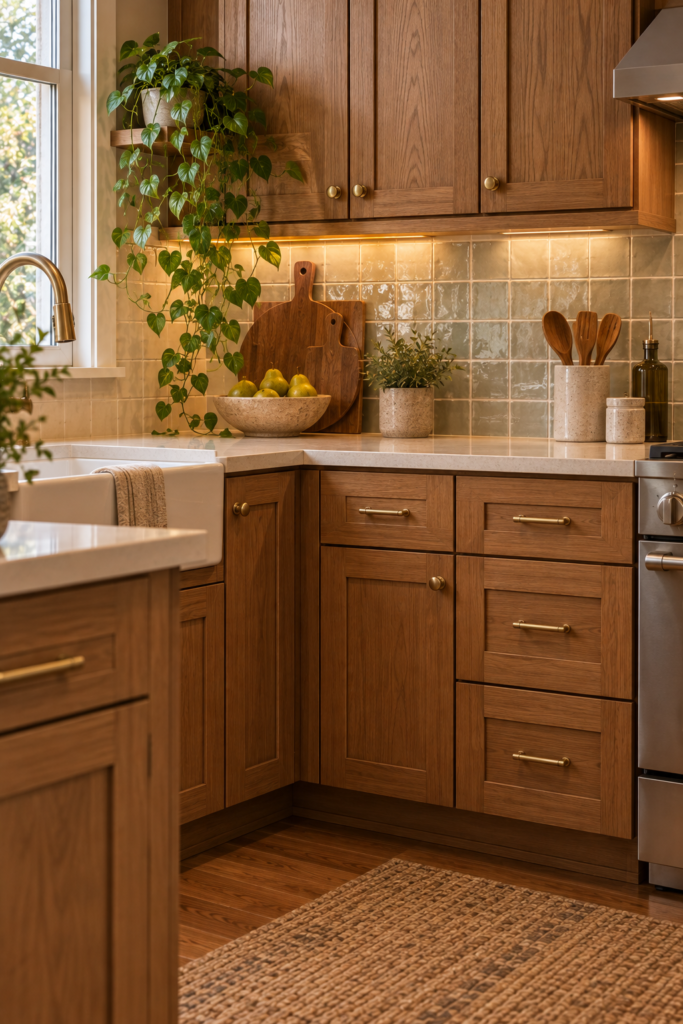
8. Try Matte Black Hardware
Matte black hardware offers a more contemporary interpretation of Craftsman style while preserving the simplicity of the cabinetry.
Black knobs and pulls create crisp definition against oak, especially when paired with cream tile and muted green accents.
The finish can also connect the cabinets to black metal lighting or window details, making the room feel more coordinated.
Choose simple shapes rather than highly decorative hardware. Straightforward pulls and modest knobs complement the restrained cabinet profiles.
Before replacing every handle, test one or two finishes against the cabinet wood and backsplash. Black can appear particularly strong in a small kitchen with dark flooring.
Use it selectively if the room already contains substantial dark elements. A balanced mix of wood, lighter surfaces, and black accents keeps the kitchen from feeling too heavy.
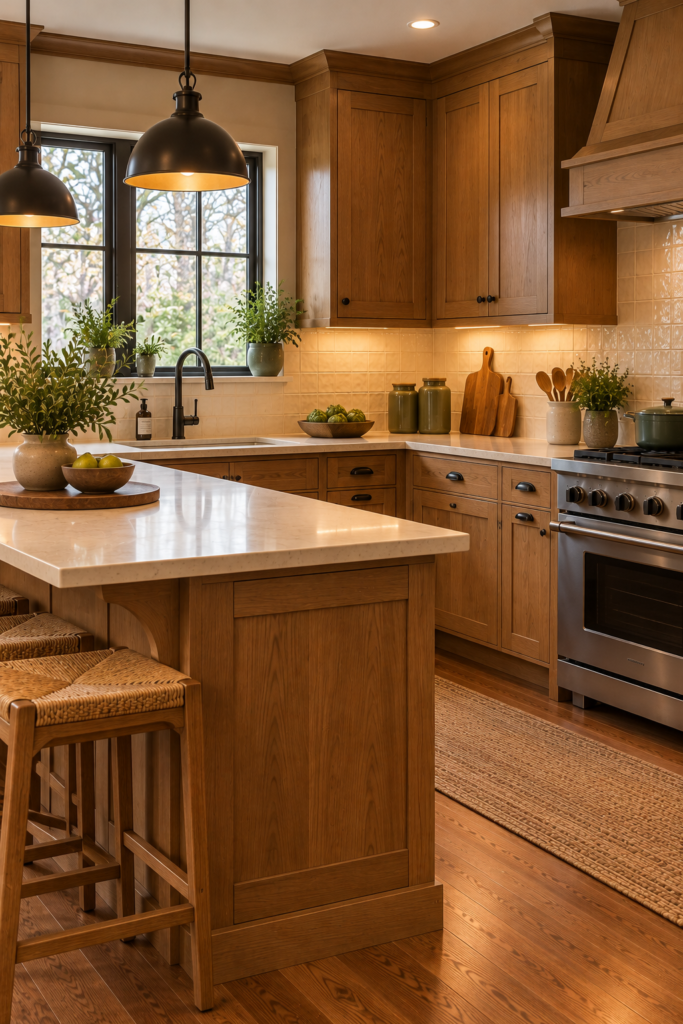
9. Add Stained Wood Window Trim
Stained wood window trim highlights the architectural character of a Craftsman kitchen.
A substantial oak casing around a standard window can help connect the opening to the cabinetry and make the surrounding wall feel more intentional.
Choose a finish that complements the cabinets without requiring an exact match. Related tones often look more natural than forcing every wooden element to be identical.
Keep the trim profile straightforward and consistent with other woodwork in the home.
Before adding or replacing trim, make sure it doesn’t interfere with window operation, locks, or access for cleaning. Moisture around a kitchen sink also needs consideration when selecting finishes and detailing.
This approach is particularly useful when the kitchen has standard builder-grade windows that otherwise feel disconnected from the rest of the design.
A well-proportioned casing can add character without introducing another decorative pattern or competing focal point.
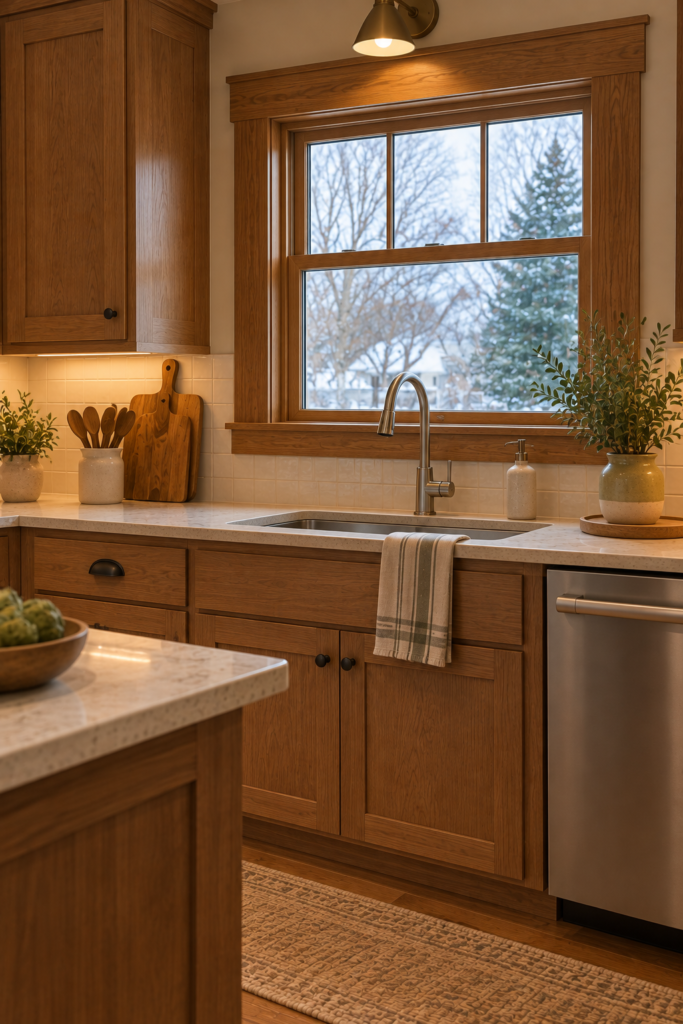
10. Build a Craftsman Breakfast Nook
A breakfast nook brings the warmth of Craftsman furniture into the kitchen while creating a dedicated place for everyday meals.
A wood bench, a simple oak table, and comfortable cushions can establish a welcoming corner without requiring an elaborate dining room.
Choose a table shape that fits the layout. A round table may suit a compact corner, while a rectangular table can work well beside a longer bench.
Keep upholstery and cushions relatively simple. Cream, muted olive, and warm brown complement wood without making the nook look overly coordinated.
Lighting helps distinguish the eating area, but fixtures should be positioned safely and proportionally to the table.
Before installing a built-in bench, check that the arrangement leaves enough room to enter, sit down, and move around the table comfortably.
For a small kitchen, a compact freestanding table may provide the same welcoming feeling with more flexibility.
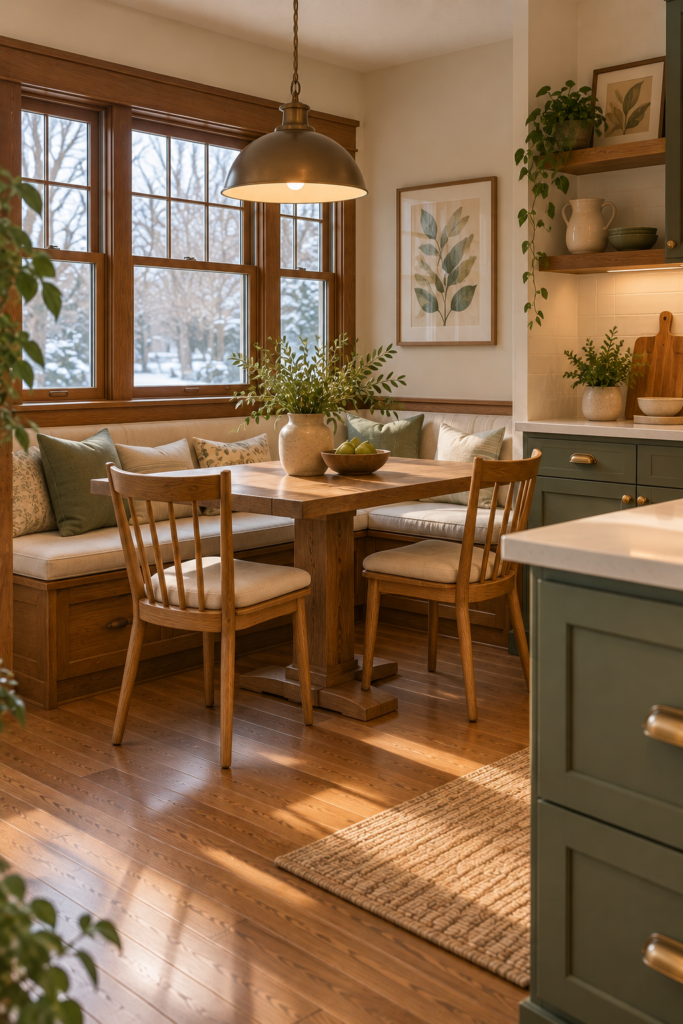
11. Add a Built-In Hutch
A built-in hutch combines display space and concealed storage, making it a natural fit for Craftsman kitchen design.
A wooden hutch with closed cabinets below and shallower shelves above can hold everyday dishes while adding architectural character.
Coordinate the wood finish with the cabinetry or window trim. The hutch doesn’t have to match every other surface exactly, but its color and proportions should feel intentional.
Use the upper section for a restrained collection of ceramics, glassware, or other items that are safe to display. Keep heavier pieces in lower, properly supported storage.
Consider how the hutch will affect countertop space and circulation. In a compact kitchen, a tall built-in unit may be more useful than a wide cabinet that occupies an entire wall.
If a custom installation isn’t practical, a freestanding cabinet with suitable proportions can provide a similar traditional appearance.
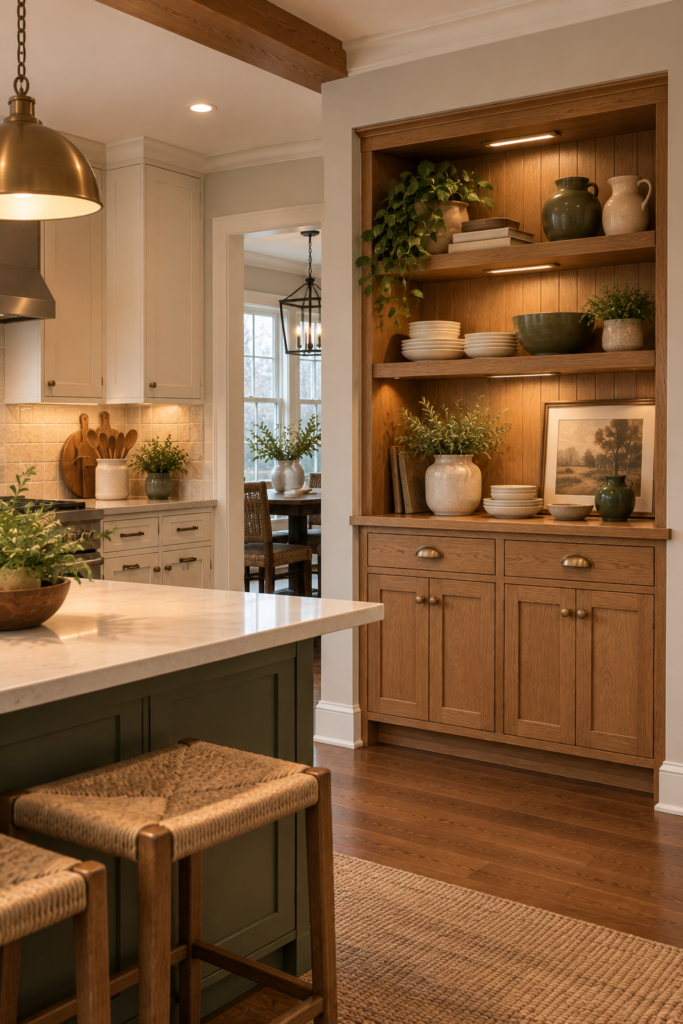
12. Choose Warm Stone-Look Counters
Warm stone-look countertops complement Craftsman wood cabinetry without competing with its grain and architectural details.
Consider warm cream, soft beige, or a subtle pattern with natural-looking variation. These finishes create a calm surface that works with oak, muted green, and simple hardware.
Choose the countertop according to its intended use, maintenance requirements, and compatibility with the existing cabinets.
Samples are useful because a surface that looks beige in a showroom may appear much cooler or warmer under your kitchen lighting.
Avoid combining several dramatic stone patterns in a room that already features prominent wood grain and textured tile.
A restrained countertop gives the cabinetry room to stand out while helping the kitchen feel cohesive.
For a compact kitchen, lighter surfaces can also provide useful visual contrast against darker lower cabinets.
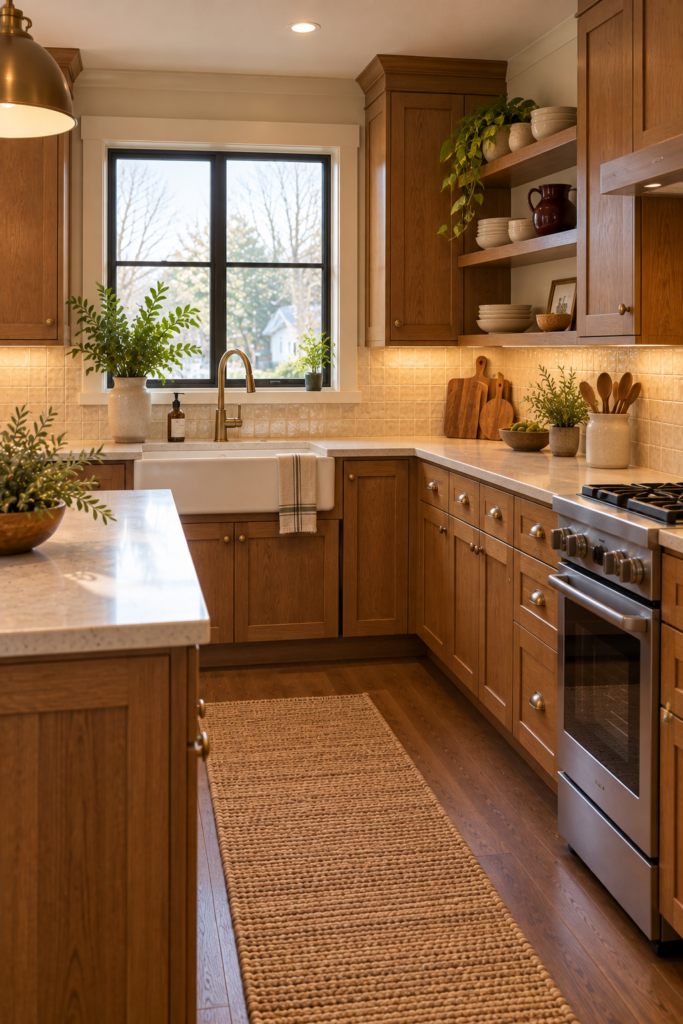
13. Add Simple Craftsman Pendant Lights
Craftsman pendant lighting often works best when its shape is straightforward and its materials complement the rest of the kitchen.
Consider dark metal frames, warm glass, or understated schoolhouse-inspired fixtures. These details can reinforce the traditional character without making the lighting overly decorative.
Choose a fixture appropriate for the room’s scale and the location where it will be installed.
Over an island, consider the relationship between the pendant and the countertop, nearby cabinets, and sightlines across the kitchen. The fixture should illuminate the work surface without becoming an obstacle.
Lighting should also be layered. Pendants provide focused illumination, while general and under-cabinet lighting help support everyday cooking and cleaning.
Follow the fixture manufacturer’s installation instructions and applicable electrical requirements. Use a qualified professional where wiring changes or other electrical work are needed.
The best fixture supports the architecture while providing useful light for the tasks performed below it.
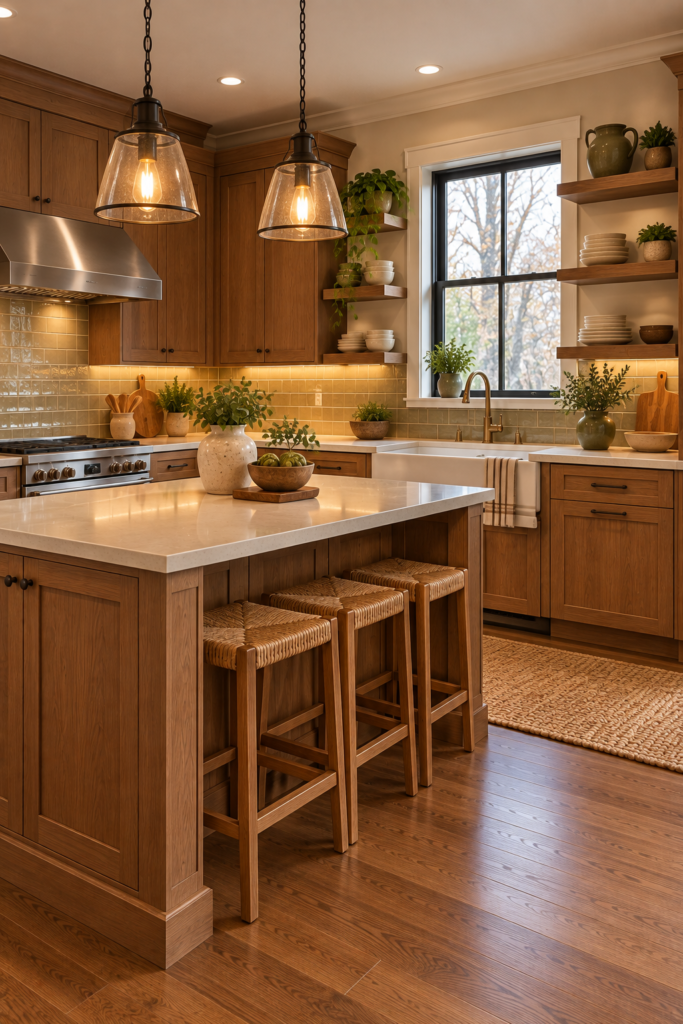
14. Use a Warm Craftsman Color Palette
A Craftsman palette often starts with natural wood and adds colors inspired by earth, stone, and foliage.
Warm cream, muted olive, mushroom taupe, earthy brown, dusty blue-green, and deep burgundy can all work as supporting colors.
The key is deciding which color should lead. Oak cabinetry may remain the dominant feature, while olive appears on lower cabinets or tile and burgundy is limited to a runner or a few ceramics.
Matte black can provide definition, while aged brass adds a warmer metal accent.
Avoid introducing every color across equally large surfaces. A palette feels more cohesive when one or two materials establish the foundation and the remaining shades appear selectively.
Compare samples together under the kitchen’s actual lighting. Colors can shift considerably between daylight and evening illumination.
A thoughtful palette creates richness through relationships between materials rather than relying on decoration alone.
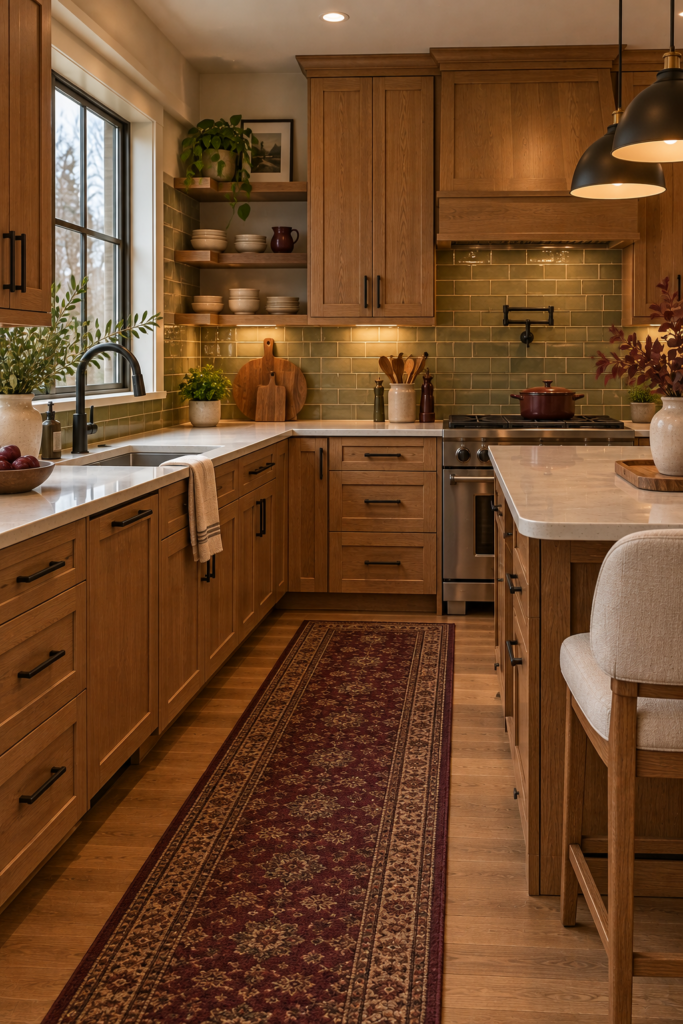
15. Add Craftsman-Style Open Shelving
Open wood shelving provides a place to display everyday ceramics and highlight the visible construction that suits Craftsman interiors.
Choose substantial shelves in oak or a compatible wood finish. Visible brackets can reinforce the practical, structural appearance of the design.
Before installation, identify the wall construction and use appropriate supports and fixings for the intended load.
Position the shelves away from areas where heat, grease, or moisture could create maintenance problems. Keep heavier dishes in lower cabinets and use open shelves for items that can be stored securely.
Style the display with a small collection of bowls, mugs, and ceramics rather than filling every inch.
Consider the cleaning requirements as well. Open shelves collect dust and kitchen residue more readily than closed cabinets, so everyday dishes should be easy to remove and clean.
A limited section of shelving can provide the desired character without replacing all the upper cabinetry.
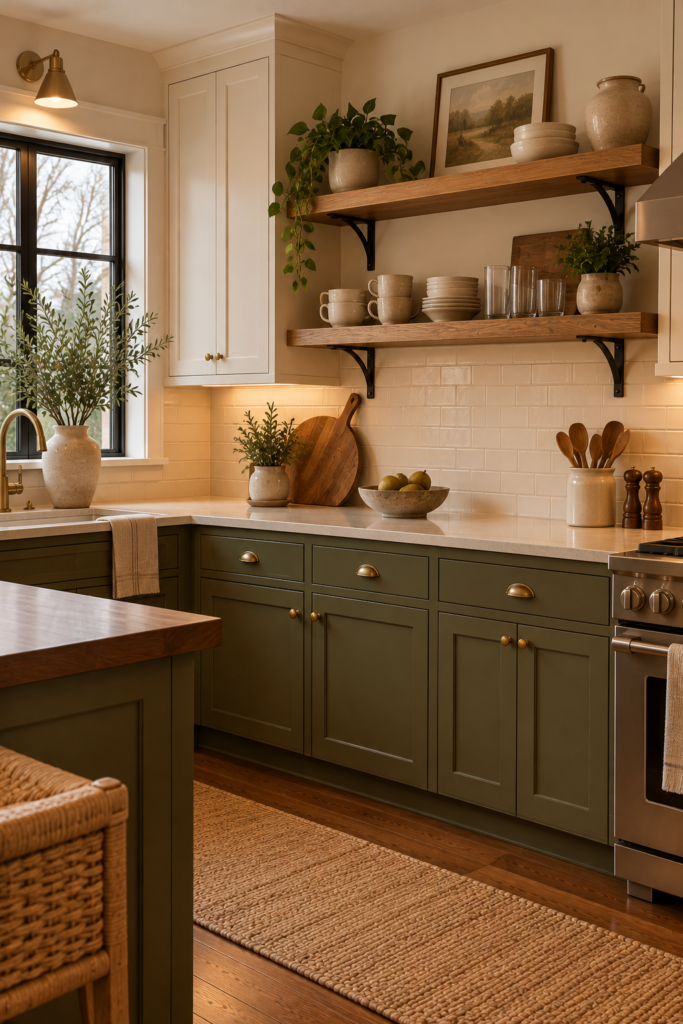
16. Create a Small Craftsman Kitchen
Craftsman style can work in a compact kitchen when the wood, colors, and decorative details are carefully balanced.
Consider medium-toned wood on lower cabinets, lighter upper cabinetry, stained window trim, and a simple backsplash. This creates contrast without covering every wall in dark wood.
Choose cabinet hardware and lighting that complement the architecture without adding unnecessary visual complexity.
Storage and circulation should remain priorities. Avoid adding a large island, oversized hutch, or deep freestanding furniture if it restricts movement between work areas.
A compact dining table or small breakfast nook may provide more useful flexibility than a permanent island.
For more layout inspiration, explore these small island kitchen ideas for limited space.
The goal is to bring Craftsman character into the room through material quality, straightforward detailing, and a cohesive palette rather than sheer quantity of woodwork.
17. Layer the Full Craftsman Look
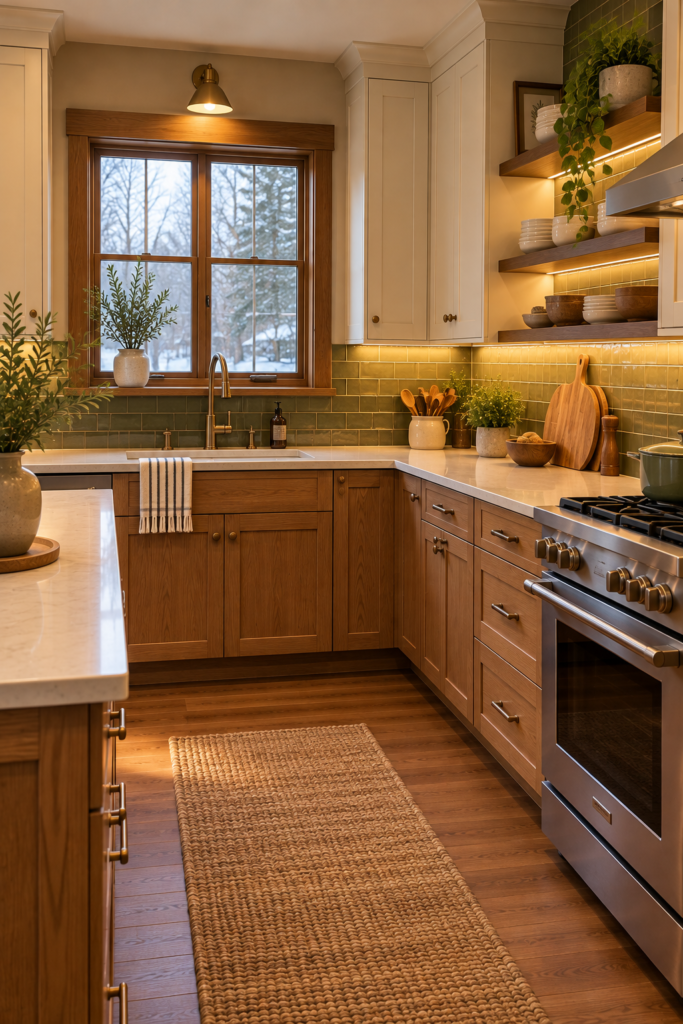
A fully layered Craftsman kitchen brings together the ideas that best suit the room rather than using every possible detail at once.
Start with warm oak cabinetry and a quiet countertop. Add a handmade-look backsplash, stained window trim, and hardware in aged brass or matte black.
If space allows, introduce a furniture-style island or a breakfast nook. A small section of securely supported open shelving can provide display space, while closed cabinetry keeps everyday clutter out of sight.
Use lighting to support both cooking and the room’s overall atmosphere. A runner or a few ceramics can introduce additional color without covering every surface with accessories.
Choose one dominant wood finish and repeat it thoughtfully. Related finishes create continuity, while small variations keep the room from looking too uniform.
Most importantly, leave room for the kitchen to function. Clear preparation surfaces, accessible cabinets, and comfortable walkways are just as important as the decorative details.
A well-layered Craftsman kitchen feels warm and established because the materials, proportions, and everyday functions work together.
What Defines a Craftsman Kitchen?
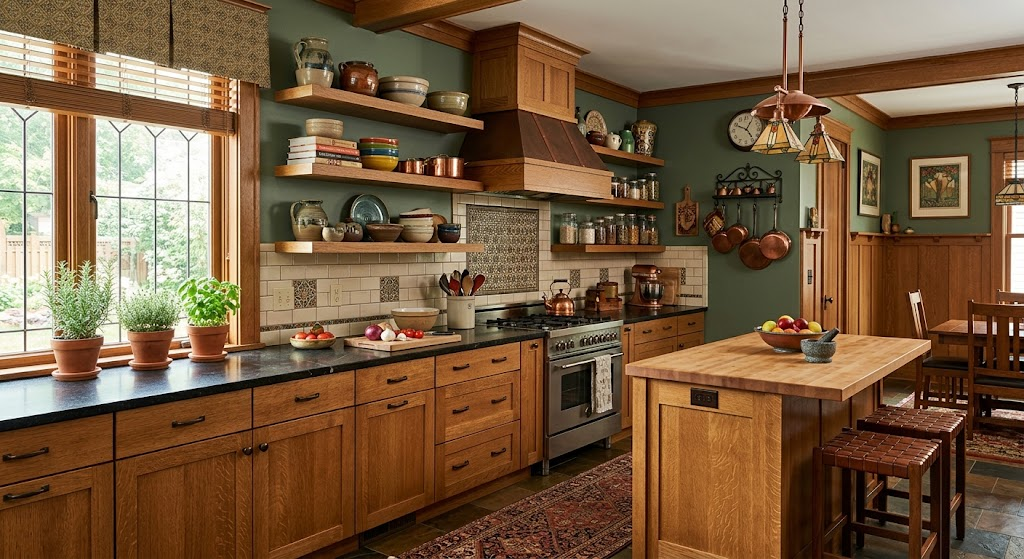
Craftsman design emphasizes natural materials, straightforward construction, and visible craftsmanship. Common features include wood cabinetry, substantial trim, recessed-panel doors, simple metal hardware, handcrafted-looking tile, and earthy colors.
The style doesn’t require every surface to be wood or every detail to be traditional. Painted cabinets, contemporary appliances, and modern task lighting can work well when their proportions and finishes complement the architecture.
The goal is a kitchen with warmth and character rather than a collection of decorative elements competing for attention.
How to Keep a Craftsman Kitchen From Looking Too Dark
Balance substantial wood surfaces with lighter walls, countertops, and selected cabinetry. Preserve available daylight, and consider under-cabinet lighting where the work surfaces need additional illumination.
In a small kitchen, avoid covering every wall with dark upper cabinets. A mix of natural wood and lighter finishes can retain the Craftsman character while making the room feel less enclosed.
Choose lighting based on the actual layout, not just the appearance of the fixtures. A kitchen should remain comfortable to work in during the day and after sunset.
Craftsman Kitchen Safety and Practicality
Keep the decorative choices compatible with the kitchen’s everyday functions. Maintain manufacturer-required appliance clearances and appropriate cooking ventilation, and keep wood shelving, curtains, and other combustible materials away from heat sources.
Secure shelves and cabinetry with supports suited to the wall construction and intended load. Keep rugs flat and positioned away from appliance doors and main walking routes.
Maintain access to windows, outlets, switches, vents, doors, and safety equipment. Structural, electrical, plumbing, gas, and ventilation changes should be assessed and completed by appropriately qualified professionals.
Final Thoughts
The best Craftsman kitchen ideas start with materials that feel natural and details that serve a purpose. Warm oak, simple cabinetry, handmade-look tile, restrained hardware, and thoughtful lighting can create a welcoming kitchen without making it feel overly decorated.
Whether you choose a wood island, muted green cabinets, a built-in hutch, or a simple backsplash, focus on how the materials work together and how the room functions every day.
Craftsman style doesn’t need to shout for attention. Good proportions, warm light, and straightforward craftsmanship can give a kitchen lasting character.
