
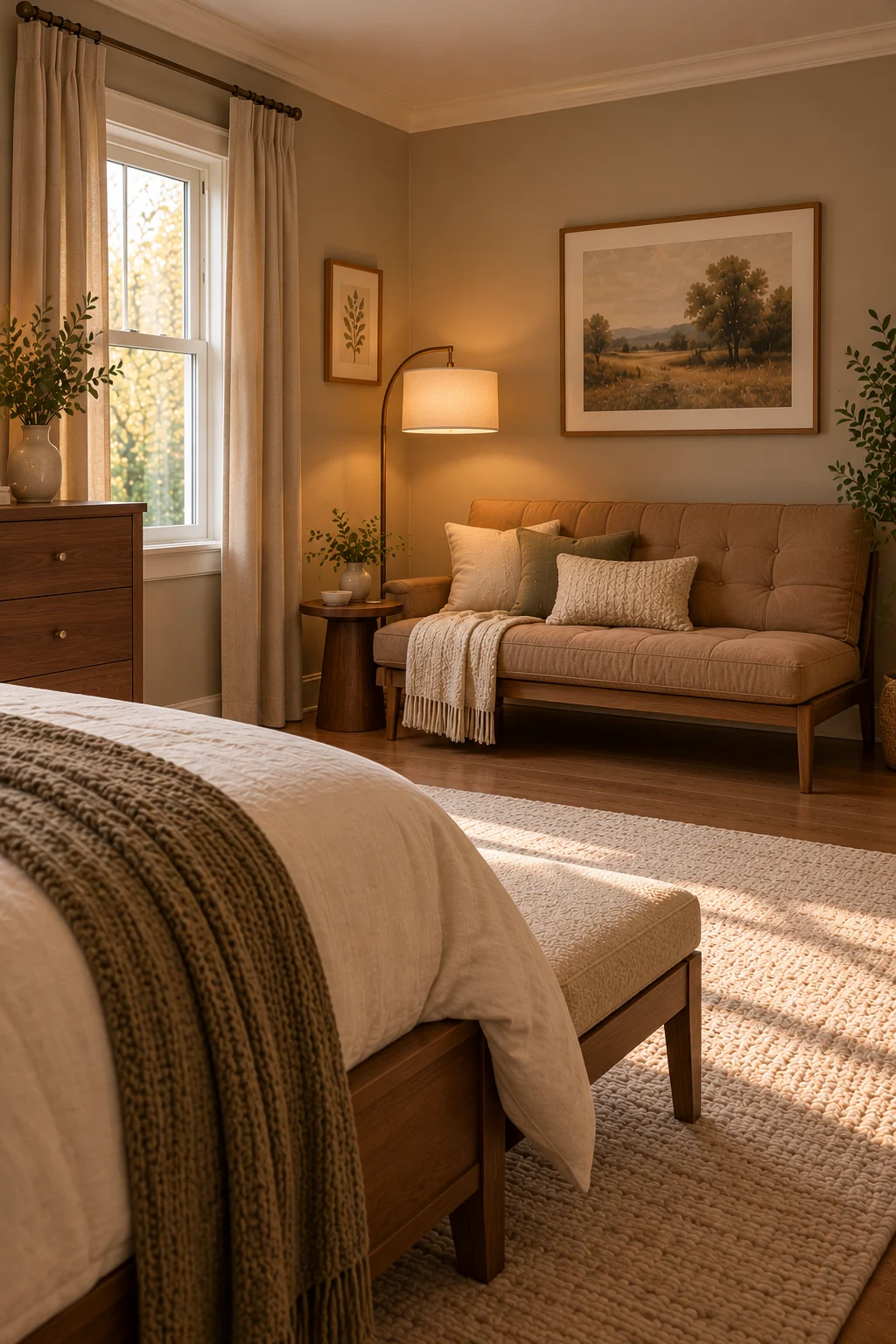
17 Futon Bedroom Ideas for a Flexible and Comfortable Space
A futon can make a bedroom work harder without filling it with extra furniture. In a guest room, it can provide a comfortable place to sit between visits. In a studio apartment, it may serve as both the sofa and the bed. And in a small bedroom, a thoughtfully chosen futon can create space for a desk, reading corner, or storage.
But not every futon works the same way. A convertible sofa-style futon has a frame that moves between seating and sleeping positions, while a traditional floor futon is bedding designed to be laid out and stored according to its care requirements. Both can be useful, but they call for different layouts and maintenance routines.
Comfort matters just as much as appearance. A futon that looks attractive when folded won’t be especially helpful if it’s difficult to open or uncomfortable for its intended sleeper.
These 17 futon bedroom ideas explore practical furniture arrangements, calming colors, and useful storage solutions for modest homes. Whether you’re furnishing a guest bedroom or making a multipurpose room more functional, the goal is to create a space that works comfortably throughout the day.
1. Choose a Simple Wooden Futon Frame
A wooden futon frame introduces natural warmth and can make convertible furniture feel like an intentional part of the bedroom rather than a temporary sleeping solution.
Natural oak works beautifully with cream bedding and warm white walls, while medium walnut provides a richer contrast against neutral upholstery. A straightforward frame with clean lines suits contemporary, cottage, and Japandi-inspired rooms.
Look beyond the wood finish when comparing models. Check the frame’s construction, the mattress types it supports, and how easily it moves between sitting and sleeping positions. Some mechanisms require the futon to be pulled away from the wall before opening.
Measure the furniture in both configurations and plan the surrounding space accordingly. A compact nightstand or wall-mounted light can complement the wooden frame without crowding the room.
For a cohesive appearance, repeat the wood tone in one nearby piece, such as a small dresser or side table. Everything doesn’t need to match exactly.
2. Create a Neutral Futon Bedroom
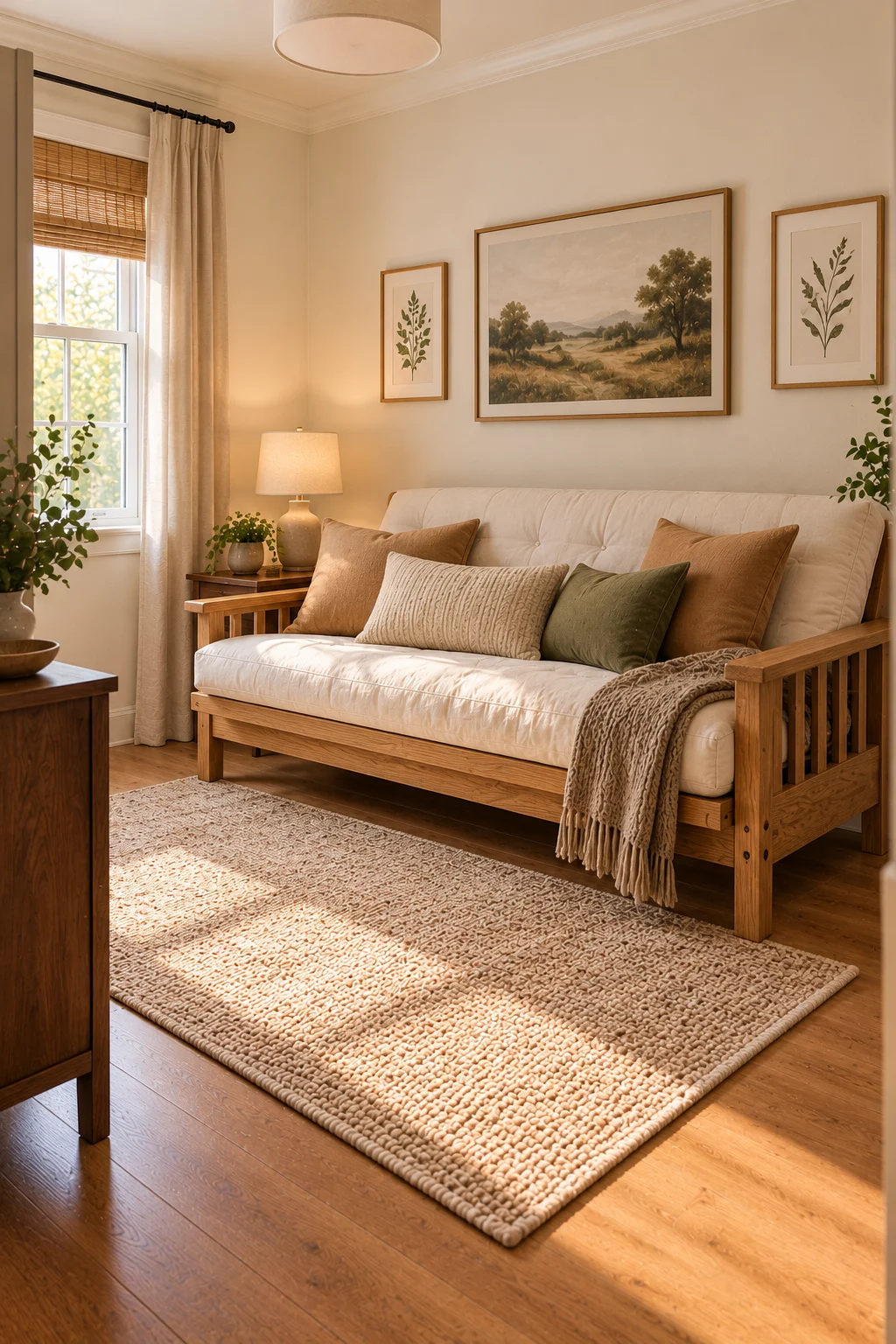
A neutral color scheme helps a futon blend naturally into a bedroom, particularly when the same piece of furniture serves as both a sofa and a bed.
Start with warm white walls, a mushroom-beige futon cover, and a natural wood frame. Add an ivory throw, oatmeal curtains, and a small amount of camel brown for depth.
The key is combining different textures rather than filling the room with several competing colors. Smooth cotton bedding, a woven throw, and wood grain can make a simple palette feel comfortable and layered.
Choose accessories that are easy to move or store when the futon opens. Two supportive cushions and one throw are often more practical than a large collection of decorative pillows.
A neutral room also makes it easier to update the futon cover later without replacing the curtains, rug, or furniture.

3. Use a Futon in a Small Guest Bedroom
A guest bedroom doesn’t always need to contain a permanent bed, especially when the room serves other purposes for most of the year.
A compact sofa-style futon can provide daytime seating while converting into a sleeping surface for visitors. Pair it with a narrow dresser, a bedside light, and accessible storage for sheets and pillows.
When selecting the futon, think about the people who are likely to use it. Mattress comfort, sleeping dimensions, ease of getting in and out, and the height of the sleeping surface may matter more than how compact the furniture looks when folded.
Try to avoid arrangements that require moving several heavy pieces whenever someone stays overnight. Ideally, preparing the room should involve opening the futon and retrieving bedding from nearby storage.
If guests visit frequently, prioritize a supportive mattress and a mechanism that’s convenient to operate. The best guest-room furniture should make visitors feel accommodated, not improvised.
4. Add a Futon to a Bedroom Office
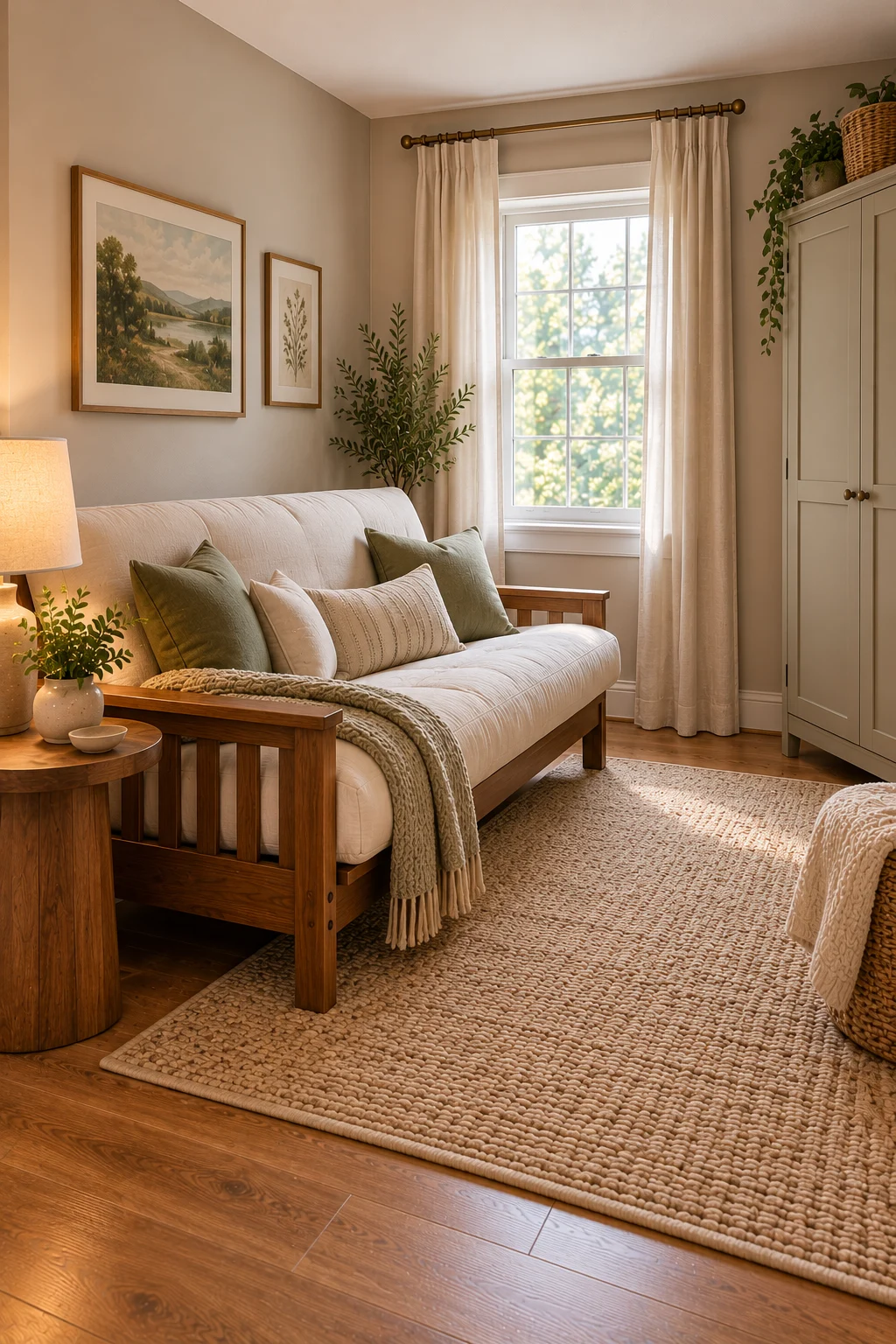
A bedroom office can benefit from a futon when the room needs to switch between working, relaxing, and accommodating overnight guests.
Place a compact desk against one wall and position the futon along another, keeping enough open floor space for both functions. A walnut desk, cream futon upholstery, and warm neutral walls can make the arrangement feel coordinated.
Think about the futon’s fully open position before placing the desk. A rolling office chair, drawer pedestal, or collection of cables can interfere with conversion if the furniture sits too close together.
Use closed storage for office supplies and keep guest bedding in a separate drawer or cupboard. This makes it easier to change the room’s function without leaving work equipment scattered around the sleeping area.
For additional ways to organize a compact work area, choose storage that keeps the desktop usable rather than adding decorative shelves everywhere.
A practical bedroom office should be comfortable to work in during the day and easy to prepare for guests at night.

5. Choose a Low-Profile Futon for a Minimalist Room
A low-profile futon works naturally with minimalist bedrooms because it keeps the furniture visually simple and close to the floor.
Choose a streamlined frame in natural oak or another restrained finish, paired with cream or mushroom upholstery. Warm white walls and a small wooden nightstand can complete the look without adding unnecessary decoration.
Pay attention to the actual sleeping height. A low bed may look appealing, but getting up from it can be less convenient for some people, particularly those who prefer a higher sleeping surface.
Also consider how the frame supports the mattress and how easily you can clean underneath or around it. Minimalist design shouldn’t make maintenance more difficult.
Keep the floor area around the futon open, and use a dresser or closed cupboard for items that would otherwise collect beside the bed.
The result should feel uncluttered because the room functions well, not simply because everything has been removed.
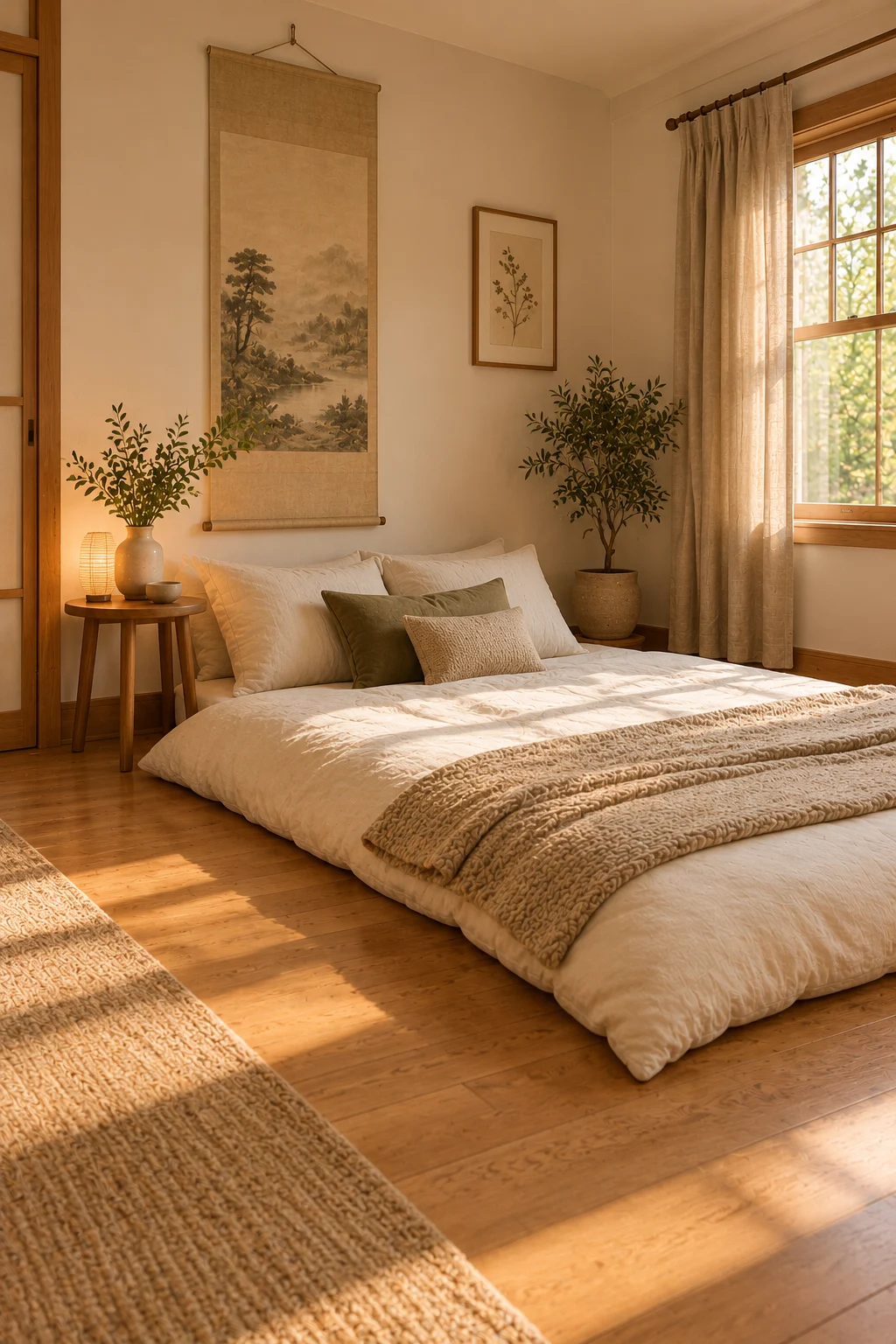
6. Use a Traditional Floor Futon With Proper Care
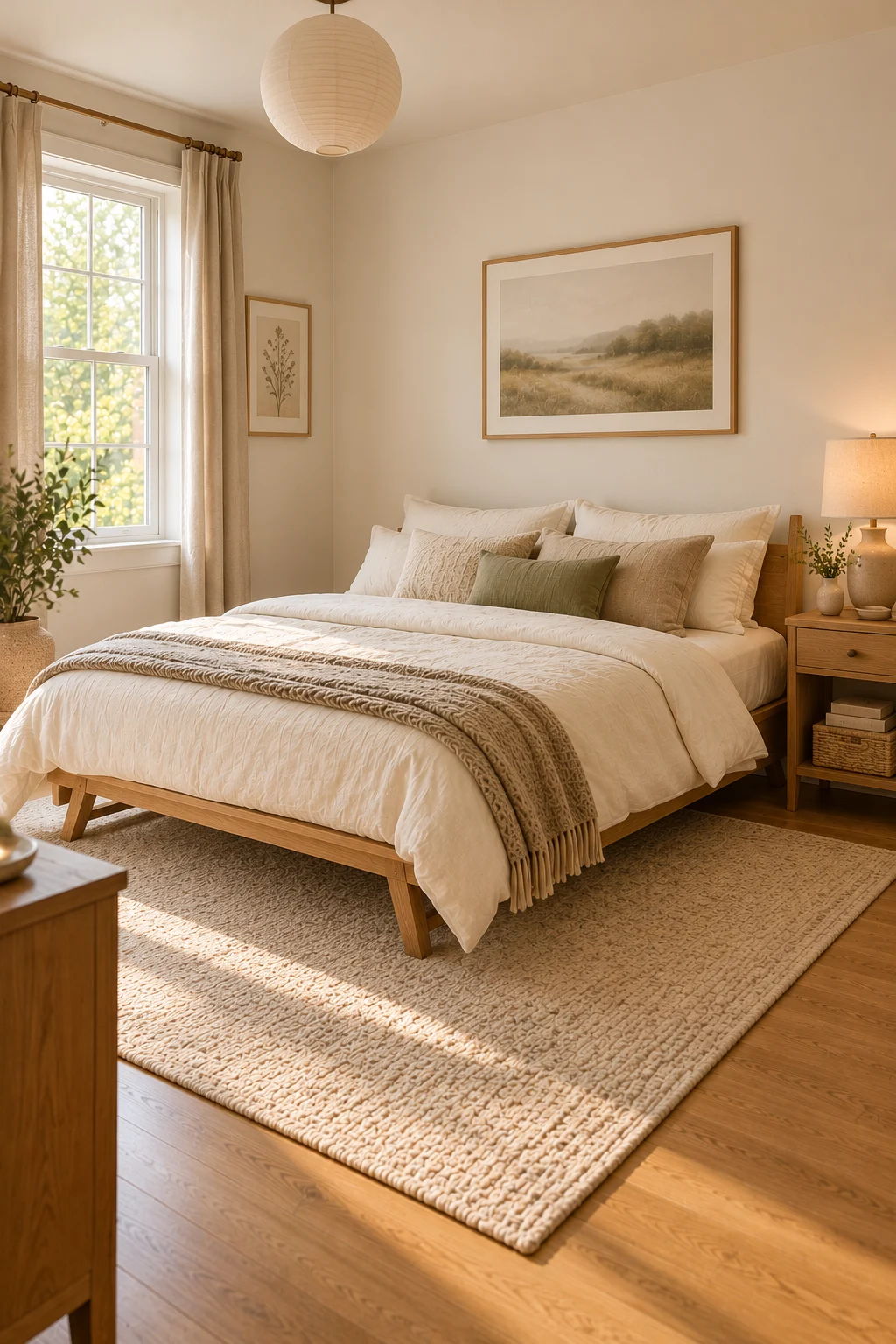
A traditional floor futon offers a different approach to flexible bedroom furniture. Rather than converting from a sofa, the bedding can be laid out for sleeping and stored when the room is needed for other activities.
This arrangement can work in a multipurpose bedroom with simple furnishings, a low table, and accessible storage for the bedding.
Choose a floor futon suited to the intended sleeping surface and follow its manufacturer’s recommendations for support, ventilation, airing, and storage. Some floor-futon systems are designed for specific mats or bases rather than direct use on any available floor.
Moisture management deserves particular attention. Bedding placed on an unsuitable or damp surface can trap moisture, so the room’s humidity and floor conditions need to be considered.
Think about the daily routine before choosing this option. If folding, airing, and storing the bedding would become inconvenient, a framed futon may be more practical.
A floor futon can create flexibility, but only when its care requirements fit your habits and home.
7. Add Storage for Futon Bedding
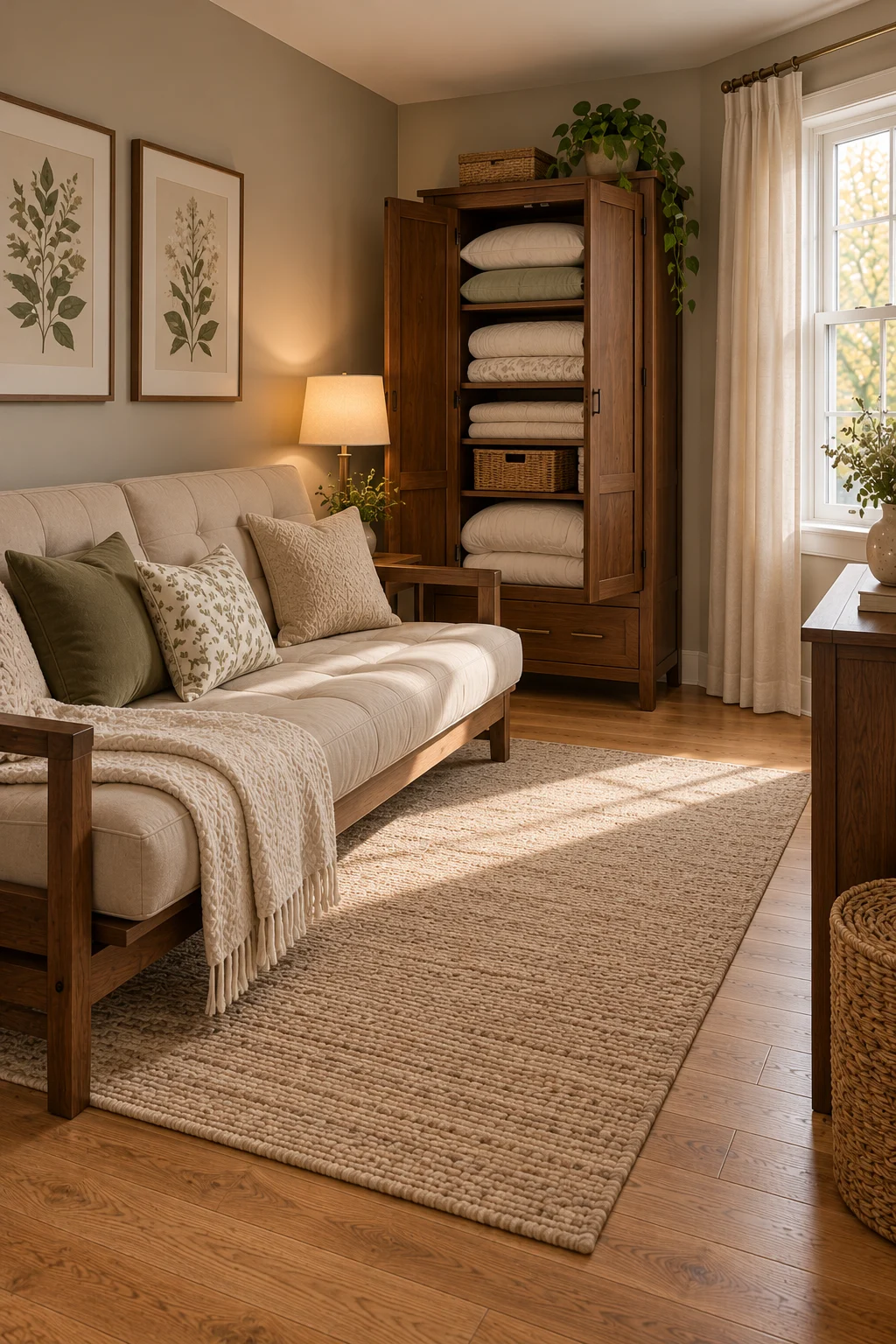
A convertible futon is much easier to live with when pillows, sheets, and blankets have a dedicated storage location.
A small dresser, closed cupboard, or suitable storage bench can hold bedding when the futon is used for seating. In a compact guest room, one well-organized drawer may be enough for a fitted sheet, pillowcases, and a spare blanket.
Choose storage that sits outside the futon’s opening area. A large chest positioned directly in front of the furniture may create more inconvenience than the extra storage is worth.
Keep bedding clean and dry, and avoid packing it so tightly that it becomes difficult to retrieve or air properly.
If the futon is used for sleeping every night, think about how quickly you can put the bedding away each morning. The simpler the routine, the more likely the room is to remain organized.
A useful storage system supports the furniture’s flexibility rather than becoming another obstacle.
8. Choose a Futon With Muted Olive Upholstery
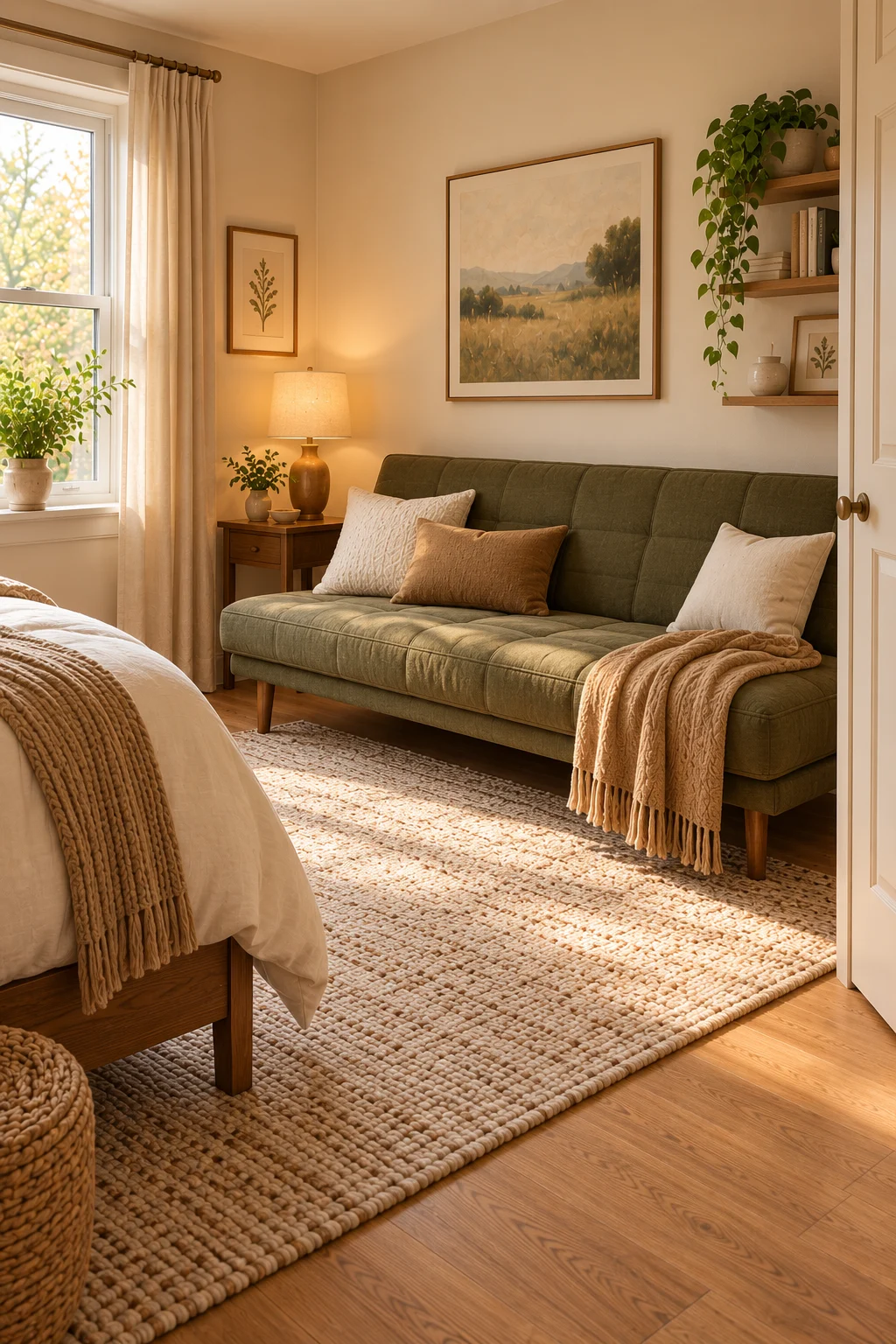
Muted olive upholstery gives a futon a distinct decorative presence without relying on a bright or overly saturated color.
Pair it with warm cream walls, medium-walnut furniture, and ivory bedding. A camel throw and natural woven accessories can introduce additional warmth while allowing the green to remain the main accent.
Olive shades vary considerably. Some lean yellow, others gray or brown, so compare upholstery samples with the room’s existing wood and wall finishes when possible.
Fabric performance matters as much as color. A futon used for everyday sitting and sleeping needs upholstery or a cover appropriate for frequent use and cleaning.
Keep the surrounding palette controlled. A small cream rug, simple lamp, and one or two cushions can make the futon feel finished without adding unnecessary clutter.
This is a good way to introduce earthy color into a neutral bedroom without repainting the walls.
9. Create a Cozy Futon Reading Corner
A futon can double as a comfortable reading spot, especially in a guest bedroom or multipurpose room where a separate armchair would take up too much space.
Position the futon near a suitable reading light and add a small side table for a book or drink. Warm cream upholstery, a camel throw, and a walnut table create a relaxed, inviting combination.
Choose a futon with supportive seating rather than relying on decorative cushions to make an uncomfortable frame usable. The backrest angle and seat depth can make a noticeable difference during longer reading sessions.
Keep the side table outside the furniture’s conversion area so it doesn’t need to be moved every evening.
If the room has a window, use natural daylight when practical, but consider glare and the placement of the reading light.
The aim is to create a useful sitting area that can still become a bed without rearranging the entire room.
10. Use a Futon in a Studio Bedroom Area
In a studio apartment, a futon may serve as one of the most important pieces of furniture because it provides both seating and sleeping space.
Choose a design that looks appropriate in the living area when folded and offers sufficient comfort when opened. Neutral upholstery and a simple wood frame can help the furniture coordinate with the rest of the apartment.
Define the sleeping area with a low-profile rug or compact storage unit rather than a bulky divider that restricts circulation.
Measure the room with the futon fully open. Consider the route to the bathroom, kitchen, entry door, and any storage you need at night.
Avoid placing a large coffee table directly in front of the futon unless it can be moved easily and stored without obstructing a walkway.
For a studio, the most successful arrangement is one that doesn’t require a complicated furniture-moving routine every morning and evening.

11. Pair a Futon With a Soft Neutral Rug
A rug can visually anchor a futon and make a multipurpose bedroom feel more welcoming.
Choose a cream, oatmeal, or mushroom-beige rug that complements the upholstery and wood furniture. A subtle woven texture can provide interest without introducing another strong pattern.
The rug’s size and position matter more than simply matching the color. It should relate to the futon without interfering with the frame, legs, or conversion mechanism.
A low-profile rug is often easier to accommodate than a thick, plush design. Consider how the futon rests on the floor and whether the rug will remain flat when the furniture moves.
If the room is small, a modest rug in front of the futon may be more practical than one extending beneath the entire frame.
The rug should make the bedroom feel more comfortable while leaving the furniture stable and easy to operate.
12. Choose a Simple Futon for a Teen Bedroom
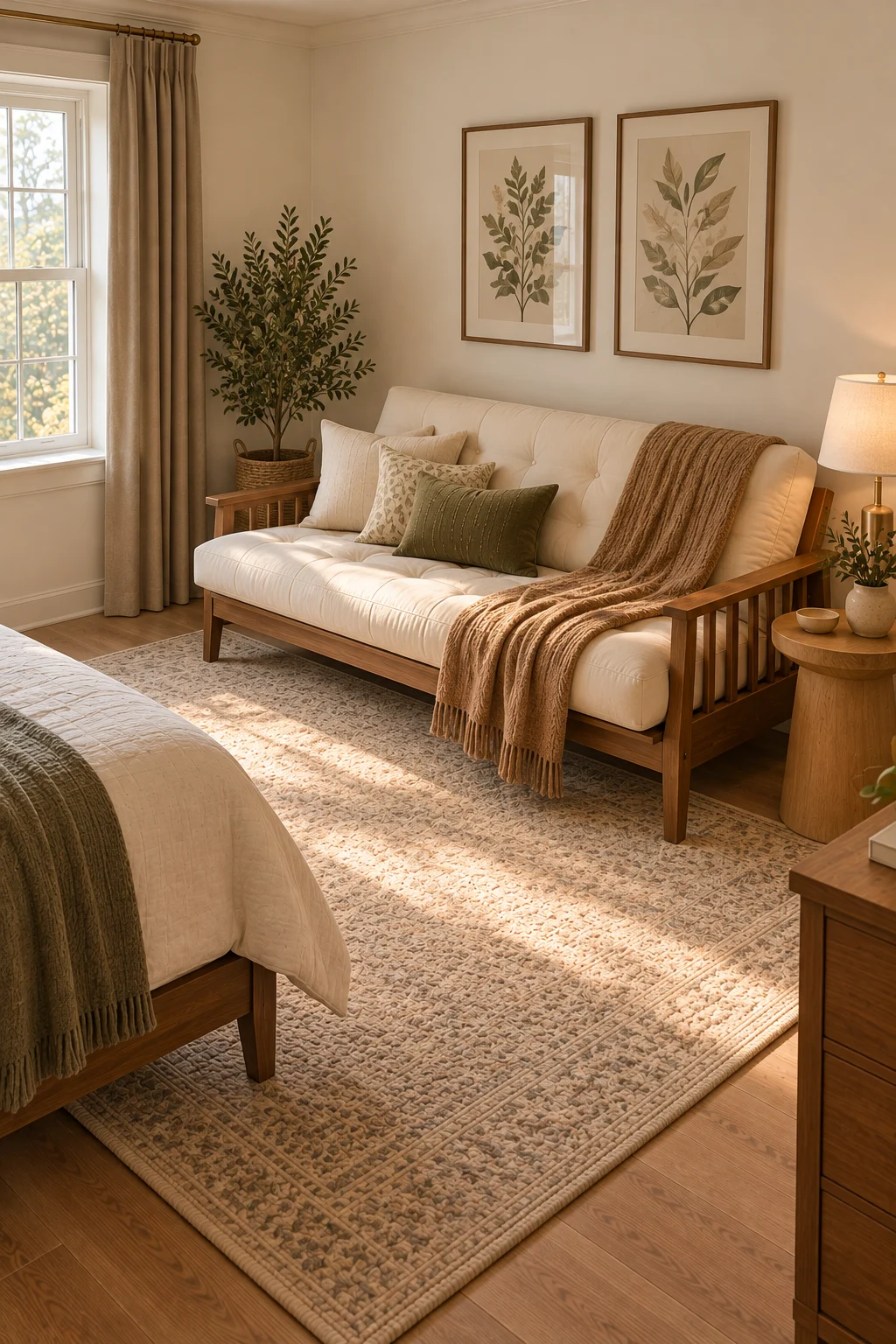
A futon can provide useful seating in a teen bedroom, particularly when friends visit or the room doubles as a study and relaxation space.
Choose a compact sofa-style model with durable upholstery and a frame suitable for the intended users. Neutral mushroom, muted blue, or olive can coordinate with a range of bedding and wall colors.
Pair it with a practical desk, closed storage, and a small side table rather than adding several separate seating pieces.
Think about how the room is used during the day. There should be enough space for studying, moving around, and accessing drawers and closets even when the futon is unfolded.
A removable cover may make cleaning easier, provided it fits the specific model and follows the manufacturer’s care instructions.
The furniture should support the room’s everyday activities rather than becoming an oversized centerpiece that leaves little usable floor space.
13. Add a Futon to a Relaxed Boho Bedroom
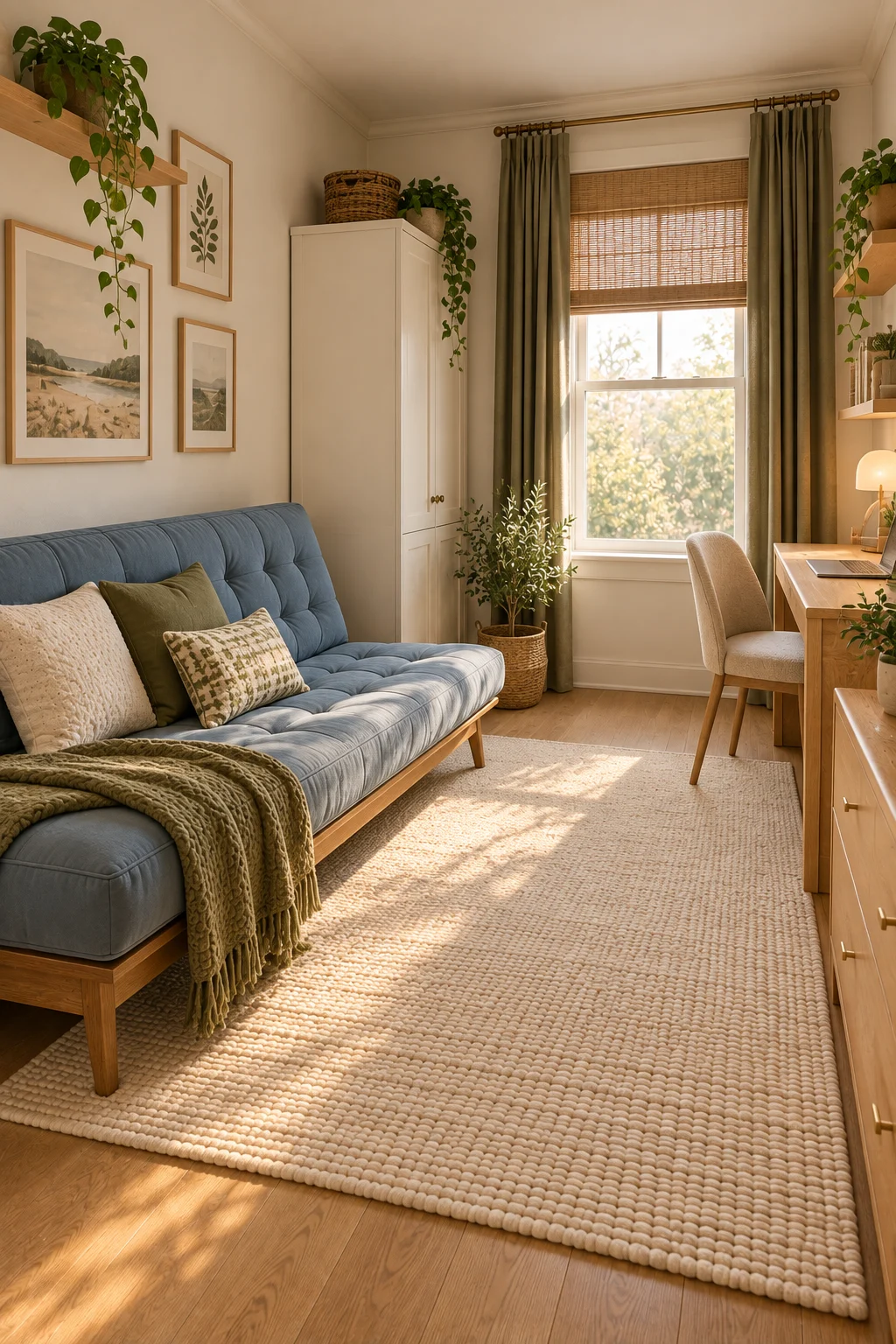
A futon can fit naturally into a relaxed boho bedroom when the styling focuses on natural materials and a few layered textiles.
Choose a simple wooden frame with cream or oatmeal upholstery. Add a muted terracotta throw, woven rug, and one or two cushions in warm neutral tones.
Natural oak, camel, mushroom, and soft olive can create a comfortable palette without making the room overly colorful.
Avoid piling so many cushions and blankets onto the futon that converting it into a bed becomes inconvenient. Keep a basket or drawer available for the accessories you remove at night.
A simple piece of botanical artwork or a ceramic lamp can add character without requiring a large collection of decorative objects.
The goal is a relaxed, personal bedroom that remains practical for sitting and sleeping.

14. Use a Futon With a Small Side Table
A small side table makes a futon more useful as both seating and a sleeping area.
Choose a compact table with a stable base and a height that works beside the futon in its usual position. Natural oak and medium walnut coordinate well with cream, mushroom, or olive upholstery.
A tabletop large enough for a lamp, book, and glass of water is often sufficient. You don’t need an oversized nightstand unless the room also requires additional drawer storage.
Place the table outside the futon’s folding or unfolding path. A lightweight but stable piece may be easier to accommodate than heavy furniture that needs frequent repositioning.
If floor space is especially tight, consider a securely installed wall-mounted shelf where appropriate.
A well-positioned table helps the futon function like a comfortable bedroom setup without making the room feel crowded.

15. Choose a Futon With a Removable Cover
A removable cover is worth considering when the futon serves as everyday seating, a guest bed, or both.
Choose a cover designed for the specific mattress and frame. An accurate fit matters because loose fabric can bunch up, look untidy, or interfere with the folding mechanism.
Warm cream, mushroom taupe, muted blue, and olive are versatile options that can coordinate with changing bedding and accessories.
Check the care label before purchasing. Not every removable cover is machine washable, and some fabrics require specific cleaning methods.
Also consider how easy the cover is to remove and replace. A design that requires substantial effort may be less convenient than it first appears.
For an existing futon, a properly fitted replacement cover can refresh the room without requiring a new frame or mattress.

16. Create a Calm Japandi Futon Bedroom
A Japandi-inspired bedroom combines restrained shapes, natural materials, and a calm, functional layout.
Choose a low-profile natural oak futon frame or a traditional floor futon appropriate for the room’s flooring and care routine. Pair it with warm white walls, cream bedding, and compact wooden furniture.
Keep the palette simple, using subtle contrasts between ivory, oak, mushroom, and warm gray. Texture can come from woven textiles and natural wood grain rather than numerous decorative accessories.
Prioritize storage that allows the room to remain uncluttered. A small closed cabinet can hold bedding and everyday items without dominating the space.
If choosing a floor futon, follow the product’s support, ventilation, and airing instructions. A minimalist appearance doesn’t eliminate the need for proper bedding care.
The finished room should feel peaceful because its furniture and storage are thoughtfully arranged.
17. Design a Fully Functional Futon Bedroom
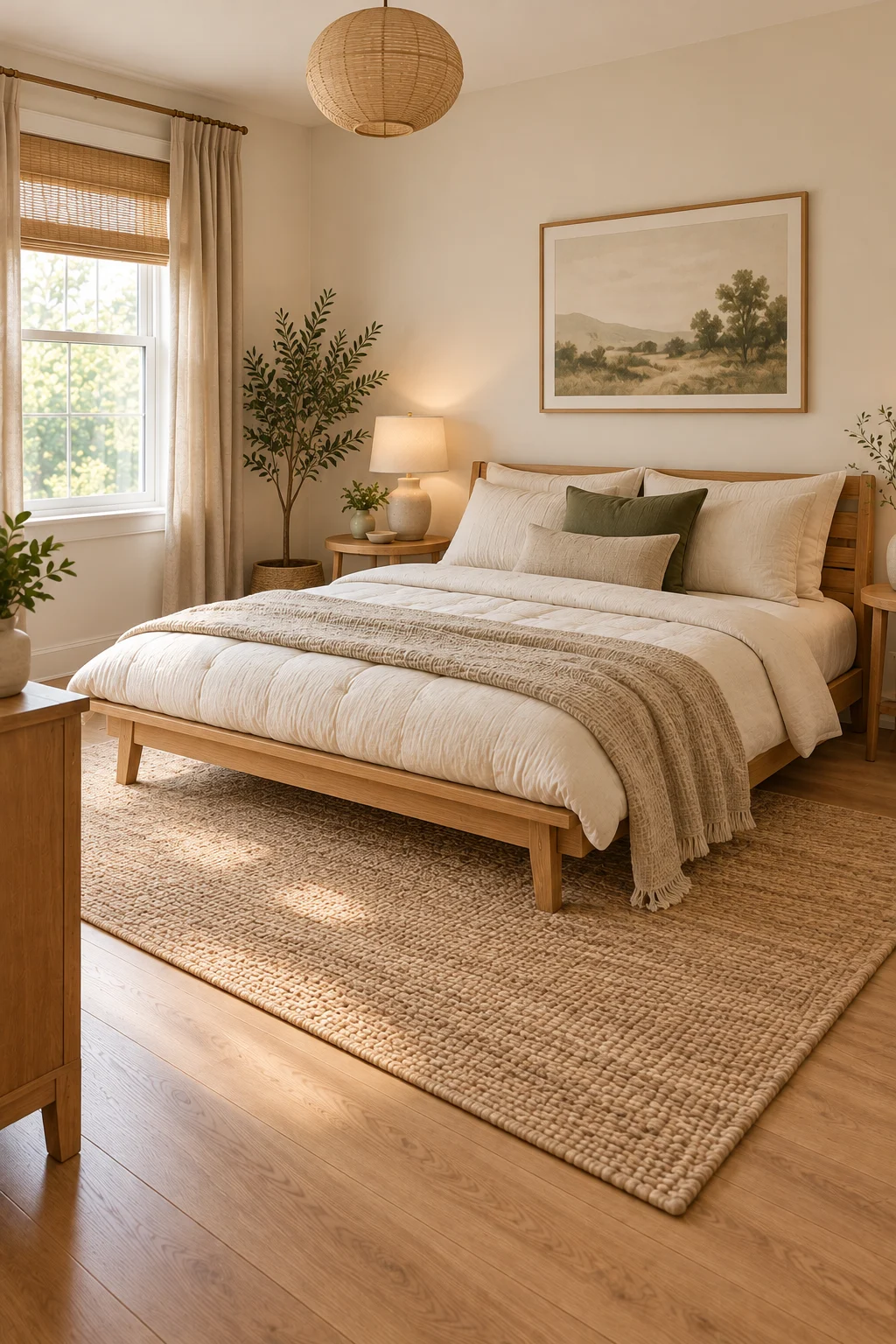
The most successful futon bedroom brings together comfort, practical storage, suitable lighting, and a layout that works in both furniture positions.
Begin by deciding how the futon will be used. A guest room may prioritize easy conversion and convenient bedding storage, while a studio apartment may require a comfortable seat and sleeping surface every day.
Choose a frame and mattress intended to work together, then arrange the surrounding furniture around the futon’s fully open dimensions.
Add a compact side table, suitable reading light, closed storage, and a rug if the floor layout allows. Coordinate the upholstery, curtains, bedding, and wood finishes to create a cohesive room.
Keep the arrangement flexible. If a chair, table, or decorative accessory has to be moved every time the futon opens, reconsider whether it belongs in that location.
A functional futon bedroom should be comfortable in both its daytime and nighttime configurations.

How to Choose the Right Futon
Start with how frequently the futon will be used for sleeping. An occasional guest bed and an everyday sleeping surface may call for different priorities.
For a sofa-style futon, compare the frame construction, mattress compatibility, sleeping dimensions, weight capacity, seating support, and conversion mechanism. Whenever possible, evaluate comfort in both the folded and open positions.
For a traditional floor futon, check the intended support surface, bedding thickness, ventilation needs, and recommended storage routine.
Don’t judge comfort by appearance alone. A stylish futon that doesn’t suit the intended sleeper or room layout may not be the right purchase.
Futon Bedroom Layout Ideas
Measure the futon in both its sofa and bed configurations before arranging the room.
Start by identifying the open footprint, then position the dresser, desk, nightstand, and other furniture outside that area. Check that doors, windows, closets, and storage remain accessible.
For a guest bedroom, keep bedding close to the futon. In a studio, consider how the furniture affects the main walking route when opened.
If possible, test the proposed layout with painter’s tape before purchasing a new futon.
Futon Ideas for Small Bedrooms
In a small bedroom, a futon should provide a clear advantage over a conventional bed.
A convertible sofa may create useful seating during the day, while a traditional floor futon may allow the sleeping area to be cleared when the bedding is stored.
Choose compact supporting furniture, use closed storage where practical, and avoid unnecessary tables or chairs.
A futon isn’t automatically a space-saving choice. Its open dimensions and the room needed for conversion determine whether it actually improves the layout.
Budget-Friendly Futon Bedroom Updates
You don’t necessarily need a new futon to improve the room.
A properly fitted cover, coordinated bedding, compact side table, or washable rug can refresh an existing setup. Choose changes that address a real need, such as worn upholstery, inadequate storage, or poor lighting.
Before buying a new futon, compare the total cost of the frame, compatible mattress, cover, bedding, and any additional storage.
Prioritize comfort and structural condition over decorative upgrades. A new throw won’t solve a damaged frame or unsuitable mattress.
Common Futon Bedroom Mistakes
One mistake is choosing a futon only for its appearance in the sofa position without considering how it feels as a bed.
Another is failing to measure the open dimensions. A compact-looking sofa can occupy considerably more floor space once converted.
It’s also easy to underestimate the inconvenience of moving a coffee table, chair, or storage unit every evening.
Choose a mattress compatible with the frame, allow room for the mechanism to operate, and plan a convenient place for bedding and cushions.
For floor futons, don’t overlook the ventilation and moisture-management routine recommended for the product.
Cleaning and Maintenance
Follow the manufacturer’s cleaning and maintenance instructions for the mattress, frame, upholstery, and any removable cover.
Check care labels before washing textiles. Some covers are machine washable, while others require different treatment.
Inspect the frame’s fasteners, supports, and moving components periodically, particularly when the futon is converted frequently.
For traditional floor futons, follow the recommended airing, storage, and moisture-management procedures. Keep the bedding and its support surface dry and suitable for use.
A manageable maintenance routine helps preserve comfort and makes the furniture easier to live with.
Safety and Practical Considerations
Choose a futon designed for the intended use and follow the manufacturer’s assembly, weight-capacity, mattress-compatibility, and operating instructions.
Keep fingers and hands away from moving joints during conversion. Maintain clear access to doors, windows, and normal walking routes, and avoid positioning electrical cords where the folding frame could pinch or damage them.
Use stable side tables, secure tall storage furniture where appropriate, and keep lamps and other accessories outside the futon’s movement area.
For floor futons, use an appropriate support surface and follow ventilation and moisture-control guidance. Avoid using bedding on damp or unsuitable flooring.
If a frame is damaged, unstable, or difficult to operate, address the problem before continuing to use it.
Final Thoughts
A futon bedroom works best when the furniture suits both the room and the people using it. A wooden frame can add warmth, a neutral cover can make the space feel cohesive, and nearby storage can simplify the transition between sitting and sleeping.
Whether you prefer a sofa-style futon or traditional floor bedding, start with comfort and the available space. Choose supporting furniture that doesn’t interfere with daily use, and keep the maintenance routine realistic.
The result can be a bedroom that feels comfortable, welcoming, and flexible without being crowded.
