
13 Fairy Lights Bedroom Ideas for a Cozy and Magical Glow
Fairy lights can make an ordinary bedroom feel warmer and more inviting without changing the furniture, repainting the walls, or investing in expensive decor. A few carefully positioned points of light can soften a plain wall, highlight a reading corner, or bring a gentle glow to a window.
But there’s a difference between a cozy bedroom and one that looks like it has been decorated with every string of lights in the house. The most appealing arrangements are usually simple, intentional, and easy to maintain.
Warm-white LED fairy lights work particularly well with cream bedding, walnut furniture, muted olive, dusty burgundy, and soft neutral textiles. They add atmosphere without introducing another strong color.
These 13 fairy lights bedroom ideas show how to use decorative lighting around headboards, windows, shelves, and cozy corners while keeping the room practical and comfortable.
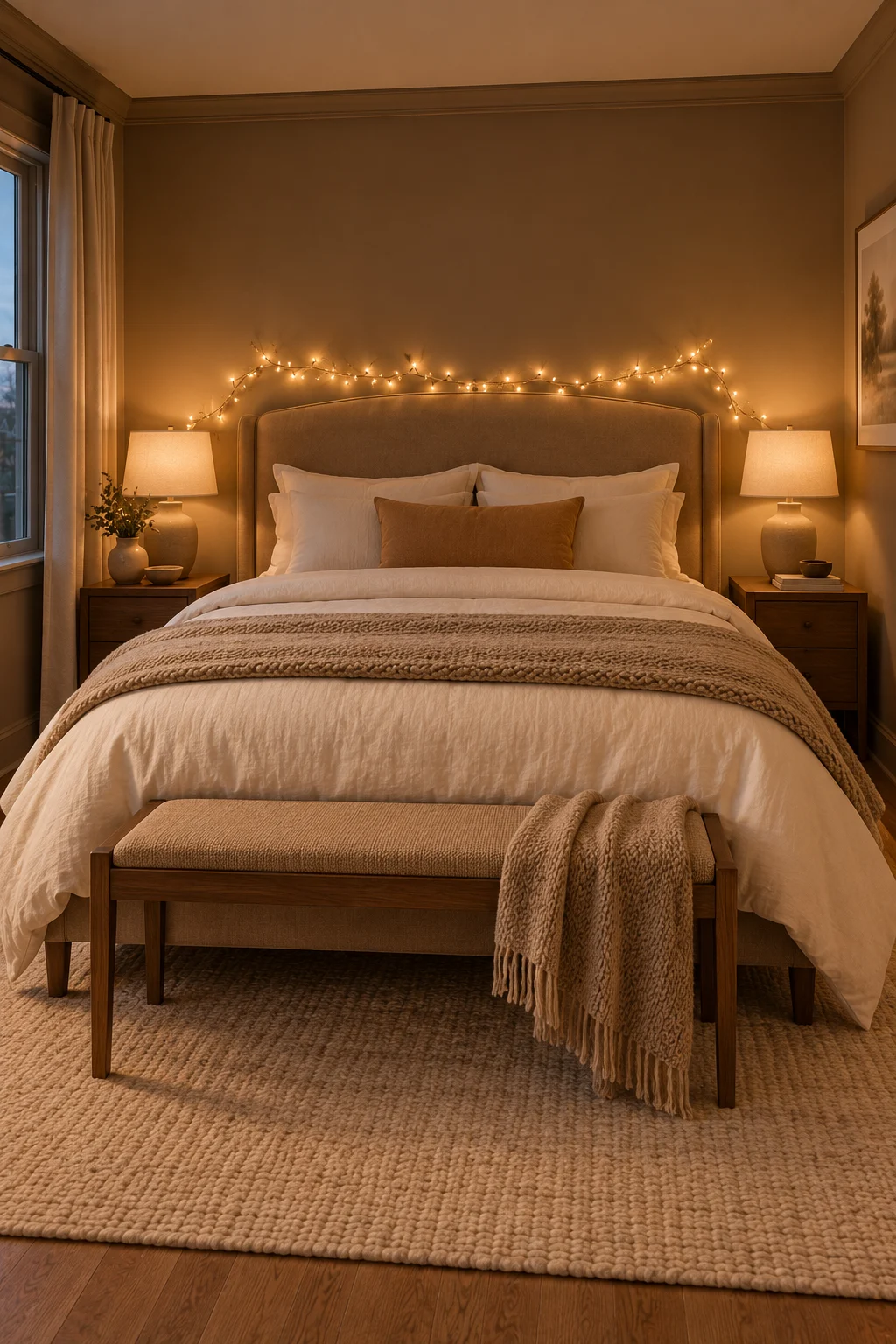
1. Add Warm Fairy Lights Above the Headboard
A short strand of warm-white fairy lights above the headboard can create a subtle focal point without requiring additional artwork or a dramatic accent wall.
Choose a simple arrangement that follows the width of the bed or forms a shallow curve on the wall. The glow looks especially inviting against warm cream paint, with a medium-walnut bed frame and layered ivory bedding below.
Keep the design restrained. A single strand can introduce enough sparkle without creating a complicated pattern of overlapping wires.
Think about how the display looks during daylight as well. Neatly positioned lights can blend into the wall when switched off, while loose cords and excessive mounting accessories may become distracting.
Use mounting methods appropriate for the product and wall surface, and position the strand where it won’t interfere with the bed or its occupants.
The result should feel like a gentle decorative accent rather than a substitute for proper bedside lighting.
2. Frame a Bedroom Window With Fairy Lights
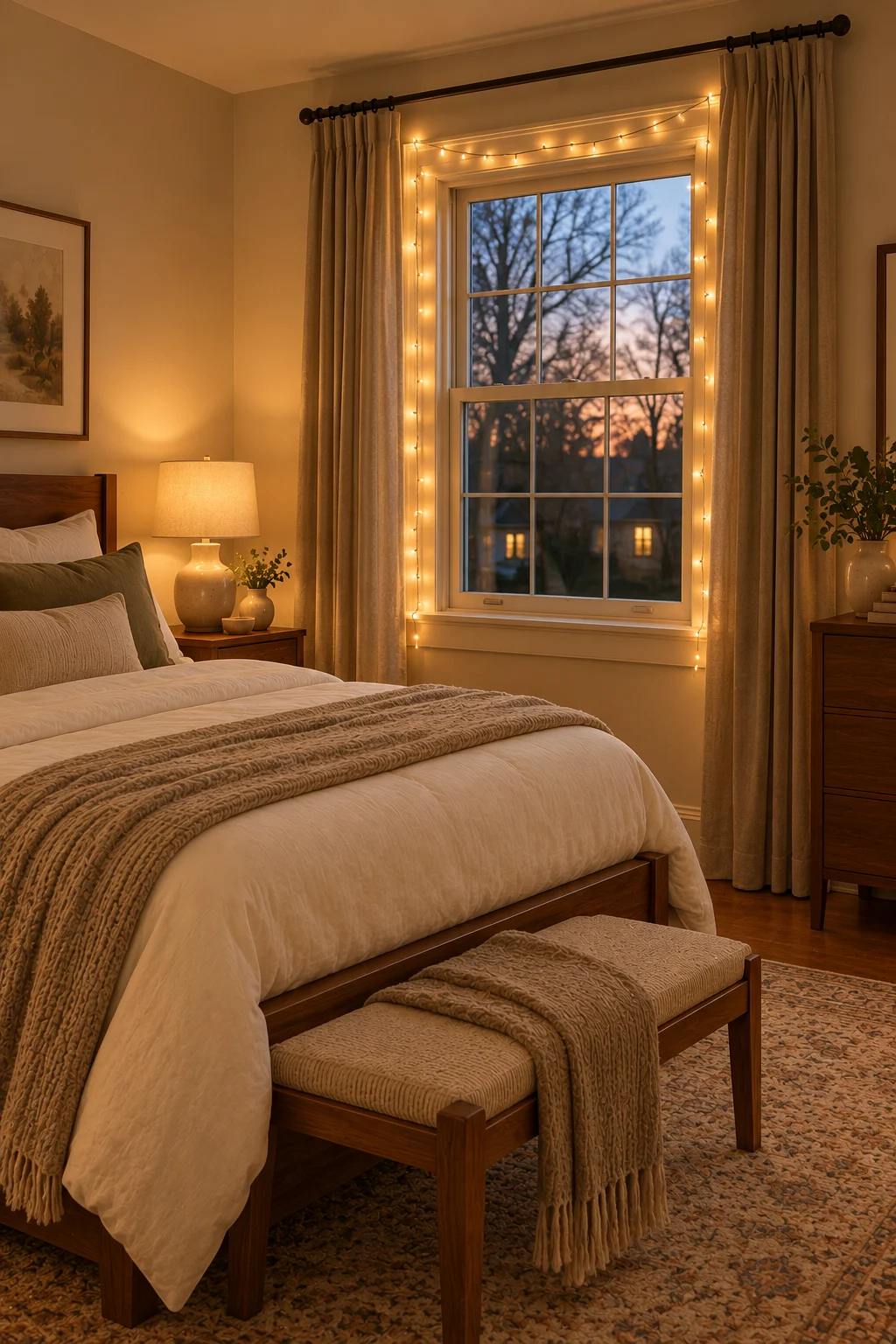
A bedroom window can become an attractive evening feature when its fixed outer trim is outlined with warm-white fairy lights.
This works particularly well in a room with mushroom curtains, cream walls, and simple wooden furniture. During the day, the window remains the source of natural light. In the evening, the decorative border introduces a softer atmosphere.
Choose a strand that suits the window’s dimensions rather than wrapping a long length around the frame repeatedly.
Consider how the lights relate to curtains and blinds. A simple border along suitable fixed trim can look cleaner than a display crossing the glass or hanging over moving window sections.
Keep the window fully functional, including its locks, handles, and any required emergency access.
If the window has a particularly attractive shape or trim, let the fairy lights emphasize that feature instead of covering it.
3. Create a Soft Reading Corner
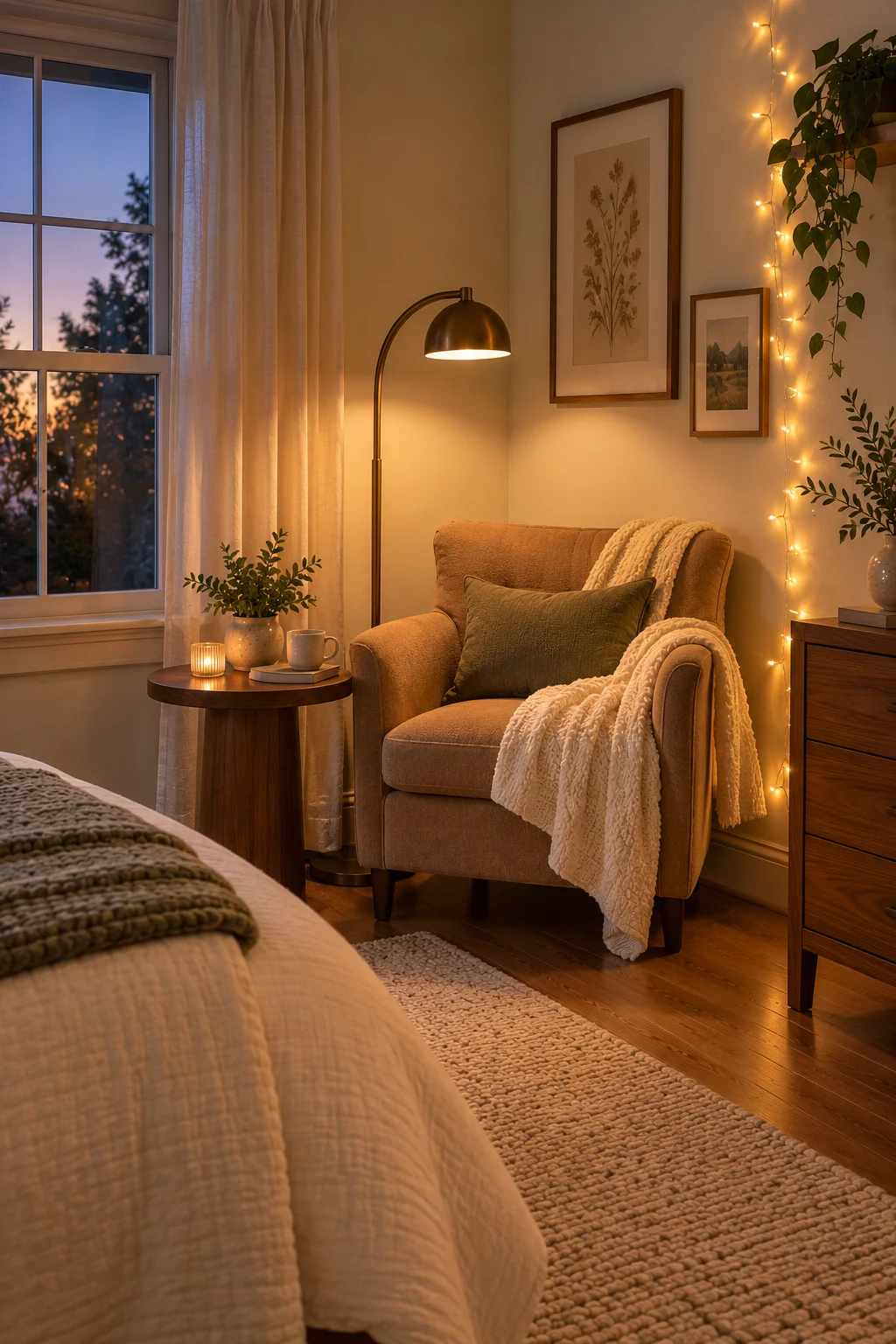
A reading corner feels more inviting when the lighting has several layers.
Start with a comfortable chair in camel, cream, or mushroom upholstery. Add a small side table, a soft throw, and a proper reading lamp that provides enough illumination for books.
Then introduce a short strand of fairy lights along a nearby wall to create a decorative glow around the seating area.
The fairy lights shouldn’t be the only source of illumination. Their purpose is to make the corner feel relaxed, while the reading lamp provides the practical light needed for reading comfortably.
Keep the furniture arrangement simple. A compact chair and one side table can create a useful retreat without taking over a modest bedroom.
If the room already has warm wood furniture, repeat that finish in the side table or lamp base for a coordinated appearance.
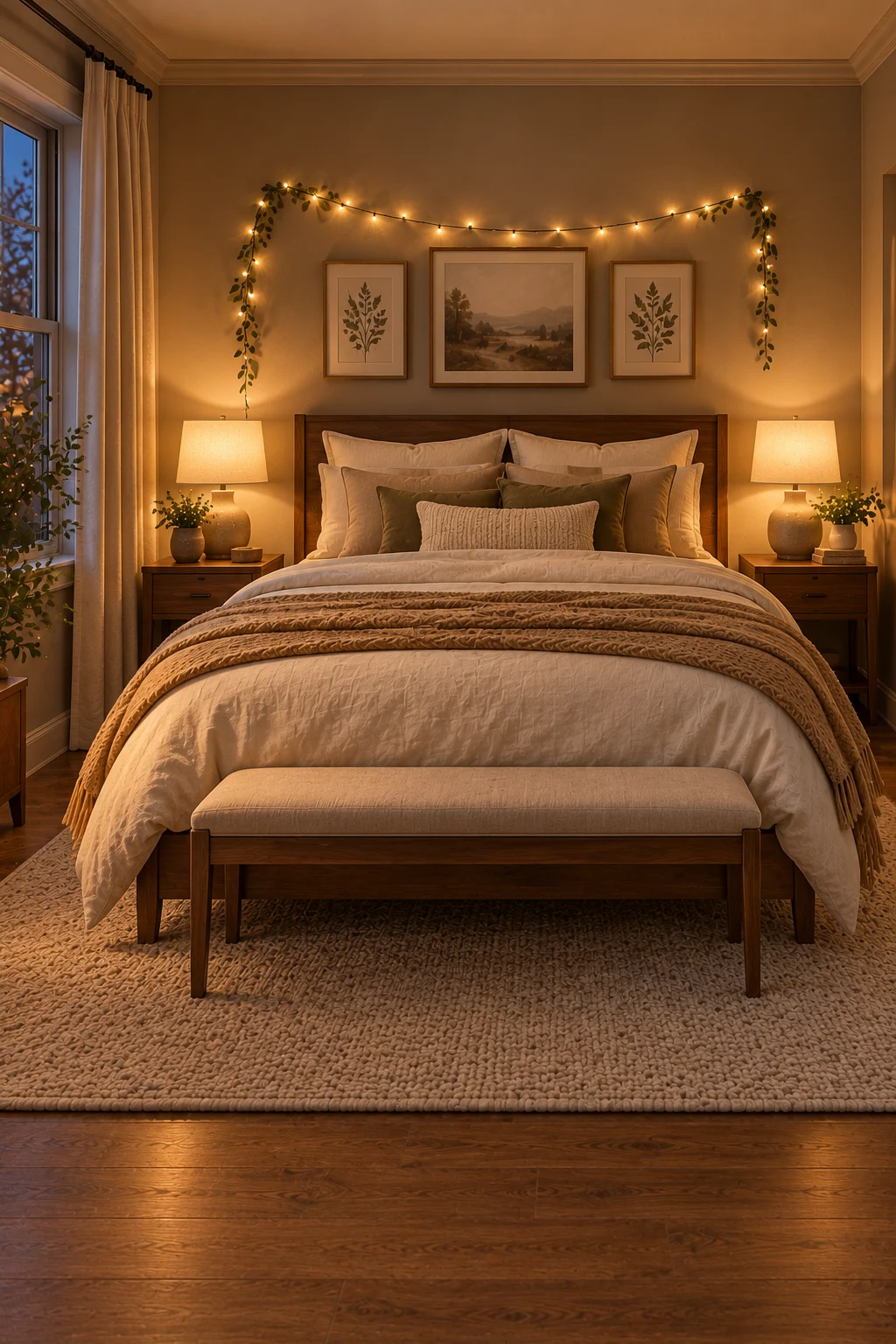
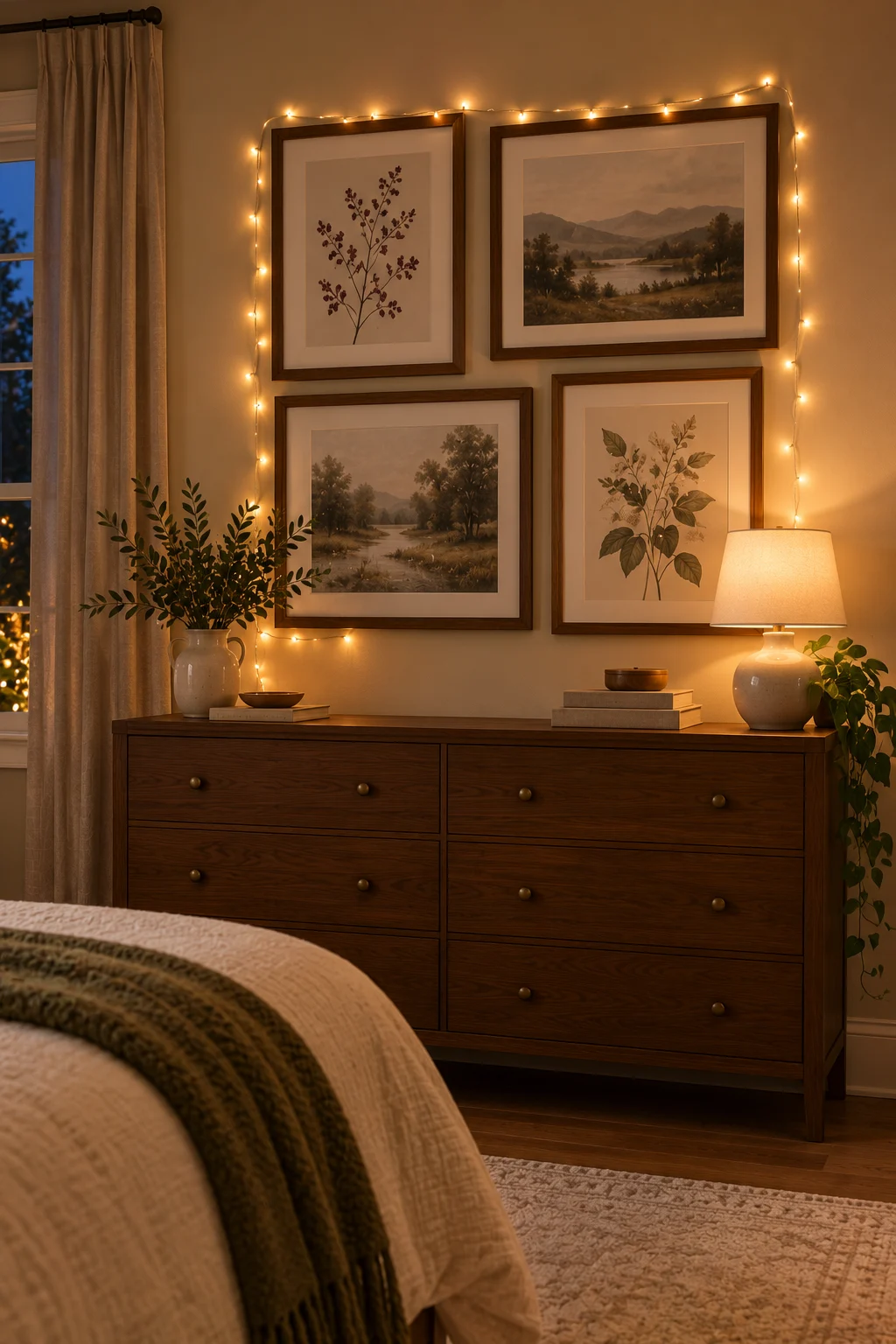
4. Use Fairy Lights Around a Gallery Wall
A gallery wall can feel more atmospheric with a restrained fairy-light arrangement that complements the artwork.
Choose a few botanical prints, landscapes, or simple illustrations in walnut or warm wood frames. Arrange them with consistent spacing on a cream wall, then use a short strand of warm-white LEDs to outline part of the grouping.
Rather than weaving the lights through every frame, keep the display visually simple. A shallow curve above the artwork or a discreet border can provide enough decorative interest.
The frames should remain the main feature, with the fairy lights acting as a supporting detail.
This approach works particularly well above a dresser or on a clear bedroom wall where the artwork can be viewed without competing with shelves and other decorations.
Select mounting accessories suitable for the wall and the light strand, and keep the installation accessible for cleaning and inspection.
5. Add Fairy Lights to a Bedroom Shelf
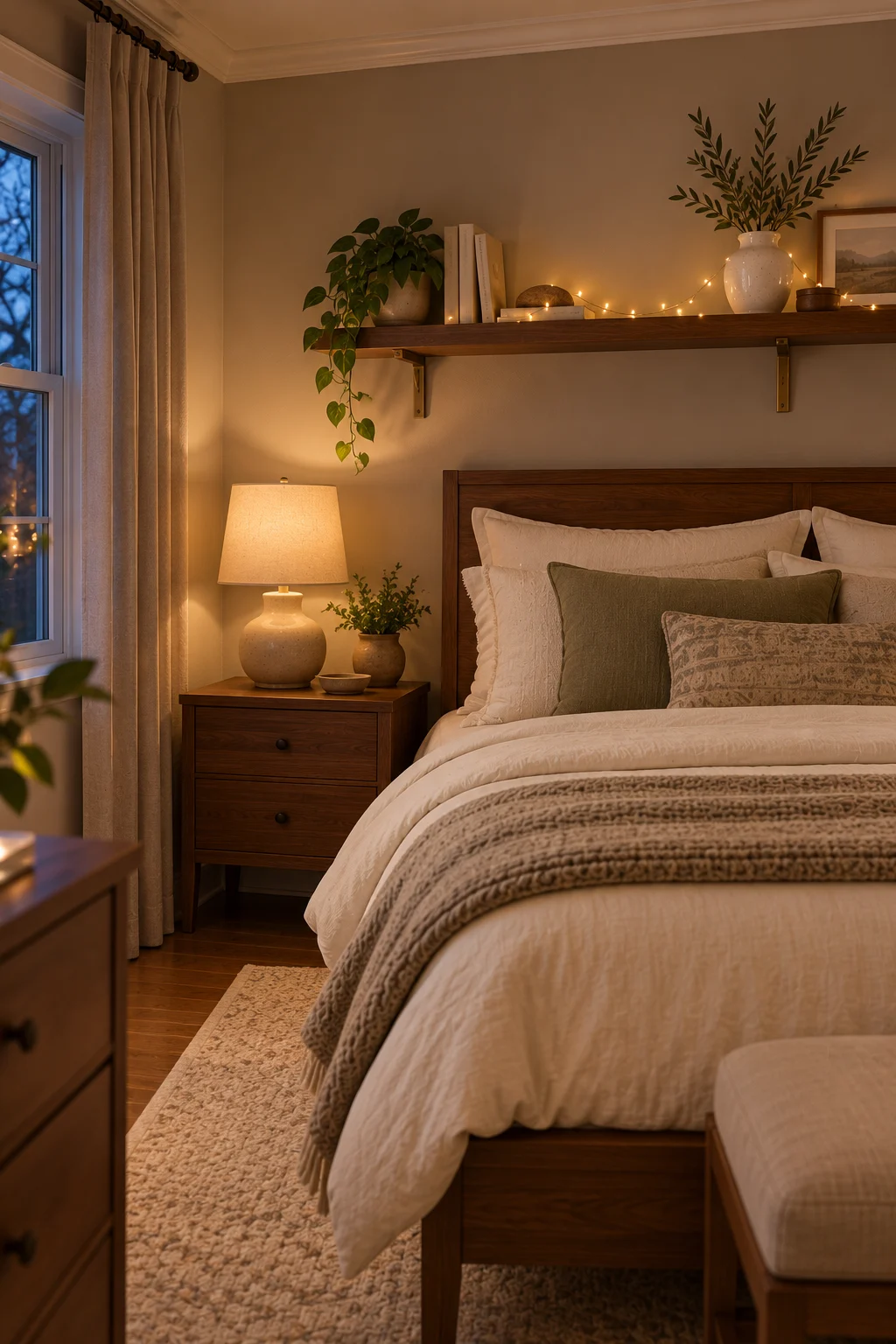
A bedroom shelf offers a convenient place to create a small decorative display without covering an entire wall in lights.
Start with a securely installed shelf and a few carefully selected objects, such as a ceramic vase, a small stack of books, or a framed photograph.
A short warm-white LED strand can highlight the arrangement and introduce a soft glow in the evening.
Choose accessories with related colors and materials. Cream ceramics, walnut frames, and muted olive details create a cohesive appearance without requiring everything to match.
Avoid filling the shelf from end to end. Leaving space between objects allows the display to feel intentional and makes cleaning easier.
The fairy lights should remain visible enough to provide atmosphere without becoming tangled around every item.
A small, balanced shelf display can add character to a bedroom while keeping the surrounding walls relatively uncluttered.
6. Create a Minimal Fairy-Light Wall Outline
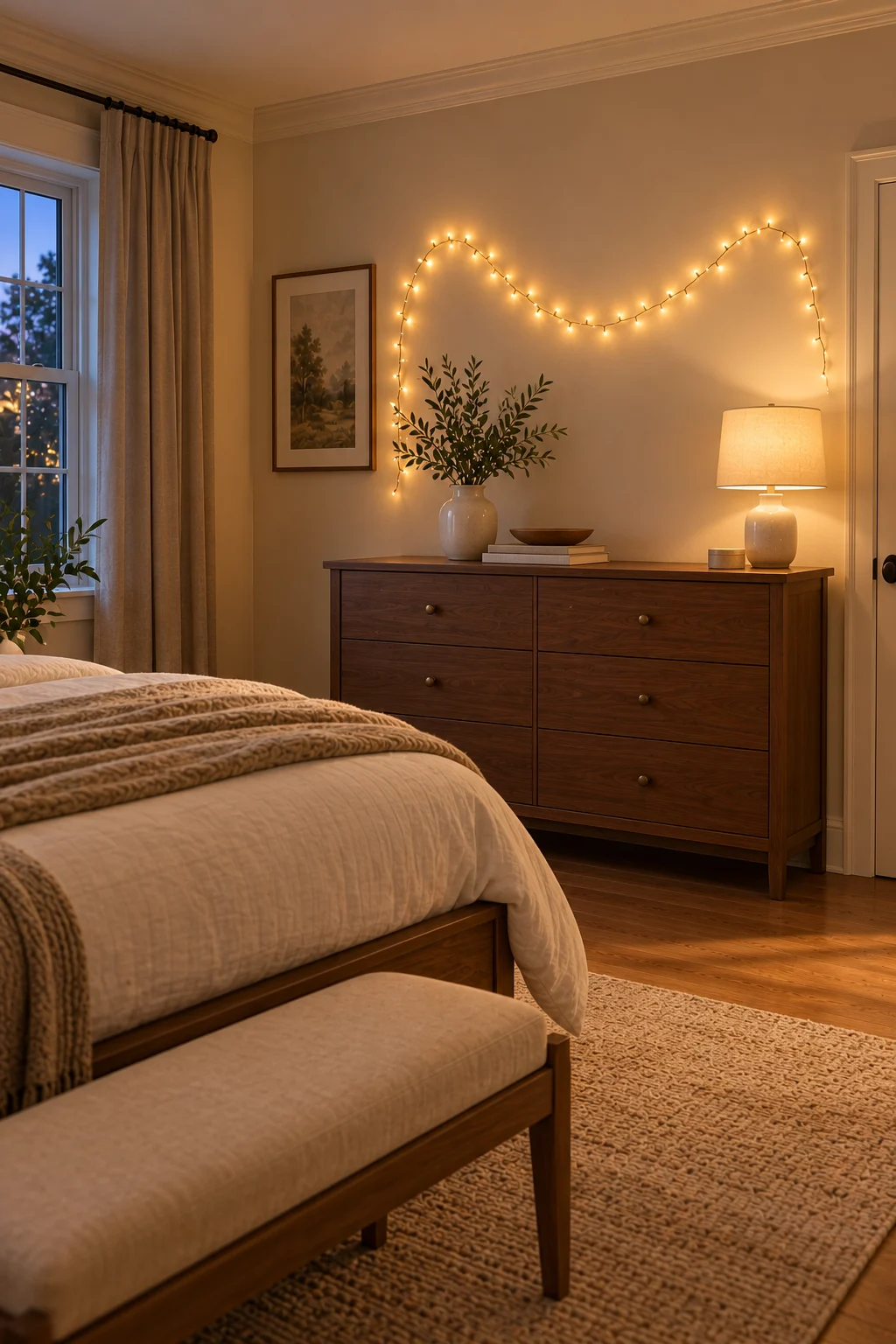
A simple wall outline is an effective option when you want decorative lighting without adding more furniture or framed artwork.
Choose a rectangular shape, shallow arch, or gently curved line that suits the available wall space.
Warm-white LEDs against cream, mushroom, or muted olive walls can create an understated feature that looks attractive in the evening.
Position the outline above a dresser or on another suitable clear wall rather than filling the entire room with patterns.
Keep the shape uncomplicated and use a strand with an appropriate length. Too much excess wiring can make a minimalist design look untidy.
Consider the wall’s proportions before installing the lights. A narrow outline may suit a compact dresser, while a wider arrangement can balance a larger piece of furniture.
The goal is to introduce a quiet decorative detail, not to recreate a complicated illuminated mural.
7. Pair Fairy Lights With Sheer Curtains
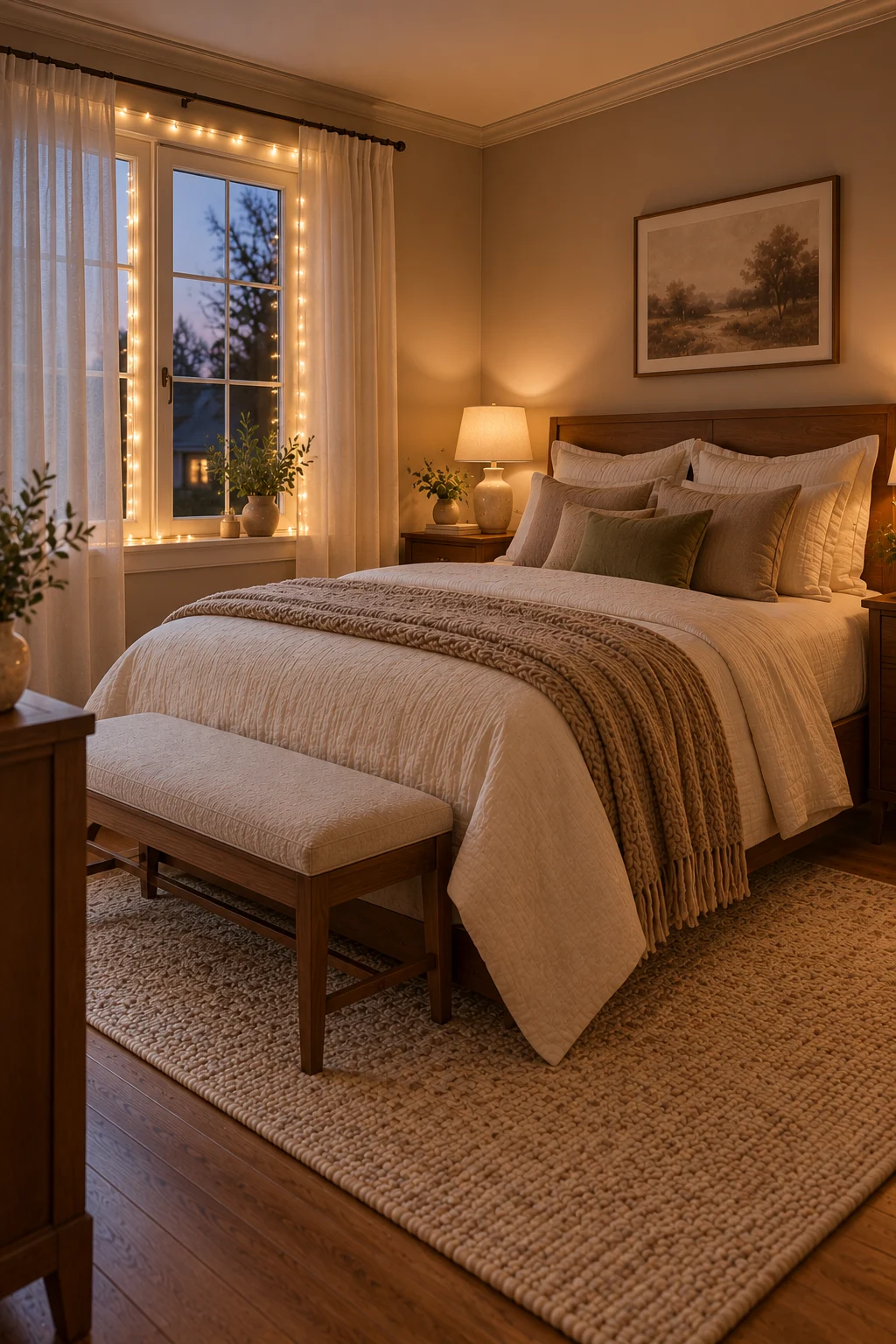
Sheer curtains and fairy lights can create a soft, layered appearance around a bedroom window.
Choose warm white or ivory sheers that allow daylight to filter through the room. Pair them with a restrained warm-white light arrangement mounted separately in a suitable position near the window.
The combination works particularly well with cream bedding, walnut furniture, and mushroom or muted olive accents.
During the day, the curtains soften incoming light. In the evening, the fairy lights introduce a decorative glow around the window area.
Avoid crowding the window with several layers of heavy fabric, decorative garlands, and multiple light strands. The effect is more relaxed when the materials remain simple.
Choose a light product and mounting method appropriate for the intended placement, keeping the electrical components separate from fabric where required.
The window should remain easy to open, and the curtains should move freely without catching on the lights.
8. Decorate a Cozy Bedroom Nook
A small bedroom nook can become a useful decorative feature with a carefully positioned strand of fairy lights.
Choose a compact bench, narrow dresser, or small seating area, then introduce warm lighting along a nearby wall.
A mushroom-beige bench with a cream cushion and walnut accents creates a comfortable foundation. A short LED strand can highlight the area without requiring a large collection of decorative objects.
Think about what the nook is actually used for. A reading area may benefit from a proper task lamp, while a decorative corner might only need the fairy lights and one ceramic accessory.
Keep the arrangement easy to maintain. A nook filled with cushions, baskets, and several strings of lights can quickly become difficult to clean.
One clear focal point is usually more effective than trying to decorate every surface.
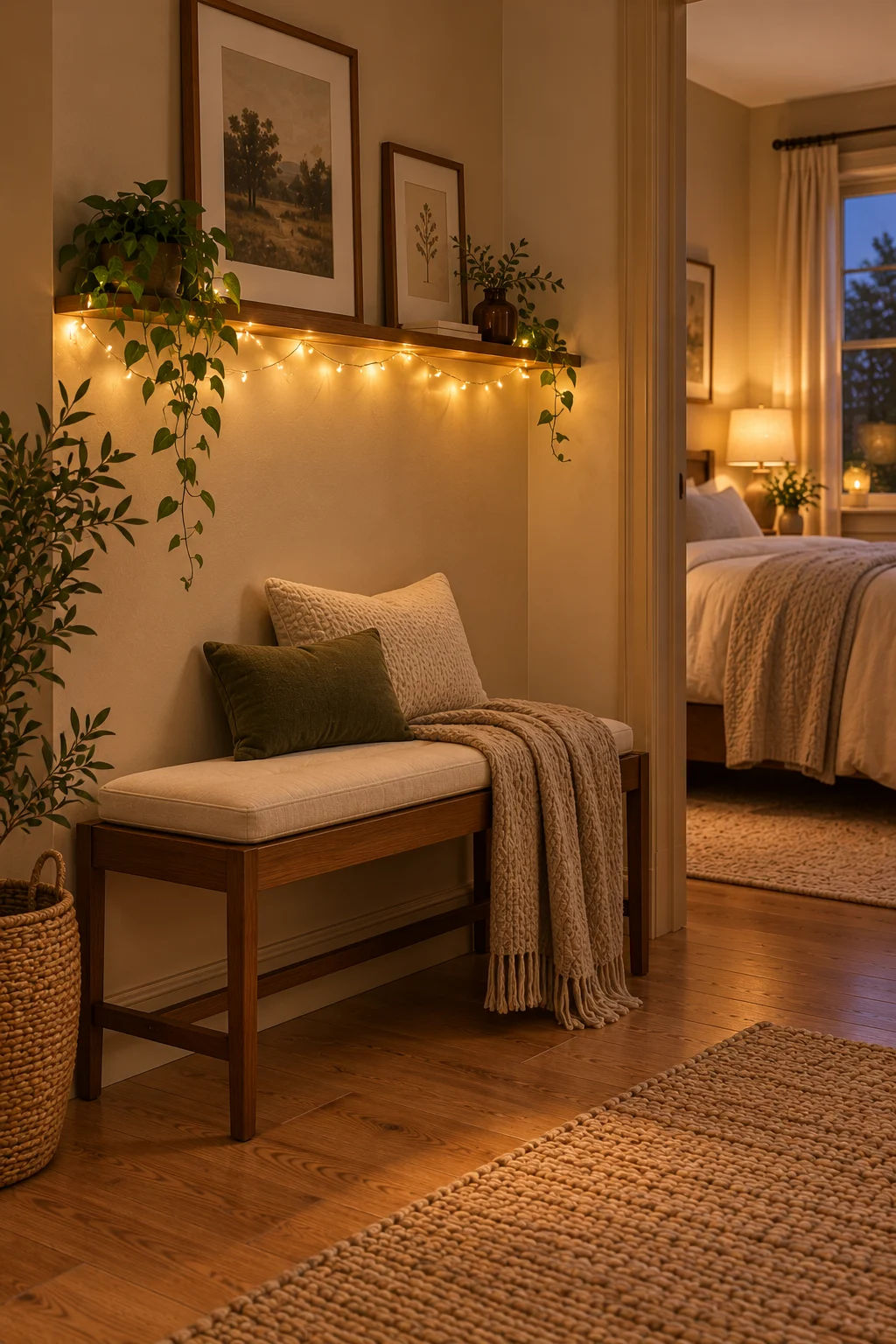
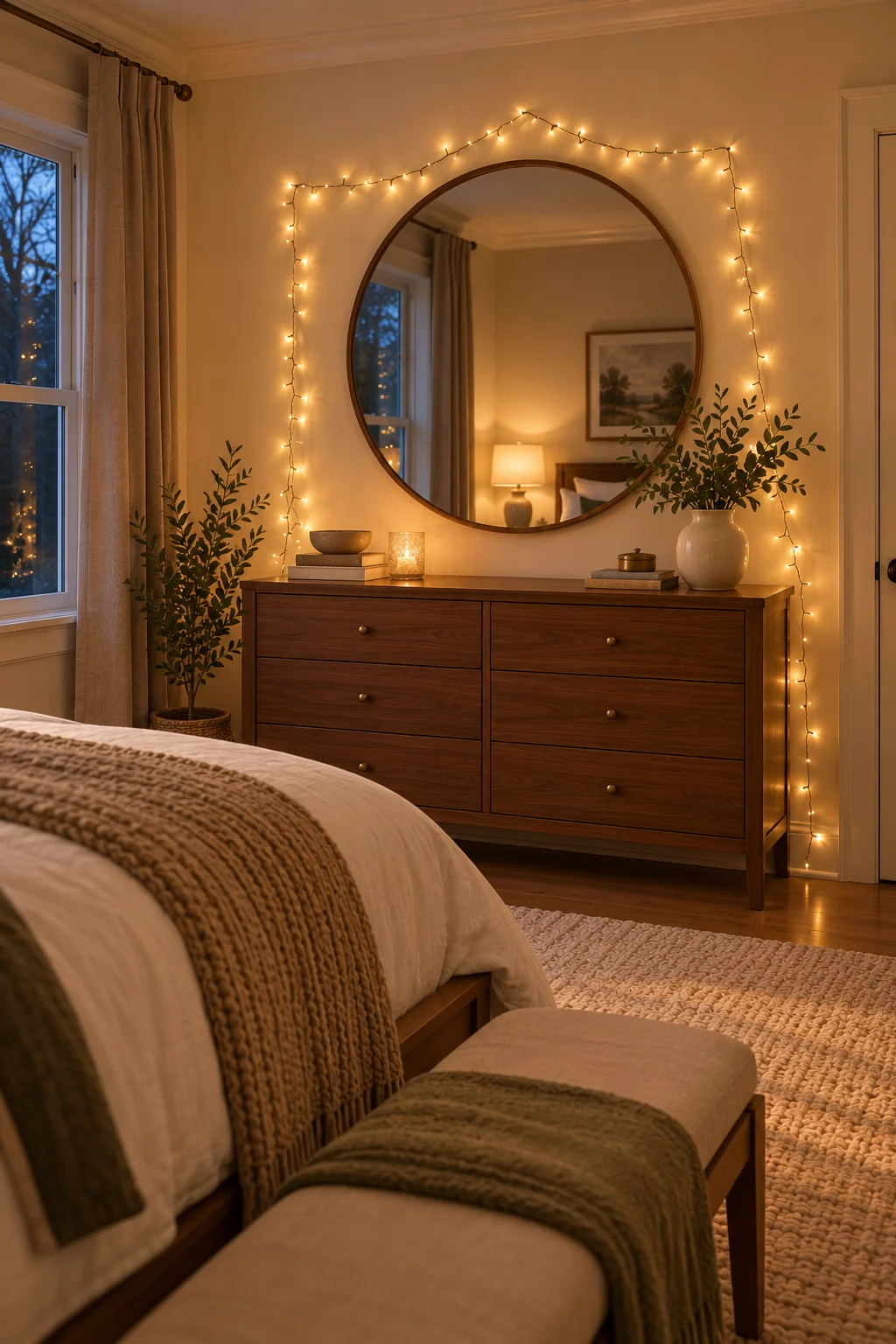
9. Use Fairy Lights With a Small Mirror
A mirror can reflect the warm points of fairy lights and make a modest bedroom display feel more layered.
Choose a securely mounted mirror above a dresser or vanity. A simple walnut frame, antique-brass-style frame, or understated black frame can work with neutral bedroom furniture.
Position a short strand of fairy lights around the surrounding wall rather than covering the mirror itself.
The reflected light can add visual interest without requiring a particularly large display.
Keep the dresser surface relatively clear. A small ceramic tray or one decorative object is often enough when the mirror and lights already provide the main feature.
Check how the display looks from different positions in the room. Reflections that appear gentle from one angle may become distracting from another.
A restrained arrangement can create a pleasant evening accent while keeping the mirror useful for everyday tasks.
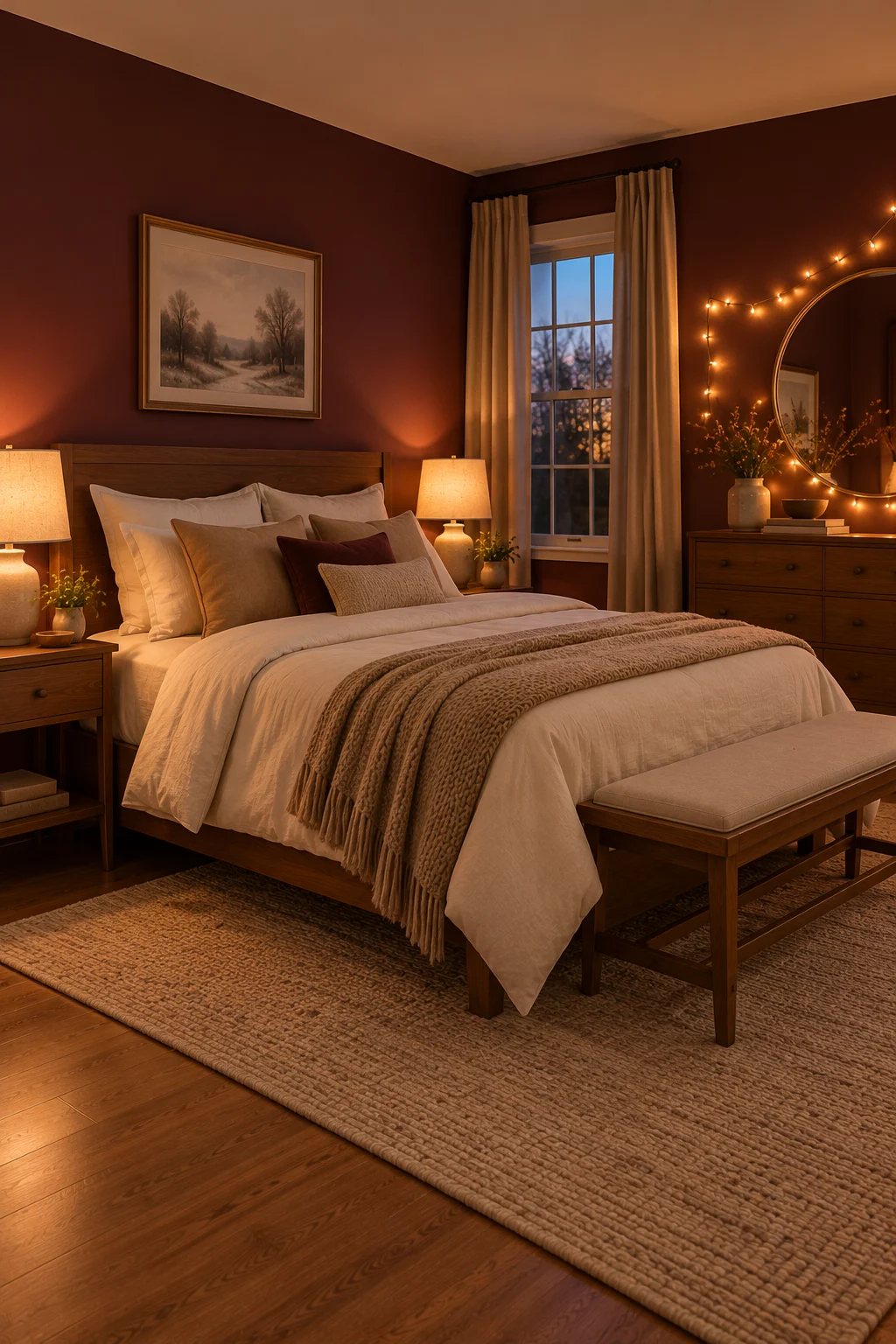
10. Choose Warm Fairy Lights for a Moody Bedroom
Fairy lights can soften a bedroom with darker walls and furniture.
Deep burgundy, charcoal, and muted olive create rich backdrops for small points of warm-white light. The contrast introduces atmosphere without requiring bright decorative colors.
Pair the darker wall color with medium-walnut furniture, ivory bedding, and a camel throw to prevent the room from feeling visually heavy.
Use the fairy lights in one defined area, such as above a dresser or beside a reading corner.
Avoid spreading multiple strands across every wall. In a moody bedroom, a limited amount of decorative light can have more impact than an elaborate display.
Keep proper bedside and general lighting available so the room remains comfortable for reading, dressing, and moving around.
The result should feel warm and intimate without making the bedroom unnecessarily dim.
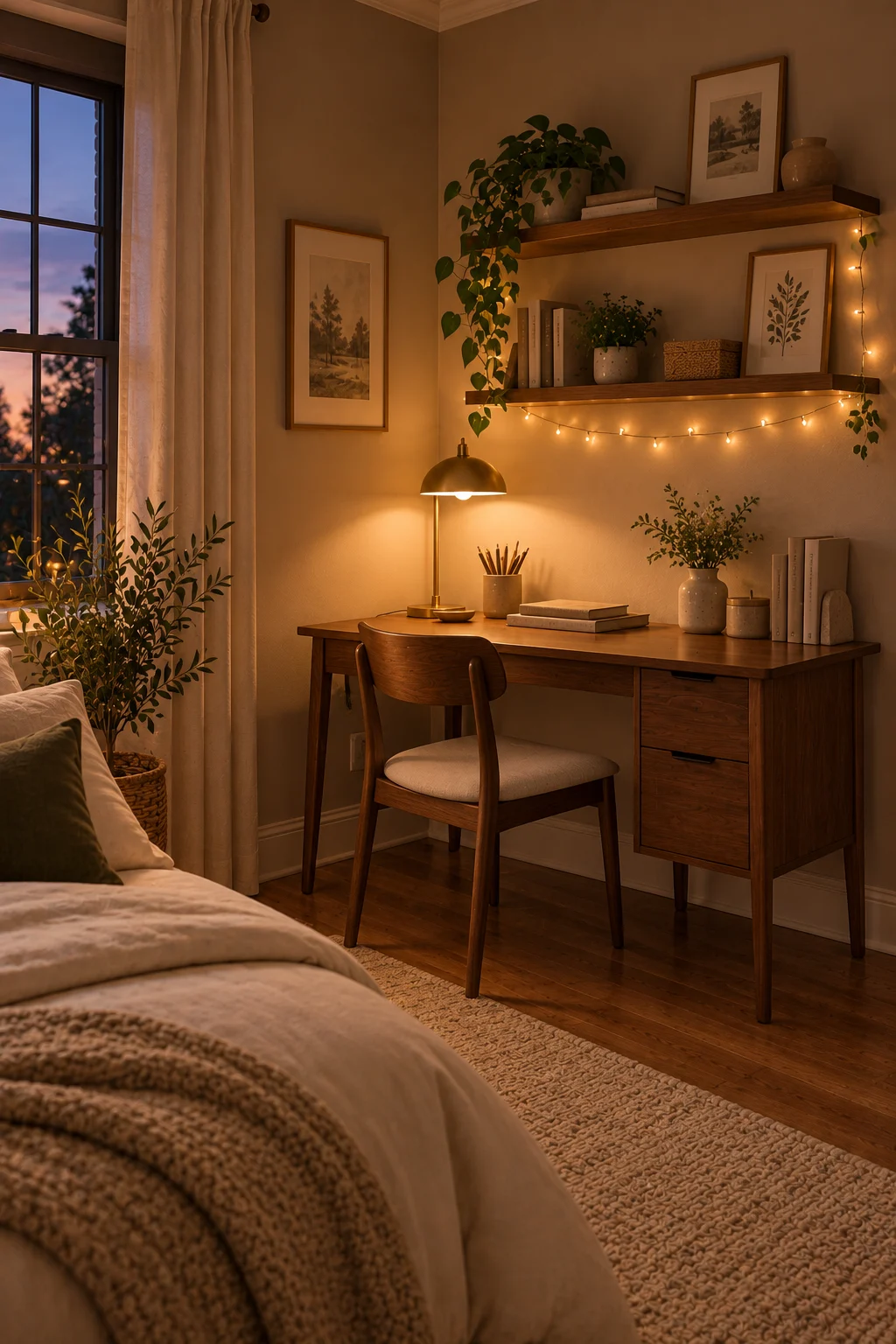
11. Add Fairy Lights Above a Bedroom Desk
A bedroom desk can benefit from a little decorative lighting, especially when the workspace shares a room with the bed.
Mount a short strand of warm-white fairy lights on the wall above the desk to introduce atmosphere without taking up valuable work surface.
Pair the display with a compact walnut desk, cream walls, and simple storage for notebooks and everyday supplies.
Keep the arrangement restrained so the desk remains suitable for studying or working.
A proper desk lamp is still essential for tasks requiring focused illumination. Fairy lights are decorative and generally don’t provide enough light for reading small text or detailed work.
Choose a position that keeps the lights clear of the monitor, computer ventilation, and frequently moved equipment.
A simple illuminated accent can make a functional workspace feel more connected to the rest of the bedroom.
12. Create a Subtle Fairy-Light Headboard Accent
A headboard accent can introduce soft decorative lighting without requiring a canopy or elaborate wall treatment.
Unlike a wider display above the bed, this approach focuses on a small section of wall immediately beside or just above a simple wooden headboard.
Choose a short warm-white LED strand and keep the arrangement shallow and understated.
Pair it with ivory bedding, a medium-walnut bed, and compact bedside lamps. Coordinating the color temperature of the decorative lights and lamps can help the room feel balanced.
The lights should remain separate from pillows, loose bedding, and upholstered surfaces unless the product is specifically intended for that use.
Avoid creating hanging loops or draped strands where they could be caught or pulled during sleep.
A small accent is enough to introduce atmosphere while keeping the headboard itself the main feature.
13. Keep the Fairy-Light Bedroom Simple and Balanced
The most cohesive fairy-light bedroom usually has one clear decorative lighting feature rather than several competing displays.
Start with the room’s existing furniture and color palette. Warm cream walls, medium-walnut furniture, ivory bedding, and muted accents create a comfortable background for warm-white LEDs.
Choose one location that naturally benefits from additional atmosphere. That might be a window, gallery wall, reading corner, or a small section above the headboard.
Then keep the rest of the lighting practical. Bedside lamps, ceiling lighting, and task lighting should still provide the illumination needed for everyday activities.
Avoid filling every available wall with strands. A single well-positioned display can make the room feel finished without introducing unnecessary visual clutter.
The arrangement should also look tidy when the lights are switched off.
A simple, intentional design creates a cozy atmosphere while preserving the bedroom’s calm and functional character.

How to Choose Bedroom Fairy Lights
Start by selecting LED fairy lights intended for indoor residential use.
Check the product’s electrical specifications, power source, mounting requirements, and instructions for use. Choose a strand length that suits the intended location without requiring excessive wrapping or overlapping.
Warm-white lights generally work well with cozy neutral bedrooms, but the overall effect depends on the existing lighting and wall colors.
Consider how often you’ll use the lights and whether the switch or controller will remain convenient to access.
For a calmer look, choose a restrained display that complements the room rather than relying on several different light colors and patterns.
Fairy Lights for Small Bedrooms
A compact bedroom doesn’t need an elaborate lighting arrangement to feel inviting.
Choose one focal area, such as a window frame, small gallery wall, or reading corner. This allows the decorative lights to add character without covering every wall.
Keep the floor clear of wires and avoid placing light strands where they interfere with closet doors, windows, or furniture movement.
In a small room, simple mounting and a neatly planned cable route can make a significant difference to the finished appearance.
Budget-Friendly Fairy-Light Ideas
One suitable LED strand can be enough to create a noticeable decorative effect.
Use an existing mirror, shelf, or framed artwork as the focal point rather than purchasing several new decorative accessories.
Before buying, measure the intended display and check what mounting materials are recommended for the light product and wall surface.
Prioritize a suitable, reliable product over the longest or most elaborate strand available.
A modest arrangement can feel more considered than a larger display that requires extra wiring and accessories.
Common Fairy-Light Decorating Mistakes
One common mistake is using too many strands in a small bedroom. Multiple competing displays can make the room feel cluttered instead of calm.
Another is relying on fairy lights as the only source of illumination. Their decorative glow should complement practical lighting rather than replace it.
Poor cable planning can also spoil the appearance. Excess wiring, awkwardly positioned controllers, and strands crossing furniture can make a simple project unnecessarily complicated.
Choose the location, measure the space, and plan the installation before mounting the lights.
Cleaning and Maintenance
Follow the manufacturer’s cleaning and maintenance instructions.
Switch off and disconnect the lights as appropriate before cleaning, and avoid exposing electrical components to moisture unless the product is specifically designed for those conditions.
Inspect the strand periodically for damaged insulation, loose connections, or other signs of wear.
Replace damaged products rather than attempting improvised electrical repairs.
Keep the lights accessible enough to inspect, clean, and remove when necessary.
Safety and Practical Considerations
Use lights rated for the intended indoor location and follow all manufacturer instructions for installation, mounting, electrical connections, and operation.
Keep strands and wiring away from loose bedding, curtains, moving furniture, and areas where they could be pulled or trapped. Maintain access to doors, windows, vents, and safety devices.
Don’t overload outlets or connect incompatible strands. Avoid running cords beneath rugs, through doorways, or across walking routes.
Keep electrical components away from moisture and unsuitable heat sources. Follow the product’s instructions about switching off the lights when unattended or before sleeping.
If a product becomes damaged, unusually hot, or otherwise appears unsafe, stop using it.
Final Thoughts
Fairy lights can make a bedroom feel warmer and more inviting without requiring a complete makeover. A small window display, illuminated gallery wall, or subtle headboard accent can introduce atmosphere while keeping the room comfortable and practical.
Choose one focal area, coordinate the light color with the existing decor, and keep the installation tidy and suitable for the space.
The best fairy-light bedroom isn’t the one with the most lights. It’s the one where a gentle glow makes an already comfortable room feel even more welcoming.
