
17 Wall Drawing Ideas Bedroom Designs for a Creative Statement Wall
A blank bedroom wall behind your dresser can feel unfinished even after the bedding, lamps, and rug are in place. Framed prints are one solution, but drawing directly on the wall creates something more personal. These wall drawing ideas bedroom designs range from delicate pencil-like lines to larger painted shapes, so you can find an approach that matches your space and confidence level. Some need careful geometry; others look better with loose, imperfect brushstrokes. You can keep the artwork quiet with a single muted color or make it the most expressive element in the room. The following ideas focus on practical placement, achievable techniques, and visual details that work with real bedroom furniture.
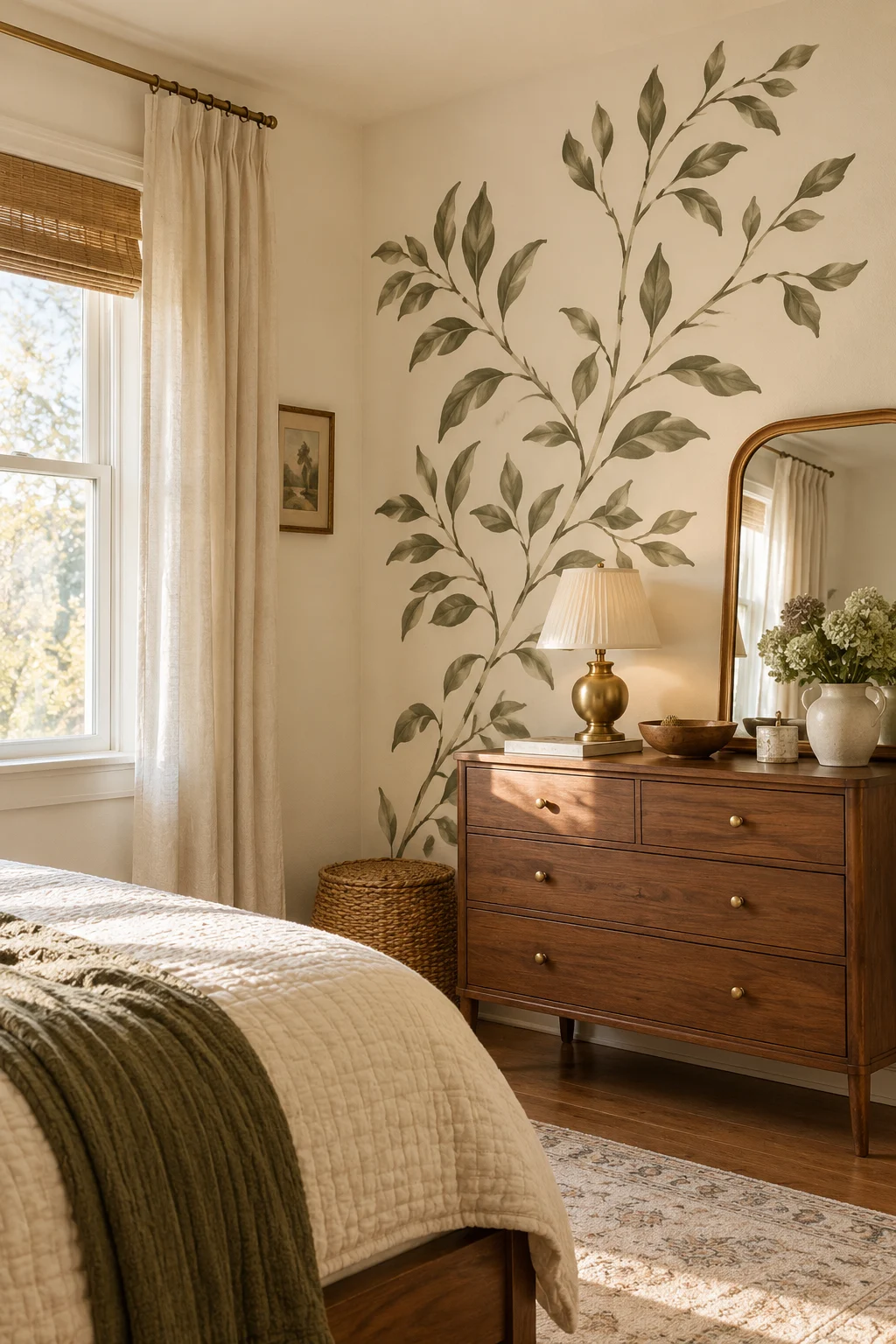
1. Sketch an Oversized Botanical Branch
A single sweeping branch gives a plain wall movement without covering every inch. Draw a pencil guide that rises from the lower left corner and spreads behind a dresser, then trace leaves in muted olive acrylic paint. A soft ivory wall makes the irregular stems feel intentional. Keep the densest foliage away from the headboard so pillows do not visually compete with it. This approach suits a rental only when repainting is permitted; otherwise, work on a removable painted panel. A fine artist brush handles stems while a small flat brush fills the leaves. Allow each color to dry before overlapping shapes. The result feels hand-drawn rather than wallpaper-perfect, and that slight variation is part of its charm.
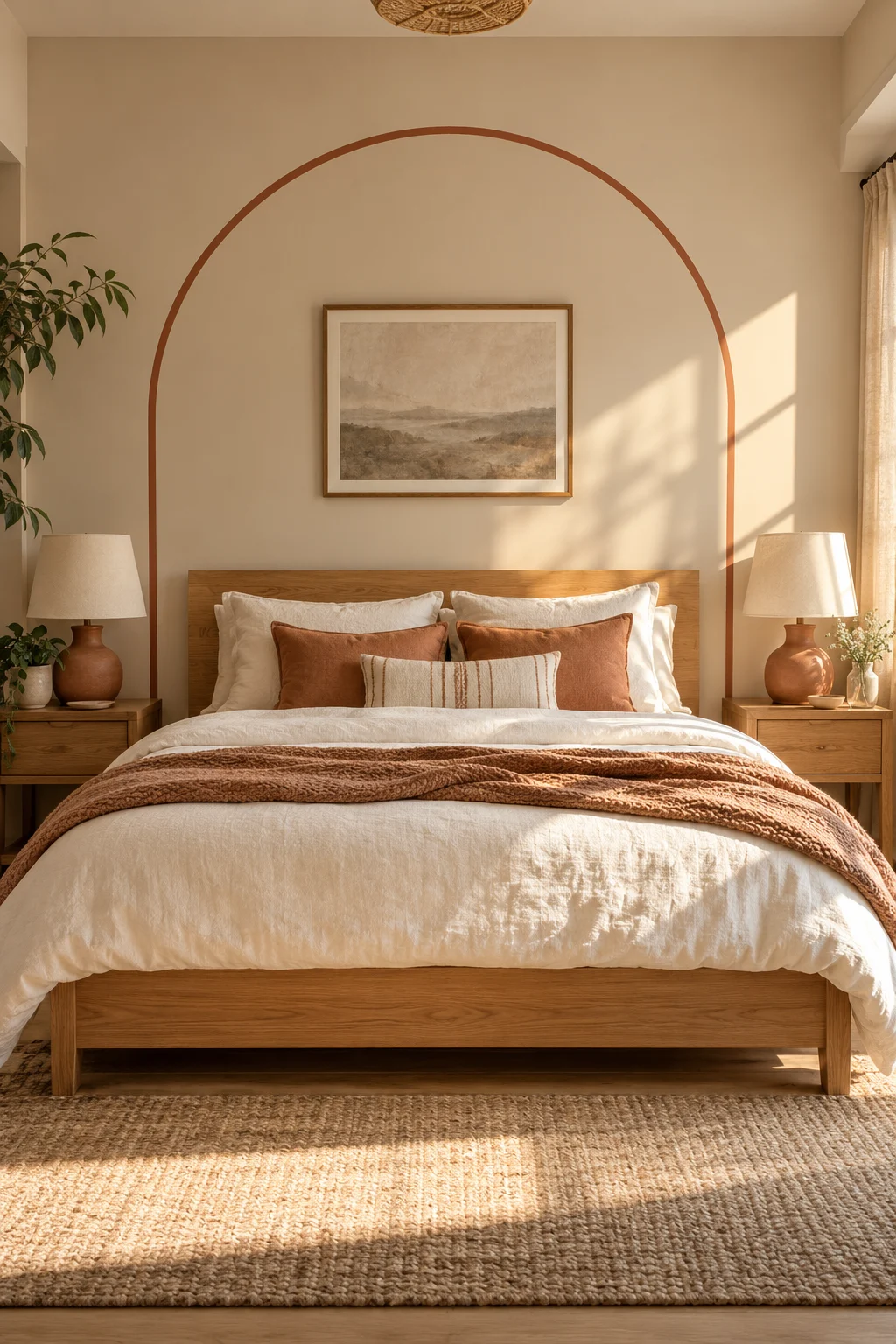
2. Build a Graphic Arch Behind the Bed
An outlined arch can give a low-profile bed a visual headboard without adding bulky furniture. Use a flexible measuring tape, a pencil tied to string, and a level to draft a tall curved outline. Paint the line in terracotta against pale sand walls, leaving the center unfilled. For a queen bed, an arch a little wider than the mattress usually feels balanced, although the room proportions should guide the final width. A thin line looks crisp but shows shaky brushwork, so painter’s tape helps along the vertical edges. Pair the drawing with simple bedding and one ceramic bedside light. The empty interior keeps the composition airy, especially in a compact room.
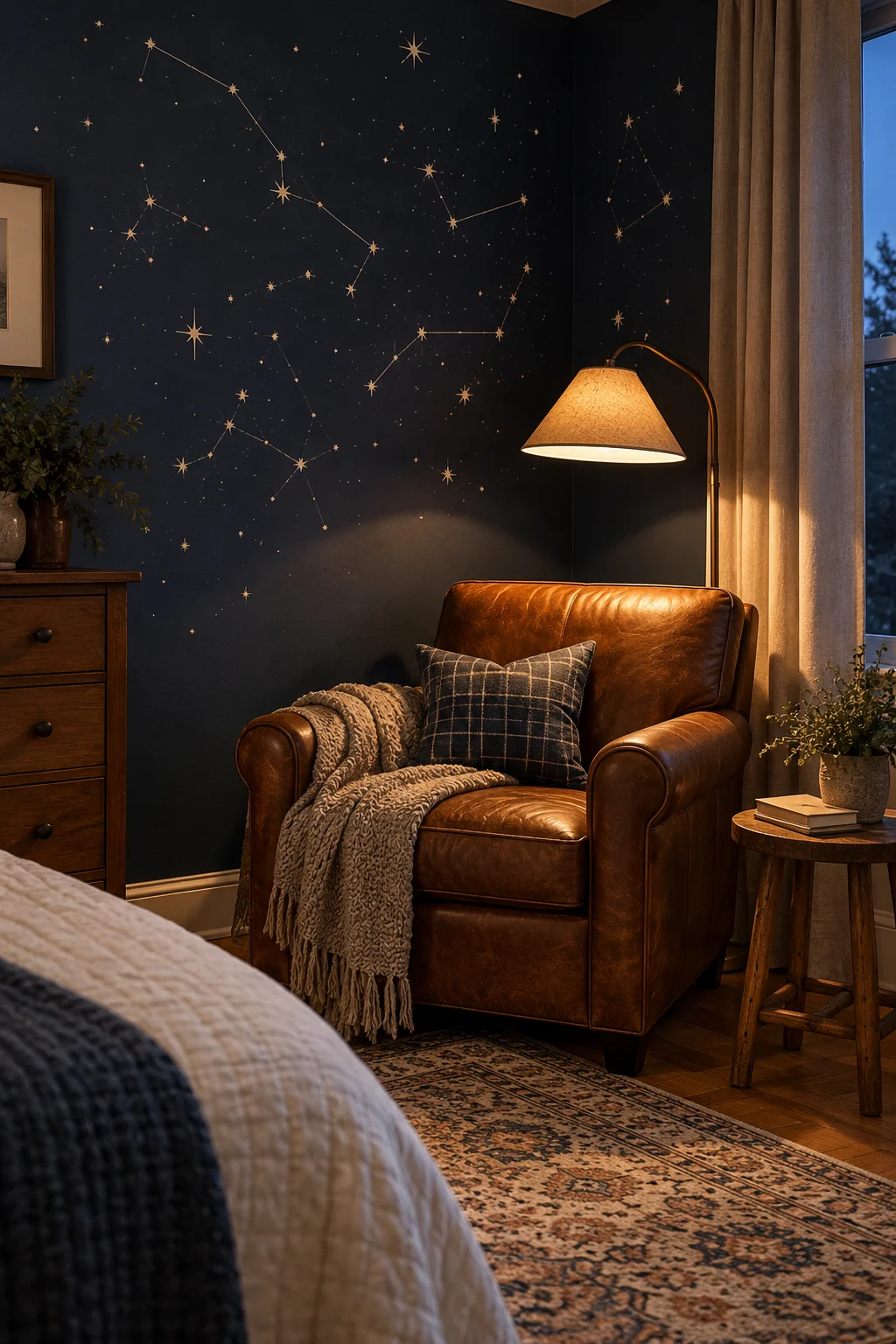
3. Draw a Constellation Above a Reading Chair
A constellation drawing brings a quiet nighttime theme into a bedroom without turning the space into a novelty set. Place scattered tiny dots and fine connecting lines above a reading chair, using a silver-gray paint marker on deep navy walls. You can use a real constellation pattern as a loose visual reference or invent your own arrangement. Leave generous blank areas between groups so the wall does not resemble a classroom chart. A marker designed for the wall finish is easier to control than a large brush. Test it in an inconspicuous spot first, because some metallic inks appear much brighter under lamps. A small floor lamp and textured throw complete a corner that feels restful after dark.
4. Paint a Loose Mountain Horizon
Layered mountain outlines add depth to a narrow bedroom while keeping the artwork grounded in simple shapes. Draw three staggered ridgelines across the wall behind a twin bed, then fill only the lowest band with dusty blue paint. Keep the upper lines as slender charcoal strokes against the warm white background. A wide wall works well because the horizon can continue past the bed and create a sense of breadth. Use a soft pencil first and step back frequently to see whether the peaks feel natural. Sharp zigzags tend to look cartoonish; uneven gentle slopes are more convincing. Keep framed art off this wall so the drawing remains the room’s single landscape element.
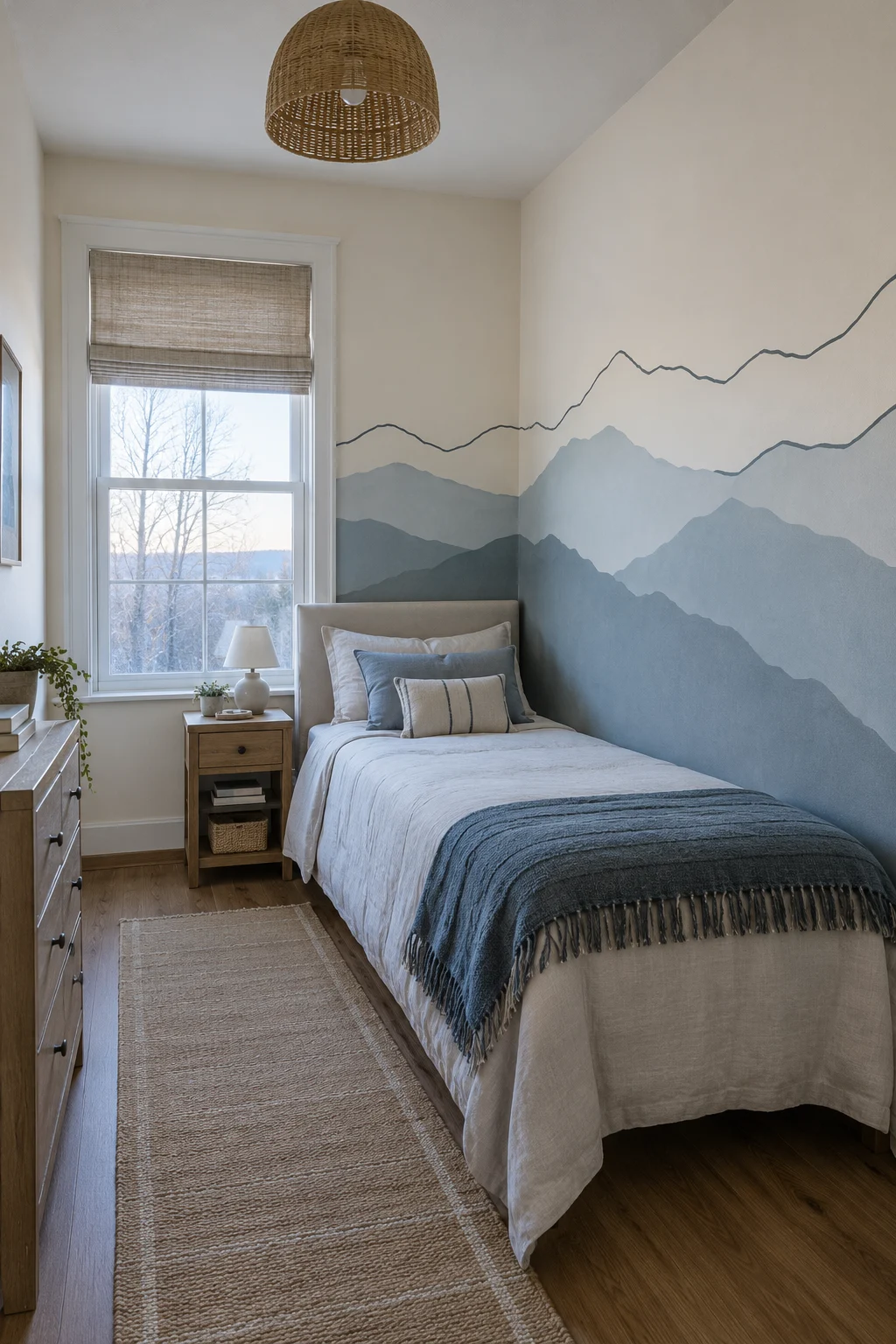
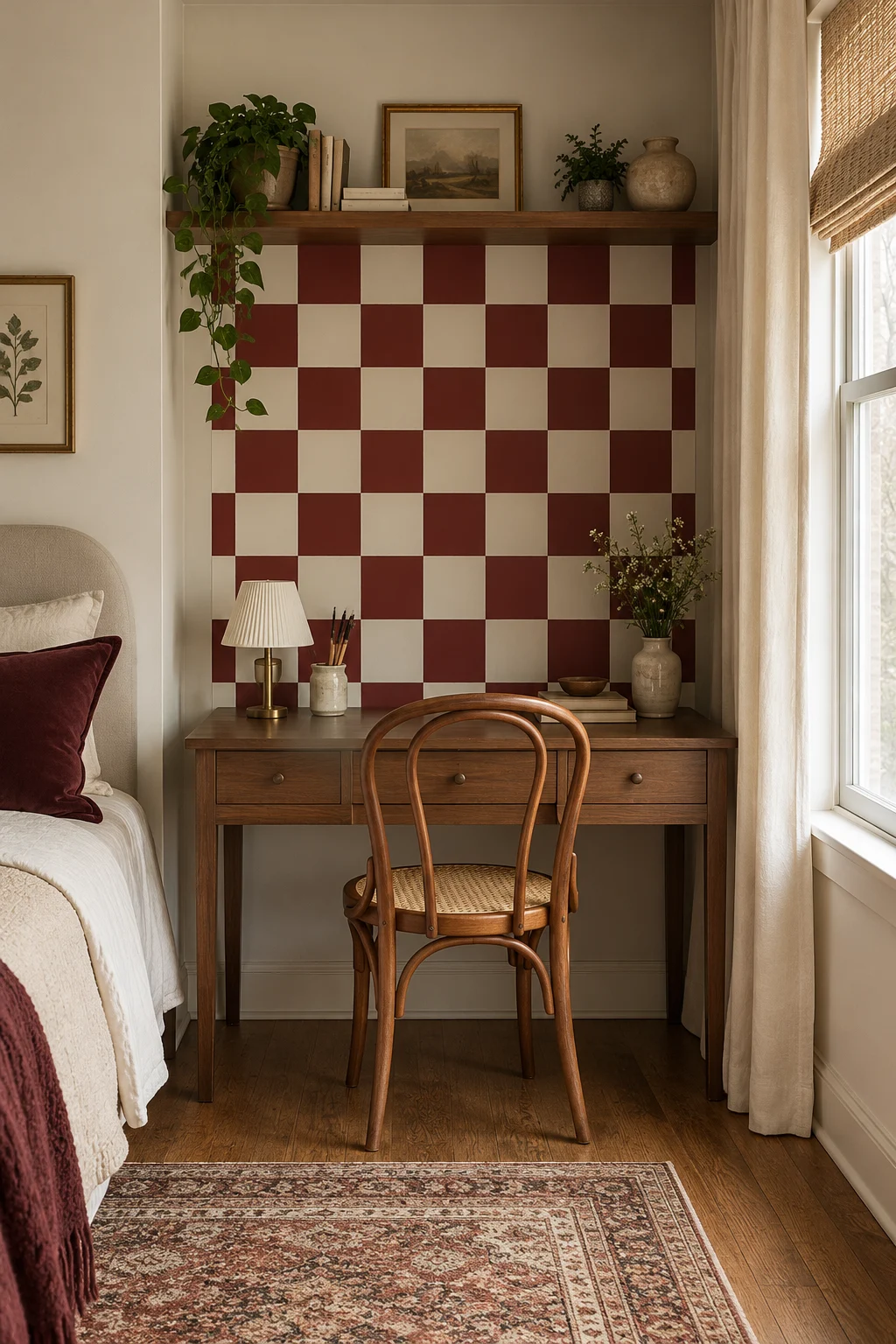
5. Frame a Hand-Drawn Checkerboard Panel
A checkerboard does not need to cover the entire room to make an impact. Sketch a rectangular panel above a compact desk and fill alternating squares in chalky burgundy and cream. Slightly imperfect edges lend it an illustrated character, especially beside a vintage wooden chair. A grid of roughly four-inch squares is manageable for a small accent panel, but adjust the scale to fit the available wall. Draw the outside boundary first, divide it evenly, and label every other square lightly in pencil before painting. Because a strong pattern can become busy, leave the adjacent shelves mostly clear. This is a good project for someone who enjoys careful layout work and does not mind a few patient painting sessions.
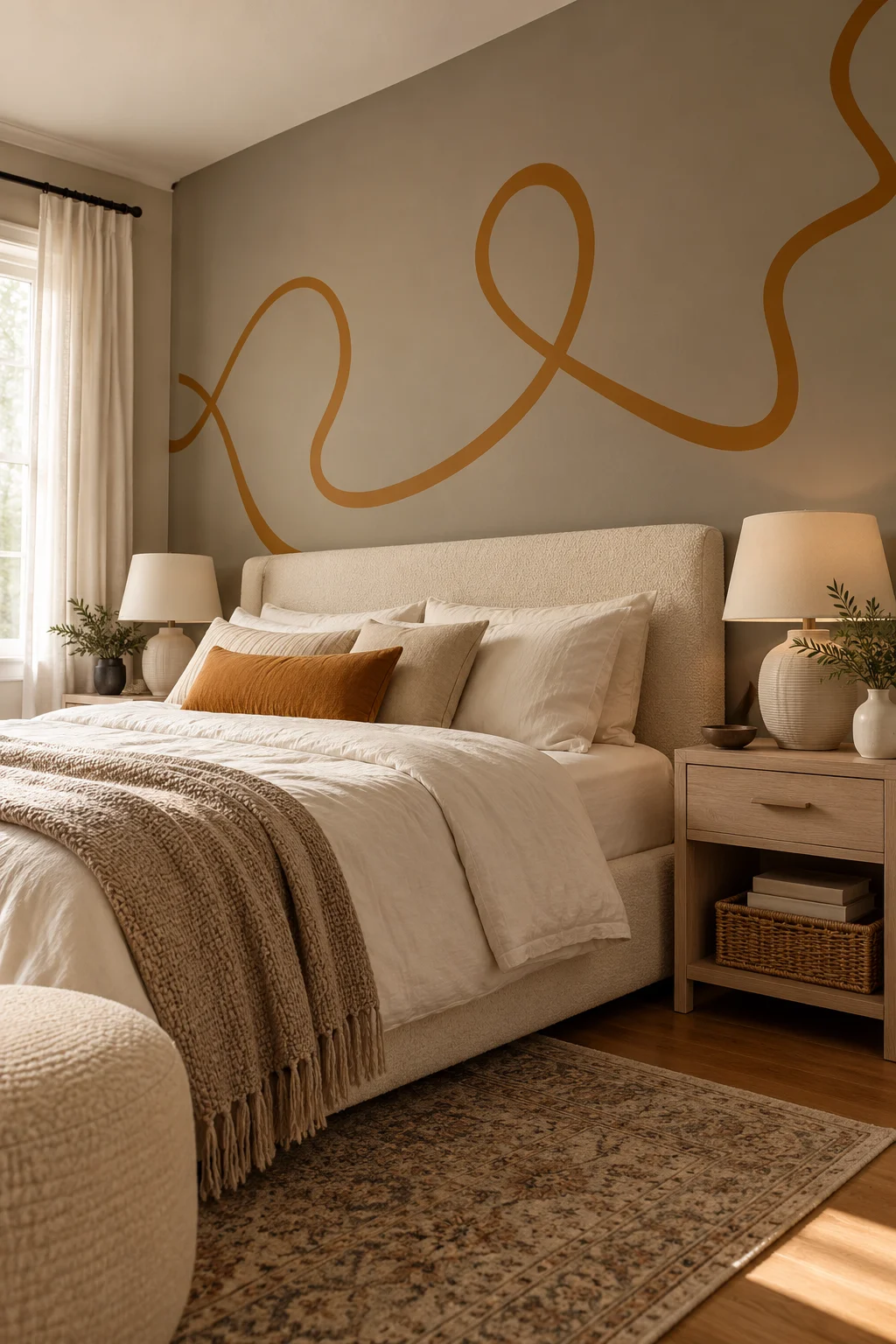
6. Trace a Flowing Ribbon Line
One continuous ribbon-like line can bring a playful artistic note to a bedroom that otherwise feels minimal. Start above the bedside table, loop the line around an empty section of wall, and let it end near the ceiling. A warm ochre color works particularly well against a mushroom-gray wall. Sketch the entire path in chalk first, checking that the loops do not crowd outlets or switches. A rounded paintbrush creates a more organic edge than a rigid stencil. The line should be thick enough to see from the doorway but not so heavy that it reads as a painted stripe. This design is especially effective in rooms with simple furniture silhouettes and few competing prints.
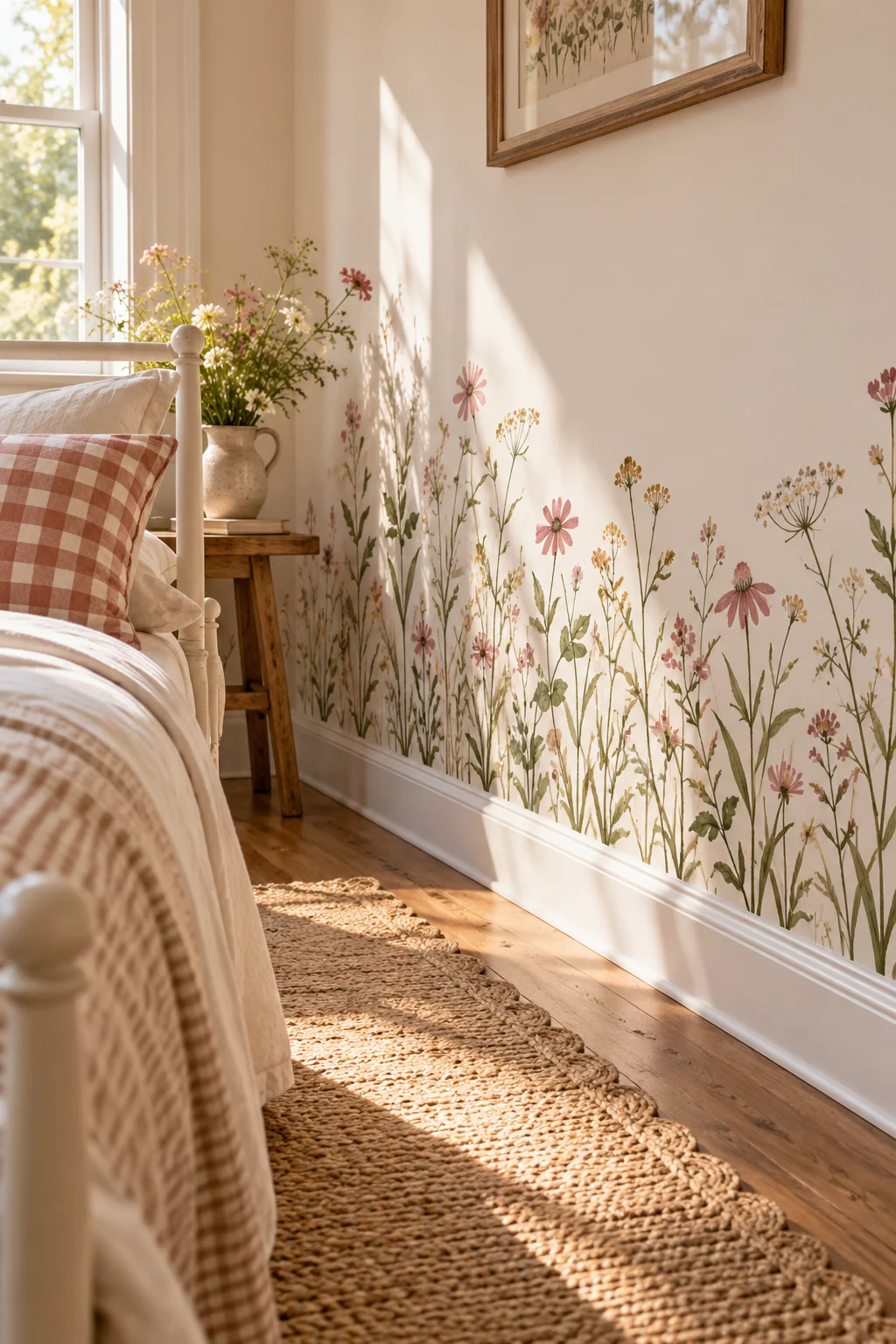
7. Illustrate a Tiny Garden Border
A narrow garden border along the lower wall introduces color while leaving most of the bedroom calm. Sketch small stems, seed heads, and wildflowers rising from just above the baseboard in dusty rose, sage, and faded gold. Vary the heights rather than repeating a uniform stencil. This treatment works beautifully beside a daybed or under a window where full-size artwork might feel crowded. Keep the border clear of frequently scuffed areas behind rolling furniture. Use washable interior paint with a finish compatible with the existing wall, and allow proper curing before moving furniture back. The whimsical detail becomes more noticeable up close, which is exactly what makes it rewarding in a personal retreat.
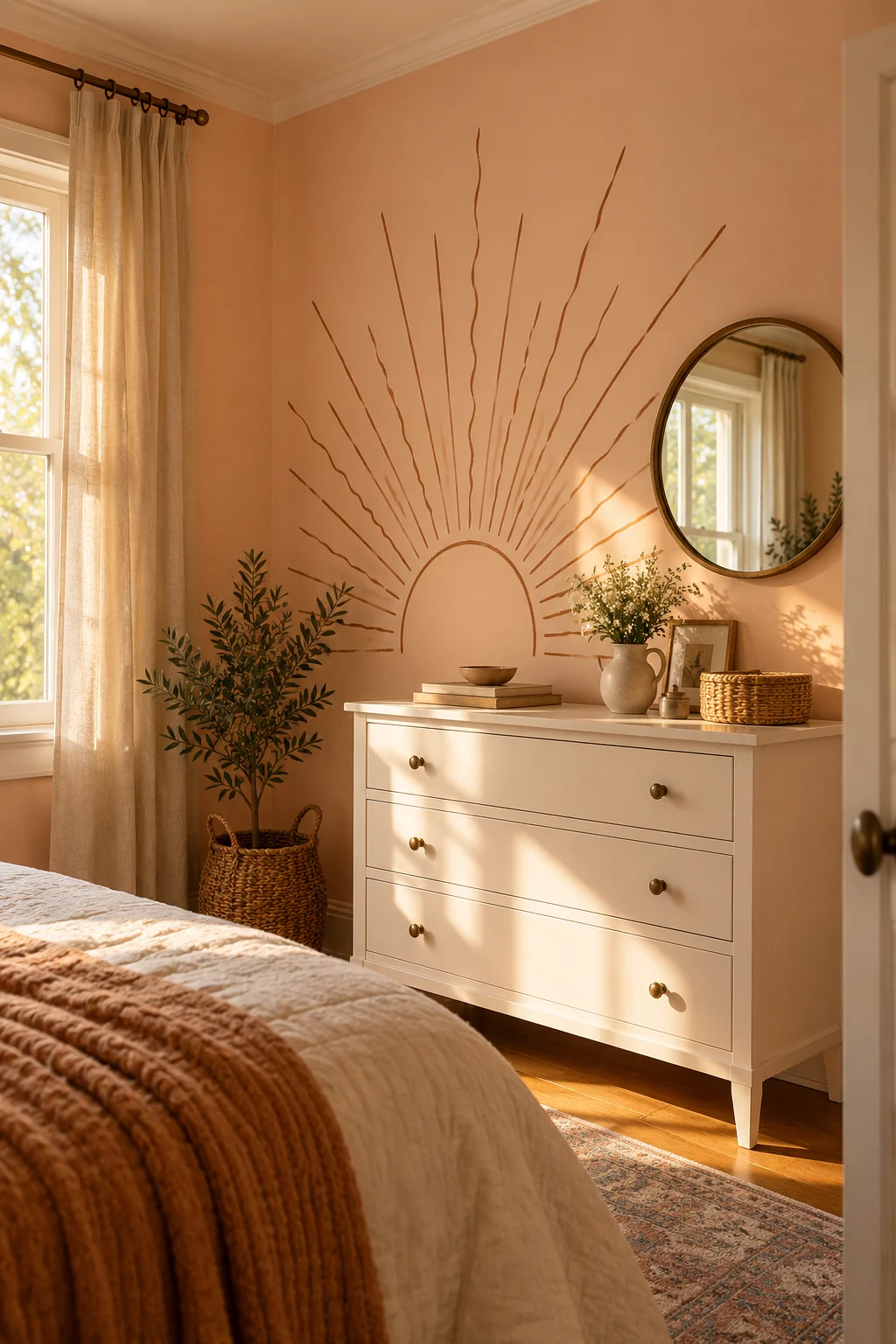
8. Create a Modern Sunburst Sketch
A sunburst made from fine radiating lines adds a little optimism above a bedroom dresser. Draw a small circle off center, then extend uneven rays in warm copper paint across a pale peach wall. Keeping the rays at different lengths prevents the artwork from looking like a rigid logo. A cardboard circle template helps anchor the composition, while a ruler can guide the straightest lines. Leave the area around the dresser mirror clear so the reflection does not multiply the pattern excessively. This project suits a room that needs one energetic accent rather than an entire mural. A matte finish reduces distracting shine when the sun hits the wall during the afternoon.
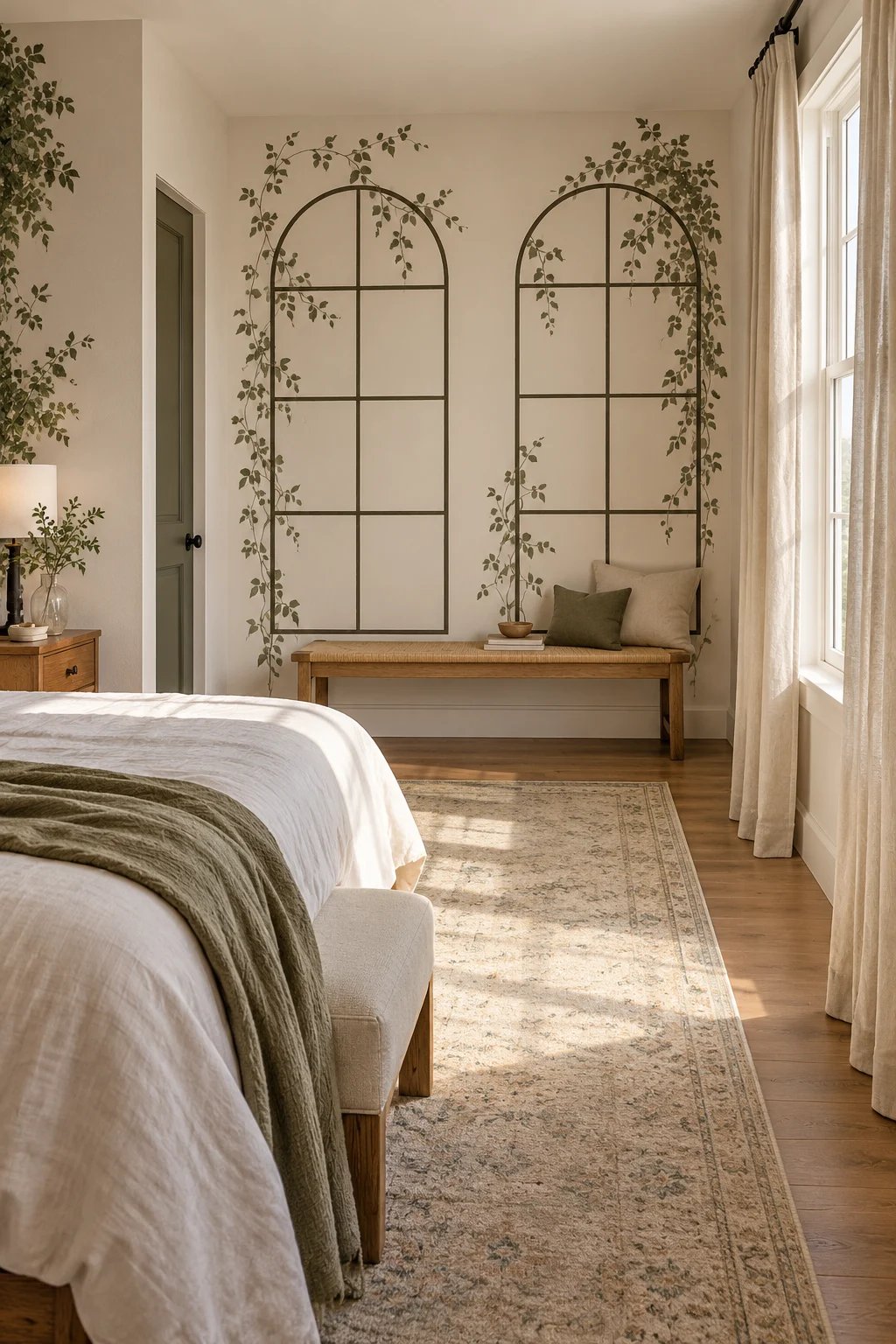
9. Outline Architectural Window Illusions
An illustrated window can create a sense of structure on a wall that lacks architectural detail. Draw two tall rectangular frames with gently arched tops in soft graphite paint, then add a few sparse climbing vines around their edges. The shapes are decorative rather than attempts at photorealistic trompe l’oeil. Keep the frames noticeably simpler than real windows so the room retains a contemporary feel. This design works behind a bench or at the end of a long bedroom, where vertical lines can draw the eye upward. Mark the frame edges with a level before adding freehand curves. Avoid placing the drawing over doors, vents, or existing electrical fixtures.
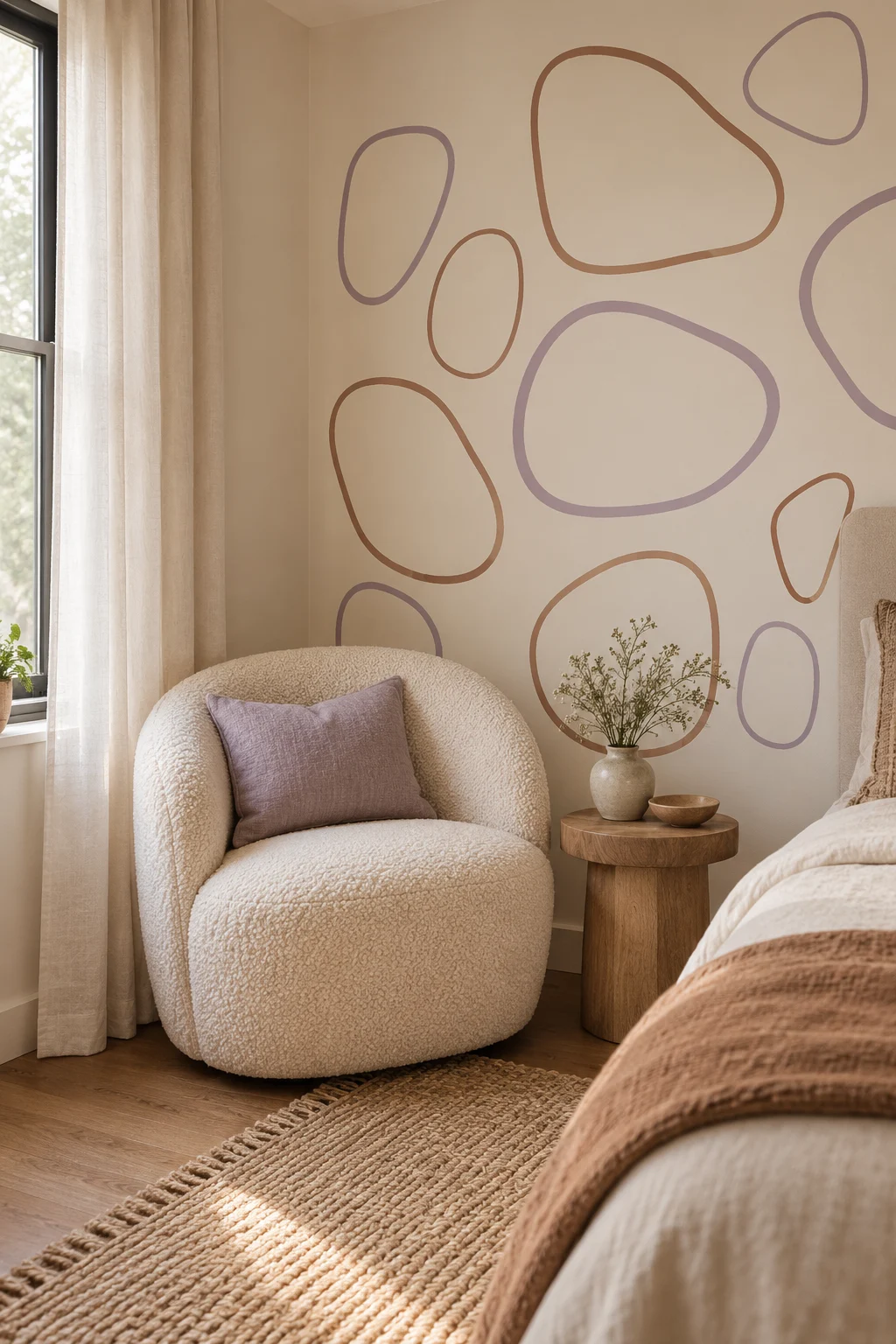
10. Scatter Abstract Pebble Shapes
Rounded pebble outlines are a forgiving first mural for anyone nervous about drawing. Place a loose cluster of differently sized organic ovals behind a small upholstered chair, using cocoa, clay, and muted lavender lines on a creamy wall. Let a few shapes overlap, but keep the cluster concentrated in one corner. Freehand curves are the point; perfectly identical shapes would feel less interesting. A paint pen can make the smaller outlines easier to control, while a fine brush works for the larger forms. This look pairs nicely with tactile fabrics and simple oak furniture. Stop when the grouping feels balanced instead of trying to fill every empty patch.
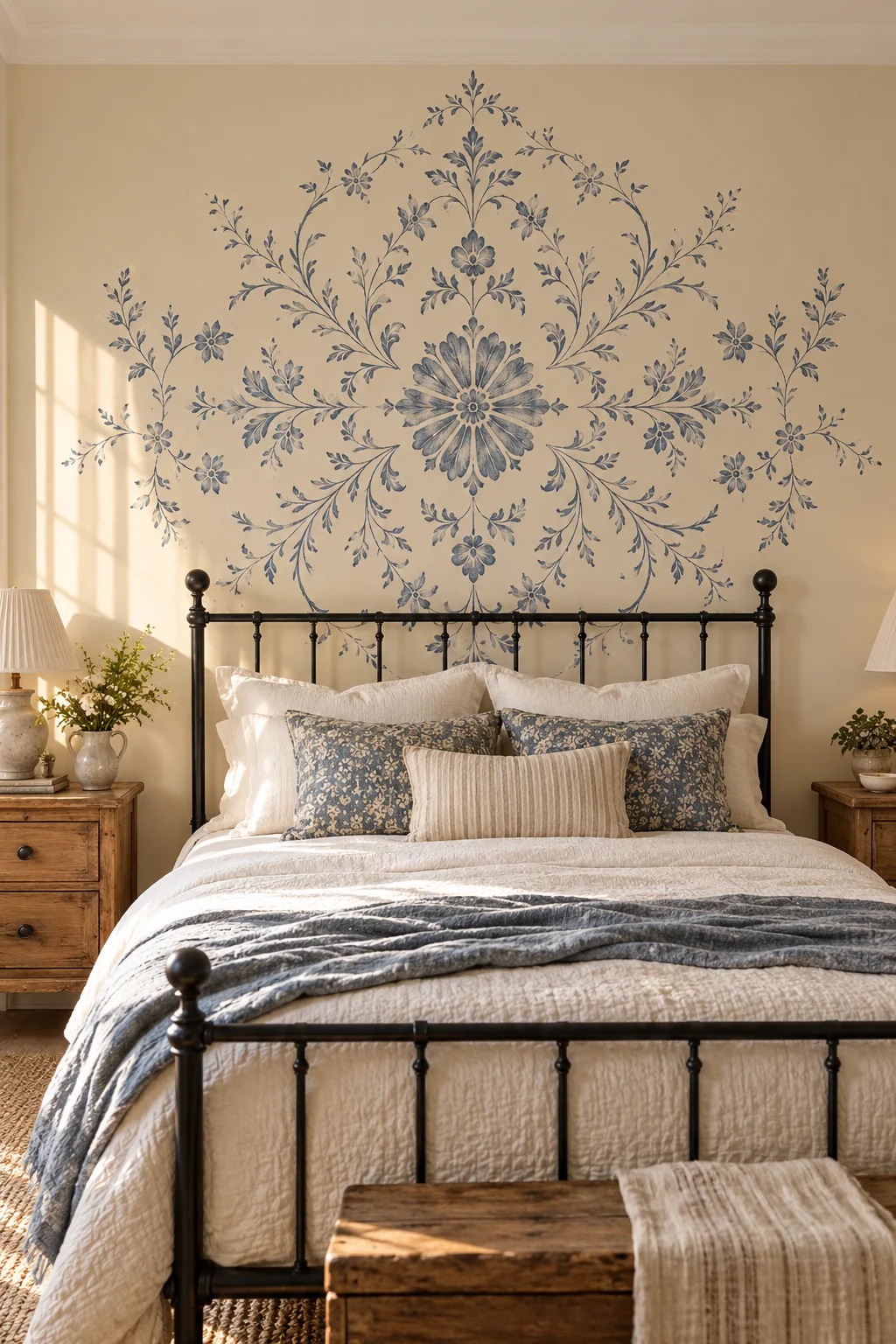
11. Draw a Vintage-Inspired Floral Medallion
A floral medallion can give a bedroom the charm of antique decorative painting without requiring ornate furnishings. Center a circular arrangement of small petals, curling leaves, and dots above a simple iron bed. Use faded ink-blue lines on a buttercream wall, leaving the flowers mostly unfilled. Begin with a lightly penciled circle and divide it into sections so the composition stays roughly balanced. It does not have to be perfectly symmetrical; tiny variations make the work feel personal. A detailed medallion demands more patience than a broad geometric mural, so it is best for someone who enjoys close brushwork. Keep the bedding in solids to let the delicate drawing remain legible.
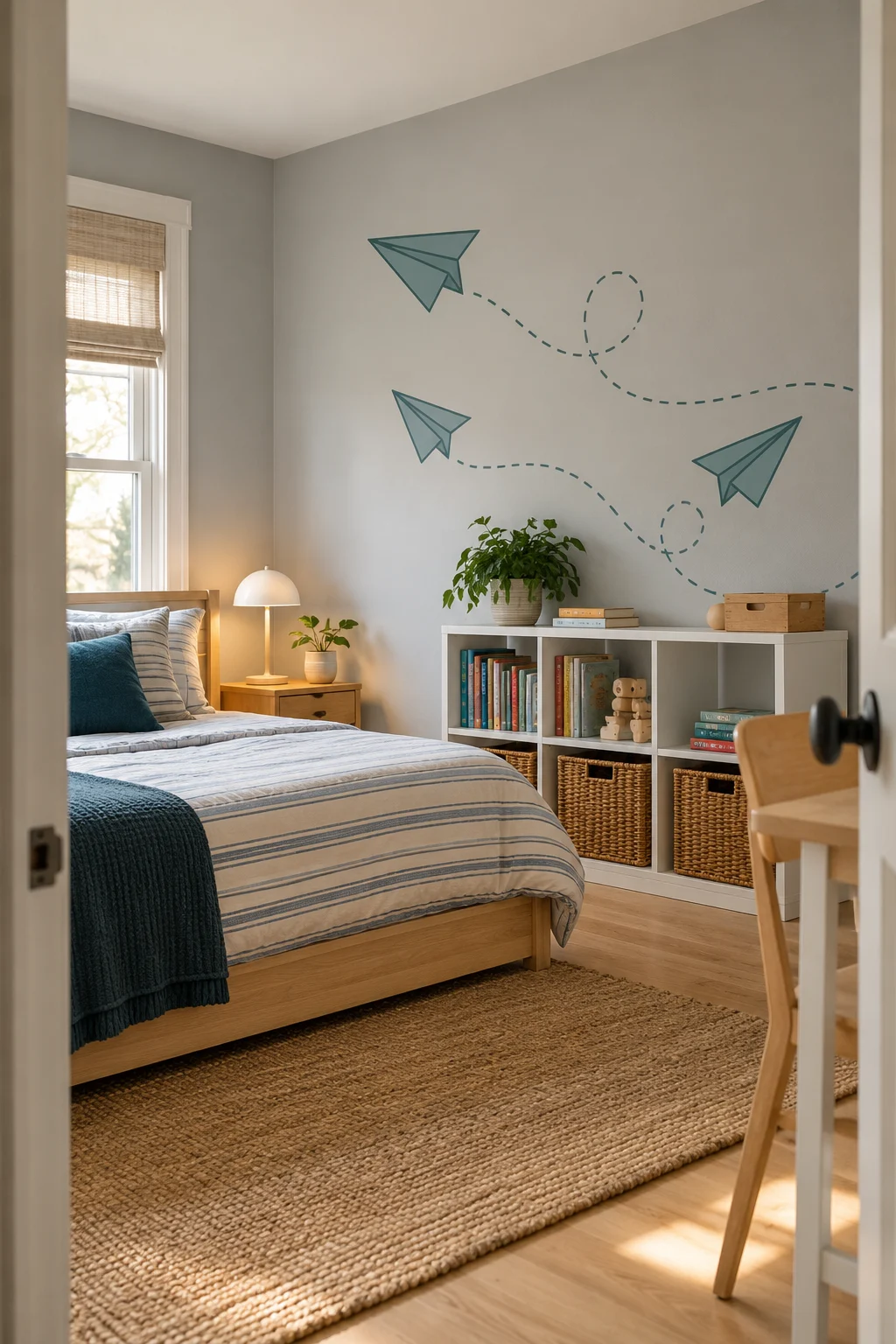
12. Make a Playful Paper-Airplane Trail
For a youthful bedroom, a small paper-airplane drawing can suggest movement without overwhelming the room. Sketch three simple outlined airplanes traveling diagonally above a bookcase, connected by a broken looping trail. Soft teal paint on a light gray wall keeps the motif subtle. Position the lowest airplane above furniture height so it does not disappear behind stacked books. The design can be painted with a fine brush or applied on a removable mural panel for easier future changes. It is more flexible than a character-themed mural as tastes evolve. Pair it with striped bedding and practical storage rather than adding more flying motifs throughout the room.
13. Paint an Organic Half-Circle Composition
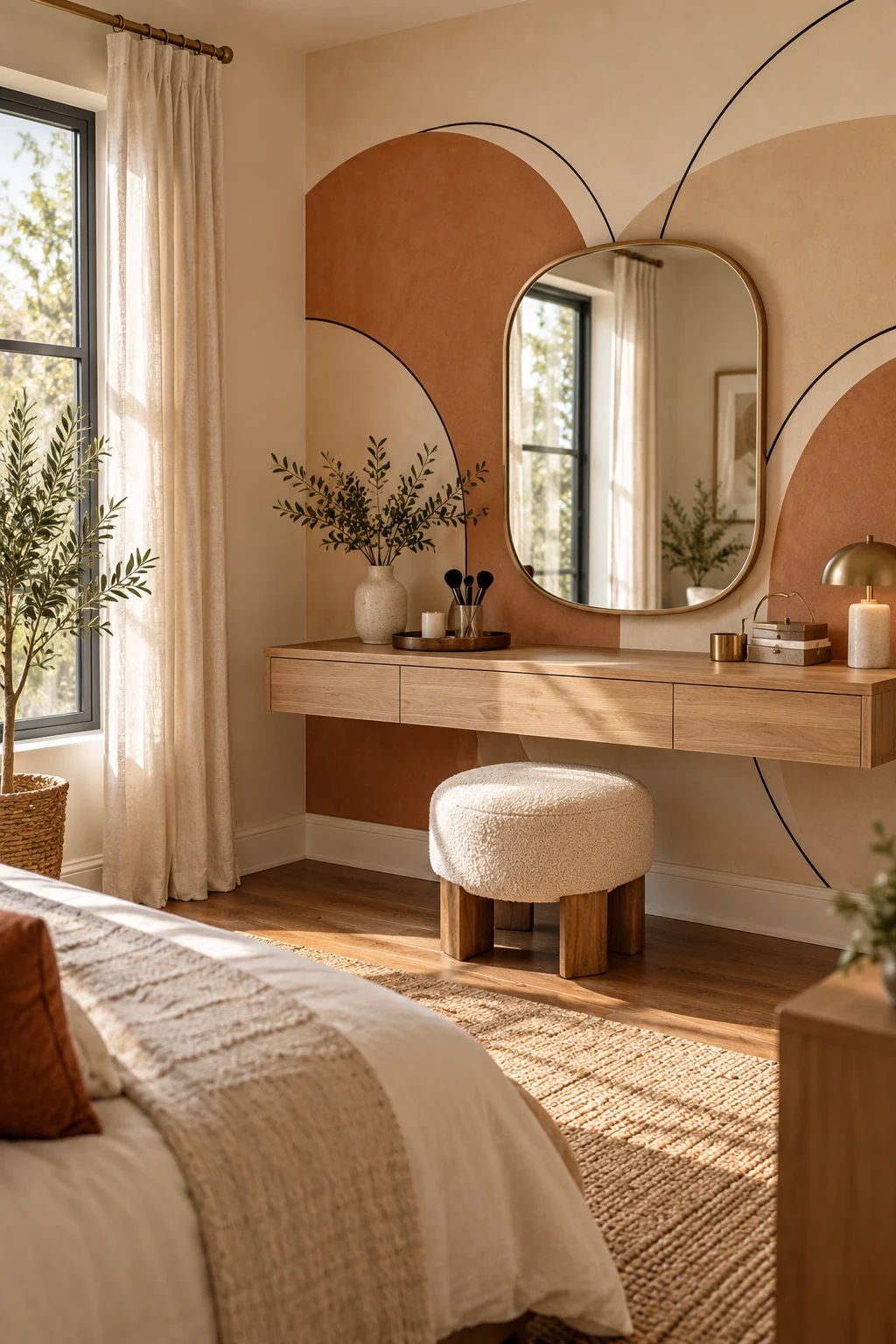
Overlapping half circles can look like an abstract art print enlarged directly onto the wall. Draw three broad arcs behind a floating vanity, leaving some shapes open and filling one with muted cinnamon. Add a slender black contour line to another and keep the third in a soft chalky beige. This composition works best when the furniture below has clean lines. Large curves can be drafted with a string compass, but irregularity is fine if you want a handmade look. Protect the vanity top while painting, and check that the final color arrangement does not visually tilt the room to one side. The mural becomes a backdrop for everyday objects without requiring extra frames.
14. Add a Delicate Rainfall Pattern
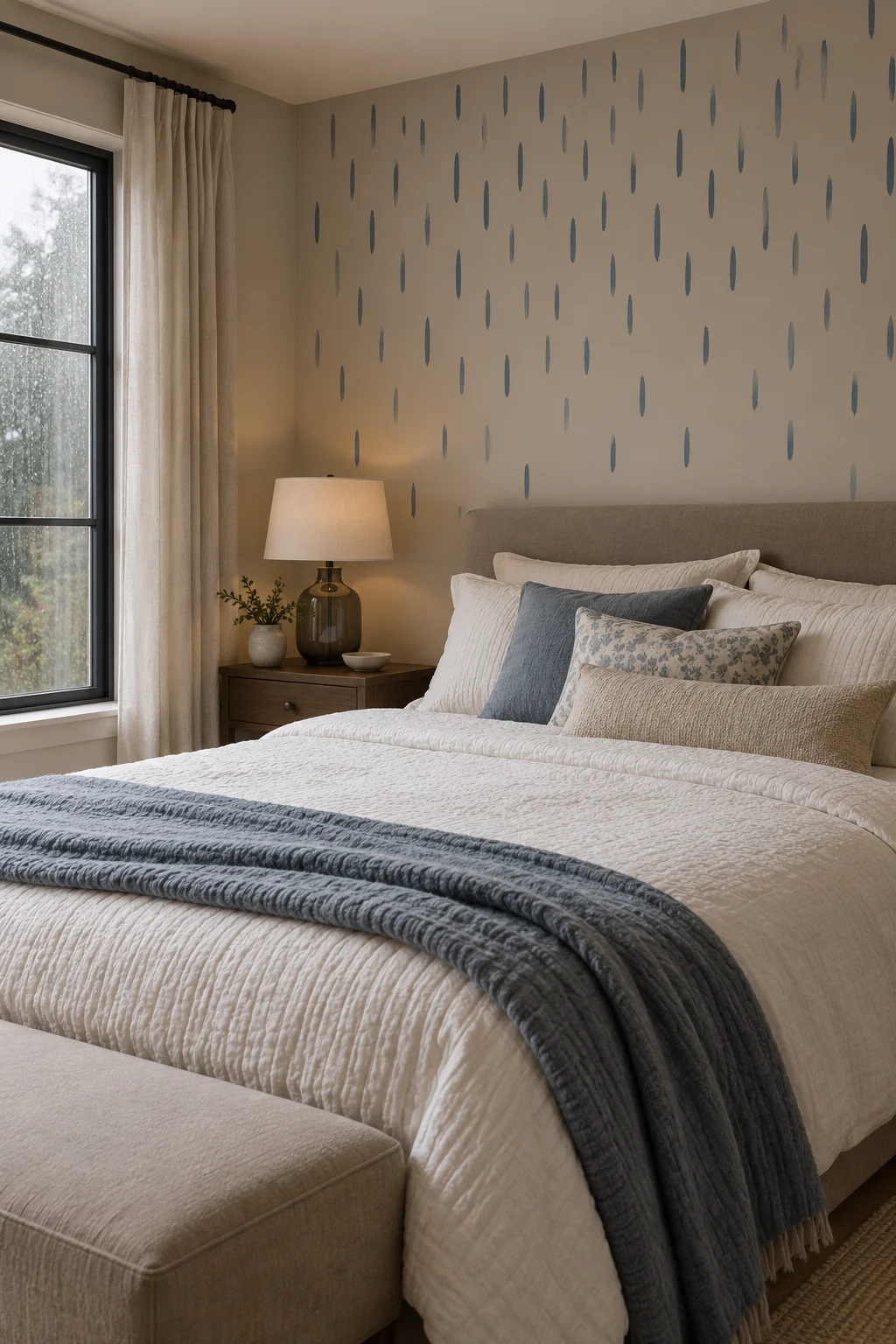
Fine vertical dashes can make a bedroom wall feel softly textured from a distance. Draw short staggered marks in slate-blue paint across the upper half of a warm greige wall, leaving a generous clear band above the headboard. Instead of a perfectly measured repeat, vary the spacing subtly so the effect resembles gentle rainfall. A narrow artist brush or a small custom stencil helps maintain consistent mark length. This project is less visually demanding than a full mural and can suit a room with existing patterned pillows. Still, test a small section first: too many marks can resemble busy wallpaper. Soft lighting will reveal the hand-painted texture without turning it into a dramatic feature.
15. Sketch a Desert Cactus Silhouette
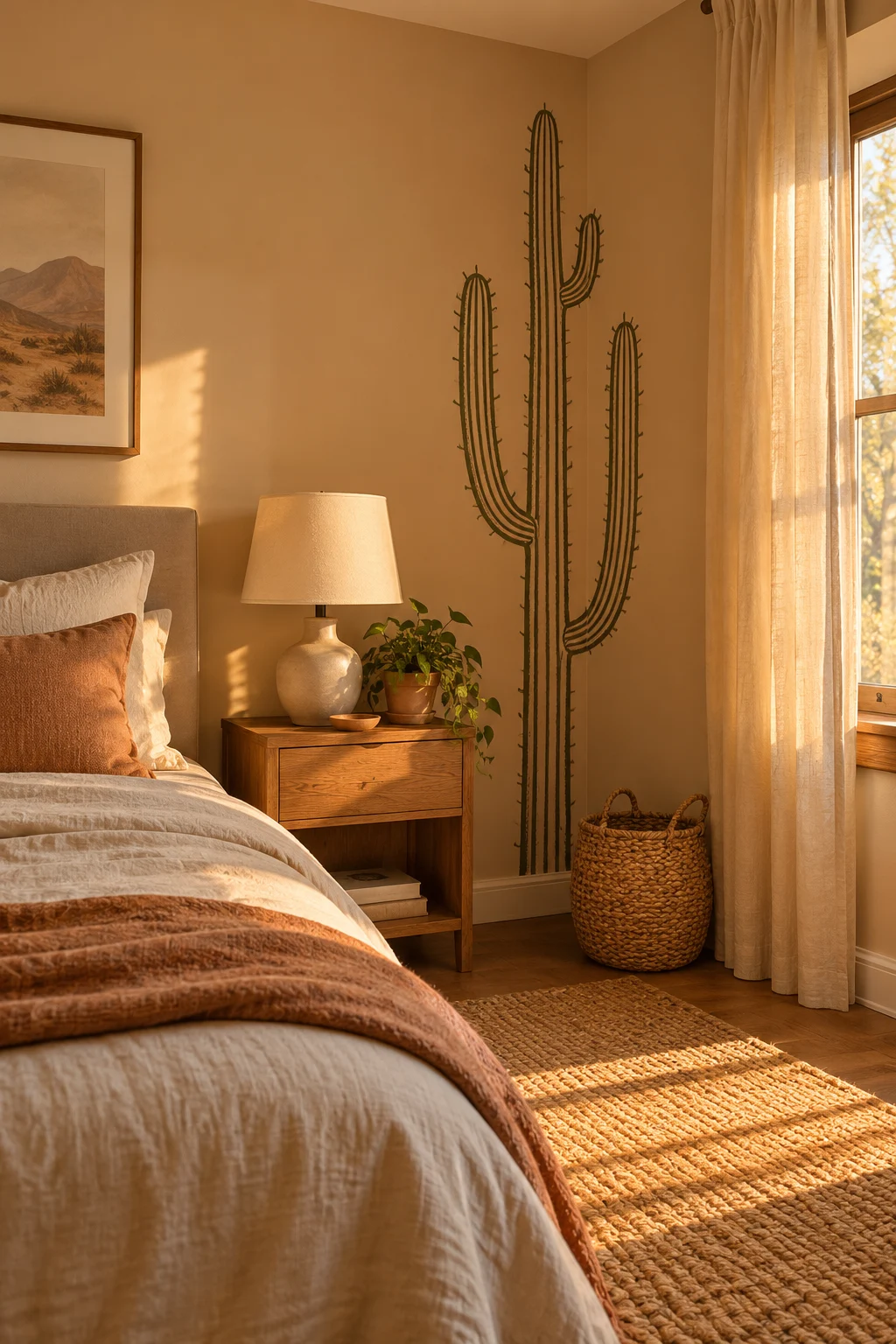
A cactus silhouette makes a relaxed accent in a bedroom with earthy materials. Draw one tall branching cactus beside the bed in dark sage, using a thin outline and tiny paired spine marks rather than filling the whole form. The placement works particularly well on the wall between a nightstand and a corner, where framed artwork might look cramped. Give the cactus an uneven natural profile so it feels illustrated rather than cut from a template. A small woven wall basket and sand-colored bedding reinforce the desert mood without turning the room into a themed display. Keep the drawing away from an actual wall-mounted lamp so the lines remain easy to read.
16. Design a Minimal City Skyline
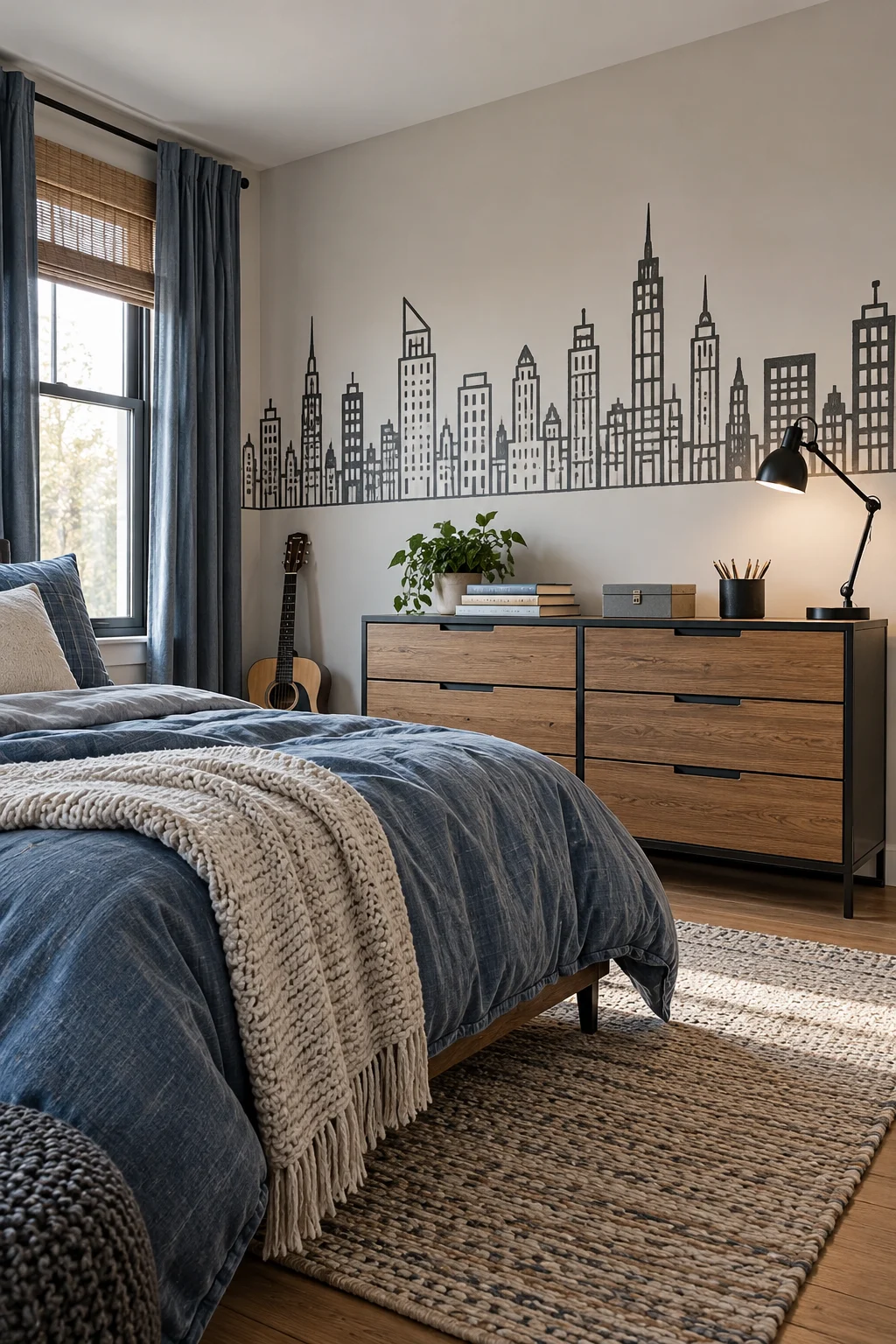
A continuous skyline drawing can bring an urban note to a bedroom without using posters or photographs. Use a fine charcoal line to trace varied rooftops and windows along a horizontal band above a low dresser. Include a few recognizable building types, such as a stepped tower or narrow townhouse, but keep the shapes original and generic. This works especially well in a teenager’s or young adult’s room with industrial accents. Start with the longest baseline and build upward, leaving ample wall visible above. If you include tiny windows, simplify them so the drawing does not become tedious to paint. A metal desk lamp and washed denim textiles complement the graphic quality.
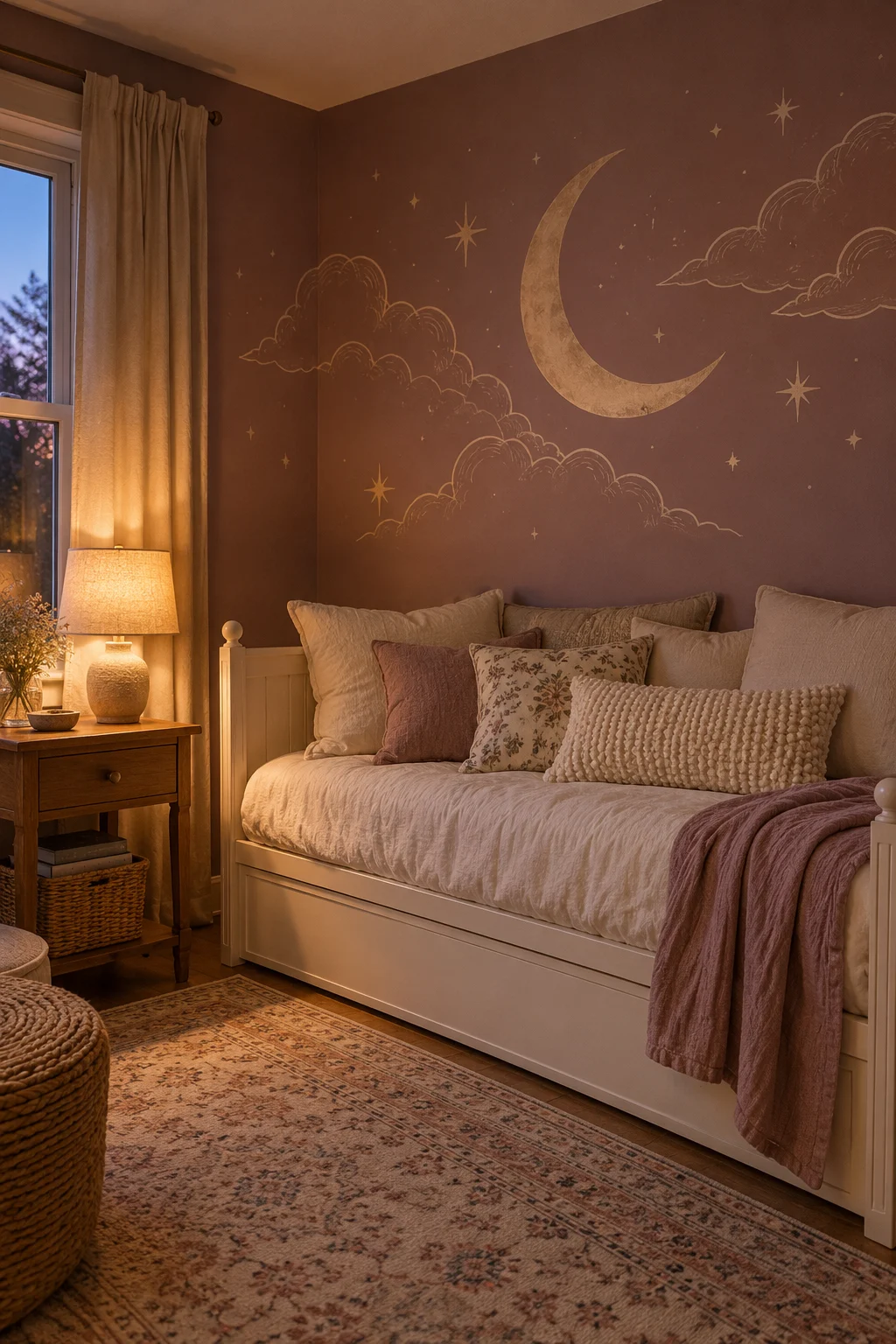
17. Draw a Storybook Moon and Clouds
A crescent moon with wispy cloud outlines can lend a bedroom a dreamy atmosphere without relying on bright colors. Paint a slender pale gold crescent high on a dusty mauve wall, then surround it with a few soft ivory cloud contours and tiny scattered dots. Leave enough negative space for the design to feel quiet. This arrangement is lovely above a narrow daybed or in a guest bedroom that needs gentle personality. Metallic paint is optional; a flat ochre shade often looks more understated. Sketch the moon using two overlapping circular guides before painting. Pair the artwork with linen bedding and a shaded lamp for a restful evening mood.
Planning Wall Drawing Ideas Bedroom Designs Around Furniture
A wall drawing succeeds when it relates to the furniture instead of floating in a random patch of space. Photograph the room from the doorway, the bed, and any chair you use often. These views reveal which wall is actually visible during daily life. Tape paper shapes or lightly sketch the proposed artwork before committing to paint. Consider whether the bed will stay in the same position for several years; a mural tightly fitted to one headboard can look awkward after rearranging. If furniture is likely to move, use a self-contained motif with space around its edges. Think about doors that swing open and tall wardrobes that hide portions of the drawing. A clear plan reduces unnecessary repainting and makes even a simple line drawing look considered.
Picking Paint and Tools for Fine Lines
The best tool depends on the line you want, not just the size of the project. Fine synthetic brushes handle curling stems and small details; a medium flat brush suits filled shapes. Water-based interior wall paint is a practical choice when it is compatible with the existing finish. Some paint markers work well on painted walls, but their sheen and coverage vary, so test first in a hidden location. Keep a damp cloth ready for fresh water-based paint, and use a clean container for rinsing brushes. Pencil guidelines should be light enough to erase or cover. Allow paint to dry according to its label before adding another color. Ventilate the room as directed by the product, and keep children and pets away from wet supplies.
Keeping the Project Within a Modest Budget
A striking drawing does not require an entire wall of expensive materials. The lowest-cost approach is often one or two colors used in a limited area, especially if you already own brushes and painter’s tape. Small sample containers may be sufficient for line drawings, while filled murals can require substantially more paint. Calculate the area before buying and check the coverage information on the product label. Reuse cardboard for templates and paper for sketching rather than purchasing specialized stencils for every curve. Budget for primer if the surface needs it, plus a little extra paint for later touch-ups. A project that takes longer but uses fewer materials can be just as satisfying as an elaborate multi-color installation.
Preventing Common Layout Problems
The biggest visual problem is usually scale. A tiny illustration can disappear above a king-size bed, while a dense pattern may overwhelm a narrow wall. Look at the proposed design from the doorway and from the opposite side of the room. Another issue is visual competition: a patterned duvet, gallery wall, and intricate mural can all demand attention at once. Give one element priority. Straight geometric lines also show small errors more readily than organic shapes, so use a level and templates when precision matters. Do not paint over damaged plaster or peeling finishes without addressing the underlying surface. Finally, check how the design looks at night, because warm bulbs can change the apparent contrast of your chosen colors.
Caring for Hand-Painted Bedroom Artwork
After the artwork has fully cured according to the paint instructions, maintenance is usually simple. Dust lightly with a soft dry cloth, and avoid aggressive scrubbing over fine lines or delicate details. If a mark appears, follow the wall-paint manufacturer’s cleaning advice rather than experimenting with harsh solvents. Store a small labeled quantity of each color for repairs, since matching a custom blend later can be difficult. In rooms with frequent furniture movement, leave a little distance between the drawing and pieces that might rub against it. Watch for moisture or recurring wall stains; these are surface issues to resolve, not details to cover with more paint. Thoughtful care helps the artwork age as gracefully as the rest of the room.
Making the Artwork Easy to Change Later
Personal taste changes, and a bedroom mural should not make future updates stressful. If you enjoy trying new styles, consider painting the design on a lightweight removable panel that can be secured appropriately rather than directly on the wall. For permanent wall drawings, keep a record of the base paint color and finish so you can repaint evenly later. High-contrast dark shapes may need primer before a pale color will cover them completely. A small drawing on one wall is generally easier to replace than a continuous pattern that wraps around the room. Renters should check their lease before painting. Thinking about reversibility now gives you freedom to experiment while keeping the room adaptable.
Frequently Asked Questions
Can beginners make a bedroom wall drawing?
Yes. Loose botanical stems, pebble outlines, and simple arches are forgiving starting points. Practice the design on paper first, then transfer a light guide to the wall. Work slowly in short sessions so you can check the composition from a distance.
What wall finish works best for detailed drawings?
A smooth, sound painted surface is generally easier for fine brushwork than heavily textured plaster. Matte or eggshell walls can both work, depending on the drawing medium. Test coverage and cleanability in a hidden area before starting the full design.
How do I remove a drawing when redecorating?
Most painted wall drawings can be covered with appropriate primer and new wall paint after the surface is cleaned and prepared. Dark colors may require extra coats. Follow the product instructions and repair any damaged areas before repainting.
Should the drawing go behind the bed?
Not necessarily. A dresser wall, reading corner, or desk niche may provide a better view and avoid competing with an elaborate headboard. Pick the location based on how the room is used and where the drawing can remain visible.
Conclusion
A wall drawing can change the mood of a bedroom without changing its furniture or layout. The strongest result usually comes from one clear idea, thoughtfully positioned and painted with patience. Whether you prefer a delicate botanical line or a bold geometric shape, let the artwork reflect what you enjoy seeing every day. Pick one wall, sketch your favorite concept on paper, and test its scale with removable tape before opening a paint container.
