
15 Therapy Office Decor Ideas That Help Clients Feel Calm, Comfortable, and Safe
A therapy office has a different purpose from a typical workspace. Alongside practical furniture and professional equipment, it needs an atmosphere where people can sit comfortably, have private conversations, and feel welcome.
The details matter. Lighting that’s too bright can be distracting, an uncomfortable chair can make a long conversation unpleasant, and cluttered surfaces can make a small room feel crowded. Yet creating an inviting counseling office doesn’t require expensive furniture or an elaborate renovation.
Whether you’re decorating a private practice, a social worker’s office, a home therapy room, or a larger counseling center, thoughtful choices can help you balance warmth with everyday functionality.
These 15 therapy office decor ideas cover lighting, furniture, color, storage, and room layouts to help you create a welcoming environment that accommodates different client needs.
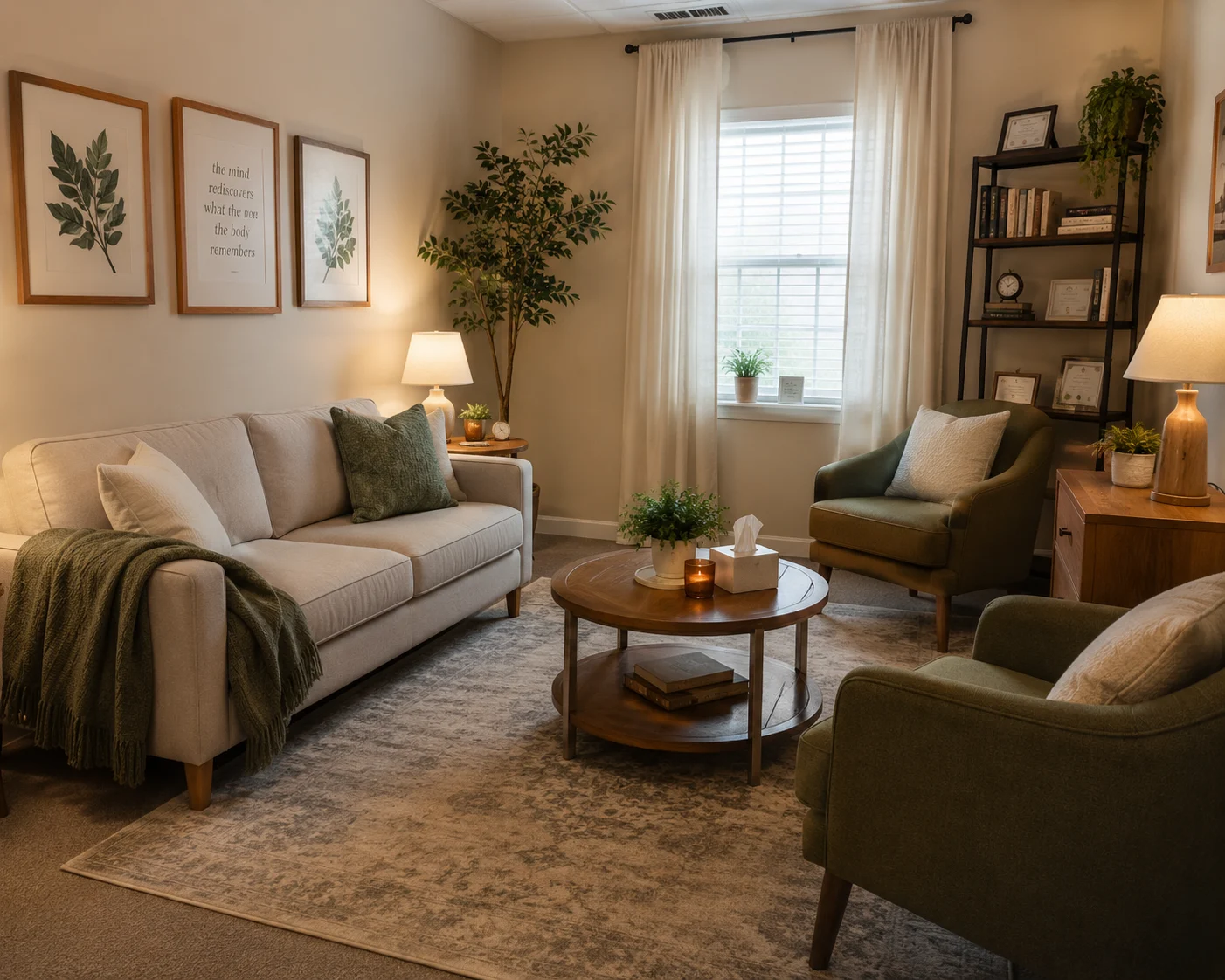
1. Replace Harsh Overhead Lighting With Warm Layered Lighting
Lighting shapes the atmosphere of a therapy office and influences how comfortably people can use the space. Rather than relying entirely on one bright ceiling fixture, combine several light sources to create more flexibility.
Start with general overhead lighting, then add a table lamp near the seating area and a task light where paperwork or reading takes place. A floor lamp or wall sconce can provide additional illumination without making the room feel like a conventional corporate office.
Choose bulbs with a comfortable color appearance and look for fixtures that diffuse light rather than producing harsh glare. Dimmable lighting is particularly useful because it allows brightness to be adjusted for different activities and preferences.
Consider where clients will sit before positioning lamps. Direct light shining into someone’s eyes can be distracting, while a room that’s too dim may make reading and moving around difficult.
Avoid choosing lighting solely because it looks attractive in photographs. Even illumination, adjustable brightness, and practical visibility are more important than a dramatic decorative effect.
2. Invest in Comfortable Seating Instead of Expensive Decor
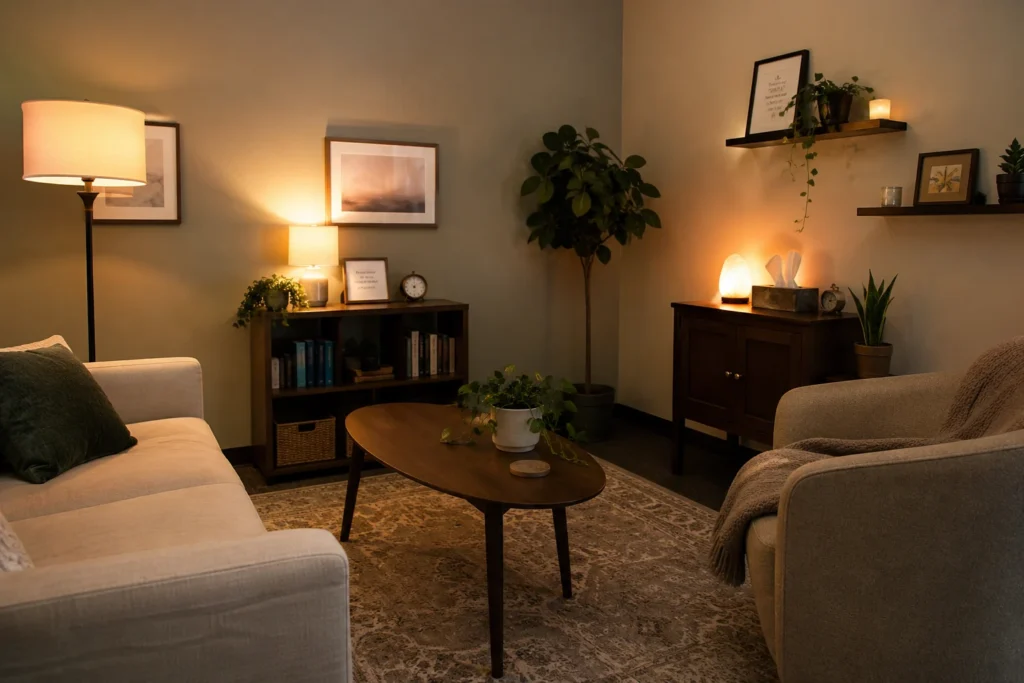
Seating deserves particular attention in a therapy office because clients may remain seated for extended conversations. A beautiful chair is of little practical value if its shape, height, or cushioning makes sitting uncomfortable.
Look for supportive armchairs with stable construction, comfortable backs, and upholstery that can handle frequent use. Chairs with arms may make standing up easier for some visitors, while a sofa can provide additional seating options when appropriate.
Arrange the chairs at a slight angle to create a conversational setting without requiring people to sit directly face-to-face. A small side table can hold tissues, water, or personal belongings.
When choosing furniture, consider different body sizes, mobility needs, and seating preferences. A very low, deep chair may look inviting but can be difficult for some people to enter or leave.
Choose comfort and accessibility before decorative details. Attractive upholstery and coordinated cushions can complete the look once the practical furniture requirements have been addressed.
3. Use Natural Wood Throughout the Room
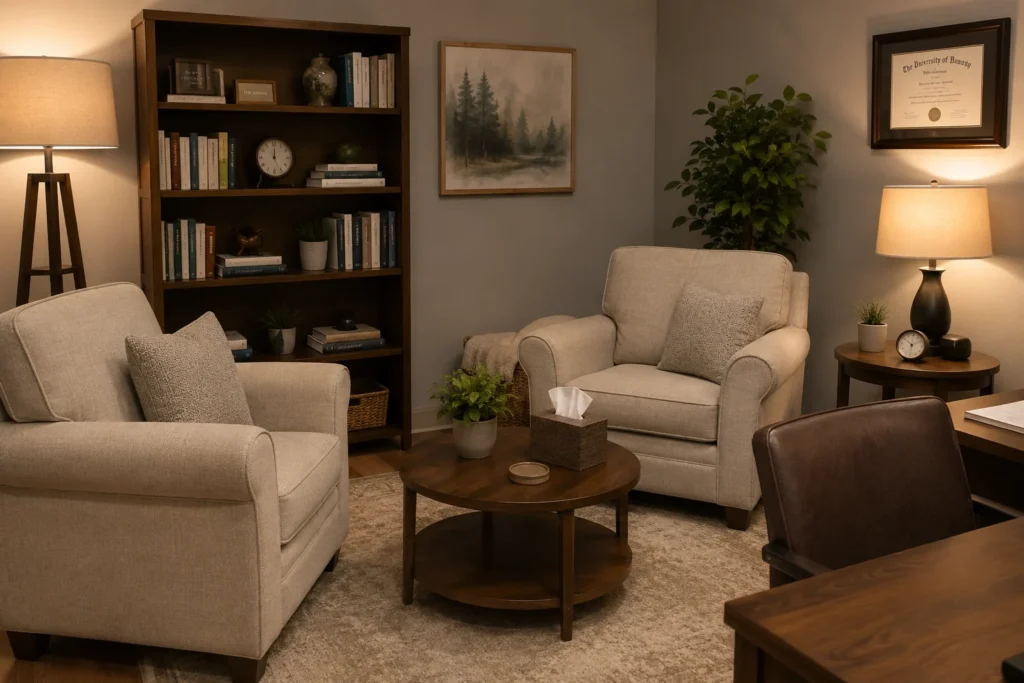
Natural wood introduces warmth and texture to a therapy office, particularly when the room contains painted walls, commercial flooring, and other simple finishes.
A wooden side table beside an upholstered chair can soften a contemporary seating arrangement. Bookshelves, picture frames, storage cabinets, and reception furniture offer additional opportunities to introduce wood without replacing everything.
Light oak and ash finishes can create an airy, understated appearance, while walnut and deeper wood tones suit traditional or more intimate interiors. You can also combine wood with painted cabinetry for a balanced look.
Choose finishes that complement the existing flooring and furniture. Mixing several unrelated wood tones in a compact office can make the space feel visually busy, although subtle variation often adds character.
Durable, smooth surfaces are especially practical for furniture that receives frequent handling. Avoid choosing delicate unfinished pieces that are difficult to maintain.
A few well-placed wooden elements can give an ordinary office a more residential character without sacrificing professionalism.
4. Create a Calming Color Palette
A cohesive color palette can make a therapy office feel organized and visually comfortable. The aim is not to find one color that works for every person, but to create a balanced environment without unnecessary visual competition.
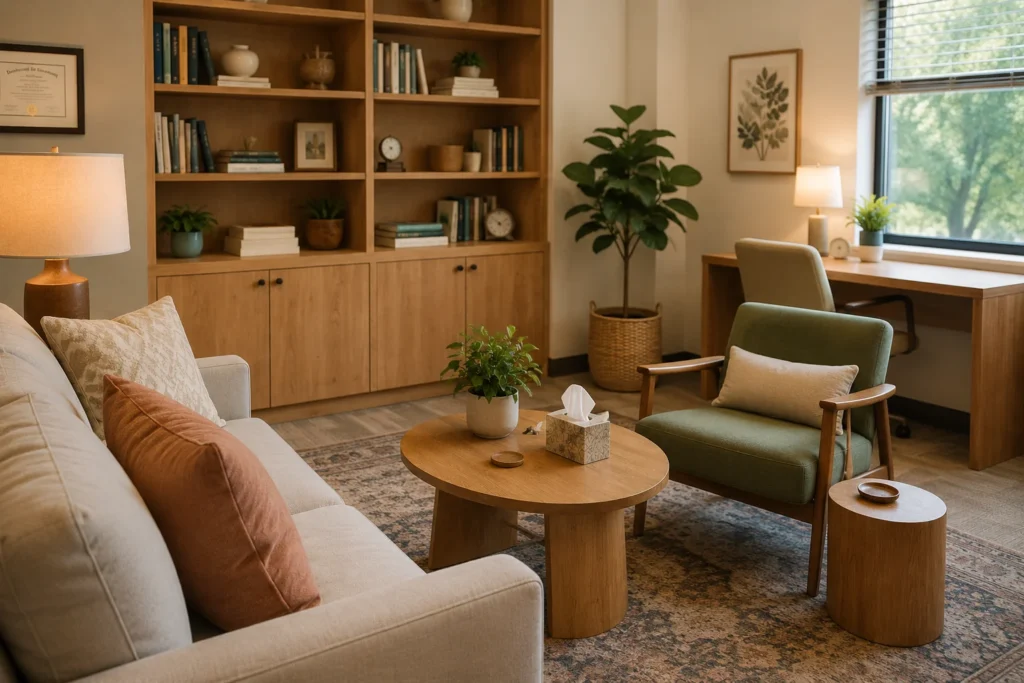
Warm white, beige, soft taupe, sage green, dusty blue, and gentle gray are versatile starting points. These shades work well with natural wood, upholstered furniture, and simple artwork.
Choose a main wall color, then introduce complementary shades through the seating, rug, curtains, and accessories. A muted green wall might pair with oatmeal upholstery and warm wood, while dusty blue can complement pale gray and natural linen.
Before repainting, observe how the color looks under the room’s actual lighting. A shade that appears soft in daylight may look noticeably different beneath artificial lights.
Avoid selecting every surface in exactly the same tone. A little contrast helps distinguish furniture, walls, and architectural details while maintaining a cohesive appearance.
Strong colors aren’t automatically inappropriate, but using them selectively may be easier than committing every wall to an intense shade.

5. Add Plants to Make the Office Feel More Alive
Plants introduce organic shapes and natural texture into a room dominated by furniture, walls, and office equipment. They can also provide an attractive visual connection to the outdoors.
Consider a leafy floor plant beside a bookshelf, a smaller plant on a side table, or a restrained arrangement near the reception desk. Plants with different leaf shapes can add variety without requiring numerous decorative accessories.
Snake plants, ZZ plants, pothos, rubber plants, and peace lilies are familiar indoor options, although their care requirements differ. Choose plants according to available daylight, watering needs, and the conditions of the room.
A single healthy plant often looks better than several struggling ones. If the office receives little natural light or regular maintenance is difficult, realistic artificial greenery may be a more practical decorative choice.
Avoid placing large planters where they make the seating area feel crowded. Choose containers that complement the furniture and keep the arrangement easy to maintain.
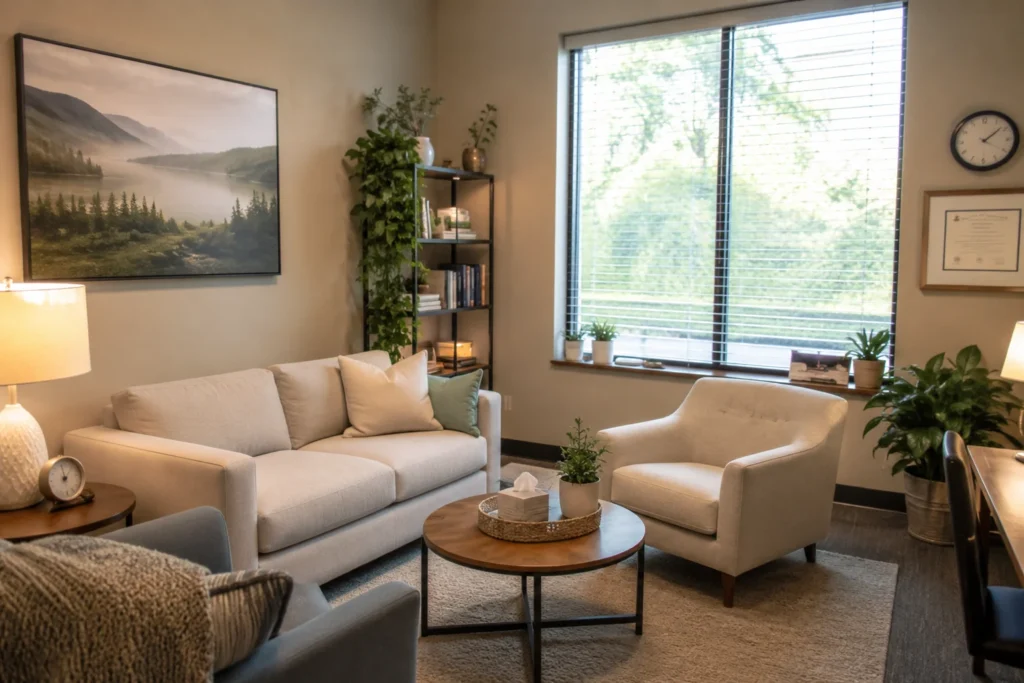
6. Design a Cozy Waiting Area
The waiting area introduces visitors to the office before their appointment begins. Comfortable seating, clear organization, and a welcoming atmosphere can make the experience more pleasant.
Start with chairs that are easy to access and arrange them with enough space for personal belongings. Add a small table for reading materials, tissues, or other useful items, then introduce soft lighting and a modest decorative accent.
A washable rug or upholstered seating can make the area feel less institutional. Simple artwork and a plant may provide enough decoration without filling every surface.
For a small waiting room, choose furniture with compact proportions and avoid unnecessary display cabinets. A clear, organized layout generally feels more comfortable than squeezing in additional chairs that are rarely used.
Think about privacy as well as appearance. Seating arrangements should respect personal space, particularly when visitors may prefer not to interact with others while waiting.
The most effective waiting areas feel welcoming without demanding attention.
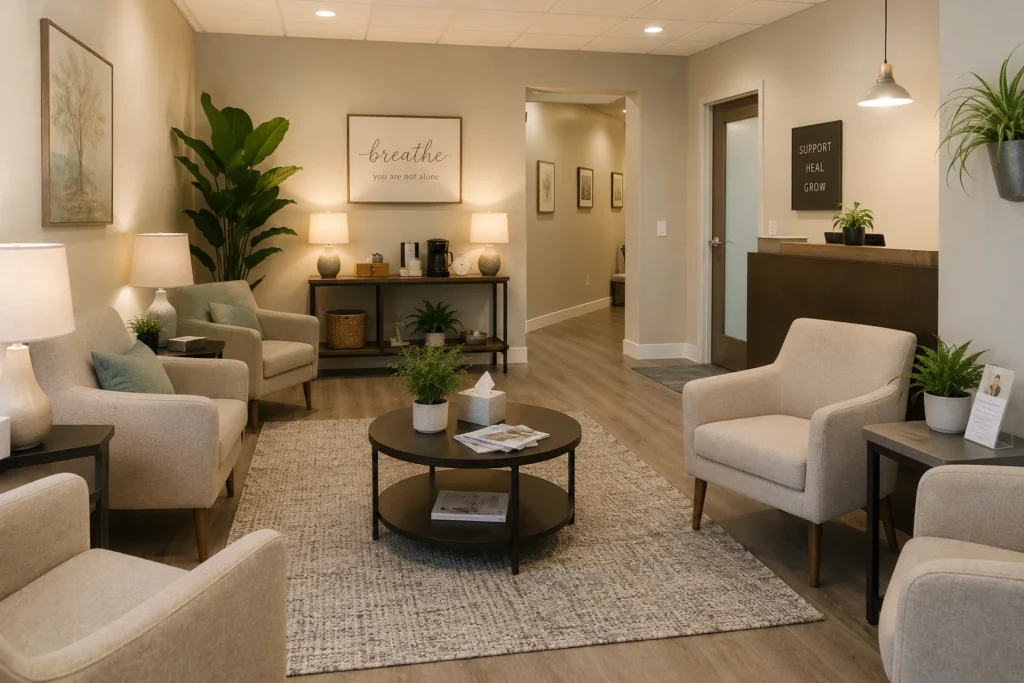
7. Style Bookshelves Like a Designer
Bookshelves can make a counseling office feel personal and professional, but overcrowded shelves quickly become distracting.
Begin with the books and materials that genuinely belong in the room. Arrange them in manageable groups, then add a few decorative objects such as ceramics, framed artwork, or small plants.
Leave some open space between groups so the shelves remain easy to scan. Closed baskets or cabinet sections can conceal paperwork and less attractive office supplies.
Choose accessories that suit the room’s overall style. A traditional office might feature dark wood shelves and simple framed prints, while a contemporary space may benefit from pale shelving and understated ceramics.
Avoid filling the shelves with objects that have no clear purpose or connection to the room. A carefully arranged collection often looks more intentional than a crowded display of unrelated decorations.
If the office also contains a desk, coordinate the bookshelf finish with the main furniture to create visual continuity.
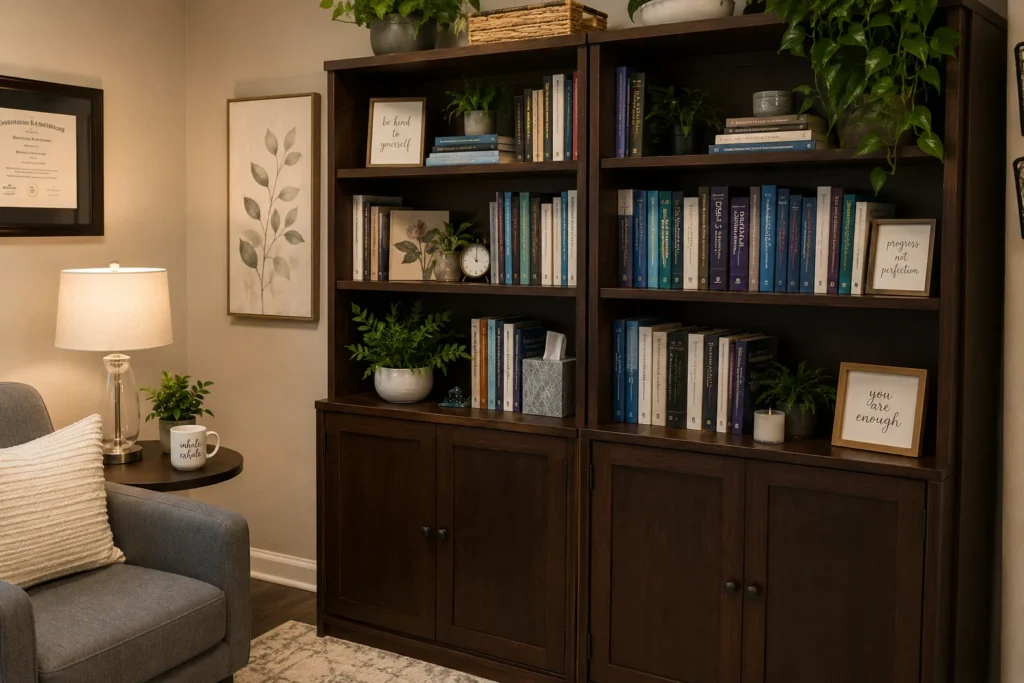
8. Create a Home-Like Therapy Office Instead of a Corporate Office
A home-like therapy office borrows familiar elements from residential interiors while maintaining the organization expected in a professional setting.
Begin with comfortable upholstered seating, a small side table, and a soft area rug. Add a table lamp, framed artwork, and a few cushions to make the arrangement feel more like a welcoming living room.
The goal is to soften the appearance of standard office furniture, not to reproduce an entire residential space. A therapy room still needs practical storage, accessible seating, and surfaces that can be cleaned regularly.
Choose decorative items that feel appropriate for a broad range of visitors. Simple landscapes, abstract artwork, and natural materials can offer visual interest without dominating the room.
Avoid overdecorating with personal collections, strongly themed accessories, or too many soft furnishings. A restrained residential style can feel warm while preserving a clear professional identity.

9. Use Area Rugs to Define the Therapy Space
An area rug can visually separate the conversation area from a desk, doorway, or storage zone. This is especially useful in a therapy office that serves several functions.
Choose a rug that relates to the scale of the seating arrangement. A rug extending beneath the front legs of the main chairs can help connect the furniture visually, while a very small rug may make the arrangement appear disconnected.
Low-pile rugs are practical for frequently used offices because they’re generally easier to vacuum and less likely to interfere with chair movement than thick, plush styles.
Consider subtle patterns, vintage-inspired designs, or woven textures. These can add character to a room with otherwise simple furniture without introducing excessive visual detail.
For additional ideas about selecting floor finishes, explore these flooring ideas for home.
Before choosing a rug, consider how easily furniture can move across it and whether the material suits the office’s cleaning routine.
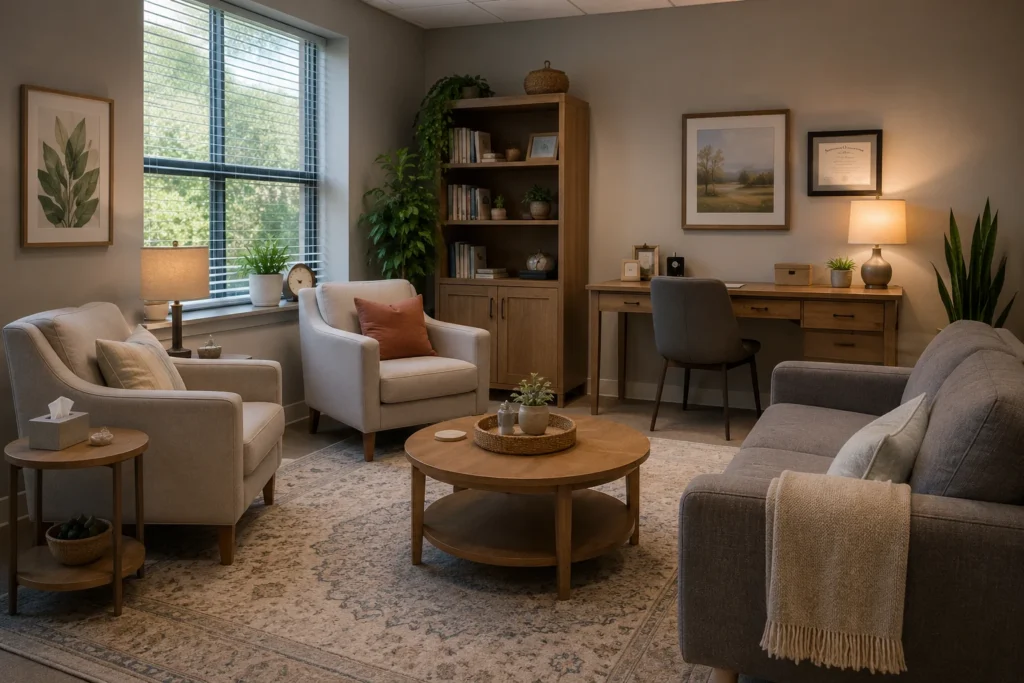
10. Incorporate Soft Textures Throughout the Room
Soft textures make an office feel more inviting by introducing contrast with hard furniture, painted walls, and smooth flooring.
Linen-look curtains, upholstered chairs, textured cushions, woven baskets, and fabric lampshades can all contribute to a layered interior. These details are especially useful when the room has simple architectural finishes.
Choose textiles that complement one another without relying on identical materials. A smooth upholstered chair can look attractive beside a woven cushion and a softly textured rug.
Curtains can also frame windows and make the room feel more finished. Select fabric and opacity according to daylight, privacy, and maintenance needs.
Avoid using excessive pillows or heavy throws that make seating difficult to use. Decorative softness should enhance comfort rather than become an obstacle.
Prioritize washable or easily maintained materials in spaces used by different visitors throughout the day.
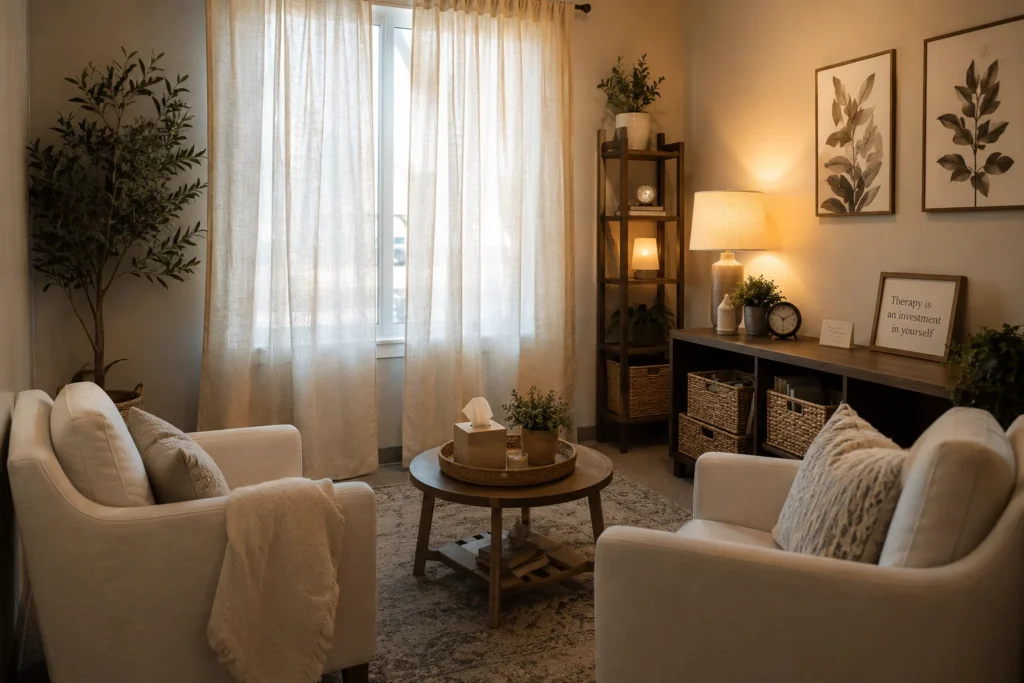
11. Make a Small Therapy Office Feel Larger
A compact therapy office can feel more open when the furniture, lighting, and storage are carefully coordinated.
Start with a simple layout that gives the main seating area priority. Choose chairs with proportions suited to the room and use a compact side table instead of a bulky coffee table.
Light wall colors can help reflect available illumination, while furniture with visible legs may create a less visually heavy appearance. Closed storage keeps paperwork and equipment from dominating the room.
A mirror can reflect light and create a sense of depth, but consider where it will face. Some visitors may find a prominent reflection distracting during conversation.
Multifunctional furniture can be particularly useful. A storage ottoman or compact cabinet may provide hidden organization without requiring another shelving unit.
Avoid pushing furniture into awkward positions simply to create the illusion of more floor space. Comfortable seating and clear circulation matter more than making the room appear larger in photographs.

12. Create a Welcoming Reception Desk Area
The reception desk serves a different purpose from the waiting area. It provides a practical point for arrivals, scheduling, and administrative tasks while contributing to the office’s first impression.
Choose a desk with a tidy work surface and enough concealed storage for routine supplies. Wood or wood-look finishes can introduce warmth, while a simple painted front can create a clean contemporary appearance.
A small plant, understated artwork, or softly illuminated wall behind the desk can make the space feel welcoming without interfering with daily operations.
Clear signage helps visitors understand where to go. Keep the counter organized so essential information and equipment are easy for staff to access.
Avoid using decorative displays that crowd the working surface or make conversations at the desk uncomfortable. Reception furniture should support both administrative work and a respectful visitor experience.
A coordinated desk, seating area, and lighting scheme can help the entrance feel like part of the same office rather than a separate corporate environment.

13. Create a Sensory-Friendly Therapy Environment
A sensory-friendly therapy office considers how lighting, sound, textures, and visual detail may affect different visitors.
Begin with lighting that doesn’t flicker or create uncomfortable glare. Adjustable lamps and window coverings offer flexibility when people have different preferences for brightness.
Soft furnishings, rugs, curtains, and appropriate acoustic treatments can help reduce echo within a room. Choose materials that fit the office’s appearance while supporting its practical needs.
Keep decorative patterns and wall displays relatively organized. An uncluttered environment may be preferable for visitors who find busy visual surroundings distracting.
Avoid strongly scented candles, diffusers, and fragranced decorations as default features. Some visitors are sensitive to fragrance, and a neutral-smelling room provides greater flexibility.
The key is providing choices where possible. Adjustable lighting, different seating options, and a straightforward room layout can accommodate a wider range of comfort preferences without assuming everyone experiences the environment in the same way.
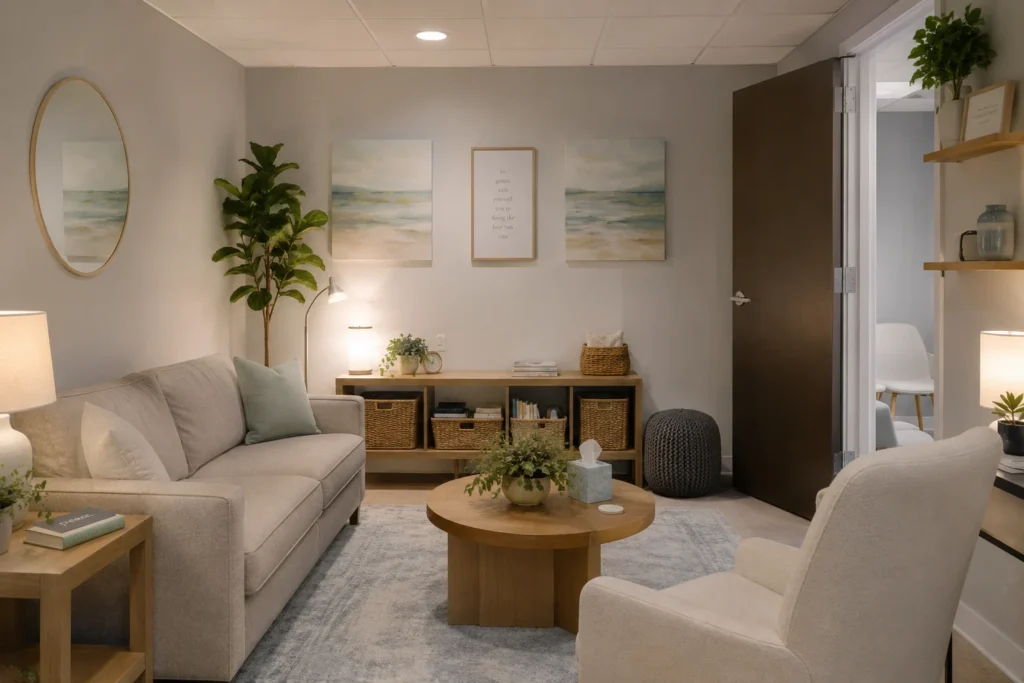
14. Embrace a Cozy Minimalist Office Design
Cozy minimalism combines simple furnishings with enough texture and warmth to prevent the office from feeling bare.
Choose a few essential pieces: comfortable seating, a side table, practical storage, and well-positioned lighting. Then introduce restrained decoration through artwork, a plant, or a textured rug.
The furniture doesn’t need to match perfectly, but it should share a consistent visual character. Clean lines, natural materials, and complementary finishes help the room feel connected.
This approach works particularly well in smaller offices where too many decorative objects can make the space appear crowded.
Avoid interpreting minimalism as removing everything that makes the room comfortable. A completely bare office may feel impersonal, while carefully chosen textiles and warm lighting create a softer atmosphere.
The goal is an organized, welcoming space where every element contributes to comfort, function, or visual balance.
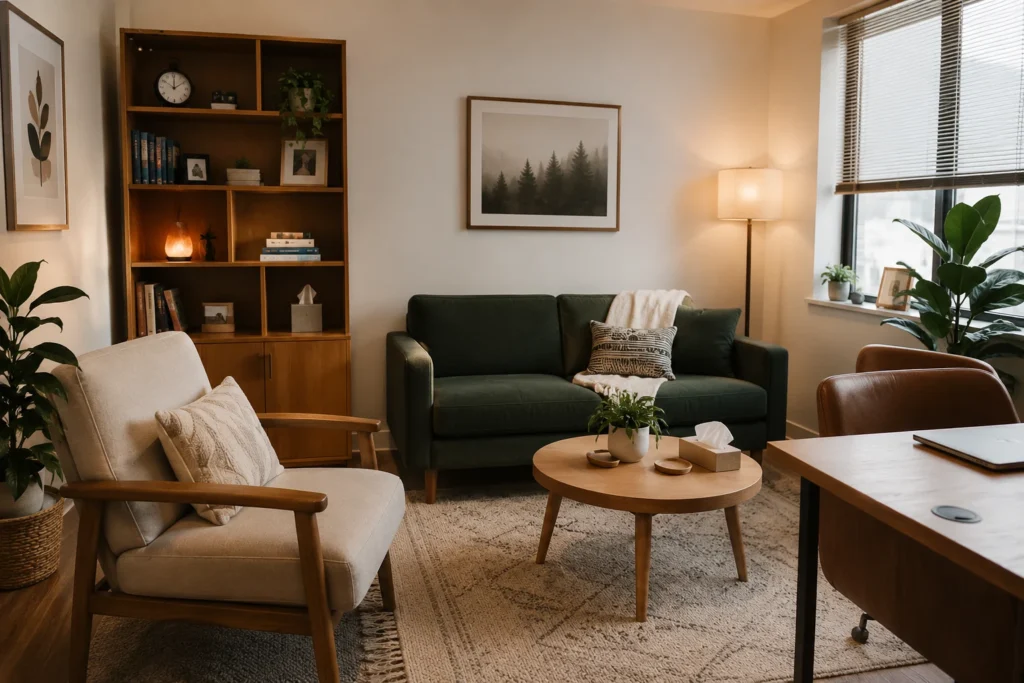
15. Develop a Signature Private Practice Therapy Office Aesthetic
A consistent decorating style can give a private practice a recognizable identity while keeping the room practical for everyday appointments.
Start by choosing the atmosphere you want the office to convey. A warm, cozy style might feature upholstered chairs, wooden furniture, and soft lighting. A modern minimalist approach could use clean-lined furniture, simple artwork, and a restrained palette.
For a nature-inspired office, introduce leafy plants, organic textures, and earthy colors. A traditional professional setting may benefit from classic bookshelves, rich wood furniture, and framed artwork.
Choose one direction as the foundation, then repeat selected materials and finishes throughout the room. Coordinating the reception area, waiting space, and therapy room can create a cohesive appearance.
Avoid copying every detail of a decorating trend. Furniture should remain comfortable, accessible, durable, and appropriate for the people using the space.
A distinctive office aesthetic is most successful when the visual style supports the room’s function rather than becoming the main attraction.
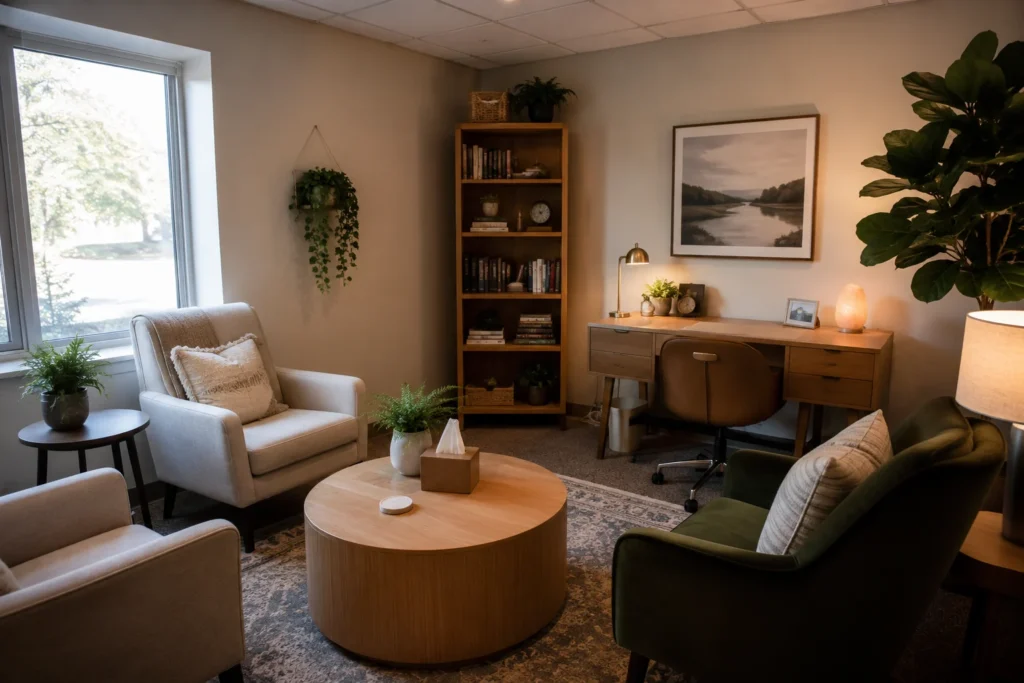
How to Choose the Right Therapy Office Decor
Begin with the furniture and room layout before choosing decorative accessories. Seating comfort, lighting, privacy, and storage have a greater effect on everyday usability than the color of a vase or picture frame.
Consider who uses the space. An office that welcomes children and families may need different furniture and storage from one intended primarily for individual adult appointments. A shared practice may benefit from a more flexible and neutral design.
Choose materials that are durable and straightforward to maintain. Upholstery, rugs, and curtains should suit the room’s cleaning requirements, while frequently used furniture should withstand regular use.
If the space also contains a desk, consider how the working area relates to the conversation area. A compact desk and coordinated storage can help keep administrative equipment from dominating the room.
Common Therapy Office Decorating Mistakes
One common mistake is choosing furniture for appearance rather than comfort. Very deep chairs, low seats, or oversized sofas can make the room less convenient for visitors with different physical needs.
Another is relying on one lighting source. Bright overhead lighting may feel too intense, while very dim lighting can make the office difficult to use. A combination of adjustable sources offers more flexibility.
Overdecorating is another issue. Too many framed prints, plants, cushions, and accessories can compete for attention and make the room harder to maintain.
Finally, avoid assuming that one decorating style will feel calming to everyone. Preferences vary, so practical choices and a flexible environment are often more useful than rigid color or style rules.
Safety, Accessibility, and Privacy Considerations
Keep doorways, exits, and circulation routes clear. Arrange furniture so visitors can enter, sit, and leave without navigating unnecessary obstacles, and consider wheelchair access and other mobility needs when selecting the layout.
Secure tall bookshelves, cabinets, mirrors, and heavy wall decorations appropriately. Use stable furniture, protect electrical cords from walking areas, and keep lamps and other equipment positioned securely.
Choose rugs with stable edges and suitable backing to reduce slipping or tripping. Avoid furniture arrangements that make it difficult to reach seating or move through the room.
Consider cleaning and hygiene when selecting upholstery, textiles, plants, and shared accessories. Choose materials that can be maintained appropriately and avoid placing potentially toxic plants where children or animals may access them.
Protect conversations from being overheard in adjacent rooms, corridors, and reception areas. Decorative curtains, rugs, and ordinary furnishings may reduce some echo but should not be relied upon as a complete solution for speech privacy. Where necessary, consider appropriate acoustic treatment and the privacy requirements that apply to the practice.
Keep client records, screens, appointment details, and other confidential information out of public view. Reception counters and shared spaces should be organized with privacy in mind.
For sensory comfort, avoid unnecessary flashing lights, strong fragrances, and intrusive background sounds. Offer practical flexibility in lighting and seating when possible.
Keeping a Therapy Office Comfortable and Organized
A welcoming therapy office benefits from a simple maintenance routine. Keep frequently used supplies accessible, clear unnecessary items from tables, and regularly check upholstery, lighting, and storage areas.
Refresh decorative elements selectively rather than changing the entire room whenever a new trend appears. A different cushion cover, updated artwork, or healthier plant may be enough to make the space feel renewed.
Pay attention to how furniture functions during ordinary appointments. Chairs should remain easy to use, side tables should be within comfortable reach, and lighting should support both conversation and practical tasks.
A thoughtful therapy office combines welcoming decor with comfortable furniture, clear organization, and attention to privacy and accessibility. When these elements work together, the room can provide a pleasant, professional setting for meaningful conversations.
