
18 Wallpaper Bedroom Ideas for a Beautiful Statement Space
Wallpaper can change the entire mood of a bedroom without requiring new furniture or a complicated renovation. A soft botanical print can make a plain room feel welcoming, while a dramatic floral pattern can turn the wall behind the bed into a striking focal point.
The challenge is finding a design that looks as good across an entire wall as it does on a small sample. Pattern scale, color undertones, lighting, and existing furniture all influence the finished result.
You also don’t need a large bedroom to make wallpaper work. In a modest room with standard eight-foot ceilings, one thoughtfully chosen accent wall can add plenty of personality without making the space feel crowded.
These 18 wallpaper bedroom ideas explore everything from vintage florals and muted geometric patterns to scenic murals and removable designs. Each offers a different way to introduce color, texture, and character while keeping the bedroom comfortable and practical.
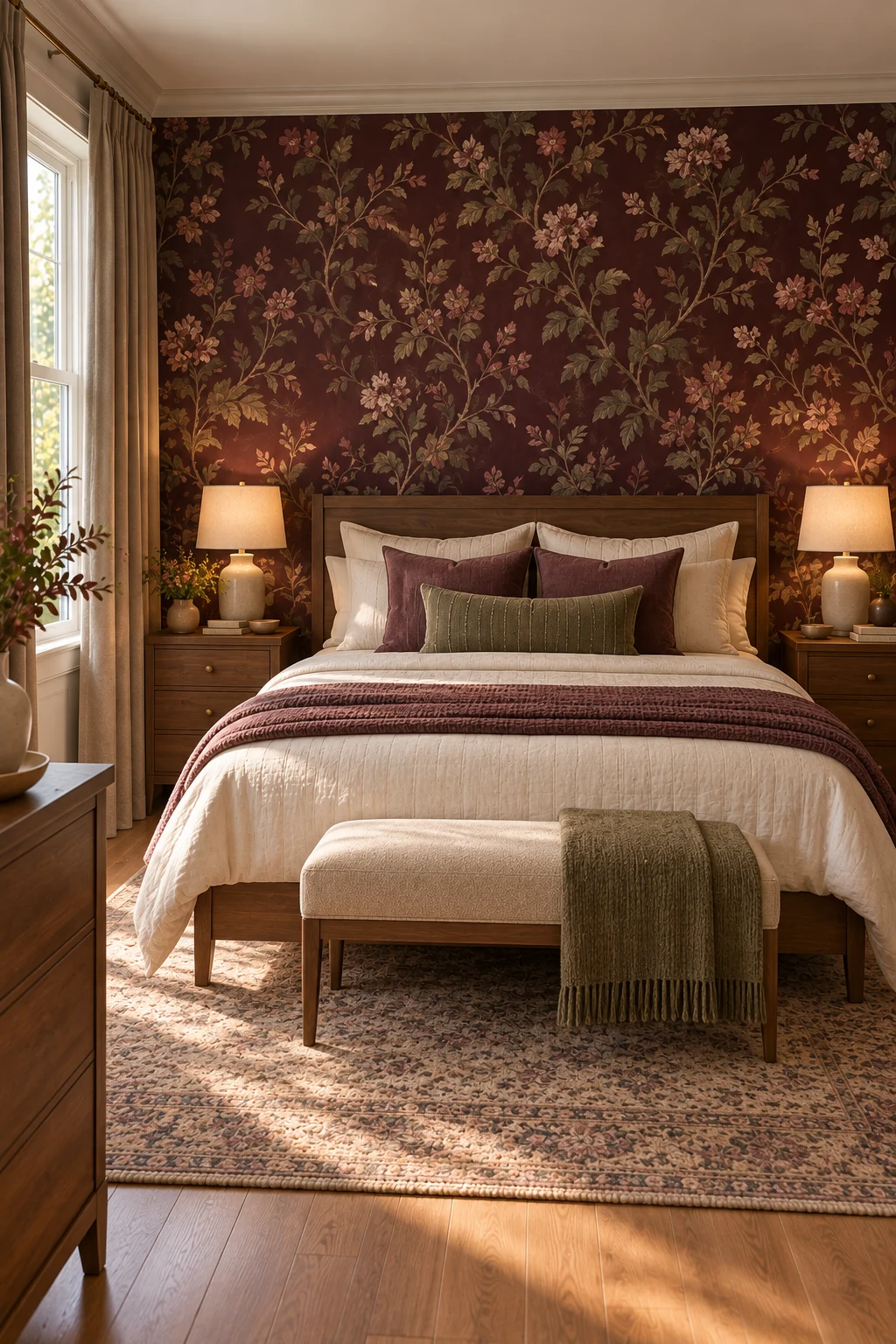
1. Choose a Muted Botanical Wallpaper
Muted botanical wallpaper is a lovely way to introduce nature-inspired pattern without making the bedroom feel overly busy.
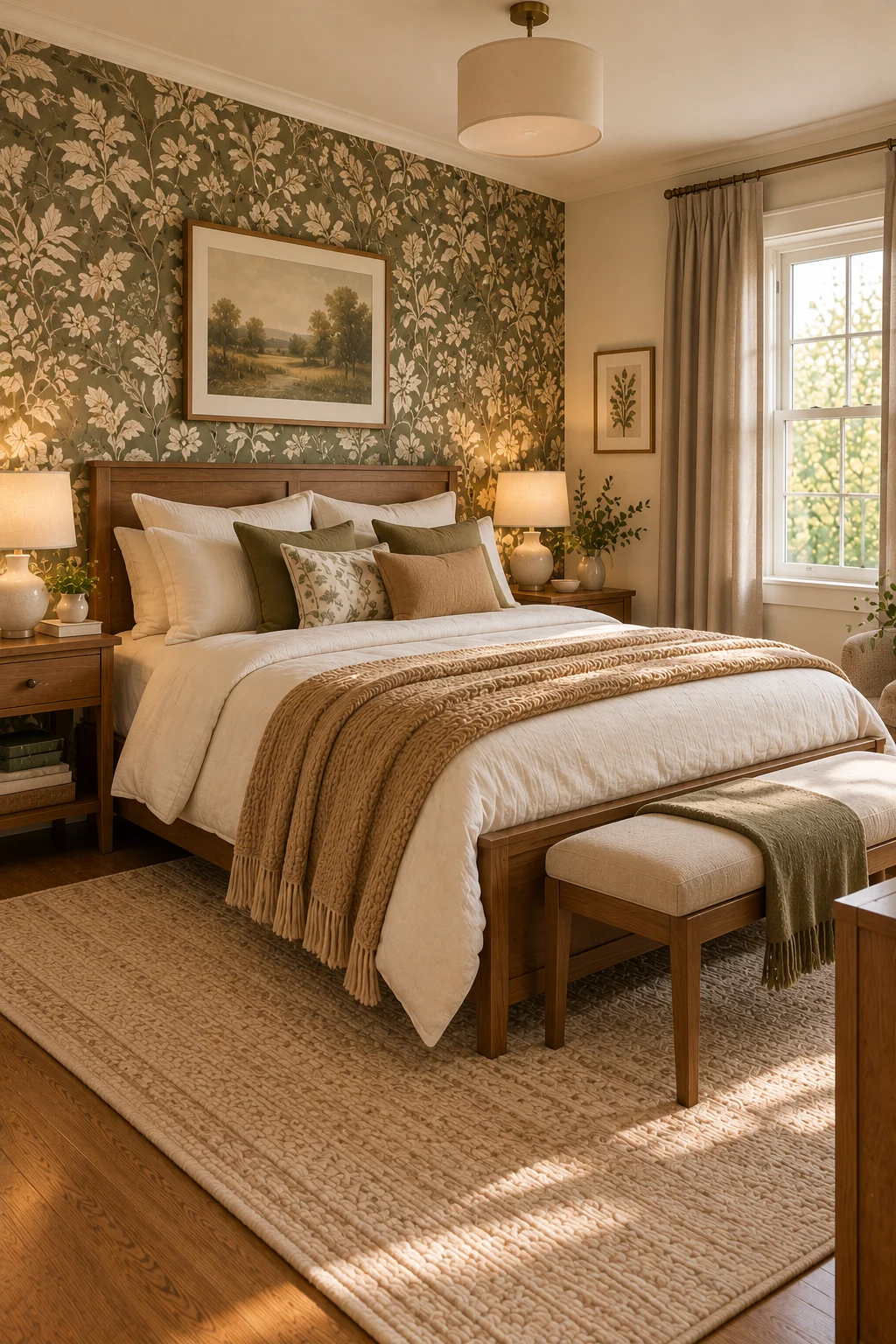
Look for delicate leaves in olive green, warm cream, and soft brown. These colors complement medium-walnut furniture, ivory bedding, and mushroom curtains, creating a palette that feels relaxed and connected.
The wall behind the bed is a natural place to use this pattern. It gives the headboard a decorative backdrop while allowing the remaining walls to stay warm white or another coordinating neutral.
Pay attention to the size of the leaves. A larger botanical print can feel expressive, while smaller foliage creates a more delicate effect.
Keep the bedding mostly solid-colored and repeat one shade from the wallpaper through a throw or cushion. This helps the room feel coordinated without introducing another competing pattern.
A botanical feature wall works particularly well when you want a bedroom that feels warm, natural, and gently decorated.
2. Create a Moody Burgundy Floral Wall
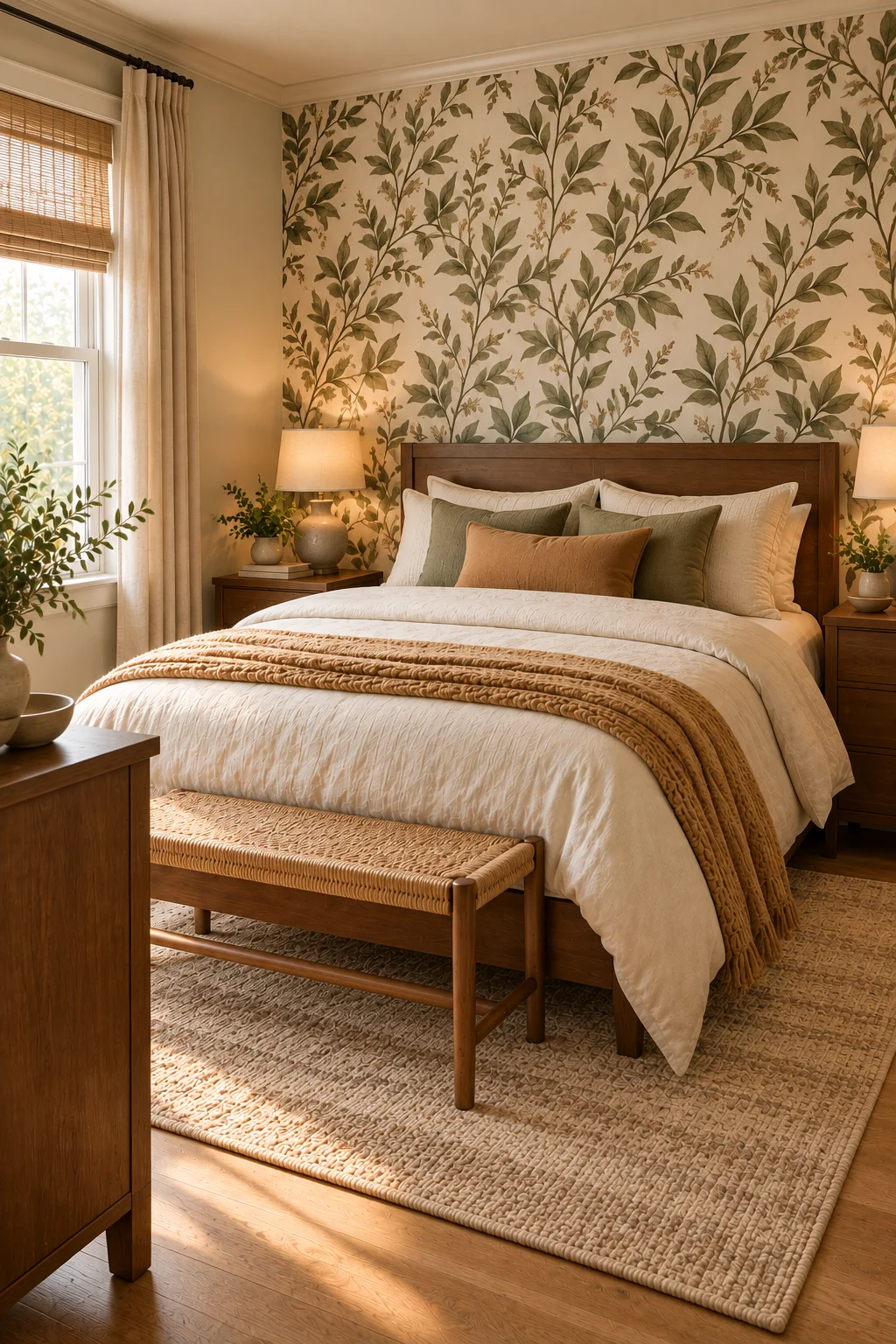
Burgundy floral wallpaper can introduce a rich, romantic atmosphere without requiring dark paint throughout the entire bedroom.
Choose a print with a deep burgundy background and flowers in dusty plum, muted olive, and warm cream. The combination creates contrast while keeping the colors connected.
Place the wallpaper behind a medium-walnut bed and use ivory bedding to balance the darker wall. Warm greige or mushroom paint on the surrounding walls can soften the transition.
Keep the furniture relatively simple. A plain upholstered or wooden headboard gives the floral pattern enough visual space to stand out.
Lighting also matters. Warm bedside lamps can reveal the details of the print in the evening, while natural daylight helps the deeper colors feel less heavy.
If you enjoy moody interiors but aren’t ready to paint the whole room a dark color, a burgundy floral accent wall is a practical starting point.
3. Try a Subtle Beige Textured Wallpaper
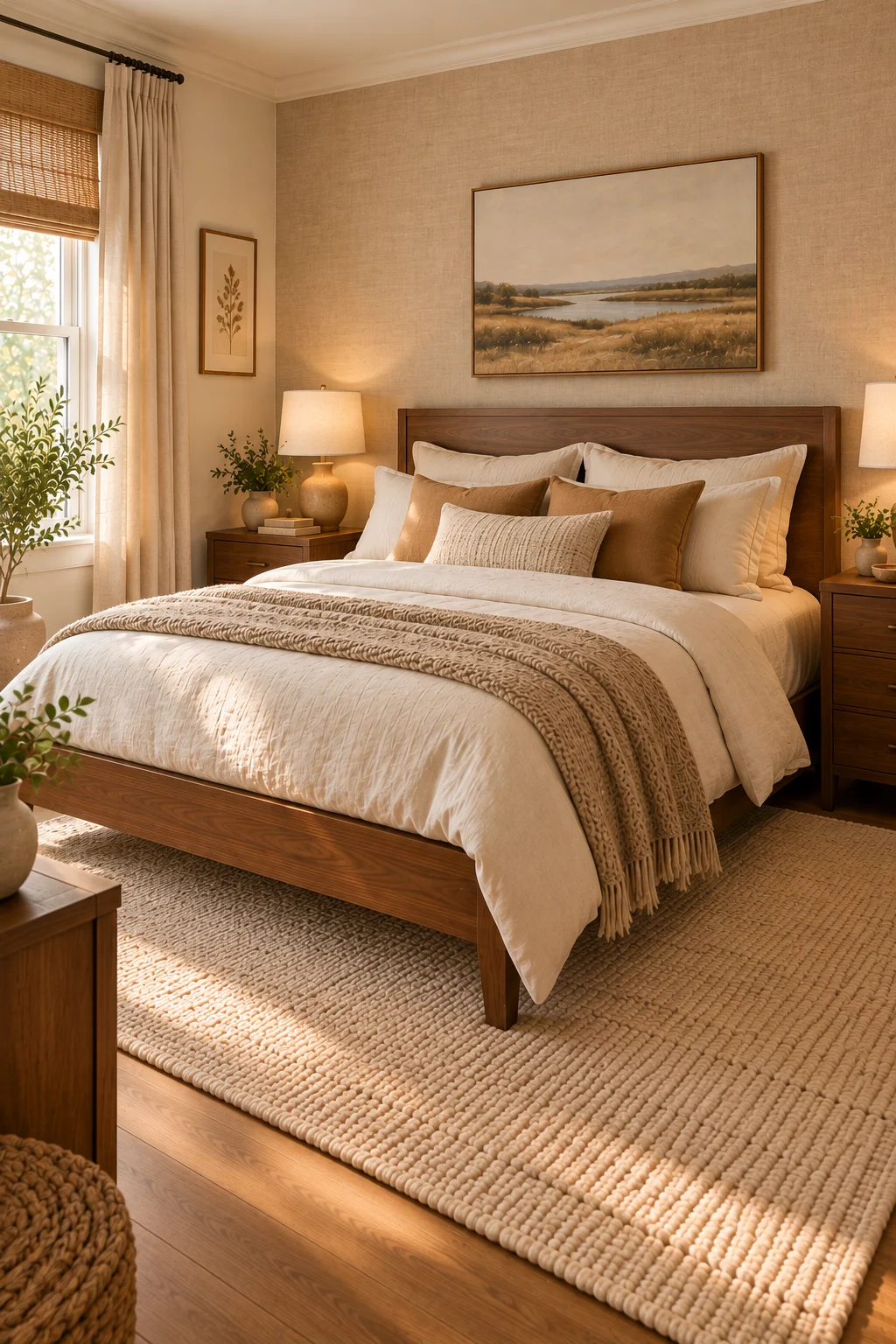
Not every wallpaper needs a noticeable pattern. A beige linen-look design can introduce visual depth while maintaining a quiet, neutral bedroom.
Choose a wallpaper with subtle tonal variation rather than a strong geometric or floral print. The finish can make a plain wall feel more layered without becoming the room’s main attraction.
Pair it with an oak or walnut bed, ivory bedding, and soft oatmeal curtains. A camel throw adds warmth, while a simple bedside lamp keeps the overall arrangement understated.
Textured-look wallpaper works particularly well in bedrooms where the furniture and textiles already provide plenty of detail.
Before purchasing, distinguish between printed texture and physically raised surfaces. Different products have different cleaning requirements and may respond differently to rubbing or contact with furniture.
A beige textured accent wall is a useful choice when you want something more interesting than paint but still prefer a minimalist or modern-classic bedroom.
4. Add a Dusty Blue Geometric Wallpaper
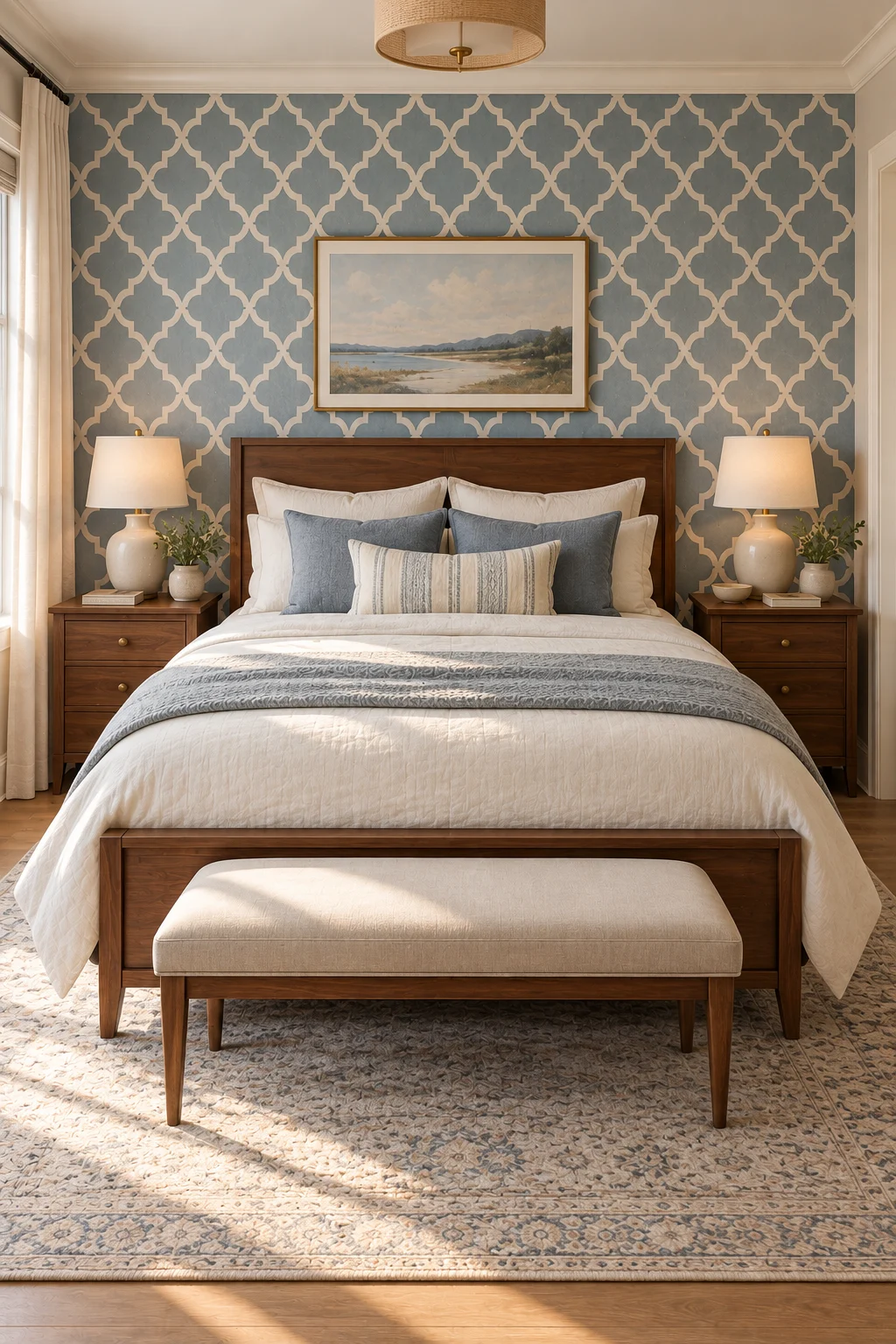
Dusty blue geometric wallpaper can make a bedroom feel contemporary without introducing harsh colors or overly dramatic contrast.
Choose a pattern that combines muted blue with warm white and pale gray. Small diamonds, simple lines, or restrained repeating shapes can provide visual rhythm behind the bed.
Pair the wallpaper with natural oak furniture, cream bedding, and a soft gray or oatmeal throw.
The scale of the design matters. A tightly repeated pattern may appear busier across a large wall than it does on a sample, while an oversized geometric print can become the dominant feature.
Look at a larger sample whenever possible and consider how the design will align around windows, corners, and the headboard.
Keep the remaining textiles simple. A geometric feature wall already contributes enough structure, so heavily patterned bedding may make the room feel unnecessarily crowded.
5. Use Vintage-Inspired Floral Wallpaper
Vintage-inspired floral wallpaper can give a bedroom a charming, collected appearance without making it look overly formal.
Look for small flowers in faded blue, muted green, and warm cream. These softer colors complement traditional wooden furniture, simple curtains, and layered ivory bedding.
A medium-walnut bed works especially well with this style because the natural wood adds warmth and keeps the room from feeling too delicate.
You can use the wallpaper behind the bed or on a small wall that deserves more attention. If the print is subtle, it may also suit a larger area.
Avoid trying to match every accessory to the flowers. Instead, repeat one or two colors through a cushion, throw, or curtain.
A vintage floral wallpaper is particularly effective when you want a cottage-inspired bedroom that feels comfortable and personal rather than overly decorated.
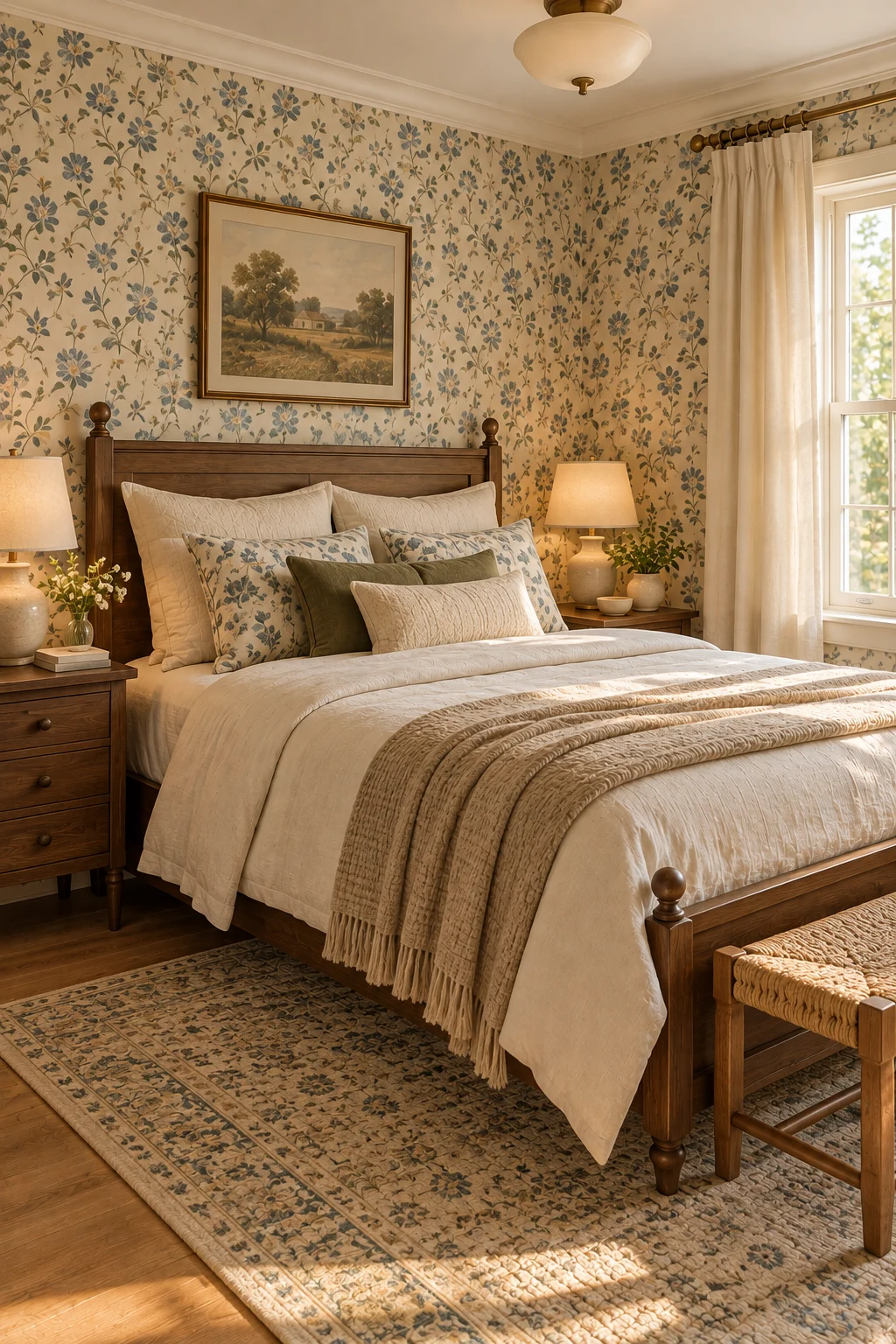
6. Create a Warm Terracotta Statement Wall
Terracotta wallpaper brings earthy warmth into a bedroom and works beautifully with natural wood furniture.
Choose a muted clay shade with a restrained organic or geometric pattern. The color should feel soft and grounded rather than intensely orange.
Pair it with cream bedding, a walnut bed frame, and a woven rug. Mushroom curtains and a small ceramic accessory can connect the warm tones without introducing too many new colors.
Use the wallpaper on one wall if the room already has several substantial furniture pieces or limited daylight.
Terracotta shades can shift noticeably depending on the lighting. Some appear more orange in direct sunlight, while others look pinker or browner under warm lamps.
Test the sample beside the flooring and bedding before committing.
A terracotta accent wall can create a cozy, relaxed atmosphere without relying on dark colors or elaborate decoration.
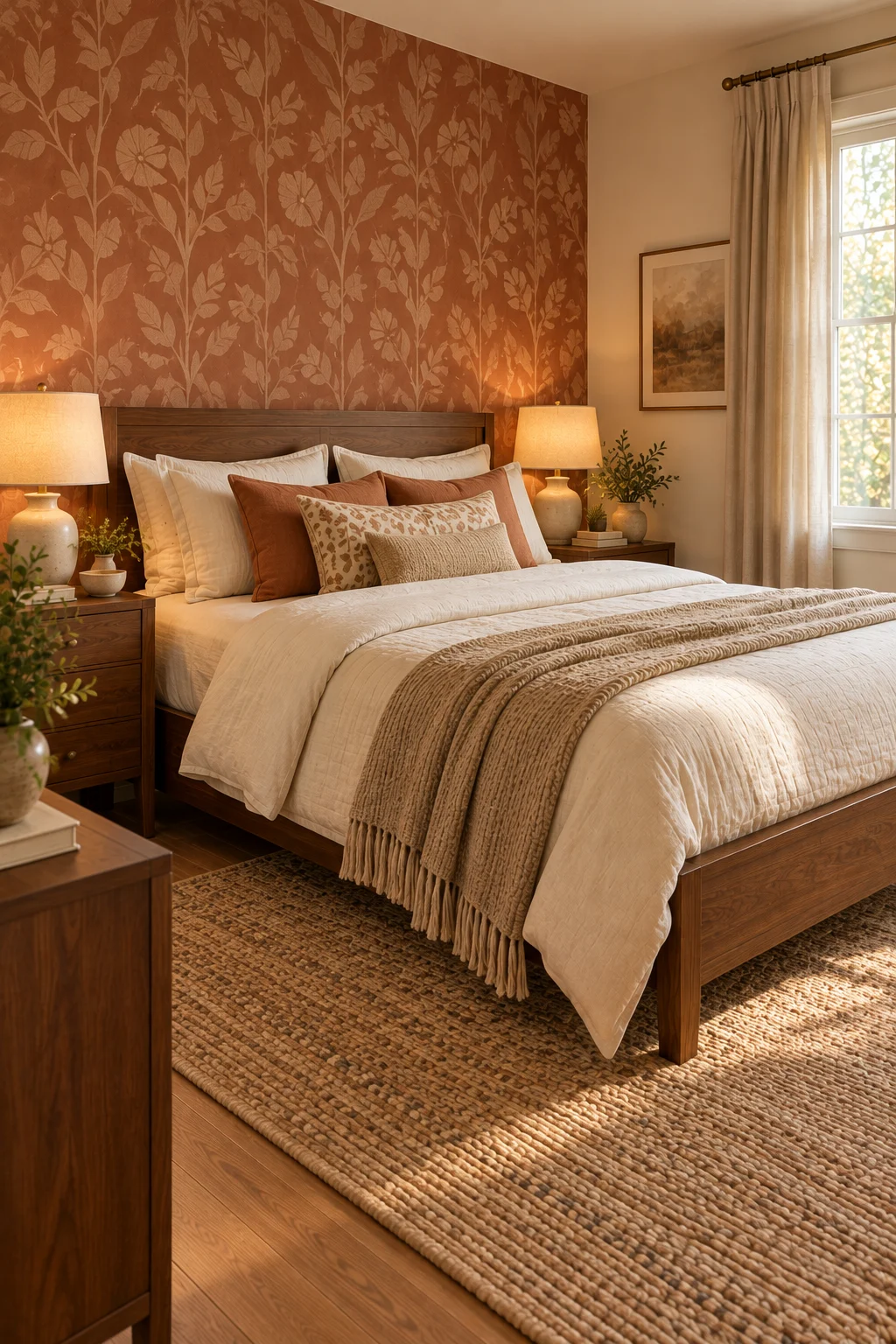
7. Choose an Olive Green Leaf Pattern
Olive green leaf wallpaper offers a more specific botanical look, with foliage as the main decorative element.
Choose a warm cream background with muted olive leaves. A restrained print can bring color into the bedroom while keeping the overall palette soft.
Pair the wallpaper with a walnut bed, ivory bedding, and a camel throw. One olive cushion can connect the bed to the wall without repeating the pattern everywhere.
Consider the density of the leaves. A widely spaced design creates a lighter appearance, while closely arranged foliage can make a stronger statement.
This style works well behind the headboard, especially when the surrounding walls are warm white or mushroom.
Avoid adding several other botanical prints unless their colors and scale are carefully coordinated.
The leaf pattern should provide enough natural character on its own.
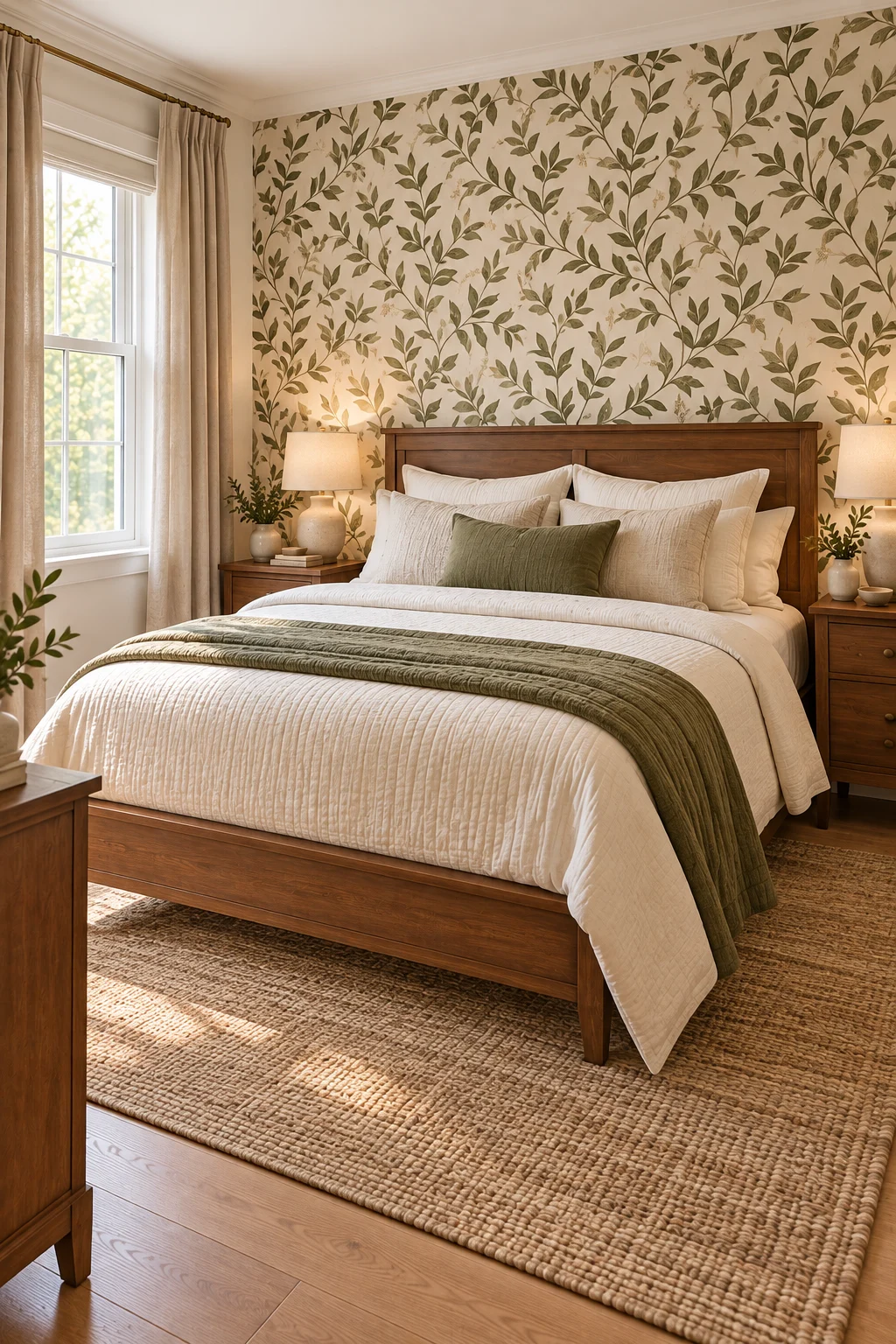
8. Use a Soft Stripe Wallpaper
Striped wallpaper is a classic option that can work in traditional, cottage, and contemporary bedrooms.
Narrow vertical stripes in cream and beige create a gentle rhythm without introducing a strong decorative motif.
Use the wallpaper behind the bed for a restrained accent wall, or consider covering more of the room if the contrast is particularly subtle.
Pair it with a simple wooden bed, ivory bedding, and curtains in one of the stripe colors.
Stripes require careful planning during installation because alignment problems can be more noticeable than with irregular floral or botanical patterns.
Check the wall dimensions and how the stripes will meet at corners, trim, and openings.
If you want wallpaper that feels timeless but not overly decorative, a soft stripe is a versatile choice.
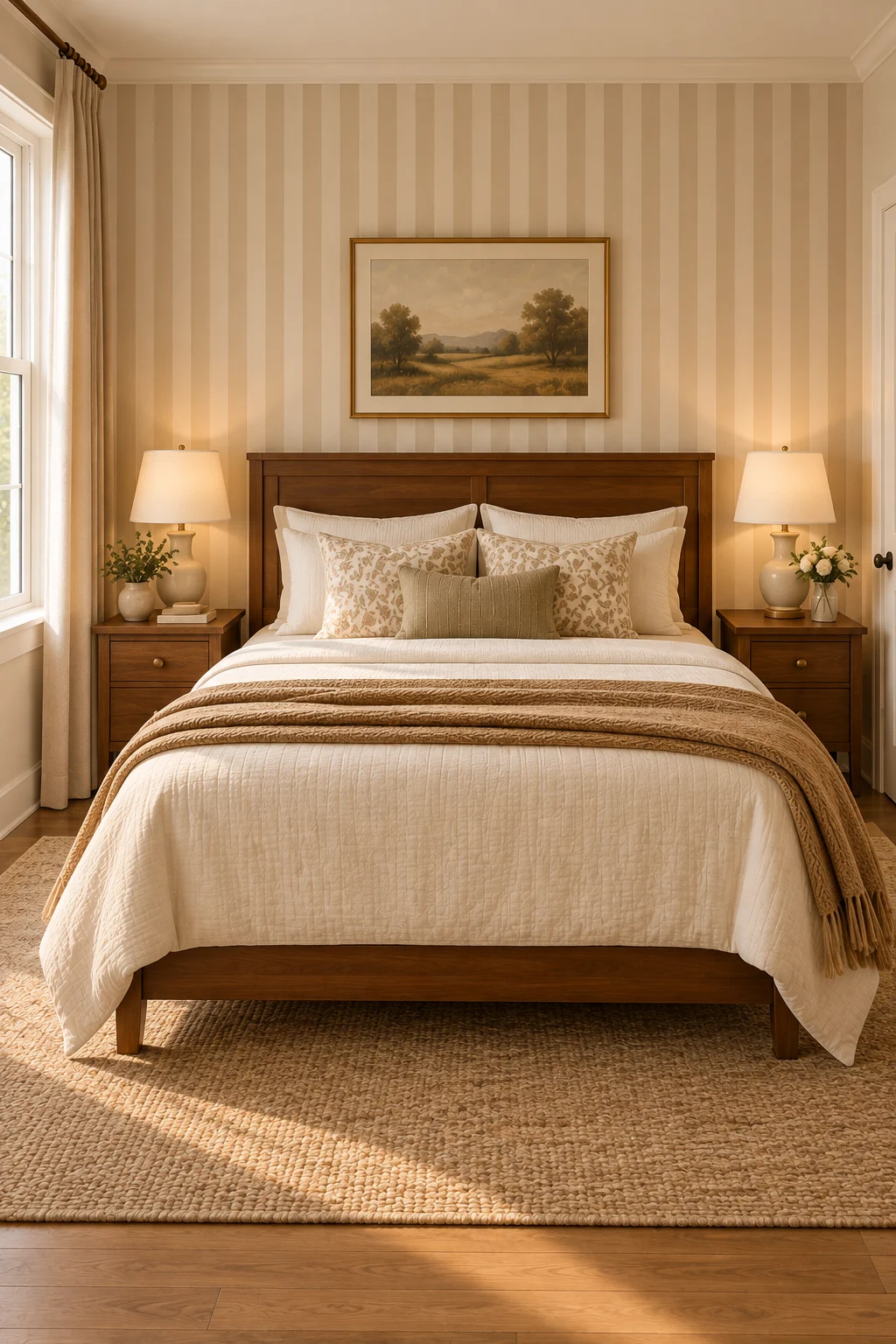
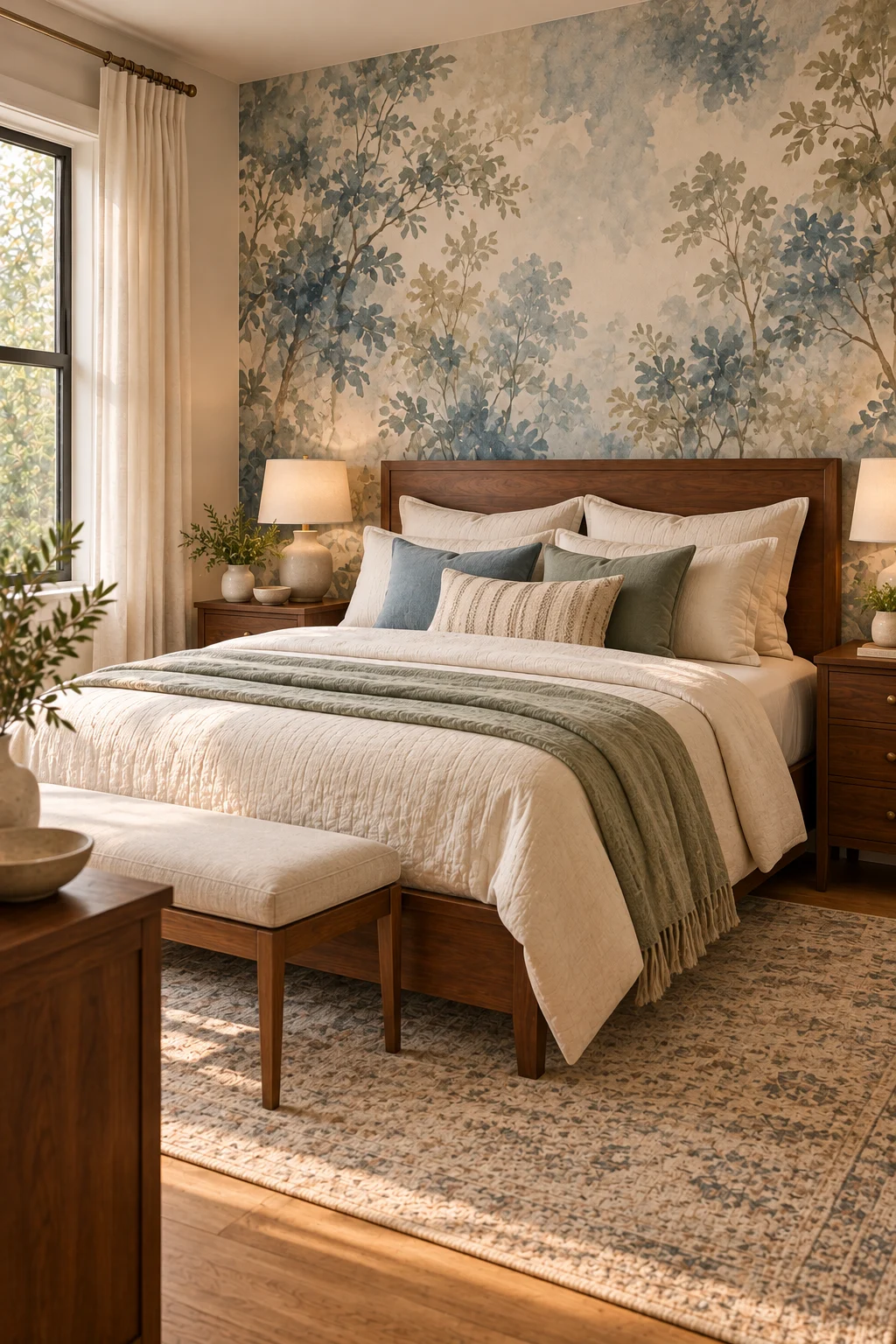
9. Try a Soft Watercolor Wallpaper
Watercolor wallpaper creates an artistic atmosphere through gentle color transitions rather than sharply defined shapes.
Look for muted blue, sage green, and warm gray blending into one another. These colors can make the wall behind the bed feel calm and atmospheric.
Choose a design with enough variation to create interest but without an overly busy composition.
Pair it with a medium-walnut bed, cream bedding, and simple mushroom curtains. Keeping the furniture understated allows the wallpaper’s soft movement to remain the main feature.
Some watercolor wallpapers repeat like conventional patterns, while others are produced as larger murals. Check the format before ordering because the installation and material calculations may differ.
A watercolor wall works particularly well when you want a contemporary bedroom that feels gentle rather than stark.
10. Add a Dark Charcoal Botanical Print
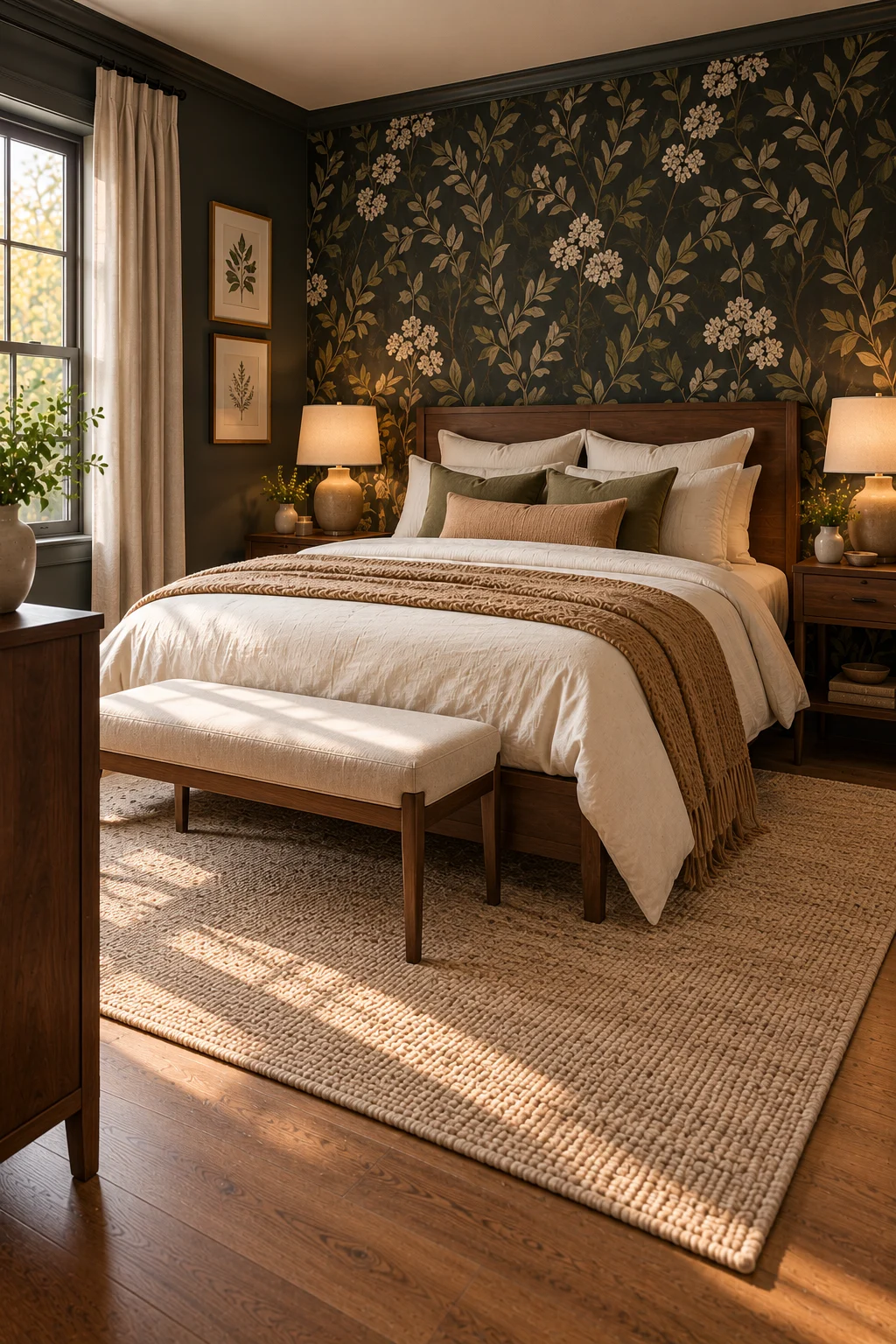
A charcoal botanical wallpaper can create a dramatic bedroom without making every wall dark.
Choose a print with a charcoal background, cream foliage, and muted olive details. The lighter leaves create contrast and help the pattern remain visible.
Pair the wallpaper with ivory bedding and medium-walnut furniture to introduce warmth.
Warm bedside lamps can highlight the botanical shapes in the evening, while cream or greige surrounding walls keep the room balanced.
If the bedroom has limited natural light, compare the wallpaper sample under both daylight and artificial lighting before choosing it.
Avoid adding several other dark, heavily patterned finishes. Let the charcoal wallpaper provide the main statement.
This approach suits bedrooms where you want a rich, moody atmosphere while preserving a comfortable, welcoming feel.
11. Use Wallpaper Inside Wall Panels
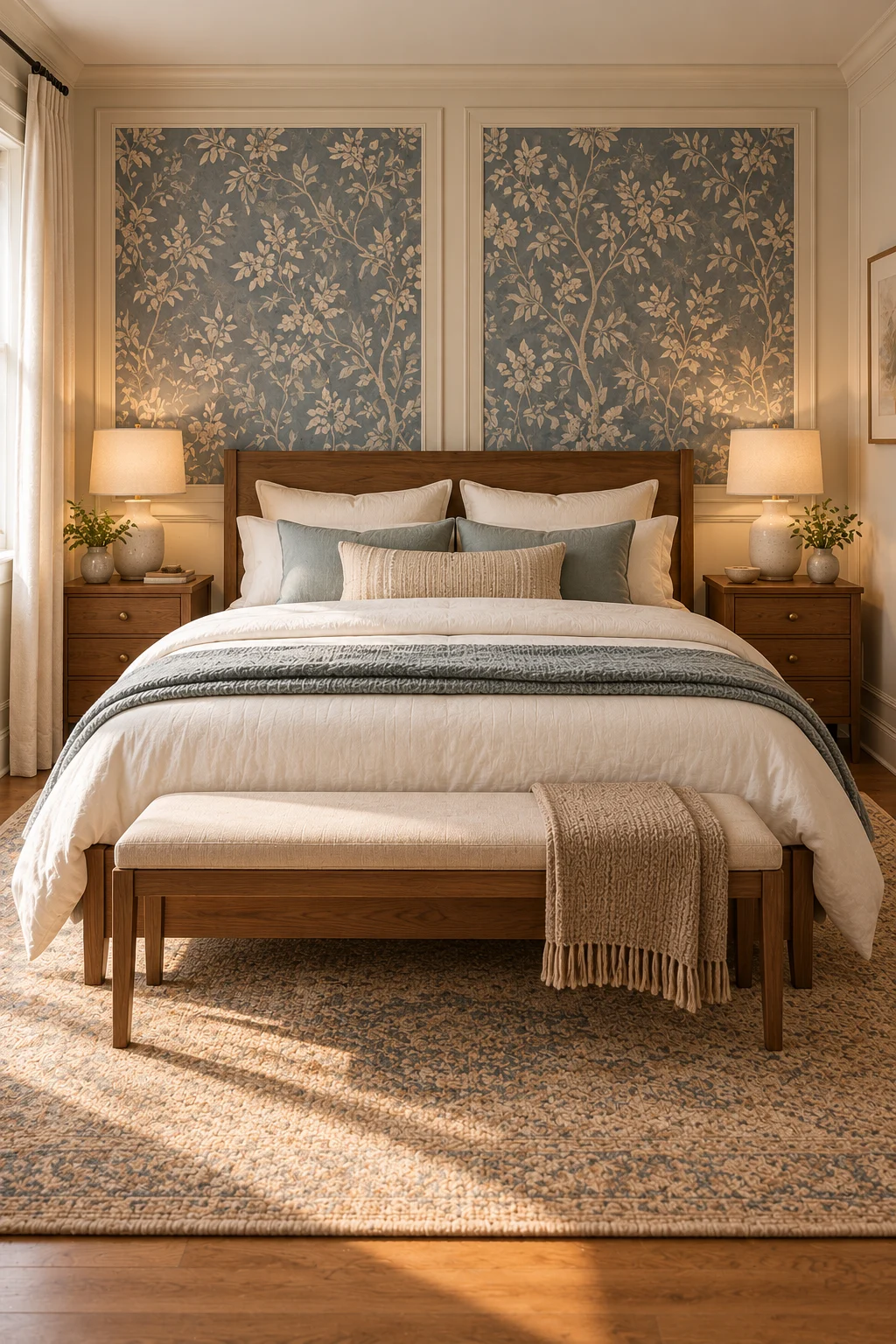
Wallpaper doesn’t have to cover an entire wall to make an impact.
Applying it inside decorative molding panels can create a traditional feature with a more restrained amount of pattern.
Choose a subtle botanical, floral, or geometric wallpaper and surround it with simple picture-frame molding painted warm cream.
Two balanced panels behind the bed can create a symmetrical arrangement, especially when paired with matching bedside tables and lamps.
Plan the dimensions before installation. The panels should relate to the bed’s width and the available wall space rather than being positioned arbitrarily.
Check where outlets, switches, and existing fixtures are located. The design should work around them instead of covering or obstructing them.
Wallpaper inside molding can provide a modern-classic look without committing to a fully patterned wall.
12. Choose a Delicate Cottage Wallpaper
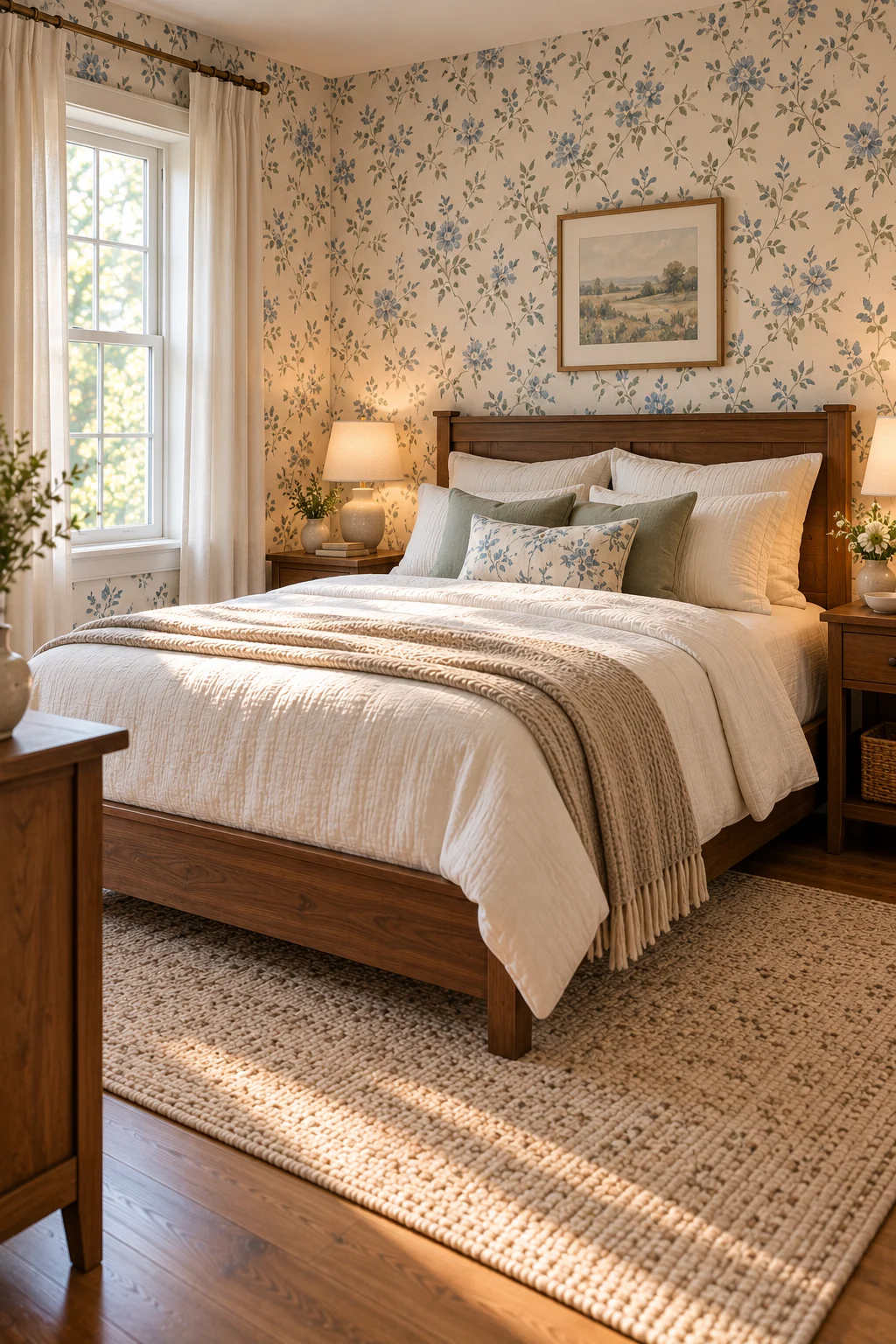
Delicate cottage wallpaper introduces charm through tiny flowers, scattered botanical sprigs, or understated traditional motifs.
Choose a warm cream background with muted dusty blue, olive, or soft brown details.
Pair it with a medium-walnut bed, layered ivory bedding, and simple curtains. A small ceramic lamp or wooden nightstand can reinforce the cozy atmosphere without adding too many decorative elements.
Unlike a bold statement print, a delicate cottage pattern may work well across more than one wall, depending on its density and the size of the room.
Look closely at the spacing of the motifs. A pattern with breathing room often feels more relaxed than one packed with small details.
Keep the remaining decor simple so the bedroom feels collected and comfortable rather than overly themed.
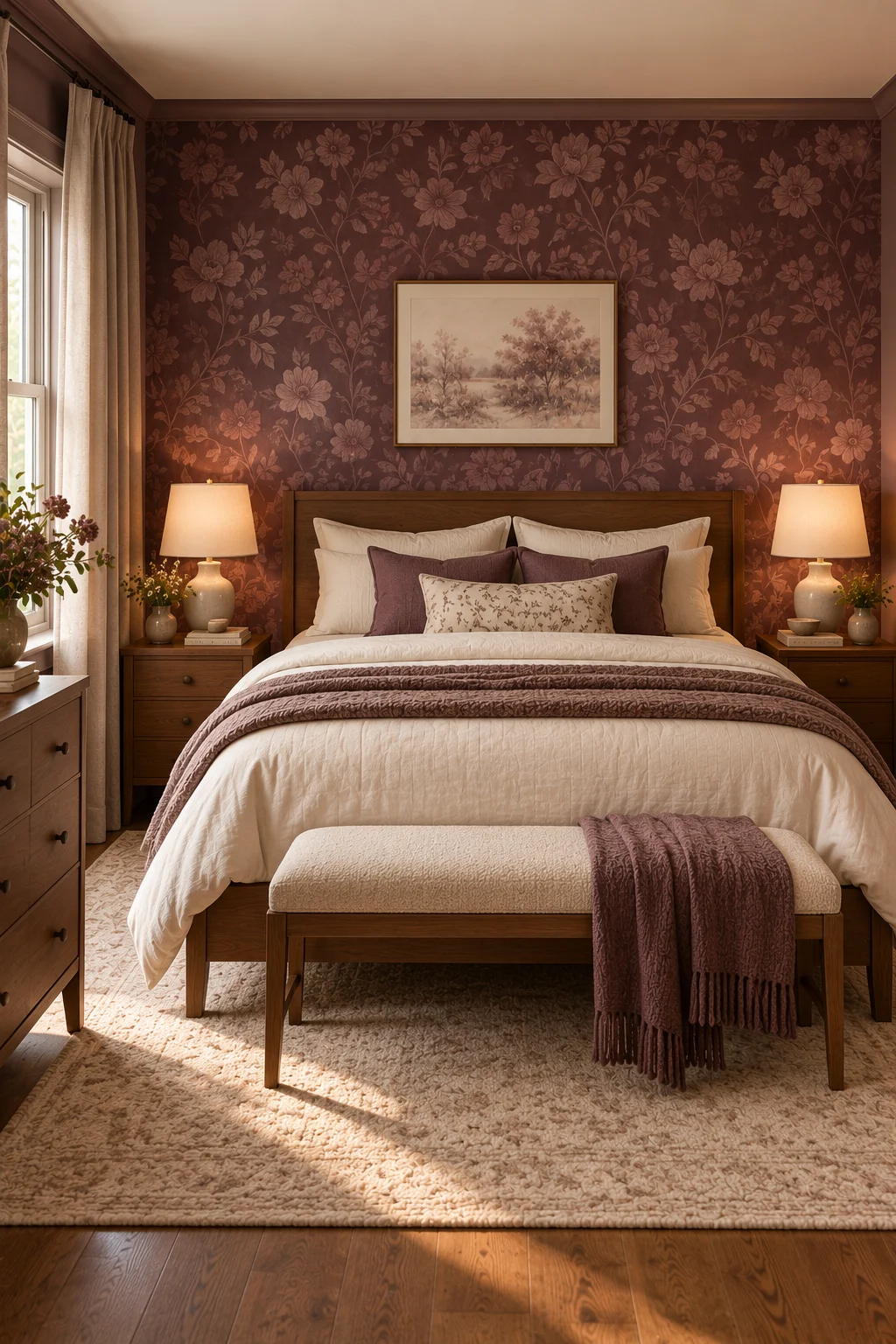
13. Create a Dusty Plum Accent Wall
Dusty plum wallpaper can bring romantic color into a bedroom without the brightness of saturated purple.
Choose a muted floral or abstract pattern with subtle variations of plum, mauve, and warm gray.
Pair it with cream bedding, walnut furniture, and warm bedside lighting. A small amount of antique-brass-style detailing can complement the deeper color.
The wallpaper works particularly well behind a simple headboard, where it can become the main decorative feature.
Consider how the color looks throughout the day. Dusty plum may appear warmer under evening lighting and cooler in natural daylight.
Avoid introducing several unrelated pink and purple accessories unless you deliberately want a more colorful room.
For a sophisticated appearance, let the plum wallpaper stand out against neutral textiles and furniture.
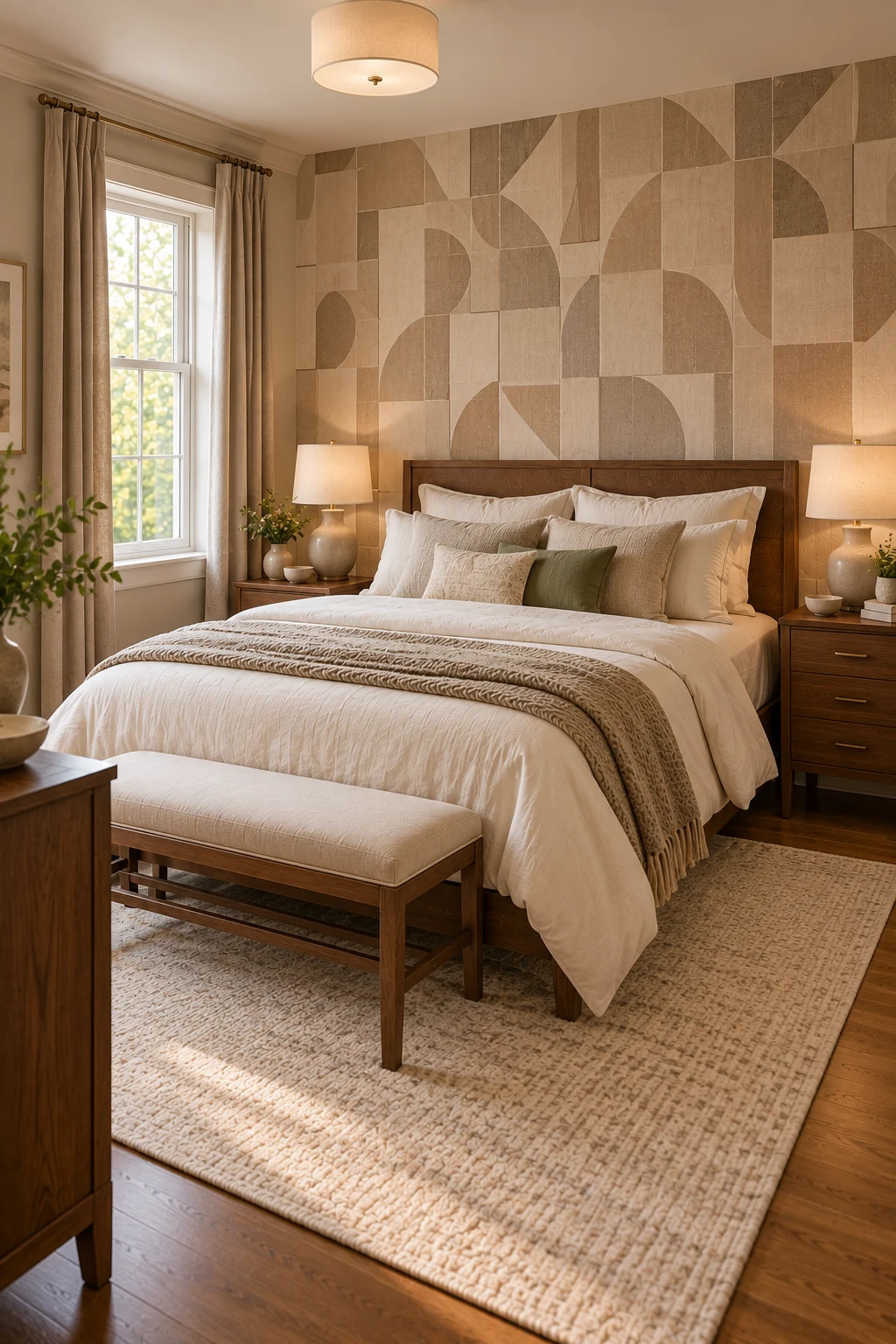
14. Use a Warm Neutral Geometric Pattern
A neutral geometric wallpaper can introduce structure without making the bedroom feel busy.
Look for simple shapes in mushroom taupe, warm beige, and cream. Low-contrast patterns are particularly useful when you want a contemporary look that still feels cozy.
Pair the wallpaper with a walnut or natural oak bed and mostly solid-colored bedding.
A textured throw can add another layer without competing with the geometry.
Pay attention to the size of the shapes. Larger forms may feel bold on a narrow wall, while smaller repeating patterns can create a more subtle backdrop.
Choose the pattern according to the wall’s proportions and the furniture in front of it.
This is a practical option for a bedroom that needs more personality but doesn’t suit floral or botanical wallpaper.
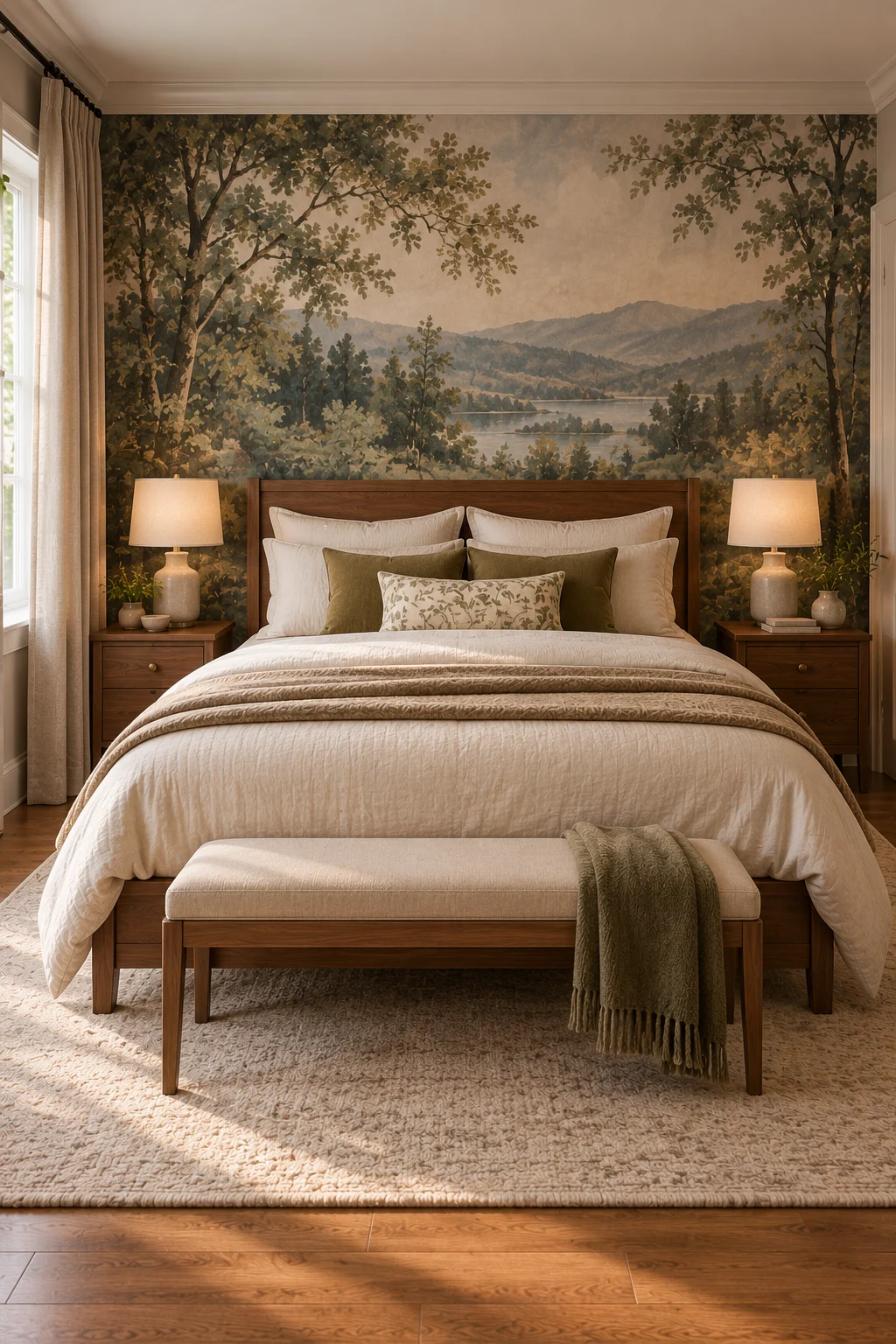
15. Try a Scenic Landscape Wallpaper
Scenic wallpaper can turn the wall behind the bed into an atmospheric focal point.
Choose a muted woodland, countryside, mountain, or misty landscape design in soft olive, dusty blue, and warm gray.
A gentle scene can create a sense of depth while keeping the room’s color palette calm.
Pair the mural with cream bedding and simple walnut furniture. Avoid placing large artwork over the wallpaper, as it may compete with the landscape.
Before ordering, measure the wall and review the mural’s panel arrangement.
Think about where the bed and headboard will sit. Important features of the scene should remain visible rather than disappearing behind furniture.
A scenic mural can be particularly effective when you want a bedroom with a distinctive focal point but don’t want to fill the room with decorative accessories.
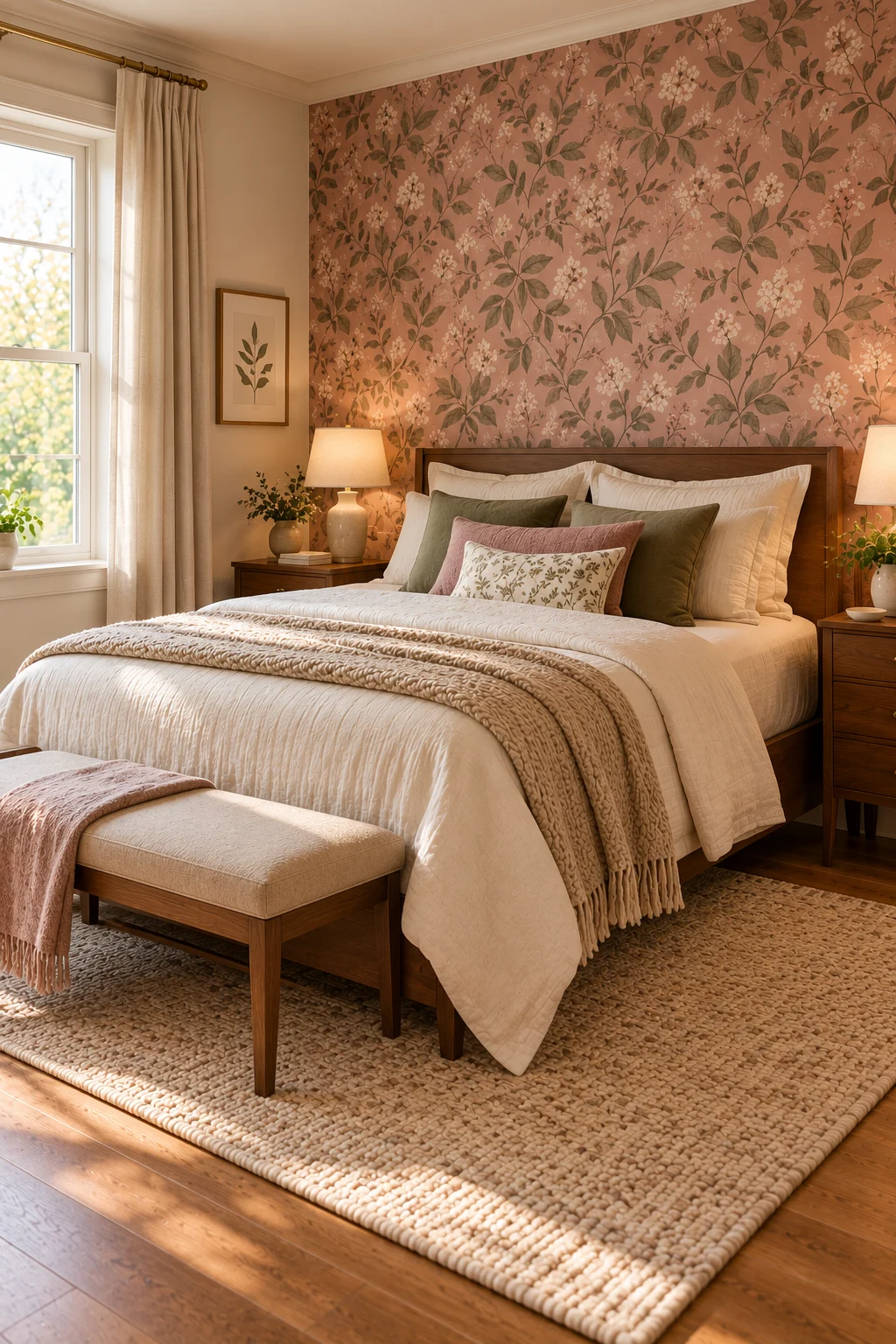
16. Choose a Soft Pink Botanical Wallpaper
Soft dusty pink wallpaper can create a gentle, welcoming bedroom when balanced with natural materials.
Choose a botanical print featuring muted olive leaves and warm cream details against a restrained pink background.
Pair it with a medium-walnut bed, ivory bedding, and oatmeal textiles.
The green and wood tones help balance the pink, giving the room a more grounded appearance.
Use the wallpaper behind the bed and keep the surrounding walls warm white for a light, cohesive look.
Rather than repeating pink across every accessory, introduce it selectively through a small cushion or throw.
This combination works well for a romantic bedroom that still feels relaxed and suitable for everyday living.
17. Use Removable Wallpaper for a Flexible Update
Removable wallpaper can be useful when you want to experiment with bedroom patterns without choosing a traditional pasted wallpaper.
It may appeal to renters or homeowners who expect to update the room again, although removal isn’t guaranteed to be damage-free.
Choose a product suitable for the wall’s paint, finish, and texture. Some removable wallpapers work best on smooth, properly cured painted surfaces and may not adhere well to certain textured walls.
A subtle sage geometric print or restrained botanical pattern can create a fresh accent behind a natural oak bed.
Before ordering, check the manufacturer’s installation and removal instructions, including any recommended surface testing.
If you’re renting, review the agreement before making changes.
Removable wallpaper offers flexibility, but careful product selection and preparation still matter.
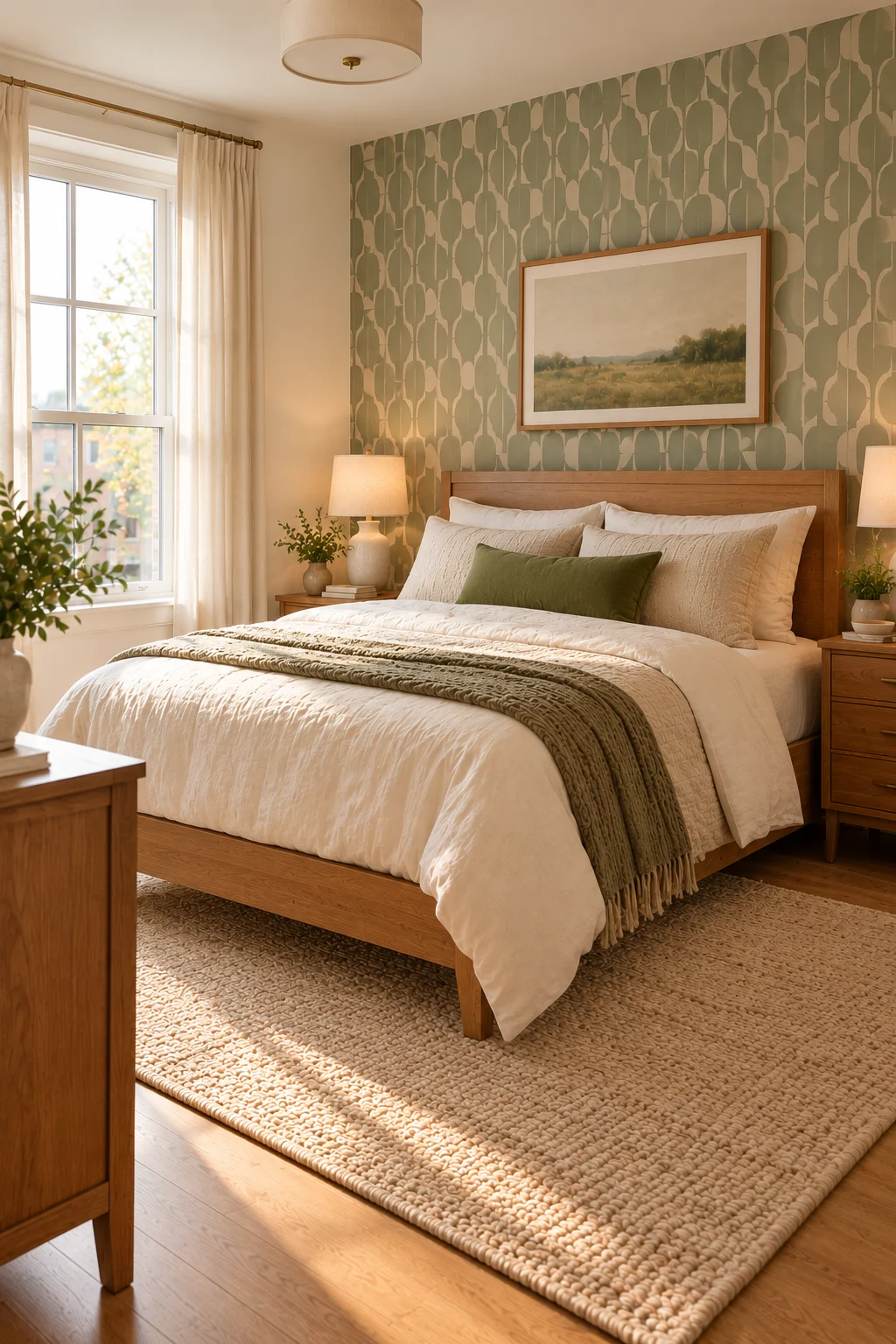
18. Create a Cohesive Wallpaper Bedroom
A successful wallpaper bedroom feels like a complete space rather than a patterned wall surrounded by unrelated furniture.
Start with the wallpaper’s main colors, then choose two or three shades to repeat through the bedding, curtains, and accessories.
For example, a muted olive botanical wallpaper might pair with a walnut bed, ivory bedding, mushroom curtains, and a camel throw.
Keep the main furniture shapes relatively simple if the wallpaper has a strong pattern.
Consider the room’s lighting, flooring, and existing finishes before introducing additional decorative elements.
Step back and assess the balance once everything is arranged. If the wallpaper already provides plenty of detail, remove accessories that compete with it.
The goal is a bedroom where the wallpaper feels naturally connected to the furniture and textiles.
How to Choose Bedroom Wallpaper
Start with the room’s existing furniture, flooring, natural light, and overall color palette.
Decide whether you want the wallpaper to create a bold focal point or provide subtle background texture.
Order samples whenever possible and observe them in the actual bedroom. Colors and pattern contrast can look different under daylight, bedside lamps, and ceiling lighting.
Check the wallpaper’s material, cleaning requirements, pattern repeat, roll dimensions, and installation instructions before purchasing.
If you’re unsure about a bold design, begin with one wall rather than committing to the entire room.
Wallpaper Accent Wall or Entire Room?
An accent wall is often the simplest way to introduce a strong pattern. The wall behind the bed usually makes a natural focal point because it visually anchors the furniture.
Covering the entire bedroom can create a more immersive atmosphere, particularly with delicate stripes, subtle textures, or low-contrast patterns.
Neither approach is automatically better.
Consider the pattern’s scale, the room’s proportions, and how much visual detail you want to see from every angle.
A bold floral mural may be most effective on one wall, while a soft beige textured wallpaper may work comfortably throughout the room.
Wallpaper Ideas for Small Bedrooms
Small bedrooms can accommodate wallpaper without feeling crowded.
Choose a pattern that complements the room’s furniture and avoid combining several unrelated prints.
A botanical accent wall, subtle stripe, or low-contrast geometric design can introduce personality without taking up any floor space.
Keep the furniture appropriately scaled and allow the wallpaper to provide much of the decorative interest.
A dramatic wallpaper can also work in a compact bedroom, provided the surrounding finishes are balanced.
Budget-Friendly Wallpaper Updates
Wallpapering one accent wall typically requires less material than covering the entire bedroom.
Before purchasing, calculate the wall dimensions and check the product’s usable coverage, pattern repeat, and expected installation waste.
Compare the full project cost rather than only the price per roll. Depending on the wallpaper, you may also need adhesive, preparation materials, or professional installation.
If you’re working with a limited budget, choose one wall that will make the strongest visual impact.
A well-chosen accent wall can refresh the bedroom without replacing the bed, dresser, or curtains.
Common Wallpaper Mistakes
Choosing wallpaper from a tiny online image without checking a sample can lead to unexpected colors or pattern scale.
Another common mistake is underestimating the amount of material needed for matching the pattern across strips.
Poor wall preparation can also affect the finished appearance. Uneven surfaces, peeling paint, moisture problems, or incompatible finishes may need attention before installation.
Avoid choosing several strong patterns that compete with one another unless the combination has been planned carefully.
Taking time to test the design and prepare the wall is usually more useful than rushing into installation.
Cleaning and Maintenance
Follow the wallpaper manufacturer’s cleaning instructions.
Some wallpapers tolerate gentle wiping, while others require more careful treatment. Don’t assume every textured, printed, or removable wallpaper can be cleaned in the same way.
Keep furniture from repeatedly rubbing against delicate surfaces.
If the wall has a moisture problem, address the underlying cause rather than covering it with wallpaper.
Inspect edges and seams occasionally, especially in areas where furniture or everyday activity may cause wear.
Safety and Practical Considerations
Choose wallpaper and adhesives suitable for the wall surface and intended room conditions.
Follow the manufacturer’s instructions for preparation, application, ventilation, cleaning, and removal.
Don’t cover electrical outlets, switches, vents, safety devices, or other fittings that need to remain accessible.
Keep wallpaper away from heat sources where required by the product instructions.
Use stable ladders or suitable access equipment when working at height, and secure any artwork or wall-mounted accessories properly.
If existing wall coatings or materials may contain hazardous substances, avoid disturbing them without appropriate assessment.
For complicated installations or walls with significant damage, professional assistance may be appropriate.
Final Thoughts
Wallpaper offers a versatile way to make a bedroom feel more personal, whether you prefer soft botanical patterns, dramatic burgundy florals, neutral textures, or scenic landscapes.
Choose a design that works with the furniture and lighting you already have, and consider how the pattern will look across the full wall rather than only on a small sample.
The most inviting wallpaper bedrooms aren’t necessarily the boldest. They’re the ones where the pattern, colors, and furnishings feel comfortably connected.
