
13 Natural Earthy Kitchen Ideas for a Warm Organic Space
An earthy kitchen should feel warm, grounded, and connected to natural materials. Wood grain, warm cream, mushroom taupe, muted olive, terracotta, and textured ceramics can create that atmosphere without filling the room with rustic decorations.
The style works just as well in an ordinary American kitchen with standard cabinetry and a modest footprint as it does in a spacious home. You don’t need exposed beams or a complete renovation to bring in natural character. Sometimes, changing the cabinet color, introducing a wood accent, or simplifying the countertop styling is enough.
The key is choosing materials that complement one another. Natural wood brings warmth, cream keeps the palette light, and earthy greens and browns add depth. A little texture makes the room feel layered without making it look cluttered.
These 13 natural earthy kitchen ideas explore ways to create a warm, organic interior while keeping the kitchen practical for everyday cooking.
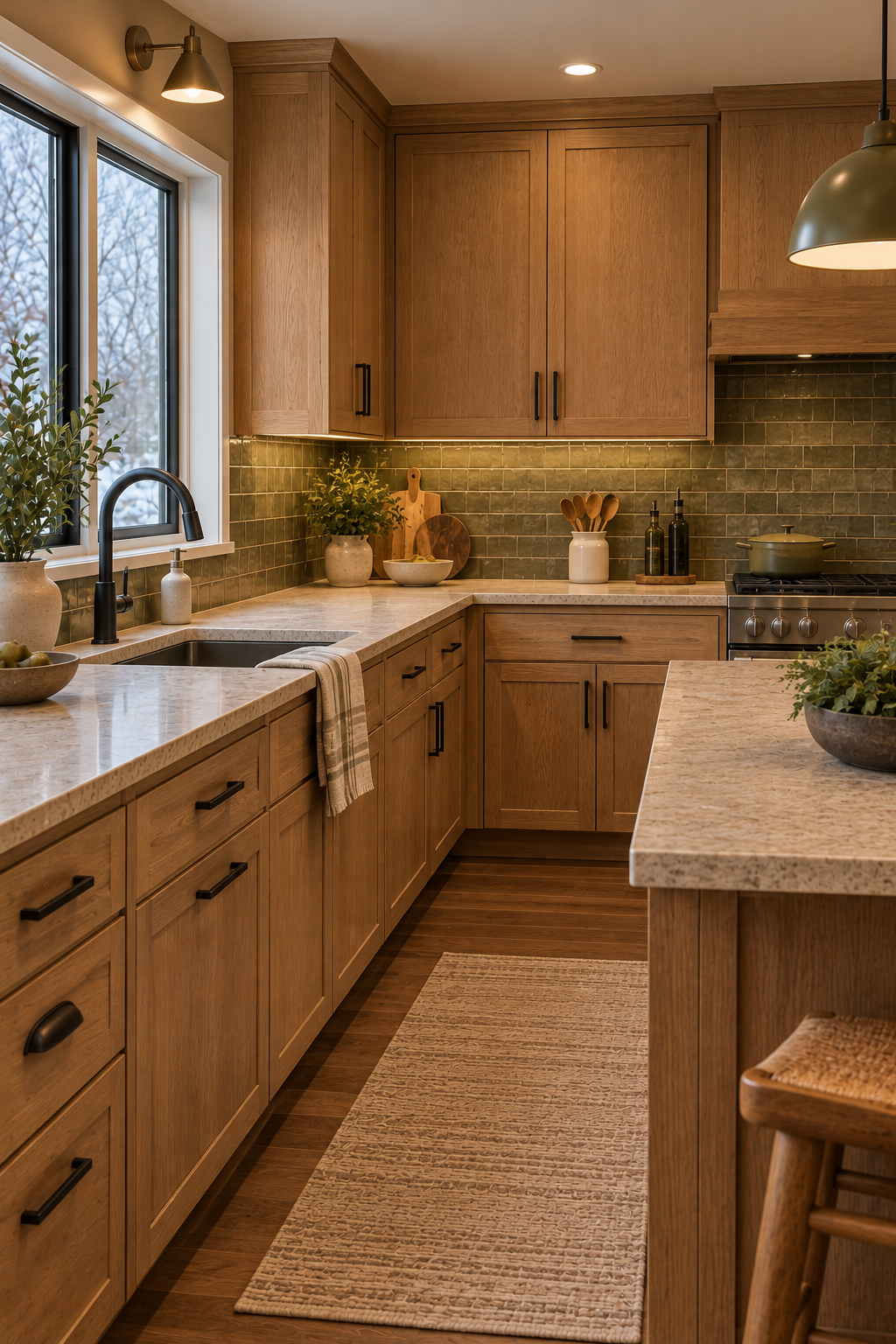
1. Start With Warm Wood Cabinets
Wood cabinetry provides a natural foundation for an earthy kitchen. Medium oak and walnut both work well because their visible grain adds texture without requiring elaborate decoration.
Pair the wood with warm cream walls and countertops to create contrast. The lighter surfaces help prevent the room from feeling too dark, while the wood provides enough visual interest to keep the palette from looking plain.
Choose a wood finish that complements the existing flooring and other fixed surfaces. Oak can appear golden or neutral depending on its finish, while walnut often introduces deeper brown tones.
If replacing cabinets isn’t practical, consider adding wood through a small island, shelving, or a freestanding cupboard. A few coordinated natural finishes can establish the same general mood without changing every cabinet.
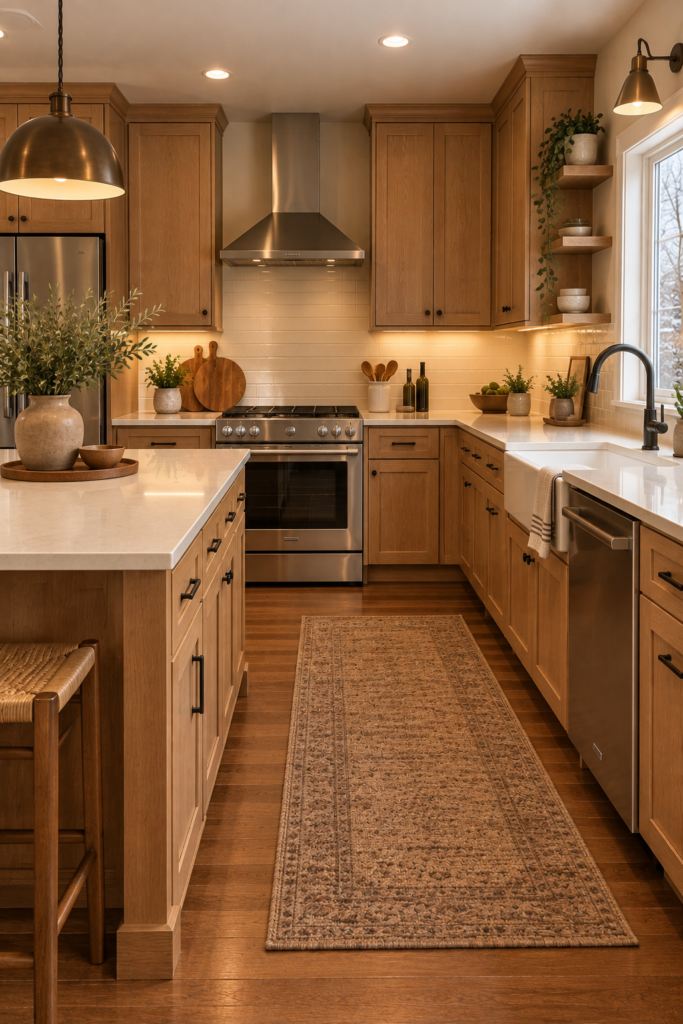
2. Add Muted Olive Cabinets
Muted olive cabinetry introduces a nature-inspired color that works particularly well with warm neutrals and natural wood.
Try olive lower cabinets with cream upper cabinets, walnut flooring, and mushroom-colored backsplash tile. This combination creates contrast while keeping the overall palette restrained.
Olive shades vary in their undertones. Some lean yellow, while others appear grayer or browner, so compare paint samples with your countertop and flooring before committing.
If you’re repainting existing cabinets, follow the coating manufacturer’s instructions for cleaning, preparation, priming, application, and curing. Choose a finish suited to the regular handling and cleaning that kitchen cabinets receive.
Keep the remaining finishes relatively simple so the green becomes the main color feature. You can introduce additional natural texture through wood grain and ceramics rather than adding several competing accent colors.
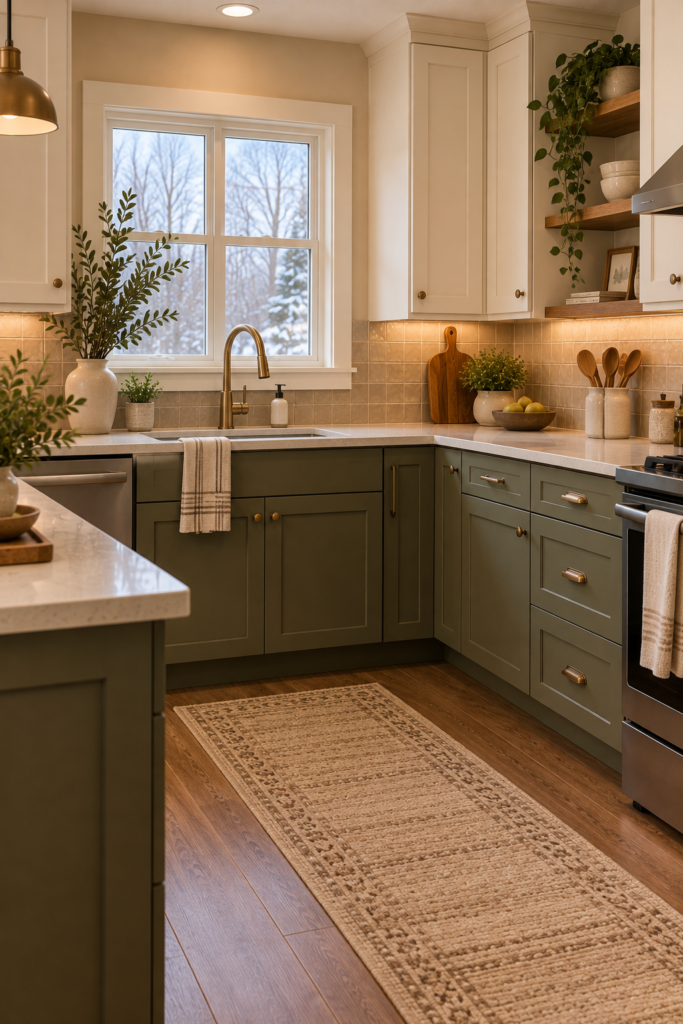
3. Pair Cream With Walnut
Cream and walnut create an earthy palette that feels warm without relying on green cabinetry.
Use warm cream on the cabinets, then introduce walnut through an island, shelving, or other wood details. Mushroom-colored walls or a soft neutral backsplash can connect the two finishes.
The contrast is useful because walnut provides depth while cream keeps the room feeling lighter. This approach works especially well if you want an organic kitchen with a more neutral appearance.
Compare samples together before choosing the final finishes. Cream can lean yellow, beige, or gray, and walnut finishes can range from reddish brown to a more neutral chocolate tone.
Keep the hardware understated and let the difference between the light cabinetry and darker wood provide most of the visual interest.
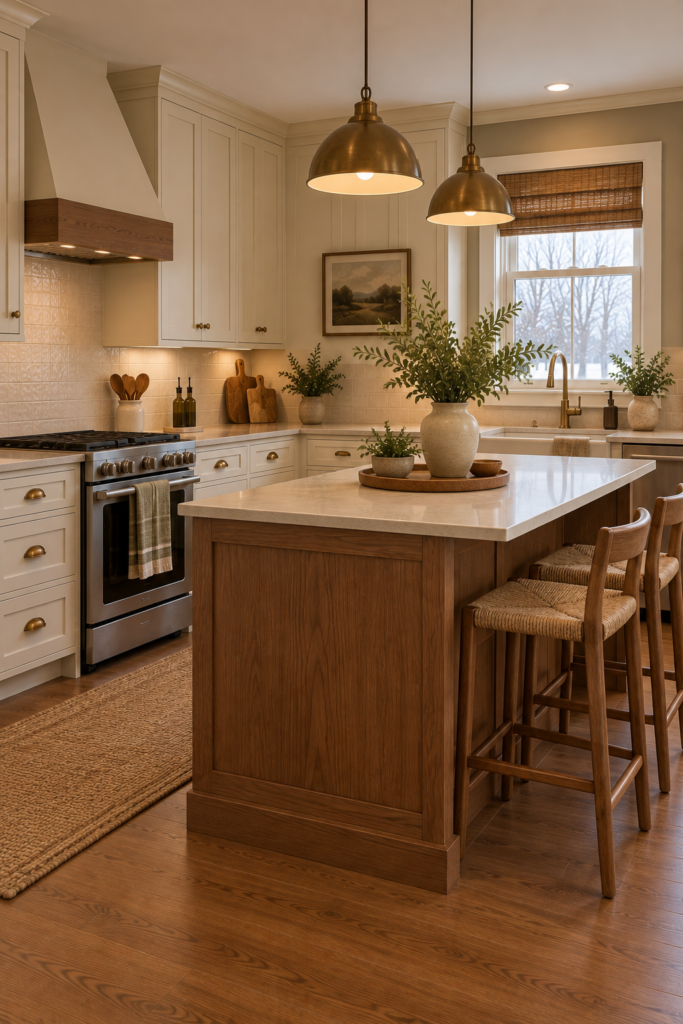
4. Use Mushroom Taupe
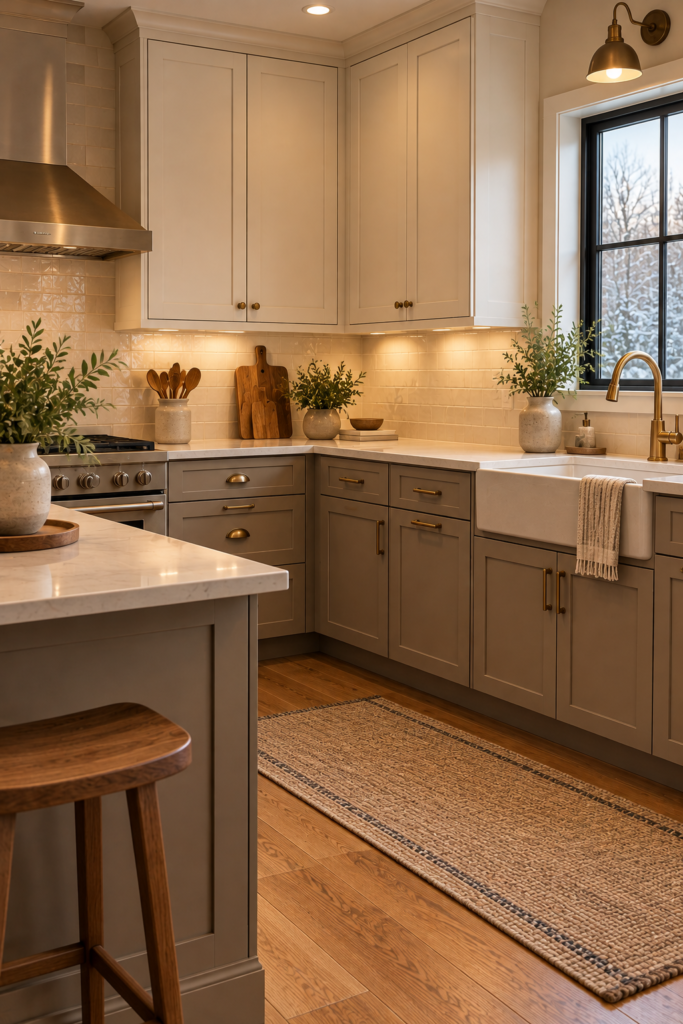
Mushroom taupe brings a warm, understated quality to an earthy kitchen. It can work on cabinetry, walls, or backsplash tile, depending on how much color you want to introduce.
Pair it with cream and natural wood for a layered palette that feels softer than a stark white-and-gray combination.
Pay attention to undertones. Some mushroom shades lean brown, while others have more gray or pink in them. Compare samples with your wood finishes and countertops rather than choosing each color independently.
If the kitchen is compact, using mushroom on a smaller surface while keeping the upper walls and cabinets lighter can help preserve a sense of openness.
This neutral works best when the surrounding materials provide some contrast. Visible wood grain, simple ceramics, and restrained hardware can prevent the room from feeling flat.
5. Add Handmade-Look Ceramic Tile
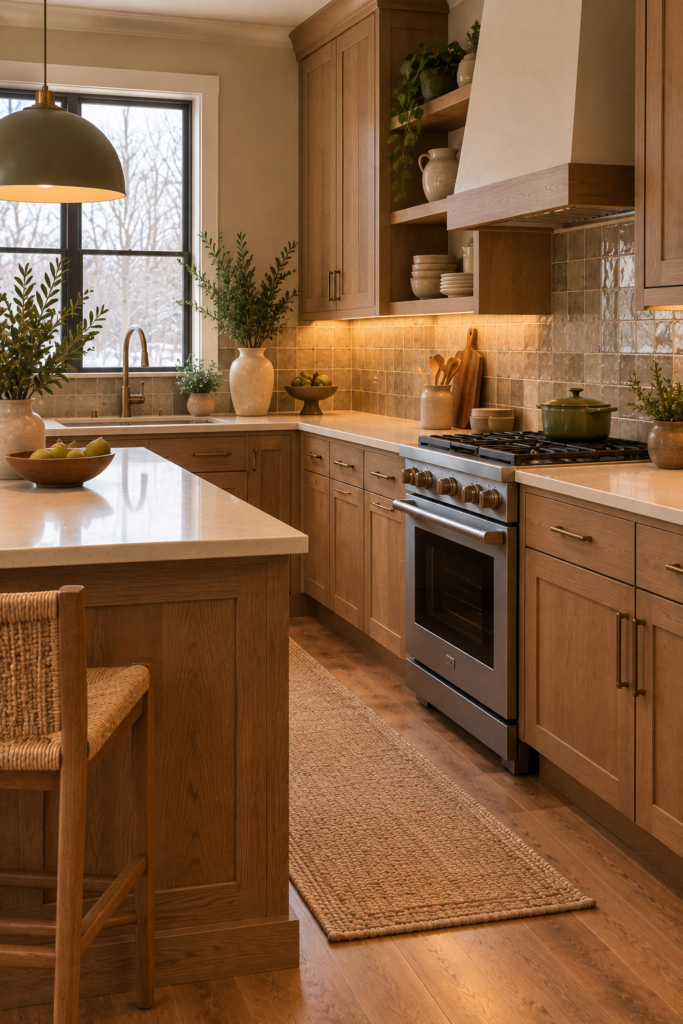
Handmade-look ceramic tile introduces texture through subtle variations in glaze, color, and surface appearance.
Choose warm cream, mushroom, muted olive, or warm brown to complement the rest of the kitchen. A backsplash is a useful place to introduce this texture without adding more objects to the countertop.
Consider the tile format and grout color together. A coordinated grout shade creates a quieter appearance, while a contrasting shade makes the tile pattern more noticeable.
Before purchasing, confirm that the tile is suitable for its intended location and check the manufacturer’s cleaning and maintenance recommendations.
If the cabinetry and flooring already have prominent grain or patterns, choose a relatively restrained tile. The goal is to add depth without making every surface compete for attention.
6. Bring in Terracotta Color
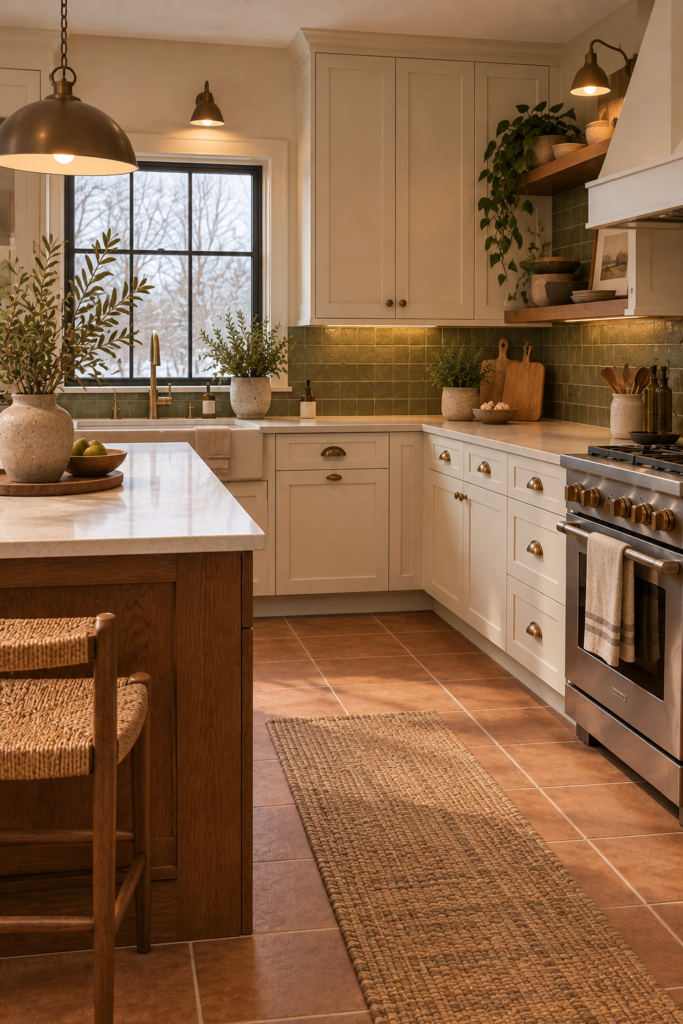
Terracotta adds a reddish-brown warmth that works naturally with cream, walnut, and muted olive.
You can introduce it through a backsplash, suitable floor tile, or a small collection of ceramic accessories. A limited accent may be enough to warm up an otherwise neutral kitchen.
Terracotta finishes vary considerably, from orange-red to dusty brown. Compare samples with the existing wood and cabinet colors to find a shade that complements rather than clashes with them.
If using terracotta tile, confirm that the product is appropriate for the intended surface and understand its care requirements. Some materials may need specific cleaning or sealing procedures.
Keep nearby colors relatively simple. Cream cabinetry and natural wood provide a calm background that allows the terracotta to become a distinctive feature.
7. Add Natural Woven Texture
Woven materials introduce another layer of texture without requiring a major renovation.
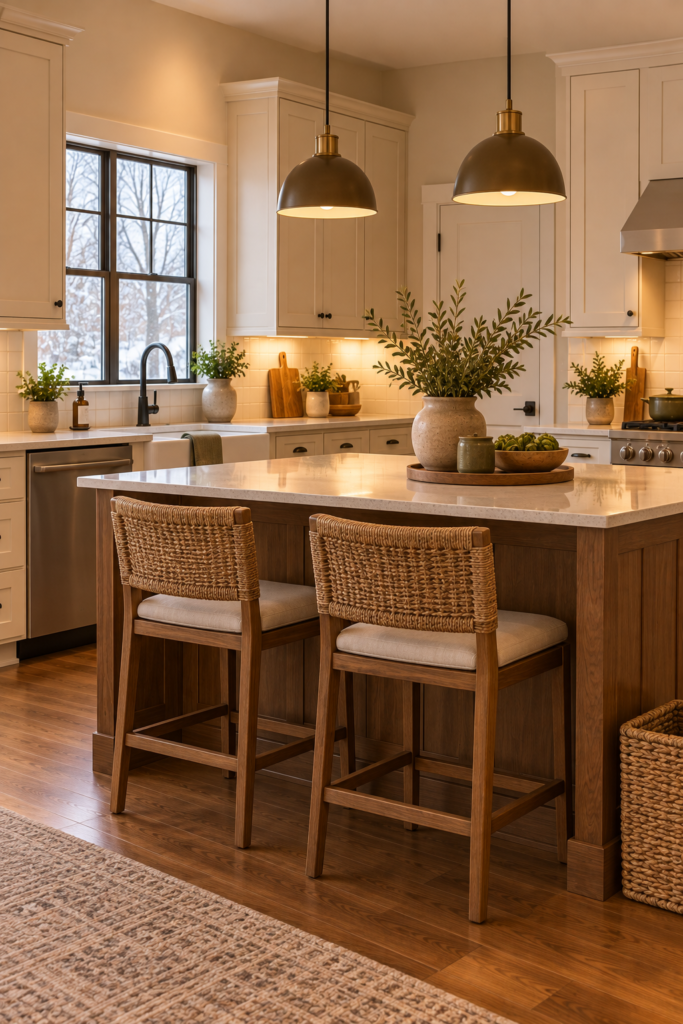
Consider sturdy counter stools with woven backs, storage baskets in dry areas, or a pendant fixture made from suitable woven material. These details work well with wood cabinetry and warm neutral surfaces.
Choose materials according to their location. Baskets and textiles need to remain away from cooking heat, while woven seating should be stable, comfortable, and appropriate for everyday use.
Check the dimensions of stools before buying them, including the space needed to move them in and out. Furniture should not obstruct appliance doors or the main walking route.
A few functional woven elements can soften a kitchen’s straight cabinet lines. There’s no need to fill every shelf with baskets or add texture to every available surface.
8. Add Simple Open Wood Shelves
Open wood shelves reinforce an earthy palette by introducing visible grain and providing space for everyday dishes.
Medium oak or walnut shelves can hold cream ceramics, mugs, and a few muted green accessories. Keeping the display limited allows the wood to remain visible and makes the items easier to retrieve.
Before installation, confirm the wall construction and use supports appropriate for the shelf material and intended load. Store heavier dishes on lower shelves and keep fragile items away from the edge.
Think carefully about placement. Shelves close to the cooking area may collect grease, while those near the sink can be exposed to splashes and steam.
If you prefer concealed storage, replace only a small section of upper cabinetry with shelves. This introduces natural texture without sacrificing too much practical storage.
For more ways to balance display and everyday storage, explore these kitchen shelves decor ideas for beautiful open storage.
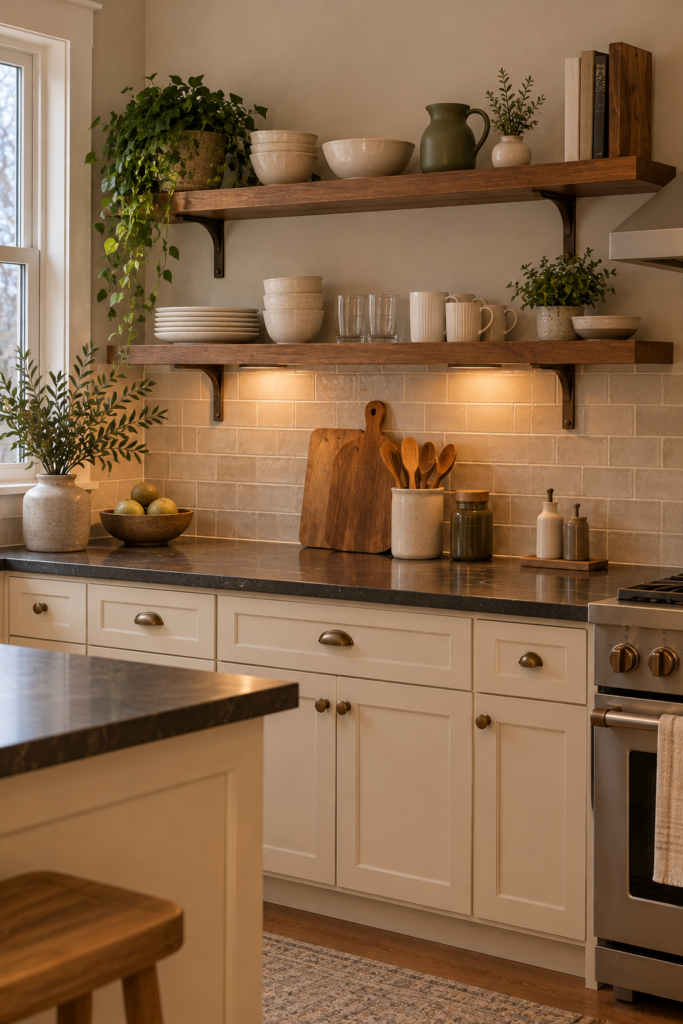
9. Add Stone-Look Surfaces
Stone-look countertops can complement an earthy kitchen without requiring natural stone throughout the room.
Choose a warm beige or cream surface with subtle variation, then pair it with wood cabinetry and simple hardware. A restrained pattern helps the countertop support the palette rather than dominate it.
Compare the surface with your cabinet finish and backsplash. Strong veining or dramatic patterning may compete with prominent wood grain or textured tile, while a quieter design can help the materials feel connected.
Check the product specifications for suitability, cleaning requirements, and resistance to the conditions expected in your kitchen. Different countertop materials have different care needs.
You can introduce stone-inspired texture through a countertop, backsplash, or another limited surface. The important thing is to balance the material with the surrounding finishes.
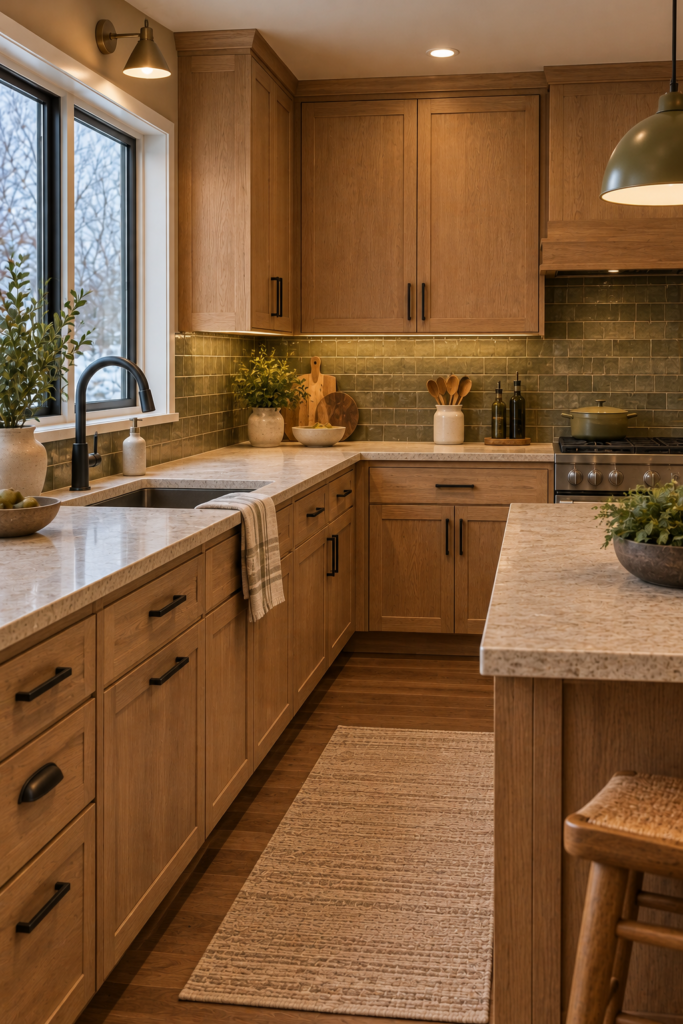
10. Use Earthy Green and Brown Together
Muted green and brown create a natural combination that feels grounded without becoming overly rustic.
Pair olive cabinetry with walnut flooring, cream countertops, and mushroom-colored walls. Each finish contributes something different: green introduces color, brown adds depth, and cream keeps the palette lighter.
Choose shades that work together under the kitchen’s actual lighting. A very dark brown combined with deep olive may feel heavy in a room with limited daylight, so lighter counters and suitable task lighting can help maintain balance.
You don’t need to repeat the exact same shade of green throughout the kitchen. Related tones can create a more layered appearance, particularly when the wood finishes provide continuity.
Keep accessories restrained and leave enough open countertop space for cooking. Natural materials should make the room feel inviting, not crowded.
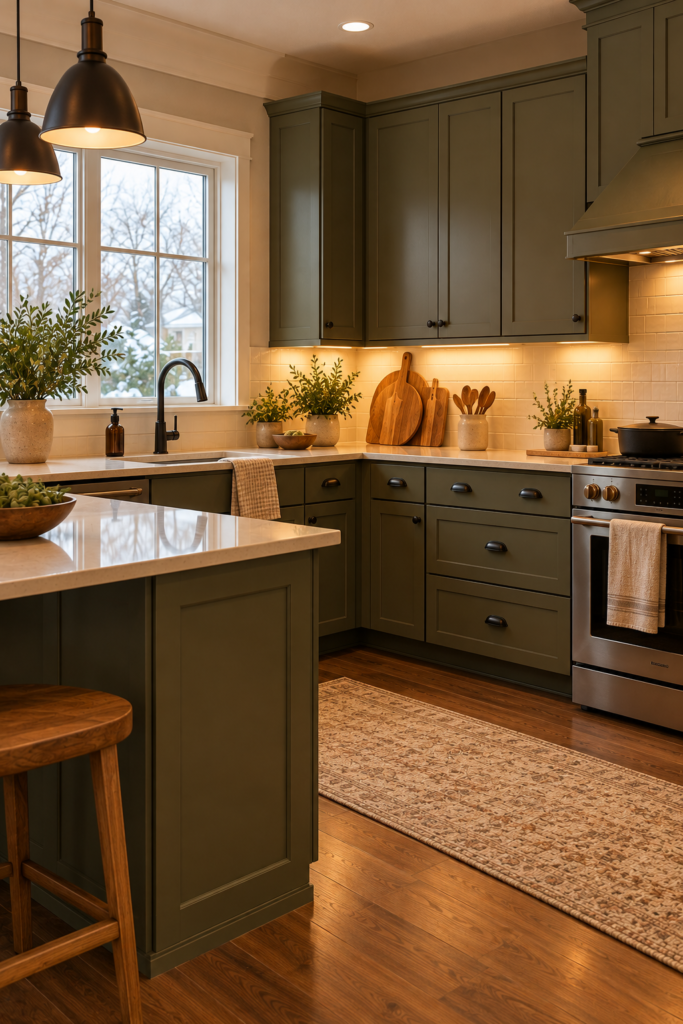
11. Add Earthy Burgundy Accents
Dusty burgundy introduces a deeper accent that can complement olive, walnut, and warm cream.
Use it sparingly through a ceramic bowl, a simple runner, or a fabric accent. The reddish undertone adds contrast without requiring a major change to the kitchen’s main finishes.
Consider the amount of burgundy already present in the room. If the cabinetry and backsplash have strong colors or patterns, a small accessory may be enough.
Choose textiles that are easy to maintain, and ensure that runners lie flat and stay clear of appliance doors and walkways. Fabric window treatments should remain away from cooking heat and repeated sink splashes.
Burgundy works best as a supporting color in this palette. Let the wood, green, and warm neutrals establish the overall character.
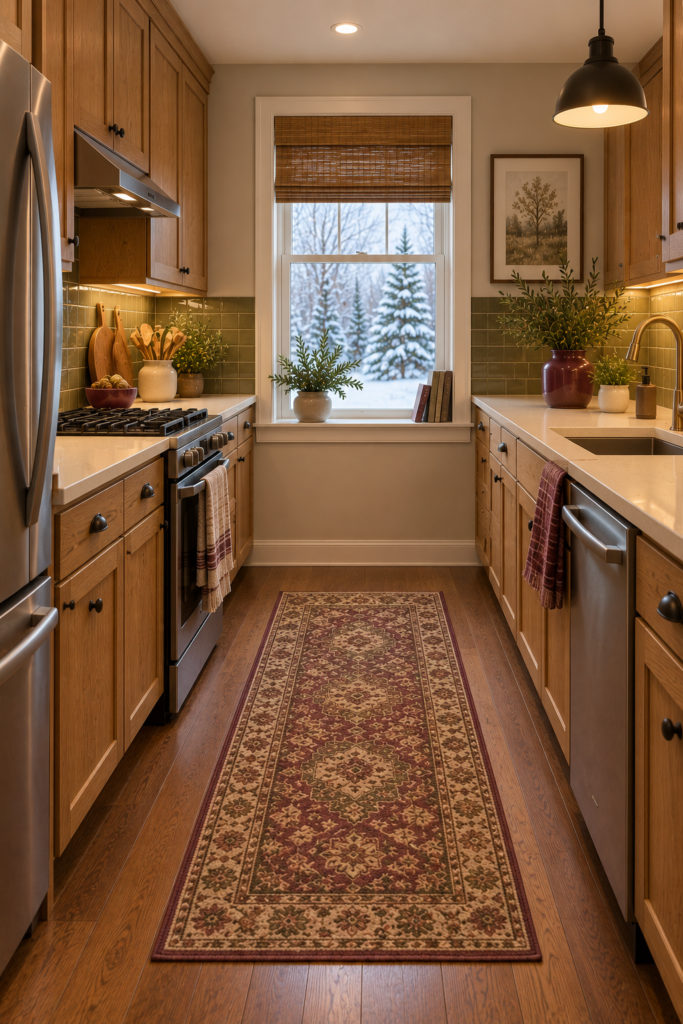
12. Create a Small Earthy Kitchen
An earthy palette can work particularly well in a compact kitchen when the colors and materials are carefully balanced.
Consider cream upper cabinets with walnut or olive lower cabinets, light countertops, and one textured backsplash. This creates interest without making every surface visually busy.
Choose a single dominant natural material, such as wood cabinetry, and use the remaining finishes to complement it. A limited palette can help the room feel cohesive even when the available counter and storage space is modest.
Under-cabinet task lighting can illuminate work surfaces that are shaded by upper cabinets. Preserve the natural light from windows and avoid oversized furniture or an island that restricts circulation.
Limit decorative accessories and prioritize convenient storage. A small kitchen can feel warm and characterful without filling every shelf and countertop.
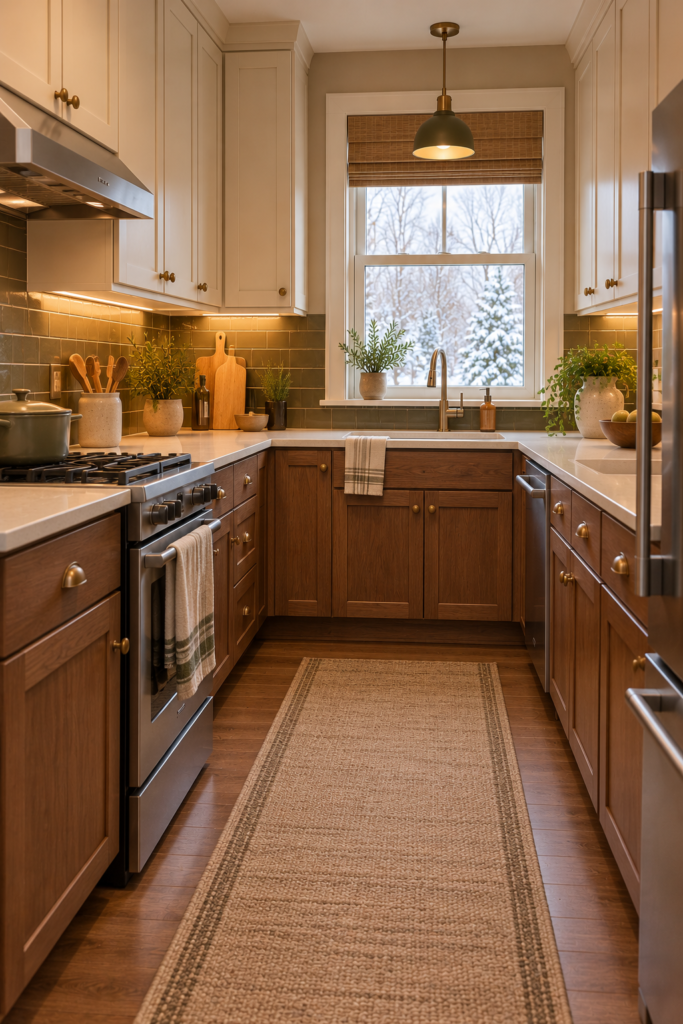
13. Layer a Complete Natural Earthy Kitchen
A fully layered earthy kitchen brings together warm wood, cream, muted olive, mushroom tile, terracotta, and a few carefully chosen accessories.
Start with the largest surfaces: cabinetry, flooring, countertops, and backsplash. Once those finishes work together, introduce smaller details through ceramics, woven textures, and restrained color accents.
Choose one dominant wood finish and a clear main color. Use terracotta or burgundy as supporting accents rather than introducing several equally strong colors.
Lighting is an important part of the finished palette. Warm lighting can emphasize wood grain and make cream surfaces feel inviting, while suitable task lighting keeps the work areas practical.
Compare materials together before making permanent changes. The most successful combinations feel connected because the undertones and textures complement one another.
Keep the countertops clear enough for everyday preparation. An earthy kitchen should feel warm and natural because of its materials, not because every surface is covered with decorative objects.
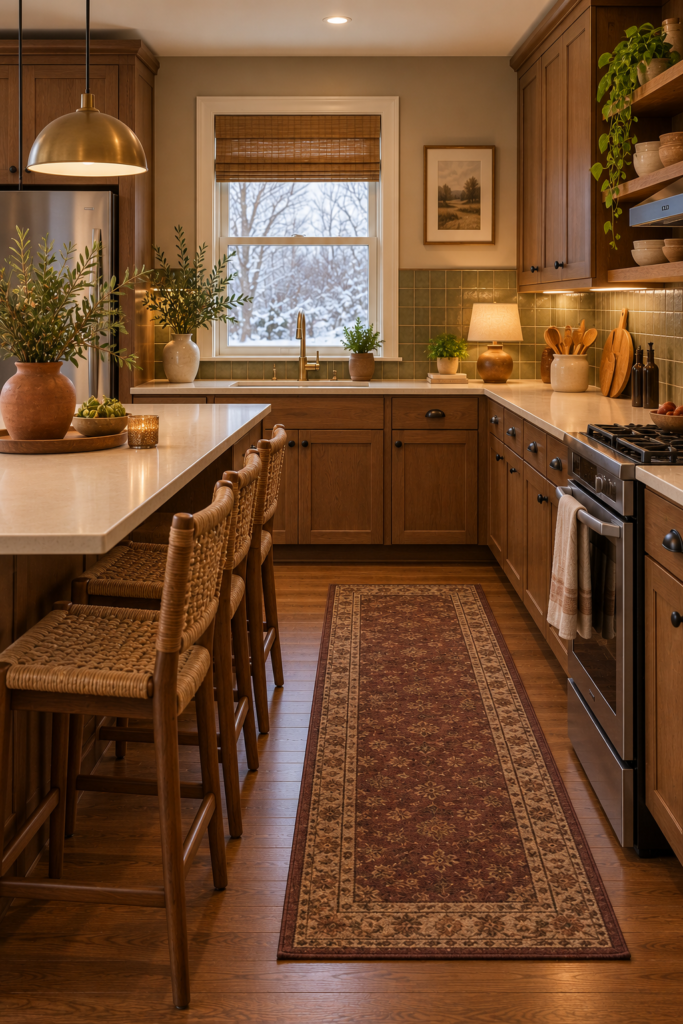
What Colors Make a Kitchen Feel Earthy?
Warm cream, walnut, oak, mushroom taupe, muted olive, camel brown, terracotta, and dusty burgundy all work well in an earthy kitchen.
Start with a neutral foundation, then introduce one or two stronger colors. Warm wood can provide depth, while cream keeps the palette light and olive adds a nature-inspired accent.
Compare paint, tile, and wood samples together under daylight and artificial lighting. Compatible undertones matter more than matching every finish exactly.
How to Make a Kitchen Look More Natural
Focus on material texture rather than themed decorations. Visible wood grain, ceramic tile, woven accents, simple pottery, and restrained greenery can create an organic atmosphere without adding clutter.
Choose finishes that suit the kitchen’s conditions and the amount of maintenance you’re comfortable with. Natural-looking materials still need to perform well around water, cooking heat, and everyday cleaning.
Keep decorative objects selective and let the larger surfaces establish the room’s character.
Natural Earthy Kitchen Ideas for Small Spaces
Use lighter colors on upper cabinets, keep countertops relatively clear, and choose one prominent natural material such as wood cabinetry or textured tile.
Add under-cabinet lighting where the work surfaces need it, and avoid oversized furniture that restricts movement. Preserve available daylight wherever practical.
Open shelving can introduce warmth, but it works best when used selectively and supported properly. Retain enough closed storage for items you don’t want on display.
Natural Kitchen Safety and Practicality
Choose countertops, flooring, tile, and finishes that are suitable for their intended use. Follow the manufacturer’s instructions for installation, cleaning, ventilation, and maintenance.
Keep baskets and textiles away from cooking heat. Secure shelves using supports appropriate for the wall construction and intended load, and ensure that runners lie flat and remain clear of appliance doors.
Maintain required appliance ventilation and clearances. Keep walkways, windows, outlets, switches, vents, and safety equipment accessible.
Electrical, plumbing, gas, structural, and ventilation changes should be assessed and completed by appropriately qualified professionals.
Final Thoughts
The best natural earthy kitchen ideas start with materials rather than decorations. Warm wood, cream, muted olive, mushroom taupe, and textured tile provide a versatile foundation, while terracotta and burgundy can introduce additional depth.
Choose a palette that suits your existing finishes, keep the details restrained, and prioritize practical storage and clear work surfaces.
A warm, organic kitchen doesn’t need to look rustic or themed. When the materials work together, the room can feel natural, welcoming, and comfortable for everyday cooking.
