
14 Light Academia Bedroom Ideas for a Cozy Scholarly Aesthetic
A light academia bedroom combines the charm of old libraries, classic literature, and traditional interiors with a bright, welcoming color palette. Instead of the dark woods and dramatic shadows often associated with dark academia, this aesthetic embraces warm cream walls, natural light, vintage-inspired furniture, and soft, comfortable textiles.
The result is a bedroom that feels thoughtful and lived-in, with a quiet scholarly atmosphere. A walnut writing desk, a small collection of favorite books, botanical illustrations, and an inviting reading chair can give the space character without making it feel cluttered.
One of the best things about light academia decor is its flexibility. You don’t need antique furniture, floor-to-ceiling bookshelves, or a large bedroom to create the look. Simple changes, such as adding a plaid throw, switching to warmer lighting, or displaying a few framed prints, can make a noticeable difference.
The key is balancing nostalgic details with everyday comfort. Your bedroom should still provide practical storage, a comfortable bed, and enough space to move around easily.
These 14 light academia bedroom ideas explore ways to combine classic furniture, soft colors, literary details, and cozy textures for a space that feels timeless, peaceful, and personal.
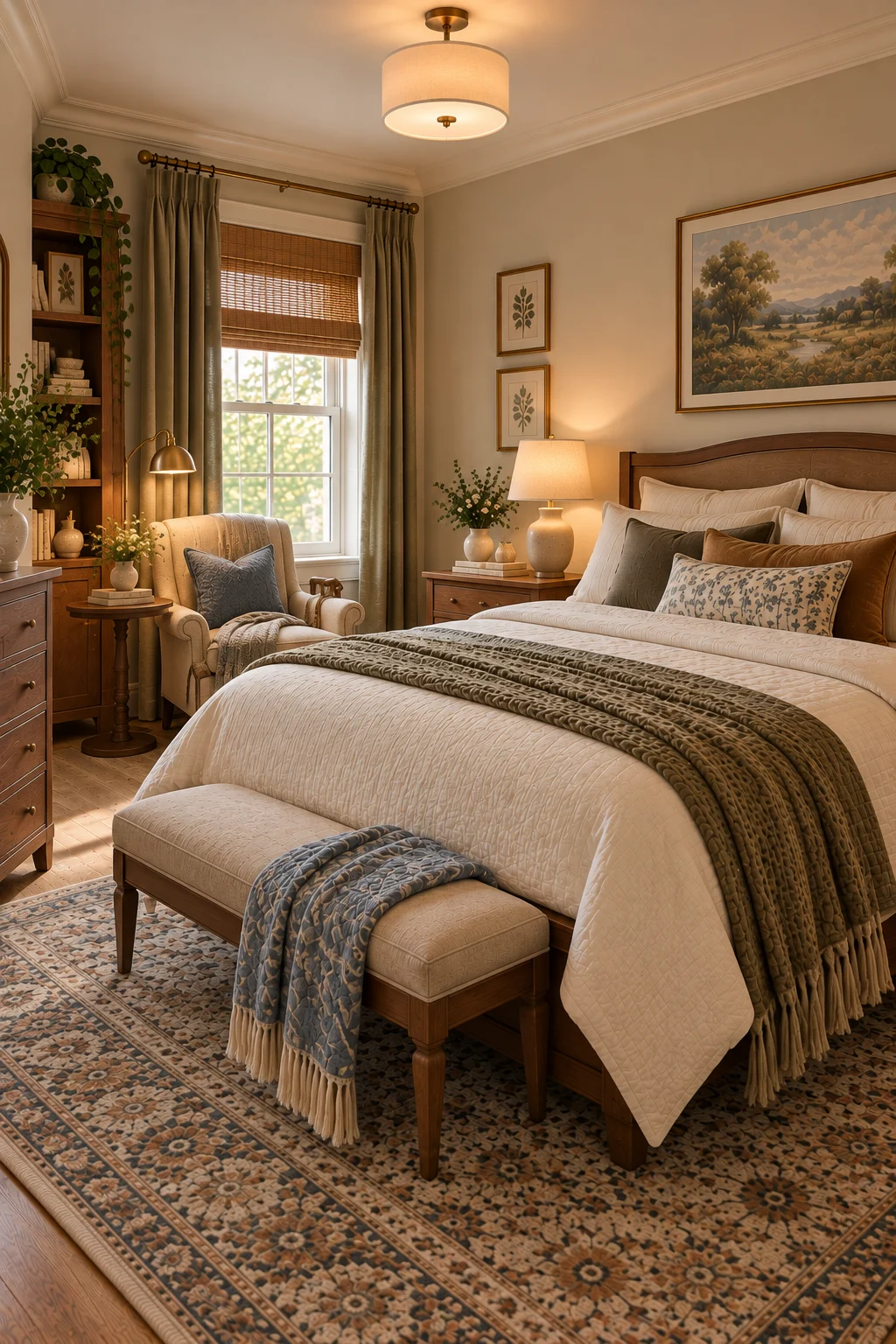
1. Warm Cream Walls and Walnut Furniture
Warm cream walls create an inviting foundation for a light academia bedroom, especially when paired with the rich grain of walnut furniture.
Choose a cream paint with a subtle beige or ivory undertone rather than a stark white. The warmer shade gives the room a softer appearance and complements traditional furniture beautifully.
Introduce walnut through a bed frame, dresser, or compact nightstand. Pieces with simple silhouettes and classic proportions work particularly well because they feel timeless without becoming overly formal.
Complete the look with ivory bedding, a camel throw, and a small muted-olive accent. These colors add gentle contrast while preserving the light, scholarly atmosphere.
A framed landscape or botanical print can bring character to an otherwise simple wall.
Styling tip: Test cream paint samples beside your existing flooring and furniture. Some shades appear yellow under warm bulbs, while others look gray in cooler daylight.
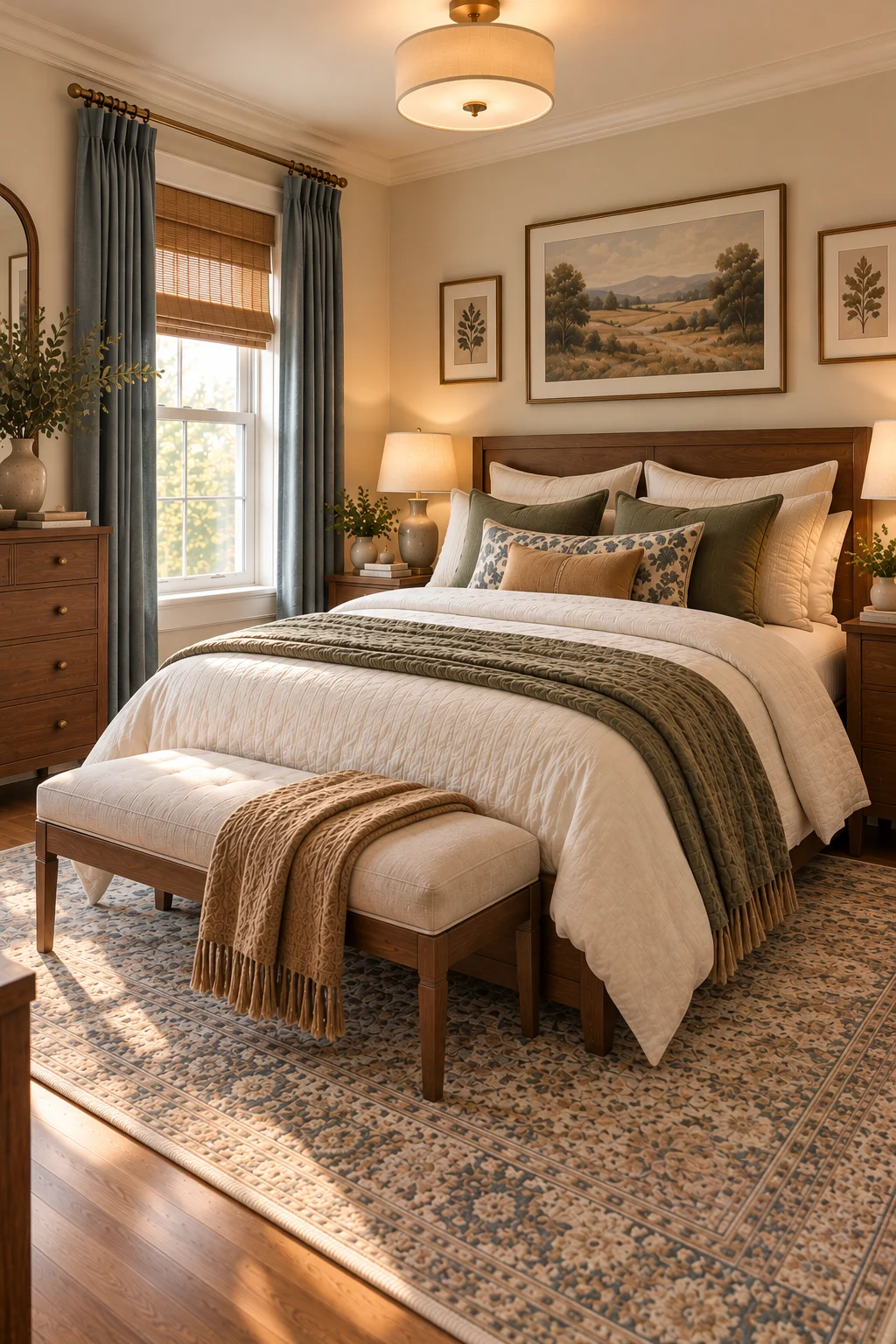
2. Classic Desk With a Practical Task Lamp
A classic writing desk is one of the most recognizable elements of light academia style. It creates a dedicated place for reading, journaling, studying, or working while adding traditional character to the bedroom.
Choose a compact walnut or oak desk with a simple rectangular top and one or two drawers. A vintage-inspired design can provide the right atmosphere without taking up excessive floor space.
Position the desk near a window when the layout allows, taking care to control glare on a computer screen.
Add a practical task lamp with an aged-brass-look or brushed-metal finish. A small ceramic pencil holder, notebook, and a few frequently used books complete the arrangement.
Keep the desktop mostly clear so it remains useful rather than becoming another decorative surface.
Practical tip: Choose a desk and chair that support comfortable working posture. Check the available legroom and chair clearance before purchasing, especially in a small bedroom.
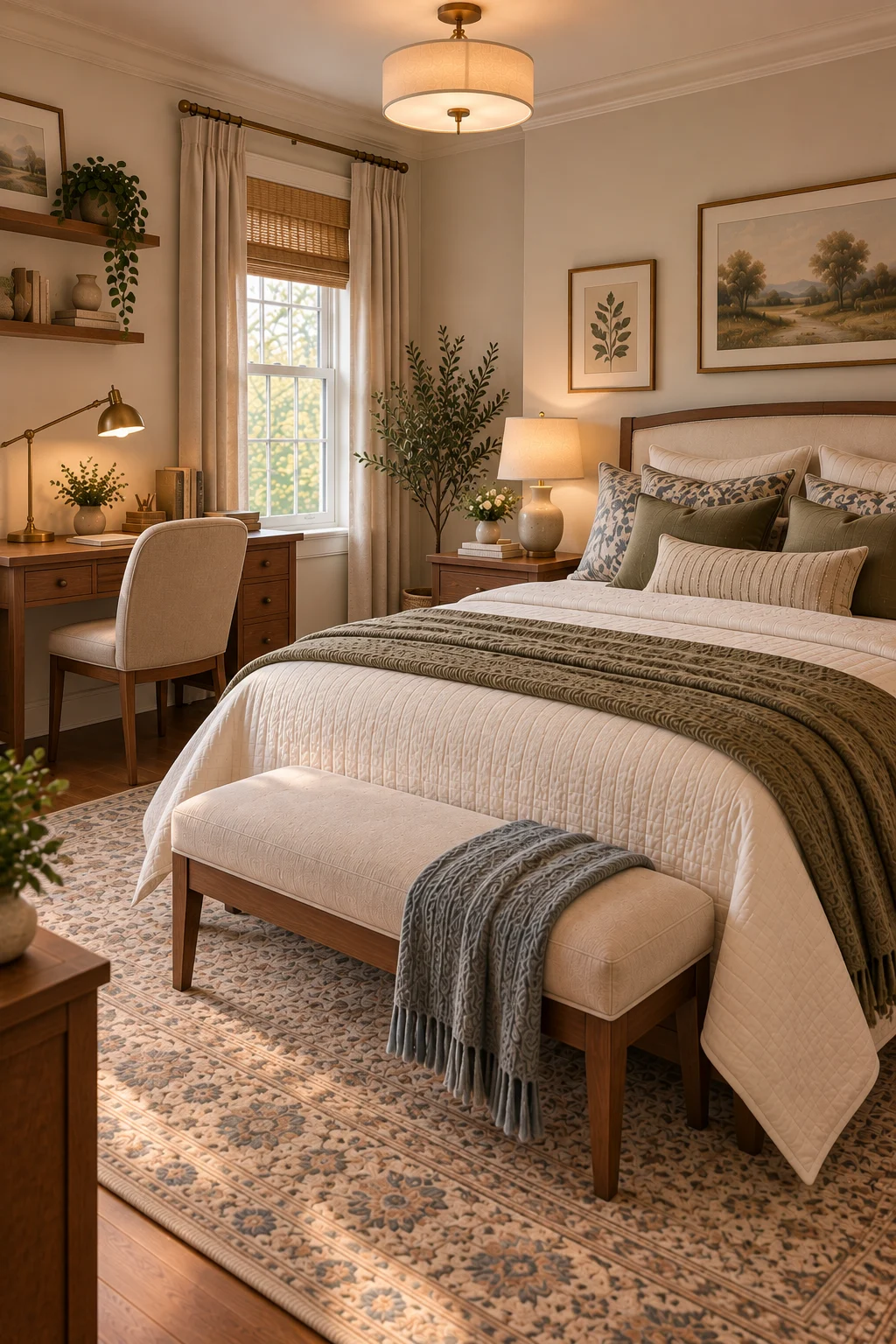
3. Muted Olive Bedding Accents
Muted olive introduces a gentle, nature-inspired color that complements the warm neutrals of light academia decor.
Start with an ivory or cream duvet, then add one or two olive-colored cushions or a lightweight throw.
Choose a soft, slightly gray-green shade rather than a bright or saturated green. The muted color feels more traditional and works naturally with walnut furniture.
Layer the olive accents with oatmeal linen, camel textiles, or a subtle striped pillow for additional depth.
Keep the larger bedding pieces neutral so the bed remains light and inviting.
A botanical print or small ceramic accessory in a similar green can help connect the bedding to the rest of the room.
Styling tip: Repeat muted olive in only a few places. A cushion, artwork detail, and small accessory are often enough to create a coordinated palette without making the bedroom feel overly green.
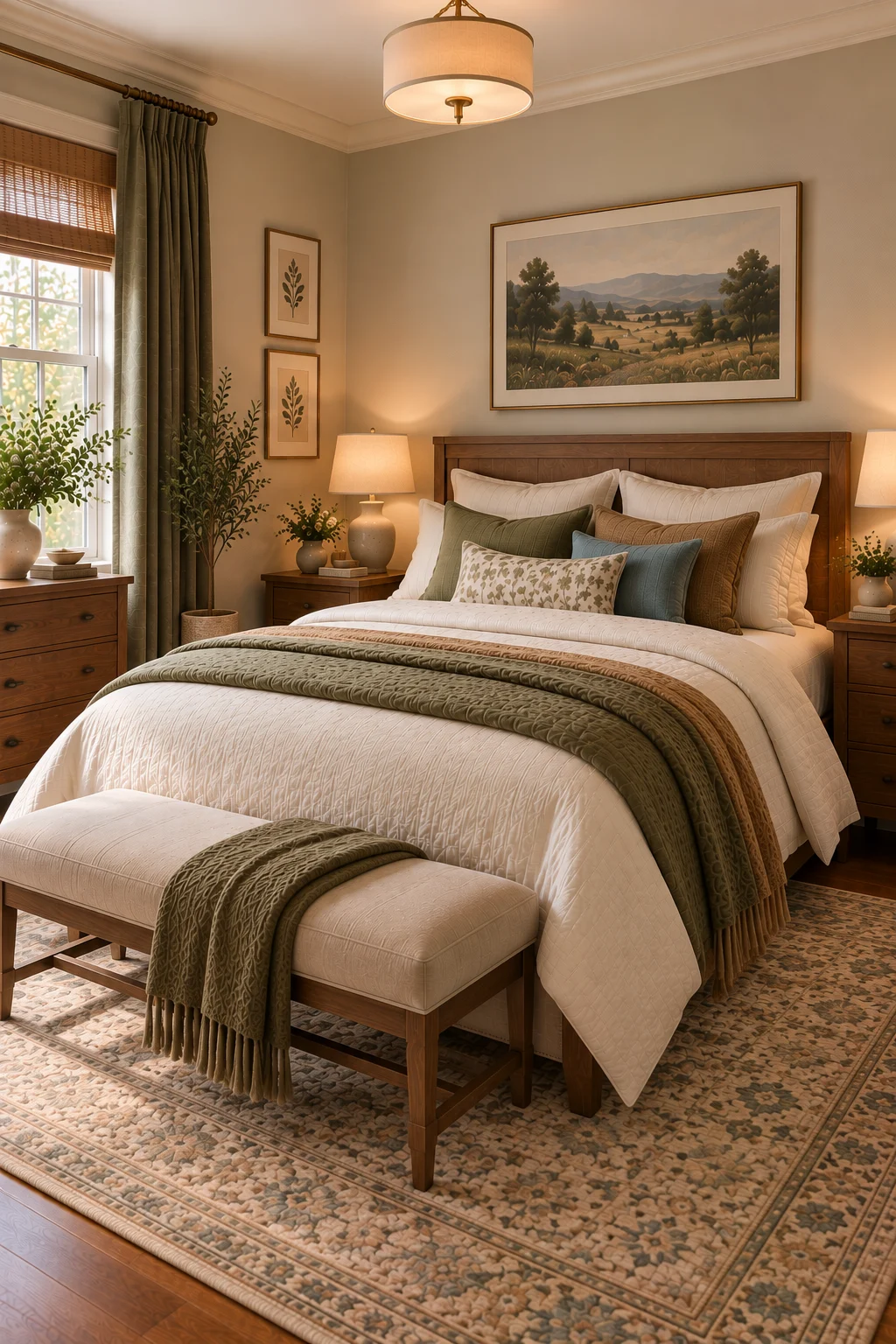
4. Botanical Prints in Simple Frames
Botanical illustrations bring a natural-history-inspired detail to a light academia bedroom while keeping the walls elegant and understated.
Look for prints featuring ferns, wildflowers, herbs, or delicate branches. Illustrations with cream backgrounds and muted green tones work especially well.
Display two or three prints in simple walnut, oak, or aged-brass-look frames.
Arrange them above a dresser or along a clear side wall where they can be appreciated without competing with other decorations.
Keep the spacing consistent and allow some empty wall space around the arrangement.
For a more personal touch, combine botanical artwork with a small landscape or a framed illustration of a favorite place.
Budget tip: Botanical prints are an affordable way to introduce the light academia aesthetic without changing the furniture or paint. Use lightweight frames and suitable wall-mounting hardware.
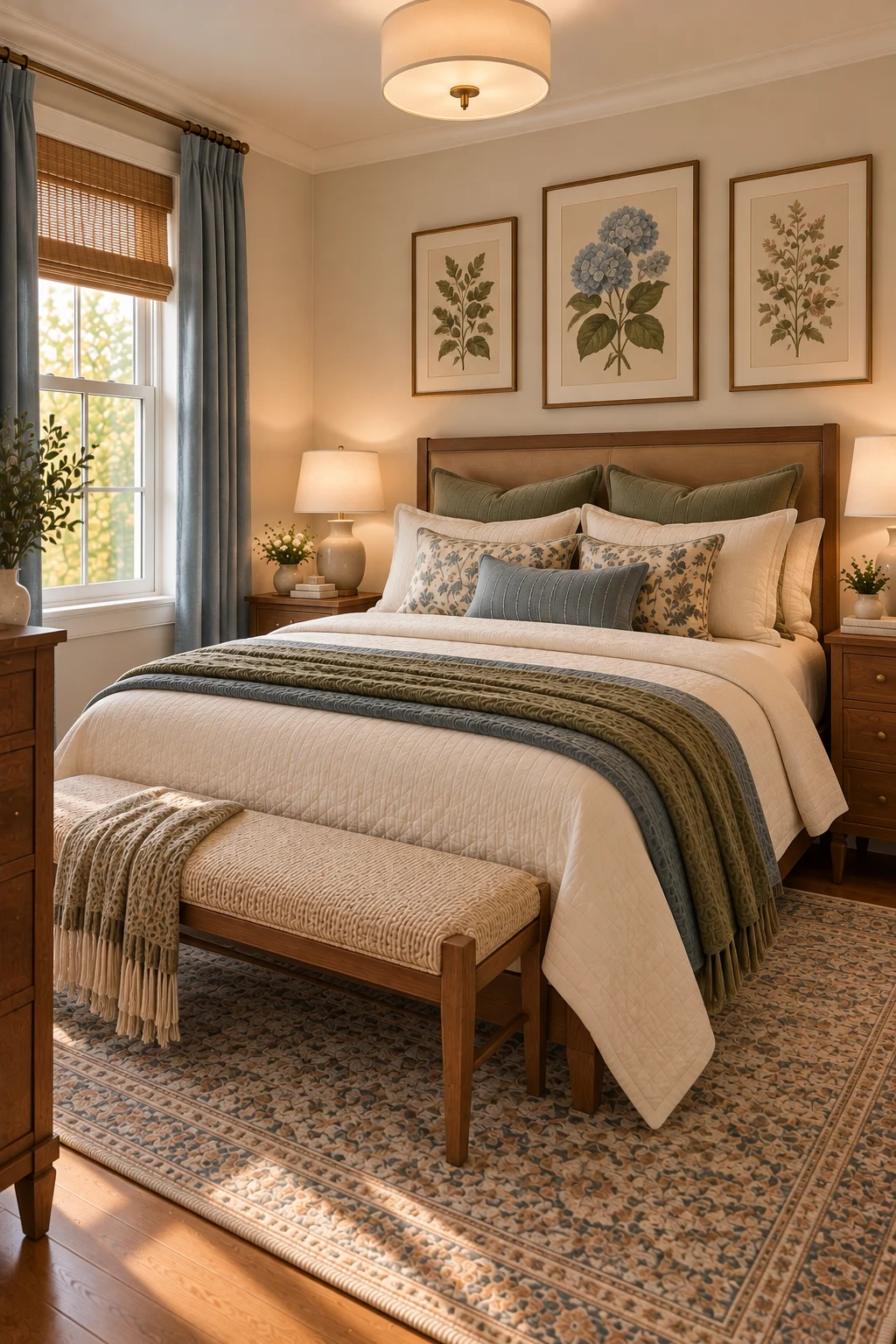
5. Cream and Camel Layered Bedding
Cream and camel bedding creates the cozy, understated elegance that makes a light academia bedroom feel welcoming.
Begin with a cream cotton or linen duvet and matching pillowcases.
Add a camel-colored throw at the foot of the bed to introduce warmth and visual contrast.
Layer in an oatmeal cushion or a subtly textured coverlet for a relaxed, collected appearance.
The combination works particularly well with walnut furniture because the warm brown tones relate naturally to the wood grain.
Keep patterns minimal and let the different fabrics provide visual interest.
For a more traditional touch, choose a quilted coverlet or a throw with a restrained woven pattern.
Comfort tip: Select bedding based on your climate and sleeping preferences rather than appearance alone. Lightweight cotton and linen are useful for layering, while heavier throws can be added during cooler months.
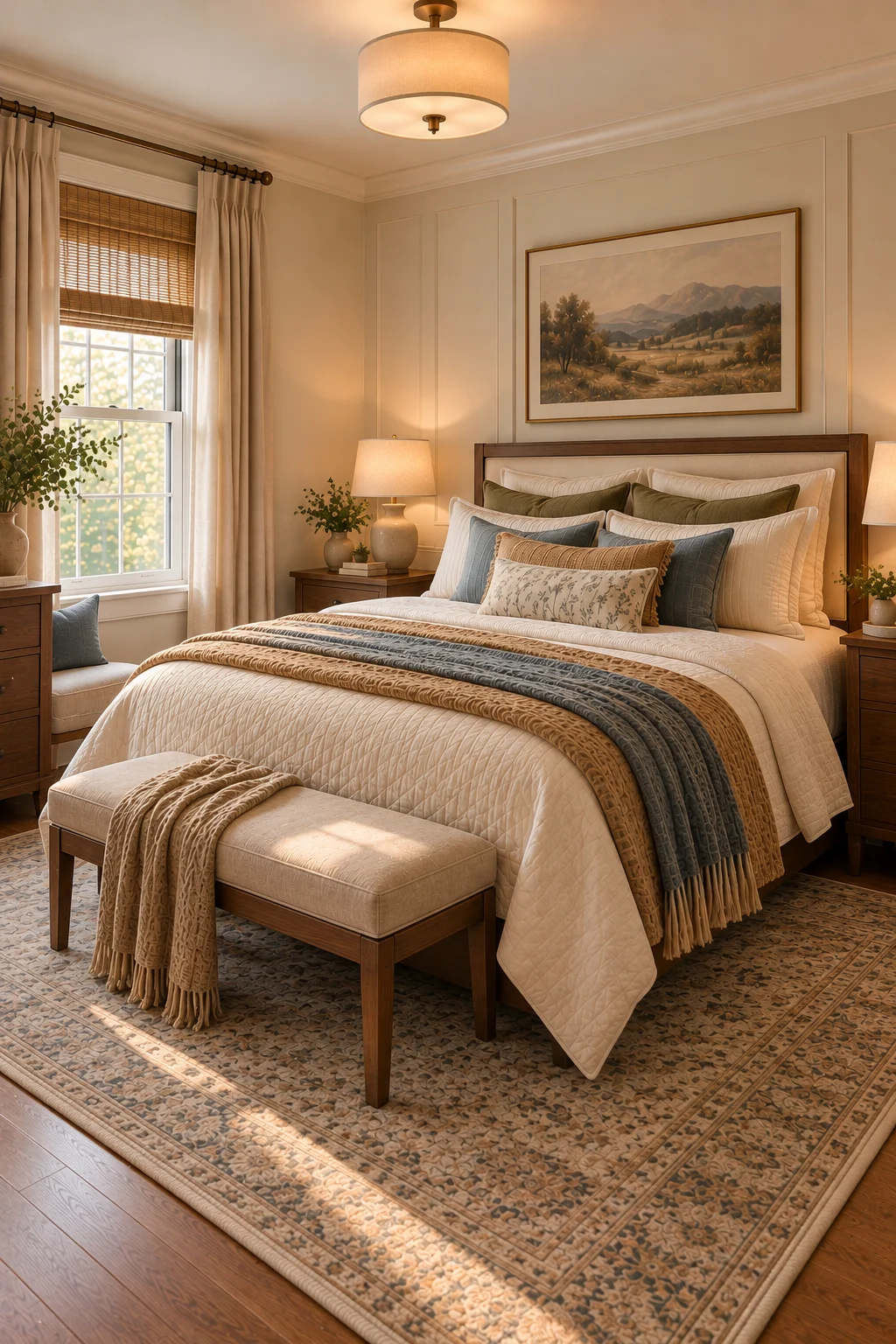
6. Vintage-Look Reading Chair
A comfortable reading chair creates a quiet retreat within the bedroom and reinforces the literary character of light academia style.
Choose a chair with a classic shape, such as a compact upholstered armchair or a simple wooden frame with supportive cushions.
Upholstery in camel, mushroom, or warm beige keeps the arrangement soft and versatile.
Place the chair near a window or in an unused corner, leaving enough room to sit comfortably and move around it.
Add a small side table for books and a warm reading lamp for evenings.
A folded plaid throw over the chair introduces another traditional detail without requiring additional decoration.
Layout tip: Measure the chair’s full footprint before buying. If the room is narrow, choose a smaller occasional chair rather than forcing an oversized armchair into the space.
7. Small Bookcase With Organized Shelves
A small bookcase can give a light academia bedroom its scholarly personality while providing practical storage.
Choose a narrow walnut or oak bookcase that fits comfortably along an available wall.
Arrange favorite books upright with bookends, leaving some breathing room between groups.
A small ceramic vase, framed print, or decorative box can add variety without overwhelming the shelves.
Keep frequently read books within easy reach and place heavier volumes on lower shelves.
For a more cohesive appearance, repeat the wood finish used in the bed frame or desk.
Organization tip: Avoid filling every shelf with decorative objects. A light academia bedroom feels more authentic when books are genuinely accessible and the storage supports everyday reading habits. Secure the bookcase against tipping according to the manufacturer’s guidance.
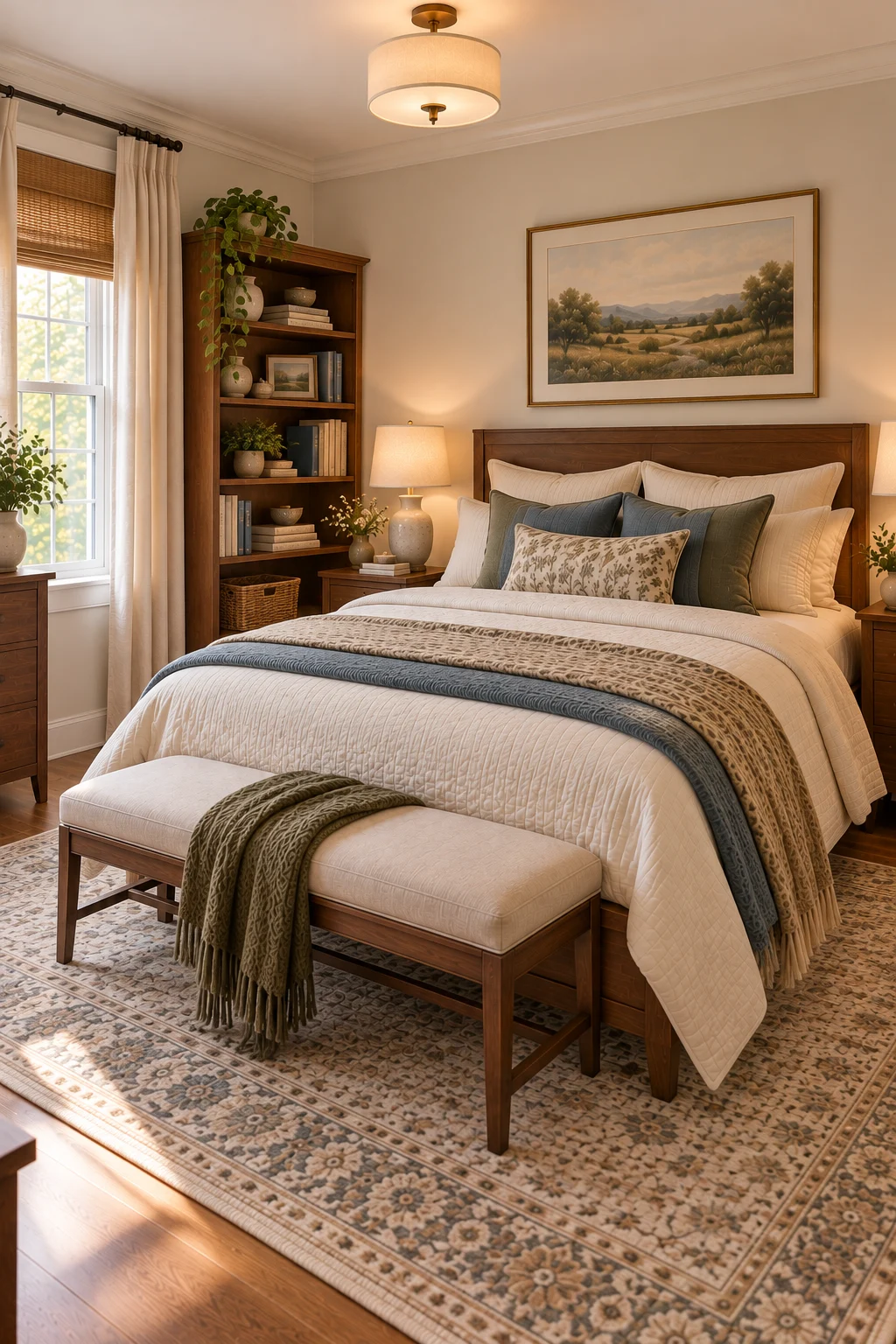
8. Dusty Blue Curtains
Dusty blue curtains introduce a subtle hint of color while maintaining the bright, calm atmosphere of a light academia bedroom.
Choose a soft blue-gray fabric with a muted finish rather than a vivid blue.
Floor-length curtains can frame the window elegantly and complement cream walls, walnut furniture, and camel bedding.
Natural linen-look fabrics or matte woven cotton blends work particularly well with this style.
Use a simple curtain rod in aged brass or dark bronze for a classic finishing touch.
During the day, the curtains can soften incoming light. In the evening, they help create a more enclosed and restful feeling.
Styling tip: Repeat dusty blue in a small cushion or piece of artwork if you want the color to feel more integrated. Keep curtains clear of heating equipment and avoid fabric lengths that create a tripping hazard.
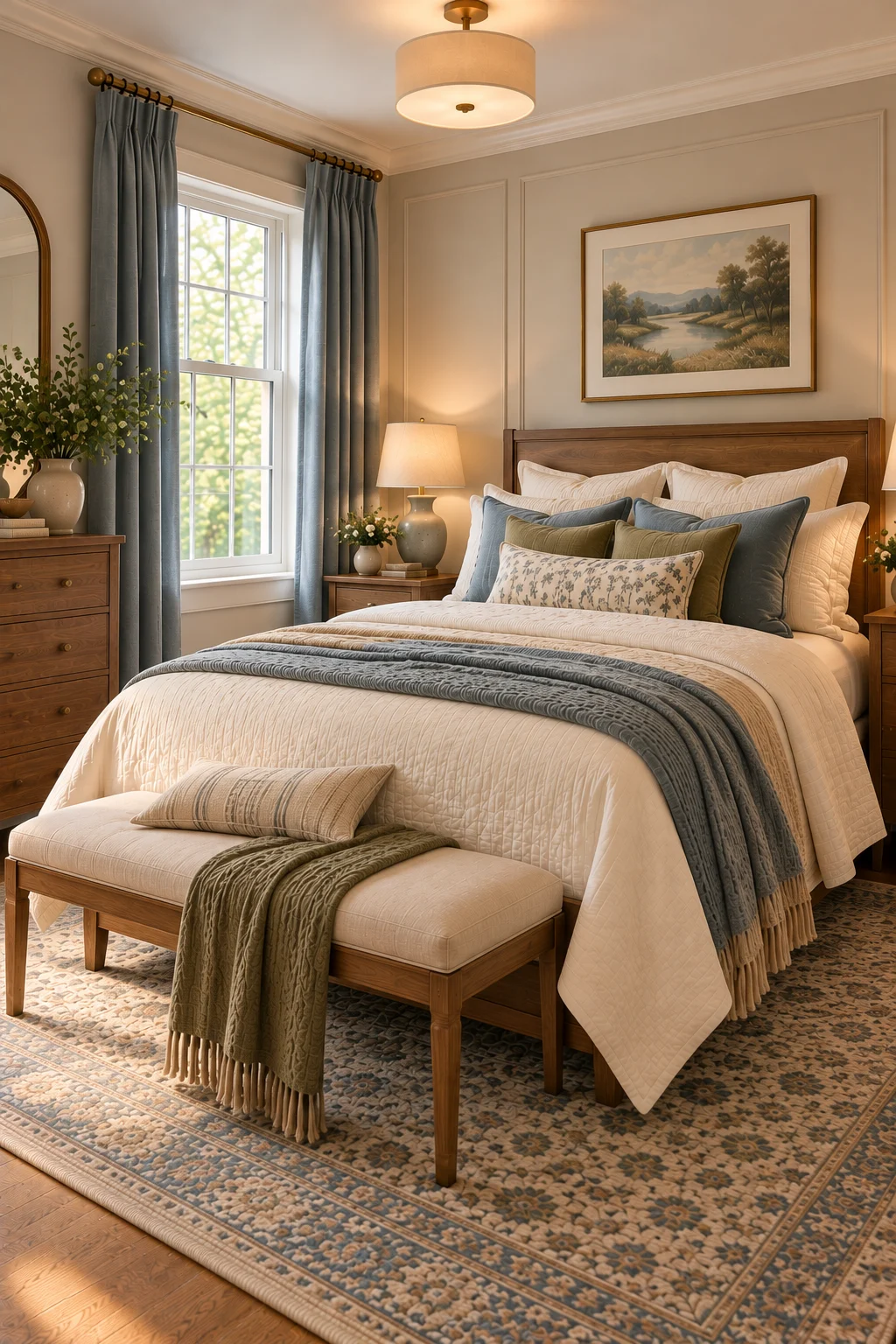
9. Soft Plaid Throw Blanket
A plaid throw brings a traditional, bookish detail to a light academia bedroom without requiring a major decorating change.
Choose a soft woven blanket with a restrained plaid pattern in camel, cream, muted olive, or dusty blue.
Drape it casually across the foot of the bed or fold it over the back of a reading chair.
Pair the throw with plain cream bedding so the pattern remains noticeable without competing with other textiles.
A walnut bed frame, vintage-style lamp, and small stack of books complete the cozy scholarly atmosphere.
For a lighter look, choose a plaid with fine lines and subtle contrast rather than large, bold checks.
Budget tip: A throw blanket is an easy seasonal update. Choose a machine-washable material that feels comfortable against the skin and can be used regularly rather than only for decoration.
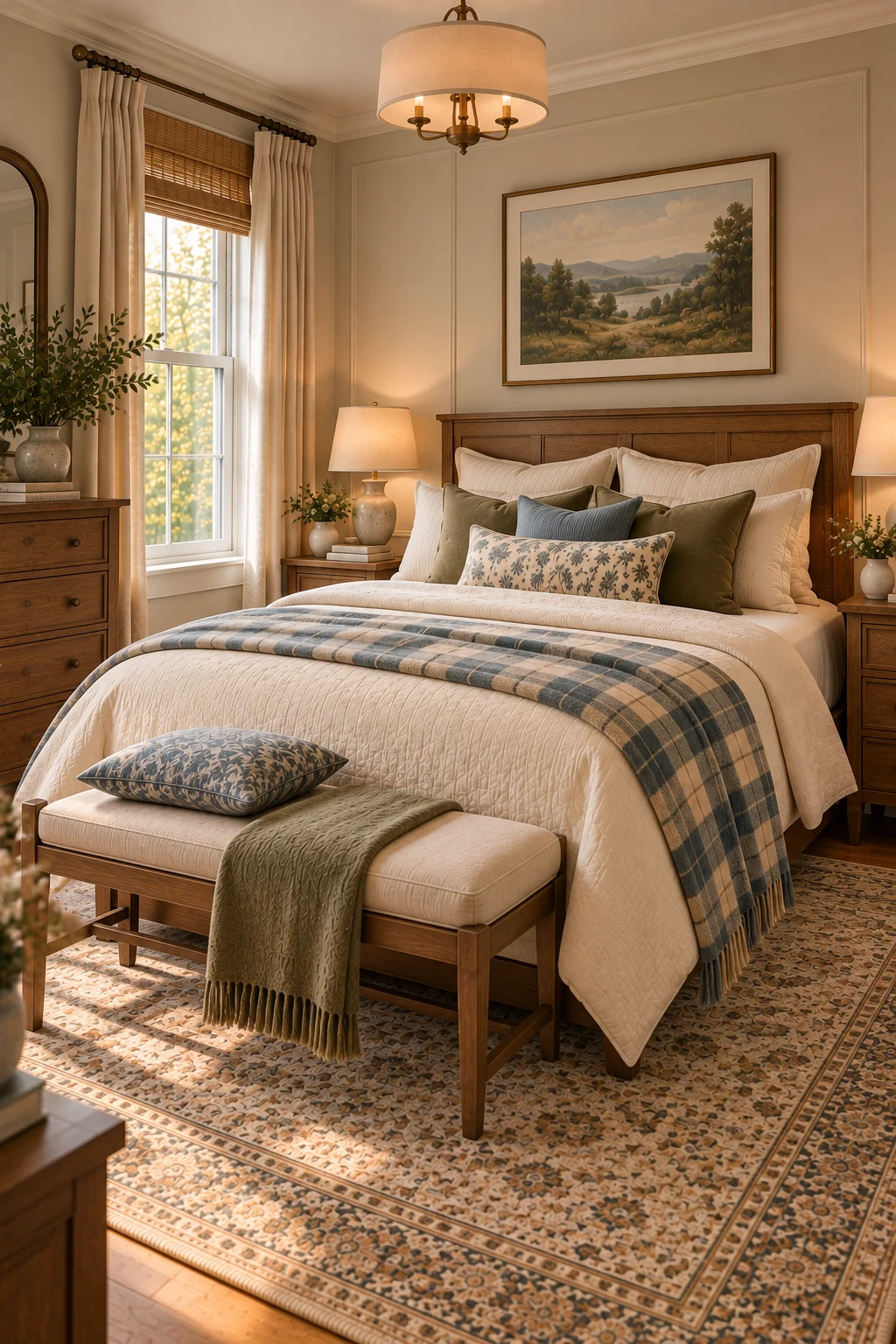
10. Aged-Brass-Look Bedside Lamp
An aged-brass-look bedside lamp introduces a vintage-inspired detail while providing the practical lighting needed for reading.
Choose a lamp with a simple traditional silhouette and a warm metallic finish.
An ivory linen shade softens the light and complements cream bedding and walnut furniture.
Place the lamp on a compact nightstand with enough space remaining for a book, glasses, or phone.
The warm metal finish adds gentle contrast without making the room feel overly formal.
If you have matching nightstands, consider using a pair of coordinated lamps for a balanced arrangement.
Lighting tip: A warm-white LED bulb around 2700K–3000K can create a comfortable evening atmosphere. Choose adequate brightness for reading, follow the fixture’s bulb specifications, and keep cords away from walking routes.
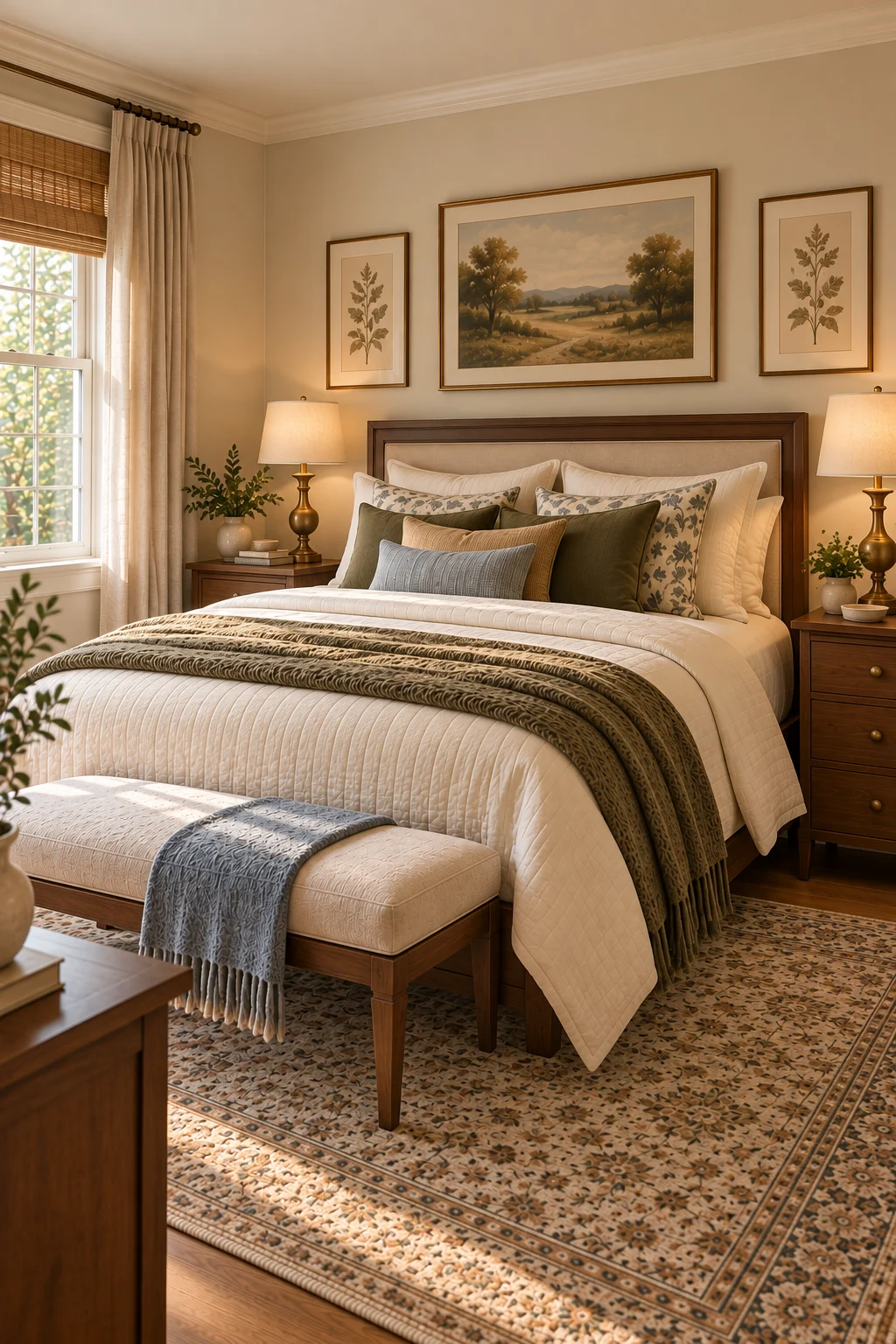
11. Simple Picture-Frame Wall Molding
Picture-frame wall molding introduces subtle architectural detail that gives a bedroom a more traditional appearance.
Use narrow trim pieces to create simple rectangular panels on a clear wall.
Painting the molding and wall the same warm cream color creates a refined, understated effect.
This treatment works particularly well behind the bed or along a dresser wall, where the panels can add interest without requiring additional artwork.
Keep the proportions appropriate for the room. In a bedroom with a standard eight-foot ceiling, restrained molding often looks more balanced than oversized decorative panels.
Pair the finished wall with walnut furniture, cream bedding, and a classic bedside lamp.
Installation tip: Plan the panel dimensions carefully before cutting trim. Check for outlets, switches, and other wall features, and use suitable installation methods for the wall surface. Paintable lightweight molding can be an approachable option for a modest update.
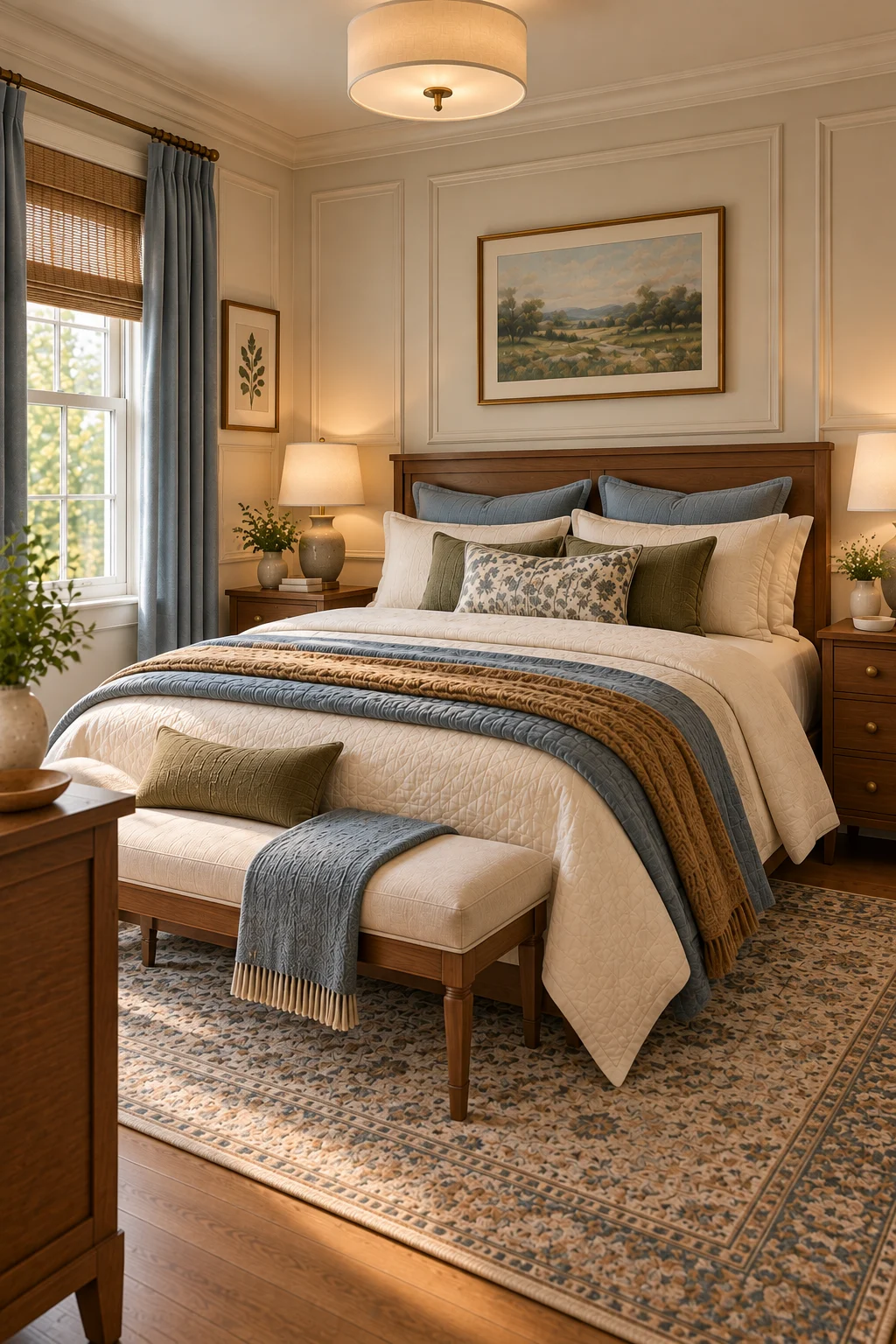
12. Natural Wood and Woven Textures
Natural wood and woven textiles prevent a light academia bedroom from feeling overly formal or staged.
Introduce warm wood through a walnut bed frame, oak dresser, or small bedside table.
Then add woven cotton cushions, a low-pile rug, or a natural-fiber storage basket.
The contrast between smooth wood and tactile fabrics creates visual depth while preserving a soft neutral palette.
Choose cream and oatmeal textiles to keep the room bright, then introduce a muted-olive accent if you want a little more color.
For a cohesive arrangement, repeat similar wood tones in two or three pieces rather than mixing many unrelated finishes.
Practical tip: Select baskets and rugs based on how they will be used. Choose durable materials, use a suitable nonslip rug pad, and keep floor accessories away from frequently used walking routes.
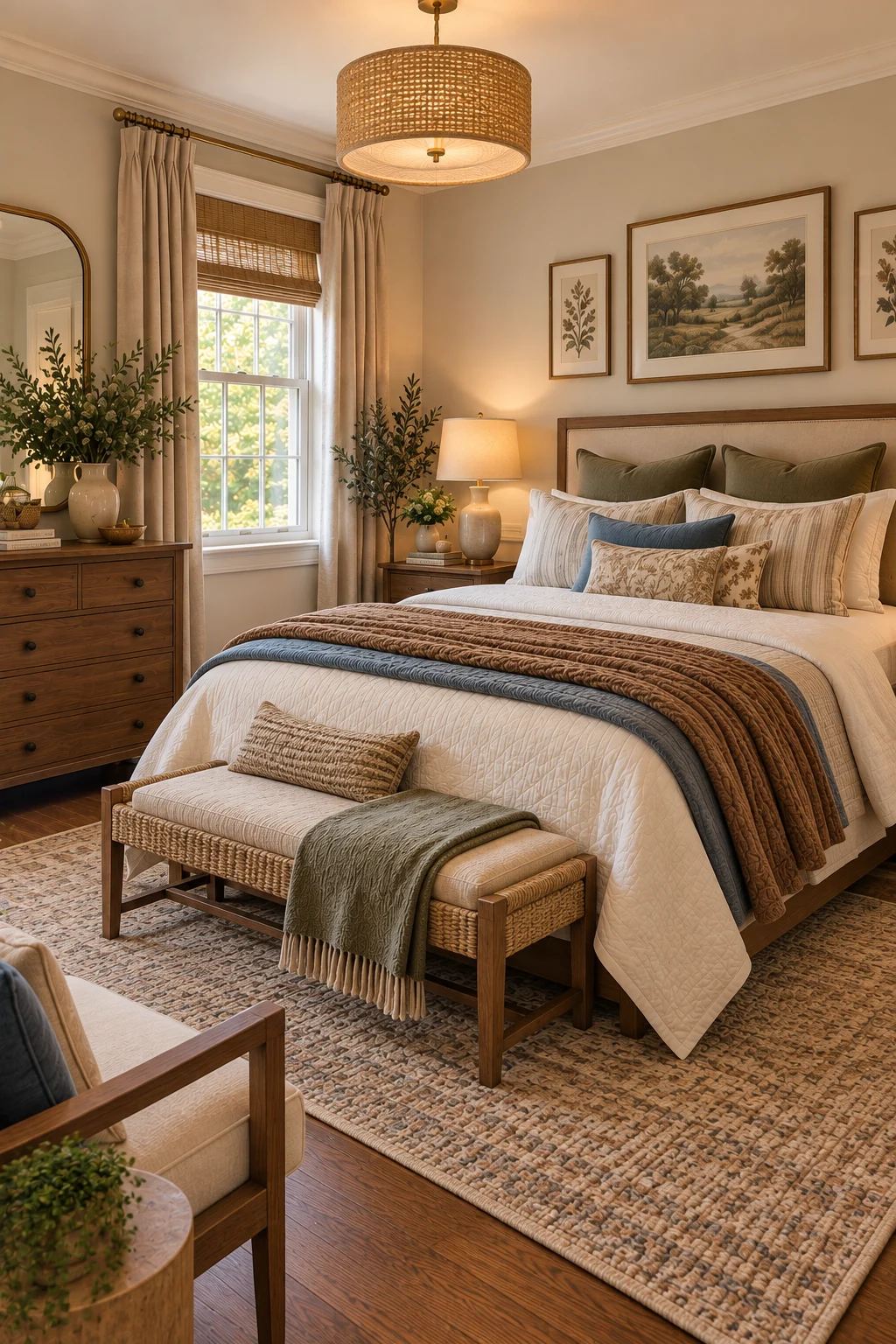
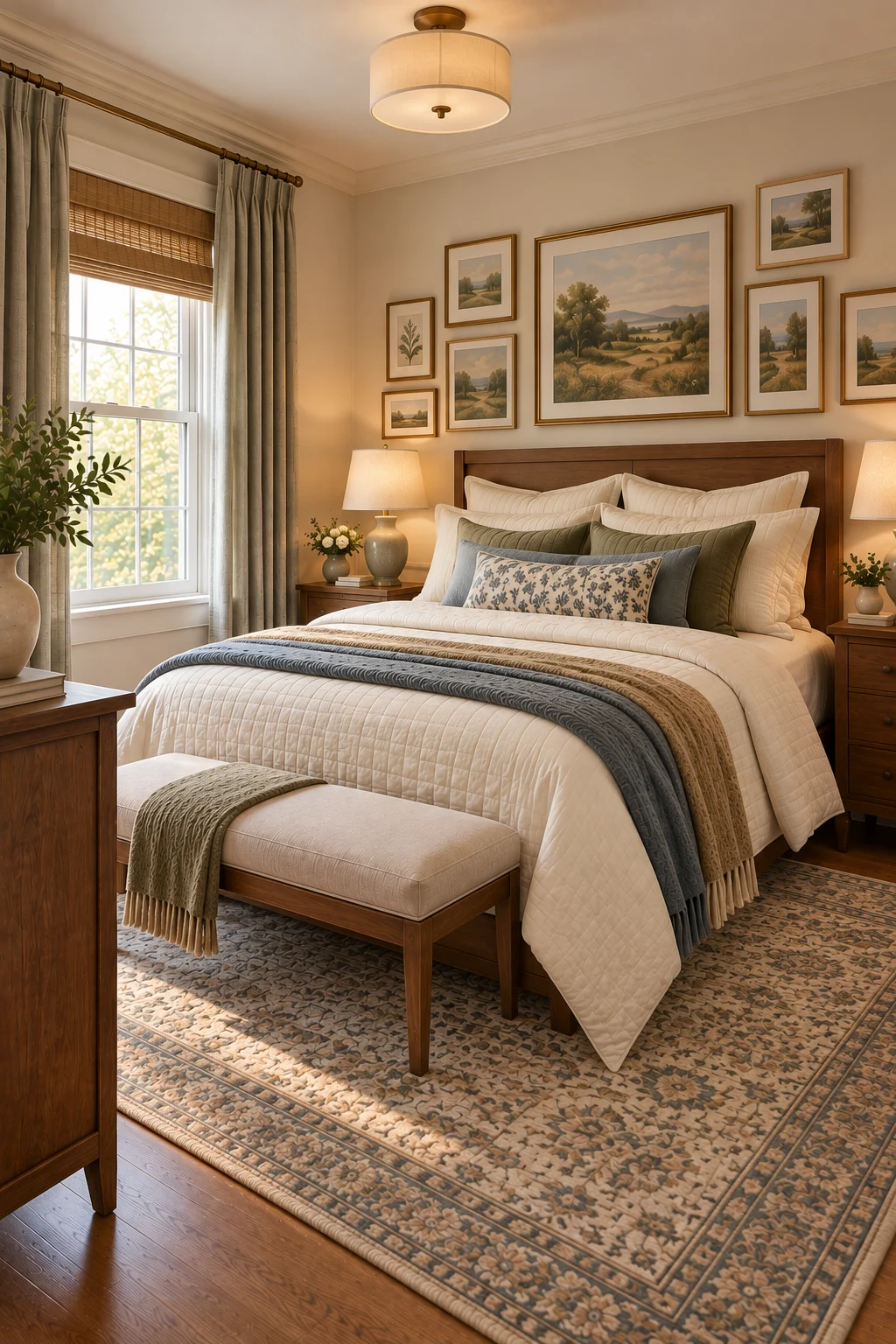
13. Restrained Gallery of Landscapes
A small gallery of landscape artwork brings a quiet, contemplative atmosphere to a light academia bedroom.
Choose traditional-looking landscapes featuring countryside scenes, trees, gardens, or softly colored hills.
Look for muted greens, dusty blues, warm browns, and cream tones that coordinate with the rest of the room.
Display three or four pieces in simple wooden or aged-brass-look frames.
Arrange the artwork above a dresser or along a clear side wall, maintaining consistent spacing between frames.
Mixing one slightly larger print with a few smaller pieces can create a collected appearance without looking overly symmetrical.
Styling tip: Avoid combining too many unrelated art styles. A restrained selection of landscapes with similar color palettes creates a more cohesive scholarly atmosphere. Mount frames securely and avoid heavy artwork directly above sleeping areas.
14. Warm Evening Reading Corner
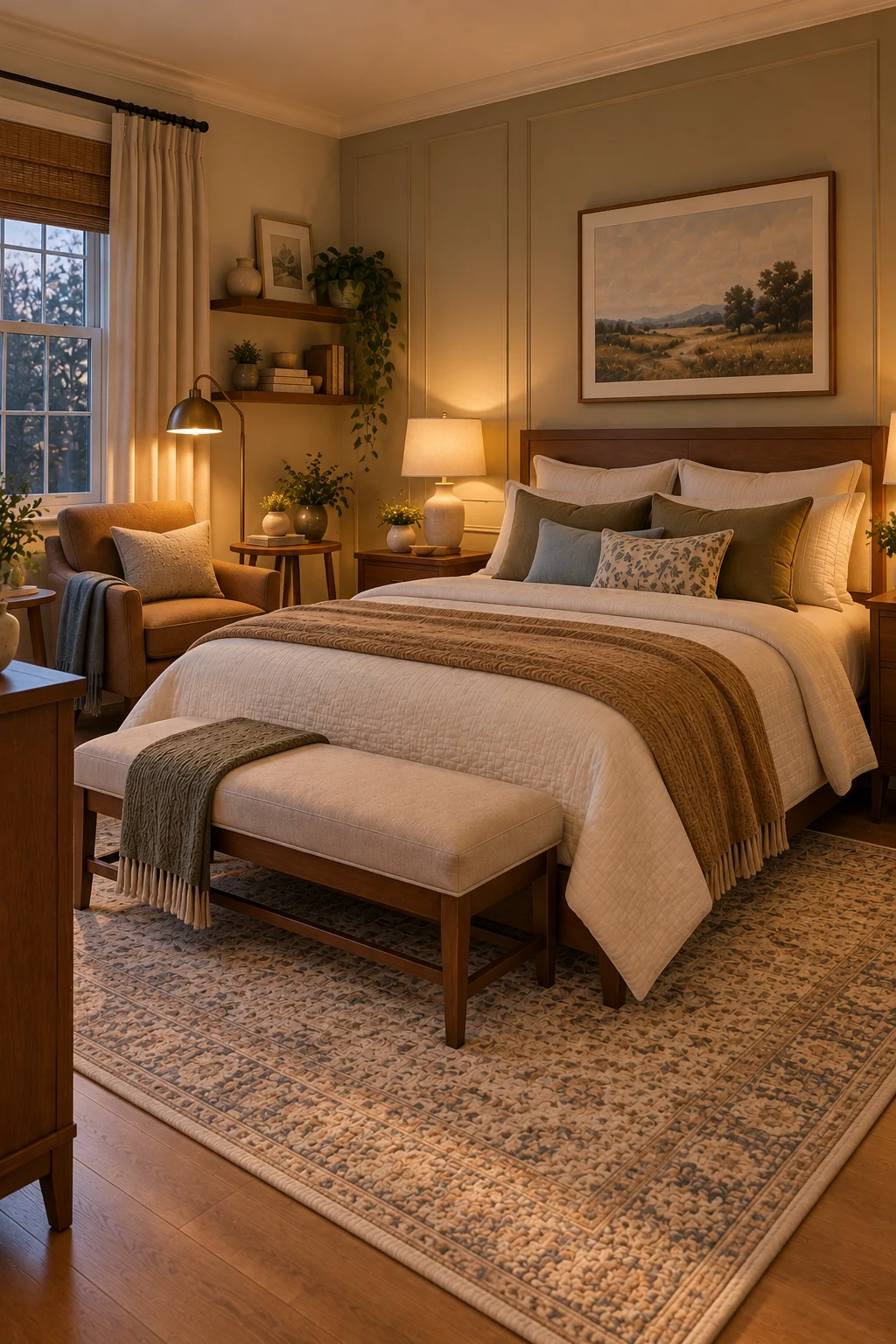
A warm evening reading corner brings together the most inviting elements of light academia: books, comfortable seating, traditional materials, and gentle lighting.
Choose a compact upholstered chair in camel, mushroom, or warm beige and position it in a quiet corner.
Add a small walnut side table and an adjustable reading lamp that directs light onto the pages without creating glare.
A soft plaid throw and a cushion make the chair more comfortable during cooler evenings.
Keep a few favorite books nearby on a small shelf or table, but avoid stacking them where they interfere with the lamp or seating.
A framed landscape or botanical illustration can complete the corner without requiring additional furniture.
Comfort tip: Make sure the reading light is bright enough for the activity and that the chair provides suitable support. Keep lamp cords organized and preserve clear access to the bed, closet, and doorway.
Plan the Layout Before Buying
Before purchasing furniture or decorative accessories, consider how the bedroom functions throughout the day.
Start by measuring the bed, dresser, nightstands, and available wall space. Note the positions of windows, doors, closets, outlets, and ventilation openings.
If you want to include a writing desk or reading chair, identify a location where it won’t interfere with access around the bed.
A compact desk may fit comfortably beneath a window, while a reading chair could work in an unused corner.
For smaller bedrooms, focus on one or two scholarly details rather than trying to include every feature associated with the aesthetic.
A small bookcase, warm bedside lamp, and framed botanical print may provide enough character without adding unnecessary furniture.
Use a simple floor-plan sketch or painter’s tape to test furniture dimensions before buying.
Choose Colors and Materials
Light academia relies on a restrained palette of warm neutrals, natural wood, and muted colors.
Unlike darker academic interiors, the emphasis is on brightness, softness, and an inviting atmosphere.
A balanced color scheme might include:
- Warm cream: Walls, bedding, and larger textile surfaces.
- Ivory: Curtains, pillowcases, and decorative accessories.
- Camel: Throws, upholstered chairs, and cushions.
- Walnut: Desks, dressers, nightstands, and bed frames.
- Muted olive: Bedding accents, botanical artwork, and small accessories.
- Dusty blue: Curtains, plaid textiles, or framed prints.
- Aged brass: Lamps, mirror frames, and subtle hardware details.
Natural materials such as wood, cotton, linen, and woven textiles help the room feel comfortable and authentic.
Repeat a few colors and finishes throughout the space rather than matching every object exactly.
Always view paint and fabric samples in the bedroom’s actual lighting before making larger purchases.
Lighting That Supports the Look
Lighting is especially important in a light academia bedroom because the aesthetic depends on both natural brightness and cozy evening atmosphere.
During the day, allow natural light to illuminate the room wherever possible.
Use curtains or shades to control glare and provide privacy without making the bedroom unnecessarily dark.
In the evening, combine general overhead lighting with bedside lamps and a dedicated reading or desk light.
Warm-white LED bulbs around 2700K–3000K often complement walnut furniture, cream bedding, and traditional metal finishes.
Choose lamps that provide adequate brightness for reading and studying rather than relying on decorative lighting alone.
Keep electrical cords organized, use fixtures according to their specifications, and avoid obstructing ventilation or placing fabrics too close to bulbs.
Budget and Shopping Priorities
Creating a light academia bedroom doesn’t require expensive antiques or custom-built furniture.
Start with the pieces you already own and identify which changes would make the biggest difference.
If your existing bed and dresser are functional, keep them and focus on smaller updates.
Consider these budget-friendly improvements:
- Refresh the bedding: Cream linens and a camel throw can establish the palette immediately.
- Add a classic lamp: A vintage-inspired bedside or desk lamp introduces character while improving lighting.
- Display botanical artwork: A few framed prints can create a scholarly atmosphere at relatively low cost.
- Organize existing books: Use a small shelf or bookcase rather than purchasing decorative books solely for appearance.
- Introduce a plaid textile: A throw or cushion adds traditional pattern without overwhelming the room.
- Reuse wood furniture: Existing walnut or oak pieces may already suit the aesthetic.
- Update curtains: Dusty blue or warm ivory panels can soften the window area.
Prioritize comfortable bedding, useful storage, and practical lighting before spending on decorative accessories.
For projects involving wall molding or mounted shelving, include installation materials and surface preparation in your budget.
Common Mistakes and Easy Fixes
One common mistake is trying to recreate an elaborate library inside a modest bedroom.
Too many bookshelves, decorative objects, and oversized furniture can make the room feel crowded rather than scholarly.
Choose a few meaningful pieces and leave enough open space for everyday movement.
Another mistake is making the palette too pale without adding contrast. Cream walls, ivory bedding, and light curtains can feel flat when every surface has the same tone.
Introduce walnut furniture, camel textiles, or muted-olive accents to create visual depth.
Other mistakes include:
- Overdecorating shelves: Leave space between books and accessories so storage remains functional.
- Choosing uncomfortable seating: A reading chair should be supportive and appropriately sized.
- Ignoring task lighting: A desk or reading corner needs more than a decorative glow.
- Mixing too many patterns: Use one restrained plaid or stripe and keep larger textiles relatively simple.
- Forgetting furniture scale: Measure desks, chairs, and bookcases before purchasing.
- Blocking access: Keep doors, windows, drawers, and ventilation openings unobstructed.
A successful light academia bedroom should feel collected over time rather than assembled from too many matching decorative pieces.
Cleaning, Safety, and Long-Term Use
A comfortable bedroom should be easy to maintain, especially when it includes books, framed artwork, and traditional furniture.
Dust bookcases, frames, lamps, and decorative molding regularly.
Choose washable bedding and durable textiles that can withstand everyday use.
Keep books organized rather than stacking them in unstable piles near the bed or on narrow surfaces.
Secure tall bookcases and dressers against tipping where appropriate, following the manufacturer’s instructions.
Use suitable wall anchors for mounted shelves, mirrors, and artwork, and avoid placing heavy decorative objects directly above sleeping areas.
Maintain access to windows, doors, smoke alarms, outlets, and ventilation equipment.
Inspect electrical cords and light fixtures periodically, and keep loose textiles away from heat sources.
These practical details help preserve the room’s comfort and appearance long after the initial decorating project.
Final Thoughts
A light academia bedroom brings together the warmth of traditional interiors and the quiet charm of books, art, and thoughtful details.
Warm cream walls, walnut furniture, botanical prints, and layered neutral bedding provide a timeless foundation.
Vintage-inspired lamps, plaid textiles, organized bookshelves, and a comfortable reading corner can add scholarly character without making the bedroom feel crowded.
Start with one feature that appeals to you, whether it’s a classic writing desk, a soft camel throw, or a small gallery of landscape prints.
Build around it with a restrained color palette, practical furniture, and lighting that works throughout the day.
With the right combination of cozy textures, classic details, and functional design, your bedroom can become a peaceful light academia retreat that feels welcoming, personal, and comfortable every day.
