
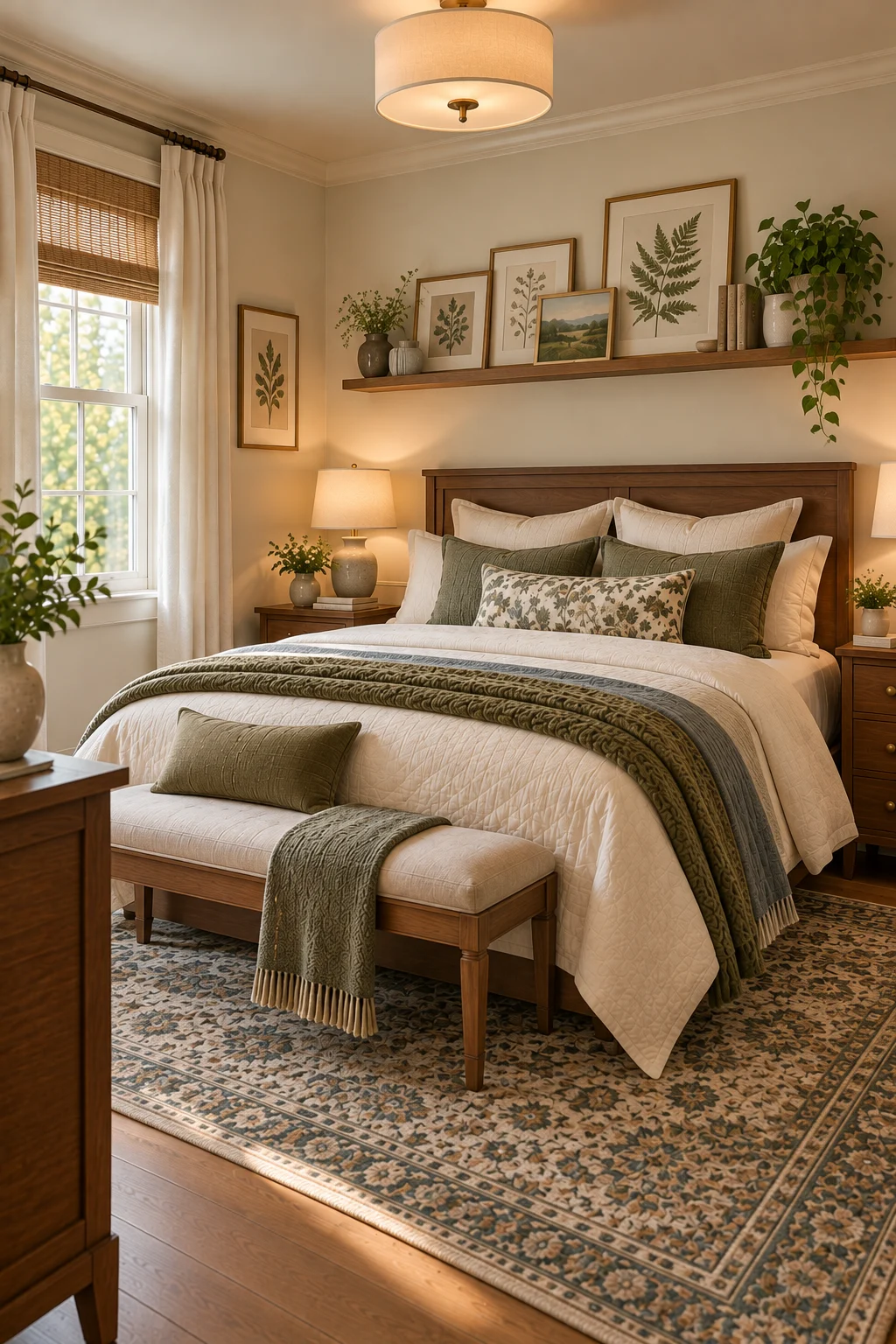
17 Bedroom Shelf Ideas for Beautiful and Practical Wall Storage
Bedroom shelves can make a room feel more organized without taking up valuable floor space. Whether you need somewhere to keep books, display favorite artwork, or store everyday essentials, the right shelving arrangement can be both practical and decorative.
The challenge is finding a design that fits your bedroom’s size and layout. A shelf that looks beautiful in a spacious inspiration photo may not work beside a narrow bed, an opening closet door, or a small dresser.
Fortunately, bedroom shelf ideas don’t have to involve expensive built-ins or complicated renovations. A single walnut shelf, a narrow picture ledge, or a compact bedside shelf can make a meaningful difference.
Before choosing a design, consider what you actually need to store, how much wall space is available, and whether the shelving will be easy to reach and maintain. Proper installation is especially important in bedrooms, where furniture and wall-mounted objects may be close to sleeping areas.
These 17 bedroom shelf ideas offer approachable ways to add useful storage, display personal belongings, and create a more finished room.
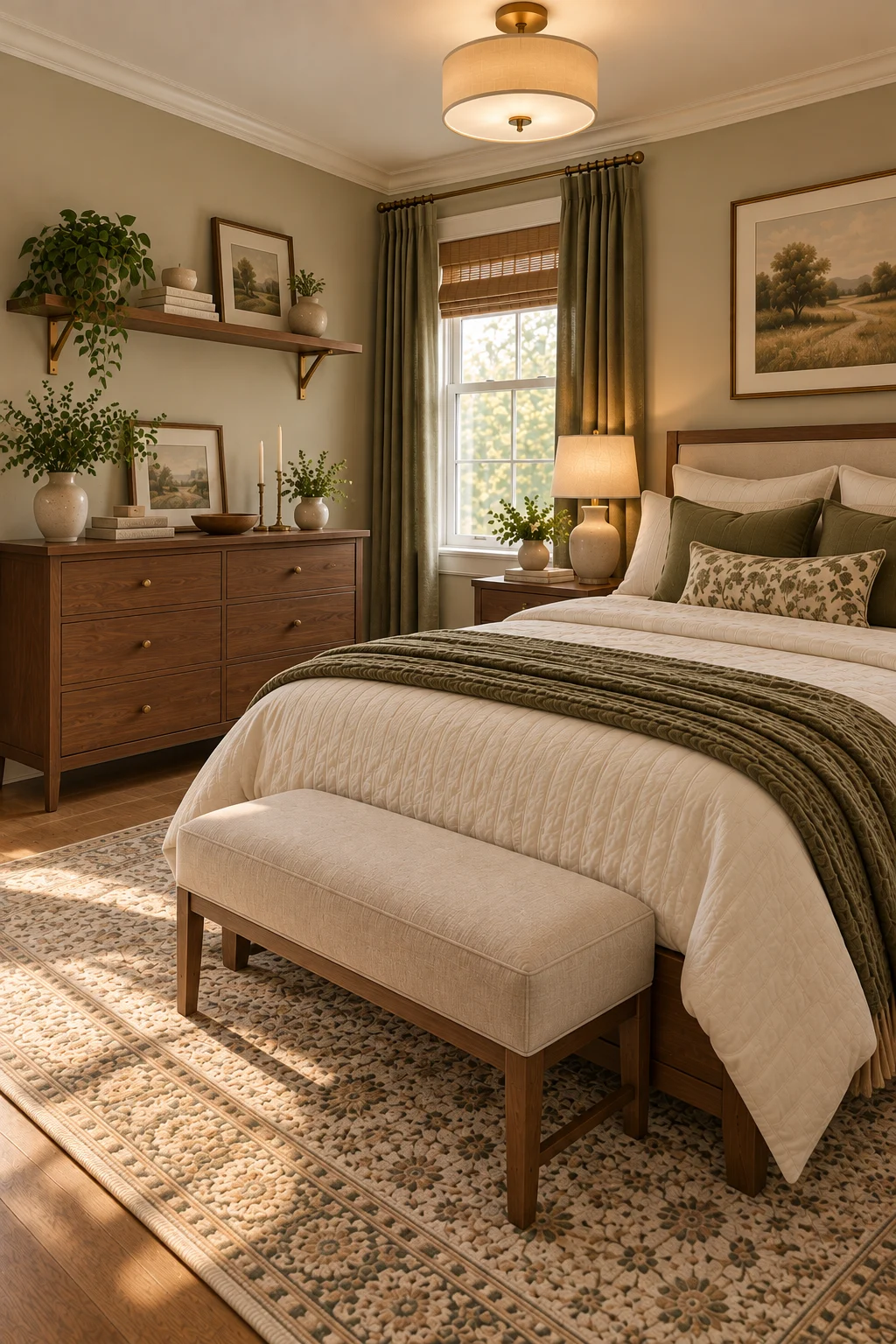
1. Bracket-Supported Walnut Shelf Above a Dresser
A walnut shelf above a dresser creates a useful display area while making the dresser wall feel more complete.
Choose a shelf slightly narrower than the dresser for a balanced arrangement. Visible metal brackets can introduce a subtle industrial detail, while simple wooden brackets create a softer, more traditional appearance.
Use the shelf for a few lightweight decorative items, such as framed photographs, a small ceramic vase, or a collection of favorite books. Keeping the display restrained allows the natural walnut grain to stand out.
Warm-cream walls provide a beautiful background for medium-walnut wood, particularly when the bedroom already contains similar furniture.
Practical tip: Leave enough vertical space between the dresser and shelf to use the dresser comfortably. Install the brackets using fasteners appropriate for the wall construction and follow the shelf manufacturer’s load limits. Keep heavier objects on the dresser or in its drawers rather than on an elevated display shelf.
2. Two Small Shelves Beside a Reading Chair
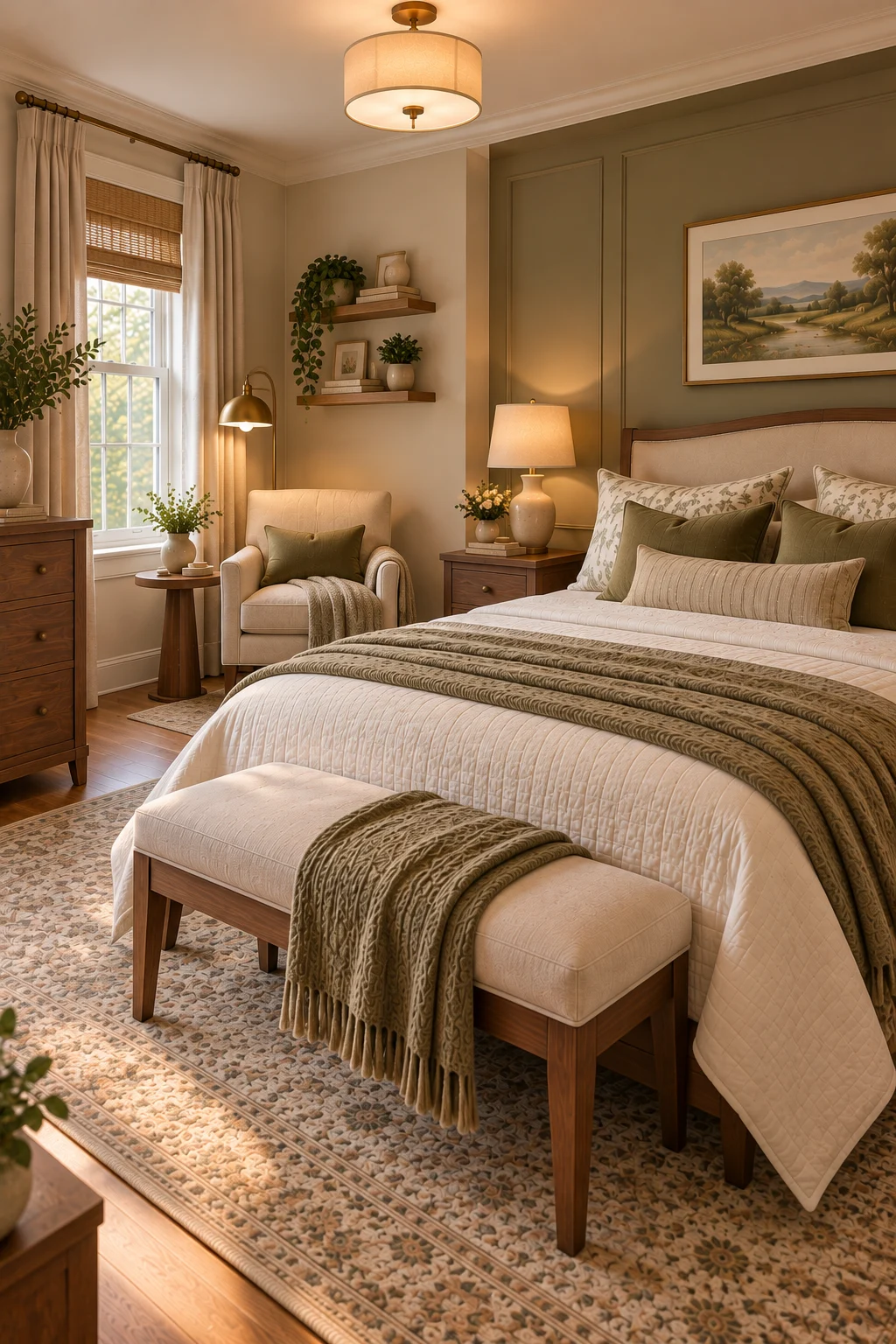
Two small shelves can turn an unused bedroom corner into a comfortable reading area without requiring a full bookcase.
Position the shelves on the wall beside a reading chair, arranging them vertically or with a slight offset. Natural oak or walnut finishes work particularly well with cream walls and soft neutral upholstery.
Use one shelf for a few books and the other for a small decorative object. This keeps reading materials accessible while avoiding an overcrowded appearance.
A floor lamp beside the chair provides focused lighting, while a small cushion or throw makes the corner more inviting.
Layout tip: Install the shelves where someone sitting down or standing up won’t bump into them. Keep the chair’s movement area clear and avoid placing heavy or breakable objects where they could fall onto the seating area.
3. Narrow Picture Ledge for Framed Art
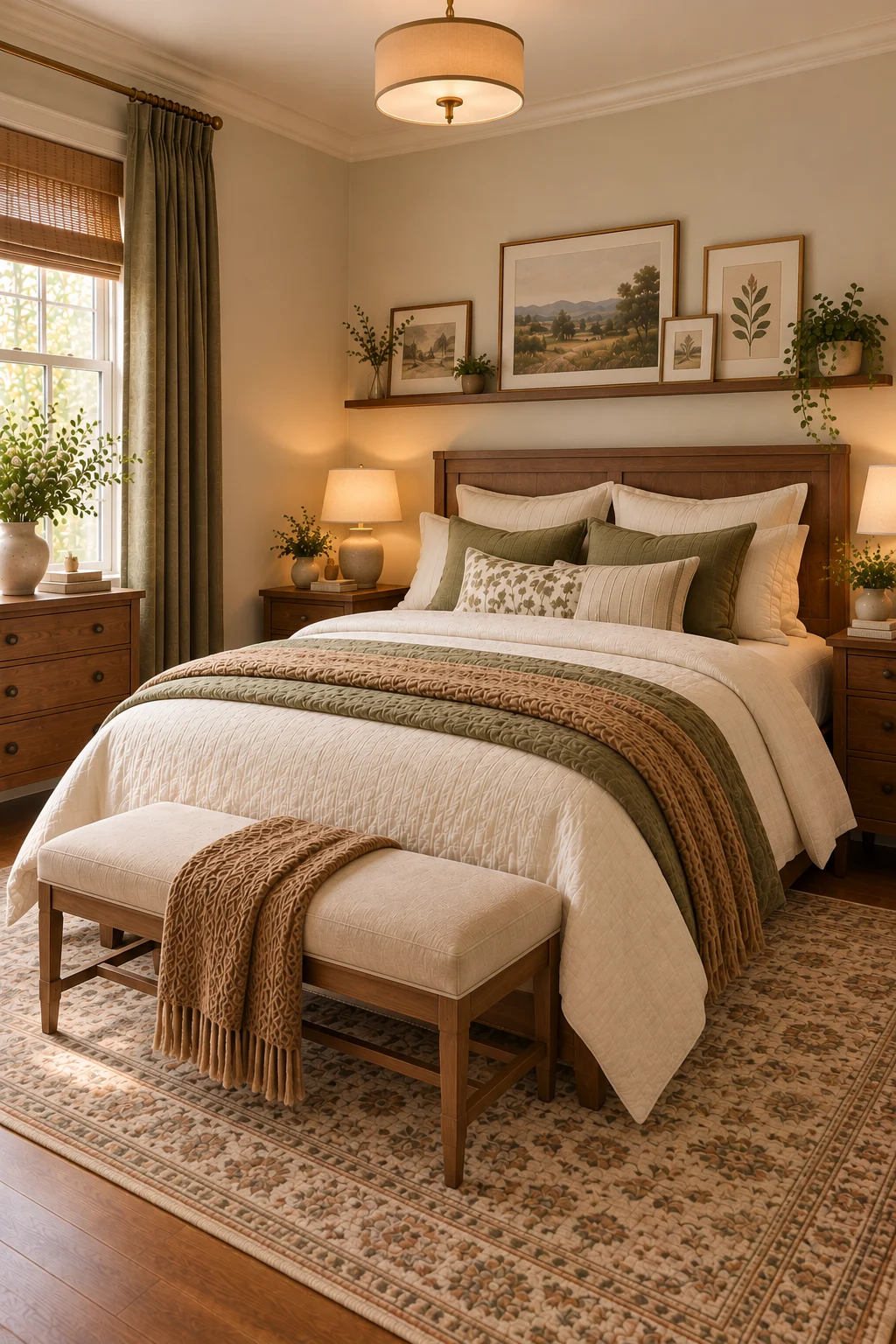
A narrow picture ledge provides a flexible alternative to hanging several individual frames on the bedroom wall.
Choose a shallow ledge with a raised front lip designed to hold framed artwork. Arrange two or three lightweight prints in different sizes, allowing them to overlap slightly for a relaxed gallery effect.
Botanical illustrations, personal photographs, and simple abstract artwork work well together when their frames share a consistent finish.
A natural-oak ledge adds warmth to a cream wall, while a painted ledge can blend into the background for a quieter look.
Styling tip: Position the ledge on a dresser wall or another area away from the bed. Use appropriately secured frames and avoid placing glass-fronted or heavy artwork where it could fall onto someone sleeping.
4. Cream Floating-Look Shelf With Concealed Rated Brackets
A cream floating-look shelf creates a clean, understated display that works beautifully in minimalist bedrooms.
Choose a shelf with a concealed mounting system specifically rated for the shelf’s dimensions and intended load. Painting it a similar shade to the wall creates a nearly seamless appearance.
Keep the arrangement simple with a lightweight framed print, a small decorative object, or a few carefully selected accessories.
This style is especially effective in bedrooms with cream bedding, pale wood furniture, and soft neutral curtains.
If you’re considering a shelf on the wall behind the bed, position it away from the area directly above the pillows or sleeping surface. A nearby side wall can provide the same decorative effect with less risk.
Installation tip: Floating-look shelves still require substantial structural support. Follow the manufacturer’s mounting instructions, use suitable wall fixings, and never assume that a concealed bracket can support heavy objects simply because the shelf looks sturdy.
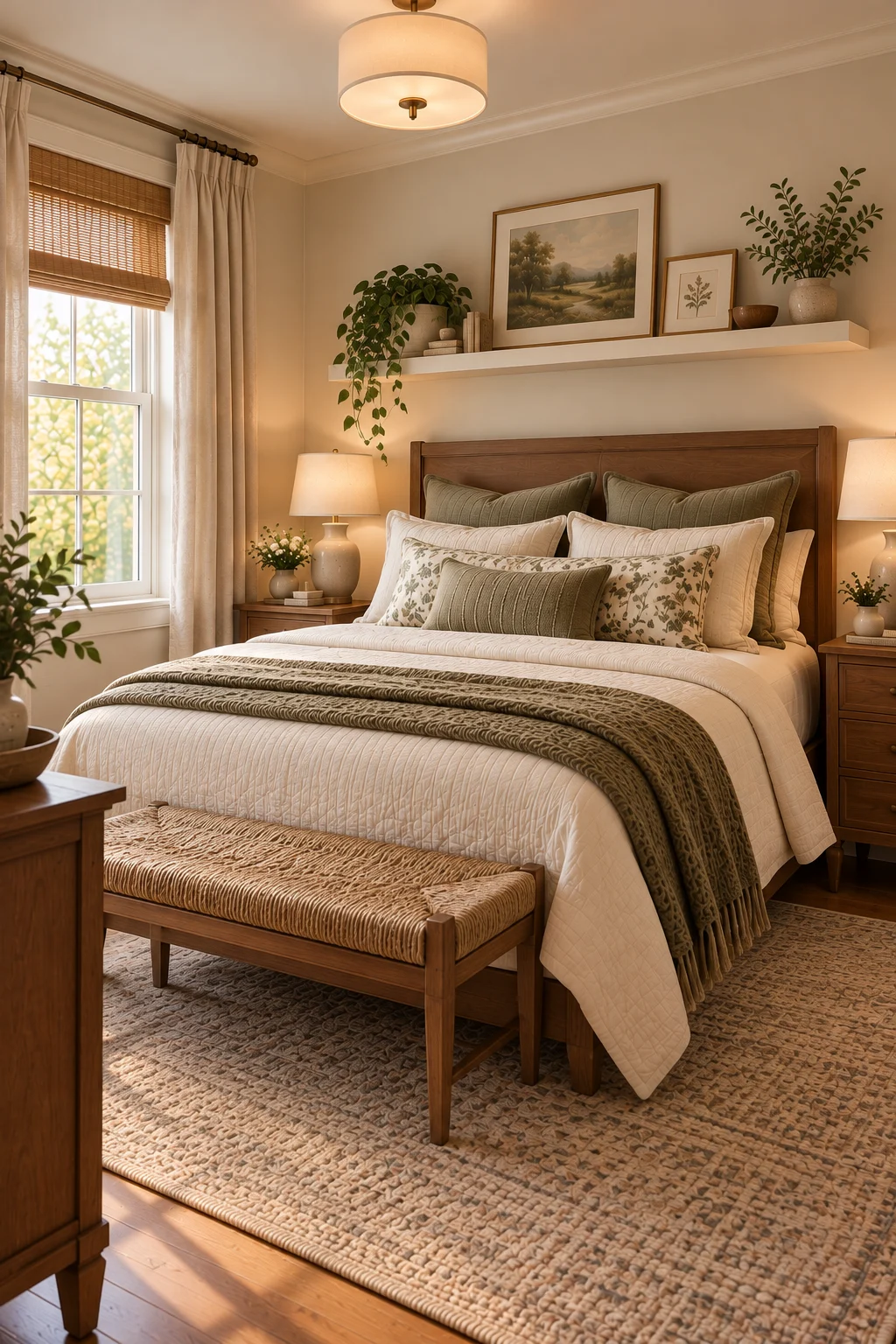
5. Corner Shelves Away From the Bed
Corner shelves make use of wall space that might otherwise remain empty, particularly in compact bedrooms.
Install a small group of corner shelves beside a dresser or in another accessible area away from the bed. Choose rounded or softly finished edges for a more comfortable appearance in narrow spaces.
Natural oak shelves complement warm-cream walls, while walnut creates stronger contrast. Keep the display light with small books, a framed photograph, or a ceramic accessory.
Rather than filling the corner from floor to ceiling, use two or three shelves with enough space between them to keep the arrangement visually open.
Space-saving tip: Check nearby door swings, dresser drawers, and walking routes before installation. Shelves should not project into areas where people regularly move or reach for belongings.
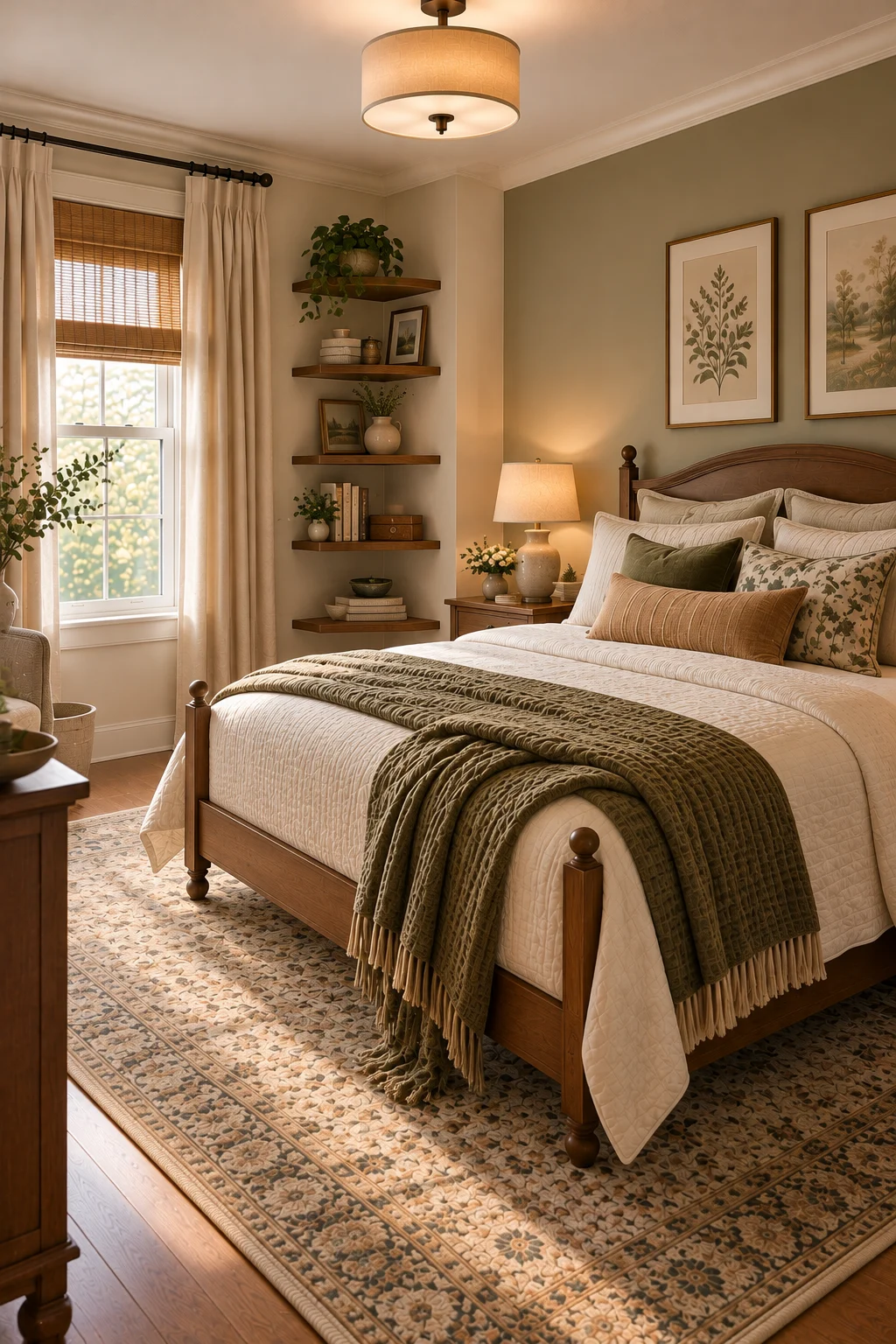
6. Low Bookshelf Under a Window
A low bookshelf beneath a bedroom window provides accessible storage without dominating the wall.
Choose a sturdy, shallow unit that fits comfortably below the window opening. Open cubbies can hold books and small storage baskets, while a natural-wood finish adds warmth to the room.
This arrangement works particularly well beside a reading chair because books remain within easy reach.
For a softer look, use a mixture of upright books and a few woven baskets. Keeping the top relatively clear prevents the area from feeling crowded.
Important consideration: Check that the bookcase doesn’t block window operation, emergency escape access, heating equipment, or ventilation. Secure furniture against tipping according to the manufacturer’s instructions, especially in homes with children.
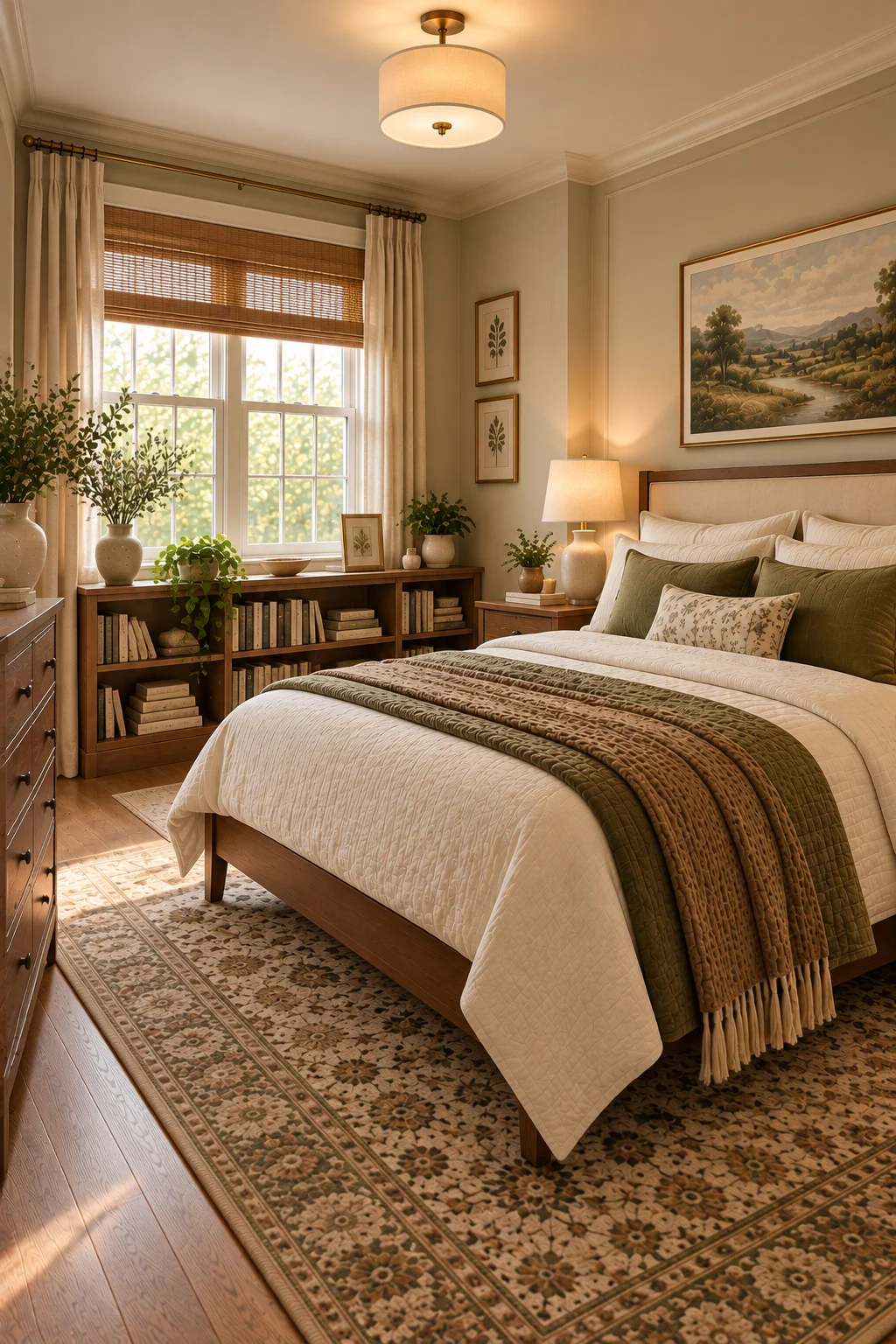
7. Symmetrical Shelves Around a Dresser
Matching shelves on either side of a dresser create a balanced storage arrangement that makes a plain wall feel more intentional.
Choose shelves of the same width, finish, and depth, then position them at corresponding heights on both sides of the dresser.
The display doesn’t have to be perfectly identical. You might place a few books on one side and a small framed print on the other, keeping the overall visual weight similar.
Walnut or oak shelves work well with cream walls and traditional bedroom furniture. Matte-black brackets provide definition, while painted brackets create a softer appearance.
Measuring tip: Check the distance from each shelf to nearby furniture and wall edges before drilling. Symmetry looks best when the shelves have enough surrounding space rather than appearing squeezed into narrow gaps.
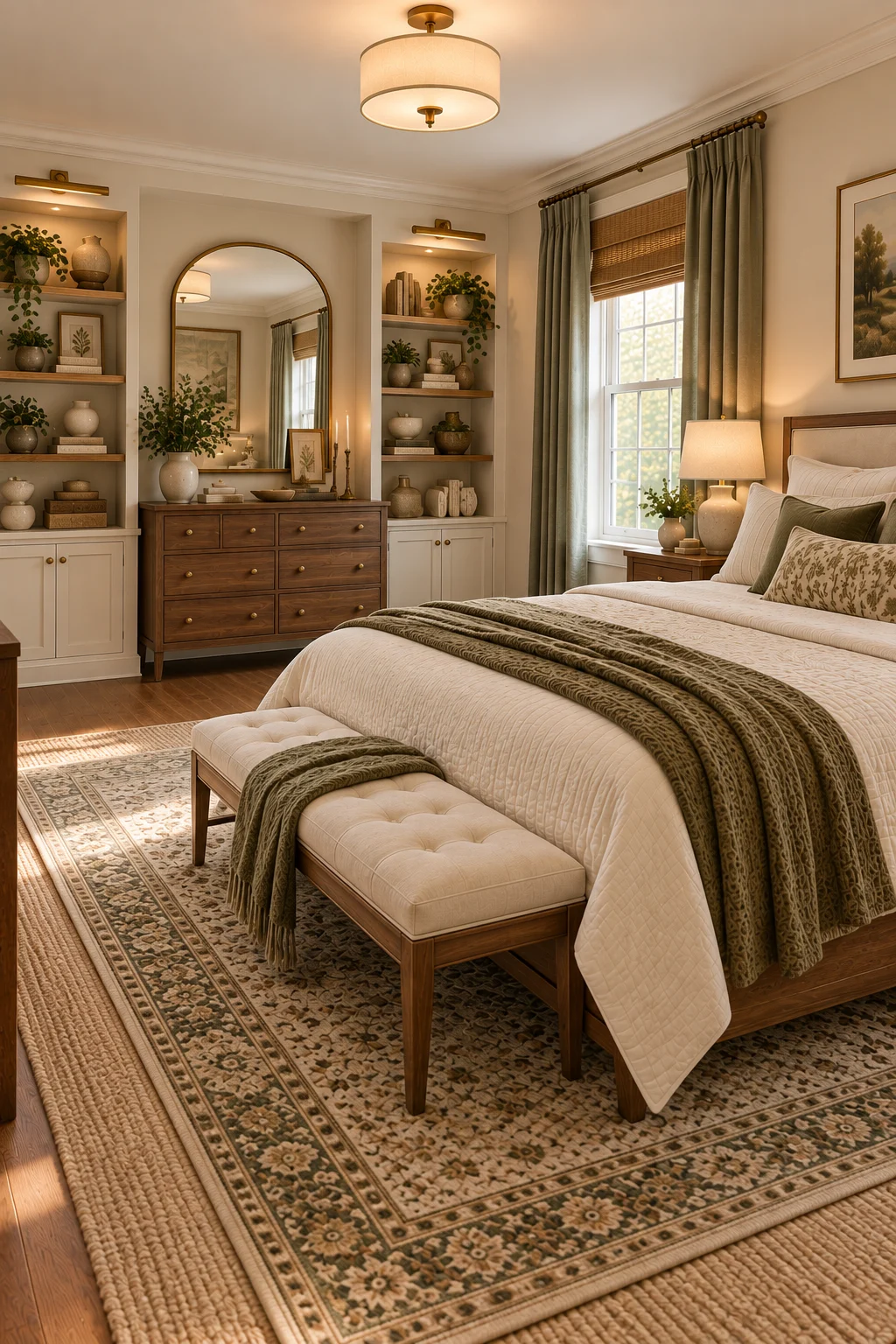
8. Shelf for Plants With a Waterproof Tray
A bedroom plant shelf introduces greenery and natural texture while keeping the floor clear.
Choose a location that receives appropriate light for the plants you want to grow. A shelf near a window may work well, provided it doesn’t interfere with curtains or window access.
Use small, lightweight pots with waterproof trays to protect the shelf and surrounding surfaces from moisture.
Natural wood looks particularly attractive beside green foliage, while a cream-painted shelf creates a softer backdrop.
Consider combining one trailing plant with a compact upright variety rather than crowding the shelf with several containers.
Care tip: Account for the weight of pots, soil, and water when checking the shelf’s rated capacity. Keep plants away from electrical outlets and bedding, and choose varieties appropriate for your household, including any pets.
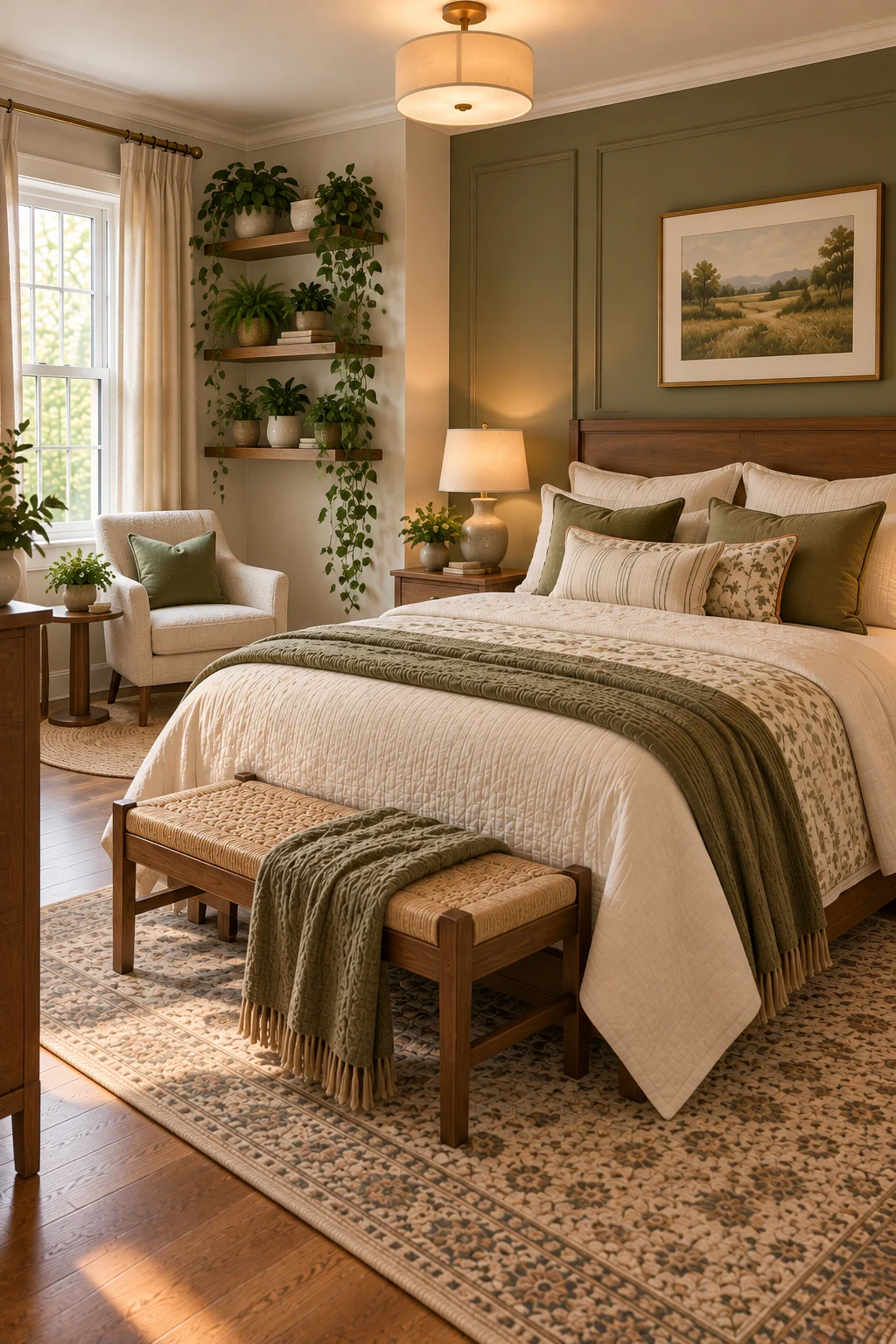
9. Small Bedside Shelf Instead of a Table
A small bedside shelf can replace a traditional nightstand when floor space is limited.
Choose a compact wall-mounted shelf with enough surface area for the essentials you actually use, such as a phone, glasses, or a small book.
Position it beside the bed at a height that feels comfortable when you’re sitting or lying down. A natural-oak or walnut finish can connect it to the bed frame or other furniture.
This approach is particularly useful in narrow bedrooms where a full-size nightstand would restrict access to the bed.
A wall-mounted reading light can provide illumination without taking up the shelf surface, provided it is installed safely.
Practical tip: Avoid projecting shelf corners into the space where you get in and out of bed. Secure the shelf properly and keep heavy or breakable items off it, particularly if it sits close to your head.
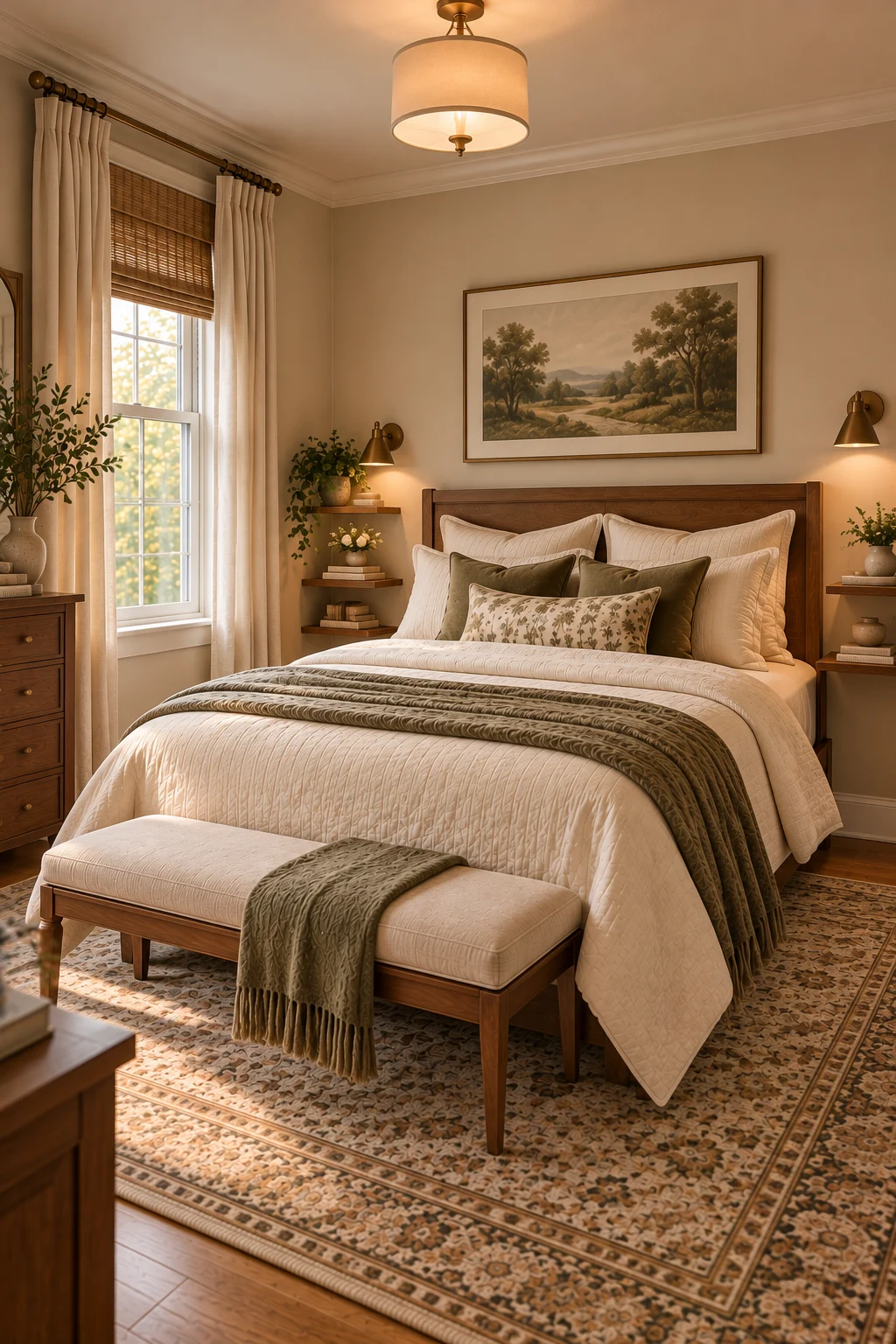
10. Olive Painted Shelf on a Cream Wall
A muted-olive shelf adds a subtle touch of color to a neutral bedroom without requiring an entire accent wall.
Paint a simple wooden shelf in a soft olive shade and position it against a warm-cream wall. The contrast creates a decorative feature while remaining calm and understated.
Style it with a few cream ceramics, small books, or a lightweight framed print.
Repeat the olive color in one additional detail, such as a cushion or throw, to make the shelf feel connected to the rest of the room.
Walnut furniture and natural linen bedding complement this palette particularly well.
Finishing tip: Use a coating suitable for the shelf material and allow it to cure fully before placing objects on the surface. Paint the shelf before installation when possible for a neater finish.
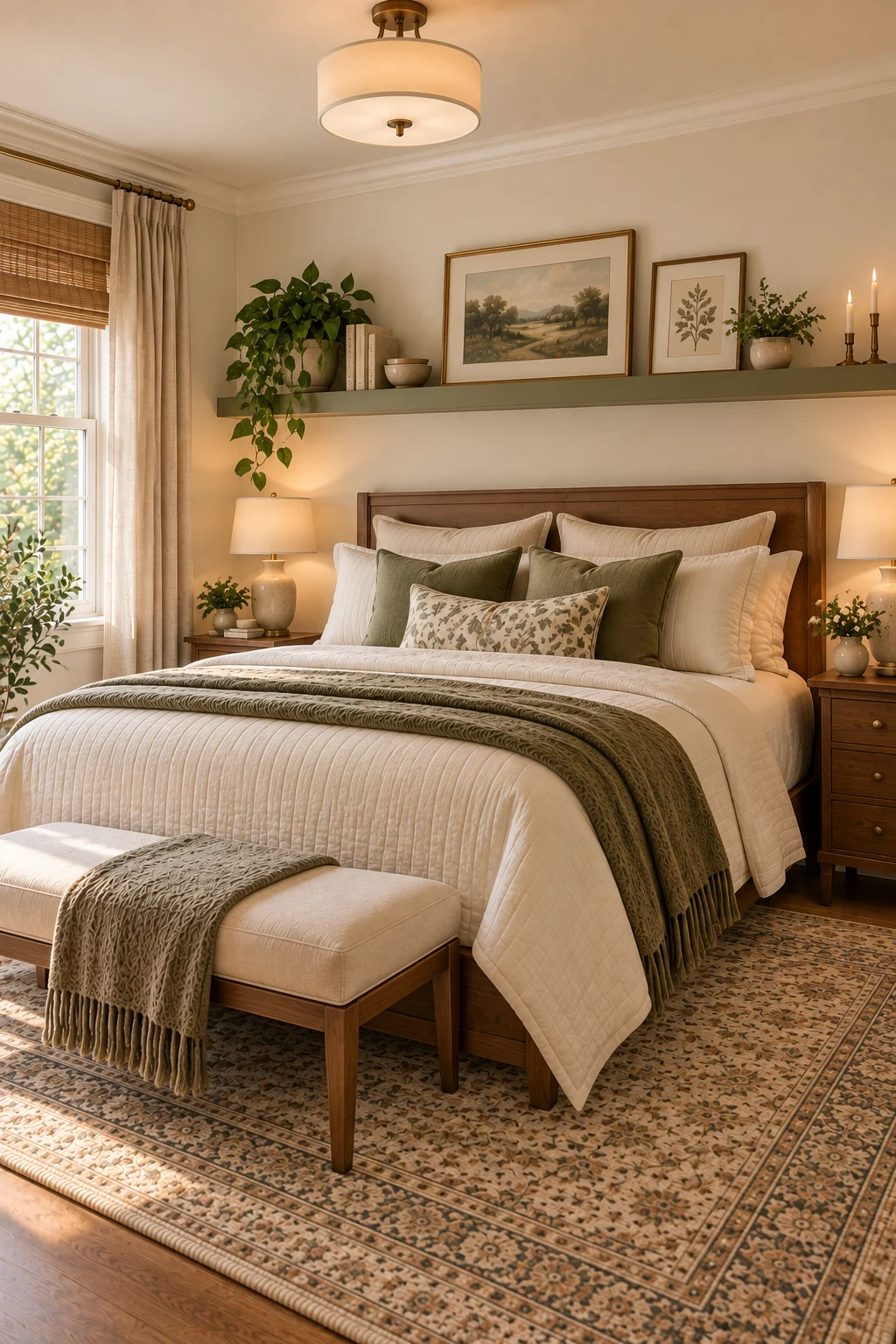
11. Gallery Shelf With Botanical Prints
A gallery shelf displaying botanical artwork brings a personal, nature-inspired detail to the bedroom.
Choose a slim shelf in natural oak or walnut and arrange a small collection of lightweight botanical prints along it.
Mix frame sizes for visual interest, but keep the frame colors consistent. Walnut, black, or warm wood finishes work particularly well with muted green illustrations.
Allow the artwork to overlap slightly rather than spacing every frame evenly. This creates a relaxed arrangement that can be updated without making new holes for each picture.
Keep the surrounding bedding and curtains relatively simple so the artwork remains the focal point.
Styling tip: Limit the display to a manageable number of pieces and choose a ledge designed to retain frames securely. Position it away from the sleeping area, where falling objects could cause injury.
12. Closed Cabinets With One Open Display Shelf
Combining closed cabinets with one open shelf creates a practical balance between concealed storage and decorative display.
Use the cabinets for everyday belongings that don’t need to remain visible, such as folded clothing, spare bedding, or personal accessories.
Reserve the open shelf for a small selection of favorite objects. A few books, a framed photograph, or a ceramic piece can add personality without making the storage wall look cluttered.
Cream cabinet fronts create a calm background, while a walnut or oak display shelf introduces warmth and contrast.
This arrangement works well along a dresser wall or another suitable storage area.
Planning tip: Check cabinet door clearances and ensure the units are properly secured. Avoid installing heavy storage cabinets directly above a sleeping position, and use mounting systems appropriate for the wall and cabinet construction.
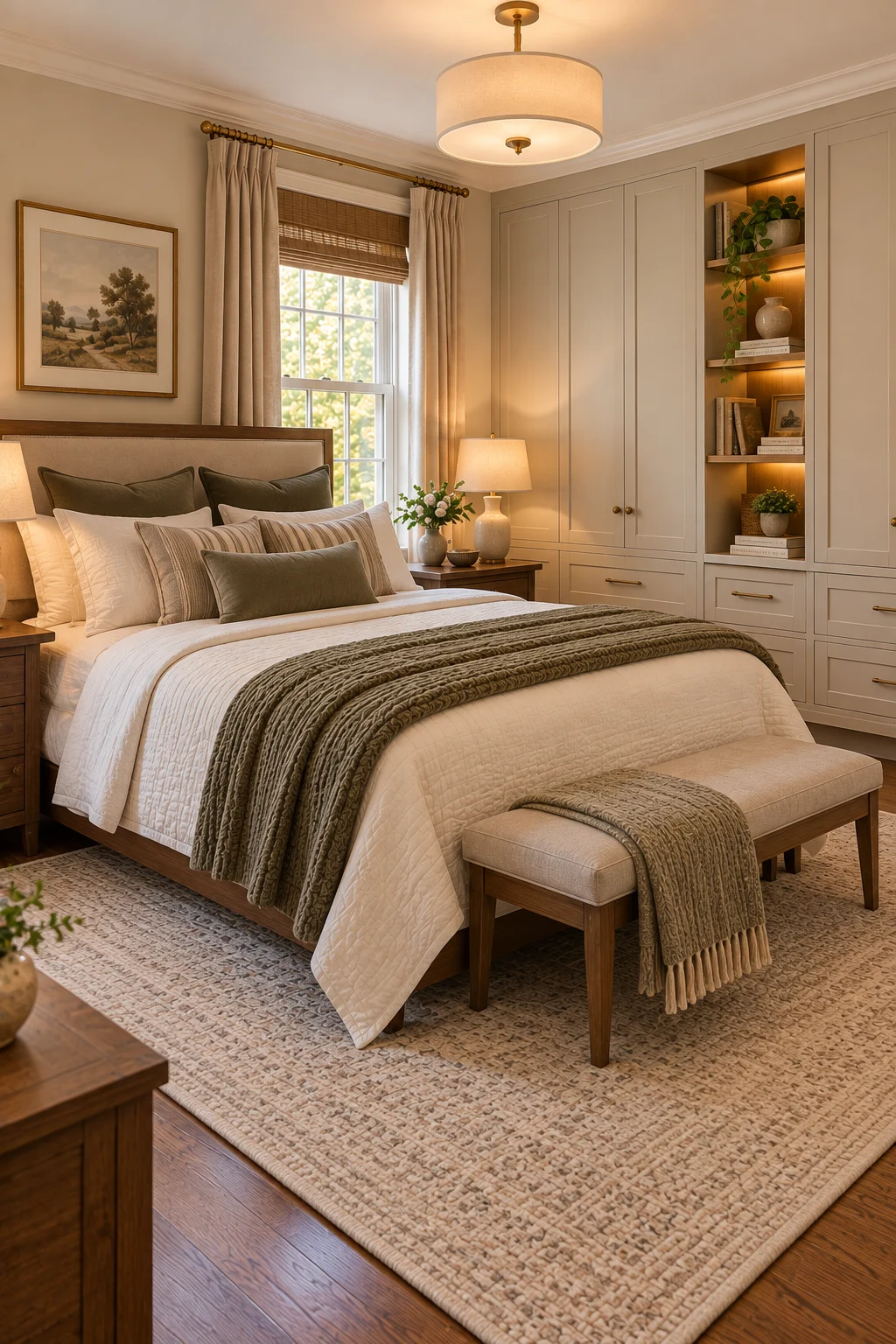
13. Oak Shelf for Everyday Essentials
A simple oak shelf can keep frequently used belongings organized without turning the bedroom into a display space.
Position the shelf near a dresser or dressing area where the items will be easy to reach.
Use a small tray for watches, jewelry, or other personal accessories. A compact container can hold smaller objects that might otherwise become scattered across the dresser.
Natural oak complements cream walls and neutral bedroom furniture, making it a flexible choice for many decorating styles.
Keep the arrangement functional by leaving some open space rather than filling the entire shelf.
Organization tip: Store heavier or frequently handled objects on lower, more stable surfaces. A wall shelf is most useful for lightweight essentials that can be reached comfortably without stretching or leaning over furniture.
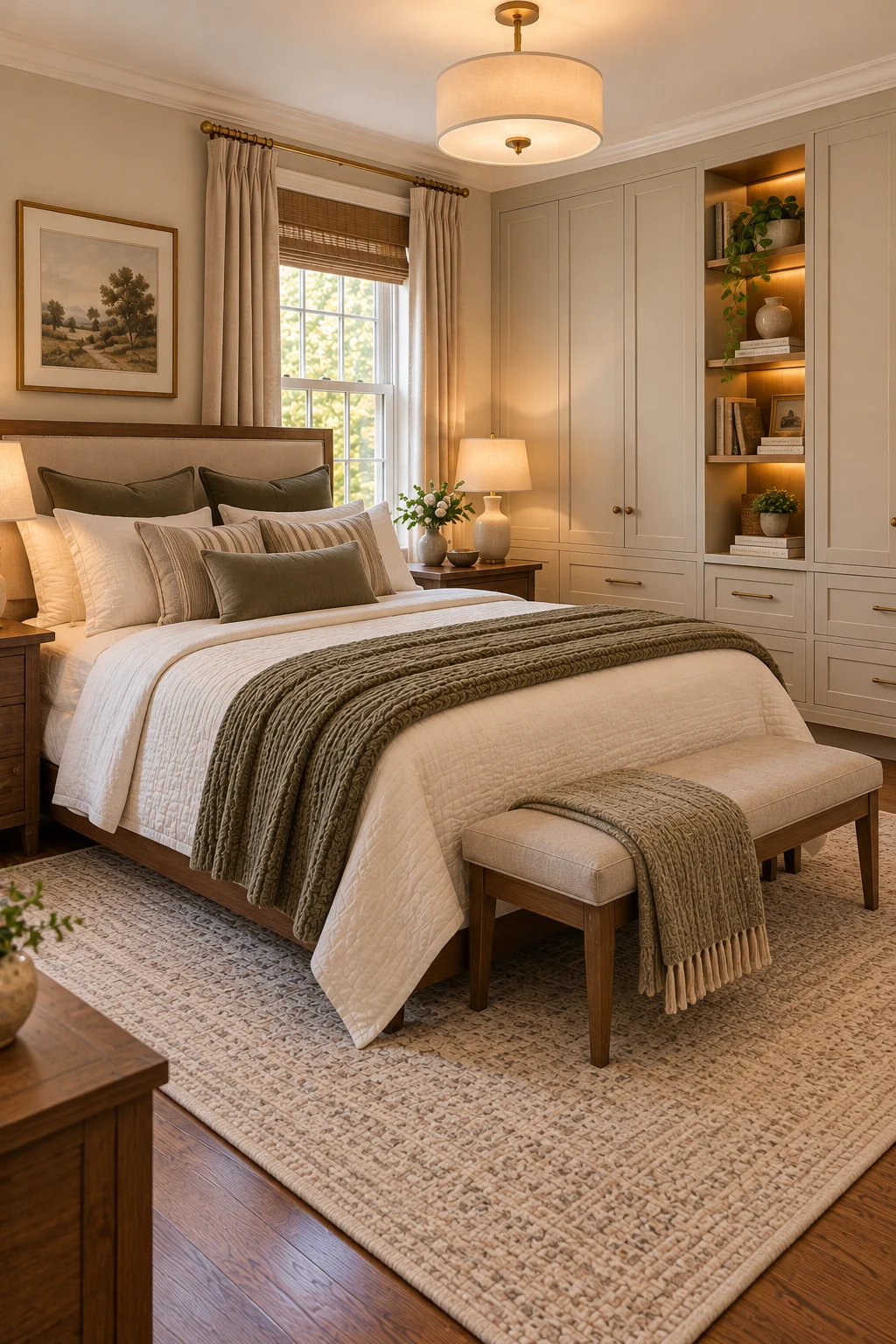
14. Compact Shelf Above a Desk
A compact shelf above a bedroom desk can provide additional storage while keeping the work surface clear.
Choose a shelf that fits within the desk’s width and position it high enough to avoid interfering with a monitor, desk lamp, or comfortable seated posture.
Use it for lightweight books, small storage containers, or a few decorative accessories. A natural-oak finish adds warmth to a cream or greige bedroom.
If the bedroom also serves as a home office, coordinating the shelf with the desk can help the work area feel like one organized zone.
Workspace tip: Keep heavy objects away from the area directly above your head or computer equipment. Check the shelf’s rated capacity, secure it properly, and manage charging cables so they don’t hang across the desk.
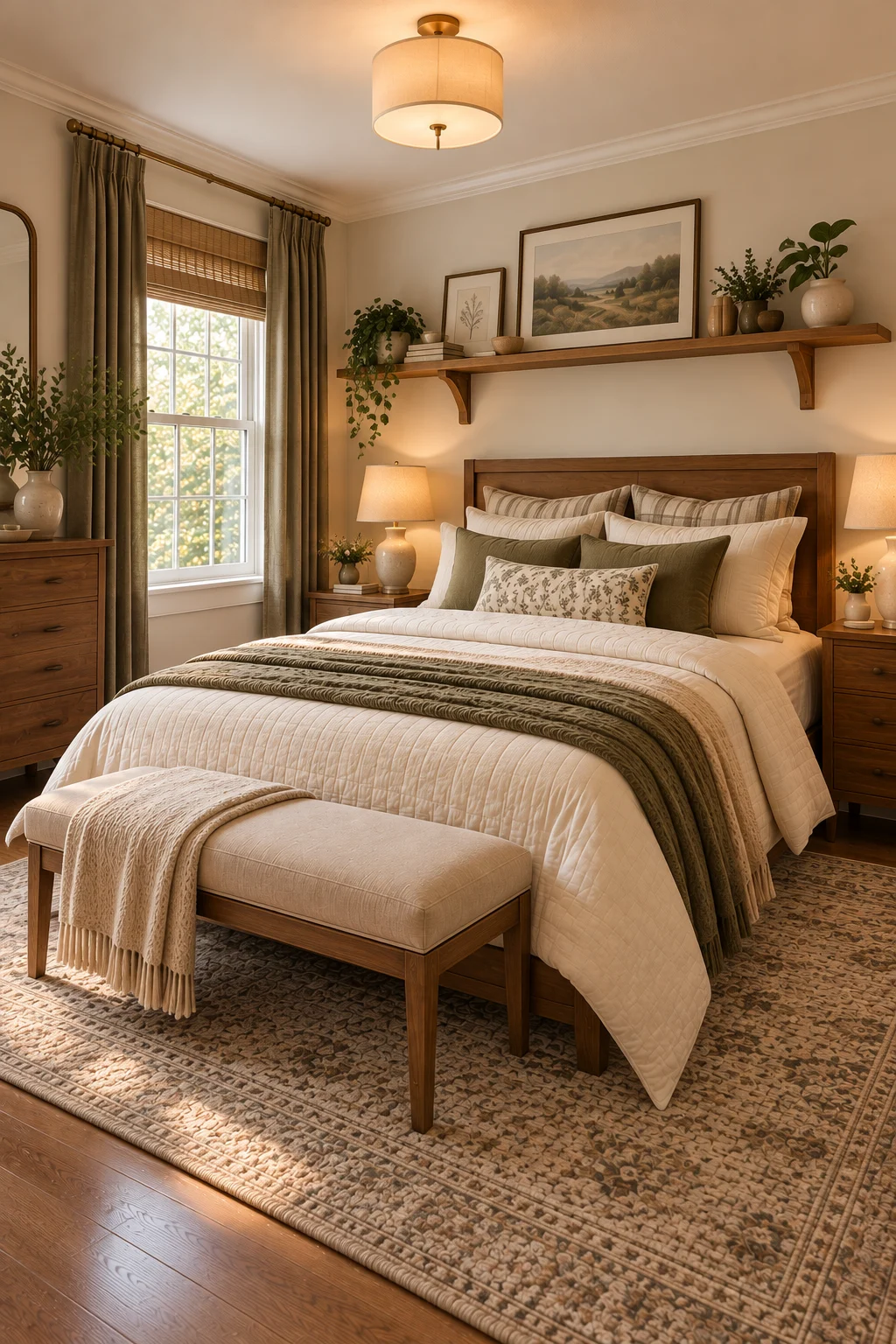
15. Minimalist Shelf With Ceramic Objects
A minimalist shelf can make a bedroom feel more finished without adding visual clutter.
Choose a narrow shelf in cream, oak, or walnut and display just a few carefully selected objects.
Small matte ceramic pieces work particularly well because their simple shapes introduce texture without competing with the surrounding furniture.
Try combining one low object with a slightly taller piece, leaving generous space around both. The empty surface is part of the composition.
This approach suits bedrooms with neutral bedding, natural materials, and understated wall colors.
Safety tip: Place fragile ceramics on a securely installed shelf away from the bed, doors, and busy walking areas. Lightweight, stable pieces are preferable to tall or easily tipped decorative objects.
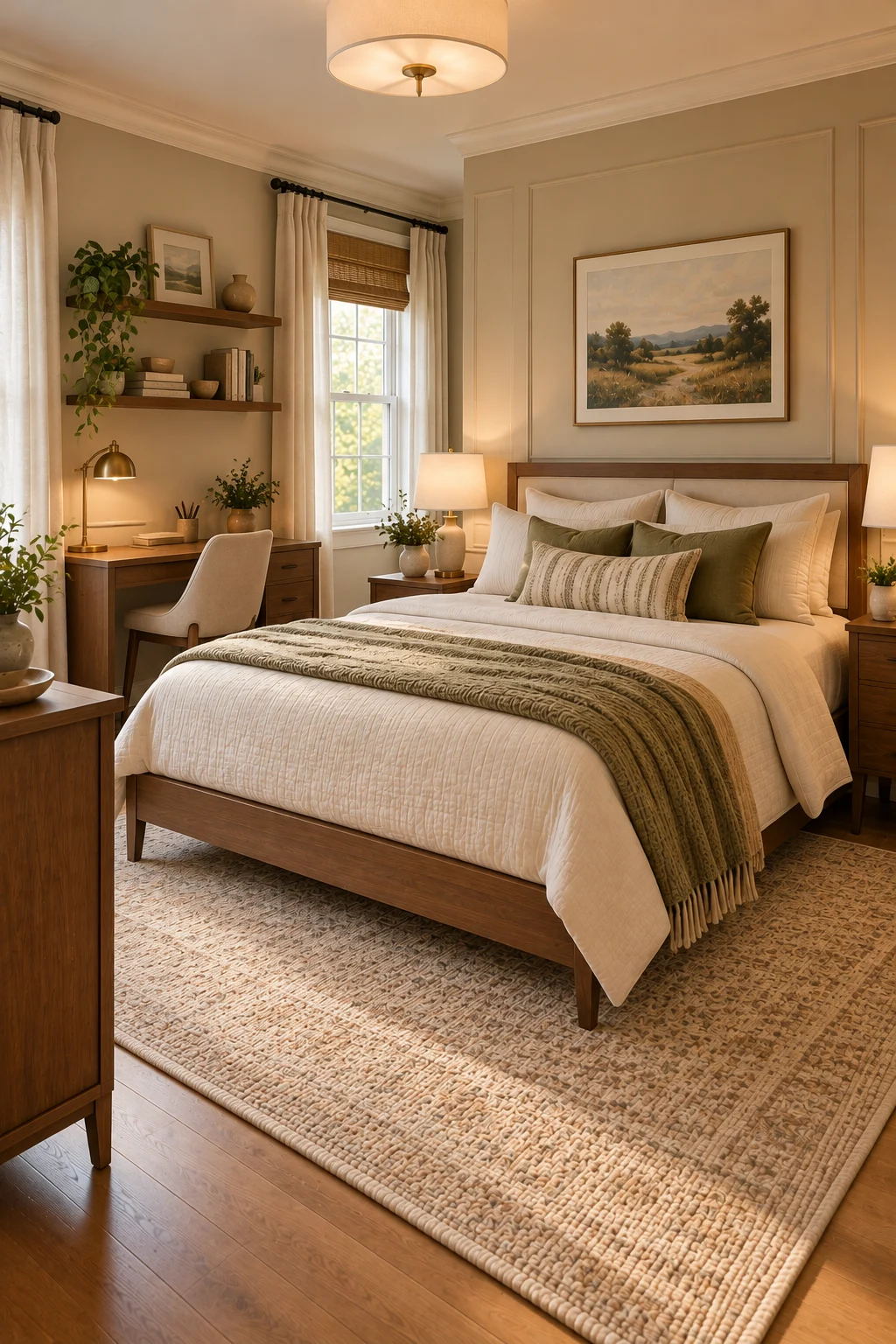
16. Shelf and Basket Storage Combination
Combining shelves with baskets offers a practical way to organize bedroom belongings while keeping the overall appearance tidy.
Choose sturdy shelving with enough depth to accommodate appropriately sized baskets. Woven baskets introduce texture, while fabric bins provide a softer, lightweight alternative.
Use baskets for smaller items such as scarves, accessories, or folded textiles. Keep frequently used belongings in the easiest-to-reach compartments.
Natural wood shelves paired with cream or neutral baskets create a warm, coordinated look that suits many bedroom styles.
Storage tip: Measure the shelf depth and height before purchasing baskets. Avoid placing heavy, fully loaded containers on high shelves, where lifting them down could be awkward or unsafe.
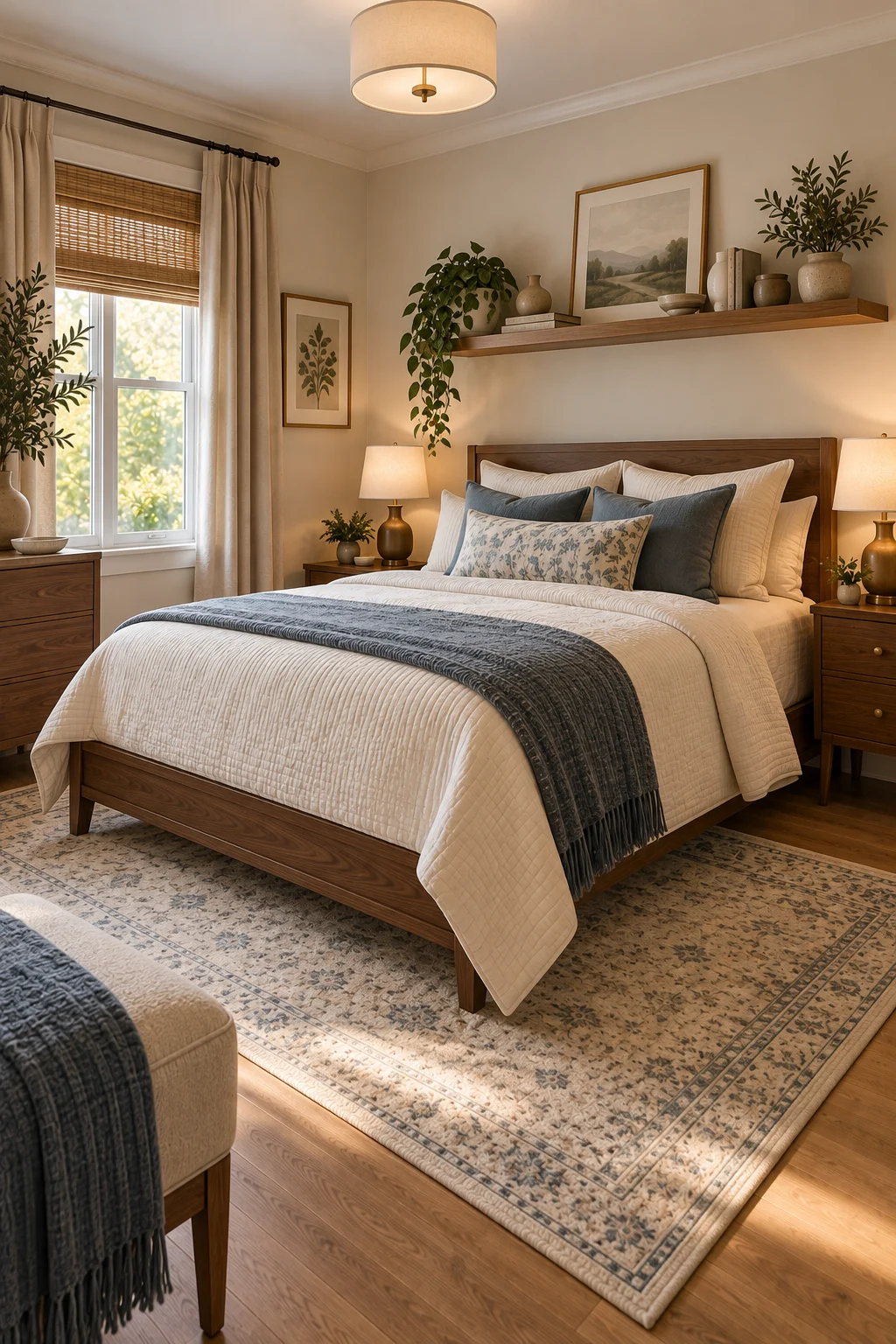
17. Balanced Bedroom Shelf Wall
A coordinated shelf wall can bring together storage and decoration while giving an otherwise plain bedroom wall a clear purpose.
Start with the largest shelf or storage unit, then arrange smaller shelves around it to create a balanced composition.
Choose a consistent material palette, such as walnut shelves with cream walls and muted-olive accessories. Vary the objects displayed, using a combination of books, framed artwork, and a few decorative pieces.
Leave open space between the shelves so the wall doesn’t appear overcrowded.
This approach works particularly well along a dresser wall, where the shelving can complement existing furniture without interfering with the bed.
Planning tip: Sketch the arrangement and mark shelf positions with painter’s tape before drilling. Check the height, spacing, wall construction, and intended loads for every shelf. Avoid placing heavy wall storage over the sleeping area.
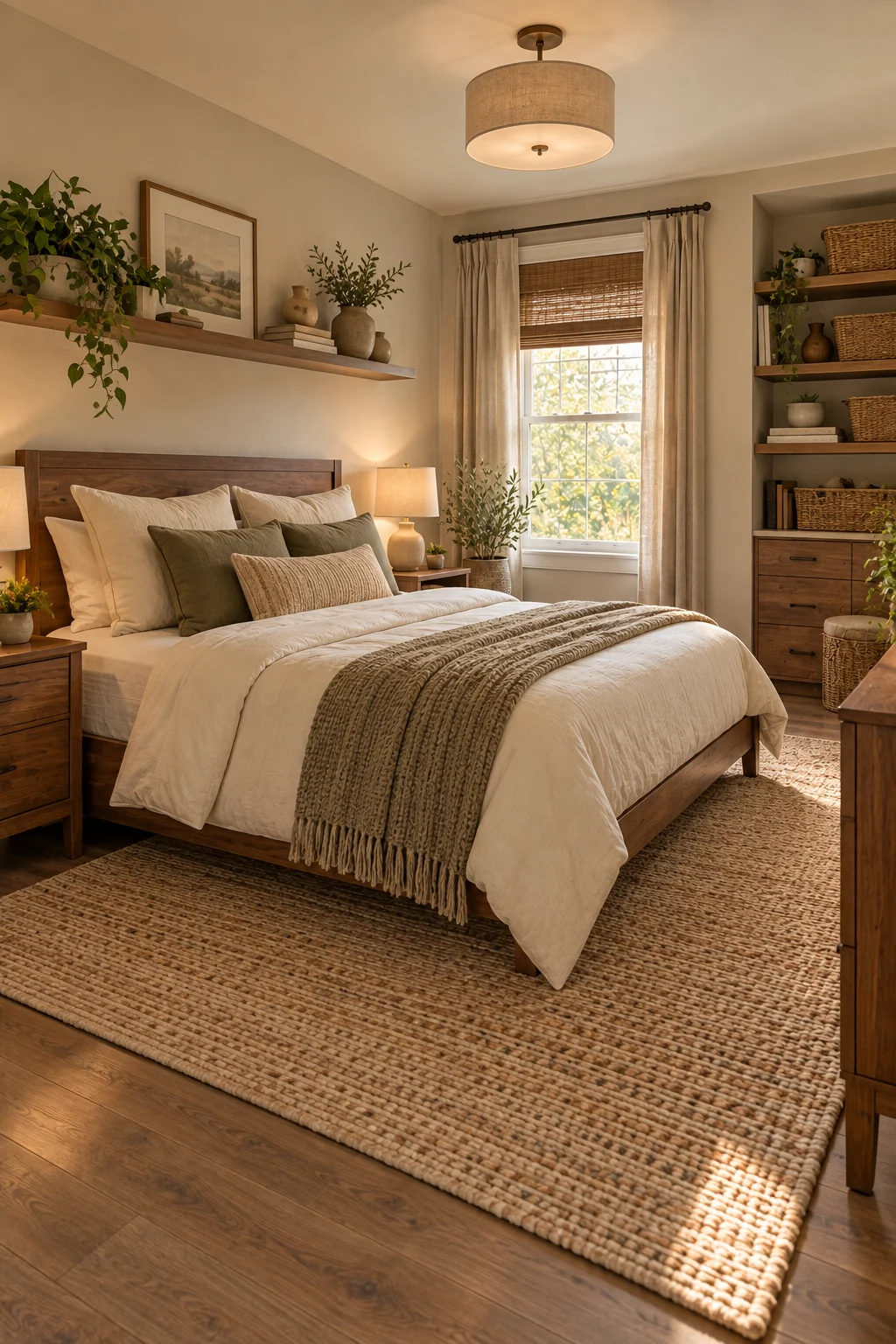
Plan the Layout Before Buying
Good bedroom shelving begins with accurate measurements and a clear understanding of how the room is used.
Measure the available wall width, the height of nearby furniture, and the distance to doors, windows, and electrical outlets. Note where drawers open and where people regularly walk.
Decide what each shelf needs to hold before choosing its dimensions. A picture ledge requires much less depth than a shelf intended for books or storage baskets.
Use painter’s tape to mark the proposed shelf positions on the wall. This simple step helps you assess scale and spacing before making permanent holes.
When planning wall-mounted shelving, identify the wall construction and choose a suitable mounting method. Manufacturer instructions and rated hardware should guide the installation.
Choose Colors and Materials
The materials you choose can help bedroom shelves blend into the room or become a decorative feature.
Natural oak creates a light, relaxed appearance and works particularly well with cream walls and neutral bedding.
Medium walnut introduces a deeper wood tone that complements warm lighting and traditional furniture.
Cream-painted shelves can blend into light walls for a minimalist effect, while muted-olive shelves provide a subtle accent color.
Metal brackets can add definition, especially when their finish coordinates with nearby lamps or furniture hardware.
Before purchasing, compare material samples with the existing bed frame, dresser, flooring, and wall color. Repeating one or two finishes generally creates a more cohesive appearance than mixing several unrelated wood tones.
Lighting That Supports the Look
Lighting helps shelving feel integrated into the bedroom while supporting everyday activities.
Use ambient lighting for general illumination and dedicated task lighting near the bed, reading chair, or desk.
Warm-white bulbs around 2700K–3000K often complement natural wood and cream textiles, although the best brightness depends on the room and intended activity.
A reading lamp can make a nearby book shelf more useful, while a desk lamp provides focused illumination beneath office shelving.
Keep cords organized and avoid placing lamps or electrical equipment where they could be knocked over. Don’t obstruct ventilation openings, smoke alarms, or other essential fixtures with shelving or decorative items.
Budget and Shopping Priorities
You don’t need to install an entire wall of shelves to improve bedroom storage.
Start by identifying the biggest problem. If books are piling up beside the bed, a small bedside shelf or low bookcase may be the most useful purchase. If the dresser wall feels empty, a single walnut shelf or picture ledge could be enough.
Before shopping, consider:
- Purpose: Decide whether the shelf will hold books, decorative objects, plants, or everyday essentials.
- Dimensions: Measure the available space and the items you plan to store.
- Materials: Choose finishes that coordinate with existing bedroom furniture.
- Installation: Include the cost of suitable brackets, fasteners, and any professional assistance needed.
- Maintenance: Consider how easily the shelf and its contents can be dusted or cleaned.
Quality mounting hardware and appropriate installation are more important than adding extra decorative accessories.
Common Mistakes and Easy Fixes
One common mistake is choosing shelves based on an inspiration photo without checking the actual bedroom dimensions.
A shelf may appear compact online but project too far into a narrow walkway or interfere with nearby furniture. Always check its full width, depth, and height.
Another mistake is installing too many shelves on one wall. If the arrangement feels crowded, remove a shelf or reduce the number of displayed objects.
Overloading shelves is also a concern. Books, ceramic objects, and plant containers can become surprisingly heavy when combined. Check the manufacturer’s load rating and use suitable mounting hardware.
Finally, avoid treating every shelf as a decorative display. Practical storage works best when frequently used items remain accessible and less attractive belongings have a designated place.
Cleaning, Safety, and Long-Term Use
Bedroom shelves should be easy to maintain and remain secure throughout everyday use.
Dust shelves and decorative objects regularly, paying particular attention to picture ledges and open storage near windows.
Follow the manufacturer’s cleaning recommendations for painted, laminated, or natural-wood finishes. Protect wooden shelves from standing water, particularly when displaying plants.
Inspect wall-mounted shelves periodically for loose brackets, damaged fasteners, or changes in stability. Keep loads within the stated limits.
Secure tall freestanding furniture against tipping where required, and avoid installing heavy shelves or breakable objects directly above sleeping areas.
Maintain access to doors, windows, ventilation openings, outlets, and smoke alarms. A successful shelving arrangement should improve the bedroom’s function without introducing unnecessary hazards.
Final Thoughts
The best bedroom shelf ideas combine useful storage with a style that suits the room’s proportions and existing furniture.
A walnut shelf above a dresser can create a simple focal point, while a bedside shelf saves floor space in a compact bedroom. Picture ledges offer flexible artwork displays, and shelves with baskets provide practical storage for smaller belongings.
For a more coordinated look, repeat materials such as oak, walnut, cream, and muted olive throughout the room.
Start with one area that genuinely needs better storage, measure carefully, and choose a shelf that fits the available space. With thoughtful placement, secure installation, and a restrained display, bedroom shelving can make the room feel more organized, personal, and comfortable without requiring a major renovation.
