
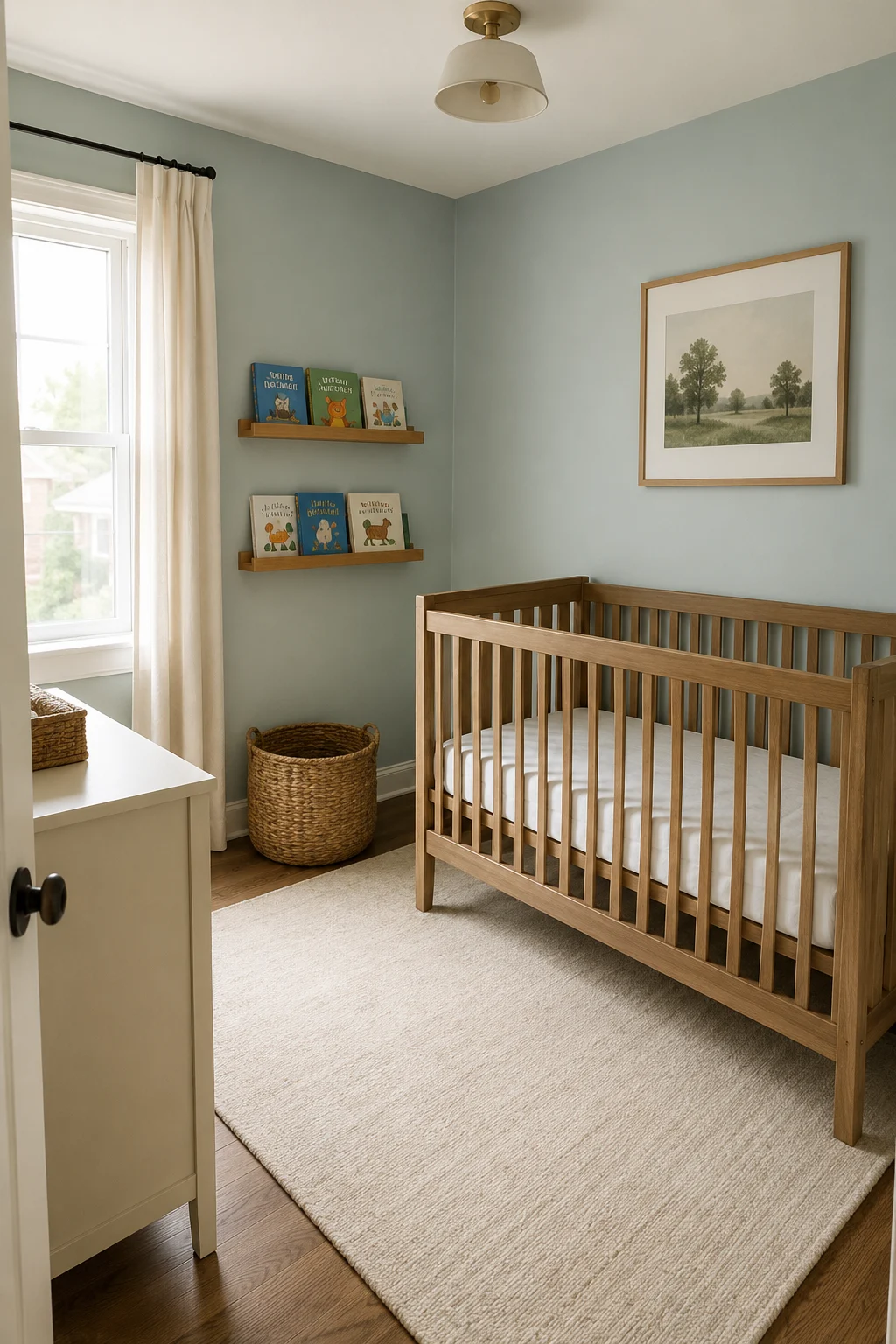
15 Anti-Beige Nursery Ideas in Green, Blue & Gender-Neutral Tones
A small nursery doesn’t have to be beige, gray, or nearly white to feel calm. Some of the most useful small nursery ideas start with a stronger color decision, then deliberately keep everything around it quieter. That might mean one moss-green dresser, one dusty blue wall, one striped curtain treatment, or a single woodland mural rather than color on every available surface.
A simple rule helps: use one strong color move, then let the rest of the room support it.
That approach makes an anti-beige nursery much easier to handle in a compact bedroom. Forest green can feel grounded rather than dark when paired with oak and cream. Dusty blue can bring depth without making the room cold. Teal, clay, olive, rust, and muted ochre can all work in a nursery as long as they aren’t competing at the same intensity.
The goal isn’t to eliminate neutrals. Warm white, cream, natural wood, and oatmeal still have an important job. They give stronger colors room to breathe.
Here are 15 ways to bring real color into a small nursery without turning it into visual clutter.
15 Anti-Beige Nursery Ideas in Green, Blue & Gender-Neutral Tones
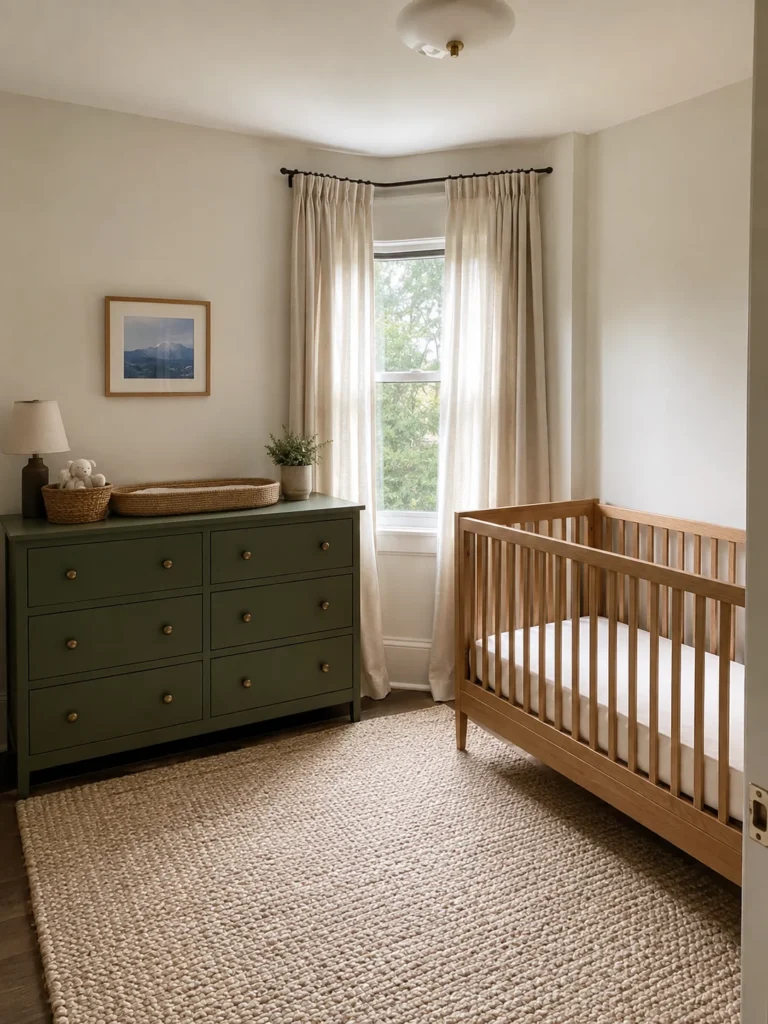
1. Let a Moss-Green Dresser Carry Most of the Color
If you’re nervous about painting a whole nursery, start with the dresser.
In an 8-by-10-foot room, pair warm white walls with a compact six-drawer dresser painted a muted moss green. Add a natural oak crib, cream cotton curtains, and a low oatmeal rug. Keep the rest of the color quiet except for one small dusty blue print or a subtle blue detail in the rug.
The dresser becomes the anchor, which means the room doesn’t also need wallpaper, a mural, painted trim, and colorful storage baskets.
This is one of the most flexible nursery dresser color ideas because the green creates enough personality on its own. It also works well for readers looking at baby boy dresser ideas without treating green as a gender rule.
A painted dresser looks especially intentional when the hardware stays simple. Warm brass, dark bronze, or plain wood knobs can work depending on the rest of the room.
Keep open storage to a minimum. Strong color plus visible baskets, toys, books, and supplies can make a small nursery feel busier than it actually is.
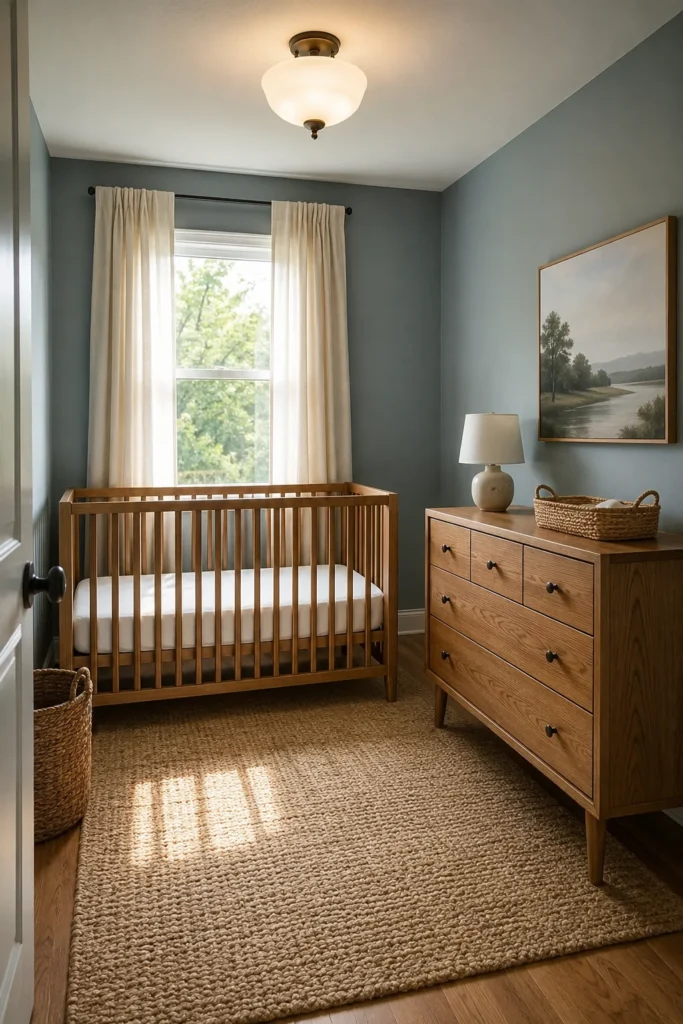
2. Paint the Walls Dusty Blue and Warm Them Up With Oak
Dusty blue is one of the easiest ways to add visible color without making a compact nursery feel loud.
Use a muted blue-gray across all four walls, then bring warmth back with a medium-oak crib and dresser. Add cream curtains and a natural woven rug rather than more blue textiles.
This balance matters. Blue is visually cool, so warm wood prevents the room from feeling flat or overly coordinated.
For a small bedroom with average natural light, choose a blue that has enough gray in it to stay soft throughout the day. A highly saturated bright blue can become much more dominant than expected once it covers four walls.
Keep the crib wall simple. One larger piece of art on another wall is enough. If the wall color is already doing the visual work, a gallery wall above every furniture piece usually isn’t necessary.
This kind of blue nursery idea also makes a good backdrop for painted furniture later. If you decide to add a green dresser or rust accent, the blue can handle it as long as the other elements stay restrained.
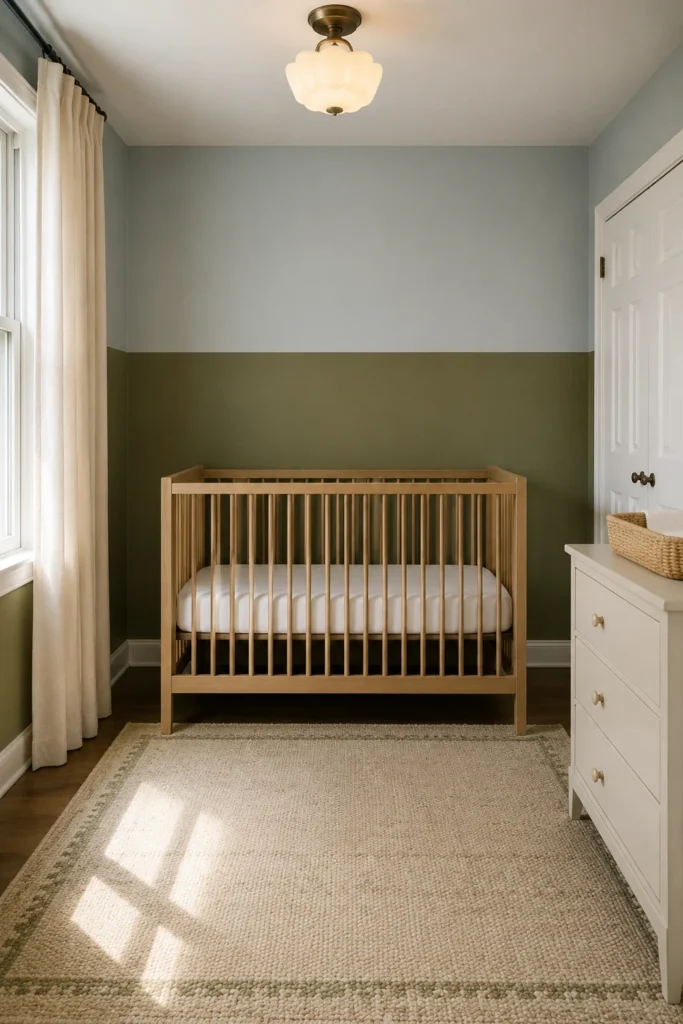
3. Try a Green-and-Blue Color-Blocked Crib Wall
Green and blue work surprisingly well together when one is deeper and the other is softer.
Paint the lower half of the crib wall a muted olive or softened forest green and the upper half a pale dusty blue. Keep the line between them clean and simple. Then place a natural oak crib against the wall and use a warm white dresser elsewhere in the room.
The darker lower color visually grounds the crib, while the blue upper section keeps the wall from feeling heavy.
This green and blue wall treatment is particularly useful in a small nursery because it creates visual structure without taking up any floor space. It also means the wall doesn’t need shelves, multiple art prints, or a decorative name sign competing with the paint.
Repeat the olive only once elsewhere—perhaps in a curtain stripe or rug detail. The blue doesn’t need to be repeated at all if it already covers half the wall.
Two strong colors often need wood or cream between them. Oak furniture and warm white textiles keep this pairing from looking overly cold.
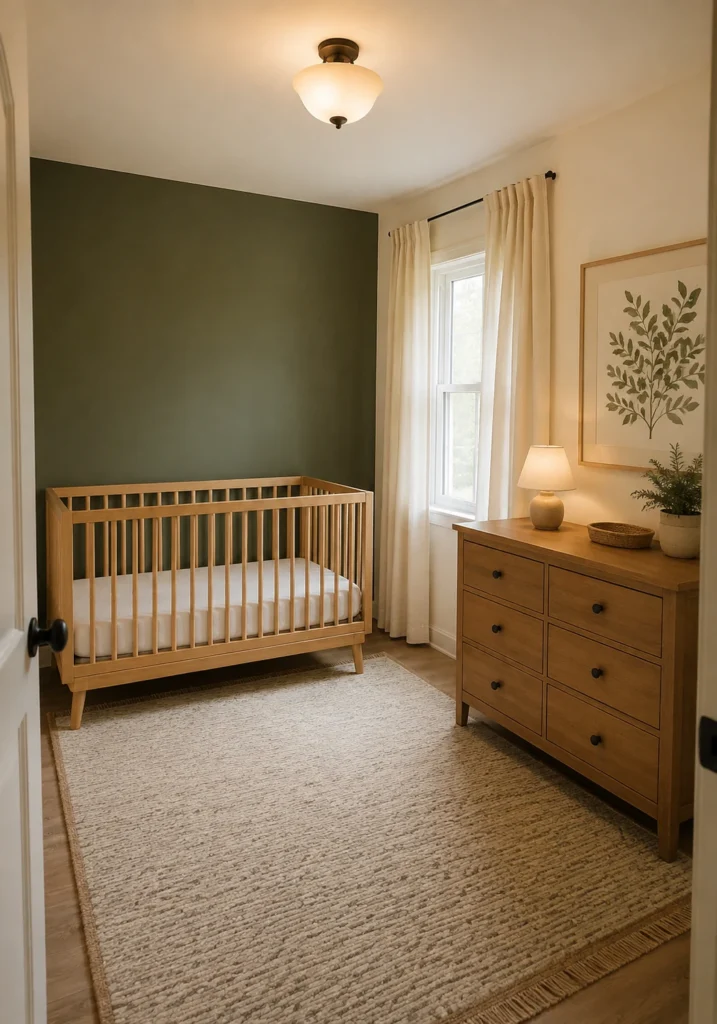
4. Use a Forest-Green Accent Wall and Keep the Rest Warm
A dark wall can work in a small nursery if the rest of the room doesn’t try to match its intensity.
Paint one crib wall a softened forest green and keep the other three walls warm white. Pair it with a light oak or white crib, a medium wood dresser, cream curtains, and a pale rug.
The accent wall gives the room depth without wrapping the entire space in a dark color. This is especially useful in a 7-by-9-foot nursery where four deep green walls might feel too enclosed.
Leave the crib wall largely undecorated. The paint is already enough of a statement.
If you want art, place one larger landscape or botanical piece on the dresser wall instead of crowding the darker surface.
This idea works well for readers searching green nursery ideas or baby boy room inspiration, but the palette is completely gender-neutral. Forest green, oak, and cream have enough contrast to feel interesting without depending on a theme.
A room with one small window may need lighter curtains and a warm lamp to keep the green from becoming gloomy at night.
5. Paint a Slate-Blue Dresser Against Creamy Walls
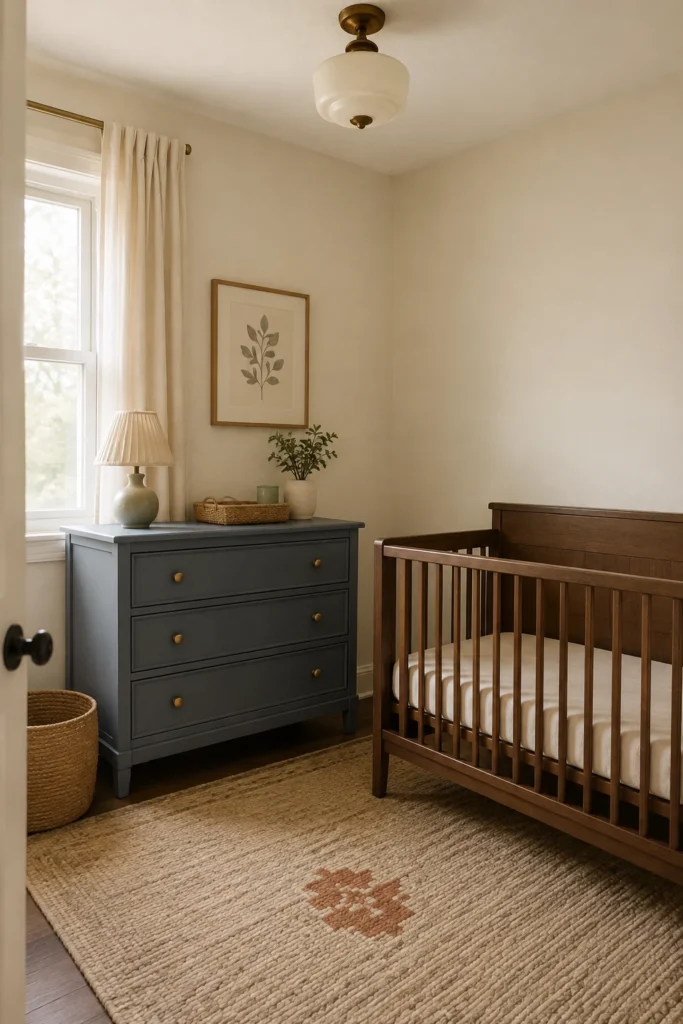
A slate-blue dresser against creamy walls often has more impact than five smaller colorful accessories.
Choose a compact four- or six-drawer dresser in muted slate blue and keep the wall behind it a warm cream rather than bright white. Pair it with a walnut or medium-oak crib for contrast.
This works because the dresser becomes a single block of color, while the wood gives the palette warmth and keeps the blue from feeling overly cool.
For readers searching baby boy dresser ideas, slate blue is an obvious option, but there’s no reason the same palette can’t work in a gender-neutral nursery.
Use cream curtains and a rug that mixes oatmeal with one small rust or clay detail. That warmer accent prevents the room from turning into an all-blue scheme.
If the dresser is already colorful, don’t paint the nightstand, storage cart, and bookcase in three more shades. Small rooms look calmer when one major piece carries the color.
A darker dresser can also feel visually heavier, so keeping its width moderate—around 42 to 48 inches—often works better than using an oversized piece that dominates the wall.
6. Create a Teal-and-Clay Gender-Neutral Nursery
A colorful gender-neutral nursery doesn’t have to rely on gray.
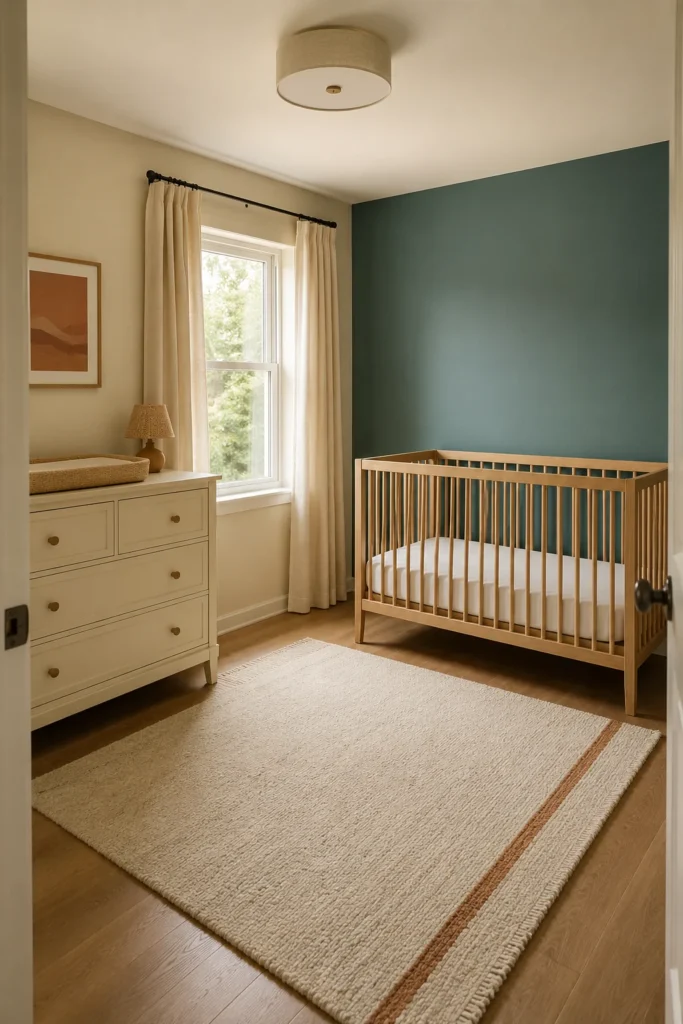
Use a muted teal wall color with warm clay or rust accents, then bridge the two with natural oak and soft cream. A light oak crib, cream dresser, clay-colored rug detail, and one teal wall can give the room enough personality without making every piece colorful.
The important thing is scale. Teal can be strong, so in a compact room it often works best on one wall or in a slightly grayed-down version across the entire room.
Clay should stay secondary. One rug stripe, one art print, or a small dresser lamp is usually enough.
This palette works because teal and clay sit on opposite temperature sides: one cool, one warm. Natural wood helps the transition feel softer.
For a simple gender-neutral nursery, keep storage mostly behind dresser drawers or closet doors. Stronger color palettes become much easier to live with when baby supplies aren’t visible across multiple shelves.
If the room already has dark flooring, use lighter cream textiles so the whole lower half doesn’t become visually heavy.
7. Use a Camo-Inspired Mural Without Making It Military
A camo nursery wall can be interpreted much more softly than literal camouflage print.
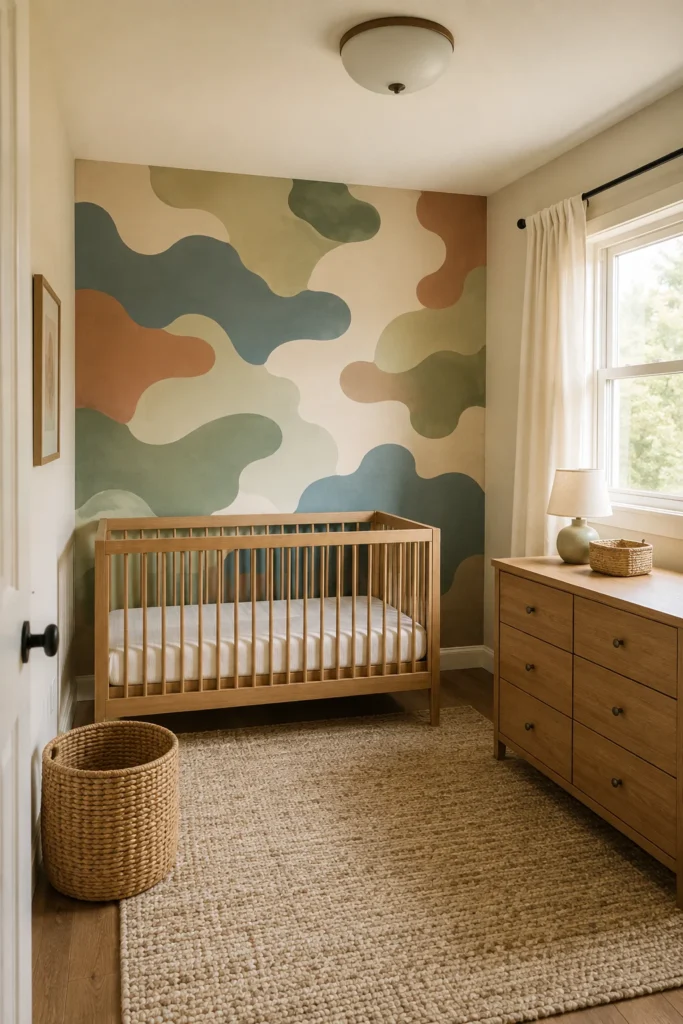
Use large overlapping organic shapes in sage, olive, dusty blue, muted clay, and warm cream. Keep the shapes broad and simple rather than small and busy. The result should feel more like abstract landscape forms than military pattern.
Use the mural on one wall only, ideally behind a simple oak or white crib. Let the other walls stay warm white.
This one surface should do most of the decorative work.
A natural wood dresser, oatmeal rug, and plain cream curtains are enough to support it. Skip additional murals, patterned storage bins, and novelty decor.
In a small nursery, large shapes usually work better than tiny repeating patterns because the eye reads them as broad color fields instead of visual noise.
This approach also feels current for 2026 because it mixes painted color with natural wood and avoids a perfectly matched nursery set.
If the wall is already colorful, open shelving full of books and baby supplies can quickly push the room past calm into clutter.
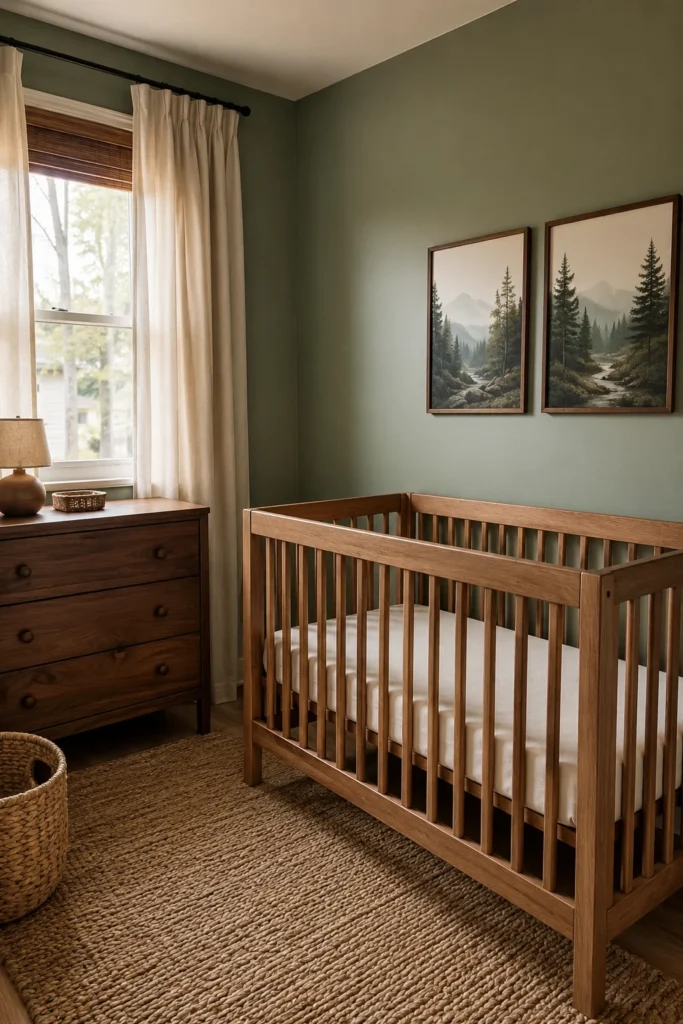
8. Create a Forest Woodland Nursery With Muted Green Layers
A forest woodland nursery doesn’t need bears, foxes, mushrooms, trees, and mountains on every wall.
Instead, use color and material to suggest the theme.
Paint the walls a softened eucalyptus or muted moss green. Add a medium-oak crib, a slightly darker walnut dresser, cream curtains, and one or two woodland landscape prints.
The different wood tones actually help here. A perfectly matching furniture set can make the room feel flatter, while oak and walnut together create a more collected forest-inspired look.
Keep literal woodland motifs limited to the artwork. The rest of the theme can come from the green walls, natural fiber rug, wood furniture, and one woven basket.
This works particularly well in small nurseries because the theme doesn’t require extra decorative objects taking up shelf or floor space.
If you add botanical wallpaper, use it on one smaller surface rather than over every wall. Woodland decor looks calmer when part of the room is still visually quiet.
And don’t pack plants into the nursery just to make the forest concept literal. Color and texture can do the job.
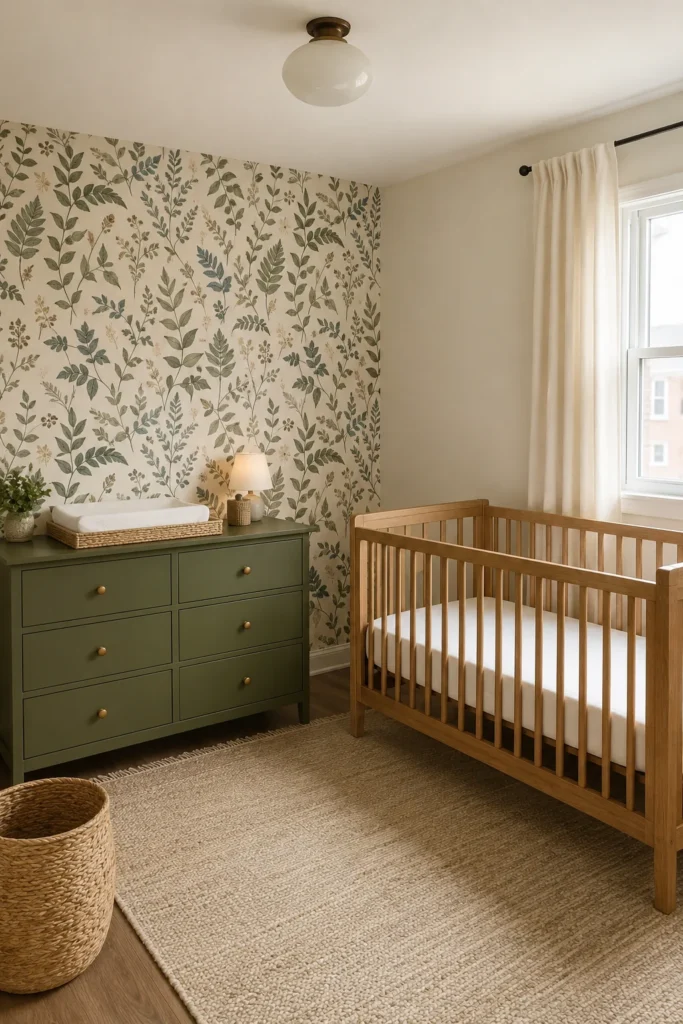
9. Use Botanical Wallpaper on One Small Wall
Wallpaper is easier to handle in a small nursery when it has a clear boundary.
Choose one wall—perhaps the dresser wall rather than the crib wall—and use a small-scale botanical pattern in muted green, blue-gray, and cream. Keep the remaining walls a soft warm white.
Then bring one of the wallpaper colors into the dresser. A moss or pale blue-gray painted piece creates a subtle connection without making the room look matched from a catalog.
A simple wood crib keeps the furniture palette grounded.
This is another woodland or nature-inspired nursery strategy that doesn’t require a mural. The printed leaves or branches create enough movement on their own.
In a narrow room, avoid covering every surface with pattern. A small botanical print on one wall plus striped curtains plus a patterned rug can become overwhelming.
One larger pattern usually feels calmer than three unrelated smaller ones.
Removable wallpaper can also be useful for renters, depending on the wall and product, but the visual principle is the same: let the pattern occupy one controlled zone.
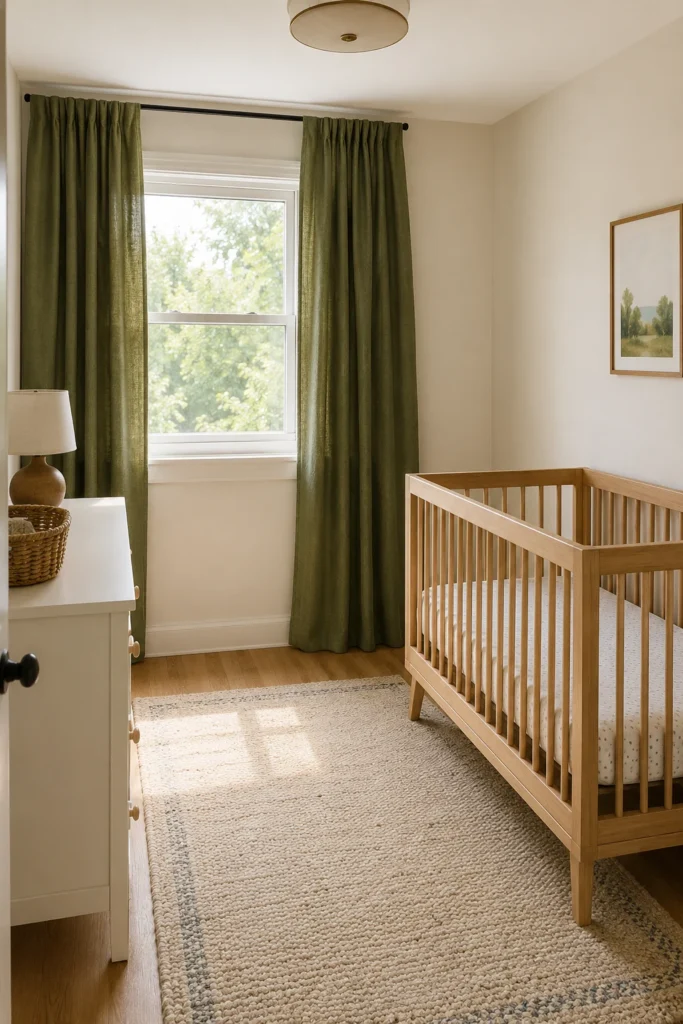
10. Use Olive Curtains as the Main Color Move
You don’t have to paint to get a strong anti-beige effect.
In a warm white nursery, hang muted olive-green curtain panels high and wide around the window so they become the room’s main vertical color element. Pair them with a light oak crib, warm white dresser, and a rug with one small blue-gray or rust detail.
This approach works particularly well in rentals because the walls can stay neutral while the fabric provides the personality.
It also answers a common nursery-curtain problem: colorful panels can make a small room feel taller when they are mounted close to the ceiling and kept visually simple.
Choose medium-weight fabric rather than something overly heavy or ornate. Very dark, thick curtains can make a narrow window feel smaller if they consume too much wall around it.
Keep the crib positioned away from curtain fabric and preserve a clear, simple sleep area.
For readers looking for baby boy nursery curtains, olive is one useful choice, but the same setup works just as well for any gender-neutral room.
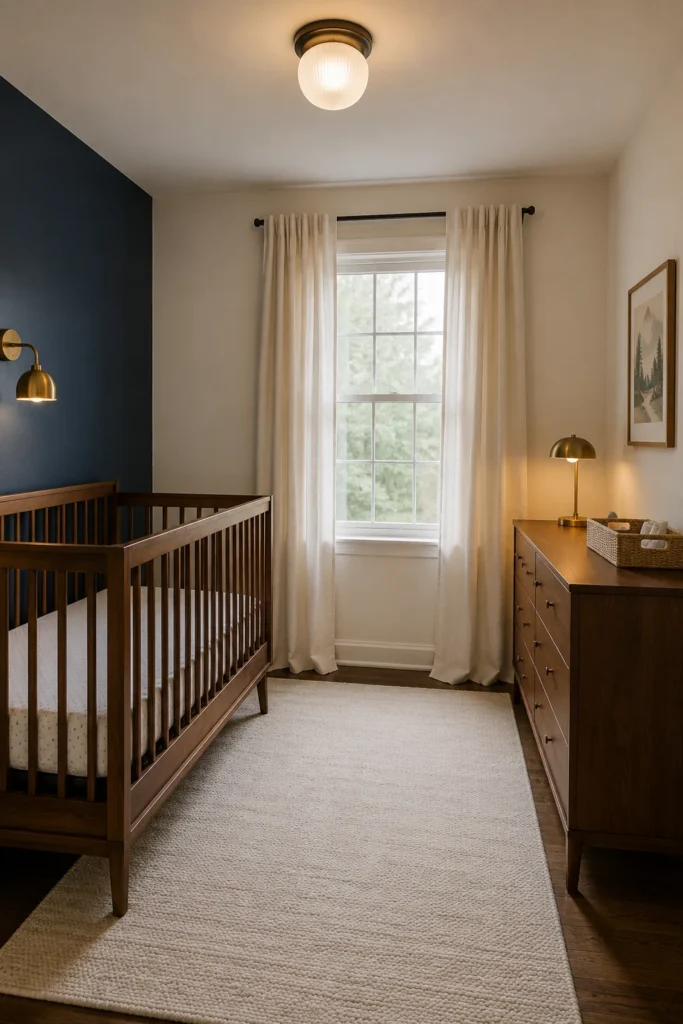
11. Pair Muted Navy With Walnut for a Moody Nursery
A small nursery can handle a moody color if the darker elements are controlled.
Try one muted navy wall with a walnut crib or dresser, then use warm ivory on the remaining walls, curtains, and rug. The result feels deeper than a pale nursery without becoming cave-like.
Walnut is especially useful here because its warm brown tone softens the coolness of navy.
If the room has limited daylight, keep the navy to one wall. In a brighter room, a dusty muted navy may work on more surfaces, but the ceiling and trim should stay light.
A small brass or warm-metal lamp can add another warmer note.
This kind of moody nursery idea works best with closed storage. Open shelving full of colorful packaging, books, and supplies can clash with the controlled darker palette.
Keep the crib wall simple. If navy is already the statement, a single print on another wall is enough.
The effect should feel cocooning, not dark for the sake of drama.
12. Try Sage, Ochre, and Oak for a Soft Colorful Nursery
A colorful nursery doesn’t need high saturation.
Use sage walls as the background, warm oak for the crib and dresser, and muted ochre in one or two smaller places—perhaps a rug detail and a single art print.
Cream curtains and warm white trim keep everything balanced.
This palette works well because the colors feel natural rather than bright. Sage is gentle enough to cover a larger surface, while ochre adds warmth without competing for the entire room.
It also creates a strong gender-neutral nursery that doesn’t rely on gray or all-beige styling.
In a small room, stop at those three main notes: sage, oak, ochre. Adding rust, blue, charcoal, terracotta, and green baskets on top will dilute the clarity of the scheme.
The dresser can stay natural wood here because the walls are already doing the color work.
This is a useful reminder that not every anti-beige nursery needs painted furniture. Sometimes the more interesting choice is keeping the furniture quiet so the wall color and textile accents have room.
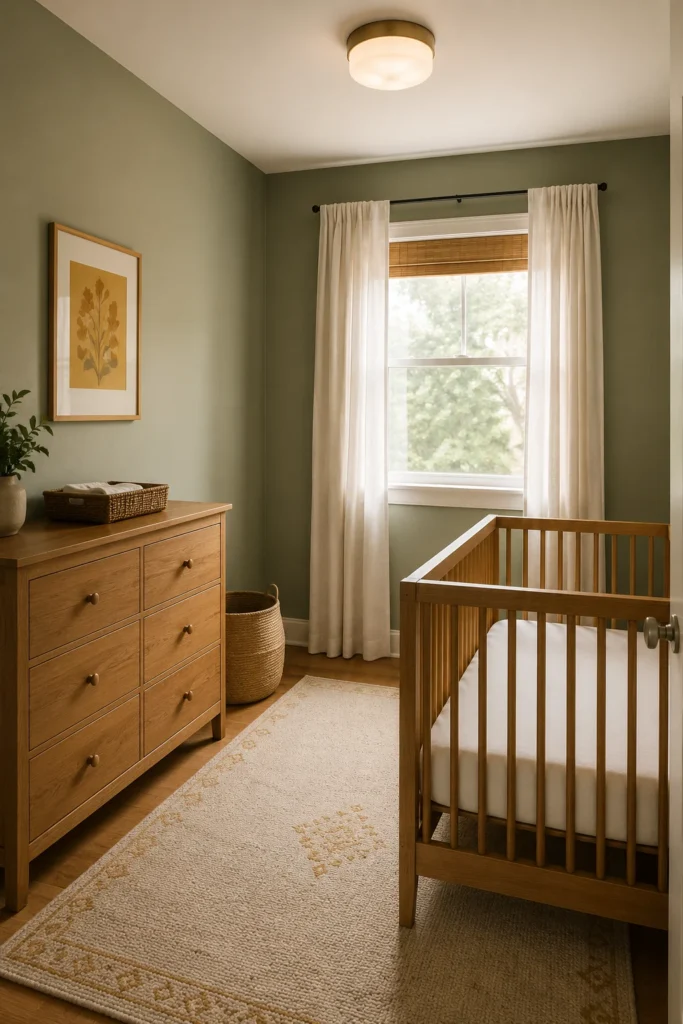
13. Use a Rust-Clay Dresser Against Blue-Gray Walls
If you want a nursery that feels genuinely colorful without relying on lots of accessories, pair one warm furniture color with a cool wall.
Paint the walls a soft blue-gray, then use a dresser in muted rust, clay, or terracotta. Add an oak crib and cream curtains.
The warmer dresser pops against the cooler walls, but both colors are muted enough that the room still feels calm.
This is a stronger anti-beige direction than simply adding colorful toys to a neutral nursery because the color is built into the room’s main surfaces and furniture.
The oak crib acts as the bridge between blue and clay. Without the wood, the contrast can feel more abrupt.
Keep the rug mostly neutral and let the dresser remain the warm focal point. Repeating rust in a lamp, basket, pillow, and three prints isn’t necessary.
For a 7-by-9-foot nursery, use a dresser with a clean shape and moderate width. The stronger the color, the more visually substantial the furniture can feel.
This palette works beautifully for readers who want a nursery that feels collected rather than like a matching set.
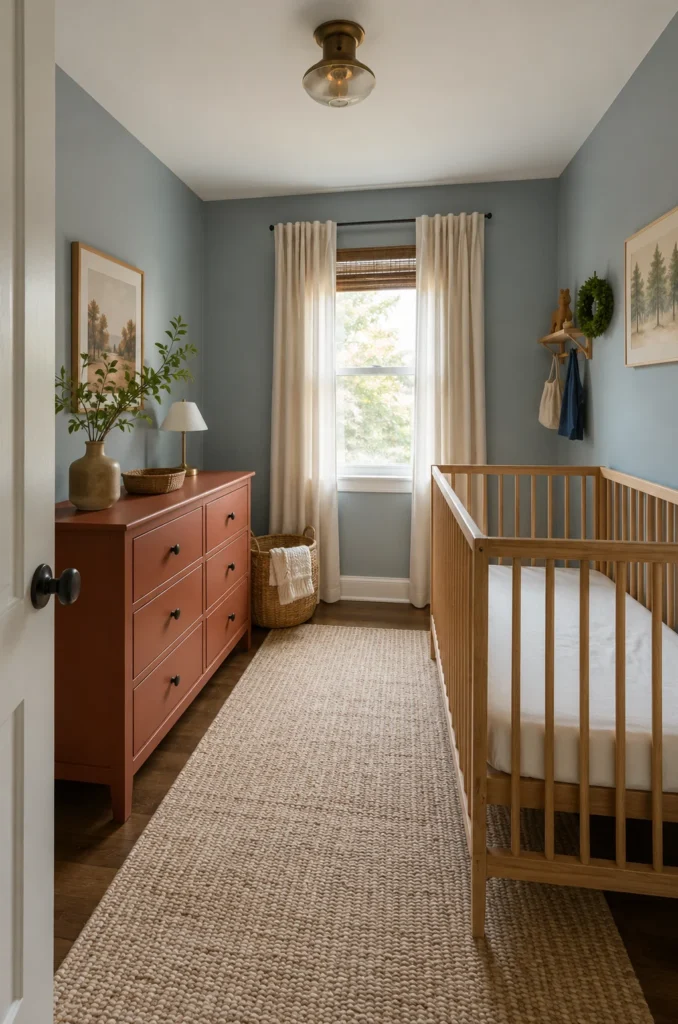
14. Build a Colorful Nursery With Dusty Blue, Moss, Rust, and Oak
A colorful nursery starts to feel chaotic when every surface is trying to be the statement.
Instead, assign each color a specific role.
Use dusty blue on the walls, moss green on the dresser, natural oak for the crib, and rust only as a small accent in the rug or art. Keep curtains cream.
The palette is noticeably colorful, but the colors aren’t scattered randomly. Blue becomes the background. Green is the main furniture statement. Oak adds warmth. Rust appears only once or twice.
This is a useful way to borrow from colorful house interior design without turning the nursery into a highly saturated children’s room.
Because the wall and dresser are already expressive, keep storage concealed. Drawer fronts and closet doors will visually calm the room far more than five different open baskets.
A small nursery can handle three or four colors when their proportions are controlled. What usually causes visual overload isn’t the number of colors alone; it’s repeating all of them everywhere.
One quiet wall and a clear crib setup keep the room from feeling crowded.
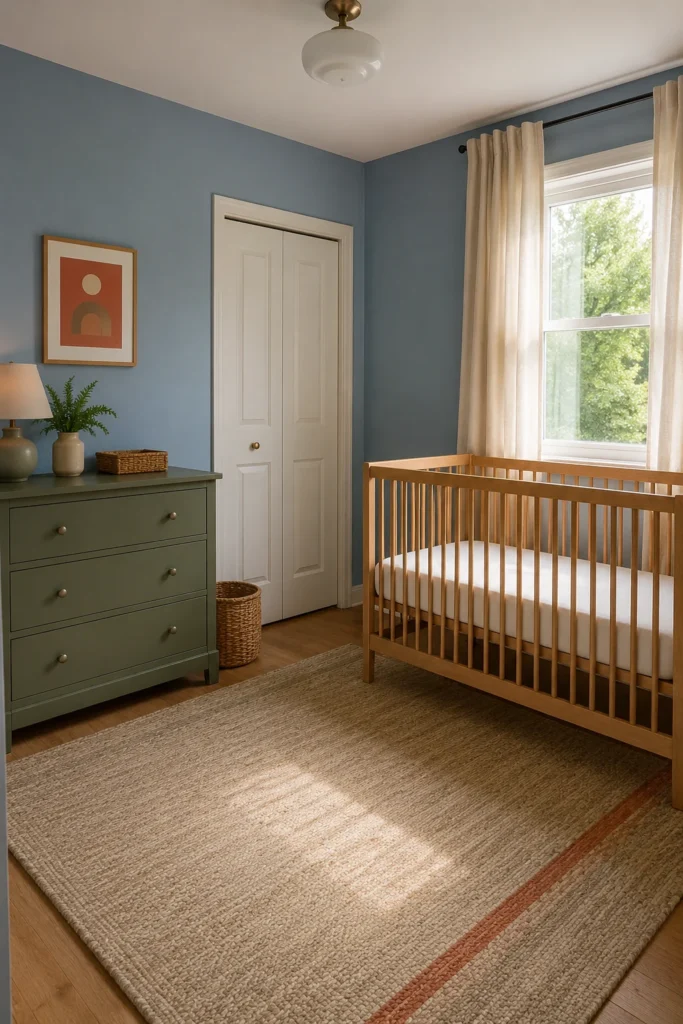
15. Keep It Simple With Olive, Walnut, and Soft Ivory
One of the calmest anti-beige nurseries uses only three main tones.
Paint the walls a muted olive, use a walnut dresser, add an ivory or light-oak crib, and keep the curtains and rug soft ivory.
That’s enough.
The olive gives the room personality, walnut adds depth and warmth, and ivory prevents the palette from becoming heavy.
This is a particularly strong simple gender-neutral nursery direction because it has real color without relying on any stereotypically gendered theme.
If you want one small additional accent, choose muted blue-gray or brass and repeat it no more than once or twice.
The room will feel calmer if the dresser handles most of the storage. A large basket can hold extra blankets or laundry elsewhere in the room, but several visible bins in different materials can make the palette look busier than intended.
For the crib setup, choose the quietest wall and avoid crowding it with shelves. In a small room, the space around the crib is often more valuable visually than another decorative element.
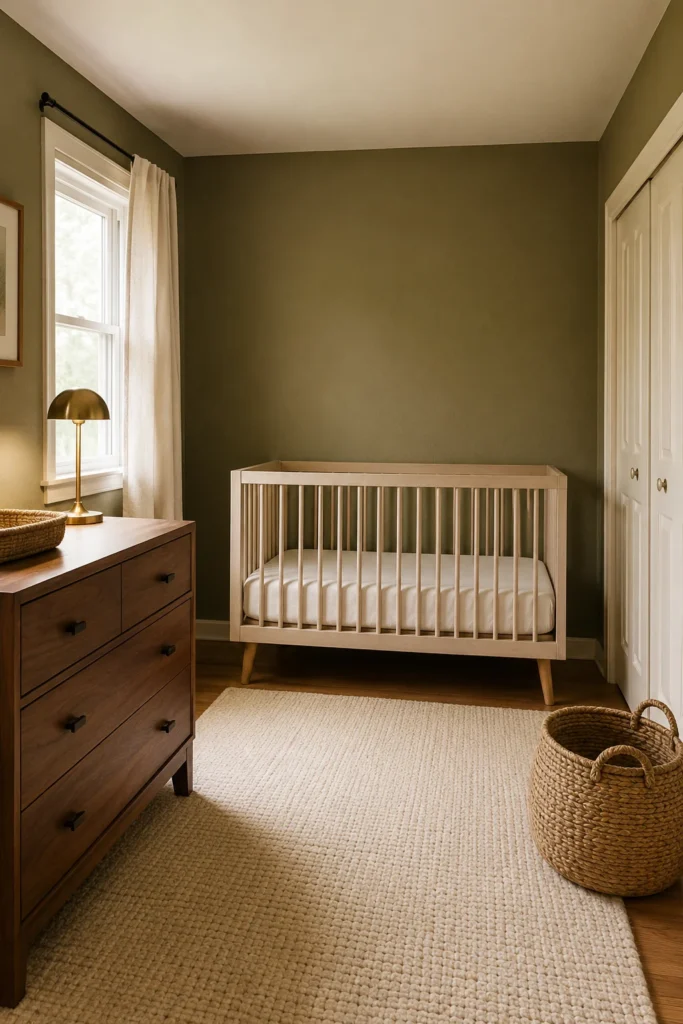
A Simple Formula for a Calm Anti-Beige Nursery
The strongest small nursery ideas don’t need beige to feel peaceful. A compact room can handle forest green, dusty blue, olive, teal, rust, ochre, or clay when those colors have clear roles instead of appearing on every available surface.
A useful framework is one dominant color + one supporting tone + warm wood or cream + one visual statement + plenty of quiet space.
Start with the biggest decision. Maybe that’s the wall color. Maybe it’s a painted dresser, a curtain treatment, or one woodland mural. Then build the rest of the room around that choice instead of adding unrelated color later.
Natural oak and walnut are especially helpful because they soften the transition between stronger greens, blues, and earthy shades. Cream and warm white can still appear throughout the room; they simply act as support instead of becoming the entire palette.
Keep storage mostly closed, keep the crib visually simple, and repeat each accent color sparingly.
An anti-beige nursery doesn’t need to be maximalist. It just needs enough color to feel intentional, personal, and warmer than a room where every surface fades into the same neutral tone.
