
20 Small Nursery Ideas for 2026: Dressers, Cribs & Woodland Themes
The best small nursery ideas usually start with layout, not decor. In a compact bedroom, a beautiful crib, dresser, rug, mural, and storage cart can all become a problem if the door barely opens or the closet is blocked. The room works better when the crib and dresser placement are decided first, then color, curtains, lighting, and wall decor are built around the remaining space.
One practical rule helps with almost every small nursery: choose the crib and dresser placement first, then build color, curtains, storage, and decor around the remaining space.
Small rooms rarely need more furniture. They usually need fewer pieces doing more useful work. A six-drawer dresser can store clothes and serve as the changing area. Curtains mounted higher can make an 8-foot ceiling feel more generous. A simple woodland mural can carry the whole theme without adding shelves full of novelty decor.
For 2026, nursery style feels especially fresh when warmer wood, painted furniture, expressive but muted color, vintage-inspired details, and natural textures are mixed with practical modern basics.
20 Small Nursery Ideas for 2026: Dressers, Cribs & Woodland Themes
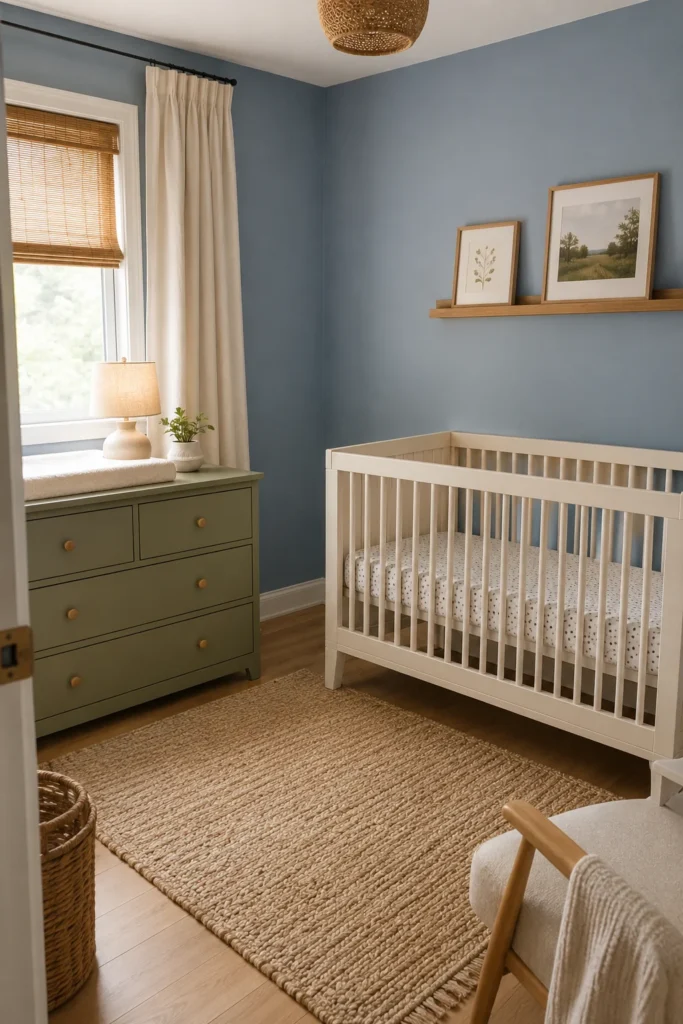
1. Pair a Moss-Green Dresser With Soft Blue Walls
A moss-green dresser against soft blue walls gives a small nursery color without needing another decorated surface.
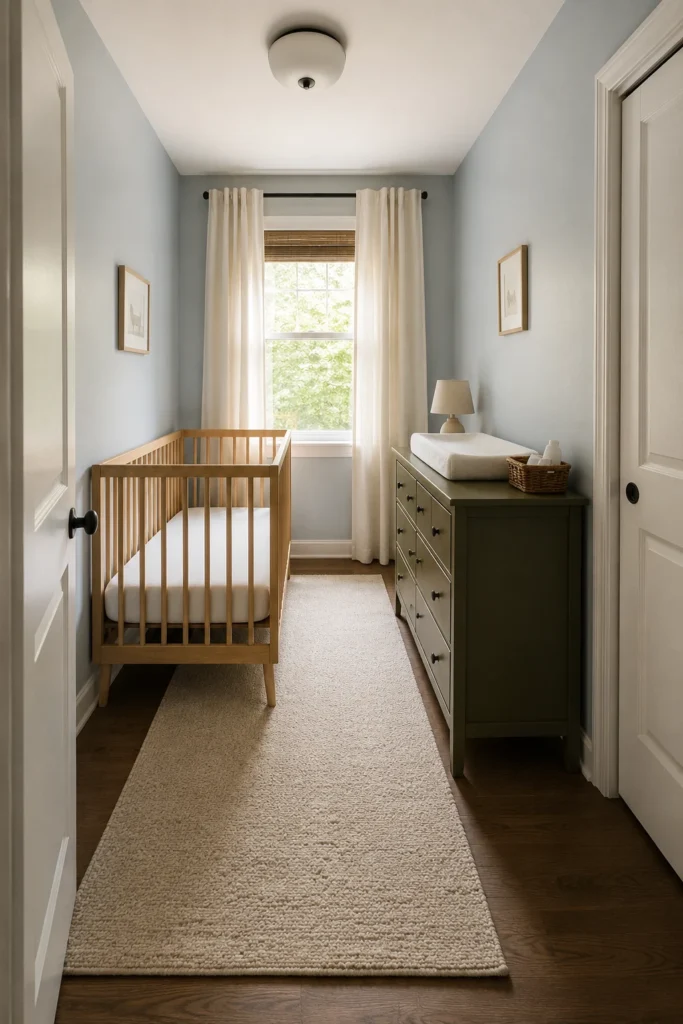
In an 8-by-10-foot room, place a standard white or warm-oak crib along the longest uninterrupted wall and use a compact six-drawer dresser, roughly 45 to 50 inches wide, on the adjacent wall. Paint the dresser a muted moss or olive green, then keep the walls a pale dusty blue.
The contrast is noticeable but still calm. Blue and green are close enough visually that the room doesn’t feel chopped into separate color zones, and the darker dresser gives the eye one strong anchor.
This is a useful direction for readers browsing baby boy dresser ideas, but the palette is completely adaptable. Nothing about green or blue needs to be gender-specific.
Keep the rug, curtains, and crib sheet simple—cream, oatmeal, or warm white. If the dresser is already the strongest color, repeating green in three baskets, a lamp, and five art prints will make the room feel busier.
2. Let a Natural Wood Dresser Double as the Changing Station
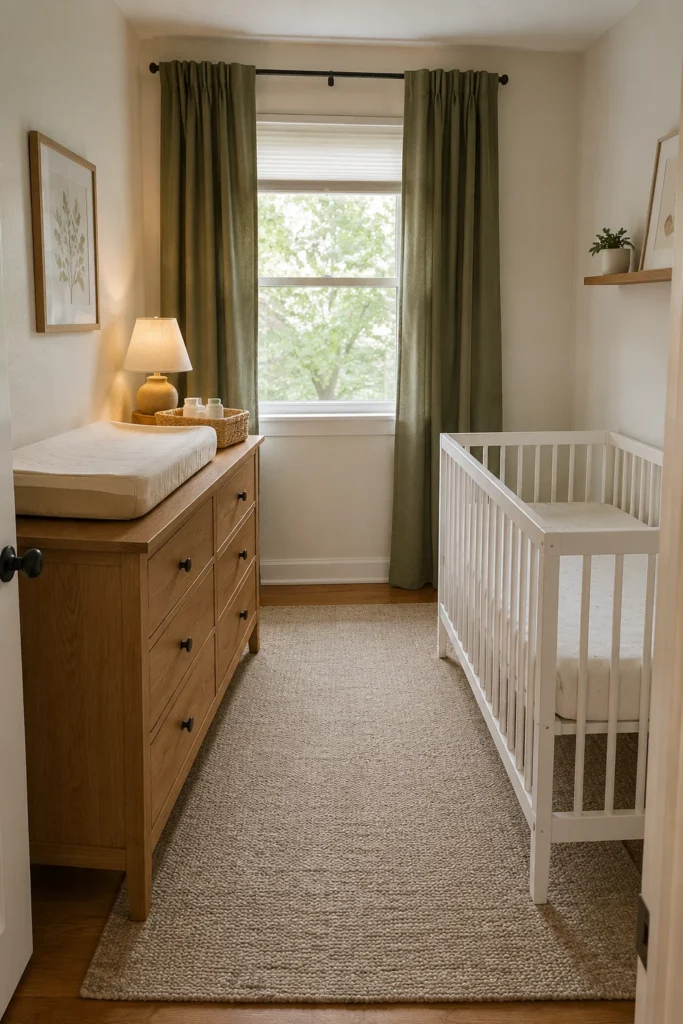
In a small nursery, a dresser often earns its footprint better than a dedicated changing table.
Choose a sturdy natural wood dresser with enough usable surface on top for an appropriate changing setup and enough drawers to hold diapers, clothes, swaddles, and backup supplies. A piece around 42 to 50 inches wide usually offers more long-term storage than a narrow nursery-specific changing unit.
Keep everyday items mostly inside the top drawers instead of covering the whole surface with organizers. One contained basket or tray is plenty for frequently reached items.
This works because the dresser remains useful after the diaper stage, which matters in a room where every square foot counts.
Warm oak or medium walnut also fits the more collected, less perfectly matched nursery direction that feels current for 2026. Pair it with a simple painted crib rather than trying to make every furniture finish identical.
Before choosing the widest dresser that fits the wall, check the closet and room-door swings. Extra drawer space isn’t helpful if the door hits the dresser every time it opens.
3. Put the Crib on the Longest Uninterrupted Wall
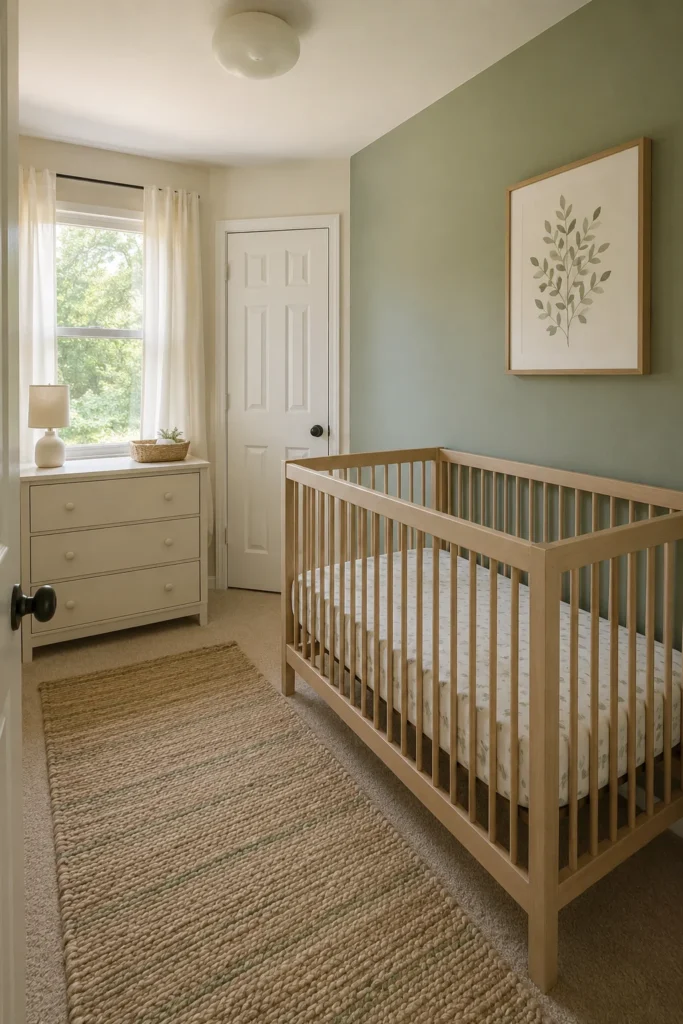
A small room often feels cramped because the crib is placed wherever it looks most decorative rather than where its footprint makes the most sense.
If one wall is free of closet doors, windows, and room entry swings, start there. Position the crib along that longest uninterrupted wall and let the dresser occupy a shorter side wall.
This preserves a cleaner central walking path and often makes the crib feel integrated instead of wedged into leftover space.
For the wall behind the crib, keep the treatment restrained. A muted sage color, one larger art piece, or subtle removable wallpaper is enough. You don’t need shelves, a banner, framed prints, wall hooks, and a name sign all competing above the same piece of furniture.
This kind of crib setup is especially useful in 7-by-9 or 8-by-9-foot rooms because it reduces the number of furniture corners projecting into circulation.
Measure the crib depth before assuming it will work. Some visually slim cribs still project farther into the room than expected.
4. Try a Dusty Blue Vintage-Inspired Dresser
A painted dresser can give a small nursery more personality than adding another piece of furniture.
Use a secondhand or vintage-inspired dresser with simple traditional drawer fronts and paint it a muted dusty blue. Pair it with warm white walls, an oak crib, and one small antique-style brass or aged-metal lamp.
The dresser becomes the decorative moment, so the room can stay simpler elsewhere.
This is one of the easiest nursery dresser color strategies for a small space because the color is concentrated in one useful item. You aren’t committing every wall to a dark tone or filling the room with several colorful storage pieces.
If the dresser has decorative hardware, keep the rest of the room understated. A small room can handle vintage character, but it gets busy quickly when the crib, rug, curtains, lamp, and dresser all have strong patterns or ornate details.
Check the dresser drawers and overall stability before using an older piece in a nursery. Visually charming furniture still needs to work properly in everyday use.
5. Build an Anti-Beige Nursery With Four Controlled Colors
An anti-beige nursery doesn’t need every wall and accessory to be bright.
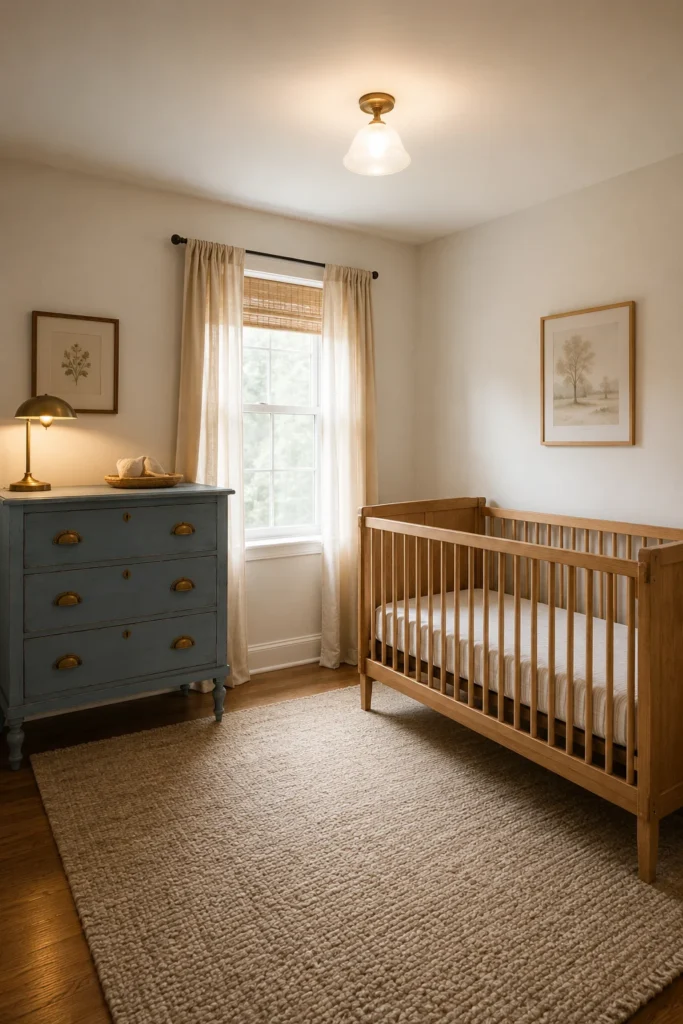
A more practical approach in a small room is to choose four controlled tones and repeat them selectively. Try dusty blue walls, a muted green dresser, warm wood furniture, and soft rust or ochre in one rug or artwork.
Use cream for the quieter textiles so the room has somewhere for the eye to rest.
This kind of colorful nursery feels intentional because each strong color has a job. Blue creates the room background, green anchors the dresser, wood adds warmth, and rust appears only as a smaller accent.
If everything becomes colorful—curtains, crib, rug, baskets, lamp, ceiling, mural—the nursery starts to feel like a playroom rather than a calm sleeping space.
A small room benefits from at least one quiet wall. Let the wall opposite the crib stay largely undecorated or use only a single print.
This is a good way to bring the energy of colorful home interiors into a nursery without sacrificing visual calm.
6. Use a Green-and-Blue Split Wall
A green-and-blue wall can add architectural interest without taking up any floor space.
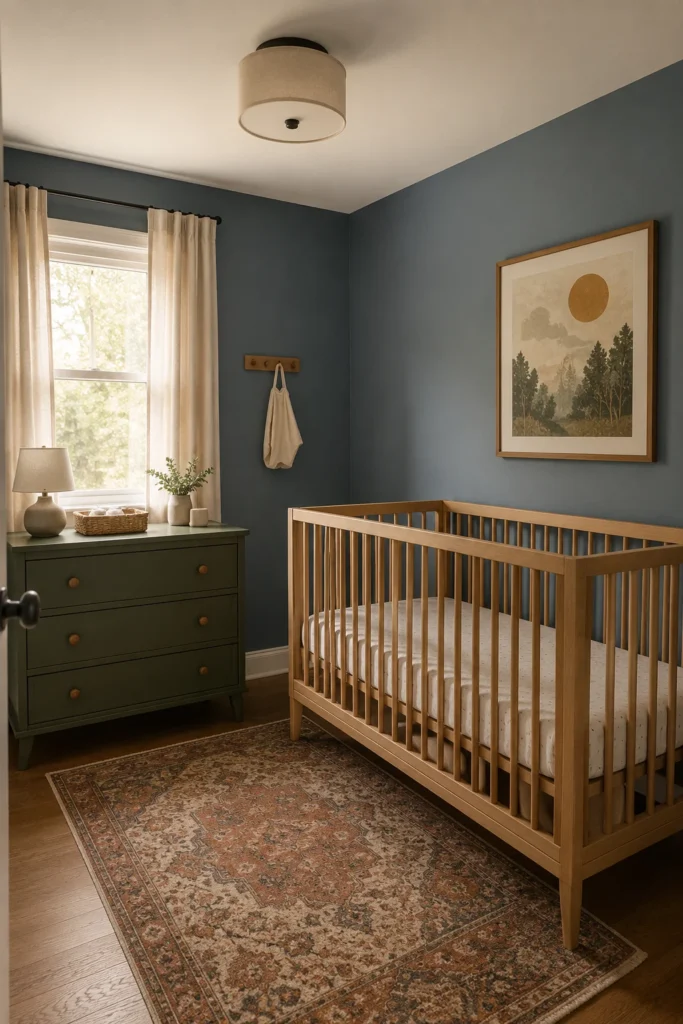
Try a muted split treatment with deep sage or softened forest green on the lower half and a pale blue-gray above. Keep the dividing line simple rather than adding decorative molding everywhere.
Place a light wood crib against the wall so the deeper green visually grounds the furniture while the paler upper color prevents the room from feeling heavy.
Because the two shades are related, the effect feels calmer than a high-contrast color block. It’s a useful way to give a small nursery personality without adding shelves or oversized art.
Keep the dresser neutral or natural wood. If you paint it another strong color, the room may start to compete with itself.
This works especially well in a room with average daylight. In a very dark nursery, use a lighter green on the lower wall rather than turning half the room nearly black.
7. Interpret a Camo Nursery Wall With Soft Organic Shapes
A camo nursery wall doesn’t have to mean a military theme.
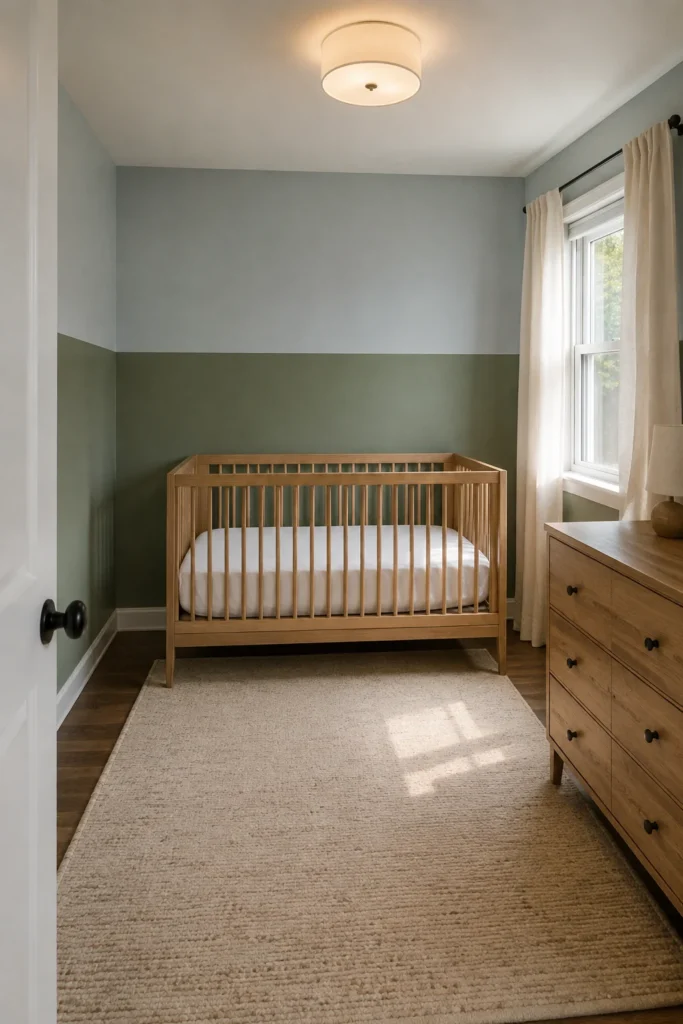
A more refined version uses large overlapping organic shapes in sage, olive, muted clay, and dusty blue. Keep the edges soft and the palette low-contrast so the mural reads more like abstract landscape forms than literal camouflage.
Use the mural on one crib wall only. Then keep the remaining three walls warm white or a very light neutral.
A simple oak or white crib works best against the pattern because adding a brightly painted crib would create another strong focal point.
This idea is particularly useful in a small nursery because the mural creates personality vertically instead of consuming floor space. The theme is already established, so you can skip extra themed decor.
One natural wood dresser, a cream rug, and simple curtains are enough.
A strong wall treatment should do most of the visual work. If you then add framed animals, a patterned rug, colorful baskets, and novelty lamps, the effect can become chaotic quickly.
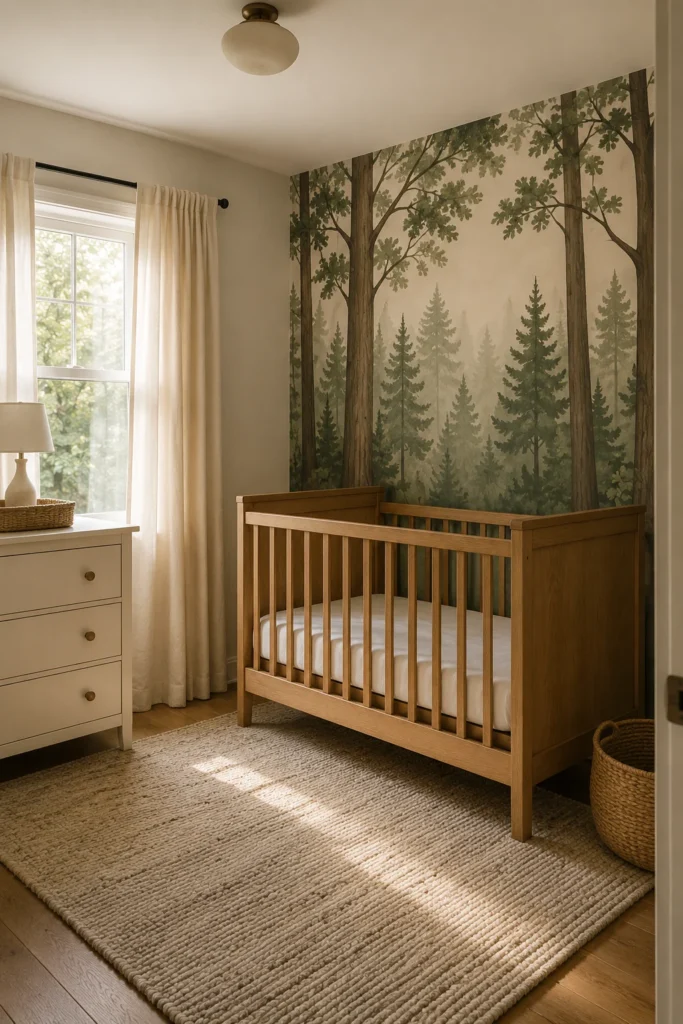
8. Create a Woodland Nursery With One Soft Forest Mural
A woodland nursery feels calmer when the forest idea comes through in one major element instead of appearing on every surface.
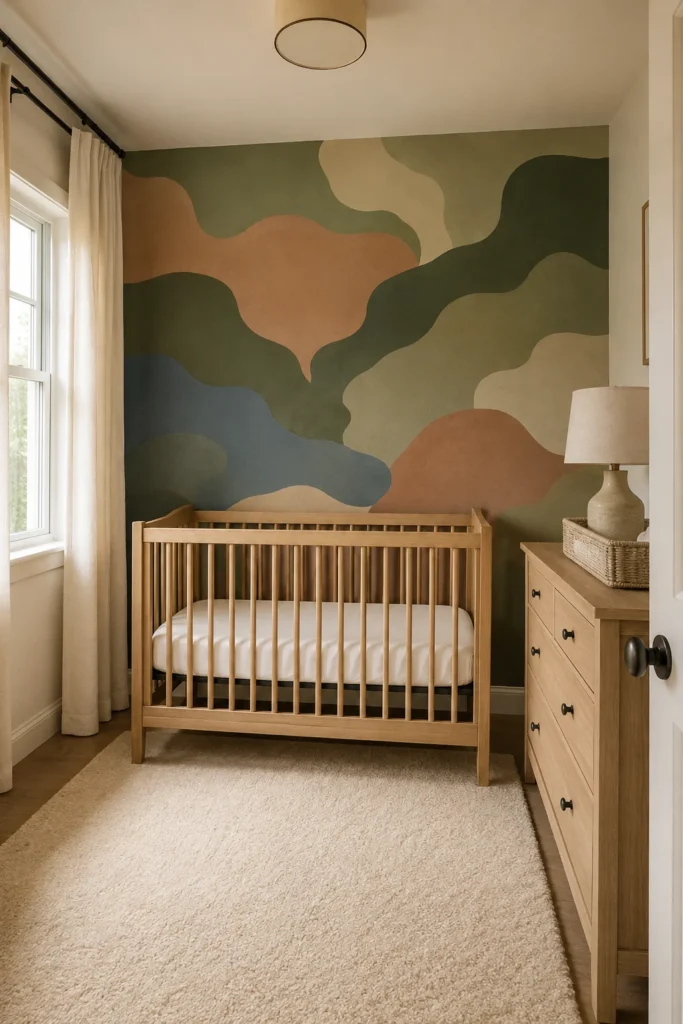
Use a soft forest mural behind the crib with muted green tree silhouettes, gentle brown trunks, and plenty of negative space between shapes. Avoid packing the wall with cartoon bears, mushrooms, mountains, foxes, and stars all at once.
Pair the mural with a natural wood crib, a warm white dresser, an oatmeal rug, and simple cream curtains.
The room still reads clearly as a forest woodland nursery, but the theme comes from color and landscape rather than novelty objects.
In a small room, this matters. A full mural already adds visual depth and pattern, so the opposite wall should stay quieter.
If you want woodland art elsewhere, use one small print rather than creating another gallery wall.
A mural also gives you flexibility as the child grows. Subtle trees and natural colors can age more easily than very baby-specific decorative themes.
9. Use Woodland Art Instead of a Full Mural
If a mural feels like too much commitment, you can get the woodland effect with far less visual weight.
Hang two or three coordinated forest-inspired prints on one wall—perhaps botanical branches, a simple woodland landscape, and one subtle animal silhouette. Use warm oak frames and keep the wall color an earthy muted green or warm off-white.
Pair that with a medium-tone wood crib and a dresser in a slightly darker wood finish. The furniture doesn’t need to match exactly; in fact, a collected mix can make the room feel warmer.
This version is easier for renters because the theme is concentrated in removable art.
It also works well for readers searching green nursery ideas or baby boy nursery inspiration without requiring a stereotypically themed room.
Avoid adding matching fox baskets, bear pillows, mushroom shelves, and tree-shaped lamps afterward. Once the art clearly establishes the nature direction, additional motifs should be limited.
The strongest woodland rooms usually contain more texture and natural material than literal animal decor.
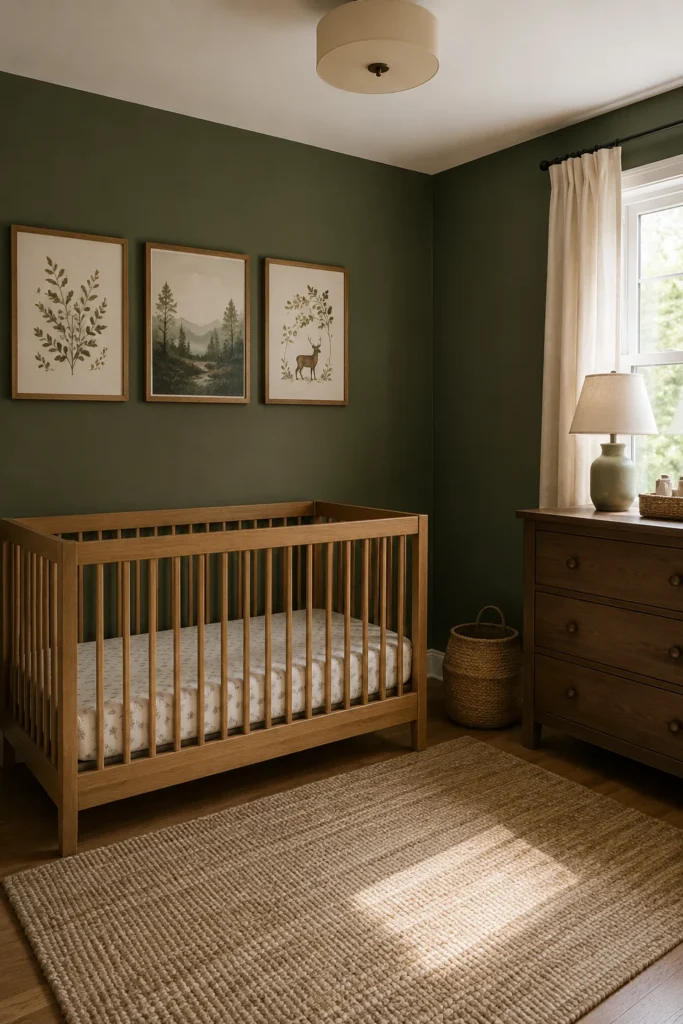
10. Use Moss Green Walls Without Literal Woodland Decor
A forest-inspired nursery doesn’t need a mural or animal theme at all.
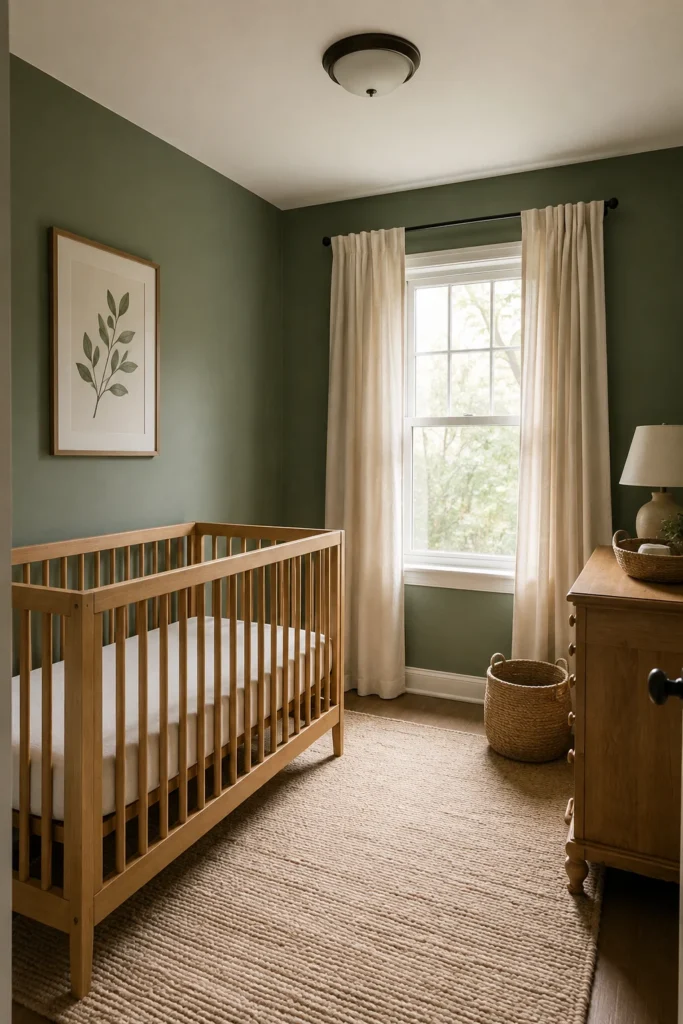
Paint the room a muted moss or gray-green, then introduce nature through warm wood, woven texture, botanical shapes, and simple fabrics. Use a white or oak crib, a natural dresser, an oatmeal rug, and cream curtains.
One framed leaf print or small landscape is enough.
This direction feels more like a sophisticated nature palette than a themed nursery, which is useful if you want the room to grow with the child.
In a small bedroom, keep the ceiling and trim light so the green doesn’t make the whole envelope feel visually dense.
Dark green can be cozy, but a 7-by-9-foot room with one small window may feel much smaller if every surface becomes deep forest green. In that situation, use the stronger shade on one wall or choose a softer moss.
This is also a good example of how 2026 nursery style can feel colorful without depending on bright primary colors or all-beige interiors.
11. Mount Curtains High to Make the Nursery Feel Taller
Curtains can change how a small nursery feels even when the furniture stays exactly the same.
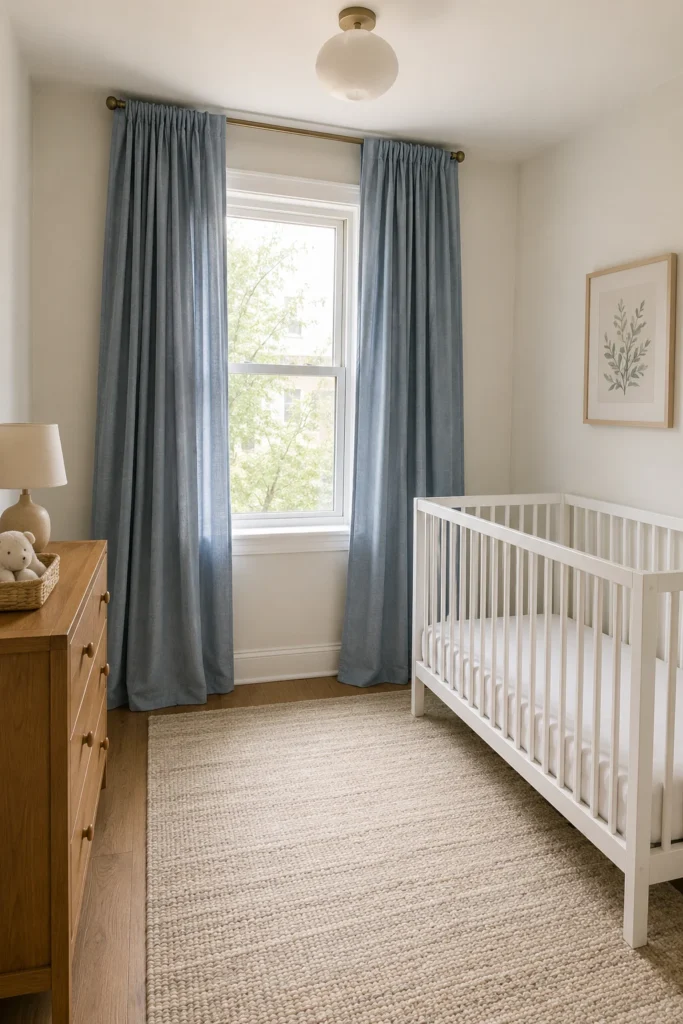
Mount simple curtain panels closer to the ceiling and allow them to fall almost to the floor, framing an average-sized window with long vertical lines. Soft blue cotton, green-and-cream stripes, or warm neutral blackout curtains all work depending on the palette.
In a compact room, this draws the eye upward and makes the wall feel taller than curtains mounted tightly around the window frame.
For nursery curtain ideas, simple is usually better than layered valances, tiebacks, and decorative swags. You already have the crib, dresser, rug, baskets, and baby gear competing for attention.
Plan the furniture layout before committing to long panels. Keep the crib and changing area positioned so fabric doesn’t become part of the sleep space or interfere with everyday use.
If the window sits directly above the dresser, a woven shade may be more practical than panels hanging into the work surface.
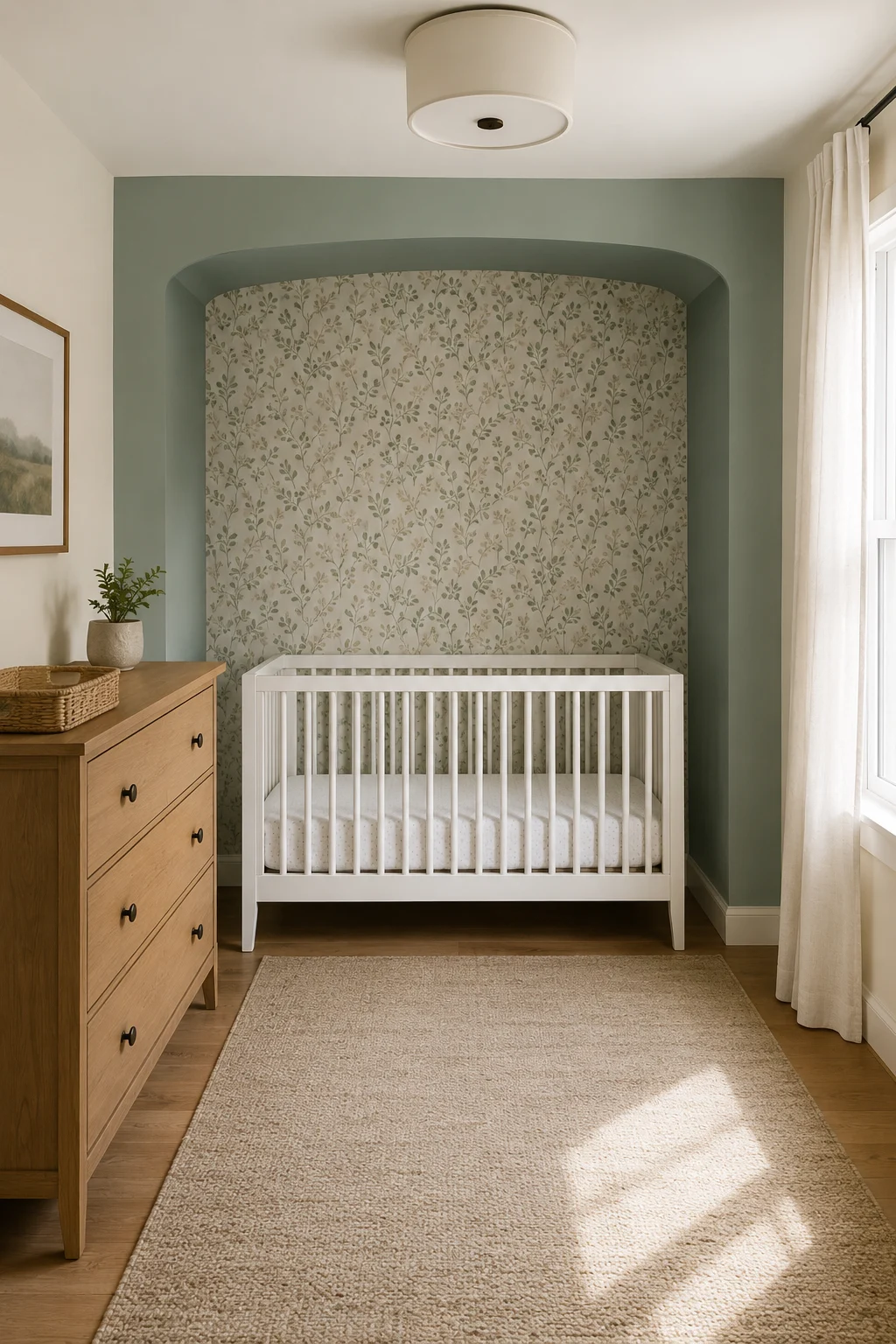
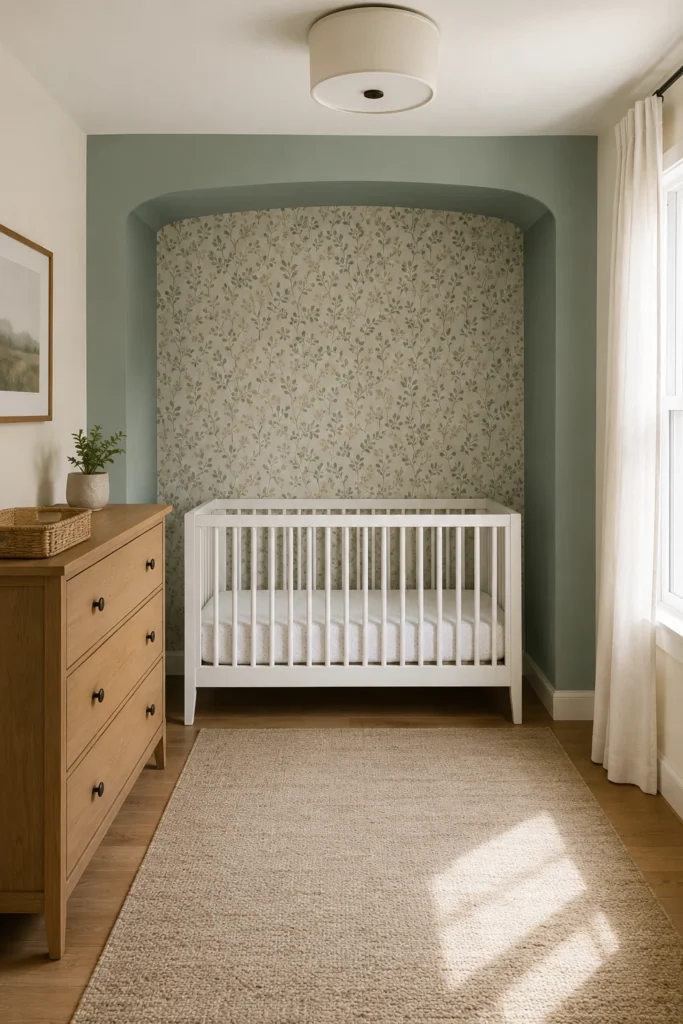
12. Use a Shallow Alcove for the Crib
An awkward shallow alcove can be useful if it’s actually wide and deep enough for the crib without making the sleep area feel squeezed.
Place a standard crib inside the alcove with comfortable clearance around the structure and keep the wall treatment simple—perhaps a soft blue-green paint or subtle removable wallpaper.
Because the alcove visually defines the crib zone, the rest of the room doesn’t need much nursery-specific wall decor.
Put the dresser on the open wall opposite or perpendicular to the alcove so the center remains clear.
This kind of crib inspo is useful in rooms with strange architectural recesses, but don’t force a crib into a nook just because it looks cozy in a photo. If access becomes awkward or the structure is too close to windows, curtains, shelving, or other hazards, another wall is better.
A small alcove works best when it simplifies the furniture layout instead of creating extra problems.
Keep the crib itself visually plain. Let the wall color or wallpaper create the interest.
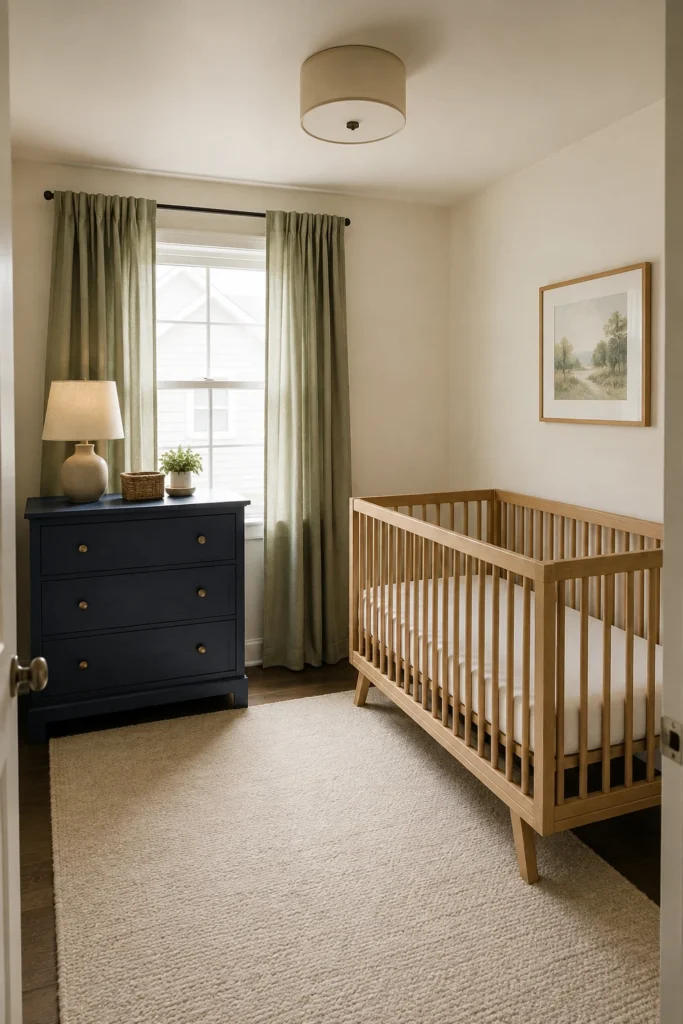
13. Use One Dark Dresser to Ground a Pale Nursery
A compact dark dresser can add depth to a room without painting the walls dark.
Try a charcoal, deep navy, or very dark green dresser around 40 to 44 inches wide against warm white walls. Pair it with a light oak crib, soft blue or green curtains, and a pale textured rug.
The dresser becomes one strong visual anchor while the larger surfaces stay light.
This works particularly well if you’re exploring nursery dresser ideas for a baby boy room but don’t want a predictable all-blue nursery. The darker piece feels grounded and practical rather than theme-specific.
Keep hardware simple and avoid adding another dark bookcase beside it. In a small room, repeating heavy furniture can quickly pull the visual weight downward.
A dark dresser also shows dust and lint differently from pale wood, so choose the finish because you genuinely like it rather than because it looks dramatic online.
Measure depth carefully. A dresser that’s only four inches deeper than another option can noticeably narrow a walkway in an 8-foot-wide room.
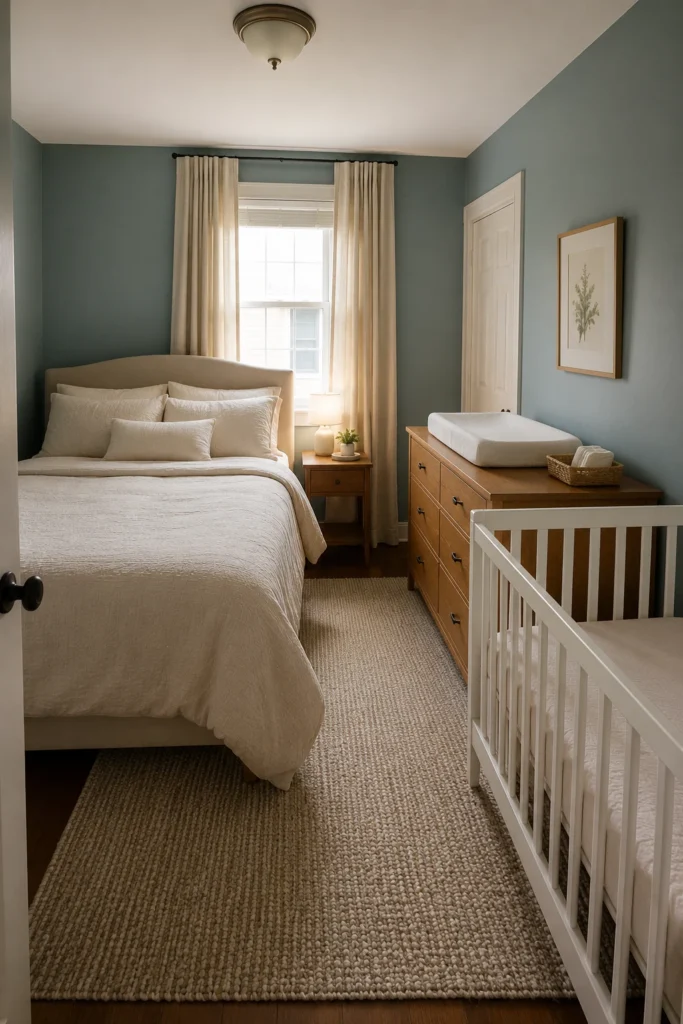
14. Fit a Nursery and Queen Bed Into the Same Room
A nursery with a queen bed works only when you accept that the room can’t hold every typical nursery furniture piece.
Keep the queen bed against the longest wall and reduce bedside furniture to one narrow table or wall-mounted reading light where appropriate. Place a compact crib on the opposite or adjacent wall, preserving a clear route between the room door and closet.
Use one dresser for both guest storage and baby supplies. Let it double as the changing surface instead of adding a separate changing table.
This kind of shared nursery and guest room works best when the decor feels unified. Choose one wall color, one rug, and a common palette across the bed and nursery area rather than visually dividing the room into “adult side” and “baby side.”
Under-bed storage can help with guest linens if the bed design allows it.
The reality is that a queen bed consumes a lot of floor space. If the room is genuinely tiny, you may need to skip an armchair, extra shelving, or decorative storage cart.
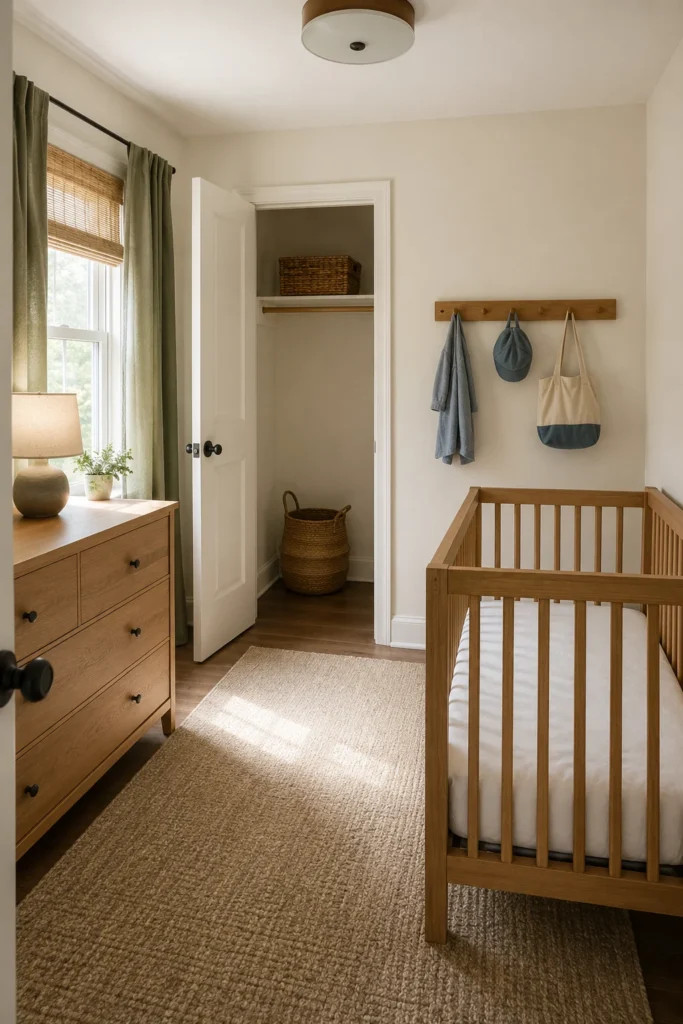
15. Use a Peg Rail Instead of Another Storage Unit
When floor space is limited, adding another narrow cabinet isn’t always the answer.
A simple peg rail or a short run of wall hooks can hold appropriate lightweight items such as an empty tote, a small fabric organizer, or clothing prepared for later use. Place it above a low dresser or on an open wall where it won’t interfere with the crib or changing routine.
The advantage is visual lightness. You gain a little everyday storage without putting another piece of furniture on the floor.
Keep it edited. Six hooks loaded with bags, clothes, hats, and baskets can make a small nursery look busier than a freestanding unit would.
Pair the rail with closed dresser drawers and closet baskets so most storage stays hidden.
This direction works especially well in a simple gender-neutral nursery with warm white walls, oak furniture, and one or two muted colors.
Wall storage should be thoughtfully placed and securely installed for its intended use; don’t position hanging items where they could reach or fall into the crib.
16. Try a Simple Gender-Neutral Nursery With Olive, Oak, and Clay
Gender-neutral styling doesn’t have to mean gray, cream, and nothing else.
Use warm white walls, an oak crib, one olive-painted dresser, and a muted clay accent in the rug or artwork. Add oatmeal curtains and one woven basket.
The palette has personality, but none of the colors dominate.
This is a useful simple gender-neutral nursery direction because it stays flexible without becoming bland. The furniture is minimal, the storage is mostly closed, and the visual interest comes from material and color rather than lots of decorative objects.
In an 8-by-9-foot room, keep the dresser to one substantial piece rather than adding a separate bookcase. A shallow picture ledge can hold two or three books or art pieces if you need a little vertical storage.
The room will feel calmer if at least one wall stays mostly blank.
Olive, oak, and clay also work well with 2026’s warmer, collected nursery feel without depending on short-lived novelty decor.
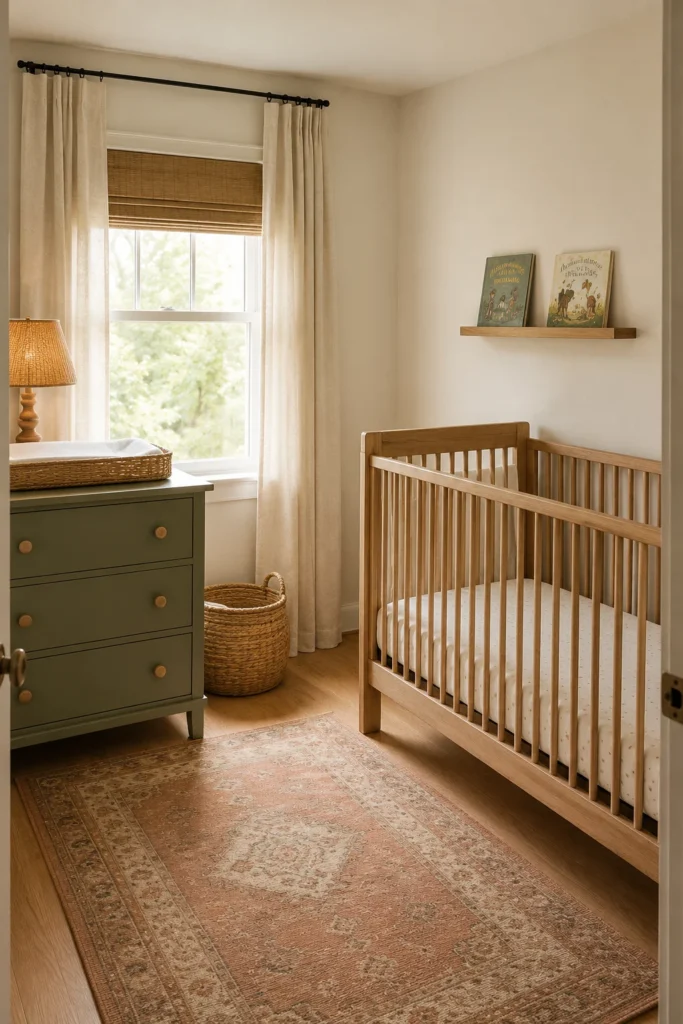
17. Center the Crib on a Quiet Forest-Green Accent Wall
A darker accent wall can make the crib feel intentional without adding extra furniture or decor.
Paint one wall a softened forest green and center a light wood or white crib against it. Keep the surrounding walls warm white, and use a natural wood dresser with cream or pale blue curtains.
The contrast makes the crib wall feel finished even if you leave it mostly bare.
This is one of the cleaner green nursery ideas for readers who like deeper color but don’t want an elaborate woodland theme.
If you add wall art, use one larger piece rather than several tiny frames.
A dark wall works best when there is some natural light or lighter surrounding surfaces. In a windowless nursery, a deep green on every wall may absorb more light than you want.
Don’t mistake “accent wall” for permission to fill that wall with shelves and hanging decor above the crib. The paint is already doing the decorative work.
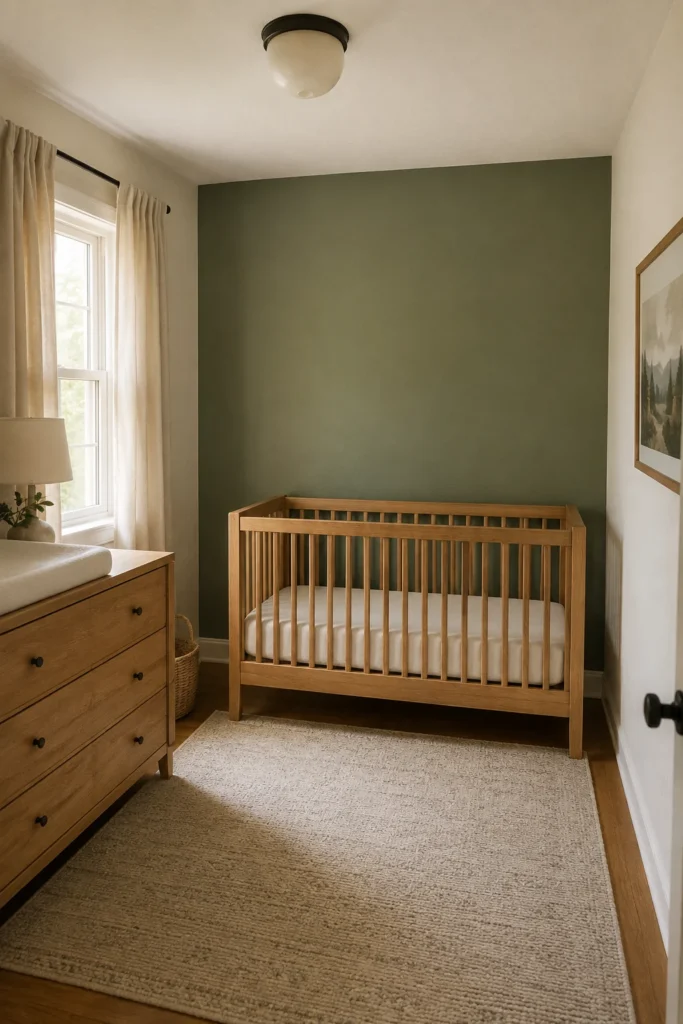
18. Use Narrow Picture Ledges Instead of a Bookcase
A full bookcase can consume more floor space than the books themselves require.
Use one or two shallow picture ledges on an open wall to display a small rotating selection of board books. Keep them away from the crib and place them where an adult can easily reach them.
This preserves the floor for the crib, dresser, and walking space.
The ledges also become decor because the book covers introduce color, which means you may need less framed art.
In a colorful nursery, limit the display to perhaps six or eight visible books rather than filling the entire wall from floor to ceiling. Small rooms become visually noisy when every object is on display.
Pair the ledges with one larger basket for the rest of the books or toys instead of adding several tiny bins.
This is a better use of vertical space when the room already has a hardworking dresser for clothing and baby supplies.
The storage should simplify the room, not create another surface that constantly needs styling.
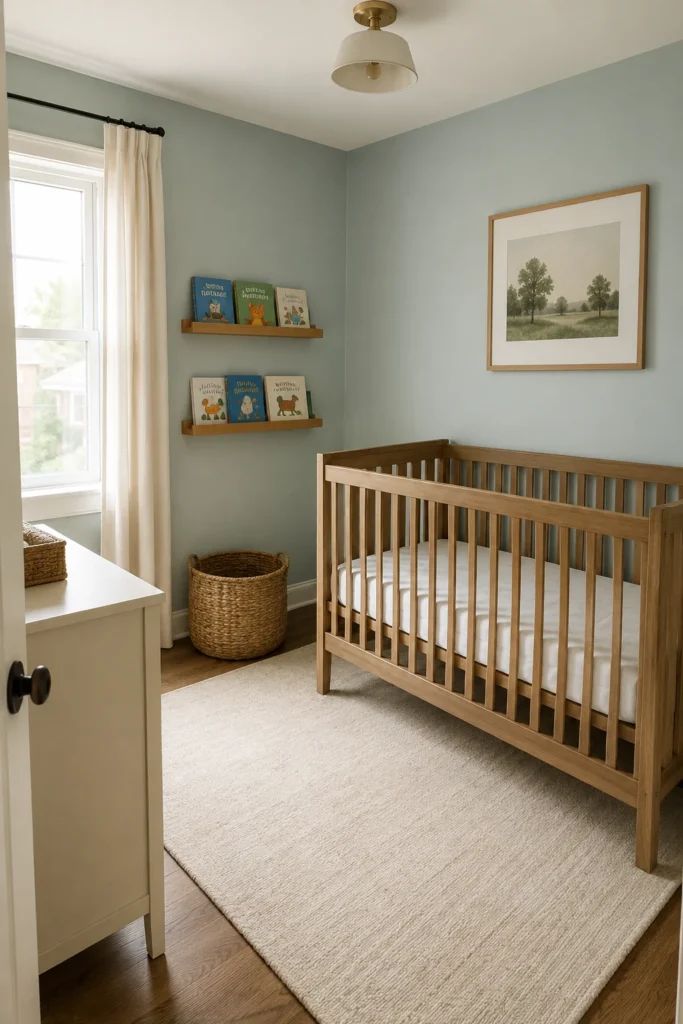
19. Use One Statement Ceiling Light Instead of More Decor
Small nurseries benefit from decorative elements that don’t consume floor or wall space.
A single ceiling fixture with a soft traditional or vintage-inspired shape can give the room character without adding another furniture piece. Think a simple pleated shade, small opal-glass globe, or restrained woven fixture—nothing oversized.
Use a dimmable or otherwise practical warm light arrangement where appropriate, then let the rest of the room stay simple.
This works particularly well with a white crib, painted dresser, and subtle woodland or green-blue palette.
The fixture should suit the room’s scale. A dramatic chandelier in an 8-by-9-foot nursery can make the ceiling feel lower and compete with everything beneath it.
Keep task lighting practical, too. A small lamp on the dresser can handle evening routines if there’s room, without requiring a floor lamp.
The 2026 direction here is less about novelty nursery lighting and more about choosing one well-scaled decorative piece that feels like part of the home.
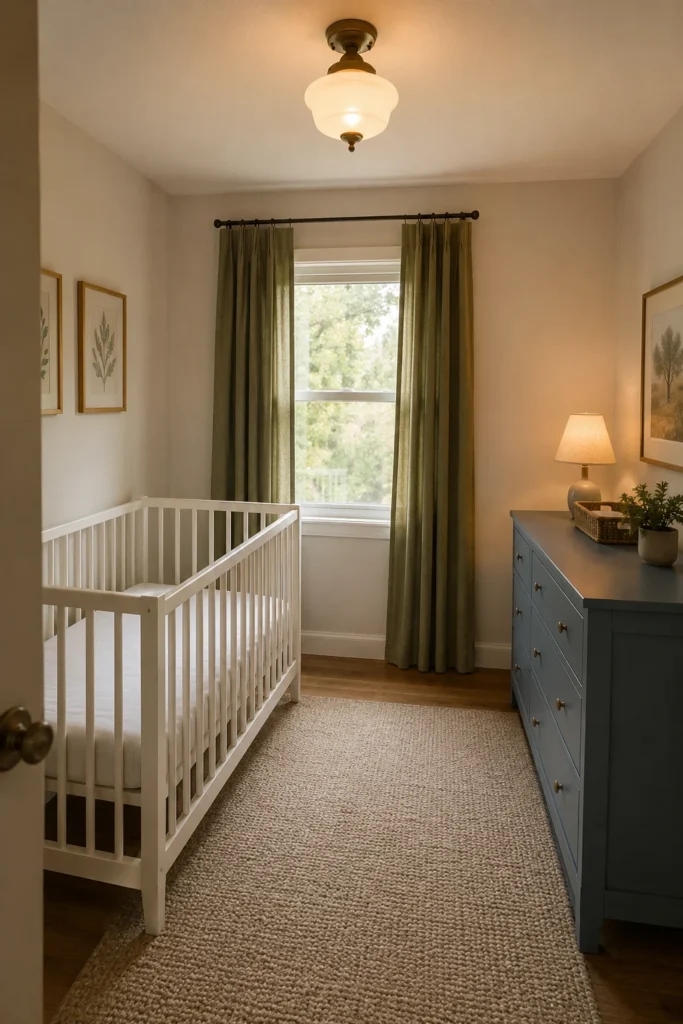
20. Keep the Crib and Dresser on One Side in a Narrow Room
In a narrow nursery, putting the crib and dresser on opposing walls can leave the middle feeling pinched.
If the room proportions allow it, place both major furniture pieces along the same long side or adjacent corner zone, then keep the opposite wall visually light.
For example, put the crib toward one end of the long wall and a compact dresser farther down the same side with enough separation for comfortable use. The opposite wall can hold one shallow picture ledge or nothing at all.
This layout preserves a clearer walking lane and can make an 8-by-10-foot room feel much easier to navigate.
Use color to unify the furniture rather than trying to create two separate zones. A warm oak crib beside a moss-green dresser works well against pale blue or warm white walls.
Before settling on the arrangement, test the closet and door swings with the furniture dimensions taped out on the floor. A Pinterest layout isn’t useful if everyday access becomes awkward.
A Simple Framework for Planning a Small Nursery in 2026
The best small nursery ideas are rarely about squeezing more furniture into the room. A stronger starting point is crib placement + one hardworking dresser + controlled color + vertical storage + one clear visual theme.
Measure before buying anything. Check the crib footprint, dresser depth, closet access, door swings, window placement, and the width of the walking path you’ll use every day. A dresser that’s a few inches narrower may be more useful than a larger piece if it keeps the closet door functional.
Then let color and decor work around that plan.
A small nursery can absolutely be green, blue, woodland-inspired, colorful, vintage-influenced, or gender-neutral without becoming crowded. Choose one main visual idea and let the other walls stay quieter. Use curtains to take advantage of height, keep most storage behind drawers or closet doors, and resist adding tiny furniture simply because it was marketed for a nursery.
For 2026, warmer woods, painted dressers, expressive muted colors, natural textures, and collected details can make a compact nursery feel personal without reverting to either clutter or all-beige styling.
The room should photograph beautifully, but everyday use matters more. If the crib, dresser, closet, and walking path work comfortably, the decorating becomes much easier.
