
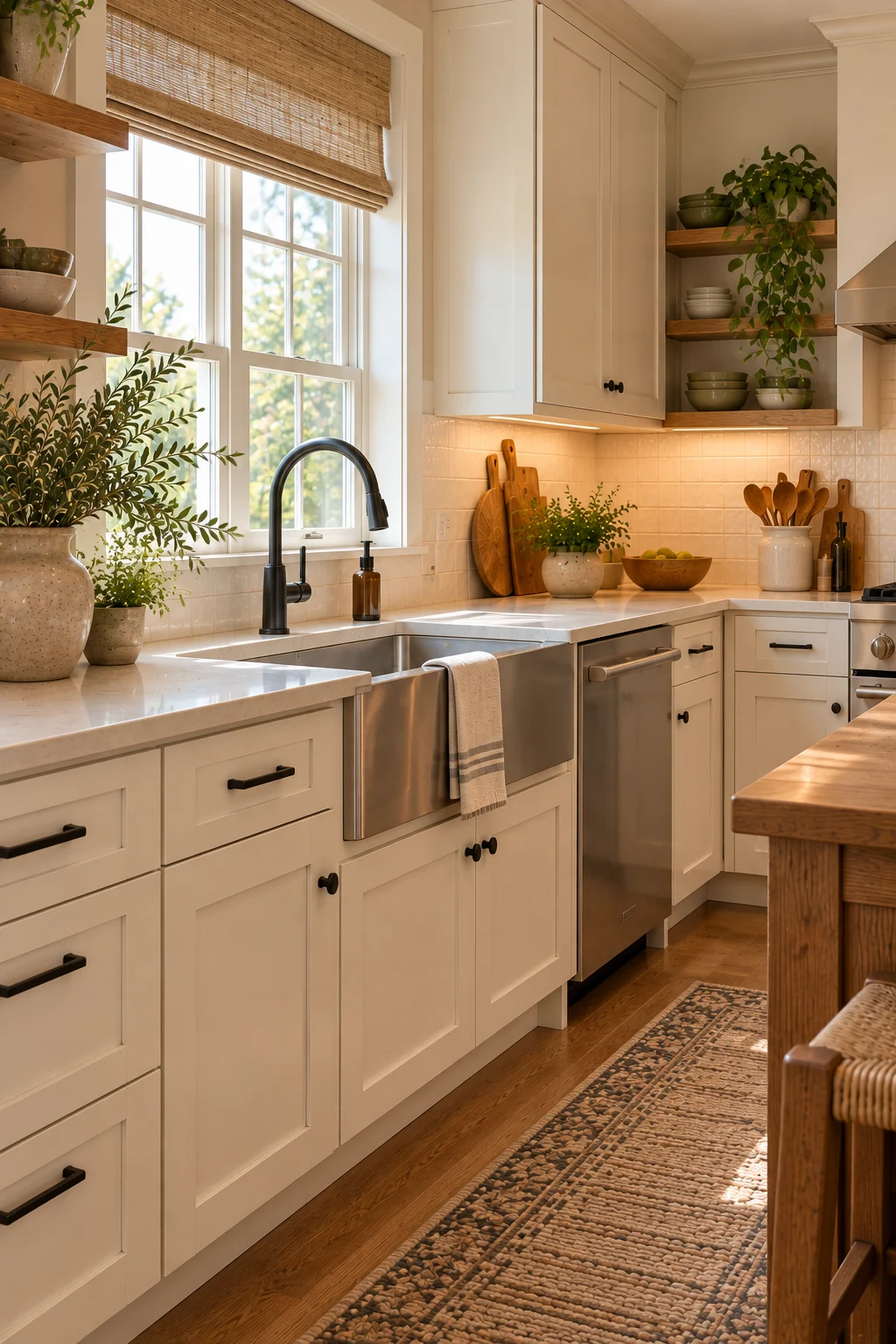
15 Farmhouse Sink Kitchen Ideas for a Charming and Practical Space
A kitchen sink is one of the most frequently used features in the home, yet it can easily become an afterthought when planning a renovation. The right sink can make everyday washing and food preparation more comfortable while adding a distinctive finishing touch to the kitchen.
Farmhouse sinks are loved for their generous basins, traditional appearance, and furniture-like presence. From classic white fireclay to stainless steel, apron-front designs can complement cottage kitchens, modern interiors, rustic spaces, and transitional American homes.
Before choosing a style, consider your cabinet dimensions, countertop material, plumbing arrangement, and daily cooking habits. A beautiful farmhouse sink should fit the kitchen properly and provide enough room for everyday tasks.
1. Choose a Classic White Fireclay Farmhouse Sink
A white fireclay farmhouse sink creates a timeless focal point that suits traditional and contemporary kitchens alike. Its visible apron front adds character, while the generous basin provides space for washing cookware and preparing ingredients.
Pair the sink with cream shaker cabinets, pale countertops, and simple hardware for a relaxed cottage look. Alternatively, combine it with muted blue or sage-green cabinetry to introduce a little color without competing with the sink’s clean finish.
Fireclay sinks are substantial, so the cabinet base and supporting structure must be suitable for the weight. Avoid assuming that an existing standard sink cabinet can accommodate a farmhouse model without modification.

2. Pair a Farmhouse Sink With Sage-Green Cabinets
Sage-green cabinetry creates a gentle contrast with a white farmhouse sink. The combination feels fresh and relaxed, particularly when natural wood and understated metal finishes complete the palette.
Choose a muted green rather than a highly saturated shade if you want a traditional cottage appearance. Pale countertops and a simple ceramic backsplash help the sink remain a prominent feature without making the kitchen feel busy.
Repeat the green in a small accessory or nearby furniture piece if the room needs additional color continuity. Avoid introducing too many unrelated shades that distract from the main cabinetry and sink.

3. Create a Modern Farmhouse Look With Stainless Steel
A stainless steel farmhouse sink offers the generous basin and recognizable front apron of a traditional design with a more contemporary material. Its practical appearance works particularly well in kitchens with simple cabinetry and clean-lined fixtures.
Pair the sink with warm white cabinets, light countertops, and restrained matte-black or brushed-metal hardware. Natural wood accents can soften the stainless steel and prevent the room from feeling too industrial.
Consider the sink’s finish, basin depth, and cleaning requirements before choosing a model. Avoid assuming that all stainless steel surfaces resist scratches and water marks equally well.

4. Install a Farmhouse Sink Beneath a Kitchen Window
Positioning a farmhouse sink beneath a window creates a pleasant everyday work area. Natural daylight makes washing dishes and preparing food feel less enclosed, while the apron front draws attention to the sink itself.
Choose a sink width that fits the available cabinet run and leaves useful counter space on both sides. A simple faucet and a restrained window treatment help keep the area visually calm.
Check the faucet height and reach so the window remains accessible where possible. Avoid placing a curtain close to the faucet or allowing decorative objects to obstruct the window controls.

5. Combine a Farmhouse Sink With Butcher-Block Countertops
A butcher-block countertop adds warmth around a farmhouse sink, creating a combination that suits cottage and traditional kitchens. Natural wood grain contrasts with the smooth front apron and makes the kitchen feel less formal.
Choose a suitable hardwood countertop or a wood-look alternative designed for kitchen use. Oak and maple offer lighter tones, while richer brown finishes create a more traditional appearance beside a white sink.
The junction between the sink and countertop needs particular attention because water can collect around the edges. Follow the countertop manufacturer’s sealing and maintenance guidance, and wipe up standing water promptly.

6. Choose a Black Farmhouse Sink for Dramatic Contrast
A black farmhouse sink creates a stronger visual statement than a traditional white model. Its dark finish can ground a light kitchen or complement a room with charcoal cabinetry and contemporary hardware.
Choose a material and finish suited to your cleaning preferences, such as a suitable composite or another sink material designed for kitchen use. Pair it with warm white countertops and natural wood to prevent the darker surface from dominating the room.
Check how the finish handles visible mineral deposits, scratches, and cleaning products. Avoid selecting a sink solely for its appearance without considering its care requirements and compatibility with the countertop.

7. Add Brass-Look Hardware for a Traditional Finish
Brass-look hardware can give a farmhouse sink area a warmer, more traditional appearance. The finish pairs naturally with white ceramic, cream cabinetry, and warm wood accents.
Choose a simple aged-brass-look faucet or cabinet pulls that complement the sink rather than competing with it. Repeating the same finish in a few places creates a coordinated appearance without requiring every fixture to match exactly.
Consider how the finish will look alongside the countertop and backsplash. Avoid adding numerous metallic accents throughout the room, especially if the kitchen already includes prominent decorative tile or patterned flooring.

8. Use a Farmhouse Sink in a Compact Kitchen
A farmhouse sink can work in a smaller kitchen when its dimensions are selected carefully. A generous basin may be useful for washing cookware, but an oversized model can consume valuable cabinet and countertop space.
Measure the available cabinet opening and compare the sink’s external dimensions with the usable basin size. Compact models may offer the desired apron-front appearance without requiring a disproportionately large sink area.
Leave enough room for food preparation and everyday storage. Avoid choosing a large double-basin sink if it would leave insufficient counter space in a narrow kitchen.

9. Choose a Double-Basin Farmhouse Sink
A double-basin farmhouse sink provides separate spaces for different washing and preparation tasks. It can be helpful in a busy household where dishes and food preparation often happen simultaneously.
Choose a basin configuration that suits the cookware you regularly use. A divided design may provide useful separation, while a large single basin can be more convenient for washing oversized pans.
Consider the width and depth of both compartments before deciding. Avoid a division that makes both basins too small for the items you need to wash most often.

10. Pair a Farmhouse Sink With a Patterned Backsplash
A patterned backsplash can add personality to the area surrounding a farmhouse sink. Decorative ceramic tiles bring color and texture while the apron front maintains a traditional focal point.
Choose a restrained pattern in blue, green, cream, or terracotta that relates to the cabinetry and countertop. Small geometric motifs or subtle botanical designs can create interest without making the wall feel overwhelming.
Keep the pattern concentrated in a defined area if the kitchen is small. Avoid combining an elaborate backsplash with heavily patterned flooring and numerous decorative accessories.

11. Create a Rustic Look With Reclaimed Wood Accents
Reclaimed wood can give a farmhouse sink area a relaxed, timeworn appearance. Its knots, grain variations, and natural color changes contrast with the smooth ceramic apron and painted cabinets.
Introduce reclaimed timber through a suitable shelf, a small side table, or a furniture-style island. Choose material that has been properly prepared for indoor use and is appropriate for its intended function.
Keep rough or unfinished wood away from surfaces exposed to frequent water unless it has suitable protection. Avoid materials with unknown contamination, loose splinters, or unstable construction.

12. Add Open Shelving Beside the Farmhouse Sink
Open shelving near a farmhouse sink provides convenient access to everyday dishes and introduces a lighter visual element than another upper cabinet. Natural wood shelves can reinforce the traditional character of the sink area.
Choose shelves with appropriate structural supports and place lightweight dishes within comfortable reach. A small collection of cream bowls, clear glasses, and a few coordinated ceramics keeps the arrangement useful and attractive.
Position the shelves where they are less exposed to direct splashes and cooking grease. Avoid installing heavy dish storage above the sink without suitable support or placing objects where they could fall into the basin.

13. Choose a Farmhouse Sink With a Contrasting Cabinet Color
A contrasting cabinet color can make a farmhouse sink stand out without relying on decorative accessories. Muted blue, deep green, charcoal, and dusty gray all create different effects beside a white apron front.
Choose a color that works with the flooring and countertop. Lighter counters can balance deeper cabinetry, while natural wood introduces warmth and helps the sink area feel integrated with the rest of the room.
Consider the amount of natural light available before selecting a dark cabinet finish. Avoid using dark colors across every major surface in a small kitchen if the result makes the room feel enclosed.

14. Style the Sink Area With Practical Everyday Accessories
A farmhouse sink can become an inviting focal point when the surrounding counter is thoughtfully organized. A simple soap dispenser, a small dish brush holder, or a neatly folded kitchen cloth can add texture without taking over the work area.
Choose accessories that complement the faucet and cabinetry. Ceramic, glass, and simple metal finishes work well when their colors relate to the rest of the kitchen.
Keep the area around the faucet clear and wipe up splashes regularly. Avoid placing decorative trays, plants, or containers where they interfere with washing dishes or block access to the window.

15. Create a Fully Coordinated Farmhouse Sink Kitchen
A coordinated farmhouse sink kitchen combines a suitable basin, practical cabinetry, complementary countertops, and restrained decorative details. The result feels traditional without becoming cluttered or difficult to maintain.
Start with a sink that suits the cabinet base and the way the household cooks. Choose a faucet with appropriate reach, a countertop compatible with the sink installation, and cabinet finishes that create the desired atmosphere.
Keep the surrounding work surfaces useful and leave enough space for washing, drying, and food preparation. Avoid choosing decorative finishes before confirming the sink’s structural support, plumbing, and installation requirements.

How to Choose the Right Farmhouse Sink
Start with the available cabinet dimensions and the sink’s installation requirements. Farmhouse sinks can require a specially prepared cabinet front, a suitable support structure, and adjustments to the countertop.
Think about how you use the sink throughout the day. A large single basin may suit bulky cookware, while a double basin can provide useful separation for washing and rinsing.
Compare materials based on durability, weight, cleaning, and appearance. Fireclay offers a classic ceramic look, while stainless steel and suitable composite materials provide different finishes and maintenance characteristics.
Making a Farmhouse Sink Work in a Small Kitchen
In a compact kitchen, sink size should be balanced against the available preparation space. A smaller apron-front model can deliver the traditional appearance without taking over the cabinet run.
Choose simple cabinetry and a restrained backsplash to keep the area visually open. A light countertop can help the sink blend naturally with the surrounding surfaces.
Measure the faucet reach and cabinet dimensions carefully before purchasing. Avoid selecting a large sink simply because it looks impressive in a photograph.
Budget-Friendly Farmhouse Sink Updates
If replacing the sink is not practical, existing cabinetry can still take on a farmhouse-inspired appearance through suitable hardware, a traditional faucet, and carefully chosen accessories.
When a new sink is planned, compare the full installation requirements rather than considering the purchase price alone. Cabinet modifications, countertop work, plumbing changes, and supporting structures may all affect the project.
A simple backsplash update or a fresh cabinet finish can also strengthen the style without requiring a complete kitchen renovation.
Common Farmhouse Sink Design Mistakes
One common mistake is choosing a sink before checking whether the cabinet base can accommodate it. The apron front, weight, and mounting arrangement can require more preparation than a conventional drop-in sink.
Another is overlooking the relationship between sink size and countertop space. A large basin can be useful, but it should not eliminate the room needed for washing, drying, and food preparation.
Avoid selecting a faucet that is too tall, too short, or poorly positioned for the basin. A suitable reach and comfortable clearance help reduce splashing and improve everyday use.
Cleaning and Maintaining a Farmhouse Sink
Clean the sink using products recommended for its material. Fireclay, stainless steel, and composite surfaces can have different care requirements, so avoid assuming that the same cleaning method suits every finish.
Rinse away food residue and wipe the surrounding countertop after use. Pay particular attention to the sink edges and joints, where water can collect.
Inspect the seal around the sink periodically and address signs of deterioration promptly. Proper maintenance helps protect the cabinetry and countertop from moisture damage.
Safety and Practical Considerations
- Confirm that the cabinet base and supports can carry the sink’s weight.
- Use suitable installation methods for the sink and countertop material.
- Check plumbing connections and seals for leaks after installation.
- Keep window hardware and nearby electrical outlets accessible.
- Choose a faucet with suitable reach and clearance.
- Keep countertop accessories away from the basin edge and main preparation area.
- Follow the manufacturer’s cleaning, sealing, and maintenance instructions.
A farmhouse sink can bring lasting character and practical value to a kitchen when it is selected with the surrounding layout in mind. By balancing the sink’s size, material, cabinetry, and countertop, you can create a charming focal point that supports everyday cooking and cleaning.
