
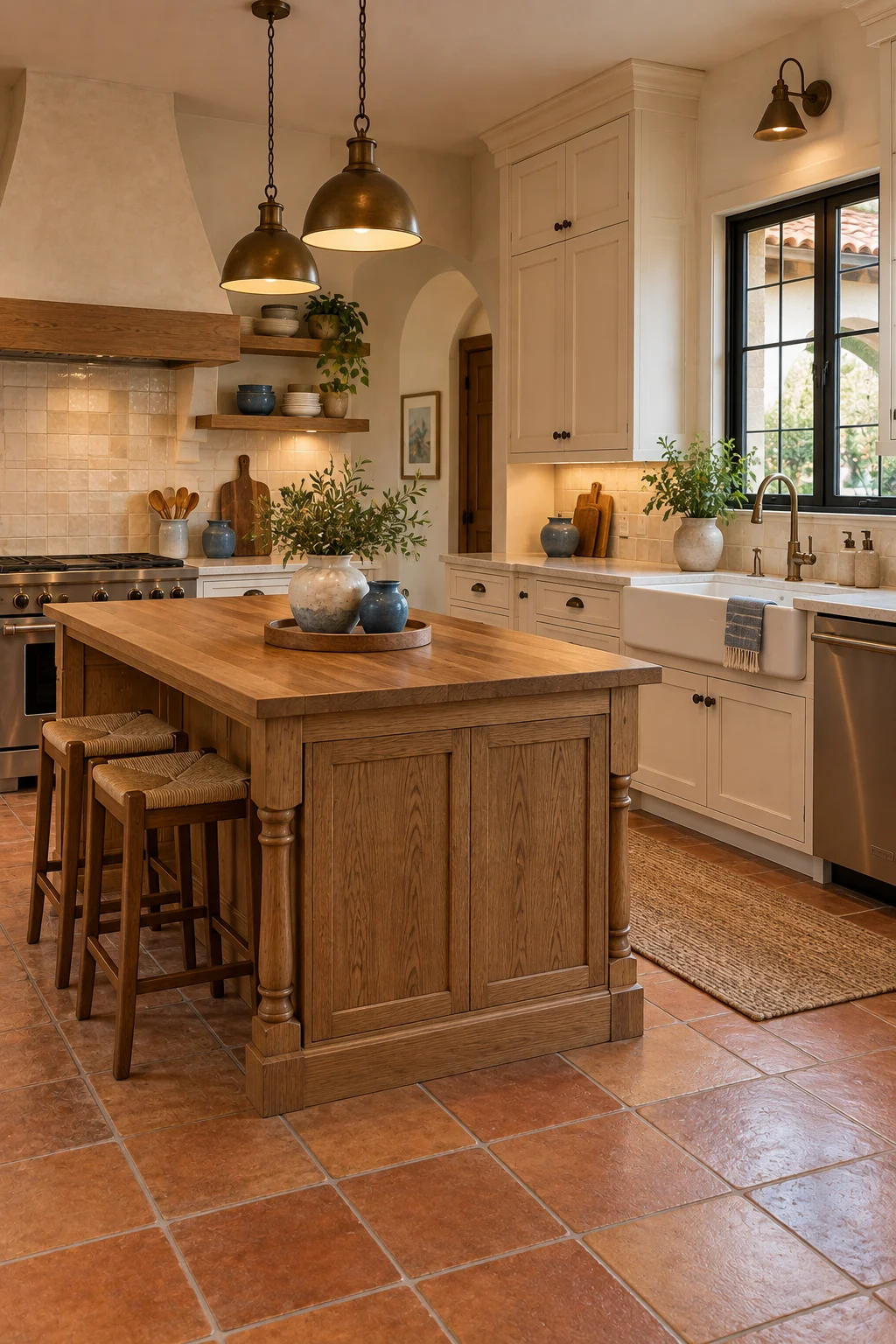
18 Spanish Villa Kitchen Ideas for a Warm Mediterranean Look
A kitchen can feel cold or ordinary when every surface is perfectly smooth, every finish matches, and there is little variation in texture. Spanish villa style offers a warmer alternative, combining earthy colors, handcrafted-looking materials, traditional wood details, and architectural features that feel connected to Mediterranean homes.
The look can be recreated in an ordinary American kitchen without expensive renovations or oversized architectural features. These 18 Spanish villa kitchen ideas explore terracotta floors, rustic cabinetry, arched details, patterned tiles, wrought-iron accents, natural wood, and decorative touches that create an inviting Mediterranean atmosphere.
Start with a restrained combination of warm white, terracotta, natural wood, and earthy brown. Introduce stronger colors and decorative patterns gradually so the kitchen remains practical and visually balanced.
1. Choose Warm Cream Cabinets With Rustic Wood Accents
Warm cream cabinetry creates a soft foundation for Spanish villa style. Unlike stark white, a creamy finish works naturally with terracotta, aged wood, and handmade-looking ceramic surfaces.
Choose traditional shaker or simple recessed-panel doors, then introduce natural wood through open shelves, a breakfast table, or a compact island. Dark bronze or understated black hardware can provide definition without making the cabinetry feel too modern.
Keep the cabinet profiles simple if the kitchen is small. Avoid combining heavily carved doors with elaborate molding and multiple decorative finishes, which can make the room feel crowded.

2. Introduce Traditional Terracotta Floor Tiles
Terracotta flooring is one of the most recognizable ways to establish a Mediterranean kitchen atmosphere. Its earthy orange, rust, and reddish-brown tones bring warmth and visual variation to an otherwise neutral room.
Choose natural terracotta or a suitable terracotta-look tile with a finish appropriate for kitchen use. Square tiles create a traditional appearance, while rectangular layouts can offer a slightly more contemporary interpretation.
Consider how the floor color relates to the cabinetry and countertops before selecting a tile. Avoid choosing a highly varied or strongly patterned floor if the backsplash already contains elaborate decorative motifs.

3. Add a Handcrafted-Look Tile Backsplash
Decorative ceramic tiles can bring the artistry of traditional Mediterranean interiors into a kitchen. Subtle glaze variation, uneven-looking edges, and earthy colors create a handcrafted impression without requiring an elaborate renovation.
Choose tiles in cream, sand, muted blue, olive green, or terracotta. A restrained arrangement behind the sink or range can provide enough character while allowing the rest of the kitchen to remain simple.
Pay attention to the grout color and the surrounding countertop. Avoid combining several unrelated tile patterns in adjoining areas, since the backsplash should complement rather than compete with the other finishes.

4. Create a Rustic Wood Kitchen Island
A substantial wood island can bring the furniture-like character associated with Spanish country kitchens into a modern home. Natural grain, simple paneled sides, and a warm brown finish provide contrast against lighter perimeter cabinets.
Choose oak or another suitable hardwood in a finish that complements the flooring. A pale countertop can make the island feel lighter, while a deeper wood finish creates a richer, more traditional appearance.
Keep the island proportionate to the room and leave adequate clearance for appliances and drawers. Avoid oversized islands that dominate a modest kitchen or interrupt the main circulation route.

5. Use Exposed Wood Beams for Architectural Warmth
Wood beams can suggest the traditional architecture of a Spanish villa, especially when paired with textured walls and earthy finishes. In an ordinary home, a restrained ceiling treatment can provide the same visual direction without attempting to recreate an entire historic building.
Consider a limited number of appropriately installed decorative beams in a warm timber finish. Keep the ceiling and upper walls light enough to balance the darker wood and preserve a sense of openness.
Any overhead addition must be suitable for the existing structure and securely installed. Avoid oversized beams that make an eight-foot ceiling feel even lower or interfere with lighting and ventilation.

6. Incorporate an Arched Kitchen Niche
Arched niches introduce a gentle architectural curve that contrasts with rectangular cabinets and appliances. The detail feels appropriate to Mediterranean-inspired interiors and can provide a decorative focal point without requiring a large room.
A shallow niche can frame a small collection of ceramics, a suitable countertop appliance, or a decorative vessel. Use warm plaster-look finishes or simple tile to connect it with the rest of the kitchen.
Keep the niche practical and proportionate to the available wall space. Avoid placing decorative objects near cooking heat or creating a recess that reduces useful counter space without serving a clear purpose.

7. Choose Dark Wrought-Iron-Look Hardware
Dark metal hardware provides a strong traditional contrast against cream cabinets and warm wood. Its simple, slightly rustic appearance can reinforce Mediterranean character without introducing excessive decoration.
Choose straightforward black or dark bronze knobs, pulls, and compatible lighting details. Repeating the finish in a few places helps connect the cabinets, pendant fixtures, and other metal accents.
Check that the hardware is comfortable to use and appropriate for the cabinet doors and drawers. Avoid mixing too many metal finishes, particularly if the kitchen already includes decorative tiles and pronounced wood grain.

8. Add a Terracotta Range Hood Accent
A range hood can become a visual focal point when its finish connects with the earthy palette of a Spanish-inspired kitchen. Terracotta-colored plaster-look surfaces or warm textured finishes create a distinctive appearance above the cooking area.
Choose a simple hood surround that works with the cabinet arrangement and backsplash. Pair it with cream cabinetry, pale counters, and restrained dark hardware so the warm color remains the main architectural accent.
The ventilation system must remain functional and correctly installed. Avoid decorative finishes or surrounding materials that interfere with required clearances, access, or the appliance manufacturer’s installation instructions.

9. Display Everyday Ceramics on Open Wood Shelves
Open shelves create an opportunity to display the pottery and everyday tableware that suit Spanish villa interiors. Natural wood provides a warm backdrop, while cream dishes and earthy ceramics keep the arrangement visually cohesive.
Choose sturdy shelves with appropriate structural supports and arrange dishes in small, useful groups. A few terracotta bowls, cream plates, and muted blue vessels can introduce color without making the shelves feel crowded.
Keep the shelves away from areas where grease and cooking heat create unnecessary cleaning problems. Avoid overloading them or positioning heavy ceramics close to the front edge.

10. Combine Warm White Walls With Textured Plaster Finishes
Subtle wall texture can make a Mediterranean-inspired kitchen feel less polished and more connected to traditional building materials. Warm white, sandy beige, and pale clay tones complement wood and terracotta without requiring bold patterns.
Use an appropriate plaster-look finish or a suitable textured wall treatment in an area that does not receive excessive moisture or grease. Smooth, washable surfaces may be more practical directly behind the range and sink.
Keep the texture relatively understated so it does not compete with decorative tiles or cabinet detailing. Avoid rough, difficult-to-clean finishes in busy preparation zones.

11. Introduce Muted Blue Mediterranean Tiles
Muted blue tiles can bring a refreshing contrast to terracotta, cream, and natural wood. The combination suggests Mediterranean coastal influences while remaining suitable for an everyday American kitchen.
Choose dusty blue, softened cobalt, or blue-gray ceramic tiles with a finish that complements the other materials. A small backsplash section or niche can provide enough color without requiring the entire kitchen to become heavily patterned.
Repeat the blue in only a few accessories if the tiles are decorative. Avoid combining several competing blue patterns with strong terracotta flooring and elaborate cabinetry.

12. Use a Rustic Farmhouse Sink
A traditional farmhouse-style sink can reinforce the practical, substantial character associated with Spanish country kitchens. Its broad front and simple form work well with cream cabinetry, natural wood, and handcrafted-looking tile.
Choose a sink that fits the available cabinet base and supports the household’s everyday washing needs. A white fireclay-look or suitable composite finish creates a classic appearance, while a simple dark or brushed-metal faucet can add contrast.
Check cabinet compatibility, plumbing requirements, and countertop support before selecting the sink. Avoid choosing a large basin that overwhelms a compact counter run or compromises useful preparation space.

13. Add a Traditional Wooden Pantry Door
A wooden pantry door can introduce the character of old-world craftsmanship without changing the kitchen’s entire cabinet layout. Simple vertical boards, traditional paneling, or a muted stained finish create a natural focal point.
Choose a wood tone that complements the island or flooring. Dark bronze hardware and warm white walls can help the door feel integrated into the broader Mediterranean palette.
Make sure the door swings freely and does not obstruct the kitchen’s main walkway. Avoid adding decorative trim or handles that interfere with the latch, hinges, or normal operation.

14. Style the Countertop With Earthy Ceramic Vessels
Ceramic accessories bring small-scale color and texture to a kitchen dominated by cabinets and countertops. Terracotta, sandy stoneware, muted green, and cream vessels complement the natural materials associated with Spanish villa style.
Choose a few useful or decorative pieces, such as a sturdy utensil crock, a small serving bowl, or a vase with simple greenery. Arrange them in a compact group on a dry section of counter while leaving the main preparation areas open.
Keep accessories away from direct heat and splashing water where possible. Avoid filling every corner with pottery, since the natural finishes look more effective when surrounded by open space.

15. Choose a Rustic Wooden Breakfast Table
A wooden breakfast table creates a relaxed dining area that complements the furniture-like character of Spanish villa kitchens. Natural grain and straightforward construction provide warmth without requiring elaborate decorative elements.
Choose a compact rectangular or round table in oak or another durable wood. Simple wooden chairs or understated woven-seat designs can reinforce the rustic Mediterranean atmosphere.
Keep enough room around the table for chairs to move comfortably. Avoid placing the table in the main work triangle or selecting oversized furniture that reduces access to cabinets and appliances.

16. Install Warm Pendant Lighting With Traditional Shapes
Lighting can strengthen the character of a Spanish-inspired kitchen through simple traditional forms and warm finishes. A compact iron-look pendant or a cream enamel-look shade can complement earthy materials without overwhelming the ceiling.
Choose fixtures that suit the island, breakfast table, or main work area. Warm lighting creates a welcoming atmosphere in the evening, while separate task lighting keeps countertops useful for cooking.
Ensure fixtures are installed securely and positioned appropriately for the ceiling height and work surface. Avoid oversized pendants in modest kitchens or hanging lights that obstruct sightlines and movement.

17. Add a Patterned Mediterranean Runner
A patterned runner can introduce color and movement to a kitchen with simple cabinetry and natural materials. Traditional geometric motifs or restrained Mediterranean-inspired designs can connect terracotta, cream, muted blue, and earthy brown.
Choose a runner sized for the available floor area and made from a material appropriate for kitchen use. A low-profile, washable design can be easier to maintain than a thick, delicate rug.
Keep the runner flat and secure, away from appliance doors and the main points of movement. Avoid placing a rug where it can bunch up, become slippery, or interfere with safe access to the cooking area.

18. Layer the Kitchen With a Cohesive Mediterranean Palette
A cohesive Spanish villa kitchen combines earthy materials, traditional forms, and a restrained selection of colors. Warm cream cabinets provide a light foundation, terracotta introduces depth, and natural wood creates continuity throughout the room.
Begin with the permanent finishes before adding decorative details. Coordinate the flooring, countertop, backsplash, and cabinet colors, then introduce a few complementary elements such as dark hardware, handmade-look ceramics, and simple wood shelving.
Maintain a balance between decorative character and practical space. Avoid adding every Mediterranean-inspired detail at once; a few well-chosen materials often create a more convincing result than a crowded collection of competing patterns.

How to Choose Materials for a Spanish Villa Kitchen
Start with two or three main finishes rather than selecting every material independently. Terracotta, warm cream, and natural wood create a reliable foundation, while muted blue or olive can provide a secondary accent.
Consider the maintenance requirements of each surface. Porous natural materials may require appropriate sealing, while glazed ceramic and suitable engineered surfaces can offer simpler cleaning in busy areas.
Bring samples together under the kitchen’s actual lighting before making a final choice. The relationship between wood, tile, paint, and countertop finishes matters more than whether each material looks attractive on its own.
Spanish Villa Style in a Small Kitchen
A compact kitchen can capture Mediterranean character through color, texture, and a few traditional details. Cream cabinets, a terracotta-look floor, and a small section of decorative tile can establish the style without filling the room with ornament.
Use open shelving selectively and keep countertops clear enough for everyday preparation. A compact wooden table or a modest furniture-style island may provide useful character if the layout allows comfortable movement.
Avoid oversized rustic furniture, heavy dark finishes across every surface, and large decorative features that make the room feel smaller. Lighter walls and carefully placed accents help maintain visual balance.
Budget-Friendly Spanish Villa Kitchen Updates
Painting suitable existing cabinets in warm cream or muted earth tones can change the atmosphere without replacing the entire kitchen. Updated hardware, a wooden shelf, and a few ceramic accessories can reinforce the new palette.
Consider a suitable tile-look backsplash or a compact runner if a larger flooring project is not practical. Secondhand wooden furniture can also add traditional character when it is stable and appropriate for kitchen use.
Prioritize repairs and durable finishes before decorative purchases. A functional countertop, good lighting, and practical storage make the kitchen more useful than an assortment of accessories alone.
Common Spanish Villa Kitchen Decorating Mistakes
One common mistake is using too many strong colors and decorative patterns at the same time. Terracotta floors, elaborate backsplash tiles, colorful ceramics, and heavily patterned textiles can compete if none of them has a clear supporting role.
Another is treating rustic style as a reason to overlook practical finishes. Wood surfaces still need suitable protection, tile layouts must be easy to maintain, and decorative details should not interfere with appliance operation.
Avoid making every finish look artificially aged. Natural material variation and a few traditional details usually create a more convincing atmosphere than excessive distressing or overly ornate decoration.
Caring for Mediterranean Kitchen Materials
Clean ceramic tiles and countertops with products suitable for their finishes. Pay attention to grout, especially around the sink and cooking areas, where moisture and food splashes can accumulate.
Follow the care requirements for terracotta, wood, and other porous surfaces. Appropriate sealing may be needed for certain materials, and spills should be cleaned promptly to help prevent staining or moisture damage.
Dust open shelves and decorative accessories regularly. Keep wood furnishings away from prolonged moisture and inspect mounted shelves and lighting fixtures periodically to ensure they remain secure.
Safety and Practical Considerations
- Keep cooking areas clear of curtains, greenery, and decorative accessories that could contact heat.
- Secure shelves, overhead details, and lighting fixtures with suitable supports.
- Ensure islands and breakfast tables leave comfortable access to appliances and walkways.
- Use suitable flooring and secure runners to reduce slipping and tripping risks.
- Follow installation and clearance requirements for ranges, ventilation systems, and lighting.
- Choose countertop finishes appropriate for food preparation and regular cleaning.
- Keep decorative ceramics stable and away from countertop edges.
A Spanish villa-inspired kitchen can feel warm, timeless, and distinctive through a thoughtful combination of earthy colors, natural materials, and traditional details. With practical finishes and a restrained approach to decoration, the style can bring Mediterranean character into an everyday American home without requiring a large or elaborate renovation.
