
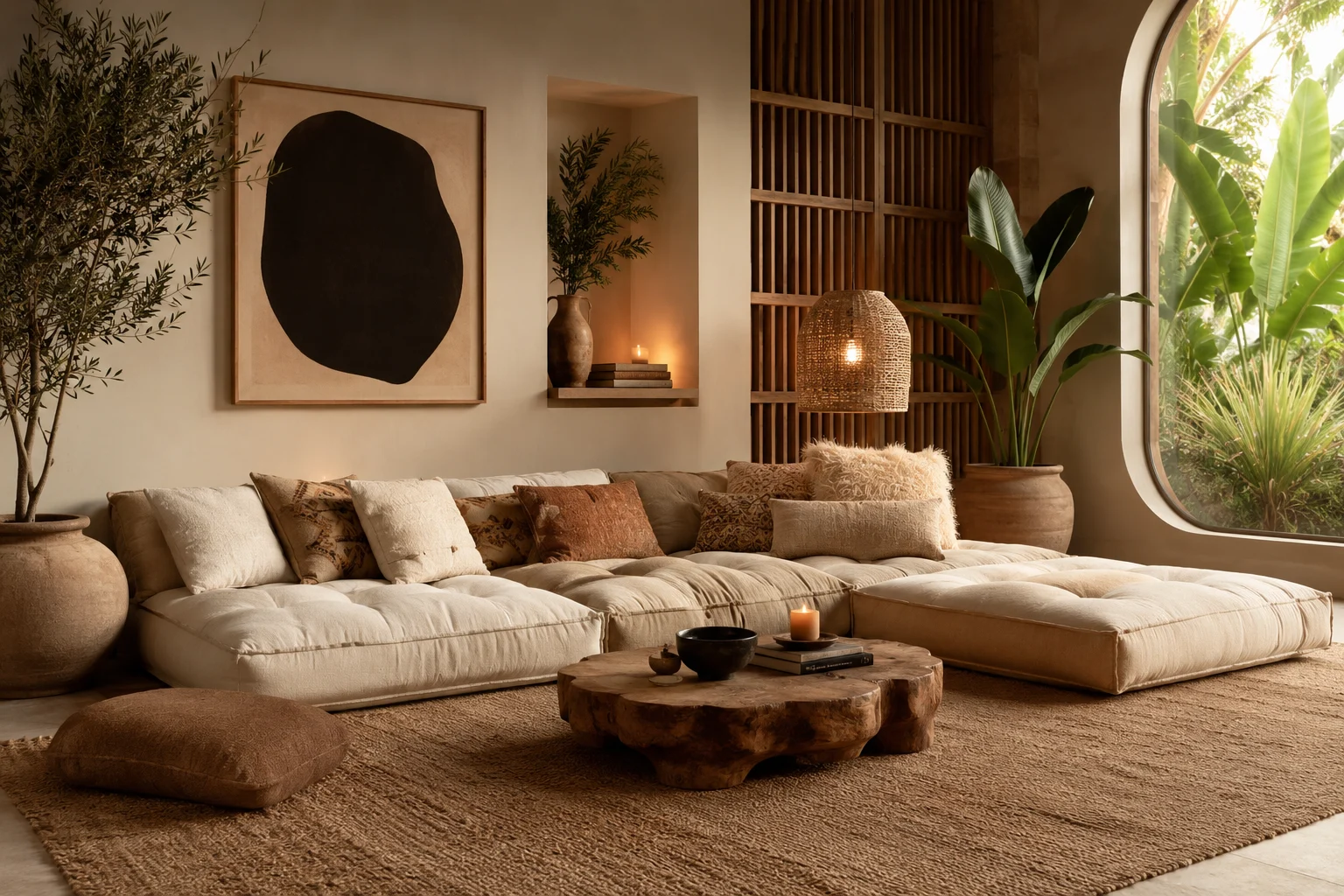
15 Floor Seating Living Room Ideas for a Cozy Boho Space
A floor seating living room offers a different kind of comfort from a traditional sofa arrangement. Oversized cushions, low tables, soft rugs, and relaxed seating layouts can make the room feel welcoming without filling it with bulky furniture.
Floor seating works particularly well in boho interiors, where natural materials, layered textiles, and flexible furniture are part of the appeal. It can also suit Japanese-inspired spaces, minimalist apartments, reading corners, and casual family rooms.
However, comfortable floor seating requires more thought than simply scattering pillows across a rug. Cushion thickness, back support, table height, and the amount of space available all affect how pleasant the arrangement feels during everyday use.
It’s also worth remembering that sitting close to the floor isn’t comfortable or accessible for everyone. A well-designed living room can combine low seating with a conventional chair or sofa so guests have options.
These 15 floor seating living room ideas explore practical ways to create a cozy boho space, whether you’re decorating a small apartment, designing a dedicated lounge, or adding a flexible seating area to your existing living room.
1. The Classic Boho Floor Cushion Circle
A circle of oversized floor cushions creates a welcoming gathering area that encourages conversation without relying on a traditional sofa arrangement.
Why It Works
Facing cushions toward one another makes the layout feel social and informal. It’s particularly useful for casual gatherings, board games, or evenings spent talking with friends.
The circular arrangement also gives the room a clear focal point, especially when the cushions sit on a large textured rug.
How To Do It
Start with four to six substantial floor cushions in complementary colors such as cream, camel, muted olive, and terracotta.
Choose cushions with enough thickness to prevent users from feeling the hard floor underneath. Mix cotton, linen-look, and woven covers for texture, but keep the palette coordinated.
Place a small, stable, low table in the center for drinks or games. Leave enough space between the table and cushions for comfortable leg positions.
Practical tip: Test the arrangement with people actually sitting in it before settling on the layout. Avoid overcrowding the circle, and keep the route to the doorway clear.
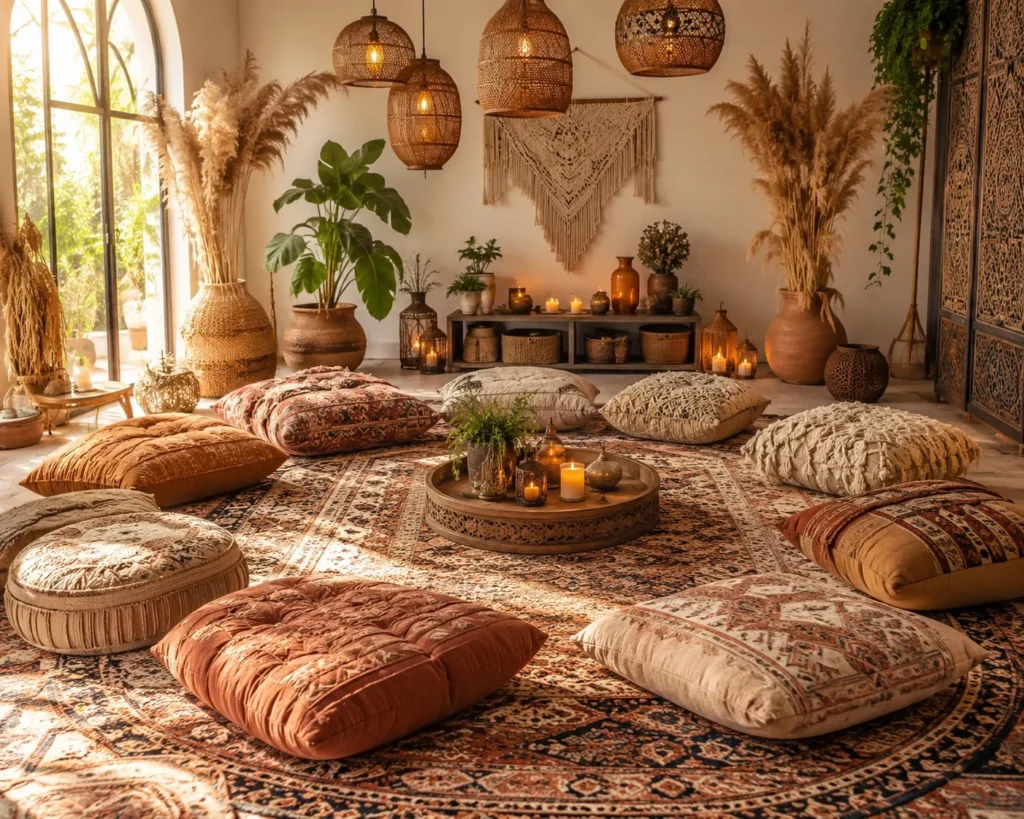
2. Japanese-Inspired Low Seating Room
A Japanese-inspired floor seating area brings a calm, uncluttered atmosphere to the living room through low furniture and natural materials.
Why It Works
Simple furniture shapes and a restrained color palette keep the space visually peaceful. Rather than filling the room with decorative accessories, the arrangement emphasizes proportion, texture, and comfortable everyday use.
The low profile of the seating also allows windows and surrounding walls to remain visually prominent.
How To Do It
Choose firm floor cushions in oatmeal, warm gray, or cream and pair them with a low oak or walnut table.
Add a simple woven rug or padded floor mat beneath the seating area. Keep accessories minimal, perhaps using one ceramic vase or a small framed print.
If you plan to sit for extended periods, consider floor chairs with adjustable backrests rather than relying entirely on flat cushions.
Comfort tip: Choose a table height that suits the way you sit. A table that looks attractive in a photograph may be awkward for eating, writing, or using a laptop.
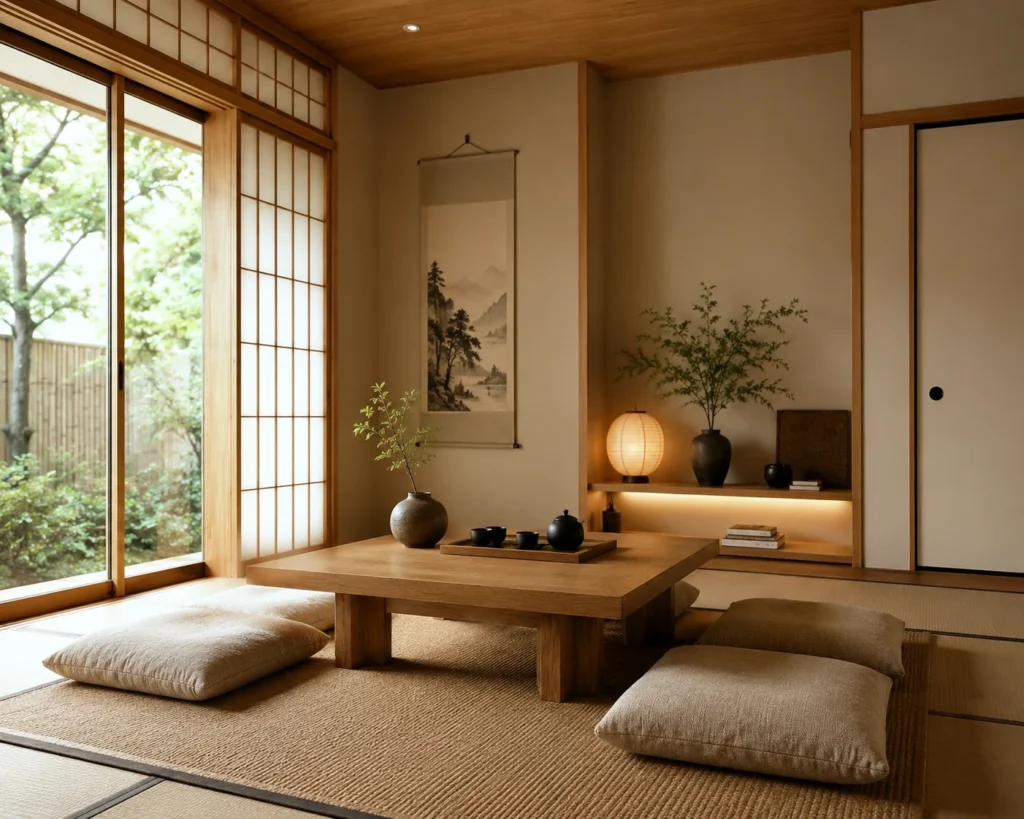
3. The Indoor Oasis Lounge
Combining floor seating with greenery creates a relaxed indoor retreat that feels connected to nature.
Why It Works
Plants soften the edges of furniture and introduce organic shapes that complement cushions, woven rugs, and natural wood.
The contrast between leafy greenery and warm neutral textiles can make even a modest living room feel more inviting.
How To Do It
Arrange a few large floor cushions on a cream or jute-look rug, then position houseplants around the outside of the seating area.
Use plants of different heights to create visual depth. A tall floor plant can anchor one corner, while smaller plants can sit on a sturdy shelf or side table.
Choose washable cushion covers and a rug that can handle occasional soil or water spills.
Plant tip: Select plants suited to the room’s actual light conditions and check pet safety before buying. Keep pots and watering supplies away from seating cushions and walking routes.

4. Floor Seating Around a Coffee Table
A low coffee table surrounded by floor cushions creates a practical gathering area for casual entertaining.
Why It Works
The table provides a shared surface for snacks, drinks, board games, and other activities. It also gives the cushions a clear arrangement instead of leaving them scattered around the room.
This setup works particularly well when you want seating that can be rearranged depending on the number of guests.
How To Do It
Choose a low, sturdy coffee table with rounded or softened corners. Natural wood works beautifully in a boho living room.
Place substantial floor cushions or firm poufs around the table, leaving enough room for people to sit with their legs comfortably positioned.
A large rug beneath the entire arrangement helps visually connect the seating and furniture.
Layout tip: Don’t assume a standard-height coffee table will work comfortably with floor cushions. Test the height while seated before purchasing, and avoid unstable tables that could tip if someone uses them for support.
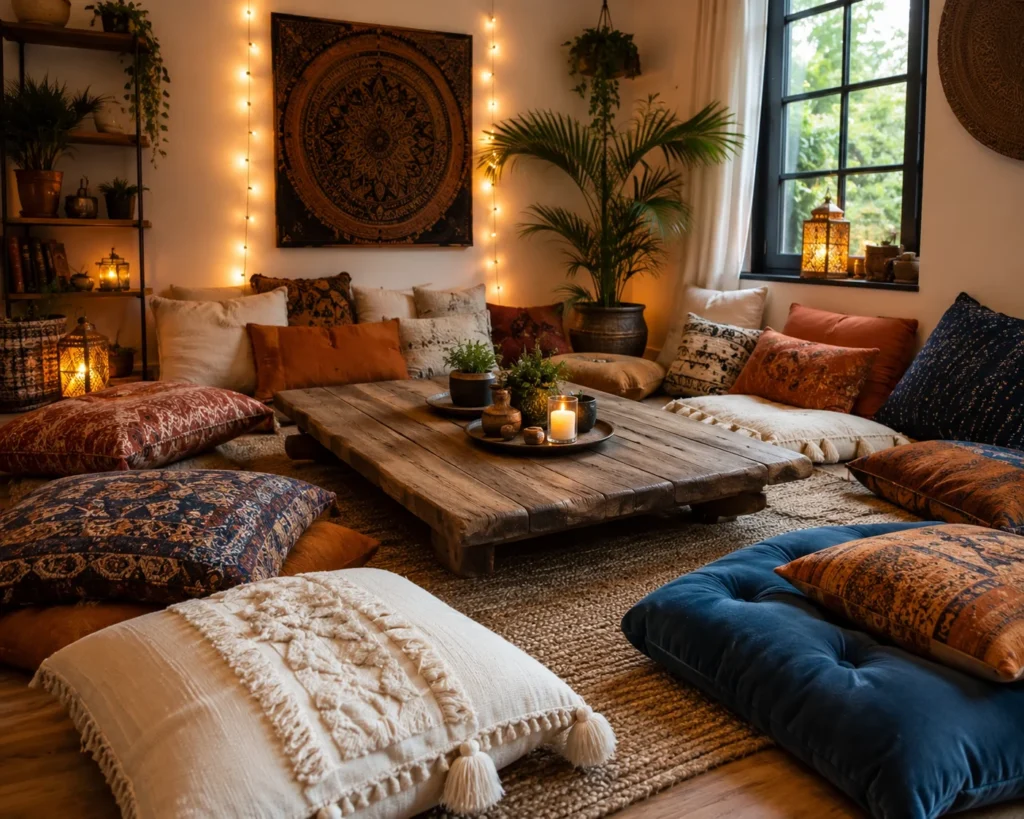
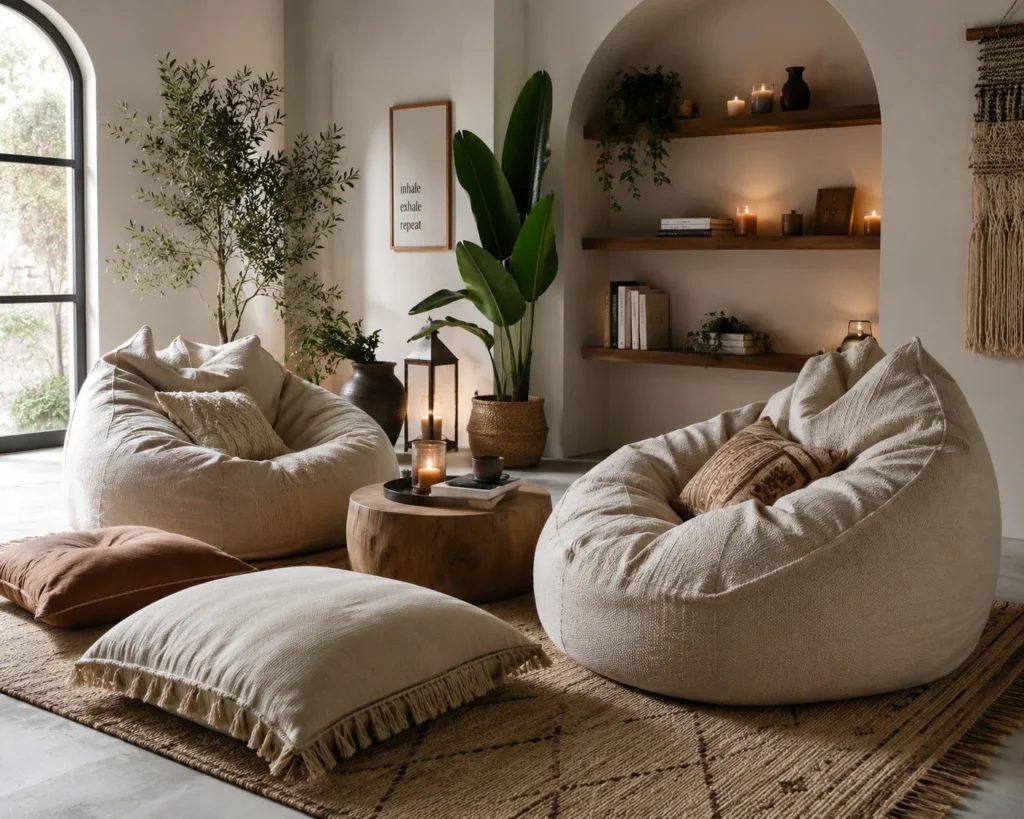
5. The Bean Bag Lounge Corner
Bean bags offer a playful alternative to traditional floor cushions, especially in a casual living room or secondary lounge area.
Why It Works
Unlike flat cushions, many bean bags conform to the user’s body and provide a more reclined seating position.
They’re also easy to move, allowing the corner to serve different purposes throughout the day.
How To Do It
Choose one or two generously sized bean bags in warm neutral fabrics such as cream, mushroom, or camel.
Place them on a soft rug near a small side table. Add a floor cushion or folded throw for extra flexibility.
Look for removable, washable covers and a shape that provides enough support for the intended users.
Safety tip: For homes with children, choose products with secure, child-resistant closures and follow all manufacturer safety guidance. Bean bag filling must remain inaccessible to young children.
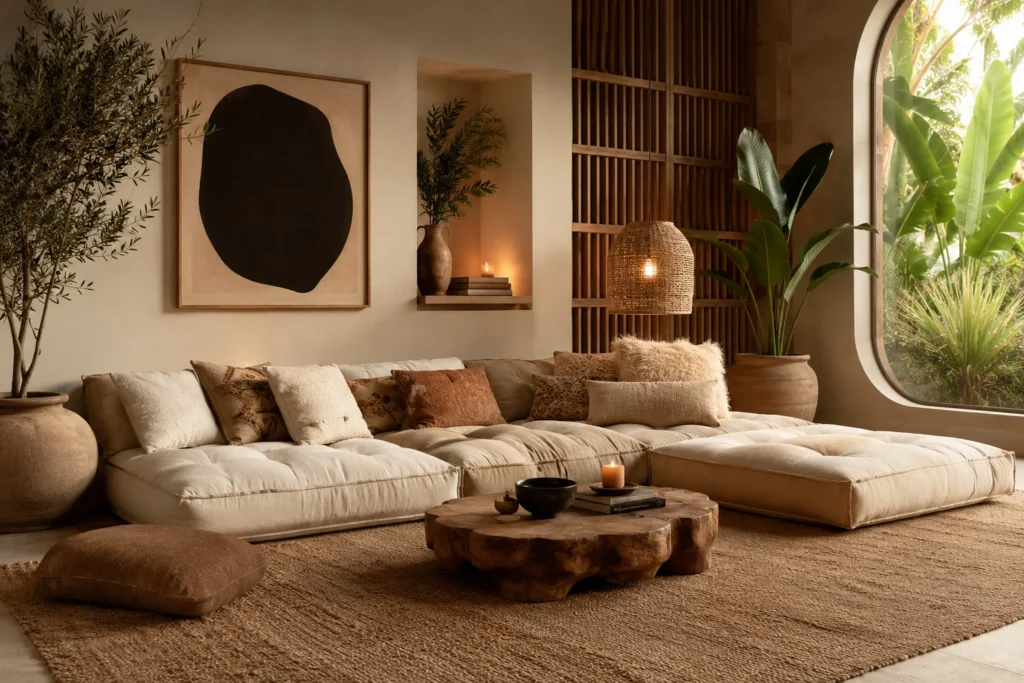
6. Floor Couch Living Room
A floor couch offers the relaxed appearance of floor seating with a more defined lounging structure.
Why It Works
Modular floor sofas can provide a wider, more supportive surface than individual cushions. Their low height also creates a casual, open appearance that suits modern boho interiors.
Depending on the design, sections may be rearranged for lounging, conversation, or additional guests.
How To Do It
Choose a purpose-built floor sofa or modular lounge system with supportive seat cushions and backrests.
Arrange it along a wall or in an L-shaped configuration, depending on the room’s dimensions.
Use cream, camel, or mushroom upholstery and introduce color through muted-olive pillows or a textured throw.
Pair the couch with a low, stable table that can be reached comfortably from the seated position.
Buying tip: Check the cushion density, seat depth, back support, and cleaning instructions. Avoid improvising a permanent floor sofa from loose mattresses or unstable stacked cushions.
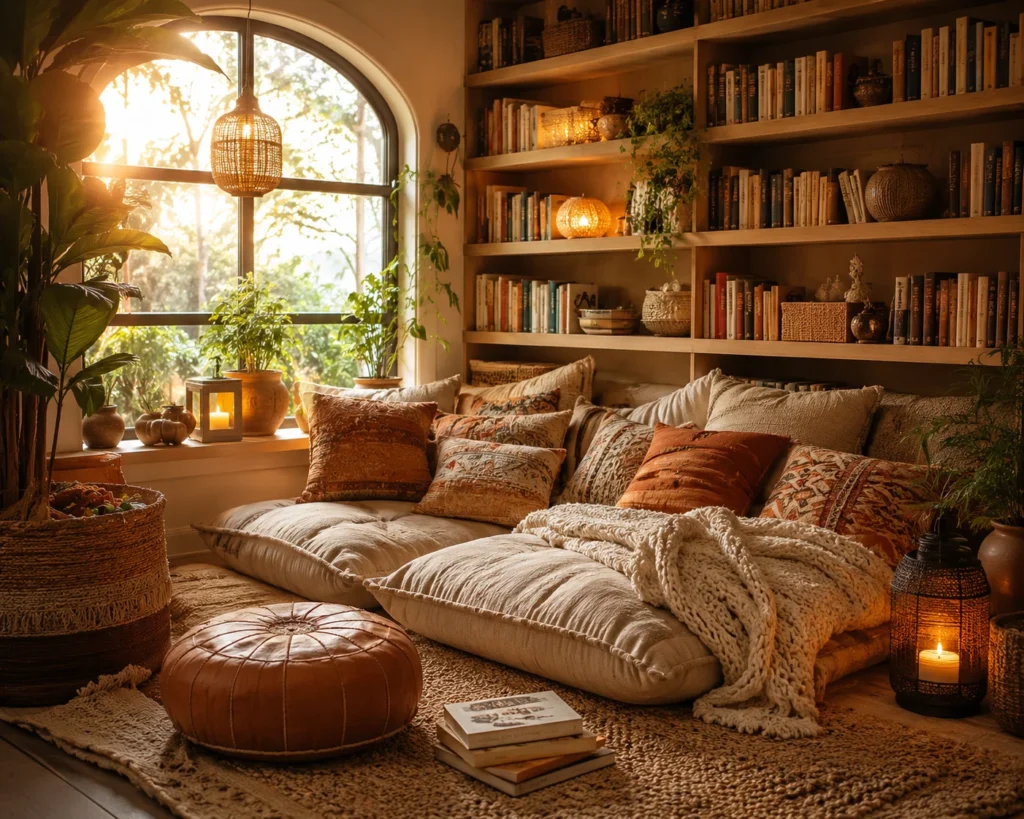
7. The Cozy Reading Lounge
A floor-level reading nook can turn an unused living room corner into a quiet place to relax with a book.
Why It Works
The arrangement feels separate from the main conversation area without requiring a divider or additional room.
Soft textiles and focused lighting help establish a comfortable atmosphere for reading.
How To Do It
Choose a thick floor cushion or supportive floor chair and position it near a bookcase or low shelf.
Add a reading lamp that directs light onto the pages without creating glare.
A small side table can hold a drink, reading glasses, or a stack of books.
Use a soft throw and a supportive back cushion, particularly if the seating rests against a wall.
Comfort tip: Floor seating isn’t ideal for everyone during long reading sessions. Consider an adjustable floor chair or keep a conventional armchair available if getting up from the floor is difficult.
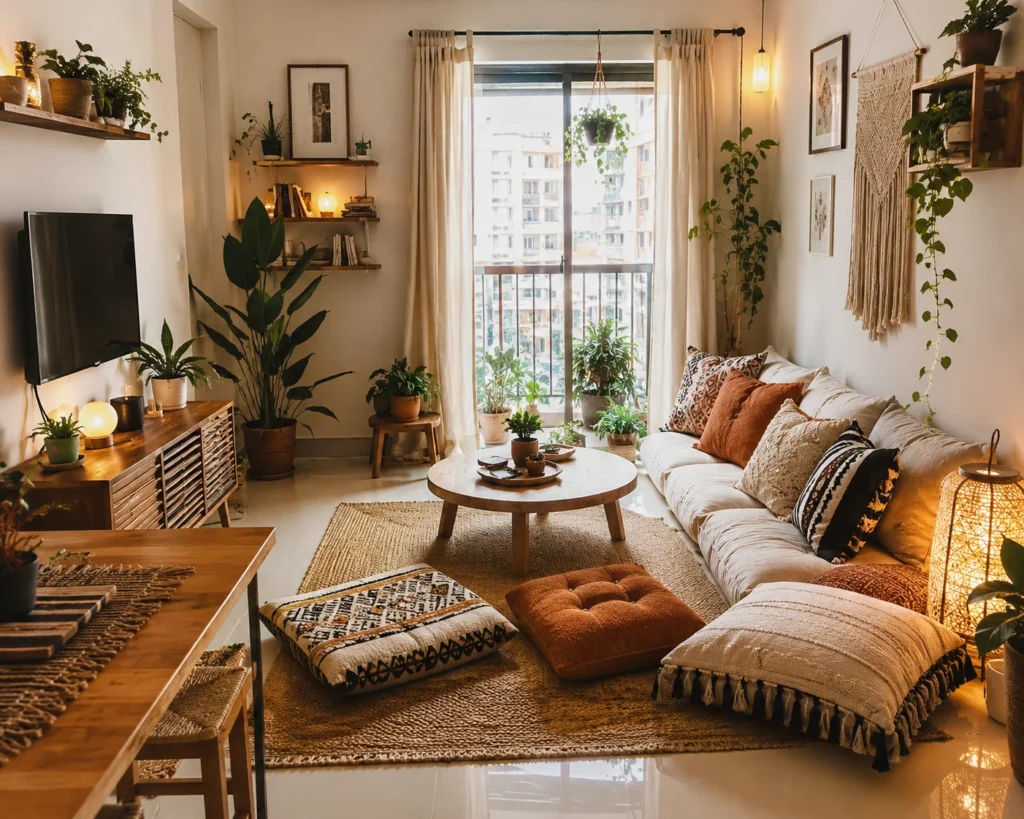
8. Small Apartment Floor Seating
Floor seating can be especially useful in a small apartment when flexible furniture matters more than a permanent sofa arrangement.
Why It Works
Low cushions create less visual bulk than many traditional sofas, while lightweight pieces can be moved when extra floor space is needed.
However, floor seating doesn’t automatically save space. Large cushions still need storage, and people require enough room to stretch their legs comfortably.
How To Do It
Choose two or three stackable floor cushions and a compact low table that can be moved easily.
Use a single rug to define the seating area and keep the surrounding decor simple.
Store spare cushions in a closet, on a sturdy shelf, or inside a storage bench when they’re not needed.
Light-colored textiles and natural wood can help the room feel bright and open.
Small-space tip: Measure the cushions both when stacked and when spread out for seating. Make sure the arrangement doesn’t block the apartment’s main walking route.
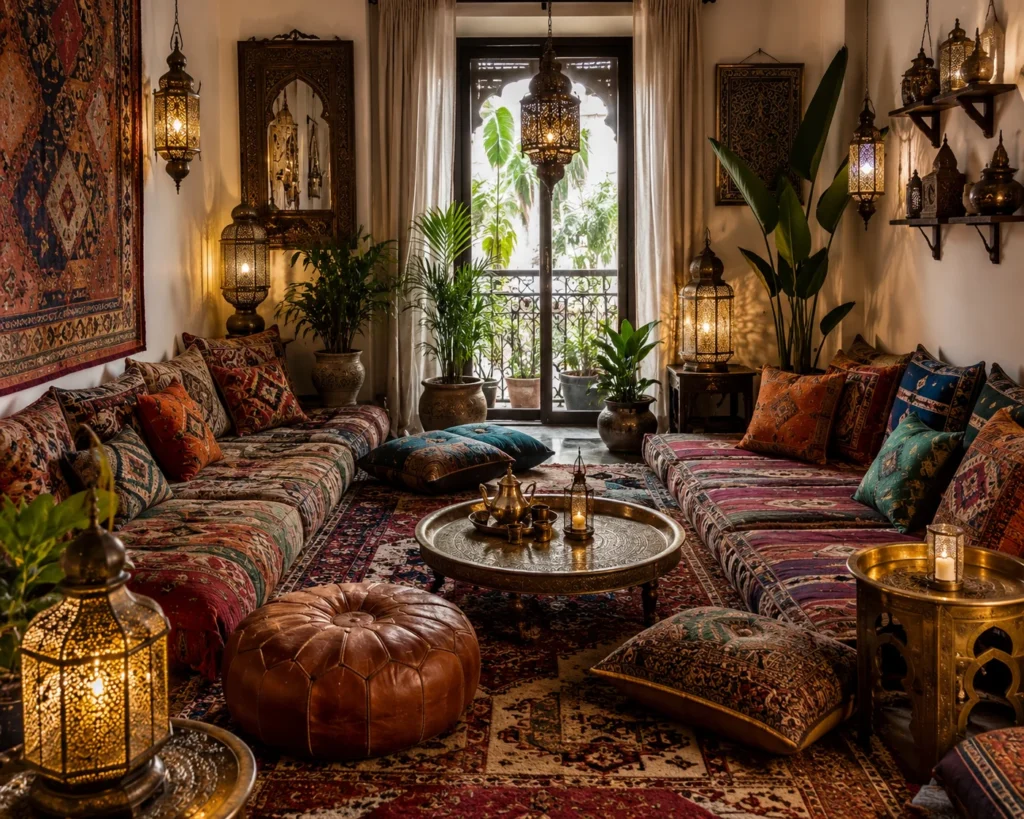
9. Moroccan-Inspired Lounge
A Moroccan-inspired floor lounge brings rich texture, warm colors, and decorative craftsmanship into the living room.
Why It Works
Low seating, patterned textiles, poufs, and lantern-inspired lighting create an inviting setting for conversation and entertaining.
The combination works especially well when decorative patterns are balanced with a few simpler surfaces.
How To Do It
Start with a large patterned rug in warm terracotta, burgundy, cream, or muted blue.
Add firm floor cushions and a couple of upholstered poufs, mixing embroidered details with plain woven fabrics.
Introduce a low wooden or metal table and a decorative lantern-style LED light.
Keep the walls relatively neutral so the textiles remain the focal point.
Styling tip: Choose one dominant pattern and repeat two or three colors throughout the arrangement. Use LED lighting rather than open flames near cushions, rugs, and other fabrics.
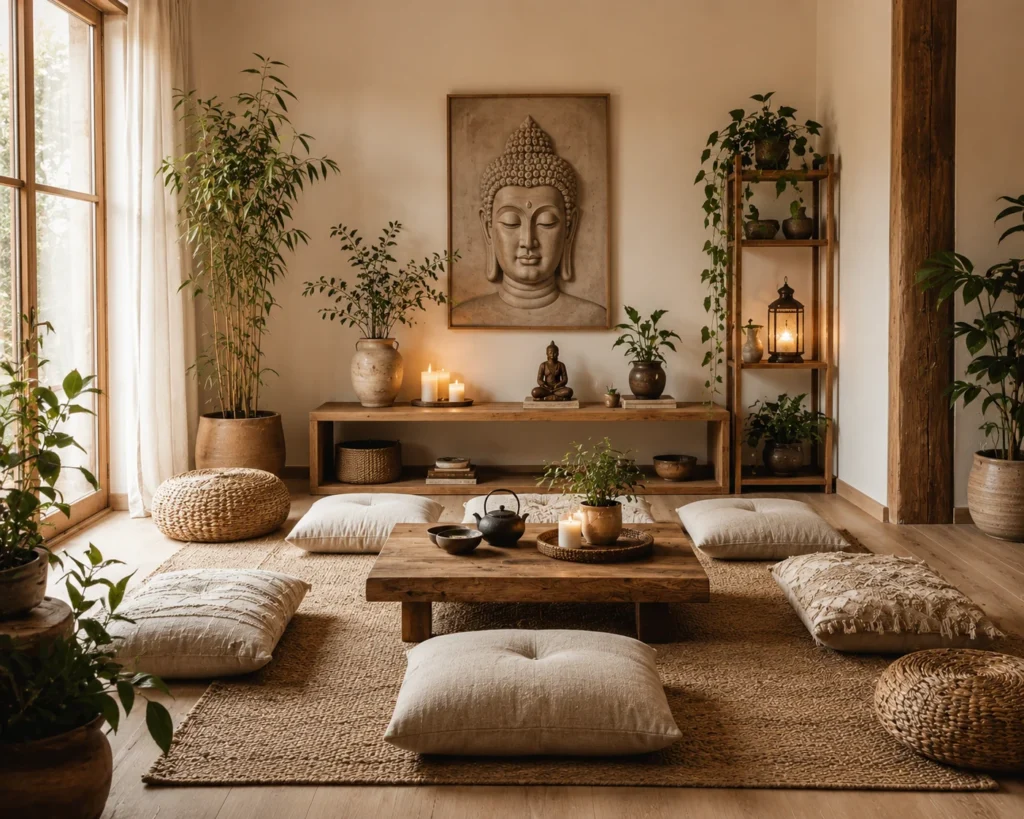
10. Meditation Living Room
A dedicated meditation area can bring a peaceful, uncluttered feeling to part of the living room.
Why It Works
Simple floor seating and minimal decor help establish a space with fewer visual distractions.
The area can also be used for quiet reflection, gentle stretching, or relaxing away from screens.
How To Do It
Choose a firm meditation cushion or supportive floor chair and place it on a comfortable mat.
Use soft colors such as warm ivory, mushroom, and muted olive.
Keep nearby accessories minimal. A small plant or a single framed print may be enough.
Position the seating away from busy walkways and allow room to change positions comfortably.
Comfort tip: Meditation doesn’t require sitting cross-legged on the floor. A chair, bench, or additional support can be more appropriate depending on flexibility, balance, and physical comfort.
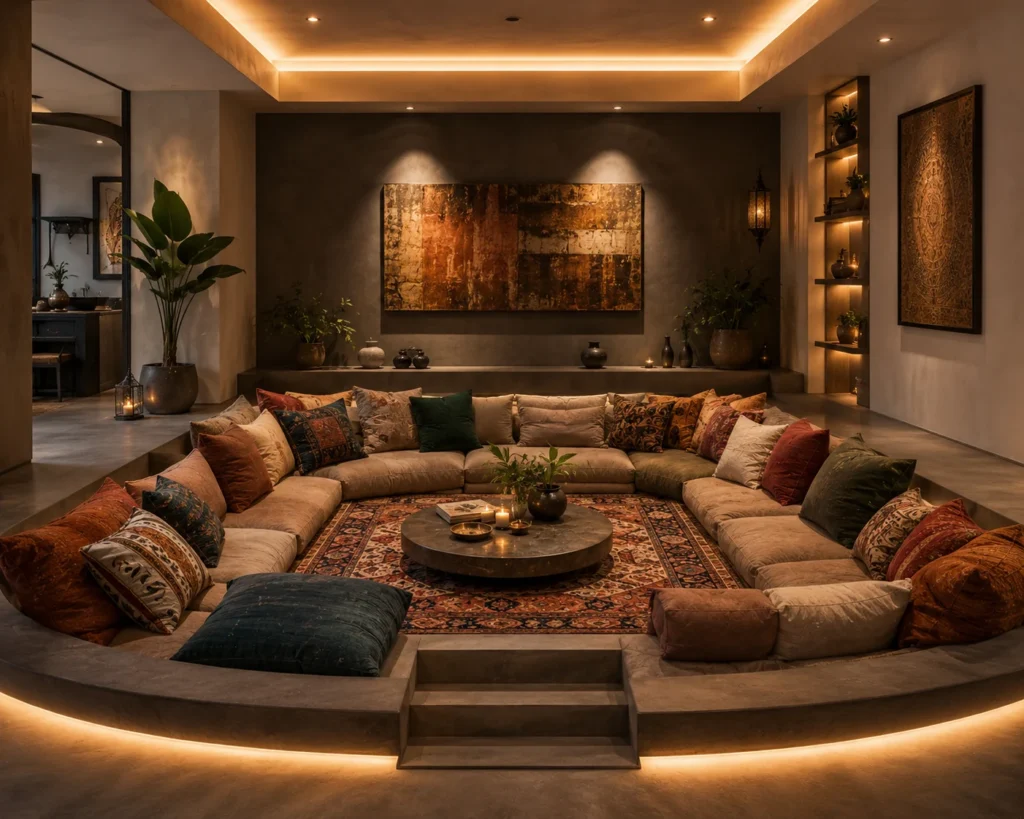
11. Sunken Lounge Vibes Without Renovation
You can capture the intimate atmosphere of a sunken conversation pit without changing the floor level or undertaking construction.
Why It Works
A clearly defined arrangement of low seating creates a cozy gathering zone within the existing room.
Because everyone sits at approximately the same height, the space feels connected and informal.
How To Do It
Center a large rug in the seating area and arrange low modular seats or thick cushions around its perimeter.
Use supportive backrests where possible and place a compact table in the middle.
Choose warm cream and camel fabrics with a few darker accents to give the arrangement visual depth.
A floor lamp positioned outside the seating circle can provide soft evening illumination.
Layout tip: Avoid building raised platforms or improvised steps to imitate a conversation pit. A level floor with properly arranged seating is simpler, more flexible, and avoids introducing an unnecessary trip hazard.
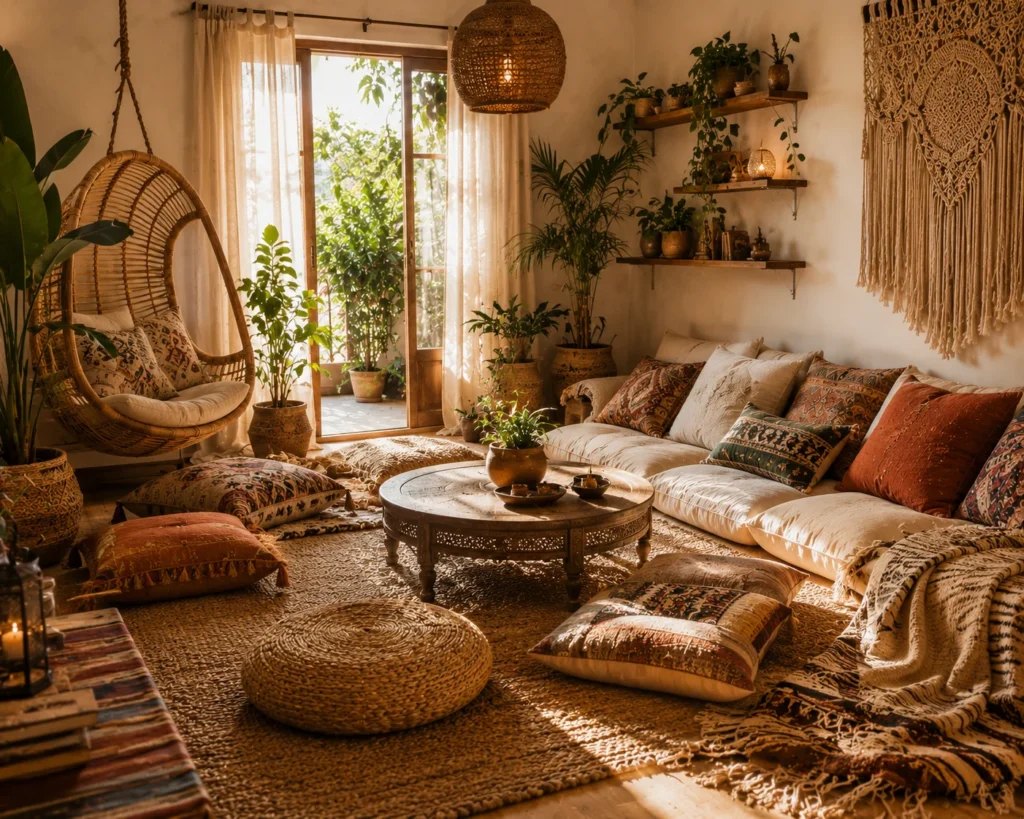
12. Floor Seating With Hanging Chair
A hanging chair adds a playful focal point to a room filled with low cushions and relaxed boho textures.
Why It Works
The elevated chair creates contrast with the floor seating and offers a different way to relax.
It also makes the room more flexible by providing an alternative for someone who prefers not to sit directly on the floor.
How To Do It
Pair neutral floor cushions with a rattan-look hanging chair positioned to one side of the seating area.
Use a natural woven rug and a small wooden table to connect the pieces visually.
Add cream and camel cushions with a muted-olive throw for a cohesive boho palette.
Keep enough space around the chair for its intended movement and access.
Safety tip: Ceiling-mounted hanging chairs require structurally suitable supports and correct hardware installation. Never attach one to drywall alone. A manufacturer-approved freestanding chair stand may be a more practical option where structural support is uncertain.
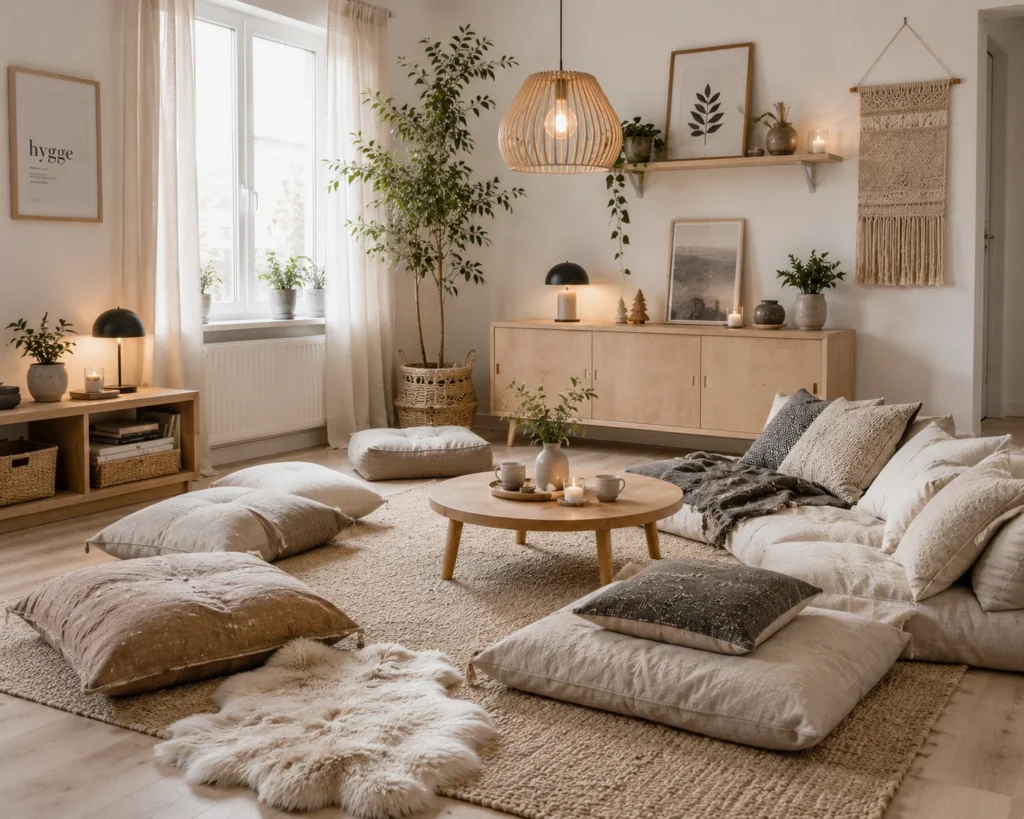
13. Scandinavian Floor Lounge
A Scandinavian-inspired floor lounge offers a simpler interpretation of low seating, focusing on clean lines, soft materials, and natural light.
Why It Works
The restrained palette keeps the room visually calm, even when several cushions are used.
Light wood furniture and neutral textiles also help a smaller living room feel open and uncluttered.
How To Do It
Choose floor cushions in ivory, oatmeal, and warm gray, then arrange them around a simple oak table.
Add a low-pile rug, a soft throw, and one or two understated accessories.
Use a compact floor lamp with a warm-white bulb for comfortable evening lighting.
Keep shelves and surrounding furniture relatively simple so the seating remains the main feature.
Styling tip: Introduce interest through fabric texture rather than adding many colors or patterns. A woven cushion, linen-look cover, and soft wool-look throw can provide enough variation.
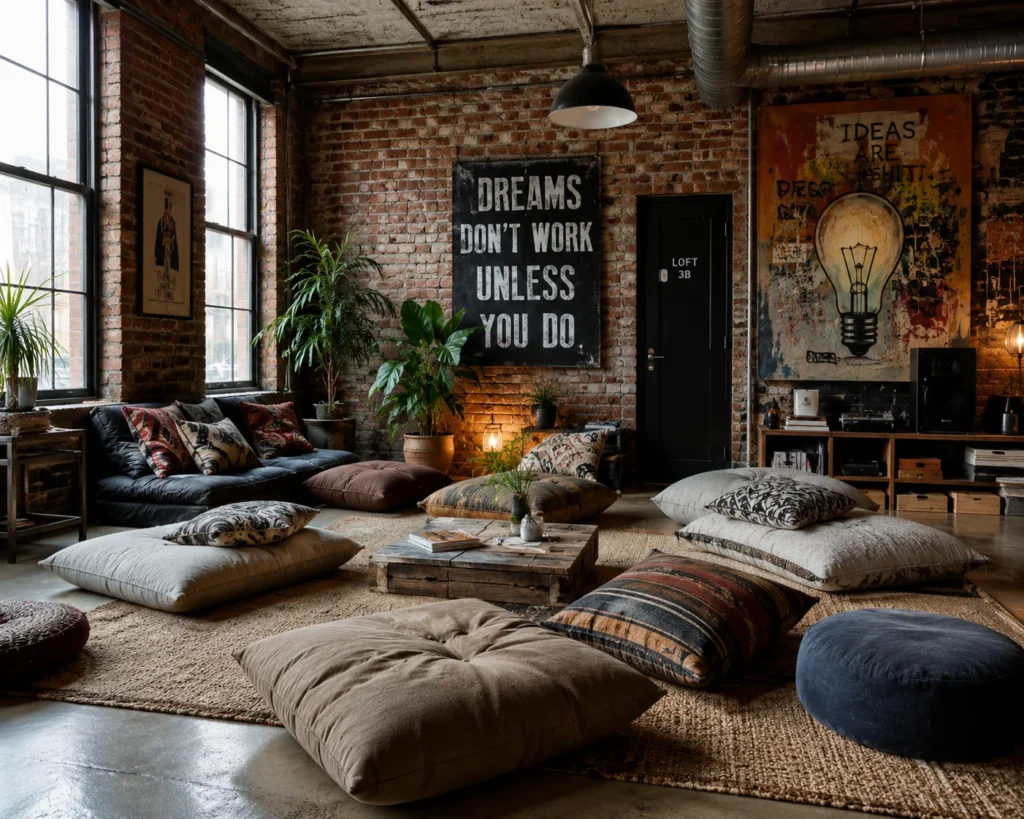
14. Loft-Style Floor Lounge
A loft-style floor lounge combines relaxed seating with the raw materials and simple shapes associated with industrial interiors.
Why It Works
Low cushions soften harder surfaces such as brick-look walls, wood floors, and black metal furniture.
The result can feel casual and comfortable without losing the character of a loft-inspired room.
How To Do It
Choose oversized floor cushions in charcoal, camel, or warm gray and place them on a large neutral rug.
Add a low walnut table and a few matte black metal accents through lighting or nearby shelving.
If the room has a brick or concrete-look feature wall, balance it with cream textiles and a soft throw.
Use one large framed abstract print rather than covering the walls with small industrial decorations.
Comfort tip: Hard flooring can make floor seating uncomfortable, especially during longer gatherings. Use substantial cushions and an appropriately padded rug rather than relying on thin decorative pillows.
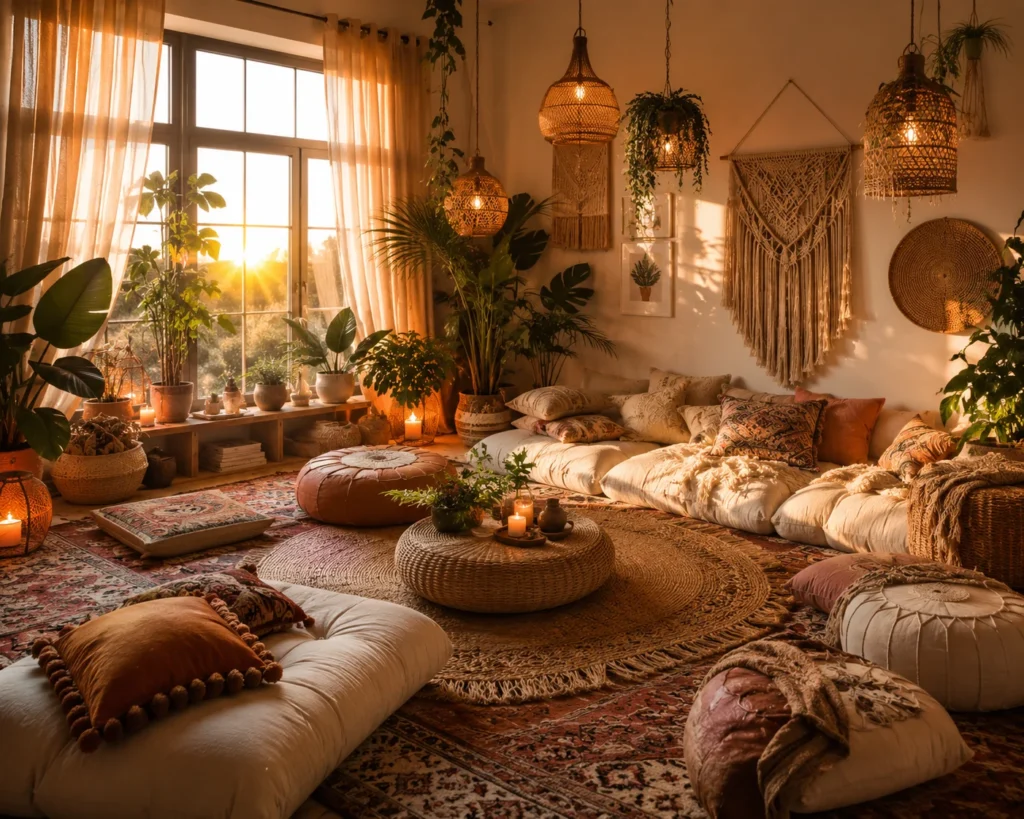
15. Ultimate Cozy Boho Lounge
An ultimate cozy boho lounge brings together floor cushions, poufs, layered textiles, warm lighting, and natural materials in one inviting arrangement.
Why It Works
The combination creates several comfortable places to sit while giving the room a relaxed, collected appearance.
Different seating options also make the space adaptable for reading, conversation, or casual entertaining.
How To Do It
Start with a large rug that defines the lounge area.
Add thick floor cushions, one or two firm poufs, and a supportive floor chair or low sofa.
Choose a coordinated palette of cream, camel, muted olive, and warm terracotta.
Layer a few throws and textured pillows, then introduce a stable low table and warm LED lighting.
Place a houseplant or woven basket at the edge of the arrangement to complete the natural look.
Final styling tip: Resist the temptation to fill every available inch with cushions. Leave room for legs, easy movement, and comfortable access to the table. A cozy lounge should feel generous rather than crowded.
Styling Tips for a Floor Seating Living Room
The most successful floor seating arrangements combine visual comfort with practical support. Before choosing cushions and accessories, consider how the space will be used and who will be sitting there.
- Choose substantial cushions: Look for supportive filling and enough thickness to separate the sitter from the hard floor.
- Provide back support: Floor chairs, modular backrests, and supportive cushions can improve comfort during longer sessions.
- Use a suitable rug: A large rug with an appropriate nonslip pad helps define the seating area and adds comfort.
- Mix textures thoughtfully: Combine cotton, linen-look fabrics, woven materials, and soft throws without using too many competing patterns.
- Keep the table practical: Choose a stable, low table that can be reached comfortably while seated.
- Layer lighting: Use warm general lighting and a focused reading lamp where needed.
- Include flexible seating: Poufs and stackable cushions can be moved when guests arrive or more floor space is needed.
- Offer a conventional seat: A chair or sofa provides an important alternative for people who find floor seating uncomfortable or difficult to access.
- Choose washable covers: Floor cushions collect dust and are more exposed to spills, so removable covers are especially useful.
- Maintain clear walkways: Keep cushions, tables, and decorative accessories away from doorways and frequently used routes.
For an everyday living room, prioritize comfort and cleanability over the number of decorative cushions. A smaller arrangement with good support will often be more useful than a large collection of thin pillows.
Frequently Asked Questions
Is floor seating comfortable for everyday use?
It can be comfortable when the cushions are supportive and the arrangement suits the people using it. Thick floor cushions, adjustable floor chairs, and purpose-built modular floor sofas are generally more suitable for extended sitting than thin decorative pillows.
However, comfort varies. People with limited mobility, joint discomfort, or difficulty getting up from the floor may prefer a conventional chair or sofa. Providing both options makes the living room more welcoming.
How do you make a floor seating living room look stylish?
Start with a defined seating area rather than scattering cushions randomly.
Use a large rug, a coordinated color palette, and a low table to give the arrangement structure. Mix a few fabric textures and add warm lighting to create depth.
Keep surrounding surfaces relatively uncluttered so the seating feels intentional rather than temporary.
Is floor seating good for small spaces?
Floor seating can work well in small living rooms because cushions and lightweight poufs may be easier to rearrange than a large sofa.
However, the arrangement still needs enough space for people to sit comfortably, extend their legs, and move around.
Stackable cushions, compact tables, and nearby storage can make floor seating more practical in a small apartment.
What style works best with floor seating?
Floor seating is versatile and can complement several decorating styles.
Boho interiors work well with textured rugs, natural fibers, and layered cushions. Japanese-inspired spaces favor simple furniture and restrained colors. Scandinavian rooms use pale wood and neutral textiles, while Moroccan-inspired lounges often feature patterned fabrics, poufs, and warm decorative lighting.
The best choice is the one that suits your existing furniture, room proportions, and everyday needs.
Final Thoughts
A floor seating living room can feel relaxed, welcoming, and full of personality when the arrangement is designed for real use.
Whether you prefer a circle of boho cushions, a minimalist Japanese-inspired lounge, a modular floor couch, or a cozy reading corner, the essential elements remain the same: comfortable support, a practical layout, and materials that are easy to maintain.
Start with one seating arrangement that fits your room. Add a suitable rug, a stable low table, and warm lighting before introducing extra accessories.
Choose colors and textures that complement the rest of your home, and remember to provide conventional seating when needed.
With thoughtful planning, floor cushions, low furniture, and layered boho textiles can create a comfortable living room that feels inviting without sacrificing everyday function.
