
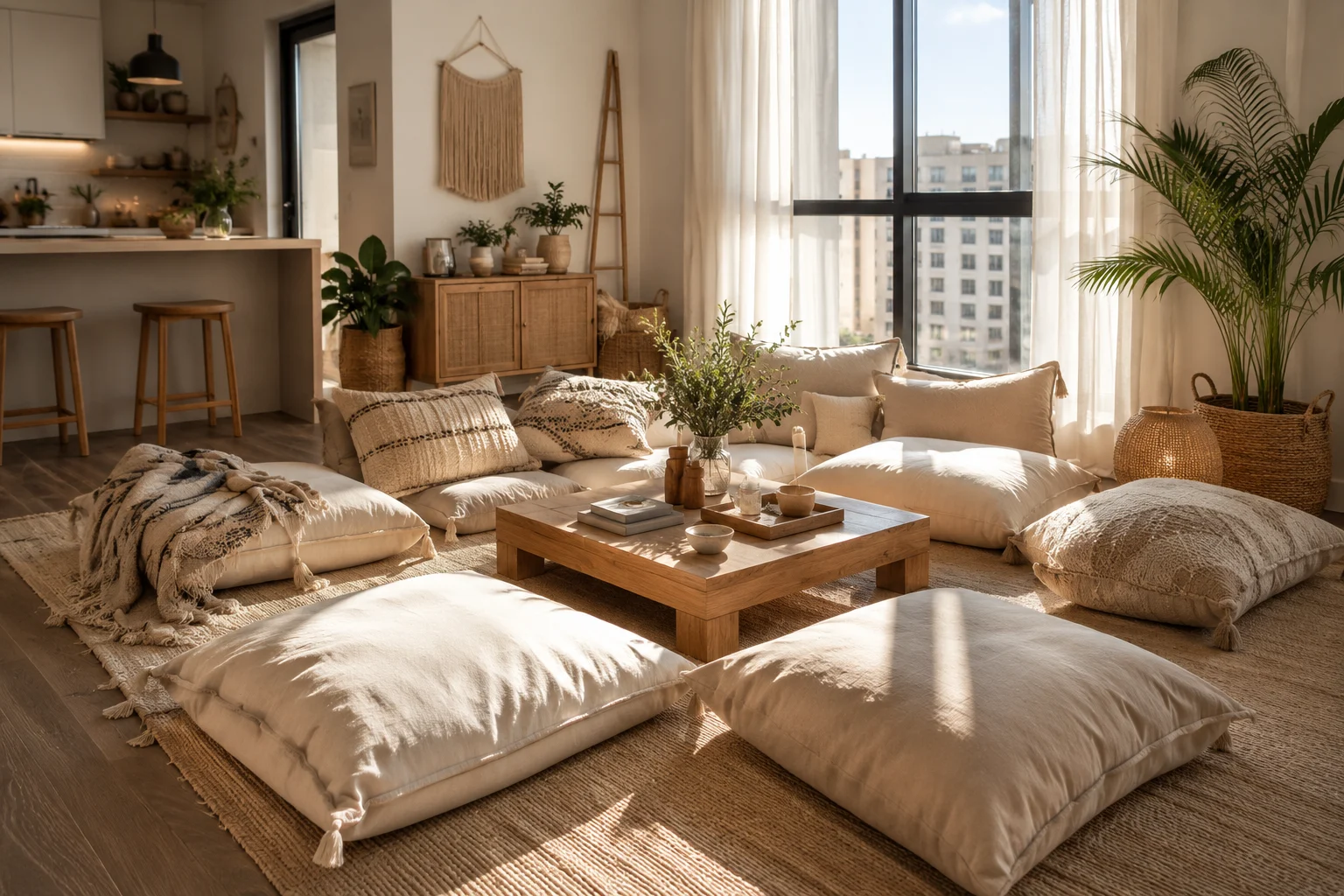
15 Dreamy Floor Seating Living Rooms That Make You Want to Stay Forever
Some living rooms look beautiful in photographs but don’t feel particularly comfortable once you sit down. A thoughtfully designed floor seating living room can offer something different: a relaxed place where cushions are genuinely supportive, drinks are within reach, and the lighting makes you want to stay a little longer.
Low seating can also change the way a room feels. Without tall sofa backs interrupting the view, windows, plants, and decorative details become more noticeable. A large rug and a few substantial cushions can turn an ordinary corner into a welcoming gathering space.
The challenge is making that inviting appearance work in everyday life. Thin decorative pillows won’t provide much comfort on a hard floor, and a beautiful arrangement quickly becomes frustrating if there’s nowhere to rest your back or set down a cup.
These 15 dreamy floor seating living room ideas explore different approaches, from warm boho lounges and Japanese-inspired interiors to coastal retreats and cozy evening spaces. Each offers a way to combine atmosphere with practical seating, storage, and lighting.
Floor seating isn’t suitable for everyone, so consider keeping a conventional chair or sofa available for anyone who prefers a higher seat or needs support when standing.
1. The Sunset Boho Lounge
A sunset-inspired boho lounge uses warm colors and layered fabrics to create a seating area that looks especially inviting in late-afternoon light.
Why It Works
Terracotta, camel, and warm ivory complement the golden tones of natural sunlight. A textured rug and generously sized cushions soften the floor, while the low arrangement keeps the room feeling open.
This is a particularly appealing option for living rooms with west-facing windows, where the afternoon light can become part of the decorating scheme.
How To Do It
Start with a large rug in a faded terracotta or warm neutral pattern. Add three or four thick floor cushions in cream, camel, and muted rust.
Fold a soft linen or cotton throw over one cushion, then introduce a low walnut table for drinks and books.
Use lightweight curtains to soften strong sunlight without blocking the window completely. A small table lamp can maintain the warm atmosphere after sunset.
Practical tip: Choose cushions with supportive filling rather than thin decorative inserts. If the room receives strong afternoon sun, look for fabrics with good colorfastness to reduce noticeable fading.
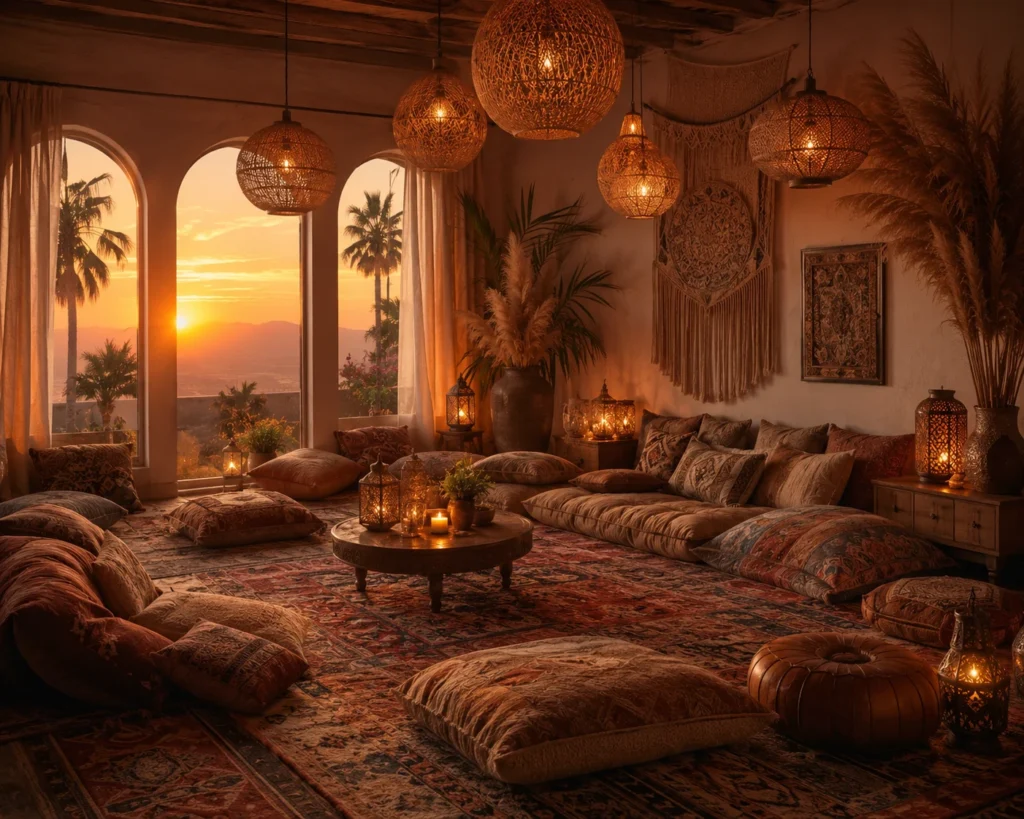
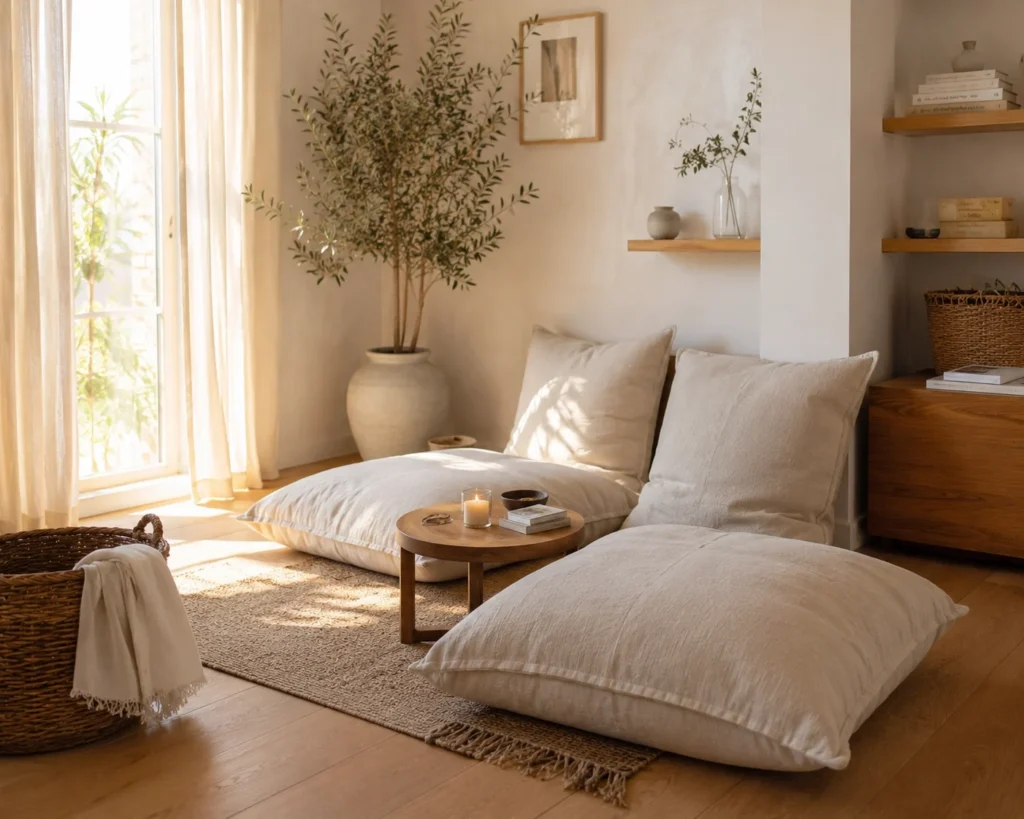
2. The Japanese Zen Retreat
A Japanese-inspired floor lounge creates a quiet, uncluttered place to sit, read, or enjoy a cup of tea.
Why It Works
The design relies on simple furniture, natural materials, and carefully considered spacing rather than decorative abundance.
Low seating allows the room’s proportions to remain visible, while pale wood and neutral textiles create a gentle contrast.
How To Do It
Choose firm floor cushions in oatmeal, warm gray, or ivory and arrange them around a low oak table.
Place the seating on a comfortable floor mat or padded rug. Keep the surrounding surfaces simple, with perhaps one ceramic vase or a framed botanical print.
Use a warm-white lamp with a diffused shade for soft evening illumination.
If the seating will be used for extended periods, consider a floor chair with an adjustable backrest.
Comfort tip: Test the table height while actually seated. A table that looks appropriately low may still be uncomfortable for eating, writing, or using a laptop.
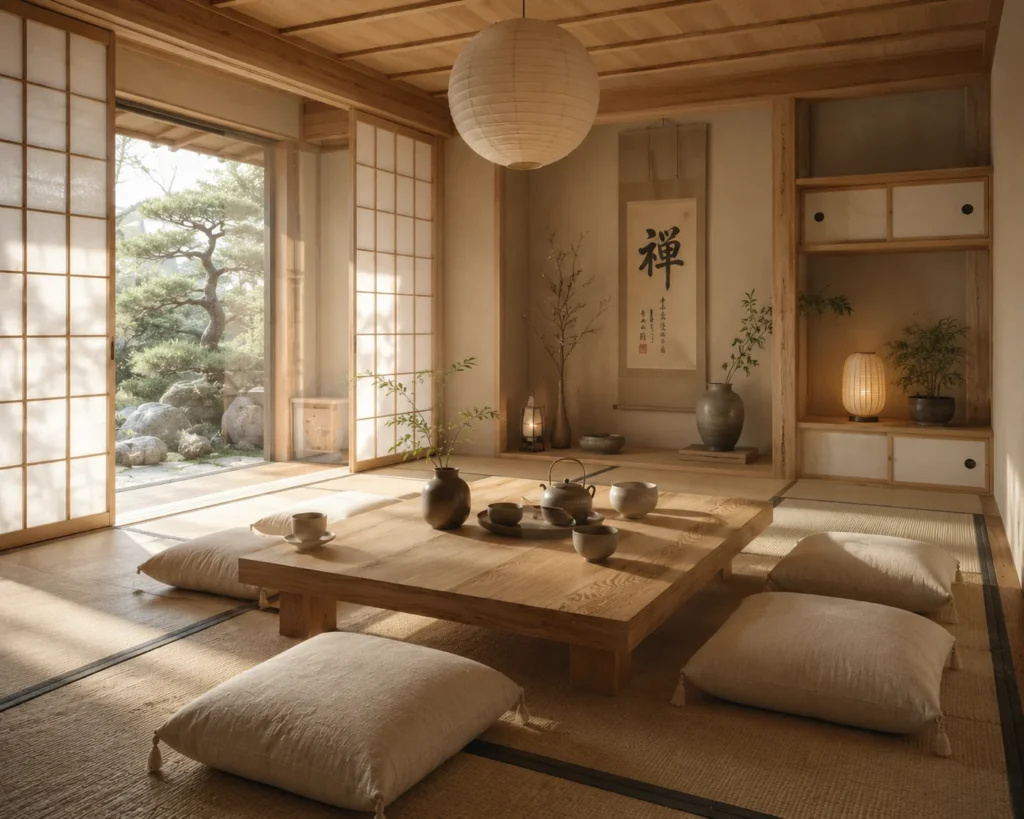
3. The Indoor Jungle Oasis
For plant lovers, a floor lounge surrounded by greenery can make the living room feel like a peaceful indoor garden.
Why It Works
Leafy plants introduce height and organic shapes around the low cushions. Their green tones also work naturally with woven rugs, warm wood, and cream upholstery.
By keeping the seating low, the arrangement allows taller plants to become prominent decorative features without overwhelming the room.
How To Do It
Place a few thick floor cushions on a large natural-toned rug, then arrange plants around the outside of the seating area.
Use a tall floor plant in one corner and smaller plants on sturdy stands or shelves to create variation.
Choose washable cushion covers and keep a small side table available for books and drinks.
Warm lighting can highlight the leaves in the evening without requiring additional decorative objects.
Plant-care tip: Select plants that suit the room’s light conditions and check whether they are safe for household pets. Keep watering trays and heavy planters away from cushions and walking routes.
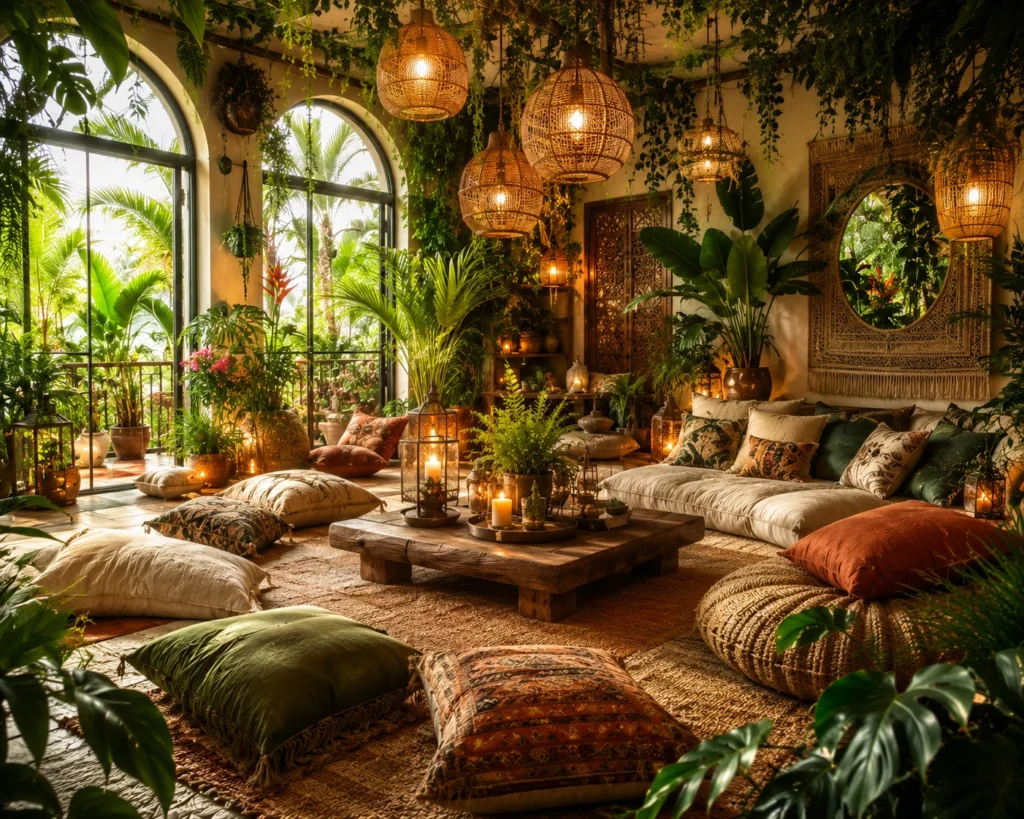
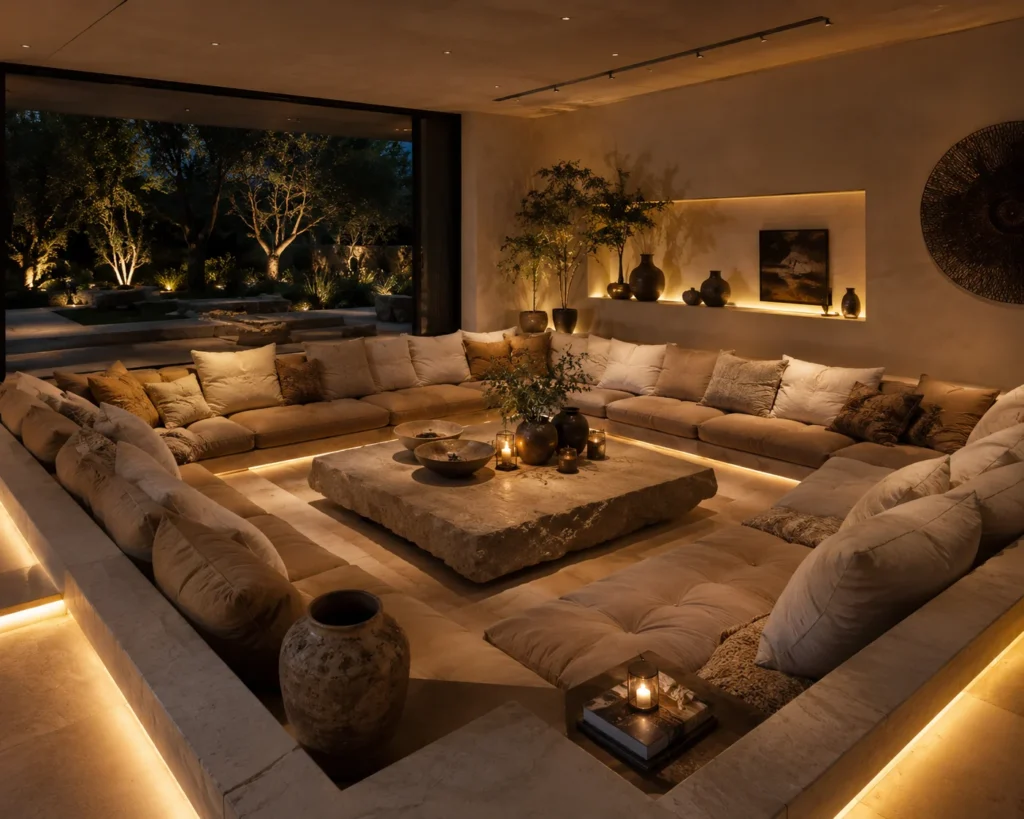
4. The Conversation Pit Look
A conversation pit-inspired arrangement captures the social atmosphere of a 1970s sunken lounge without requiring structural changes.
Why It Works
When low seats face one another around a shared table, conversation becomes the focus of the layout.
The arrangement also gives a larger living room a defined gathering area without needing a tall sectional sofa.
How To Do It
Arrange substantial floor cushions or modular low seats in a square around a compact coffee table.
Use a large rug to visually connect the pieces and provide a softer surface beneath them.
Choose warm neutral upholstery with a few muted burgundy or olive accents for a subtle retro influence.
Provide supportive backrests where possible, particularly for longer gatherings.
Layout tip: Leave enough room between the seating and table for comfortable leg positions. Avoid improvised platforms or steps; a level floor creates the conversation pit feeling without introducing unnecessary changes in floor height.
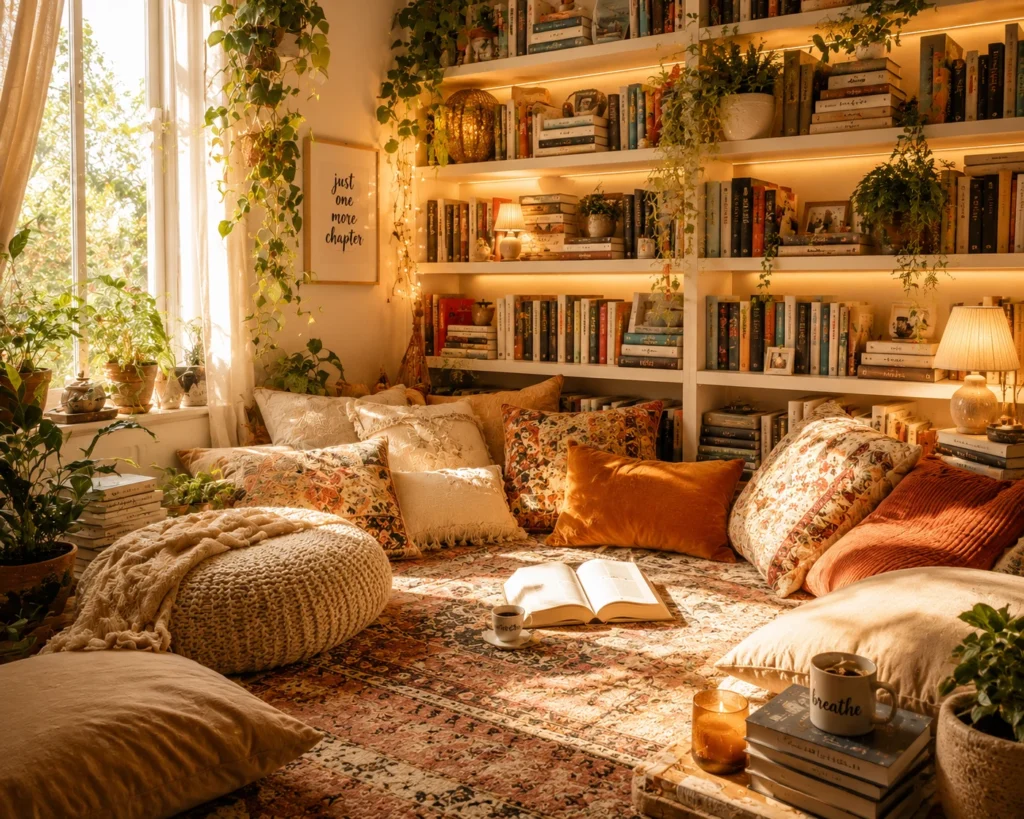
5. The Cozy Reading Sanctuary
A floor-level reading sanctuary turns an unused corner into a comfortable spot for books, quiet afternoons, and relaxed evenings.
Why It Works
Separating a small reading area from the main seating arrangement gives it a sense of purpose.
Soft cushions, accessible books, and focused lighting make the space useful rather than simply decorative.
How To Do It
Choose a thick floor cushion or supportive floor chair and place it near a bookshelf.
Add a back cushion, a small side table, and a reading lamp that directs light toward the pages.
Keep a soft throw within reach and use a low-pile rug to define the corner.
A warm cream and walnut palette can make the area feel calm without introducing too many patterns.
Reading tip: If you spend long periods reading, an adjustable floor chair with back support may be more comfortable than loose cushions. Keep the lamp cord secured outside the walking route.
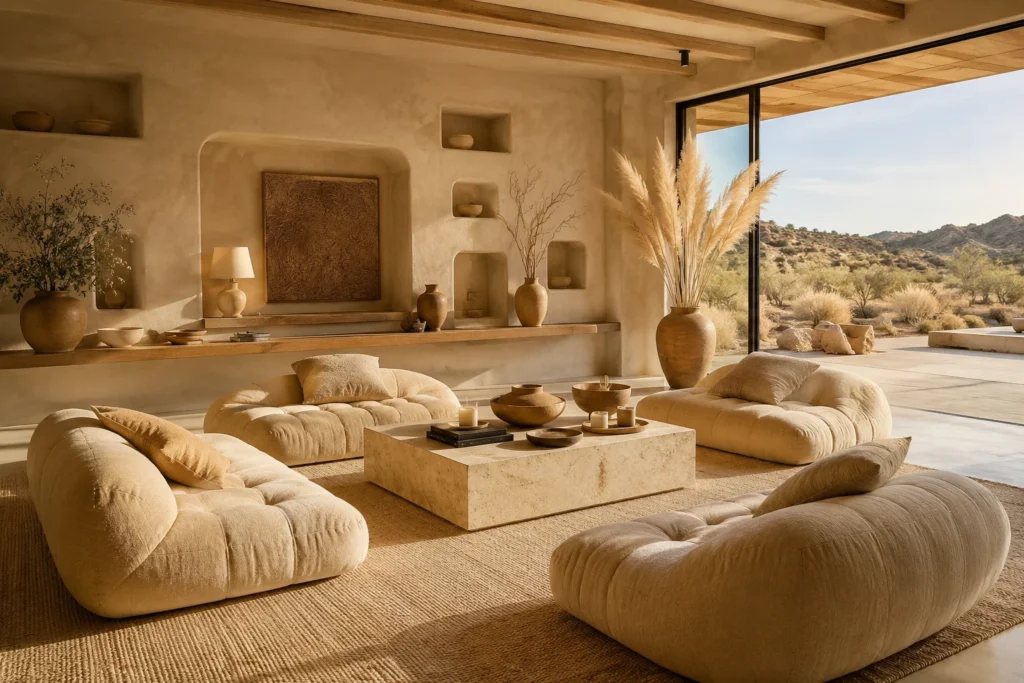
6. The Desert Modern Lounge
A desert modern floor lounge combines earthy colors, simple shapes, and tactile materials for a warm, understated appearance.
Why It Works
Sandy beige, clay, and warm cream create a cohesive palette that feels relaxed without relying on lots of decorative accessories.
Low furniture emphasizes horizontal lines, while plaster-look walls and natural wood add subtle texture.
How To Do It
Choose floor cushions or a low modular seat in oatmeal or sand-colored upholstery.
Pair them with a simple walnut coffee table and a woven rug in a slightly deeper neutral tone.
Introduce clay-colored cushions or a terracotta ceramic vase for warmth.
If you like textured walls, consider a suitable decorative paint finish rather than adding bulky architectural treatments.
Styling tip: Limit the palette to three or four closely related colors. Let the variation come from materials such as linen, wood, woven textiles, and matte ceramics.
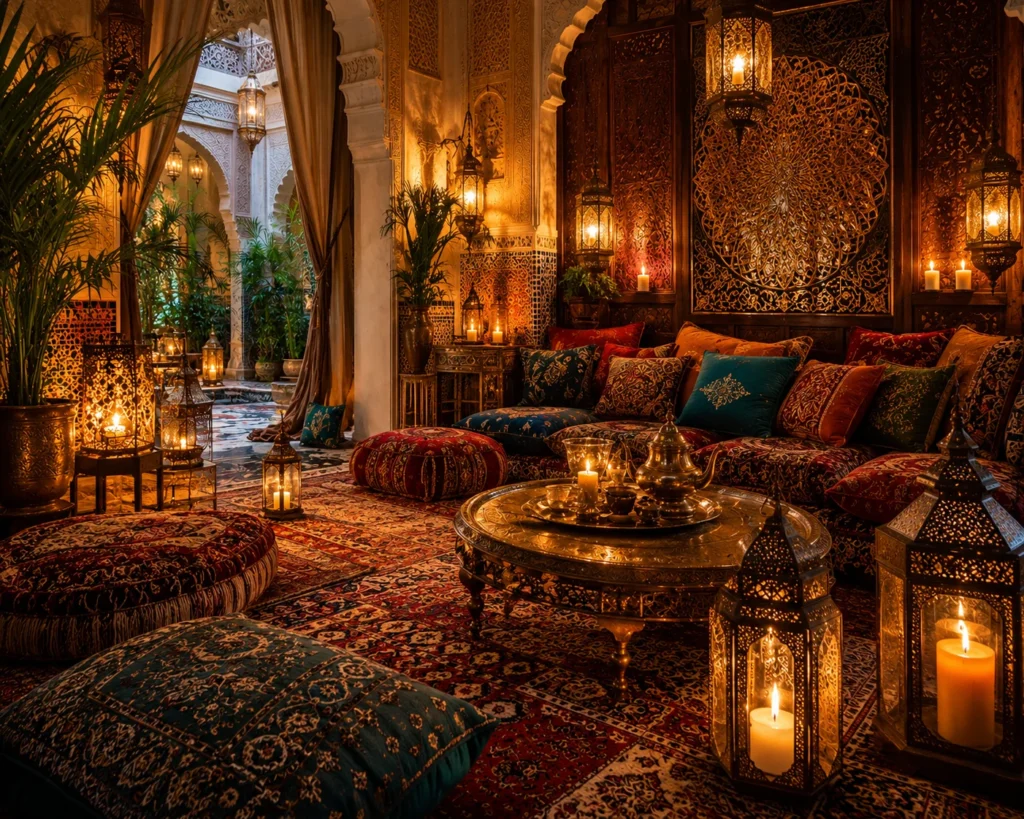
7. The Moroccan Dream Room
A Moroccan-inspired floor lounge brings rich colors, decorative textiles, and intimate seating into one welcoming space.
Why It Works
Patterned rugs, embroidered cushions, and upholstered poufs create visual depth, while the low seating arrangement supports relaxed gatherings.
The decorative richness feels most effective when balanced with a few plain fabrics and uncluttered surfaces.
How To Do It
Start with a patterned rug featuring burgundy, terracotta, muted blue, or warm ivory.
Add firm floor cushions and poufs in coordinating fabrics, mixing embroidered pieces with simpler woven covers.
Place a low, stable table in the center and use decorative lantern-style LED lights for evening atmosphere.
Keep the surrounding walls relatively neutral so the textiles remain the focal point.
Practical tip: Choose a main rug large enough to contain the seating arrangement. Avoid overlapping loose rug edges where people frequently walk, and use LED lighting instead of open flames near fabric.
8. The Tiny Apartment Escape
A small apartment can accommodate a comfortable floor lounge when every piece is selected for flexibility.
Why It Works
Floor cushions create less visual bulk than many full-size sofas, and movable pieces allow the living room to serve different purposes throughout the day.
However, the layout only saves space when the cushions have somewhere to go when they’re not being used.
How To Do It
Choose two or three stackable cushions with removable covers and pair them with a lightweight low table.
Use a single rug to define the lounge area rather than layering several rugs across a compact floor.
Store spare cushions in a closet, on a sturdy shelf, or inside a storage bench.
Keep the color palette light, using warm ivory, mushroom, and pale wood to create an open appearance.
Small-space tip: Measure the seating when fully arranged, not just when the cushions are stacked. Leave room for people to extend their legs and move comfortably between the seating area and doorway.
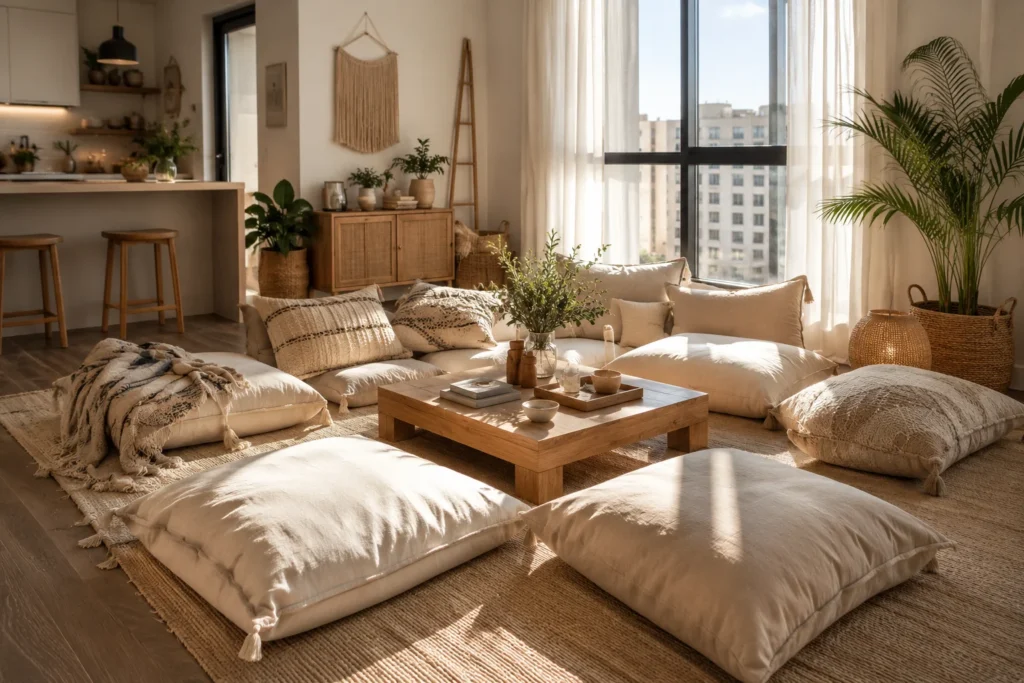
9. The Floor Couch Haven
A floor couch creates a more substantial lounging area while preserving the casual appearance of low seating.
Why It Works
Purpose-built modular floor sofas can provide greater seat depth and back support than individual floor pillows.
They also offer a more defined arrangement for everyday activities such as watching television, reading, or relaxing with family.
How To Do It
Choose a modular floor sofa with supportive cushions and a backrest designed for regular use.
Arrange it along a wall or in a low L-shaped configuration, depending on the room.
Use cream or camel upholstery and add a few muted-olive or dusty-blue cushions for contrast.
A low walnut table and textured rug can complete the arrangement without making the space feel crowded.
Buying tip: Check seat depth, cushion density, cover care, and the stability of each module. A purpose-built floor sofa is generally more reliable than stacking loose mattresses or cushions to imitate one.
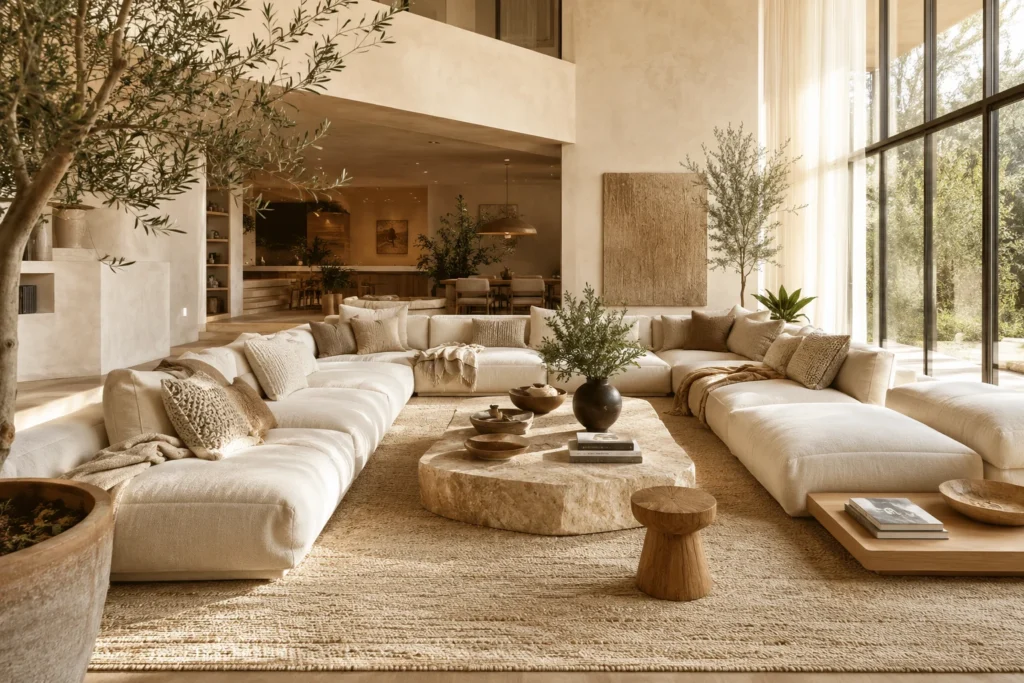
10. The Loft Lounge
A loft-inspired floor lounge combines the relaxed comfort of low seating with the character of industrial materials.
Why It Works
Floor cushions soften the appearance of exposed-brick-look walls, black metal details, and wood flooring.
The contrast between hard architectural finishes and comfortable textiles creates a space that feels distinctive without becoming cold.
How To Do It
Place oversized cushions in charcoal, camel, or cream on a substantial rug.
Add a low walnut table and a matte black floor lamp.
If the room has a brick-look accent wall, keep the other walls relatively simple to avoid overwhelming the space.
Use a large abstract print or one statement plant instead of filling every wall with industrial accessories.
Comfort tip: Hard floors require more cushioning than a photograph might suggest. Choose supportive seats and a suitable rug pad, particularly if the lounge will be used for long evenings.
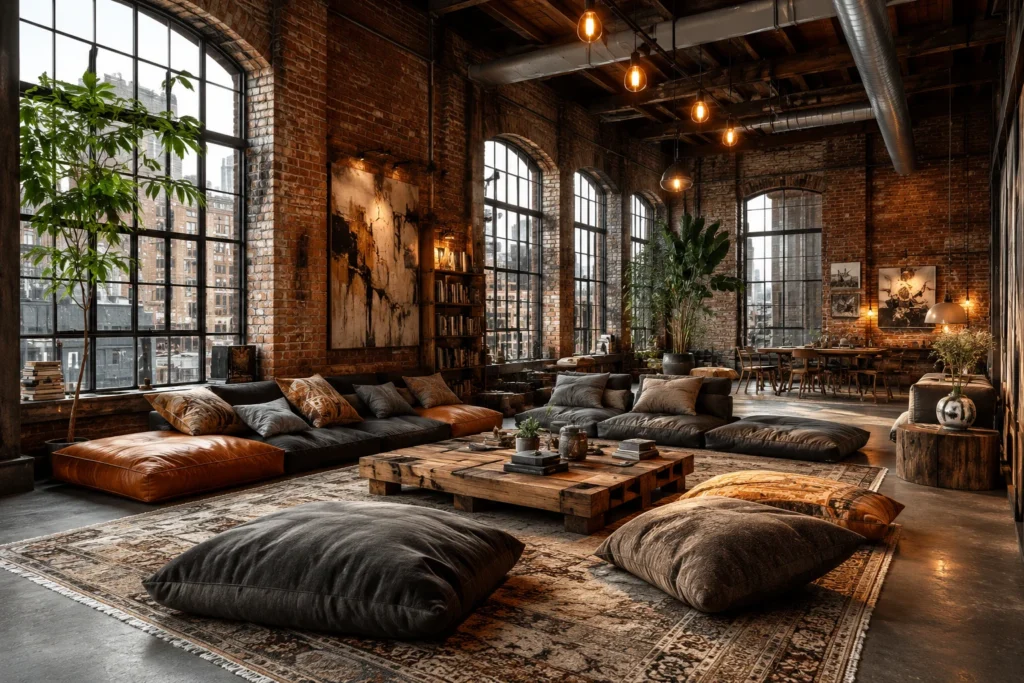
11. The Coastal Floor Lounge
A coastal floor lounge uses soft colors and natural textures to create an easygoing atmosphere reminiscent of a quiet beach house.
Why It Works
Ivory, sandy beige, and dusty blue feel light and restful, while woven materials introduce texture without requiring strong patterns.
Low seating helps maintain an open view of the windows, making the arrangement particularly appealing in bright living rooms.
How To Do It
Choose cream floor cushions with washable cotton or linen-look covers.
Add a pale wood table, a natural woven rug, and a dusty-blue throw or cushion.
Use lightweight curtains to soften daylight and a simple ceramic lamp for evening lighting.
Keep coastal decorations subtle. A framed seascape or one textured vase can be enough to establish the mood.
Material tip: If the room gets heavy use, choose a durable, easy-clean rug rather than a coarse natural-fiber option that may feel uncomfortable beneath bare legs.
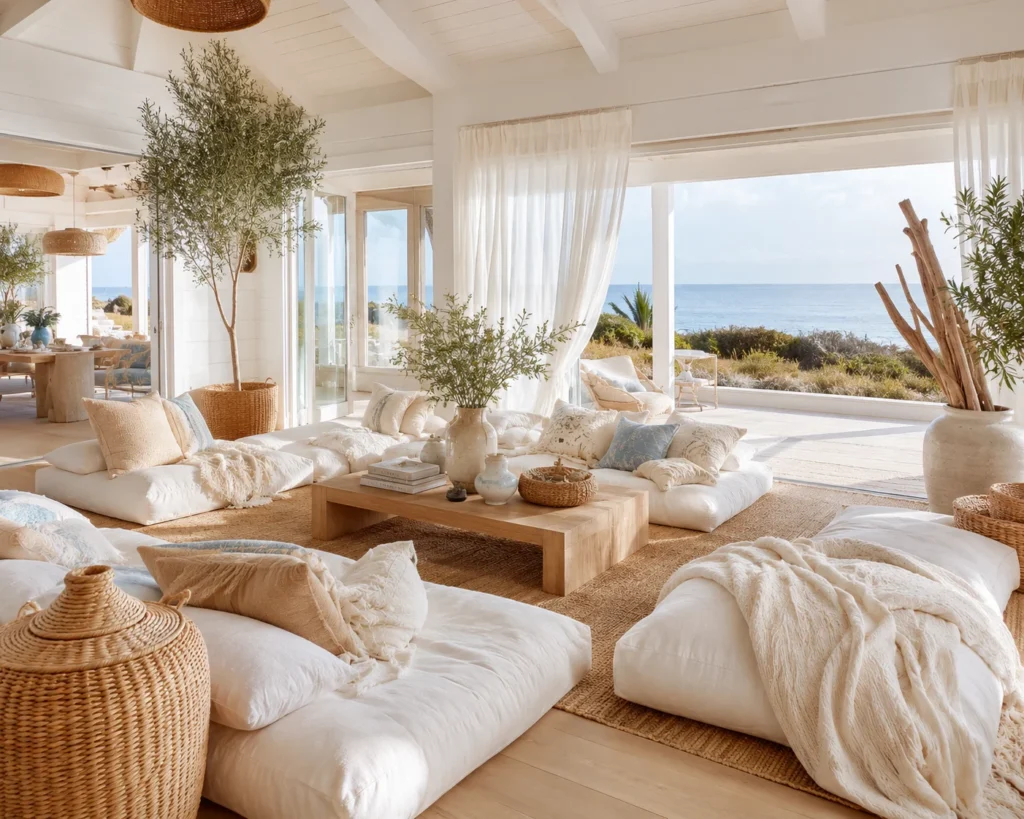
12. The Candlelit Evening Retreat
An evening floor lounge can feel especially inviting when several gentle light sources replace one harsh overhead fixture.
Why It Works
Warm, low-level lighting creates a quieter atmosphere and highlights the texture of cushions, rugs, and natural materials.
Lantern-style lights also introduce a decorative element that suits boho and traditional lounge interiors.
How To Do It
Arrange thick floor cushions around a stable low table and use a warm-toned rug to define the space.
Add battery-operated LED candles inside lanterns and place a shaded table lamp nearby.
Choose warm-white lighting around 2700K for a soft evening appearance.
Keep one brighter light available for reading, cleaning, or moving around the room safely.
Safety tip: Use flameless LED candles rather than real flames near cushions, throws, and rugs. Keep lanterns stable and position electrical cords away from the seating and walking areas.
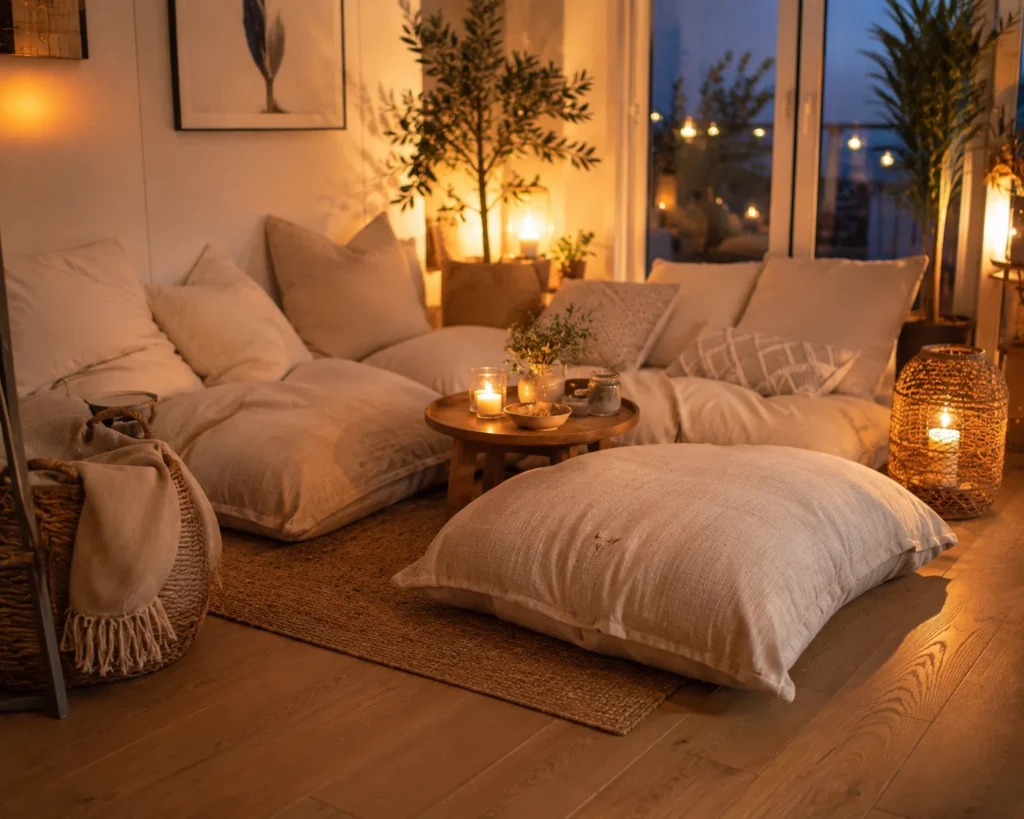
13. The Meditation Living Room
A meditation-inspired floor lounge creates a quiet area where visual simplicity takes priority over decorative detail.
Why It Works
A limited color palette and uncluttered layout help reduce distractions.
The seating area can be used for meditation, gentle stretching, or simply enjoying a quiet moment away from screens.
How To Do It
Choose a firm meditation cushion or supportive floor chair and place it on a comfortable mat.
Use warm cream, soft gray, and muted olive throughout the area.
Keep nearby decor minimal, perhaps including a small plant or a single piece of artwork.
Leave enough open floor space to change positions comfortably.
Accessibility tip: Sitting on the floor is not necessary for meditation. A stable chair or bench may be more comfortable for people who need additional support or find getting up from the floor difficult.
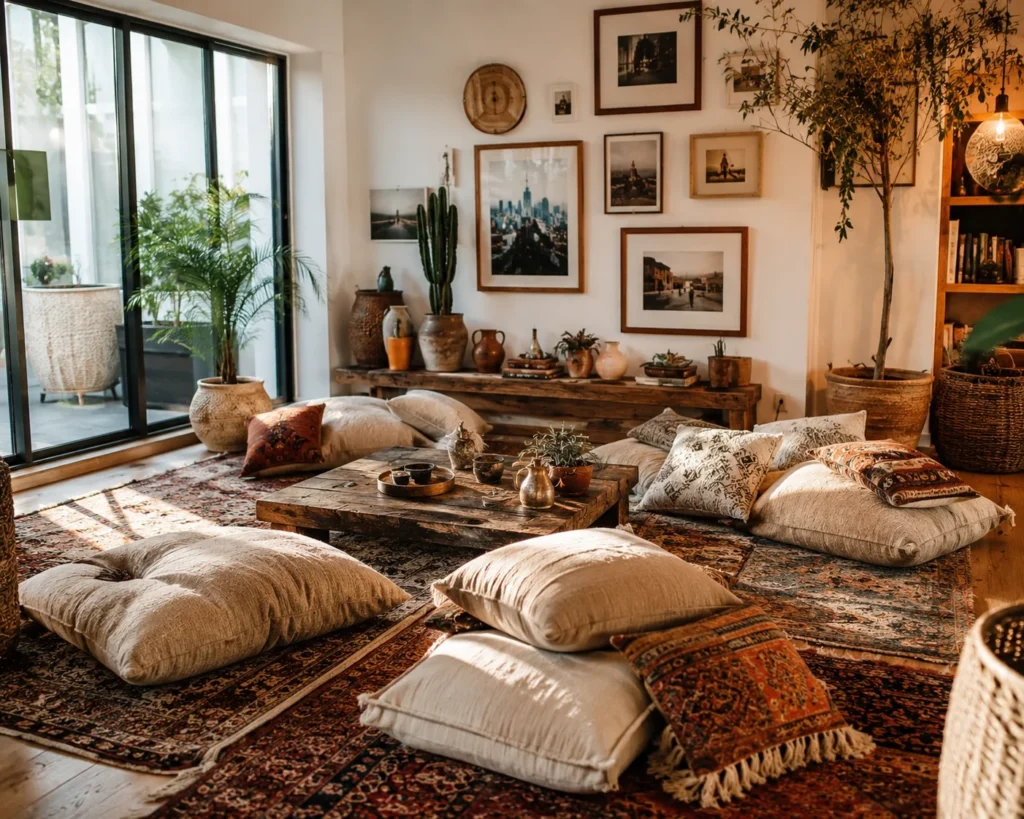
14. The Eclectic Traveler’s Lounge
An eclectic travel-inspired floor lounge is an opportunity to display meaningful textiles, artwork, and handmade objects collected over time.
Why It Works
Low seating provides a relaxed foundation for pieces with different patterns, colors, and origins.
The room feels personal because the accessories reflect individual experiences rather than a perfectly matched furniture collection.
How To Do It
Start with one favorite patterned rug and use its colors to guide the rest of the seating.
Add substantial floor cushions in a mix of plain and patterned fabrics.
Display collected pottery, framed artwork, or handmade objects on a sturdy shelf rather than placing fragile pieces directly on the floor.
Use a simple low wooden table to give the arrangement a practical center.
Styling tip: Let a few meaningful objects stand out. Avoid crowding every surface with souvenirs, and give fragile or valuable pieces secure positions away from active seating areas.
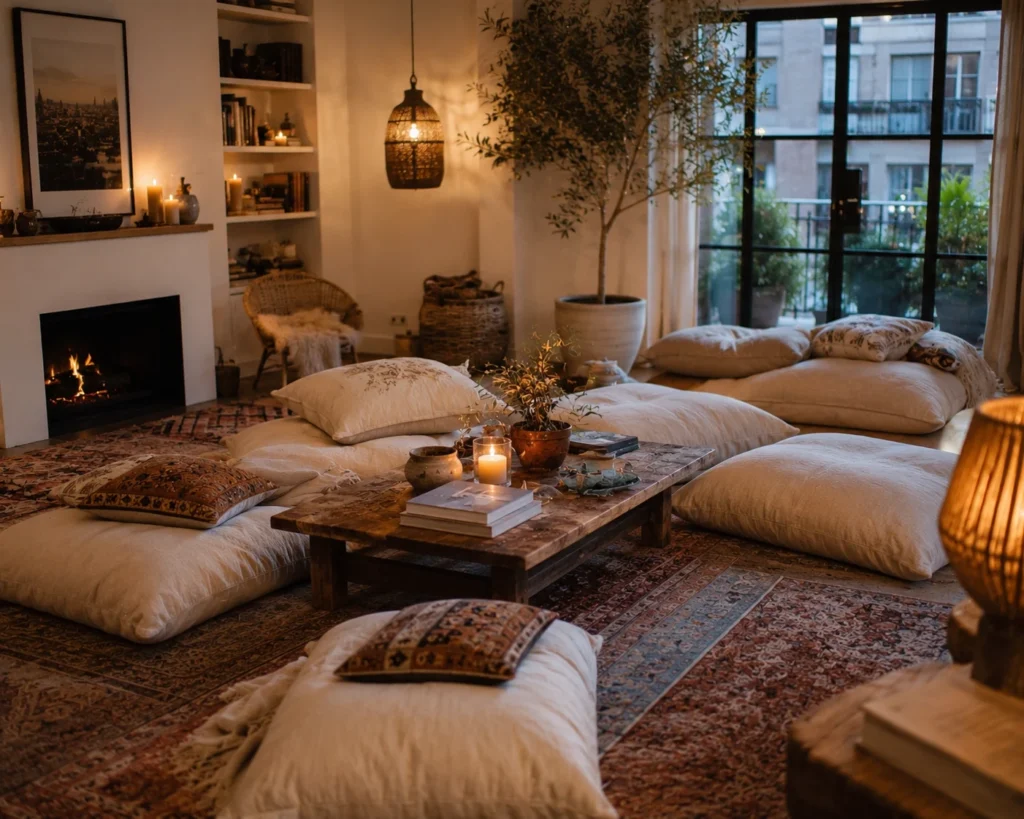
15. The Ultimate Dreamy Boho Living Room
An ultimate dreamy boho lounge combines the most inviting elements of floor seating into one comfortable, carefully balanced space.
Why It Works
The room feels welcoming because the seating, lighting, colors, and textures work together rather than competing for attention.
A combination of cushions, poufs, and supportive low furniture also gives people different ways to relax.
How To Do It
Begin with a large rug in cream, camel, or a softly faded pattern.
Add several thick floor cushions, a supportive floor chair, and one or two firm poufs.
Choose a low walnut table and introduce a coordinated palette of warm ivory, muted olive, dusty blue, and terracotta.
Layer a few throws and textured pillows, then finish with a shaded lamp, flameless lanterns, and a houseplant positioned outside the main seating area.
Keep enough open floor space for comfortable movement and avoid placing decorations where someone may step or sit.
Final styling tip: Don’t judge the arrangement only from standing height. Sit in each position to check the back support, table reach, lighting, and legroom. A truly inviting lounge needs to feel as comfortable as it looks.
Styling Tips for a Dreamy Floor Seating Living Room
A floor lounge feels most successful when its soft textures and relaxed appearance are supported by a practical layout. The goal isn’t to fit as many cushions as possible into the room. It’s to make the seating comfortable enough that people actually enjoy using it.
- Start with a substantial rug: Choose one large enough to define the seating area, and use an appropriate nonslip pad beneath it.
- Prioritize supportive cushions: Thick floor cushions, floor chairs, and modular low sofas are better suited to regular use than thin decorative pillows.
- Provide back support: A supportive backrest can make a significant difference during reading, conversation, or television viewing.
- Choose a practical table height: Test whether drinks, books, and other essentials can be reached comfortably from the seated position.
- Layer textures selectively: Mix linen-look fabric, cotton, woven materials, and soft throws without overcrowding the room.
- Use warm lighting: Combine shaded lamps with flameless decorative lights, while maintaining enough brightness for everyday tasks.
- Include greenery thoughtfully: Plants can soften the room, but heavy pots should remain outside active seating and walking areas.
- Keep the palette cohesive: Choose a few main colors and repeat them through cushions, rugs, and accessories.
- Make cleaning manageable: Removable cushion covers and durable rugs are especially useful for seating close to the floor.
- Offer different seating heights: Keep a conventional chair or sofa available for guests who need additional support or prefer not to sit on the floor.
Before buying furniture, measure the available floor space and consider where cushions will be stored when the lounge isn’t in use. A flexible arrangement is only convenient if it doesn’t create clutter elsewhere.
Frequently Asked Questions
Is floor seating comfortable long term?
Floor seating can be comfortable for extended periods when the cushions provide adequate support and the arrangement suits the person using it.
Purpose-built floor sofas, supportive floor chairs, and thick cushions are generally more suitable for regular use than thin throw pillows.
However, comfort varies with posture, mobility, and individual preferences. Some people may experience discomfort when sitting close to the floor or find standing up difficult. A conventional chair or sofa is a useful alternative.
Can a floor seating living room replace a sofa?
Yes, a floor seating arrangement can replace a traditional sofa for households that find low seating comfortable and practical.
A modular floor couch may be particularly suitable because it offers a defined seating area with back support.
Before removing an existing sofa, consider how the room is used, how often guests visit, and whether everyone in the household can comfortably get down to and up from the floor.
Keeping at least one higher seat can make the room more versatile and accessible.
What decor style works best with floor seating?
Floor seating works with several decorating styles, including boho, Japanese-inspired, Scandinavian, Moroccan-inspired, coastal, and modern organic interiors.
Boho rooms often use layered rugs, textured cushions, and natural materials. Japanese-inspired spaces favor simple low tables and restrained palettes. Coastal lounges rely on pale wood and light fabrics, while Moroccan-inspired arrangements can feature patterned rugs and upholstered poufs.
Choose a style that complements your existing room rather than replacing every piece of furniture to follow a particular aesthetic.
How do I make floor seating look intentional?
Begin by defining a clear seating area with a large rug.
Arrange cushions around a focal point, such as a low coffee table, and choose a coordinated color palette.
Use supportive cushions in a few complementary sizes rather than scattering unrelated pillows throughout the room.
Complete the arrangement with practical lighting and a place to set down everyday items. Keeping the surrounding floor clear helps the lounge feel planned and comfortable.
Final Thoughts
The most inviting floor seating living rooms combine a relaxed atmosphere with thoughtful details that make everyday use easier.
A sunset boho lounge may feel warm and colorful, while a Japanese-inspired retreat emphasizes simplicity. A reading sanctuary needs good lighting and back support, and a small apartment arrangement benefits from movable cushions and practical storage.
Whatever style appeals to you, begin with a comfortable foundation: supportive seating, a suitable rug, and a low table that works at floor level.
Add colors, plants, and decorative textiles gradually, leaving enough space for people to move and relax comfortably.
With the right balance of soft textures, low furniture, warm lighting, and practical comfort, a floor seating living room can become a welcoming place you’ll genuinely want to spend time in.
