
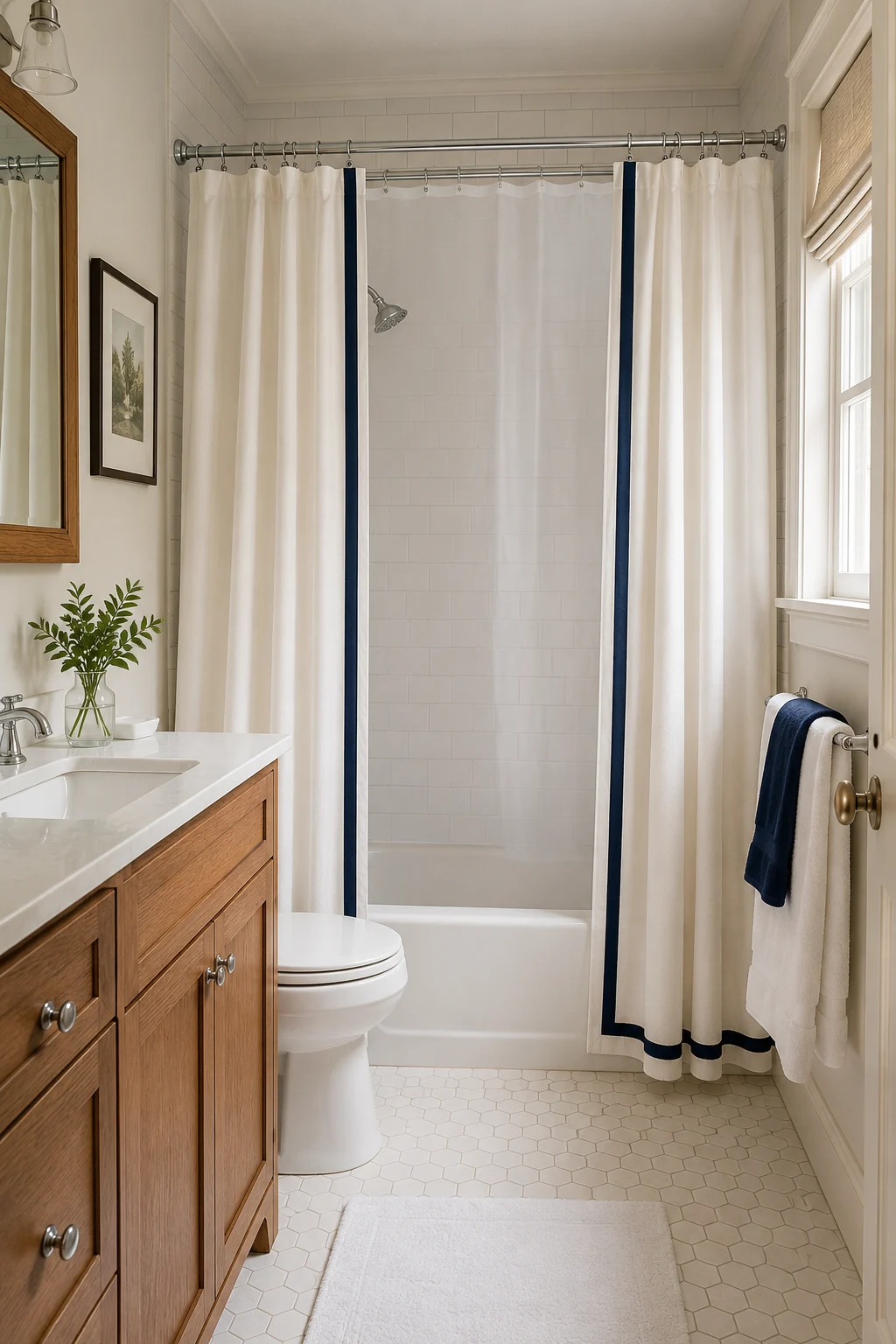
15 Long & Classic Shower Curtain Ideas With Panels and Liners
A shower curtain can completely change the way a bathroom looks, especially when it covers most of the wall above a bathtub. Choosing the right fabric, length, and hanging style can make a basic shower enclosure feel more elegant without replacing tile or fixtures.
These 15 long classic shower curtain ideas with panels and liners focus on timeless colors, tailored details, and practical arrangements that work in everyday bathrooms. From floor-skimming white cotton to traditional striped panels, each approach offers a different way to improve the room’s proportions and appearance.
The most important detail is keeping decoration and waterproofing separate. A beautiful fabric curtain can face the bathroom, while a properly fitted waterproof liner stays on the shower side and directs water back into the tub.
Whether you’re updating a small guest bathroom or refreshing an older tub surround, these ideas can help you create a more finished look while keeping the shower comfortable and functional.
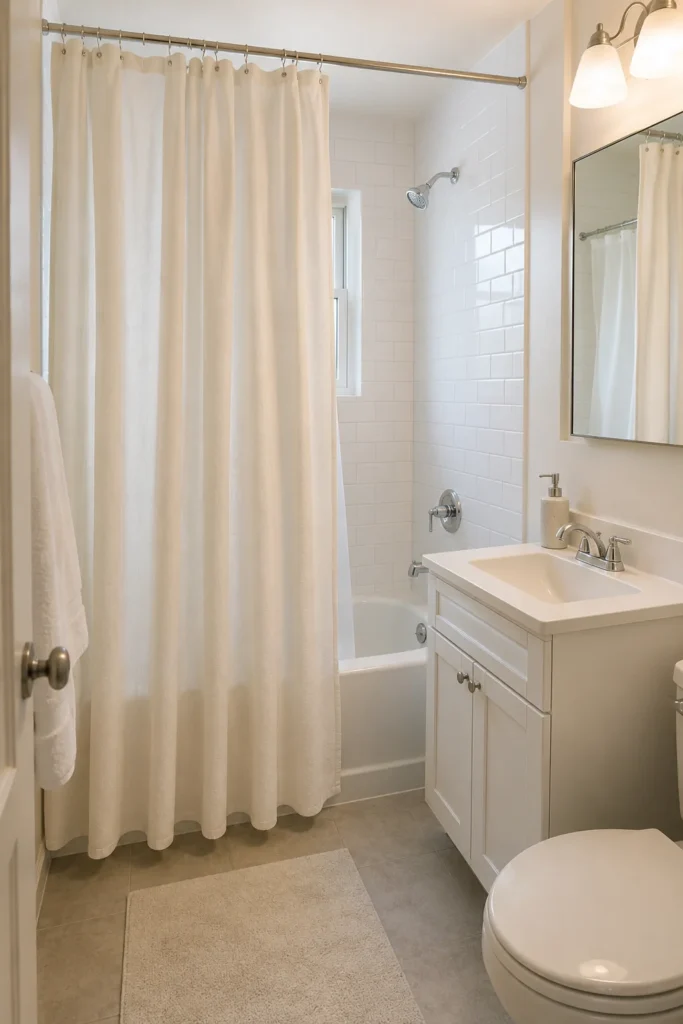
1. Take a Warm-White Cotton Curtain Almost to the Floor
A long warm-white cotton curtain is one of the simplest ways to give an ordinary bathtub a more tailored appearance. Its uninterrupted fabric surface creates a soft vertical line that can make the shower area feel taller.
Choose a substantial cotton curtain with a smooth or lightly textured weave. Hang it from a secure rod positioned higher than the usual tub-surround height, provided the curtain and liner are long enough for the arrangement.
In a bathroom with white subway tile, chrome fixtures, and a pale wood vanity, warm-white fabric keeps the palette cohesive while adding softness to the hard surfaces.
Measure the finished drop before purchasing. The decorative curtain should stop slightly above the bathroom floor rather than gathering against damp tile. Use enough width for gentle folds without creating bulky stacks of fabric.
Pair it with a separate waterproof liner that hangs inside the tub during showers. This keeps the cotton curtain looking clean and helps prevent water from reaching the floor.
2. Use an Ivory Linen-Look Curtain to Soften Beige Tile
Older bathrooms often have beige, almond, or cream tile that can look disconnected from bright white accessories. An ivory linen-look shower curtain helps bring those warm finishes together instead of emphasizing their differences.
Look for a washable polyester or cotton-blend fabric with a subtle woven texture. Shades such as oatmeal, flax, and warm ivory pair naturally with beige tile, brushed-nickel hardware, and medium-toned wood cabinetry.
The woven surface adds interest without requiring a print. This is especially useful in a compact bathroom where patterned flooring or existing tile already provides visual detail.
Hang the curtain high enough to create an elegant vertical drop, but leave a small clearance above the floor. Avoid heavy untreated linen that absorbs moisture and takes a long time to dry.
A separate waterproof liner should remain inside the bathtub while the decorative fabric stays on the room side. The result is a soft, neutral shower treatment that makes existing finishes feel more intentional.

3. Bring in Classic Blue-and-White Vertical Stripes
Blue-and-white vertical stripes give a bathroom a crisp, traditional appearance without requiring elaborate decoration. They work particularly well in small spaces because the repeated lines draw attention upward.
Choose a warm-white curtain with narrow or medium-width faded navy stripes. Hang it slightly higher than the tub surround so the pattern extends through most of the visible wall height.
For a classic combination, pair the curtain with white subway tile, brushed-nickel fixtures, and a natural oak vanity. A single navy hand towel can repeat the color without making the room look overly coordinated.
Pay attention to stripe scale. Very wide bands can dominate a narrow bathroom, while fine, evenly spaced stripes create a quieter effect.
Check the curtain’s actual dimensions and pattern direction before ordering. If the rod is raised, make sure the waterproof liner still extends sufficiently into the tub to contain splashing water.

4. Make an Extra-Long Dusty-Blue Curtain the Main Color Field
An extra-long dusty-blue shower curtain can introduce a substantial amount of color without changing the bathroom’s permanent finishes. Its muted tone feels calmer than bright blue and softer than dark navy.
Choose a matte fabric in dusty blue, blue-gray, or muted slate. A subtle woven texture adds depth while allowing the solid color to remain the main feature.
This approach is particularly effective in a bathroom with white tile, warm neutral walls, and light wood cabinetry. The curtain creates one continuous color field rather than breaking the room into several competing patterns.
Position the rod to give the fabric a generous vertical drop, then measure carefully so the hem finishes above the floor. A curtain that puddles beside the bathtub can collect moisture and quickly lose its polished appearance.
If the bathroom has little natural light, choose a lighter dusty-blue shade. It provides color without making the shower wall feel excessively dark.

5. Frame the Tub With Symmetrical Ivory Panels
Two ivory shower curtain panels can make a standard bathtub look more like a thoughtfully framed architectural opening. Instead of gathering one large curtain at a single end, the fabric rests in balanced folds on both sides.
Choose two matching panels in a washable ivory fabric with enough body to hang neatly. Position them on a secure rod above the tub and allow each panel to form a soft vertical column when open.
This arrangement suits traditional bathrooms with simple tile, polished chrome, or brushed-nickel fixtures. It also works beautifully with warm neutral walls and a wood vanity.
Use one continuous waterproof liner behind the decorative panels. During a shower, close the liner completely and keep its lower edge inside the tub. The two fabric panels should remain outside the water barrier.
Avoid excessive fabric fullness, particularly around a standard 60-inch bathtub. The panels should frame the opening without making it difficult to enter or exit the shower.

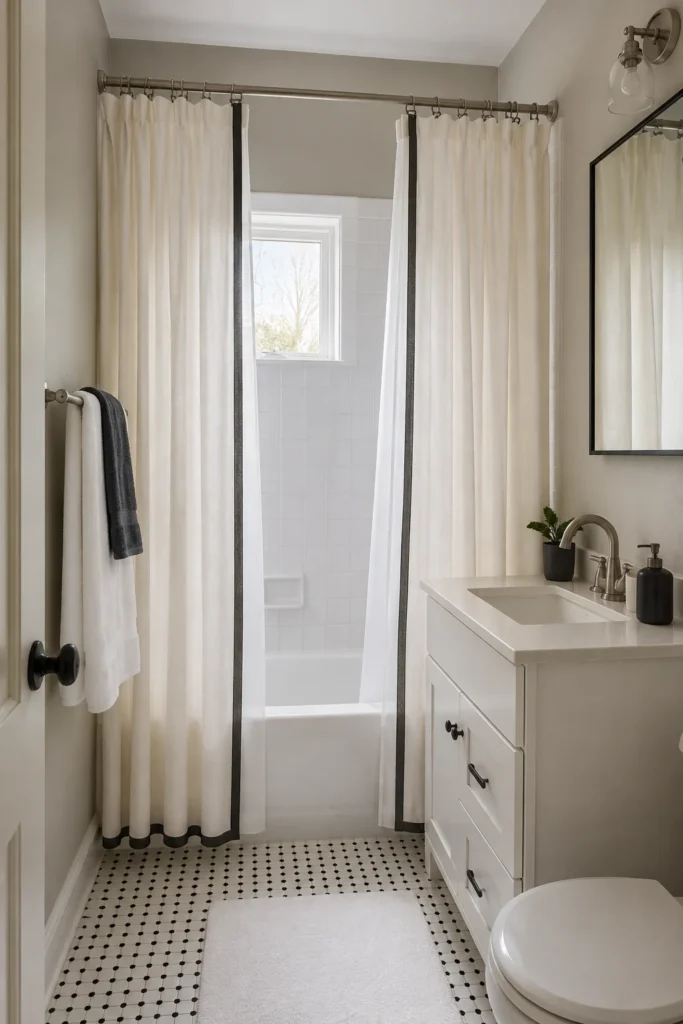
6. Try Two Tailored Panels With a Narrow Contrast Border
A narrow contrast border adds definition to shower curtain panels without covering the entire fabric in pattern. This detail is especially effective in bathrooms where the flooring or tile already has a strong design.
Start with warm-white or ivory panels and choose a slim border in charcoal, muted navy, olive, or chocolate brown. Place the contrasting trim along the inner vertical edges so it outlines the tub opening when the panels are pulled apart.
For example, a charcoal border can connect the curtain to black-and-white mosaic flooring, while muted olive trim complements warm cream tile and natural wood.
Keep the border relatively narrow. A thick dark band can make the curtain appear heavier and reduce the soft, tailored effect.
Use a continuous waterproof liner behind both panels and ensure it closes securely during showers. Select washable bathroom-suitable fabric rather than untreated decorative drapery that may retain moisture.
7. Create a Crisp Hotel Look With White Waffle Texture
A white waffle-textured shower curtain creates a clean, hotel-inspired look without relying on decorative prints. The raised weave gives the fabric dimension while maintaining a bright, understated appearance.
Choose a curtain with a substantial waffle, ribbed, or dobby texture. A warm-white shade is particularly versatile because it works with both cool chrome fixtures and warmer neutral finishes.
Pair it with white tile, a pale gray floor, and simple metal curtain rings. Keep surrounding accessories minimal so the texture remains the main decorative feature.
For the most polished result, hang the curtain in even folds and make sure the hem sits slightly above the bathroom floor. White fabric shows discoloration quickly when it remains in contact with wet surfaces.
Use a clean waterproof liner behind the textured curtain, positioned inside the bathtub. Wash the fabric according to its care label and allow both layers to dry thoroughly between uses.

8. Use Ticking Stripes for a Traditional Bathroom That Doesn’t Feel Dated
Ticking stripes are a timeless textile pattern that can make a bathroom feel traditional without appearing overly formal. Their narrow, evenly spaced lines add detail while keeping the overall design restrained.
Choose cream fabric with faded navy stripes or warm-white fabric with fine charcoal lines. Both combinations work well with subway tile, vintage-inspired fixtures, and natural wood cabinetry.
A longer curtain helps emphasize the vertical direction of the pattern. The repeated stripes create a sense of height while the fabric softens the surrounding porcelain and tile.
Use simple metal rings and moderate fullness so the stripes remain visible through the folds. Too much gathered fabric can make the narrow pattern appear crowded.
If the bathroom already has patterned flooring, keep towels and other textiles solid. A waterproof liner behind the decorative curtain will protect the room while allowing the cotton-look fabric to remain the visual focus.

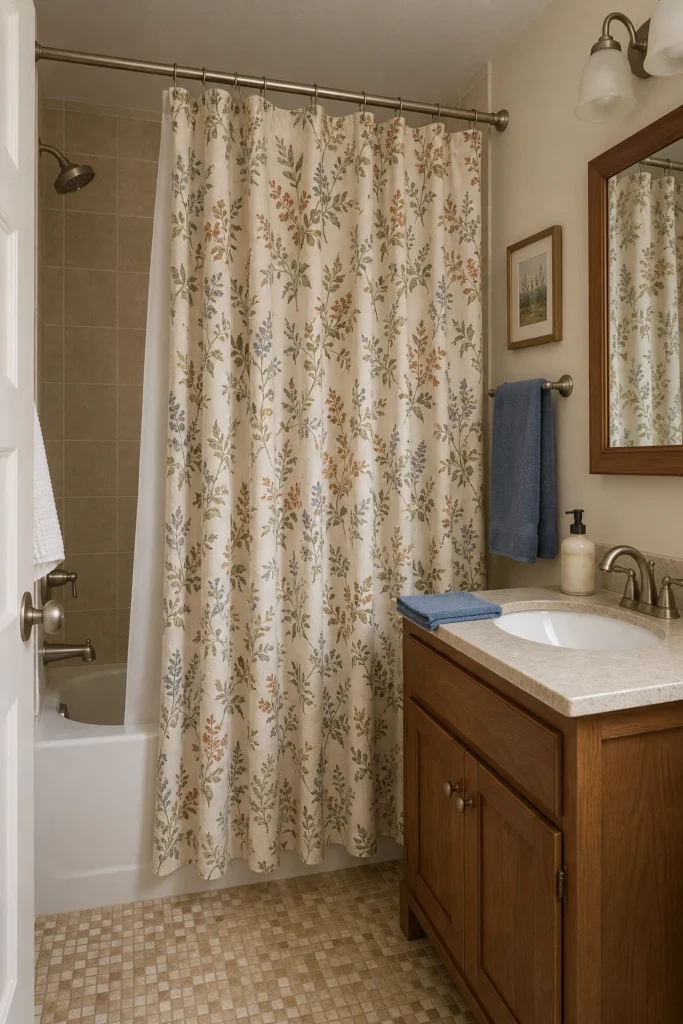
9. Add a Traditional Botanical Print With Plenty of Background
A botanical shower curtain can bring warmth and personality to a traditional bathroom without the commitment of patterned wallpaper or new tile.
Look for a small or medium-scale print featuring muted olive leaves, faded blue stems, or soft rust-colored flowers. A cream background helps the design feel light and prevents the curtain from becoming too visually busy.
This is a useful choice for bathrooms with mixed finishes. A botanical print can connect beige tile, wood cabinetry, and cooler metal fixtures through a coordinated selection of colors.
Hang the curtain long enough to show the pattern clearly and allow gentle folds across the tub opening. Avoid oversized floral motifs in very narrow bathrooms, where the print may be difficult to appreciate at close range.
Choose understated rings and keep other accessories simple. Let the botanical fabric provide the decorative interest while a separate waterproof liner handles splashing water.
10. Use Drapery-Like Panels With a Hidden Liner
Drapery-style shower curtain panels can soften a bathroom filled with hard surfaces while giving the bathtub a more finished appearance. The look comes from the fabric’s length, gentle folds, and carefully arranged panels.
Choose two washable cream or pale taupe panels with a soft woven texture. Hang them outside the bathtub opening and allow the fabric to fall naturally toward either side when the shower is not being used.
A double shower rod can make this setup easier to manage. The outer rod supports the decorative panels, while the inner rod holds a continuous waterproof liner.
During showers, close the liner across the full opening and keep it inside the tub. The decorative panels remain on the bathroom side, where they are less likely to become saturated.
Avoid heavy household drapes that are difficult to wash or dry. Bathroom-suitable textiles offer a similar appearance with more practical maintenance requirements.

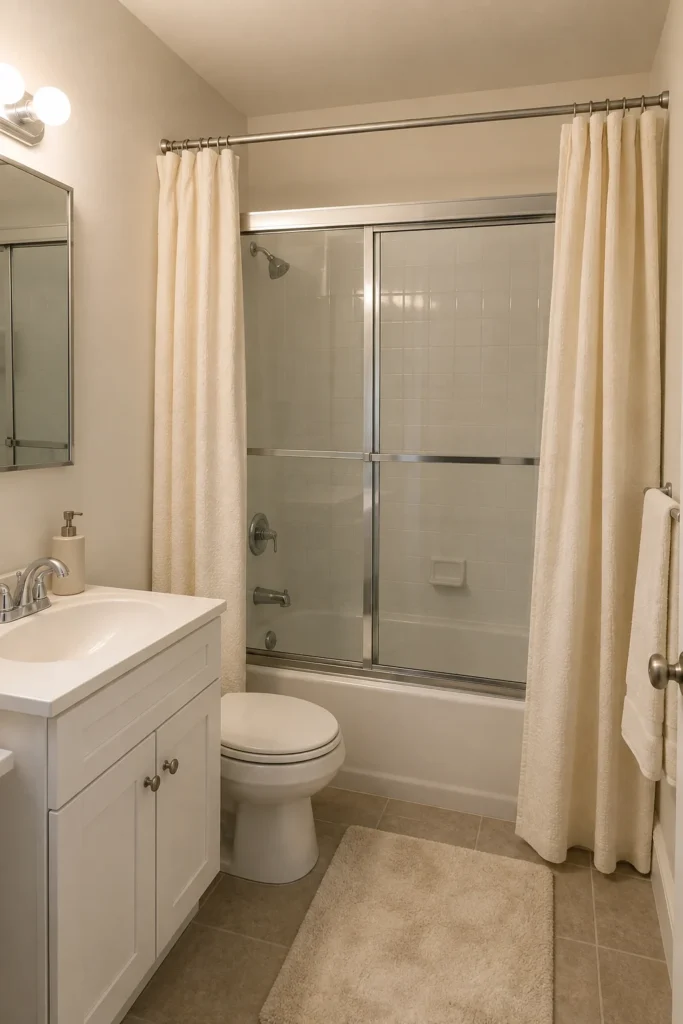
11. Put Decorative Curtain Panels Outside Dated Sliding Glass Doors
If your bathroom has older sliding glass shower doors, decorative panels may help soften the appearance of the metal frame without requiring the enclosure to be removed.
Install a separate, secure curtain rod outside the glass doors, provided there is enough clearance. Choose lightweight ivory or neutral woven panels that complement the surrounding tile.
The glass doors should remain the actual water barrier. The fabric is decorative and belongs entirely outside the enclosure.
Before installing anything, check that the curtain will not block door handles, interfere with the sliding tracks, or make entering and exiting the shower difficult. This treatment is not suitable for every bathroom layout.
When the shower is not in use, the panels can be positioned to conceal part of the enclosure. During use, move them aside as needed so the glass doors remain accessible.
For renters, a properly fitted tension rod may be an option where suitable mounting surfaces are available.
12. Use a Ceiling Track for a Cleaner Full-Height Line
A ceiling-mounted shower curtain track creates a continuous vertical appearance by allowing the fabric to hang almost directly from the ceiling. This can make a compact bathroom feel more streamlined.
Choose a plain curtain in warm white, pale gray, or muted blue-gray. Solid fabric emphasizes the height of the arrangement without adding distracting patterns.
This approach works particularly well when an existing shower rod sits unusually low and visually divides the wall. A ceiling track removes that prominent horizontal line.
Accurate measurements are essential. The curtain needs to stop above the bathroom floor, while the waterproof liner must still reach far enough inside the tub or shower threshold to contain water.
Ceiling hardware must be properly secured to a suitable structure and installed according to the manufacturer’s instructions. If the ceiling construction or waterproofing requirements are uncertain, professional installation is the safer choice.

13. Keep a Renter-Friendly Tension Rod but Upgrade Everything Around It
You don’t need to drill into tile or permanently alter a bathroom to improve its shower curtain. A secure tension rod can support a polished arrangement when the curtain, liner, and hardware are chosen carefully.
Start by measuring the distance from the existing rod to the desired curtain hem. Choose a fabric length that finishes above the floor without leaving an awkward gap.
A warm-white textured curtain or washable linen-look fabric is a versatile option for rental bathrooms with beige tile, fiberglass surrounds, or basic fixtures.
Replace mismatched hooks with simple coordinating rings, and select a curtain wide enough to form gentle folds when closed. Use a clean waterproof liner of the correct length behind it.
Check that the tension rod is installed securely between suitable surfaces and does not slip under the combined weight of the fabric and liner.
The result is a more intentional bathroom update without unnecessary permanent modifications.

14. Use Navy-and-White Panels for Stronger Classic Contrast
Navy-and-white shower curtain panels offer a more defined traditional look, especially in bathrooms with white tile and plenty of natural or artificial light.
Choose two warm-white panels with narrow navy borders or subtle vertical stripes. The light fabric keeps the shower area bright, while the darker detail outlines the opening.
This combination works well with polished chrome, brushed nickel, or aged-brass accents. A wood vanity can add warmth and prevent the room from feeling too cool.
Hang the panels symmetrically and allow enough fullness for soft folds without crowding the tub entrance. Keep the navy accents concentrated in the curtain rather than repeating the color across every accessory.
A continuous waterproof liner should close completely behind the decorative panels and remain inside the bathtub during showers.
Wash the fabric regularly, particularly if dark borders are positioned near areas where soap residue or moisture may accumulate.

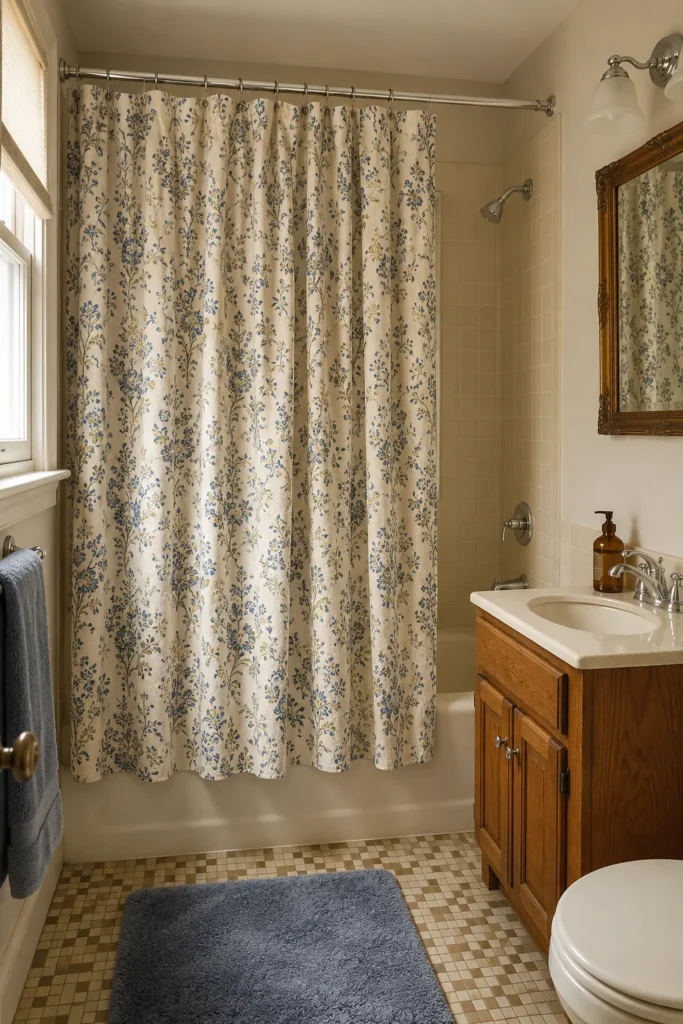
15. Pair a Vintage-Inspired Print With a Completely Hidden Liner
A vintage-inspired shower curtain can make an older bathroom feel collected and charming rather than dated. The key is selecting a restrained print that complements the existing finishes.
Look for faded blue vines, small olive-and-rust florals, or a subtle geometric block print on an ivory background. These patterns add character without overpowering a compact room.
Hang the decorative curtain at a flattering height and give it enough width for relaxed folds. Simple metal rings allow the print to remain the main visual detail.
Behind the fabric, use a waterproof liner that stays visually secondary from the bathroom doorway. During showers, it should close across the opening and hang inside the tub.
This treatment is particularly useful in bathrooms with cream tile, wood cabinetry, or older fixtures. A carefully chosen textile can bring those different finishes together without requiring a major renovation.
Keep surrounding towels and accessories understated so the finished room feels naturally coordinated rather than decorated as a matching set.
How to Make Long Shower Curtains Look Intentional
A long shower curtain looks most polished when its height, length, fullness, and hardware are planned together. Choosing attractive fabric is only one part of the process.
Start by measuring the entire shower opening. Determine where the rod or track will sit, how far the decorative curtain should fall, and whether the liner can still reach inside the bathtub or shower threshold.
For a floor-skimming appearance, leave a small gap between the curtain hem and the bathroom floor. Fabric that drags against wet tile can collect moisture and become difficult to maintain.
Next, consider width. A curtain pulled completely flat often looks utilitarian, while excessive fabric can make a narrow shower opening feel crowded. Aim for soft, controlled folds that look attractive whether the curtain is open or closed.
Choose hardware that complements the existing fixtures. Simple chrome, brushed-nickel, or aged-brass rings generally work well with classic fabrics. For two-panel arrangements, a double rod can help separate decorative fabric from the waterproof liner.
The liner is essential. It should remain on the shower side, close across the full opening, and direct water into the tub. Avoid relying on decorative cotton or linen-look panels as the only barrier against splashing.
Finally, make maintenance part of the design. Choose washable materials, spread the curtain and liner out after showers to help them dry, and keep the bathroom adequately ventilated.
With the right proportions and a functional liner, even an affordable shower curtain can give an ordinary bathroom a timeless, carefully finished appearance.
