
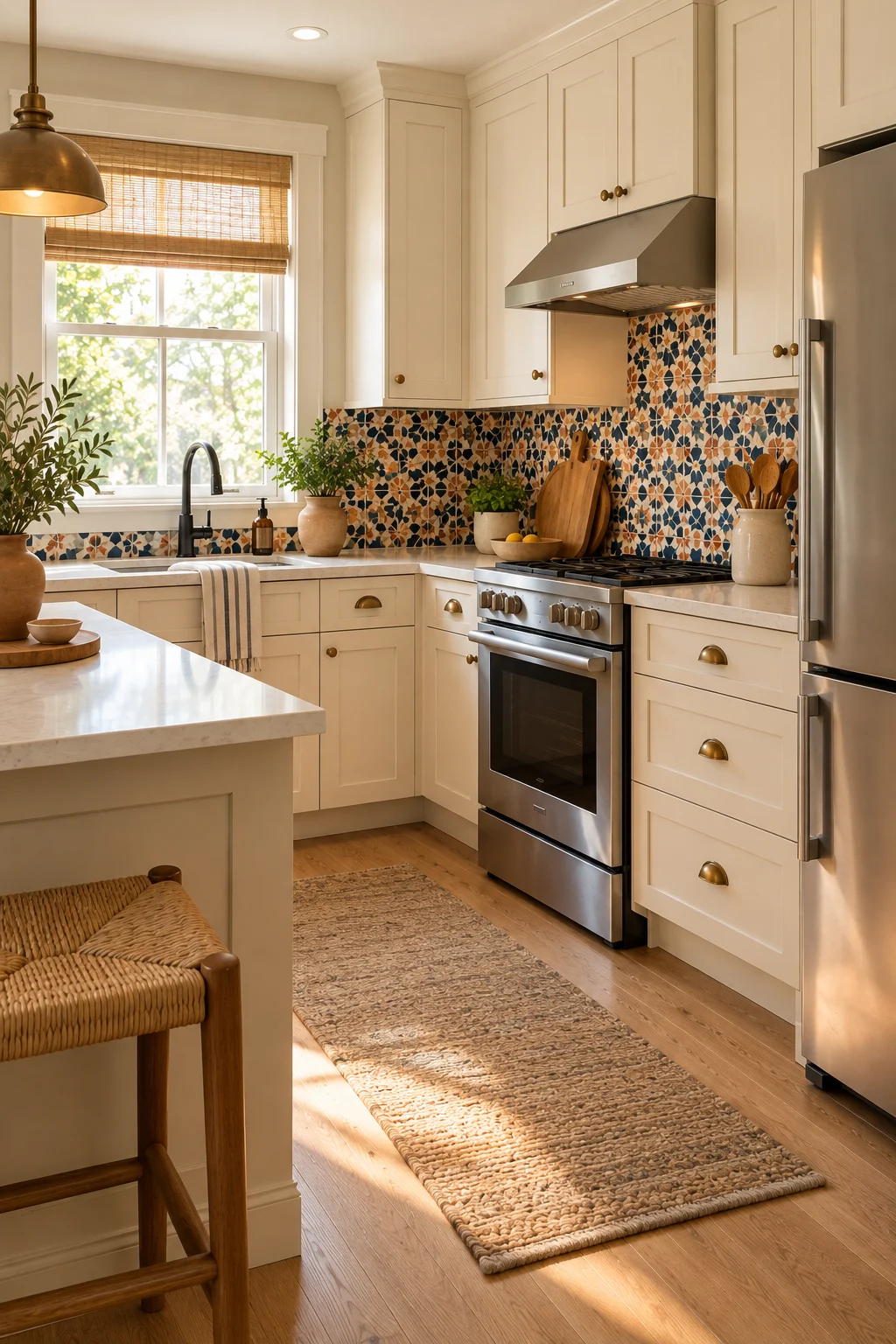
15 Moroccan Kitchen Ideas Full of Color, Pattern, and Character
There’s something captivating about a Moroccan-inspired kitchen. The geometric tiles, rich blue and terracotta colors, warm metal finishes, and beautiful ceramics can make even a simple kitchen feel full of personality.
But you don’t need an elaborate tiled courtyard or a dramatic architectural renovation to bring Moroccan influences into your home.
A modest kitchen with standard eight-foot ceilings, everyday cabinetry, and limited counter space can embrace this look through a thoughtfully chosen backsplash, colorful dishes, or a single decorative light fixture.
The trick is knowing where to add detail and where to keep things simple.
Moroccan design draws on a rich mix of architectural and craft traditions, including intricate zellij tilework, carved plaster, decorative arches, and colorful ceramics. Rather than trying to reproduce all of these elements at once, you can borrow specific materials, shapes, and color combinations that suit your existing kitchen.
These 15 Moroccan kitchen ideas will help you introduce warmth, pattern, and character without sacrificing the storage, lighting, and practical surfaces you need every day.
1. Create a Patterned Moroccan-Inspired Backsplash
If there’s one feature that can instantly establish the character of a Moroccan-inspired kitchen, it’s a patterned backsplash.
Geometric star motifs, interlocking shapes, and repeating floral designs can introduce beautiful detail between the countertop and upper cabinets.
Traditional Moroccan zellij is made from individually cut glazed tiles, but you can also achieve a Moroccan-inspired appearance with suitable patterned ceramic tiles.
For a calm, coordinated look, choose a limited palette. Deep blue and warm white feel striking, while muted olive, terracotta, and cream create a softer earthy effect.
If your kitchen already has walnut or oak cabinets, a blue-and-cream backsplash can provide contrast without making the room feel too dark.
Keep the surrounding surfaces simple. Plain countertops and understated hardware allow the pattern to become the main attraction.
Before ordering, examine a larger tile sample or layout. A repeating motif can look much busier across an entire backsplash than it does on a single tile.
Choose tile, grout, and installation materials appropriate for kitchen splashes and cleaning.
2. Use Deep Blue and White Together
Deep blue and white create a memorable color combination that works beautifully in Moroccan-inspired kitchens.
Think cobalt, indigo, or a softened Mediterranean blue paired with warm white cabinets and pale countertops.
You don’t have to paint the entire kitchen blue. Try deep blue lower cabinets with warm white uppers, or introduce the color through a backsplash and a few coordinated ceramics.
A medium-walnut breakfast table or natural oak shelf can help warm up the contrast.
If your kitchen receives limited natural light, consider concentrating the deeper blue in a smaller area. Dark cabinets can look beautiful, but they may feel visually heavy when paired with dark flooring and countertops.
Test paint samples during the day and under your evening lighting.
For a balanced finish, repeat the blue selectively rather than adding several unrelated shades.
The combination is especially effective when you want the kitchen to feel colorful and expressive without relying on many different decorative materials.

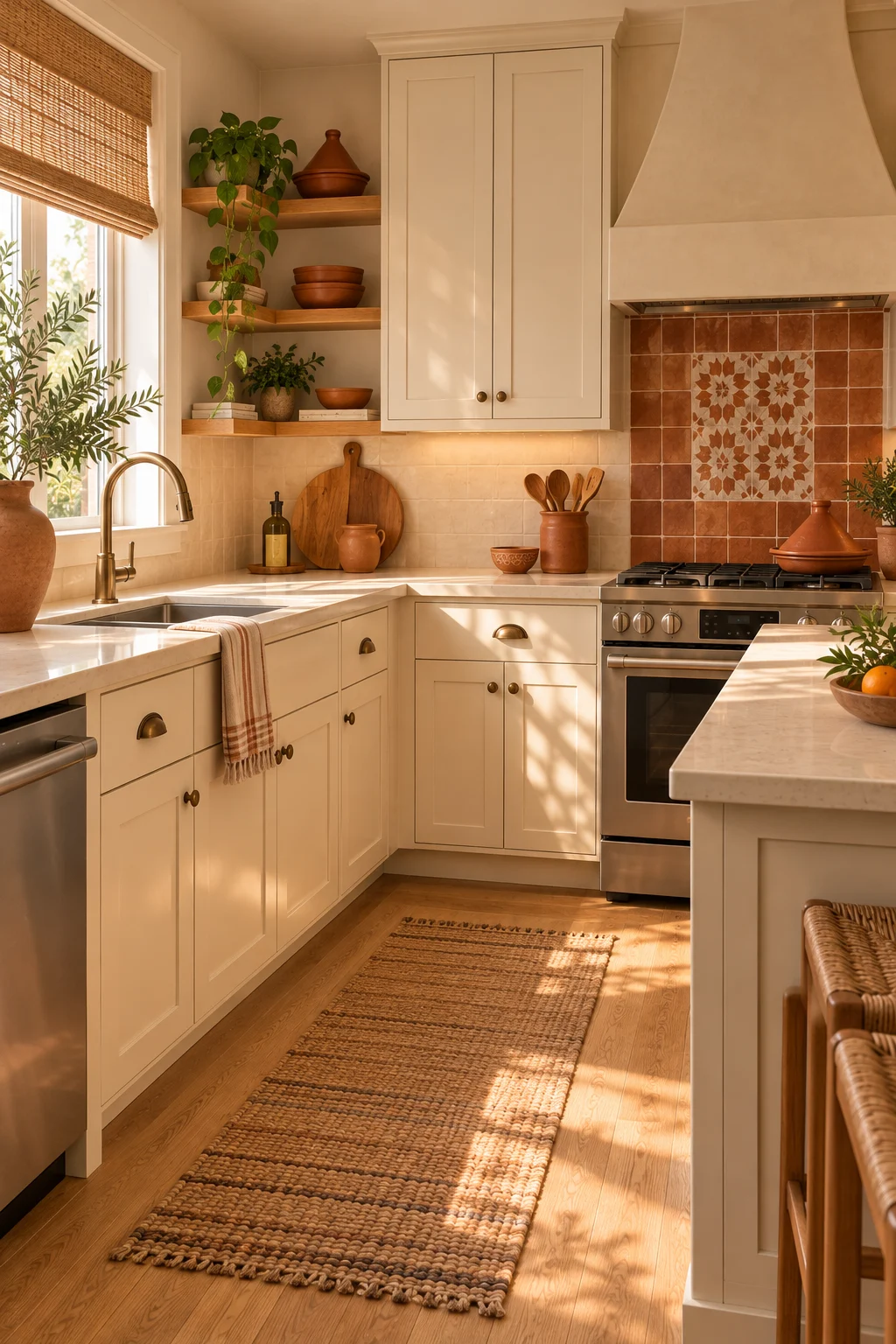
3. Add Terracotta and Warm Earthy Tones
Terracotta is a natural choice for bringing warmth into a Moroccan-inspired kitchen.
Its earthy clay color works beautifully with cream cabinetry, medium-walnut furniture, natural wood shelving, and warm beige walls.
You can introduce terracotta through ceramic accessories, a tiled backsplash, or a restrained accent color.
For example, a kitchen with warm cream cabinets and pale countertops might feature terracotta-patterned tiles behind the sink and a small matching ceramic bowl on a shelf.
The key is to avoid making every surface orange or rust-colored.
Balance the clay tones with cream, sand, mushroom taupe, or muted olive. These colors create a layered palette that feels welcoming rather than overly saturated.
Terracotta also comes in different finishes. Matte ceramics create a rustic appearance, while glazed pieces introduce more color variation and reflection.
Choose materials based on their actual use. A decorative terracotta vase doesn’t need the same surface performance as a backsplash or countertop.
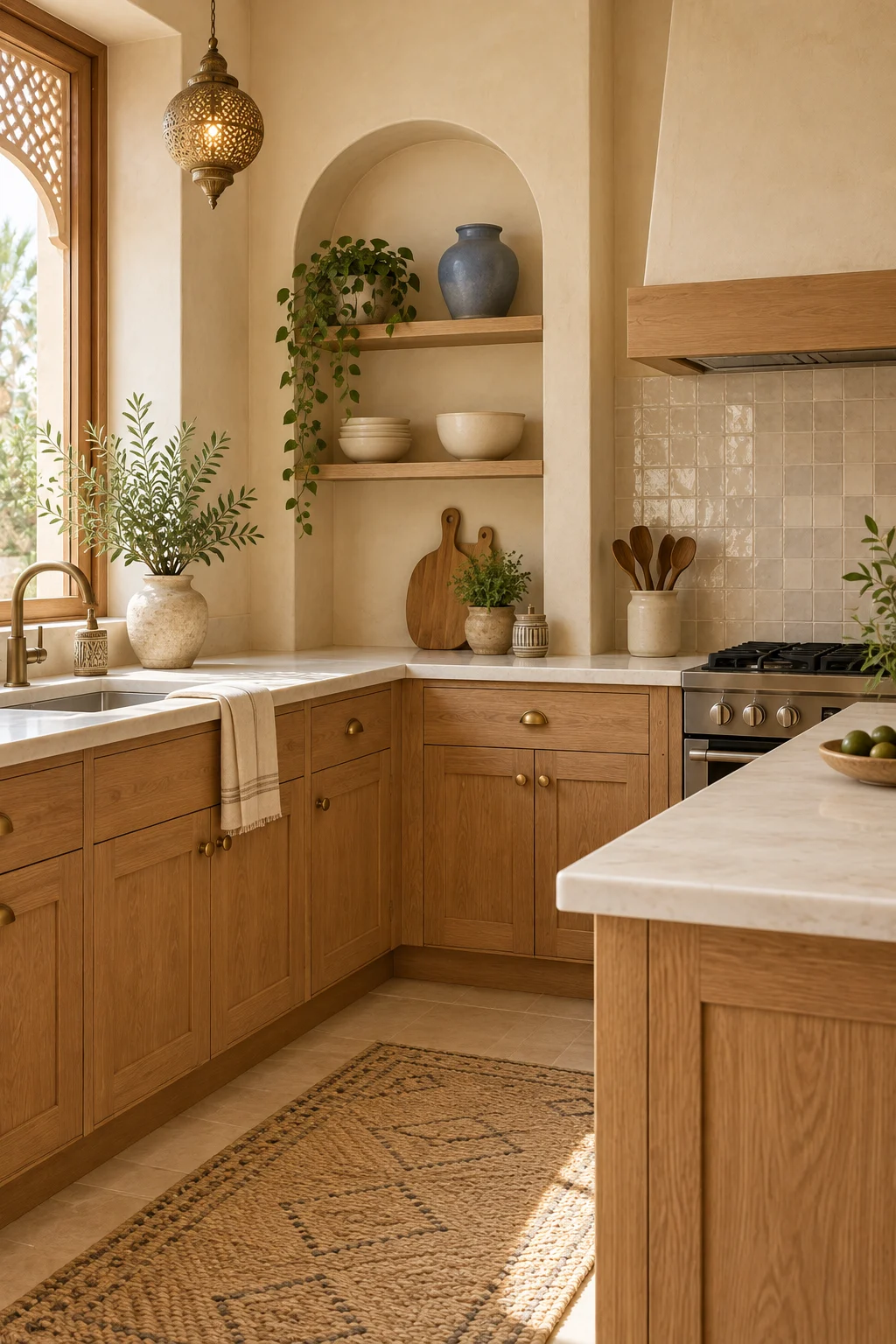
4. Introduce Decorative Arched Shapes
Arches are a recognizable feature in many Moroccan architectural traditions, and their graceful shapes can inspire a beautiful kitchen detail.
You don’t need to build a structural archway to introduce the effect.
A small arched mirror, an existing recessed niche, or an arched decorative panel can soften a room dominated by rectangular cabinets and square tile.
If you’re planning a larger renovation, a thoughtfully proportioned arched opening may become a focal point. However, altering a wall requires appropriate assessment, particularly if it could affect structure, electrical wiring, or plumbing.
For a simpler update, choose one decorative arched element on a clear wall.
Pair it with cream walls, walnut shelving, and a few ceramics in blue or terracotta.
Avoid adding arches to every cabinet opening or shelf. One carefully chosen shape can provide enough character.
The best result feels integrated with the room rather than attached as an afterthought.
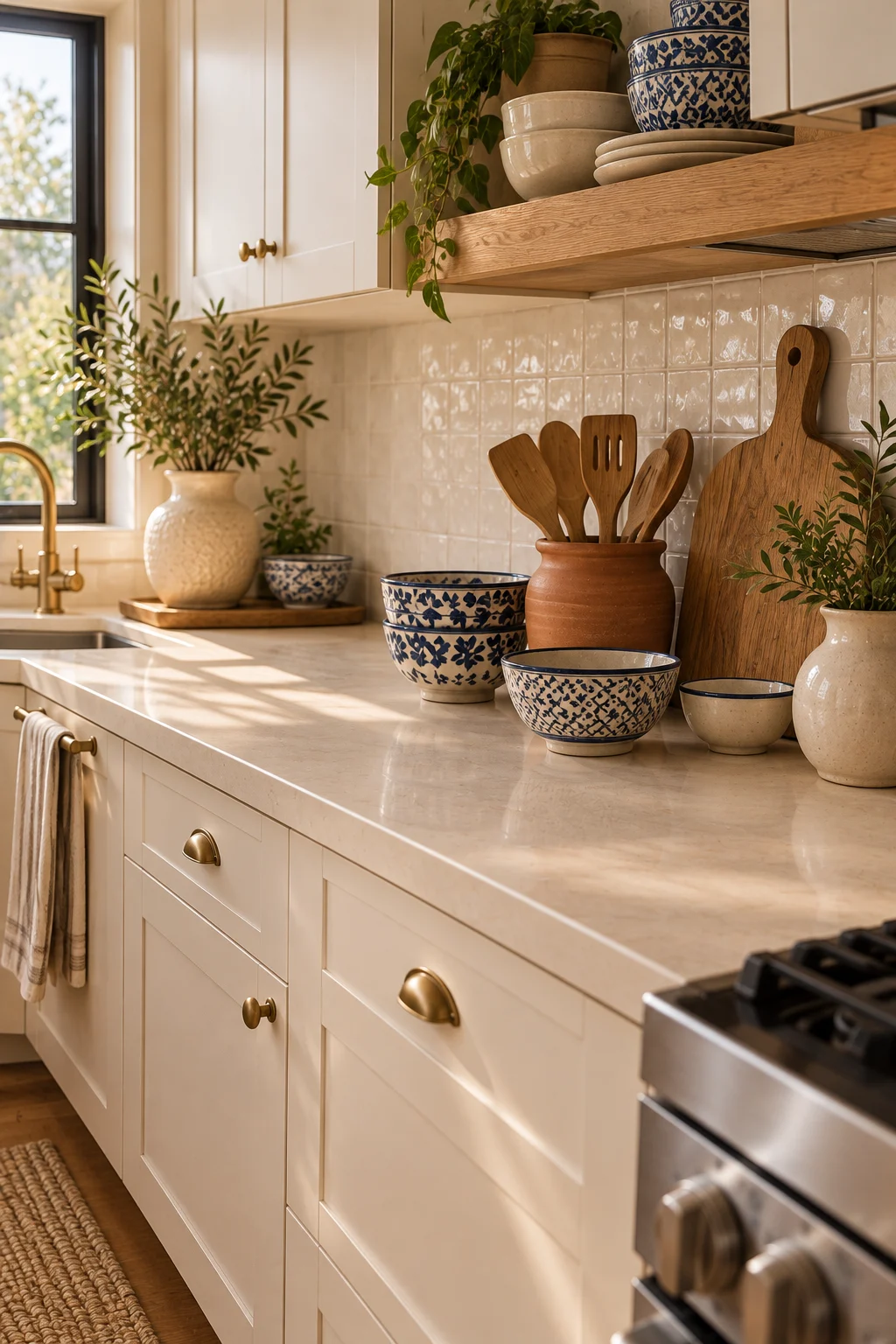
5. Choose Handcrafted-Look Ceramic Accessories
One of the easiest ways to introduce Moroccan-inspired character is through colorful ceramics.
A patterned bowl, glazed utensil holder, or decorative vase can bring richness to an otherwise neutral kitchen.
Look for pieces with interesting glaze variation, geometric decoration, or colors that complement your existing cabinetry.
Deep blue, emerald green, warm cream, and terracotta can work together, but the arrangement will feel more cohesive if one color dominates.
For example, display a blue patterned bowl alongside two simple cream pieces on a natural oak shelf.
You can also choose authentic Moroccan pottery from makers or retailers who identify its origin, rather than relying only on mass-produced imitations.
Keep the display manageable. A few well-chosen pieces have more impact than a countertop crowded with decorative objects.
If the ceramics are intended for serving or storing food, check that they’re specifically suitable for food contact.
For decorative-only pottery, use it as an accent rather than assuming it can safely hold food.
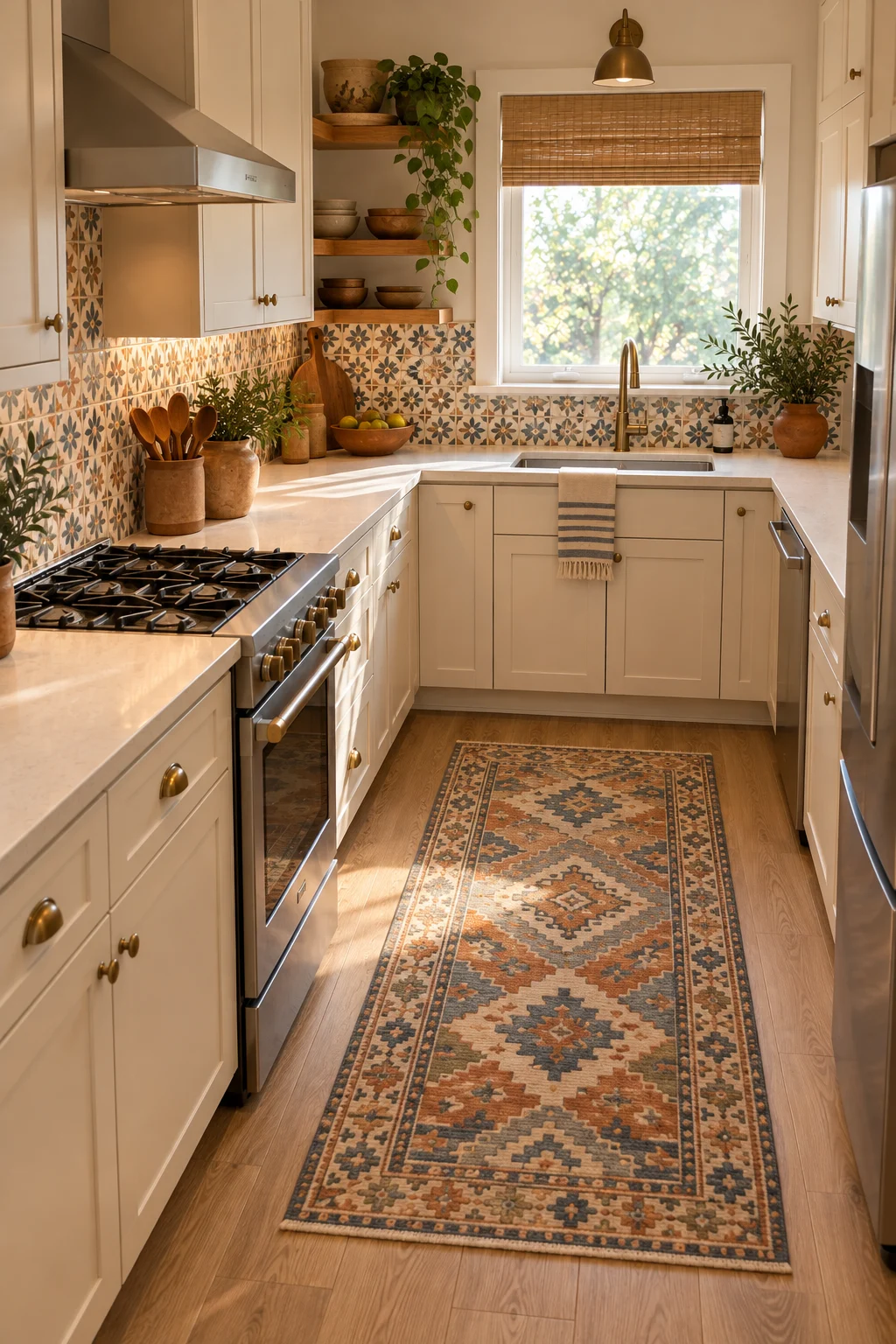
6. Use a Patterned Runner
A patterned runner is a simple way to introduce color and geometric detail without changing the cabinets, backsplash, or flooring.
Choose a design inspired by Moroccan textile patterns, with repeating diamonds, angular motifs, or a restrained combination of blue, rust, cream, and muted green.
In a kitchen with warm white cabinets and oak flooring, a patterned runner can become the main decorative accent.
Look for a low-profile, washable product suitable for kitchen use.
Measure the floor area carefully. A runner should fit naturally within the available space without bunching against cabinet bases or interfering with appliance doors.
If your backsplash already has an intricate pattern, choose a quieter rug that repeats one or two of its colors.
The aim isn’t to match every shape exactly. It’s to create a visual connection between the floor and the rest of the room.
A runner is particularly useful for renters or anyone who wants a colorful update without permanent changes.
7. Add Brass-Look Cabinet Hardware
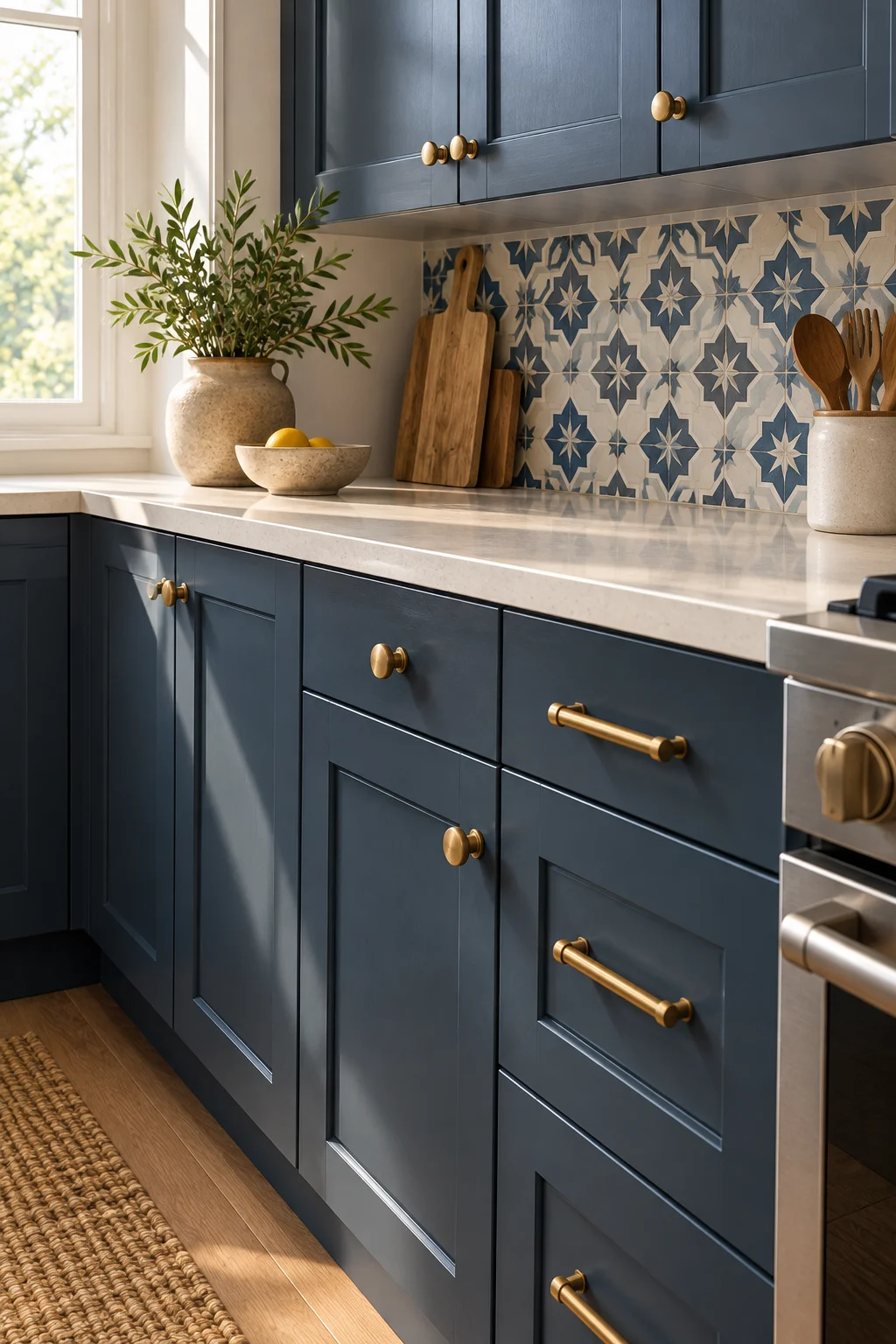
Warm brass-look hardware can complement Moroccan-inspired colors and decorative tilework beautifully.
Its golden tone pairs naturally with deep blue, olive green, terracotta, and warm cream.
If your cabinets are plain and functional, changing the knobs or pulls can introduce a subtle decorative detail without replacing the doors.
Choose a brushed or softly aged finish for an understated appearance.
You don’t necessarily need highly ornate handles. Simple shapes can provide a pleasing contrast against intricate tile patterns.
Before purchasing, measure the spacing of your existing cabinet hardware. Choosing replacements with compatible dimensions can make the update easier.
Try repeating the finish through a suitable faucet or pendant light, but don’t feel that every metal element must match perfectly.
A limited number of coordinated metal finishes is usually enough to make the kitchen feel considered.
8. Combine Natural Wood With Patterned Tile
Moroccan-inspired kitchens can include intricate patterns, but natural wood helps keep the overall design warm and balanced.
A simple oak shelf, walnut breakfast counter, or medium-brown wooden island can provide a calm contrast to decorative tile.
Imagine a kitchen with warm white cabinets, a blue-and-cream geometric backsplash, and a natural oak breakfast counter.
The tile introduces movement, while the wood provides a quieter surface that allows the pattern to stand out.
Choose one main wood tone and coordinate it with the flooring or existing furniture.
Avoid mixing several strongly contrasting woods unless there’s a clear design reason.
For a modest kitchen, a small wooden shelf or compact table may be more practical than adding an oversized island.
This combination works especially well when you want Moroccan-inspired details without making the kitchen feel overly ornate.

9. Use Muted Green for a Natural Moroccan Palette
Blue may be the first color that comes to mind, but muted green can create an equally beautiful Moroccan-inspired kitchen.
Olive, sage, and deeper earthy greens pair naturally with terracotta, cream, walnut, and brass-look hardware.
For a gentle update, paint the lower cabinets muted olive while keeping the upper cabinets warm white.
Add a restrained patterned backsplash that includes cream or a small amount of blue.
If you prefer a more subtle approach, introduce green through glazed ceramics or a small painted cabinet section.
Pay attention to undertones. A gray-green may look cooler beside warm terracotta, while a brown-based olive can create a more earthy appearance.
Test samples against the countertop and flooring before making a final choice.
Muted green is particularly appealing when you want a kitchen that feels colorful, grounded, and comfortable throughout the year.

10. Add a Small Mosaic Detail
You don’t have to cover an entire wall in decorative tile to introduce Moroccan-inspired pattern.
A small mosaic section can provide an attractive focal point while keeping the overall kitchen relatively simple.
Consider a carefully planned backsplash accent, a recessed display niche, or another suitable tiled area.
Choose a geometric motif that relates to the room’s existing colors.
A blue-and-cream mosaic can complement warm white cabinets, while a terracotta and olive pattern may suit natural wood and beige surfaces.
Keep the surrounding materials understated so the mosaic remains visually distinct.
Before installation, plan how the pattern will begin and end. Awkward cuts or poorly aligned borders can distract from an otherwise attractive design.
Use tile and grout suited to the location, especially around sinks and cooking areas.
A small, thoughtfully installed mosaic can introduce character without requiring a large renovation.

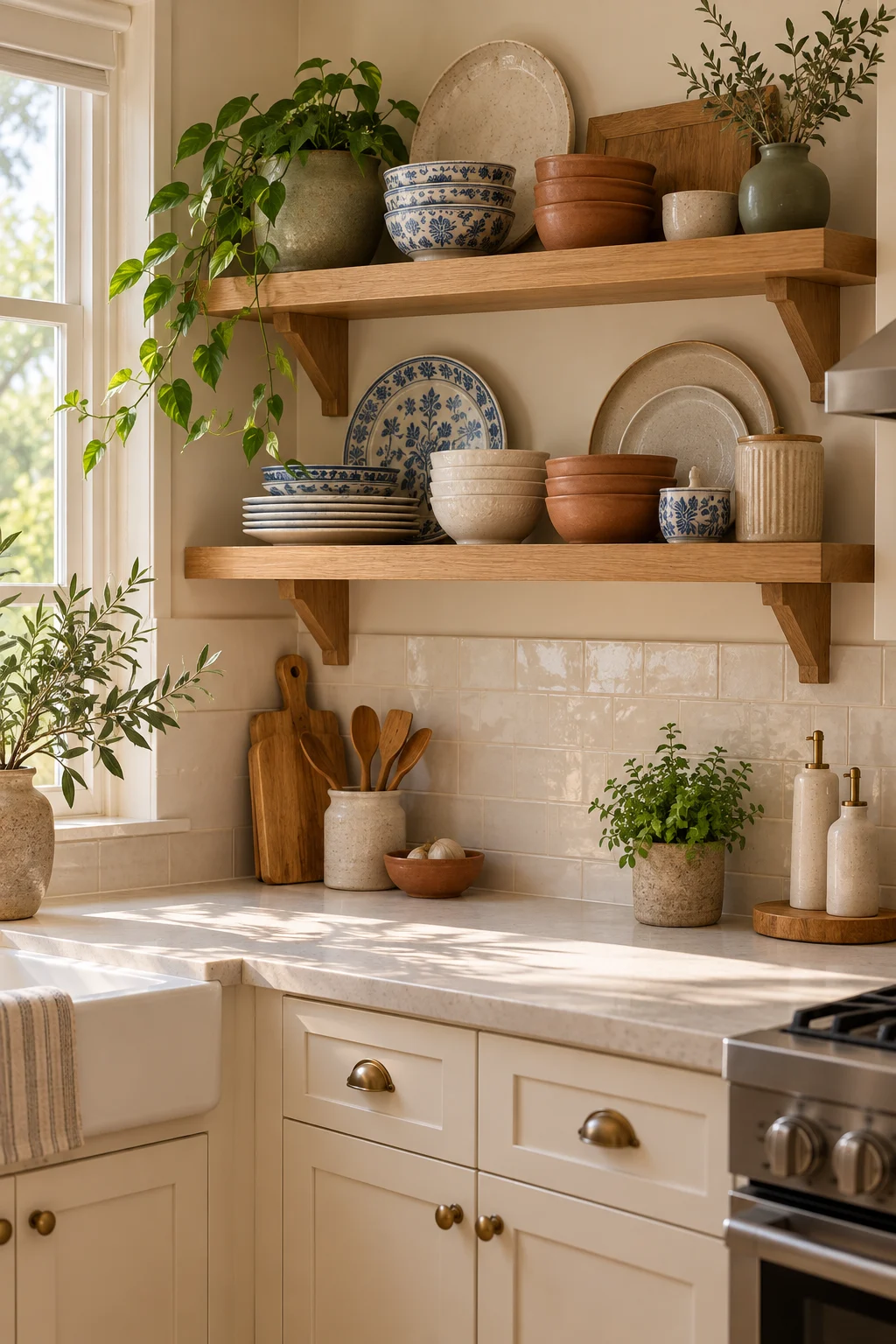
11. Use Open Shelves to Display Colorful Dishes
Open shelving can make colorful Moroccan-inspired dishes part of the kitchen’s everyday decor.
Choose a sturdy shelf in oak, walnut, or another wood finish that complements the cabinets.
Arrange a small collection of patterned plates, glazed bowls, and cream ceramics in a balanced display.
Rather than filling the shelf completely, leave a little space between groups of objects.
A limited palette helps too. Deep blue and white ceramics can create a striking display, while terracotta and muted green offer a softer earthy combination.
Keep frequently used dishes within comfortable reach.
Avoid placing fragile pieces too close to shelf edges, and don’t overload shelves beyond their rated capacity.
Open storage also requires more regular cleaning, particularly near cooking areas.
For additional styling inspiration, explore 18 Kitchen Shelves Decor Ideas for Beautiful Open Storage.
12. Introduce a Moroccan-Inspired Pendant
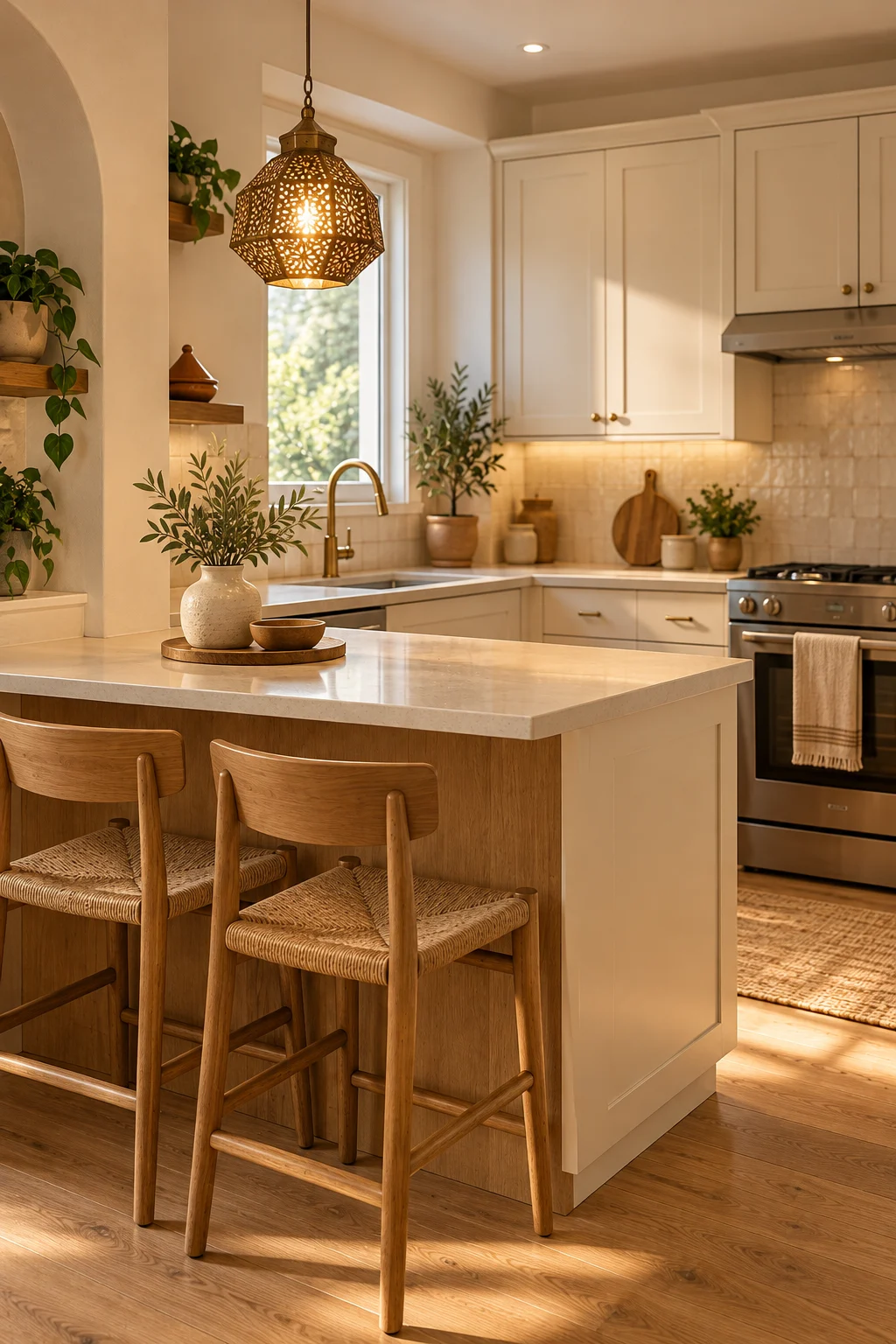
A decorative pendant can introduce Moroccan-inspired character through its shape, metalwork, or geometric detailing.
Look for a compact fixture with a perforated metal shade, a simple lantern-inspired silhouette, or restrained ornamental cutouts.
Warm metal finishes can complement terracotta, deep blue, and natural wood.
In a kitchen with standard eight-foot ceilings, pay particular attention to the fixture’s size and hanging height.
A large lantern may look impressive in a showroom but overwhelm a modest breakfast counter.
Remember that decorative perforated shades can create patterns of light and shadow. While beautiful, they may not provide the even illumination needed for food preparation.
Pair the pendant with suitable general and task lighting.
Choose a fixture rated for the intended location and have it installed according to applicable electrical requirements.
One thoughtfully selected pendant can establish the mood without requiring additional decorative lighting throughout the kitchen.
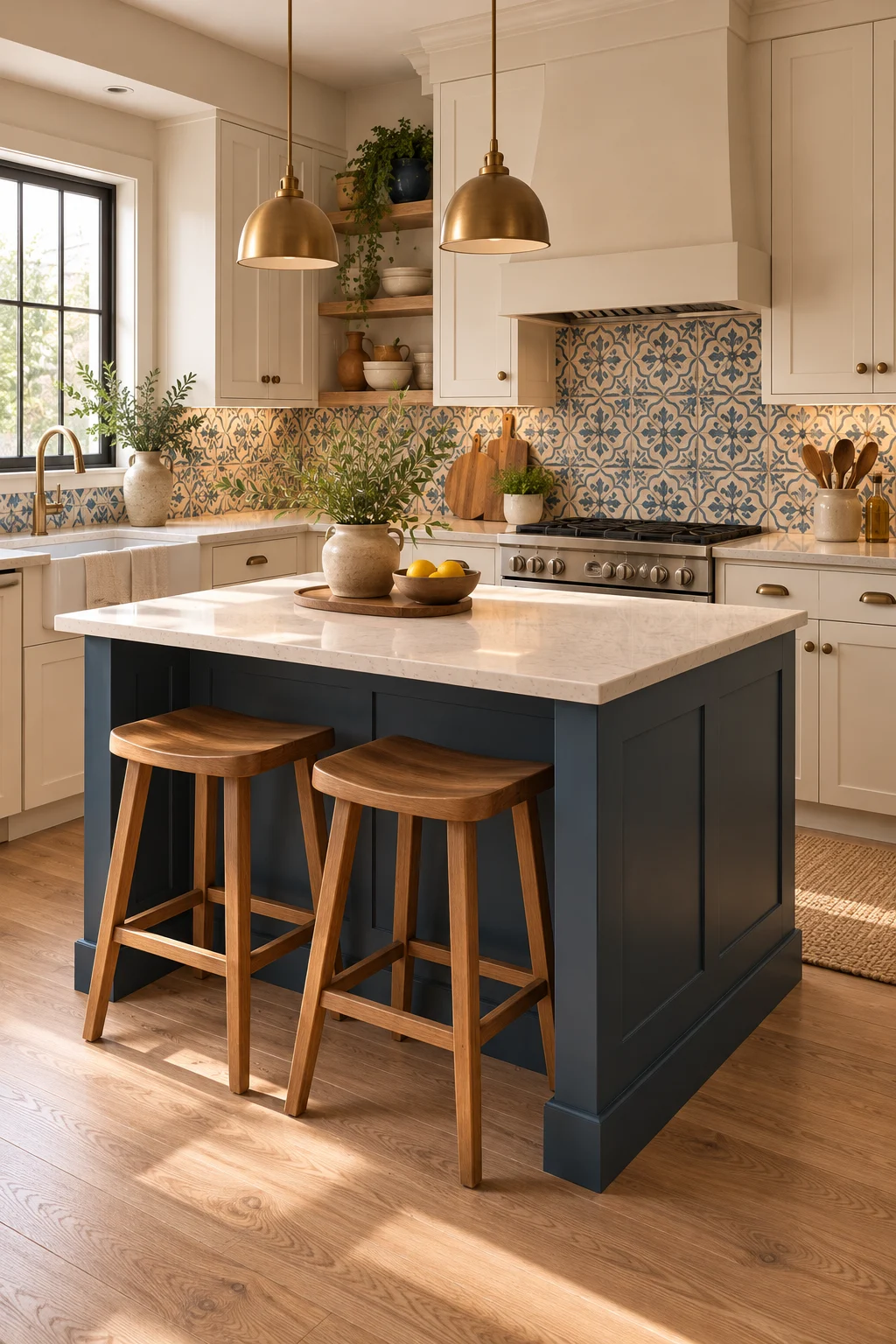
13. Create a Colorful Kitchen Island
A colorful island can introduce Moroccan-inspired richness while allowing the perimeter cabinets to remain simple.
Deep blue, muted olive, and warm terracotta are all attractive options.
For example, a deep blue island with a pale countertop can stand out against warm white cabinets and a cream-and-blue backsplash.
Choose one main island color and repeat it through a few smaller details rather than introducing several competing shades.
If your kitchen is compact, don’t assume a large built-in island is necessary.
A narrow freestanding island or smaller worktable may suit the layout better, provided it offers appropriate stability and enough room for movement.
Consider storage needs before choosing decorative features. Drawers or a practical shelf may be more valuable than elaborate paneling.
For smaller layouts, see 13 Small Island Kitchen Ideas That Make the Most of Limited Space.
14. Use Textured Plaster-Look Walls
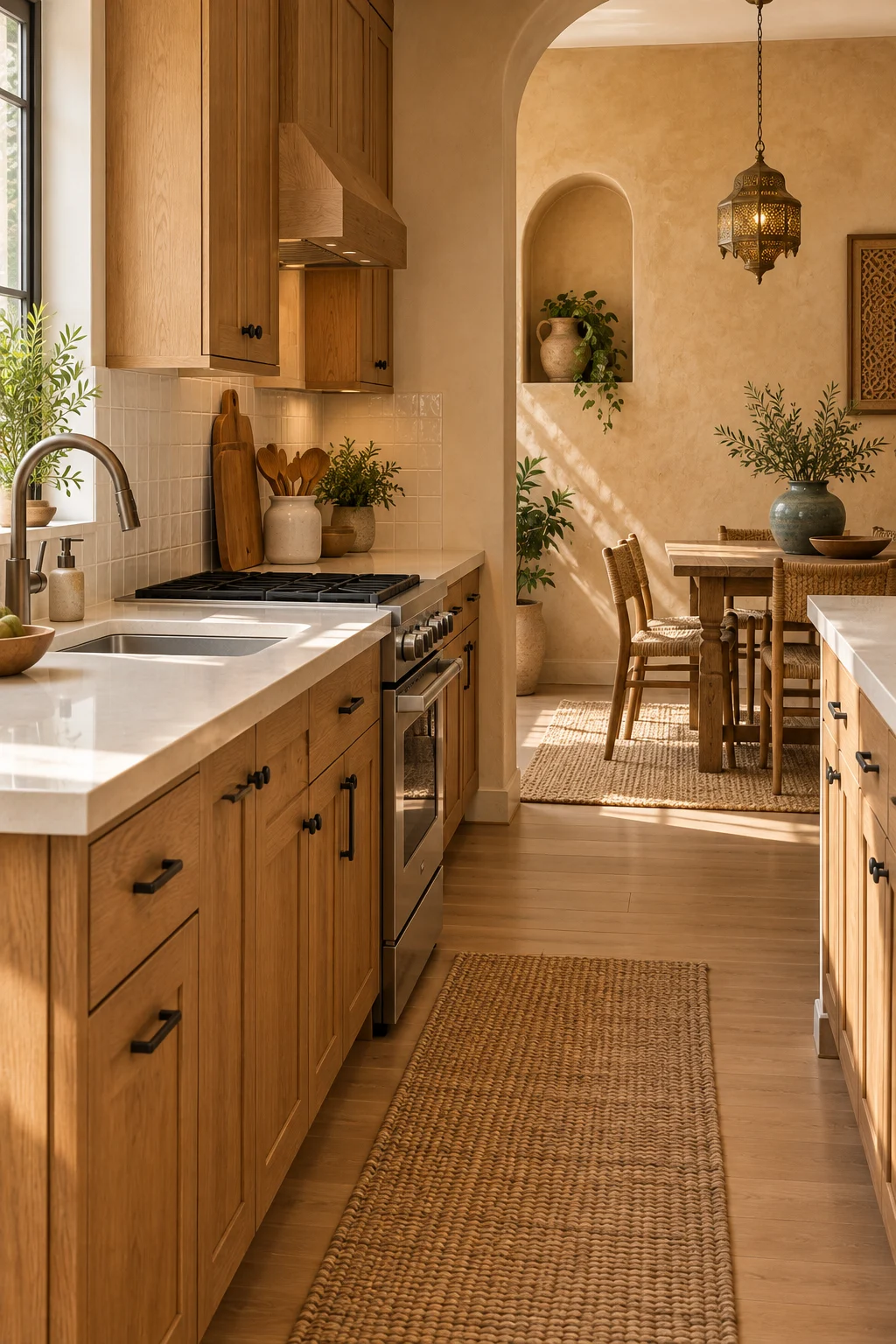
Textured plaster-look walls can introduce the warmth and handcrafted appearance associated with Moroccan interiors.
A soft sand, warm beige, or pale clay finish creates a beautiful backdrop for colorful ceramics, natural wood, and decorative tile.
For a kitchen, consider a restrained textured effect on a wall that isn’t exposed to frequent grease or water splashes.
The finish should suit the room’s actual conditions. Some decorative coatings require specific sealers or may not be appropriate for high-splash areas.
If you prefer a simpler approach, choose a paint finish or wallcovering that creates a subtle plaster-like appearance without heavy physical texture.
Pair the wall with warm cream cabinets and a small amount of patterned tile.
Avoid applying strong texture to every surface. One quiet wall can provide depth while allowing the backsplash and accessories to remain the main decorative features.
The result feels warm and layered without becoming difficult to maintain.
15. Balance Pattern With Plain Surfaces
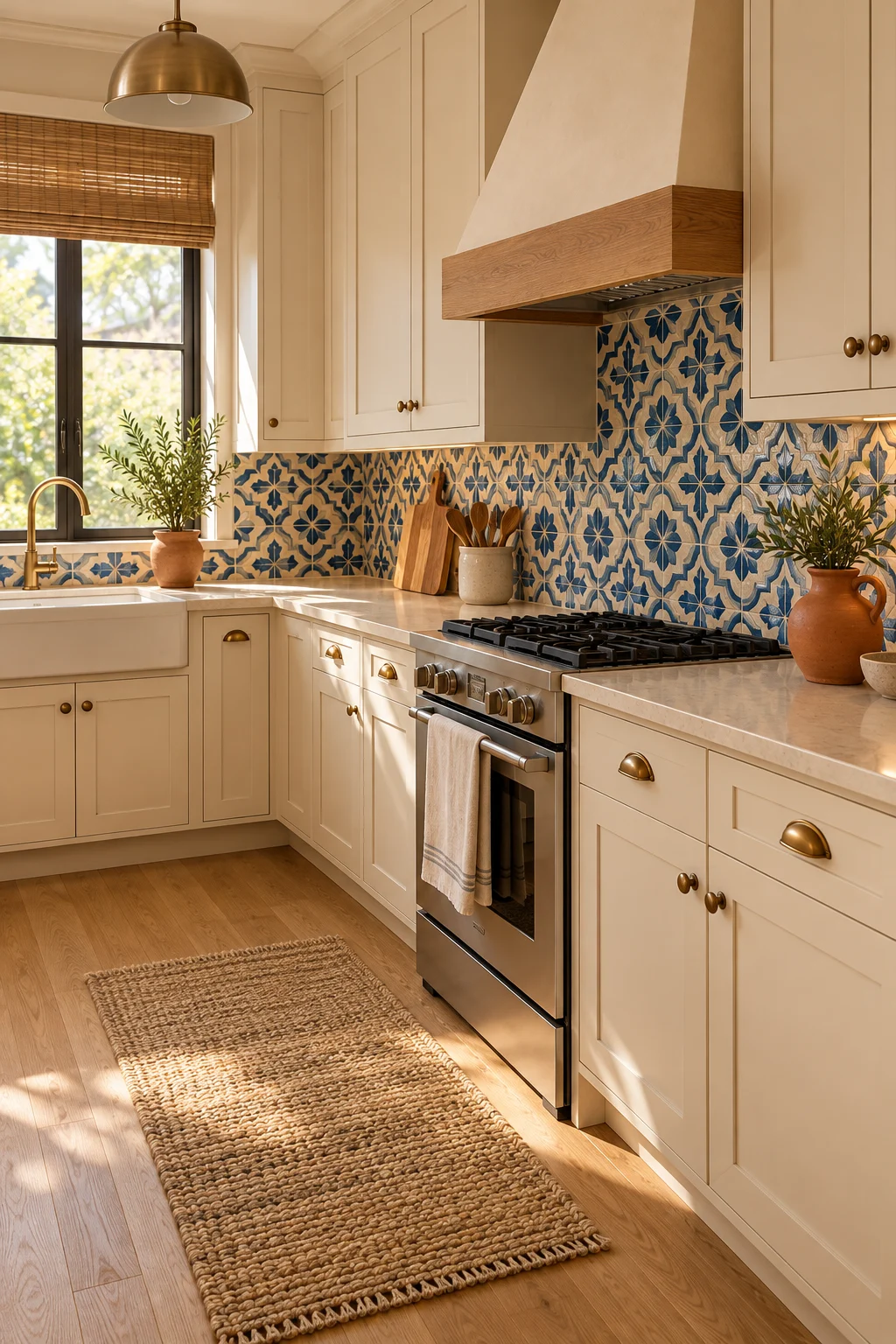
The most important part of a Moroccan-inspired kitchen may be knowing when to stop adding pattern.
Intricate tiles, colorful ceramics, patterned textiles, and decorative lighting can all be beautiful, but they need space to stand out.
Start by choosing one main focal feature.
If the backsplash has a bold geometric pattern, keep the countertops, cabinets, and most accessories relatively simple.
If the kitchen has plain cabinetry and walls, a patterned runner or a collection of colorful dishes may provide enough character.
Repeat a few colors from the main pattern elsewhere to connect the room.
For example, a blue-and-terracotta backsplash might be complemented by cream cabinets, walnut shelves, and one small blue ceramic bowl.
You don’t need to reproduce every traditional decorative element to create a recognizable Moroccan influence.
A balanced combination of color, craftsmanship-inspired detail, and practical materials often creates a more inviting result.
How to Choose Moroccan Kitchen Colors
Start with the existing cabinets, countertops, flooring, and natural light.
Deep blue, muted olive, terracotta, and warm cream can all create attractive Moroccan-inspired palettes.
Choose one dominant color, one supporting neutral, and a small number of accents.
For a bold kitchen, consider deep blue with warm white and brass-look details.
For a softer approach, combine muted olive, sand, and natural wood.
If you prefer an earthy palette, terracotta, cream, and walnut can create a welcoming foundation.
When choosing patterned tiles, look for designs that repeat at least one color already present in the room.
Always compare physical samples together before purchasing major finishes.
Moroccan Style for Small Kitchens
A small kitchen can embrace Moroccan-inspired design without feeling crowded.
Choose one focal feature, such as a patterned backsplash, a compact decorative pendant, or a colorful cabinet section.
Keep the main countertops clear and prioritize practical storage.
If the kitchen has limited natural light, balance deeper colors with warm white walls or pale countertops.
Open shelving can display a few ceramics, but closed cabinets may be more useful for everyday storage.
Avoid adding bulky decorative furniture or multiple large patterns.
The aim is to introduce personality while keeping the kitchen comfortable to cook in.
Budget-Friendly Moroccan Kitchen Updates
You don’t need a complete renovation to bring Moroccan influences into the kitchen.
Start with affordable changes that work with the existing finishes.
A patterned runner, a few colorful ceramics, or updated cabinet hardware can create a noticeable difference.
If you’re considering a backsplash, compare the full cost of tile, grout, preparation, and installation rather than focusing only on the price per tile.
For renters, choose reversible decorative updates where permitted.
If you already have warm wood cabinets, use their color as part of the design rather than assuming they need to be painted.
A few thoughtfully selected details can feel more authentic and cohesive than a collection of unrelated decorative purchases.
Common Moroccan Kitchen Decorating Mistakes
One common mistake is combining too many strong patterns.
An elaborate backsplash, patterned floor, colorful runner, and heavily decorated curtains may compete with one another, especially in a small kitchen.
Another is choosing colors without considering the existing countertops and flooring.
Deep blue, green, and terracotta can look beautiful together, but they still need a coordinated palette.
Avoid using decorative materials that aren’t suitable for kitchen moisture, grease, and cleaning.
Also, don’t sacrifice usable storage or counter space just to display accessories.
Finally, remember that Moroccan design includes diverse regional traditions and skilled craftsmanship. A thoughtful interpretation is more convincing than treating every decorative arch or colorful tile as interchangeable.
Care and Maintenance
Decorative finishes should be practical enough for everyday kitchen use.
Clean ceramic tile and grout according to the manufacturer’s instructions, especially in cooking and washing areas.
Wipe grease and spills promptly.
Dust open shelves regularly and wash dishes before using them for food.
Follow the care instructions for brass-look hardware, painted cabinets, and specialty wall finishes.
If you use a patterned runner, choose a product that can be cleaned conveniently.
Keeping decorative displays selective can make the kitchen easier to maintain.
Safety and Practical Considerations
Keep walkways, appliance doors, and food preparation surfaces unobstructed.
Use suitable tile, grout, and wall finishes in areas exposed to moisture or cooking splashes.
Secure shelves, mirrors, and decorative wall features using appropriate hardware.
Choose properly installed lighting fixtures with suitable clearances and sufficient illumination for kitchen tasks.
Keep textiles, decorative objects, and other combustible materials away from cooking heat.
Use nonslip backing beneath runners where appropriate, and keep rug edges flat.
Place fragile ceramics securely, away from counter edges.
For structural alterations, electrical work, or complicated tile installations, use appropriately qualified professionals where required.
Final Thoughts
Moroccan-inspired kitchens offer a beautiful opportunity to introduce color, pattern, and warmth into an everyday space.
Whether you choose a geometric backsplash, deep blue cabinetry, terracotta ceramics, or a single decorative pendant, the most effective approach is to give each detail enough room to stand out.
Start with one feature you love, coordinate the surrounding colors, and keep the kitchen comfortable for everyday cooking.
A thoughtful balance of expressive decoration and practical design can create a kitchen that feels distinctive, welcoming, and full of character.
