
17 Antique Kitchen Ideas Full of Old-World Character
An antique-inspired kitchen should feel collected rather than perfectly matched. Warm wood, traditional cabinetry, aged-metal finishes, vintage-style lighting, and a few well-chosen ceramics can give the room a sense of history without sacrificing modern convenience.
You don’t need a historic home or a collection of genuine antiques to create the look. Standard kitchen cabinets, a freestanding wooden cupboard, and a traditional runner can provide plenty of character when their colors and finishes work together.
The key is balancing old-world details with everyday function. Choose materials that complement one another, keep useful work surfaces clear, and let a few distinctive pieces take the lead.
These 17 antique kitchen ideas explore ways to create a warm, layered interior that feels timeless rather than themed.
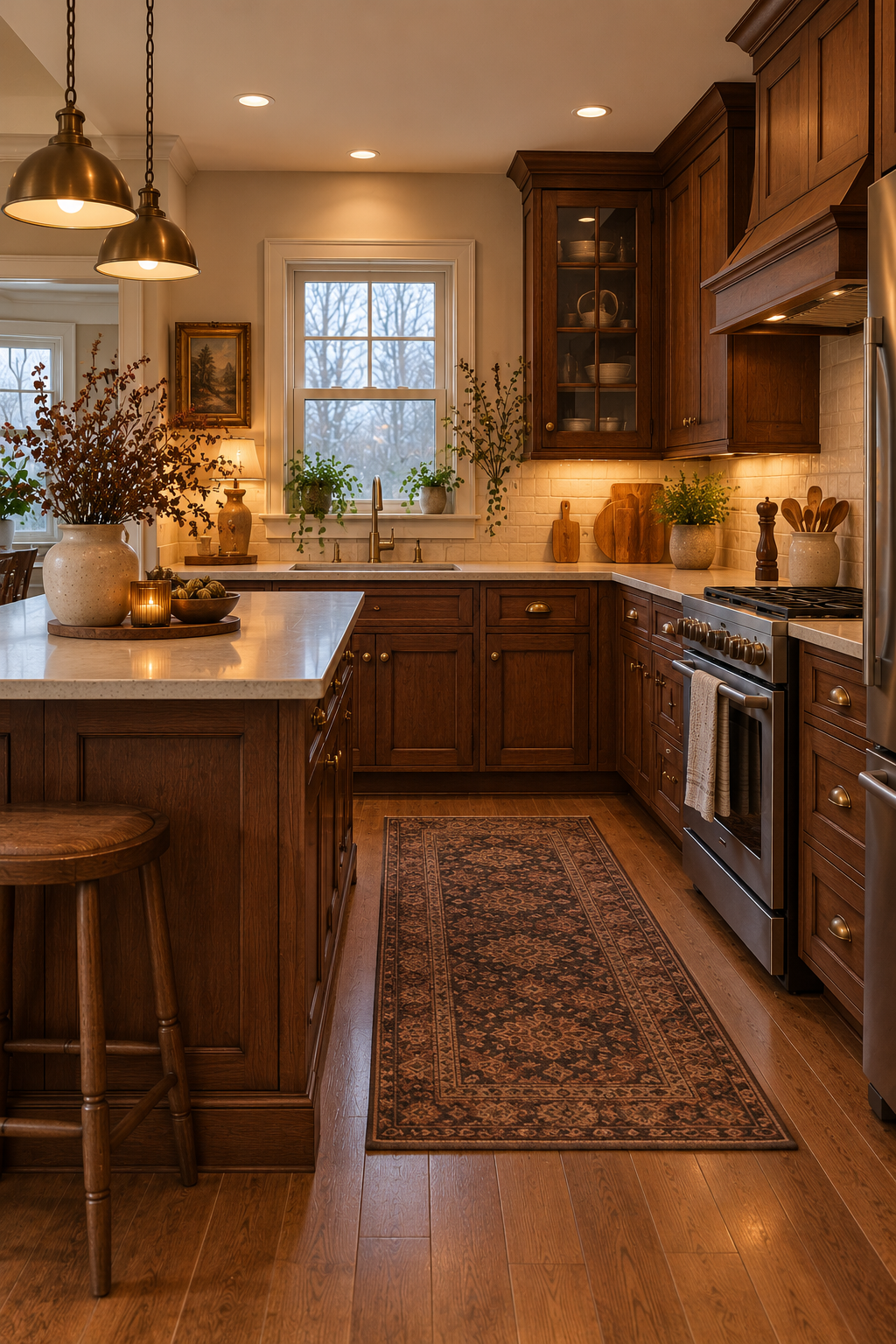
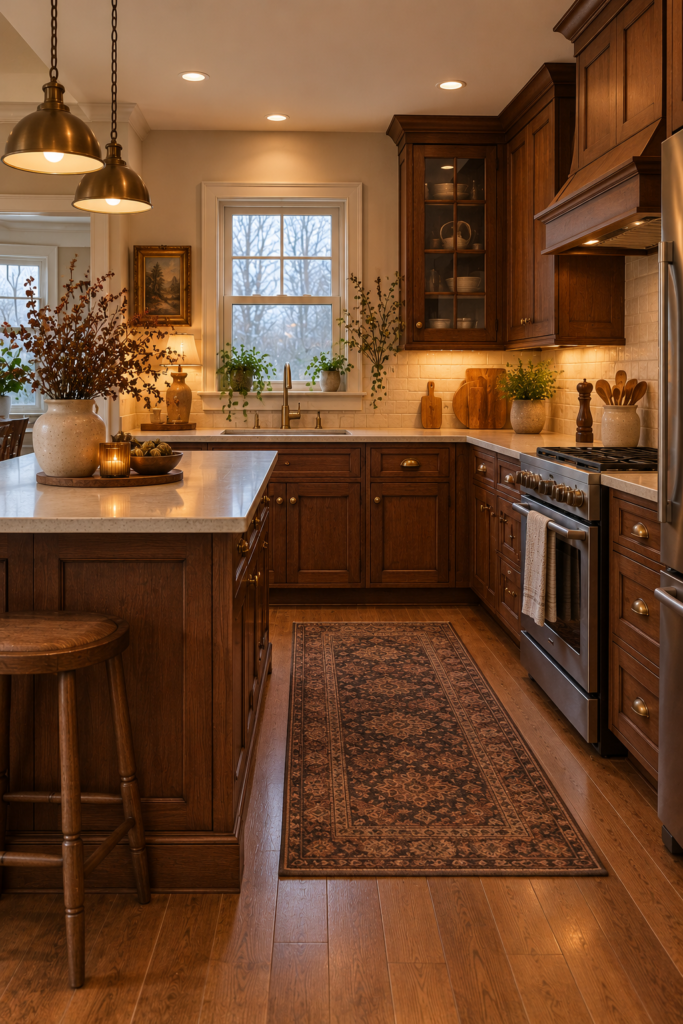
1. Use Warm Wood Cabinets
Warm wood cabinetry provides a natural foundation for an antique-inspired kitchen. Medium walnut, warm oak, and other traditional wood finishes introduce grain and depth that work well with classic cabinet profiles.
Pair the wood with warm cream walls and aged-brass-style hardware. You can vary the wood tones slightly to create a collected appearance rather than making every surface identical.
Before choosing a finish, compare it with the existing flooring and countertop. Wood can lean golden, reddish, or neutral brown, and those undertones influence the entire palette.
If replacing cabinets isn’t practical, consider adding wood through a freestanding cupboard, a small table, or selected shelving. A few substantial details can establish the atmosphere without requiring a complete renovation.
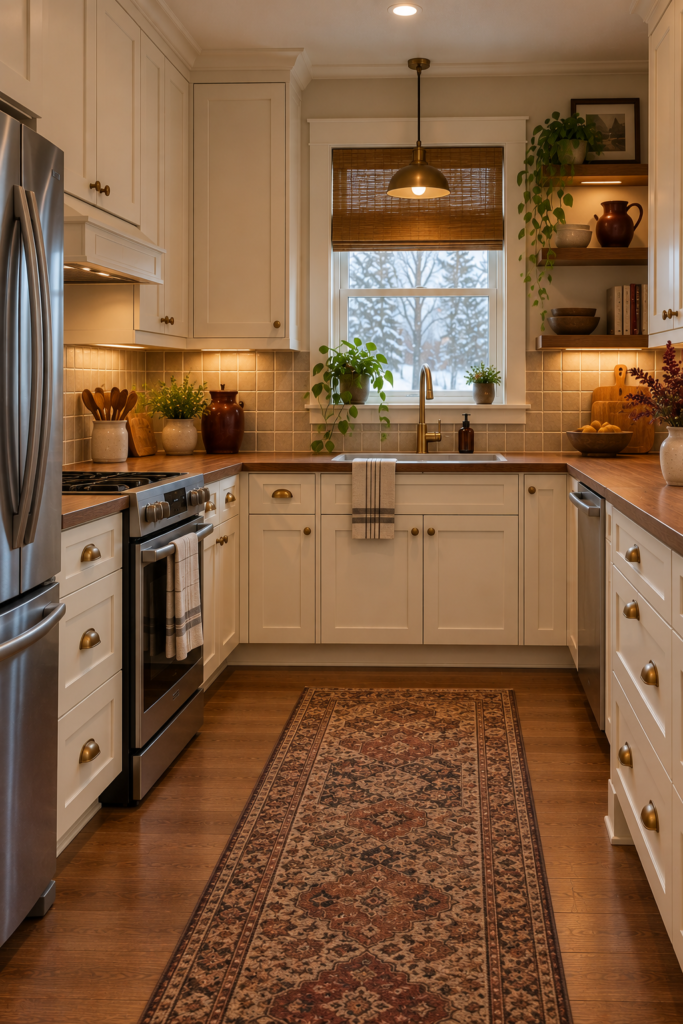
2. Paint Cabinets Warm Cream
Warm cream cabinets create a softer, lighter version of the antique kitchen look. Traditional door profiles and simple brass-style knobs add character without making the room feel overly ornate.
Pair the cabinetry with medium-walnut accents and introduce mushroom taupe or muted olive through smaller details. These colors add depth while allowing the cabinets to remain the visual foundation.
Compare paint samples with the countertop and flooring before committing. Cream shades vary in their undertones, and a color that looks neutral on its own may appear noticeably yellow or gray beside existing finishes.
Use a coating designed for cabinetry and follow the manufacturer’s preparation and curing instructions. Keeping the hardware and backsplash relatively simple helps the finished kitchen feel timeless.
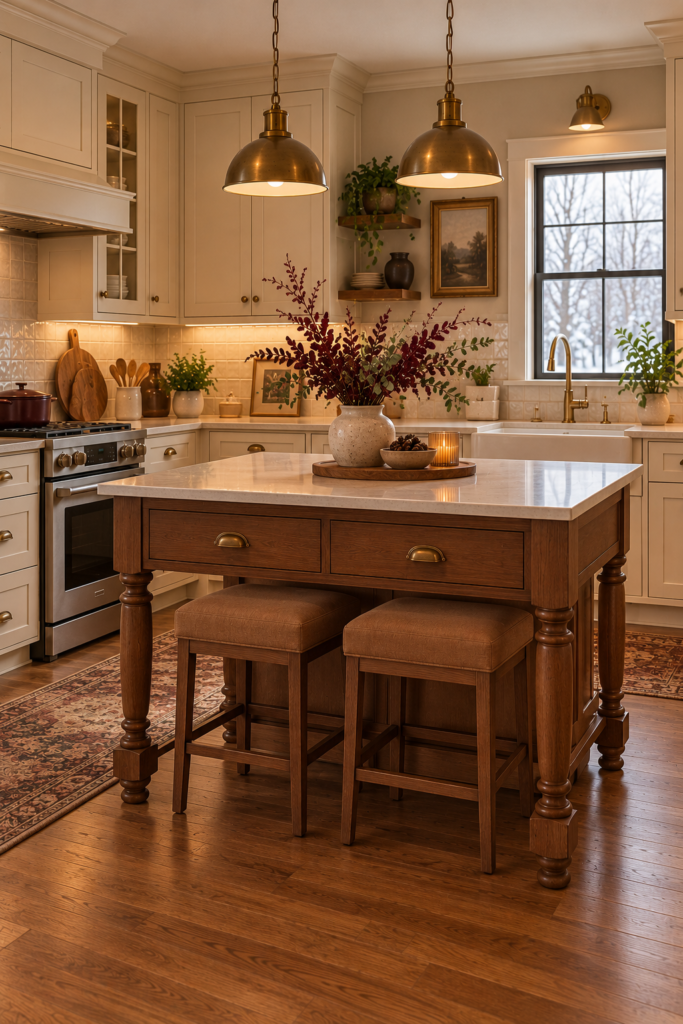
3. Add an Antique-Style Kitchen Island
A furniture-inspired island can make the kitchen feel collected rather than built from one continuous run of cabinetry.
Choose a base with traditional detailing or substantial legs where the design and structure allow. Medium walnut creates a classic look, while deep muted olive offers a more colorful alternative.
The island doesn’t need to match the perimeter cabinets exactly, but the finishes should complement one another. A lighter countertop can help connect a darker island to cream cabinetry.
Check the available floor space before selecting the island. Doors, drawers, appliances, and walkways need sufficient clearance, and any countertop overhang must have suitable support.
If a full island would crowd the kitchen, a small freestanding worktable can introduce a similar furniture-like character with greater flexibility.
4. Bring in Aged-Brass Hardware
Cabinet hardware is a relatively straightforward way to introduce old-world character without changing the larger surfaces.
Try simple knobs, cup pulls, or traditional handles in an aged-brass-style finish. The muted metallic appearance complements cream cabinets, walnut, and olive green without drawing attention away from the rest of the kitchen.
Hardware doesn’t have to match every faucet or light fixture exactly. Aim for finishes that look compatible rather than forcing every metal detail to be identical.
Check the shape and size of the handles before buying them. They should feel comfortable to use and suit the cabinet fronts, and replacement hardware may require compatible hole spacing.
A few well-chosen details can make ordinary cabinetry feel more traditional without adding unnecessary decoration.

5. Add a Vintage-Inspired Kitchen Runner
A faded, traditional-style runner introduces color and pattern while softening the hard surfaces of a kitchen.
Look for muted burgundy, warm brown, olive, mushroom, or cream. A restrained pattern can complement simple cabinets and natural wood without competing with a detailed backsplash.
Choose a low-profile runner suitable for kitchen conditions and easy to clean. It should lie flat, remain secure underfoot, and stay clear of appliance doors and busy walking routes.
Before purchasing, measure the available floor area and consider where people turn or stand while cooking. If the layout makes a runner difficult to secure safely, use textiles elsewhere instead.
A carefully chosen runner can add a sense of age and warmth without requiring any permanent changes to the room.

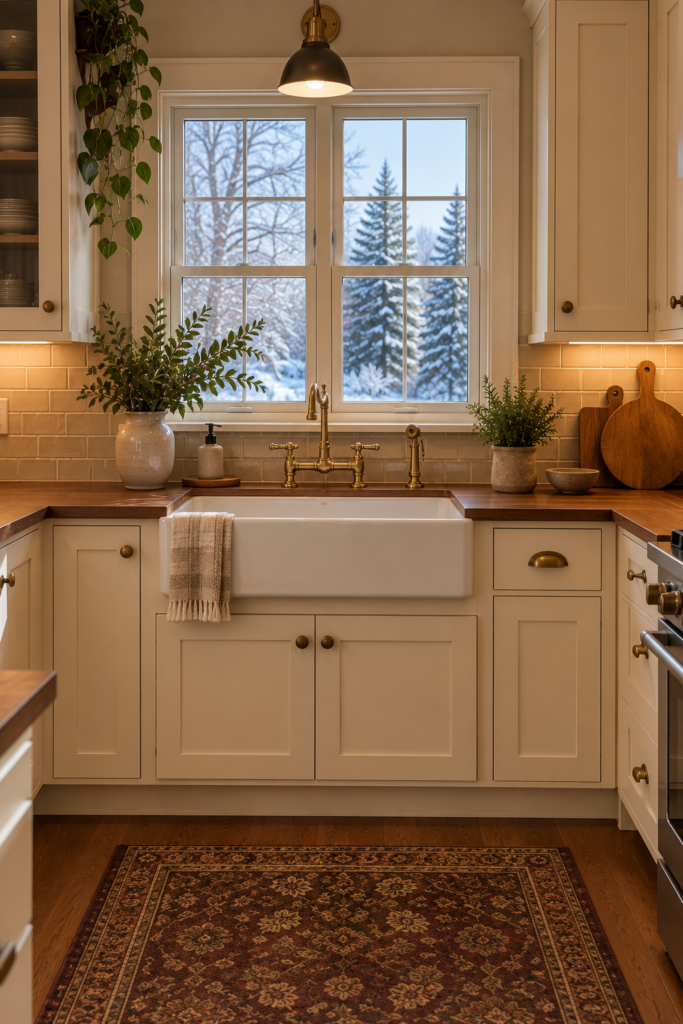
6. Use a Farmhouse Sink
A farmhouse-style sink can reinforce the traditional character of an antique-inspired kitchen.
Pair an apron-front sink with cream or muted olive cabinetry and a traditional-looking faucet. Keep the surrounding finishes relatively simple so the sink remains a distinctive feature.
Before choosing the sink, check the cabinet compatibility, dimensions, support requirements, and plumbing arrangements. Apron-front designs may require specific cabinet modifications and installation details.
The countertop opening and sink support must suit the selected model. Don’t assume an existing cabinet can accommodate a replacement without changes.
If a full sink replacement isn’t practical, traditional hardware, a classic faucet where compatible, and warm cabinet finishes can introduce similar character with less disruption.
7. Add a Freestanding Antique Cupboard
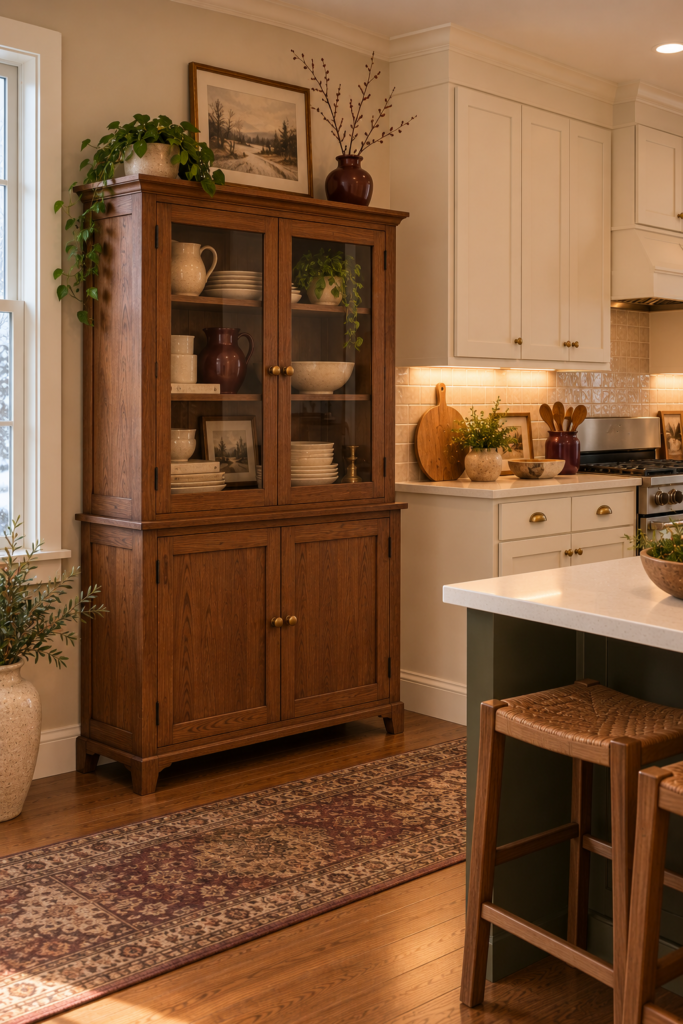
A freestanding cupboard can make a kitchen feel as though its furniture has been collected over time.
Choose a genuine antique if it is stable and appropriate for the intended use, or select a reproduction with traditional proportions. Medium walnut and softly painted finishes both work well with cream cabinetry and muted colors.
Use the cupboard for dinnerware, linens, serving pieces, or other suitable kitchen items. Keep heavier objects on lower shelves, and secure tall furniture where tipping could be a concern.
Before buying, check the cupboard’s dimensions, shelf condition, doors, joints, and overall stability. Allow enough room for the doors to open without blocking a walkway or nearby appliance.
One substantial piece can provide storage and character at the same time, reducing the need for numerous smaller decorative objects.
8. Display Antique-Style Ceramics
Ceramics introduce the irregular shapes, colors, and textures that make an antique-inspired kitchen feel personal.
Group a few cream stoneware pieces, brown pottery, muted olive ceramics, or a deep burgundy vessel on a suitable shelf or dry counter corner. Leave space around the objects so the display feels deliberate rather than crowded.
Consider the weight of the pieces and the support beneath them. Fragile ceramics should sit securely away from edges and places where people might knock them.
Genuine vintage pottery needs extra care. Don’t assume an unknown glaze or older vessel is suitable for food contact. Keep uncertain pieces decorative unless their suitability for serving or storing food is established.
The goal is to display a few distinctive objects while preserving the useful countertop space needed for everyday cooking.

9. Add Traditional Wall Paneling
Traditional paneling can introduce architectural detail to a plain kitchen wall.
Beadboard or a similar panel treatment can work well in a breakfast nook or dining-side area. Warm cream creates a classic appearance, while muted olive adds more color.
Choose materials and finishes suitable for the location. Areas exposed to repeated splashes, moisture, or cooking grease need surfaces that can handle those conditions and be cleaned appropriately.
Plan the installation around outlets, switches, vents, and existing trim. Paneling should not obstruct fittings or create awkward transitions at corners and countertops.
You don’t need to cover every wall. A single suitable section can provide enough traditional detail to support the rest of the kitchen’s design.
10. Choose Vintage-Inspired Lighting
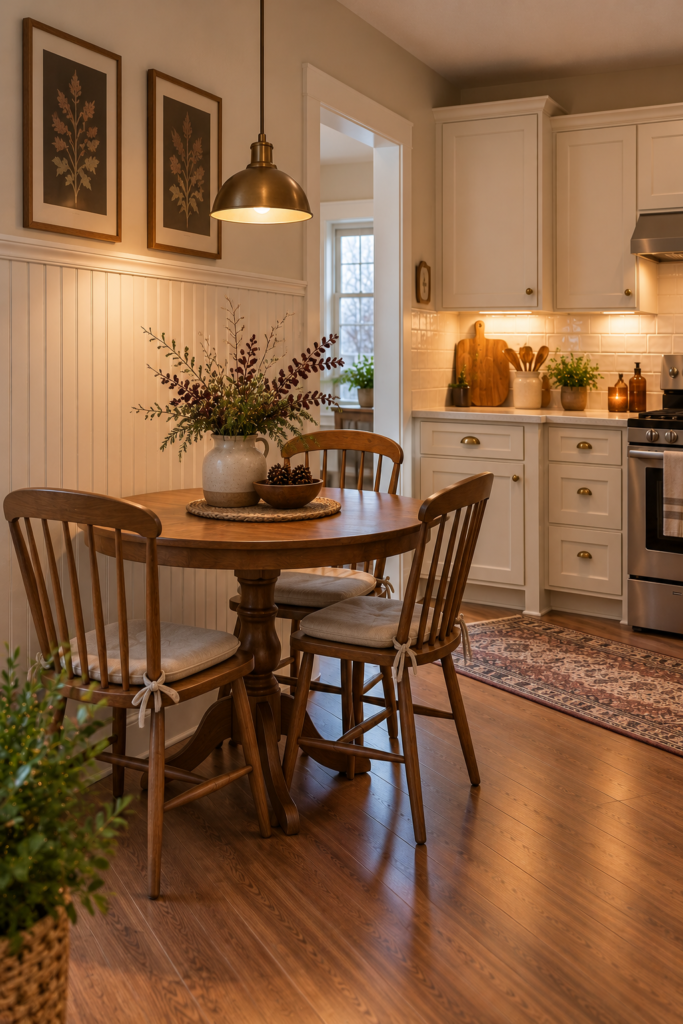
Lighting can contribute old-world character through traditional shapes and finishes.
Consider aged-brass-style pendants, milk-glass-inspired shades, dark bronze fixtures, or traditional wall sconces where appropriate. Choose a size and shape that suit the kitchen rather than overwhelming the cabinets or island.
Atmosphere should not replace practical illumination. Keep suitable task lighting over food-preparation surfaces and the sink so you can work comfortably and see what you’re doing.
Check the fixture’s specifications, installation requirements, and suitability for its intended location. Electrical work should follow applicable requirements and be completed by a qualified professional when needed.
Traditional-looking lighting can complement modern appliances and efficient illumination. The appearance may be vintage, but the installation should be appropriate for a contemporary kitchen.
11. Use Muted Olive Cabinetry
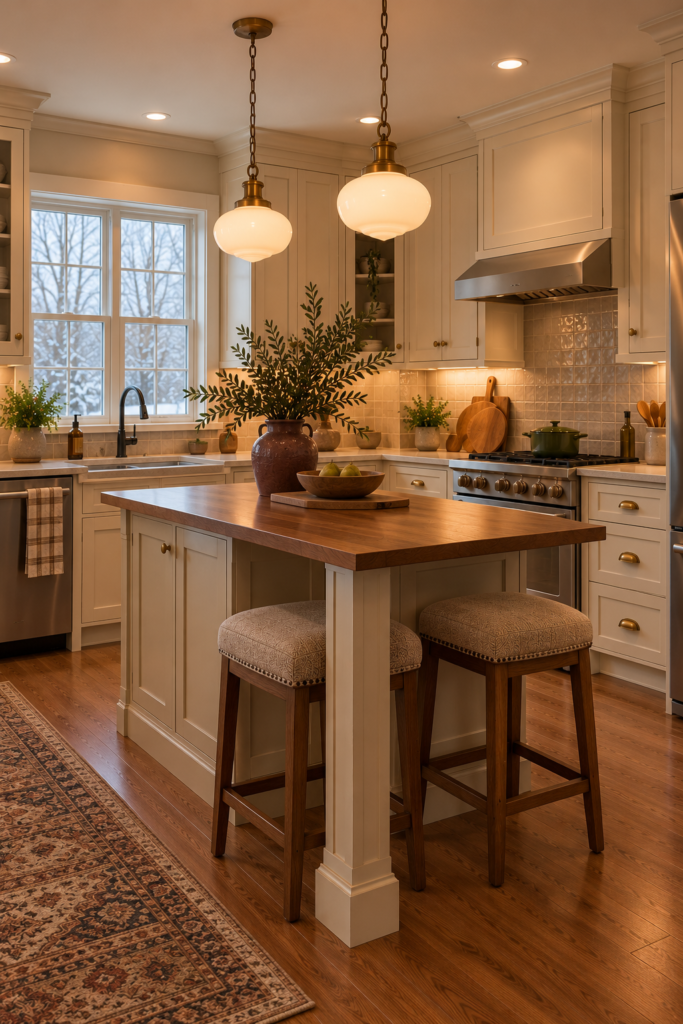
Muted olive brings an earthy, established character to a kitchen without making the palette feel overly dark.
Use olive on lower cabinets and warm cream on the upper cabinets, then add walnut flooring or furniture and aged-brass-style hardware. The contrast helps the green stand out while maintaining a relaxed appearance.
Compare olive paint samples with the countertop and wood finishes. Some shades lean yellow, while others appear gray or brown, and the difference can change the overall effect.
Keep the backsplash relatively restrained if the cabinets are the main color feature. Traditional ceramics and a faded runner can introduce additional texture without competing with the cabinetry.

12. Add a Plate Rack
A traditional plate rack turns everyday dishes into a decorative feature while keeping them accessible.
Choose a rack in warm cream or medium walnut that suits the cabinet style. Display a small collection of plates with compatible colors or subtle variations rather than crowding the rack with every dish you own.
Check the wall construction and use suitable fixings and supports for the rack and its intended load. Place it where dishes can be removed and returned safely, away from locations where people might bump into protruding plates.
Keep heavy or especially fragile dishes in secure storage if the rack isn’t appropriate for them.
If wall space is limited, consider a suitable rack inside a cupboard. You can retain the practical benefit without turning a busy kitchen wall into another display area.

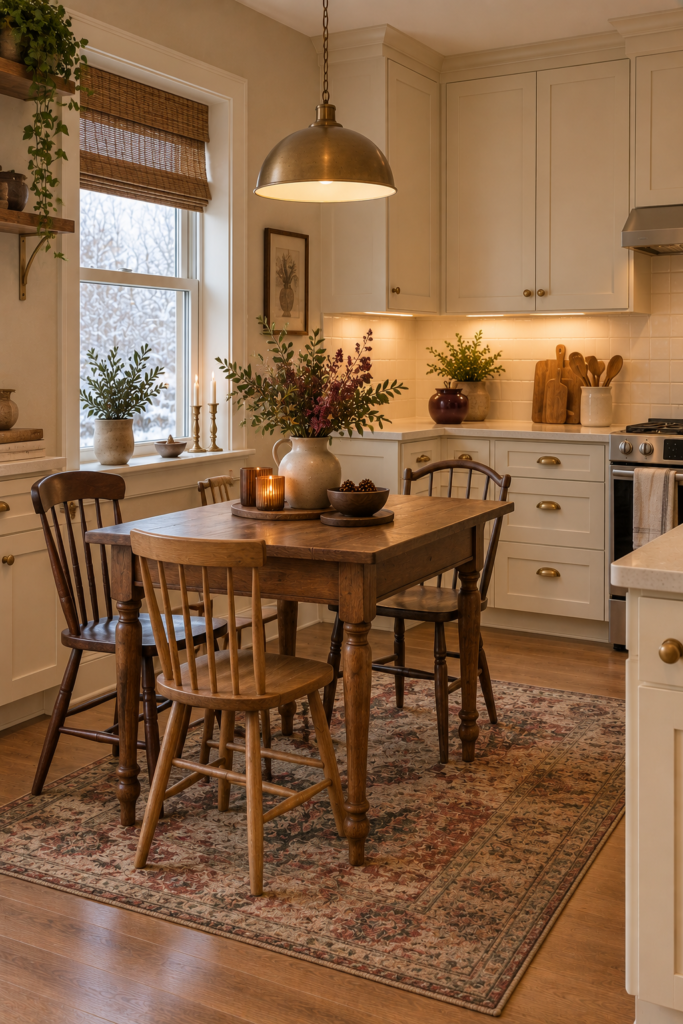
13. Add a Small Antique Kitchen Table
A small wooden table can provide dining or occasional preparation space while contributing more character than another block of cabinetry.
Choose a sturdy vintage or antique-style table, then pair it with chairs that complement its shape and finish. The chairs don’t need to match exactly, but related wood tones and simple traditional forms help the arrangement feel connected.
Measure the area before purchasing furniture. Allow room to pull out chairs, open nearby doors, and move through the kitchen without squeezing past the table.
If you use the table for food preparation, choose a surface that can be cleaned appropriately. Keep decorative objects limited so the table remains useful for meals and everyday tasks.
When a full island feels too bulky, a small table can offer a more flexible alternative.
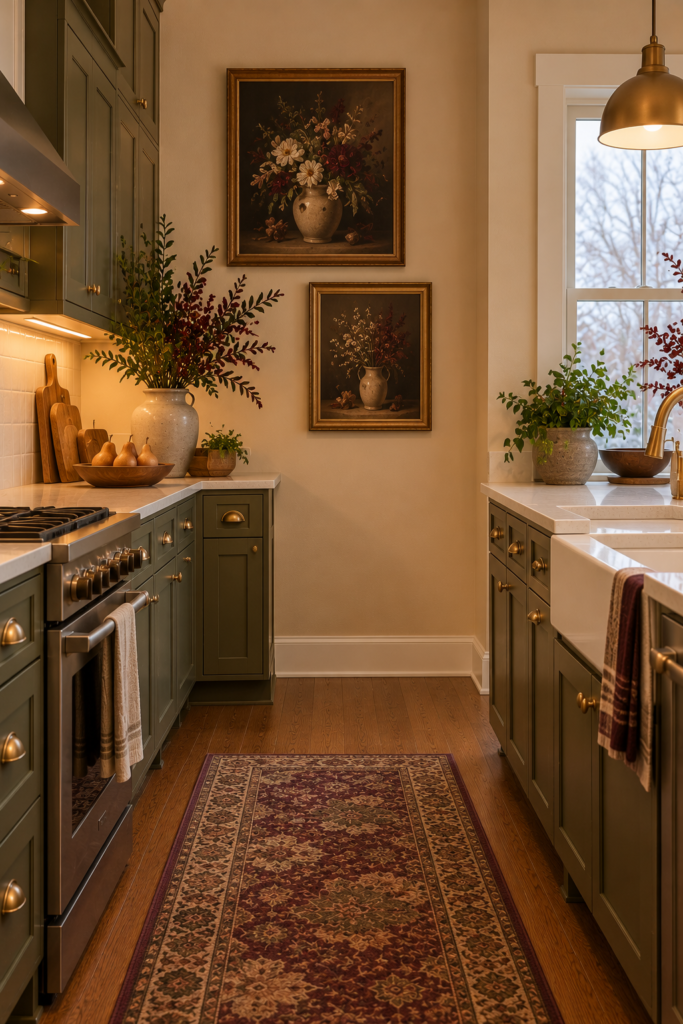
14. Use Antique-Looking Framed Art
Framed art introduces personality without taking up valuable counter space.
Choose botanical prints, still-life imagery, landscapes, or simple food illustrations. Wood or aged-metal-style frames can complement the cabinet hardware and furniture without requiring an exact match.
One or two well-proportioned pieces may be enough. Consider the available wall space and the surrounding cabinets, windows, and appliances before creating a larger arrangement.
Hang artwork securely on a suitable dry wall away from cooking splatter, excessive moisture, and heat. Frames should not lean precariously on narrow ledges or interfere with cabinet doors.
This is an especially useful option when you want the kitchen to feel collected but have limited room for additional furniture and accessories.
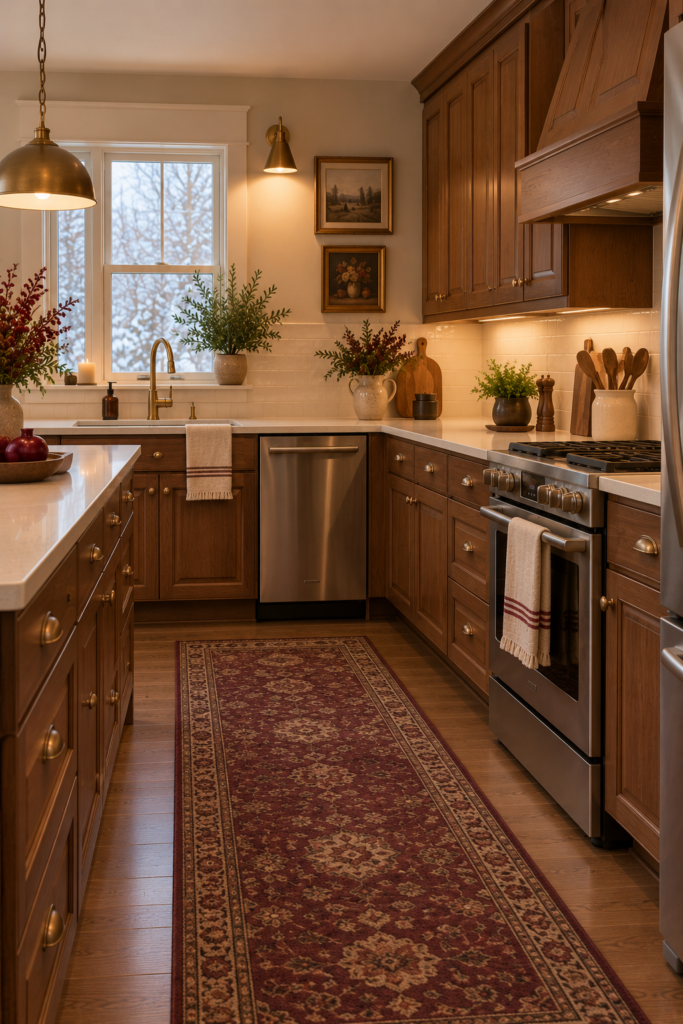
15. Mix Old and New Materials
An antique-inspired kitchen doesn’t need every component to be old. Combining traditional details with modern materials often creates a more practical result.
Pair traditional wood cabinetry with durable contemporary countertops, vintage-inspired hardware, modern appliances, and suitable task lighting. A faded runner or traditional artwork can add character without compromising everyday function.
Choose finishes that complement one another rather than matching every surface. Warm wood and aged-metal-style details can soften modern lines, while a restrained countertop keeps the room from feeling overly decorative.
Consider maintenance as well as appearance. Surfaces around sinks and cooking areas should be appropriate for moisture, heat, cleaning, and regular use.
The goal is to create an established atmosphere while retaining the conveniences that make a kitchen comfortable to use.
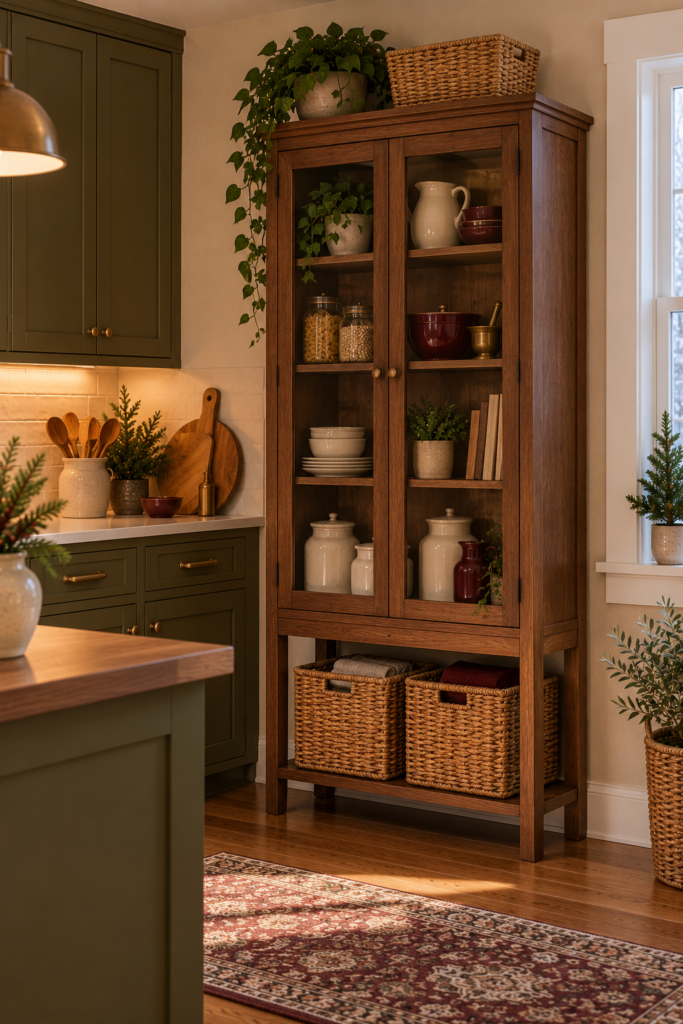
16. Create an Antique-Inspired Pantry Corner
A dedicated pantry corner can bring traditional storage into a kitchen without requiring a separate pantry room.
Use a sturdy freestanding cupboard or pantry cabinet, then organize suitable supplies in baskets and ceramic vessels. Keep frequently used items within comfortable reach and store heavier items on lower shelves.
Choose storage containers according to their purpose. Decorative vessels should not replace sealed, food-safe containers where ingredients require protection from moisture, pests, or contamination.
Check the cupboard’s stability and shelf capacity before loading it. Tall furniture may need to be secured against tipping, and doors should open without blocking circulation.
Warm wood, cream finishes, and a few coordinated baskets can create a traditional pantry atmosphere while keeping everyday supplies organized.
17. Build a Full Collected Antique Kitchen
A complete antique-inspired kitchen comes together through a thoughtful combination of traditional materials and a few distinctive pieces.
Start with warm cream cabinetry, then introduce a walnut furniture-style island, aged-brass-style hardware, and muted olive accents. A faded burgundy runner, freestanding cupboard, cream ceramics, and vintage-inspired lighting can complete the palette.
Choose the largest finishes first, then add decorative details gradually. If the cabinets and floor already have strong patterns or colors, keep the remaining accessories simpler.
Make sure the layout remains practical. Preserve clear walkways, accessible storage, useful preparation surfaces, and appropriate lighting.
Finally, edit the arrangement. A collected kitchen should give each piece room to be noticed rather than covering every surface with antique-style objects.
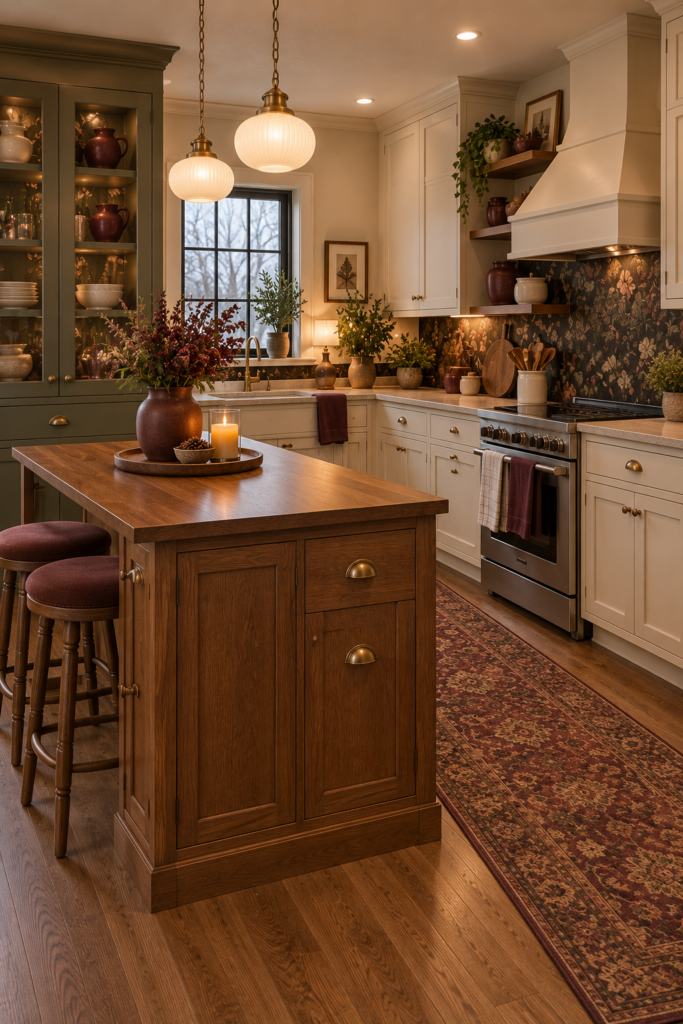
What Makes a Kitchen Look Antique?
Old-world character usually comes from a combination of traditional cabinet profiles, natural wood, aged-looking metal finishes, furniture-style pieces, ceramics, vintage-inspired textiles, and traditional lighting.
No single object has to be genuinely old. Reproductions and modern materials can provide a similar appearance while remaining easier to maintain.
The most convincing result combines a few compatible details with a practical layout and modern conveniences.
Antique Kitchen Color Ideas
Warm cream, walnut, aged brass, and mushroom create a light, traditional palette. Muted olive with cream, walnut, and burgundy introduces a more earthy look. Deep burgundy paired with mushroom and walnut creates a moodier combination.
Choose colors according to the undertones of the actual materials and the amount of daylight in the room. Compare samples together rather than trying to match every finish exactly.
Antique Kitchen Ideas for Small Kitchens
Keep the larger surfaces relatively light and introduce antique character through hardware, lighting, ceramics, framed art, or a small freestanding piece.
Avoid adding bulky furniture that restricts movement. One cupboard or small table can provide more character and useful storage than several smaller objects scattered around the room.
Preserve clear countertops and make sure drawers, doors, and appliances remain easy to access.
Antique Kitchen Ideas on a Budget
Start with changes that work alongside the existing kitchen. Updating hardware, adding a runner, finding secondhand artwork, or choosing a sturdy used wooden table can introduce character without replacing the cabinetry.
Look for pieces that are both useful and attractive. Genuine antiques aren’t essential, and old furniture should not be aggressively sanded or refinished without considering its finish and condition.
Choose improvements gradually so each new item works with the materials you already have.
Antique Kitchen Decor and Lighting
Ceramic pitchers, stoneware, woven baskets, cookbooks, traditional artwork, and vintage-inspired trays can add character when used selectively.
For lighting, consider aged-brass-style or dark bronze finishes and traditional shade shapes. Keep suitable task lighting for preparation and cleanup, and ensure that fixtures are properly installed for their intended location.
Decorative objects should support the kitchen’s function rather than gradually take over the available work surfaces.
Using Real Antiques Safely
Inspect antique furniture for loose joints, structural damage, sharp edges, pests, and unstable shelves before using it in the kitchen. Secure tall furniture where tipping is a concern and use shelving designed for its intended load.
Older painted furniture may contain lead-based paint or other hazardous materials. Avoid casually sanding, scraping, or disturbing unknown finishes. Seek appropriate testing or professional guidance if a hazardous coating is suspected.
Don’t automatically use old ceramics, metal vessels, or containers for food storage or serving unless their suitability is known. Keep paper, textiles, wicker, and other combustible materials away from open flames and significant heat.
How to Keep an Antique Kitchen From Looking Cluttered
Choose fewer, more substantial decorative pieces, group ceramics together, and leave some shelves and countertops clear. Use closed cabinetry for everyday items that don’t need to be displayed.
Limit the main palette and repeat a few wood tones or metal finishes to create continuity. Before adding another object, consider whether it contributes useful storage, function, or a distinctive detail.
A collected kitchen should feel personal and relaxed, not crowded.
Final Thoughts
The best antique kitchen ideas combine traditional shapes, warm materials, and distinctive details with the convenience of a modern kitchen. Cream cabinetry, natural wood, aged-brass-style hardware, muted olive, ceramics, and vintage-inspired lighting provide a versatile foundation.
Choose pieces that suit the size and layout of your kitchen, and keep safety and everyday function in mind when introducing genuine antiques.
The goal isn’t to make the kitchen look old. It’s to create a welcoming space that feels as though it has a story.
