
17 Color Drenched Bedroom Ideas for a Bold and Immersive Space
Color drenching can transform an ordinary bedroom into a deeply atmospheric retreat. Instead of limiting a favorite paint color to one accent wall, this decorating approach carries the same shade across multiple surfaces, creating a continuous and immersive effect.
Although color drenching is often associated with dramatic dark interiors, it can work just as beautifully with muted greens, dusty blues, warm neutrals, and soft pinks. The key is choosing a color that feels comfortable throughout the day and coordinating the room’s furniture, textiles, and lighting around it.
These 17 color drenched bedroom ideas explore different palettes and practical ways to achieve a cohesive result. Whether you prefer a moody burgundy bedroom or a calm sage-green retreat, there are ways to embrace the look without making a modest bedroom feel overwhelming.
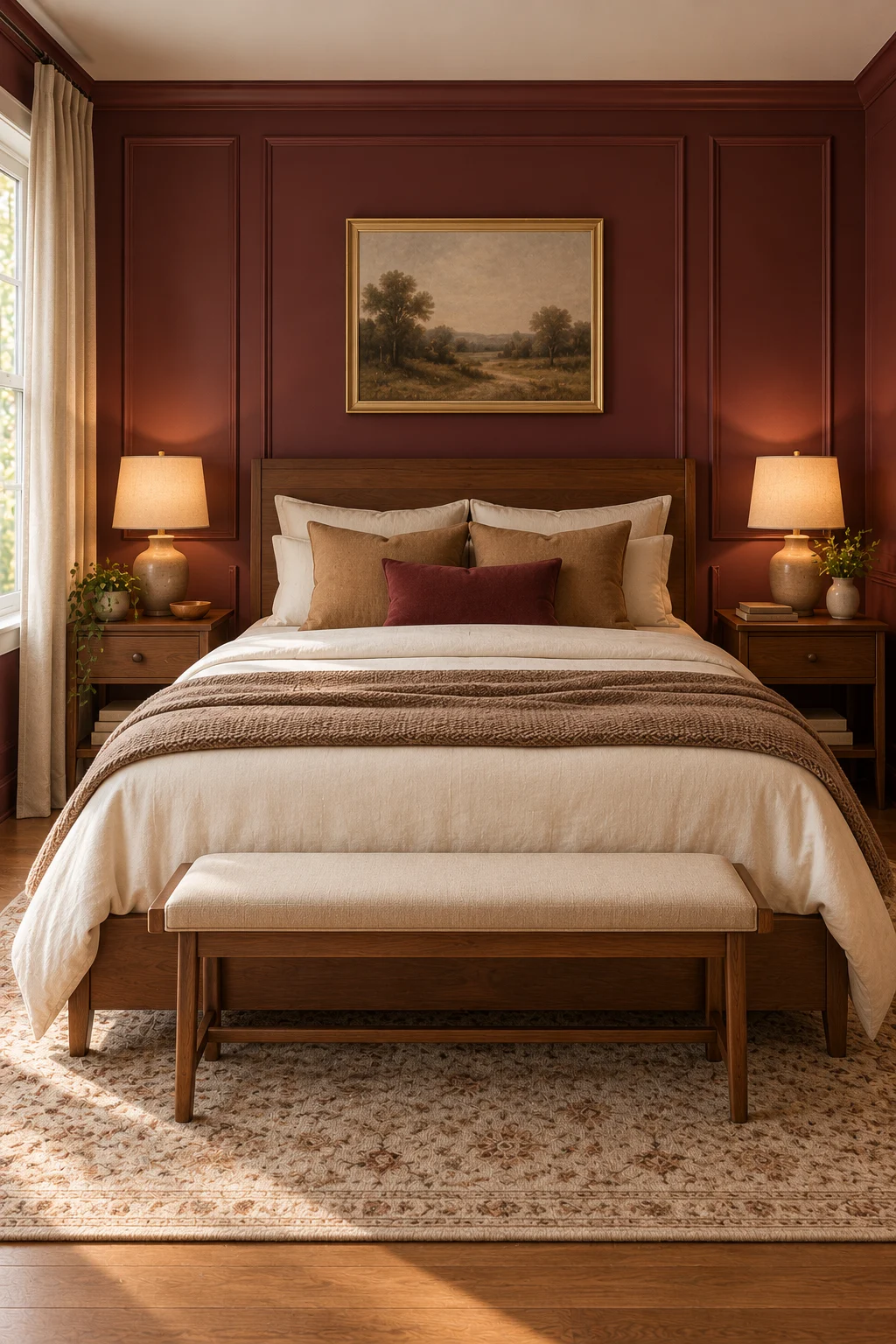
1. Create a Deep Burgundy Color Drenched Bedroom
Deep burgundy creates a rich, enveloping atmosphere that feels especially inviting in a bedroom. Painting the walls and trim in the same muted wine shade reduces visual interruptions and makes the room feel intentionally designed.
Pair the color with a medium-walnut bed frame, warm-cream bedding, and a camel throw. These lighter materials create contrast while allowing the burgundy walls to remain the main feature.
Choose a matte or low-sheen wall finish and a suitable trim finish in the same color. Test the shade under daylight and warm bedside lighting before painting the entire room.
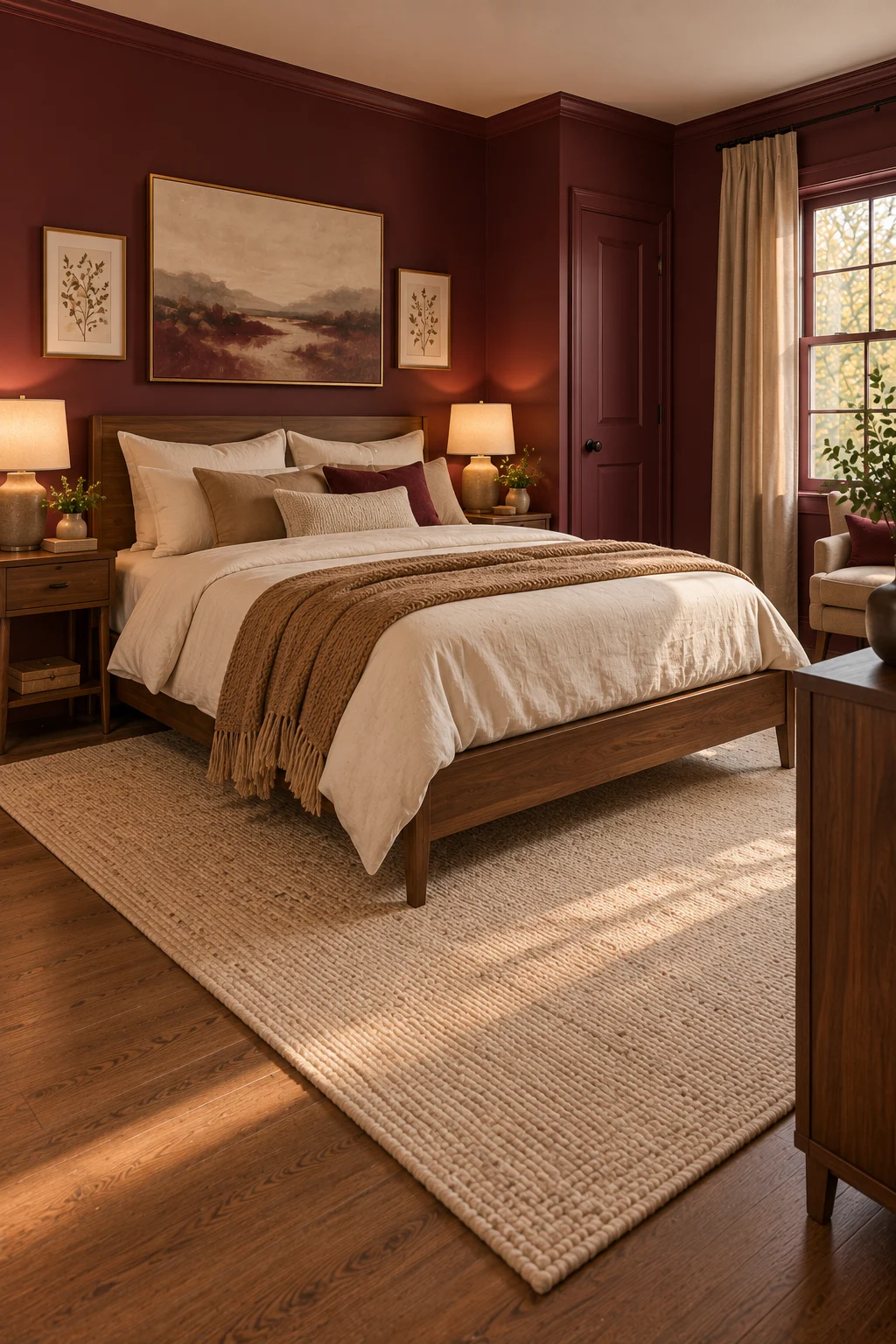
2. Try an Olive Green Bedroom With Matching Trim
Muted olive green brings a grounded, nature-inspired feeling into a bedroom. When the walls, baseboards, and door trim share the same shade, the room feels calm and visually connected.
Natural wood furniture, oatmeal bedding, and cream curtains soften the deeper green. A small ceramic lamp and simple botanical artwork can reinforce the organic palette without creating clutter.
Choose an olive with gray or brown undertones if you want a subdued result. Very yellow greens may appear brighter than expected under warm artificial lighting.
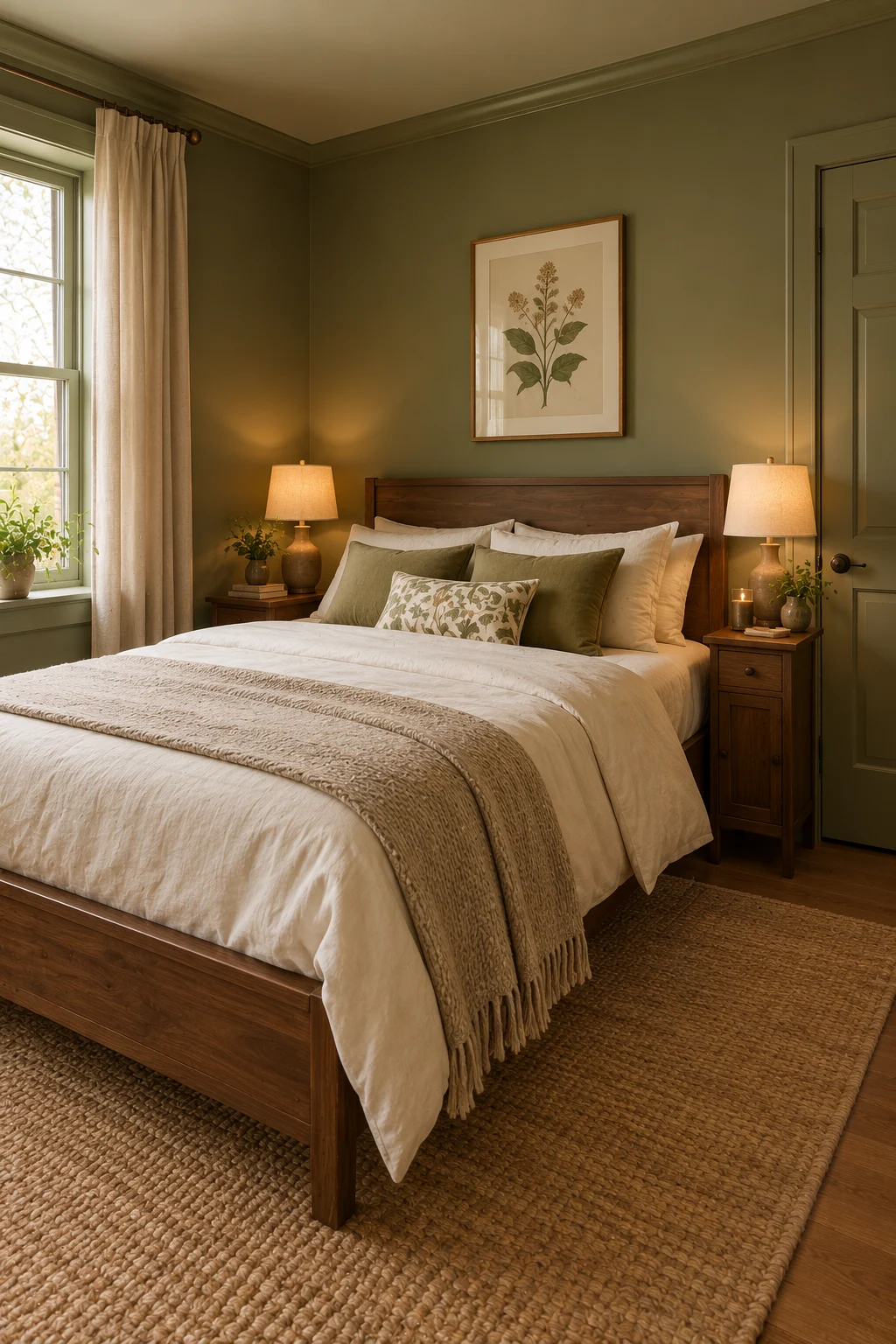
3. Use Dusty Blue for a Softer Color Drenched Look
Dusty blue is a useful choice when you want color drenching without an especially dark room. Its muted gray undertone creates a peaceful atmosphere while remaining more expressive than white or beige.
Paint the walls and trim in the same dusty blue, then introduce cream bedding and warm wood furniture. A mushroom-colored upholstered headboard can add softness without competing with the color.
Avoid combining several unrelated blue shades. A consistent main paint color and a few carefully chosen textiles usually create a more cohesive appearance.

4. Choose Warm Mushroom for Subtle Color Drenching
Color drenching does not have to involve a saturated shade. Warm mushroom creates a sophisticated neutral bedroom when applied consistently across walls, trim, and selected architectural details.
The color works beautifully with medium-walnut furniture, ivory bedding, and muted olive accents. Layering different fabric textures prevents the neutral palette from appearing flat.
Select a mushroom shade that complements the flooring. Test samples beside the bed and curtains because beige-gray undertones can shift noticeably under different lighting.
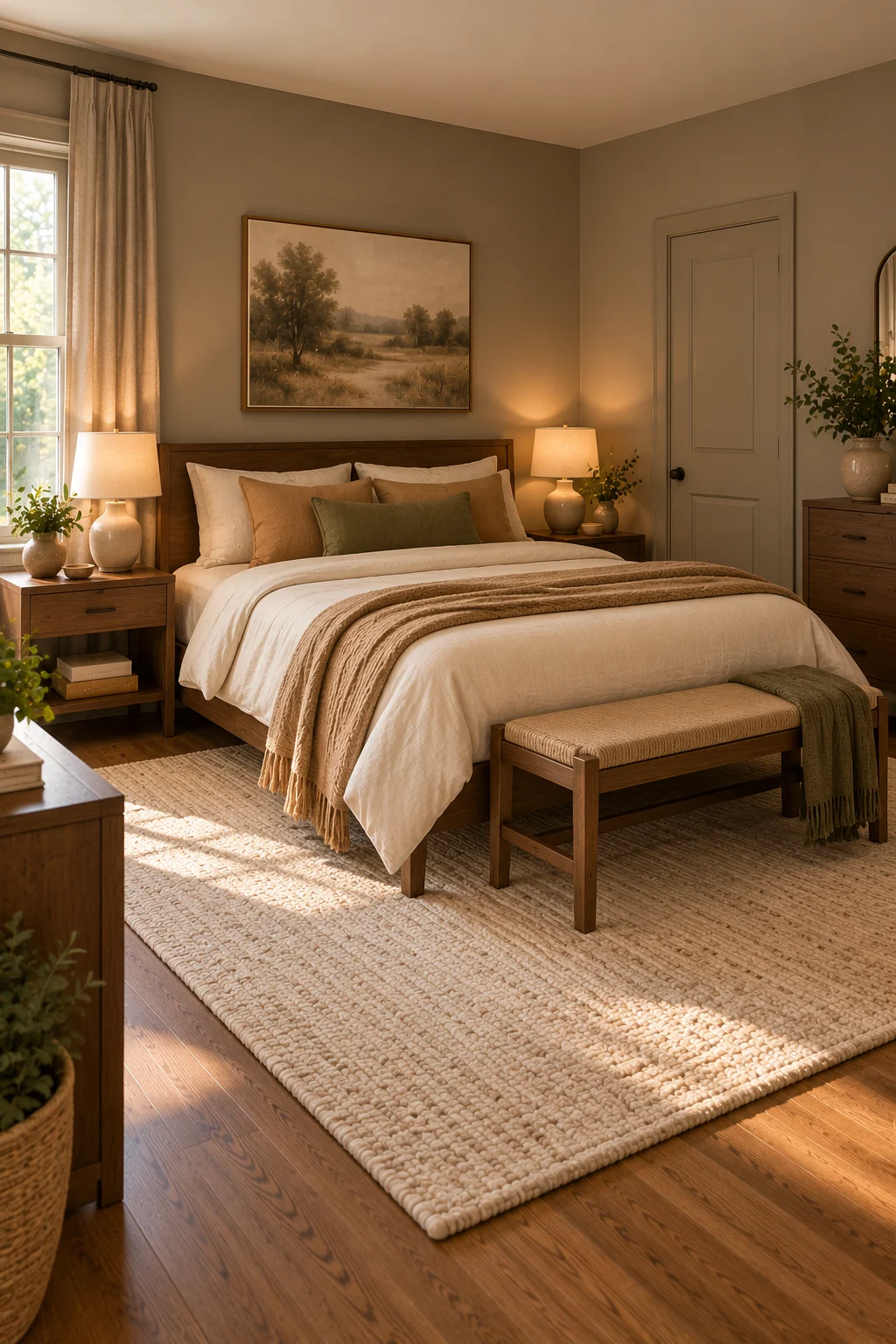
5. Paint the Ceiling for a Fully Immersive Effect
Extending the wall color onto the ceiling creates one of the most recognizable color-drenched looks. It can soften the visual boundary between walls and ceiling, producing a cocoon-like atmosphere.
This approach works particularly well with muted blue-gray, burgundy, or olive. Keep the furniture and bedding relatively simple so the continuous painted surfaces remain the main design feature.
A darker ceiling can change the perceived proportions of the room, so test the color carefully. In an eight-foot bedroom, thoughtful lighting and light-colored bedding can help maintain a comfortable balance.
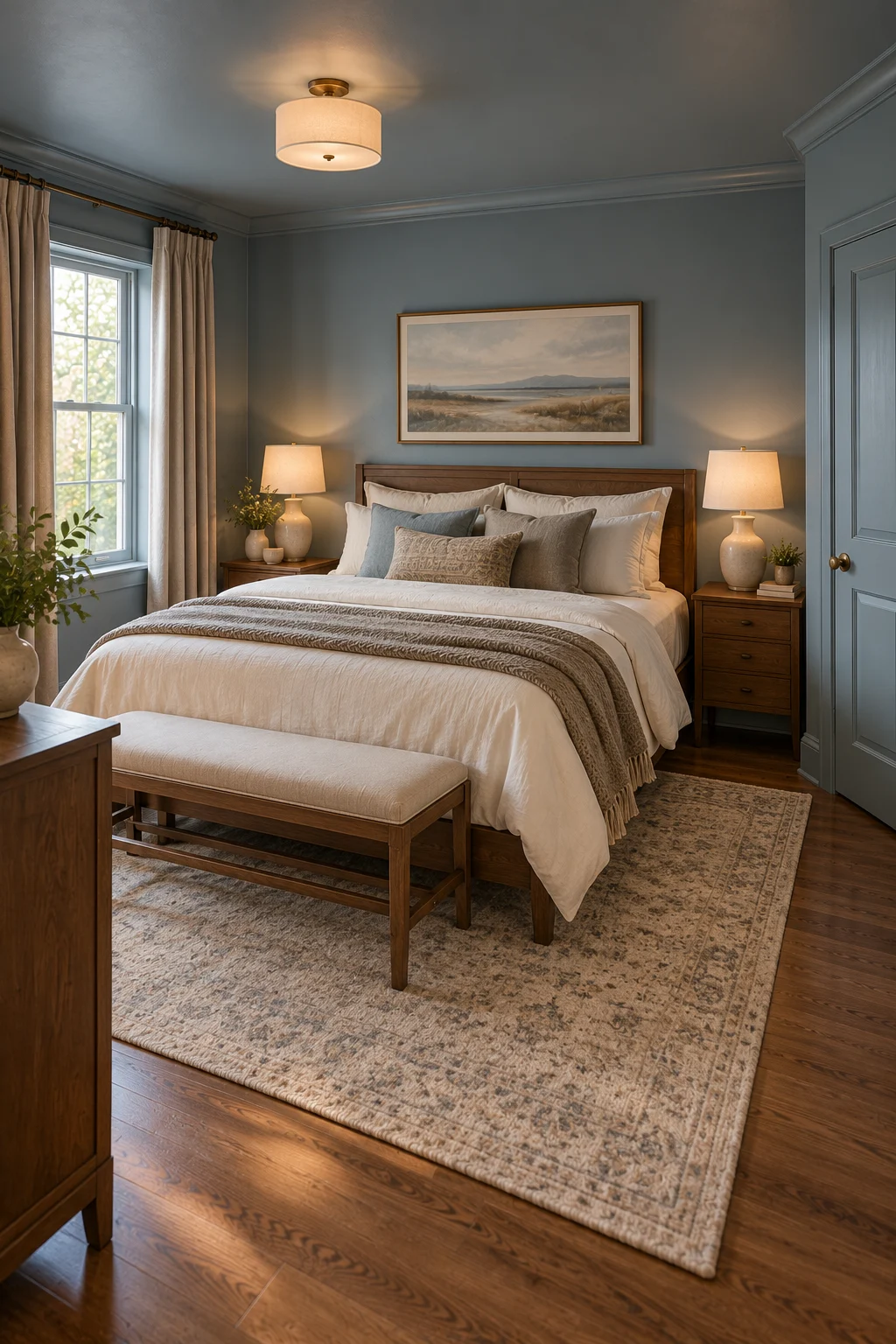
6. Create a Moody Charcoal Bedroom
Charcoal color drenching creates a dramatic bedroom without relying on pure black. A charcoal shade with warm undertones can feel softer and more welcoming than a stark cool gray.
Balance the painted surfaces with cream bedding, walnut furniture, and a textured rug. Warm bedside lamps are especially important because they provide useful illumination and highlight the room’s materials.
Avoid using only dark bedding and furniture. A few lighter surfaces will make the space more comfortable and prevent important details from disappearing visually.

7. Use Dusty Plum for a Romantic Bedroom
Dusty plum creates a softer alternative to burgundy. Its muted purple-gray character works well with cream textiles, aged-brass-look accents, and natural wood.
Painting the walls and trim in the same shade gives the bedroom a coordinated appearance. Choose bedding with subtle texture rather than bold patterns to keep the room restful.
Consider a cream upholstered headboard if the plum walls are particularly deep. This creates a gentle focal point without breaking the color-drenched effect.
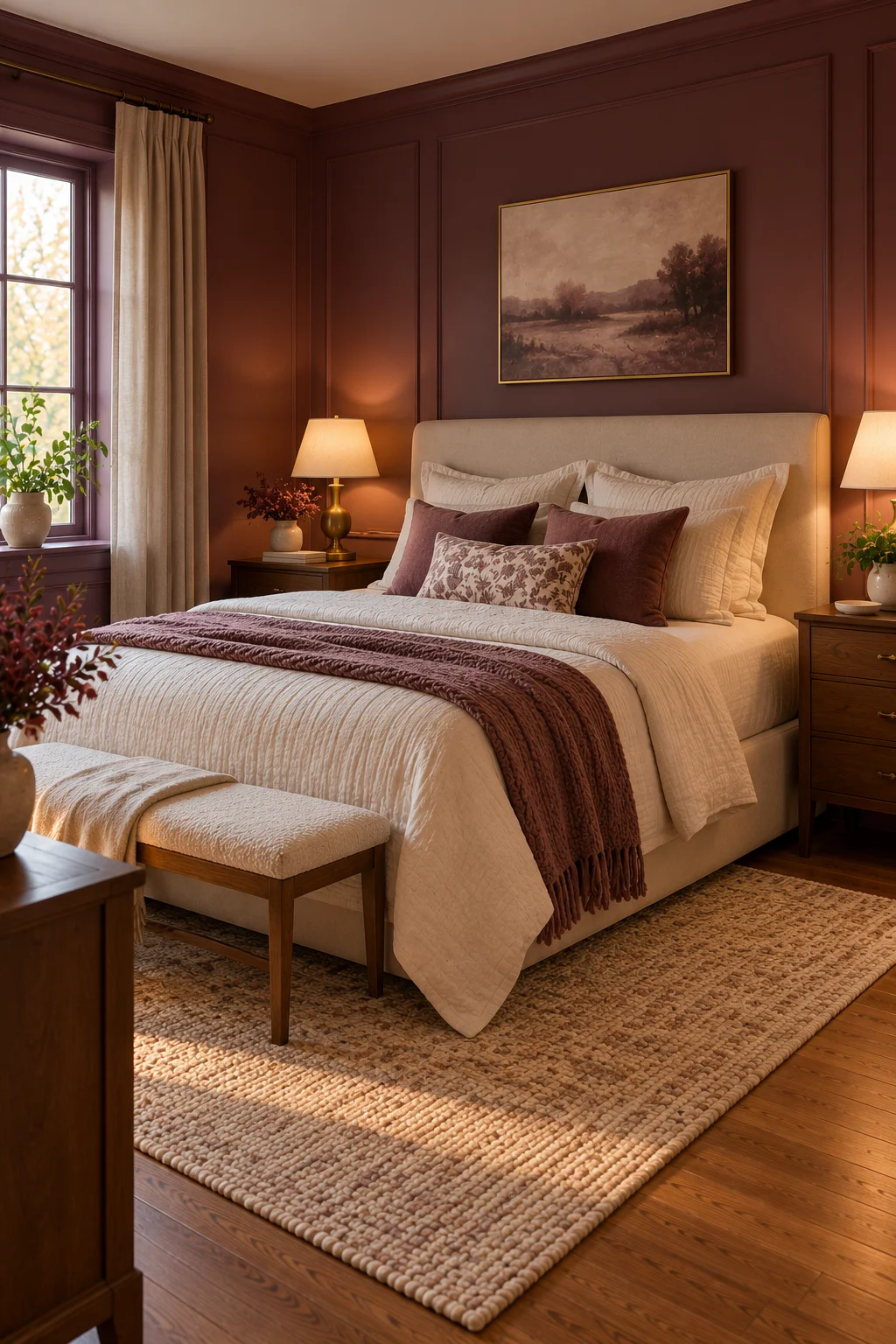
8. Try Muted Terracotta for Earthy Warmth
Muted terracotta brings warmth and personality to a bedroom while remaining connected to natural materials. It can feel especially inviting when the walls and trim share a soft clay-colored finish.
Pair terracotta with oatmeal bedding, walnut furniture, and cream curtains. A muted olive pillow or small ceramic vase adds a complementary accent.
Avoid bright orange tones if you want a restful atmosphere. Look for a clay shade with brown or pink undertones and test it in the room before committing.
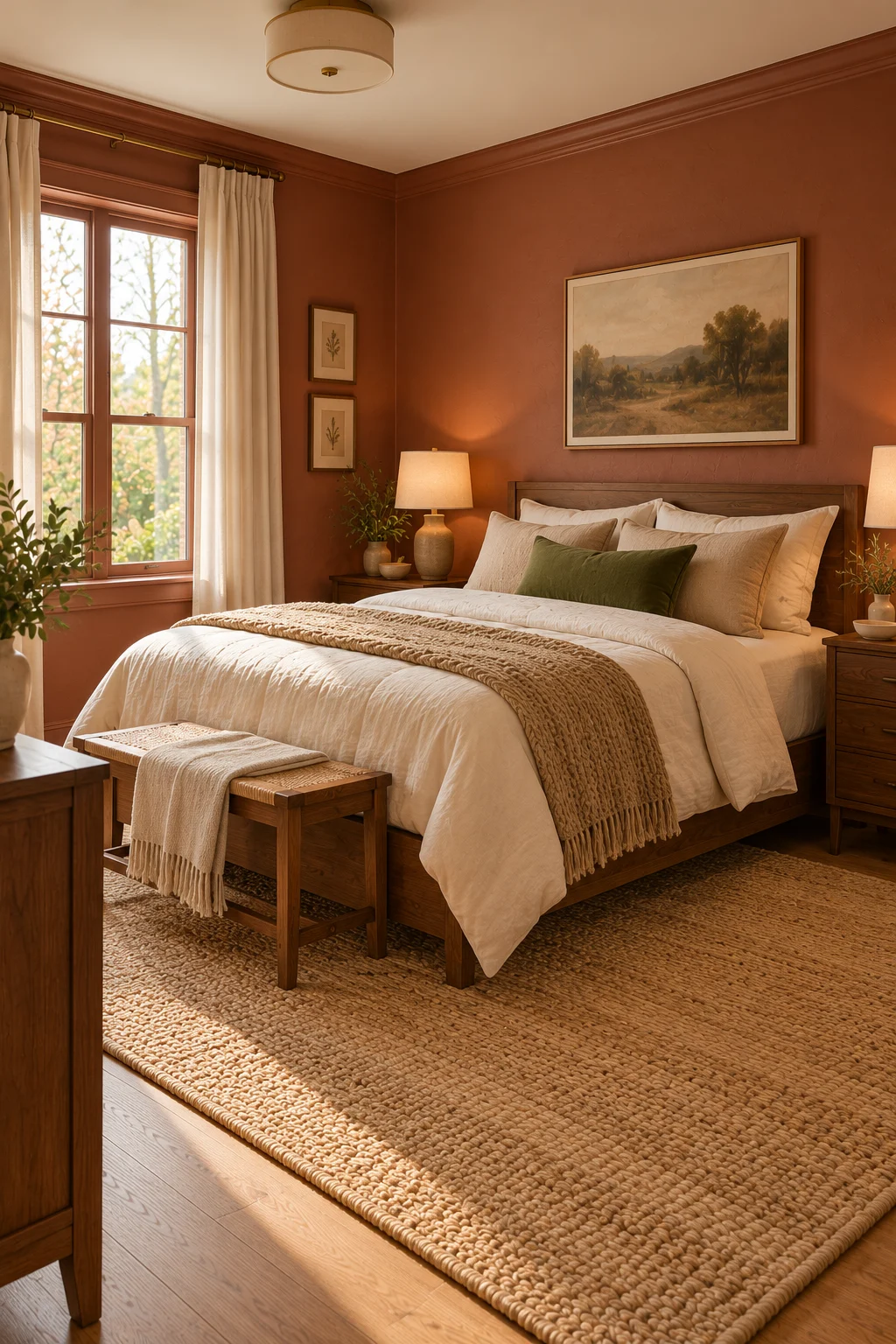
9. Create a Soft Sage Color Drenched Bedroom
Sage green is an approachable color for homeowners who want a gentle introduction to color drenching. Its soft appearance suits compact bedrooms and pairs naturally with light wood and warm neutrals.
Use the same sage paint on walls, trim, and doors, while keeping the ceiling warm white if a lighter effect is preferred. Cream bedding and natural oak furniture reinforce the calm atmosphere.
Keep decorative accents restrained. Too many botanical patterns can make the room feel busy rather than peaceful.
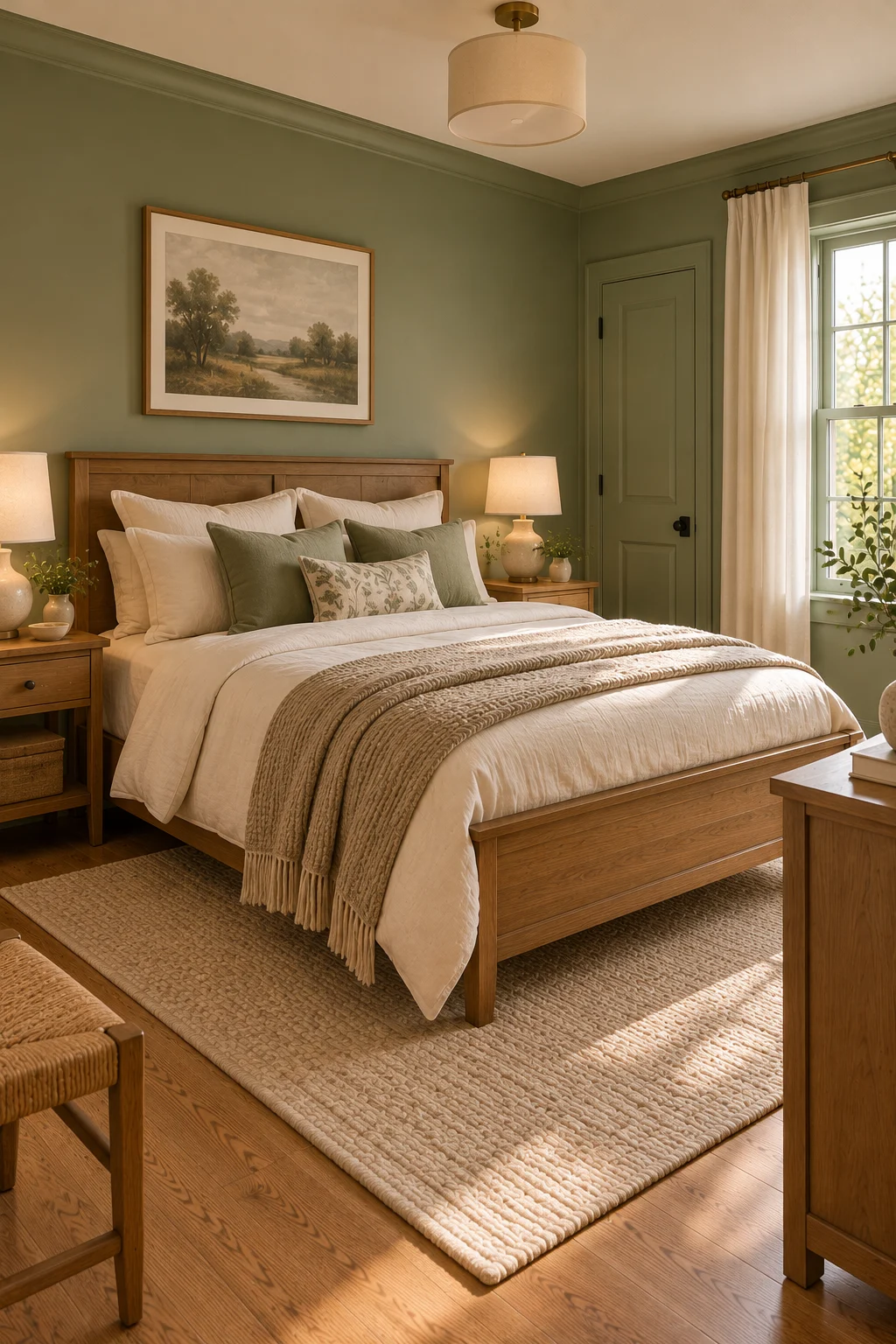
10. Add Picture-Frame Molding in the Same Color
Picture-frame molding can add architectural interest to a color-drenched bedroom without introducing another paint color. When the molding and wall share the same finish, the detail creates subtle shadows and texture.
This works especially well with burgundy, olive, mushroom, and dusty blue. Keep the molding proportionate to an ordinary eight-foot ceiling rather than using oversized decorative panels.
Install the molding securely and plan its spacing around outlets, switches, and furniture. A simple symmetrical arrangement behind the bed can provide enough detail for the entire room.
11. Match Built-In Storage to the Walls
Painting built-in wardrobes or storage cabinets the same color as the walls can reduce visual clutter. The cabinets appear more integrated into the room, especially when their doors have simple profiles.
Choose durable cabinet paint suited to the existing material. Matching the color does not necessarily mean using the same paint product on every surface.
Keep hardware understated and ensure doors and drawers open comfortably. Avoid using decorative trim that makes compact storage appear unnecessarily bulky.

12. Pair Color Drenched Walls With Light Bedding
Light bedding can provide essential contrast in a deeply colored bedroom. Ivory, oatmeal, and warm cream textiles stand out against burgundy, charcoal, olive, and dark blue walls.
Layer a duvet, textured throw, and a small number of pillows to create depth. Choose washable fabrics that feel comfortable for everyday use rather than selecting pieces only for appearance.
Avoid overcrowding the bed with decorative pillows. A restrained arrangement is easier to maintain and often looks more elegant.
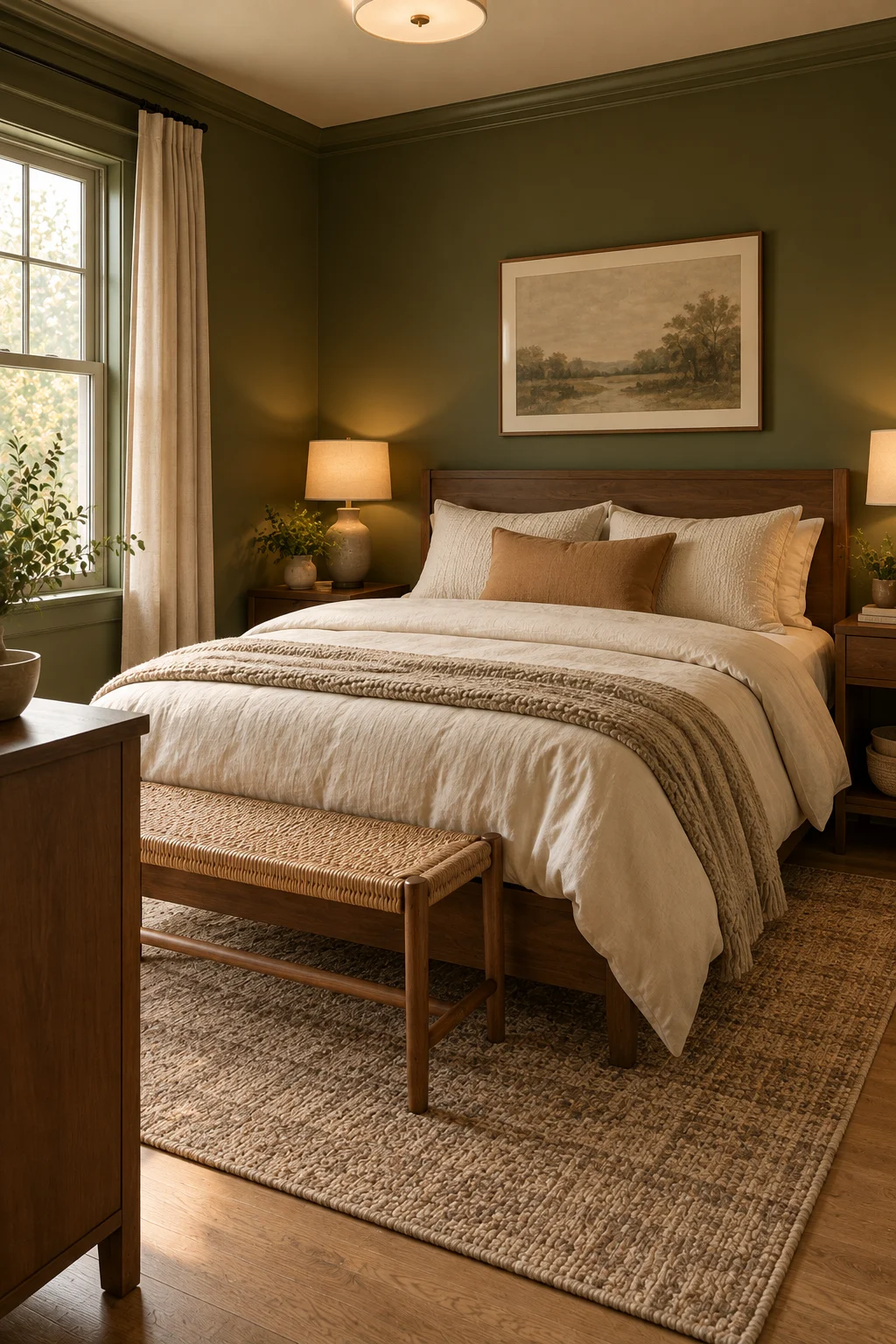
13. Use Coordinating Curtains for a Layered Look
Curtains can extend the color-drenched atmosphere without requiring an exact fabric match. A slightly lighter or darker version of the wall color creates depth while preserving a cohesive palette.
Choose full-length curtains that suit the window and room proportions. Soft woven fabrics can add texture to painted walls and make the bedroom feel more comfortable.
Keep curtain hardware securely mounted and make sure the window remains operable. Avoid heavy fabric arrangements that block too much daylight in a small room.

14. Create a Warm Brown Color Drenched Bedroom
Warm brown can produce a surprisingly sophisticated bedroom when used consistently. Mushroom-brown, cocoa, and muted chestnut shades create a grounded atmosphere without relying on cool gray.
Pair the painted walls with cream bedding, natural wood, and a textured rug. A small olive or burgundy accent can introduce variation while maintaining the earthy palette.
Avoid choosing a brown that is too close to the flooring without considering contrast. Different textures and lighter textiles help define the furniture against the room.
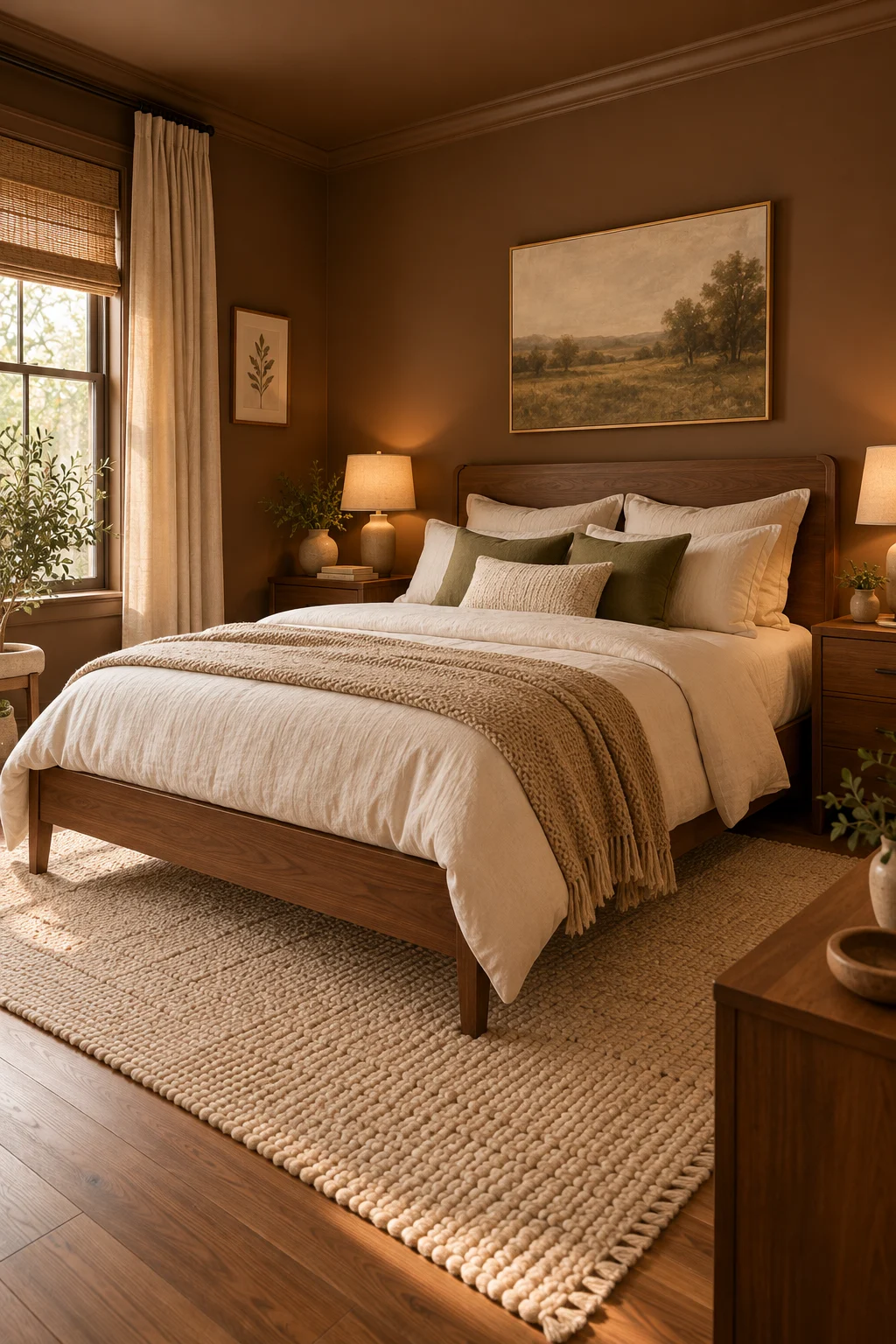
15. Try Muted Navy for a Classic Moody Retreat
Muted navy offers a timeless approach to color drenching. It can feel dramatic without becoming overly decorative, particularly when combined with simple furniture and warm textiles.
Paint the walls and trim in the same softened navy. Introduce medium-walnut furniture, ivory bedding, and a few aged-brass-look accents for warmth.
Test the navy under different lighting conditions. Some shades appear nearly black in low light, while others reveal stronger blue undertones during the day.
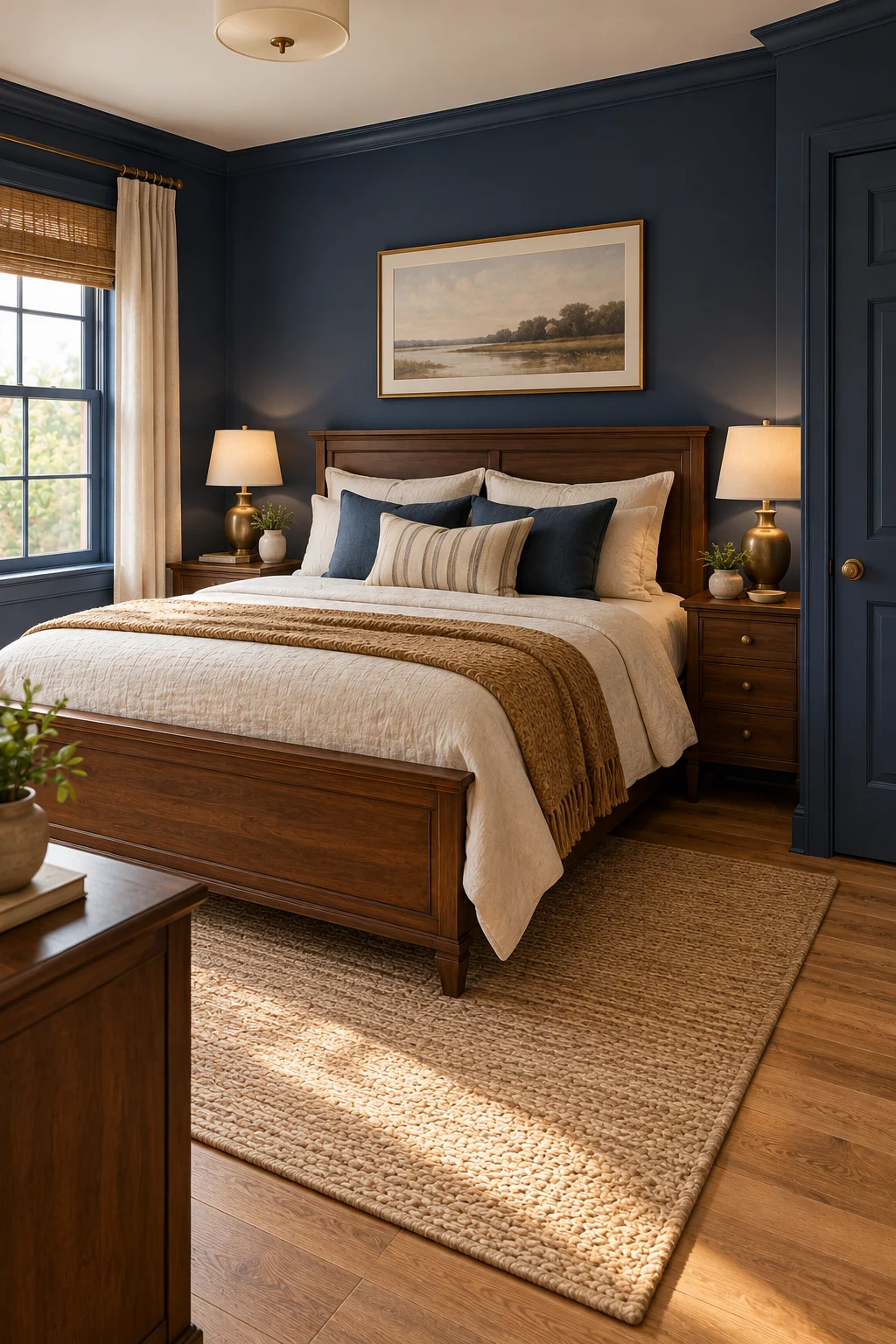
16. Use Warm Lighting to Balance Dark Paint
Lighting plays an important role in a color-drenched bedroom, particularly when the walls are dark. Multiple warm light sources can create a comfortable atmosphere and provide illumination where it is needed.
Combine bedside lamps with a suitable ceiling fixture or reading light. Choose warm bulbs and place lights so they illuminate practical activities without producing excessive glare.
Avoid depending on decorative lighting alone. The bedroom still needs sufficient light for cleaning, dressing, and moving safely at night.

17. Create a Cohesive Color Drenched Bedroom
The most successful color-drenched bedrooms feel coordinated rather than completely uniform. Walls, trim, and selected architectural details establish the main color, while furniture and textiles provide variation.
Choose one dominant shade and support it with two or three complementary neutrals. Natural wood, cream bedding, and simple metal accents can create enough contrast without distracting from the painted surfaces.
Before finishing the room, review the balance of light and dark elements. Remove accessories that introduce unrelated colors or unnecessary visual clutter.
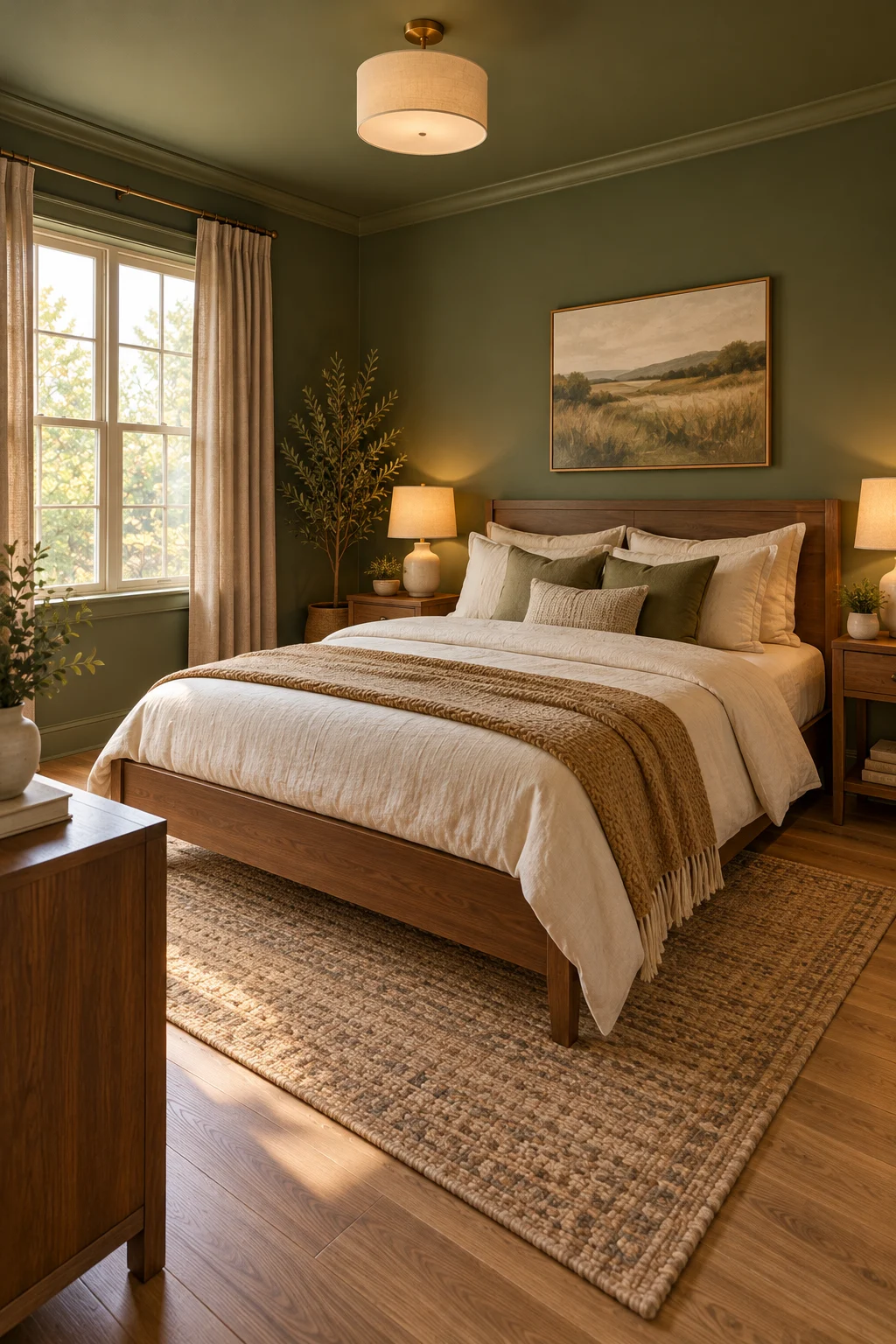
How to Choose a Color for Bedroom Color Drenching
Choosing the right paint color is the most important part of a color-drenched bedroom. Because the shade covers a large portion of the room, its undertones and response to lighting have a significant effect on the finished appearance.
Begin by considering how you want the bedroom to feel. Deep burgundy, navy, and charcoal can create a cocoon-like atmosphere. Olive and sage offer a natural feeling, while mushroom and warm beige provide a softer interpretation.
Test large paint samples on more than one wall. Observe them in morning daylight, afternoon light, and under the bedroom’s normal evening lighting.
Consider the existing flooring, furniture, and curtains. A color that looks beautiful on a sample card may not coordinate with the room’s wood tones.
Should You Paint the Bedroom Ceiling?
Painting the ceiling in the same shade creates the most immersive interpretation of color drenching. It removes the strong contrast between the walls and a white ceiling.
However, a matching ceiling is not essential. Keeping the ceiling warm white can make a room feel lighter while still allowing the walls, trim, and doors to create a cohesive effect.
In bedrooms with standard eight-foot ceilings, test the effect carefully. Dark ceilings can feel intimate, but they may also change how the room’s height is perceived.
Color Drenching for Small Bedrooms
Small bedrooms can benefit from color drenching because consistent painted surfaces reduce visual interruptions. Matching trim and walls can create a more unified appearance than several contrasting colors.
Choose furniture that fits the room rather than compensating with oversized decorative pieces. Compact nightstands, a proportionate bed, and clear walkways remain important.
Use lighter bedding and thoughtful lighting to balance deeper colors. A small bedroom does not necessarily need pale walls, but it does need practical illumination and comfortable circulation.
Budget-Friendly Color Drenching Ideas
Painting walls and trim can create a significant visual change without replacing furniture. Begin with surfaces that are in good condition and prepare them properly before applying paint.
If the budget is limited, focus on the walls and trim first. Existing bedding, curtains, and furniture may already coordinate with the new palette.
Choose paint products suited to each surface. Walls, doors, and trim can require different finishes or preparation methods even when the final color is identical.
Common Color Drenching Mistakes
One mistake is choosing a color based only on a small sample. Large painted areas can appear more intense or darker than expected.
Another is ignoring the room’s lighting. Deep colors need suitable task and ambient lighting to remain comfortable.
Avoid filling the bedroom with too many competing accent colors. A limited palette allows the color-drenched surfaces to create the intended atmosphere.
Cleaning and Maintenance
Follow the paint manufacturer’s recommendations for cleaning painted walls and trim. Allow newly painted surfaces to cure as directed before scrubbing or attaching decorative items.
Dust molding and trim regularly, especially when painted in darker colors that may show light-colored dust.
Touch up scuffs with the correct paint product and sheen. Differences in finish can become noticeable across large continuous surfaces.
Safety and Practical Considerations
- Maintain clear access to bedroom doors and windows.
- Use paint products appropriate for indoor residential use.
- Ventilate the room according to the paint manufacturer’s instructions.
- Secure wall-mounted lights, artwork, and curtain hardware.
- Keep electrical cords controlled and away from walkways.
- Preserve access to outlets, vents, and safety devices.
- Provide sufficient lighting for dressing, reading, and nighttime movement.
Final Thoughts
Color drenching offers a way to make a bedroom feel more cohesive, atmospheric, and personal. Whether you choose burgundy, olive, dusty blue, or warm mushroom, a consistent palette and practical furniture arrangement can create a beautiful retreat without requiring luxury finishes.
