
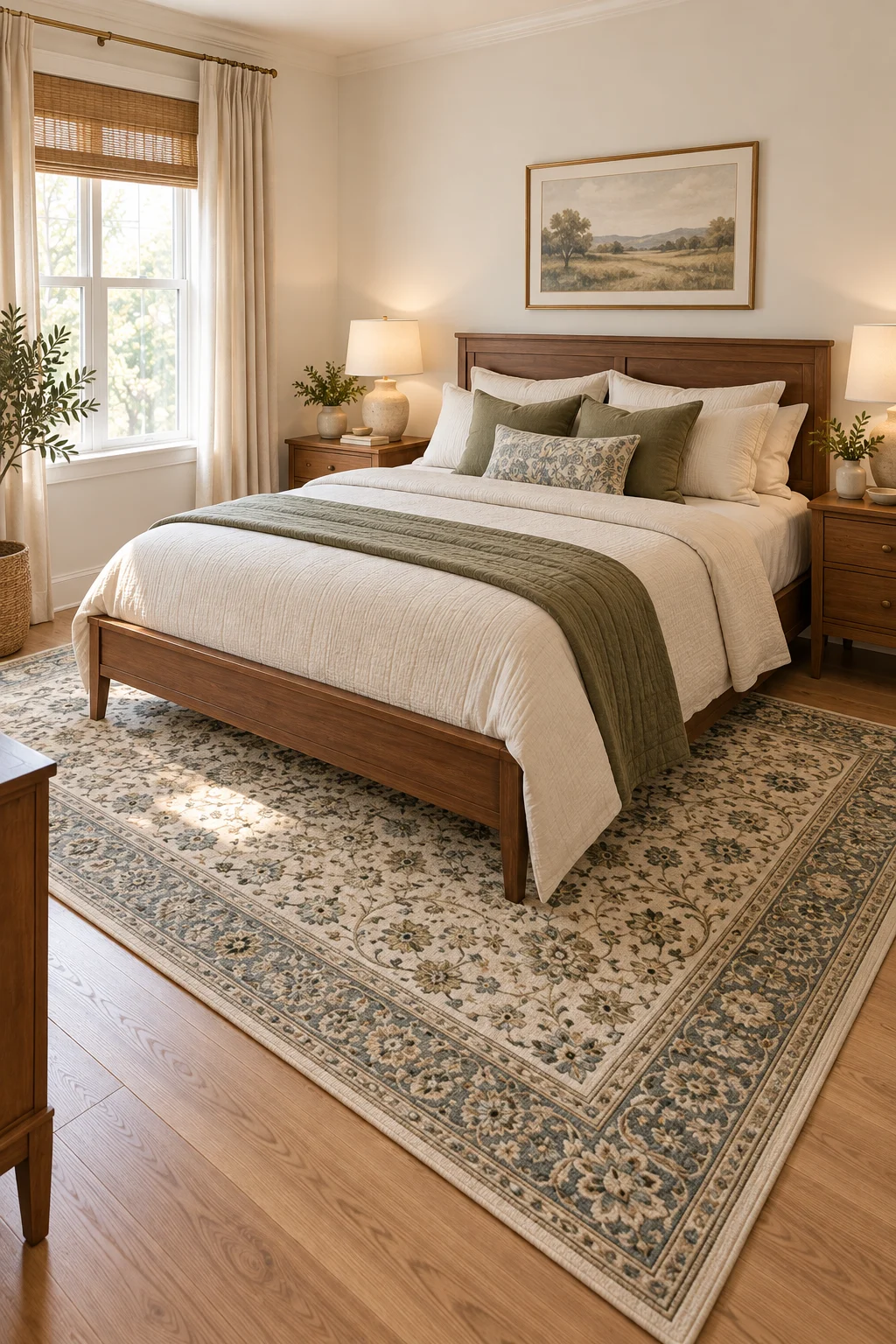
15 Modern Classic Bedroom Ideas for a Timeless and Elegant Space
A modern classic bedroom brings together two things that work surprisingly well together: the elegance of traditional interiors and the comfort of modern design.
Think warm neutral walls, beautiful wood furniture, subtle architectural details, and soft, layered bedding. Instead of filling the room with ornate furniture or expensive finishes, the idea is to choose a few timeless elements and give them enough space to shine.
The good news? You don’t need a grand bedroom with towering ceilings to achieve this look. A modest American bedroom with standard eight-foot ceilings can feel polished and inviting with the right proportions, colors, and furniture.
These 15 modern classic bedroom ideas will help you create a space that feels elegant without becoming overly formal. From traditional wall molding and upholstered headboards to walnut furniture and muted accent colors, each idea offers a practical way to bring classic character into a contemporary bedroom.
1. Choose a Neutral Bedroom With Traditional Wall Molding
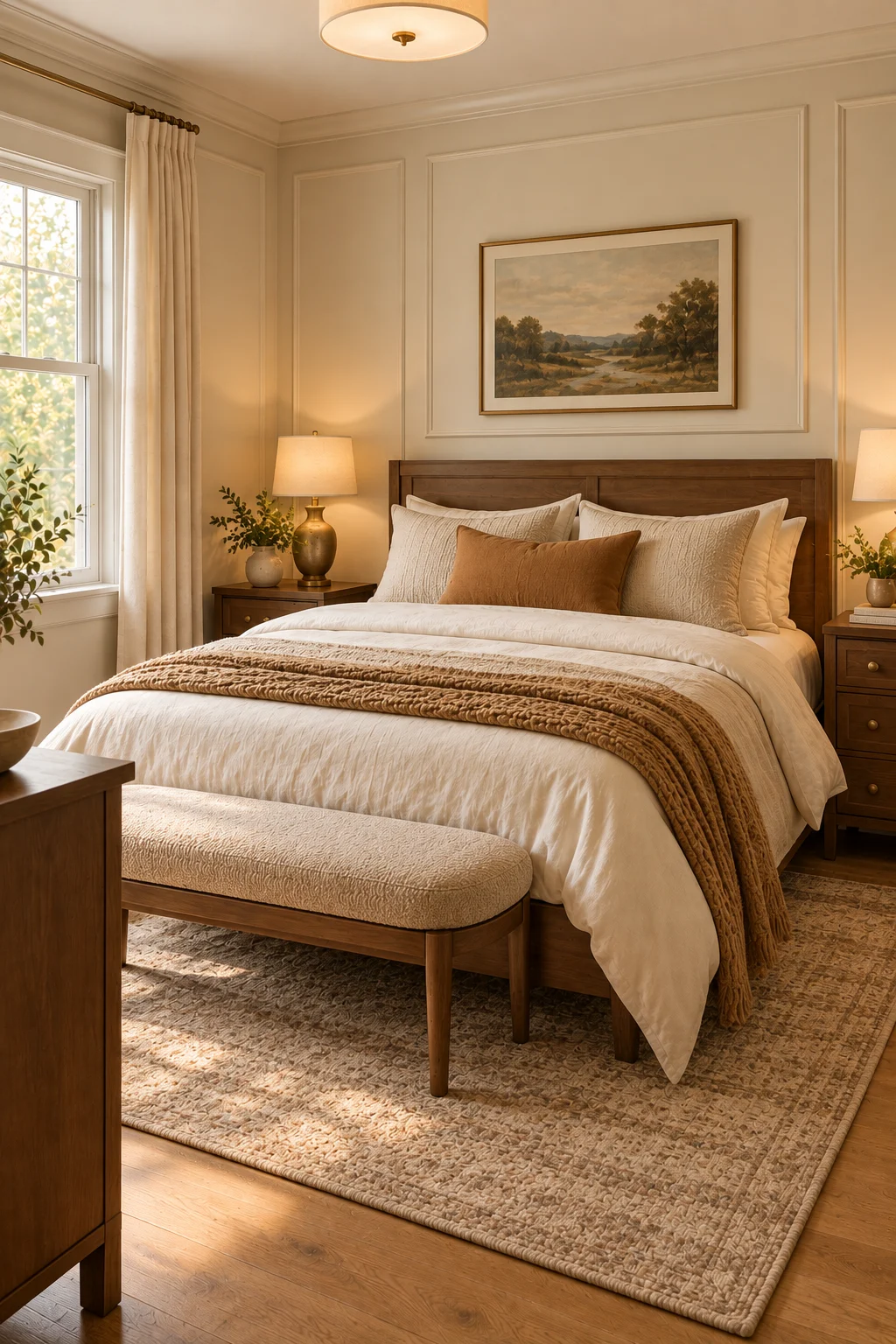
Traditional wall molding is one of the easiest ways to introduce classic architectural character into a modern bedroom.
Simple picture-frame molding behind the bed can make an ordinary wall look more considered without requiring patterned wallpaper or elaborate artwork.
For a calm, understated effect, paint the molding and surrounding wall the same warm cream, soft greige, or mushroom shade. The subtle shadows created by the trim provide texture without making the room feel busy.
Keep the molding proportionate to the space. In a bedroom with an eight-foot ceiling, two or three simple rectangular panels often feel more balanced than large, ornate arrangements.
Before installing molding, plan the layout around the headboard, nightstands, outlets, and existing wall fixtures.
Pair the finished wall with a medium-walnut bed and ivory bedding. The result is a classic architectural detail that feels completely at home in a modern interior.
2. Add a Camel Upholstered Headboard
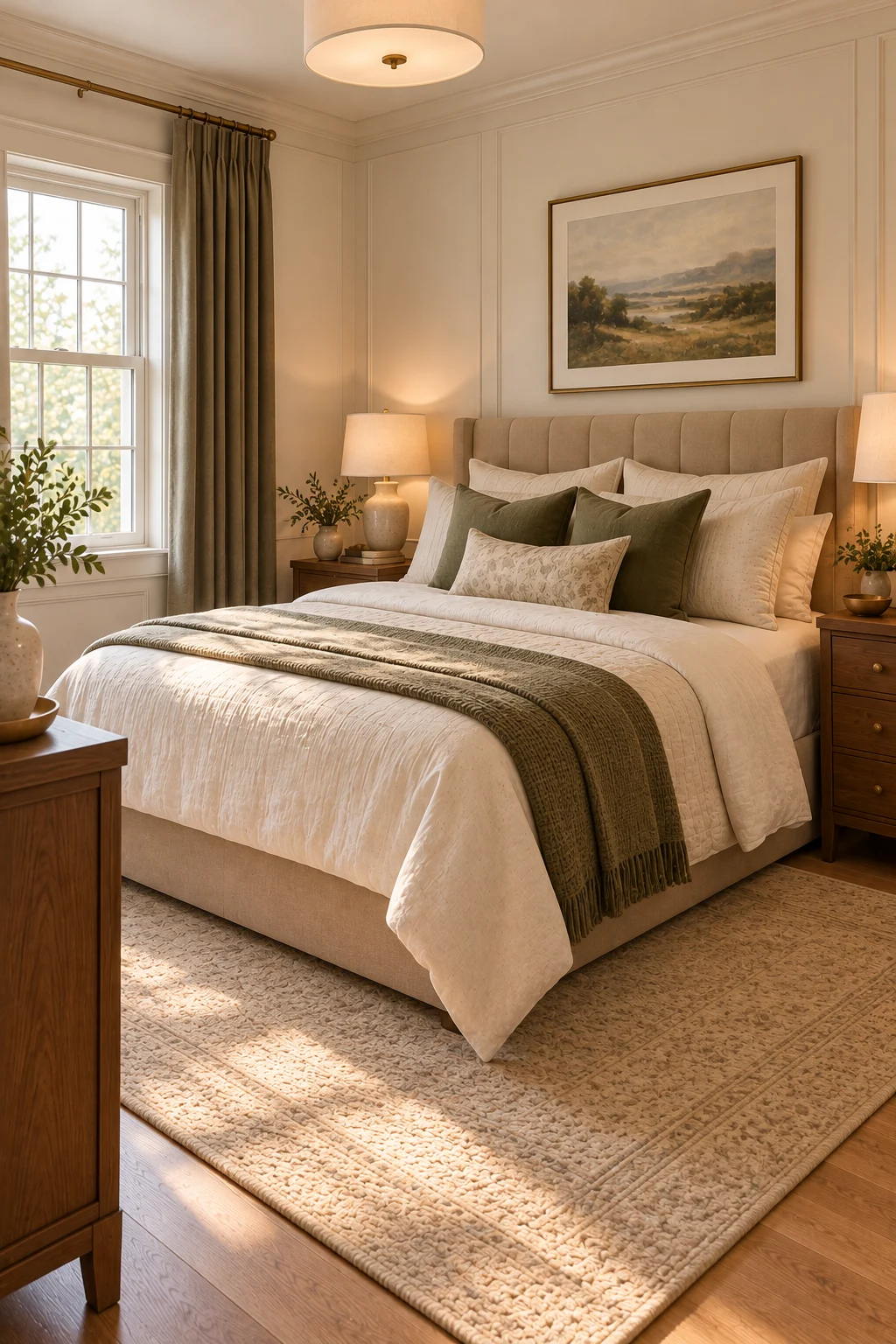
A camel upholstered headboard introduces warmth and softness while giving the bed a more substantial presence.
The color works particularly well with cream walls, walnut nightstands, and ivory bedding. It’s rich enough to stand out from pale surroundings without becoming a dramatic focal point.
Choose a rectangular or gently curved headboard with simple upholstery. A restrained silhouette feels more timeless than an oversized design covered in decorative buttons or elaborate trim.
Pay attention to the headboard’s height and width. In a modest bedroom, a proportionate design can create a polished look without overwhelming the wall.
Fabric matters, too. Consider how easily the upholstery can be cleaned and whether the texture suits everyday use.
Complete the arrangement with simple bedside lamps and layered neutral bedding.
A camel headboard is especially useful when you want to add warmth to a neutral bedroom without introducing another strong wall color.
3. Use Warm White and Walnut Together
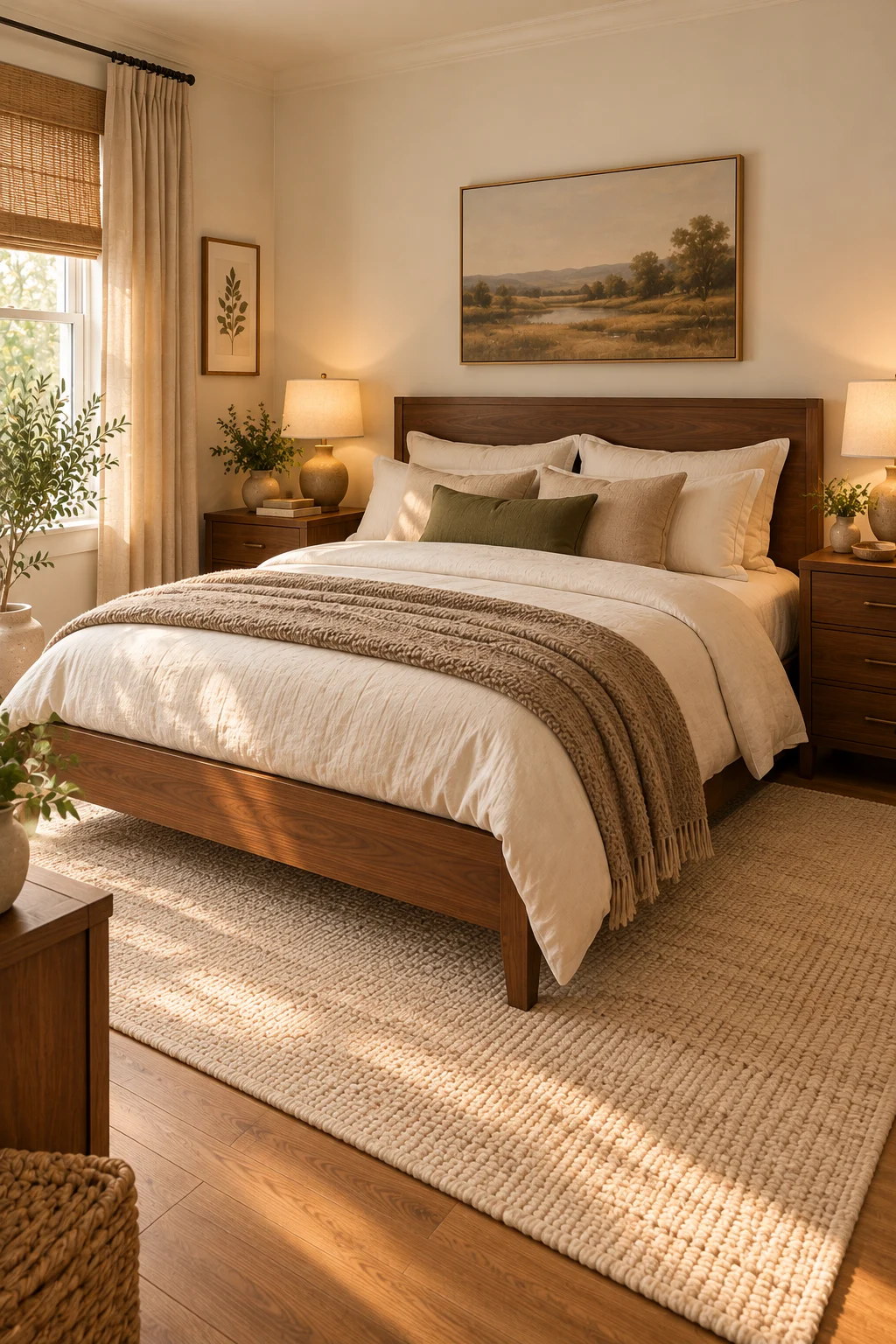
Warm white and walnut are a natural pairing for modern classic bedrooms.
Warm white walls create a soft, bright background, while medium-walnut furniture adds depth and traditional character.
Start with a simple walnut bed frame and coordinating nightstands. The pieces don’t need elaborate carving or ornate hardware. Clean lines with subtle traditional proportions are enough to establish the style.
Layer ivory bedding with a camel throw and mushroom cushions to connect the warm wood with the lighter walls.
If you’re adding a dresser, try to keep its wood tone reasonably close to the bed and nightstands. Everything doesn’t need to come from the same furniture collection, but a consistent undertone helps the room feel cohesive.
For a slightly more contemporary appearance, choose simple black or aged-brass-look hardware.
The combination works particularly well when you want a bedroom that feels timeless without relying on decorative wall treatments.
4. Create a Symmetrical Bedside Arrangement
Symmetry is one of the defining features of traditional bedroom design, and it translates beautifully into modern classic interiors.
Place two matching or visually balanced nightstands on either side of the bed, then add coordinating lamps.
The result creates a calm, orderly composition that makes the bed feel like the room’s natural focal point.
You don’t need identical decorative accessories on both sides. One nightstand might hold a book while the other has a small ceramic dish. Keeping the furniture and lighting balanced is usually enough.
Choose nightstands that fit comfortably beside the bed and provide useful storage.
In smaller rooms, narrow nightstands can achieve the same balanced effect without restricting circulation.
If the bedroom layout makes perfect symmetry impossible, focus on visual balance instead. A lamp on one side and a similarly scaled wall light on the other can still create a thoughtful arrangement.
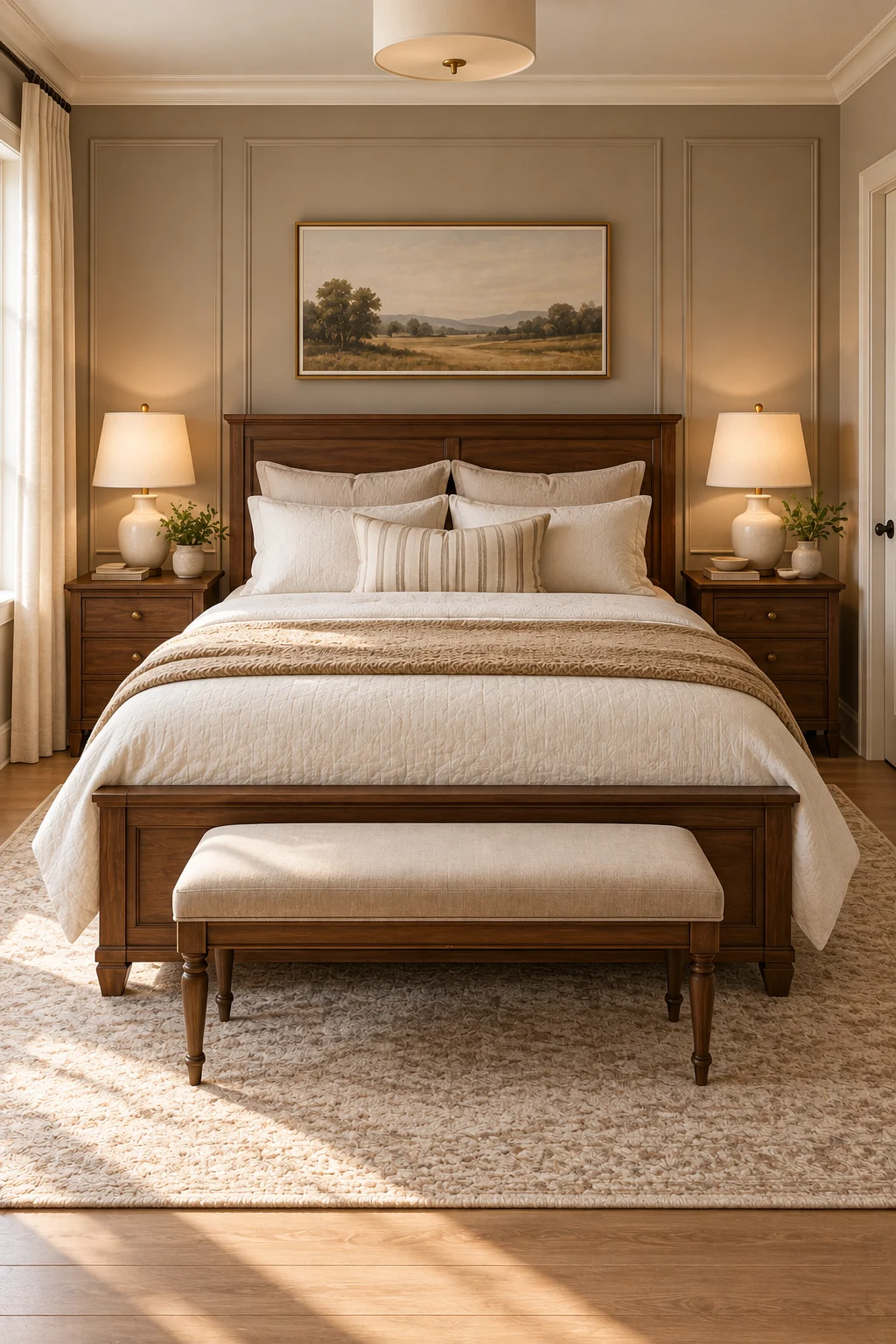
5. Introduce Muted Olive as a Classic Accent
Muted olive is a beautiful way to add color to a modern classic bedroom without losing its calm, timeless atmosphere.
The earthy green works especially well with walnut furniture, ivory bedding, and warm brass-look details.
For a stronger statement, paint the wall behind the bed in a subdued olive shade. Keep the remaining walls warm white or cream to preserve brightness.
If you’d rather avoid repainting, introduce olive through a throw, cushions, artwork, or upholstered bench.
Choose a shade with soft gray or brown undertones rather than a highly saturated green. The color should complement the furniture instead of competing with it.
A small amount of olive can also make warm neutral bedrooms feel more layered and personal.
For a cohesive result, repeat the accent once or twice rather than introducing it across every surface.
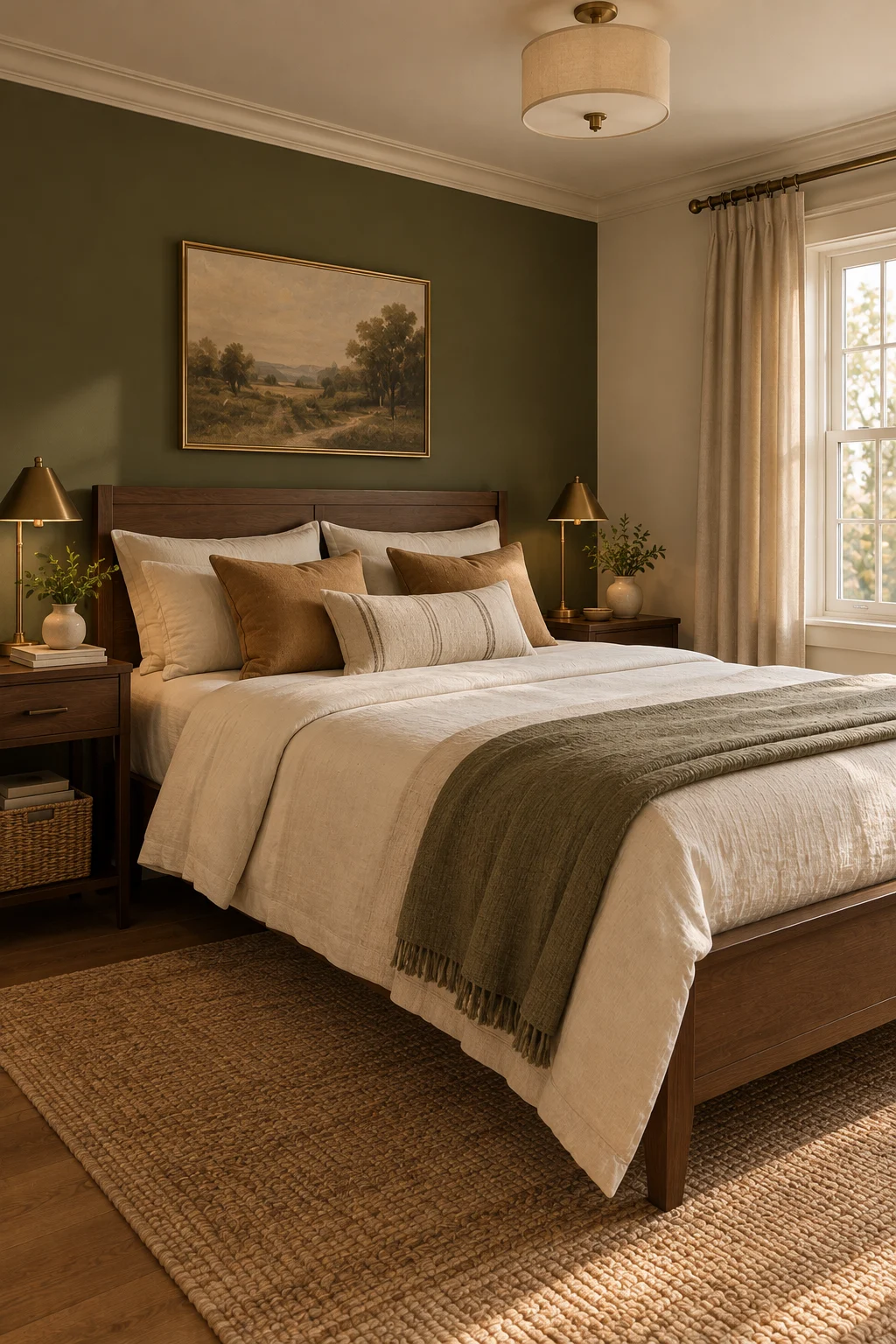
6. Choose Simple Aged-Brass-Look Lighting
Lighting can make a modern classic bedroom feel more elegant without requiring elaborate fixtures.
Aged-brass-look bedside lamps, understated wall sconces, or a simple ceiling fixture introduce traditional warmth while maintaining a clean appearance.
Choose shapes that feel restrained rather than highly ornamental. A compact brass-look lamp with a cream fabric shade works beautifully beside a walnut bed.
Warm light can make cream walls and wood furniture feel especially inviting in the evening.
Remember that decorative lighting still needs to be practical. Bedside lamps should provide enough illumination for reading, while ceiling or general lighting should support dressing and everyday movement.
Try to repeat the same metal finish in a few places, such as lamp bases and drawer handles.
You don’t need every metal detail to match perfectly, but a consistent finish can help the room feel intentional.
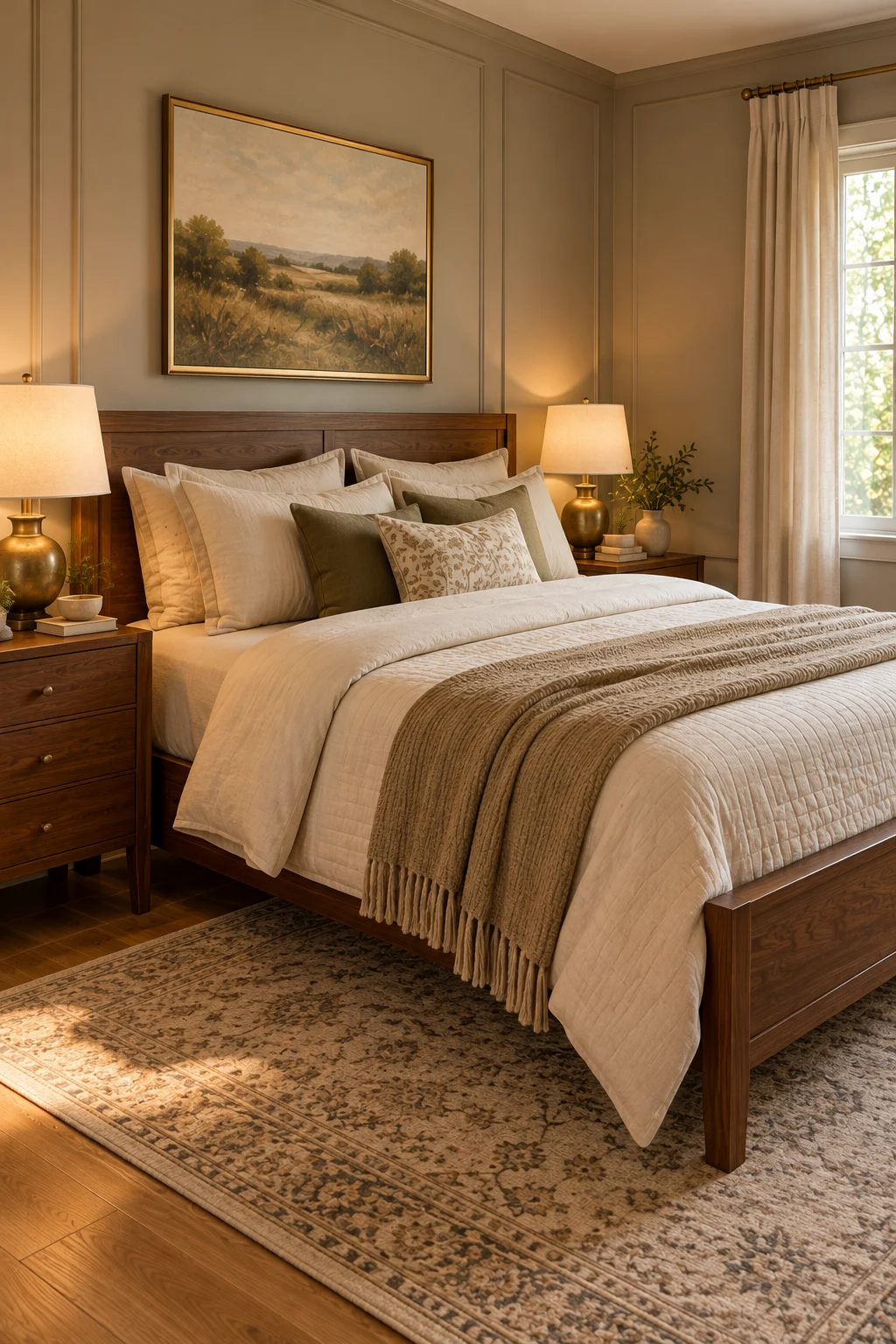
7. Add a Traditional-Style Area Rug
A traditional-style area rug can introduce pattern and softness without changing the bedroom’s furniture or walls.
Look for a faded floral, vintage-inspired, or understated geometric design in cream, muted olive, dusty blue, and warm brown.
These colors work beautifully with walnut furniture and neutral bedding.
Choose a rug large enough to feel connected to the bed. Ideally, it should extend visibly beyond the sides so the arrangement feels balanced rather than disconnected.
In a modest bedroom, a low-profile rug with a restrained pattern can provide warmth without making the room feel crowded.
If the wallpaper, headboard, or curtains already feature strong patterns, choose a quieter rug.
Use suitable rug padding where needed and keep the edges flat.
A well-chosen rug can help tie together classic furniture details and contemporary styling.
8. Use Full-Length Neutral Curtains
Full-length curtains can make a bedroom feel more finished while introducing the softness associated with traditional interiors.
Choose ivory, mushroom, or warm greige fabric that complements the walls and bedding.
Simple pleated panels or softly folded curtains look elegant without requiring heavy embellishment.
Mount the curtain rod securely and position it to suit the window’s proportions. Where the layout allows, extending the rod beyond the window frame can help the curtains stack neatly when open.
Avoid excessive fabric pooling on the floor, especially in a compact room.
If privacy or light control is important, choose an appropriate lining or pair the curtains with a suitable window shade.
The curtains should remain easy to open and close, and window locks and handles should stay accessible.
A restrained curtain treatment can make even a simple bedroom feel thoughtfully decorated.
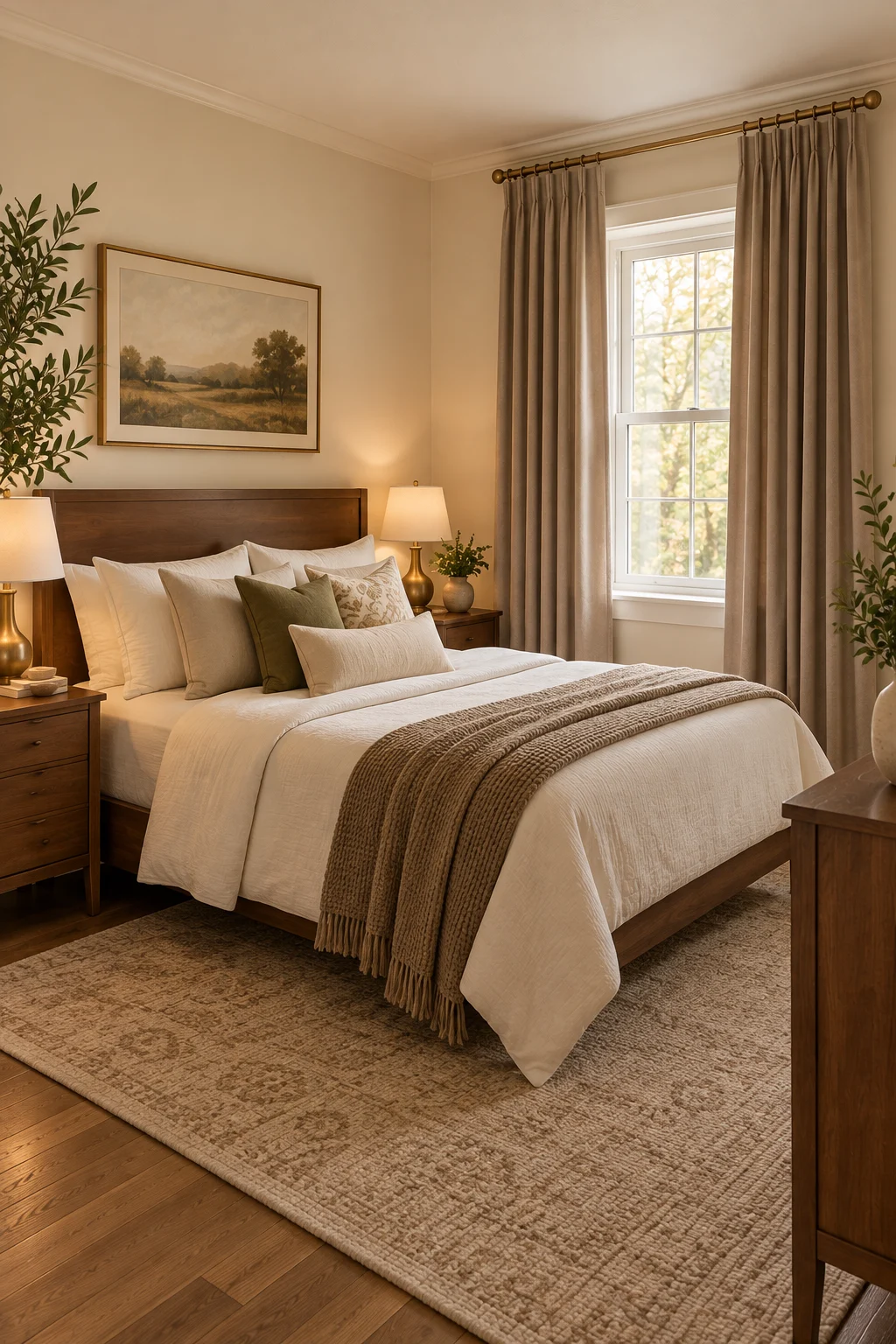
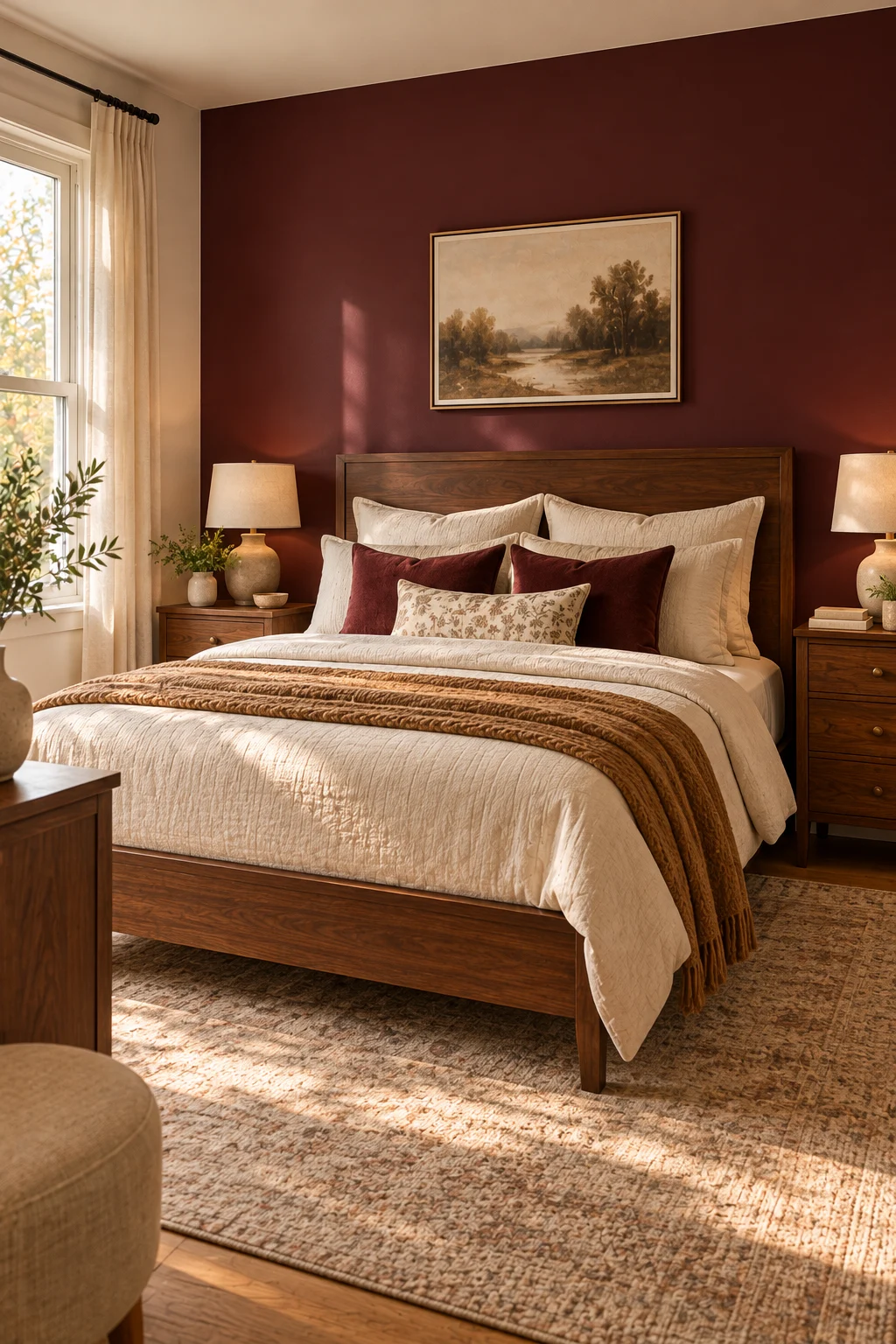
9. Create a Subtle Burgundy Accent Wall
Muted burgundy can introduce richness and classic character without making a bedroom feel overly dramatic.
Choose a deep, softened shade rather than a bright red or purple-leaning burgundy.
Use it on the wall behind the bed, then balance the color with warm cream bedding, walnut furniture, and light surrounding walls.
A camel throw or small brass-look lamp can reinforce the warmth of the palette.
Because burgundy already makes a strong statement, keep the wall itself relatively simple.
You may not need elaborate molding, oversized artwork, or several decorative accessories.
Test the paint in the actual bedroom before committing. Dark colors can appear different under natural daylight and warm evening lighting.
A burgundy accent wall is particularly effective when you want a modern classic bedroom with a slightly moodier, more sophisticated atmosphere.
10. Choose a Simple Traditional Dresser
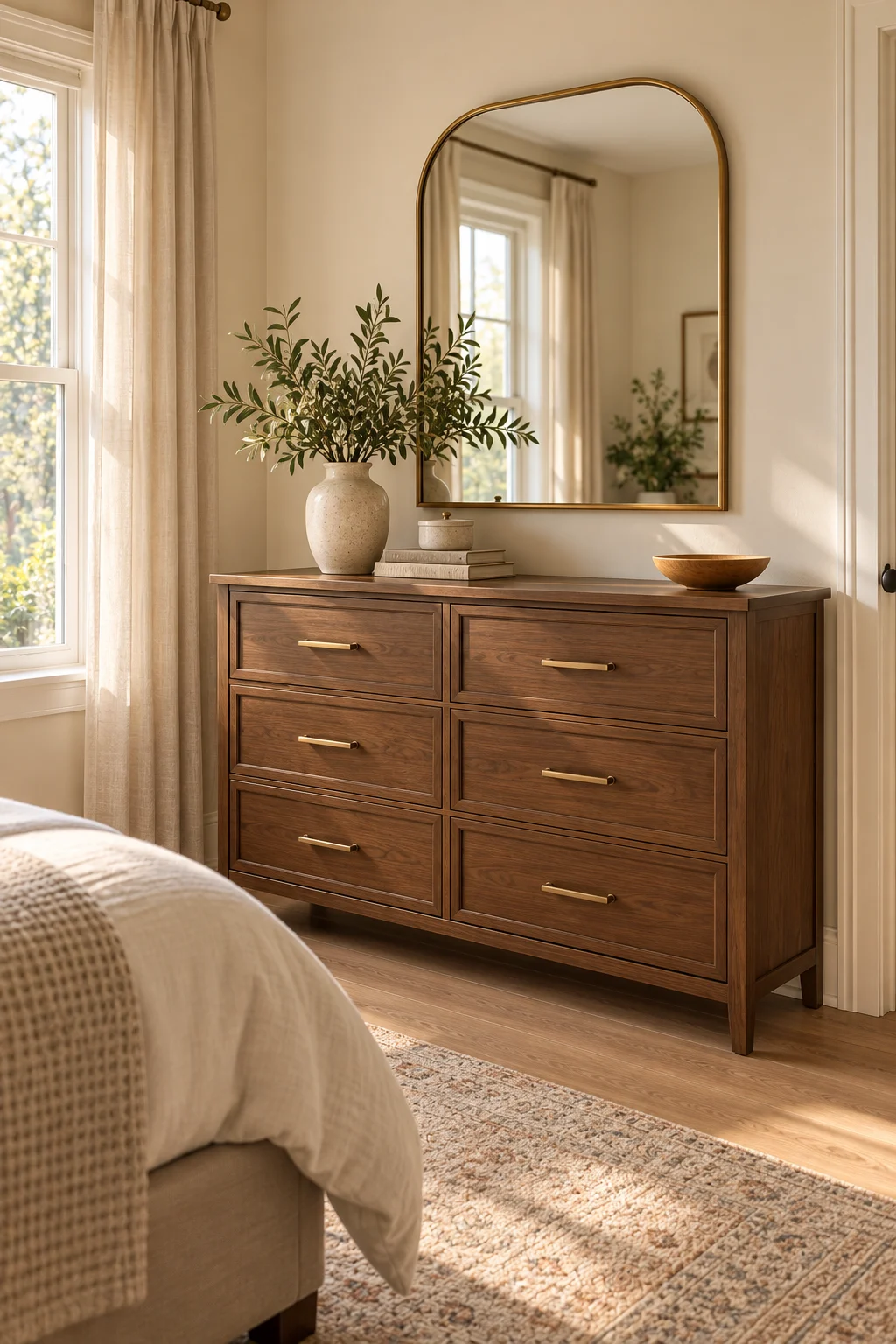
A traditional dresser can bring classic character into a bedroom without requiring a complete matching furniture set.
Look for subtle framed drawer fronts, restrained hardware, and a warm walnut or medium-brown wood finish.
Avoid overly ornate designs if the rest of the bedroom has clean, contemporary lines.
Choose a dresser that fits the available wall and provides storage for the items you actually need.
Its top can hold a small ceramic vase, a decorative tray, or a few everyday essentials.
A securely mounted mirror above the dresser can also create a practical dressing area.
Pay attention to the furniture’s depth. An oversized dresser may provide additional storage but make the room less comfortable to move through.
A well-proportioned piece with subtle traditional detailing often contributes more to the overall design than a larger, more decorative option.
11. Add a Softly Curved Headboard
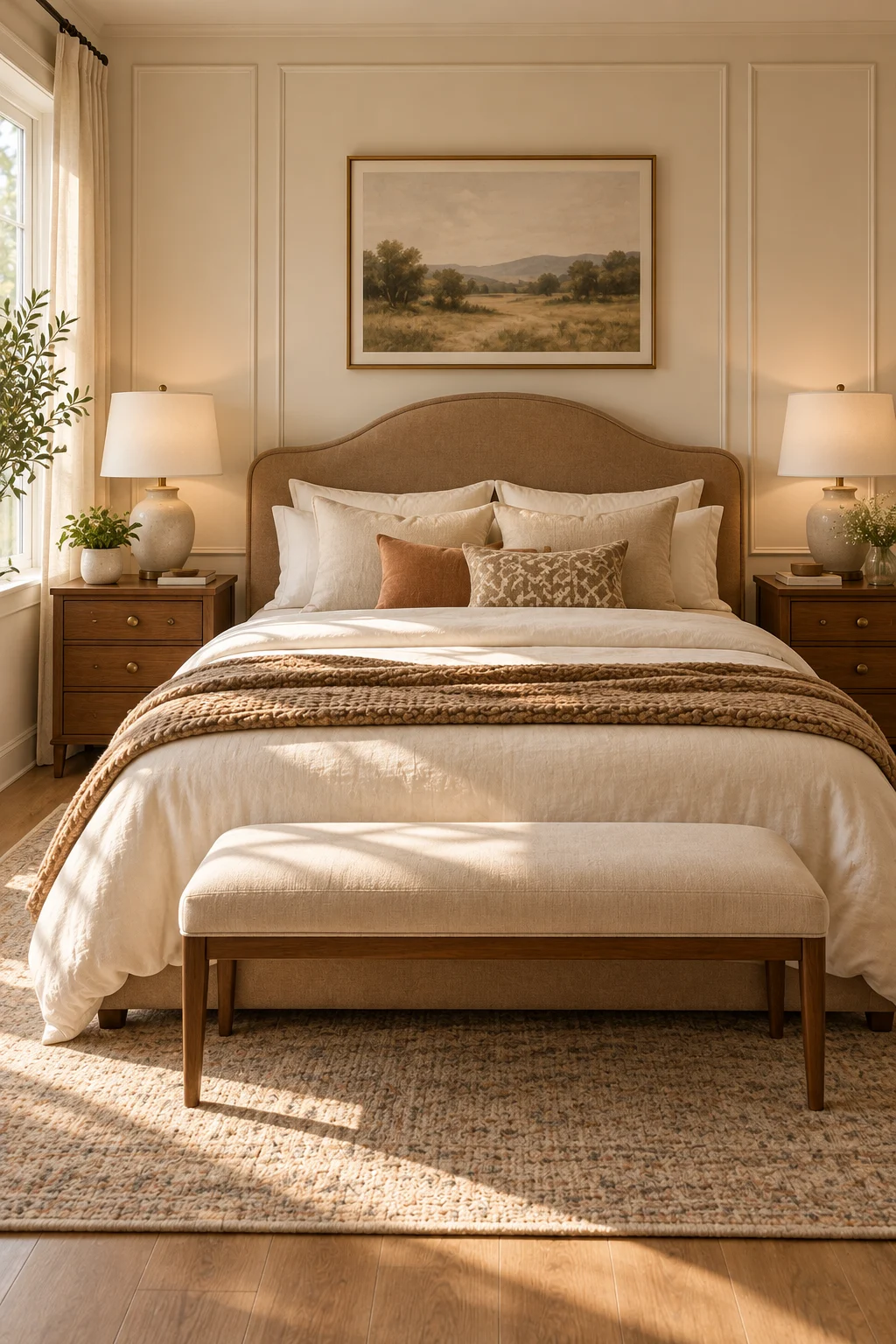
A softly curved headboard is a lovely way to introduce traditional elegance while maintaining a modern silhouette.
Unlike a rectangular headboard, a gentle arch or rounded upper edge adds movement and softness to the room.
Choose upholstery in cream, camel, or mushroom taupe to keep the appearance understated.
Pair the headboard with simple walnut nightstands and layered ivory bedding.
The curved shape can provide enough decorative interest on its own, especially against a plain warm-white wall.
If you already have picture-frame molding behind the bed, choose a headboard that fits comfortably within the wall arrangement.
Avoid selecting a shape so large that it competes with the ceiling height or makes the bed feel oversized.
A restrained curve is enough to create a classic influence without turning the room into a formal period-style interior.
12. Hang Restrained Traditional Artwork
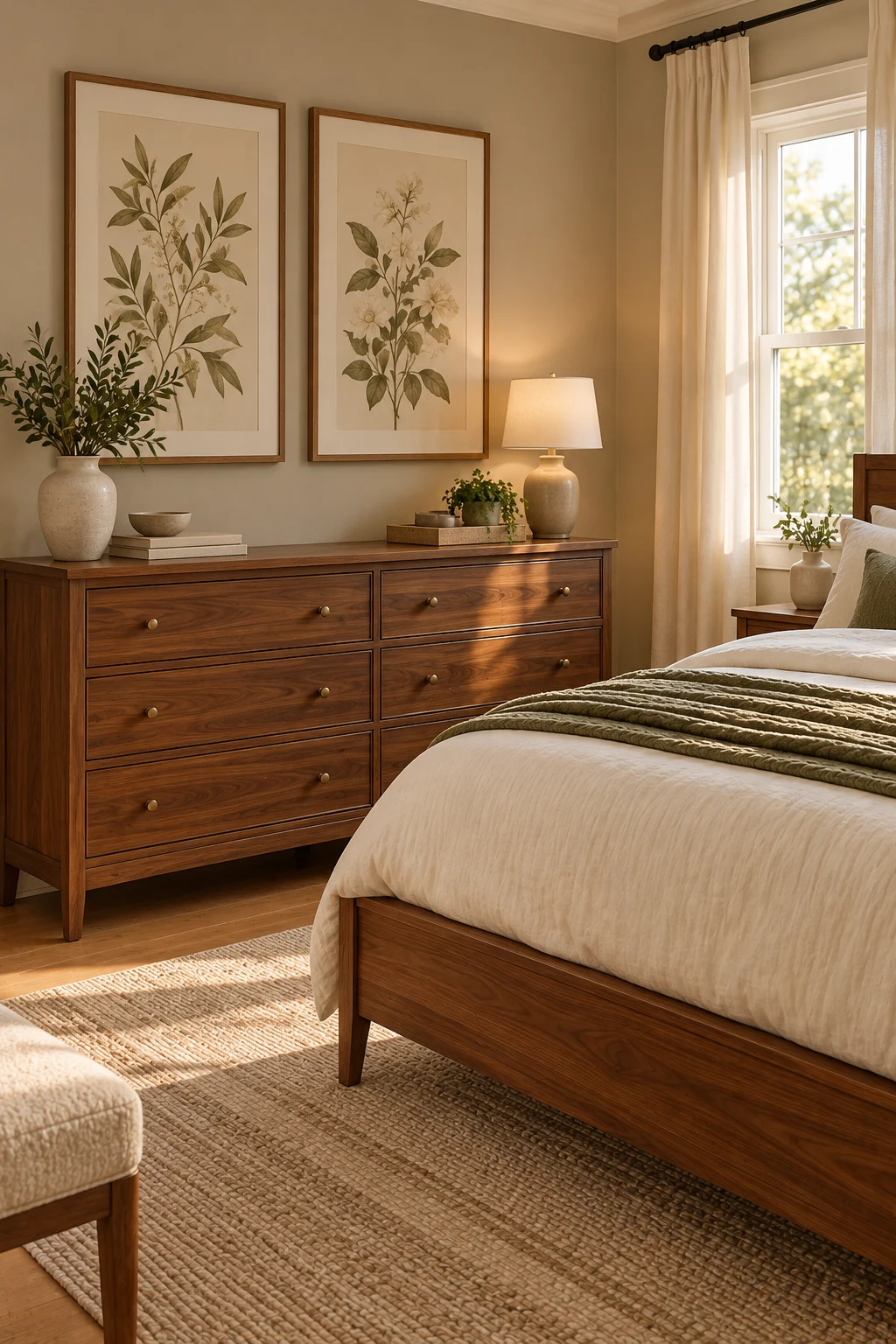
Artwork is an easy way to introduce classic character into a modern bedroom.
Botanical studies, muted landscapes, and simple still-life prints are particularly well suited to the style.
Choose frames in walnut, dark bronze, or muted gold, depending on the furniture and lighting finishes.
A single proportionate artwork above a dresser can create a calm focal point. Alternatively, a pair of coordinated prints can reinforce a symmetrical bedside arrangement.
Avoid covering every available wall with artwork.
Modern classic design works best when decorative elements have room to stand out.
Choose colors that relate to the room’s existing palette. For example, muted olive botanical artwork can connect with an olive throw or accent wall.
Mount artwork securely and consider the weight and placement of frames, particularly near sleeping areas.
13. Layer Cream Bedding With Subtle Texture
Layered cream bedding can make a modern classic bedroom feel comfortable and refined without introducing strong colors.
Start with an ivory duvet or quilt, then add a lightweight coverlet or textured throw.
A camel or mushroom accent can provide contrast while keeping the palette soft.
Choose materials that suit the season and are practical to clean.
Texture is more important than quantity. A quilted coverlet, woven throw, and smooth cotton bedding can create enough variation without requiring a large pile of cushions.
Keep the arrangement simple enough to make the bed comfortably every morning.
If the headboard or rug already has a pattern, solid-colored bedding can help balance the room.
The goal is a bed that looks inviting and feels comfortable, not one that requires removing a dozen decorative pillows before sleeping.
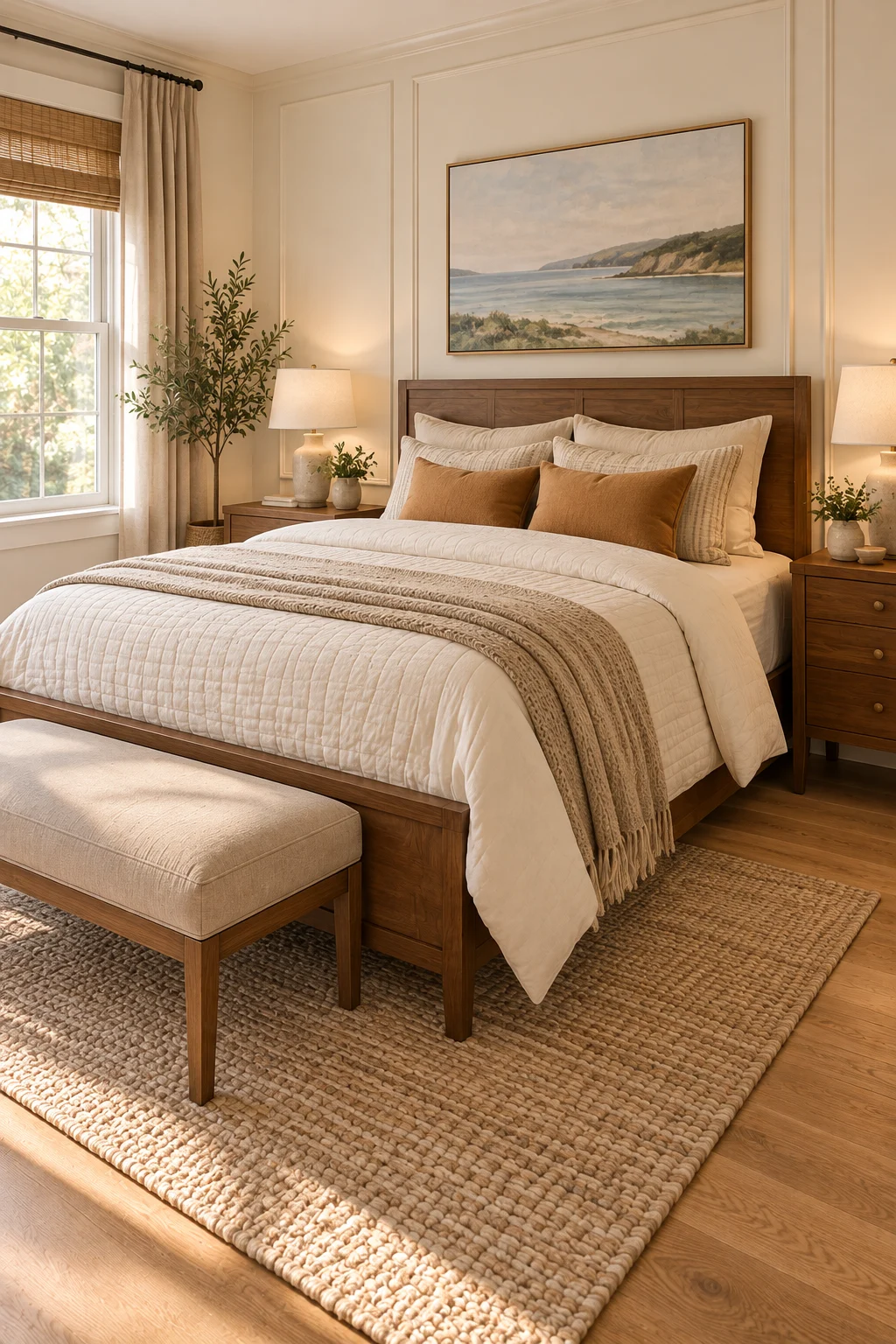
14. Combine Modern Furniture With Classic Wall Details
Modern classic bedrooms work particularly well when contemporary furniture is paired with restrained traditional architecture.
A simple walnut bed, compact nightstands, and clean-lined dresser can sit comfortably against a wall with picture-frame molding.
The contrast creates interest without making the room feel like two unrelated styles.
Choose one main traditional feature, such as wall molding or a subtle paneled accent wall.
Then keep the furniture relatively simple.
If the room already has decorative trim, you may not need ornate lamps, elaborate mirrors, and patterned wallpaper as well.
Coordinate the colors and materials carefully. Warm cream walls, walnut furniture, and muted brass-look lighting provide a consistent foundation.
In smaller bedrooms, this approach can create architectural character without taking up additional floor space.
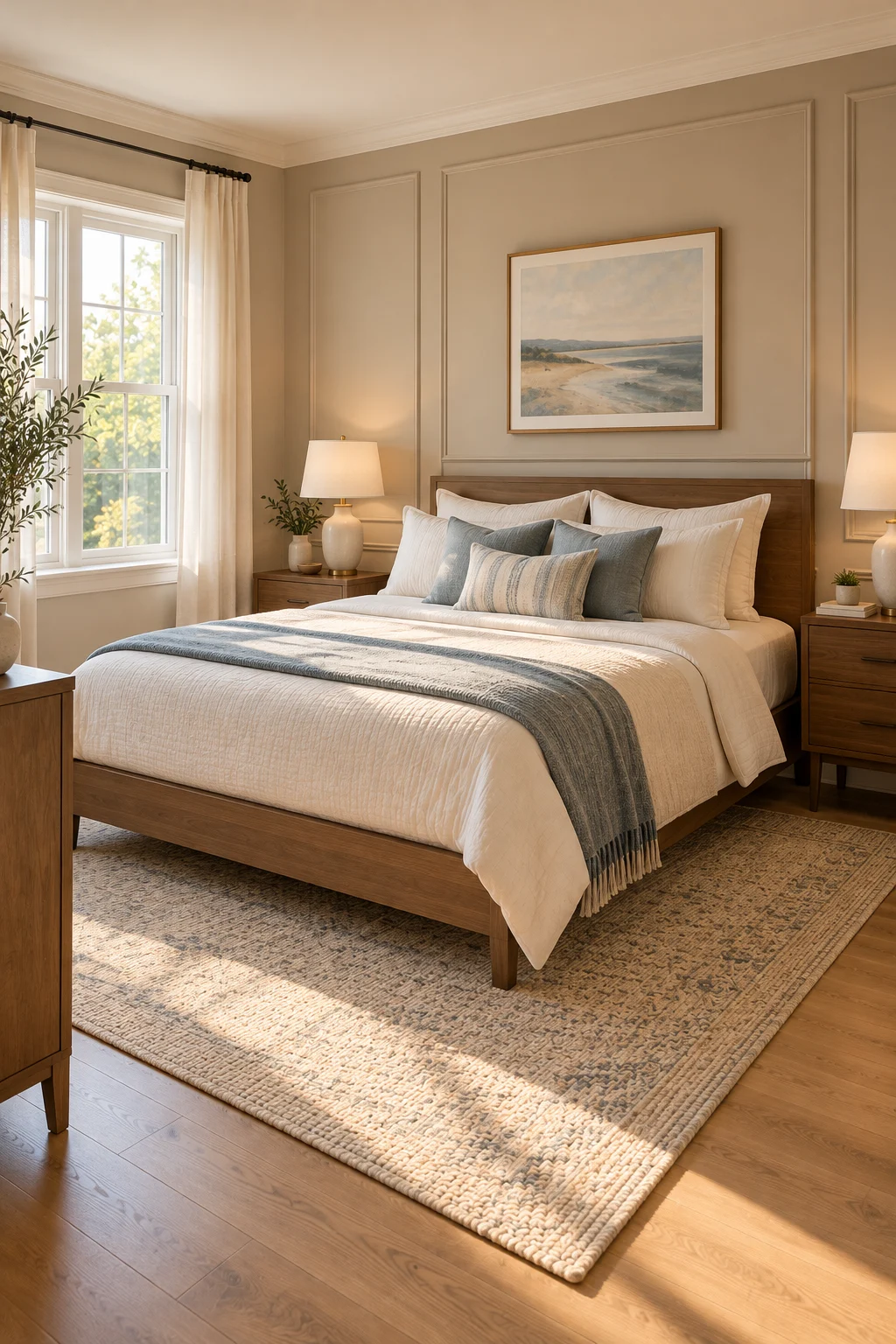
15. Create a Balanced Modern Classic Bedroom
A cohesive modern classic bedroom brings together proportion, warmth, and carefully selected traditional details.
Start with warm cream walls and a medium-walnut bed. Add ivory bedding, compact nightstands, and practical bedside lighting.
Choose one or two classic features, such as subtle wall molding, a traditional-style rug, or a gently curved headboard.
Then introduce a restrained accent color. Muted olive, dusty blue, or deep burgundy can add personality without overwhelming the neutral foundation.
Keep the furniture appropriately scaled and leave enough open space for comfortable movement.
Avoid adding decorative elements simply because they fit the style. Each piece should contribute to the room’s appearance or everyday function.
The finished bedroom should feel elegant and welcoming without being difficult to maintain.
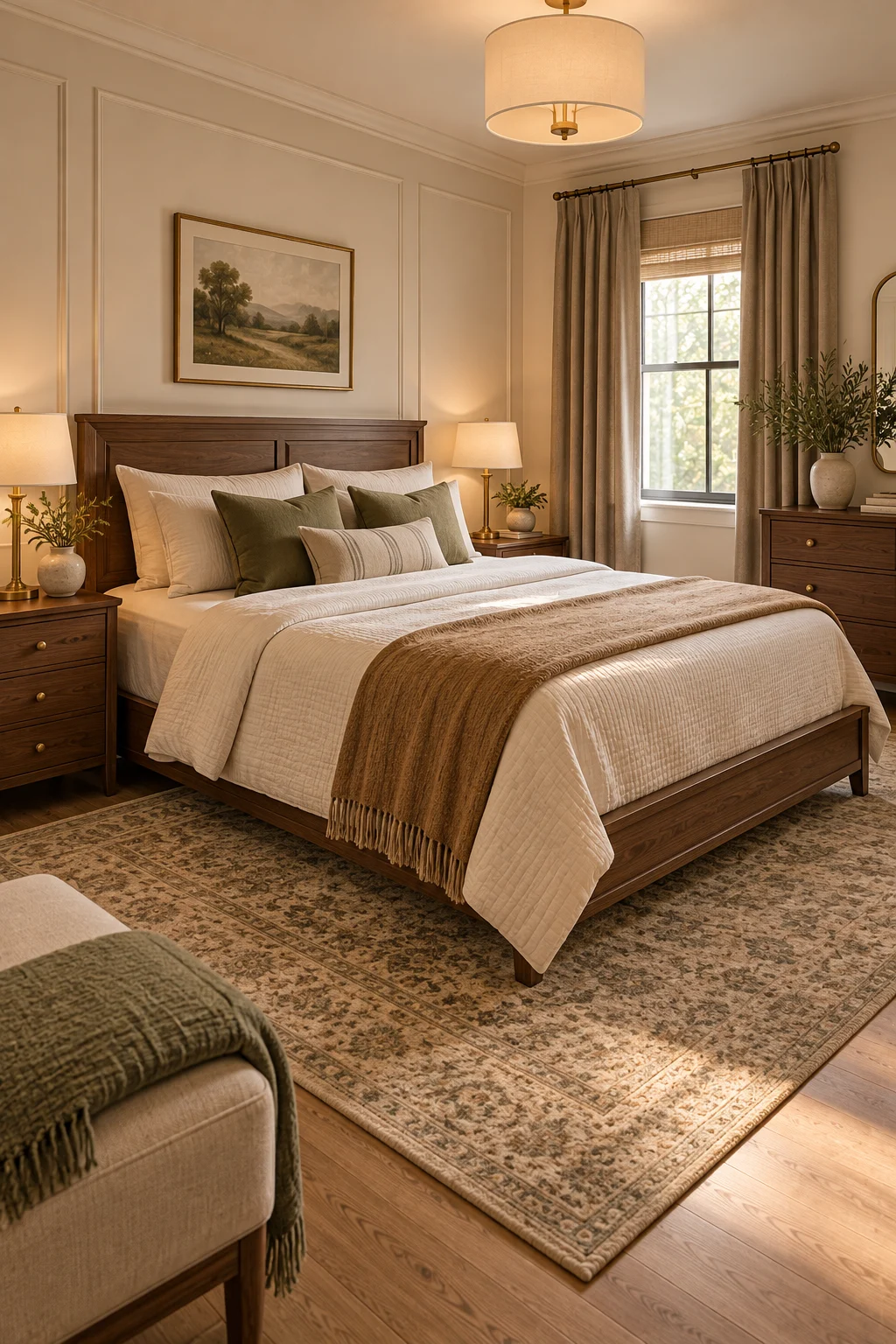
How to Choose a Modern Classic Bedroom Palette
A modern classic palette usually begins with warm neutrals.
Warm white, cream, mushroom, and soft greige create a flexible foundation for walnut furniture, understated wall molding, and traditional textiles.
Choose one deeper accent color to add personality. Muted olive creates an earthy atmosphere, burgundy introduces richness, and dusty blue provides a softer contrast.
Repeat the chosen accent in a few places rather than introducing several unrelated colors.
Consider the room’s natural light before committing to a darker wall shade.
A cohesive palette should connect the walls, furniture, textiles, and lighting without making everything look identical.
Modern Classic Bedrooms in Small Spaces
A small bedroom can achieve a modern classic look without oversized furniture or elaborate architectural features.
Choose a bed that fits comfortably within the room and pair it with compact nightstands.
Simple wall molding can add character without taking up floor space, while a proportionate upholstered headboard creates a polished focal point.
Keep the palette relatively consistent and avoid adding too many decorative objects.
A useful dresser, practical lighting, and well-chosen curtains may contribute more to the room than several purely decorative pieces.
The most important consideration is maintaining comfortable access to the bed, storage, and windows.
Budget-Friendly Modern Classic Updates
You don’t need to replace every piece of furniture to create a modern classic bedroom.
Start with changes that make the biggest visual difference.
New bedding in cream and camel, a pair of coordinated bedside lamps, or full-length neutral curtains can refresh the room while working with existing furniture.
Painting an accent wall or adding simple decorative molding may also introduce classic character.
If you already own wooden furniture, consider coordinating the room around its existing finish rather than buying an entirely new set.
Prioritize improvements that suit your budget, the condition of the room, and your ability to maintain them.
A few thoughtful updates can create a more cohesive appearance than several unrelated purchases.
Common Modern Classic Decorating Mistakes
One common mistake is combining too many ornate details.
Decorative molding, heavily carved furniture, patterned wallpaper, elaborate mirrors, and traditional lighting can all be attractive individually, but using them together may overwhelm a modest bedroom.
Another mistake is choosing furniture that is too large for the room.
An oversized headboard or dresser can make even a carefully decorated bedroom feel cramped.
Avoid relying exclusively on cool gray and stark white if you want a warm, welcoming atmosphere.
Finally, remember that modern classic design should remain practical. Comfortable bedding, accessible storage, and useful lighting matter just as much as decorative details.
Cleaning and Maintenance
Choose furniture and textiles that fit your everyday cleaning routine.
Dust wall molding, furniture, lamps, and decorative accessories regularly.
Follow upholstery care labels and bedding washing instructions.
Use appropriate cleaning products for wood finishes, metal hardware, and painted surfaces.
Check wall-mounted artwork, mirrors, curtain rods, and furniture anchors periodically.
Keeping decorative accessories selective can also make the bedroom easier to clean and maintain.
Safety and Practical Considerations
Keep clear access around the bed, closet doors, windows, and other frequently used areas.
Secure tall dressers and other tip-prone furniture according to the manufacturer’s instructions.
Mount mirrors, artwork, and curtain rods using appropriate hardware for the wall and the item’s weight.
Avoid placing heavy or poorly secured decorative objects above sleeping areas.
Choose lighting suitable for reading, dressing, and everyday movement, and keep electrical cords away from walkways and areas where furniture may damage them.
When installing wall molding or other architectural details, check for outlets, switches, and concealed services before drilling or fastening.
Preserve access to vents, safety devices, and windows.
Final Thoughts
A modern classic bedroom doesn’t need elaborate furniture or expensive architectural features to feel elegant.
Warm neutral colors, beautiful wood furniture, subtle traditional details, and comfortable textiles can create a space that feels both timeless and practical.
Start with a simple foundation, choose a few classic elements that suit the room’s proportions, and keep the overall arrangement balanced.
The result can be a bedroom that feels polished, welcoming, and comfortable for everyday living.
