

17 Small Coffee Bar Ideas for Tiny Kitchens, Counters, and Awkward Corners
Having a coffee station sounds like a lovely idea until you start looking at inspiration photos and realize many of them dedicate several feet of cabinetry to making one cup of coffee. That’s not particularly helpful if you’re working with a normal kitchen counter, a small apartment, or a corner already competing with the toaster.
The good news is that useful small coffee bar ideas don’t require a separate room—or even a separate cabinet. A countertop corner, an unused 24-inch (61 cm) stretch of counter, a narrow wall, or a compact rolling cart can be enough.
The important part is designing around the routine rather than the décor. Your machine needs to fit with its lid open. The water reservoir needs to come out. You need somewhere to put a mug while adding milk, and the cord needs to reach an appropriate outlet without trailing across the counter.
Get those details right first. Then you can make the coffee area look good without sacrificing half your food-prep space.
1. Create a Simple Countertop Coffee Bar in an Unused Corner
One of the easiest home coffee station ideas is also one of the least expensive: claim a corner of an existing kitchen counter.
Before moving anything, measure your machine. Don’t stop at width. Measure its depth and height, then repeat the height measurement with every lid fully open. If the water tank lifts out from the top, check how much room that requires too.
A machine that’s 13 inches (33 cm) tall may technically fit under an upper cabinet but become irritating if you have to drag it forward every morning to add water.
Keep the machine toward the back while leaving usable counter immediately in front or beside it. That empty patch is where the mug goes while you’re scooping coffee, adding sugar, or dealing with a used spoon.
If you only drink one type of coffee, don’t turn the corner into a café display. Keep the machine, coffee, and perhaps sugar accessible. Extra beans, backup filters, and your collection of 14 mugs can stay in a nearby cabinet.
Corners are also crumb and splash magnets, so avoid complicated decorative arrangements that have to be dismantled every time you wipe the counter.

2. Fit a Mini Coffee Station Beneath Upper Cabinets
The gap between countertop and upper cabinets often looks generous until you place a top-opening coffee maker there.
This is why I’d choose the appliance before designing the station around it.
Measure from the counter to the bottom of the upper cabinet. Then compare that with the machine’s operating height—not simply the dimensions listed for the closed appliance.
Some machines need substantial clearance to open a water reservoir or pod compartment. Others have removable tanks at the side or rear. A front-access machine can be much easier to live with in a tight kitchen.
If the appliance needs to slide forward for refilling, put it on a smooth, washable appliance tray rather than repeatedly scraping it across the counter.
Keep shelves and hanging mug racks away from the area directly above anything that opens upward.
A mini coffee station doesn’t need much decoration here. The surrounding kitchen cabinetry already provides the visual structure.

3. Dedicate One Narrow Section of Countertop to Coffee
If your kitchen counter is long but busy, give coffee a clear boundary instead of letting supplies spread outward.
A section around 18–30 inches (46–76 cm) wide may work for some compact machines, but there isn’t one universal minimum. Your appliance and preparation habits matter more than a generic number.
Choose the location carefully. I’d avoid putting the station immediately beside a stovetop, where steam and grease eventually coat the machine, coffee jars, and mugs. Right beside the sink can be equally annoying if dirty dishes constantly invade the area.
A short section at the end of a cabinet run often works well.
Store filters, pods, or spare coffee in the drawer underneath if you have one. This lets the counter remain dedicated to the things you touch every morning.
It’s a small distinction that makes a big difference: the coffee station should hold daily coffee-making items, not your entire coffee inventory.
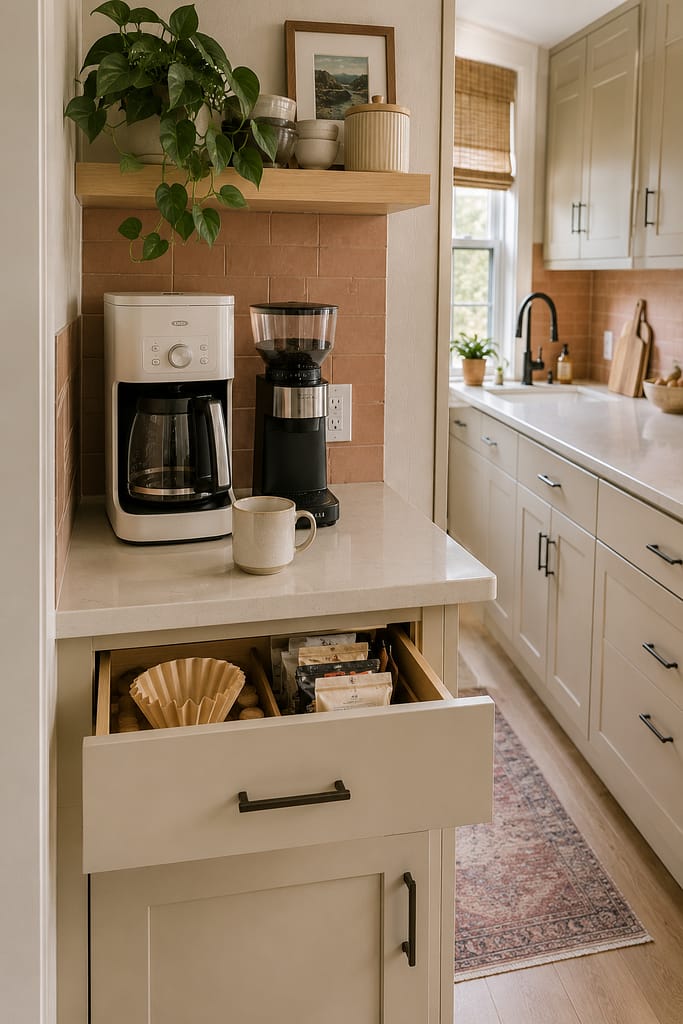
4. Use a Small Tray to Contain Everyday Essentials
A tray is one of those inexpensive organizing tricks that genuinely earns its place in a small kitchen.
Use it for the loose items that otherwise migrate: sugar jar, coffee scoop, syrup if you use it every day, perhaps a small container for teaspoons.
Don’t choose a tray so large that it consumes the entire station. You still need exposed countertop for making the drink.
Washability matters more than people realize. Coffee splashes, sticky sugar, and drips from spoons eventually reach the tray, so sealed wood, metal, or another easy-to-clean material is more practical than something delicate.
The tray also creates a natural editing rule. If a new bottle doesn’t fit, ask whether it really needs to live on the counter.
Backup sweeteners, unopened coffee, spare pods, and seasonal syrups are inventory. Put them elsewhere.

5. Add Floating Shelves Above the Coffee Station
When countertop width is scarce, moving storage upward can free a surprising amount of room.
A shallow floating shelf around 6–10 inches (15–25 cm) deep may be enough for mugs, coffee containers, or tea without projecting excessively over the workspace. Exact depth depends on what you’re storing.
Before installing it, check the coffee machine below. Can its lid still open? Can you remove the water tank? Can you comfortably see what you’re doing?
Don’t overload the shelf with heavy stacks of mugs unless the shelf, wall, and fixings are designed for the load.
One or two shelves are usually plenty. Pinterest coffee bars sometimes have three shelves filled with signs, plants, jars, and mugs, leaving the actual coffee machine looking like an afterthought.
Give the functional objects priority.

6. Leave Working Space Beneath a Single Floating Shelf
Sometimes one shelf is better than two.
A single floating shelf can define a small space coffee station while keeping the area underneath visually open. Place mugs and containers on the shelf, then leave the counter for the coffee maker and preparation.
This arrangement works especially well with taller machines because you can install the shelf based on the appliance’s actual operating height.
Don’t hang mugs directly underneath if they’ll interfere with the machine lid or make the work surface feel crowded.
If you use a kettle, remember that steam needs consideration too. Avoid creating a setup where hot steam is repeatedly directed at the underside of cabinetry or shelving.
A washable backsplash behind the station makes everyday cleanup easier. It doesn’t have to be tile; an existing painted surface with an appropriate durable finish may be perfectly adequate.
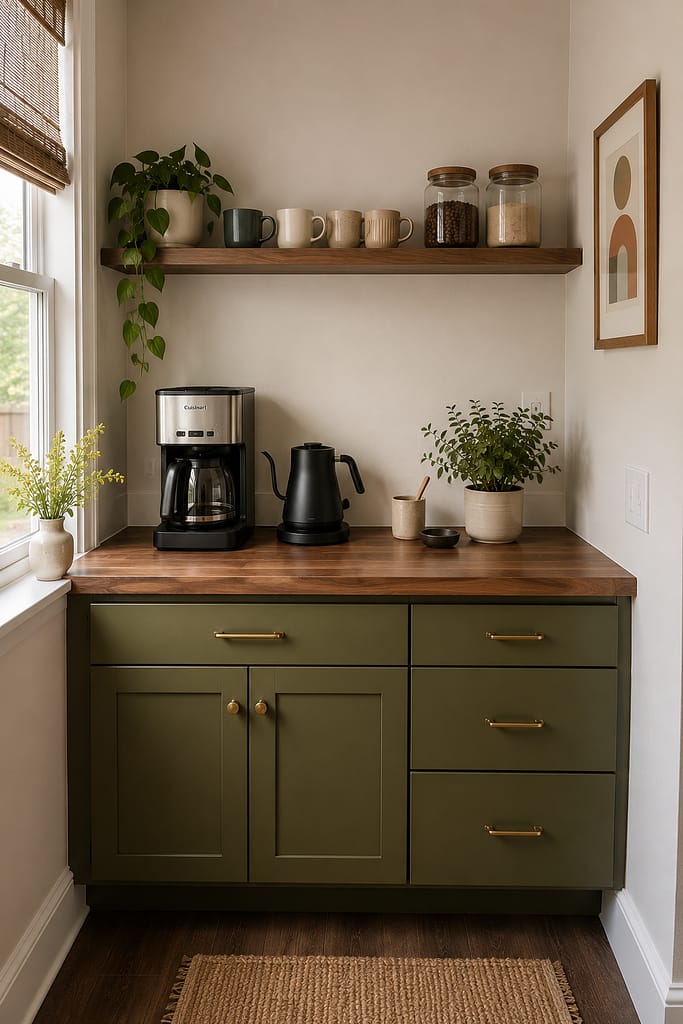
7. Turn an Awkward Counter Corner Into a Coffee Nook
Deep counter corners are notorious for becoming dumping grounds because they’re awkward for normal food preparation.
That makes them surprisingly good candidates for a coffee nook in kitchen counter layouts.
Put the least frequently moved part—the coffee maker—toward the deeper section, provided you can still access its controls and reservoir. Keep the mug preparation area closer to the front.
A small rotating organizer can work for lightweight supplies, although I’d avoid putting a heavy coffee machine on one unless it’s specifically designed for that purpose.
Corner outlets can be inconvenient. Don’t stretch appliance cords behind sinks, cooking areas, or across the worktop simply to make the arrangement symmetrical.
If the outlet dictates that the machine sits slightly off-center, that’s fine. Functional asymmetry is preferable to an attractive setup with a cord crossing the counter.
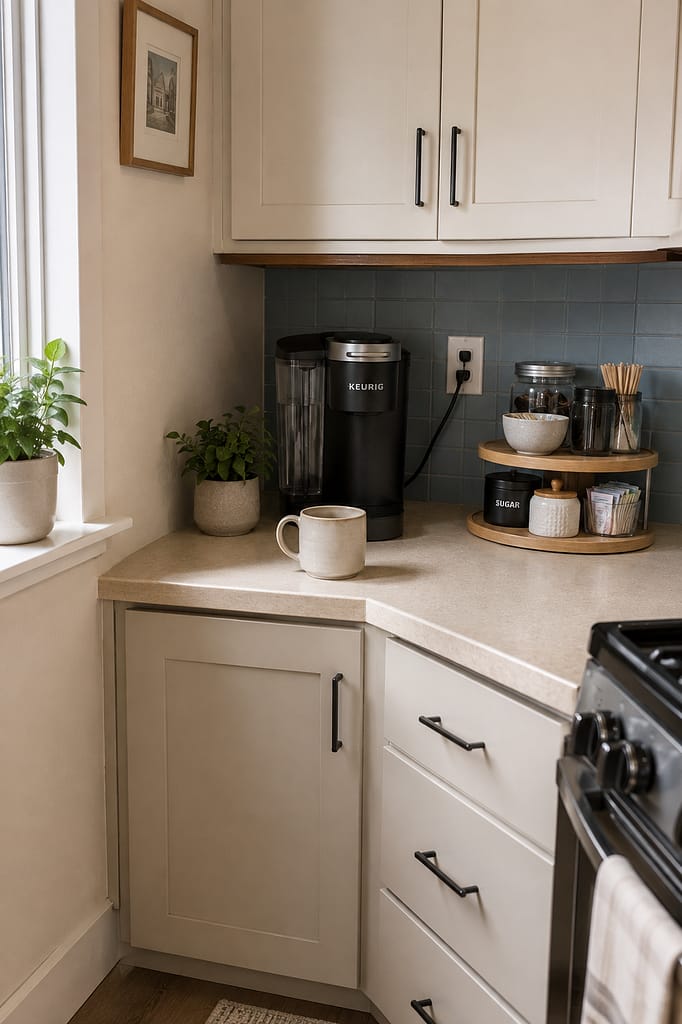
8. Combine Coffee and Tea Without Doubling the Clutter
A coffee and tea nook can quickly become twice as crowded if every box, pod, jar, and mug is displayed.
Instead, share the basic equipment.
Keep the coffee machine and kettle on the counter if both are genuinely used daily. Then give tea and coffee separate storage zones above or below.
Tea bags can go in a shallow drawer organizer rather than 12 colorful cardboard boxes on the counter. Beans stay fresher in appropriate sealed storage rather than decorative open containers.
Mugs don’t need separate coffee and tea collections either.
If space is particularly tight, consider whether the kettle can live in a cabinet and come out only when needed. Daily habits should determine the answer.
Leave enough counter between appliances for one mug. That little preparation zone is more useful than another decorative jar.
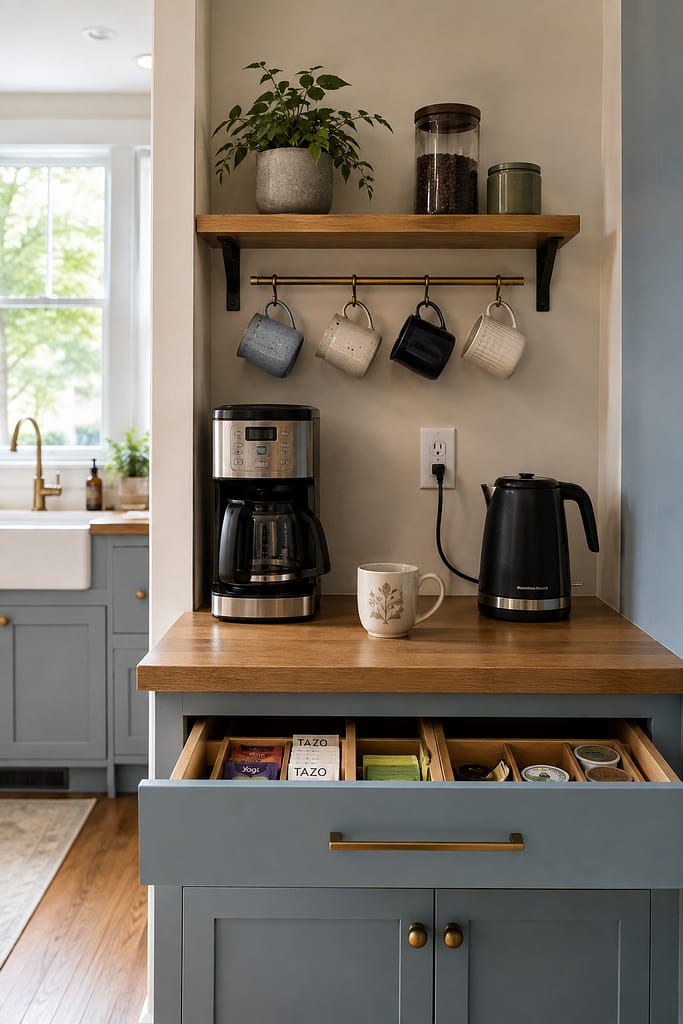
9. Use a Narrow Rolling Cart When Counter Space Is Gone
If every inch of kitchen counter is already doing useful work, don’t sacrifice food-prep space just to create a coffee bar.
A narrow rolling cart can become a practical alternative.
Measure the machine first, then find a cart deep and wide enough to support it safely without overhanging edges. The top also needs enough room to prepare a drink.
Lower shelves can hold mugs, beans, tea, filters, and a basket of less attractive supplies.
Position the cart close enough to an appropriate outlet that cords don’t cross a walking path. Don’t treat an extension cord running across the kitchen floor as a permanent solution.
Locking casters are useful so the cart doesn’t move while you’re pressing buttons or handling hot drinks.
A cart also works well for renters because it can leave with you.

10. Put the Coffee Bar Beside the Refrigerator
The end of a cabinet run or narrow gap beside a refrigerator is sometimes more useful than another decorative object.
A small freestanding cabinet, drawer unit, or modular piece can create a dedicated coffee area at home without altering the existing kitchen.
Check door swings first. Refrigerator doors need room to open fully, and the coffee cabinet shouldn’t interfere with nearby drawers or passageways.
A unit around normal counter height can feel visually connected to the kitchen even if it isn’t part of the cabinetry.
Use drawers underneath for coffee inventory, filters, tea, and cleaning supplies. This is particularly helpful because the station gains storage without requiring upper cabinets.
Repeat an existing kitchen finish—a similar wood tone, handle style, or countertop color—to make an inexpensive freestanding piece look intentional.

11. Move Mugs Onto a Wall-Mounted Rack
Mugs occupy an irritating amount of counter and cabinet space, especially if they’re stored two rows deep.
A small wall-mounted rack or a row of properly installed hooks can move your most-used mugs upward.
Limit it to everyday mugs rather than displaying every novelty cup you own. Four or six mugs may be plenty for a small station.
Position hooks where mugs won’t hang directly over a hot appliance, sink, or area where they’re likely to be knocked.
If you don’t want exposed mugs collecting kitchen grease or dust, keep them inside the nearest cabinet instead. Open mug storage works better away from heavy cooking splatter.
Renters can use a freestanding mug tree if wall mounting isn’t permitted, although it will consume some counter space.

12. Hide Backup Supplies in Baskets and Bins
Coffee bars become cluttered when daily supplies and bulk inventory are treated as the same thing.
You may need one week’s worth of pods beside the machine. You don’t need the entire bulk box there.
Use baskets, bins, or drawers for unopened coffee, extra tea, filters, cleaning tablets, spare syrups, and seasonal mugs.
Labeling can help, but keep it simple. One “coffee” bin and one “tea” bin may be more useful than creating 12 tiny categories.
If baskets sit on an upper shelf, use them for lightweight items. Heavy jars and appliances belong somewhere easier and safer to reach.
Closed storage is particularly helpful in a visually busy kitchen. Small coffee corner decor feels calmer when packaging isn’t dominating the view.

13. Keep a Modern Coffee Bar Visually Quiet
Modern coffee bar decor works especially well in a small kitchen because reducing visual clutter can make the entire counter feel larger.
That doesn’t mean removing everything useful.
Keep the machine, one or two containers, and everyday mugs accessible. Move packaging and backup supplies into drawers or cabinets.
Repeat finishes. If your coffee maker is black, a black tray or mug hooks can create continuity. If the kitchen has oak details, use one oak shelf rather than introducing several unrelated wood tones.
Resist filling empty wall space simply because it’s there.
One framed print or small shelf can be enough. And don’t put a plant exactly where the coffee mug needs to sit.
A clean patch of countertop isn’t missing décor. It’s working space.

14. Give a Small Coffee Corner Some Vintage Character
A vintage-inspired coffee corner doesn’t require buying antique cabinetry.
Start with practical pieces: a thrifted timber shelf, old ceramic canister, small framed print, or one vintage coffee tin. Mix them with a modern machine rather than trying to disguise the appliance.
The contrast usually looks more believable anyway.
Keep genuinely old wooden surfaces protected from water and coffee spills. A washable tray beneath jars or a machine can prevent rings and staining.
Vintage mugs look charming on open shelves, but rotate a small selection rather than displaying dozens.
This style works particularly well with cream, muted sage, dusty blue, natural pine, and warm metal finishes.
Avoid turning the station into a themed display. You still need room to make coffee.

15. Build a Simple Industrial Coffee Station With Open Shelves
An industrial-style coffee station can be inexpensive because the basic materials are straightforward: timber shelves, metal brackets, simple storage, and durable surfaces.
This works particularly well on a short blank kitchen or dining-room wall.
Use shelves for mugs and lightweight supplies while keeping the machine on a stable cabinet or countertop below. Don’t expect a decorative wall shelf to support a heavy appliance unless it was designed and installed for that load.
Black metal brackets can repeat the finish of a black coffee maker or kettle without requiring an entire industrial-themed room.
Keep the shelving restrained. Two useful shelves generally look better in a tiny space than an entire wall of pipes, signs, and café decorations.
If you create the station outside the main kitchen, consider the walking route to water. Carrying a dripping reservoir across the house every morning gets old quickly.

16. Create a Rental-Friendly Coffee Bar
Renters don’t need to install cabinetry to create a defined coffee area.
Start with a freestanding cart, narrow cabinet, or existing countertop. Add a tray to visually contain supplies and use existing cabinet storage wherever possible.
If your lease permits removable products, peel-and-stick backsplash can visually mark the area, but choose a product suitable for the surface and follow its removal guidance rather than assuming every adhesive product is damage-free.
A leaning shelf or freestanding mug rack can provide vertical storage without drilling.
Plug-in lighting may help in a dark corner, but don’t let the cord cross wet areas or walkways.
The advantage of a rental setup is flexibility. Everything can move when your kitchen arrangement changes, and you’re not investing heavily in a property you don’t own.

17. Organize the Coffee Station Around Your Actual Morning Routine
The most functional coffee set up ideas start with a boring question: what do you actually touch between walking into the kitchen and leaving with a drink?
Put those items closest to the machine.
If you use whole beans every morning, the grinder and beans deserve accessible positions. If you use pods, give daily pods a small drawer or container. If sugar gets used twice a month, it doesn’t need prime counter space.
Store mugs close enough that you aren’t walking across the kitchen while the machine runs.
Keep a small container or washable dish for used teaspoons if the sink isn’t immediately beside the station. Coffee spoons sitting directly on the counter create surprisingly sticky little marks.
Cleaning matters too. Keep the appropriate cleaning supplies nearby but out of the main preparation area.
After setting everything up, make coffee normally for several days before buying more organizers. You’ll quickly notice what feels awkward.
That’s the real test of a good countertop coffee bar setup: the routine gets shorter, not more complicated.

Before You Set Up Your Small Coffee Bar
Before ordering shelves, buying matching jars, or drilling mug hooks into the wall, test whether the proposed station works with your actual equipment.
- Measure your coffee machine. Record its width, depth, and closed height.
- Measure it again while it’s being used. Open every lid, pod compartment, bean hopper, and water reservoir. Remove the tank if that’s how you refill it.
- Find the nearest appropriate outlet. Avoid designing a station that depends on cords crossing sinks, food-prep areas, or walking routes.
- List what you touch every morning. The machine, coffee, mug, grinder, filters, sugar, and whatever else you genuinely use daily deserve the easiest positions.
- Separate daily supplies from inventory. Backup pods, unopened beans, extra filters, seasonal mugs, and cleaning products don’t all need to live on the counter.
- Look upward. Mugs and lightweight supplies may be able to move onto a shelf, rack, or into the cabinet above.
- Preserve preparation space. You need somewhere to set down a mug, scoop coffee, add milk, and deal with a spoon. Empty countertop is functional space.
- Test everything before making permanent changes. Live with the arrangement for several mornings. If you’re constantly pulling the machine forward, reaching awkwardly for mugs, or moving jars just to make coffee, adjust the layout before installing shelves.
The best small coffee bar ideas aren’t necessarily the ones with the most shelves, matching containers, or café-style decorations. A successful coffee station makes an everyday routine easier while giving back as much valuable kitchen space as possible.
If the machine is easy to refill, mugs are within reach, supplies have sensible storage, cords aren’t in the way, and there’s still enough clear counter to prepare a drink, you’ve already solved the important part. The décor can stay simple.