

18 Hallway Decor Ideas to Transform Your Walls, Ceiling & Landing
Hallways are easy to treat like leftover space. You decorate the living room, bedrooms, and entry, then somehow the hallway ends up with one lonely frame and a ceiling light you stopped noticing years ago.
But a hallway can carry a lot of personality without needing much furniture. Walls, trim, lighting, ceiling color, runners, and even the upstairs landing give you plenty to work with. The best part is that many of these updates are more about placement and proportion than buying a whole new room’s worth of decor.
These hallway decor ideas focus on details you can actually apply, from spacing a gallery wall to choosing a ceiling treatment that won’t overwhelm the architecture.
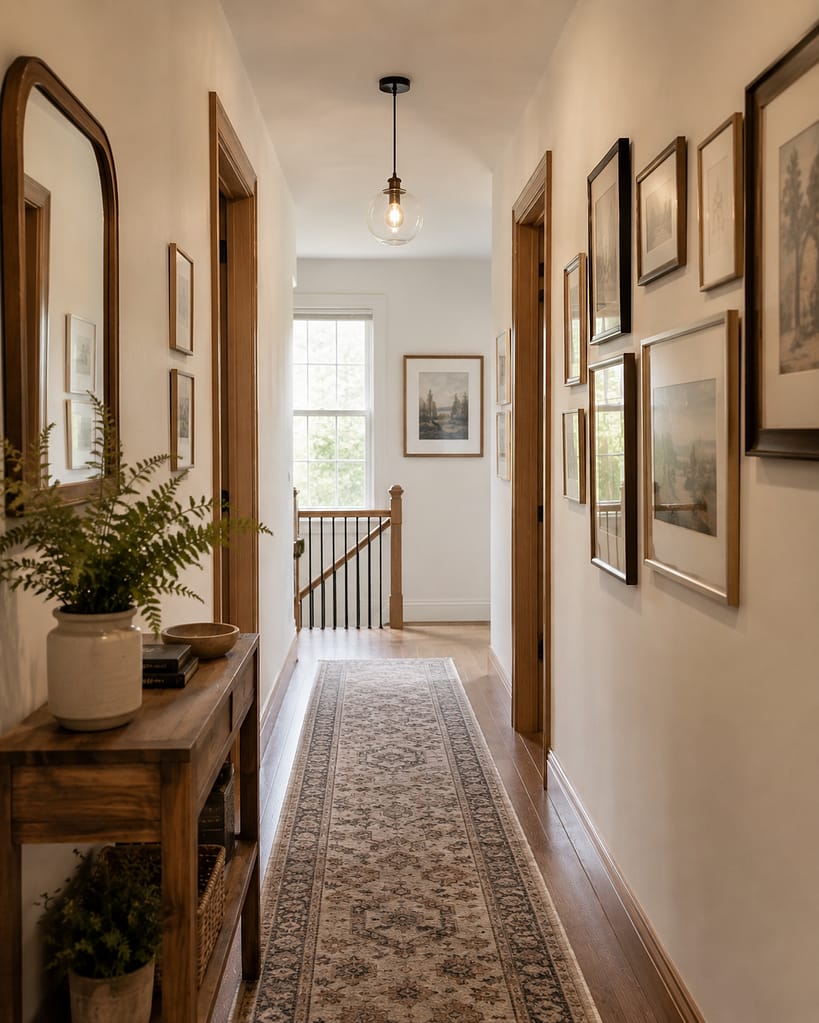
1. Build a Gallery Wall Around One Consistent Rule
A gallery wall looks collected rather than chaotic when at least one thing stays consistent. That might be matching frame colors, similar mat widths, or a repeating subject such as landscapes and family photographs. Keep roughly 2 to 3 inches between frames for a tighter arrangement, then center the overall grouping at a comfortable viewing height rather than lining every frame up with the ceiling. Before hammering nails, trace the frames onto paper and tape the shapes to the wall so you can judge the layout from both ends of the hallway.

2. Paint the Ceiling Instead of Another Wall
If you’ve already painted the hallway walls and it still feels unfinished, look up. A softly colored ceiling can add character without competing with artwork or doors. Muted blue, dusty green, warm beige, or a slightly deeper version of the wall color can work especially well. In hallways with standard-height ceilings, keep the contrast modest so the ceiling doesn’t feel visually heavy. Higher ceilings can handle a deeper tone more easily, particularly when the trim and upper walls stay light.
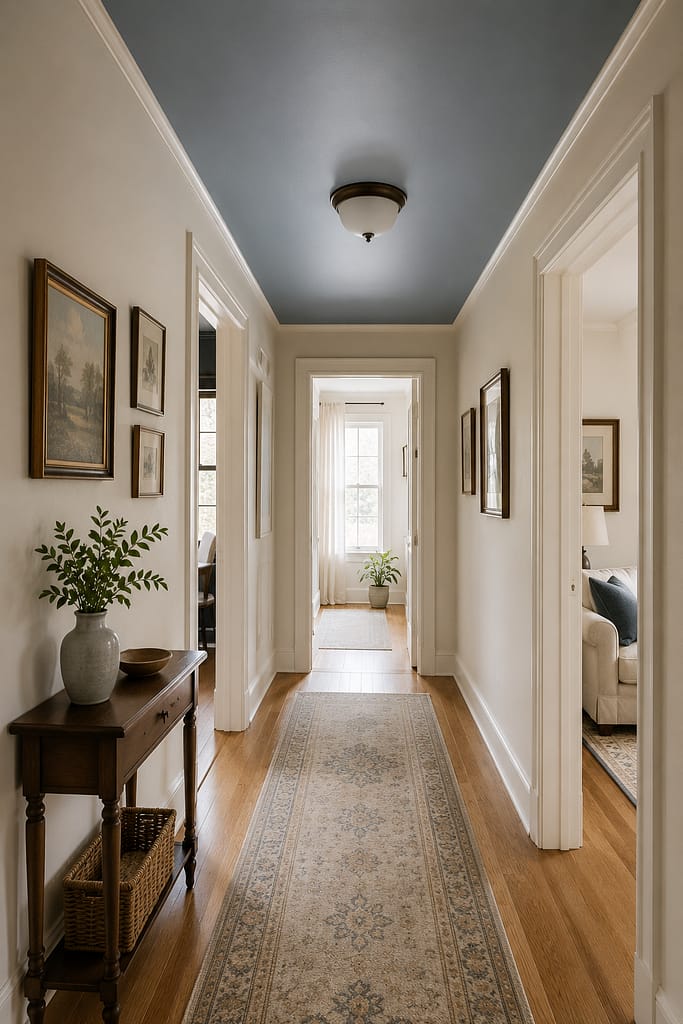
3. Use a Runner to Connect the Sightline
A runner can visually connect the front of a hallway to the rooms or landing beyond. Choose a length that feels intentional rather than leaving several random short rugs along the route. I like a runner that leaves visible flooring on both sides and enough clearance at doorways so it doesn’t catch under swinging doors. Pattern is useful in high-traffic areas because it hides everyday marks better than a pale solid. Let the runner introduce color, then repeat one of those tones elsewhere in art or paint.

Pro tip: Before ordering a runner, open every nearby door fully and note where the door bottoms travel. A beautiful rug quickly becomes annoying if it bunches or catches every time a room is opened.
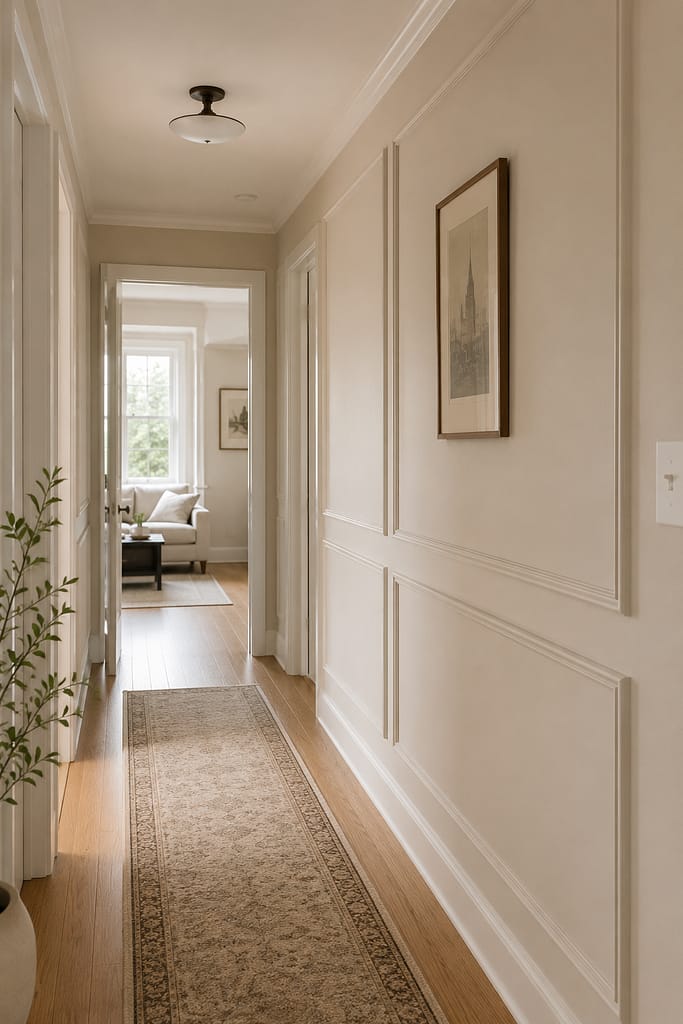
4. Add Picture-Frame Molding for Architecture
Plain drywall can look much more considered with simple picture-frame molding. The easiest approach is to divide the wall into a few large rectangles rather than dozens of tiny panels. Keep spacing around each box consistent and align the top and bottom lines across doors where possible. Painting the molding the same color as the wall creates a subtle modern effect, while a slight contrast feels more traditional. This works especially well in longer hallways where art alone can start to feel repetitive.
5. Try Half-Height Wall Paneling
Half-height paneling is practical as well as decorative because it gives high-traffic walls a more finished lower section. Tongue-and-groove, beadboard, or simple vertical MDF battens can all work depending on the house style. I’d keep the top line consistent through the hallway rather than changing height around every doorway. Paint the lower section in a durable finish that can handle fingerprints and scuffs, then use a softer flat or matte look above if you prefer less sheen on the upper walls.

6. Wallpaper One Continuous Hallway Wall
Wallpaper can be effective in a hall because you see it repeatedly from different angles. Instead of papering every surface, choose one long wall or the landing wall as the feature. Small-scale botanical, geometric, or block-print patterns are easier to live with than designs that need perfect viewing distance. Take extra care around door casings and corners, since those interruptions are where rushed installations show. If you’re using peel-and-stick paper, test a small section first to make sure the wall finish is compatible.
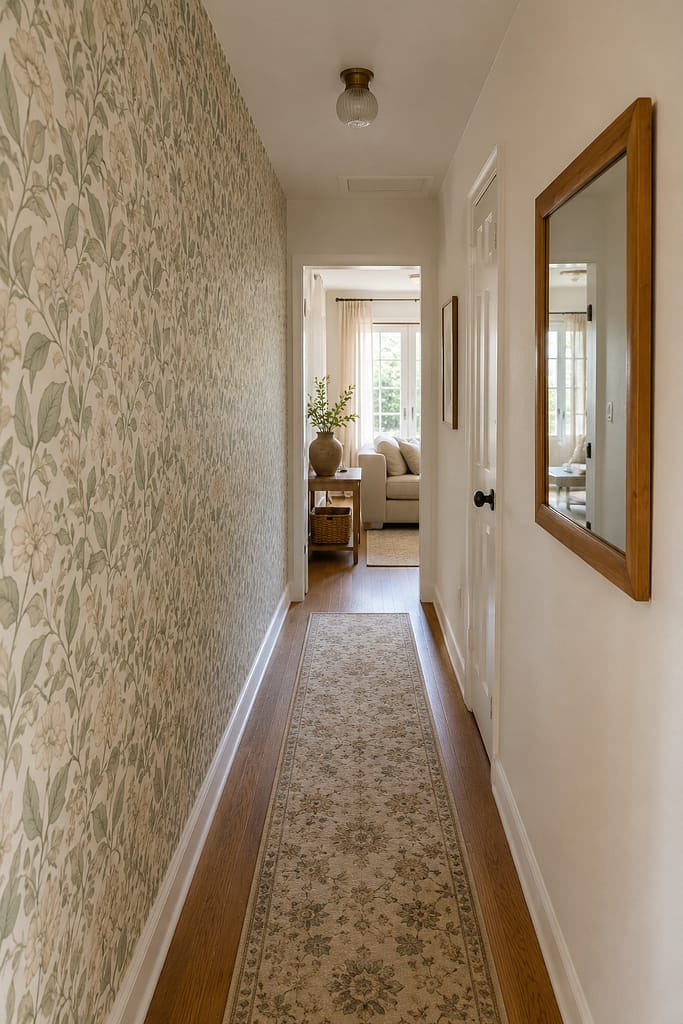
Budget tip: Wallpaper the wall you see most clearly from the entry or main room rather than every wall. You’ll get most of the visual impact with far less material and fewer tricky corners to paper.
7. Hang Art According to the Main Sightline
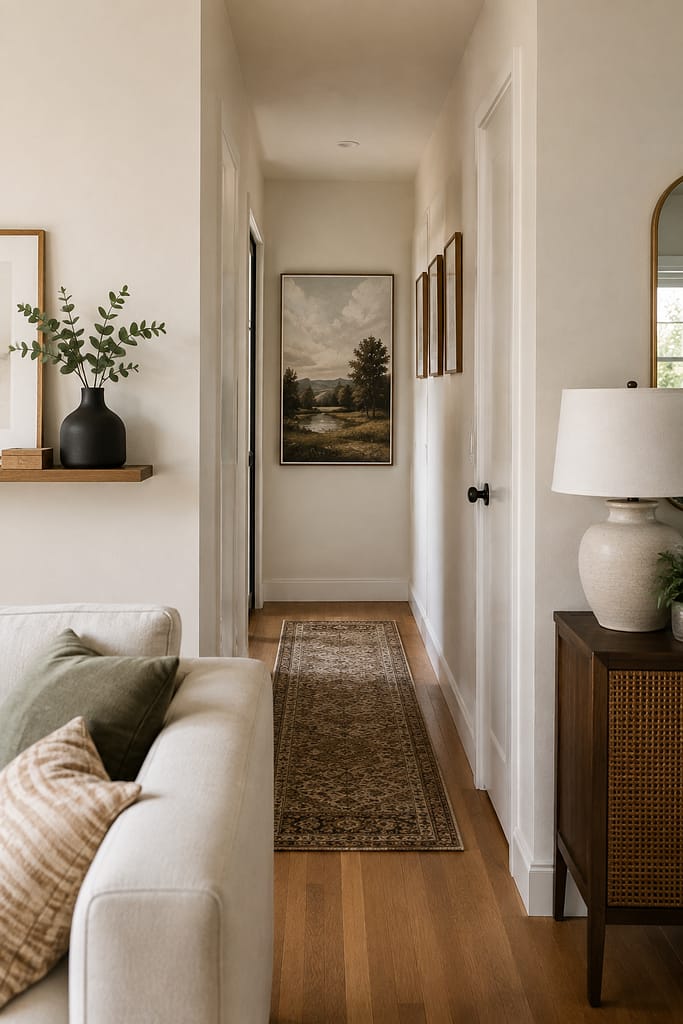
Hallway art is often installed while standing directly in front of the wall, but you’ll usually experience it from farther away. Stand at the front door, staircase, or adjoining room and identify the wall section that naturally catches your eye. Put your strongest piece there first, then build secondary art around it. Large blank stretches can often handle one bigger artwork better than several tiny frames. Think about how the art reads while approaching it, not just how it looks from two feet away.
8. Use Matching Sconces to Create Rhythm
Wall sconces can give a hallway structure because repeated pools of light naturally divide a long wall into sections. If wiring already exists—or you’re renovating—place fixtures according to doorways, artwork, and architectural bays rather than simply spacing them mathematically down the wall. Plug-in sconces can sometimes offer a less involved alternative. For a comfortable home atmosphere, warm light usually feels better than very cool light, especially alongside wood floors, warm paint colors, and traditional artwork.

9. Swap a Basic Ceiling Light for a Better-Proportioned Fixture
A hallway ceiling fixture doesn’t need to be dramatic, but scale matters. On a standard-height ceiling, a flush or semi-flush fixture usually keeps headroom comfortable. A taller stair landing can handle a pendant that hangs lower and becomes part of the view from both floors. Pay attention to nearby doors and the stair opening rather than choosing by style alone. A simple globe, lantern, or fabric shade can add character without visually filling the corridor.
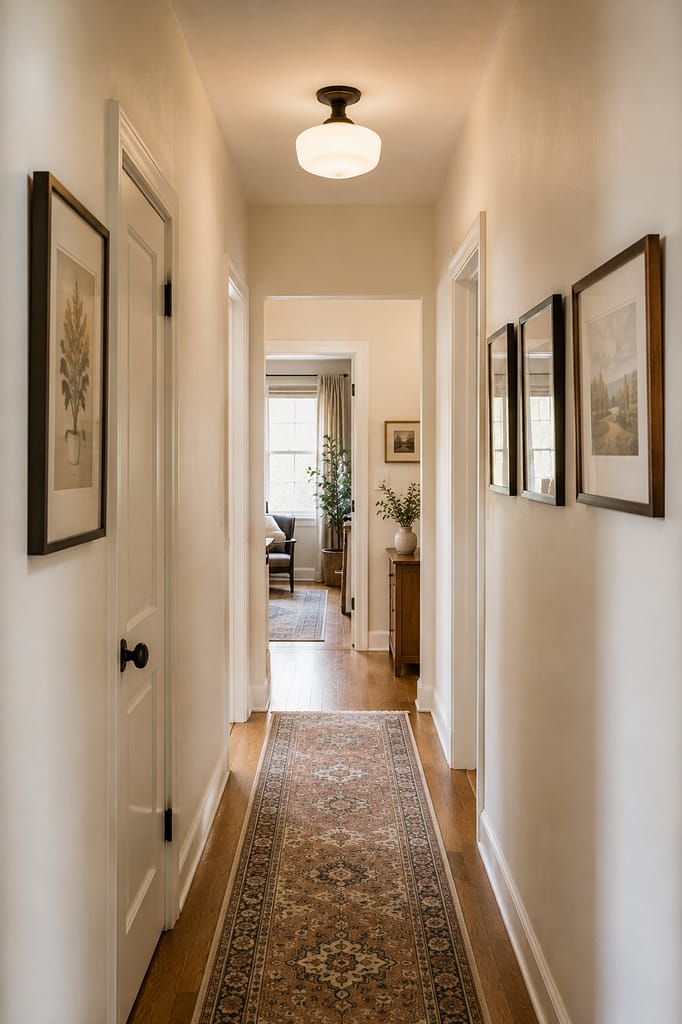
Pro tip: Walk beneath the proposed fixture location and look at it from adjoining rooms before deciding on drop height. A pendant that seems fine from below can hang awkwardly in the sightline from an upstairs landing.
10. Turn the Upstairs Landing Into a Small Destination
An upstairs landing is often wider than the hallway itself, which makes it a natural place for one purposeful decorative moment. A slim bench, small chair, narrow console, or large artwork can work depending on clearance. Keep the center of the landing open so people can move comfortably between rooms and stairs. For upstairs landing inspo, I like repeating one material from the lower floor—such as oak, black metal, or a runner color—so the landing feels connected rather than like a separate decorating project.

11. Repeat One Color Through the Hall and Landing
Hallways connect rooms, so a repeated color can quietly tie several decorating styles together. Pull one shade from nearby rooms—a muted green, deep blue, warm rust, or charcoal—and repeat it in small doses through the hallway. It might appear in the runner, one piece of art, a painted door, and a cushion on the landing bench. You don’t need matching decor everywhere. Repetition works best when it’s subtle enough that you notice the connection without seeing a deliberate “theme.”
12. Paint Interior Doors for Controlled Contrast
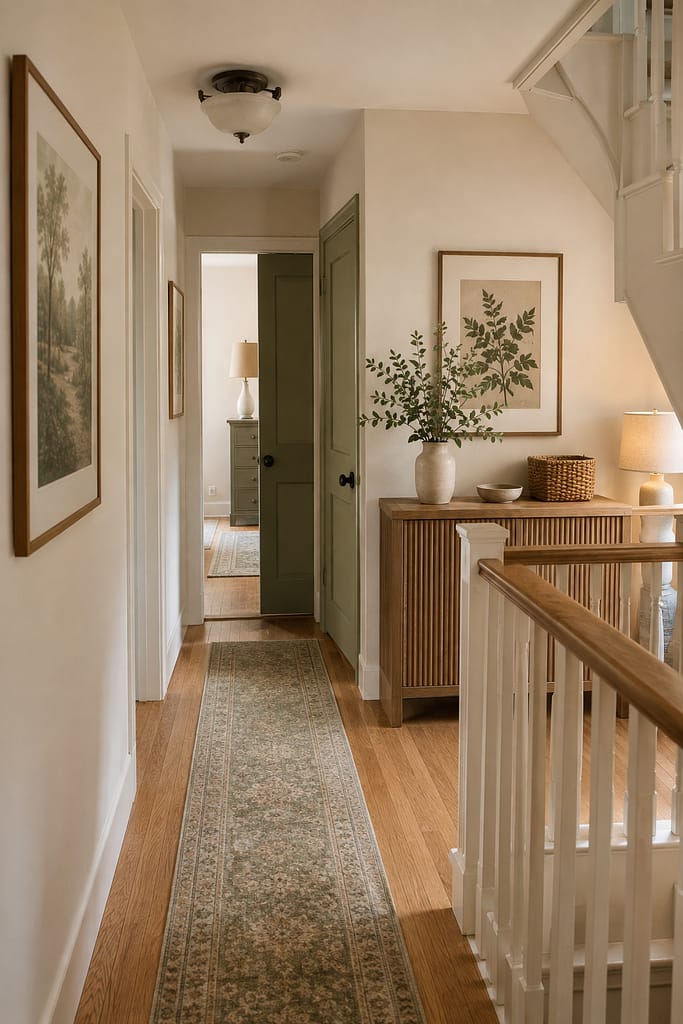
Painting hallway doors can create more impact than adding another layer of wall decor. Charcoal, mushroom, muted green, or dusty blue can frame the openings and make inexpensive doors feel more intentional. If there are many doors close together, use one color consistently rather than treating each one differently. Keep trim light for stronger definition, or paint trim and doors the same shade for a more enveloping look. Test the color beside your flooring because wood undertones can shift how a neutral paint reads.

Budget tip: If painting every door feels like too much work, start with the one at the end of the hallway. Because it sits directly in the sightline, a color change there often has more impact than painting several side doors.
13. Add an Easy Ceiling Treatment With Simple Battens
For an easy ceiling design that adds architecture without ornate plasterwork, simple wood or painted battens can create subtle linear interest. Run them in a direction that makes sense with the hallway architecture and keep spacing regular. In a modern interior, slim battens painted the same color as the ceiling can add texture without shouting. Natural wood strips create more contrast, so they work best where the hallway already includes similar wood tones. Keep fixtures centered within the pattern whenever possible.

14. Try Color-Drenching for a Modern Hallway
Color-drenching means using one color across walls, trim, doors, and sometimes the ceiling, with finish changes providing subtle separation. It works particularly well with muted, complex shades such as olive-gray, warm clay, blue-gray, or soft taupe. The result feels intentional because visual interruptions disappear. If you’re nervous about going fully monochromatic, keep the ceiling one shade lighter. Use a more durable finish on doors and trim than on walls so high-contact surfaces remain easier to clean.

15. Use a Large Mirror as Wall Decor
A mirror doesn’t have to be treated purely as a space-widening trick. In a hallway, it can act like a substantial piece of wall decor while reflecting changing views from adjoining rooms. Choose a frame material that repeats hardware or furniture elsewhere—aged brass, black metal, warm wood, or painted trim. One larger mirror often looks more deliberate than several small decorative mirrors. Position it where the reflection is pleasant; facing a blank door or cluttered storage area isn’t doing the room any favors.
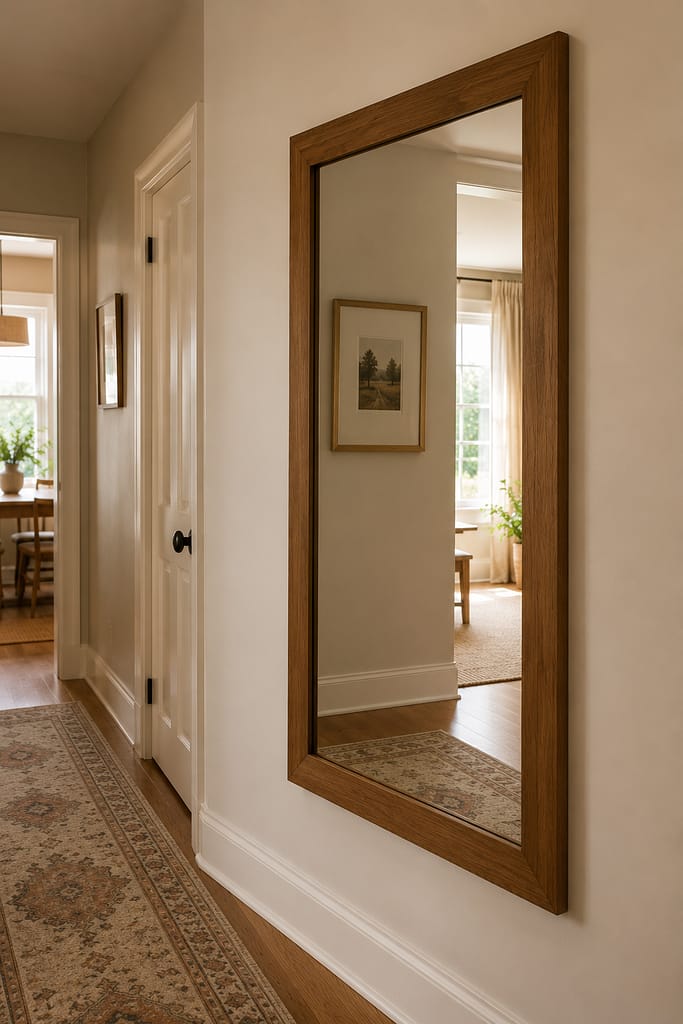
Pro tip: Before mounting a mirror, lean it temporarily at the intended height and check the reflection from several standing positions. You’re decorating with what the mirror reflects as much as with the frame itself.
16. Mix Modern and Vintage Pieces for an Eclectic Hall
An eclectic hallway feels convincing when the pieces share something, even if they come from different eras. Pair modern black frames with an antique-style runner, or use a contemporary ceiling light above a vintage wood console. Keep one element consistent—color, material, or shape—so the mix doesn’t become random. This is an easy home decorating aesthetic for people whose rooms have been collected over time rather than purchased all at once. Hallways are especially good places to bridge those different styles.

17. Create a Gender-Neutral Palette With Warm Neutrals
Gender-neutral house decor doesn’t need to mean gray everywhere. Warm white, camel, olive, taupe, black, natural oak, and muted blue can create a balanced palette that feels welcoming without leaning heavily toward one decorative style. Use the walls as the quiet background and bring darker tones through frames, doors, or lighting. Texture—wool runners, wood grain, linen shades—adds interest without relying on lots of color. This works particularly well in shared hallways that connect rooms with different personalities.
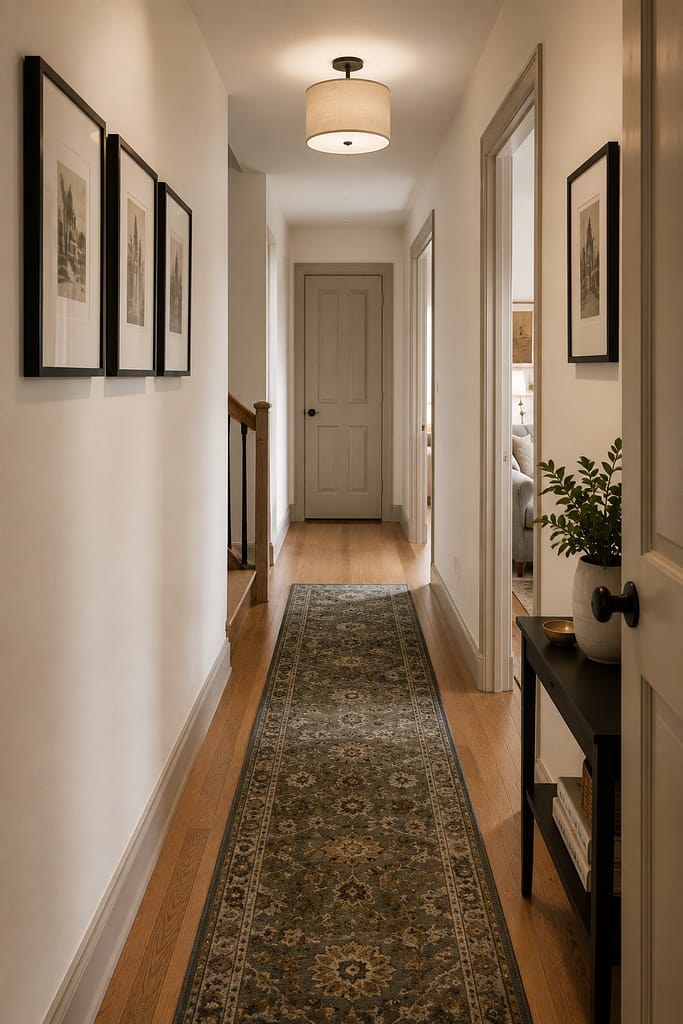
18. Edit the Hallway From Both Ends
Once the decorating is mostly finished, stand at both ends and look through the entire space. You may notice that every frame is clustered on one side, several dark objects compete at once, or the ceiling treatment stops awkwardly before the landing. Hallways are experienced in motion, so balance matters across the whole route. Remove one or two pieces if the view feels busy. A little blank wall is useful—it lets artwork, lighting, and architectural details register instead of merging into visual noise.

Frequently Asked Questions
How high should you hang pictures in a hallway?
Aim for the center of the artwork or overall gallery grouping to sit around comfortable eye level rather than lining frames up with door tops or the ceiling. If the hallway is viewed mainly from a staircase or seated room nearby, adjust slightly based on that sightline rather than following one rigid measurement.
What paint finish is best for hallway walls?
Hallways are high-traffic areas, so a washable finish is useful, especially in homes with children or pets. Many people prefer an eggshell or similar low-sheen washable wall finish, with a more durable satin or semi-gloss finish on trim and doors.
What kind of ceiling light works in a hallway?
Standard-height halls usually suit flush or semi-flush fixtures because they preserve headroom. Taller landings and stairwells can handle pendants, but always check the fixture’s drop against walking clearance and sightlines from both floors.
How do you decorate an upstairs landing?
Treat it as a transition rather than trying to furnish it like a complete room. One bench, narrow console, chair, large artwork, or mirror can be enough, provided the route between stairs and bedrooms stays comfortably clear.
Should hallway decor match the rooms around it?
It doesn’t need to match exactly, but repeating a few colors, materials, or finishes creates continuity. A hallway can have its own personality while still borrowing wood tones, metal finishes, or accent colors from the spaces it connects.
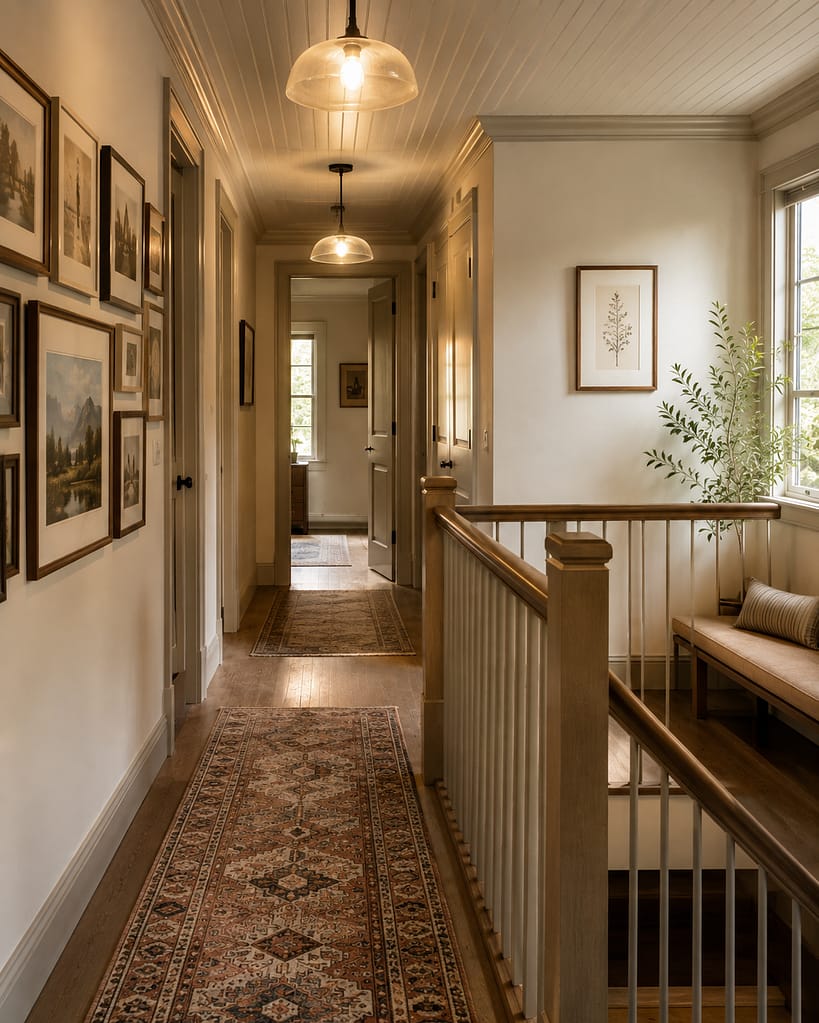
Give the Hallway a Real Point of View
A hallway doesn’t need much furniture to feel finished. The walls, ceiling, lighting, doors, runner, and landing already give you plenty of surfaces to work with.
Start with the view you notice most—maybe the wall at the end, the upstairs landing, or a long stretch that needs art—then build outward from there. A few strong choices usually look better than decorating every available inch.
Save or pin these hallway decor ideas for later, especially if your walls or ceiling have been waiting for attention.